July 6, 2015 by Mike Powell
Everyone knows that Monarch butterflies love milkweed, but if you move in closer to the plants, you’ll discover a world of fascinating little creatures, like this Red Milkweed Beetle (Tetraopes tetrophthalmus) that I spotted this past weekend at Huntley Meadows Park in Alexandria, Virginia.
Almost three years ago I did a posting in which I acknowledged that I had become obsessed with shooting Red Milkweed Beetles. This weekend I realized that that my initial fascination with my colorful little friends has not diminished much over time when I saw this beetle in a small stand of swamp milkweed. I’m not sure if it is the long antennae or the bold pattern or the bright color that attracts me most—I just know that I love seeing them in all of their developmental forms (they go through several interesting instars as they grow).
The next time you see some milkweed, stop for a moment, examine it closely, and prepare to enter a fascinating little world as the scent of the flowers envelops you.

© Michael Q. Powell. All rights reserved
Posted in Flowers, Insects, Macro Photography, Nature, Photography, wildlife | Tagged Alexandria VA, Canon 50D, Huntley Meadows Park, milkweed, red milkweed beetle, swamp milkweed, Tamron 180mm macro lens, Tetraopes tetrophthalmus | 1 Comment »
July 5, 2015 by Mike Powell
Photography seems so complicated when I worry too much about lighting, camera settings, and a myriad of other technical concerns. It’s nice sometimes to put those cares in the back of my mind and just shoot as I did yesterday—me, my camera, a bee, and a flower.
It can be that simple and that enjoyable.

© Michael Q. Powell. All rights reserved.
Posted in Flowers, Gardening, Insects, Macro Photography, Nature, Photography, Summer | Tagged Alexandria VA, bee, Canon 100mm macro lens, Canon 50D, purple coneflower, Runnymeade | 10 Comments »
July 4, 2015 by Mike Powell
As an American, I feel a special affinity for the Bald Eagle (Haliaeetus leucocephalus), our national bird and one of our most visible national symbols. Eight months ago, I was privileged to witness the rescue of an injured bald eagle at my local marshland park and captured some of the best photos that I have ever taken.
This photo, which appeared originally on 4 November last year, seems particularly appropriate today, reminding that our liberty requires constant vigilance and that brave men and women across the globe are on duty today safeguarding that freedom.
If you would like to see additional photos or learn more of the eagle rescue, check out my earlier posting. That posting has been my most popular one ever, thanks in part to the fact that several media outlets used my photos in their on-line coverage and provided links to my blog. Unfortunately, this story ended tragically and the eagle’s injuries turned out to be so severe that this majestic bird was euthanized.

© Michael Q. Powell. All rights reserved.
Posted in Birds, Nature, Patriotism, Photography, wildlife | Tagged Alexandria VA, Bald Eagle, Canon 50D, Canon 70-300mm telephoto zoom lens, Haliaeetus leucocephalus, Huntley Meadows Park | 4 Comments »
July 4, 2015 by Mike Powell
With patches of red, white, and blue, this Red Admiral butterfly (Vanessa atalanta) that I spotted earlier this week seems to be perfectly attired to celebrate Independence Day today here in the United States.
Happy Fourth of July!

© Michael Q. Powell. All rights reserved.
Posted in Butterflies, Insects, Macro Photography, Nature, Photography | Tagged Alexandria VA, Canon 50D, Huntley Meadows Park, Red Admiral, Red Admiral butterfly, Tamron 150-600mm telephoto, Vanessa atalanta | 3 Comments »
July 3, 2015 by Mike Powell
Where do you find beauty in your daily life? I often feel a sense of awe and wonder when I simply contemplate the gorgeous flowers in the garden of my neighbors.
I think the white flowers are a variety of coneflowers and the purple sphere in the upper right corner is a globe thistle.

© Michael Q. Powell. All rights reserved.
Posted in Flowers, Gardening, Macro Photography, Photography | Tagged Alexandria VA, beauty canon 50D, coneflower, globe thistle, Runnymeade, Tamron 180mm macro lens | 6 Comments »
July 2, 2015 by Mike Powell
A few years ago I probably would have misidentified this butterfly as a Monarch because of its coloration. Now, however, I can tell immediately that it is a Viceroy butterfly (Limenitis archippus), because there is a black stripe across the hindwings that the Monarch lacks.
I spotted this beautiful little butterfly this past Monday as I was searching for dragonflies and other creatures in a remote area of Huntley Meadows Park, the marshland area where I take many of my photos. A significant number of the areas that I like to visit are at least partially flooded. The month of June that we just ended turned was the second most rainy June on record for the region (and the rain has continued into July).
As I take more and more photos, I keep learning more and more about my subjects as I try to figure out what I have shot. What amazes me is that I manage to retain some of that information and can use it to identify a subject, as I did in this case. It’s not that easy most of the time (at least for me).

© Michael Q. Powell. All rights reserved.
Posted in Butterflies, Insects, Macro Photography, Nature, Photography, wildlife | Tagged Alexandria VA, Canon 50D, Huntley Meadows Park, Limenitis archippus, monarch butterfly, Tamron 150-600mm telephoto, Viceroy, Viceroy butterfly | 8 Comments »
July 1, 2015 by Mike Powell
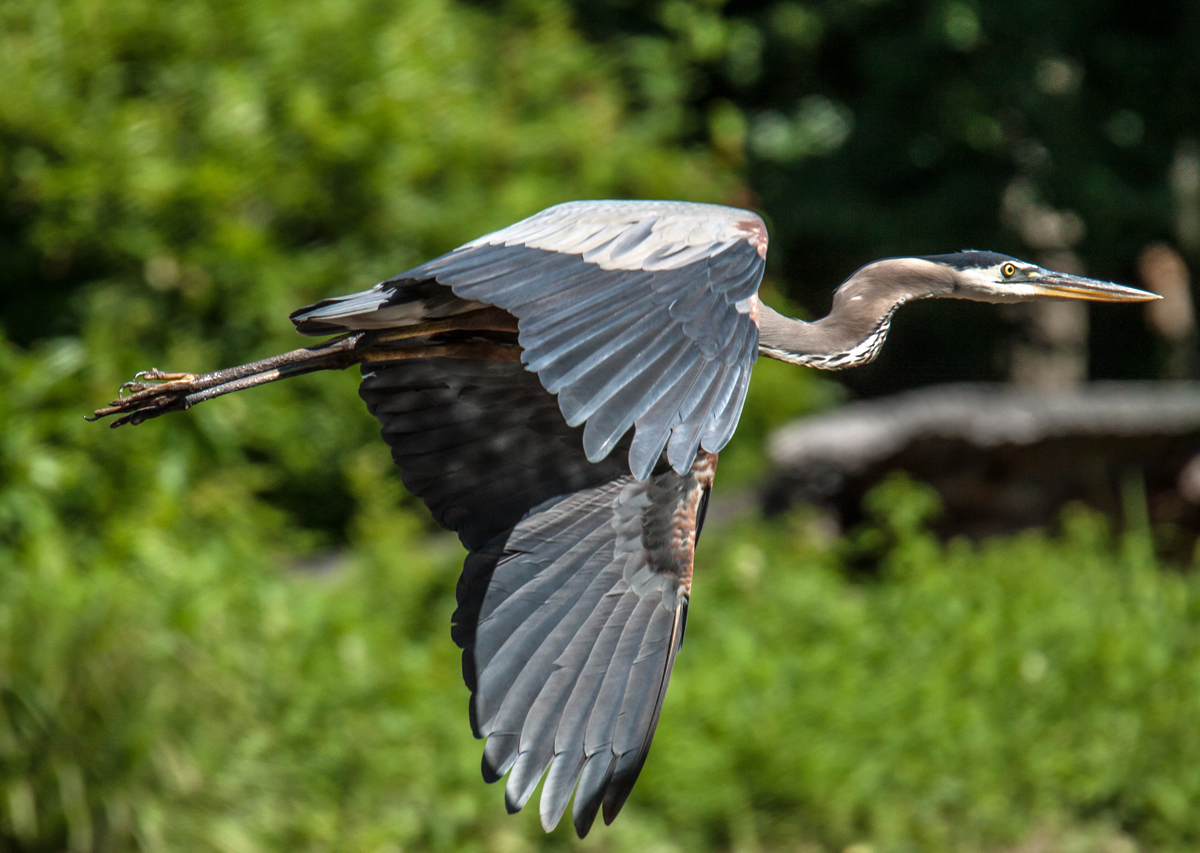
I was concentrating so intently on tracking this Great Blue Heron (Ardea herodias) in flight on Monday that I didn’t realize he was so close to me that I actually should have zoomed out a bit—the heron barely fit within the viewfinder.
Fill the frame with your subject? I can’t remember the last time that I was able to do so with a bird as the subject.

© Michael Q. Powell. All rights reserved.
Posted in Birds, Nature, Photography, wildlife | Tagged Alexandria VA, Ardea herodias, birds in flight, Canon 50D, Great Blue Heron, Huntley Meadows Park, Tamron 150-600mm telephoto | 10 Comments »
June 30, 2015 by Mike Powell
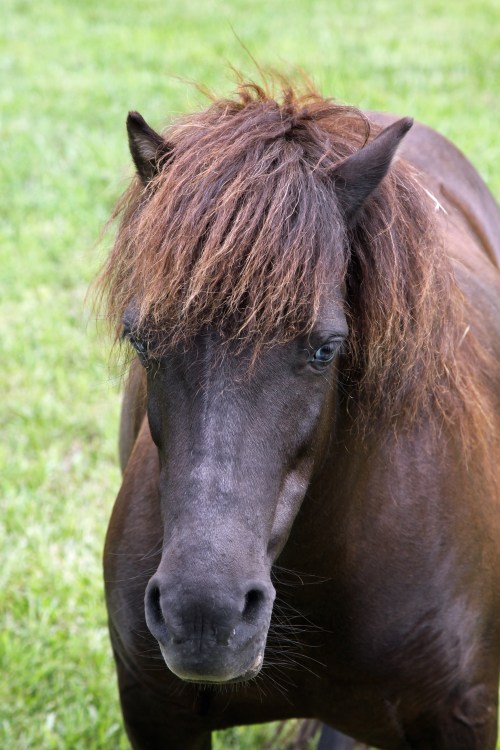
I’ve spent most of my life living in the suburbs, so domestic livestock is kind of a novelty for me. My eyes are particularly drawn to animals as striking as this horse with a “rock star” hair style that reminds me of the beautiful horses of Iceland that I have seen featured in numerous photo shoots.
This past weekend I traveled to a winery in rural Delaplane, Virginia for an engagement party. After a wonderful celebration, I stopped at an adjacent farm that had a petting zoo. I was immediately attracted to three horses in the field that had long flowing manes blowing in the breeze. The horses walked right towards me and initially I thought they anticipated that I might have food. When they got closer, I realized that I was standing right behind a pile of hay that had been placed in the field and they more or less ignored me and munched on the hay.
I had a 24-105mm lens on my camera and ended up taking most of my shots at close range using the wide end of the lens. This was the first time that I have ever taken photos of an animal with anything other than a telephoto lens and I was happy with the results. I remember seeing some close-up photos a year or two ago that a blogger had taken of a buffalo using a wide-angle lens and thinking it would be interesting to try something like that. Unlike the buffalo shooter, though, I did not have to shoot from inside of a vehicle.
I don’t know anything about horse breeds, but these small, stocky horses with the incredible flowing hair reminded me of images that I have seen of the horses of Iceland. My dear friend and photographic mentor Cindy Dyer made a trip to Iceland last year and came back with some amazing photos, including this posting with a similar horse, although it is quite literally a horse of a different color.
Cindy has talked with me and a few fellow photographers about possibly traveling to Iceland next year. I would love to have the chance to experience firsthand the wondrous natural beauty of Iceland and to see more beautiful horses with “rock star” hair.

Michael Q. Powell. All rights reserved.
Posted in animals, Photography, Portraits, Summer | Tagged Canon 24-105mm lens, Canon 50D, Delaplane Virginia, horse, Iceland, pony, rock star hair | 6 Comments »
June 29, 2015 by Mike Powell
Instinctively I try to get as close to a subject as possible, often ignoring the “big picture.” One recently early morning, however, there was a substantial amount of water between me and the Belted Kingfisher (Megaceryle alcyon) that I spotted on a fallen tree and there was no way I was getting closer.
I concentrated on focusing, thinking I would probably have to crop a lot, and on composition. Almost despite myself, I ended up with an image that I really like, an image in which the kingfisher is only one element of an early morning landscape.
There is definitely a benefit sometimes in not getting closer to the subject.

Michael Q. Powell. All rights reserved.
Posted in Birds, Landscape, Nature, Photography, wildlife | Tagged Alexandria VA, Belted Kingfisher, Canon 50D, Huntley Meadows Park, Megaceryle alcyon, Tamron 150-600mm telephoto | 11 Comments »
June 28, 2015 by Mike Powell
It rained all day yesterday and today I felt the need for a burst of color, so I worked up a shot that I took in early May of a male Southern Spreadwing damselfly (Lestes australis). Somehow this beautiful little damselfly fell to the back of the queue during a period of time when I was taking so many photos that I barely had time to review and sort them all.
Three things really strike me about this damselfly. It is much biggest than most of the damselflies; it perches with its wings spread wide, unlike most damselflies; and, most importantly for me, it has very striking turquoise eyes that draw me right in.
Special thanks to my friend, Walter Sanford, who located the damselfly and worked with others to establish that this was a Southern Spreadwing and not the visually similar Sweetflag Spreadwing. Walter said that he was so familiar with this particular damselfly that he nicknamed him “Arty,” because of his propensity for perching in front of photogenic backgrounds.

Michael Q. Powell. All rights reserved.
Posted in Dragonflies, Insects, Macro Photography, Nature, Photography, wildlife | Tagged Alexandria VA, Canon 50D, Huntley Meadows Park, Lestes australis, Southern Spreadwing, Southern Spreadwing damselfly, Tamron 180mm macro | 6 Comments »
June 27, 2015 by Mike Powell
I probably watched too many horror movies as a child, because I couldn’t help but think of Count Dracula when I first saw the posture of this male Red-winged Blackbird (Agelaius phoeniceus) at my local marshland park. The blackbird seemed to have assumed the traditional bat-like Dracula pose and appeared to be getting ready to swoop in and suck my blood. Involuntarily, my neck began to twitch a little.
Fortunately, the blackbird flew off in another direction and, at least for now, I have not been turned into a vampire.

Michael Q. Powell. All rights reserved.
Posted in Birds, Humor, Nature, Photography, Portraits, wildlife | Tagged Agelaius phoeniceus, Alexandria VA, Canon 50D, Dracula, Huntley Meadows Park, male Red-winged Blackbird, red-winged blackbird, Tamron 150-600mm telephoto | 20 Comments »
June 26, 2015 by Mike Powell
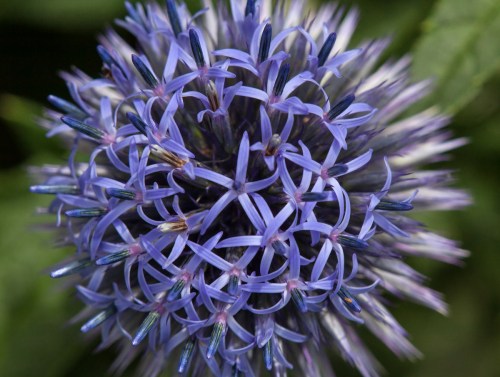
Globe Thistles (Echinops ritro) are among the coolest plants in my neighbors’ garden. They have a wonderful texture and stand tall, topped with fantastic balls of tiny flowers tinged with blue, purple, and pink.
It’s Friday and I figured for fun that I’d take a short break from insects and feature a few photos of fantastic flowers.

Michael Q. Powell. All rights reserved.
Posted in Art, Flowers, Gardening, Macro Photography, Nature, Photography | Tagged Alexandria VA, Canon 50D, Echinops ritro, globe thistle, Runnymeade, Tamron 180mm macro | 8 Comments »
June 25, 2015 by Mike Powell
This spring I have been spending more and more time in remote areas of my marshland park and have had the opportunity to see dragonflies in earlier stages of development than in previous years. I was thrilled recently to spot a newly emerged male Common Sanddragon (Progomphus obscurus) and managed to get some shots of it with my macro lens.
Fellow dragonfly enthusiast Walter Sanford did a posting yesterday with some wonderful shots of adult male Common Sanddragon dragonflies and you can refer to that posting if you want to see what a mature male looks like.
When you look at this very young dragonfly, in a stage called “teneral,” a few things stand out. The colors of its eyes and its body are very pale and the wings are really clear. As the dragonfly is exposed to the air and to the sunlight, its colors become more pronounced and its wings more solid.
Many of you know that dragonflies spend most of their lives underwater as nymphs going through a series of transformations. Only in the later stage of their lives do they shed their exoskeletons one last time and become the aerial acrobats that we are used to seeing.
I’ve always wanted to see this transformation taking place, but have not yet had the chance to do so. When I was sharing this images with a friend, though, he pointed out something which I had missed—the dragonfly is perched on its cast-off skin. In the final photo, you can see that the dragonfly is now more than twice as long as when he first emerged, with a significantly lengthened abdomen. In the two close-up shots, it looks like the dragonfly’s front legs are astride the head of the exoskeleton and I think you can actually see the two eyes.
I am in awe when I think of the incredible metamorphosis that has just taken place and find this dragonfly, like all newborns, to be amazingly beautiful and precious.


Michael Q. Powell. All rights reserved.
Posted in Dragonflies, Insects, Macro Photography, Photography, wildlife | Tagged Alexandria VA, Canon 50D, Common Sanddragon, Common Sanddragon dragonfly, Huntley Meadows Park, Progomphus obscurus, Tamron 180mm macro lens | 9 Comments »
June 24, 2015 by Mike Powell
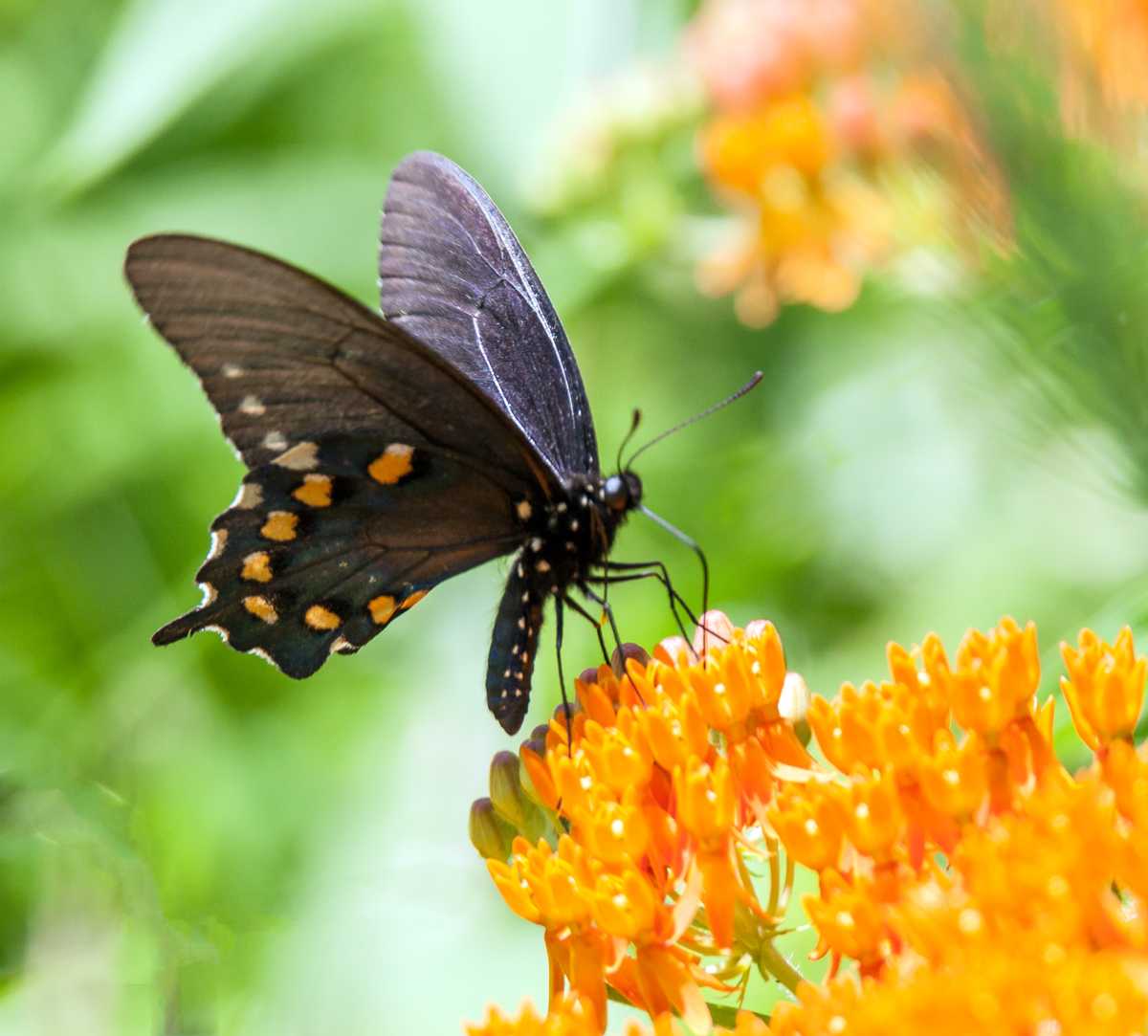
This past weekend I spotted a black swallowtail fluttering about some bright orange flowers, never stopping for more than a split second. Could I get a shot before it flew away?
Well, I managed to get some shots and then came the tough part—figuring out which black-colored swallowtail I had captured. How hard can that be? For a casual observer like me, there were at least three candidates that immediately came to mind—the black version of the Eastern Tiger Swallowtail, the Spicebush Swallowtail, and the Pipevine Swallowtail. I recalled that one of the key indicators is the pattern of the orange spots, but I couldn’t remember which one had which pattern.
After some quick research, I’ve concluded this is probably a Pipevine Swallowtail butterfly (Battus philenor). I was also really taken by the orange plant and think it might be butterfly weed (Asclepias tuberosa), a type of milkweed that, as its name suggests, attracts butterflies.

Michael Q. Powell. All rights reserved.
Posted in Butterflies, Flowers, Insects, Nature, Photography | Tagged Alexandria VA, Asclepias tuberosa, Battus philenor, Butterfly Weed, Canon 50D, Huntley Meadows Park, Pipevine Swallowtail, Pipevine Swallowtail butterfly, Tamron 150-600mm telephoto | 7 Comments »
June 23, 2015 by Mike Powell
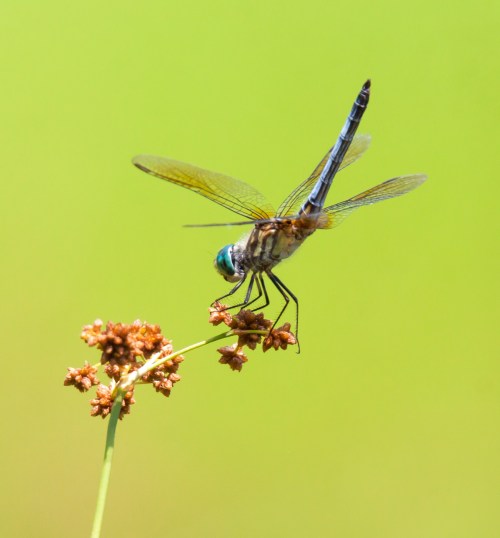
When it is really hot and the sun is directly overhead, Blue Dasher dragonflies (Pachydiplax longipennis) will often perch in a handstand-like pose that is generally referred to as the “obelisk posture.” By doing this, they minimize the direct exposure of the abdomen’s surface to the sun and stay cooler. Some other dragonflies will also engage in this kind of postural thermoregulation, but I see it most commonly in Blue Dashers.
Blue Dashers, one of our most common dragonflies, were largely responsible for my initial fascination with dragonflies. In fact, almost three years ago my very first posting on this blog featured a Blue Dasher in an obelisk posture.
Since that time, I have grown in experience and knowledge and have cranked out over 1600 posts. My fascination with dragonflies has broadened and grown into a quasi-obsession, but I am always drawn back to the little Blue Dasher dragonfly, whose acrobatic poses never cease to amaze and entertain me.
Michael Q. Powell. All rights reserved.
Posted in Art, Dragonflies, Insects, Nature, Photography, wildlife | Tagged Alexandria VA, Blue Dasher, Blue Dasher dragonfly, Canon 50D, Huntley Meadows Park, obelisk pose, Pachydiplax longipennis, postural thermoregulation, Tamron 150-600mm telephoto | 11 Comments »
June 22, 2015 by Mike Powell
I know that there are deer at Huntley Meadows Park, the suburban marshland park where I take many of my photos, but I rarely see any of them. Perhaps they too see the posted signs warning of archery hunting to keep the population in control.
Saturday morning, however, I spotted three White-tailed deer (Odocoileus virginianus) in an open area in front of a stand of cattails. The deer grazed for a little while before fading silently back into the forest and I managed to get a few shots of them.
It’s a nice change of pace to get some shots of mammals at a time of the year when so many of my postings are devoted to insects.

Michael Q. Powell. All rights reserved.
Posted in animals, Nature, Photography, spring, wildlife | Tagged Alexandria VA, Canon 50D, Huntley Meadows Park, Odocoileus virginianus, Tamron 150-600mm telephoto, white-tailed deer | 4 Comments »
June 21, 2015 by Mike Powell
Yesterday, the last full day of spring, I spotted a Halloween Pennant (Celithemis eponina), one of my favorite dragonflies, at Huntley Meadows Park, a place where I had previously never seen one. It was an auspicious end to spring, even if it seems a bit strange to speak of spring and Halloween in the same posting.
As you can see, these dragonflies like to perch on the very top of the vegetation in the fields. That’s an advantage in isolating the subject, but the slightest breeze causes them to wave back and forth like a pennant.
I snapped away when I spotted the Halloween Pennants and have not yet gone through all of my images, but I am so excited that I can’t help but share a couple with you now. There may be a few more to come later.


Michael Q. Powell. All rights reserved.
Posted in Dragonflies, Insects, Nature, Patriotism, spring, wildlife | Tagged Alexandria VA, Canon 50D, Celithemis eponina, halloween pennant, Halloween Pennant dragonfly, Huntley Meadows Park, Tamron 150-600mm telephoto | 9 Comments »
June 20, 2015 by Mike Powell
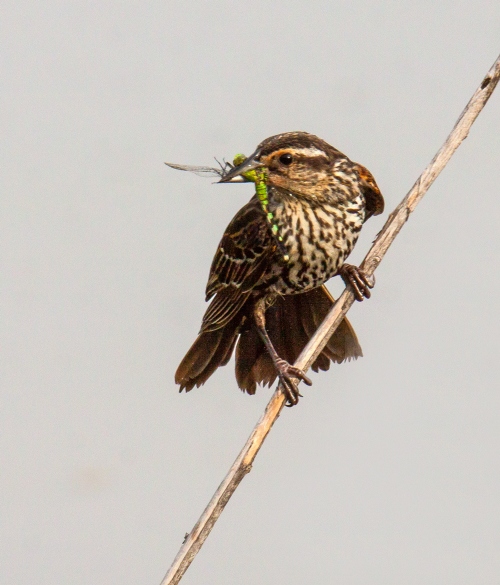
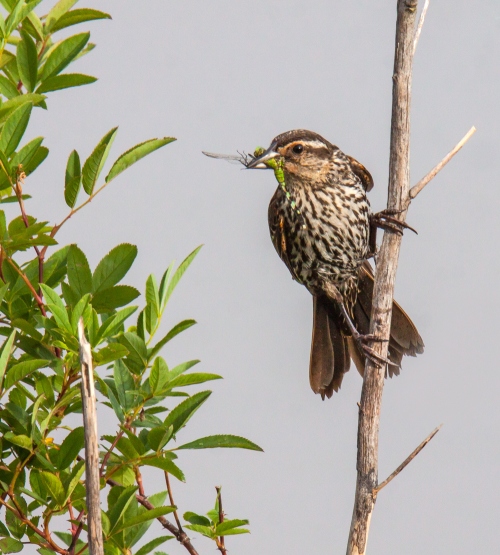
Early yesterday morning I thought that this female Red-winged Blackbird (Agelaius phoeniceus) was gathering nesting materials, which seemed a little strange this late in the season. When I looked at the images on my computer, however, I was surprised to see that she had instead captured an immature male Eastern Pondhawk dragonfly (Erythemis simplicicollis), a species that itself has a reputation as a ruthless predator.
As the old adage suggests, sometimes the predator becomes the prey.
Michael Q. Powell. All rights reserved.
.
Posted in Birds, Dragonflies, Nature, Photography, wildlife | Tagged Agelaius phoeniceus, Alexandria VA, Canon 50D, Eastern Pondhawk, Eastern Pondhawk dragonfly, Erythemis simplicicollis, female Red-winged Blackbird, Huntley Meadows Park, red-winged blackbird, Tamron 150-600mm telephoto | 17 Comments »
June 19, 2015 by Mike Powell
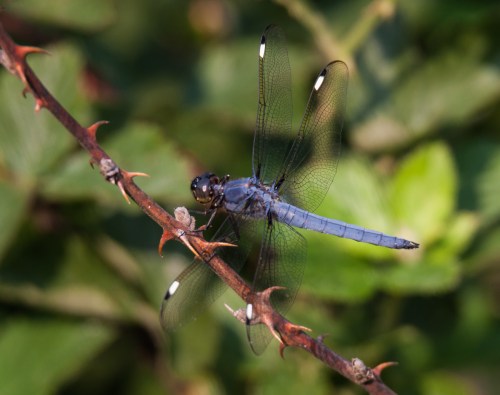
If I had wings as fragile as those of this male Spangled Skimmer dragonfly (Libellula cyanea), I am not sure that I would choose to perch on a branch with so many thorns. I can personally attest to the fact that those thorns are sharp, very sharp.
Although I see quite a few blue dragonflies, Spangled Skimmers are pretty easy to identify—they are the only local dragonflies with both black and white stigmas on their wings. I love it when the differences among species are that obvious.
On the day I took this shot, the field seemed to be full of Spangled Skimmers and Great Spangled Fritillary butterflies. If I had only seen an American flag, i.e. the Star Spangled Banner, I would have exhausted the short list of items that I associate with the word “spangled.”
Michael Q. Powell. All rights reserved.
Posted in Dragonflies, Insects, Macro Photography, Nature, Photography, spring, wildlife | Tagged Alexandria VA, Canon 50D, Huntley Meadows Park, Libellula cyanea, Spangled Skimmer, Spangled Skimmer dragonfly, Tamron 150-600mm telephoto | 12 Comments »
June 18, 2015 by Mike Powell
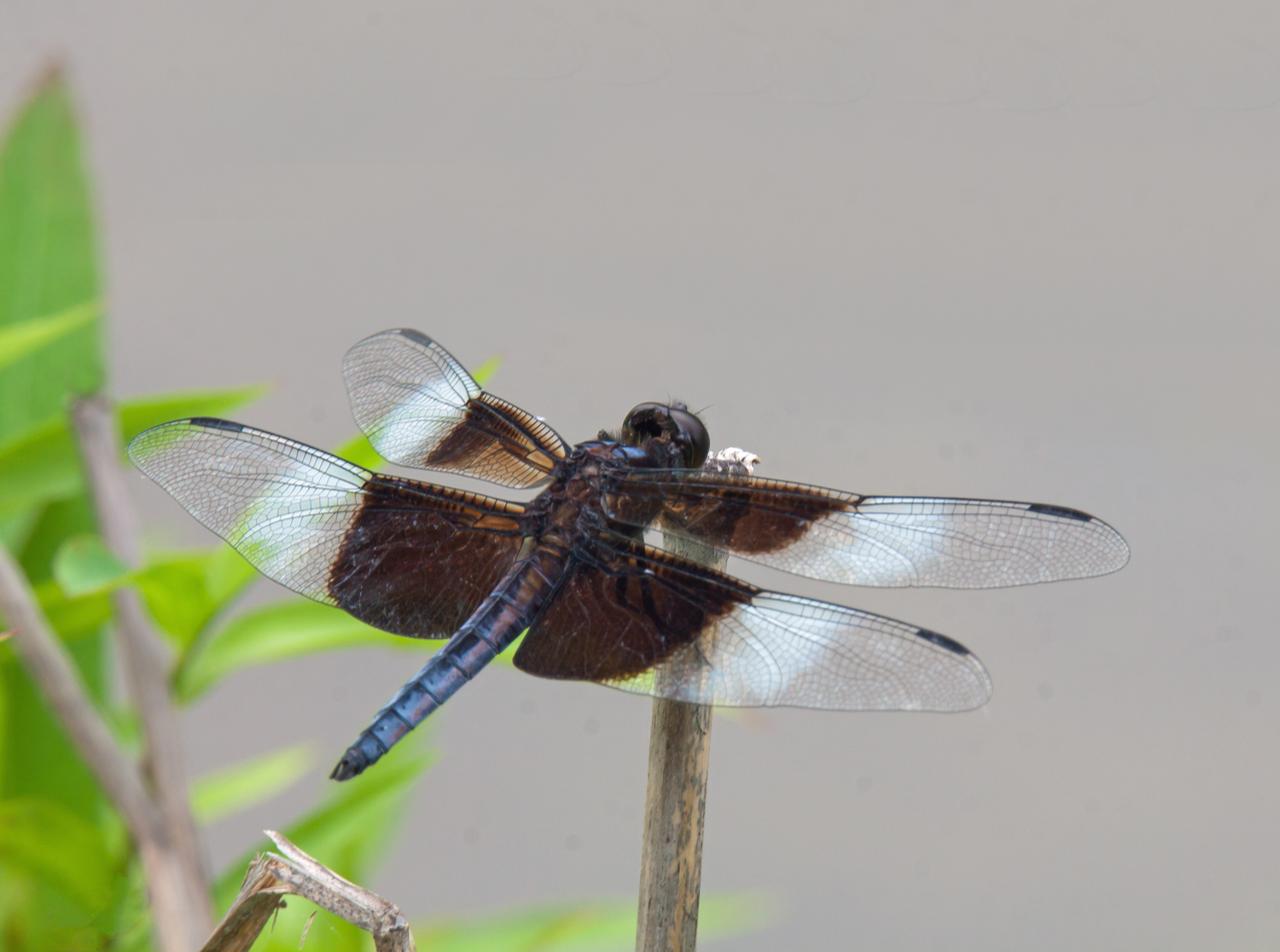
Flying slowly and weakly with its patterned wings, a male Widow Skimmer dragonfly (Libellula luctuosa) looks amazingly like a butterfly as it flutters by. Fortunately this one stopped to perch on some vegetation at the edge of a small stream and I was able to get this shot.
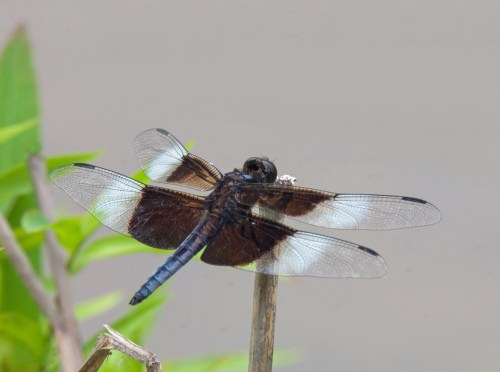
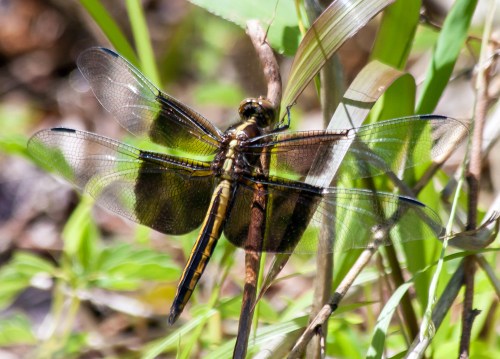
This was the second time that I have seen a male Widow Skimmer this spring. It’s easy to tell that this is a male, because the females do not have the white spots on their wings. When I saw one last month, though, it was a little tougher to make the call. Immature male Widow Skimmers look a lot like females, as is the case with many dragonfly species. The colors of “fresh” dragonflies tends to be pale and wing patterns may not have developed fully yet. The photo below provides a pretty clear view of the “claspers” at the tip of the abdomen, which indicates that this is a male. Eventually he will grow up and begin to look more like the mature Widow Skimmer in the first photo.
Michael Q. Powell. All rights reserved.
Posted in Dragonflies, Insects, Macro Photography, Nature, Photography, spring, wildlife | Tagged Alexandria VA, Canon 50D, Huntley Meadows Park, Libellula luctuosa, Tamron 150-600mm telephoto, Widow Skimmer, Widow Skimmer dragonfly | 4 Comments »
June 17, 2015 by Mike Powell
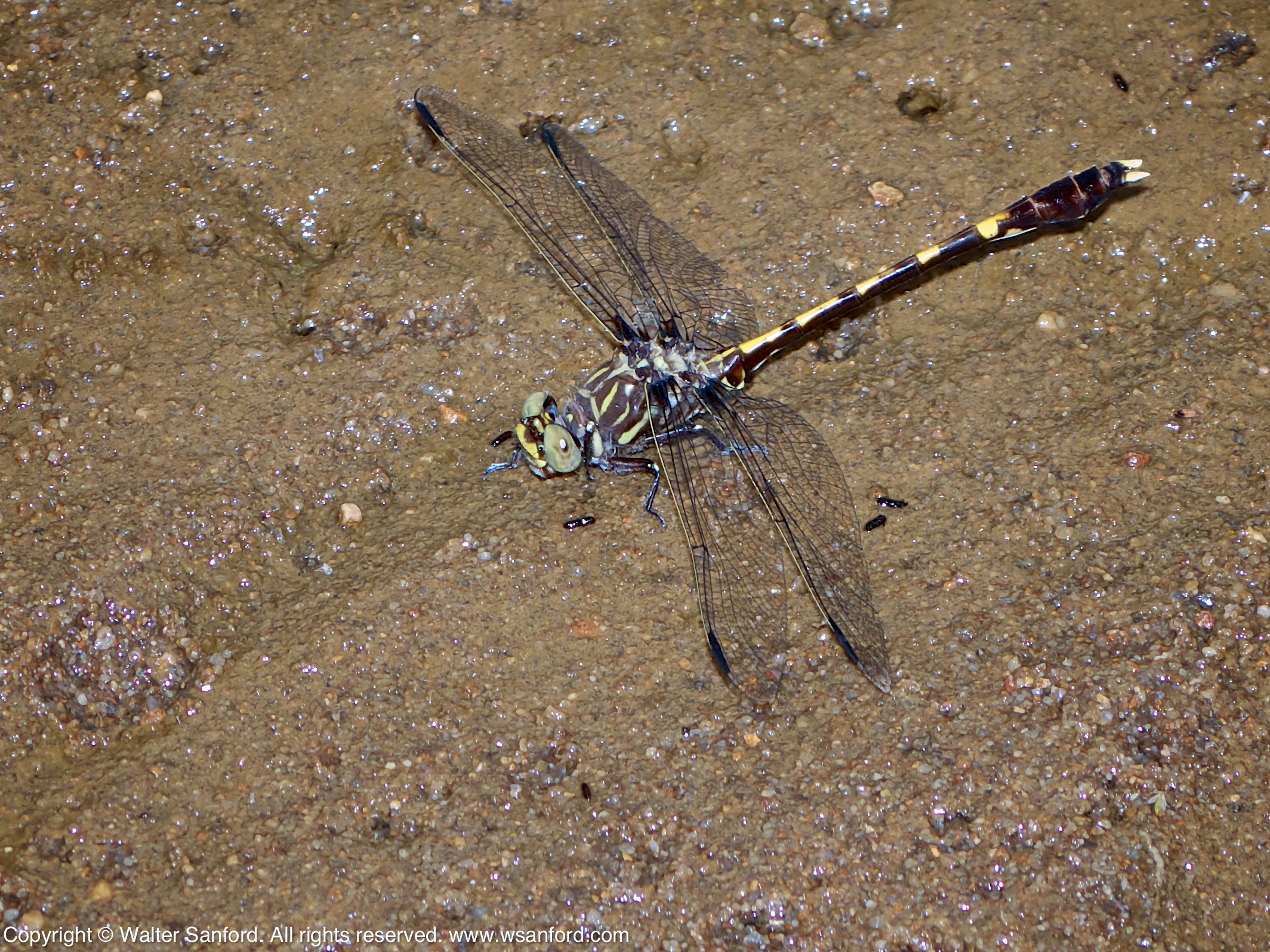
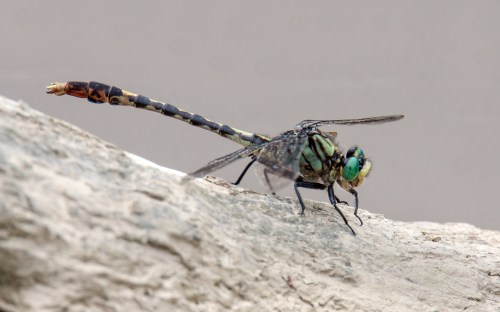
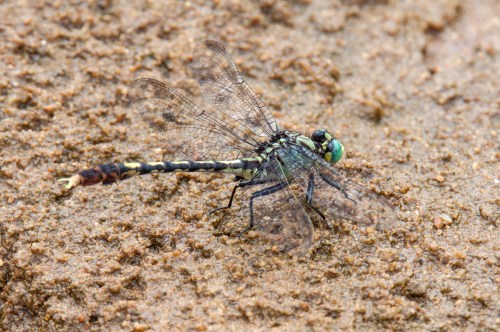
Unicorn Clubtail dragonflies (Arigomphus villosipes) have quickly become my favorite dragonflies this season. Their gorgeous turquoise eyes never fail to draw me in and their unusual clubtail and distinctive terminal appendages help to maintain my interest.
Unicorn Clubtails are a challenge to find and they are usually pretty skittish when you try to approach them. I have been fortunate enough to find a stream in my local marshland park where at least a couple of them can sometimes be found and patient enough to slowly search for them along the banks of the stream.
Here are a few of my favorite shots from this past Monday. I especially like the first one, in which the dragonfly seems to be cocking his head to the side and smiling at me. The second shot was taken from one side of the stream looking directly across at a Unicorn Clubtail that has assumed a defiant stance and looks to be ready to defend his territory. The final shot shows the dragonfly on a little sandy area at the edge of the stream, an area that he was sharing that day with a Common Sanddragon, a species that I will be featuring this blog sometime in the near future.

Michael Q. Powell. All rights reserved.
Posted in Dragonflies, Insects, Macro Photography, Nature, Patriotism, wildlife | Tagged Alexandria VA, Arigomphus villosipes, Canon 50D, Huntley Meadows Park, Tamron 150-600mm telephoto, Unicorn Clubtail, Unicorn Clubtail dragonfly | 3 Comments »
June 16, 2015 by Mike Powell
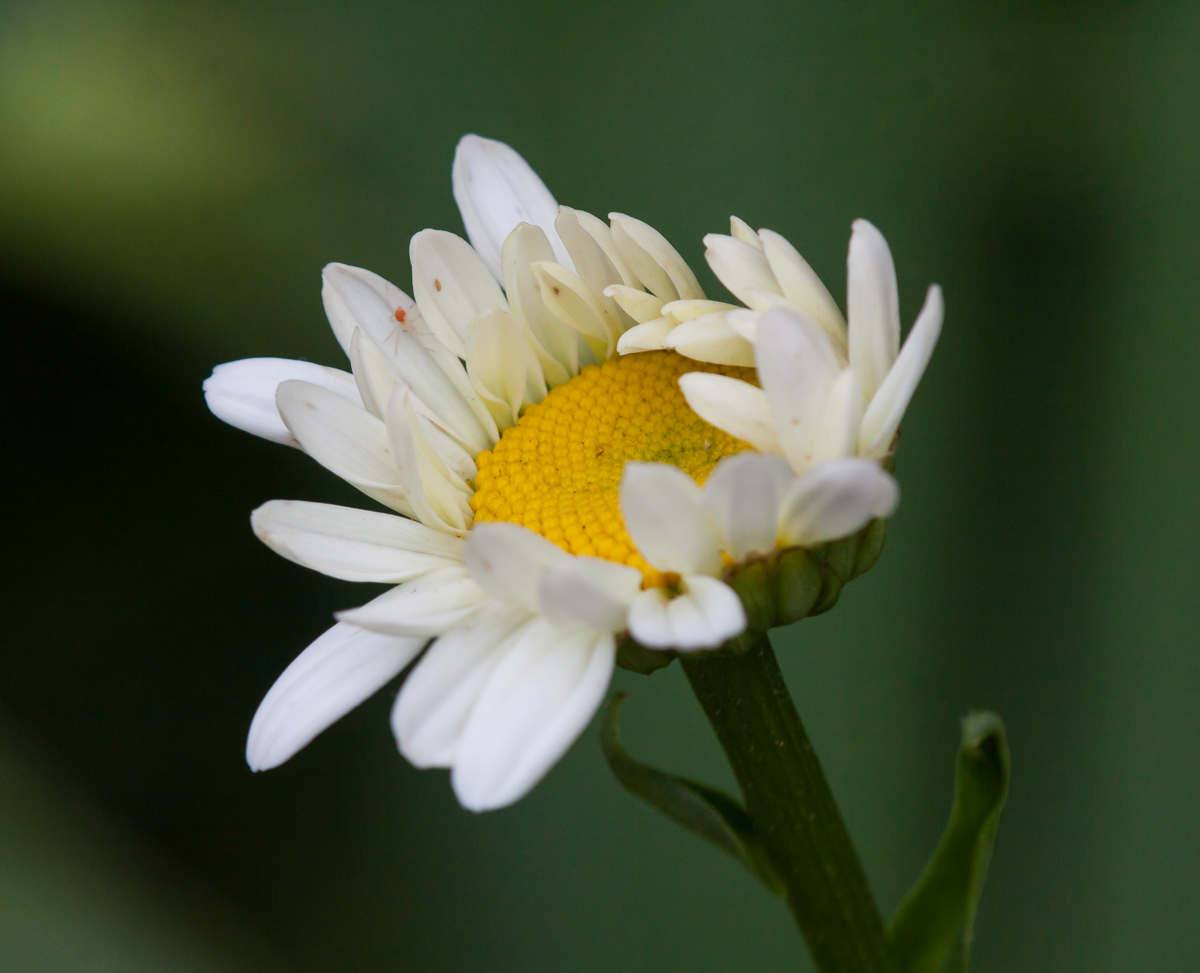
Shy or coy? Whatever the reason, this Shasta daisy seemed reluctant to reveal its whole self to the world and kept a row of petals raised like a fan to add protection and/or mystery.
Sharp-eyed viewers may note that this image has a “bonus bug,” i.e. an insect that you find when processing a photo that you didn’t notice when taking the shot. In this case there looks to be a tiny red insect on one of the white petals to the left of the tallest petal in the uppermost row of petals. (You may need to click on the photo to get a higher-resolution view.)
This is another photo that I took in my neighbor’s garden. Thanks, Cindy.

Michael Q. Powell. All rights reserved.
Posted in Flowers, Gardening, Insects, Macro Photography, Photography | Tagged Alexandria VA, bonus bug, Canon 50D, Cindy Dyer, daisy, Runnymeade, Shasta daisy, Tamron 180mm macro lens | 3 Comments »
June 15, 2015 by Mike Powell
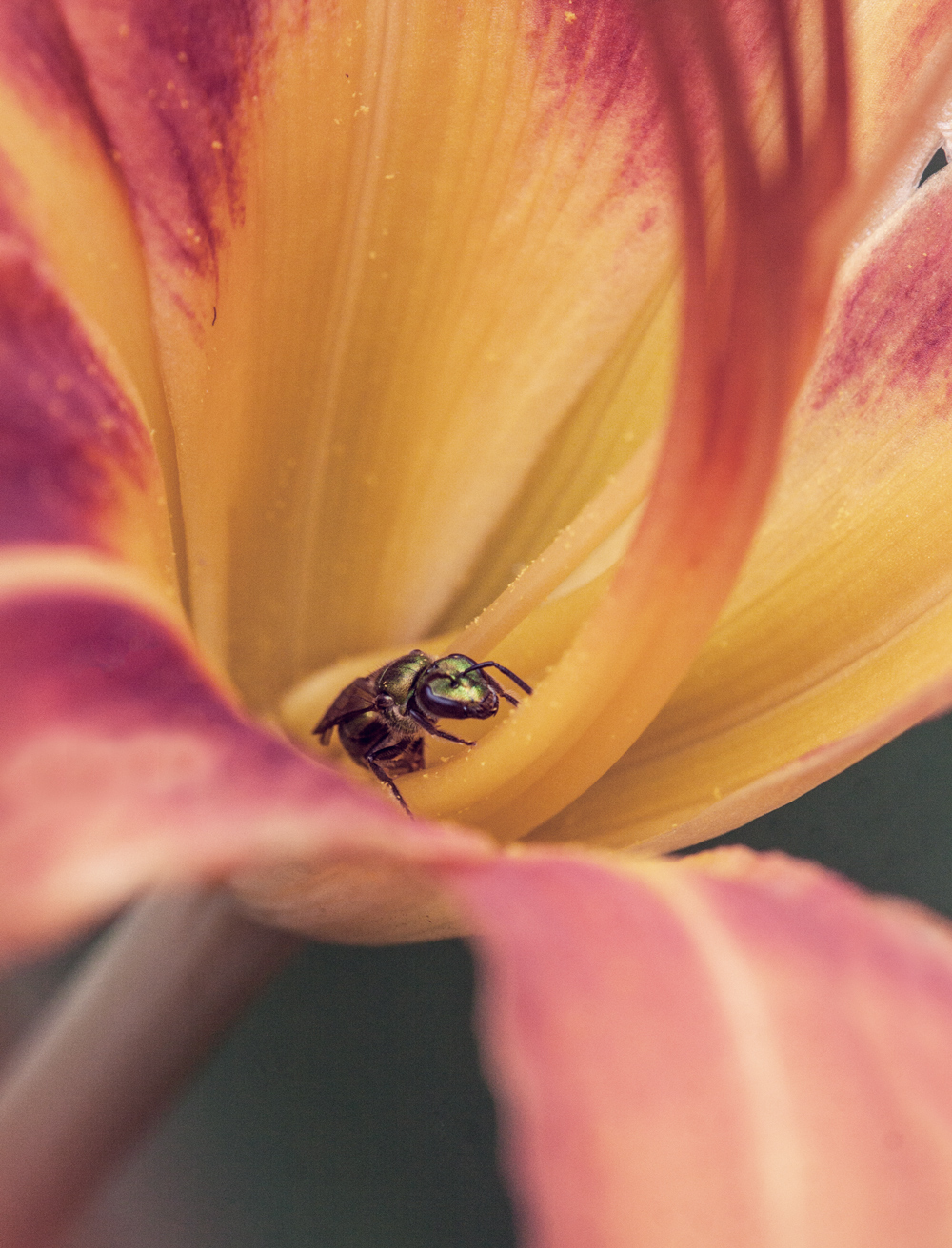
I don’t have a garden, but fortunately my neighbor and fellow photographer Cindy Dyer has a wonderful one. Earlier today I photographed this green metallic sweat bee (genus Agapostemon) coming out of one of her orange daylilies.

Michael Q. Powell. All rights reserved.
Posted in Flowers, Gardening, Insects, Macro Photography, Nature, Photography | Tagged Alexandria VA, Canon 50D, Cindy Dyer, daylily, genus Agapostemon, green metallic bee, Runnymeade, Tamron 180mm macro lens | 10 Comments »
June 15, 2015 by Mike Powell
Simple compositions are often the basis for my favorite images. My subject was a Blue Dasher dragonfly (Pachydiplax longipennis), one of the most common dragonflies in our area. The vegetation on which it chose to perch was nothing special. Somehow, though, the shapes and colors of these elements work together to create an image that I find really pleasing.

Michael Q. Powell. All rights reserved.
Posted in Dragonflies, Insects, Nature, Photography | Tagged Blue Dasher, Blue Dasher dragonfly, brookside gardens, Canon 50D, Pachydiplax longipennis, So, Tamron 180mm macro lens, Wheaton MD | 8 Comments »
June 14, 2015 by Mike Powell
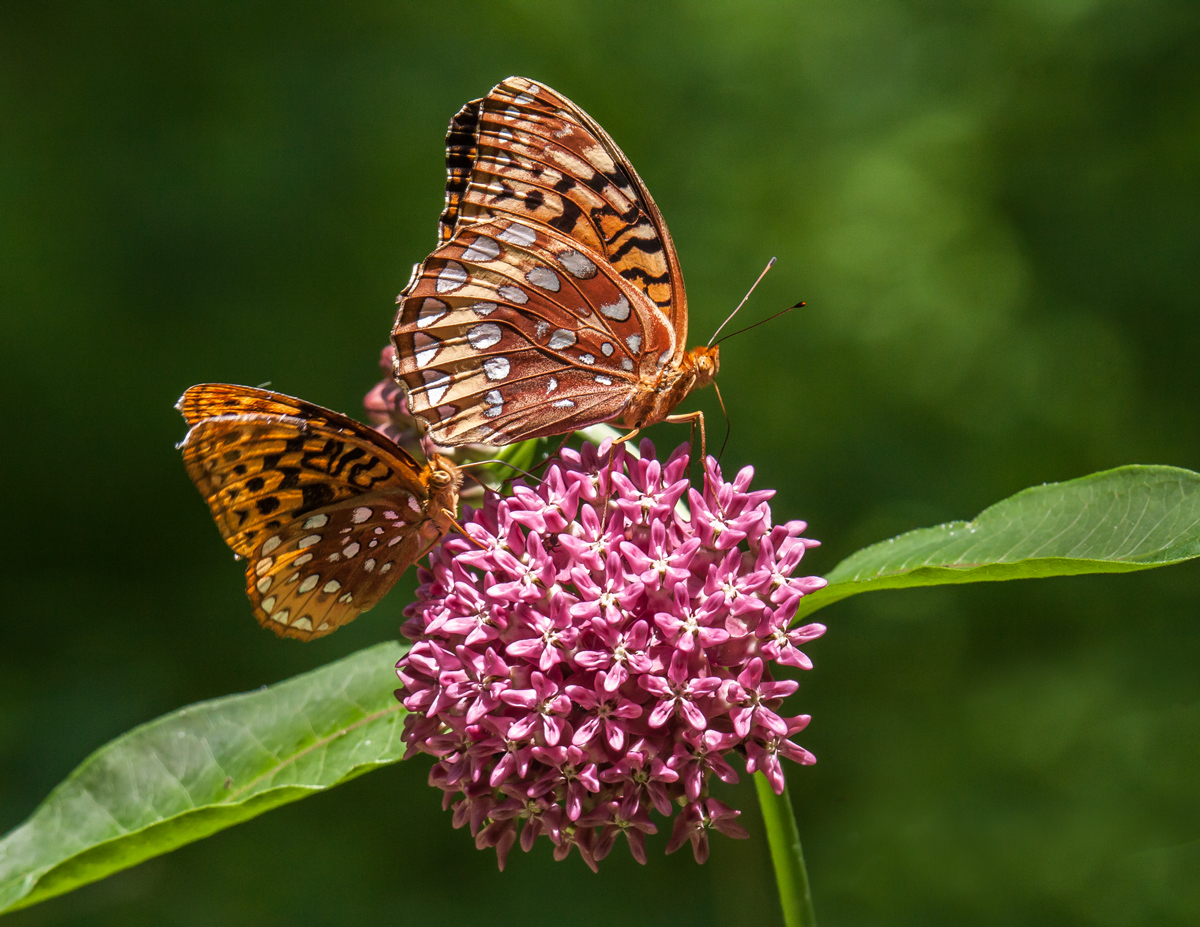
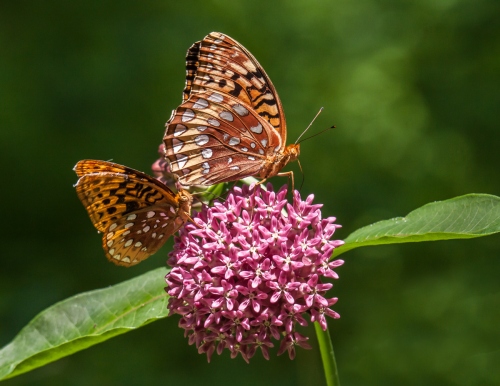
Swamp Milkweed (Asclepias incarnata) is now in bloom at my local marshland park and the Great Spangled Fritillary butterflies (Speyeria cybele) are loving it.
Michael Q. Powell. All rights reserved.
Posted in Butterflies, Flowers, Insects, Nature, Photography, spring | Tagged Alexandria VA, Asclepias incarnata, Canon 50D, Great Spangled Fritillary, Great Spangled Fritillary butterfly, Huntley Meadows Park, Speyeria cybele, swamp milkweed, Tamron 150-600mm telephoto | 6 Comments »
June 14, 2015 by Mike Powell
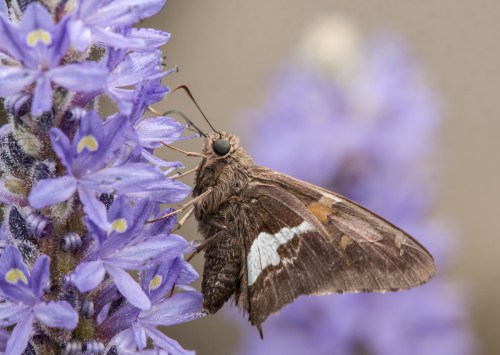
A Silver-spotted Skipper butterfly (Epargyreus clarus) kept returning to these purple flowers yesterday at the edge of a small pond at Brookside Gardens in Wheaton, Maryland. I am not sure what kind of flower this is, but the Silver-spotted Skipper, the only skipper that I can reliably identify, really seemed to like it.
Some of my fellow photographers with whom I traveled to the gardens really enjoy photographing flowers—I seem to have reached a point at which I enjoy shooting flowers primarily as a beautiful backdrop for showcasing insects.
There are a lot of gardens in the Washington D.C. area that provide for wonderful photographic opportunities, many of which, like this one, have no admission fee. Although I really enjoy shooting at the marshland park that I feature here so often, it’s nice to venture out a little for a bit of variety.
Michael Q. Powell. All rights reserved.
Posted in Butterflies, Flowers, Gardening, Insects, Macro Photography, Nature, Photography | Tagged brookside gardens, Canon 50D, Epargyreus clarus, Silver-spotted Skipper, Silver-spotted Skipper butterfly, Tamron 180mm macro lens, Wheaton MD | 2 Comments »
June 13, 2015 by Mike Powell
This is what Huntley Meadows Park looked like this past Friday morning around 6:00, with low hanging mist covering the fields, and the early morning silence broken periodically by the calls of Red-winged Blackbirds.
Normally I am so anxious to take close-up shots that I forget to try to capture the surroundings. This time I remembered and think the shot gives a pretty good idea of the way things felt and looked as the day began.

Michael Q. Powell. All rights reserved.
Posted in Birds, Landscape, Nature, Photography | Tagged Alexandria VA, Canon 50D, dawn, Huntley Meadows Park, red-winged blackbird, Tamron 150-600mm telephoto | 5 Comments »
June 13, 2015 by Mike Powell
Shortly after dawn one morning last week, I encountered a Great Blue Heron (Ardea herodias) that seemed to be pensively contemplating the new day. He glanced in my direction as I took a few shots, but remained in place as I continued on my way, both of us lost in our thoughts.

Michael Q. Powell. All rights reserved.
Posted in Birds, Nature, Photography, spring, wildlife | Tagged Alexandria VA, Ardea herodias, Canon 50D, Great Blue Heron, Huntley Meadows Park, Tamron 150-600mm telephoto | 5 Comments »
June 12, 2015 by Mike Powell
One of my favorite summer dragonflies is the tiny Eastern Amberwing (Perithemis tenera). Its distinctive coloration makes it pretty easy to identify, even from a distance.

Michael Q. Powell. All rights reserved.
Posted in dragonfly, Insects, Macro Photography, Photography, wildlife | Tagged Alexandria VA, Canon 50D, Eastern Amberwing, Eastern Amberwing dragonfly, Huntley Meadows Park, Perithemis tenera, Tamron 150-600mm telephoto | 6 Comments »
June 11, 2015 by Mike Powell
I spotted a beautiful Mourning Cloak butterfly (Nymphalis antiopa) this past weekend at Huntley Meadows Park and suspect that it recently emerged. I always thought of Mourning Cloaks, which are apparently known as Camberwell Beauties in Great Britain, only as an early spring butterfly, because I knew that they overwinter with us as adults.
After doing a little research, I learned that the hardy winter survivors mate in the early spring and then die. The eggs turn into caterpillars that pupate and the new butterflies emerge in June or July. After briefly feeding, the butterflies will enter into a state of dormancy (called aestivation) for the summer. I must confess that I was not familiar with the word “aestivation” when I first ran across it and had to look it up. As far as I can tell, it’s the summer equivalent of hibernation. Last year I remember learning the word “brumation,” which is a hibernation-like state that helps turtles survive in the mud during the winter. Who knew there were so many hibernation-type states?
In the fall, the Mourning Cloak butterflies will go on a real feeding frenzy to store up energy for the long winter. It’s amazing to realize that these butterflies have a life span of 10 months, which is an eternity in the insect world.

Michael Q. Powell. All rights reserved.
Posted in Butterflies, Insects, Macro Photography, Nature, Photography, wildlife | Tagged aestivation, Alexandria VA, Camberwell Beauty, Canon 50D, Huntley Meadows Park, Mourning Cloak, Mourning Cloak butterfly, Nymphalis antiopa, Tamron 150-600mm telephoto | 11 Comments »
« Newer Posts - Older Posts »