Feeds:
Posts
Comments

Archive for July, 2026

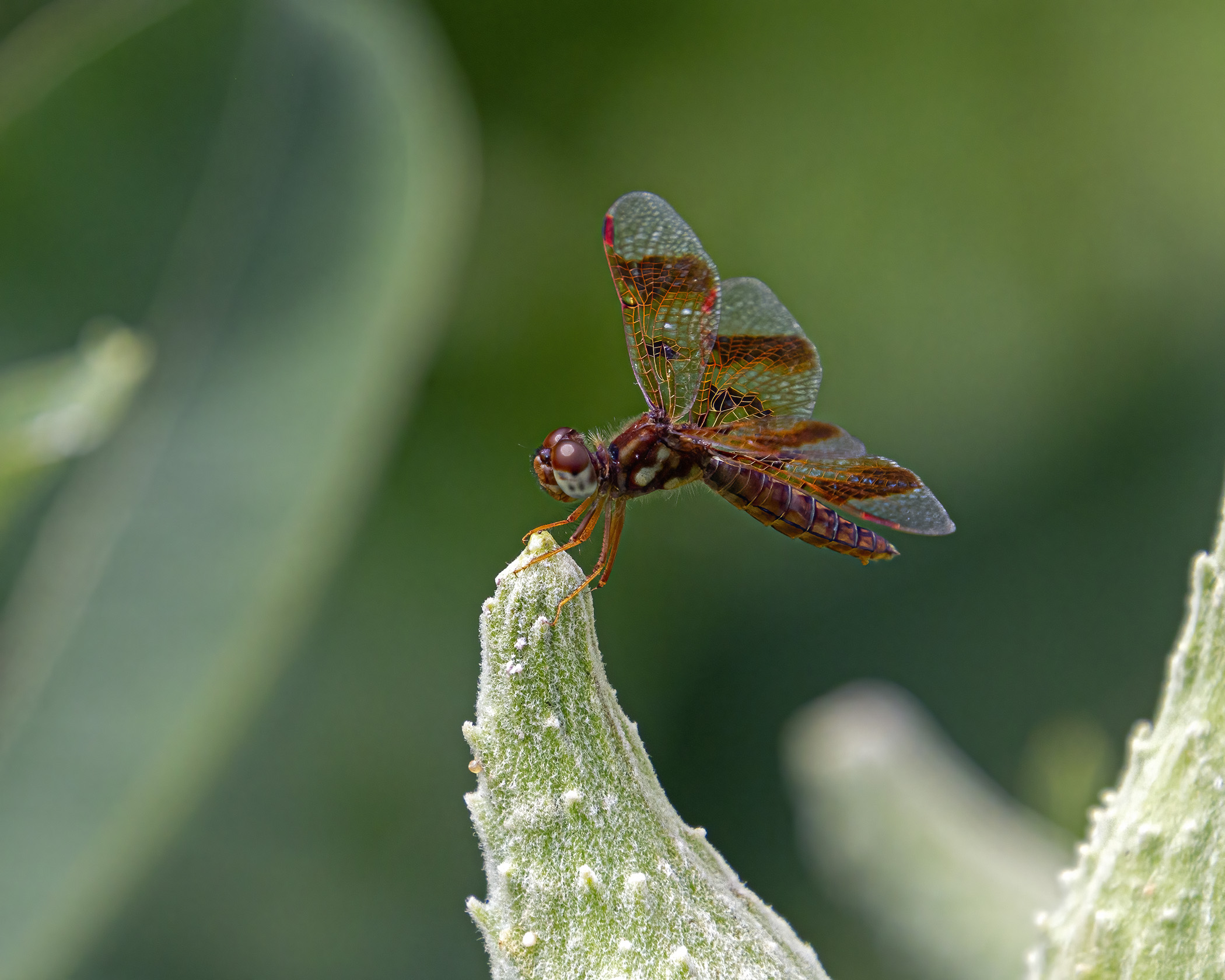
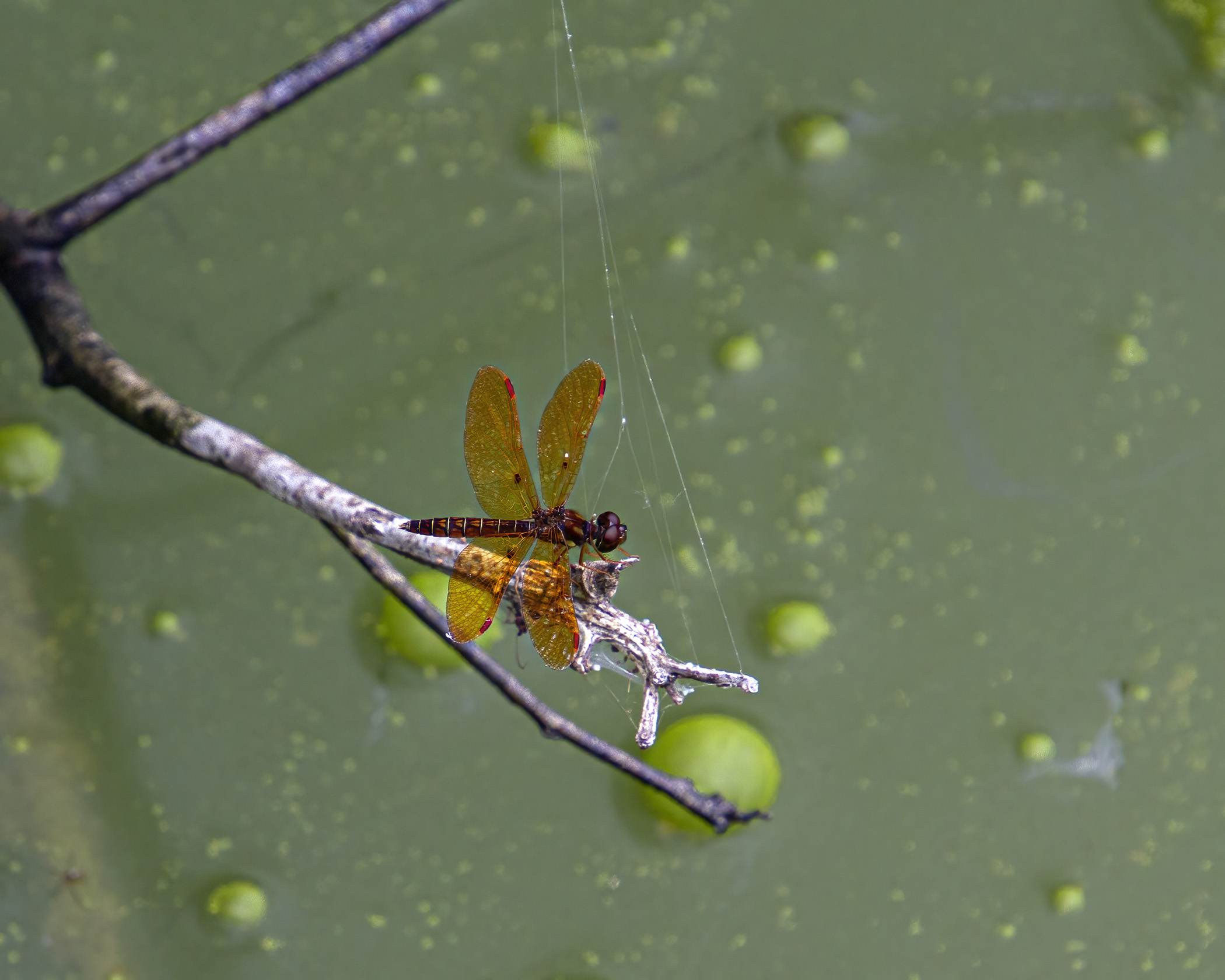
I was excited to spot this female Eastern Amberwing dragonfly (Perithemis tenera) last week at Huntley Meadows Park. Male dragonflies of this species, as you might suspect from its common name, have wings that are amber in coloration, as you can see in the second photo below. Usually the males buzz around over the water at the edges of ponds and I see them quite frequently. Females, however, are most often found in vegetation until they decide that it is time to mate and I don’t see them very often.

Eastern Amberwings are one of the smallest dragonflies in my area at about one inch in length (25 mm). They are considered by some to be wasp mimics.  When they are perched, they reportedly wiggle their abdomen and wings in a wasp-like fashion to deter other animals from eating them.

Female Eastern Amberwing

Eastern Amberwing

© Michael Q. Powell. All rights reserved.

Read Full Post »

When the background in a photo is cluttered, it is often hard to see the main subject, but that was not the case with this beautiful female Eastern Pondhawk dragonfly (Erythemis simplicicollis) that I photographed on Tuesday at Huntley Meadows Park, a local wetlands. I love the brilliant green of the this dragonfly’s thorax and the blackish banding on its abdomen (the “tail”).

You can’t really see it from this angle, but both female and male Eastern Pondhawks have green faces.  This is particularly important for mature males, because it helps to easily distinguish them from males of other species that have a similar bluish coloration on their bodies.

There is something soothing and cooling about this photo, probably because of the sea of green vegetation that surrounds the dragonfly. I can’t help but think of Kermit the Frog singing one of his iconic songs, “It’s not easy being green.” Initially Kermit laments the fact that he is green and blends in with so many ordinary things. Eventually, though, he comes to accept himself as he is, rather than wishing he were different, realizing the beauty of his greenness.

Without getting all preachy, I think there is a lesson there for all of us. Someone famously said that “Comparison is the thief of joy” and we can end up feeling really bad  when we compare ourselves with the curated versions of people we see on social media. Wouldn’t it be better if we could all recognize that we are all beautiful in our own unique ways? As I have repeatedly written on this blog, I believe that beauty is everywhere if we can slow down enough to see it,

On the off chance that you are not familiar with the lyrics of “It’s not easy being green,” I have included them below, as found on theteachersguide.com.

“It’s not that easy being green;
Having to spend each day the color of the leaves.
When I think it could be nicer being red, or yellow or gold…
or something much more colorful like that.

It’s not easy being green.
It seems you blend in with so many other ord’nary things.
And people tend to pass you over ’cause you’re
not standing out like flashy sparkles in the water
or stars in the sky.

But green’s the color of Spring.
And green can be cool and friendly-like.
And green can be big like an ocean, or important like a mountain,
or tall like a tree.

When green is all there is to be
It could make you wonder why, but why wonder why?
Wonder, I am green and it’ll do fine, it’s beautiful!
And I think it’s what I want to be.”
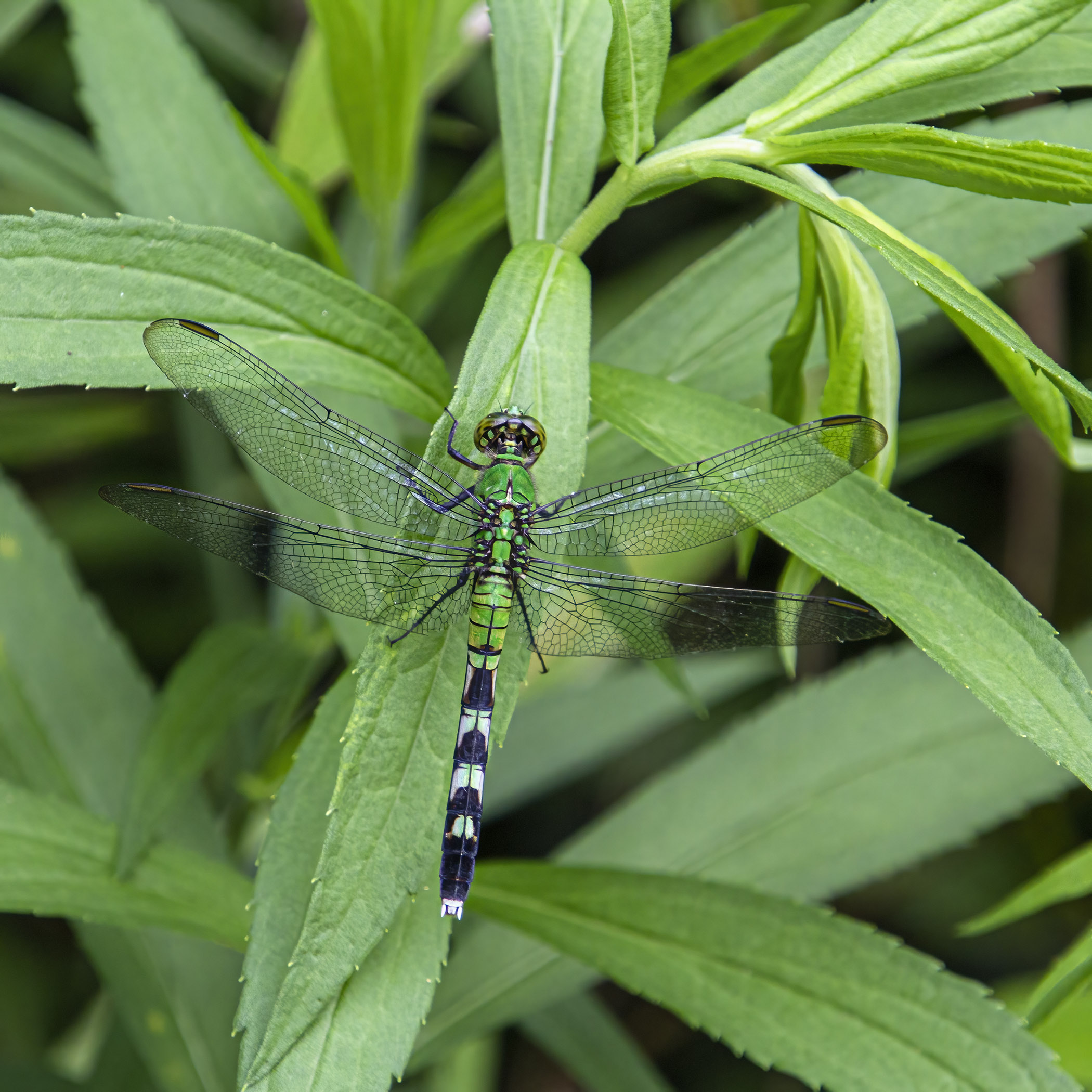
Eastern Pondhawk

© Michael Q. Powell. All rights reserved.


Read Full Post »
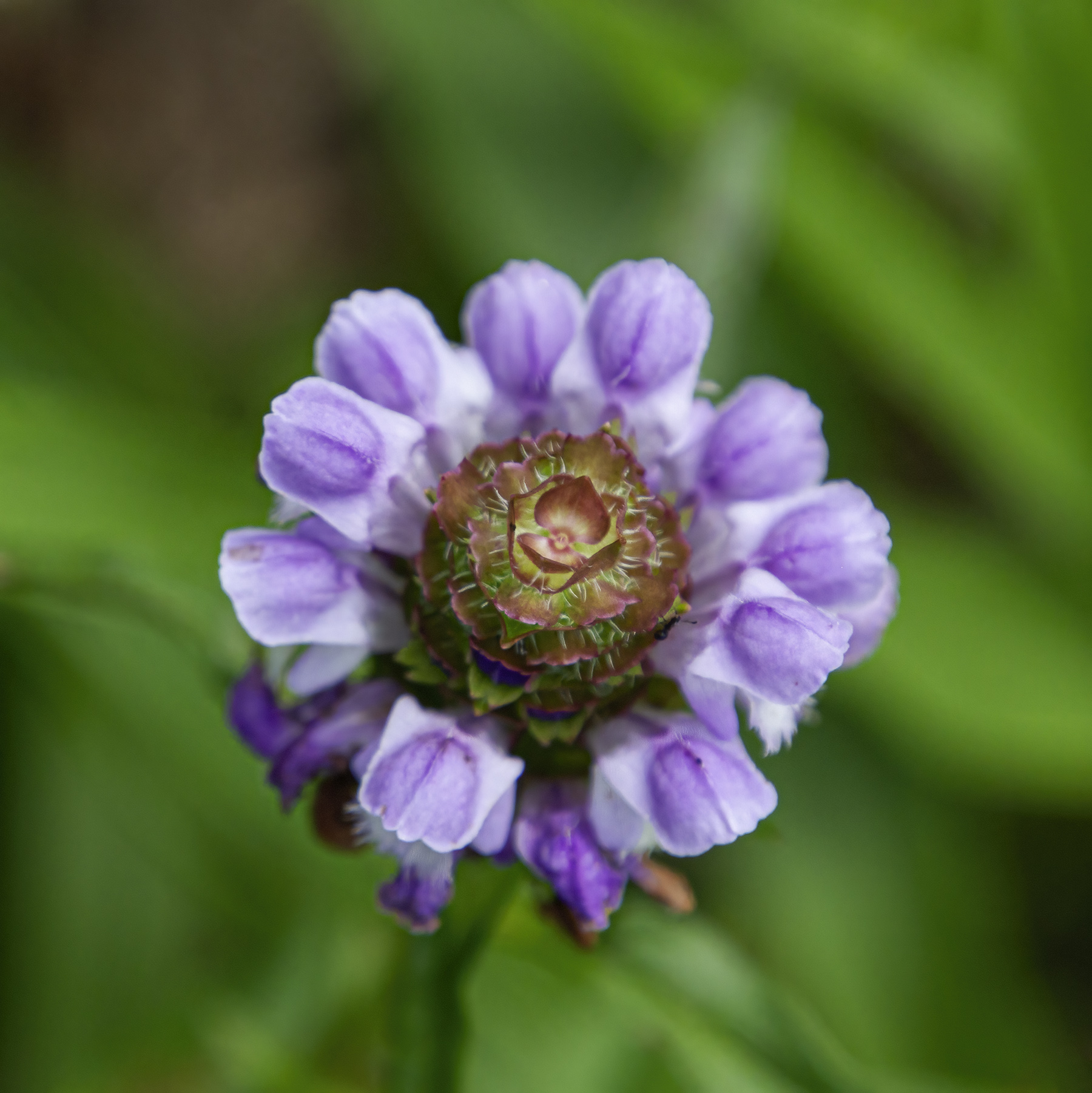
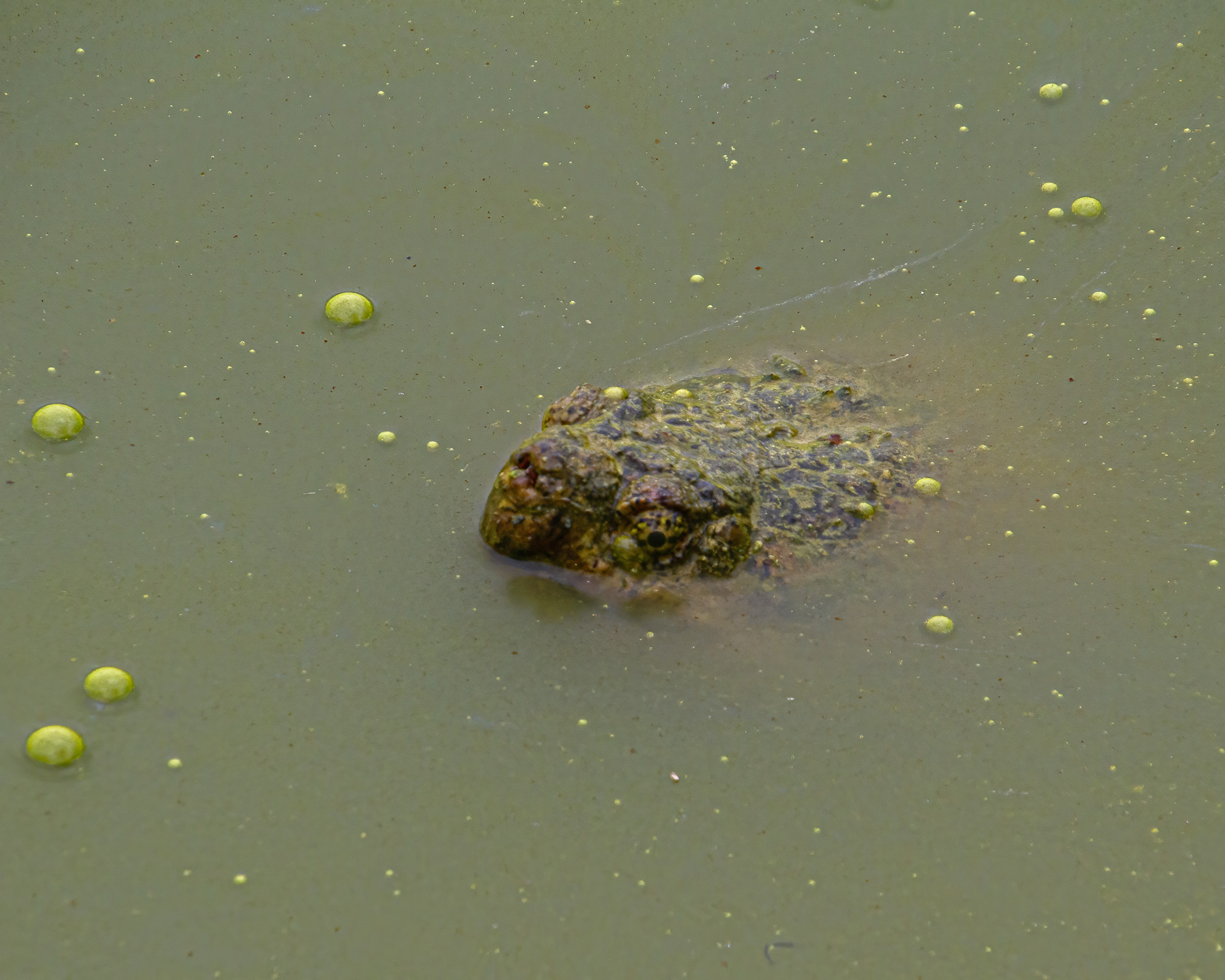
The temperatures were a bit lower yesterday and the air quality was better, so I finally ventured out with my camera. I managed to capture a number of fun images of things that caught my eye as I was walking along a hike-bike trail at Huntley Meadows Park, a local, county-run wetland park that I used to visit frequently until it became too popular and overcrowded.

This was my first photo expedition in the wild in more than a month and a half. I was busy with Pride things during parts of June, so I spent time in urban environments, enjoying the events, capturing only a few snapshots with my iPhone. Various combinations of high temperatures, thunderstorms, and unhealthy air quality have kept me indoors this month. To be perfectly honest, I have felt a bit sluggish and lazy, which is a bit unusual for me.

Yesterday I feel like I reconnected with my “mojo,” fully immersing myself in the environment with all of my senses engaged. I couldn’t help but notice, however, how many people that passed me had their eyes focused on their cell phones and were virtually oblivious to the beauties of nature that surrounded them.

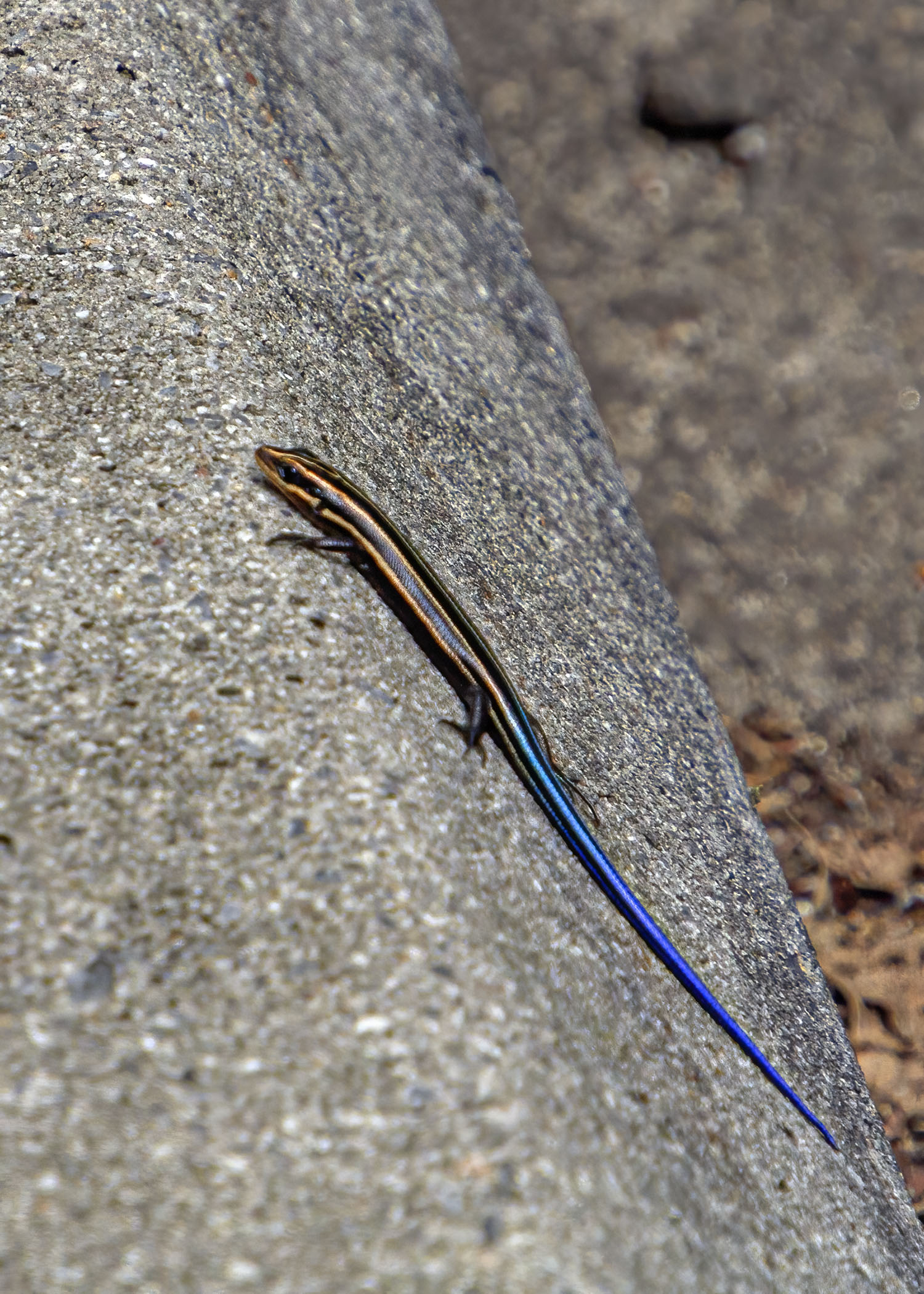
What about you? Would you have noticed the tiny flowering plant growing inches off of the ground? (Please let me know if you can identify it—I came up empty-handed after a cursory internet search.”) Would you have stared down at the murky waters of the pond long enough to spot the snapping turtle that had poked its eyes above the surface and seemed to be watching me? Would you have reacted quickly enough to capture a shot of the bright blue tail of the five-lined skink that momentarily flashed into view as I was walking back to the parking lot?

If you have walked along with me yesterday, different subjects might have caught your attention and you undoubtedly would have captured different images. This little set of photos gives you a general idea of how I view the natural world. What catches your eye?

Snapping Turtle

five-lined skink

© Michael Q. Powell. All rights reserved.


Read Full Post »
It’s hard to believe it, but I started this blog 14 years ago and it still is going. On 7 July 2012 my dear friend and photography mentor Cindy Dyer sat me down and told me that I was going to have a blog. She already had some experience with Word Press and helped me set up my account and publish my first posting. In case you are curious, my first post that was simply entitled Blue Dasher dragonfly and featured a photo of a Blue Dasher (Pachydiplax longipennis) in the obelisk position that made it look a bit like the dragonfly was doing a handstand.

Word Press keeps track of a lot of statistics and I am never sure how accurate they are, but according as of today I have published 5,558 posts (including a small number of re-posts by other bloggers) and have had 673,856 views. Those numbers are so big that they boggle my mind a bit. For a number of years I was posting almost daily, but I have slowed down somewhat over the last few years.

That being said, my approach to my blog has remained remarkably consistent over the years. I remember when I first decided to use the words, “My journey through photography” as the subtitle for the blog and the blog has become a kind of journal documenting many of the amazing things I have encountered and my reactions to them.

Thanks so much to all of you for your support and encouragement that have helped to keep me going on this continuing journey. “Progress,” however you define it, has been slow and the pathway has definitely been meandering.

This recent photo of turtles seems to be appropriate as I pause and reflect, basking a bit in the warm feelings as I think about the past. This blog has helped me to come out of my shell a bit and to share a lot about the thoughts and emotions that bounce around in my head and in my heart. Undoubtedly that leaves me vulnerable, but as the old adage says, a turtle makes progress only by sticking out its neck.

turtles

© Michael Q. Powell. All rights reserved.

Read Full Post »
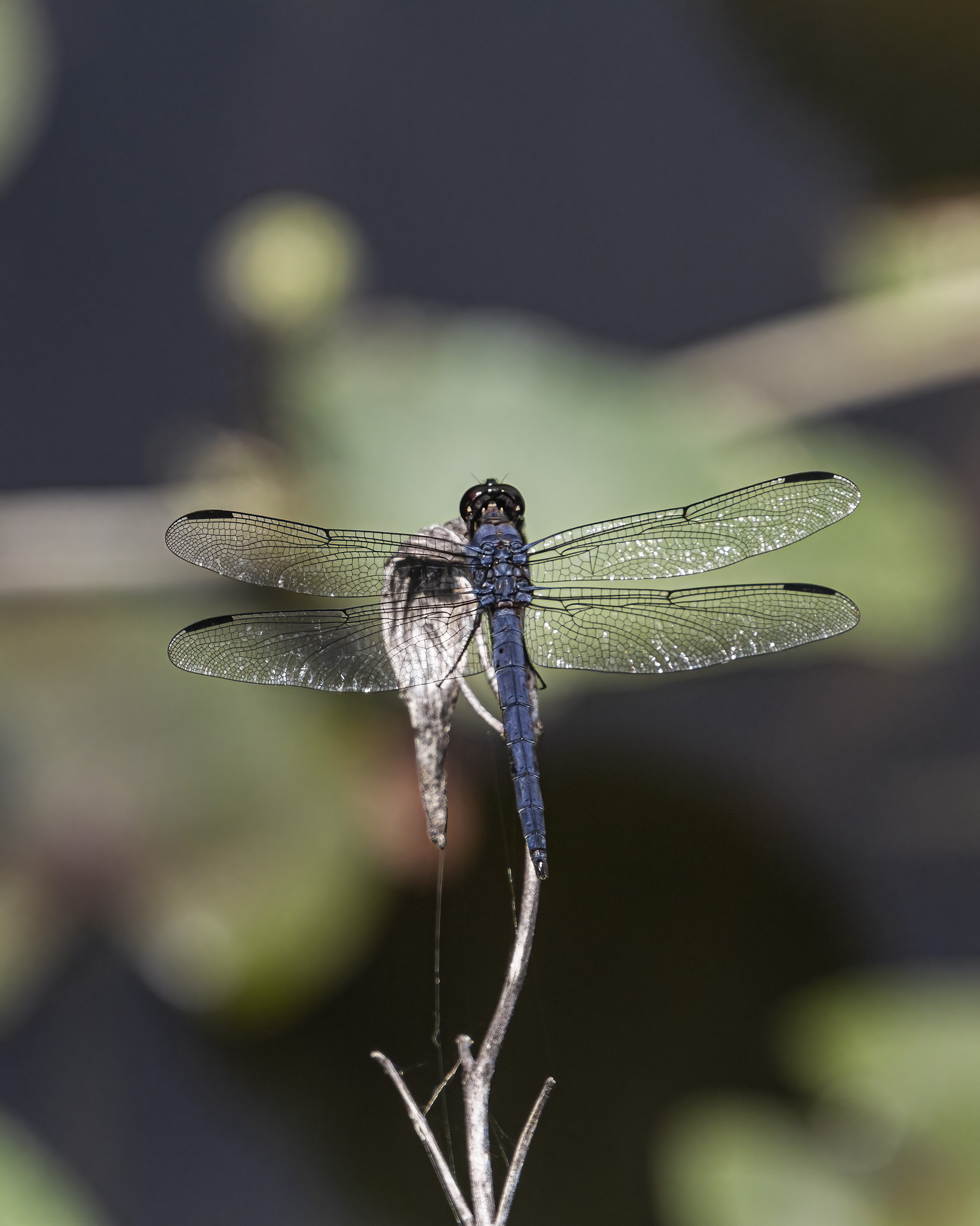
During a recent visit to Jackson Miles Abbott Wetland Refuge Slaty Skimmer dragonflies (Libellula incesta) were probably the most common dragonflies that I spotted. They were buzzing around the pond and seemed unafraid to approach me. Somehow it seemed to me that they were friendly.

Slaty Skimmers have dark eyes and dark bodies, so they are pretty easy to identify. When the light is hitting them from the proper angle. though, they appear to be dark slate blue or purple in color rather than black.

Slaty Skimmer

Slaty Skimmer

© Michael Q. Powell. All rights reserved.

Read Full Post »
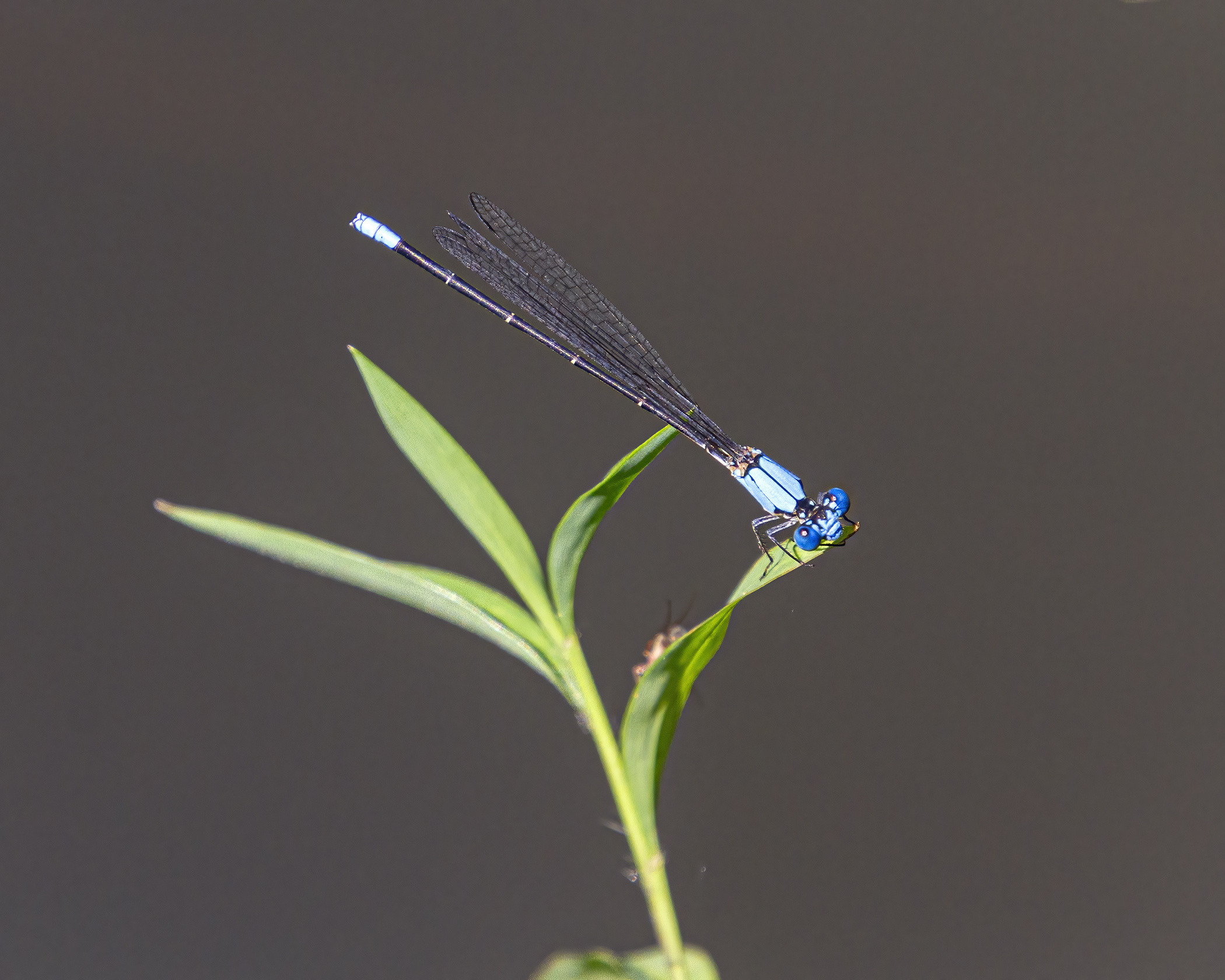
During a visit to Jackson Miles Abbott Wetland Refuge last Friday I spotted this beautiful little damselfly. Initially I could not identify the damselfly, though I could tell that it was a female. Just as with dragonflies, the males of most damselfly species tend to be more colorful and much easier to identify.

After searching through my damselfly identification guide, I concluded that this was probably a female Blue-fronted Dancer damselfly (Argia apicalis) and my identification was confirmed on Facebook by a much more experienced dragonfly/damselfly lover.

For the sake of comparison, I am including an image of a male Blue-fronted Dancer that I photographed in August 2025 at the same location. When I compare the two photos, I realize how much I tend to rely on colors for my identifications of species and how often I have difficulties when the color cues are absent.

There are, of course, other clues to look for, like the marking on the thorax, the eye colors, and the abdomen colors, but these features force me to look really closely and intently, most often after I get home rather than out in the field. As I have noted in the past, I tend to follow the law of the Wild West, “Shoot first and ask questions later.”

Blue-fronted Dancer

Blue-fronted Dancer

© Michael Q. Powell. All rights reserved.


Read Full Post »