Feeds:
Posts
Comments

Archive for the ‘dragonfly’ Category

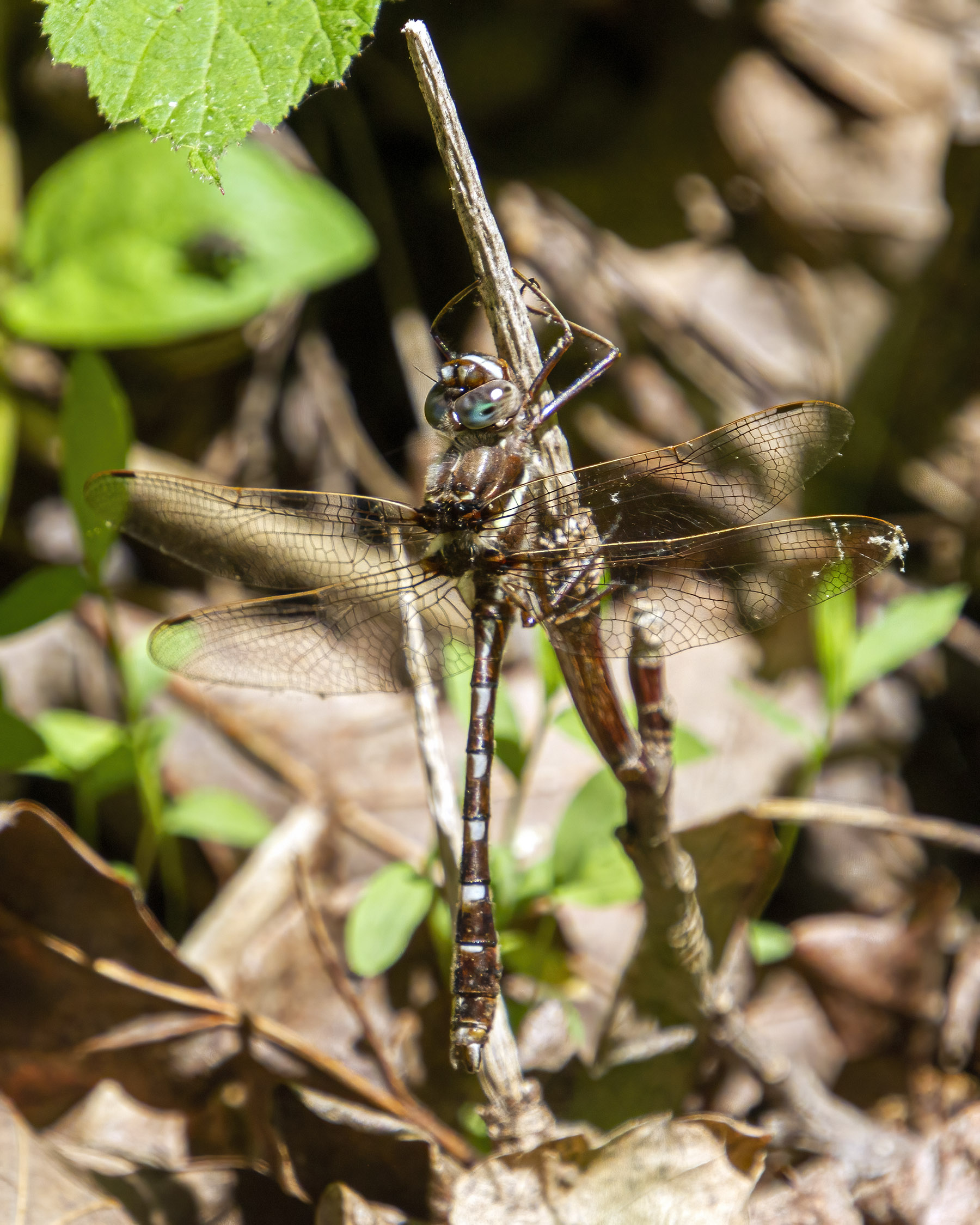
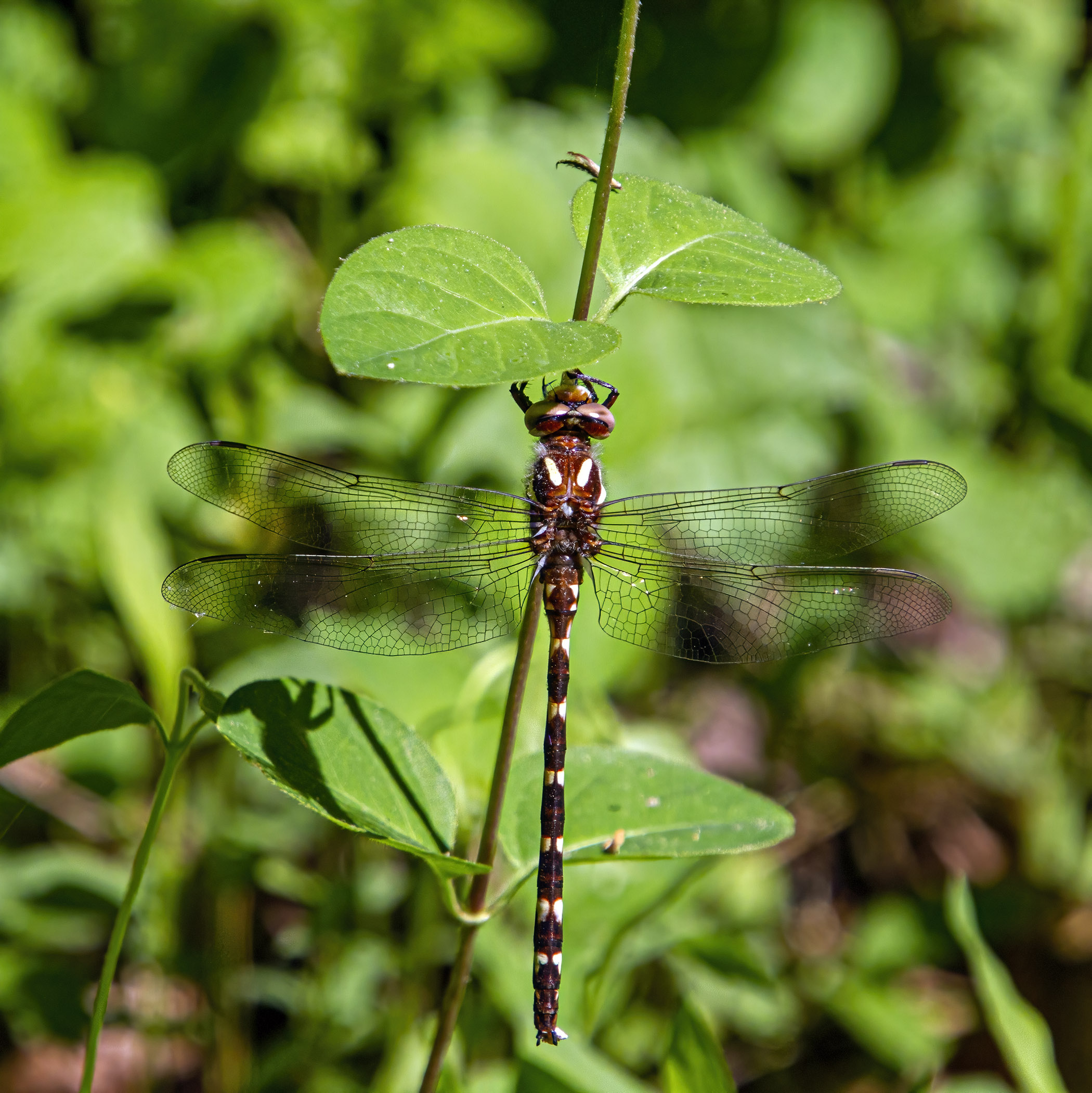
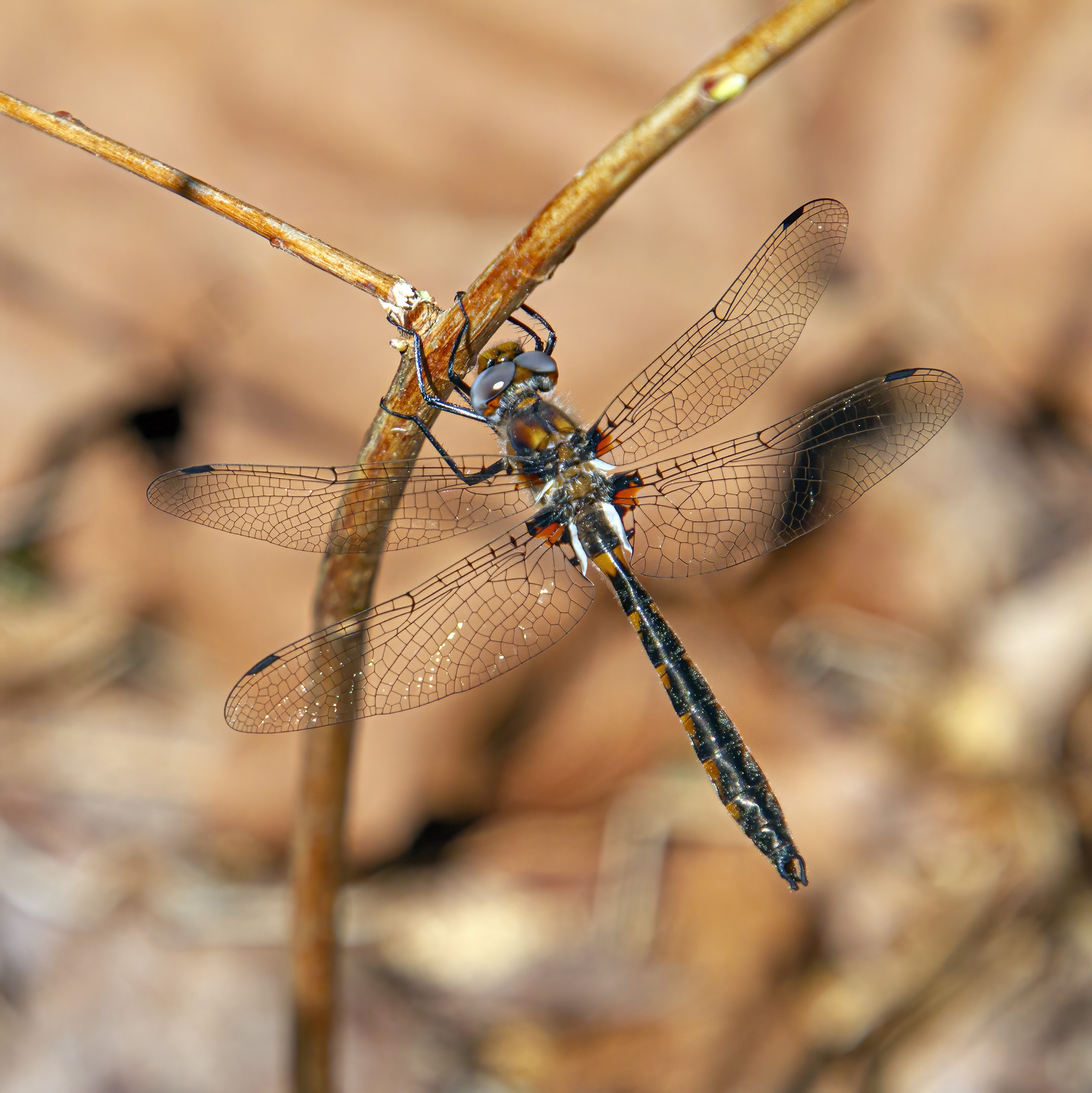
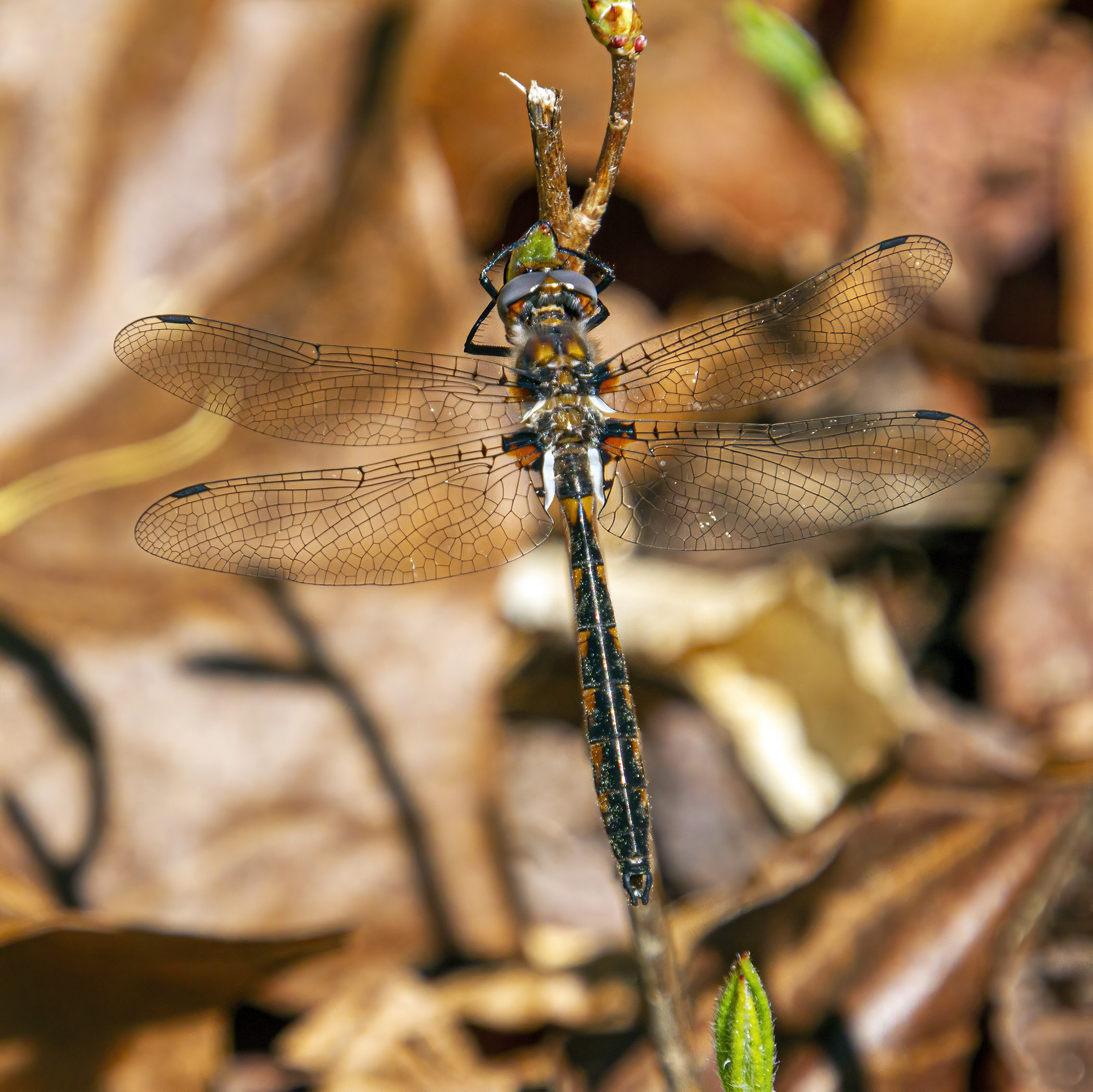
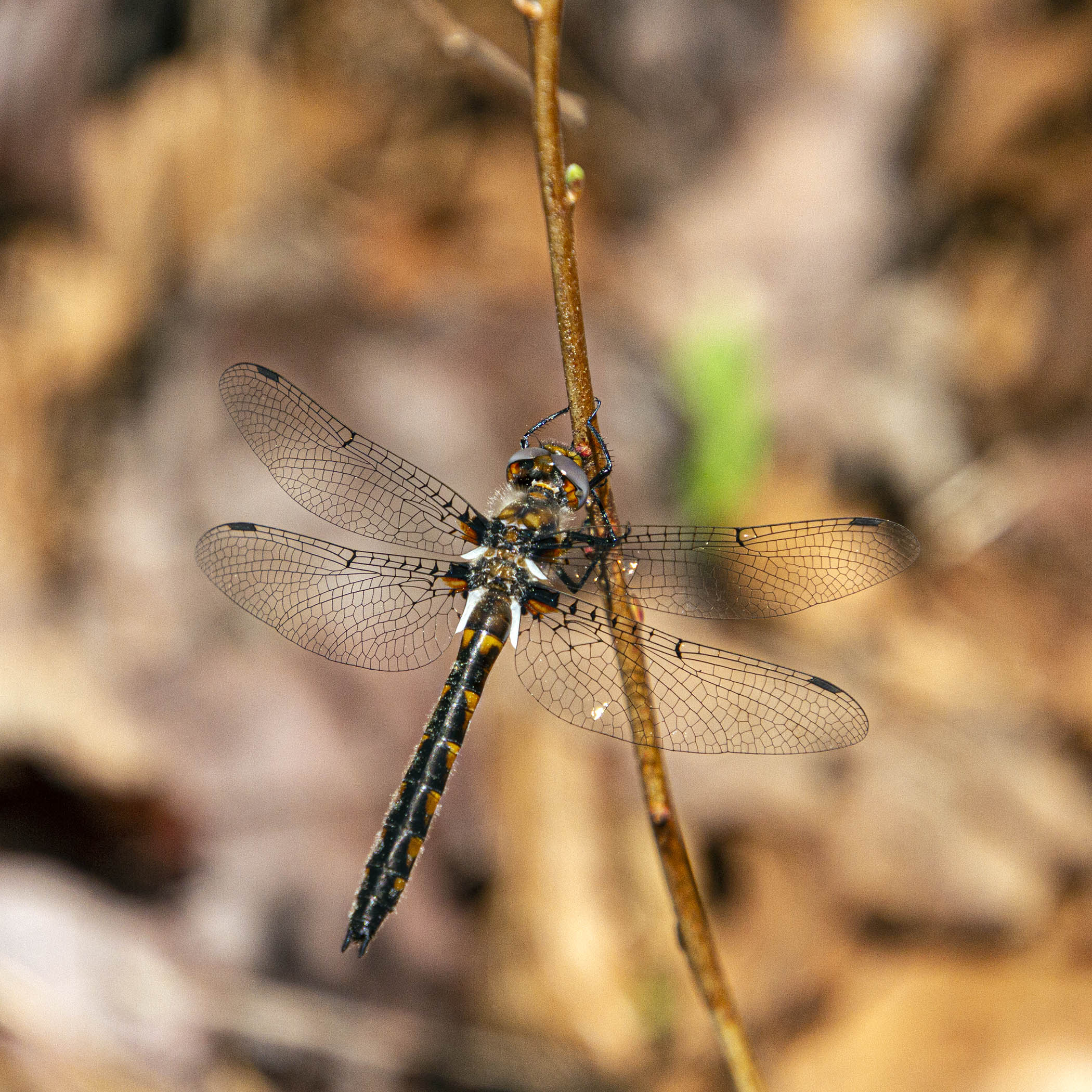
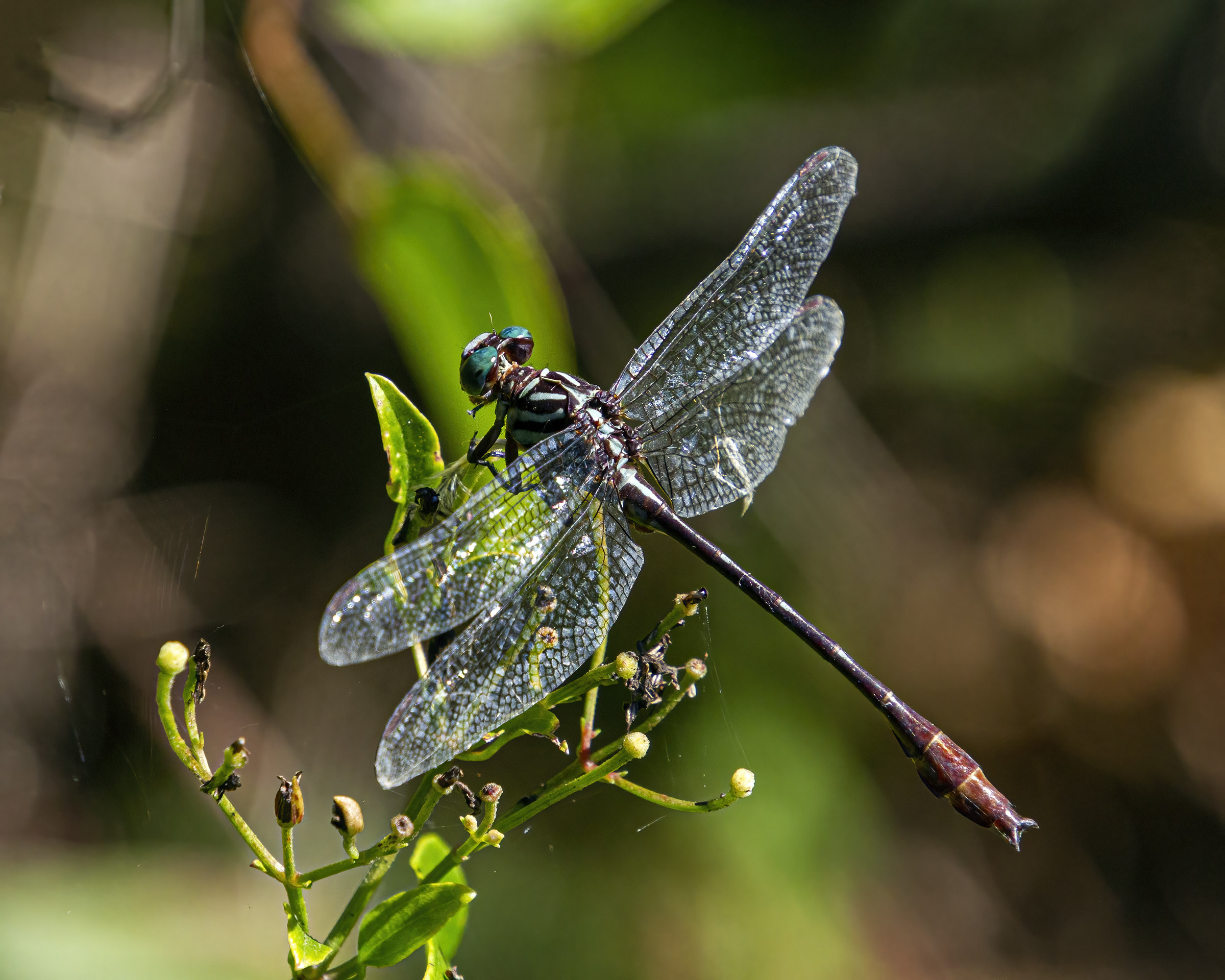
I was thrilled on Thursday to spot several Gray Petaltail dragonflies (Tachopteryx thoreyi) while I was exploring a small local pond. Actually I was exploring a mucky seep area beyond the pond, a habitat that I knew was preferred by this species. When I find an area with a lot of skunk cabbage, I know I am in the right kind of place to find this species.

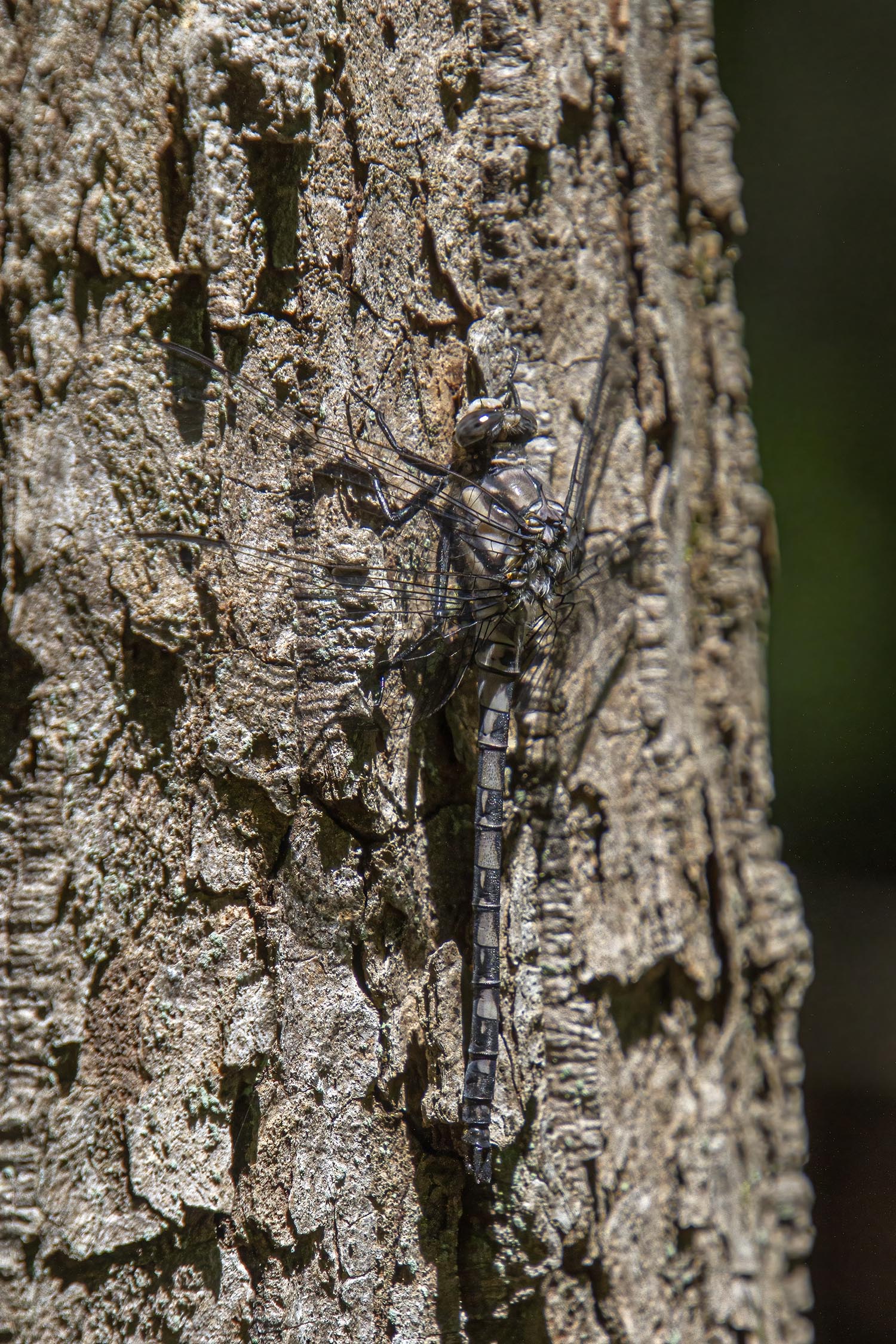
Gray Petaltails are amazing. They are the only member of the monotypic genus Tachopteryx and are often considered to be the most primitive living odonates. Colorwise, they are mostly grey and black, which allows them to blend in perfectly with the bark of tree trunks on which they often perch.

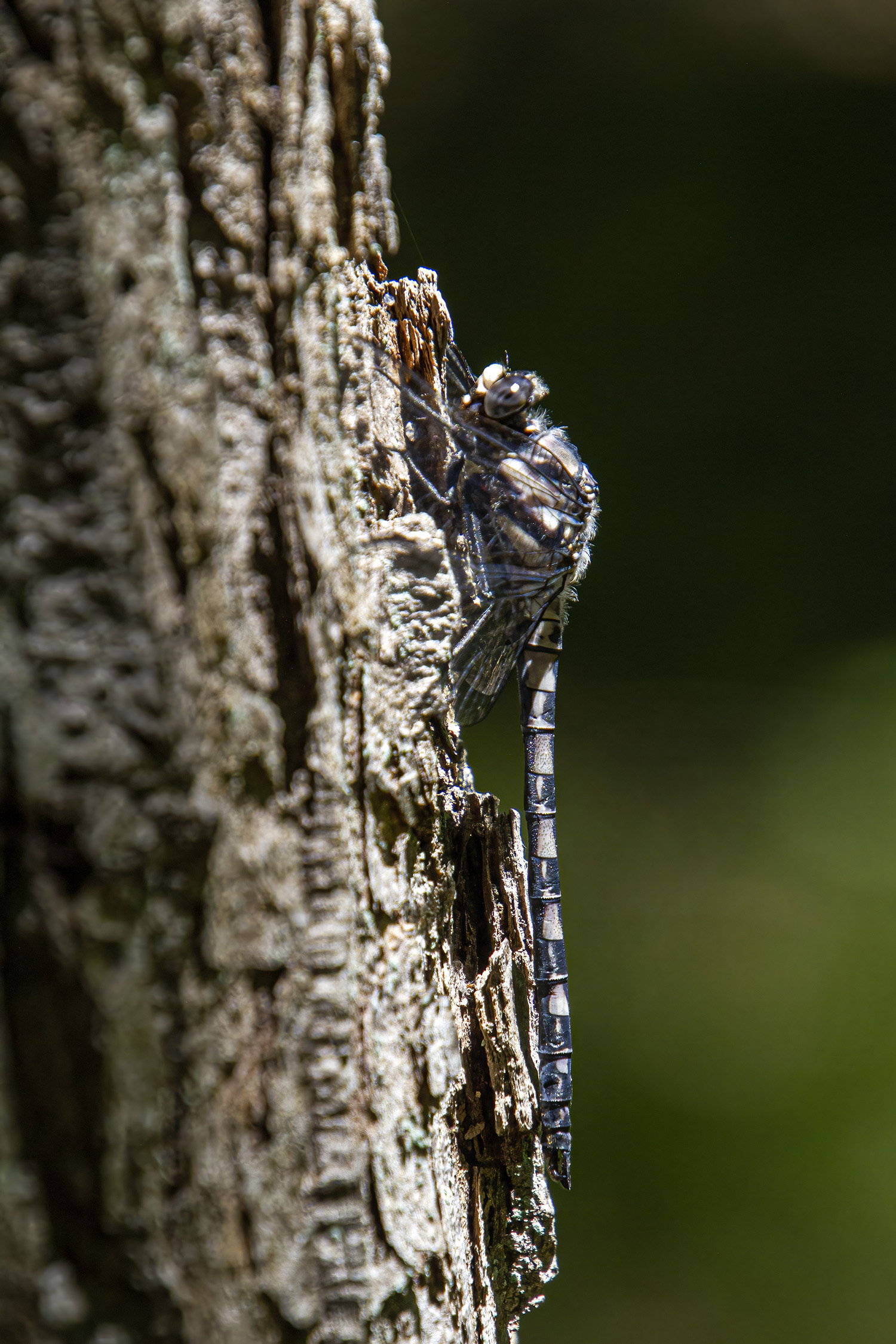
The first photo below shows an almost perfectly camouflaged Gray Petaltail. I watched it land on the tree trunk and still had some difficulty finding it in my camera’s viewfinder. I carefully moved to the side a bit and captured the second image in which you can see the dragonfly a bit better.

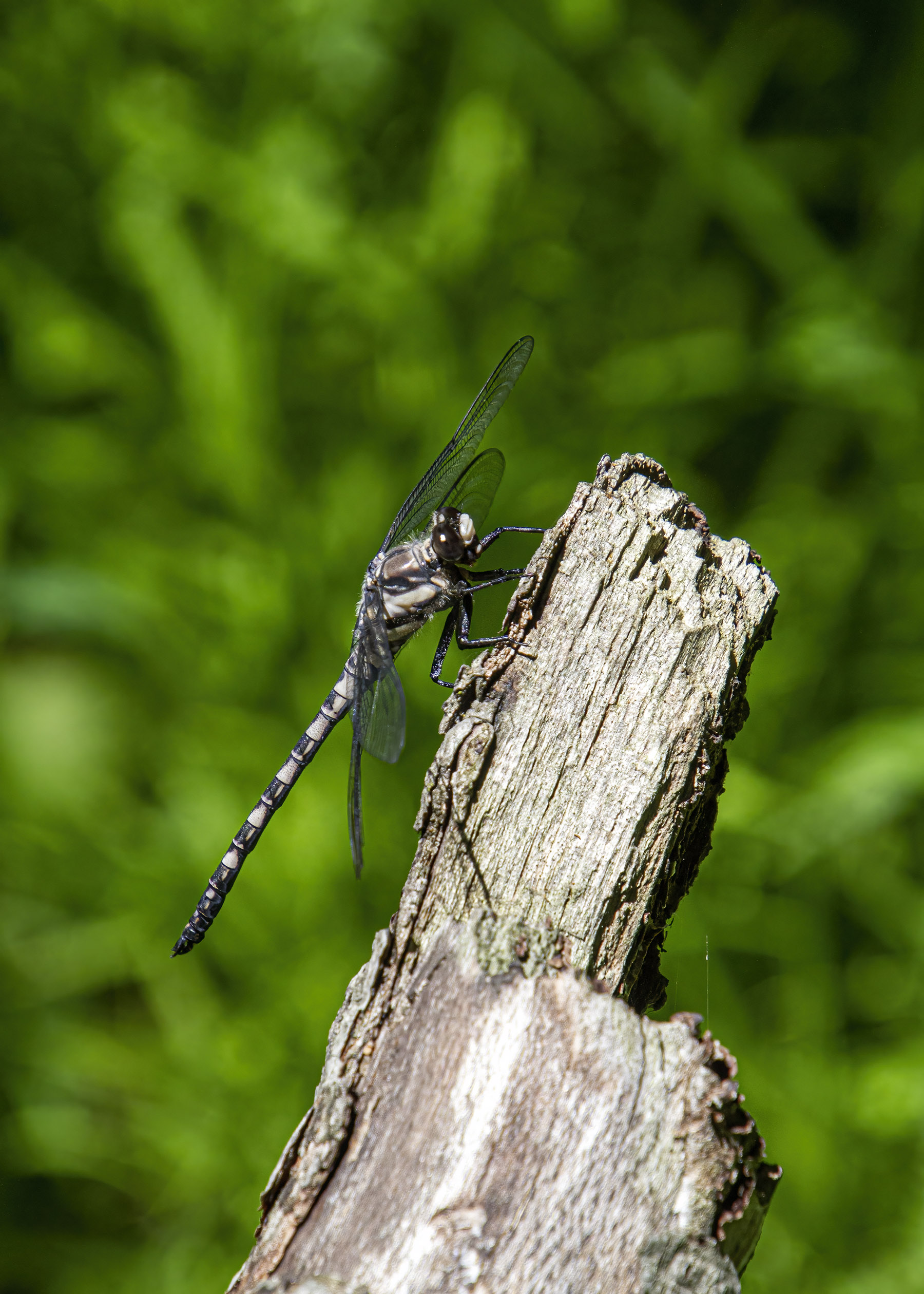
Once I had spotted my first Gray Petaltail, I hung around the seep area for quite a while and had a number of additional encounters. The third photo shows a Gray Petaltail perching on a broken off tree in the distance and I really like the way that the background looks in the shot.

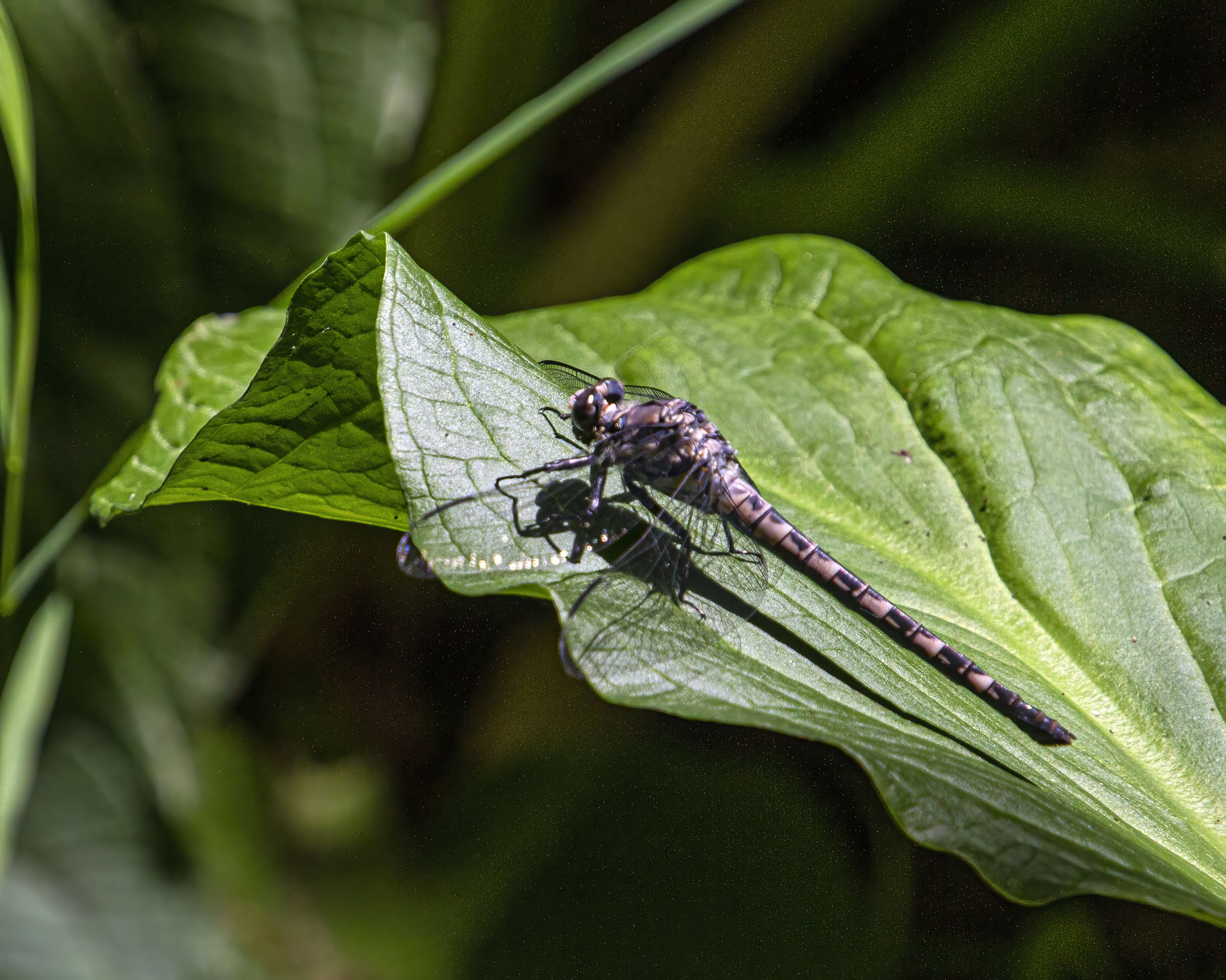
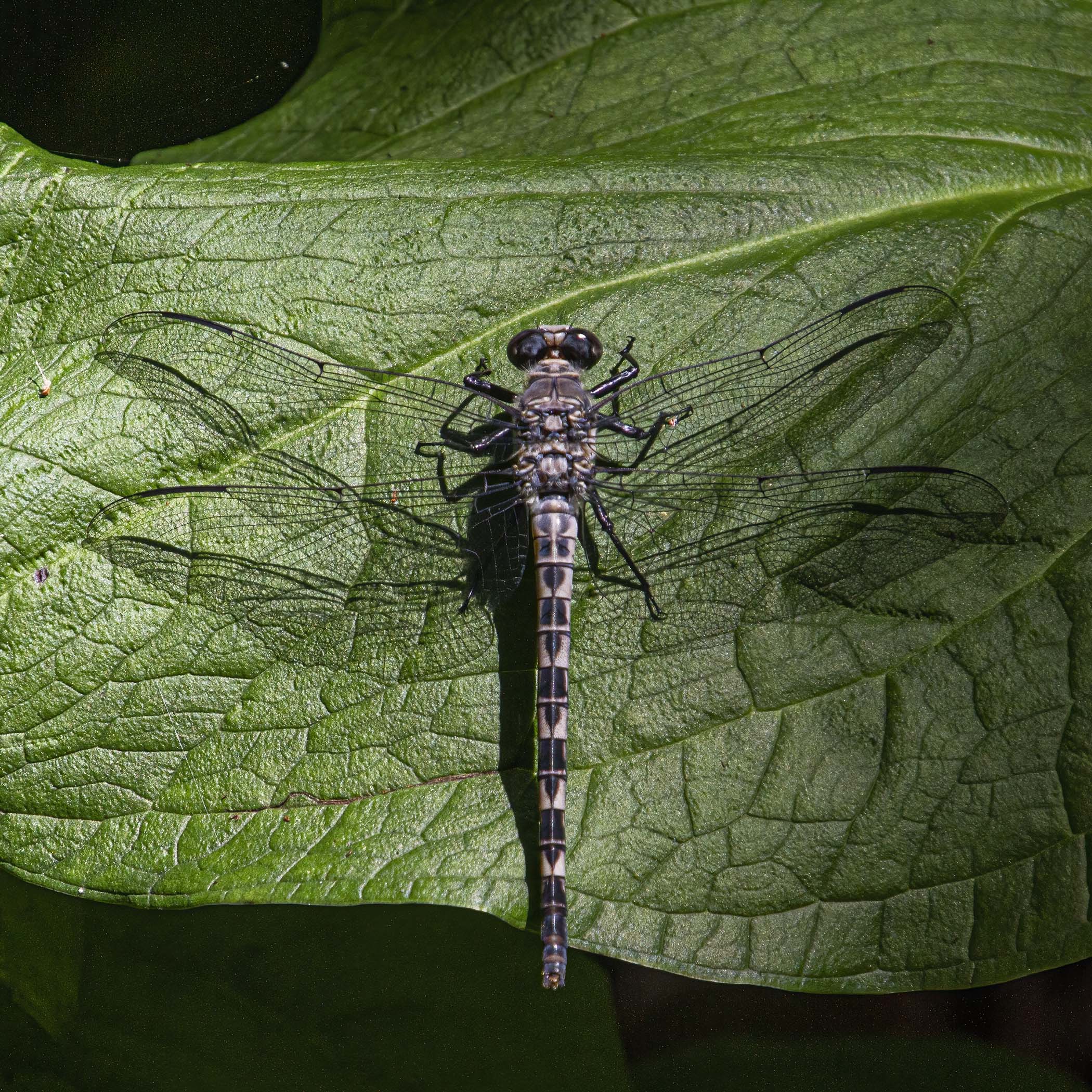
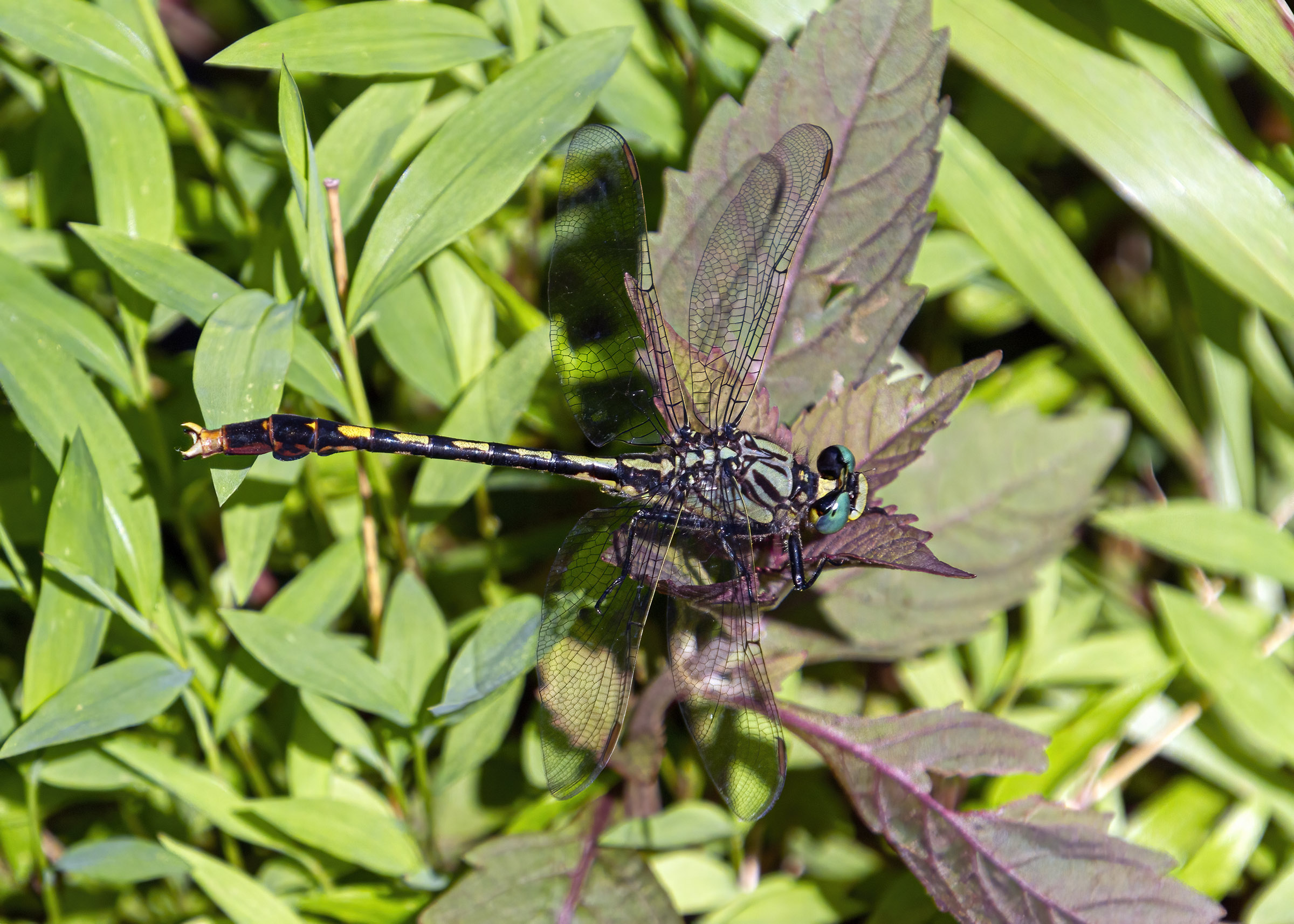
The final two shots are among my favorites, because they show a Gray Petaltail perched horizontally on skunk cabbage leaves. I have often tried to get shots like these, but in the past the Gray Petaltails have rarely perched on this vegetation. In the final image the dragonfly looks like it is perched vertically, but I took the shot with my camera pointed downward at the Gray Petaltail that was perched horizontally on the skunk cabbage leaf. I love the way I was able to capture the texture of the leaf and the shadows of the wings was a nice bonus.

Gray Petaltail


Gray Petaltail

Gray Petaltail

Gray Petaltail

Gray Petaltail

© Michael Q. Powell. All rights reserved.


Read Full Post »

Unicorns and dragons are mythical creatures, but I love to spend time chasing after them in the wild. If you know me well, you are probably aware of my fascination with dragonflies, one of my favorite subjects to photograph in the warmer months of the year. I am always delighted when I manage to spot a Unicorn Clubtail (Arigomphus villosipes), a beautiful dragonfly species in which both sexes have a small hornlike projection between their eyes that gives rise to their common name—you can’t really see the “horn” in these photos, so you’ll have to take my word on it. I spotted the Unicorn Clubtails in this posting yesterday while I was exploring a small pond in Fairfax County, Virginia where I live.

It is fairly easy to identify the males of this species, because of the rusty-edged club at the bottom portion of the dragonfly’s abdomen and its very visible bright tip. Male Unicorn Clubtails tend to fly short patrols and perch quite often on low vegetation.  It is not hard to spot them if I am in the appropriate environment, which is usually a pond or marsh, unlike most other clubtail dragonflies that prefer rivers and streams.

In the first photo, the dragonfly was perched on some flimsy vegetation growing out of the water. The Unicorn Clubtail tested out several plants that couldn’t support its weight before finding on on which he could perch. In the second photo, the dragonfly opted to perch in the abundant vegetation growing near the water’s edge. The background in this image is a bit cluttered, but I was happy that I managed to keep the dragonfly in relatively sharp focus.

Unicorn Clubtail dragonfly

Unicorn Clubtail dragonfly

© Michael Q. Powell. All rights reserved.

Read Full Post »

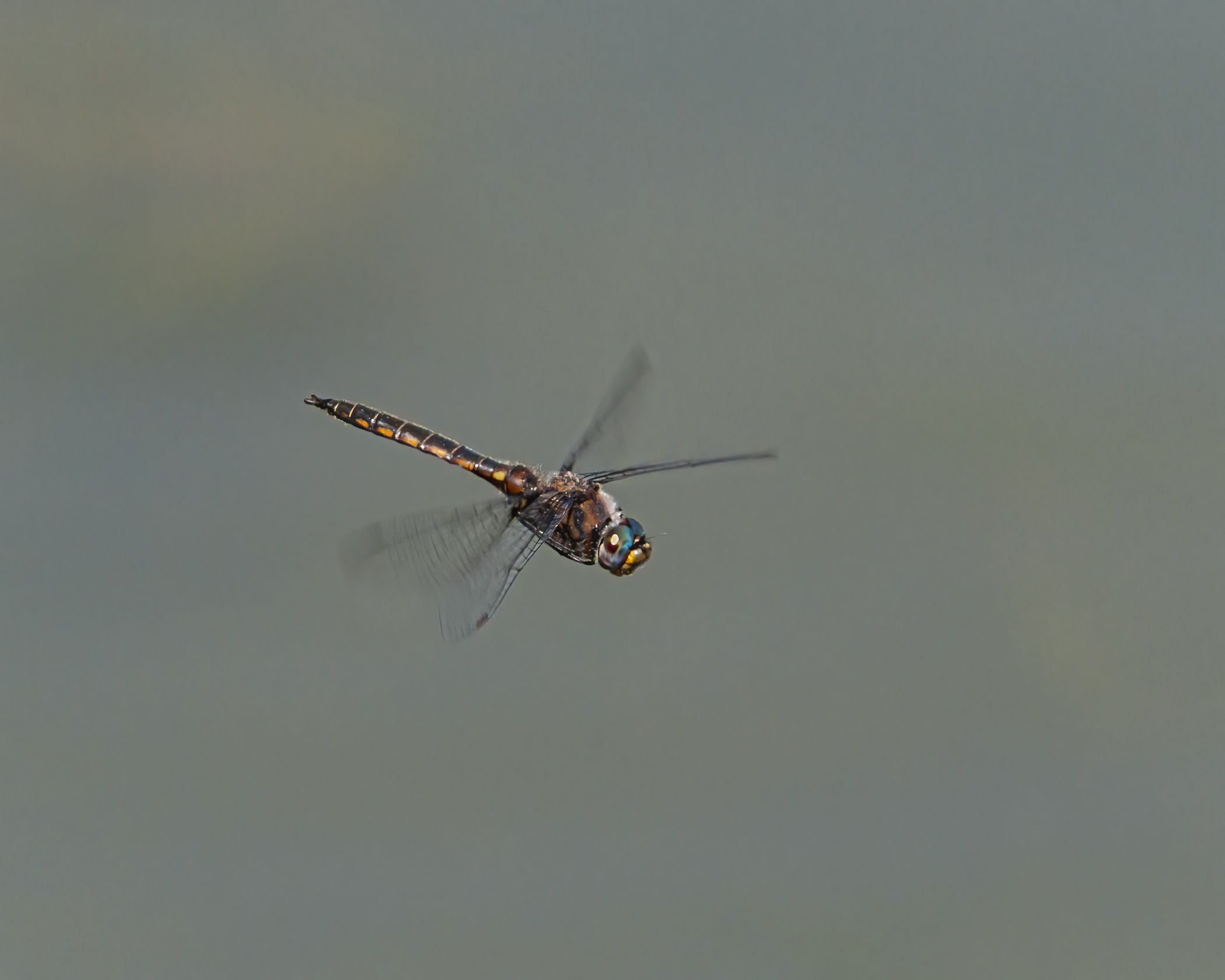
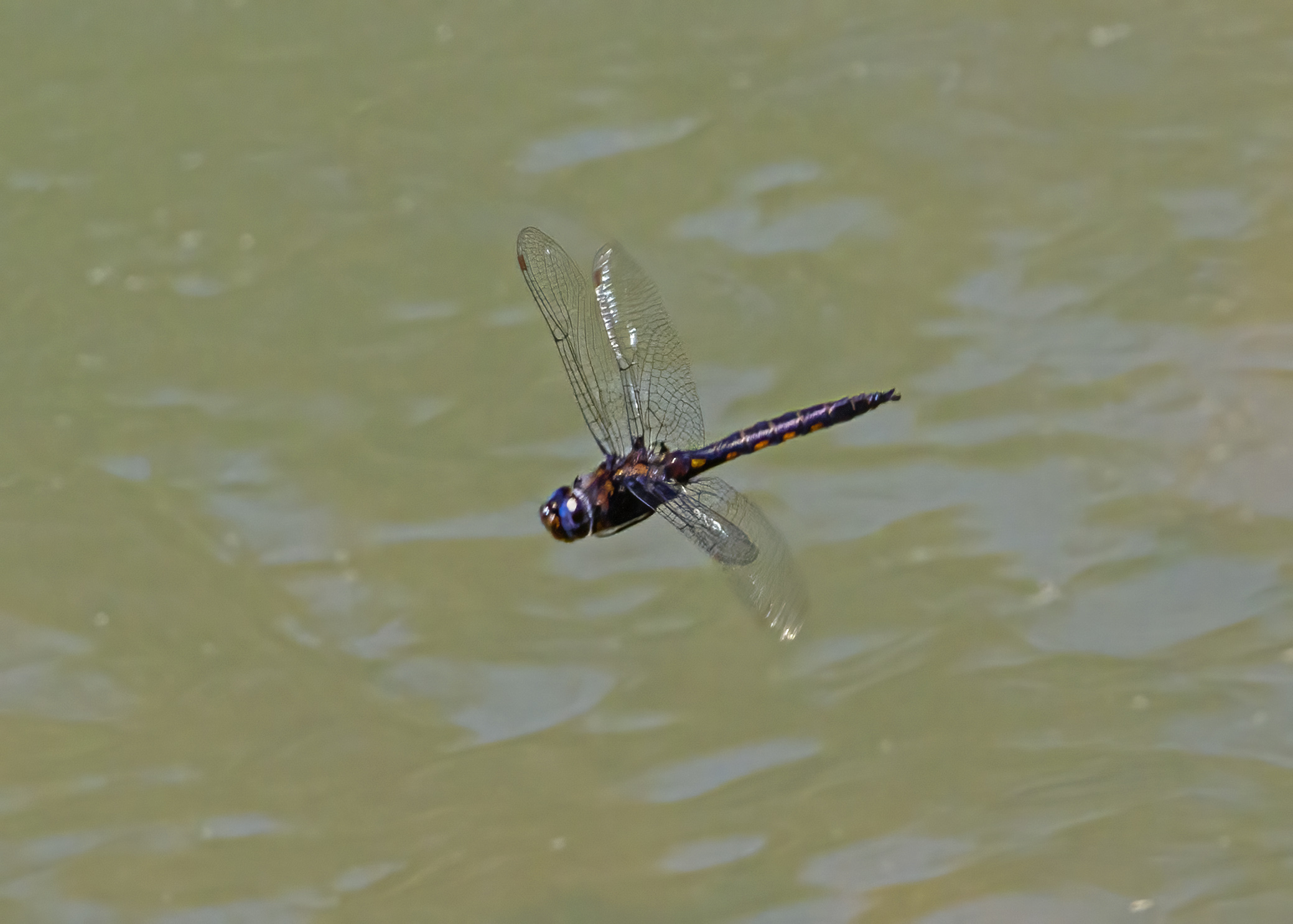
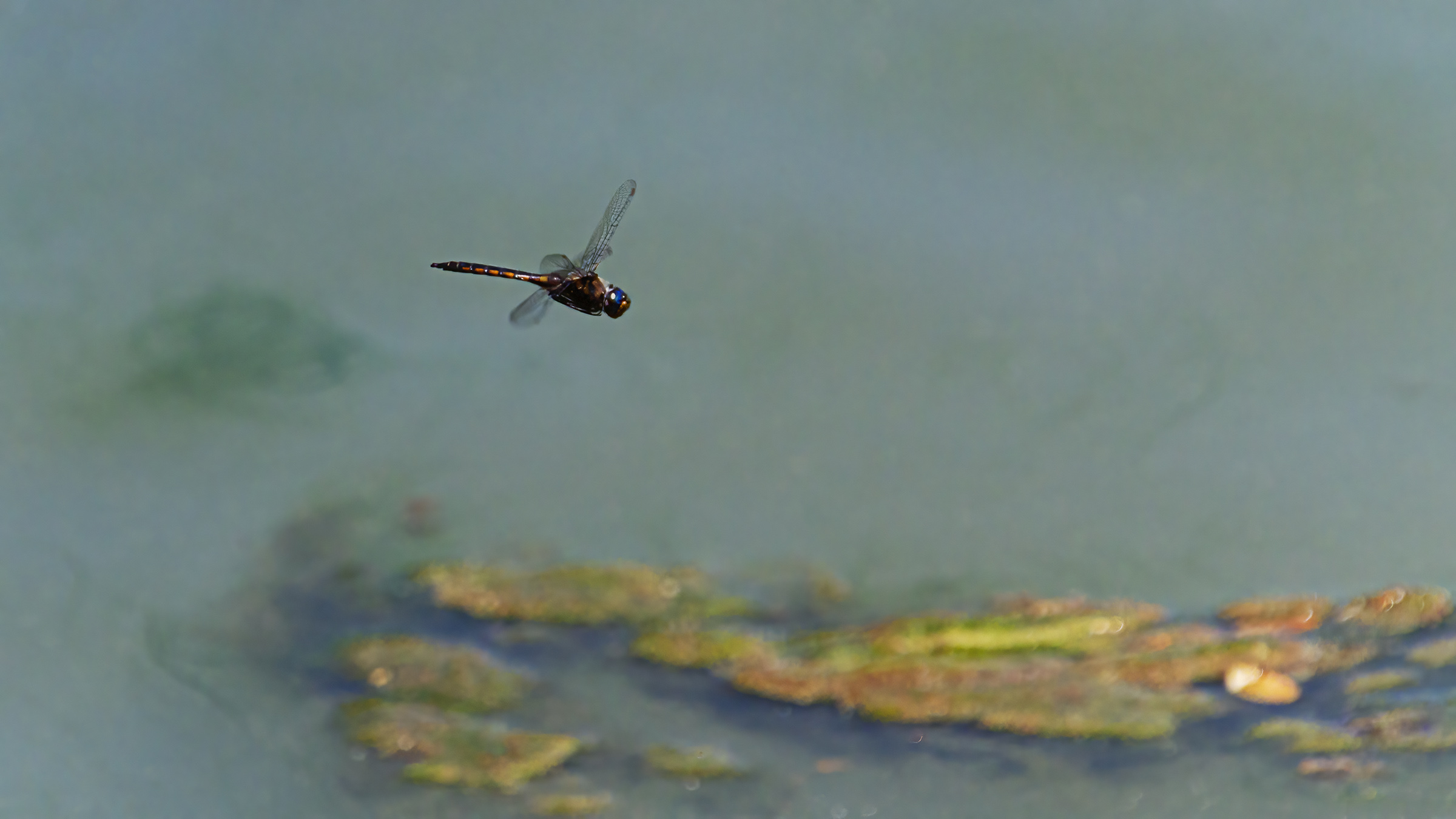
I love trying to capture images of dragonflies in flight, which requires a combination of skill and luck and a whole lot of patience. There were several Common Baskettail dragonflies (Epitheca cynosura) patrolling the waters of a small pond in Orkney Springs this past weekend and I managed to capture several shots of them in flight.

Common Baskettails spend most of the time flying and they rarely perch, so I tried to track them through the viewfinder of my camera. They are so small that the auto focus of my camera can’t seem to capture them, so I resorted to manual focusing most of the time. Fortunately they occasionally hover momentarily, which gives me a somewhat better chance of focusing on them.

The first photo below is probably the sharpest image that I captured. I like it a lot, but the background seems a little too neutral, almost like a studio shot. The second photo does a better job in showing some the ripples and color variations of the waters of the pond. The dragonfly in the final photo was much farther away, but I really like the sense of place that it gives you. It makes me think of a passenger jet flying at a high altitude above the land below.

Common Baskettail

Common Baskettail

Common Baskettail

© Michael Q. Powell. All rights reserved.

Read Full Post »

Some of the familiar summer dragonflies have started to appear, including this female Common Whitetail (Plathemis lydia) that I spotted earlier this month during a visit to Occoquan Regional Park in nearby Lorton, Virginia. Common Whitetail dragonflies have a long flight period that begins in the spring and extends well into the autumn months.

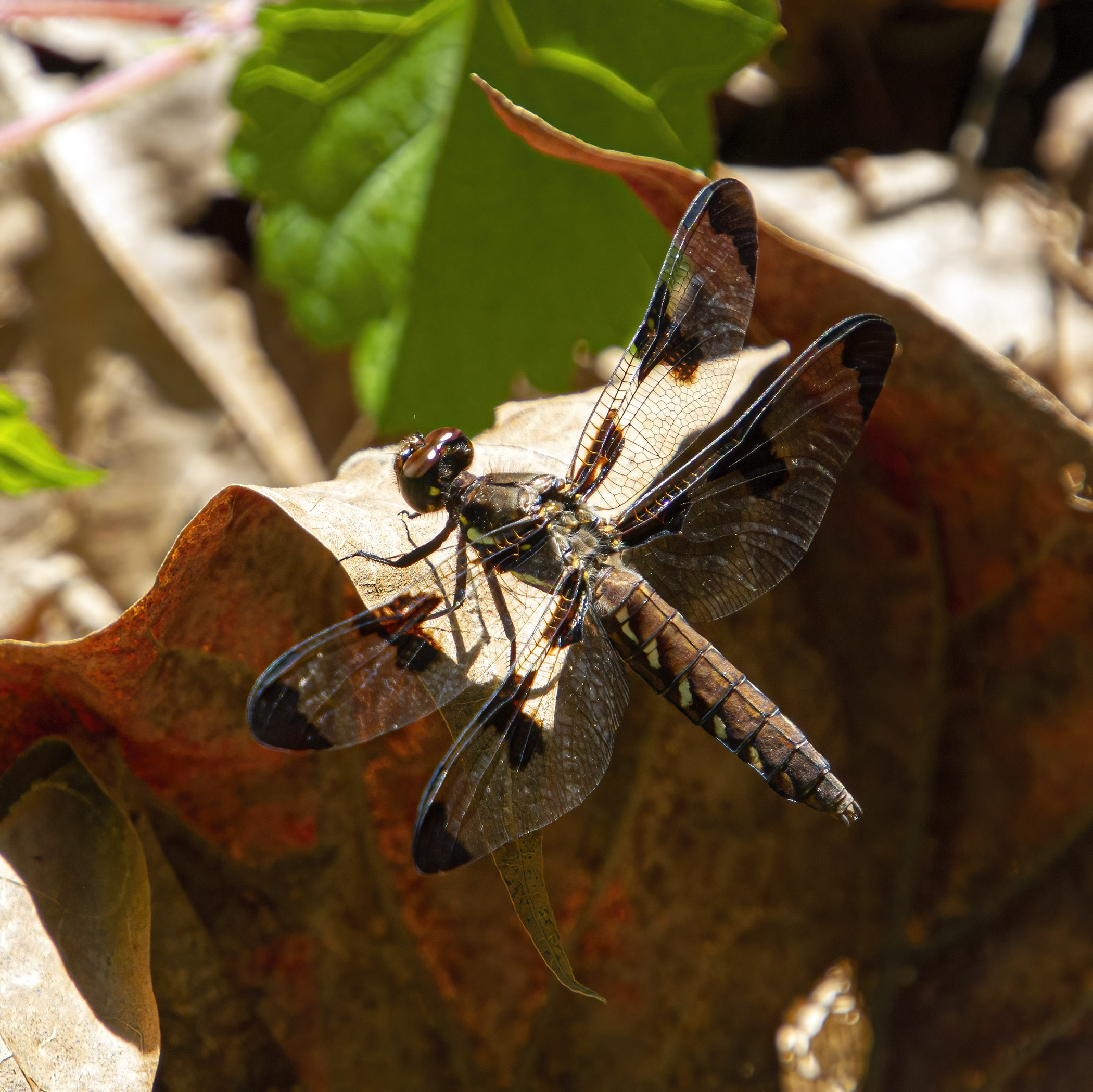
Females of this species, despite their name, are brownish in color with the markings that you can see in the photo below. Immature males start off with a similar coloration, but relatively quickly their bodies become white. How do I know that this one is a female? Males and females have different markings on their wings. Males have a larger dark patch in the middle of each wing and the tips of the wings remain clear, while the females have a smaller patch in the middle of each wing and a second dark patch at the tip of each wing.

Common Whitetails are in fact quite common in this area and can be found in a variety of habitats. I nonetheless enjoy taking photos of them that highlight various aspects of this behavior. This photo, for example, shows how light in weight these dragonflies are, capable of perching on the edge of a dry, fallen leaf.

Common Whitetail

© Michael Q. Powell. All rights reserved.


Read Full Post »

Yesterday I went for a “walk on the wild side” with my camera at one of my local nature parks and captured this shot of a handsome male Stream Cruiser dragonfly (Didymops transversa), my first spotting of this species in 2026. I was actually looking for spiketail dragonflies and encountered several other dragonfly enthusiasts who were similarly searching for those elusive species. I recall asking one of them if it was too early to see Stream Cruisers, because I vaguely remember photographing them at this location in the past, and amazingly I spotted one later in the day after we had gone our separate ways.

Although I did not findt any spiketails yesterday despite my efforts, this image testifies to the value of persistence. In my area, the density of these early spring species is pretty low, so you have to be patient, persistent, and quick-reacting when you do encounter one if you want to get a photo.

I love how this dragonfly seems to be looking right up at me with his stunning two-toned eyes and I am equally delighted by the “milk mustache” that he seems to have on his “upper lip.” Got milk?

Stream Cruiser

Stream Cruiser

© Michael Q. Powell. All rights reserved.

Read Full Post »

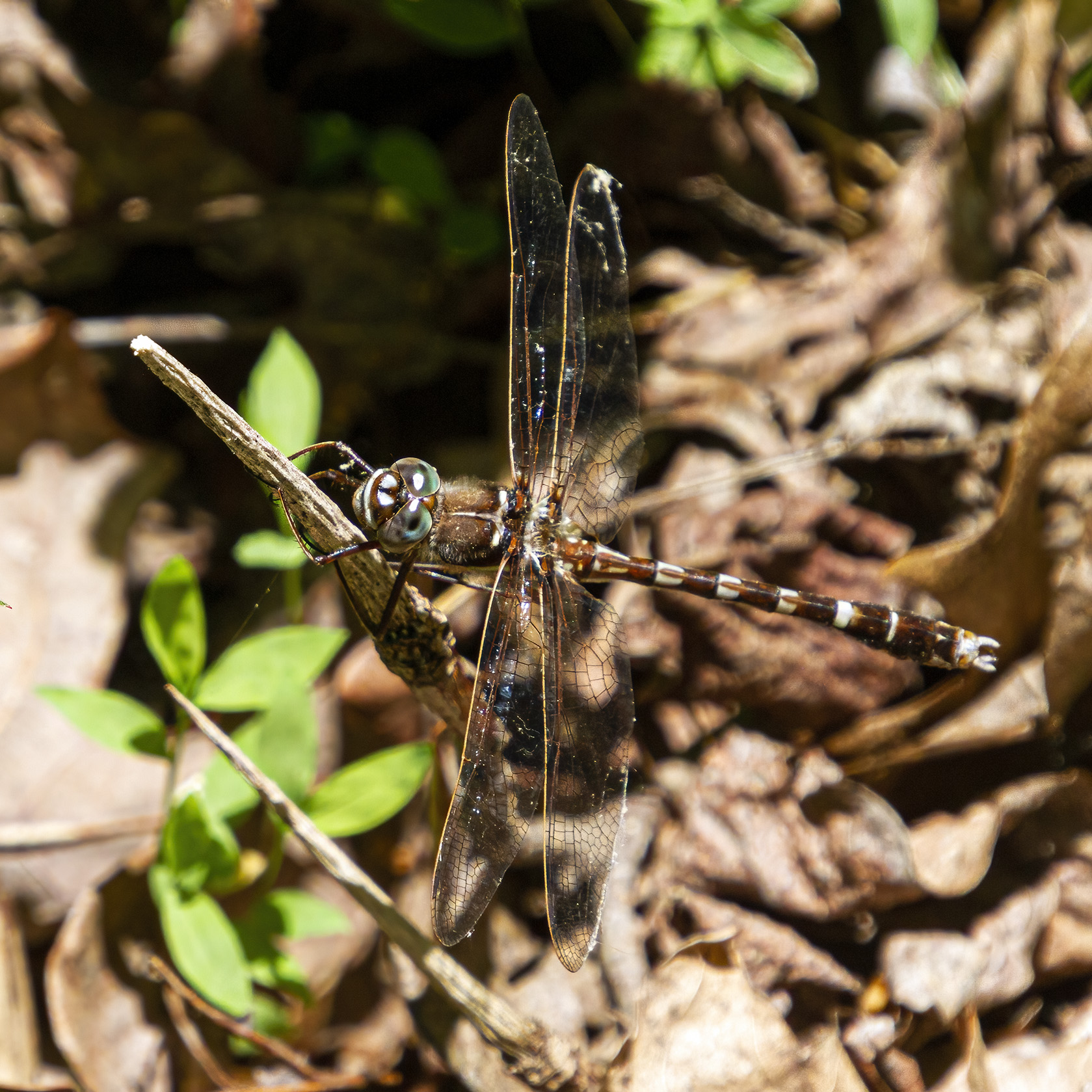
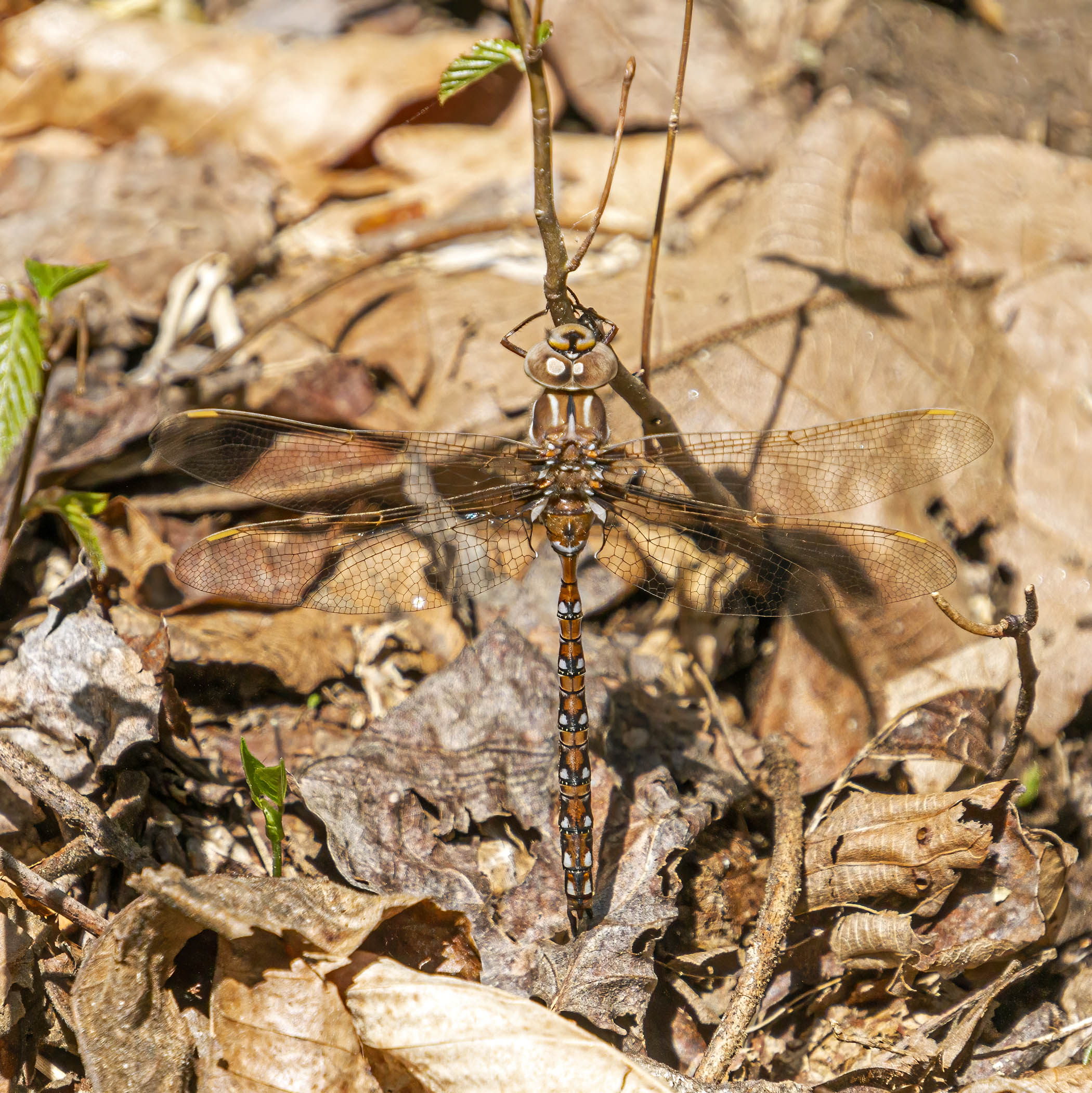
Yesterday, 23 April, I spotted my first spiketail dragonfly of the season while I was exploring a regional park in my county. Dragonflies are divided up into a number of different families and some of the less common ones are named for their “tails,” including spiketails, petaltails, and clubtails. Most of the familiar dragonflies that we see during the summer are from the skimmer family.

Spiketail dragonflies are relatively uncommon where I live and I was delighted to spot capture this shot of what I believe is a Brown Spiketail (Cordulegaster bilineata). As described on the Dragonflies of Northern Virginia website, “These uncommon, elusive dragonflies have, in my opinion a magical, almost elven quality and are usually found in isolated corners of mature woodlands.”

I never know for sure what creatures I will encounter when I go out in the wild with my camera, but this was not exactly a random encounter. In the past I have sometimes found spiketails at this time of the year in this location. In wildlife photography there are no guarantees, but a bit of knowledge and skill and a lot of persistence can increase the odds in my favor of encountering some of these beautiful creatures—it is more than just pure luck.

Brown Spiketail

© Michael Q. Powell. All rights reserved.


Read Full Post »

Each spring I head out in search of Uhler’s Sundragons (Helocordulia uhleri), one of the earliest dragonflies in my area to emerge. Unlike many of the dragonflies that I commonly see during the summer days, this species is  a “scarce and seldom seen member of the emerald family” and is a “habitat specialist with a brief and early flight period,” according to the Dragonflies of Northern Virginia website. The species requires a clean, sandy or gravelly forest stream with mix of riffles and pools.

Fortunately, I know of a creek where I have regularly seen them over the last few years, and I visited that location on Monday and spotted multiple Uhler’s Sundragons. As you can see in the photos below, this species likes to hang vertically or at an angle. The amber markings at the base of the wings help to distinguish Uhler’s Sundragons from the similar Selys’s Sundragons that have no such markings.

Uhler's Sundragon

Uhler's Sundragon

Uhler's Sundragon

© Michael Q. Powell. All rights reserved.

Read Full Post »

I was delighted to photograph this beautiful Springtime Darner dragonfly (Basiaeschna janata) yesterday (6 April) while I was exploring a creek in the forests of Prince William County, Virginia. I had seen some recent postings on Facebook showing dragonflies that others had seen in other parts of Virginia, so I decided to search for them.

I found several other dragonfly species too and plan to post some photos of them in the next few days, but I really wanted to post this one immediately. It’s been several years since I have seen a Springtime Darner and I was really excited when I looked through my telephoto zoom lens and realized what it was. The dragonfly was flying back and forth low over a patch of vegetation and I tracked it for a little while until if perched, hanging vertically low to the ground. It was so low that the tip of its abdomen was almost touching the dried leaves on the forest floor.

I was pretty far away and had to manually focus the lens–the cluttered background kept wanting to grab the focus when I tried to use auto focus and the dragonfly’s body was pretty thin. I was really happy to be able to capture the wonderful pattern on the body of this dragonfly, whose coloration helped it to blend in so well with its surroundings.

Springtime Darner

© Michael Q. Powell. All rights reserved.


Read Full Post »

Do you remember learning grammar in school? My memories are a bit hazy, because it was a long time ago, but I remember learning that the imperative mood is used to express direct commands, instructions, or advice and the subject is understood to be “you.”

I always think of today, March 4th in the imperative form of “March Forth.” Sometimes it takes a lot of courage (or faith) to take that first step. It can be really scary, especially when heading off for an unknown destination or trying something you have never done before.

As many of you know I’ve been doing a lot of counted cross stitch over the past few months. Some of the designs have been really simple and some have been a bit complicated, but they have all been made up of a series of x’s done on a flat piece of fabric. I have long been intrigued, however, by the three dimensional objects that some people have made with their finished cross stitch pieces.

I can understand pretty well how folks make pillows, although personally my sewing skills are somewhat lacking. Sometimes, though, people will make geometric-shaped objects known as “biscornus.” What is a biscornu? According to Wikipedia, “A biscornu is a small, octagonal, stuffed ornamental pincushion. It is usually made using evenweave fabric, such as Aida cloth, cotton, or linen. The technique involves joining two embroidered squares framed with a backstitch border with a whip stitch in such a way that each corner of one square is attached to the middle of the side of the other. The term comes from the French adjective biscornu, which means irregular, skewed, or odd.”

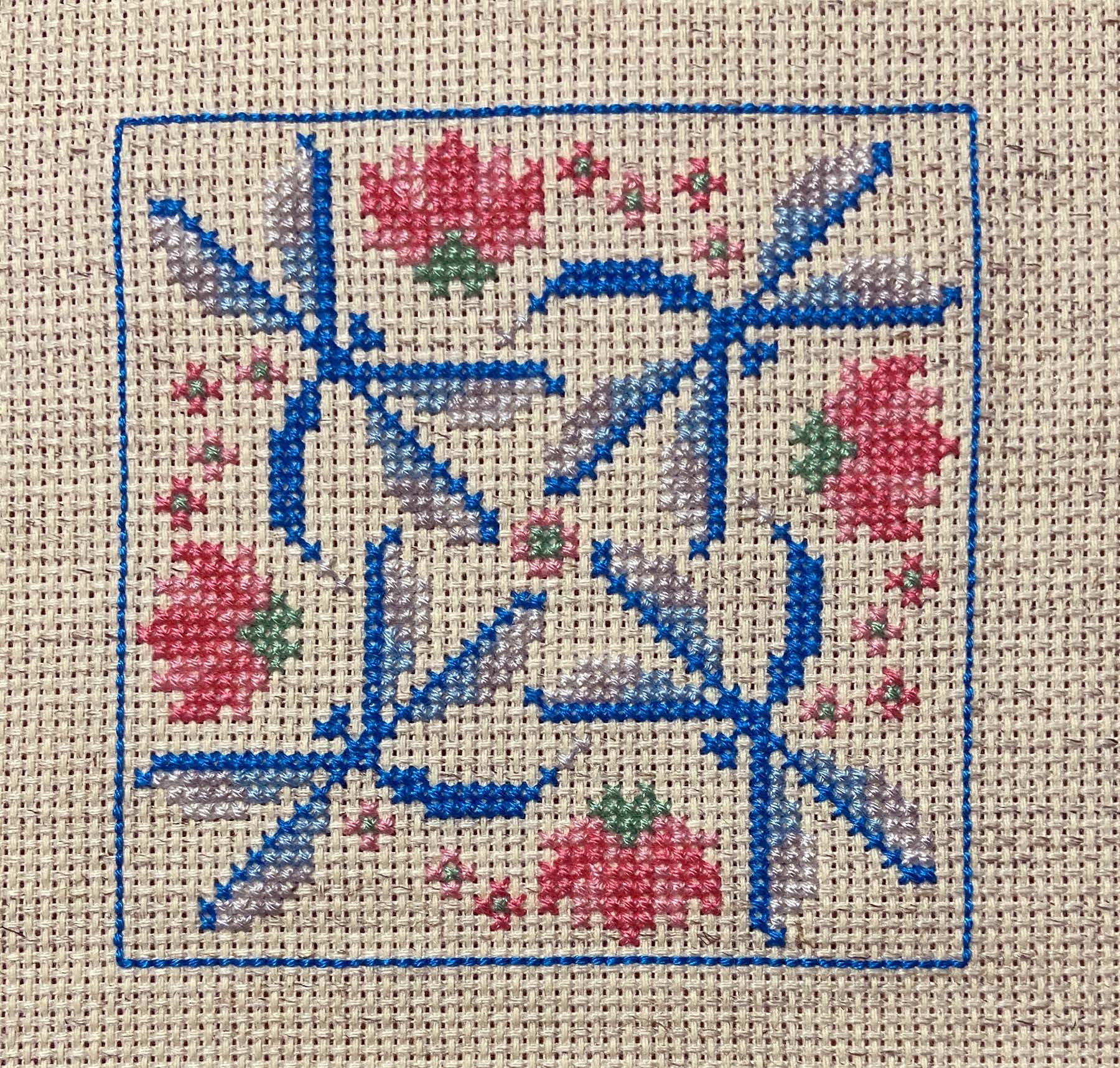
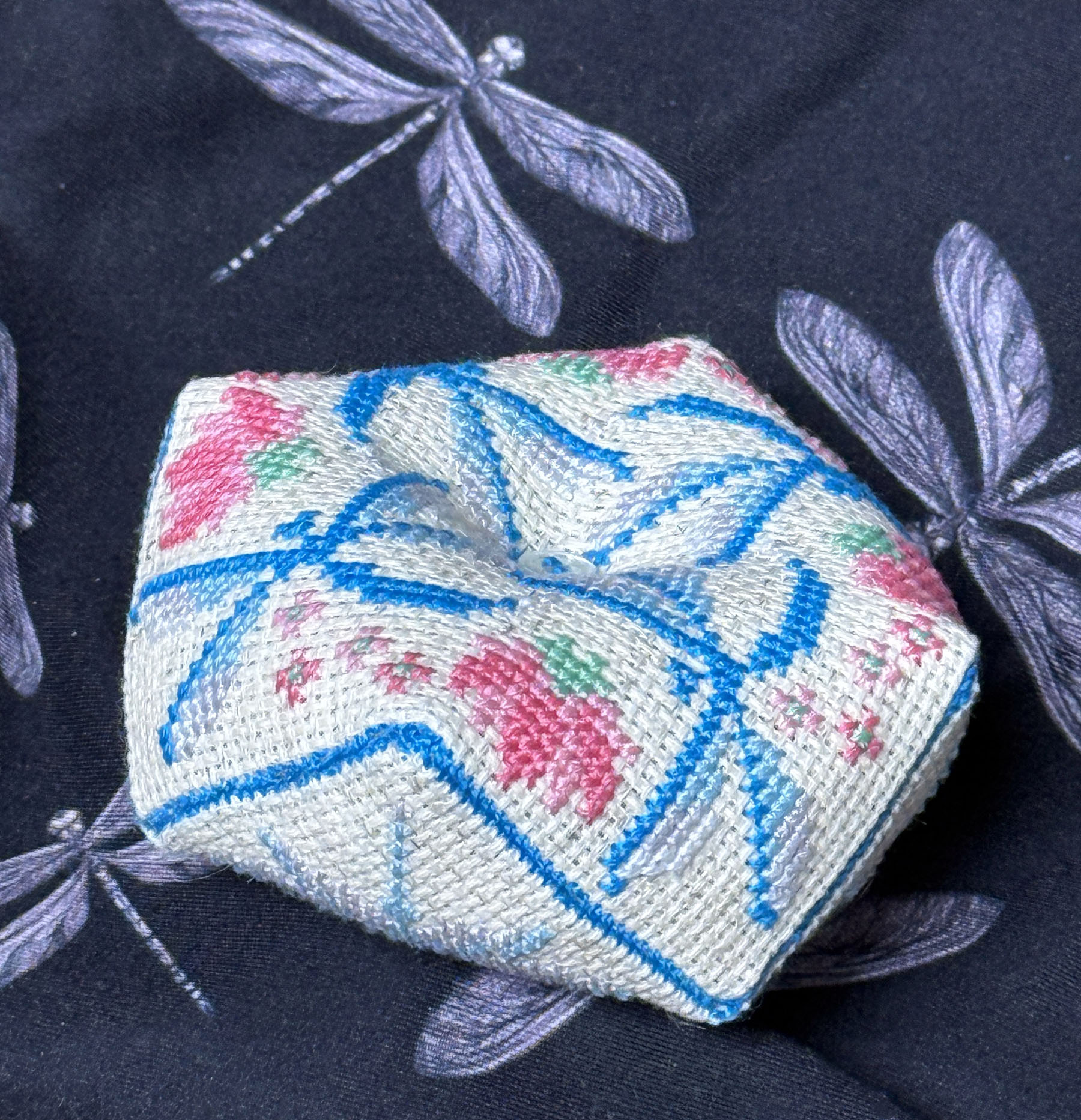
In theory, it is easy to sew together the two panels and I watched numerous You Tube instructional videos. In practice it was difficult, but I forced myself to push on through—I was determined to “march forth” until the end. The first photo shows my finished biscornu. It is a little wonky and some of the stitches that hold it together are uneven, but I am happy that I pushed through to finish it.

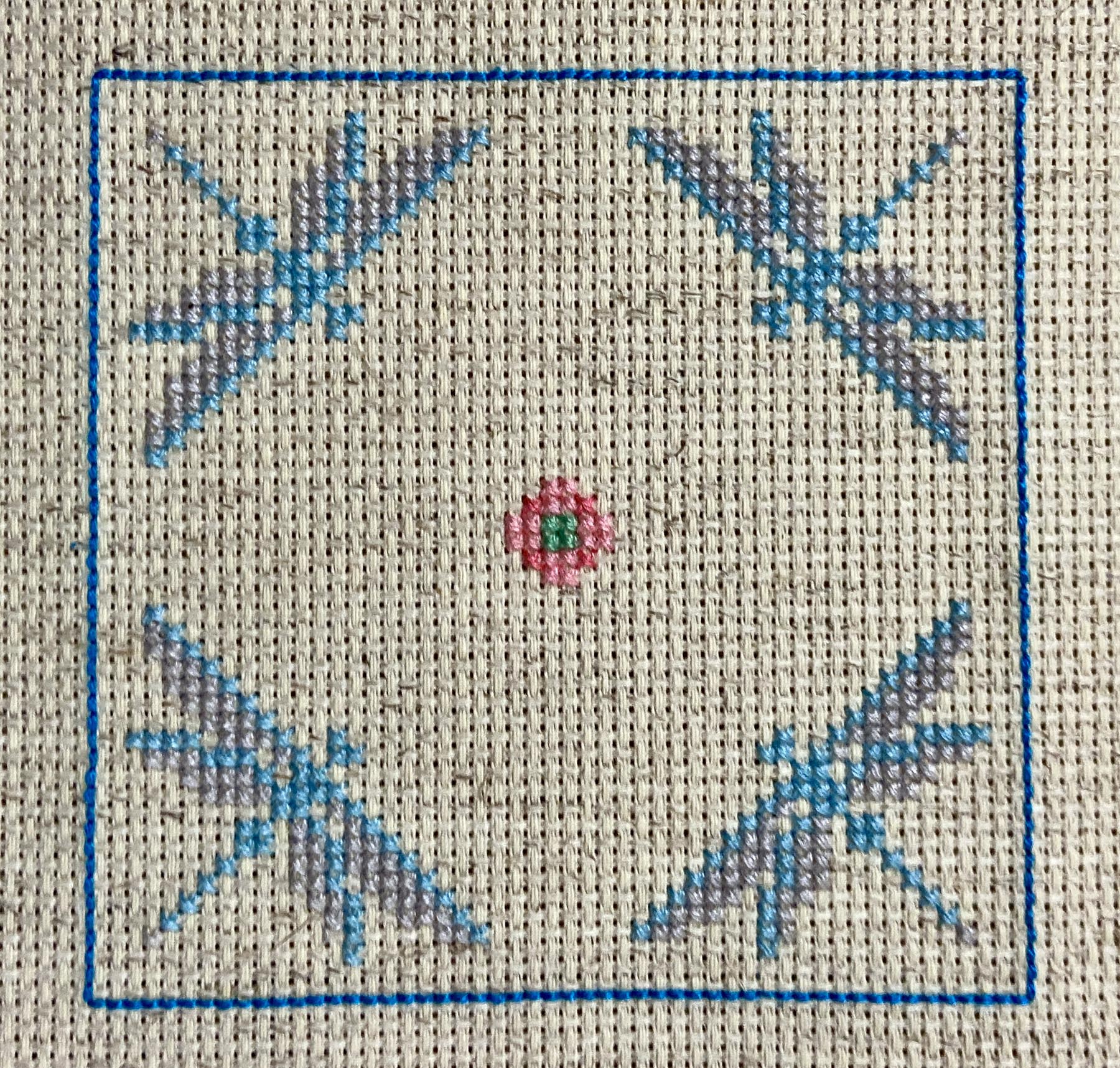
The final two photos show the two panels of my version of the New Beginnings Biscornu that was designed by DH, a talented cross stitch designer and streamer @TheCozyDH.com. As soon as I saw the pattern I knew that I wanted to stitch it, because it features dragonflies, one of my favorite creatures.

So what about you? Are you willing to step out of your comfort zone and “march forth” into unknown territories to try something new? I’d like to say that I followed the Star Trek mission statement “to boldly go where no one has gone before,” but my initial step was more “hesitant” than “bold.”

Success, of course, is not guaranteed, but I really do think that it is worth the risk. Who knows, you might end up with something really cool, like my little biscornu (and, yes, I am definitely biased in my views).

“March forth!”
New Beginnings biscorn

New Beginnings front panel

New Beginnings back panel

© Michael Q. Powell. All rights reserved.


Read Full Post »
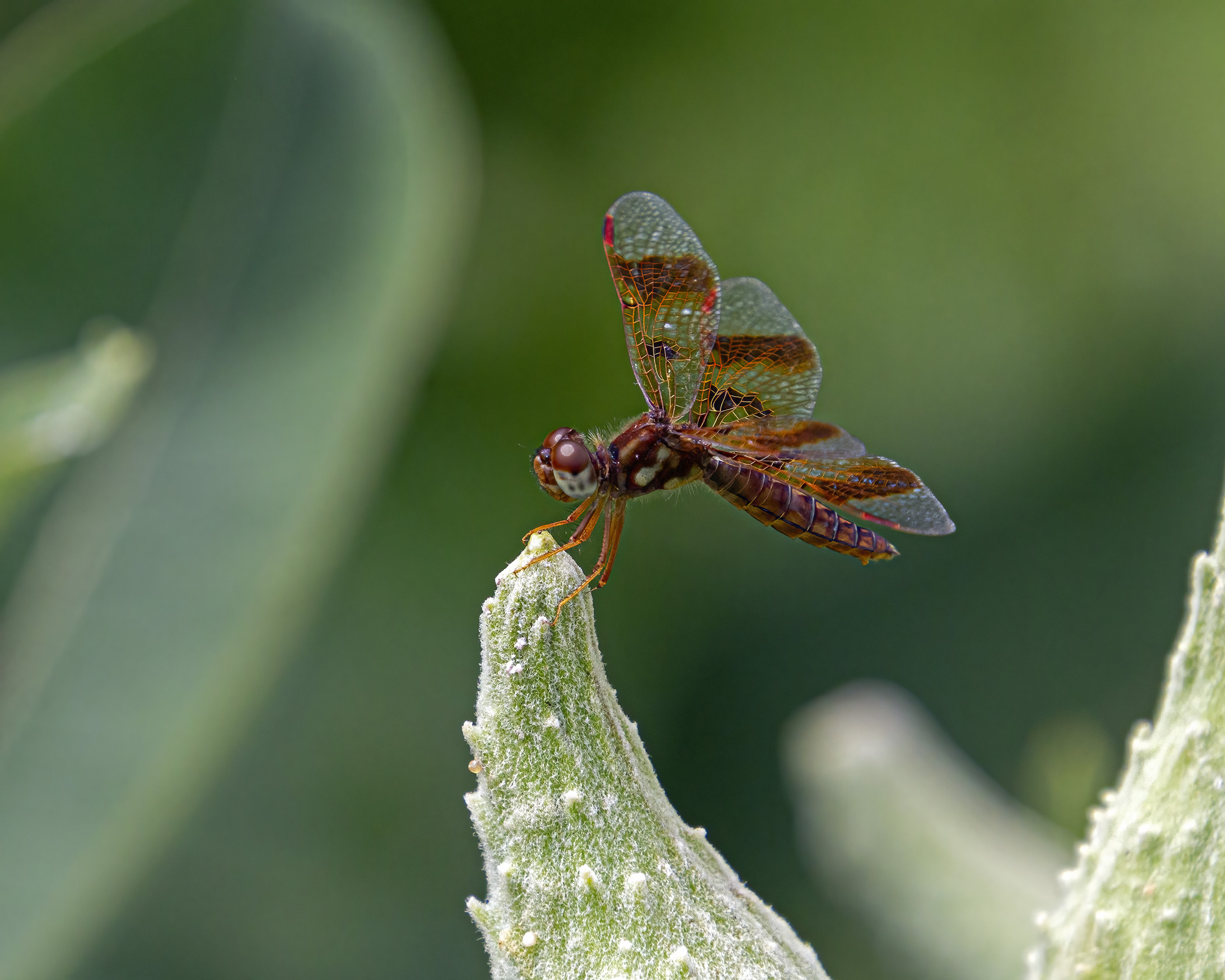
I was delighted to spot this Autumn Meadowhawk dragonfly (Sympetrum vicinum) on Wednesday, 3 December, at Occoquan Bay National Wildlife Refuge. Despite our recent cold nights, many of which have dipped below the freezing level, this hardy dragonfly managed to survive.

It is snowing out right this moment, so I am not sure how much longer I will be seeing these beautiful little creatures, but I’ll almost certainly be out with my camera next week to see what I can find.

Autumn Meadowhawk

© Michael Q. Powell. All rights reserved.

Read Full Post »
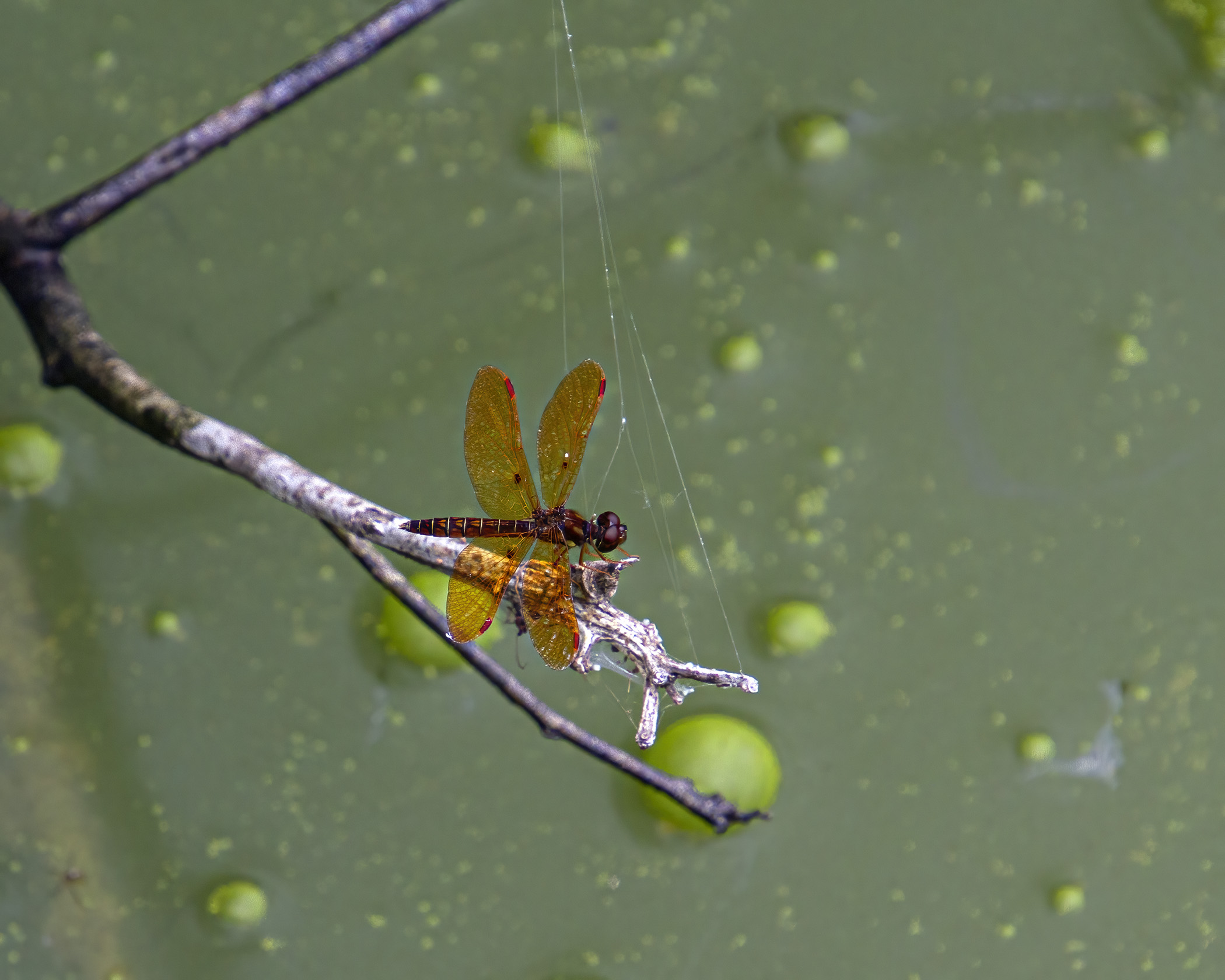
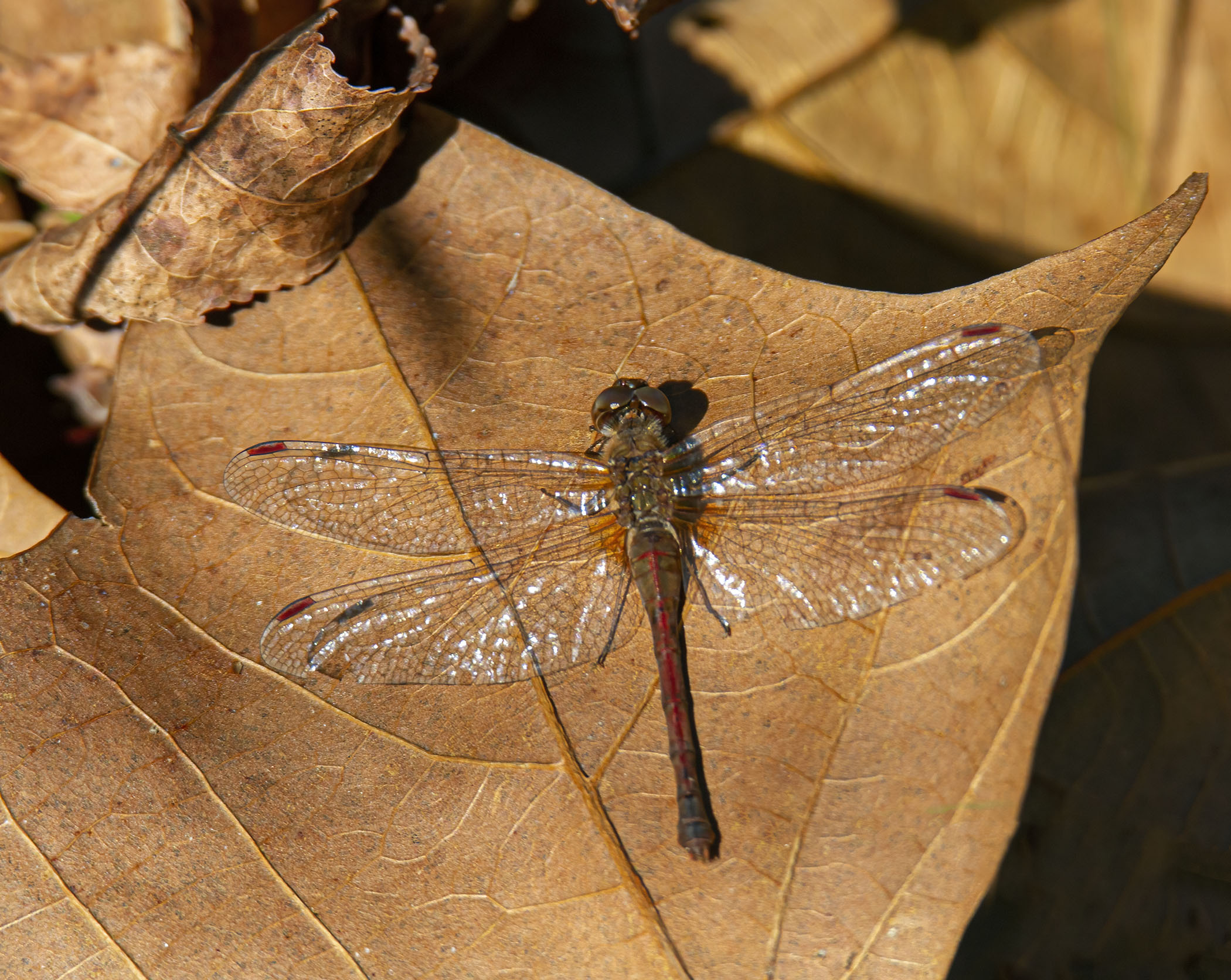
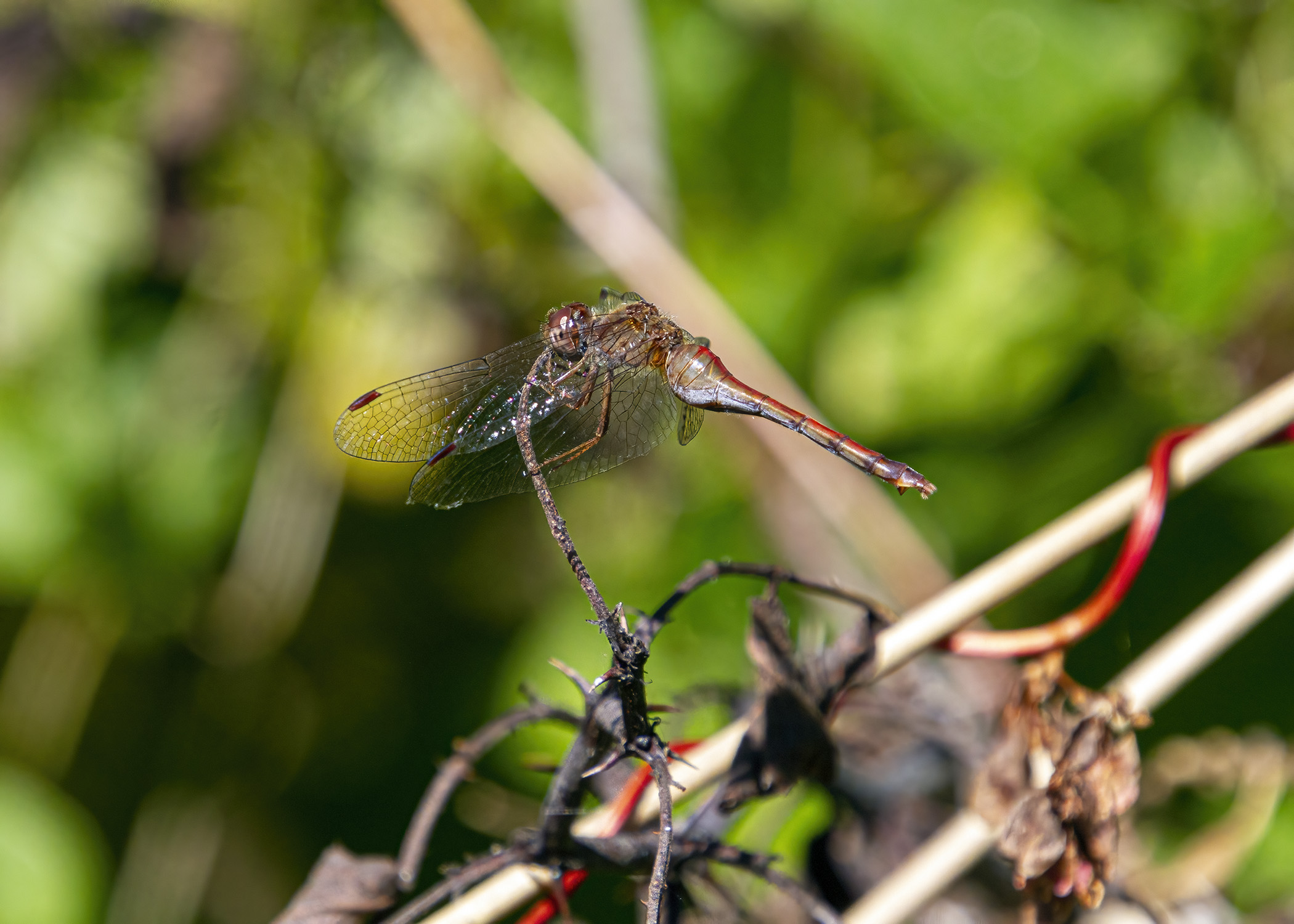
I haven’t yet checked this week, but these Autumn Meadowhawk dragonflies (Sympetrum vicinum) that I spotted on 17 November at Occoquan Bay National Wildlife Refuge are likely to be among the last dragonflies that I see this season.

Autumn Meadowhawks frequently perch flat on the ground or on dried leaves on the ground. I was delighted when a male Autumn Meadowhawk perched almost vertically on a colorful fallen leaf and I was able to capture the first image below. By contrast, the female in the second photo chose a less interesting drab leaf on which to perch.

I’ll try to go out later this week to see if I can find some late season survivors, but it is becoming clear to me that this year’s dragonfly season is nearly over.

Autumn Meadowhawk

Autumn Meadowhawk

© Michael Q. Powell. All rights reserved.

Read Full Post »
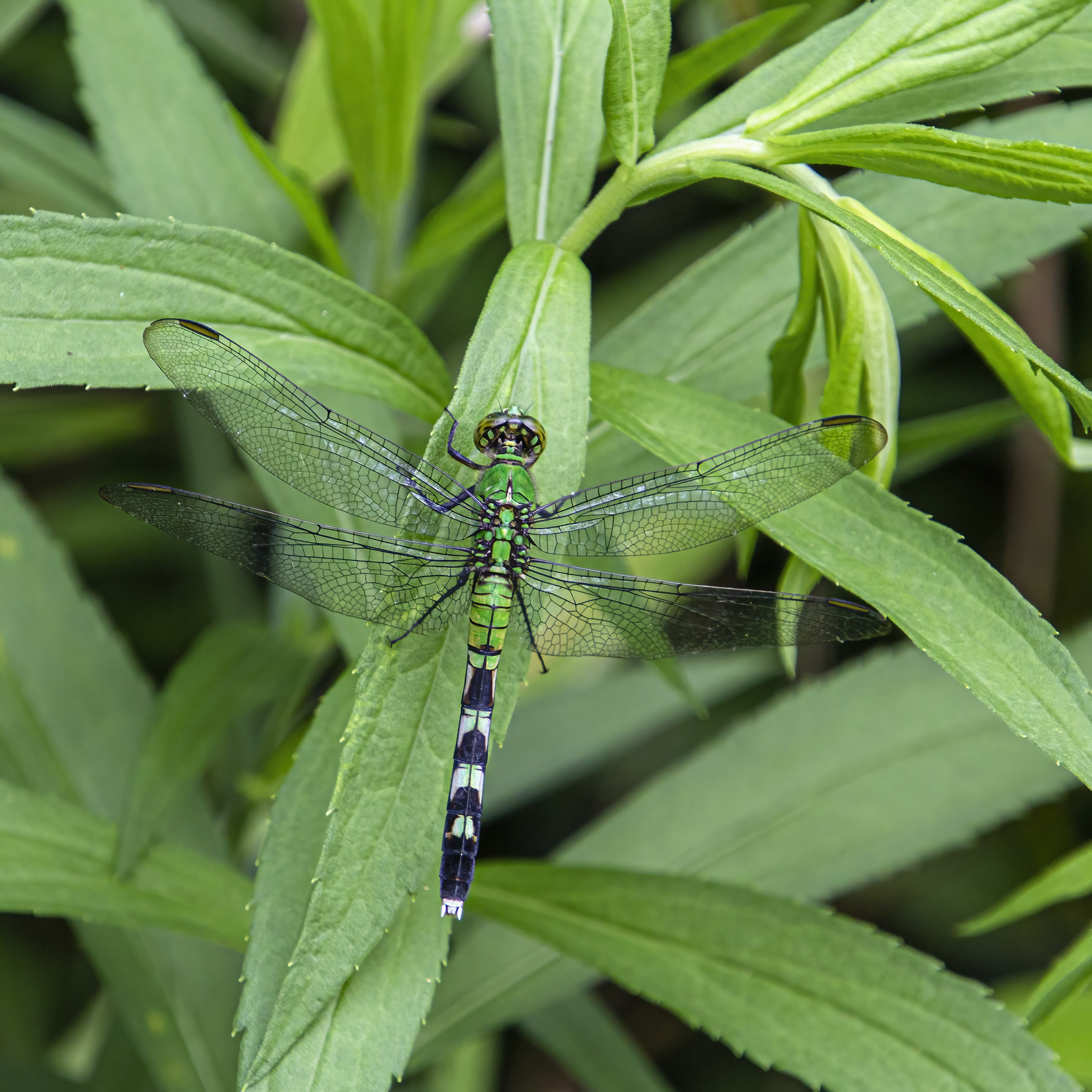
I think that we may well be down to our last surviving dragonfly species. On 10 November I ventured out to Occoquan Bay National Wildlife Refuge to look for any remaining dragonflies or butterflies. I did not find any butterflies, but was delighted to spot close to a dozen Autumn Meadowhawk dragonflies (Sympetrum vicinum).

Our temperatures this past week have dropped down close to the freezing level, which most dragonflies cannot tolerate. Autumn Meadowhawks, however,  are hardy enough to survive a few light frosts as long as daytime temperatures remain relatively warm and sunny. Once we start receiving a few heavy frosts the remaining population starts to die off.

I was happy to capture some photos of Autumn Meadowhawks as they perched on the colorful leaves that litter many of the trails at the wildlife refuge. The dragonflies appeared to be content to remain in place soaking up the warmth of the sun as I approached and some even posed for me.

Autumn Meadowhawk

Autumn Meadowhawk

Autumn Meadowhawk

© Michael Q. Powell. All rights reserved.


Read Full Post »

For a variety of reasons I did not manage to go out with my camera this past week, so I went through my photos from the previous week and was delighted to find this photo of a Blue-faced Meadowhawk dragonfly (Sympetrum vicinum). As I have noted in previous postings, Blue-faced Meadowhawks have such a wonderful combination of colors that make them one of my favorite dragonfly species.

I was quite fortunate that this particular individual landed on some leaves right next to one of my feet, so I was able to capture this cool image by shooting almost directly downwards. In fact, I had to digitally remove a bit of the boot I was wearing from the lower left edge of the photo to keep the viewer from getting distracted.

Several days ago we had some frost warnings, so I fear that more of the dragonflies will have disappeared for the season. Still, I hope to return to my local wildlife refuge in the next few days to see what I can find.

Blue-faced Meadowhawk

© Michael Q. Powell. All rights reserved.

Read Full Post »

It’s always fun to try to capture a shot of an Autumn Meadowhawk dragonfly (Sympetrum vicinum) with beautiful fall colors in the background, as I did last Friday (31 October) at Occoquan Bay National Wildlife Refuge. Autumn Meadowhawks are invariably the last surviving species of the dragonfly season. In past years I have spotted them as late as the middle of December, and fellow dragonfly enthusiasts have reportedly seen them in our area in early January.

Autumn Meadowhawk

© Michael Q. Powell. All rights reserved.

Read Full Post »

I was delighted to spot this stunning Blue-faced Meadowhawk dragonfly (Sympetrum ambiguum) on Halloween Day at Occoquan Bay National Wildlife Refuge. We have had a series of cool, damp days recently, so when I saw the weather was forecast to be sunny, I went out to see if I could find any dragonflies. As I suspected, most of the dragonflies are now gone, but I was delighted to find a couple of Blue-faced Meadowhawks, one of my favorite species, and also a few Autumn Meadowhawks. The dragonfly season is not over yet.

I absolutely love the striking coloration of the male Blue-faced Meadowhawks, like the one in the photo below. Their turquoise faces, blue eyes, and bright red abdomens are incredibly beautiful. On a day when many children would be focusing on their “trick or treat” adventures, I felt like I received my “treat” a little early.

Blue-faced Meadowhawl

© Michael Q. Powell. All rights reserved.


Read Full Post »
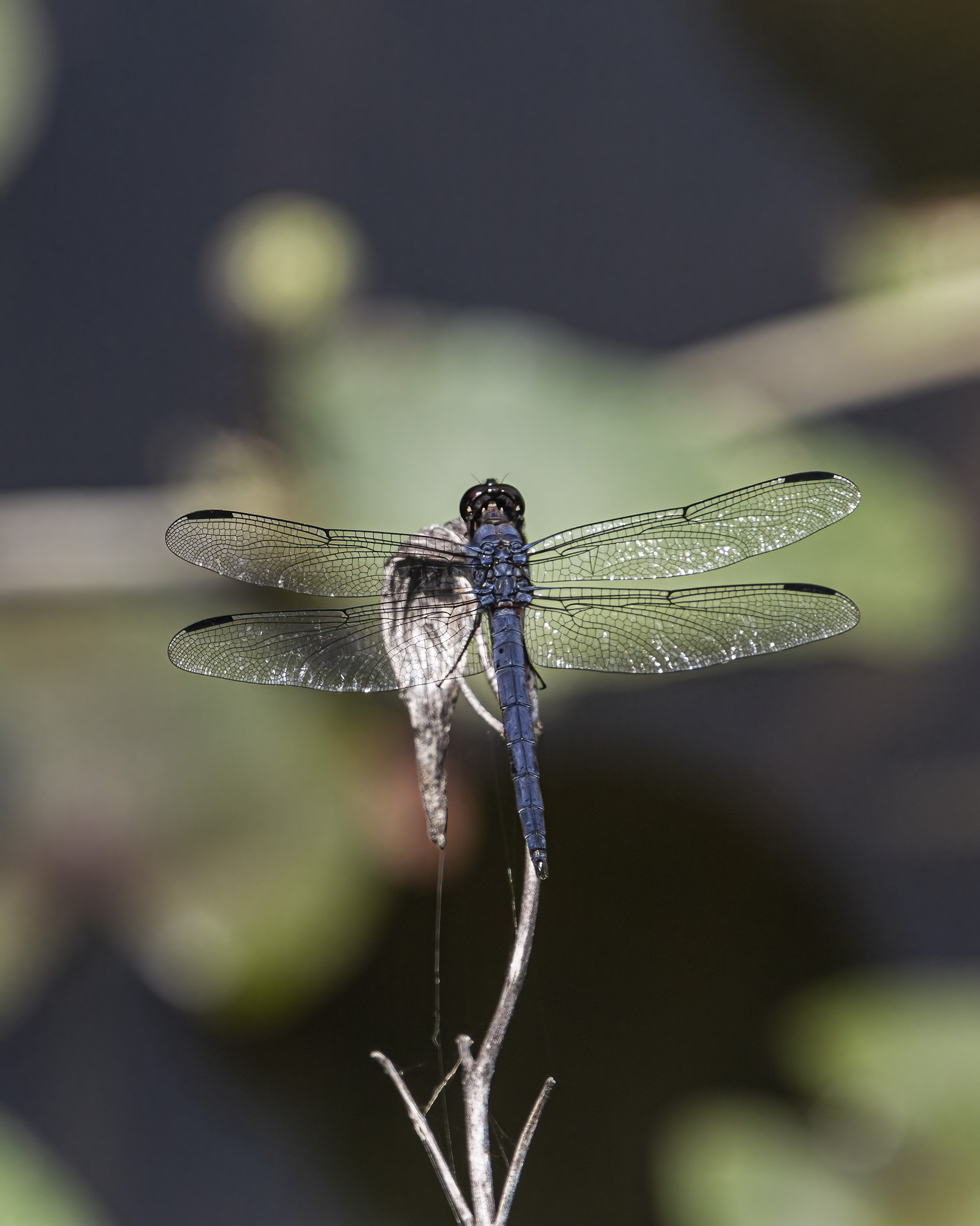
There are only a few remaining dragonflies as we move deeper into the autumn season. I was therefore delighted to spot this female Eastern Pondhawk dragonfly (Erythemis simplicicollis) during a recent visit to Occoquan Bay National Wildlife Refuge. Eastern Pondhawks appear in early May and generally hang around until the end of October.

The females of this species are quite distinctive in their appearance, with their brilliant green color and striped abdomens, so they are relatively easy to identify. Immature males, however, have the same coloration when young, so I usually check the terminal appendages before making a call on the gender of an Eastern Pondhawk.

Eastern Pondhawk

© Michael Q. Powell. All rights reserved.


Read Full Post »
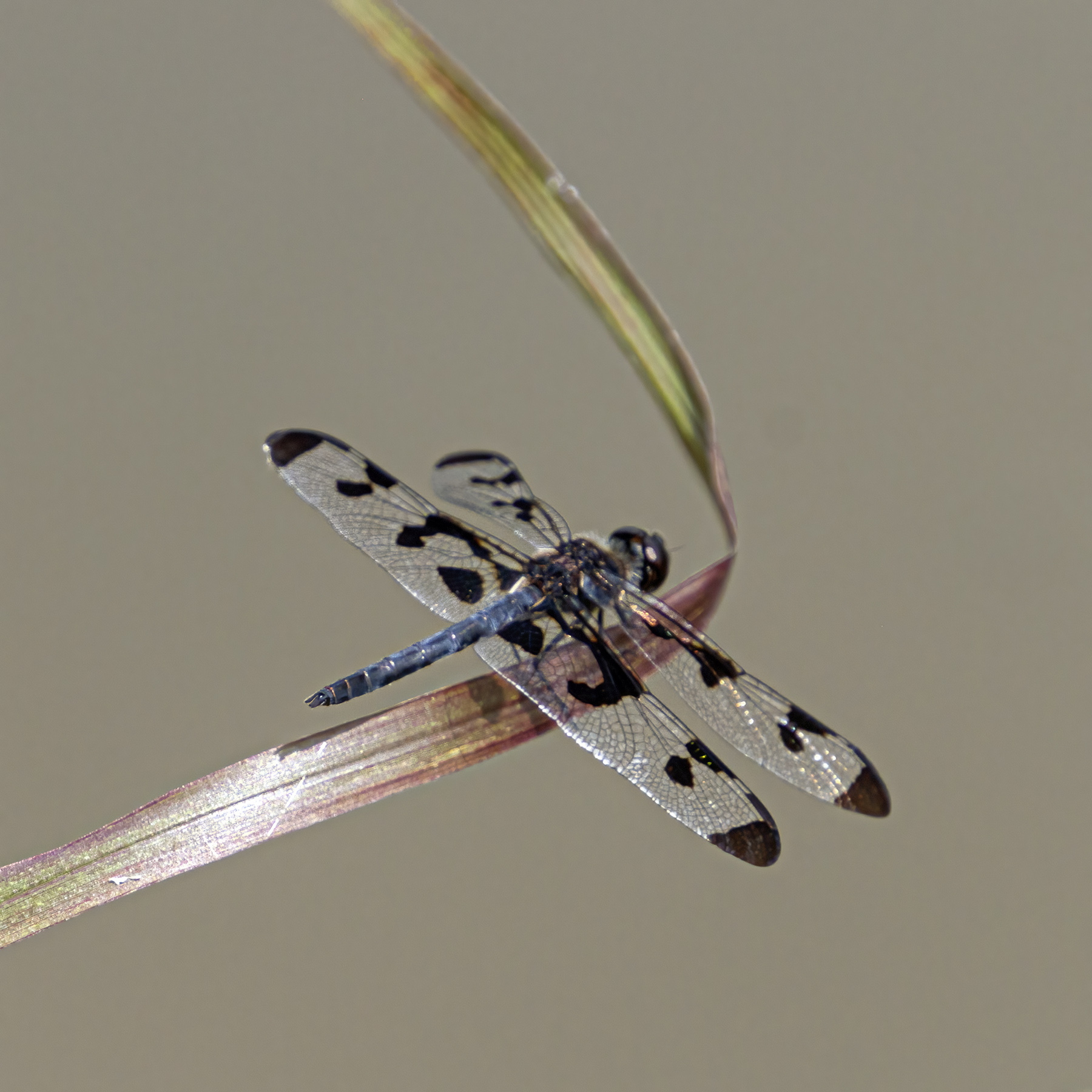
We have now reached a point in the dragonfly season where Autumn Meadowhawks (Sympetrum vicinum) are the dragonfly species that I see most frequently. Most other species have gradually disappeared and I seen only occasional survivors that are still hanging on. There is something about the physiology of Autumn Meadowhawks that allows them to tolerate the cold better than other dragonflies and in past years I have seen them as late as the middle of December.

Last Friday I spotted over a dozen Autumn Meadowhawks at Occoquan Bay National Wildlife Refuge and was able to capture photos of several of them. Autumn Meadowhawks tend to perch flat on the ground, so it can be a bit difficult to spot them, especially when they choose to land on fallen leaves that camouflage them almost perfectly.

Female Autumn Meadowhawks are a mixture of red and brown colors, as you can see in the first photo below, while the males of the species are bright red, as you can see in the final photo. Both genders have beautiful brown eyes.

Autumn Meadowhawk

Autumn Meadowhawk

Autumn Meadowhawk

© Michael Q. Powell. All rights reserved.

Read Full Post »
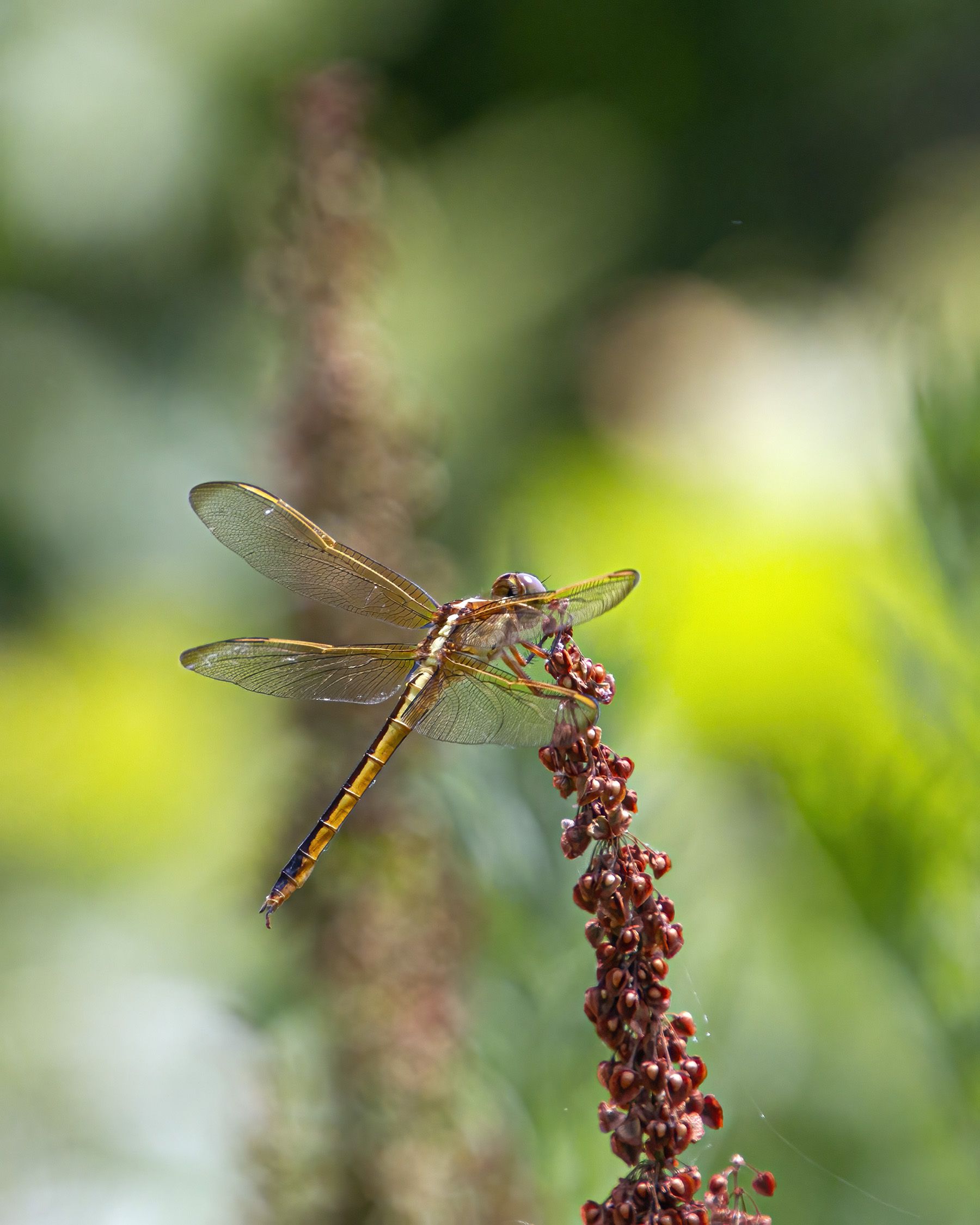
The Blue-faced Meadowhawk (Sympetrum ambiguum) is a late-season dragonfly that is somewhat similar in appearance to the more common Autumn Meadowhawk—males of both species have bright red bodies, but Autumn Meadowhawks have brown eyes.

The females of both species are more muted in their coloration than their male counterparts, as is often the case with many dragonflies and birds, so they have more natural camouflage and are frequently more difficult to find. I was therefore delighted to spot this female Blue-faced Meadowhawk last Friday at Occoquan Bay National Wildlife Refuge, my first sighting of the species this season.

I am hopeful that I will spot the more colorful male Blue-faced Meadowhawk before this dragonfly season comes to an end.

Blue-faced Meadowhawk

© Michael Q. Powell. All rights reserved.


Read Full Post »
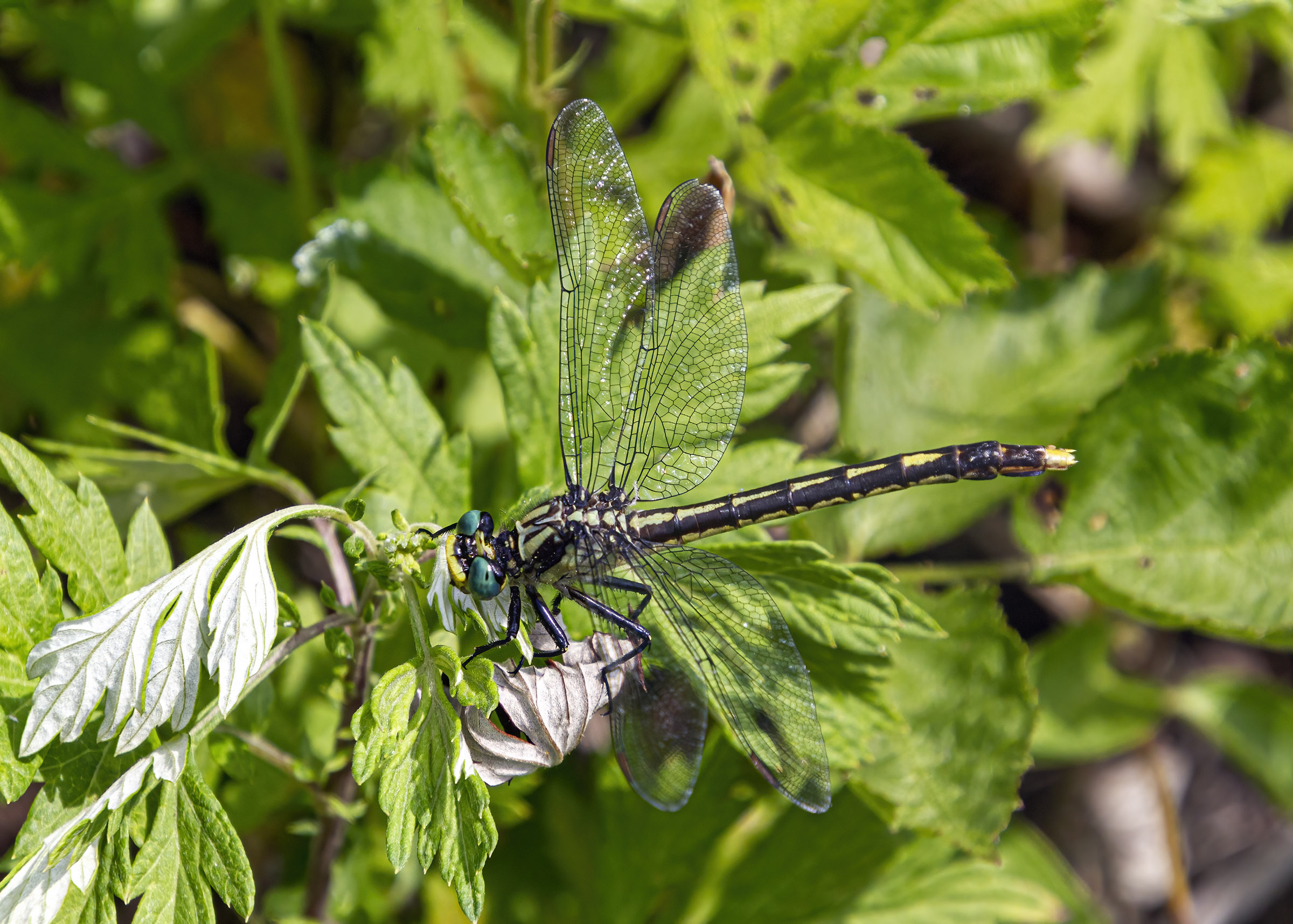
I was absolutely thrilled last Friday to photograph a Russet-tipped Clubtail dragonfly (Stylurus plagiatus) at Occoquan Bay National Wildlife Refuge, a somewhat surprising find this late in the dragonfly season. As I was walking along one of the trails, I encountered a fellow dragonfly enthusiast who was part of a group conducting a survey of butterflies and dragonflies at the refuge. After a brief conversation, we both continued on our way, heading in opposite directions.

A short time later I heard a voice calling out from a distance. I could not understand what was being said, but hurried back down the trail and was delighted to see that my friend had spotted a Russet-tipped Clubtail perched in the vegetation. Russet-tipped Clubtails are a late season species and are seen most often in August and September in my area. Unlike many of the dragonflies that I see regularly that seem to prefer pole-like perches or perch flat on the ground, Russet-tipped Clubtails like to hang from the leaves of vegetation at an angle or almost vertically—members of the genus Stylurus are sometimes called “Hanging Clubtails.”

The dragonfly was cooperative and remained perched as I took photos from several different angles. Before long, the dragonfly took off and our brief encounter ended. I continued on my way, content to know that the end of the dragonfly season, although near, is not here yet.

Russet-tipped Clubtail

Russet-tipped Clubtail

Russet-tipped Clubtail

© Michael Q. Powell. All rights reserved.

Read Full Post »
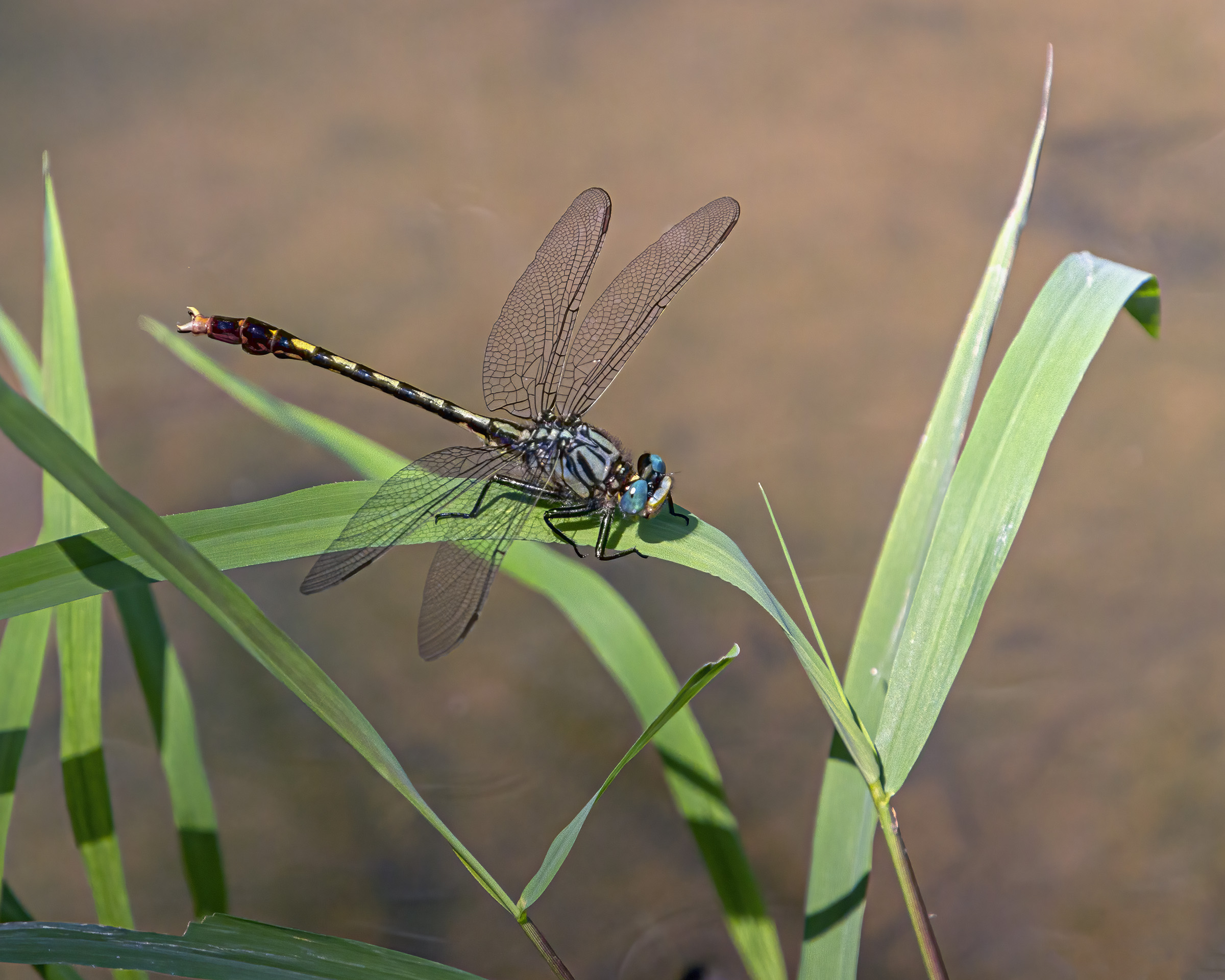
The countdown continues as we gradually move towards the end of the dragonfly season in my area. The Blue Dasher dragonfly (Pachydiplax longipennis) is one of the first dragonflies to appear in the spring and one of the last dragonflies to disappear in the autumn.

I spotted this tattered male Blue Dasher dragonfly during a recent visit to Jackson Miles Abbott Wetland Refuge. This was one of only a handful of dragonflies that I saw that day. The end is nearing, but I am not ready to call it quits quite yet for my dragonfly photography.

Blue Dasher

© Michael Q. Powell. All rights reserved.

Read Full Post »

Its wings are a bit tattered and its colors have faded, but this male Slaty Skimmer dragonfly (Libellula incesta) was still hanging in there at the end of September, when I spotted it at Jackson Miles Wetland Refuge at nearby Fort Belvoir, Virginia. The nights have become considerably cooler the past week and I am anxious to get out in the wild with my camera to see which hardy surviving dragonflies are still flying.

Slaty Skimmer

© Michael Q. Powell. All rights reserved.

Read Full Post »
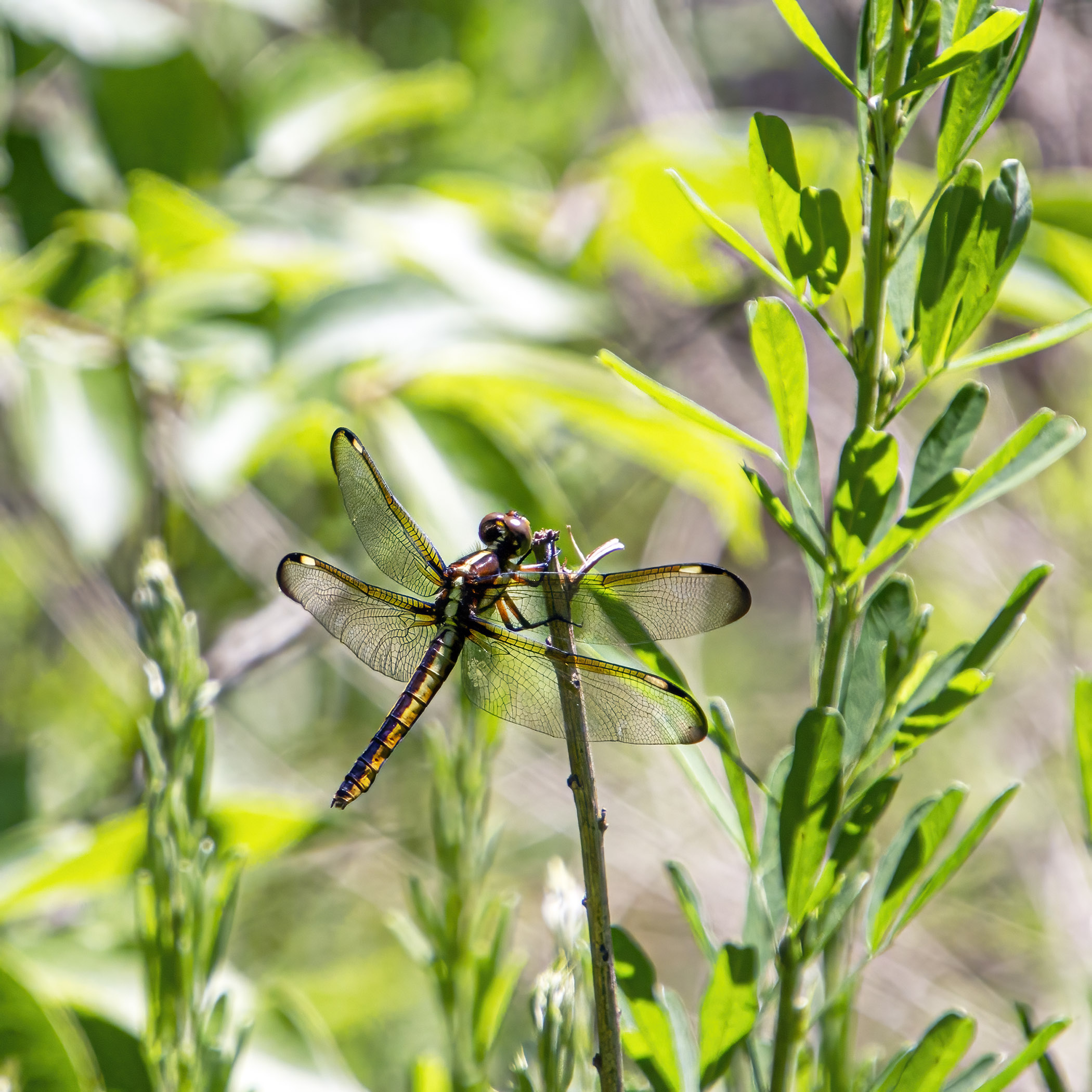
I spotted this Black Saddlebags dragonfly (Tramea lacerata) on Monday (22 September) at Occoquan Bay National Wildlife Refuge. Normally I see members of this species flying overhead, but this one cooperated by perching low in the vegetation. Black Saddlebags dragonflies, as you can see in the photo below, have distinctive dark blotches on their rear wings that some scientist decided looked like saddlebags.

Black Saddlebags are among the few North American dragonfly species that undertake migrations—other migratory species include Wandering (and Spot-winged) Gliders and Common Green Darners. Specifically, the offspring of the Black Saddlebag dragonflies migrate south in the fall, while some return north in the spring to breed. Did this one begin its journey at some location in the north and was stopping in as it heads south? It is hard to know for sure, but that is certainly a possibility. 

One thing I do know for sure is that Black Saddlebags spend a lot of their time in the air, patrolling back and forth over an area, so it was nice to have a chance to capture a shot of one on the ground. Unlike some other skimmer species, Black Saddlebags do not like to perch high up in the vegetation, so it is a challenge to find an unobstructed shooting angle when they are nestled low in the vegetation close to the ground.

Black Saddlebags

© Michael Q. Powell. All rights reserved.


Read Full Post »
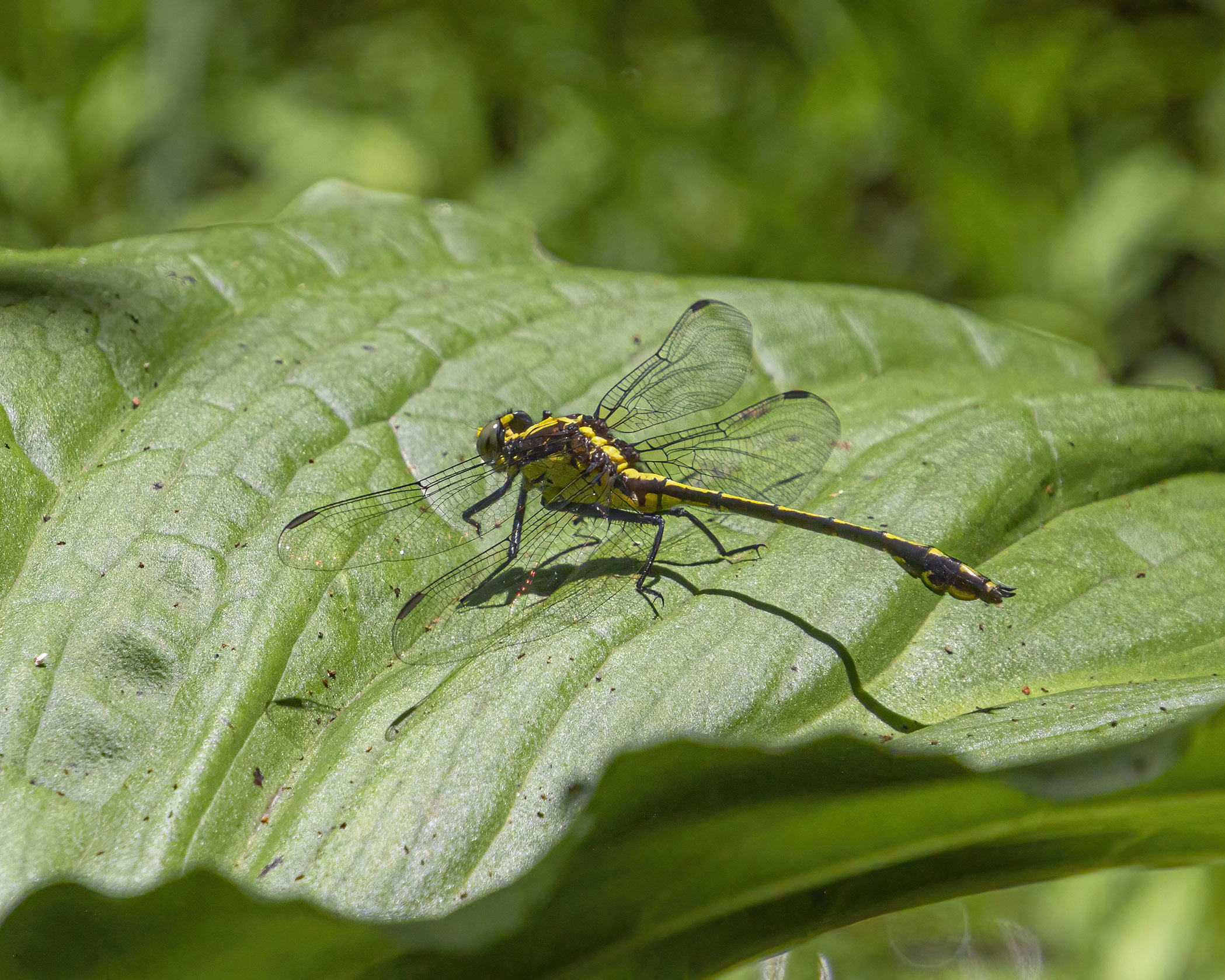
I was thrilled last Friday at Occoquan Bay National Wildlife Refuge to  capture some images of Fine-lined Emerald dragonflies (Somatochlora filosa), a species for which I have been searching repeatedly this past month. Fine-lined Emeralds are one of several species that appear in the autumn, just as the number of most species of dragonflies is beginning to drop precipitously. I had spotted what I think were Fine-lined Emeralds several times earlier in September, but for me the sighting does not really “count” if I am not able to take a photograph.

Fine-lined Emeralds like to spend a lot of time patrolling, and a lesser amount of time perching. Unlike many of species that fly about high in the air, this species often flies at at somewhere between knee and eye-level, and that is how I usually first identify this species.

The dragonfly in the first photo appeared to be flying a patrol back-and-forth along a long stretch of one of the trails at the wildlife refuge. I stayed more or less in the same spot and over the course of a half hour or so, I watched and waited as the dragonfly zoomed by me. I was fortunate to track the dragonfly when it was flying and captured some shots when it occasionally perched vertically for a moment or two. The big challenge for me was focusing on the dragonfly’s thin body—my camera’s auto-focus had trouble acquiring focus, so I had to rely on manual focusing, which is a bit difficult with a digital camera.

Later in the day I spotted the dragonfly in the second photo, what appears to be a different male Fine-lined Emerald. It perched in the same, hanging from the vegetation in the same way as the earlier dragonfly. This dragonfly’s abdomen seemed to be a bit scuffed for reasons that were not readily apparent.

I encourage you to click on the photos to get a closer look at this elusive dragonfly species that the Dragonflies of Northern Virginia website describes as, “One of Northern Virginia’s most rare dragonflies, possibly our rarest, this species is seldom seen and little known throughout its range, from New Jersey to Florida, and west to Kentucky and Texas.”

Fine-lined Emerald

Fine-lined Emerald

© Michael Q. Powell. All rights reserved.

Read Full Post »
Seasons are noticeably changing as summer releases its hold on us (for those of us in the Northern Hemisphere). Children in my area have returned to school and the weather has cooled off quite a bit.

Many summer dragonfly species are starting to disappear or decrease in numbers. Fortunately, some new species appear late in the season to take their places, like this handsome Russet-tipped Clubtail dragonfly (Stylurus plagiatus) that I spotted on Monday at Occoquan Bay National Wildlife Refuge.

Russet-tipped Clubtails are a late season species and are seen most often in August and September in my area. Unlike many of the dragonflies that I see regularly that seem to prefer pole-like perches or perch flat on the ground, Russet-tipped Clubtails like to hang from the leaves of vegetation at an angle or almost vertically—members of the genus Stylurus are sometimes called “Hanging Clubtails.”

I am not quite ready to welcome “autumn,” but there are signs everywhere that the seasons are inexorably changing. Autumn is probably my favorite season of the year, but I am still holding on to the remnants of summer—this year autumn begins on 22 September.

Russet-tipped Clubtail

© Michael Q. Powell. All rights reserved.

Read Full Post »
I spotted this gorgeous Twelve-spotted Skimmer dragonfly (Libellula pulchella) on Monday (8 September) at Occoquan Bay National Wildlife Refuge. I don’t see this species very often and think this might be the first one that I had photographed this season. The white spots in between the darker patches on the wings indicate that this is a male—females of this species have only the darker spots.

Most of the time when I am photographing dragonflies I have to shoot quickly before the dragonfly flies away. In this case, I had the luxury of being able to move around a bit to find a shooting angle that captured the details of the beautiful wings and the blooming wildflowers in the background. Why? When male Twelve-spotted Skimmers are flying, their patterned wings make them look almost like butterflies and I was able to track this dragonfly to the spot where he landed—most other dragonflies have transparent wings and therefore appear smaller when they are in flight.

Twelve-spotted Skimmer

© Michael Q. Powell. All rights reserved.

Read Full Post »
I was thrilled to spot this stunning male Calico Pennant dragonfly (Celithemis elisa) on Monday at Occoquan Bay National Wildlife Refuge. At this time of the year I am eager to search for the survivors of the summer species. The number of dragonflies continues to dwindle as we move deeper into September and I never know for sure when an encounter with one of the species will turn out to be the last one of the season.

I absolutely love the look of male Calico Pennant dragonflies. The beautiful patterning on their wings and the red heart-shaped markings on their abdomens really make them stand out. I guess that I am a bit romantic when it comes to those red hearts and I managed to find a shooting angle that allowed me to capture that detail really well in the image below.

Alas, this male was the only Calico Pennant that I spotted that day. Dragonflies spent a lot of their time looking for a mate and then doing their part to ensure the preservation of their species. Perhaps this solitary dragonfly will find a mate or maybe it is too late in the season for that. As I said, I am somewhat of a romantic and I choose to hope that love will find a way for him.

Calico Pennant

© Michael Q. Powell. All rights reserved.

Read Full Post »
It has been a long, hot summer and I welcome the cooler temperatures and lower humidity of the autumn. For me, this is part of a cycle of nature that is repeated each year. For dragonflies, though, the autumn signals that their lives are drawing near to the end. Dragonflies begin their lives as water-dwelling nymphs and when they emerge and are transformed into the incredible aerial acrobats that we see, their days are numbered in weeks and months.

Earlier this week I spotted this Halloween Pennant dragonfly (Celithemis eponina) that appeared to have survived several encounters with predators. Its wings were shredded, but somehow the dragonfly was still able to fly. It’s probably my imagination, but the Halloween Pennant seemed to be smiling, enjoying every minute of its remaining days, happy to be alive. As I get older, I feel like that sometimes.

Halloween Pennant

© Michael Q. Powell. All rights reserved.

Read Full Post »
Earlier in the summer Needham’s Skimmers (Libellula needhami) were one of the most common dragonflies that I would encounter at Occoquan Bay National Wildlife Refuge, but over the past month their numbers have dropped significantly as their flight season draws to a close. I was therefore quite pleased to spot this mature female Needham’s Skimmer on Monday at the wildlife refuge.

The dragonfly’s colors seemed a bit faded, but otherwise she appeared to be in good shape. I am not sure if the stalk of vegetation on which she was perching was comfortable, but it helped me to isolate her from the background and its pointy protrusions add visual interest to the image.

Needham's Skimmer

© Michael Q. Powell. All rights reserved.

Read Full Post »
As we approach the end of August, some of the more common dragonfly species are becoming much less common. Some autumn species will soon take their places. At the moment the Common Whitetail dragonfly (Plathemis lydia) is the species that I see most often. During a recent visit to Huntley Meadows Park, I spotted this young male Common Whitetail perched vertically on some vegetation.

How do I know that it is a young male? Females of this species have a different pattern of dark patches on their wings, as you can see in the second image below from earlier in the season, and different terminal appendages. Males start out with a darker coloration like that of their female counterparts and as they age they develop a white powdery substance on their abdomens called pruinosity. The dragonfly in the first photo is currently a bluish white and some of the markings are still showing through—eventually he will turn a bright white in color.

Common Whitetail

Female Common Whitetail

© Michael Q. Powell. All rights reserved.

Read Full Post »
As we near the end of August, I am seeing more and more reminders that Halloween is drawing near. Although we still have a couple of months before the 31st of October, store displays of candy and costumes and all other sorts of spooky merchandise have popped up everywhere.

Even when I was walking the trails of Occoquan Bay National Wildlife Refuge recently, I was reminded of the upcoming holiday when I spotted this Halloween Pennant dragonfly (Celithemis eponina) perched at the highest point of a patch of vegetation. Halloween Pennants have very distinctive markings on their wings that make then easy to identify. Unlike some other dragonfly species that perch on the ground and are therefore hard to spot amidst the fallen leaves, Halloween Pennants always seem to perch high above the ground and consequently are easy to spot. These perches often sway in the slightest of winds, causing the dragonflies to flutter in the wind, like pennants.

Halloween Pennant

© Michael Q. Powell. All rights reserved.

Read Full Post »
It is a bit early to be thinking of autumn, but early signs are beginning to appear. On Monday, classes begin for public school students in our county and traffic will be crazier than ever as commuters and school buses adjust to a changed dynamic.

Some species of summer dragonflies are beginning to disappear and I have begun to search for their autumn replacements. The trails at the wildlife refuges that I haunt are now littered with fallen leaves, making it hard to spot those species that perch on the ground.

This past Monday I captured this shot of a female Common Whitetail dragonfly (Plathemis lydia) at Huntley Meadows Park. This species is one of the most common in my area at this time of the year and I spotted a lot of them during my visit to the park. I particularly like the way that I was able to capture the texture and detail of the dried leaves on which the dragonfly was perched—I can almost hear the crunch of those leaves as I walked through them that day.

Truth be told, autumn is my favorite time of the year and I am patiently waiting for it to arrive. In the meantime, I am still enjoying the summer. “To everything there is a season, and a time to every purpose under heaven.”

Common Whitetail dragonfly

© Michael Q. Powell. All rights reserved.

Read Full Post »
Older Posts »