Feeds:
Posts
Comments

Archive for June, 2026

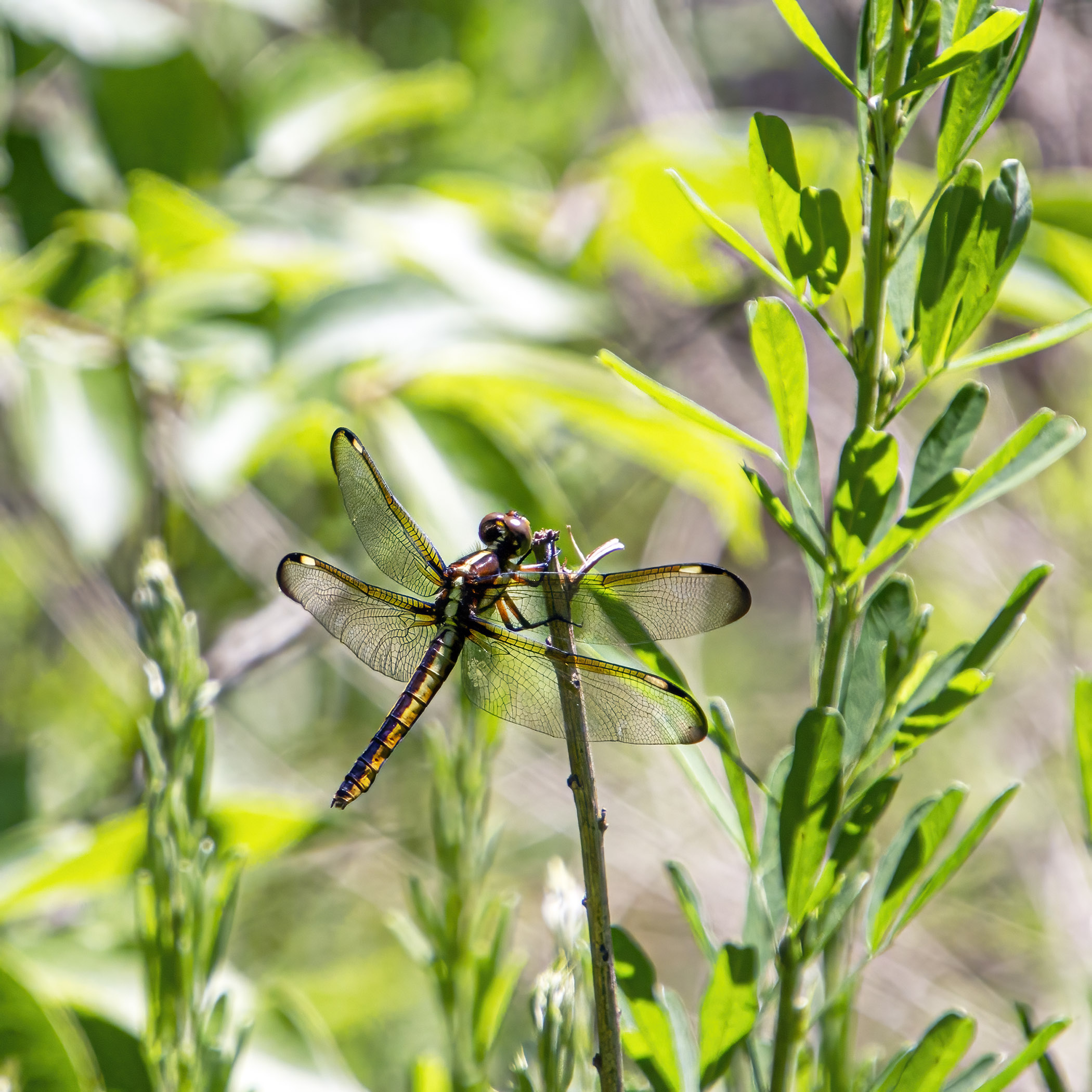
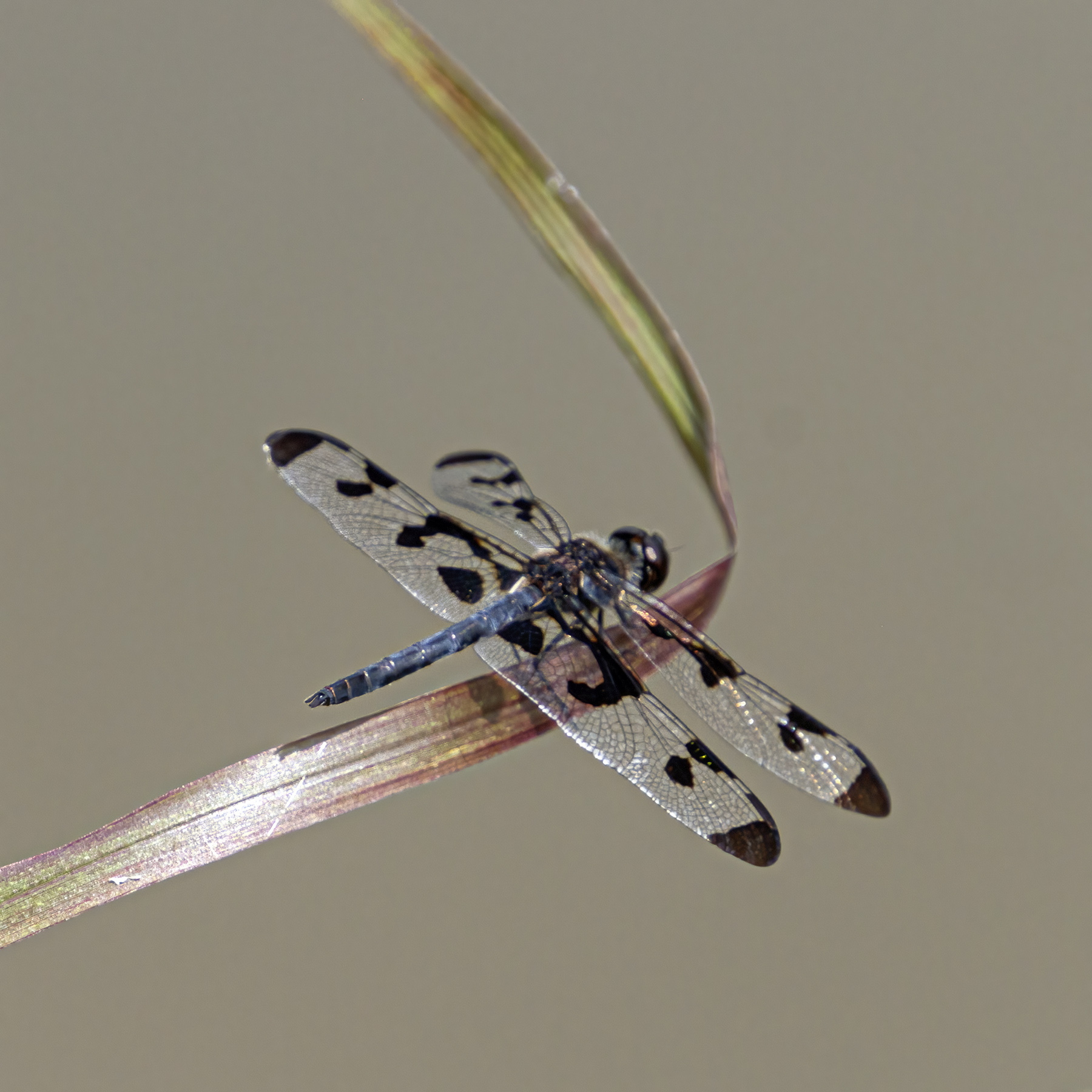
I was thrilled to spot this male Banded Pennant dragonfly (Celithemis fasciata) last Friday (26 June) at the edge of Mulligan Pond at Jackson Miles Abbott Wetland Refuge in Alexandria, Virginia. I don’t see this species very often, so it was a real treat to spot this dragonfly, the only Banded Pennant that I saw at this location. The distinctive pattern on the wings makes this species an easy one to identify.

Banded Pennant

© Michael Q. Powell. All rights reserved.

Read Full Post »

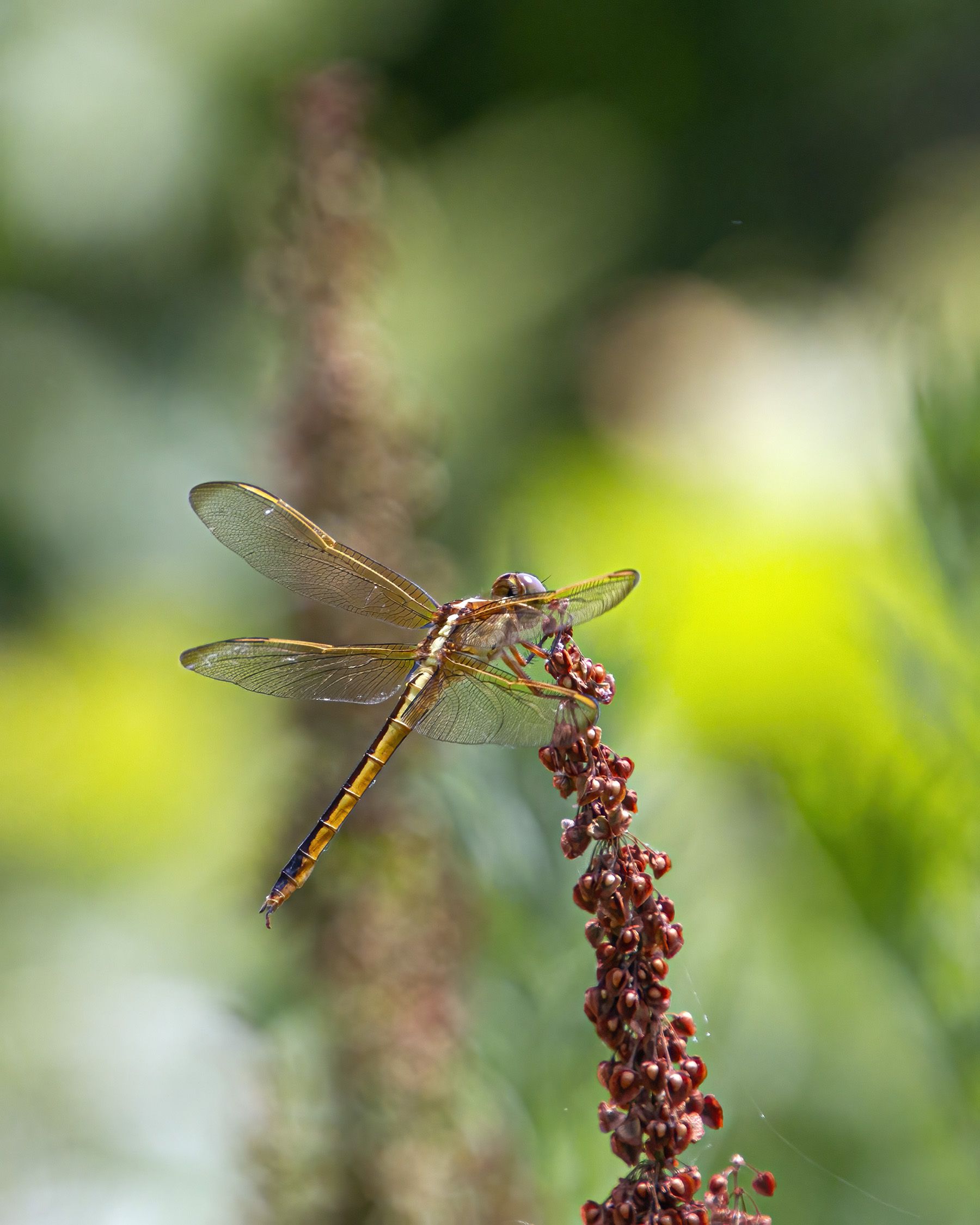
I haven’t gone out in the wild quite as much this month as normally, but earlier in June I captured this cool shot of a Needham’s Skimmer dragonfly (Libellula needhami) during a visit to Occoquan Bay National Wildlife Refuge. I absolutely love the gold veining near the leading edges of the wings of this species that really make them sparkle.

The weather has turned nice, but reports of swarming flies at my favorite wildlife refuge have deterred from making more frequent visits. I may have to spend some time at some other local spots to search for photo opportunities of dragonflies and other potential subjects.

© Michael Q. Powell. All rights reserved.

Read Full Post »

It was uplifting to see so many different countries represented in the Pride Parade on Saturday in Washington D.C., including Canada, the United Kingdom, Ireland, the Nordic countries, Switzerland, and many others. It was a joyous celebration for folks of all ages, genders, and nationalities.
More than in previous years, I was struck by the family vibe that permeated the parade. Decades ago, many people tended to look at parades like this as freak shows and some members of the community really leaned into that rebel image. Now, it seems that there is greater understanding and acceptance of non-traditional sexual orientations and relationships and people feel freer to simply be themselves.
Love is love. Happy Pride Month.
Ireland Pride
Nordic Pride
Switzerland Pride
© Michael Q. Powell. All rights reserved.

Read Full Post »

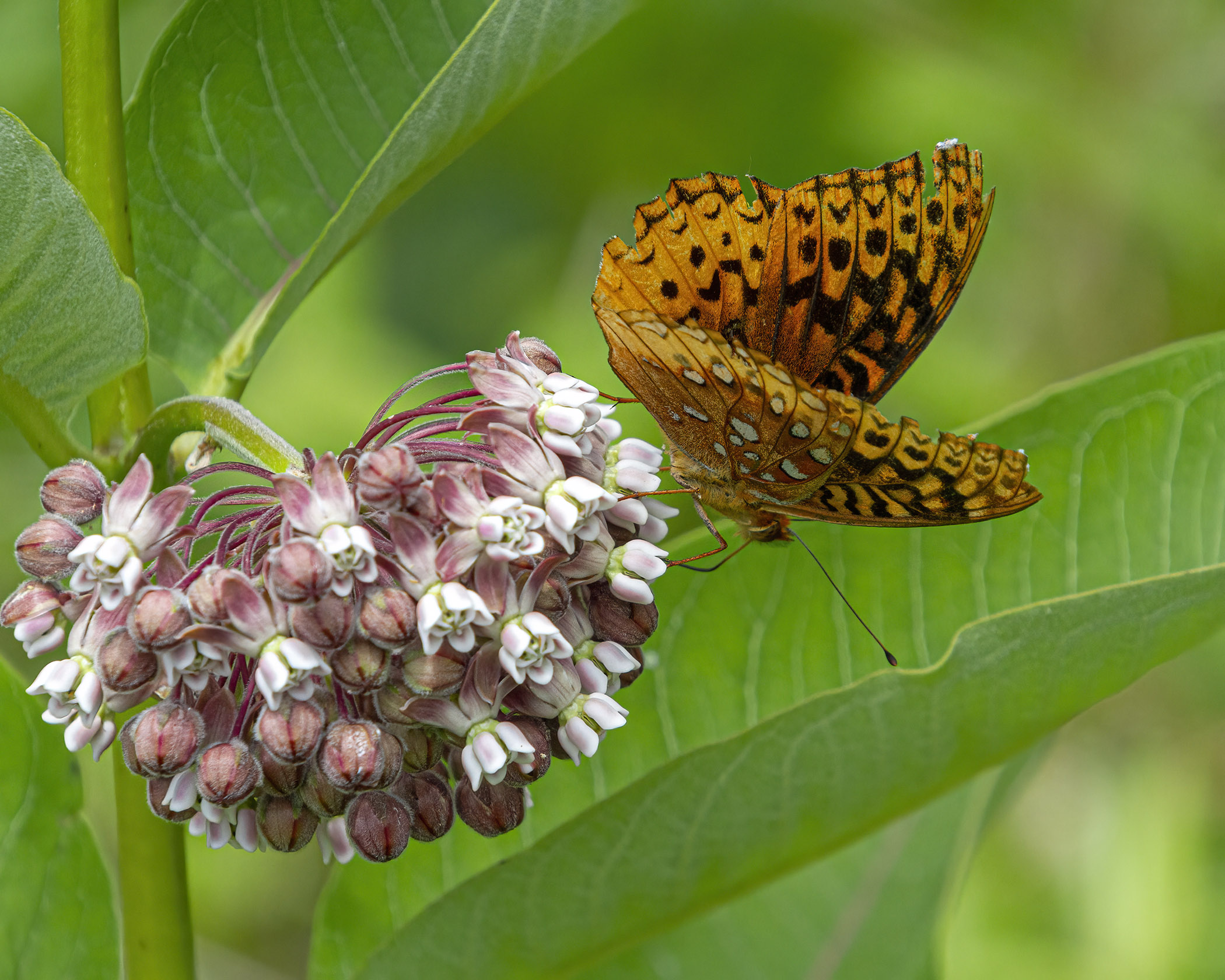
I captured this shot of a beautiful Great Spangled Fritillary butterfly (Speyeria cybele) feeding on a milkweed plant during a recent visit to Occoquan Bay National Wildlife Refuge. This is a pretty simple composition, but I really like its blend of color and textures.

What can I say? I like what I like.

© Michael Q. Powell. All rights reserved.

Read Full Post »

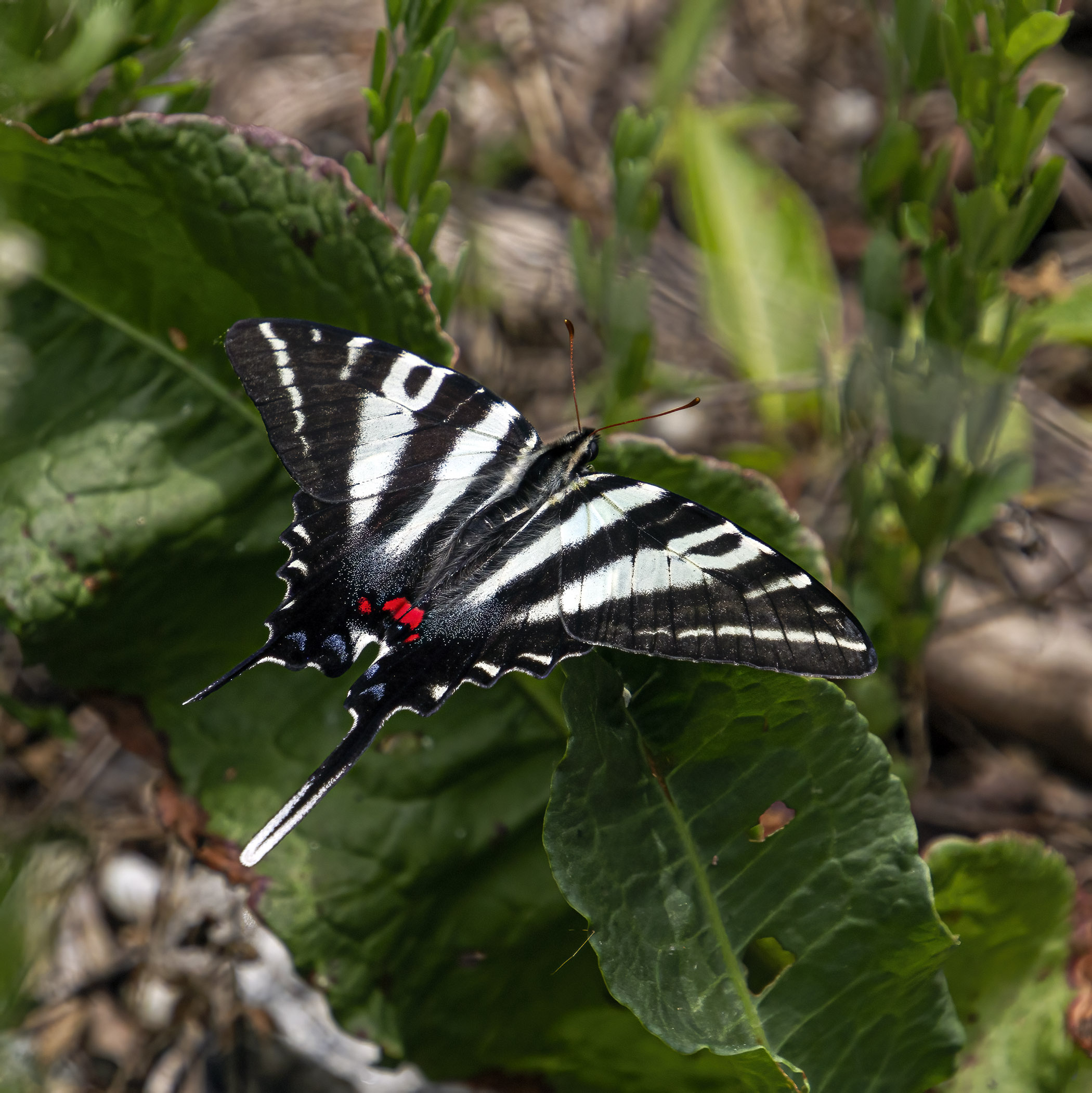
I spotted lots of Zebra Swallowtail butterflies (Eurytides marcellus) on Tuesday (9 June) during a visit to Occoquan Bay National Wildlife Refuge. It was pretty difficult, though, to get a shot of one, because they were constantly in motion. I chased after a number of them and finally one landed for a moment. Trying to control my breathing, I waited for the butterfly to open its wings fully and finally I managed to capture this image.

I couldn’t help but notice that one of the “tails” was considerably shorter than the other one. At first I wondered if the shorter tail was the result of a predator trying to grab the butterfly by the “tail.” When I looked closely, though, the cut seemed to be so clean, so I considered the possibility that the butterfly emerged from its chrysalis with this deformity. Whatever the case, the unequal sized tails did not seem to affect the butterfly’s ability to fly.

Zebra Swallowtail

© Michael Q. Powell. All rights reserved.

Read Full Post »

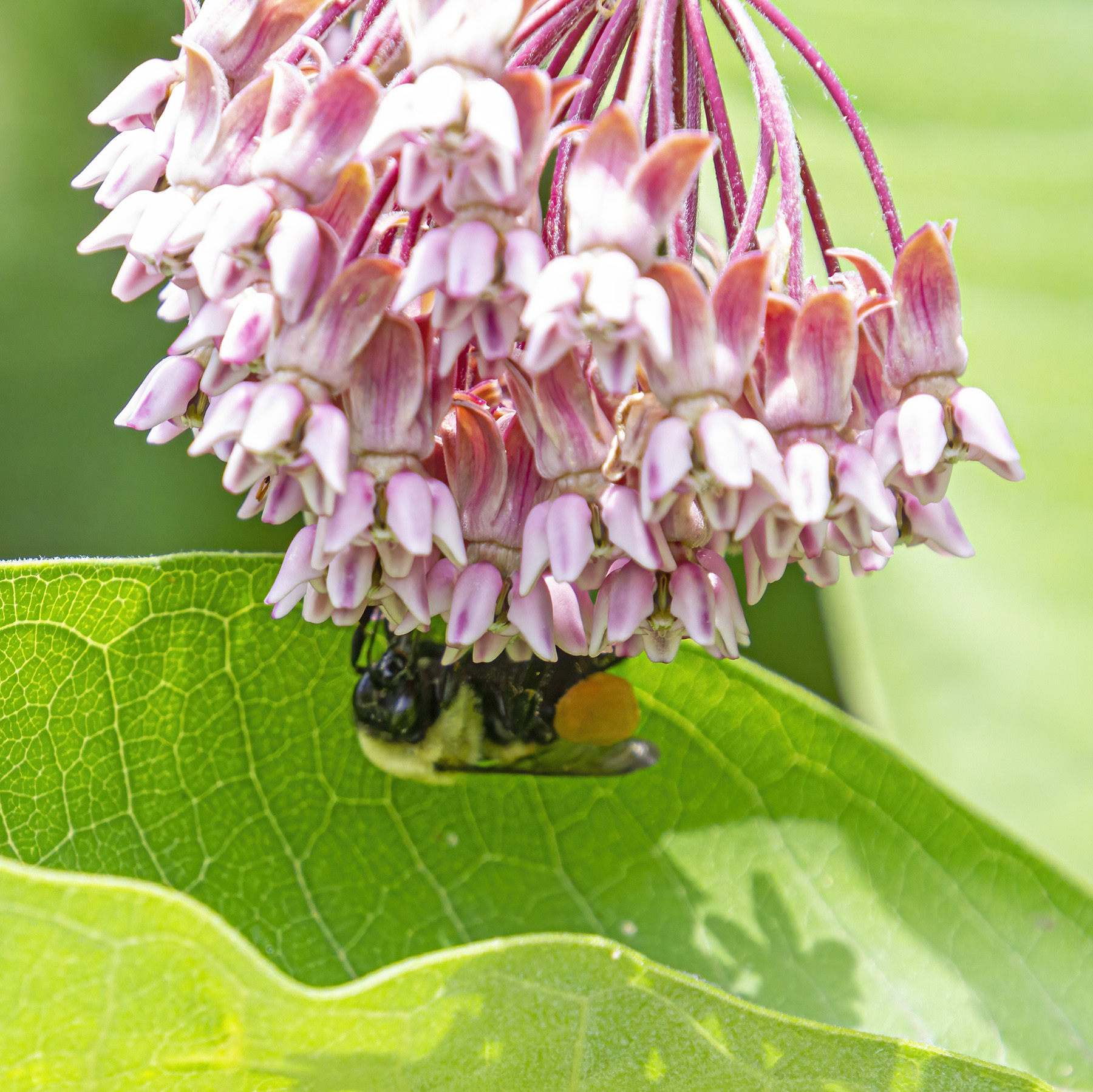
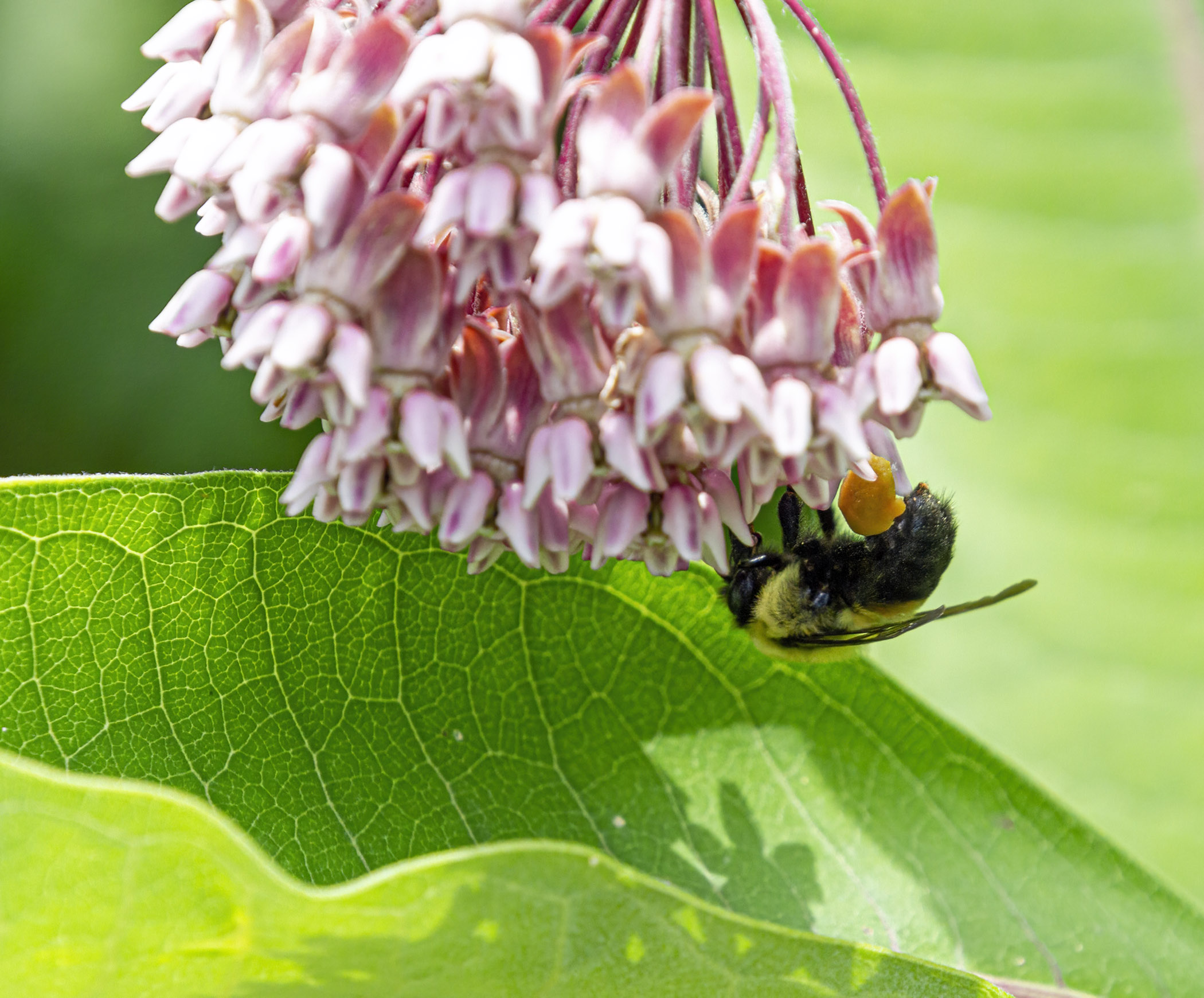
Milkweed plants were flowering at Occoquan Bay National Wildlife Refuge on Tuesday (9 June) and the pollen baskets (corbiculae) on the hind legs of this bee were filled to overflowing. The bright orange concentration of pollen made it easy to track the bee, though its constant motion made it really tough to get a decent photograph.

Most often I think of pollen as being yellow in color, but in the past I have taken photos of bees covered in pollen that was another color. The third photo below from a post in May 2020 shows red pollen from Purple Deadnettle flowers (Lamium purpureum). The final photo below showing a bee covered in white pollen from a chicory flower is from one of my posts in August 2014.

I have a pretty memory of the subjects that I have photographed, but often can’t remember when I took the photos. When I did a Google search of “Mike Powell multi-colored pollen,” the results began with an AI summary that surprised me. It indicated that “Nature photographer Mike Powell frequently highlights the fascinating, vibrant spectrum of pollen colors collected by pollinators. Through his macro photography in Northern Virginia’s parks, he captures how pollen isn’t just yellow, but can appear in brilliant shades of blue, orange, red, pink, and white.”

Google also included a link to my blog, which my help to explain why my views have been unusually high this year, despite the fact that I have been posting less frequently than in the past. I am not a big fan of AI and am particularly negative about generative AI, but I have to admit that AI did a pretty good job in summarizing a large body of information, in this case my blog postings from 2012 to the present. Wow! It’s hard to believe that I have kept the blog going for that long.
bee

multi-colored bee

© Michael Q. Powell. All rights reserved.


Read Full Post »
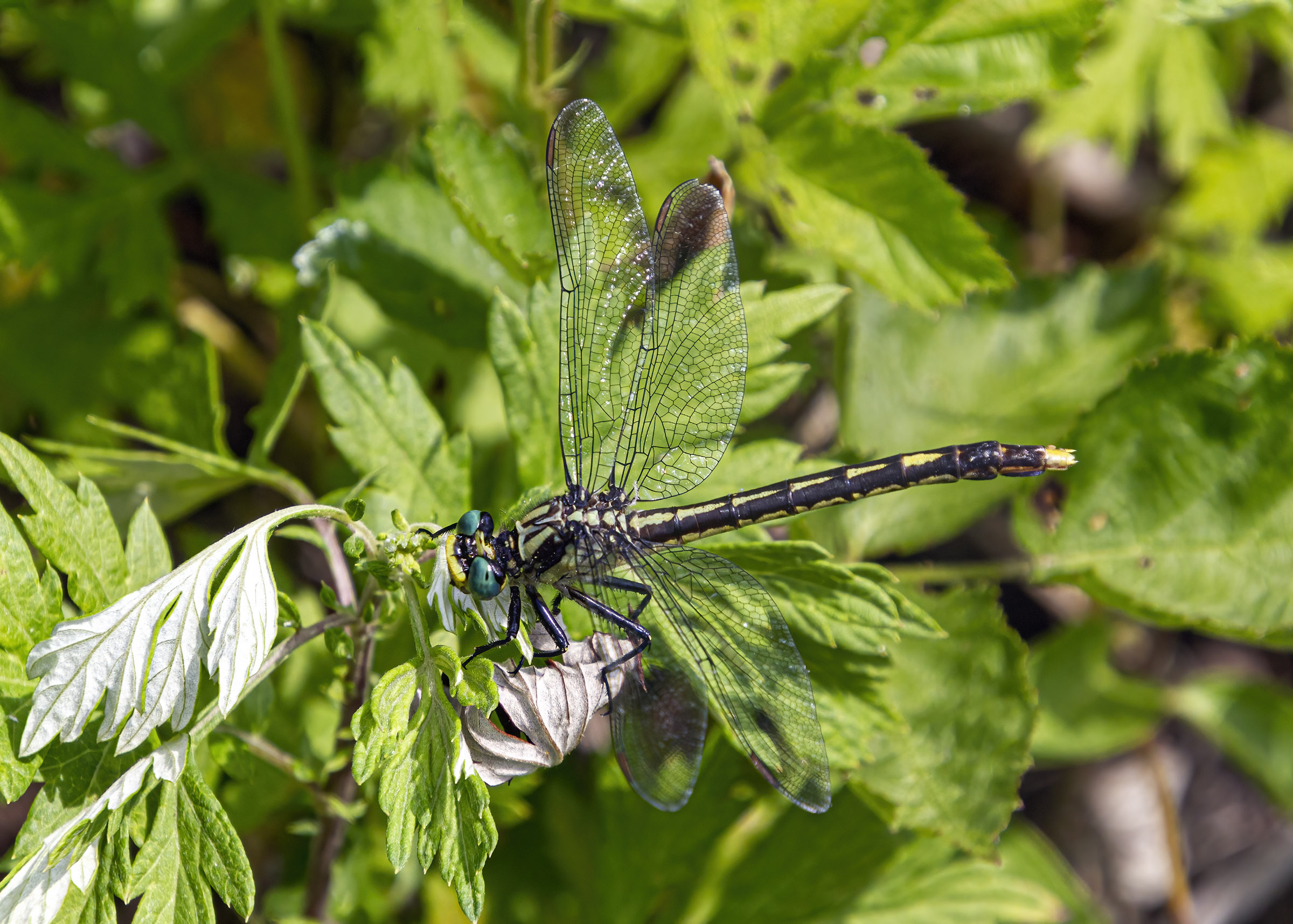
I was delighted to spot this female Unicorn Clubtail dragonfly (Arigomphus villosipes) yesterday (9 June) during a visit to Occoquan Bay National Wildlife Refuge, my favorite nearby location for wildlife photography. Most of the Unicorn Clubtails that I have photographed in the past have been males, primarily at the edge of ponds, but this female was in a vegetated area away from the water.

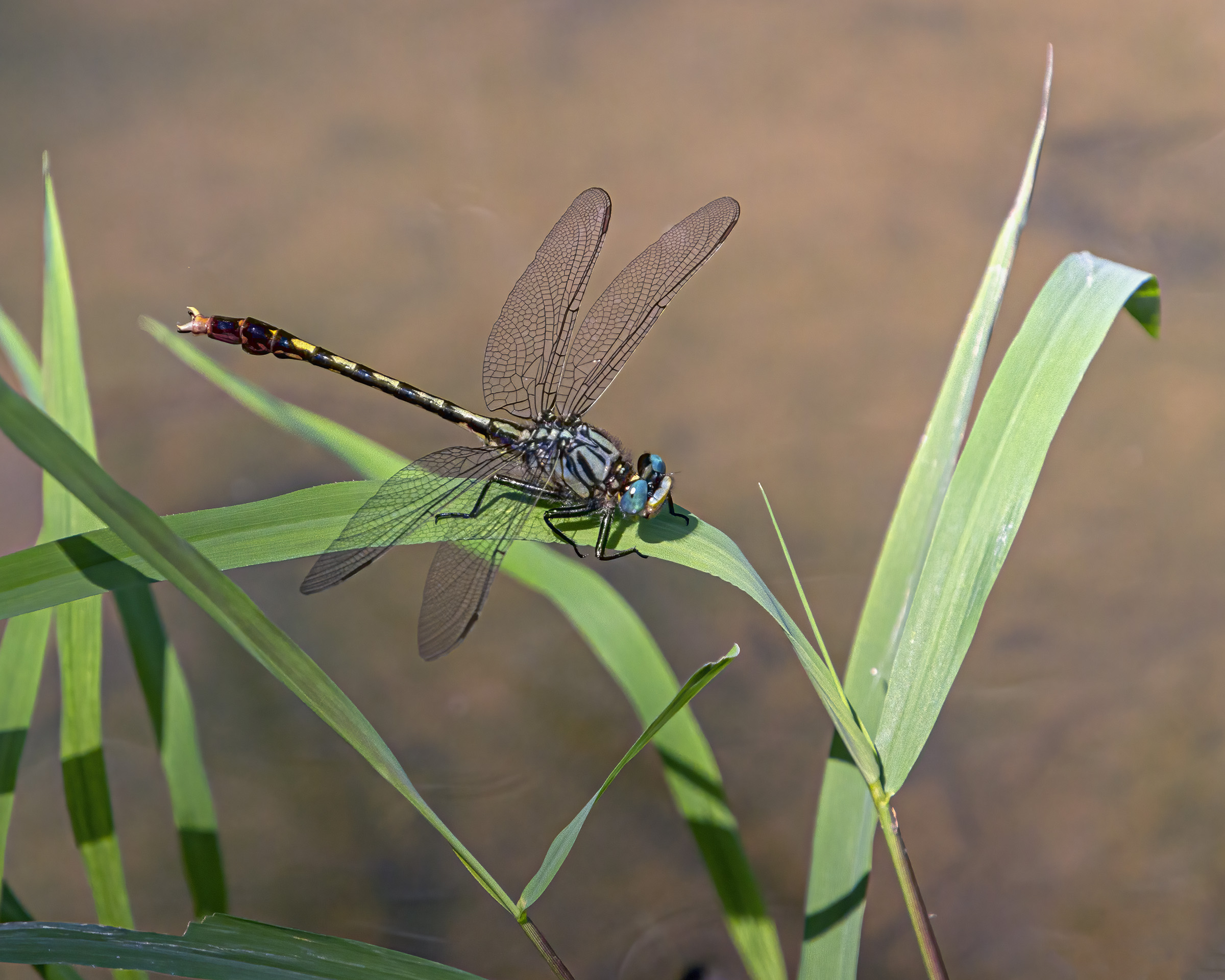
How do I know this is a female? One of the most reliable ways is to look at the shape of the tips of the dragonfly’s abdomen (its “tail”). I have attached a photo of a male Unicorn Clubtail from a recent blog posting  (second photo below) to visually illustrate some of the differences between a female and a male Unicorn Clubtail.

On rare occasions, though, I have spotted female Unicorn Clubtails flying over the water. Unlike some other clubtail dragonfly species that deposit their eggs into plant tissue, female Unicorn Clubtails oviposit by hovering and repeatedly tapping the tips of their abdomens directly on the surface of the water. I have been fortunate to observe this in the past and captured a shot from June 2019 (third photo below) that shows a flying female Unicorn Clubtail dragonfly with the ripples in the water from depositing eggs (click here for more details about that encounter).

female Unicorn Clubtail

male Unicorn Clubtail dragonfly

female Unicorn Clubtail

© Michael Q. Powell. All rights reserved.

Read Full Post »
Last week I spotted my first Spangled Skimmer dragonfly (Libellula cyanea) of the year at Occoquan Regional Park in nearby Lorton, Virginia. It is remarkable easy to identify this species, because it is the only dragonfly in our area that has both black and white stigmata.

The stigmata, or pterostigmata, which is the more technical name, are the pigmented hollow structures on the leading edge of dragonfly wings. They are slightly heavier than the adjoining cells and have a significant effect on the aerodynamics of the wing, particularly while gliding, according to an article entitled “Dragonfly wings: tried and tested over millennia!” I confess that I don’t understand aerodynamics at all and look at dragonfly flight as nothing short of miraculous (and magical).

I am starting to see more and more dragonflies each time that I go out with my camera. I enjoy returning to familiar spots, observing the yearly cycle of emerging creatures. With all of the chaos swirling in the world, there is something reassuring about this cycle that continues on with some degree of predictability.

Spangled Skimmer

© Michael Q. Powell. All rights reserved.


Read Full Post »

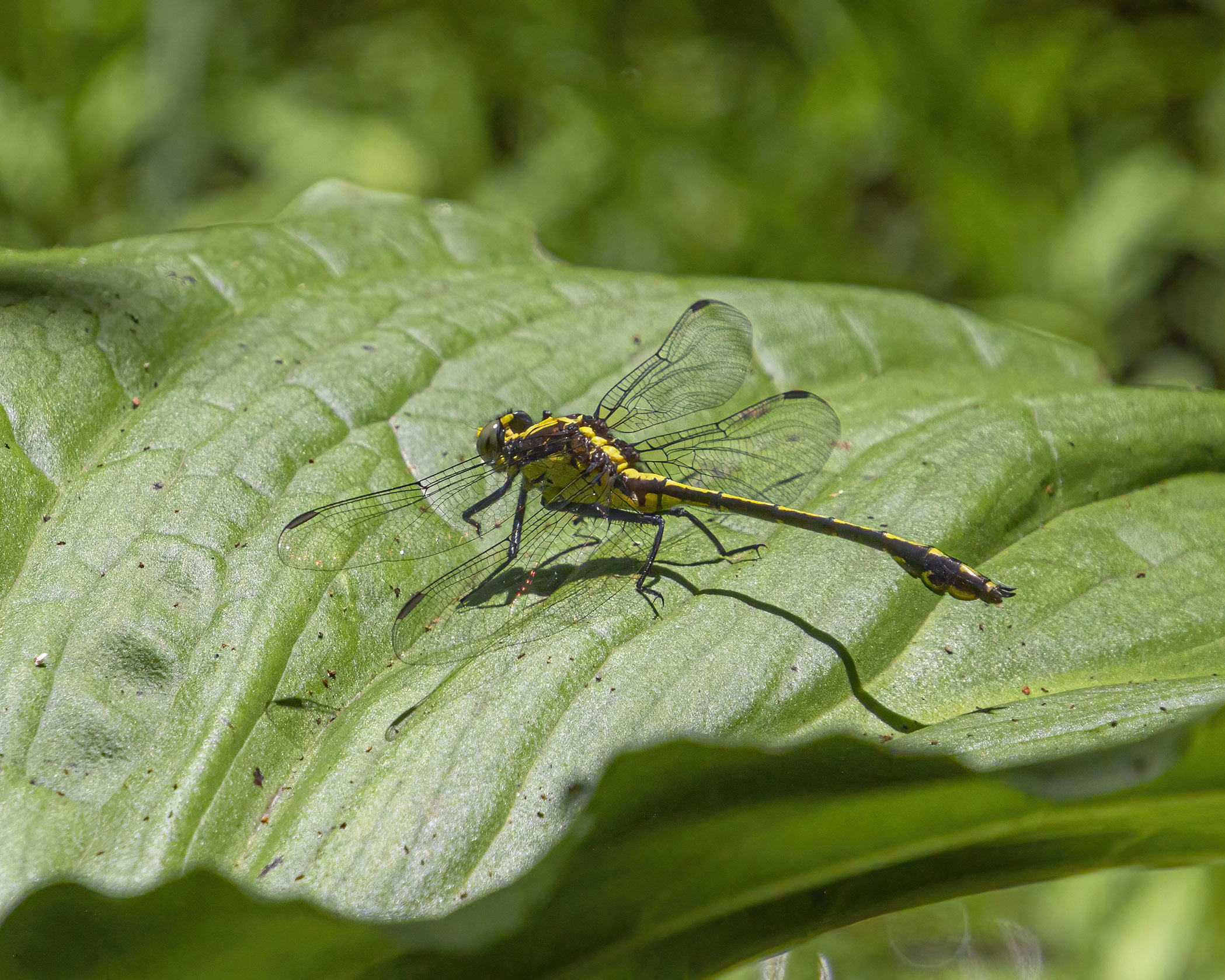
I was surprised and delighted to spot this Black-shouldered Spinyleg dragonfly (Dromogomphus spinosus) last week as I was exploring a mucky area in a local park. It was the kind of habitat where I hoped to spot Gray Petaltails and I was successful in doing so, as documented in my blog posting a few days ago called Gray Petaltail dragonfly in May.

However, I did not expect to find Black-shouldered Spinylegs, which in the past I have found most often near open streams. In fact, I must confess that I had no idea what kind of dragonfly it was when it flew by and landed on some large skunk cabbage leaves. Fortunately, I reacted quickly and manage to capture a few shots before the dragonfly flew away.

When I reviewed my photos later on my computer, I was struck by the length of the dragonfly’s back legs. If you click on the image to zoom in, you can’t help but notice the sharp spines that look to be as large and pointed as the thorns in the vegetation that frequently tear at my pantlegs. Those large leg spines help the Black-shouldered Spinyleg to capture and to hold on to prey (and help to explain the origin of the name of the species).


Black-shouldered Spinyleg

© Michael Q. Powell. All rights reserved.

Read Full Post »