Feeds:
Posts
Comments

Archive for April, 2026

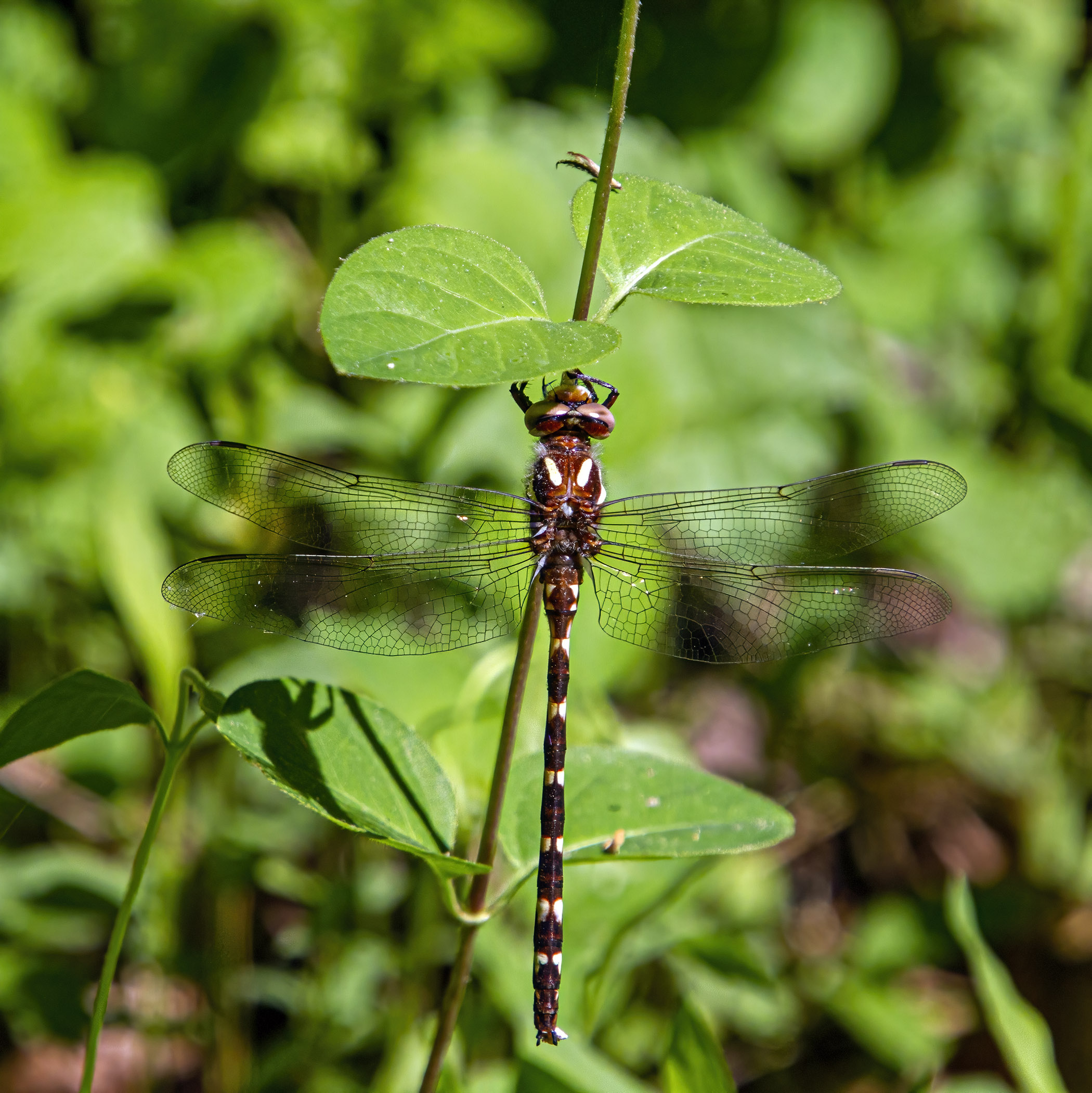
Yesterday, 23 April, I spotted my first spiketail dragonfly of the season while I was exploring a regional park in my county. Dragonflies are divided up into a number of different families and some of the less common ones are named for their “tails,” including spiketails, petaltails, and clubtails. Most of the familiar dragonflies that we see during the summer are from the skimmer family.

Spiketail dragonflies are relatively uncommon where I live and I was delighted to spot capture this shot of what I believe is a Brown Spiketail (Cordulegaster bilineata). As described on the Dragonflies of Northern Virginia website, “These uncommon, elusive dragonflies have, in my opinion a magical, almost elven quality and are usually found in isolated corners of mature woodlands.”

I never know for sure what creatures I will encounter when I go out in the wild with my camera, but this was not exactly a random encounter. In the past I have sometimes found spiketails at this time of the year in this location. In wildlife photography there are no guarantees, but a bit of knowledge and skill and a lot of persistence can increase the odds in my favor of encountering some of these beautiful creatures—it is more than just pure luck.

Brown Spiketail

© Michael Q. Powell. All rights reserved.


Read Full Post »

Photography seems to be easy. Nowadays anyone with a cell phone can capture images. Many people do so every day and all of the social media filled with those images. Is that really photography? That’s a huge question and your response to it is significantly influenced by the way that you look at the purpose of photography.

Is photography simply about recording and documenting a moment in time? If so, a simple box camera of the past or almost any modern camera or cell phone can easily fulfill that role. Underlying that view is the assumption that somehow reality is objective. Police interviews of eyewitnesses, however, have repeatedly shown each person has an individual perception of reality. In essence, we all have built-in filters that alter and shape our perceptions and interpretations of what our eyes are seeing.

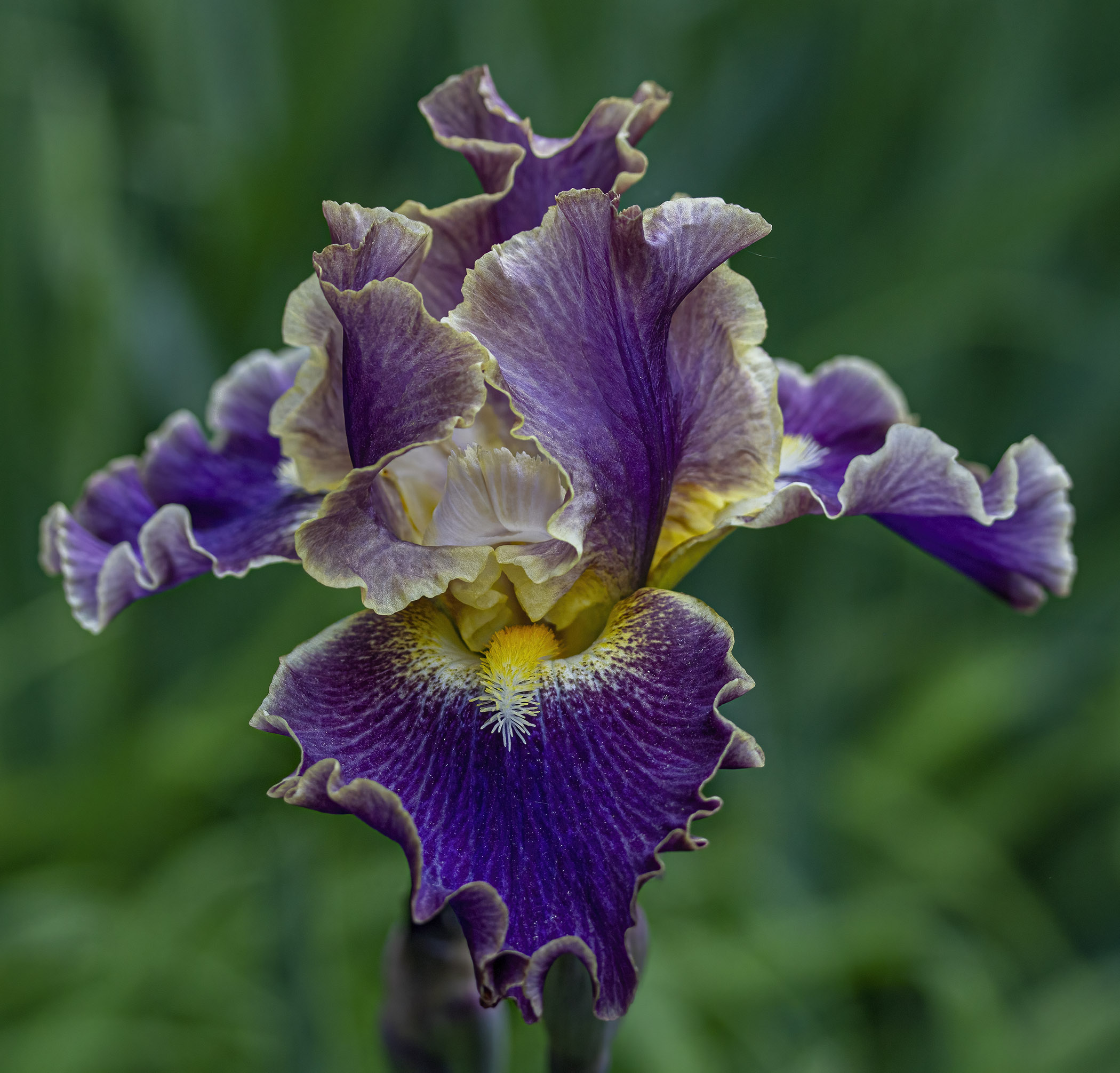
In my personal view, photographers are trying to shape your perceptions of a subject through a series of creative choices they make. As I was reviewing some recent photos I took of irises in a neighbor’s garden, I really liked the one below and thought about what was going on in my mind when I took the shot.

When I first looked through the camera’s viewfinder, I realized the background was really cluttered, which I knew would distract the viewer’s focus from the flower and therefore changed the camera’s aperture setting to f/5.0 and moved closer to the flower to provide a more blurred background. I wanted to be sure that I did not get any motion blur, because I was shooting at an awkward angle, so I settled on a shutter speed of 1/400 sec (at an ISO setting of 400). The sunshine was a bit bright and I used exposure compensation of minus 2/3 of a stop to darken the image a bit from what the camera wanted to use.

The final, and arguably most important, step was composing the shot. With a static subject like this, I try to compose the shot in the camera, so minimal cropping is necessary when processing the image on my computer. In this case, the image below was not cropped at all. (With wildlife subjects, I do not have the luxury of carefully composing the shot, so cropping is often necessary.)

I wanted to draw the viewer’s full attention to the fully open iris flower, so I focused on its yellow beards. However, I also wanted the viewer to get a sense of the partially opened blooms and buds and chose to include them in the composition. When I saw them with my own eyes, all of the flowers were equally in focus, but as you can see in the photo, I used the camera settings to ensure that deliberately chosen elements were in focus, while others elements remained visible, albeit blurred.

Over a dozen years ago, when I was first starting to get serious about my photography, I had to consciously make the kinds of decisions I have tried to describe above. Now I am familiar enough with my camera’s settings and know what effect they will have on the photos that I make many of these decisions simultaneously and instinctively. I usually have an idea in my head of the kind of image I want to produce and use most of my conscious mind to think about the composition.

So, is photography hard? Taking a picture is easy, but bringing a vision to life is harder. It may not be possible for another person to walk in your shoes, but photography can help another person to see with your eyes (or at a minimum to experience the world in a way in which you want them to.)
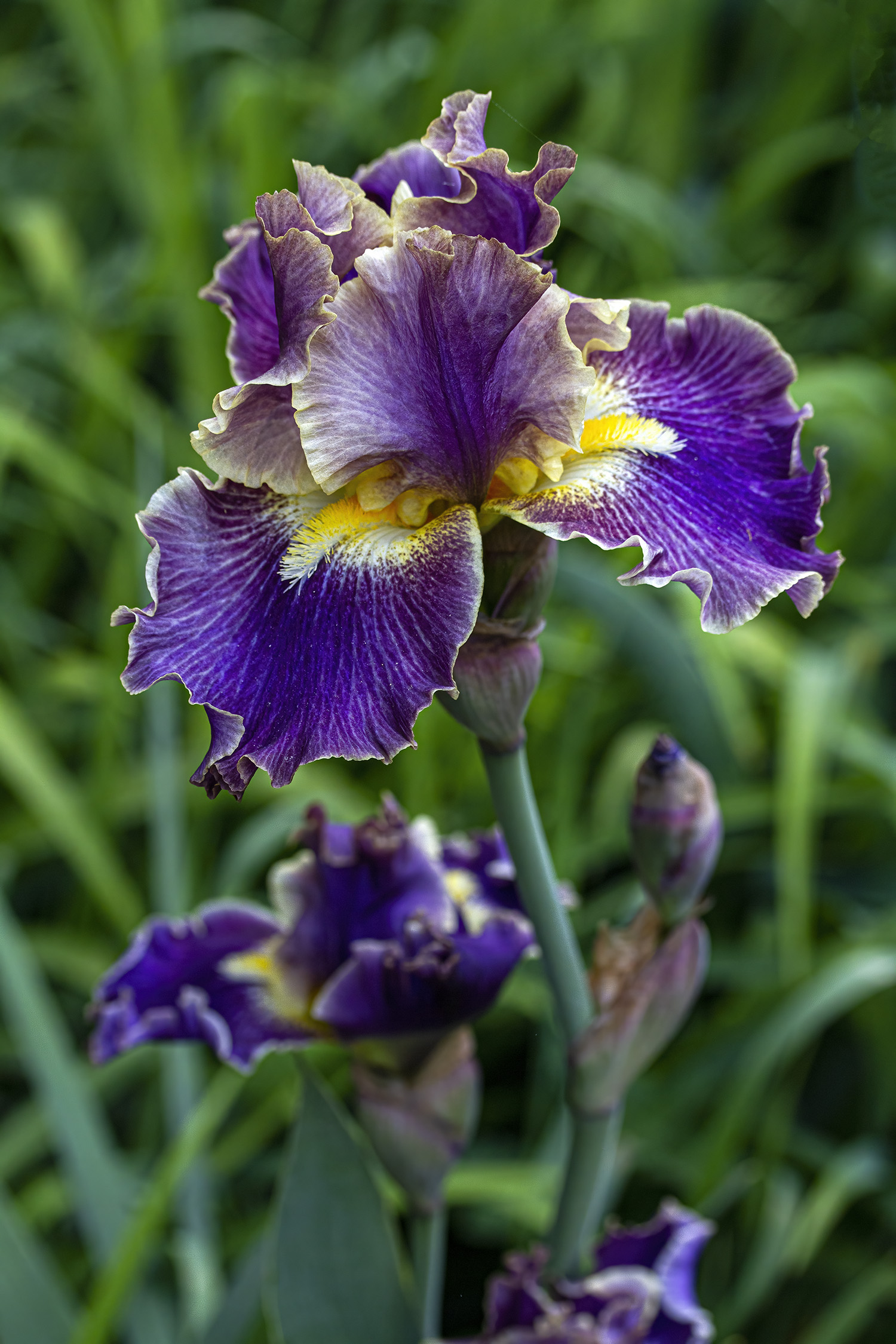
bearded iris

© Michael Q. Powell. All rights reserved.

Read Full Post »
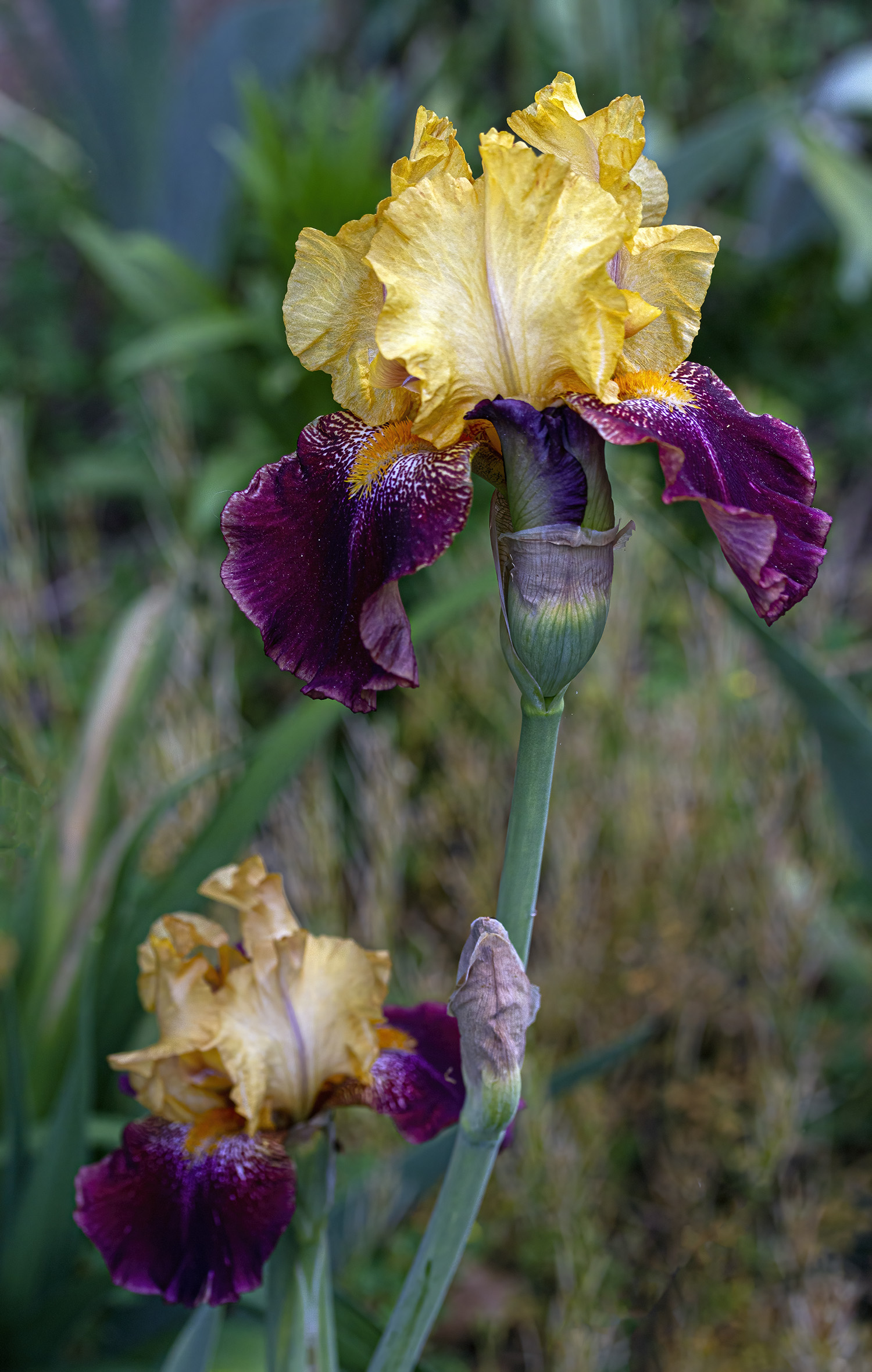
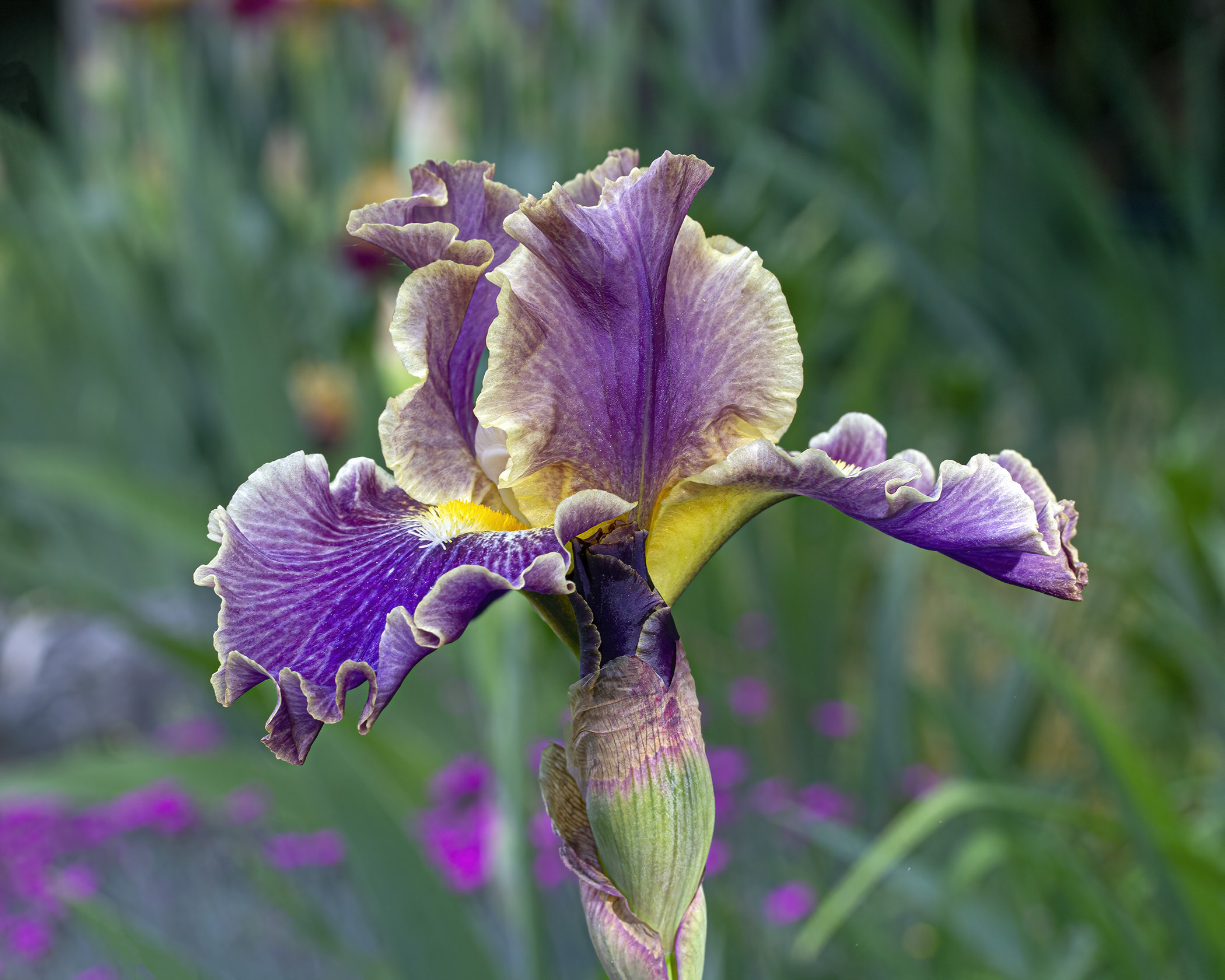
Bearded irises are now starting to bloom in the garden of my dear friend Cindy Dyer, so I walked over yesterday morning and grabbed a few shots of them. Spring is a beautiful time of the year.

bearded iris

bearded iris

bearded iris

© Michael Q. Powell. All rights reserved.


Read Full Post »
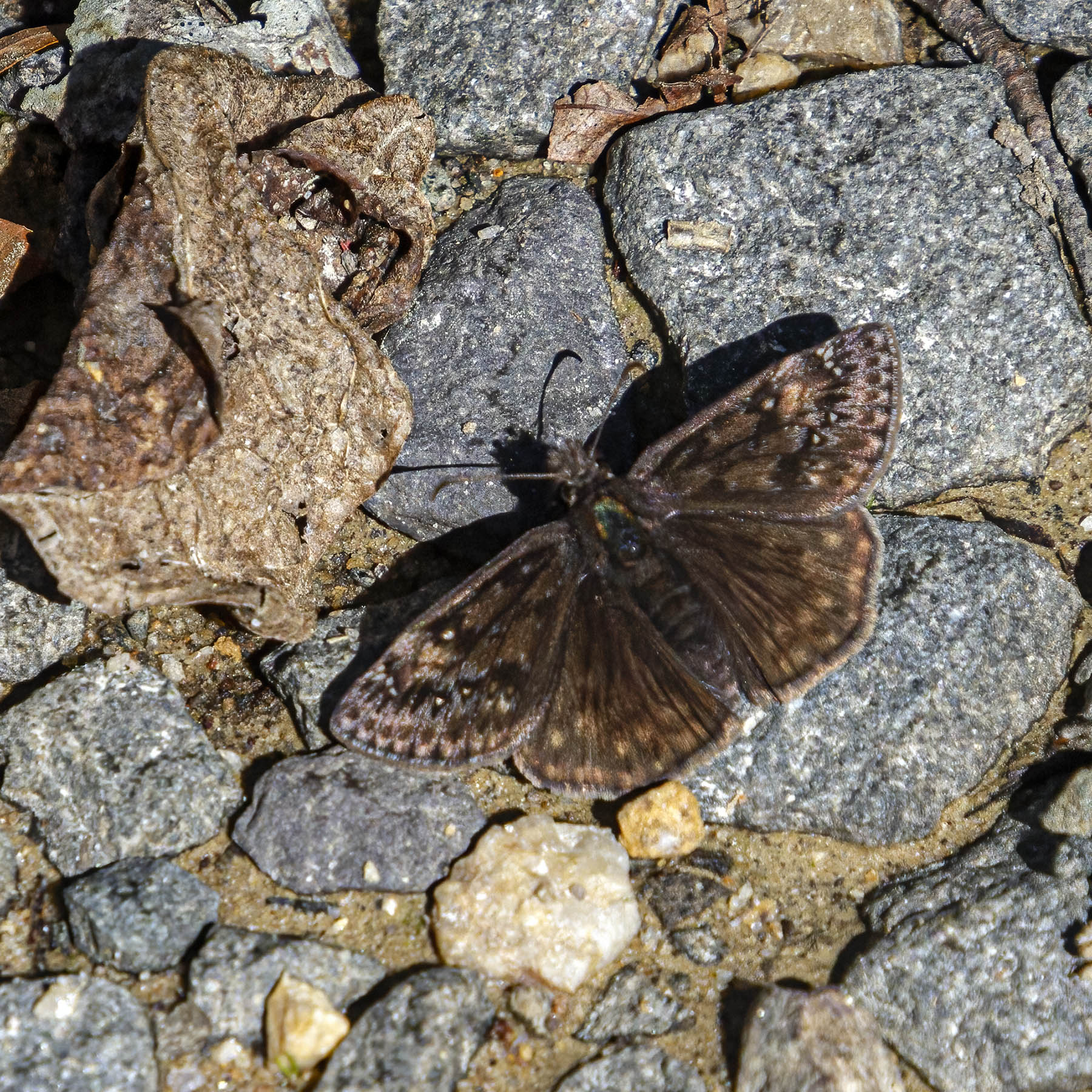
Not all of the spring butterflies are colorful. During a recent hike in a forested area of Prince William County in Northern Virginia, I spotted numerous duskywing butterflies. These small butterflies are part of the skipper family (Hesperiidae) and are considered to be “spread-wing” skippers, because they typically perch with their wings held flat open rather than closed over their backs.

There are several different duskywing species that are differentiated by the patterns on their wings. I am not certain of this identification, but I believe that this may be a Juvenal’s Duskywing butterfly (Erynnis juvenalis). I encourage you to click on the image to get a closer look at this small butterfly’s beautiful colors and patterns,

Juvenal's Duskywing

© Michael Q. Powell. All rights reserved.

Read Full Post »
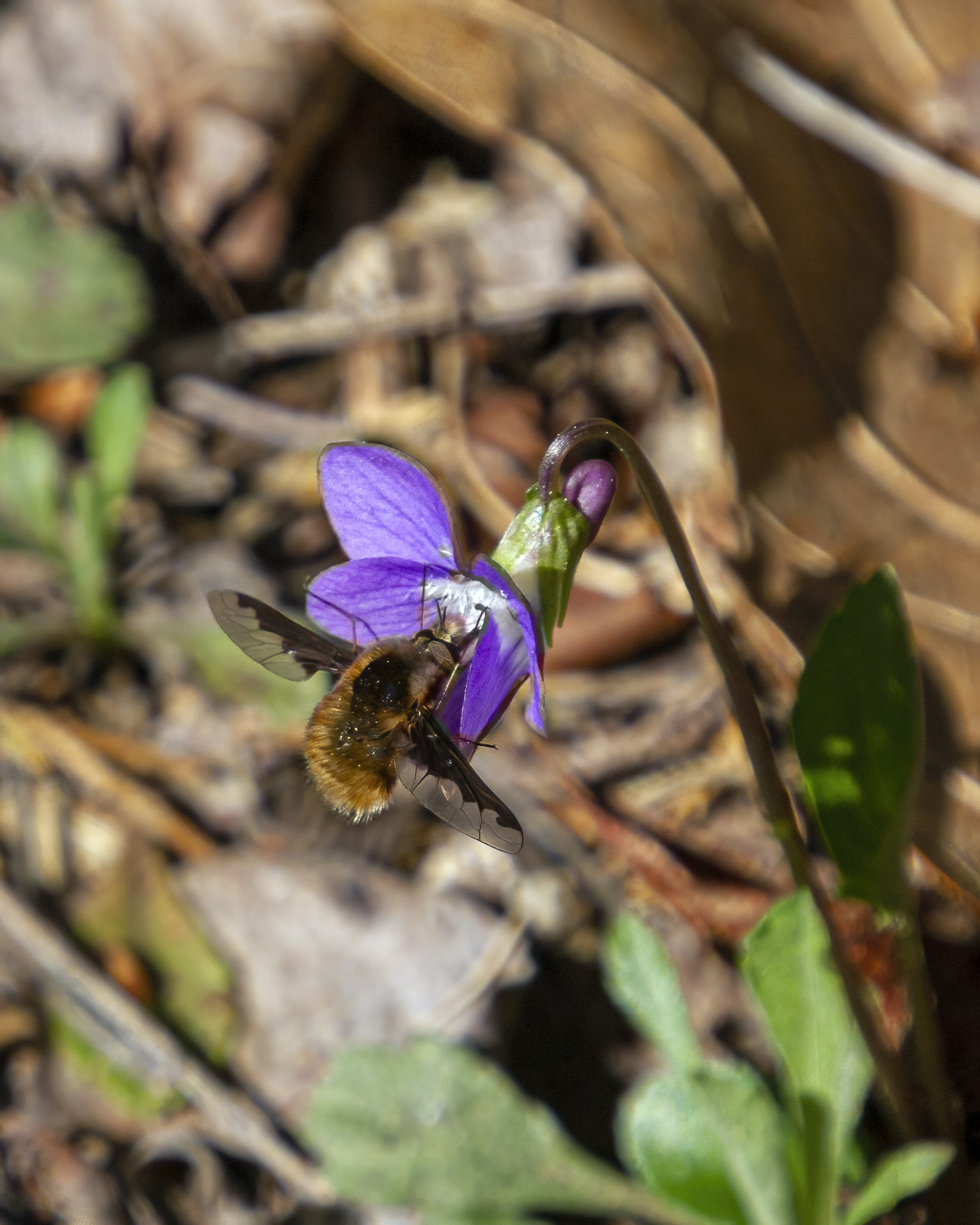
Is it a bee? Is it a fly? Well, it has a fuzzy body like a bumblebee and has a long, rigid proboscis that looks like a stinger, but its patterned wings and long legs look more like those of a fly. In actuality, it is a Greater Bee Fly (Bombylius major), a parasitic bee mimic that is one of the earliest spring pollinators of wildflowers. In this case, I think the little flower was some kind of wild violet, a vital early spring nectar source for many pollinators, like bee flies.

I photographed this bee fly in early April while searching for dragonflies in Prince William County in Northern Virginia. I was quite happy to be able to capture so many of the details of this curious creature, including its long proboscis, spindly legs, patterned wings, and fuzzy body. In case you are curious, the body of one of these bee flies is about six-tenths of an inch (15mm) in length and its wing span is about one inch (25mm).

If you would like to learn more about these fascinating little bee flies, including their parasitic behavior, check out this article on the US Forest Service website by Beatriz Moisset entitled “A Pollinator with a Bad Reputation.

bee fly

© Michael Q. Powell. All rights reserved.

Read Full Post »
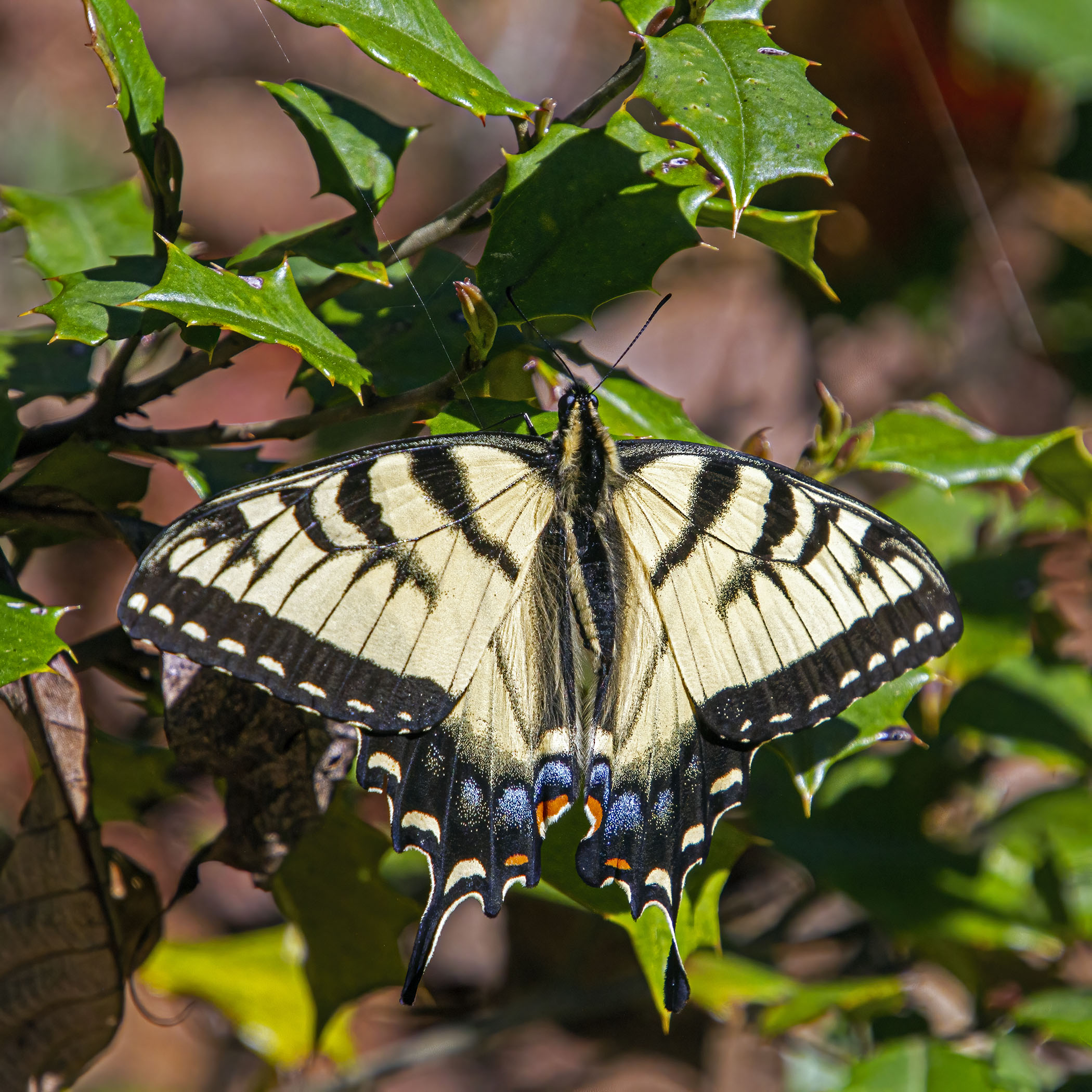
Last week I spotted multiple Eastern Tiger Swallowtail butterflies (Papilio glaucus) as I was hiking along forested trails in Prince William County, Virginia, searching primarily for dragonflies. For some reason, I tend to associate these butterflies, which happen to be the state insect for Virginia, with gardens more than forests.

However, according to the Prince William Conservation Alliance website, “Tiger Swallowtails are commonly found in deciduous woodlands and along their borders, including parks and neighborhoods, where they feed on the nectar of wild and garden flowers from Spring through Fall.”

Eastern Tiger Swallowtails are quite common in my area, but I am always delighted to see their bright colors as they flutter through the air. April is a kind of transitional month here weatherwise, with wildly variable temperatures. Later this week, for example, the forecast predicts high temperatures of up to 93 degrees (34 degrees C). Yikes!

Eastern Tiger Swallowtail

© Michael Q. Powell. All rights reserved.


Read Full Post »
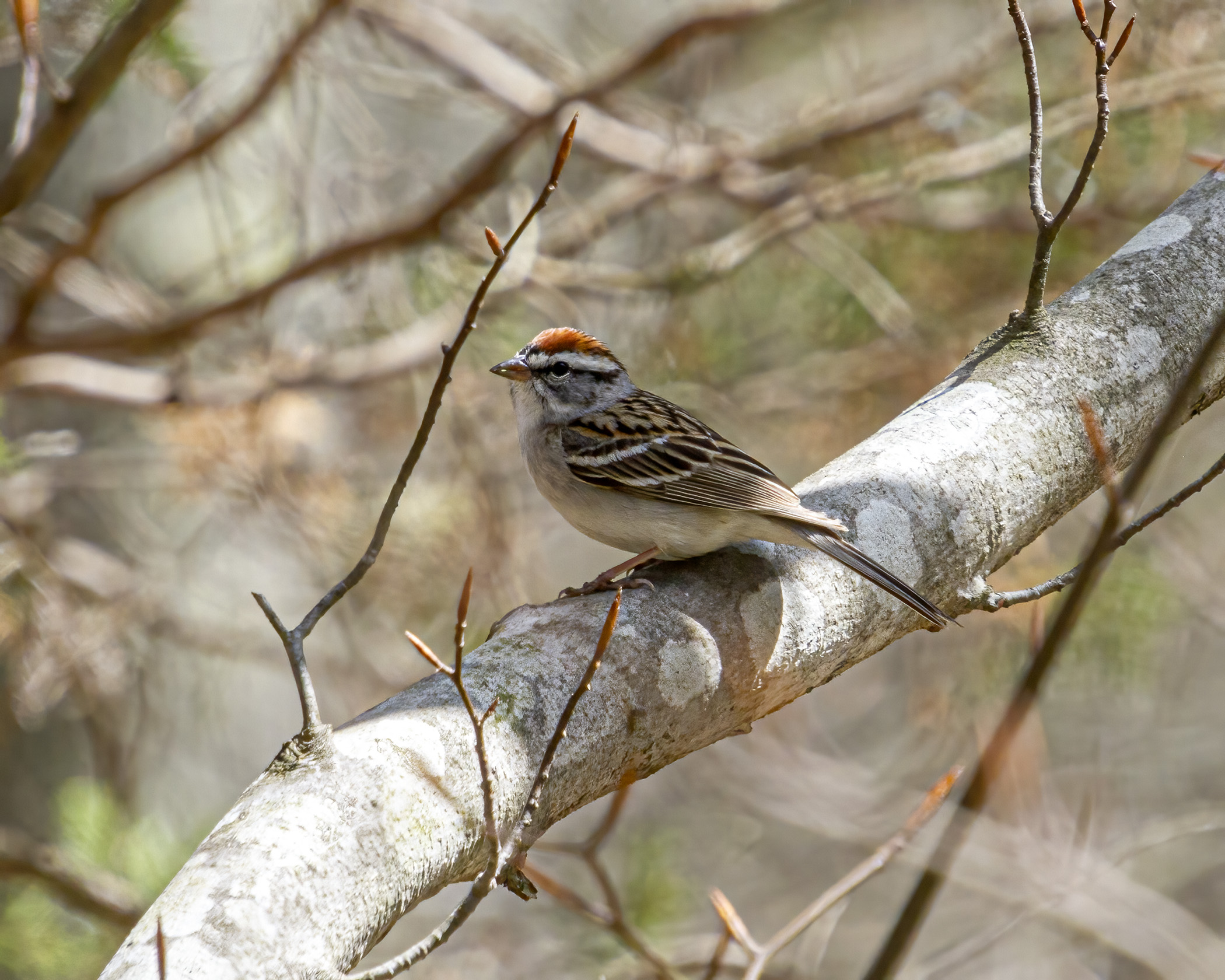
While I was out searching for dragonflies last week, I was delighted to spot this colorful Chipping Sparrow (Spizella passerina) and was even more thrilled to get a shot of it. Compared with many other birds, sparrows tend to be somewhat drab in coloration. I think it was the bright red on the top of this bird’s head that caught my eye.

This is the season when colorful warblers pass through my area on their way northward, so my first thought was that this bird might be some kind of warbler. When I got home and looked through my bird identification guide, I realized that it was a sparrow species that I had not previously encountered.

This shot is not quite as sharp as I would have preferred, because I was shooting with a shorter telephoto lens (a Tamron 18-400mm) that I tend to use during the winter months (a Tamron 150-600mm). I can shoot at a lot closer range with the shorter lens, which has a minimum focusing distance of about 18 inches (45 cm) versus almost 9 feet (2.7 m) for the 150-600mm lens. For that reason, I prefer using the shorter telephoto lens or my 180mm macro lens when attempting to photograph insects like dragonflies.

Chipping Sparrow

© Michael Q. Powell. All rights reserved.


Read Full Post »
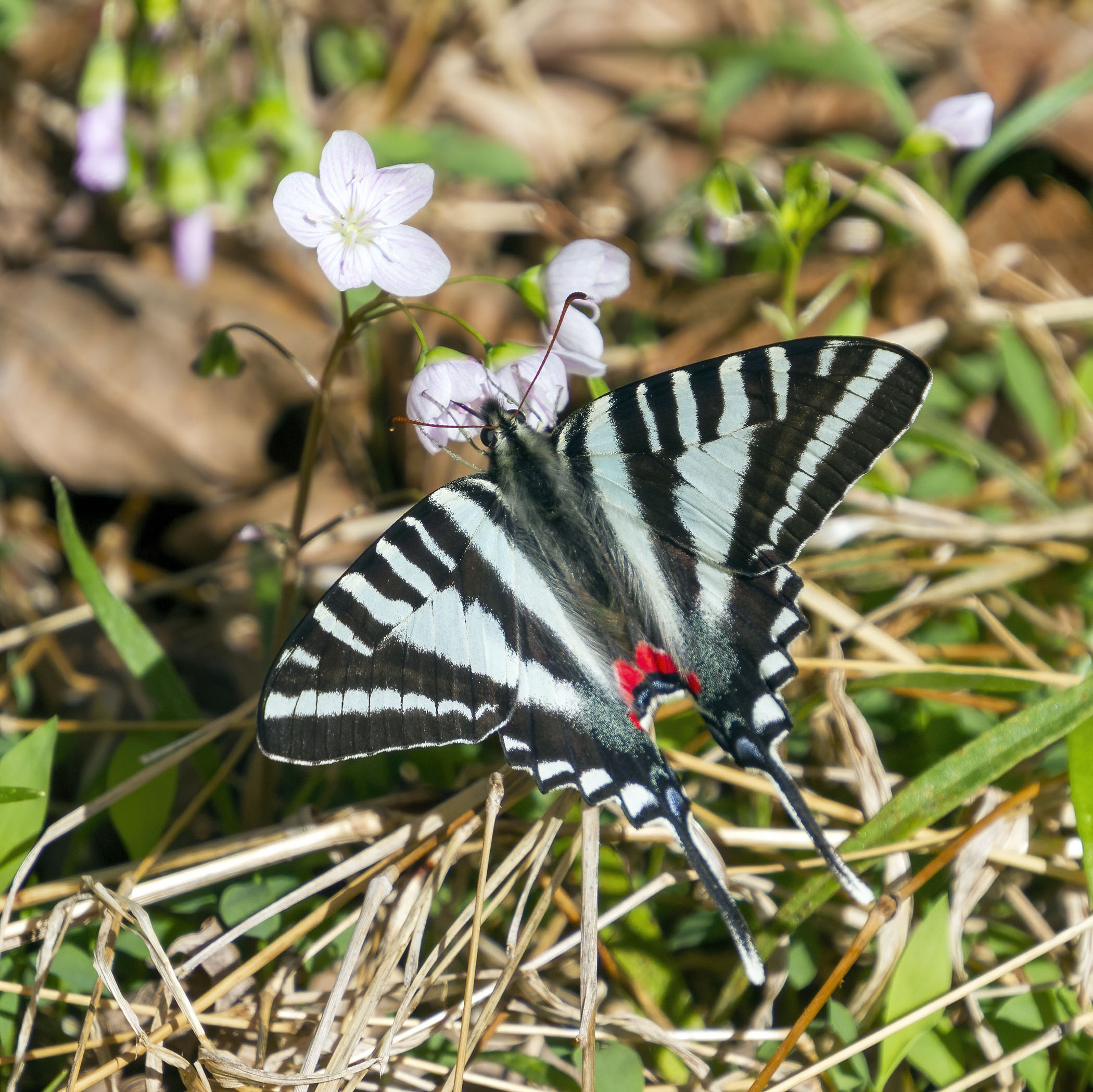
This early in the season, not many flowers are in bloom, so this Zebra Swallowtail butterfly (Eurytides marcellus) was content on Monday to feed on the tiny Spring Beauty (Claytonia virginica) wildflowers on the forest floor.

I had to get really low to capture this image and was delighted by the way that it shows the colors of this beautiful butterfly that was in pristine condition. Later in the season, many of the Zebra Swallowtails that I see have portions of their really long “tails” missing.

Zebra Swallowtail

© Michael Q. Powell. All rights reserved.

Read Full Post »
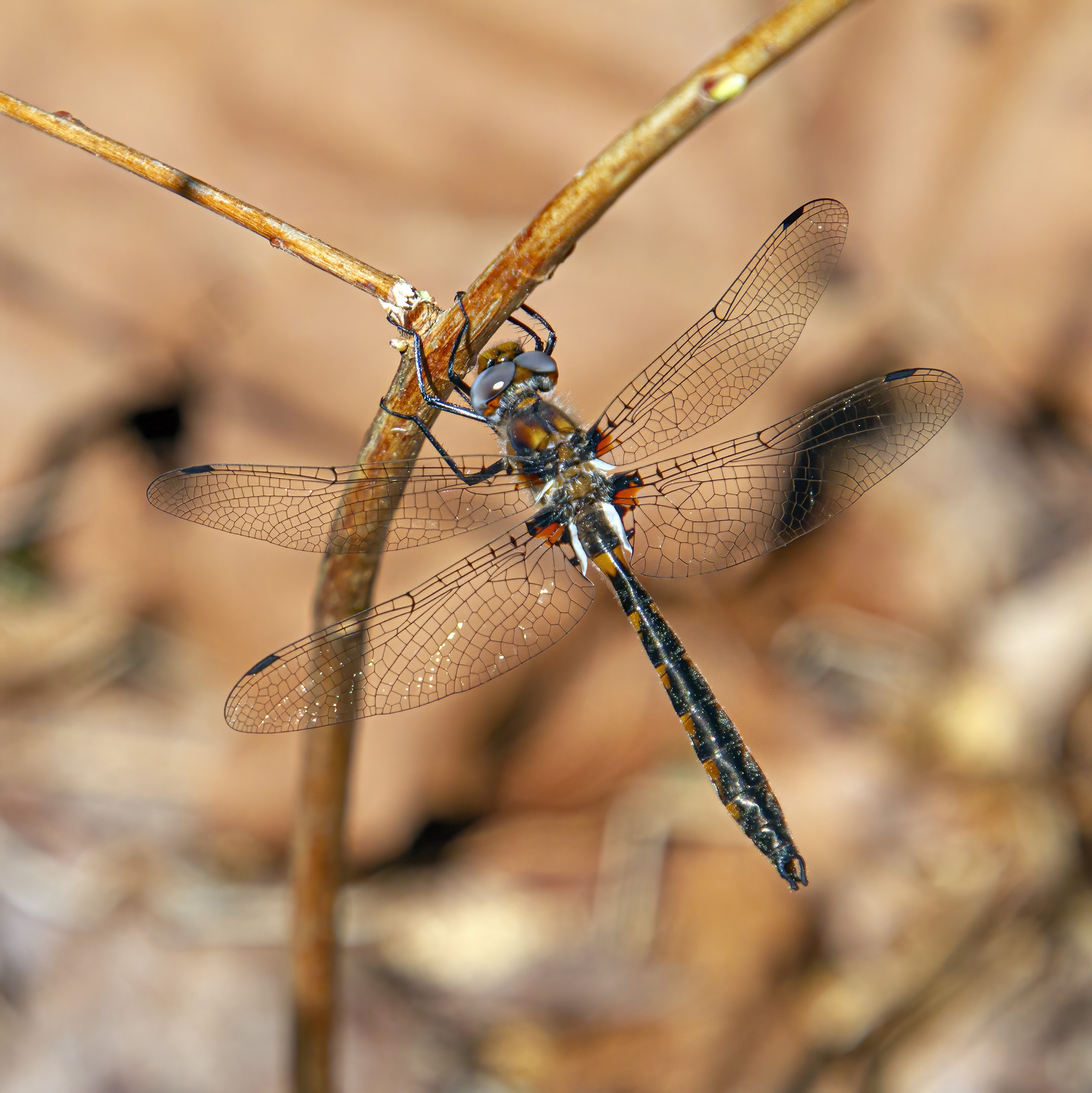
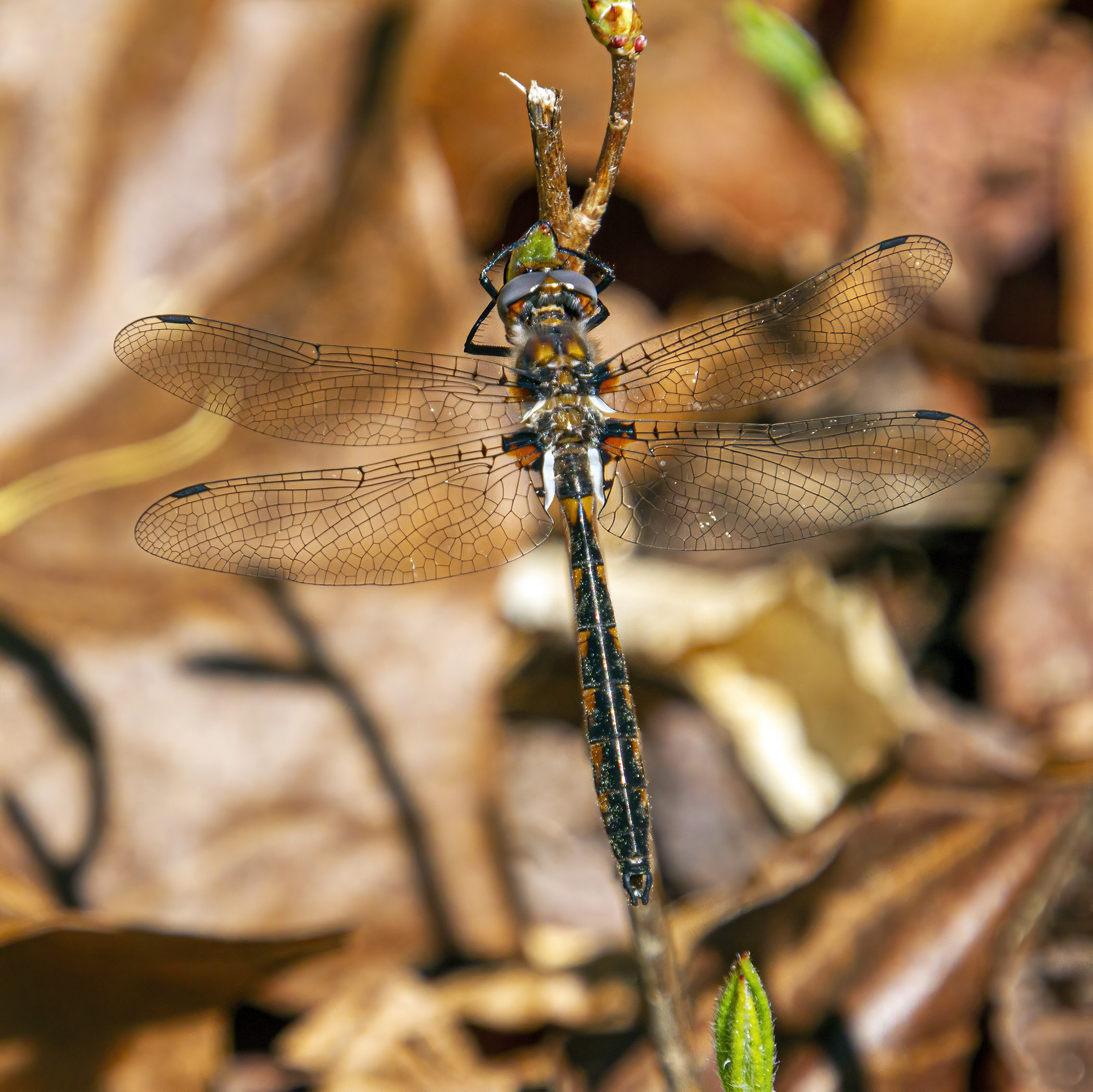
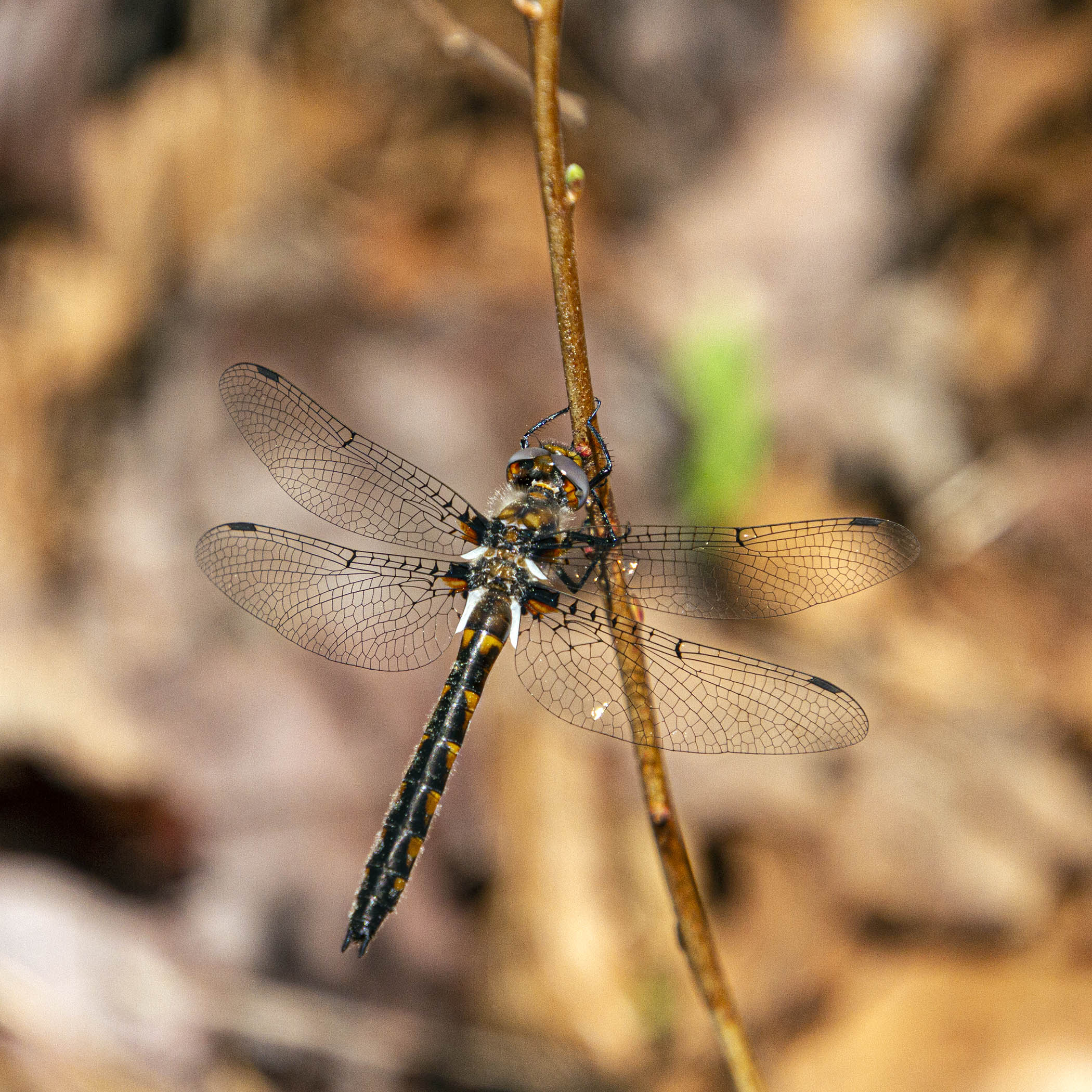
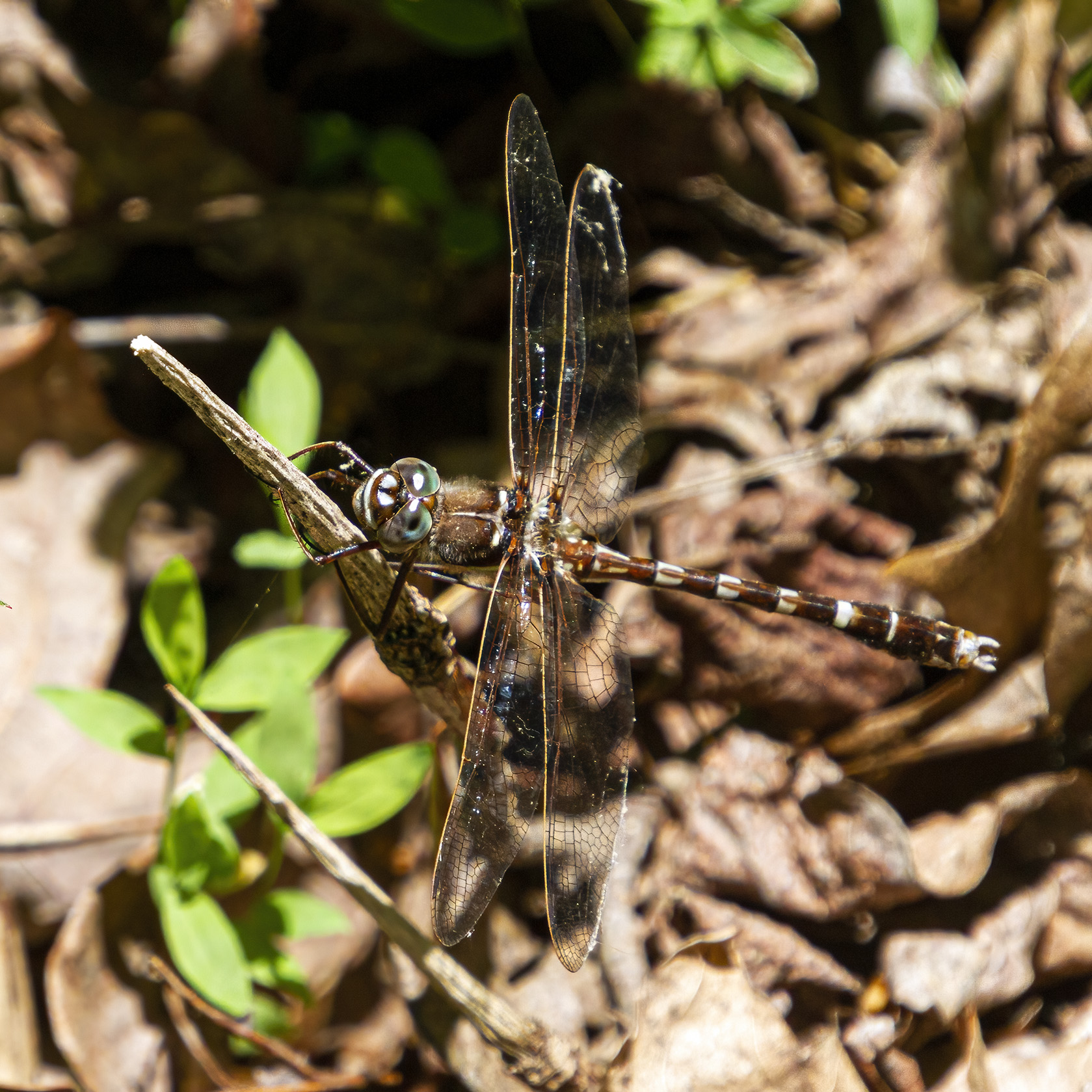
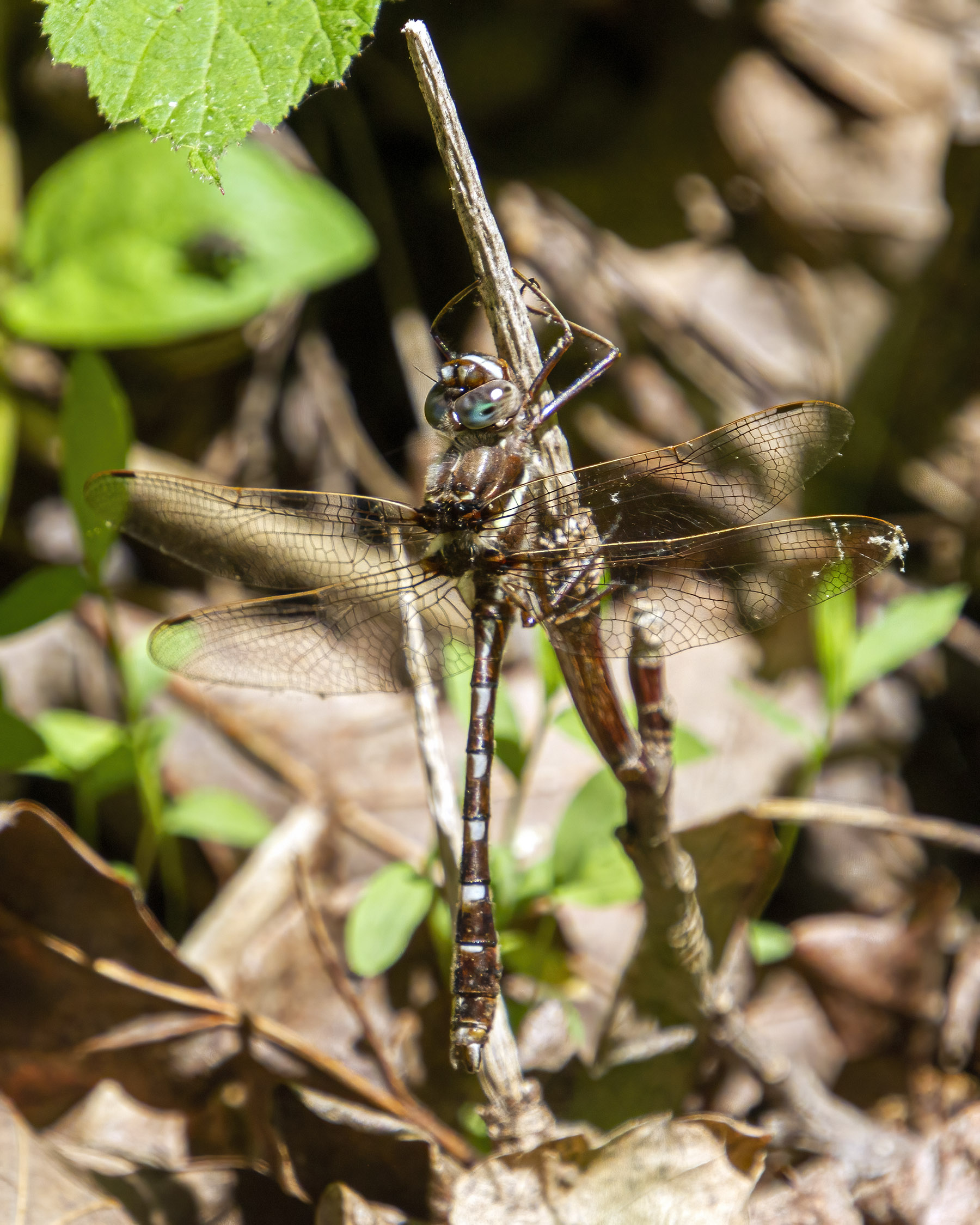
Each spring I head out in search of Uhler’s Sundragons (Helocordulia uhleri), one of the earliest dragonflies in my area to emerge. Unlike many of the dragonflies that I commonly see during the summer days, this species is  a “scarce and seldom seen member of the emerald family” and is a “habitat specialist with a brief and early flight period,” according to the Dragonflies of Northern Virginia website. The species requires a clean, sandy or gravelly forest stream with mix of riffles and pools.

Fortunately, I know of a creek where I have regularly seen them over the last few years, and I visited that location on Monday and spotted multiple Uhler’s Sundragons. As you can see in the photos below, this species likes to hang vertically or at an angle. The amber markings at the base of the wings help to distinguish Uhler’s Sundragons from the similar Selys’s Sundragons that have no such markings.

Uhler's Sundragon

Uhler's Sundragon

Uhler's Sundragon

© Michael Q. Powell. All rights reserved.

Read Full Post »
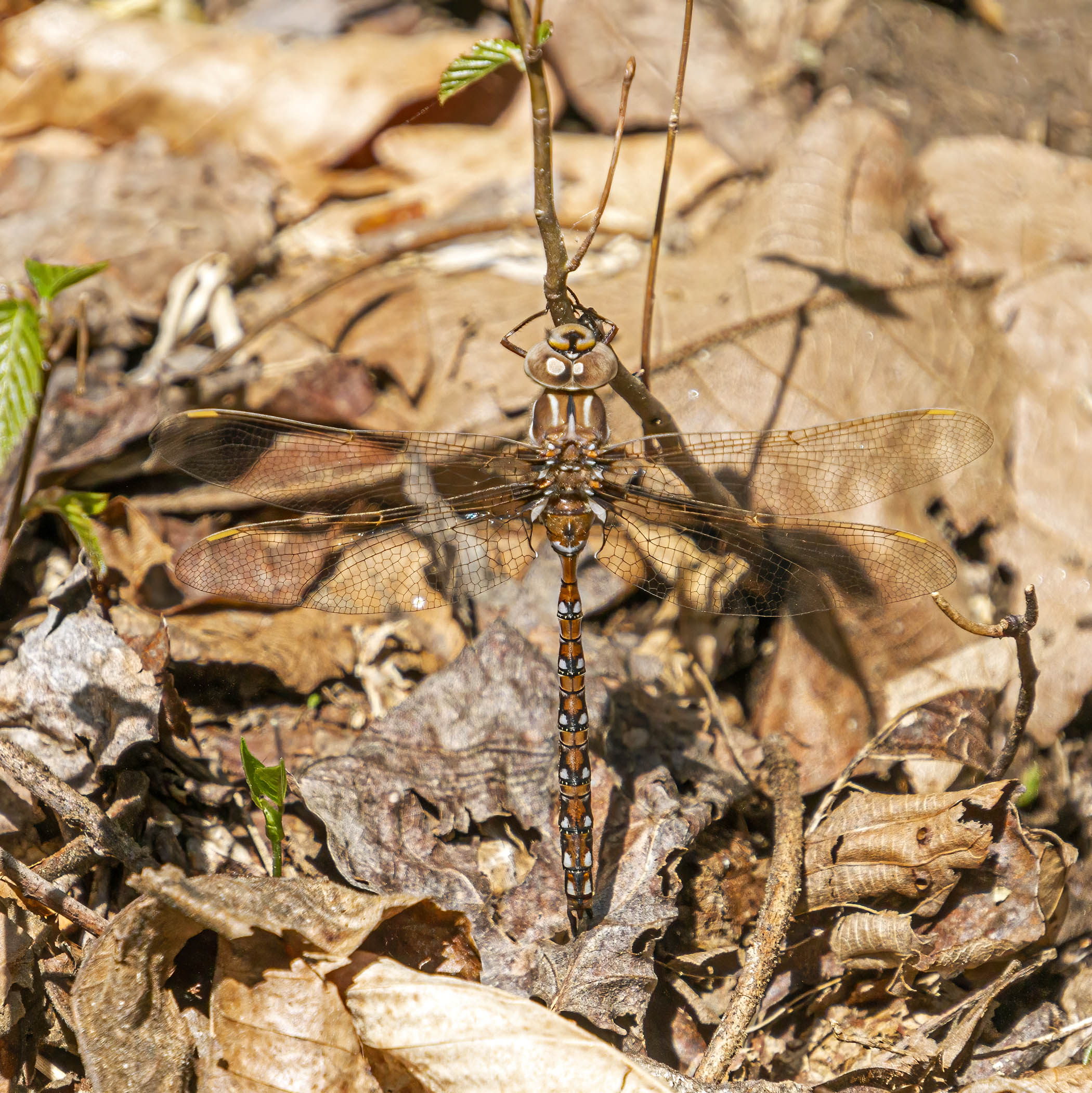
I was delighted to photograph this beautiful Springtime Darner dragonfly (Basiaeschna janata) yesterday (6 April) while I was exploring a creek in the forests of Prince William County, Virginia. I had seen some recent postings on Facebook showing dragonflies that others had seen in other parts of Virginia, so I decided to search for them.

I found several other dragonfly species too and plan to post some photos of them in the next few days, but I really wanted to post this one immediately. It’s been several years since I have seen a Springtime Darner and I was really excited when I looked through my telephoto zoom lens and realized what it was. The dragonfly was flying back and forth low over a patch of vegetation and I tracked it for a little while until if perched, hanging vertically low to the ground. It was so low that the tip of its abdomen was almost touching the dried leaves on the forest floor.

I was pretty far away and had to manually focus the lens–the cluttered background kept wanting to grab the focus when I tried to use auto focus and the dragonfly’s body was pretty thin. I was really happy to be able to capture the wonderful pattern on the body of this dragonfly, whose coloration helped it to blend in so well with its surroundings.

Springtime Darner

© Michael Q. Powell. All rights reserved.


Read Full Post »