Feeds:
Posts
Comments

Archive for May, 2026

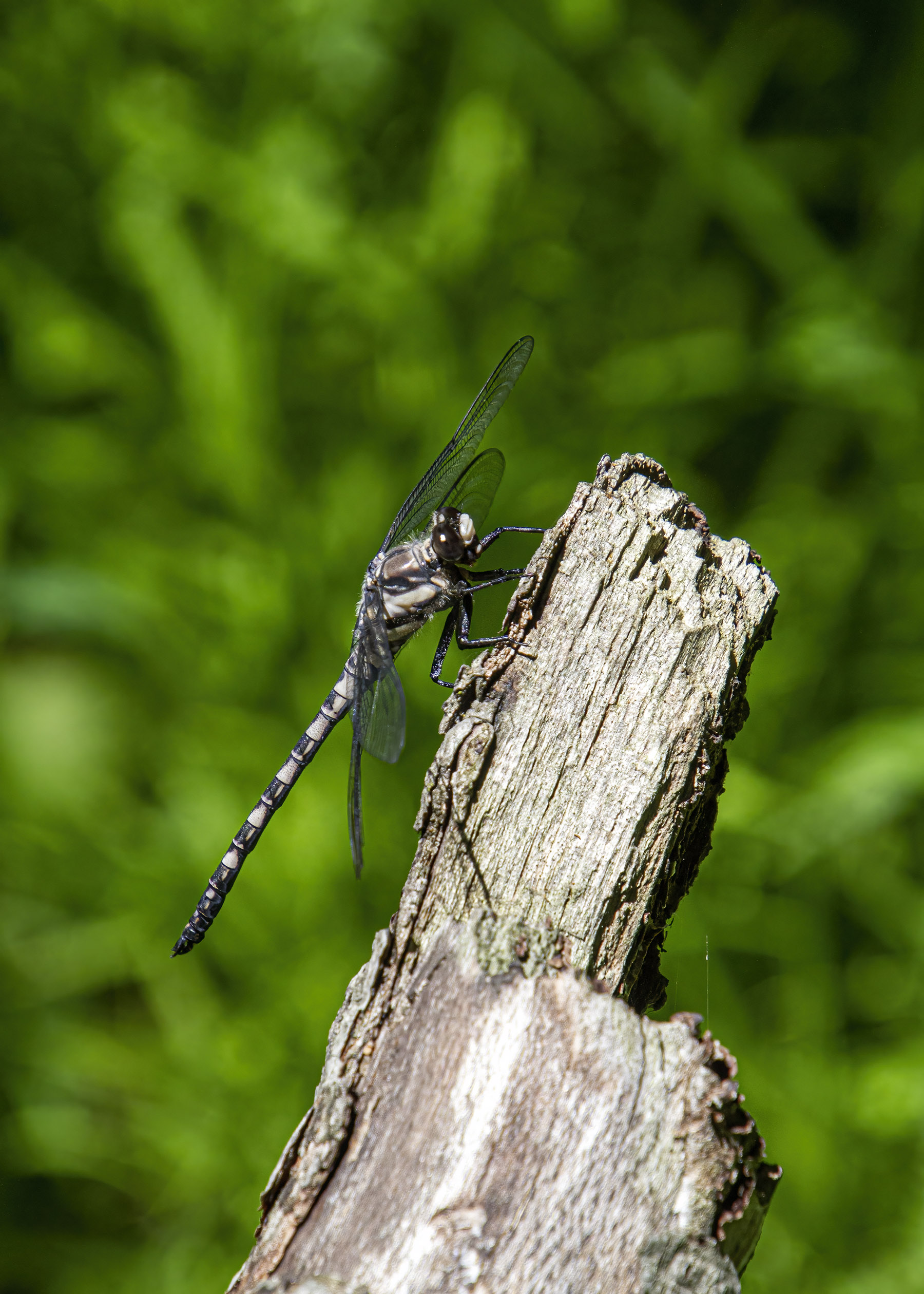
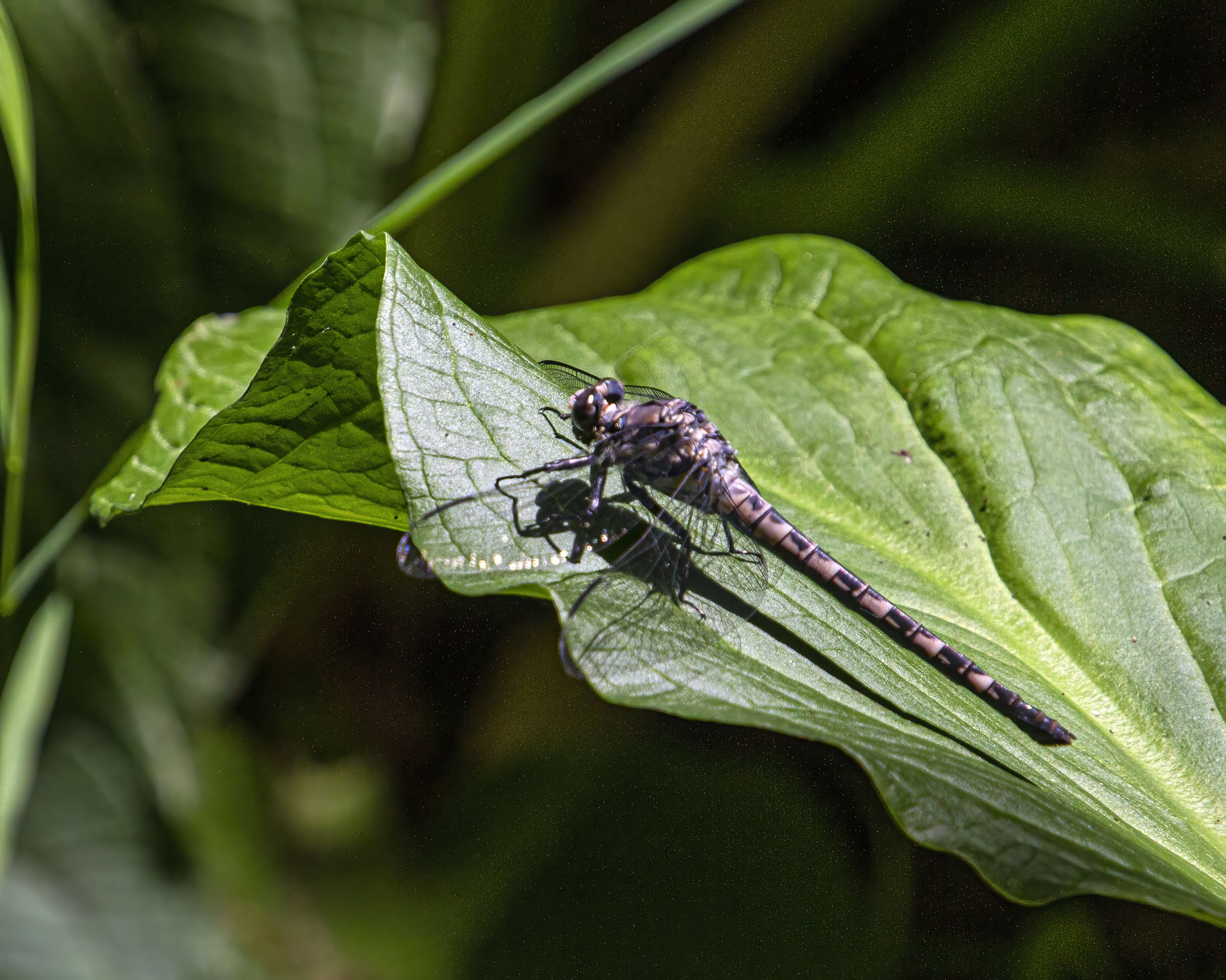
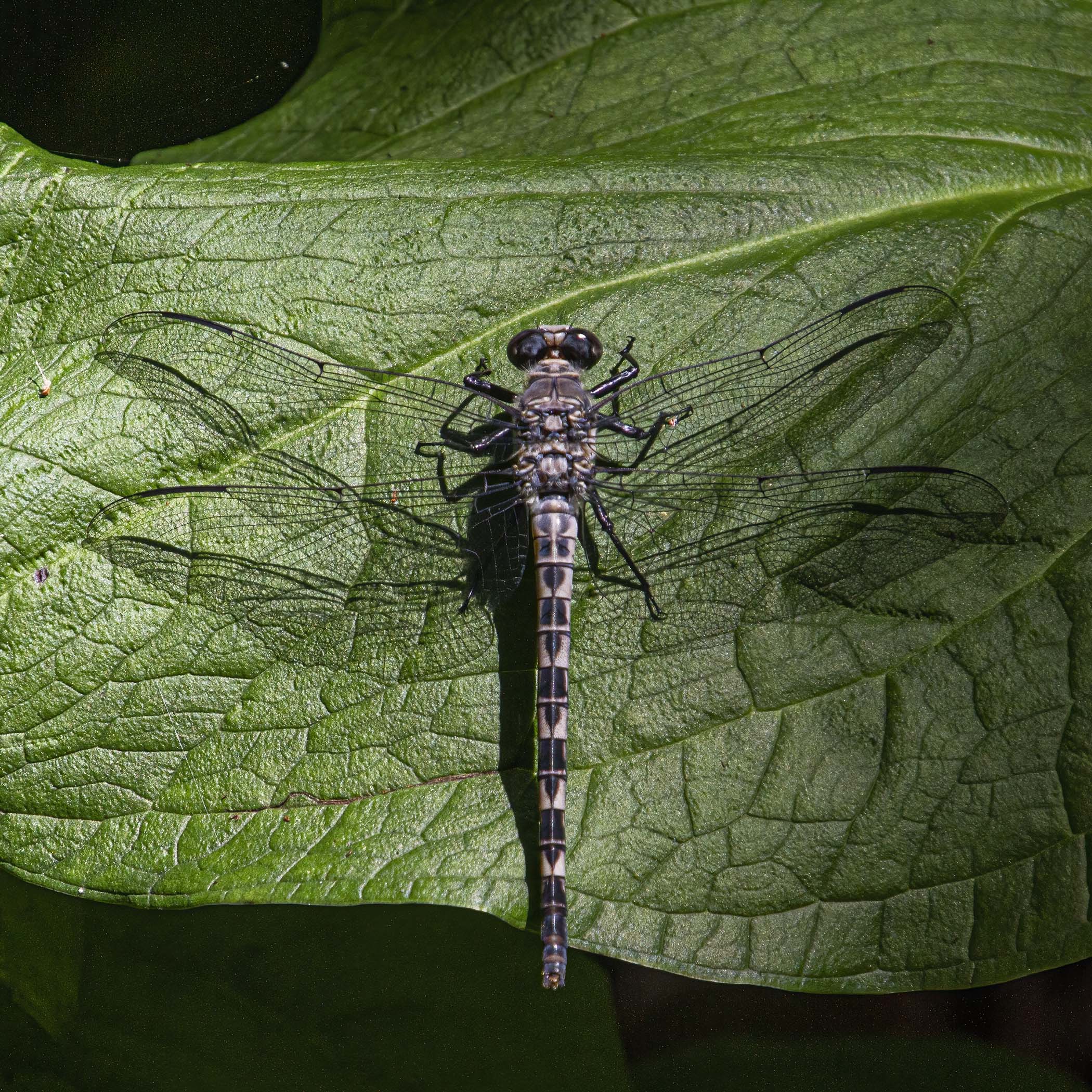
I was thrilled on Thursday to spot several Gray Petaltail dragonflies (Tachopteryx thoreyi) while I was exploring a small local pond. Actually I was exploring a mucky seep area beyond the pond, a habitat that I knew was preferred by this species. When I find an area with a lot of skunk cabbage, I know I am in the right kind of place to find this species.

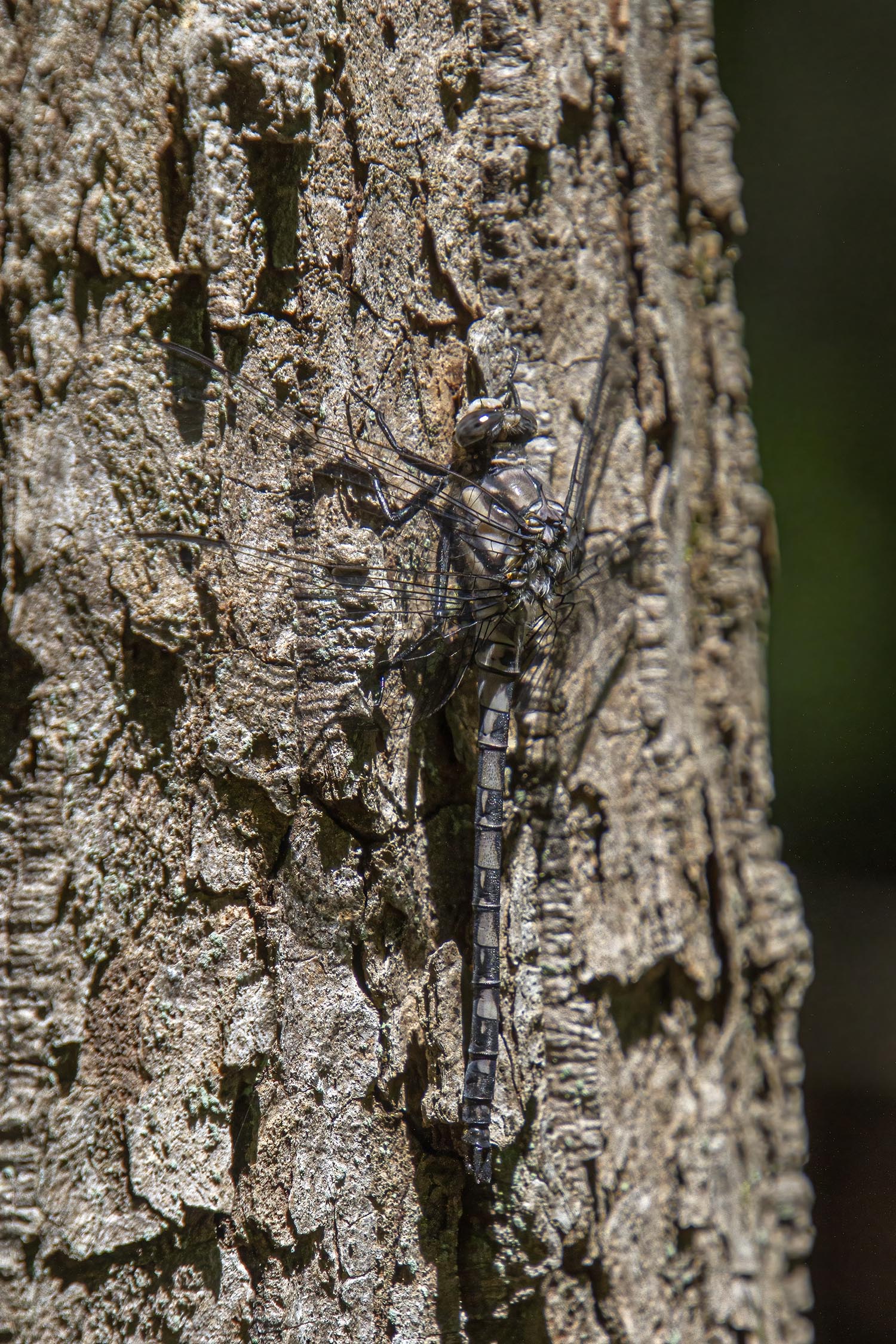
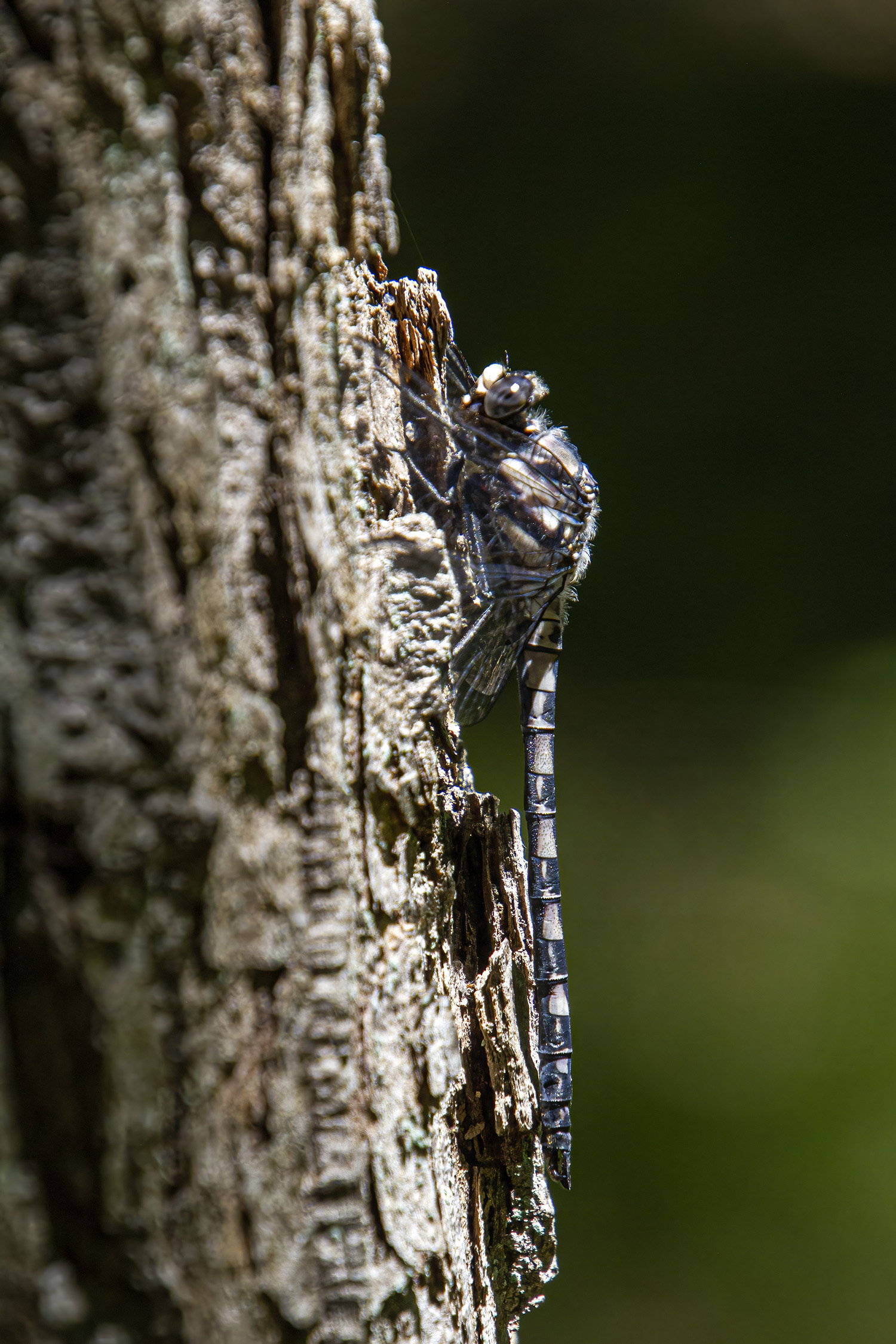
Gray Petaltails are amazing. They are the only member of the monotypic genus Tachopteryx and are often considered to be the most primitive living odonates. Colorwise, they are mostly grey and black, which allows them to blend in perfectly with the bark of tree trunks on which they often perch.

The first photo below shows an almost perfectly camouflaged Gray Petaltail. I watched it land on the tree trunk and still had some difficulty finding it in my camera’s viewfinder. I carefully moved to the side a bit and captured the second image in which you can see the dragonfly a bit better.

Once I had spotted my first Gray Petaltail, I hung around the seep area for quite a while and had a number of additional encounters. The third photo shows a Gray Petaltail perching on a broken off tree in the distance and I really like the way that the background looks in the shot.

The final two shots are among my favorites, because they show a Gray Petaltail perched horizontally on skunk cabbage leaves. I have often tried to get shots like these, but in the past the Gray Petaltails have rarely perched on this vegetation. In the final image the dragonfly looks like it is perched vertically, but I took the shot with my camera pointed downward at the Gray Petaltail that was perched horizontally on the skunk cabbage leaf. I love the way I was able to capture the texture of the leaf and the shadows of the wings was a nice bonus.
Gray Petaltail


Gray Petaltail

Gray Petaltail

Gray Petaltail

Gray Petaltail

© Michael Q. Powell. All rights reserved.


Read Full Post »

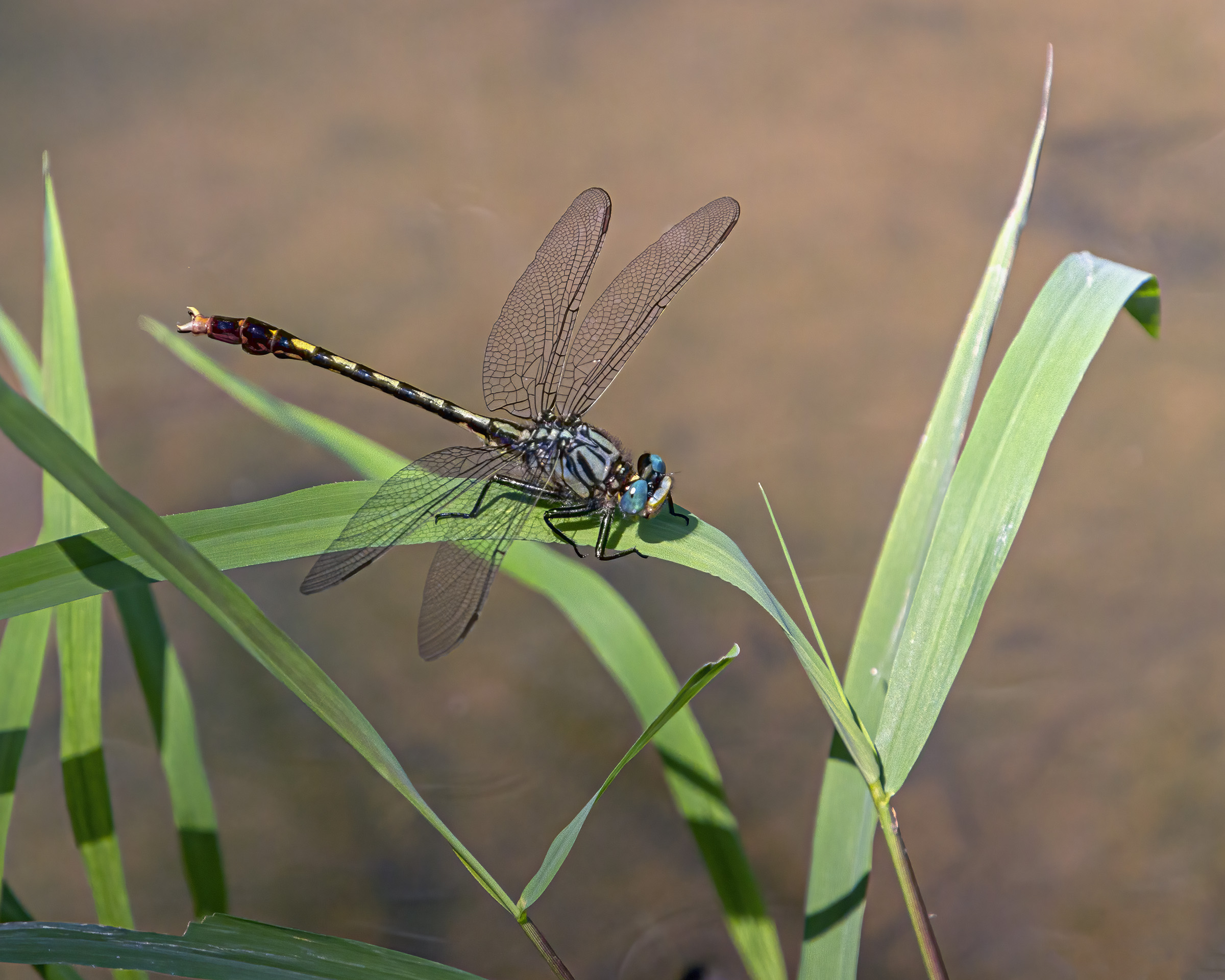
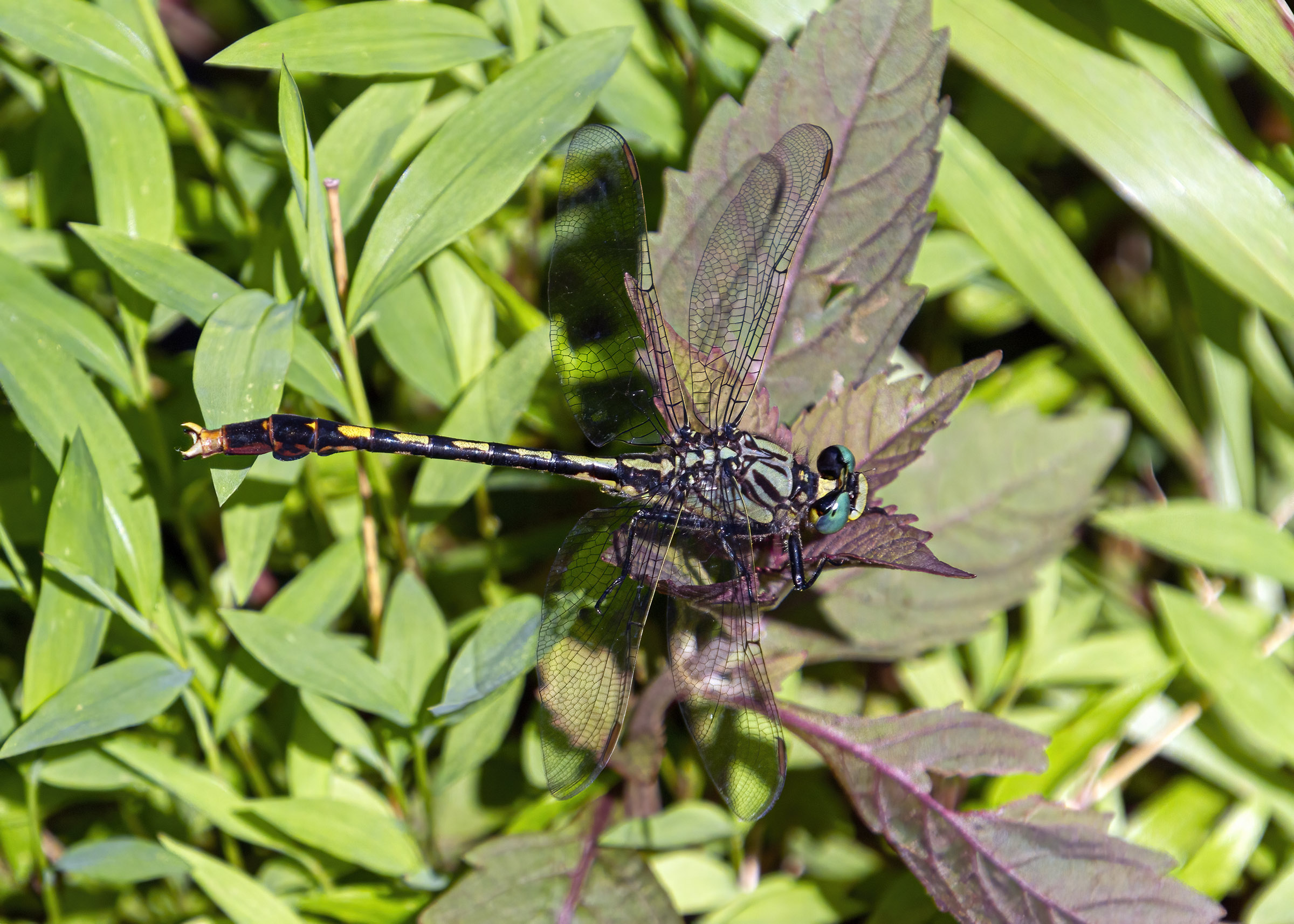
Unicorns and dragons are mythical creatures, but I love to spend time chasing after them in the wild. If you know me well, you are probably aware of my fascination with dragonflies, one of my favorite subjects to photograph in the warmer months of the year. I am always delighted when I manage to spot a Unicorn Clubtail (Arigomphus villosipes), a beautiful dragonfly species in which both sexes have a small hornlike projection between their eyes that gives rise to their common name—you can’t really see the “horn” in these photos, so you’ll have to take my word on it. I spotted the Unicorn Clubtails in this posting yesterday while I was exploring a small pond in Fairfax County, Virginia where I live.

It is fairly easy to identify the males of this species, because of the rusty-edged club at the bottom portion of the dragonfly’s abdomen and its very visible bright tip. Male Unicorn Clubtails tend to fly short patrols and perch quite often on low vegetation.  It is not hard to spot them if I am in the appropriate environment, which is usually a pond or marsh, unlike most other clubtail dragonflies that prefer rivers and streams.

In the first photo, the dragonfly was perched on some flimsy vegetation growing out of the water. The Unicorn Clubtail tested out several plants that couldn’t support its weight before finding on on which he could perch. In the second photo, the dragonfly opted to perch in the abundant vegetation growing near the water’s edge. The background in this image is a bit cluttered, but I was happy that I managed to keep the dragonfly in relatively sharp focus.

Unicorn Clubtail dragonfly

Unicorn Clubtail dragonfly

© Michael Q. Powell. All rights reserved.
Read Full Post »

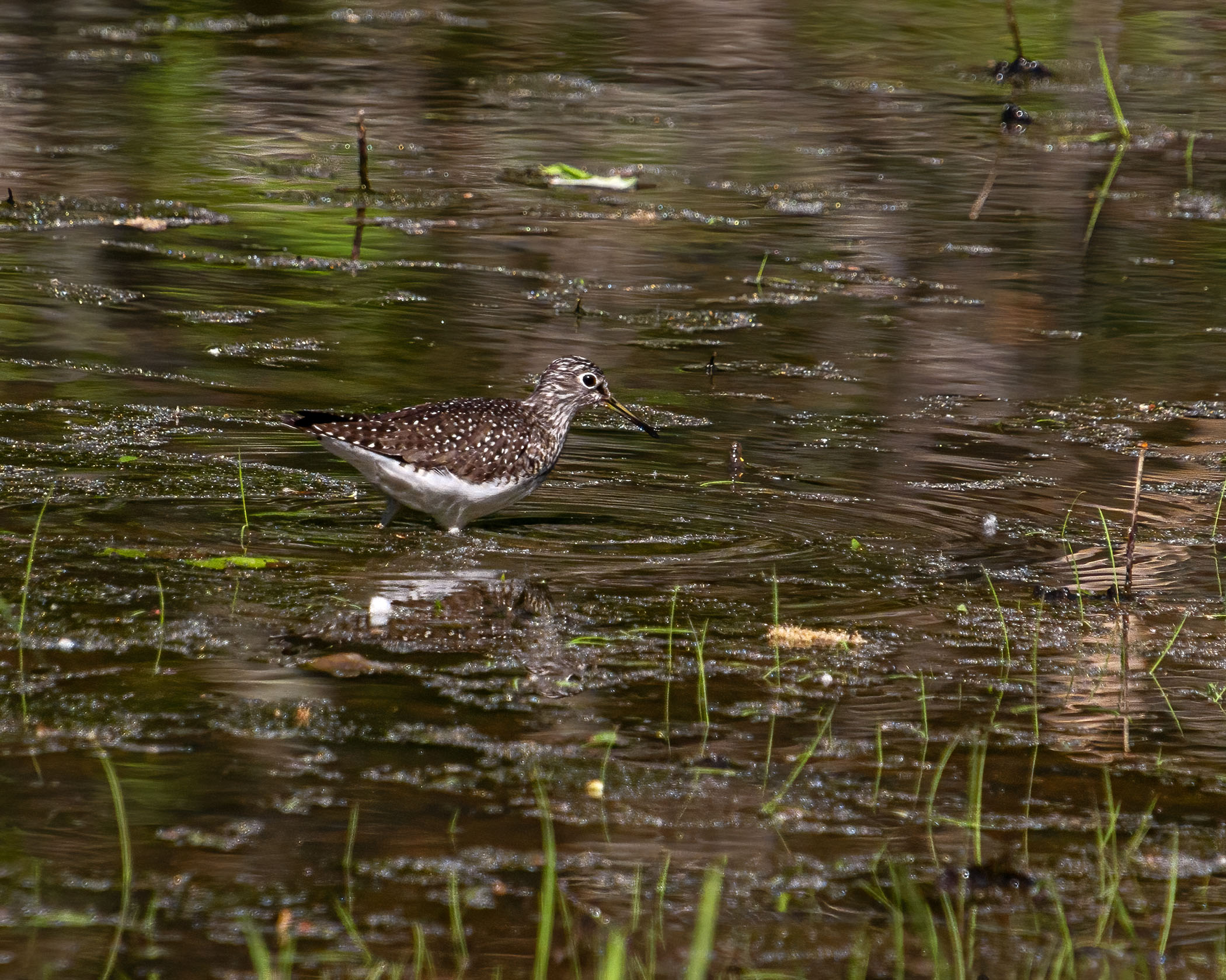
This Solitary Sandpiper (Tringa solitaria) was poking about in the shallow pond water when I spotted it earlier this month at Occoquan Regional Park in Lorton, Virginia. The species name seemed to fit perfectly, because the bird was indeed by itself in its foraging.

In some ways I felt a bit like this sandpiper. I spend a lot of time by myself, pursuing my own interests in my own way at my own pace. For me, though, “solitary” is not synonymous with “lonely,” as some people seem to believe. Loneliness is an emotional state of sadness and feeling disconnected from others, even when they might be present with you. When I am by myself, I feel a sense of liberation from societal pressures to conform to norms and expectations.

In case you haven’t guessed it, I consider myself to be an introvert.  My well-developed social skills prompt some folks to think I’m an extrovert, but I often feel that I am most completely myself when I am by myself. It’s not that I lie about things, it’s more that I am a bit guarded in letting others go beyond the superficial level in getting to know me.

This solitary photographer shared a few quiet moments with the Solitary Sandpiper on a beautiful spring day and I hope this photo helps to convey to you a sense of that brief encounter.

Solitary Sandpiper

© Michael Q. Powell. All rights reserved.
 

Read Full Post »

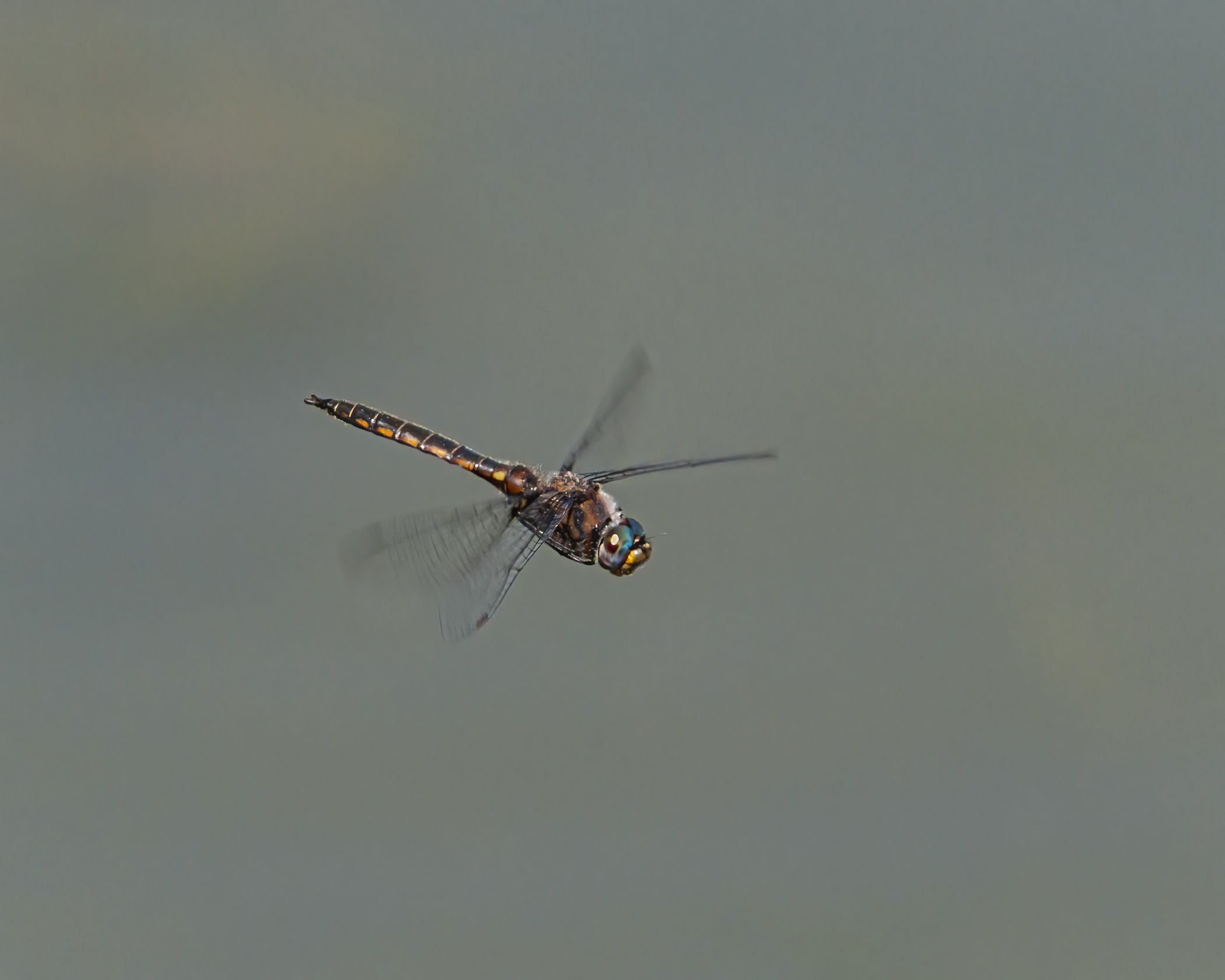
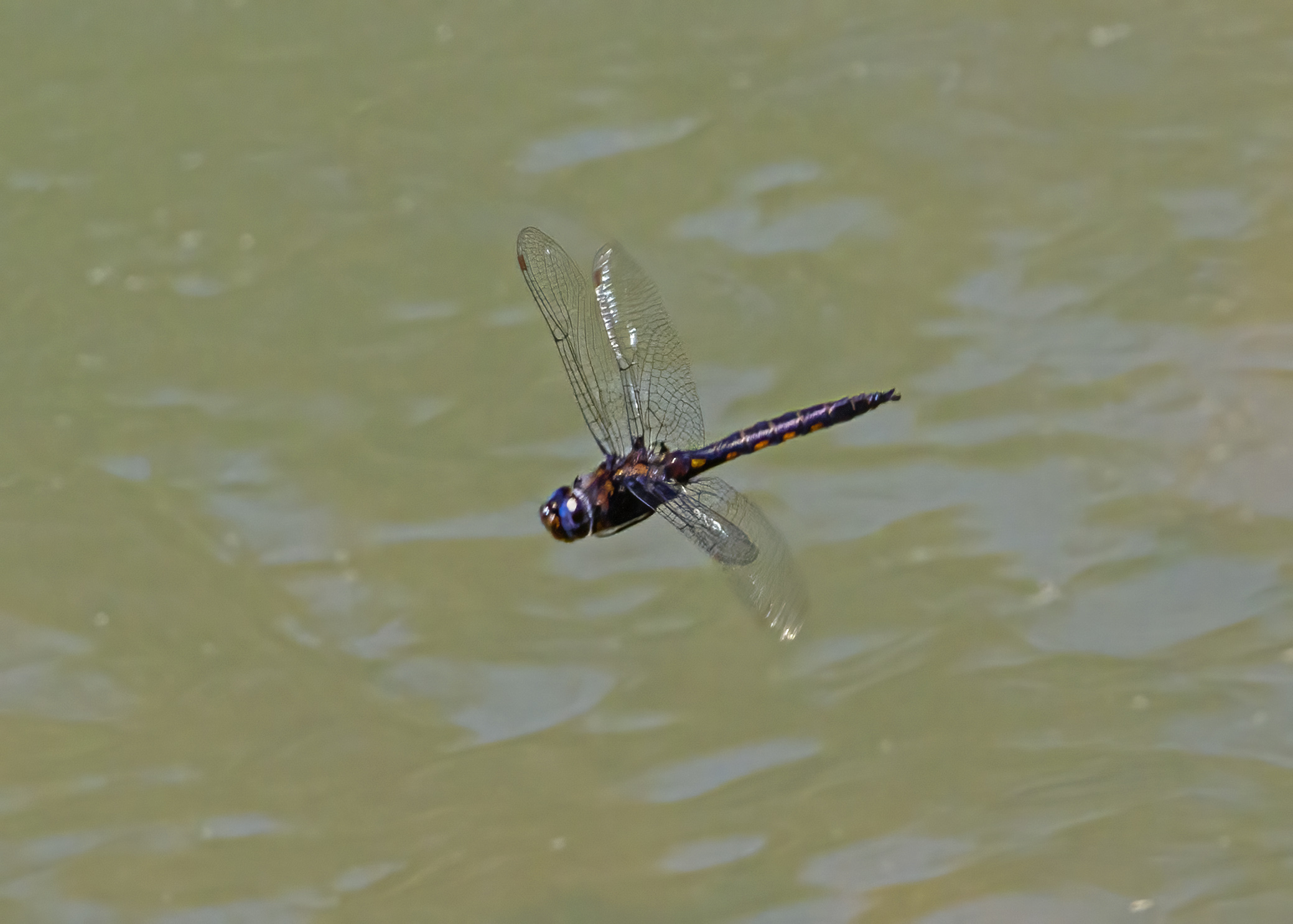
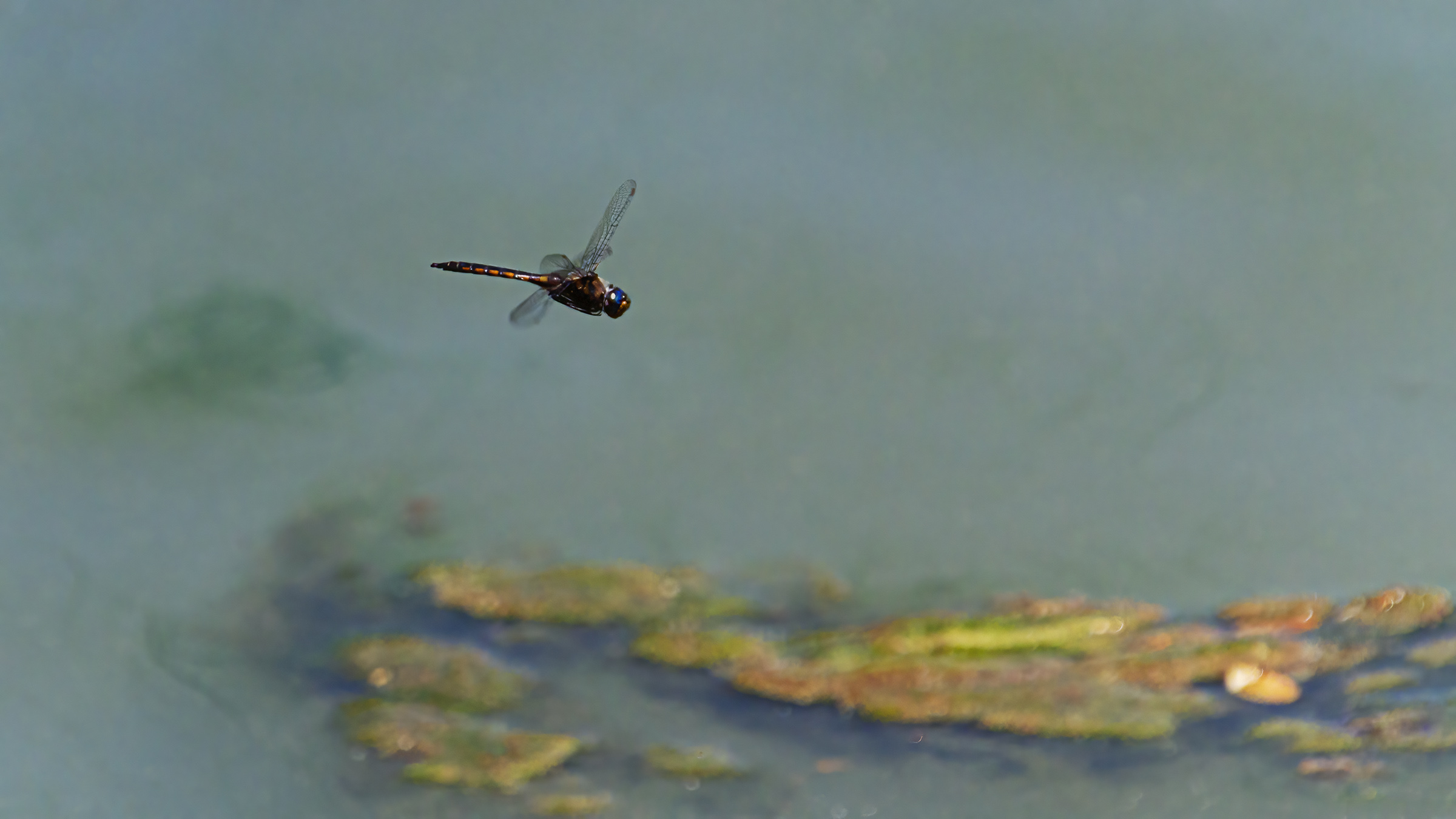
I love trying to capture images of dragonflies in flight, which requires a combination of skill and luck and a whole lot of patience. There were several Common Baskettail dragonflies (Epitheca cynosura) patrolling the waters of a small pond in Orkney Springs this past weekend and I managed to capture several shots of them in flight.

Common Baskettails spend most of the time flying and they rarely perch, so I tried to track them through the viewfinder of my camera. They are so small that the auto focus of my camera can’t seem to capture them, so I resorted to manual focusing most of the time. Fortunately they occasionally hover momentarily, which gives me a somewhat better chance of focusing on them.

The first photo below is probably the sharpest image that I captured. I like it a lot, but the background seems a little too neutral, almost like a studio shot. The second photo does a better job in showing some the ripples and color variations of the waters of the pond. The dragonfly in the final photo was much farther away, but I really like the sense of place that it gives you. It makes me think of a passenger jet flying at a high altitude above the land below.

Common Baskettail

Common Baskettail

Common Baskettail

© Michael Q. Powell. All rights reserved.
Read Full Post »

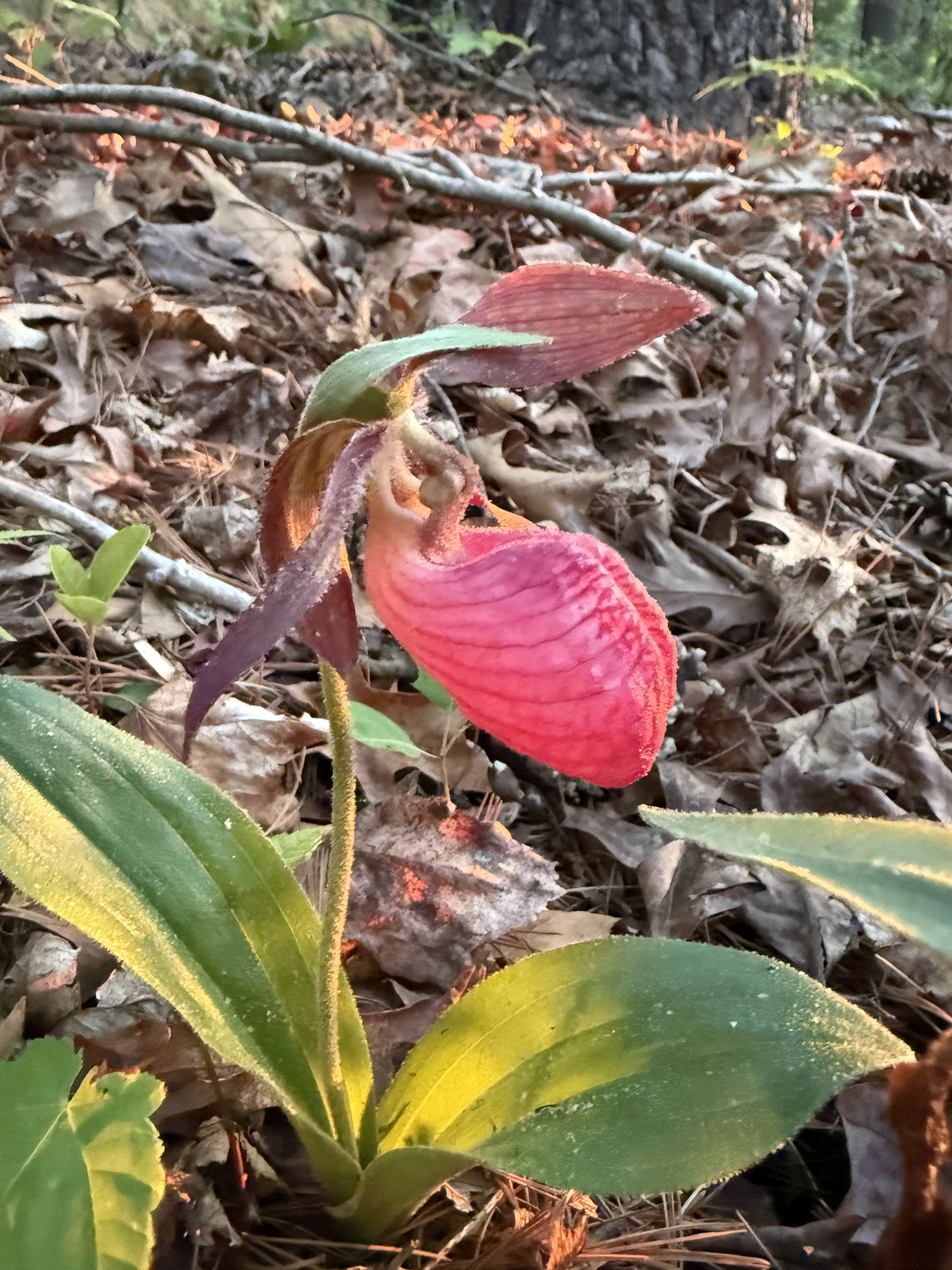
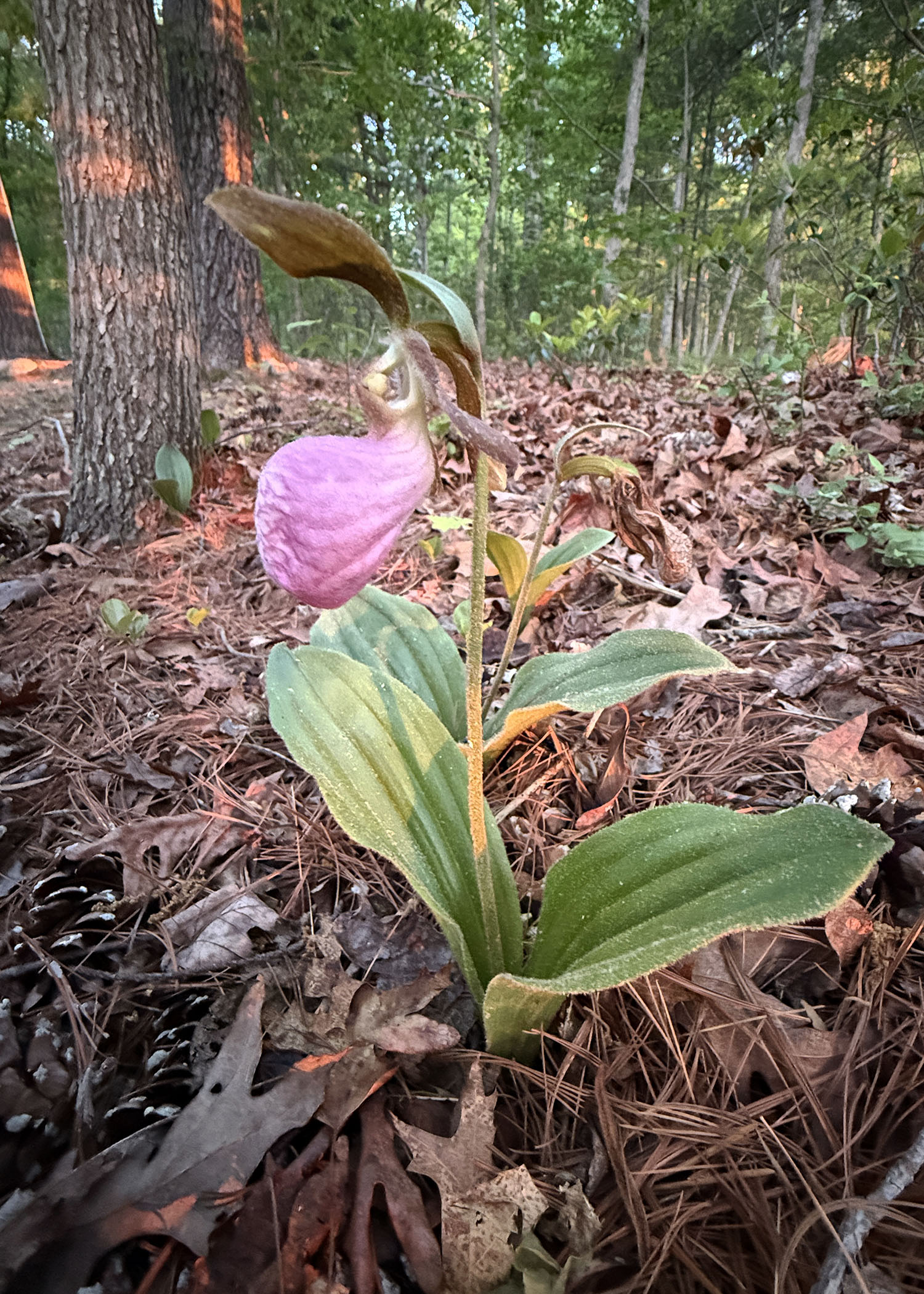
I am back from a weekend church retreat at Shrinemont, a retreat center of the Episcopal Diocese of Virginia, in the mountain village of Orkney Springs, where I was thrilled to spot some beautiful Pink Lady’s Slipper native orchids (Cypripedium acaule) in bloom at the edge of the forest during an early morning walk, just after the sun had risen.

The rays of soft golden light made the moments when I was capturing these images with my iPhone seem almost magical. So often we associate the beauty of flowers with manmade, cultivated garden, but these little beauties spring up from the forest floor when the conditions are right. My understanding is the soil requirements for these flowers are so specific that they cannot  survive being dug up transplanted to new locations (and in some places it is illegal to remove them).

Pink Lady's Slipper

Pink Lady's Slipper

© Michael Q. Powell. All rights reserved.


Read Full Post »

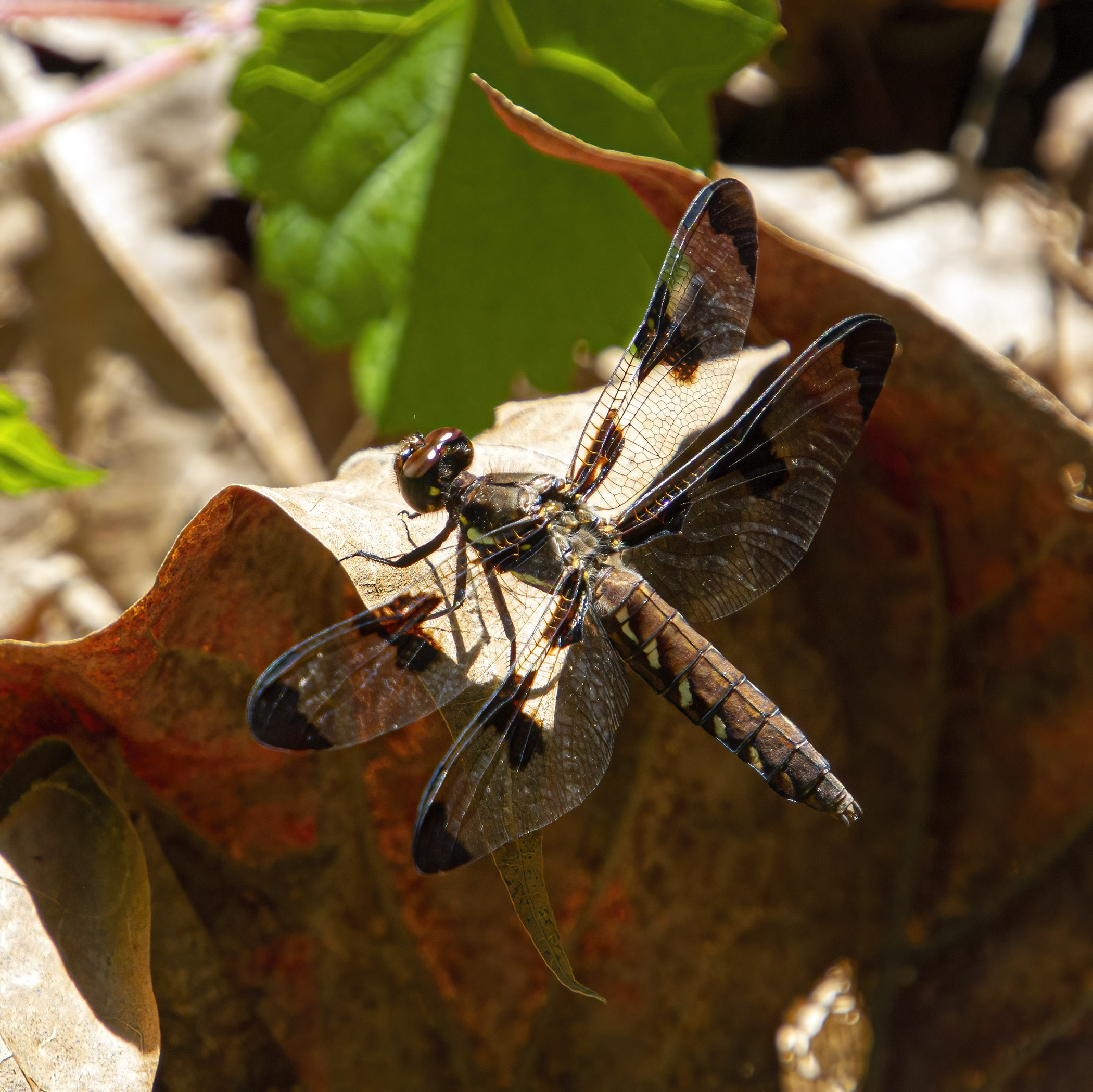
Some of the familiar summer dragonflies have started to appear, including this female Common Whitetail (Plathemis lydia) that I spotted earlier this month during a visit to Occoquan Regional Park in nearby Lorton, Virginia. Common Whitetail dragonflies have a long flight period that begins in the spring and extends well into the autumn months.

Females of this species, despite their name, are brownish in color with the markings that you can see in the photo below. Immature males start off with a similar coloration, but relatively quickly their bodies become white. How do I know that this one is a female? Males and females have different markings on their wings. Males have a larger dark patch in the middle of each wing and the tips of the wings remain clear, while the females have a smaller patch in the middle of each wing and a second dark patch at the tip of each wing.

Common Whitetails are in fact quite common in this area and can be found in a variety of habitats. I nonetheless enjoy taking photos of them that highlight various aspects of this behavior. This photo, for example, shows how light in weight these dragonflies are, capable of perching on the edge of a dry, fallen leaf.

Common Whitetail

© Michael Q. Powell. All rights reserved.
 

Read Full Post »

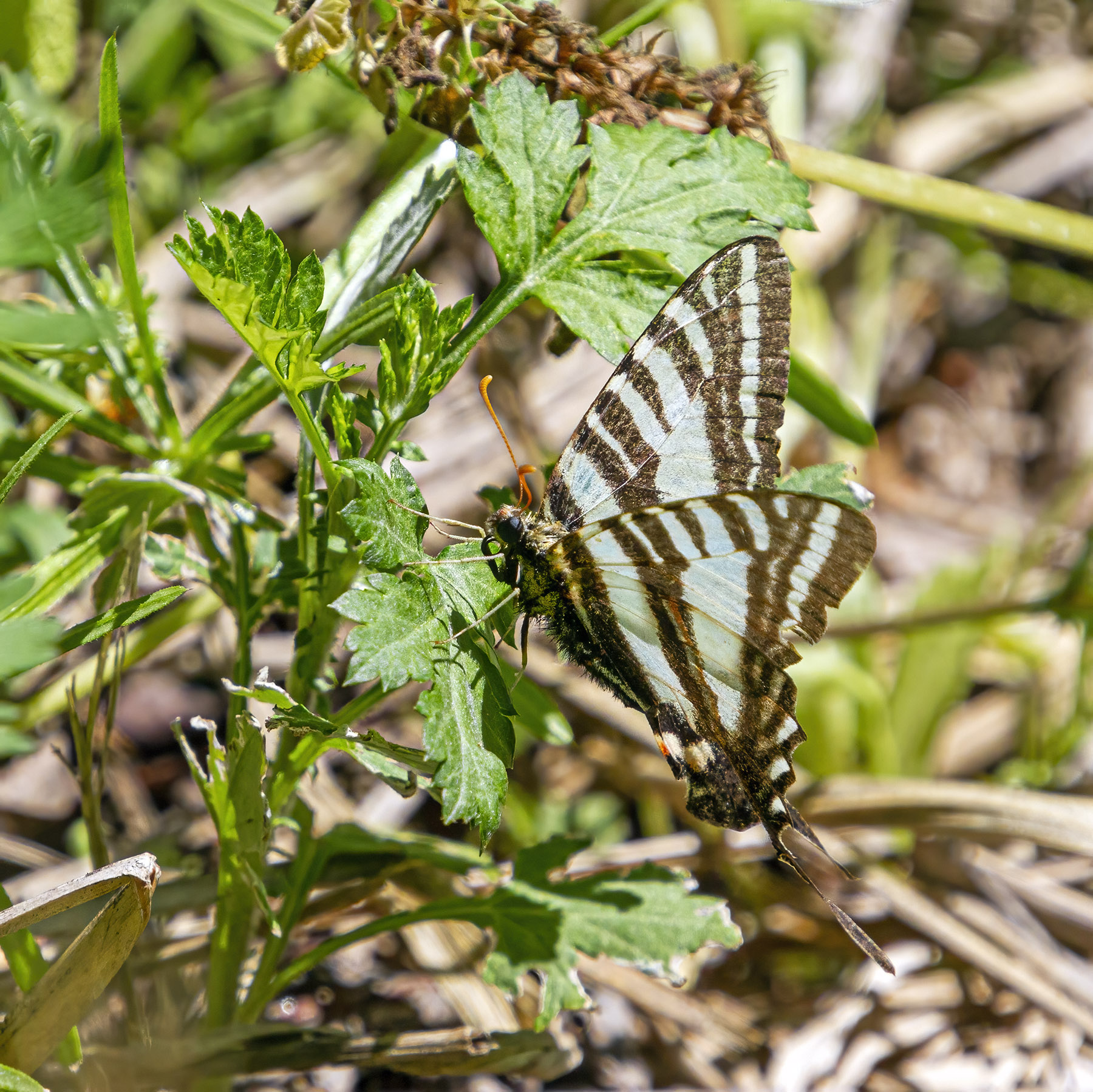
I love trying to get photographs of Zebra Swallowtail butterflies (Eurytides marcellus). There is an understated elegance to their monochromatic coloration (with pops of blue and red) and they are so hyperactive that I have to chase after them to have a chance to get a shot when they perch momentarily. Earlier this month I captured this image of one that highlights its long tails and colorful antennae.

There is something almost magical about chasing butterflies that makes me feel like a child again. I hope I never lose that energy, enthusiasm, and boundless curiosity.

Zebra Swallowtail

© Michael Q. Powell. All rights reserved.
Read Full Post »

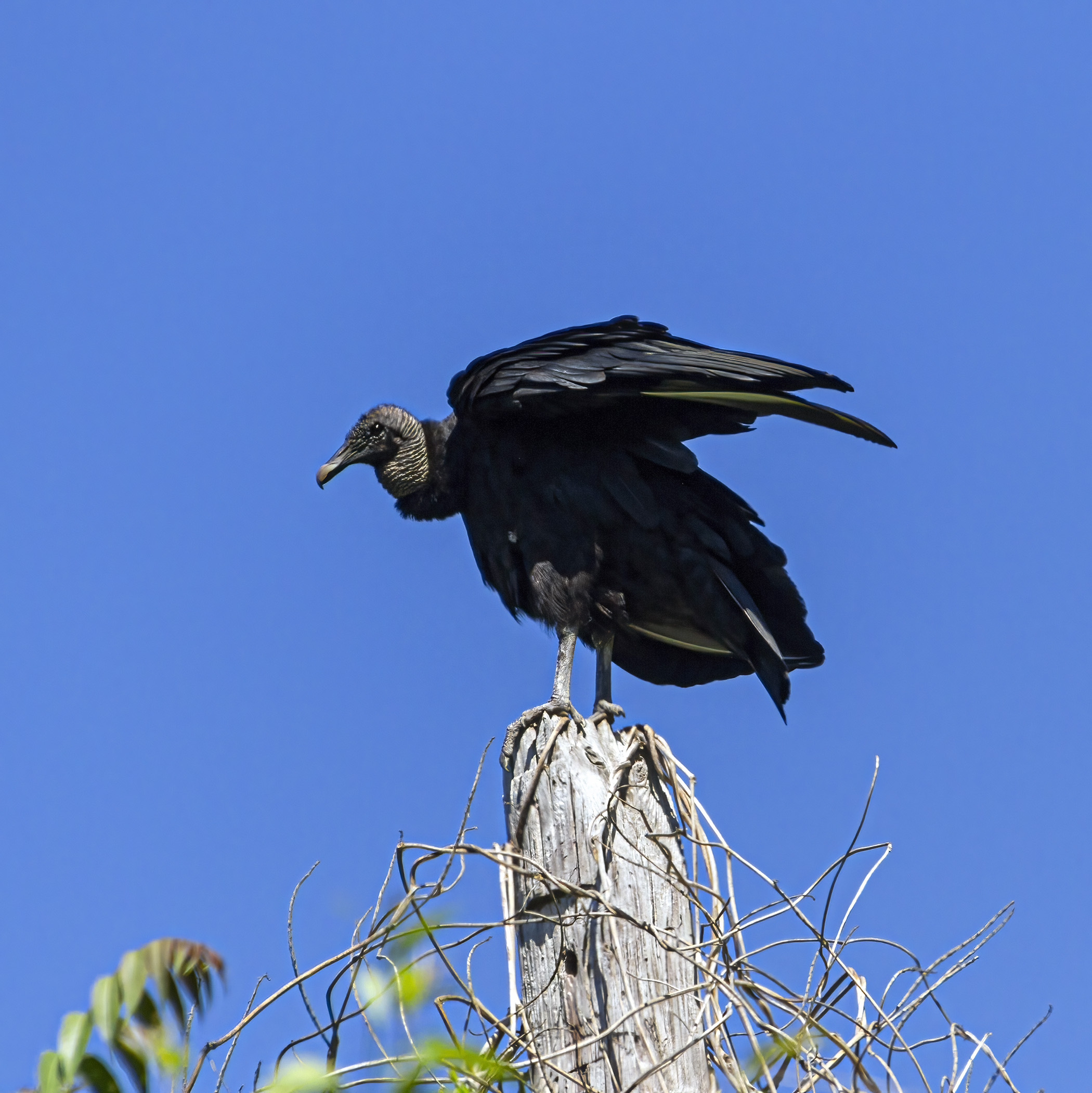
As I was exploring Occoquan Regional Park in nearby Lorton, Virginia last week, a large dark bird caught my attention. I tracked the bird in the air and watched as it landed atop a broken-off tree in the distance. I could see the bird’s grayish-black head and immediately identified it as  a Black Vulture (Coragyps atratus). In my area, Turkey Vultures, which have a reddish head, are much more common, but from time to time I also see Black Vultures, sometimes in a mixed group.

According to the Cornell Lab of Ornithology, “Turkey Vultures have an excellent sense of smell, but Black Vultures aren’t nearly as accomplished sniffers. To find food they soar high in the sky and keep an eye on the lower-soaring Turkey Vultures. When a Turkey Vulture’s nose detects the delicious aroma of decaying flesh and descends on a carcass, the Black Vulture follows close behind.”

On this day, the Black Vulture seems to be on its own, content to bask for a little while in the warmth of the sun. After capturing a few images, I quietly departed, leaving the culture on its solitary perch.Black Vulture

© Michael Q. Powell. All rights reserved.
 

Read Full Post »

Each spring (and fall) migrating warblers move through our area. This period is particularly frustrating for me, because I can often hear the warblers singing and calling, but I only rarely catch a glimpse of one.

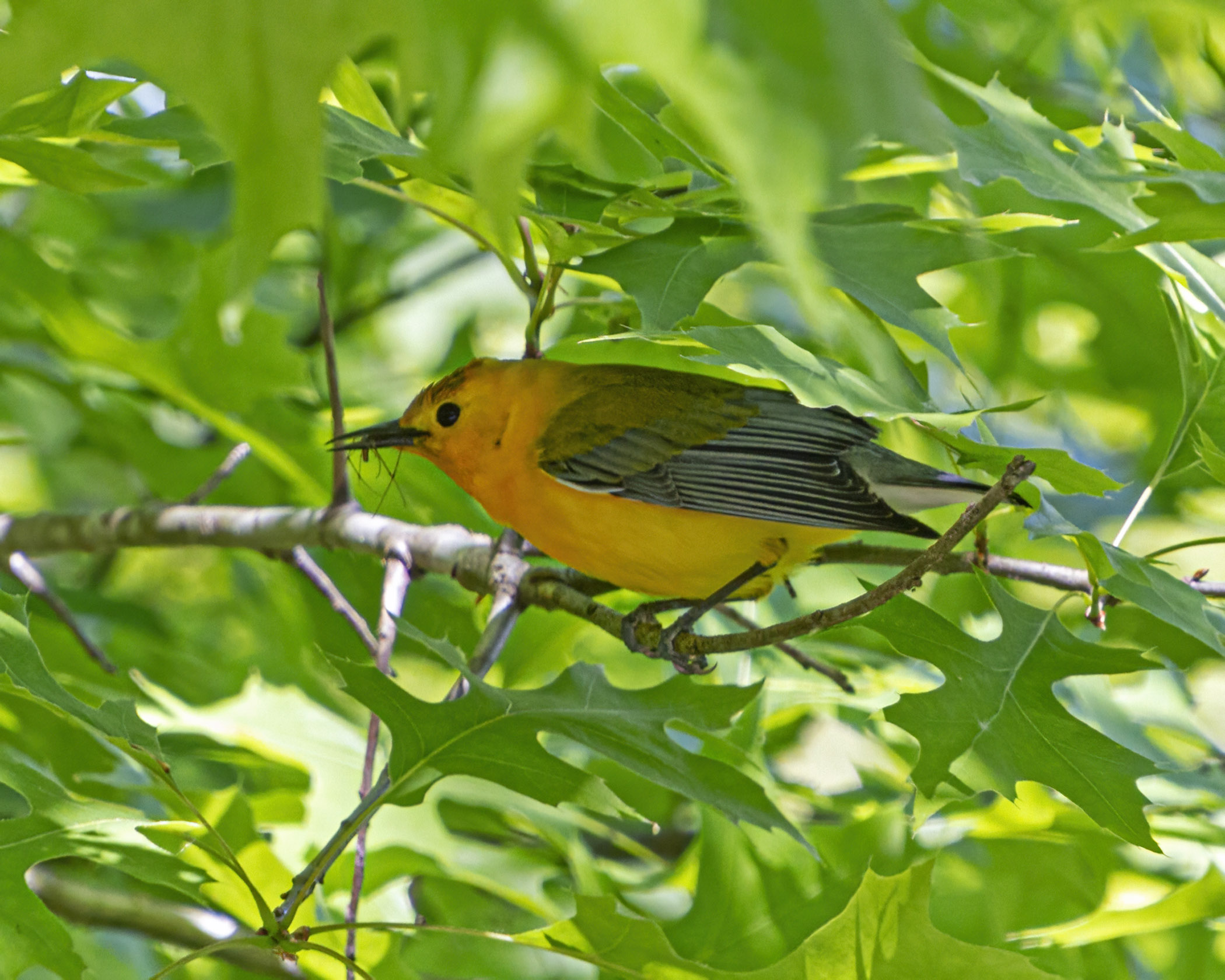
Last week, though, I heard a warbler and was able to track it as it moved feverishly in and out of the foliage at Occoquan Bay National Wildlife Refuge. I was definitely helped by the bright yellow plumage of the bird, that turned out to be a Prothonotary Warbler (Protonotaria citrea). Prothonotary Warblers are almost completely covered in yellow feathers and therefore can’t completely hide themselves. In case you are curious, the bird’s names comes from its plumage that resembles the yellow robes once worn by papal clerks in the Roman Catholic Church, known as prothonotaries.

Prothonotary Warbler

© Michael Q. Powell. All rights reserved.
Read Full Post »

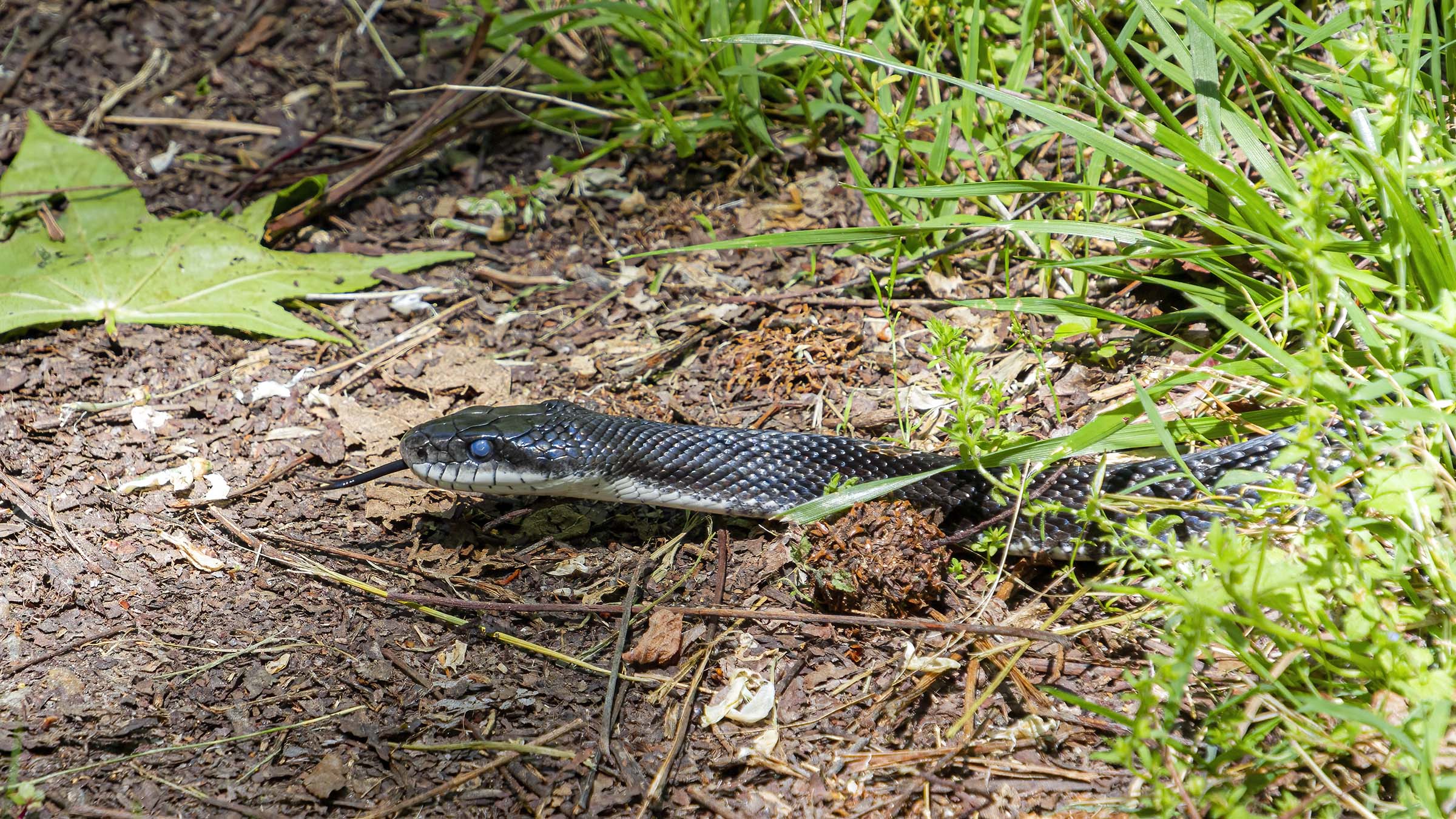
As I was walking down a trail last Friday at Occoquan Bay National Wildlife Refuge, I noticed a large black snake preparing to cross the trail. I know that there are very few poisonous snakes in my area, so I was not worried about being bitten. Instead I stopped walking and focused my camera on an open area that the snake would be moving through.

The snake was moving quite slowly and was flicking its tongue a lot, which I thought was a little strange. Later, when I was reviewing the images on my computer, I noticed that the eyes of the snake were cloudy and bluish, a definite sign that the snake was getting ready to shed its skin, a process that generally takes about a week. Perhaps the snake’s vision was impaired and it was using its tongue to assist in navigation.

I believe that this is a Central  Ratsnake (Pantherophis alleghaniensis), a large snake that is quite common in Virginia. After I captured a few images and the snake finished crossing the trail and I continued along it, with my eyes and ears on alert to find my next subject to photograph.

Eastern Ratsnake

© Michael Q. Powell. All rights reserved.
Read Full Post »