June 9, 2014 by Mike Powell
As I was getting ready to leave my local marshland park on Friday, I spotted what I thought was a small dragonfly. Upon closer examination, it turned out to be a robber fly, subduing a captured prey.
There are a lot of varieties of robber flies in the Asilidae family and I am not sure which kind this is, but robber flies have a reputation for being really vicious predators.
Wikipedia describes their hunting method in these words, “The fly attacks its prey by stabbing it with its short, strong proboscis injecting the victim with saliva containing neurotoxic and proteolytic enzymes which very rapidly paralyze the victim and soon digest the insides; the fly then sucks the liquefied material through the proboscis.”
I guess we can all be thankful that robber flies are not big enough to hunt humans—except perhaps in science fiction movies.

© Michael Q. Powell. All rights reserved.
Posted in Insects, Macro Photography, Nature, Photography, Portraits, wildlife | Tagged Alexandria VA, Asilidae, Canon 50D, Huntley Meadows Park, robber fly, Tamron 180mm macro lens | 14 Comments »
June 8, 2014 by Mike Powell
What do you think about when you hear the word “dasher?” From my early childhood days, the word meant only one thing—it was the name of one of Santa’s reindeer.
Many of us grew up hearing these familiar words from the poem “Twas the Night Before Christmas” (“A Visit From St. Nicholas“) by Clement Clarke Moore:
More rapid than eagles his coursers they came,
And he whistled, and shouted, and called them by name;
“Now, Dasher! now, Dancer! now, Prancer and Vixen!
On, Comet! on, Cupid! on, Donder and Blitzen!
To the top of the porch! to the top of the wall!
Now dash away! dash away! dash away all!”
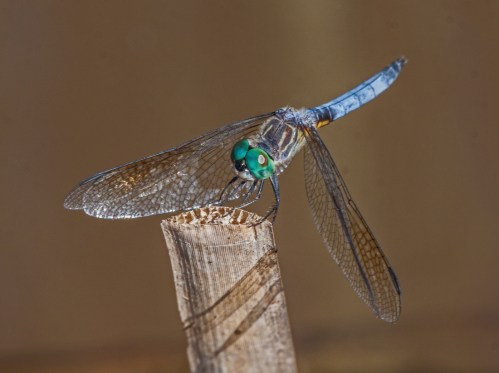
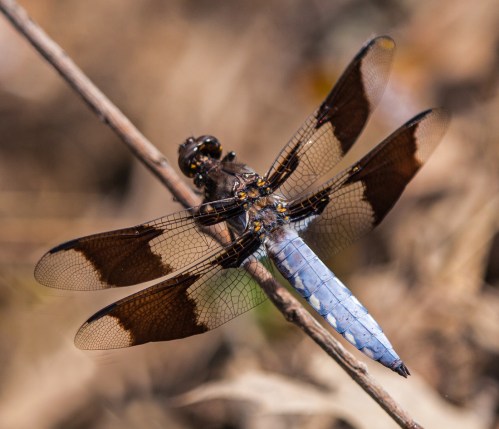
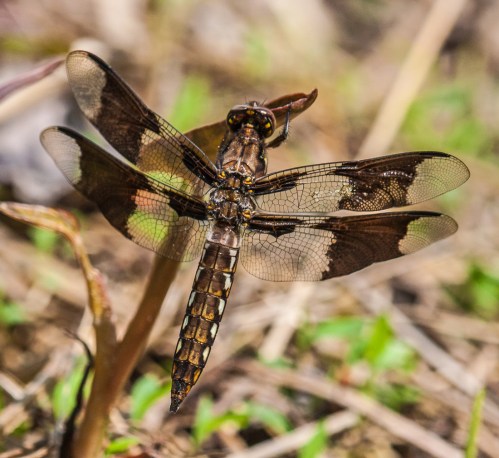
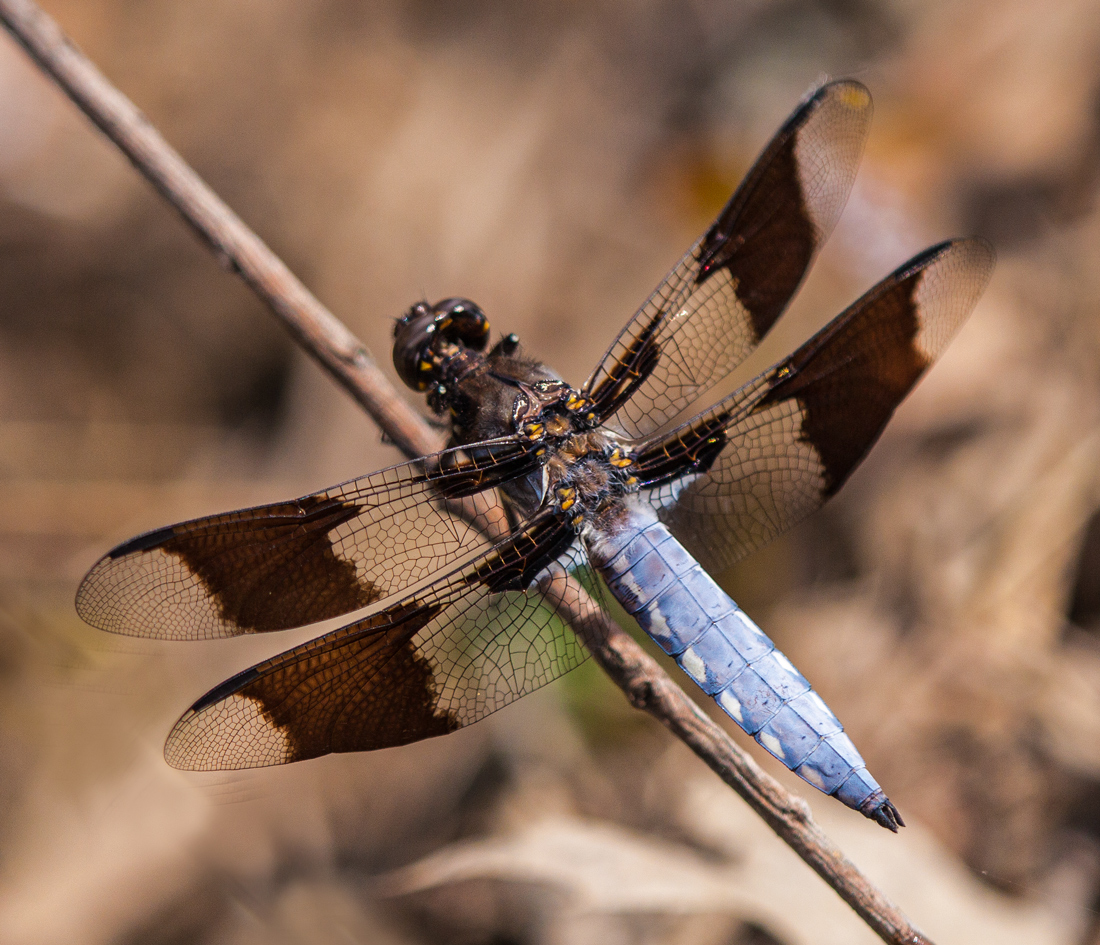
So, every time I see a Blue Dasher dragonfly (Pachydiplax longipennis), like this beautiful male that I photographed this weekend, I can’t help but have a little thought of Christmas, even on the hottest days of summer.
But Santa, some may complain, didn’t have a blue Dasher. That’s true, of course, but Elvis had no problem singing of a Blue Christmas, the perfect setting for a Blue Dasher. (Click here to watch a You Tube video of Elvis singing this signature tune.)
© Michael Q. Powell. All rights reserved.
Posted in Art, Christmas, Dragonflies, Humor, Insects, Macro Photography, Nature, Photography, Portraits, spring, wildlife | Tagged Alexandria VA, Blue Dasher, Blue Dasher dragonfly, Canon 50D, Huntley Meadows Park, Pachydiplax longipennis, Tamron 180mm macro lens | 6 Comments »
June 7, 2014 by Mike Powell
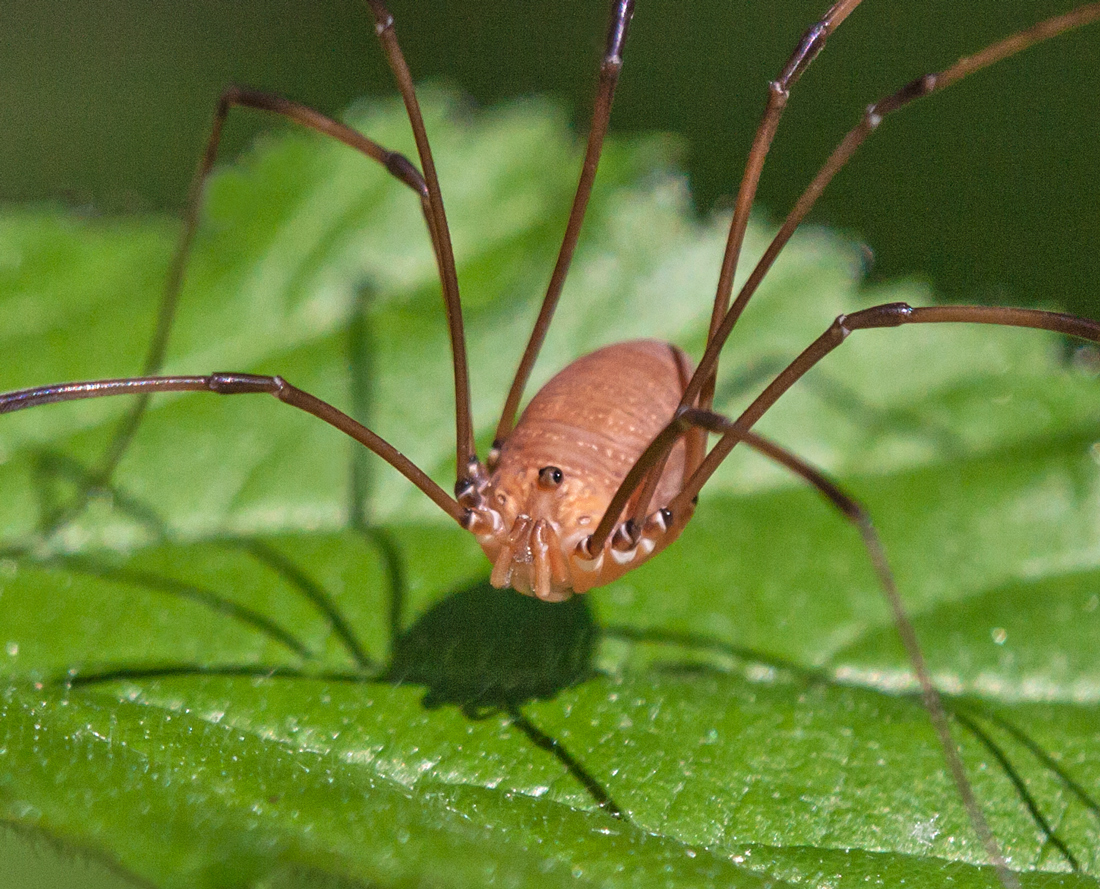
Daddy longlegs have a single pair of eyes, oriented sideways, in the middle of their heads and it’s a little disconcerting to peer through a macro lens and see one of these eyes looking toward you. Daddy longlegs (also known as harvestmen) belong to the arachnid family, but are not spiders. Harvestmen make up the order Opiliones and, according to Wikipedia, there may be as many as ten thousand species of harvestmen worldwide, with over 6500 already discovered.
I cropped the first shot of the harvestman to allow you to see the eyes better, but it doesn’t really give you a sense of the length of the legs. The second shot, which is actually a less-cropped version of the first one, shows you more of the legs. I did crop out the ends of the outermost legs, though, to keep the body from looking too small.


© Michael Q. Powell. All rights reserved.
Posted in Arachnids, Macro Photography, Nature, Photography, Portraits, wildlife | Tagged Alexandria VA, Canon 50D, daddy longlegs, harvestman, Huntley Meadows Park, opiliones, Tamron 180mm macro lens | 16 Comments »
June 6, 2014 by Mike Powell
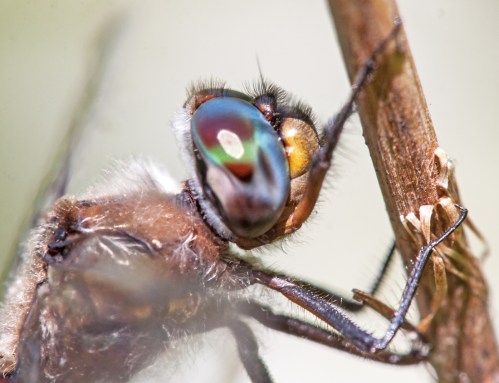
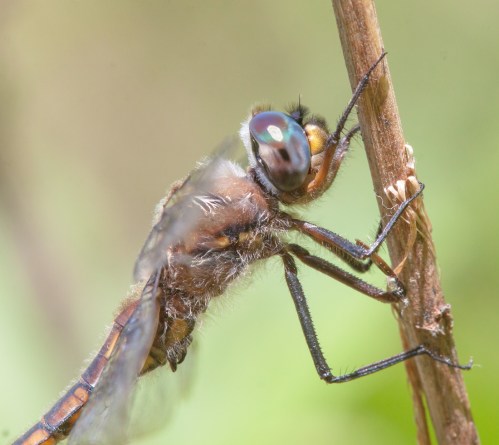
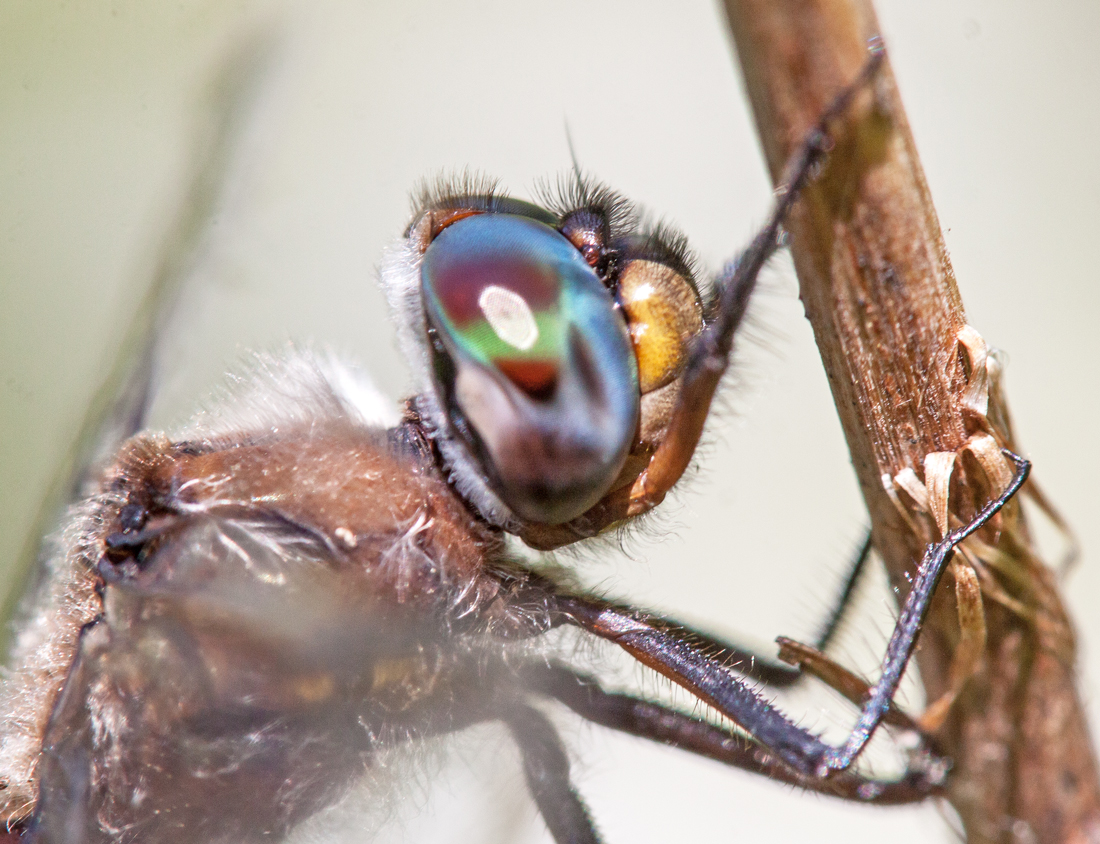
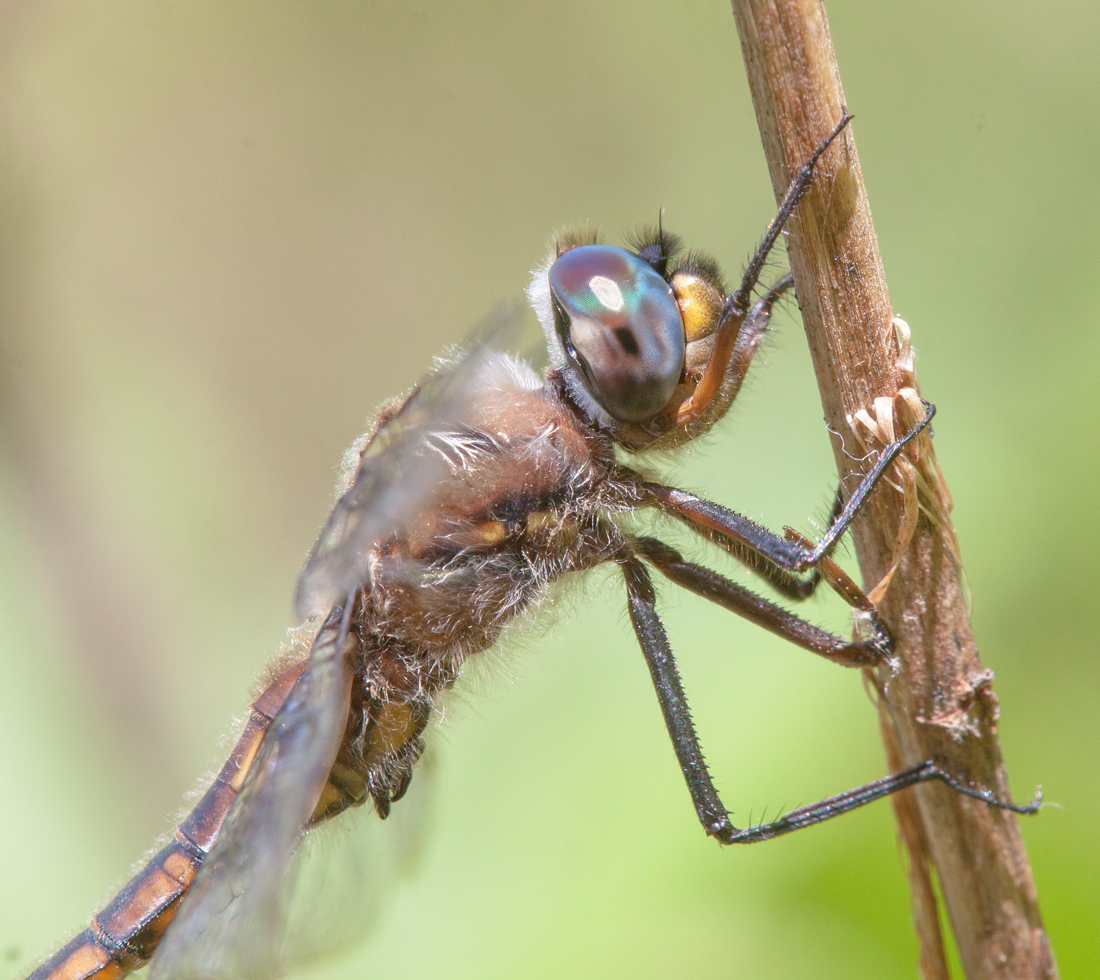
Have you ever looked really closely at a dragonfly? I expected to be able to see its beautiful colors, but I was a little surprise to see how many little hairs were present on the face and body of this Common Baskettail dragonfly (Epitheca cynosura) that I encountered in mid-May at my local marsh.
I was standing in one of my favorite spots, at the edge of a beaver pond, when this dragonfly flew in and perched a few feet away from me. I don’t know if it was resting or napping or simply didn’t mind my presence, but it allowed me to get amazingly close to it. I was able to take quite a few shots of it and even was able to set up my tripod (although there was so much underbrush that it was tough to get a really stable base).
As you can see from the first shot, depth of field was an issue for me when I moved in this close and I didn’t manage to keep all of the legs in focus. I took the second shot from a bit further back and more of the dragonfly is in focus.
Want a new view on life? Try looking at the world through a macro lens and you’ll see some amazing things.
© Michael Q. Powell. All rights reserved.
Posted in Dragonflies, Insects, Macro Photography, Nature, Photography, spring, wildlife | Tagged Alexandria VA, Canon 50D, Common Baskettail, Common Baskettail dragonfly, dragonfly, Epitheca cynosura, Huntley Meadows Park, Tamron 180mm macro lens | 8 Comments »
June 5, 2014 by Mike Powell
Is it just me, or does the word “skink” sound funny to you? Certain words simply sound odd to me and for some reason “skink” is one of them—I can’t help but smile whenever I say the word out loud.
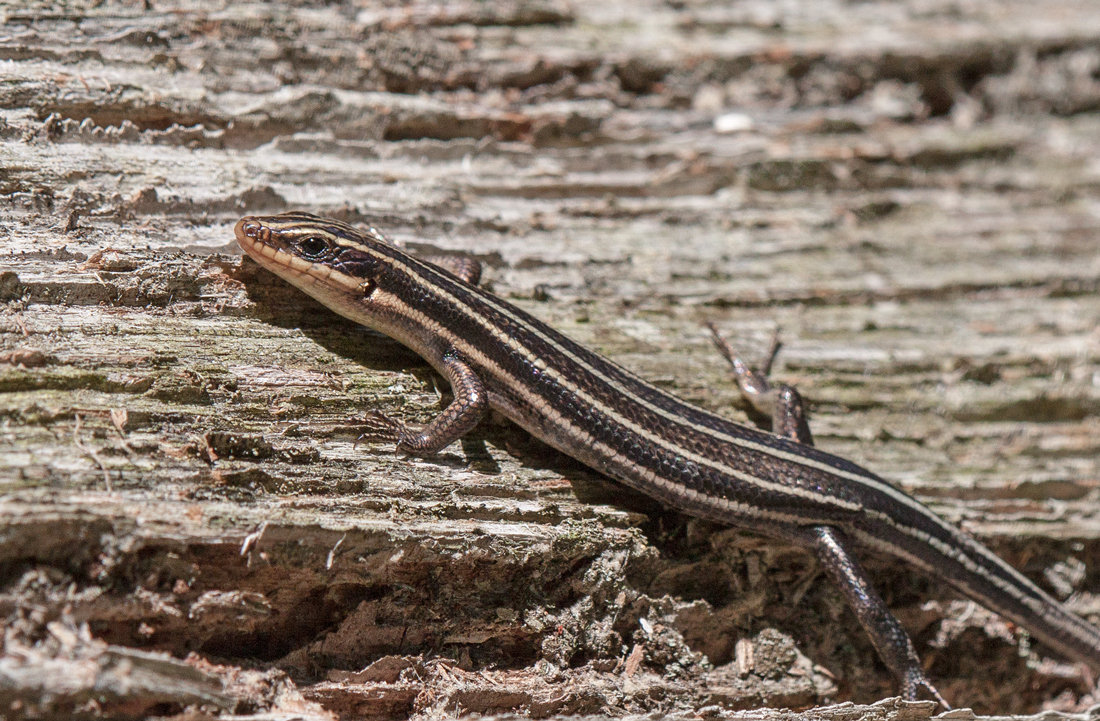
Recently I took this shot of a Common Five-lined Skink (Plestiodon fasciatus, formerly Eumeces fasciatus) at my local marshland park. It was sunning itself on a rotten log and didn’t detect my presence immediately and run away, which is what usually happens when I spot a skink. It seems to have its head cocked a little and has a smile on its face, as though daydreaming, as I do when sunbathing.

I wonder if you could use “skink” as a verb to describe the crawling-type behavior typical of a skink, as in, “I saw my friend skinking about.” If “skink” were a verb, would it follow the model of “drink,” with verbal forms that included “skank” and “skunk?” That might induce a bit of confusion, I suppose, since “skank” suggests a different kind of behavior, as does “skunk.” English can be a strange language.
I’ll just continue smiling.
© Michael Q. Powell. All rights reserved.
Posted in Humor, Macro Photography, Nature, Photography, Portraits, Reptiles, spring, wildlife | Tagged Alexandria VA, Canon 50D, Common Five-Lined Skink, Eumeces fasciatus, Huntley Meadows Park, lizard, Plestiodon fasciatus, skink, Tamron 180mm macro lens | 10 Comments »
June 4, 2014 by Mike Powell
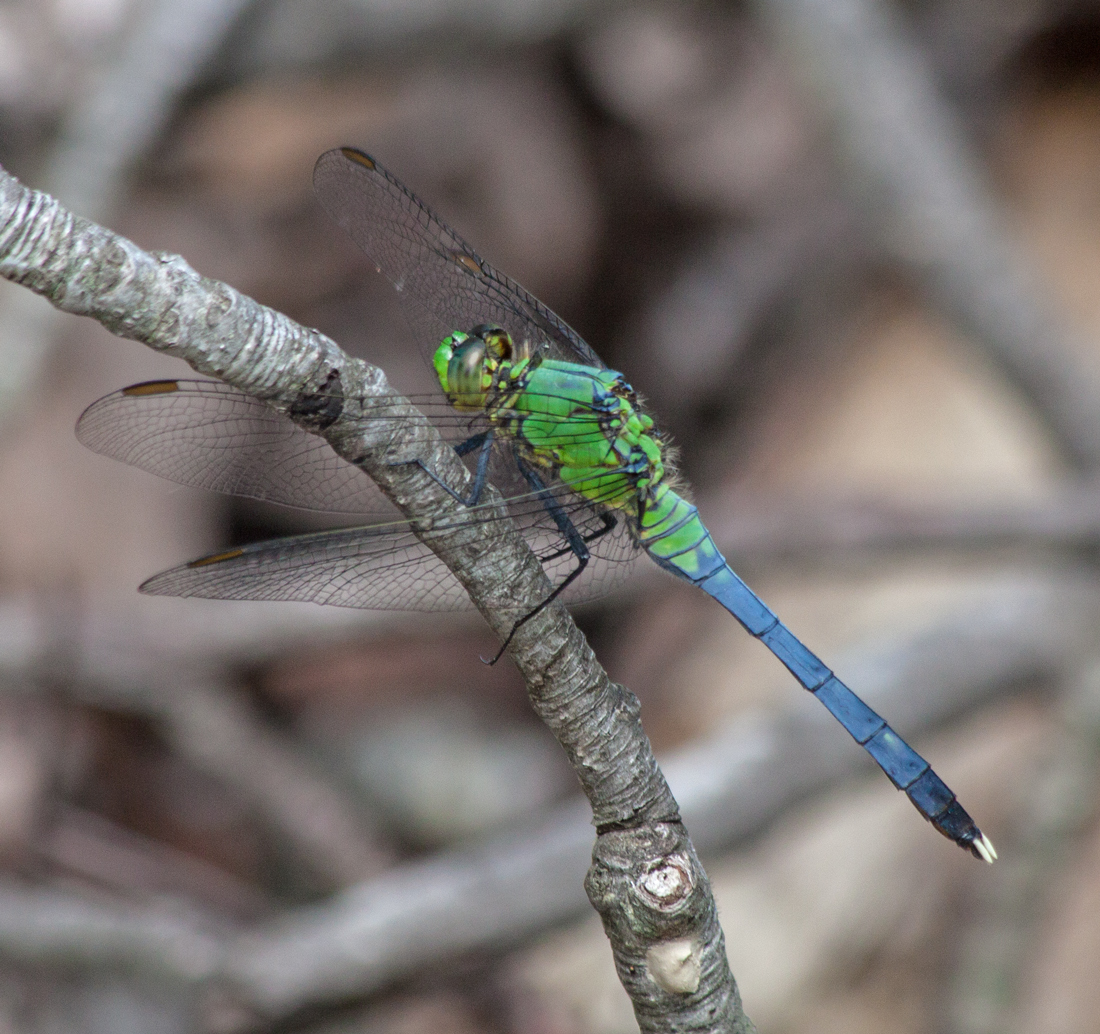
Yesterday I wrote of a male Eastern Pondhawk dragonfly (Erythemis simplicicollis) transitioning to adulthood, but I realized this morning that not all viewers know what an adult male pondhawk looks like.
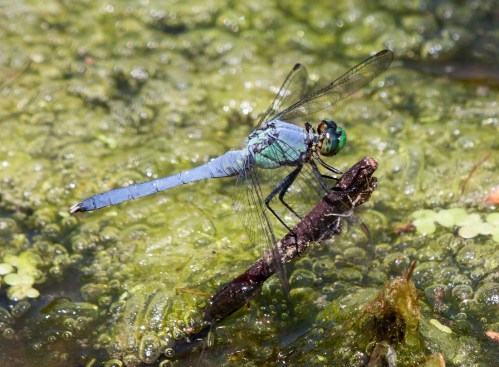
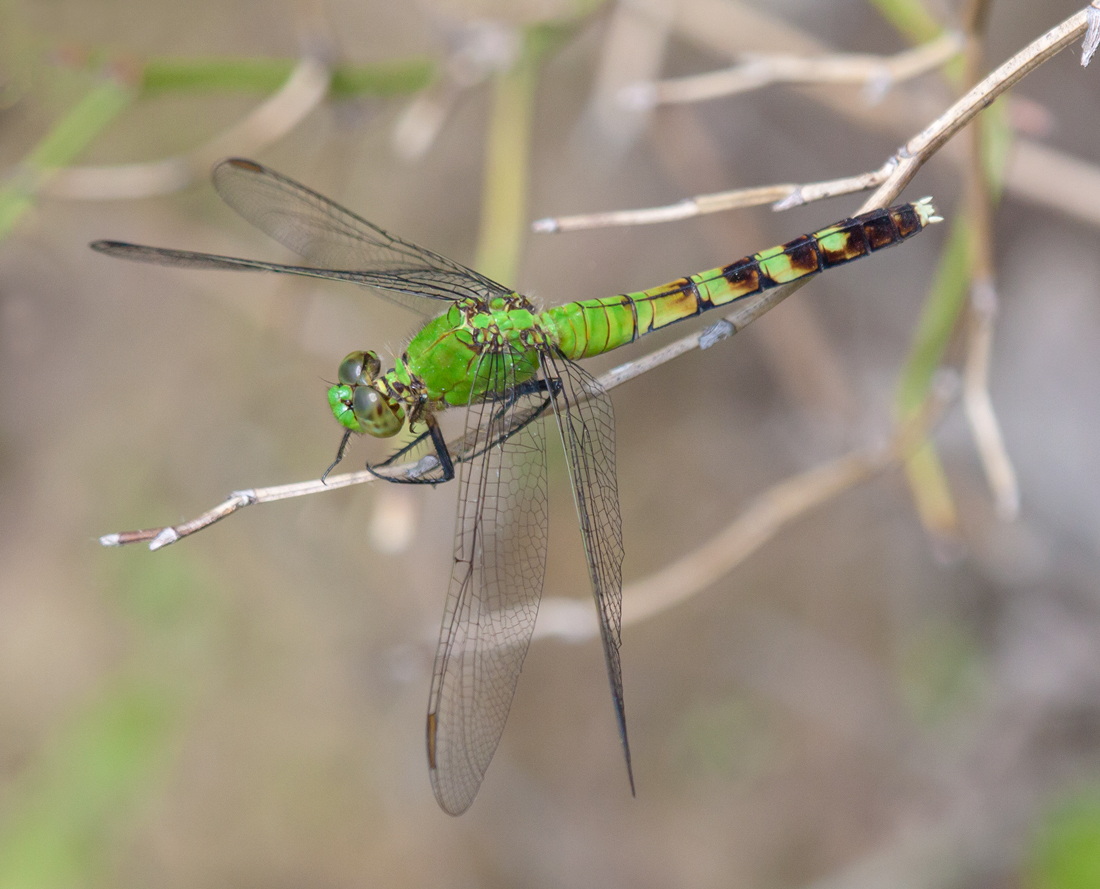
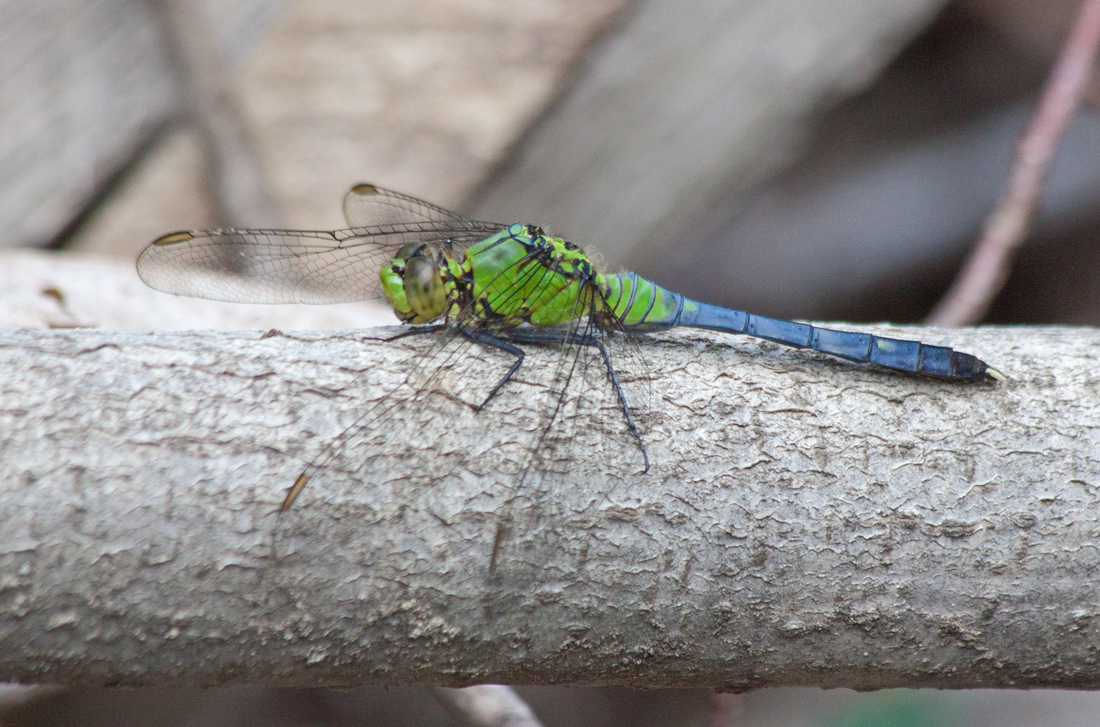
This first shot shows an adult male Eastern Pondhawk perched above a big mass of algae, duckweed, and other “stuff” at a small pond at a local garden. Originally I was frustrated when the dragonfly flew into this mess and did not perch above the cleaner water of the pond. I wasn’t sure if I could get a clear shot with all of the clutter, but was pleasantly surprised with the result. I actually like the bubbles in the foreground and the texture and visual interest that it adds to the shot.
I took the second shot in a totally different environment, at the edge of a field. It shows the bright green coloration of the Eastern Pondhawk female (and young males). My local dragonfly expert, Walter Sanford, keeps reminding me that one of the keys to differentiating the genders is the terminal appendages and I think this one is a female.
 When you take the blue from the top photo and the green from the bottom one, you get the color combination of yesterday’s posting. As for me, I find the colors to be exceptionally beautifully individually as well as in combination.
© Michael Q. Powell. All rights reserved.
Posted in Dragonflies, Insects, Macro Photography, Nature, Photography, spring, wildlife | Tagged adulthood, Alexandria VA, Canon 50D, dragonfly, Eastern Pondhawk, Eastern Pondhawk dragonfly, Erythemis simplicicollis, green spring gardens, Huntley Meadows Park, Tamron 180mm macro lens | 6 Comments »
June 3, 2014 by Mike Powell
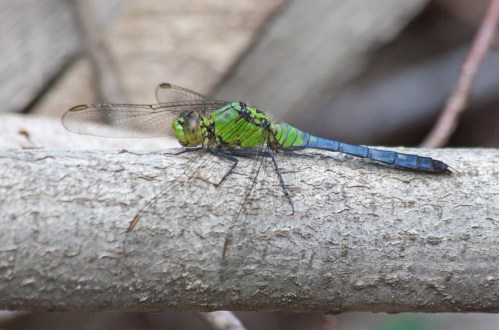
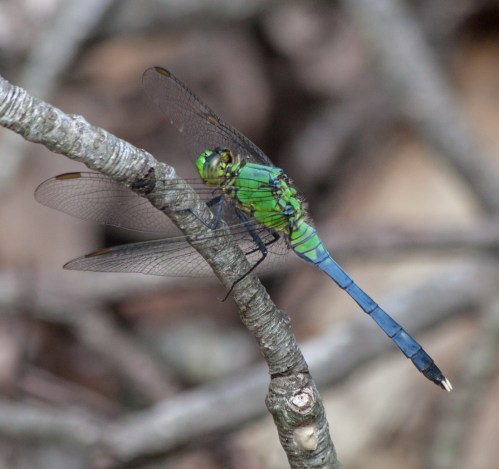
I have always been intrigued by the fact that many male dragonflies start out looking like females and over time acquire their male coloration. It’s a bit of an oversimplification, but male Eastern Pondhawk dragonflies (Erythemis simplicicollis) are blue and females are green. Males of this species initially are green and gradually turn blue. Last weekend I managed to get some shots of a dragonfly who is in midst of this transitional period.
I really like his current two-toned look, but before long he’ll be almost completely blue, (though he will retain the green face.
© Michael Q. Powell. All rights reserved.
Posted in Dragonflies, Insects, Macro Photography, Nature, Photography, spring, wildlife | Tagged Alexandria VA, Canon 50D, Canon 70-300mm telephoto zoom lens, dragonfly, Eastern Pondhawk, Eastern Pondhawk dragonfly, Erythemis simplicicollis, Huntley Meadows Park | 8 Comments »
June 2, 2014 by Mike Powell
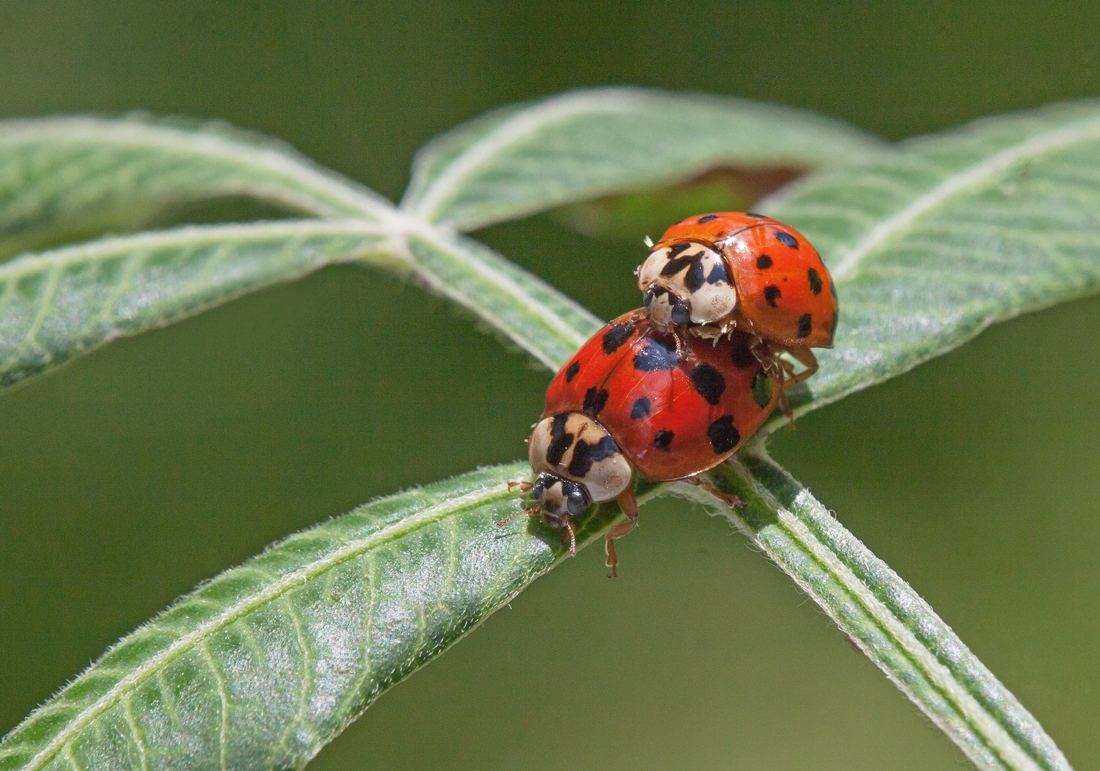
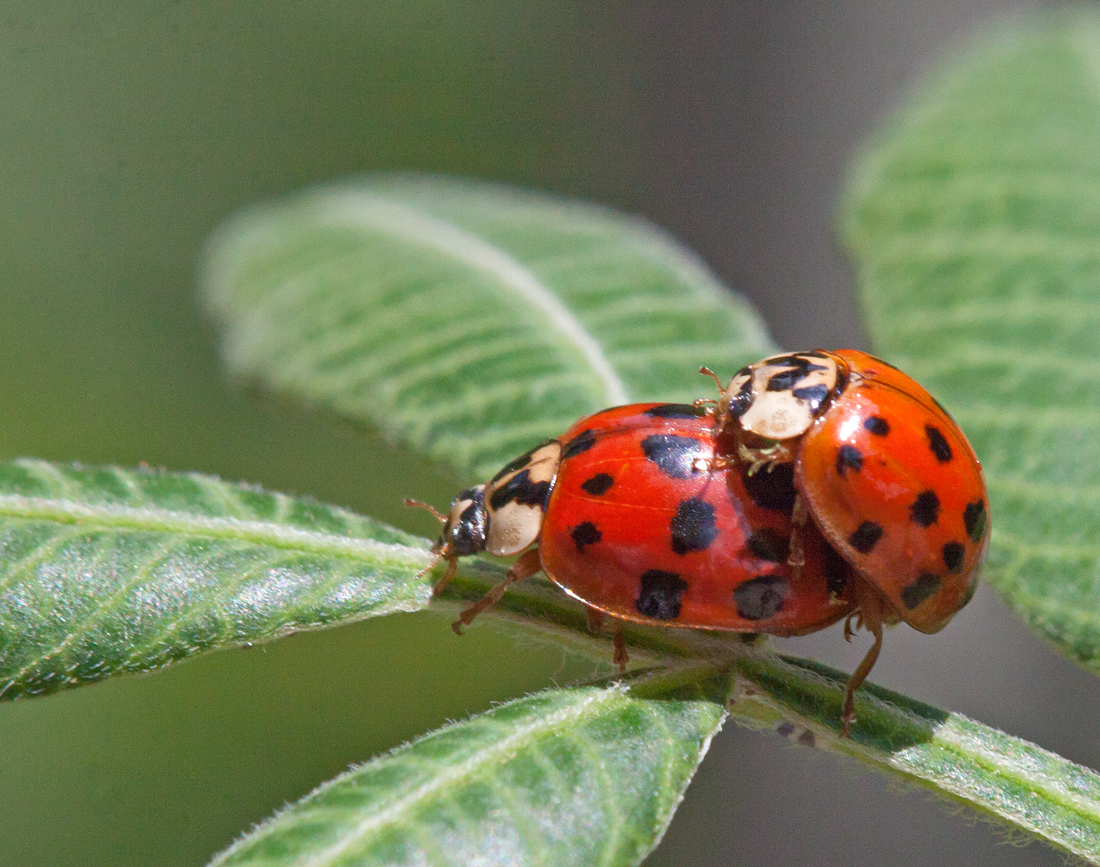
It’s difficult not to feel a bit like a voyeur when you spot a pair of ladybugs mating. They consummate the act in public view and their bold coloration makes them almost impossible to miss. Still, there is just something loveable about ladybugs and I doubt that many readers will find these images objectionable.


© Michael Q. Powell. All rights reserved.
Posted in Bugs, Insects, Macro Photography, Nature, Photography, spring, Winter | Tagged Alexandria VA, Canon 50D, Huntley Meadows Park, ladybird, ladybug, love, mating, Tamron 180mm macro lens, voyeur | 10 Comments »
June 1, 2014 by Mike Powell
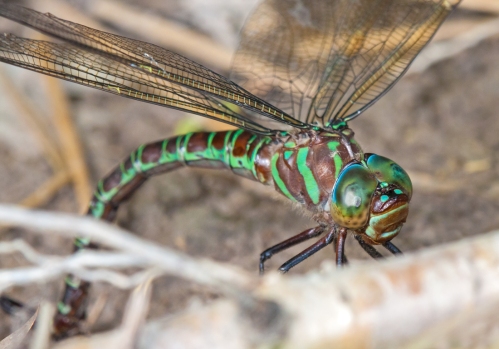
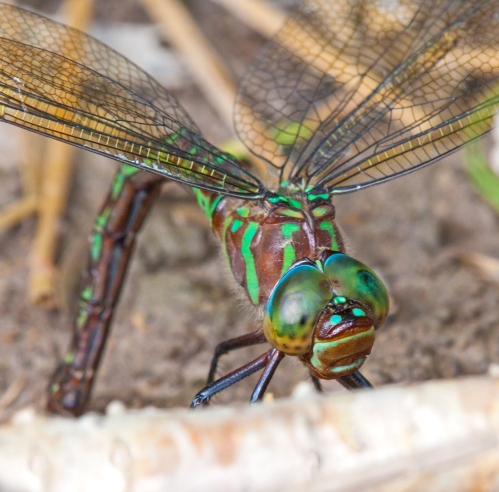
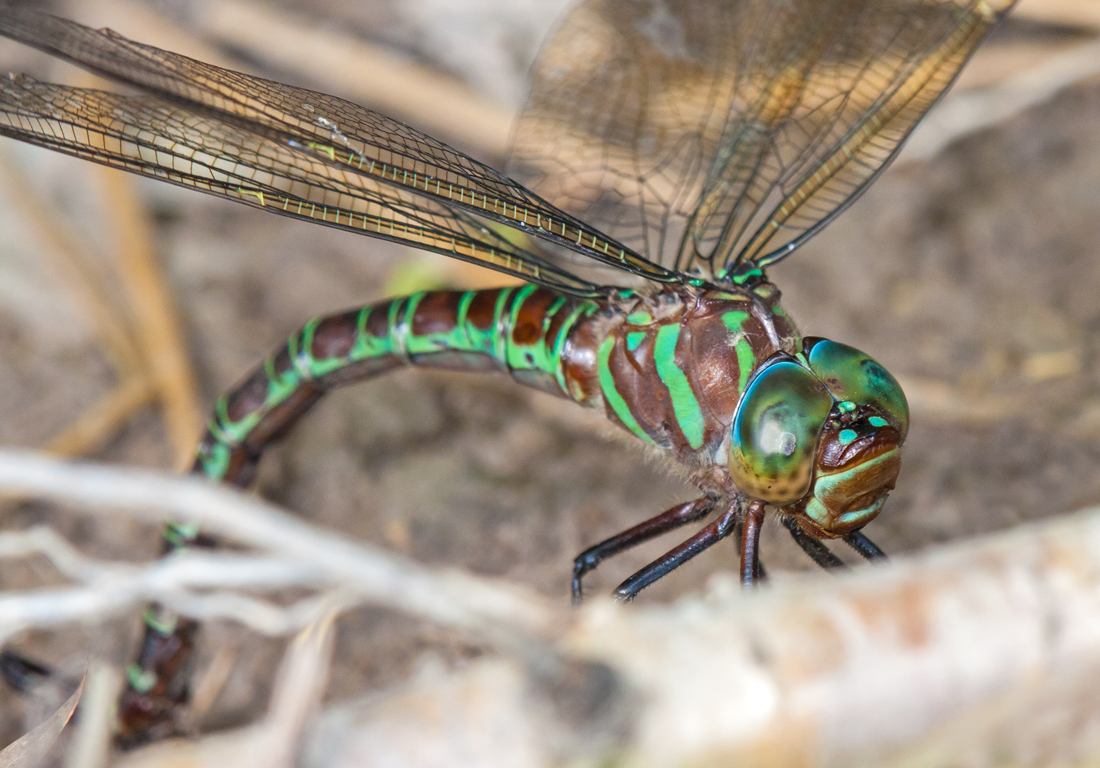
As I was observing dragonflies on Friday at Huntley Meadows Park, a female Swamp Darner dragonfly (Epiaeschna heros) decided that the spot right next to me was the perfect place for her to deposit some eggs. She seemed to fly right at me and then veered just slightly to the left and began to arch her back in the way that dragonflies do when ovipositing.
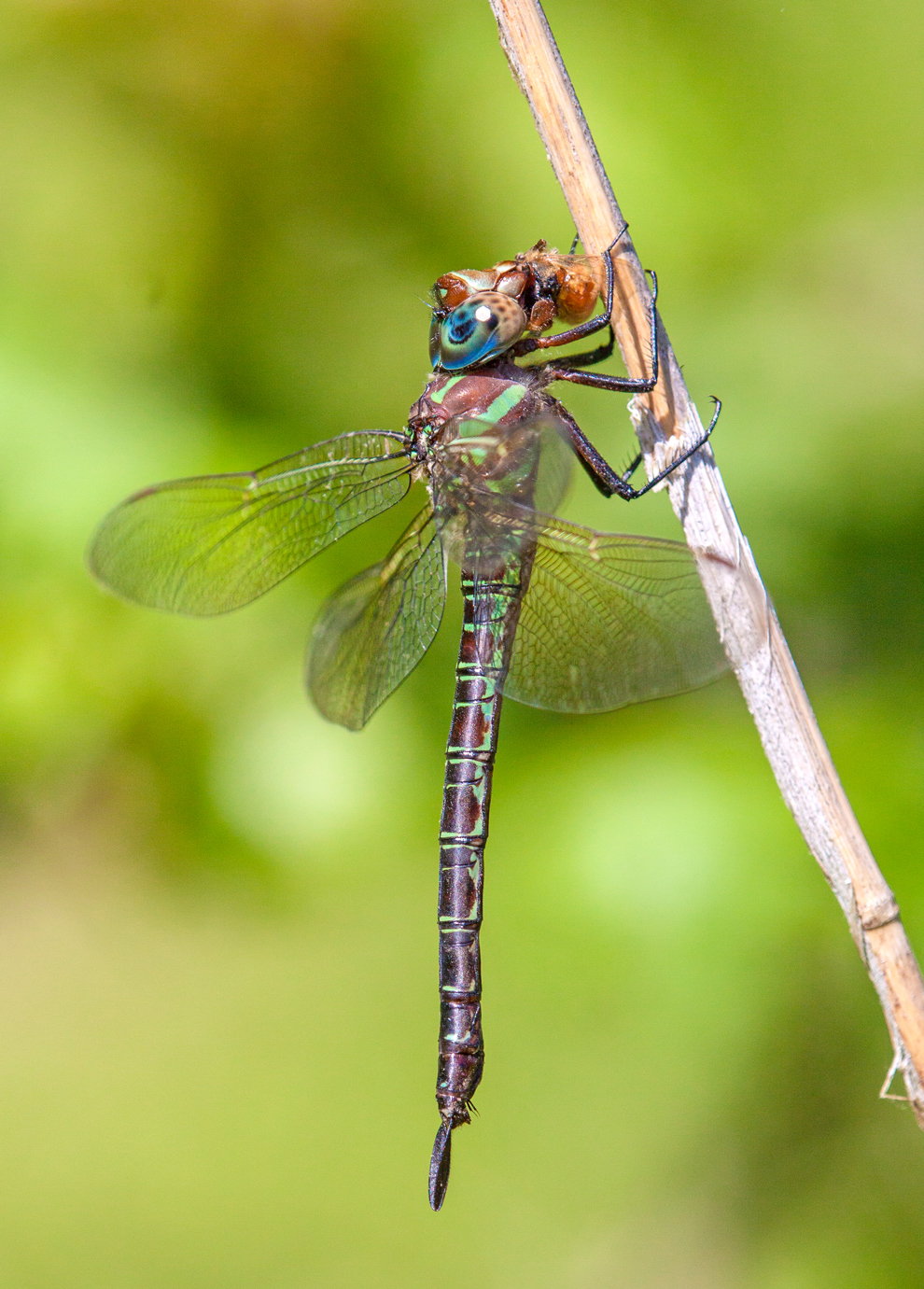
I was really close to this female dragonfly, so close that my 180mm macro lens might actually have been too much lens for the situation. This was an unusual situation for me—I am usually trying to get closer and closer to a subject. As dragonflies go, Swamp Darners are really large, as much as 4 inches (10 cm) in length.
I didn’t dare move back for fear of scaring her away, so I slowly moved my upper body to try to frame the action. These shots show a couple of the different body positions of the dragonfly as she deposits her eggs.
© Michael Q. Powell. All rights reserved.
Posted in Dragonflies, Insects, Macro Photography, Nature, Photography, spring, wildlife | Tagged Alexandria VA, Canon 50D, Epiaeschna heros, Huntley Meadows Park, ovipositing, Swamp Darner, Swamp Darner dragonfly, Tamron 180mm macro lens | 14 Comments »
May 31, 2014 by Mike Powell
To crop, or not to crop—that is the question. At a certain point in time when we are processing our images, we are all come face to face with this question. To some photographers, composing perfectly in the camera is the ultimate virtue, and they take pride in the fact that they do not crop (and object when their images are cropped).
Moose Peterson is one prominent photographer who does not crop and he explained his views in a fascinating blog posting in 2012 entitled, “The Crop Revisited.” I am still pondering one of his conclusions, “When you don’t give yourself the option to “fix it in post,” photographers push themselves. This always make a better click and the story telling, the subject, that passion of that click becomes clearer and clearer.”
Most of us could not live with such a high standard and for various reasons we choose to crop. I am so used to cropping my images that even when I compose an image just the way that I want it, I am tempted to move in closer with my crop. That was my dilemma with this image of a damselfly on the edge of a lily pad, as it was framed when it came out of the camera.
 I really like the long sinuous curve on the left and the large expanse of green on the right. I worry, however, that the damselfly is taking up too little space of the image and is not prominent enough. So I cropped a bit and produced a second version.

That’s not a very extreme crop, but somehow the image feels different to me. Does it make any difference to you? Do you prefer one of the two over the other?
UPDATE: Fellow blogger and local dragonfly expert, Walter Sanford, has identified this for me as an Eastern Forktail damselfly (Ischnura verticalis). Thanks, Walter.
© Michael Q. Powell. All rights reserved.
Posted in Art, Dragonflies, Insects, Macro Photography, Nature, Photography, Portraits, spring | Tagged Alexandria VA, Canon 50D, crop, damselfly, Eastern Forktail, Eastern Forktail damselfly, green spring gardens, Ischnura verticalis, lily pad, Tamron 180mm macro lens, water lily | 14 Comments »
May 30, 2014 by Mike Powell
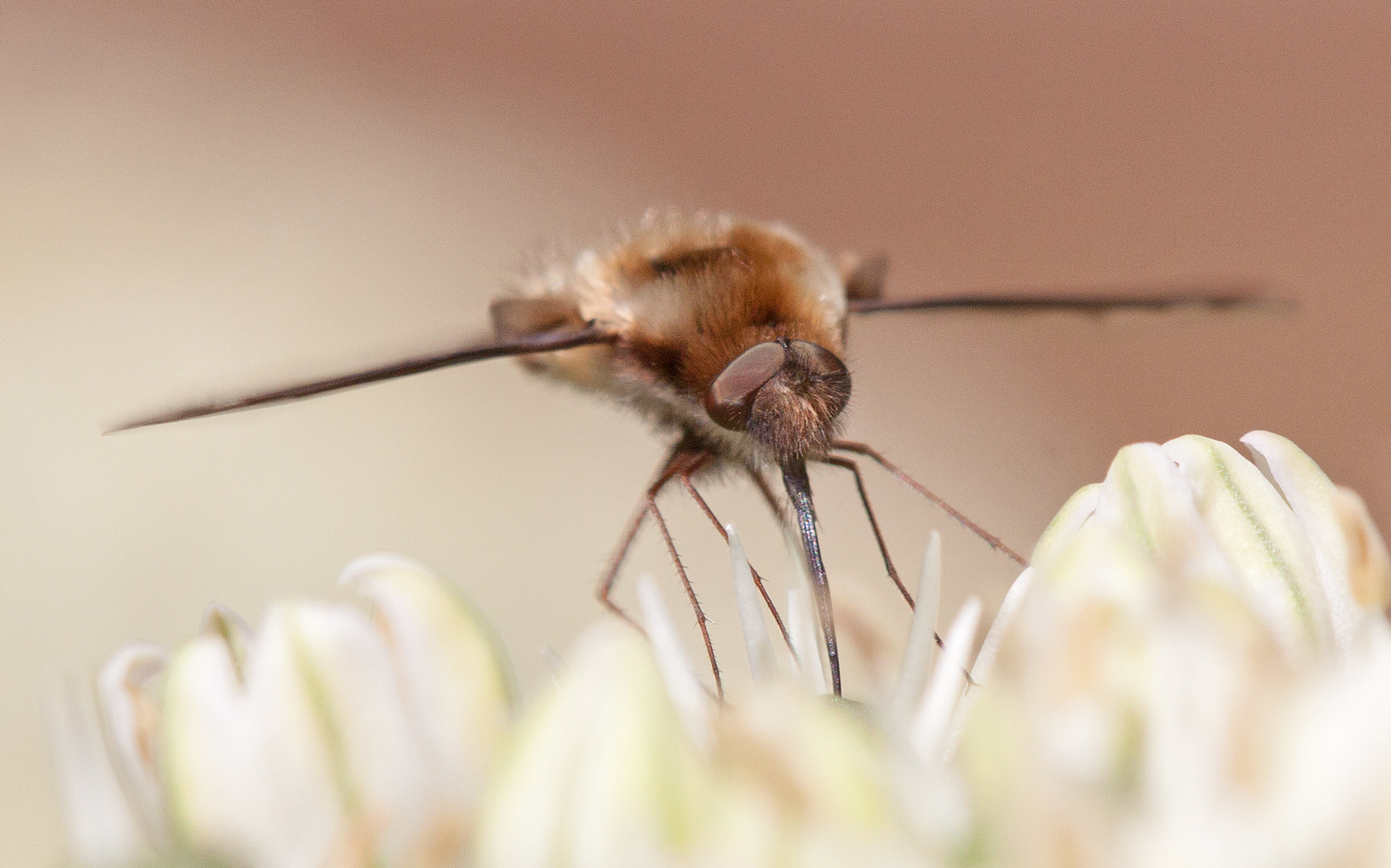
Is it a bee? Is it a fly? It’s a Greater Bee Fly (Bombylius major). What?
This bee fly has to be one of the strangest insects that I have ever seen—it looks like Doctor Frankenstein pieced together an insect from the parts of other insects. Its fuzzy body looks like that of a bee and it has a similar proboscis, though the bee fly’s proboscis seems to be outrageously long. Its long, spindly legs, however, are not bee-like and remind me of certain types of flies. The patterned wings and the way that it hovers are reminiscent of a hummingbird moth, though the bee fly is considerably smaller.
The bee fly is considered to be a bee mimic. Like a bee, it helps pollinate plants when gathering nectar.
I encountered this strange insect when I was examining the little flowers of some allium plants in the garden of my neighbor and fellow photographer and blogger Cindy Dyer. She always has interesting flowers to photograph and I have found an amazing assortment of insects in the garden too.

Greater Bee Fly on allium plant

Head-on look at a bee fly

Bee Fly on allium with trellis in background
© Michael Q. Powell. All rights reserved.
Posted in Flowers, Gardening, Humor, Insects, Macro Photography, Nature, Photography, spring, wildlife | Tagged Alexandria VA, bee fly, Bombylius major, Canon 50D, Greater Bee Fly, Runnymeade, Tamron 180mm macro lens | 6 Comments »
May 29, 2014 by Mike Powell
This past weekend I finally saw one of my favorite dragonflies, the male Blue Dasher (Pachydiplax longipennis), at Green Spring Gardens in Alexandria, Virginia. The Blue Dasher is bright and colorful and likes to perch on protruding vegetation, thereby providing lots of photographic opportunities.
Now that I have seen my first Blue Dashers, I know for sure that summer is almost here.

© Michael Q. Powell. All rights reserved.
Posted in Dragonflies, Insects, Macro Photography, Nature, Photography, spring, wildlife | Tagged Alexandria VA, Blue Dasher, Blue Dasher dragonfly, Canon 50D, green spring gardens, Pachydiplax longipennis, Tamron 180mm macro lens | 7 Comments »
May 28, 2014 by Mike Powell
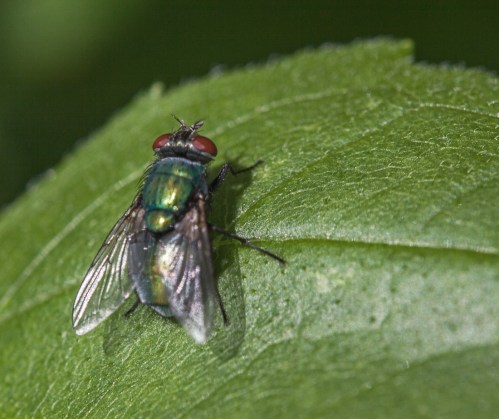
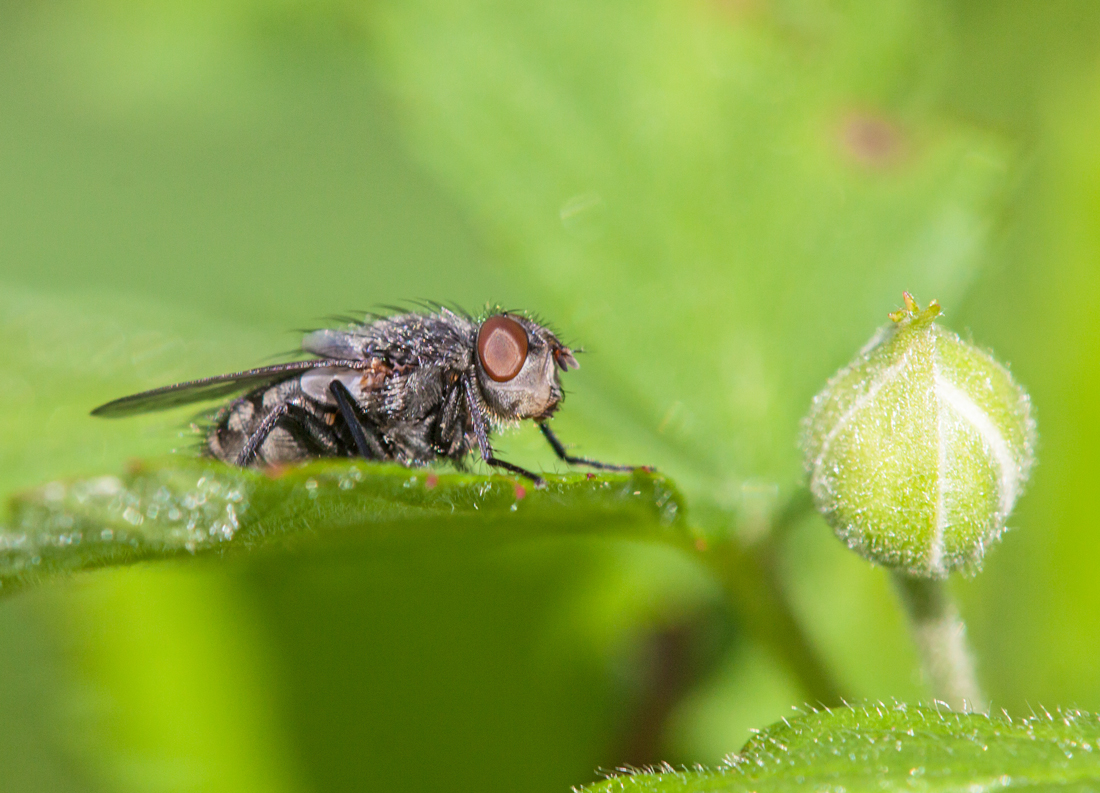
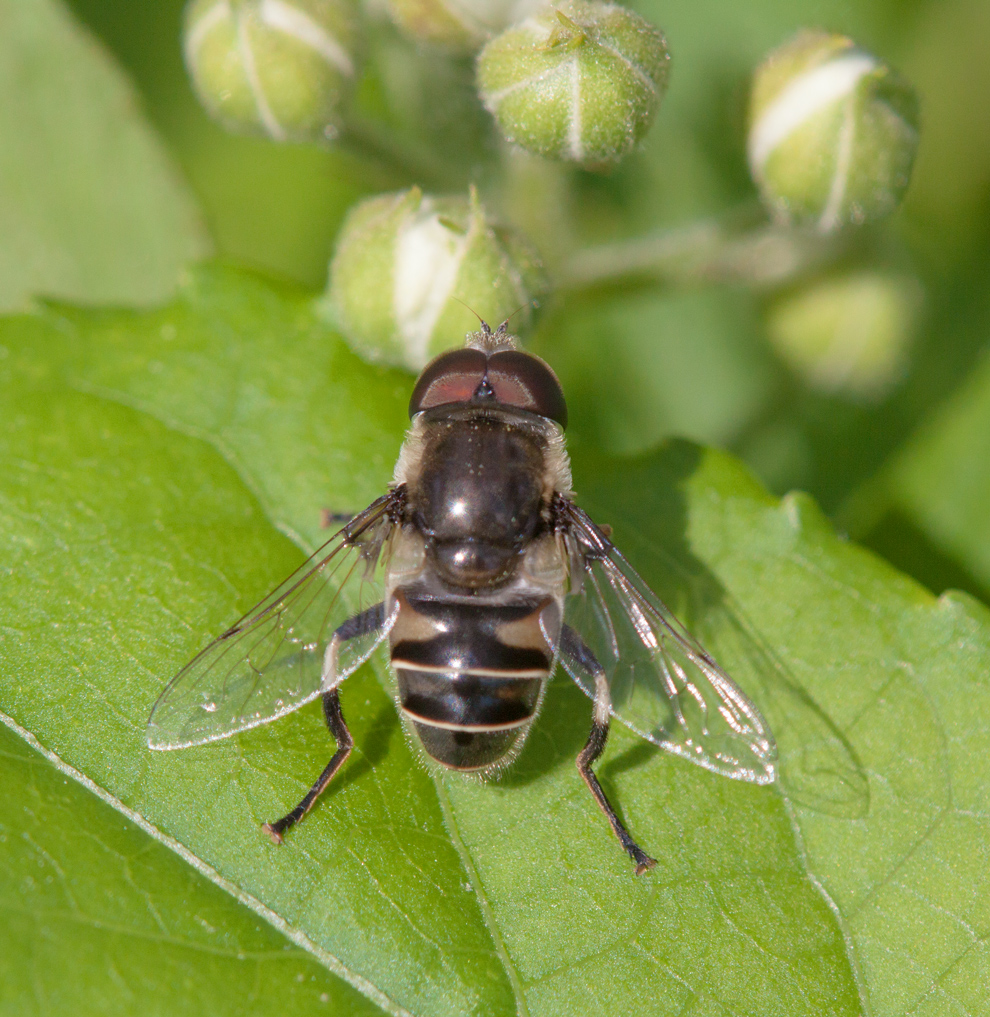
Do you ever find yourself looking at flies? No, I don’t mean looking at them with a fly swatter in your hand and murder in your heart and I don’t mean admiring the beautiful colors of butterflies and dragonflies.
What I have in mind is marveling at the variety of more ordinary flies, discovering the details of their amazing eyes and hairy little bodies. Sometimes you have to move in really close and bend down to their level (and a macro lens helps).
When you do, a whole new world opens up.
Here are a few shots of different flies that I’ve encountered recently.


© Michael Q. Powell. All rights reserved.
Posted in Art, Insects, Macro Photography, Nature, Photography, wildlife | Tagged Canon 50D, flies, fly, Tamron 180mm macro lens | 7 Comments »
May 27, 2014 by Mike Powell
As a follow-up to last week’s preview, here is the complete story of my recent encounter with a Bold Jumping Spider (Phidippus audax) and a female Eastern Pondhawk dragonfly (Erythemis simplicicollis). The photos are a bit graphic, particularly for those of us who like dragonflies, but they illustrate the reality of nature that even super predators like dragonflies can easily become prey.
 As I was walking at my local marshland park, I spotted a bright green dragonfly perched on the boardwalk and suspected immediately that it was a female Eastern Pondhawk. I moved in slowly to get a shot and was a bit surprised when the dragonfly did not take off when I got close. This is the initial view I had of the dragonfly.
 I looked closely at the dragonfly and noticed that it was lying on its side and appeared to be dead. Wondering what might have caused its demise, I picked up the dragonfly’s body to do some amateur forensic analysis. (I obviously watched to many televisions shows about crime scene investigations.) As I lifted the body toward my eyes, I was shocked to find that a fuzzy black spider was still attached to it. Apparently the spider had been hiding in the gap between the boards as it feasted on the dragonfly.
Somewhat in shock, I dropped the dragonfly back onto the boardwalk and the fall caused the spider to be separated from its prey. Undeterred, it quickly set off to recapture the dragonfly.
 The spider grabbed the dragonfly in a headlock and began to drag it back toward the gap between the synthetic boards of the boardwalk. It seemed totally oblivious to my presence.
When it reached the gap, the spider paused for a few seconds, as though considering possibility of dragging the body through the gap.

The spider decided to give it a try and did its best to pull the body in, starting with the head.

Despite the spider’s best efforts, however, the dragonfly’s body was simply too big.

As I left the scene, the spider had again settled down out of sight below the surface of the boardwalk, happily enjoying its meal and presumably hoping that it would not be disturbed again.

© Michael Q. Powell. All rights reserved.
Posted in Arachnids, Dragonflies, Insects, Macro Photography, Nature, Photography, spring, wildlife | Tagged Alexandria VA, Bold Jumping spider, Canon 50D, dragonfly, Eastern Pondhawk, Eastern Pondhawk dragonfly, Erythemis simplicicollis, Huntley Meadows Park, jumping spider, Phidippus audax, spider, Tamron 180mm macro lens | 30 Comments »
May 26, 2014 by Mike Powell
Green Herons (Butorides virescens) are once again hanging out at my local marshland park. Unlike Great Blue Herons (Ardea herodias), which fish while wading in the water, these smaller herons usually wait at water’s edge or on vegetation, which normally makes them tough to spot. This Green Heron, though, decided to perch on a log in plain view, which allowed to take this rather formal looking portrait shot.

© Michael Q. Powell. All rights reserved.
Posted in Art, Birds, Nature, Photography, Portraits, spring, wildlife | Tagged Alexandria VA, Ardea herodias, Butorides virescens, Canon 50D, Canon 70-300mm telephoto zoom lens, Great Blue Heron, green heron, heron, Huntley Meadows Park | 8 Comments »
May 25, 2014 by Mike Powell
Yesterday I decided to take a break from insects and went walking along the biking trail at Cameron Run, a tributary of the Potomac River in Alexandria, Virginia, where I encountered this Black-crowned Night-Heron (Nycticorax nycticorax). As its name suggests, this species is usually most active at night or at dusk, so I was surprised to see one in the middle of the day.
As I was headed down to the water’s edge, I flushed the bird, which took off for some nearby rocks and perched on one of them. I got a couple of shots of the initial action, which gives you an idea of my initial view of the night heron.
In this the first and last shots, I think the heron was scratching an itch, which is a little tough when you are perched one-legged on a pointed rock. Eventually the itch was satisfied and the night heron flew off into the cooler confines of a leafy tree, probably to take a siesta until it was time to fish for dinner.


© Michael Q. Powell. All rights reserved.
Posted in Birds, Nature, Photography, Portraits, spring, wildlife | Tagged Alexandria VA, Black-crowned Night Heron, Cameron Run, Canon 50D, Canon 70-300mm telephoto zoom lens, night heron, Nycticorax nycticorax, Potomac River | 7 Comments »
May 24, 2014 by Mike Powell
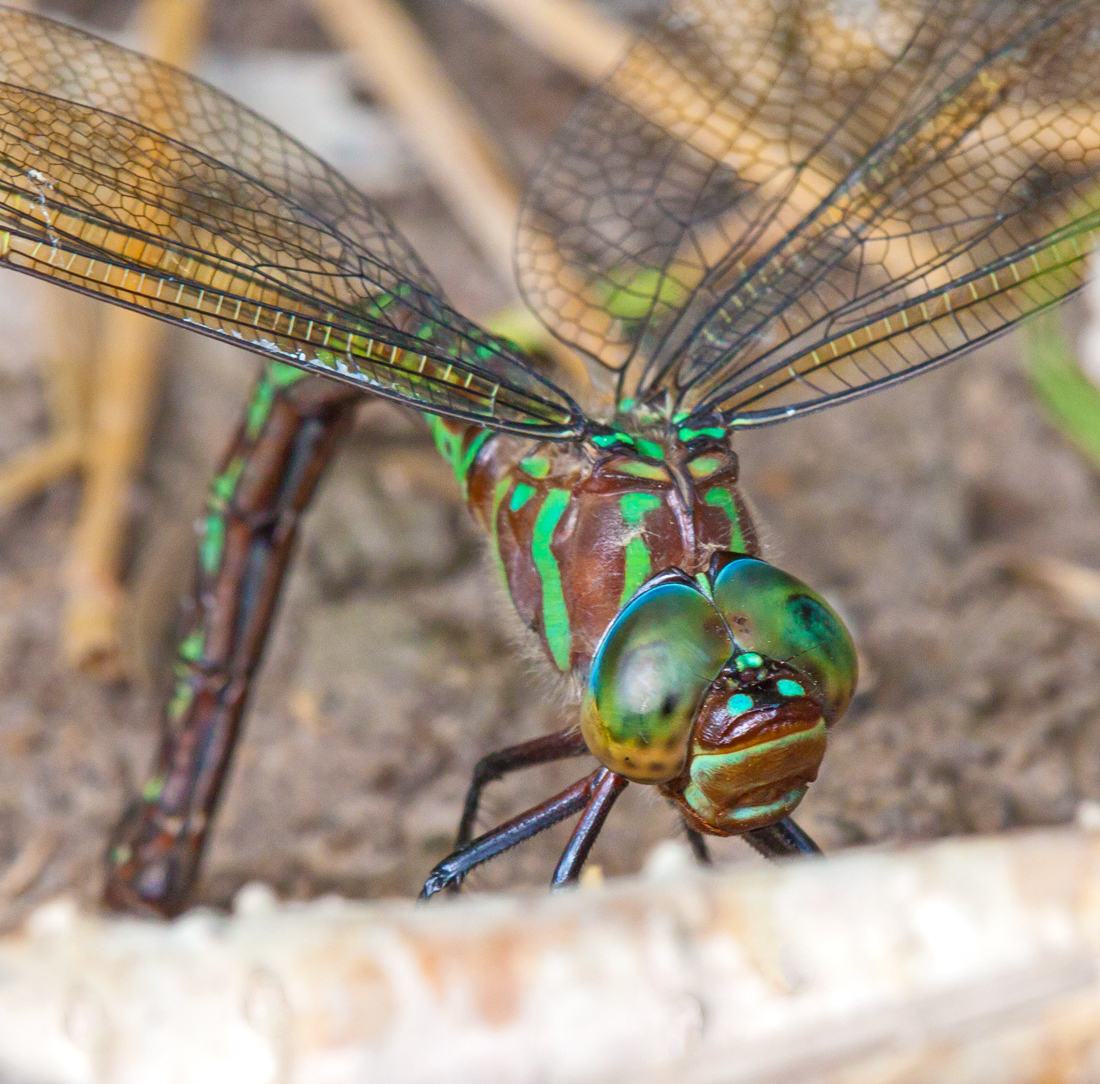
This might be the most beautiful dragonfly that I have ever photographed, a Swamp Darner (Epiaeschna heros) that I encountered yesterday at Huntley Meadows Park in Alexandria, Virginia. Swamp Darners have gorgeous colors, including incredibly striking blue eyes—be sure to click on the image to get a higher resolution view of the dragonfly.

© Michael Q. Powell. All rights reserved.
Posted in Art, Dragonflies, Insects, Macro Photography, Nature, Photography, Portraits, spring, wildlife | Tagged Alexandria VA, Canon 50D, dragonfly, Epiaeschna heros, Huntley Meadows Park, Swamp Darner, Swamp Darner dragonfly, Tamron 180mm macro lens | 7 Comments »
May 23, 2014 by Mike Powell
My breathing stopped for a moment on Monday when I first caught sight of the colors and patterns of this beautiful dragonfly, a species that I had never seen before. The dragonfly was flying around near a drainage area just off one of the main trails at my local marshland park. Fortunately for me, the dragonfly landed and I was able to move in pretty close to investigate.
This dragonfly reminded me a little of a Halloween Pennant dragonfly (Celithemis eponina), a gorgeous species with orange veins and brown patches on its wings, but I was pretty certain that this was a different kind of dragonfly. (For comparison, check out my posting on the Halloween Pennant from August 2012 with one of the best photos that I have taken of any dragonfly.)
I am no expert on dragonfly identification, but the wing pattern here is distinctive and I have concluded that this is probably a Painted Skimmer dragonfly (Libellula semifasciata). Not long ago, a friend introduced me to a wonderful resource for dragonflies in my area, a website on Dragonflies of Northern Virginia that is run by Kevin Munroe, the manager of Huntley Meadows Park, the marsh where I take many of my nature photographs, including this one. Here is a link to the portion of that website that covers the Painted Skimmer, including identification features and other fascinating bits of information.
As I maneuvered around composing this shot, I realized how tricky it is to get the proper depth of field for a dragonfly, especially if I want to have the face visible. In this case, the two wings closest to the camera are in focus and the wings farther away are out of focus, along with the background.

© Michael Q. Powell. All rights reserved.
Posted in Art, Dragonflies, Insects, Macro Photography, Nature, Photography, Portraits, spring, wildlife | Tagged Alexandria VA, Canon 50D, dragonfly, Huntley Meadows Park, Libellula semifasciata, Painted Skimmer, Painted Skimmer dragonfly, Tamron 180mm macro lens | 6 Comments »
May 22, 2014 by Mike Powell
I chased this little orange butterfly through the woods for quite some time this past weekend in an effort to get my first butterfly image of the season, a Pearl Crescent butterfly (Phyciodes tharos). It may not be as big and brightly colored as some of the butterflies that I may encounter later in the season, but I find a real beauty in its minimal color palette and intricate design.

© Michael Q. Powell. All rights reserved.
Posted in Butterflies, Insects, Macro Photography, Nature, Photography, wildlife | Tagged Alexandria VA, butterfly, Canon 50D, Huntley Meadows Park, pearl crescent butterfly, Phyciodes tharos, Tamron 180mm macro lens | 9 Comments »
May 21, 2014 by Mike Powell
How does a jumping spider, a spider that does not build a web, manage to capture a dragonfly? I don’t know how this Bold Jumping Spider (Phidippus audax) snagged an Eastern Pondhawk dragonfly (Erythemis simplicicollis), but I came upon the two of them after the capture had been completed and managed to snap a series of photographs of the action.
I am still working on the images and plan to do a longer posting, but wanted to give you a sneak preview.


© Michael Q. Powell. All rights reserved.
Posted in Arachnids, Dragonflies, Insects, Macro Photography, Nature, Photography, spring, wildlife | Tagged Alexandria VA, Bold Jumping spider, Canon 50D, dragonfly, Eastern Pondhawk, Eastern Pondhawk dragonfly, Erythemis simplicicollis, Huntley Meadows Park, jumping spider, Phidippus audax, spider | 13 Comments »
May 20, 2014 by Mike Powell
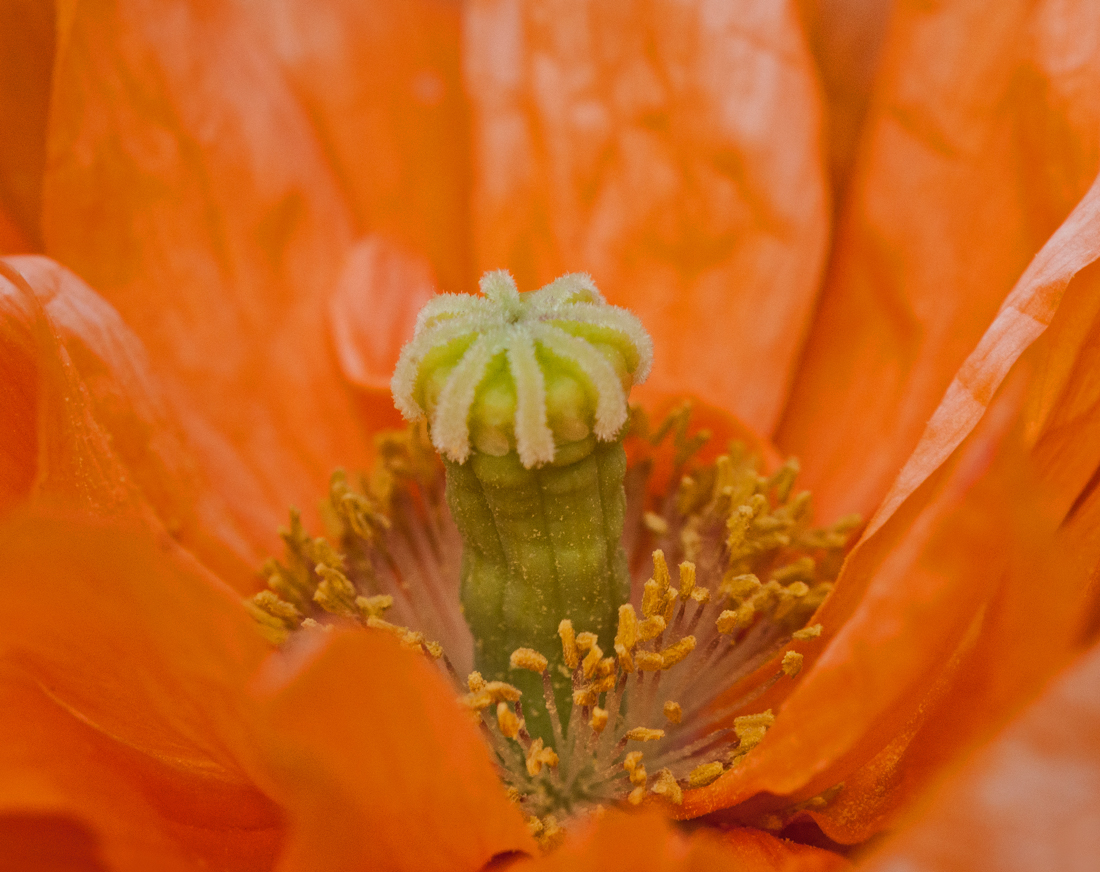
There is something about orange poppies that really draws my attention. Maybe it’s their bright color or maybe it’s the unusual looking central column topped by a star. I remember being mesmerized by their beauty last year and I felt the same when they reappeared this year. Roses are nice, but this flower attracts me even more.


© Michael Q. Powell. All rights reserved.
Posted in Art, Flowers, Gardening, Macro Photography, Nature, Photography, spring | Tagged Alexandria VA, Canon 50D, green spring gardens, orange poppy, poppy, Tamron | 5 Comments »
May 19, 2014 by Mike Powell
During a short visit to Green Spring Gardens this past weekend, I was thrilled to see that one of my favorite flowers is starting to bloom, Love-in-a-mist (Nigella damascena). I smile at its name and marvel at its delicate beauty.

© Michael Q. Powell. All rights reserved.
Posted in Art, Flowers, Gardening, Macro Photography, Nature, Photography, spring | Tagged Alexandria VA, Canon 50D, green spring gardens, love, Love-in-a-mist, Nigella damascena, Tamron 180mm macro lens | 8 Comments »
May 18, 2014 by Mike Powell
Whether you call it a ladybug or ladybird or lady beetle, everyone enjoys seeing these brightly colored members of the Coccinellidae family. Little kids love them, gardeners like the fact that they consume aphids, and there is something cute and cheery about their appearance.
My good friend and fellow photographer Cindy Dyer spotted this ladybug during a quick trip that we made to Green Spring Gardens, a county-run historical garden not far from where I live. Cindy has already posted images on her blog of some of the many flowers in bloom that we observed yesterday—I got sidetracked by searching for insects and didn’t get as many flower photos.
Later in the year, I will almost certainly see lots of ladybugs, but this was the first one of the spring, so it is special for me.

© Michael Q. Powell. All rights reserved.
Posted in Bugs, Flowers, Gardening, Insects, Macro Photography, Nature, Photography, Portraits | Tagged Alexandria VA, Coccinellidae, green spring gardens, lady beetle, ladybird, ladybug | 17 Comments »
May 17, 2014 by Mike Powell
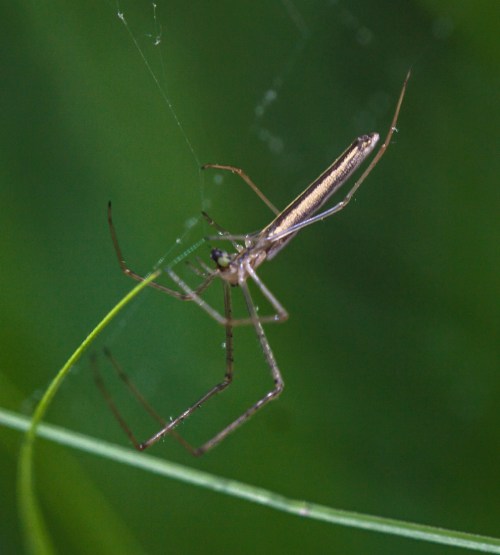
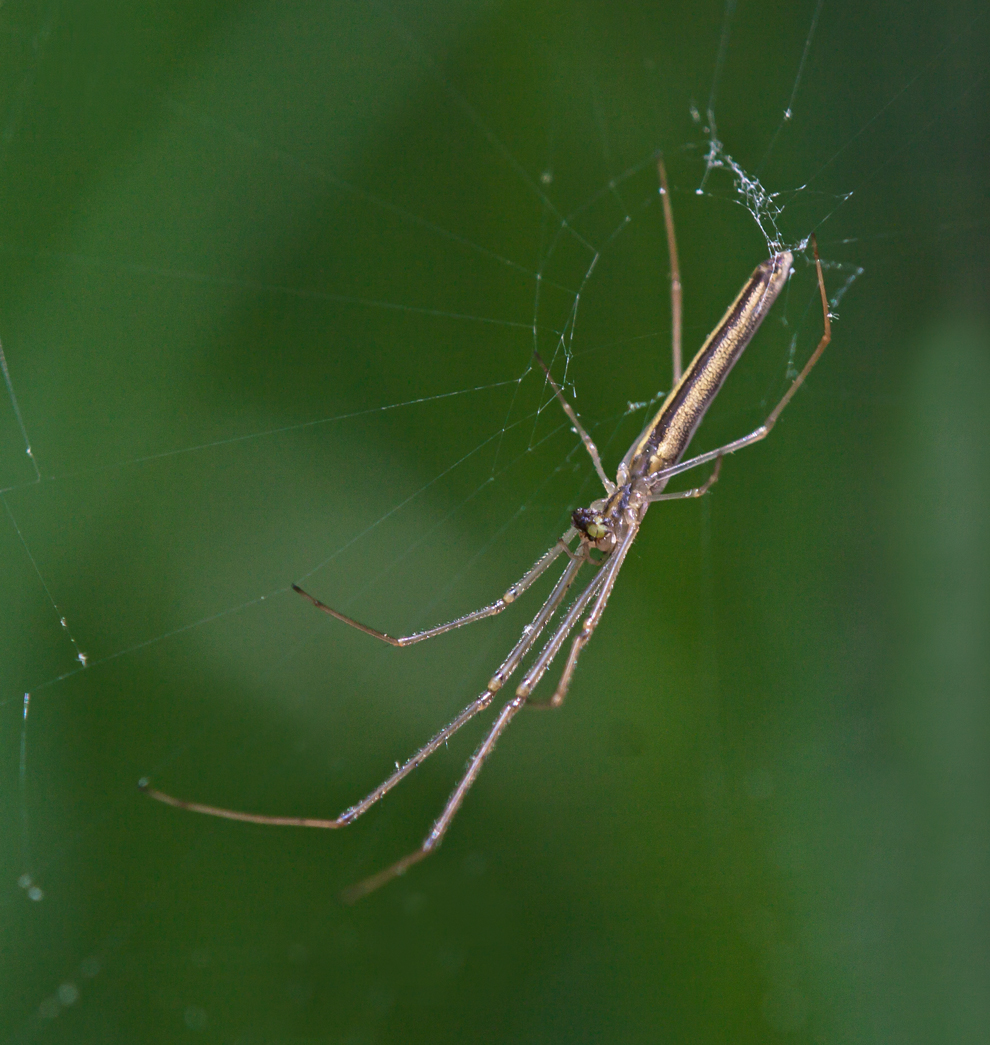
When you think of a spider, what kind of body do you imagine? I realize that most people don’t even want to think about spiders—they find them to be creepy and frightening. For some of us, though, spiders are beautiful creatures with some amazing features.
Still, I don’t usually think of a spider as having a long, thin body, and most don’t. Last week I encountered one that had such a body, which I think is a kind of long-jawed spider from the Tetragnathidae family. In addition to the elongated bodies, these spiders have legs of varying lengths, with the front pair appearing to be really long.
Spiders apparently come in all sizes and shapes. Who knows what new ones I’ll see in the coming months?

© Michael Q. Powell. All rights reserved.
Posted in Arachnids, Macro Photography, Nature, Photography, spring | Tagged Alexandria VA, Canon 50D, family Tetragnathidae, Huntley Meadows Park, Long-jawed Orb Weaver, Long-jawed Orb Weaver spider, long-jawed spider, spider, Tamron 180mm macro lens | 10 Comments »
May 16, 2014 by Mike Powell
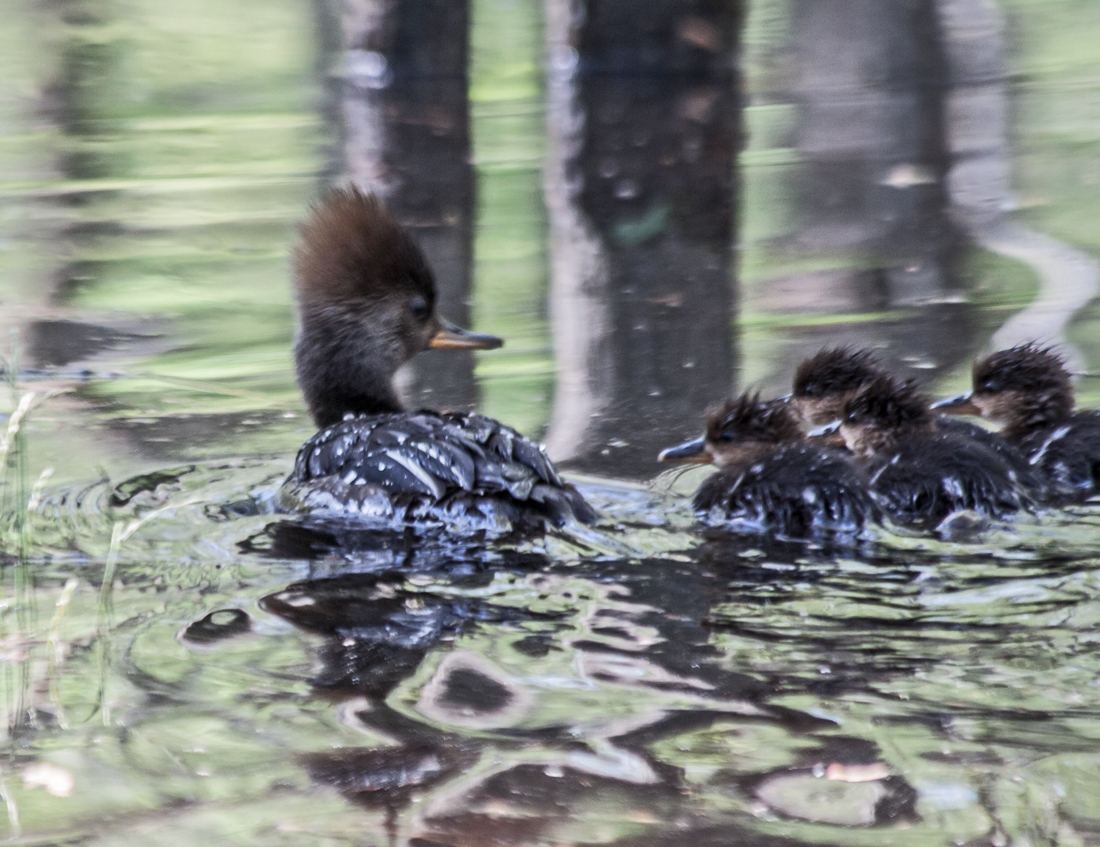
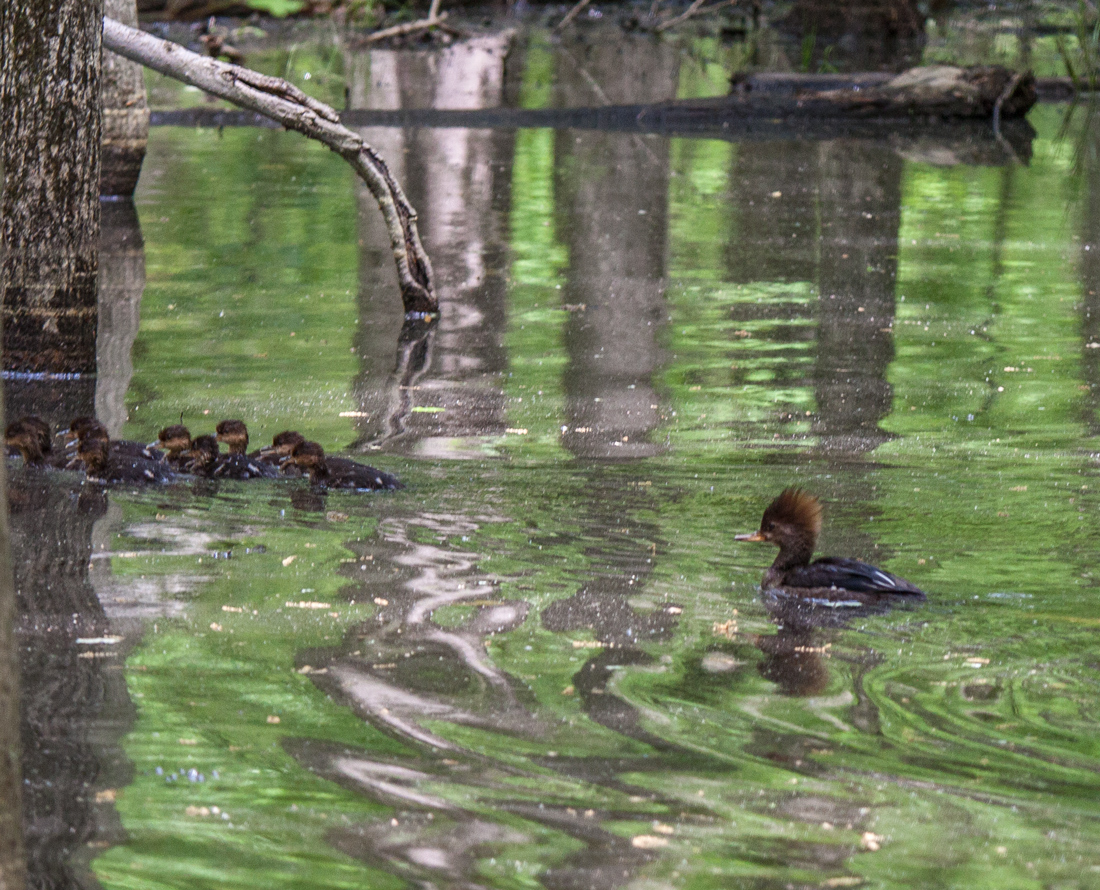
Several weeks after I first spotted a family of Hooded Merganser ducks (Lophodytes cucullatus) at my local marsh, I continue run into this single mother and her adorable ducklings. (Click here to see the original posting.)
The ducks seem to hang out a lot in one flooded, shady area of the marsh that is relatively shallow and doesn’t seem to have the snapping turtles that plagued similar families last year. The light is limited and the ducks start moving as soon as they sense my presence, so getting photos has been a challenge. Here’s a selection of some of my favorite shots to date of this cute little family.

Mama duck gives a reminder to the ducklings to stay together and follow her.

Trying to move out, but some of the ducklings want to look back toward me.

Mama duck takes up a rear position to ensure there are no stragglers.
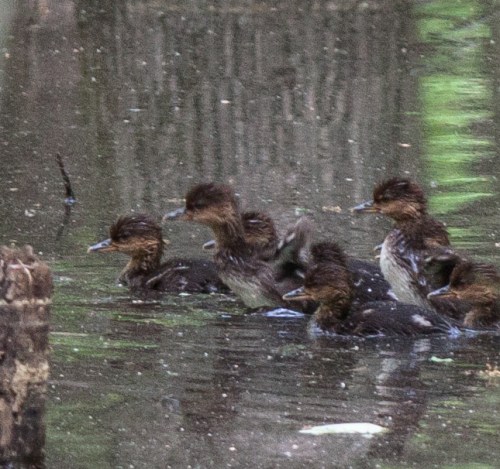
Grainy close-up shot that shows some of the personality of the ducklings.
© Michael Q. Powell. All rights reserved.
Posted in Art, Birds, Nature, Photography, spring, wildlife | Tagged Alexandria VA, Canon 50D, Canon 70-300mm telephoto zoom lens, ducklings, Hooded Merganser, Hooded Merganser ducks, Huntley Meadows Park, Lophodytes cucullatus, Mama duck | 8 Comments »
May 15, 2014 by Mike Powell
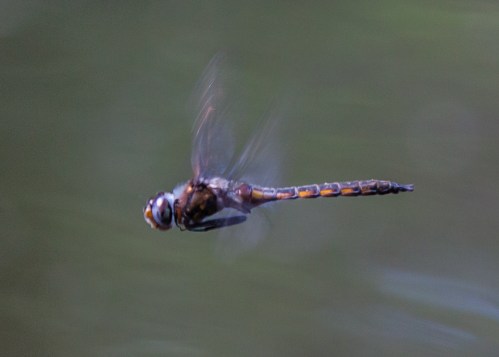
Do you want to learn patience? If so, try photographing dragonflies in flight, those speedy little flyers that patrol the edge of a pond without ever seeming to need a rest.
Several readers commented that I must have lots of patience after they saw the photos of dragonflies and damselflies that I recently posted. Comparatively speaking, however, it is a whole lot easier to photograph these insects when they are perched on a stationary object than when they are in constant motion.
My fellow blogger and photographer, Walter Sanford, a true dragonfly stalker, emphasized to me recently that many of the early spring dragonflies are found only in limited locations for very short periods of time. (Check out his blog for lots of wonderful shots of dragonflies and other wildlife creatures.) I decided to return to Hidden Pond Nature Center, a county-run park in Springfield, Virginia that is only a few miles from where I live. Last year I spotted a few common dragonflies there, and it seemed to be a good place to broaden my search for spring dragonflies.
Sure enough, I caught sight of a few dragonflies, flying low over the surface of the small pond. They seemed to have fairly well defined patrol areas and tended to move about in large, lazy circles. I tried tracking several of them using my camera’s autofocus, but that proved to be impossible, so I switched to manual focusing, which was merely difficult.
I took a few breaks to get some shots of the more cooperative damselflies, but persisted in my quixotic efforts to capture the dragonflies in flight. Over the course of a couple of hours, I managed to fewer than a dozen images that are more or less in focus. I think that my subjects for this shoot might be Common Baskettail dragonflies (Epitheca cynosura), but I’m not very confident in that identification.
My adventures with dragonflies (and wildlife photography in general) continue teach important lessons about the value of patience and persistence.




© Michael Q. Powell. All rights reserved.
Posted in Dragonflies, Insects, Macro Photography, Nature, Photography, Portraits, spring, wildlife | Tagged Canon 50D, Common Baskettail, Common Baskettail dragonfly, dragonflies, dragonfly in flight, Epitheca cynosura, Hidden Pond Nature Center, patience, Springfield VA, Tamron 180mm macro lens | 11 Comments »
May 14, 2014 by Mike Powell
Although I wake up to the sound of birds loudly chirping at this time of the year, it is getting increasingly difficult to see most of them as the trees regain their thick covering of leaves. The male Red-winged Blackbird (Agelaius phoeniceus) is a notable exception, because he does not hide behind the foliage. Instead, he seems to choose the highest point in the open from which to boldly make his loud calls—there is not timidity or shyness in this bird.
The blackbird puts so much energy into his “singing” that at times his perch becomes precarious. I captured this blackbird in one such moment, when his position seems so awkward and distorted that looks like a cartoon to me.

© Michael Q. Powell. All rights reserved.
Posted in Art, Birds, Humor, Nature, Photography, Portraits, spring, wildlife | Tagged Agelaius phoeniceus, Alexandria VA, blackbird, Canon 50D, Canon 70-300mm telephoto zoom lens, Huntley Meadows Park, red-winged blackbird | 10 Comments »
May 13, 2014 by Mike Powell
As we move deeper into spring, dragonfly nymphs are emerging from the water and starting their transformed lives as acrobatic flyers. This past weekend I spotted some young male Common Whitetail dragonflies (Plathemis lydia) in different stages of development.
Not surprisingly, adult male Common Whitetail dragonflies have white tails—it seems like most species are named after the characteristics of the male. Check out one of my postings from last year to see what a mature adult male looks like. When they first emerge, however, the males have the same body colors and patterns as the females. Fortunately, it’s easy to tell them apart, because the wing patterns are different in the male and female whitetails. (For more information about these dragonflies, take a look at the pages at bugguide.net.)
The dragonfly in the first shot is well on his way to becoming an adult and was bold enough to be flying over the water. The one in the second shot is younger, and seemed to content to remain in the vegetation at a distance from the open water.
A “tween” male–the abdomen is beginning to turn blue, but the adolescent body pattern still shows
An immature male, with the body pattern of a female and the wing pattern of an adult male
© Michael Q. Powell. All rights reserved.
Posted in Art, Dragonflies, Insects, Macro Photography, Nature, Photography, Portraits, spring, wildlife | Tagged Alexandria VA, Canon 50D, Common Whitetail, Common Whitetail dragonfly, dragonfly, Huntley Meadows Park, immature, immature male dragonfly, Plathemis lydia, Tamron 180mm macro lens | 14 Comments »
May 12, 2014 by Mike Powell
I was on my hands and knees last Friday, trying to get a shot of a small wildflower growing on the forest floor, when a bee landed on the very flower on which I was focusing. What are the odds of that happening at the moment when my eye was glued to the viewfinder and I was focusing manually?
The flower was only about four inches (10 cm) tall, which gives you an idea of the low angle from which I was shooting. After a second or two on the first flower (shown in the second shot), the bee moved to an adjacent flower, and I took the image I presented first. It’s interesting to note the narrowness of the depth of field—in the first shot below, I managed to focus on the bee’s head, whereas in the second shot, the focus point was more on the center of its body. I like each of the images for somewhat different reasons, but I am still shocked that I managed to get them.
Sometimes it’s better to be lucky than skilled.


© Michael Q. Powell. All rights reserved
Posted in Art, Flowers, Gardening, Insects, Macro Photography, Nature, Photography, spring, wildlife | Tagged Alexandria VA, bee, Canon 50D, flower, Huntley Meadows Park, luck, skill, Tamron 180mm macro lens | 18 Comments »
May 11, 2014 by Mike Powell
This is the last image in my mini-series on insect eyes from this past Friday—a close-up of a beautiful little damselfly at Huntley Meadows Park, the local marshland where I take many of my nature photographs.
Photographing damselflies is particularly challenging for me, because they are so long and skinny (not to mention the fact that they are really small in size). About the only way to get their bodies completely in focus is to be absolutely perpendicular to them. When I took this image, I couldn’t get into the optimal position, thanks to a sharp, thorny bush, so the lower half of the body was out of focus. That is one of the reasons why I chose to crop this image as I did, though the main reason was to focus viewers’ attention on the eyes.
This image shows the wide separation of the damselfly’s eyes, which is one of the ways to tell them apart from dragonflies, the other members of the Odonata family. Dragonflies have eyes that are very close together or even touching each other.
If you missed the earlier postings on insect eyes, check out the images of a fly’s eyes and a dragonfly’s eyes. In all three cases, click on the images, if you want to get a higher resolution view of the insects’ beautiful eyes.

© Michael Q. Powell. All rights reserved
Posted in Art, Dragonflies, Insects, Macro Photography, Nature, Photography, Portraits, spring, wildlife | Tagged Alexandria VA, Canon 50D, damselfly, damselfly eyes, eyes, Huntley Meadows Park, odonata, Tamron 180mm macro lens | 8 Comments »
May 10, 2014 by Mike Powell
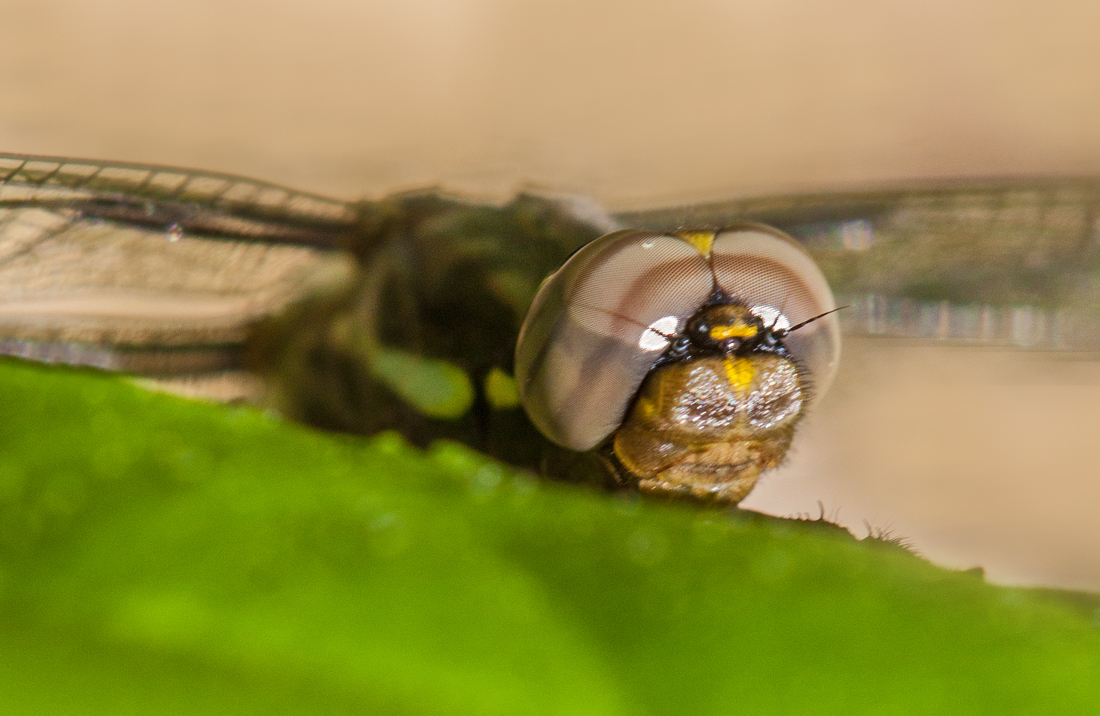
Yesterday, I seemed to be particularly fascinated by insect eyes and did a posting on a fly, whose compound eyes were pretty amazing. However, dragonflies have the largest compound eyes of any insect and I was thrilled to be able to capture this face-to-face shot of a Common Whitetail dragonfly (Plathemis lydia), peering right at me over the edge of a leaf.
A dragonfly’s eyes can have as many as 30,000 facets, known as ommatidia, that contain light-sensitive proteins, according to an article in ScienceBlogs. Although, humans also have these kind of proteins, called opsins, we have only three (red, green, and blue), whereas a dragonfly has four or five, giving it the capability to see colors beyond human visual capabilities. A dragonfly’s eyes also wrap around its head, giving it an incredible field of view. For more information and a more scientific explanation, check out a posting entitled “Super-predators” that Sue did last June in her Backyard Biology blog.
I took this shot in a wooded grassy area adjacent to a pond. It seems that the Common Whitetail dragonflies are hanging out there early in the season and not too many of them are patrolling over the water, as I commonly saw them do last summer. The fact that the dragonfly was not perched on a branch coming out of the water proved to and advantage as I was able to approach pretty closely to it in order to take this shot.

© Michael Q. Powell. All rights reserved
Posted in Art, Dragonflies, Insects, Macro Photography, Nature, Photography, Portraits, spring, wildlife | Tagged Alexandria VA, Canon 50D, Common Whitetail, Common Whitetail dragonfly, dragonfly, dragonfly eyes, Huntley Meadows Park, Plathemis lydia, Tamron 180mm macro lens | 11 Comments »
« Newer Posts - Older Posts »




















 Mike Powell