May 10, 2014 by Mike Powell
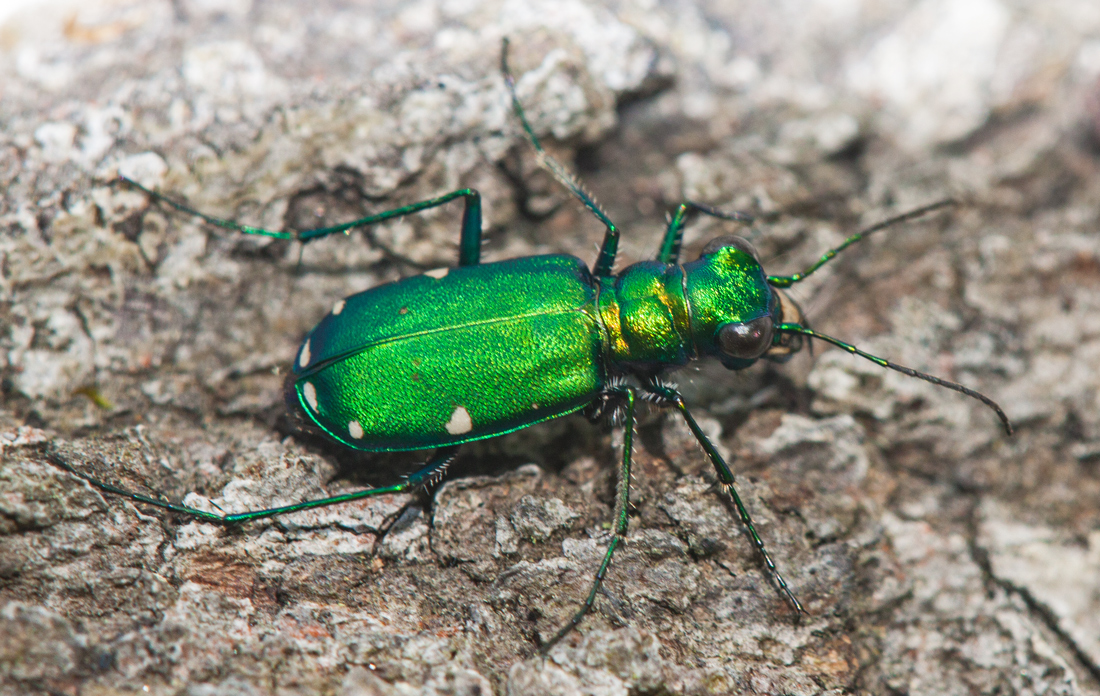
Some insects blend in so perfectly with their environments that they are difficult to spot. That is clearly not the case with this Six-spotted Tiger Beetle (Cicindela sexguttata) that I spotted yesterday at my local marsh.
The beetle’s metallic green body glistened in the sun and made it stand out against the bark of the fallen tree on which it was perched. It flew away several times when I got close to it, but kept returning, eventually remaining in place long enough for me to get this shot. Click on the image to get a higher resolution view of the beetle, including its textured body and multi-segment antennae.

© Michael Q. Powell. All rights reserved
Posted in Insects, Macro Photography, Nature, Photography, Portraits, spring, wildlife | Tagged Alexandria VA, beetle, Canon 50D, Cicindela sexguttata, Huntley Meadows Park, metallic green, Six-spotted Tiger Beetle, Tamron 180mm macro lens, Tiger Beetle | 12 Comments »
May 9, 2014 by Mike Powell
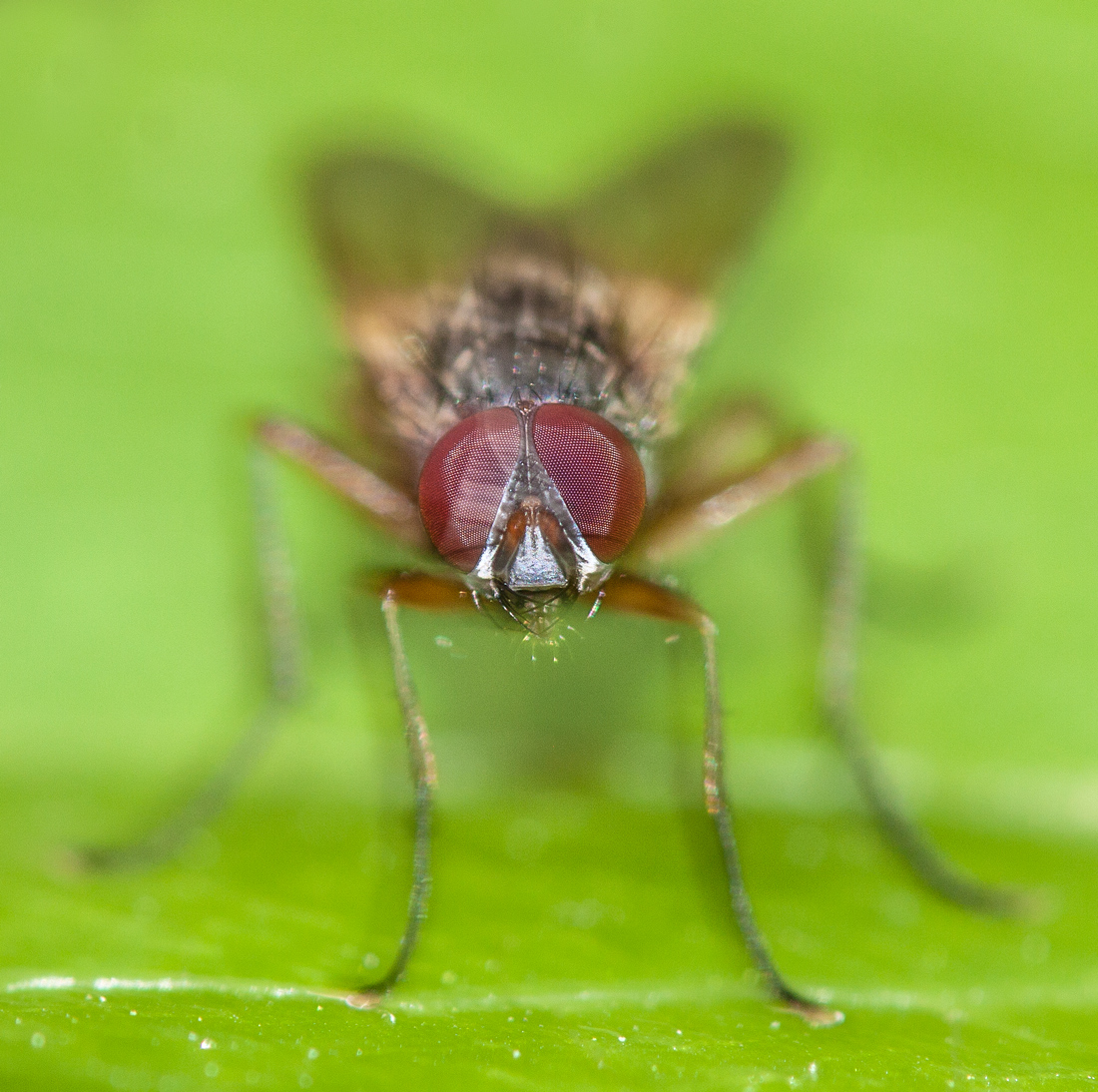
After a week in an urban setting with only a point-and-shoot, I couldn’t wait to get back to my marsh with my trusty Canon 50D in my hands. I kept my macro lens on my camera for most of the time, because the insects seemed much more active than they were only a week ago. Even flies seemed to be good subjects. I photographed this fly hand-held at really close range, which gave me a very narrow depth of field.
The first image is cropped, in order to give you a good look at the fly’s eyes—the second photo is the same image with a much less severe crop.


© Michael Q. Powell. All rights reserved
Posted in Insects, Macro Photography, Nature, Photography, spring | Tagged Alexandria VA, Canon 50D, close-up, fly, fly eyes, Huntley Meadows Park, Tamron 180mm macro lens | 16 Comments »
May 8, 2014 by Mike Powell
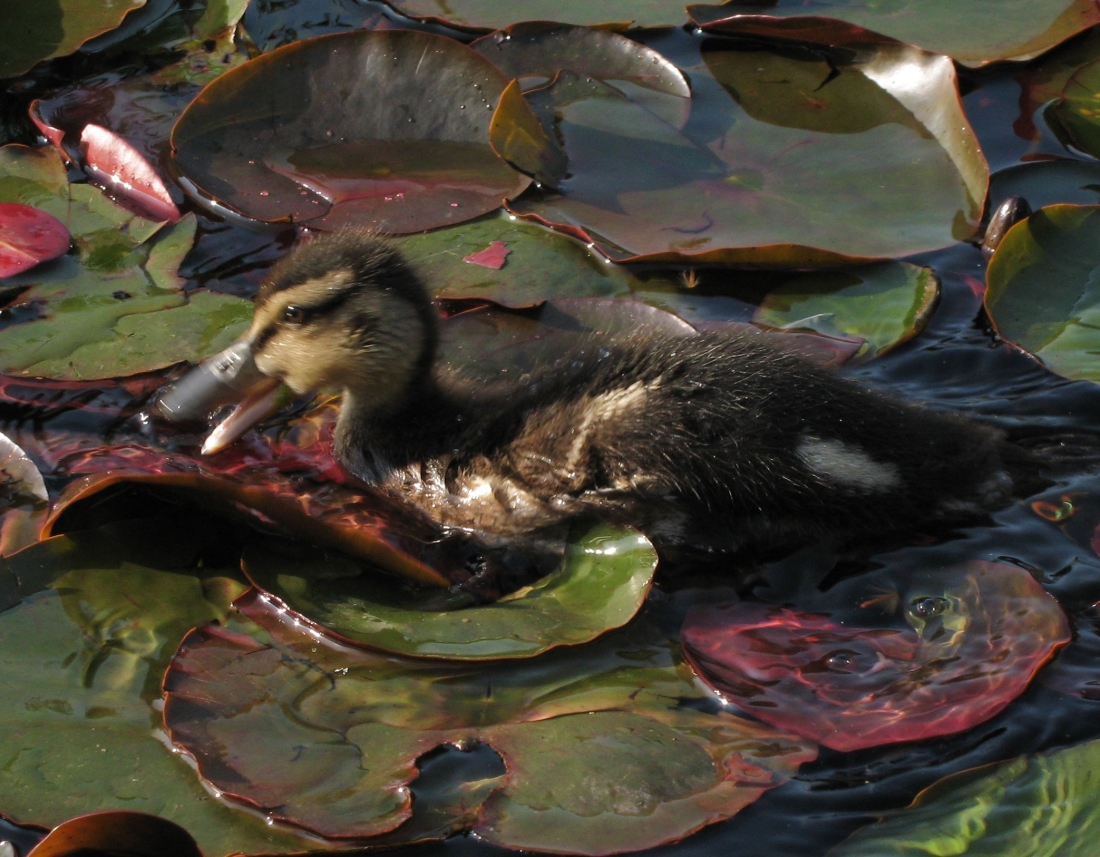
As I was walking through the Volksgarten in Vienna, I was a bit surprised to encounter three ducklings, living in a fountain along with two male adult Mallards. The city had constructed a ramp so that the ducks could enter and exit the fountain and a couple of plywood platforms, where the ducklings would rest and play.
Obviously there was a mother duck involved in giving birth to these ducklings, which were no longer babies, but I did not see her at all during any of my three visits to see the ducks.
Although I had only a point-and-shoot camera with a small zoom lens, the fountain limited the movement of the ducklings and I was able to move in close for some pretty good shots, which show the personality of the little ducklings.


© Michael Q. Powell. All rights reserved
Posted in Birds, Nature, Photography, spring, Travel, Urban, wildlife | Tagged Canon A620, ducklings, fountain, mallard duck, Vienna, Vienna Austria, Volksgarten | 11 Comments »
May 7, 2014 by Mike Powell
It would be somewhat of an understatement to say that my hotel in Vienna is quirky. The individual rooms are decorated with a circus motif; just above the entrance is a sign that boldly proclaims, “We are all mad here;” and the rooftop sign for the hotel announces that you should “come as you are.”
The 25 Hour Hotel in Vienna is obviously designed for a younger, more hip crowd, but I really enjoy the vibe of the hotel, even if I am outside the target demographic. Moreover, it is really conveniently located for the work I need to get done.
It’s hard to capture the feel of the hotel in a few photos, but I hope these images give you a sense of the experience that the 25 Hour Hotel provides—it’s a welcome change from the sense of faded glory that characterizes some of the older, more traditional Vienna hotels.

Headboard mural in my room

Large sign over hotel entrance

Hotel entrance

Rooftop hotel sign, “Come as you are.”
© Michael Q. Powell. All rights reserved
Posted in Humor, Photography, Travel, Urban | Tagged 25 Hours Hotel, Canon A620, come as you are, hotel, Vienna Austria, we are all mad here | 11 Comments »
May 6, 2014 by Mike Powell
Vienna can be a crowded city, overflowing with people much of the time, but early morning in the Volksgarten, I had my choice of seats—both the chairs and the benches were completely empty.


© Michael Q. Powell. All rights reserved
Posted in Landscape, Nature, Photography, spring, Travel, Urban | Tagged benches, Canon A620, chairs, park, Vienna, Vienna Austria, Volksgarten | 8 Comments »
May 5, 2014 by Mike Powell
I am back in Vienna, Austria for a short business trip and captured a few of the sights of this beautiful city on an early morning walk today as the city was coming to life.

Conservatory in Vienna

Vienna City Hall (Rathaus)

Athena statue outside Austrian Parliament Building

Statue in Volksgarten
© Michael Q. Powell. All rights reserved
Posted in Architecture, Art, Photography, spring, Travel, Urban | Tagged Athena Fountain, Austrian Parliament Building, Canon A620, conservatory, Rathaus, statue, Vienna, Vienna Austria | 5 Comments »
May 4, 2014 by Mike Powell
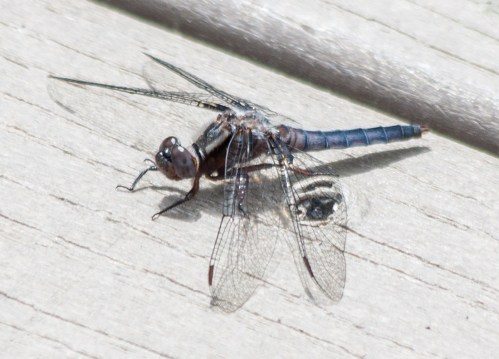
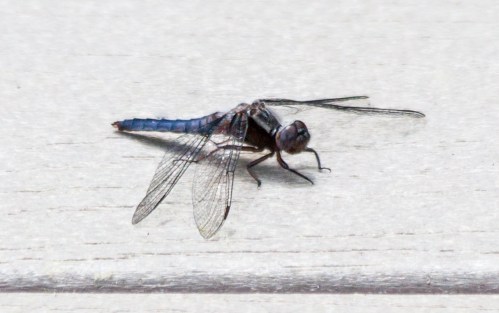
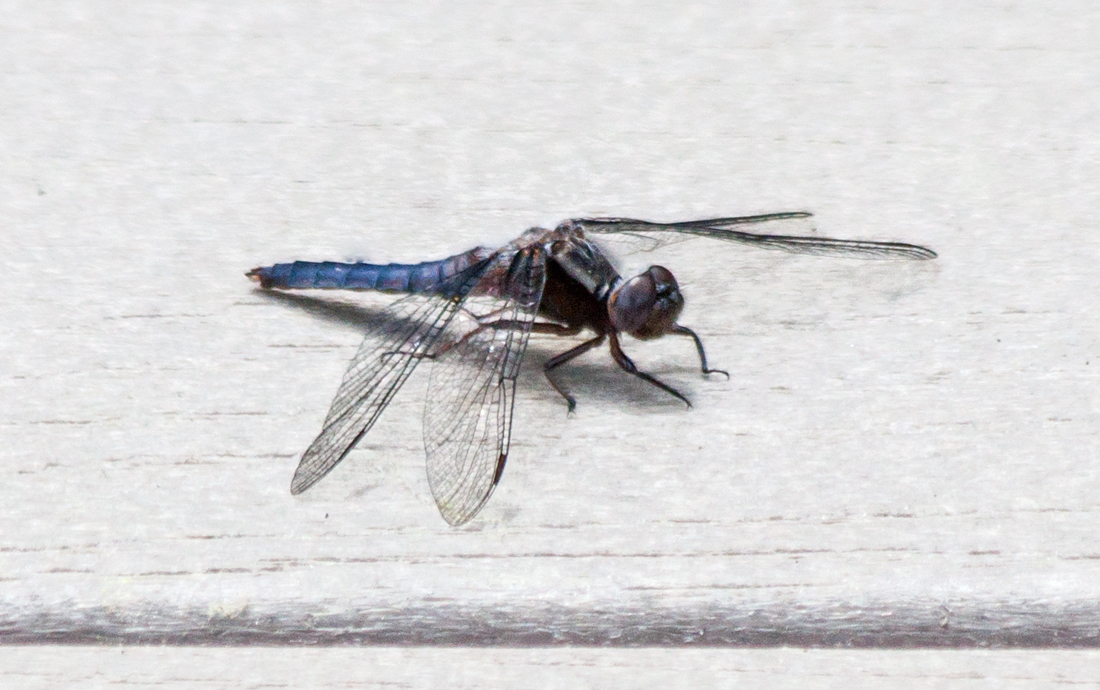
Some of the common species of dragonflies are around throughout much of the summer. Other dragonflies, sometimes referred to as “spring ephemeral” dragonflies, are around for only brief periods of time in the early spring, like this male Blue Corporal dragonfly (Ladona deplanata) that I spotted last week on the boardwalk at my local marsh.
I had never seen this species before, but fortunately my fellow blogger and local dragonfly expert, Walter Sanford, was able to assist me with the identification. Check out his blog to see some awesome shots of dragonflies and other nature subjects.
I would love to be able to photograph this species the next time in a more natural environment, but I am pretty excited any time I have the chance to get a recognizable photo of a new species.
© Michael Q. Powell. All rights reserved
Posted in Dragonflies, Insects, Macro Photography, Nature, Photography, spring, wildlife | Tagged Alexandria VA, Blue Corporal, Blue Corporal dragonfly, Canon 50D, Canon 70-300mm telephoto zoom lens, dragonfly, ephemeral spring dragonfly, Huntley Meadows Park, Ladona deplanata | 6 Comments »
May 3, 2014 by Mike Powell
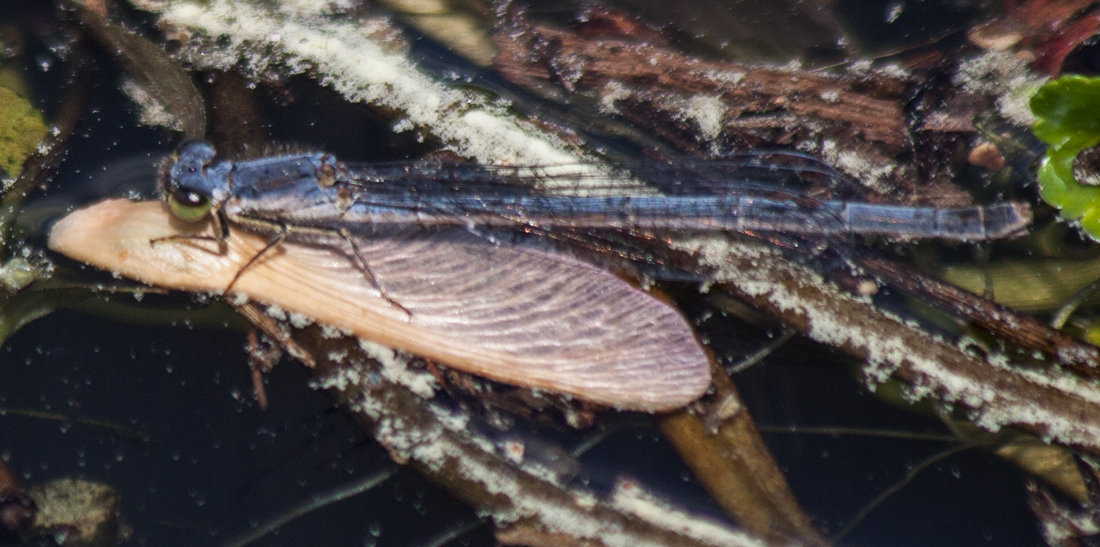
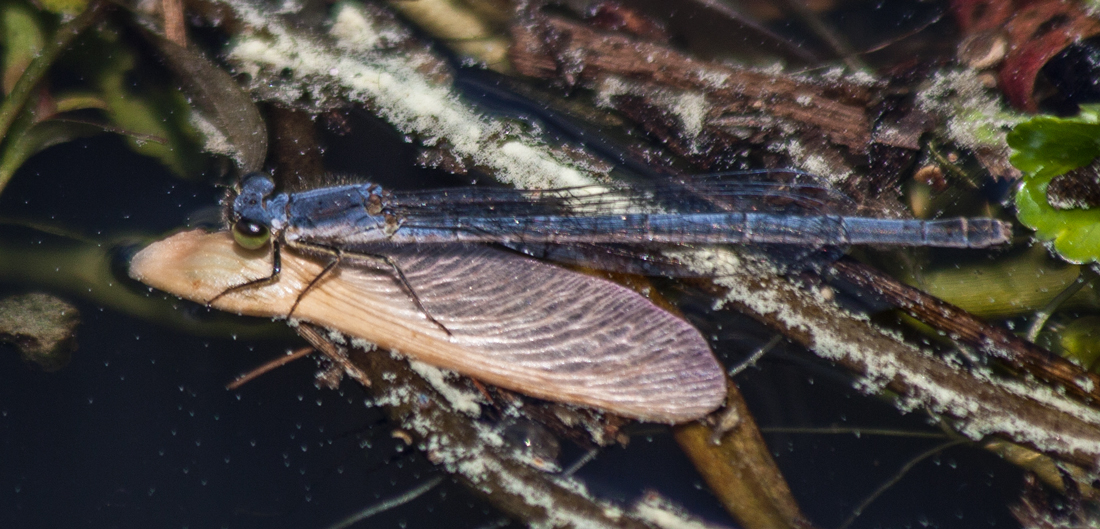
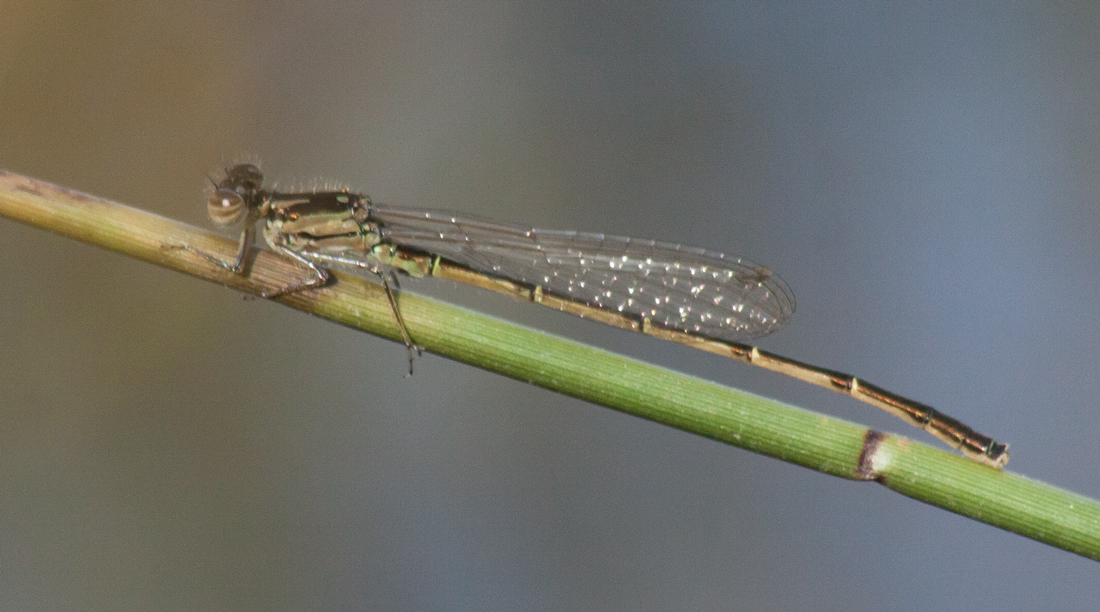
Most folks are familiar with dragonflies, but damselflies, the smaller members of the Odonata family, are equally impressive. I spotted this little beauty yesterday in the pond debris at Huntley Meadows Park, the local marshland area where I take many of my nature photographs.
I don’t know damselfly behavior very well, but noted that the very end of the damselfly’s tail is in different positions in this series of photos. In the first image, the tip is curved upward and then gradually returns to a more straight position in the final shot. Sometimes movements like this indicate that the damselfly could be laying eggs, but I haven’t been able to determine yet the gender or species of the damselfly. There seem to be a lot of different species of damselflies that are blue. (If I had to guess, I’d say that it looks like a female Eastern Forktail (Ischnura verticalis), because of the color, the forked end of the tail, and the two-tone eyes).
Although this looks like a macro shot (and the subject was really small), this is another case in which I was able to use my telephoto zoom lens to get macro-like results. Click on any of the photos to get a higher-resolution view of the damselfly and you may be surprised to see how many of the details the telephoto lens was able to capture.


© Michael Q. Powell. All rights reserved
Posted in Dragonflies, Macro Photography, Nature, Photography, Portraits, spring | Tagged Alexandria VA, blue damselfly, Canon 50D, Canon 70-300mm telephoto zoom lens, damselfly, damselfly in May, Eastern Forktail, Eastern Forktail damselfly, Huntley Meadows Park, Ischnura verticalis | 8 Comments »
May 2, 2014 by Mike Powell
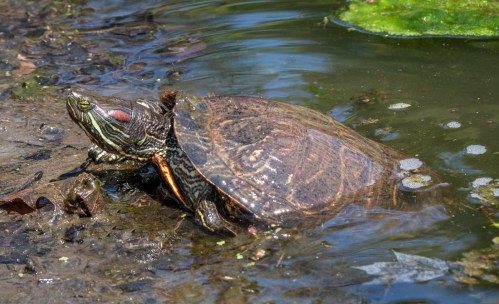
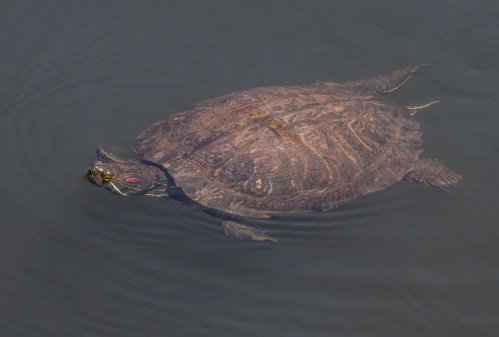
All of nature seems to be speeding up as we move deeper into spring. Even the turtles seem to be moving faster, like this Red-eared Slider (Trachemys scripta elegans) that I spotted recently at a county-run historical garden.
Initially the turtle was swimming around in a small pond (as shown in the second shot). I was pleased that I was able to capture a shot of the turtle as it was emerged from the water onto the shore.
I had my 180mm macro lens on my camera when I caught sight of the turtle and I was reminded of the need to zoom with my feet when using a lens with a fixed focal length. In my zeal to get a bit closer to the turtle, I narrowly avoided sliding down the bank into the water.
© Michael Q. Powell. All rights reserved
Posted in Nature, Photography, Portraits, Reptiles, spring, wildlife | Tagged Alexandria VA, Canon 50D, green spring gardens, red-eared slider, red-eared slider turtle, Tamron 180mm macro lens, Tracem, Trachemys scripta elegans), turtle | 8 Comments »
May 2, 2014 by Mike Powell
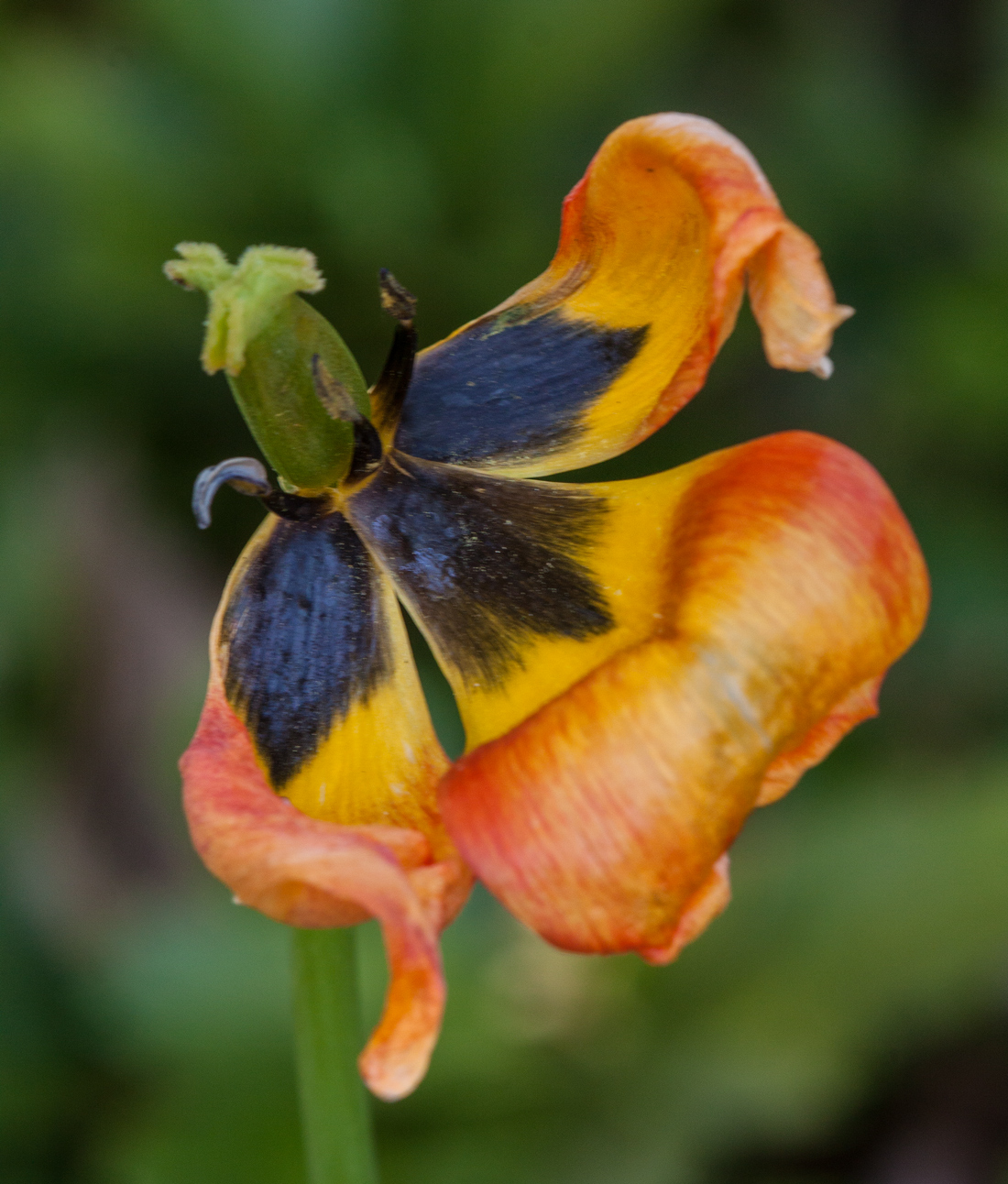
Do you pass by flowers that are past their prime? Their beauty is still visible in the fragments of their former glory.

© Michael Q. Powell. All rights reserved
Posted in Art, Flowers, Gardening, Macro Photography, Nature, Photography, spring | Tagged Alexandria VA, beauty, Canon 50D, faded glory, Runnymeade, Tamron 180mm macro lens, tulip | 1 Comment »
May 1, 2014 by Mike Powell
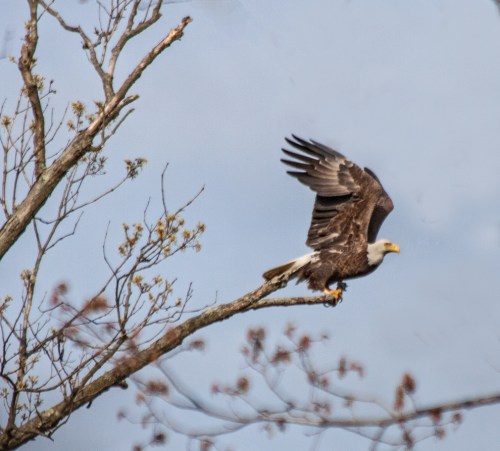
Some subjects are so awe-inspiring that I get excited just seeing them, even if they are too far away for a good photo—like this Bald Eagle (Haliaeetus leucocephalus) that I saw Monday at my local marsh. The eagle seemed to sense my presence and took off before I could get closer, but I managed to capture an image of its final preparations for takeoff from the branch.
 When I am walking through the woods at this time of the year, I have to keep my eyes in constant motion. Leaves are still sparse enough on the trees that I am still able to spot some birds in the trees. However, insects are starting to appear too, so I have to scan the leaves and branches on the ground for these little creatures.
On early Monday morning, as I looked through a break in the trees, I caught sight of a large bird in the distance, sitting on the end of a branch. I immediately stopped, having learned from experience that even a single step forward would be likely to spook the bird. The light was not great, but the shape suggested to me that it was probably a bald eagle.
The eagle looked around for a few seconds and then took off. At that moment, I was absolutely certain that it was a bald eagle. I was not so certain that I had captured any useable images, but I was content just to have experienced the sight of that majestic bird in flight.

© Michael Q. Powell. All rights reserved
Posted in Birds, Inspiration, Nature, spring, wildlife | Tagged Alexandria VA, Bald Eagle, Canon 50D, Canon 70-300mm telephoto zoom lens, eagle, Haliaeetus leucocephalus, Huntley Meadows Park, takeoff | 4 Comments »
April 30, 2014 by Mike Powell
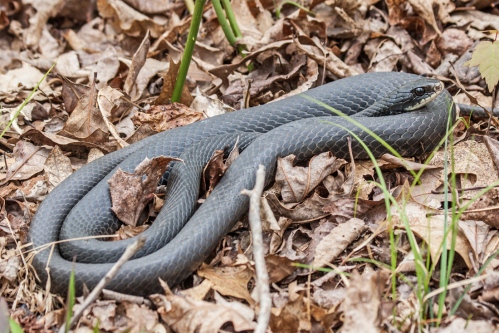
What’s your first reaction when you see a snake? I was walking through the woods at my local marsh this past weekend when I spotted a snake curled up on the leaves. My first reaction was to move closer to get a shot of the snake.
The area was relatively open, but there were lots of leaves and sticks on the forest floor, so it was not really possible to get an unobstructed shot of the snake. I took a shot anyways, fearing the snake would leave, and include it as a second image here so you can see how the snake was positioned. I noticed that the snake’s head was in an uncluttered area and a clear shot seemed possible. I changed lenses from my telephoto zoom to my macro lens, set up my tripod as low as it would go, and moved really close, until the snake’s head almost filled the frame of my viewfinder. I took some shots in natural light and some with my popup flash. The snake seemed unbothered by my actions until I inadvertently moved a small branch when adjusting my position on ground and he slithered away.
When I looked at the images on my computer, I was struck by the degree to which my reflection is visible in the snake’s eye. If you click on the first photo, you’ll get a higher resolution view that shows me taking the shot (with flash this time).
I am not sure what kind of snake this is, but it looks a bit like a Northern Black Racer snake (Coluber constrictor constrictor) as described on the webpage of the Virginia Herpetological Society. I’d welcome a confirmation or correction of my identification from anyone with more experience with snakes.

© Michael Q. Powell. All rights reserved
Posted in Macro Photography, Nature, Photography, Portraits, Reptiles, spring | Tagged Alexandria VA, Canon 50D, Canon 70-300mm telephoto zoom lens, Coluber constrictor constrictor, Huntley Meadows Park, Northern Black Racer snake, reflection, snake, snake's eye, Tamron 180mm macro lens | 24 Comments »
April 29, 2014 by Mike Powell
Memories of this past winter’s unusually heavy snowfall are beginning to fade, but were revived when I saw these beautiful little Snowflakes during a recent visit to Lewis Ginter Botanical Garden in Richmond, VA.
There are two varieties of Snowflakes—the Spring Snowflake (Leucojum vernum) and the Summer Snowflake (Leucojum aestivum)—and I am not absolutely certain which variety I photographed.
I love the simple beauty of this delicate flower and am happy that I was able to isolate a couple of the blooms to showcase that beauty.


© Michael Q. Powell. All rights reserved
Posted in Art, Flowers, Gardening, Macro Photography, Nature, Photography, spring | Tagged Canon 50D, Leucojum aestivum, Leucojum vernum, Lewis Ginter Botanical Garden, Richmond VA, snowflakes, Spring Snowflake, Summer Snowflake, Tamron 180mm macro lens | 14 Comments »
April 28, 2014 by Mike Powell
Tree Swallows have been flying about for several weeks, but it was only this weekend that I finally observed one of their multi-colored brethren, the Barn Swallow (Hirundo rustica). Last year, the Barn Swallows built a nest underneath a raised observation platform of the boardwalk at my local marsh, and it looks like they are doing the same thing this year.
I was able to photograph this swallow as it perched on a small branch coming out of the water directly opposite the platform. The sky was mostly overcast during the day, which caused the reflections in the water to look mostly white. As I made a few adjustments to the image, the background essentially disappeared, resulting in a photo that looks almost like it was shot in a studio.
I really like the swallow’s serious pose and the fact that I was able to capture its signature swallow tail. It won’t be long before I see swallowtails on some of my favorite butterflies.

© Michael Q. Powell. All rights reserved
Posted in Art, Birds, Nature, Photography, Portraits, spring, wildlife | Tagged Alexandria VA, Barn Swallow, Canon 50D, Canon 70-300mm telephoto zoom lens, Hirundo rustica, Huntley Meadows Park, swallow | 10 Comments »
April 27, 2014 by Mike Powell
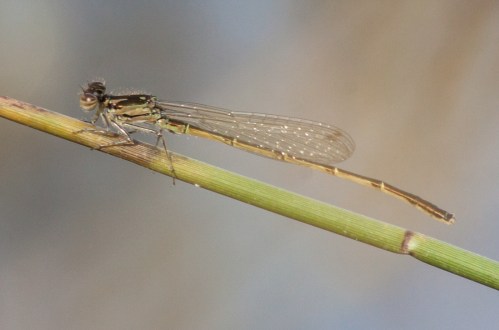
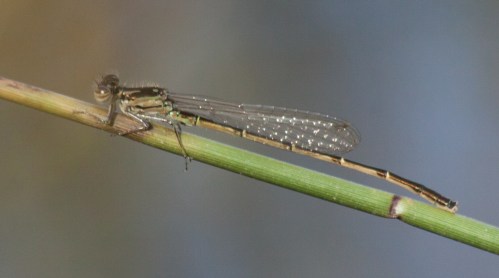
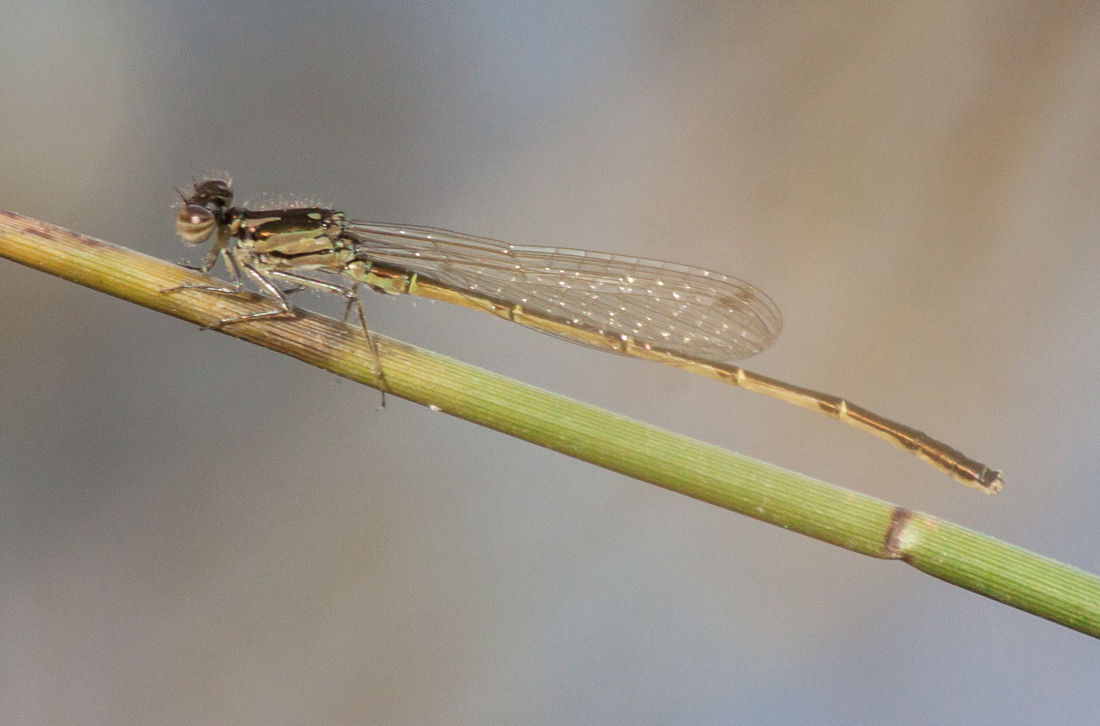
Damselflies are beautiful, delicate insects that are often hard to see and photograph. I captured this image of my first damselfly of the year at Huntley Meadows Park this past Friday. I am not very good at identifying these tiny insects, but think this might be a Fragile Forktail (Ischnura posita).
I was standing my the edge of my favorite beaver pond when I saw the damselfly in flight. I followed it with my eyes and was delighted when it landed on a nearby stalk of grass. I didn’t have a lot of maneuver, because much of the area at the pond’s edge is covered with thorny bushes, and I had to pull back a bit to get within the minimum focusing distance of my 70-300mm telephoto lens , i.e. 4.9 feet (1.5 meters). At that range, the dragonfly filled a reasonable amount of the frame.
Lighting was a bit of a challenge and I tried a couple of different settings as the damselfly lifted its tail from time to time. Eventually, it climbed to the end of the stalk and I changed position too and tried a couple of shots (including the final shot) using my pop-up flash.
Most of the time the first shot below is my favorite, but sometimes I like the others as well or more. In any case, I am happy that I was able to get some good shots of my first damselfly of the spring.

© Michael Q. Powell. All rights reserved
Posted in Art, Dragonflies, Insects, Macro Photography, Nature, Photography, Portraits, spring, wildlife | Tagged Alexandria VA, Canon 50D, Canon 70-300mm telephoto zoom lens, damselfly, Fragile Forktail, Huntley Meadows Park, Ischnura posita, spring | 12 Comments »
April 26, 2014 by Mike Powell
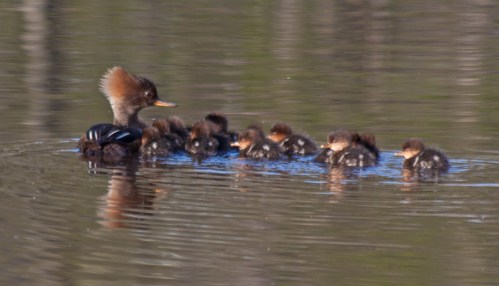
Female Hooded Merganser ducks (Lophodytes cucullatus) raise their ducklings as single Moms, which must be pretty tough when you have so many offspring to look after. According to the Cornell Lab of Ornithology, the male Hooded Merganser duck abandons his mate once she begins incubating eggs and it’s not known if they reunite the following season.
Last year, when the level of water at my local marsh was pretty low and there seemed to be lots of snapping turtles, most of the ducklings did not survive. After a lot of construction at the marsh, water levels are higher and I am hoping that things will be a little easier on the duck families.
I don’t know how old these ducklings are, but they appear to be tiny—even adult Hooded Mergansers are pretty small. A family of Hooded Mergansers was spotted earlier this week and I suspect that this is the same one, so they may be a week or so old.
I was not able to get very close to the ducks and the conscientious Mama duck started swimming away as soon as she sensed my presence early yesterday morning. You can see details in the first two shots, which are cropped a fair amount, but I included a final shot, which shows more of the setting, because I love the beautiful ripples in the water.


© Michael Q. Powell. All rights reserved
Posted in Birds, Nature, Photography, Portraits, spring, wildlife | Tagged Alexandria VA, Canon 50D, Canon 70-300mm telephoto zoom lens, ducklings, Hooded Merganser, Hooded Merganser duck, Huntley Meadows Park, Lophodytes cucullatus, Mama duck, single mother duck | 6 Comments »
April 25, 2014 by Mike Powell
Within minutes of seeing the elegant honey bee that I featured in a recent posting, I encountered this Eastern carpenter bee (Xylocopa virginica), which is built more like a sumo wrestler than a dancer, especially when viewed face-to-face, as in the second image below.


© Michael Q. Powell. All rights reserved
Posted in Art, Flowers, Gardening, Insects, Macro Photography, Nature, Photography, spring | Tagged bee, Canon 50D, carpenter bee, Eastern Carpenter Bee, Lewis Ginter Botanical Garden, Richmond VA, Tamron 180mm macro lens, Xylocopa virginica | 9 Comments »
April 24, 2014 by Mike Powell
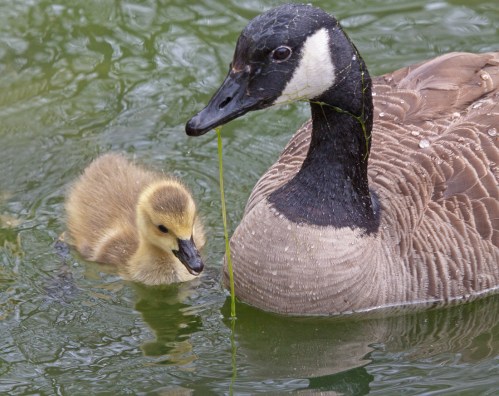
Folks may have mixed emotions about adult Canada Geese (Branta canadensis) and many consider them a nuisance, but I think that just about everyone agrees that goslings are really cute.

© Michael Q. Powell. All rights reserved
Posted in Birds, Nature, Photography, Portraits, spring, wildlife | Tagged baby goose, Branta canadensis, Canada Goose, Canon 50D, cute, gosling, Lewis Ginter Botanical Garden, Richmond VA, Tamron 180mm macro lens | 8 Comments »
April 23, 2014 by Mike Powell
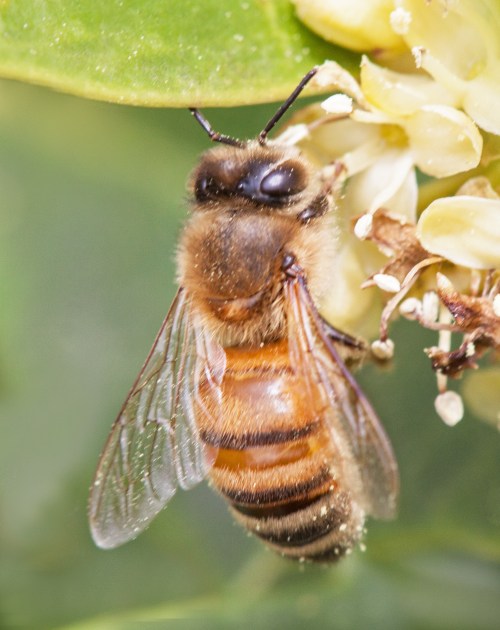
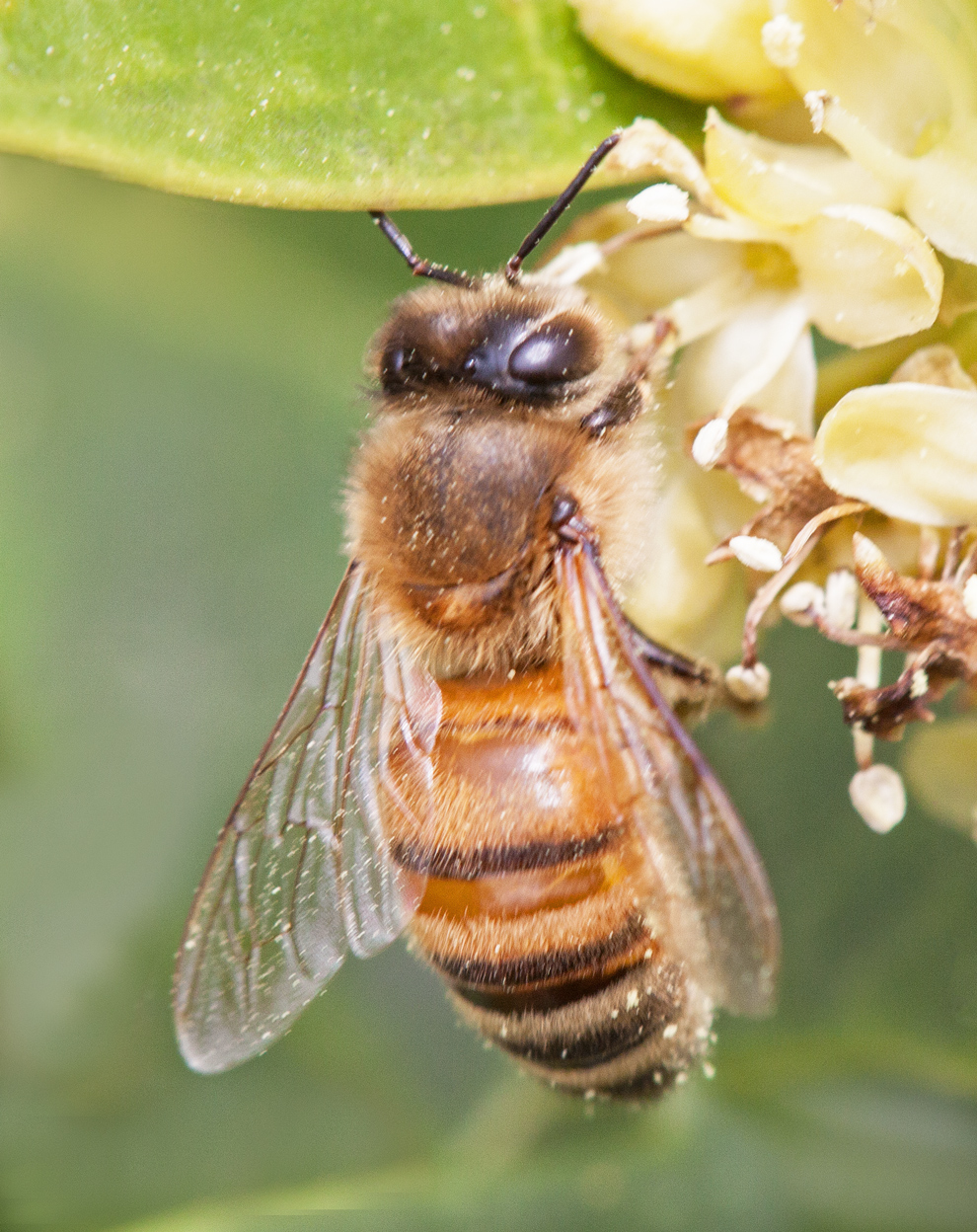
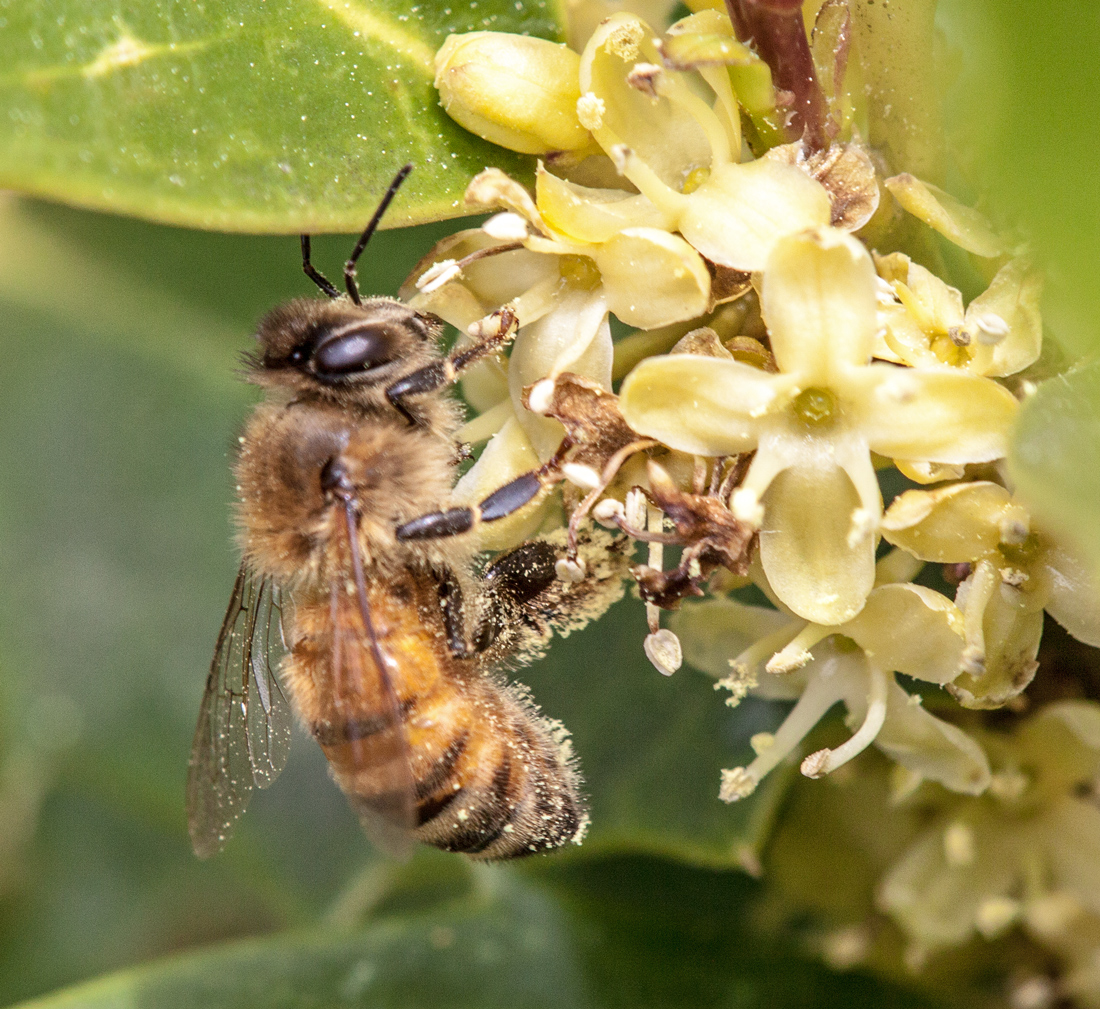
While visiting a garden during an event advertised as “A Million Blooms” I looked hard, but didn’t find any bees among the many tulips and other spring flowers. It was a bit ironic that I discovered this honey bee on a bush while waiting for my fellow photographers outside the gift shop of the Lewis Ginter Botanical Garden in Richmond, Virginia after seeing lots and lots of flowers.
I was hand-holding my 180mm macro lens for these shots, so I couldn’t close down the lens too far. In some of the shots, therefore, you can see that the depth of field was pretty narrow. Still, I am happy that I was able to capture some of the beautiful details of this honey bee, one of the first bees that I have observed this spring.


© Michael Q. Powell. All rights reserved
Posted in Art, Flowers, Gardening, Insects, Macro Photography, Nature, Photography, Portraits, spring | Tagged Apis, Canon 50D, honey bee, honeybee, Lewis Ginter Botanical Garden, Richmond VA, Tamron 180mm macro lens | 7 Comments »
April 22, 2014 by Mike Powell
Blossoming trees get a lot of attention this time of year, but as I looked upward at the trees in my neighborhood, I was struck by the beauty of the seeds of what I believe are maple trees. When I was a child in New England, I loved to watch these seed spinning through the air like little helicopters as they fell from the maple trees.
According to Wikipedia, the US Army actually developed a special air drop supply carrier during World War II that could carry up to 65 pounds of supplies and was based on the maple seed.
It was fun trying to come up with different ways to highlight the beauty of these seeds by moving closer or farther away and by varying the background.


© Michael Q. Powell. All rights reserved
Posted in Flowers, Gardening, Nature, Photography, spring | Tagged Alexandria VA, Canon 50D, Canon 70-300mm telephoto zoom lens, helicopter trees, maple, non-blossoming trees, Runnymeade, trees | 7 Comments »
April 22, 2014 by Mike Powell
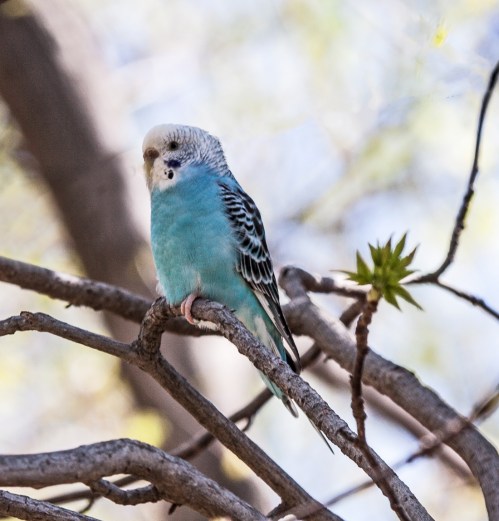
Yesterday afternoon, I again observed a blue parakeet (which is also known as a budgerigar) in the trees in my suburban townhouse neighborhood, two weeks after I first spotted it in the “wild.”
Since that first spotting, we’ve had some heavy rain and the temperature has dipped down to the freezing level. Somehow, though, the parakeet (Melopsittacus undulatus) has managed to find shelter and food and avoid predators. The parakeet seems to stay in the same general location, not far from several bird feeders on the back decks of nearby houses.
The general consensus seems to be that this is an escaped pet. I worry about its long-term survival, but so far it appears to be adapting pretty well to the outdoor environment.
© Michael Q. Powell. All rights reserved
Posted in Birds, Nature, Photography, Portraits, spring | Tagged Alexandria VA, blue parakeet, Budgerigar, budgie, Canon 50D, Canon 70-300mm telephoto zoom lens, Melopsittacus undulatus, parakeet, parakeet in the wild, Runnymeade | 5 Comments »
April 21, 2014 by Mike Powell
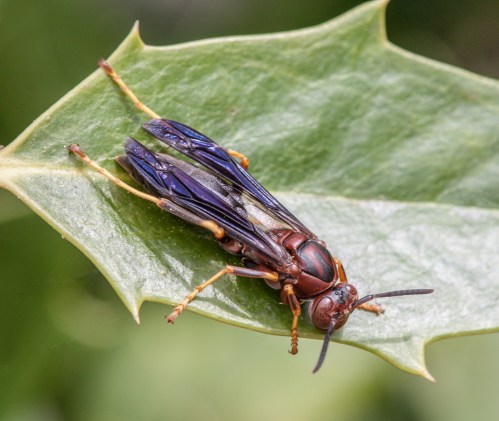
Isn’t “beautiful wasp” an oxymoron? Can a wasp really be considered to be beautiful? I may be insect-deprived after a long winter and my perceptions may be skewed, but I find the wasp in these two images to be exceptionally beautiful.
The rich reddish-brown of its upper body, with a pattern that looks like some exotic wood, and the bluish-purple of its wings make for a stunning combination, and the holly leaf provides a perfect backdrop.
I took this shot during a visit Lewis Ginter Botanical Garden in Richmond, VA this past weekend, a garden that featured thousands of tulips and other spring flowers in bloom, but almost no insects. I actually was not inside the garden, but was waiting outside the gift shop for some fellow photographers when I spotted this wasp sprawled out on the leaf, as shown in the second image. The nice thing about my 180mm macro is that I didn’t have to get right on top of the insect to capture some good detail. When I moved in a little closer, the wasp slowly climbed up the leaf, as captured in the first shot, before it flew away.
It was nice to see insects start to reappear and I suspect that I will start using my macro lens more and more as we move deeper into spring and into summer.

© Michael Q. Powell. All rights reserved
Posted in Insects, Macro Photography, Nature, Photography, spring, wildlife | Tagged beautiful wasp, Canon 50D, Lewis Ginter Botanical Garden, oxymoron, Richmond VA, Tamron 180mm macro lens, wasp | 13 Comments »
April 20, 2014 by Mike Powell
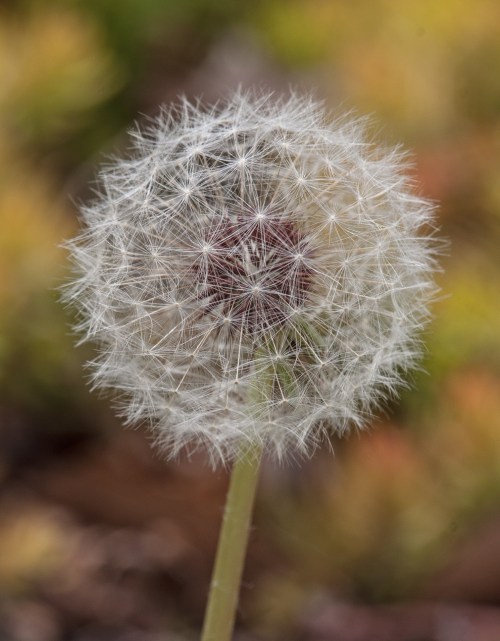
A few dandelions have popped up recently, but I was surprised to see one yesterday that had already gone to seed. Despite the wind that kicked up from time to time, the dandelion remained a perfect sphere.
April continues to be a mass of contradictions, with a mixture of signs of winter, spring, and even summer.
© Michael Q. Powell. All rights reserved
Posted in Art, Flowers, Gardening, Macro Photography, Nature, Photography | Tagged Canon 50D, dandelion, Lewis Ginter Botanical Garden, Richmond VA, Tamron 180mm macro lens, unseasonable | 1 Comment »
April 20, 2014 by Mike Powell
Sometimes the beauty of Easter reveals itself in subtle ways, like this delicate orchid that I photographed yesterday in the conservatory at Lewis Ginter Botanical Gardens in Richmond, VA.

© Michael Q. Powell. All rights reserved
Posted in Art, Flowers, Nature, Photography, spring | Tagged Canon 50D, Canon 70-300mm telephoto zoom lens, conservatory, Lewis Ginter Botanical Garden, orchid, Richmond VA | 1 Comment »
April 20, 2014 by Mike Powell
This brightly colored American goldfinch (Spinus tristis) reminds me of the marshmallow Peeps that I grew up with and the brightly colored spring outfits that people would wear to church to celebrate Easter (including some pretty outrageous hats). Best wishes to all for a Happy Easter, no matter how you choose to celebrate it.

© Michael Q. Powell. All rights reserved
Posted in Art, Birds, Flowers, Nature, Photography, spring | Tagged Alexandria VA, American Goldfinch, Canon 50D, canon 70-300mm telephoto zoom, Easter, Runnymeade, Spinus tristis | 5 Comments »
April 19, 2014 by Mike Powell
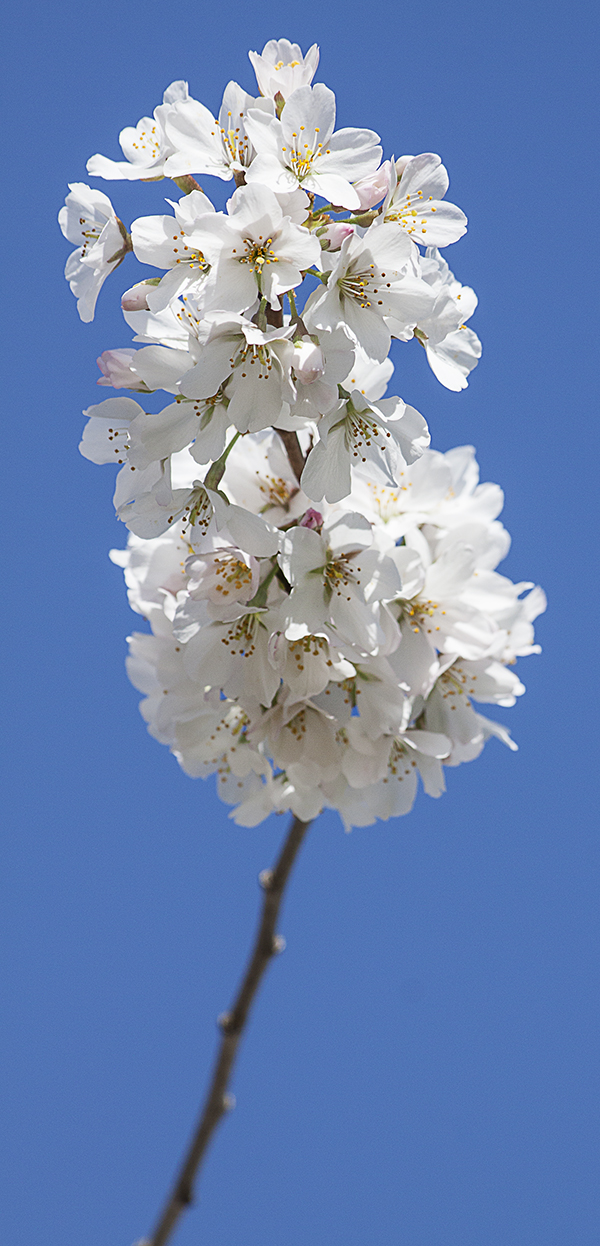
Although I live in the Washington D.C. area, I didn’t feel like fighting the crowds to get images of the iconic cherry blossoms. However, the blossoming trees in my neighborhood were pretty spectacular too, albeit on a smaller scale.
I think the first two images are Bradford pear trees, the third is a forsythia bush, and I am not sure what kind of tree the final one is. The shapes and colors and lighting make each of these shots quite different, but I think my favorite is the first one, which reminds me of a Japanese painting.


© Michael Q. Powell. All rights reserved
Posted in Art, Flowers, Gardening, Nature, Photography, spring | Tagged Alexandria VA, blossoming trees, blossoms, Bradford Pear, Canon 50D, Canon 70-300mm telephoto zoom lens, Runnymeade | 15 Comments »
April 18, 2014 by Mike Powell
After seeing three of my recent postings that featured unopened tulips, some readers might come to the erroneous conclusion that I don’t like the colorful flowers of blooming tulips. How could that be possible? Everyone seems to like the cheery colors of tulips.
My neighbor, and fellow photographer and blogger Cindy Dyer, has planted quite a variety of tulips in her garden and I recently took some photos of two very different species. The first is a small, delicate tulip know as the “Lady Jane” (Tulipa clusiana var. ‘Lady Jane’). I am not sure that I have every seen a more petite tulip and I really like its subtle colors.
The second tulip is big and bold and multi-colored, almost a visual equivalent of shouting. This style of tulip is known as a “broken” tulip, because of the way that the colors are broken, resulting in intricate bars, stripes, streaks, featherings, or flame-like effects of different colors on the petals. According to Wikipedia, this effect was originally produced by a tulip-breaking virus, and bulbs with this effect went for exorbitant prices in 17th century Netherlands, during a period known as “tulip mania.” Today, tulips displaying a “broken” effect are stable variants and the result of breeding, not viral infection.


© Michael Q. Powell. All rights reserved
Posted in Art, Flowers, Gardening, Macro Photography, Nature, Photography, spring | Tagged Alexandria VA, broken tulip, Canon 50D, Runnymeade, Tamron 180mm macro lens, tulip "Lady Jane", Tulipa clusiana var. 'Lady Jane', tulips | 1 Comment »
April 17, 2014 by Mike Powell
The moon was shining brightly in my neighborhood this morning at 6:00, just a few days after the full moon.

© Michael Q. Powell. All rights reserved
Posted in Art, Landscape, Nature, spring | Tagged Alexandria VA, Canon 50D, Canon 70-300mm telephoto zoom lens, full moon, moon, Runnymeade | 6 Comments »
April 17, 2014 by Mike Powell
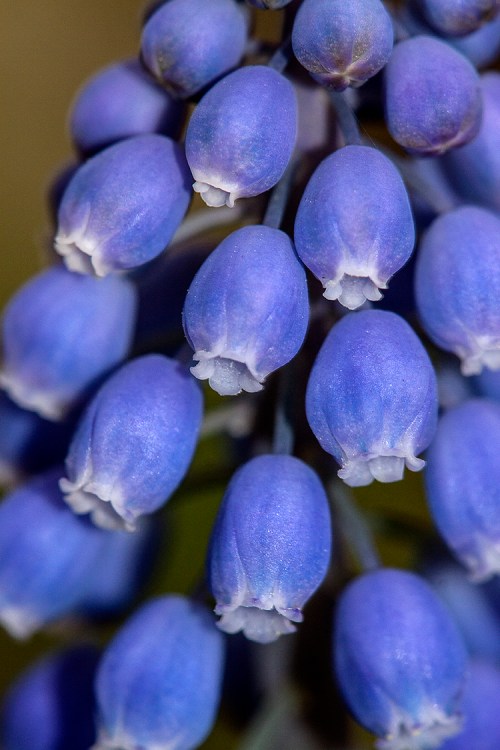
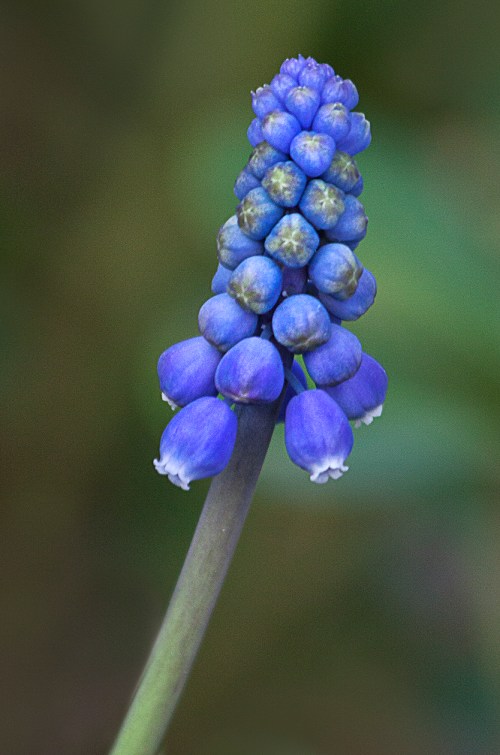
Like tiny bunches of grapes, growing out of the ground on a stalk, grape hyacinths are one of my favorite spring flowers. I moved in really close with my macro lens in the first shot to emphasize the beautiful details and the rich dominant bluish-purple color of the plant and moved back a bit for the other two shots to highlight the varied shapes and colors of the individual “grapes.”

© Michael Q. Powell. All rights reserved
Posted in Art, Flowers, Gardening, Macro Photography, Nature, Photography, spring | Tagged Alexandria VA, Canon 50D, Grape hyacinth, hyacinth, Muscari, Runnymeade, Tamron 180mm macro lens | 3 Comments »
April 16, 2014 by Mike Powell
This final image of my mini-series on unopened tulips is my favorite—I love the simple composition, the almost monochromatic palette (with the slightest touch of pink at the tip), and the sensual curves of the leaves.
It was almost six o’clock in the evening when I took this shot and the light was still pretty strong, but was starting to fade. I knew that I wanted to shoot some close-up shots of flowers, so I was using my 180mm macro lens. I probably should have been using my tripod for increased steadiness, especially because the lens does not have image stabilization (VR for Nikon folks), but I hadn’t brought a tripod with me.
As is often the case with my macro lens, I ended up focusing manually, trying to get as much of the tulip in focus as I could as I carefully composed the shot. The settings for this shot, for those who might be interested in such technical details, were ISO 400, f/8, and 1/50 second. The shutter speed is a bit slow, I’ll admit, but I was able to brace myself pretty well and I was trying to avoid increasing the ISO and introducing more noise.
If you haven’t seen the other images in this mini-series, Anticipation I and Anticipation II, be sure to check them out. Is there one that you like more than the others?

© Michael Q. Powell. All rights reserved
Posted in Art, Flowers, Gardening, Macro Photography, Nature, Photography, spring | Tagged Alexandria VA, anticipation, Canon 50D, Runnymeade, Tamron 180mm macro lens, tulip, unopened tulip | 7 Comments »
April 15, 2014 by Mike Powell
With the cold, gray days of winter receding in my memory and the world exploding with color, I’ve taken a brief break from focusing primarily on wildlife photography and have turned my attention to capturing the beauty of flowers and blossoms.
I’ve never quite figured out how to photograph broad expanses of color, so I tend to focus more on the details of a single flower and try to isolate it from the background. (One of my favorite bloggers, Camilla, of Calee Photography did an amazing job in capturing the beauty of tulip fields by photographing them from a small airplane. Check out her posting.)
In this case, my eyes were drawn to the not-yet-open tulip, where the color of the flower was beginning to be revealed. The composition is simple and graphic and a little abstract.
I can already sense the beauty that is to come—the anticipation makes it even more sweet.

© Michael Q. Powell. All rights reserved
Posted in Art, Flowers, Gardening, Macro Photography, Nature, Photography, spring | Tagged Alexandria VA, anticipation, Canon 50D, Canon 70-300mm telephoto zoom lens, Runnymeade, spring flowers, tulip, yellow tulip | 5 Comments »
« Newer Posts - Older Posts »























 Mike Powell