Feeds:
Posts
Comments

Archive for the ‘Insects’ Category

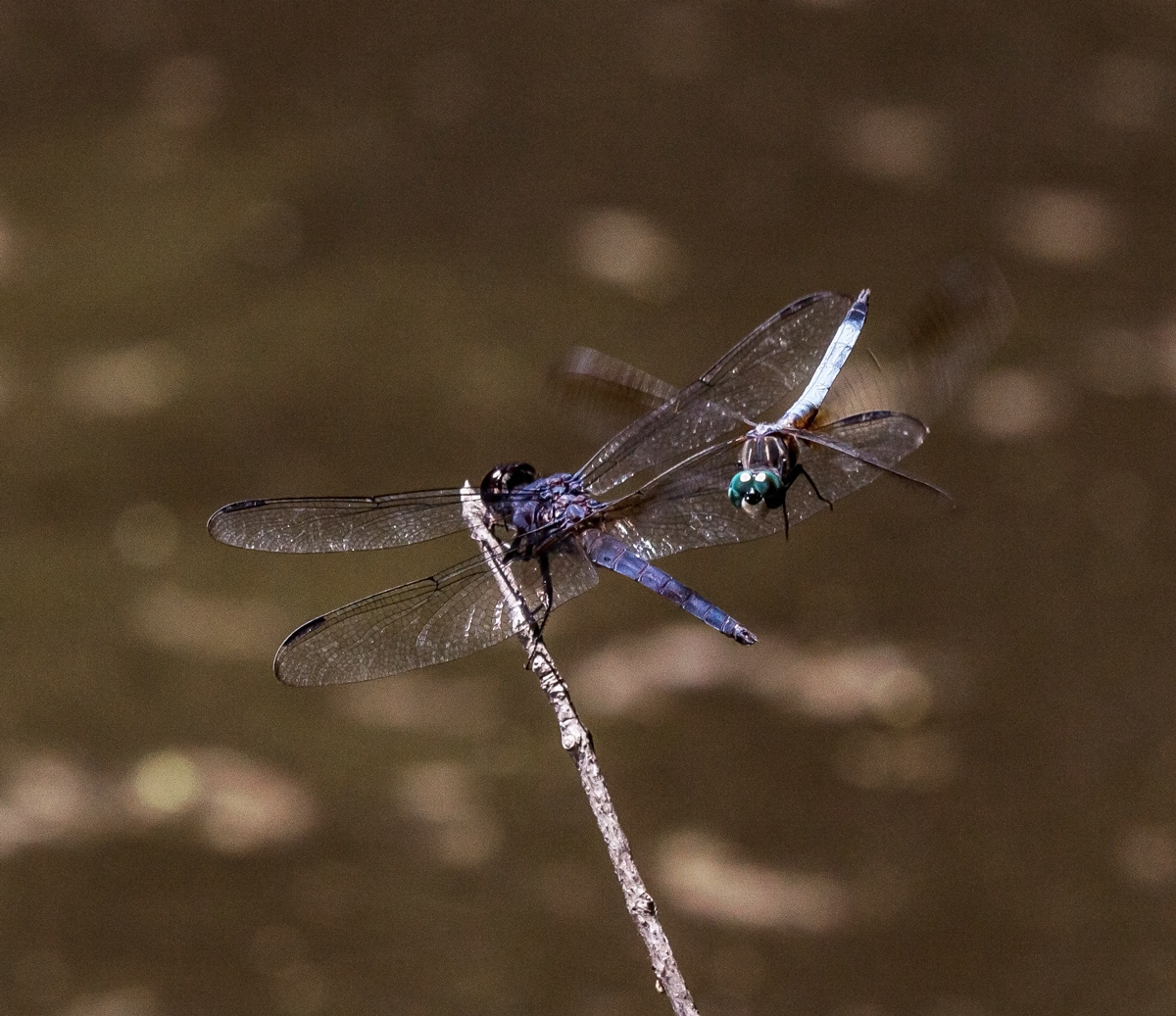
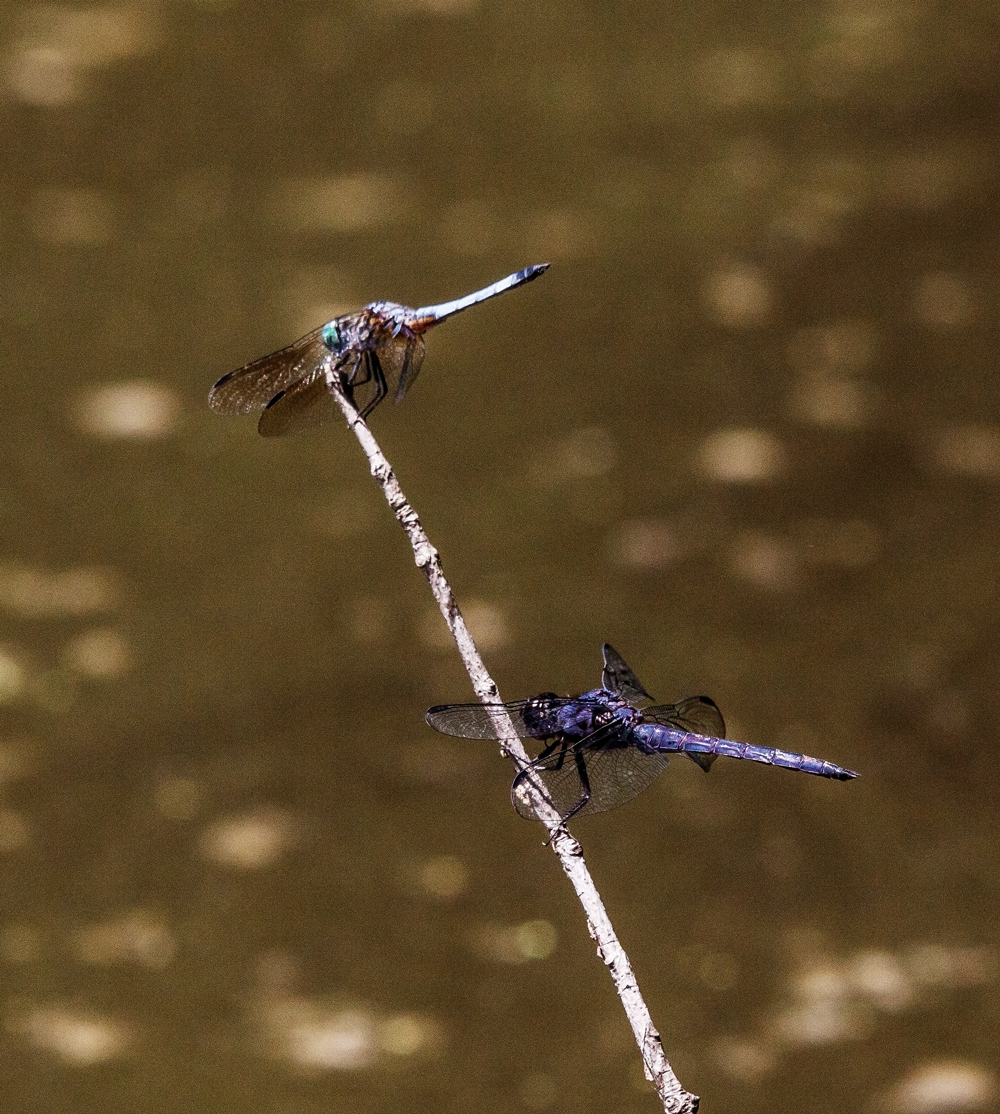
It was really easy to find Blue Dasher dragonflies (Pachydiplax longipennis) near the hotel where I stayed in Woburn, Massachusetts this past weekend. The challenge was capturing them in interesting poses, which was a bit more difficult than usual because they were unusually skittish—maybe they are not used to seeing people.

Blue Dasher

Blue Dasher

Blue Dasher

© Michael Q. Powell. All rights reserved.

Read Full Post »

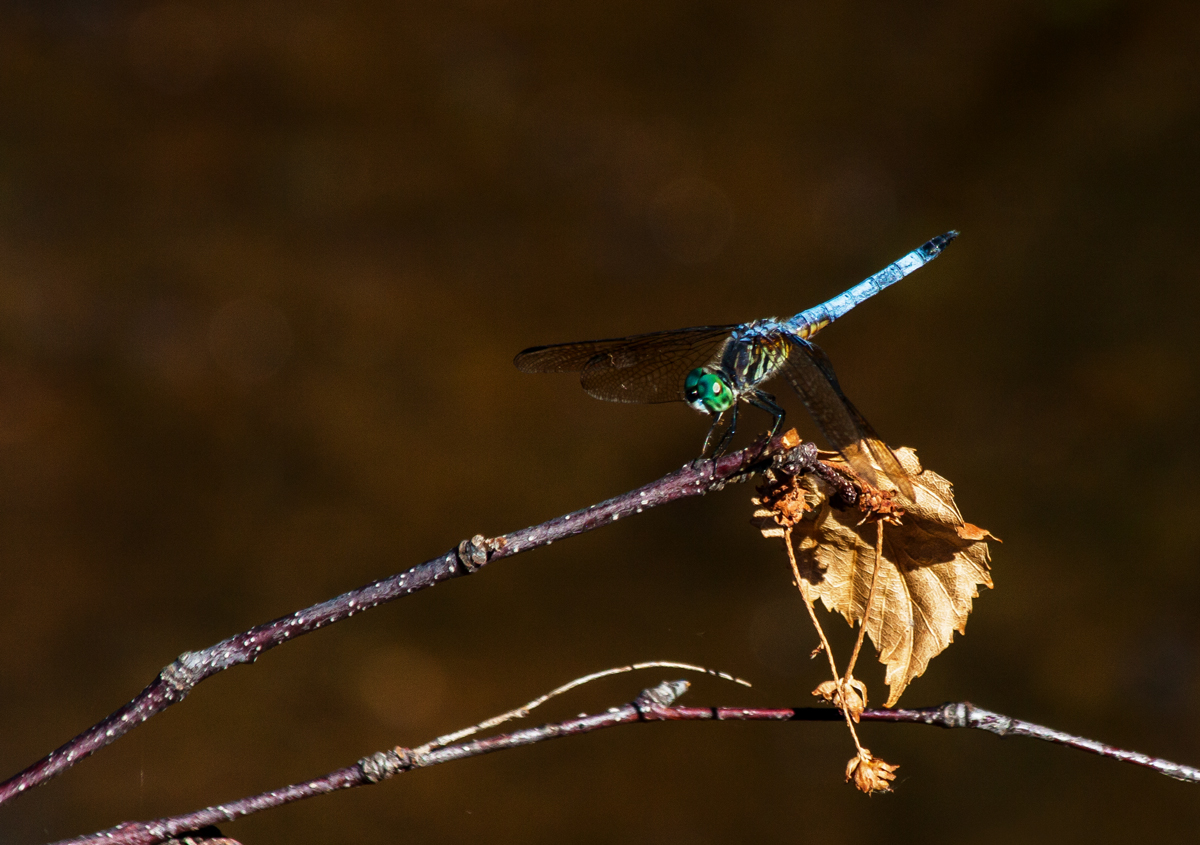
Normally Blue Dasher dragonflies (Pachydiplax longipennis) perch on plants growing upwards, but this one decided to be different by perching on hanging vegetation. I love how the lighting makes it look like the image  was shot in the studio. I think I will call his position the “downward-facing dragonfly.” (I captured the image this morning in Woburn, MA at a small canal just outside of my hotel.)

Blue Dasher

© Michael Q. Powell. All rights reserved.

Read Full Post »

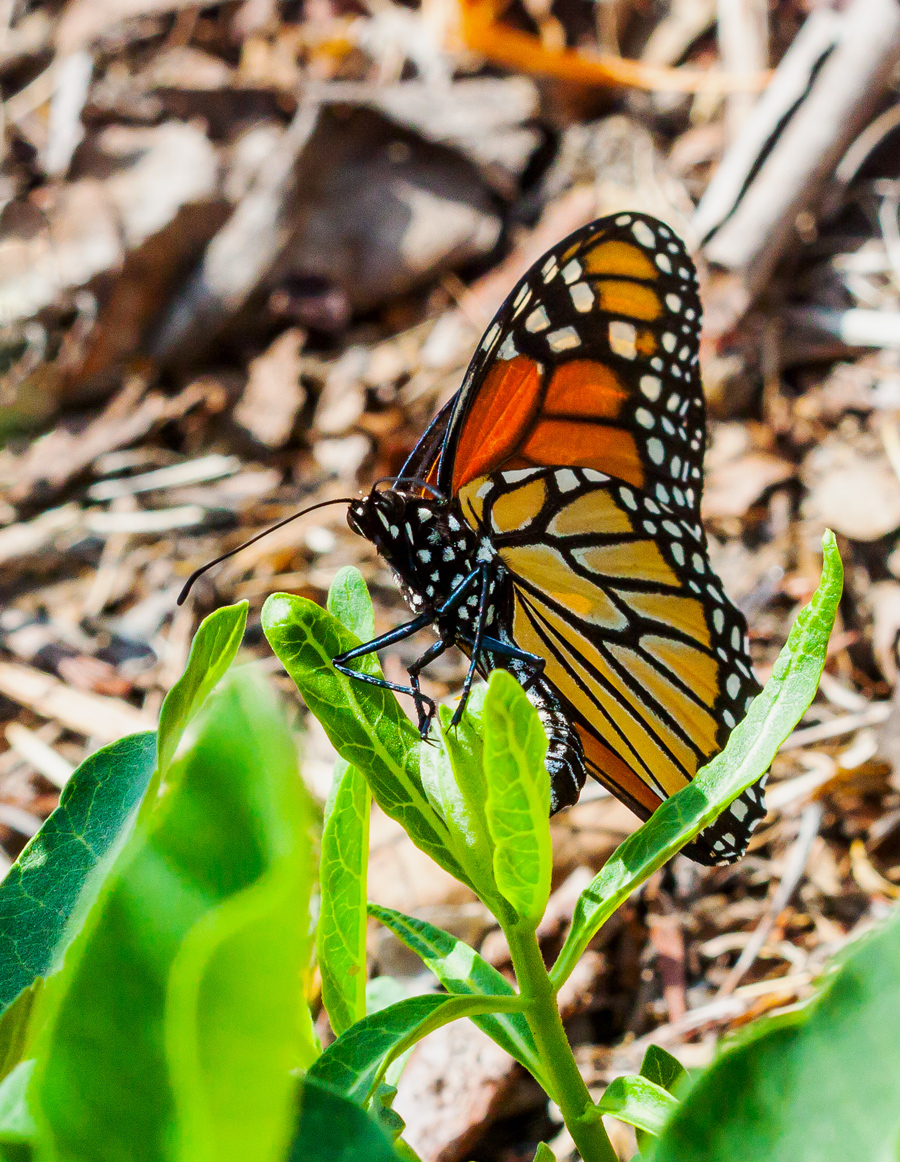
I was beginning to think that another year would go by without seeing a Monarch butterfly (Danaus plexippus) when yesterday I spotted one of them in the most unlikely of places—in the mulched plants at the back of the hotel where I am staying in Woburn, Massachusetts.

After a grueling eleven-hour ride from Northern Virginia, I arrived at the hotel yesterday afternoon ready to relax. Unfortunately, I was told that my room would not be ready for at least an hour. I grabbed my camera and decided to walk around the grounds of the hotel, which is adjacent to a small canal, to see what there might be to photograph.

As I was walking, I caught sight of an orange-and-black butterfly that kept landing momentarily on the low plants, never staying still long enough for me to get a good shot (I was shooting with a 100mm macro lens). I kept chasing and eventually got some shots. It has been such a  long time since I last saw a Monarch that any photo at all is a bonus, so it doesn’t bother me that these are far from being great shots.

My excitement at seeing a Monarch is tempered a bit by the fact that I did not get the right angle to conclusively exclude the possibility that this is a Viceroy butterfly. If that were to turn out to be the case, I’ll be out again chasing butterflies in search of the first Monarch of the season.

Monarch butterfly

Monarch butterfly


© Michael Q. Powell. All rights reserved.

Read Full Post »

How do you get your subject to smile when you want to take a picture? This Blue Dasher dragonfly (Pachydiplax longipennis) didn’t need any prompting at all when I went in for an extreme close-up shot yesterday at McKee-Beshers Wildlife Management Area in Maryland.

Start each day with a smile.

Blue Dasher

© Michael Q. Powell. All rights reserved.

Read Full Post »

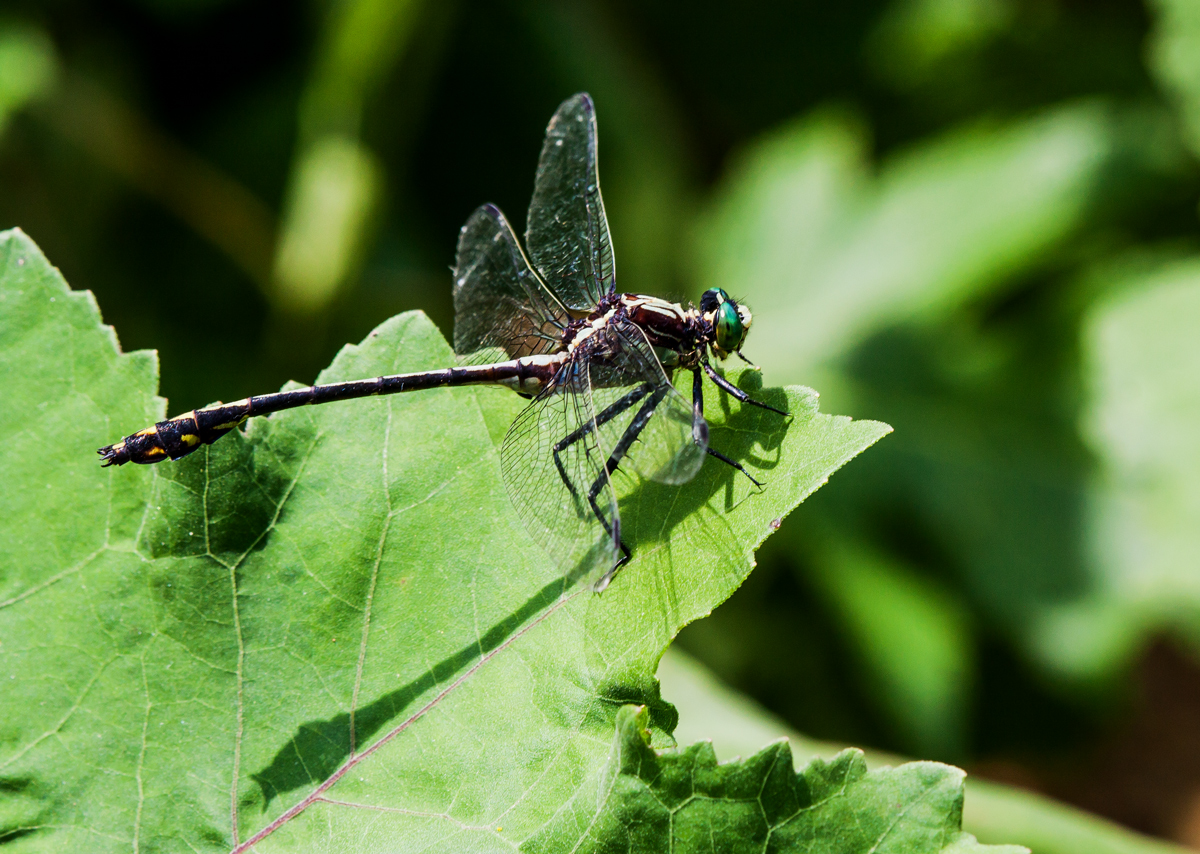
As I was walking through a field of sunflowers at McKee-Beshers Wildlife Management Area in Poolesville, Maryland, I spotted an unusual dragonfly that I couldn’t immediately identify. It turned out to be a Black-shouldered Spinyleg dragonfly (Dromogomphus spinosus)—a cool name for a cool-looking dragonfly.

When I first caught sight of the dragonfly, the dragonfly’s long, skinny abdomen and the enlarged area near the end suggested to me that it was a member of the clubtail family of dragonflies. (You can get a really good sense of the shape of the “clubtail” when you look at the shadows in a couple of the images). The only clubtails that I have seen with any kind of regularity have been Common Sanddragons and Unicorn Clubtails, and this was clearly not one of them. When I am out in the field, I don’t worry too much about identification—I practice what I call the “Law of the West,” i.e. “shoot first and ask questions later.”

Later in the day my shooting partner was able to identify the dragonfly after I pointed her to the website “Dragonflies of Northern Virginia.” This website is my favorite resources for information and photos of dragonflies in my area. I checked my past blog postings because I had a vague recollection that I had seen this species before and found a posting indicating that I saw one almost exactly a year ago on a trip to a different part of Maryland.

Black-shouldered Spinyleg

Black-shouldered Spinyleg

Black-shouldered Spinyleg

© Michael Q. Powell. All rights reserved.


Read Full Post »

During a quick trip to Jackson Miles Abbott Wetlands Refuge at Fort Belvoir, Virginia last weekend, I was thrilled to see that the spectacularly patterned Banded Pennant dragonflies are still around. This is the only location that I visit regularly where I have spotted this dragonfly species and I am never quite sure when an encounter will be the last one of the season.

As I was looking over the two shots that I chose to use with this posting, I realized that they represent two different approaches that I use when photographing dragonflies. Ideally I will try to position myself so that the camera’s sensor is parallel with the dragonfly’s wings and most of the dragonfly will be in focus. That was the case with the second shot and it really highlights the beautiful pattern of the wings. However, the image seems a bit too static for my taste. I prefer the first shot, in part because the pose is more dynamic and the direct eye contact with the dragonfly draws me in.

Banded Pennant

Banded Pennant

© Michael Q. Powell. All rights reserved.

Read Full Post »

Blue Dasher dragonflies (Pachydiplax longipennis) have become for me one of the signs of summer in the area in which I live. When the weather turns hot and humid, they can often be seen flying lazily over the marshes and ponds, perching frequently on vegetation growing out of the water.

On a recent trip to Green Spring Gardens, I captured some images perched male Blue Dasher dragonflies. In the first shot, the dragonfly was perched on the edge of a lotus leaf. I really like the curves and softness of the leaves, which contrast with the details of the dragonfly. I think too that the shadow cast on the lower leaf adds some additional visual interest to the  image.

The second image features a Blue Dasher in the obelisk pose. It is generally believed that some dragonflies assume this pose to dissipate heat by reducing the amount of their bodies that is exposed to direct sunlight. I was shooting partially into the sun, which forced me to overexpose the image a bit and accounts for the lighter background. However, the surface of the water was covered with a lot of duckweed and was not uniform in color. As a result, the background ended ended up with some ugly gray patches that I seemed to be impossible for me to remove.

Blue Dasher

Blue Dasher

© Michael Q. Powell. All rights reserved.

Read Full Post »

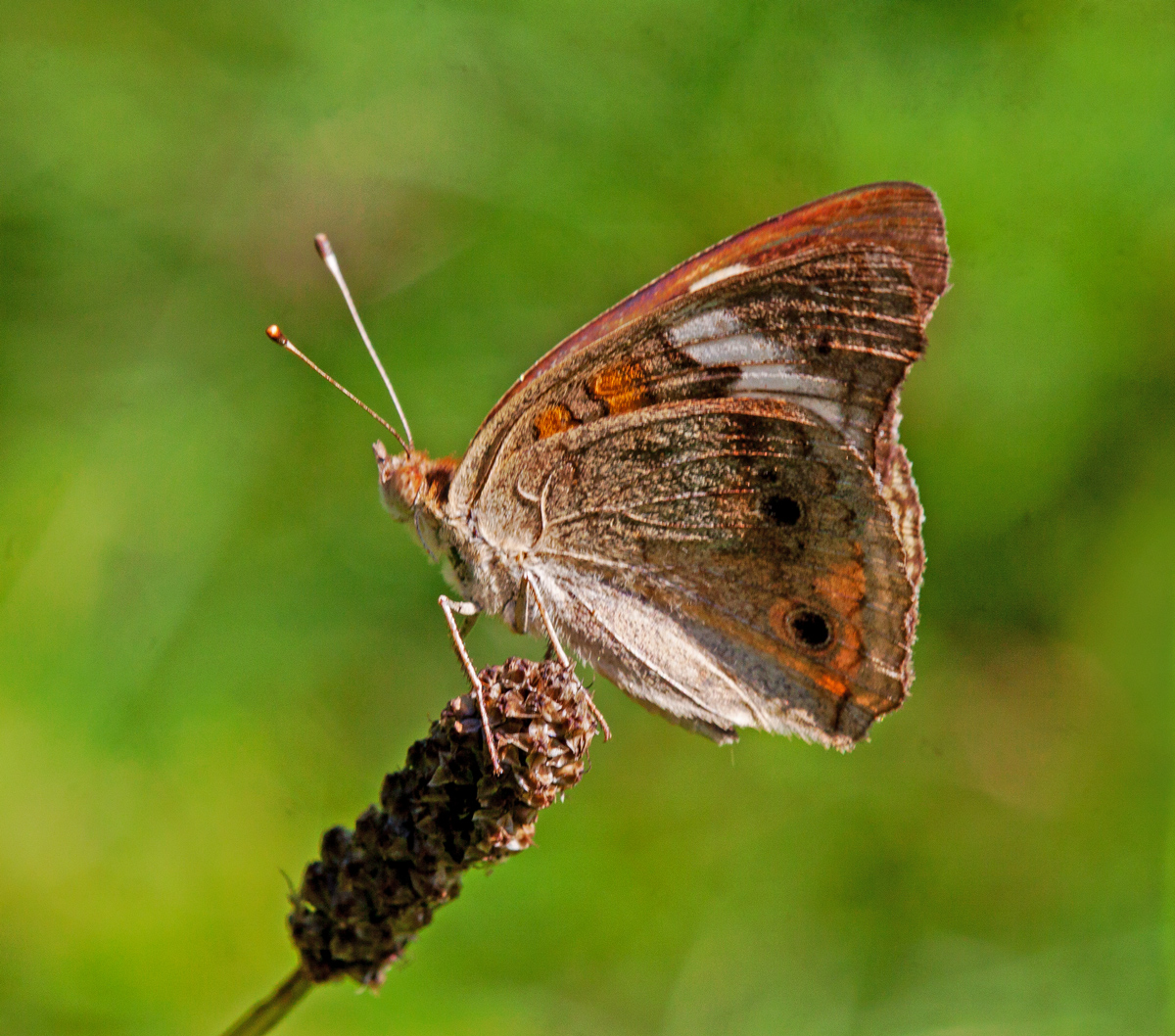
I first spotted this small Common Buckeye Butterfly (Junonia coenia) as it was flying low above a grassy patch at Jackson Miles Abbott Wetlands Refuge. Periodically it would stop and I would attempt to get a shot of it. It was probably hilarious to watch our little pas de deux—the butterfly would fly and perch and I would bend my knees and crouch, which served as a signal for the butterfly to take off again.

I’m pretty patient, so we danced this way for quite a while before the butterfly decided to perch on some low vegetation rather than on the bare ground. I was finally able to capture a shot, though the butterfly didn’t pose long before taking off again.

Common Buckeye

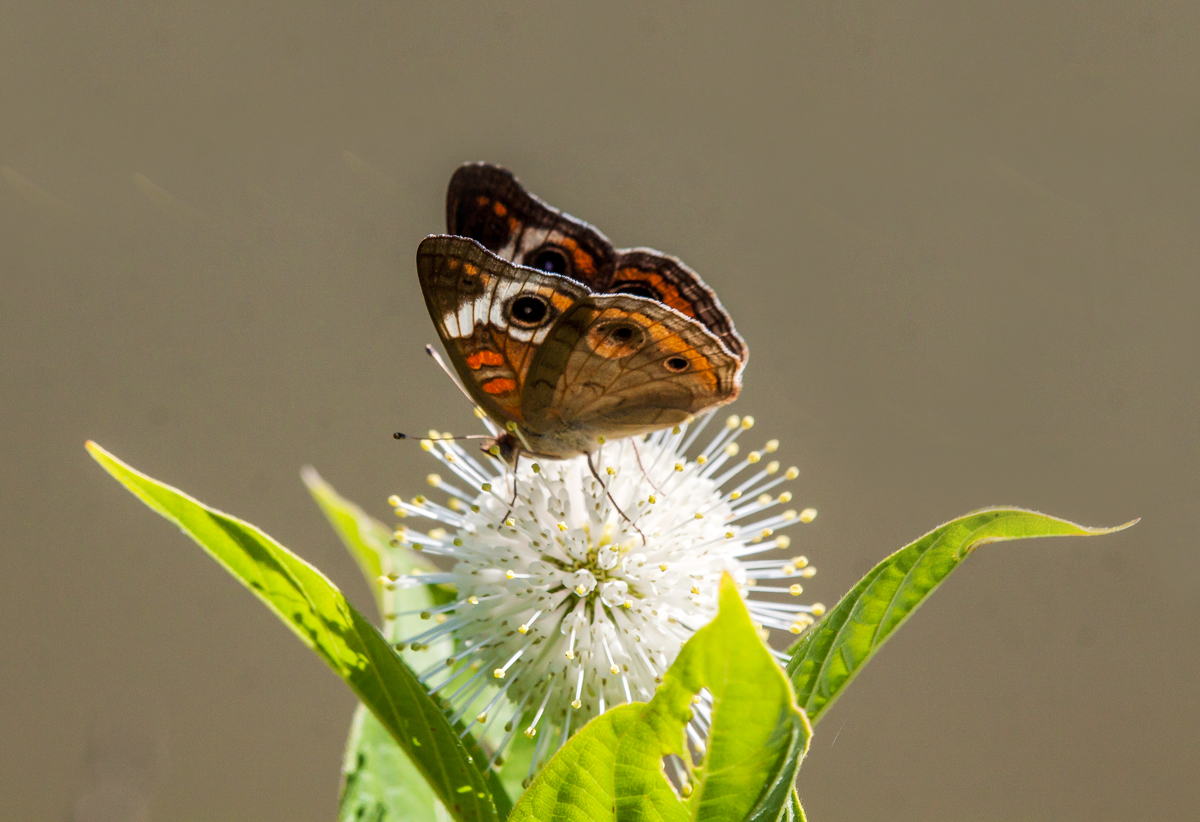
As I continued the chase, my knees started getting a bit sore. I was thinking of giving up the chase when suddenly the butterfly flew higher into the air and landed on a buttonbush (Cephalanthus occidentalis). These bushes are a virtual magnet for butterflies and I love the spiky spheres of the plant. I wasn’t able to get very close to the buttonbush, but captured this image that I really like.

Common Buckeye

The chase ended here and we went our separate ways. I hope that I never get too old or too self-conscious to chase butterflies, a pursuit that makes me feel like a carefree child again.

© Michael Q. Powell. All rights reserved.


Read Full Post »

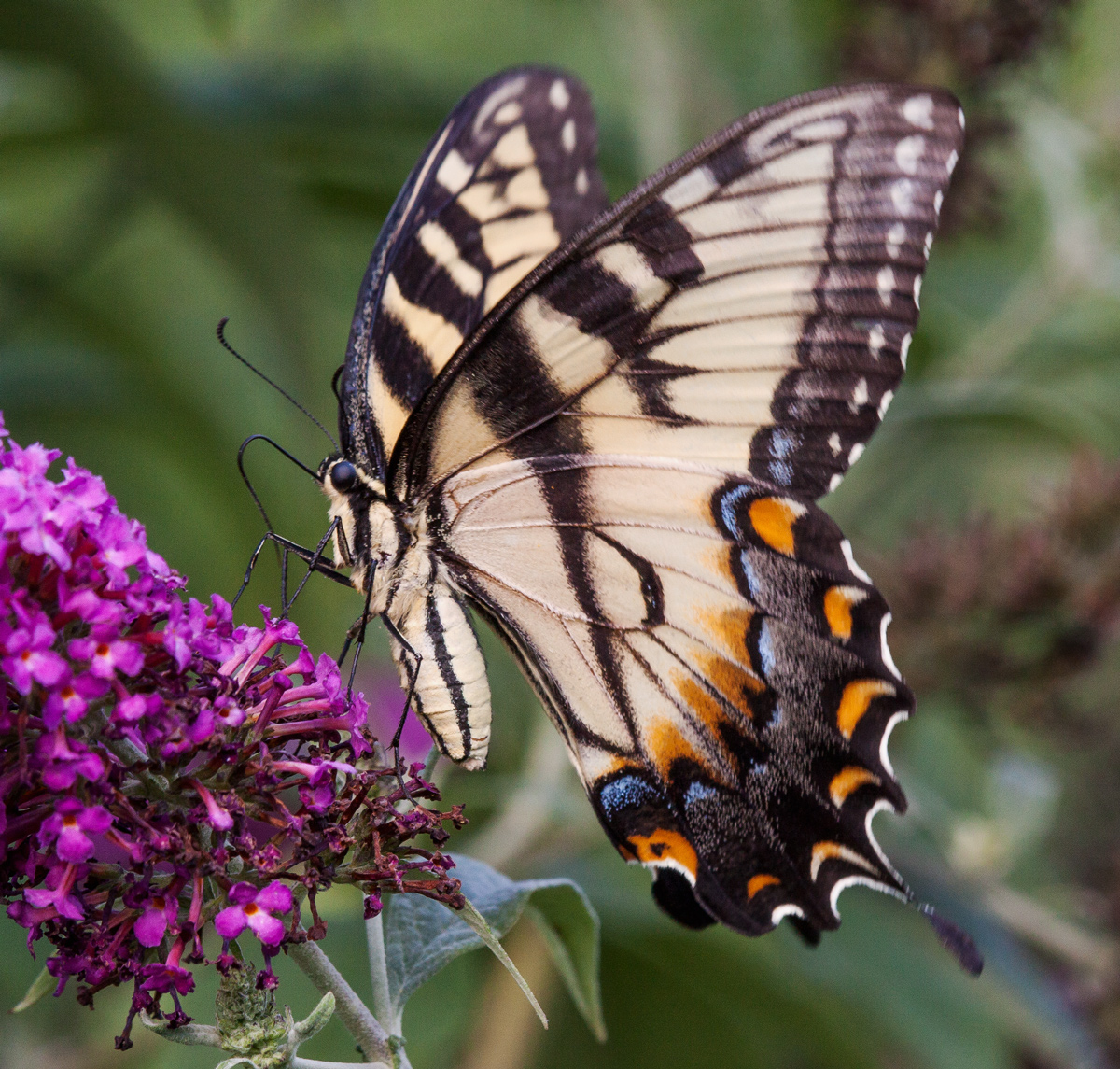
Some folks are really into chasing imaginary creatures with their cellphones. I prefer to chase living creatures with my camera and captured this image of a beautiful Eastern Tiger Swallowtail butterfly (Papilio glaucus) yesterday as it was feeding at Green Spring Gardens, a county-run historic garden in Northern Virginia.

The butterfly gave me multiple opportunities to get shots as it flew around a small area of the gardens, but it rarely gave me an obstructed view. Often it was partially buried in the flowers or turned away from me at an angle. When I took this shot, the butterfly had opened its wings and offered me a rare look at its body as well as its amazingly long proboscis.

Eastern Tiger Swallowtail

© Michael Q. Powell. All rights reserved.


Read Full Post »

I love the colorful patterns on the wings of a Halloween Pennant dragonfly (Celithemis eponina), but rarely have the chance to see one. Therefore, I was pretty excited when I spotted one from a distance last week at Huntley Meadows Park, my favorite marshland location for nature photography.

I moved a little closer to get some initial shots with my Tamron 150-600mm lens fully extended. Generally I use my long zoom for birds more often than for dragonflies.  In this case, however, the lens turned out to be a better choice than my macro lens, because the dragonfly flew away when I took a couple of steps toward it and I never saw it again.

Most of the Halloween Pennant dragonflies that I have observed in the past have had wings that were more amber-colored than those of this individual, but the wing pattern is so distinctive that I am pretty sure about my identification. In addition to the wonderful wings, I was really struck by the length and two-toned color of this dragonfly’s legs.

Halloween Pennant

© Michael Q. Powell. All rights reserved.

Read Full Post »

How far do you usually travel when you want to take some photos? I capture a lot of my wildlife/nature images in my local area, but generally I get into my car and travel at least a few miles before I begin shooting.

Sometimes, though, I feel the urge to shoot, but don’t really want to travel far. In those moments I will usually walk over to the townhouse of my neighbor, fellow photographer Cindy Dyer, who always seems to have an assortment of photogenic flowers in bloom.

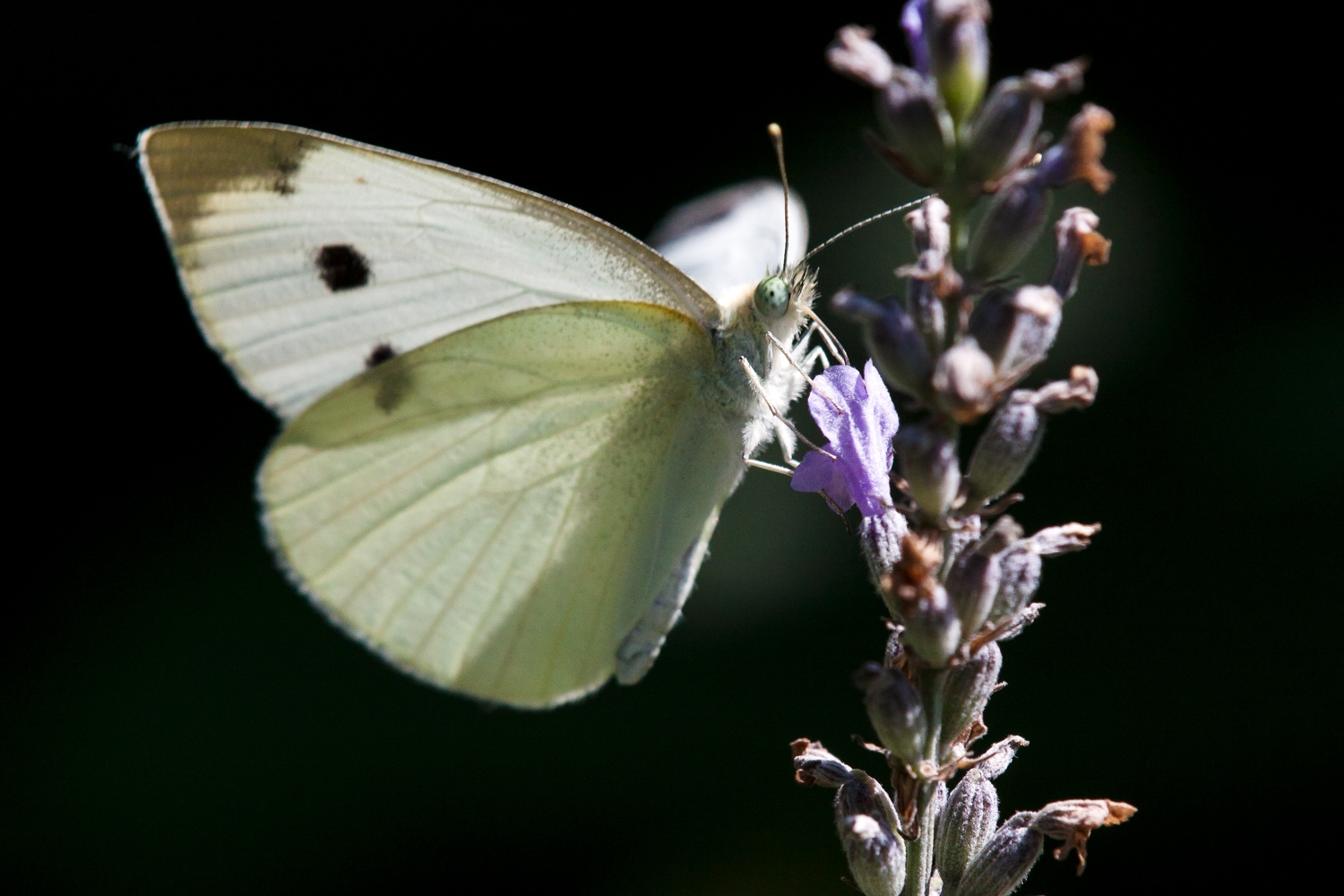
Last week I chased a Cabbage White butterfly (Pieris rapae) that I spotted fluttering about the flowers in garden. It passed by the globe thistles and the cone flowers and finally perched for a moment on a lavender plant. The sun was shining brightly, which I knew would create problems in getting a proper exposure of the dazzling white wings of the butterfly. I switched my metering to spot metering and the wings retained their details, but the background became really dark, creating a dramatic lighting effect that I really like. As always, I was thrilled to be able to see the beautiful green eye of this common butterfly that is often ignored or simply taken for granted.

Cabbage White

© Michael Q. Powell. All rights reserved.

Read Full Post »

Ebony Jewelwing damselflies (Calopteryx maculata) like to hide in the shadows, but they really do sparkle like jewels when the light hits them right.

I spotted the beautiful female damselfly in the first photo this past weekend at Huntley Meadows Park—only females have white spots on their wings. I really like the way that the tones of the background complement the colors of the damselfly.

Ebony Jewelwing

I captured this shot of a male Ebony Jewelwing damselfly only a few minutes later. The lighting was brighter and the stance seems almost confrontational, which gives this image a totally different feel from that of the female.

Ebony Jewelwing

I’ll leave it to others to make broader inferences about the mysteries of the fairer gender versus the in-your-face directness of the average male.

© Michael Q. Powell. All rights reserved.

Read Full Post »

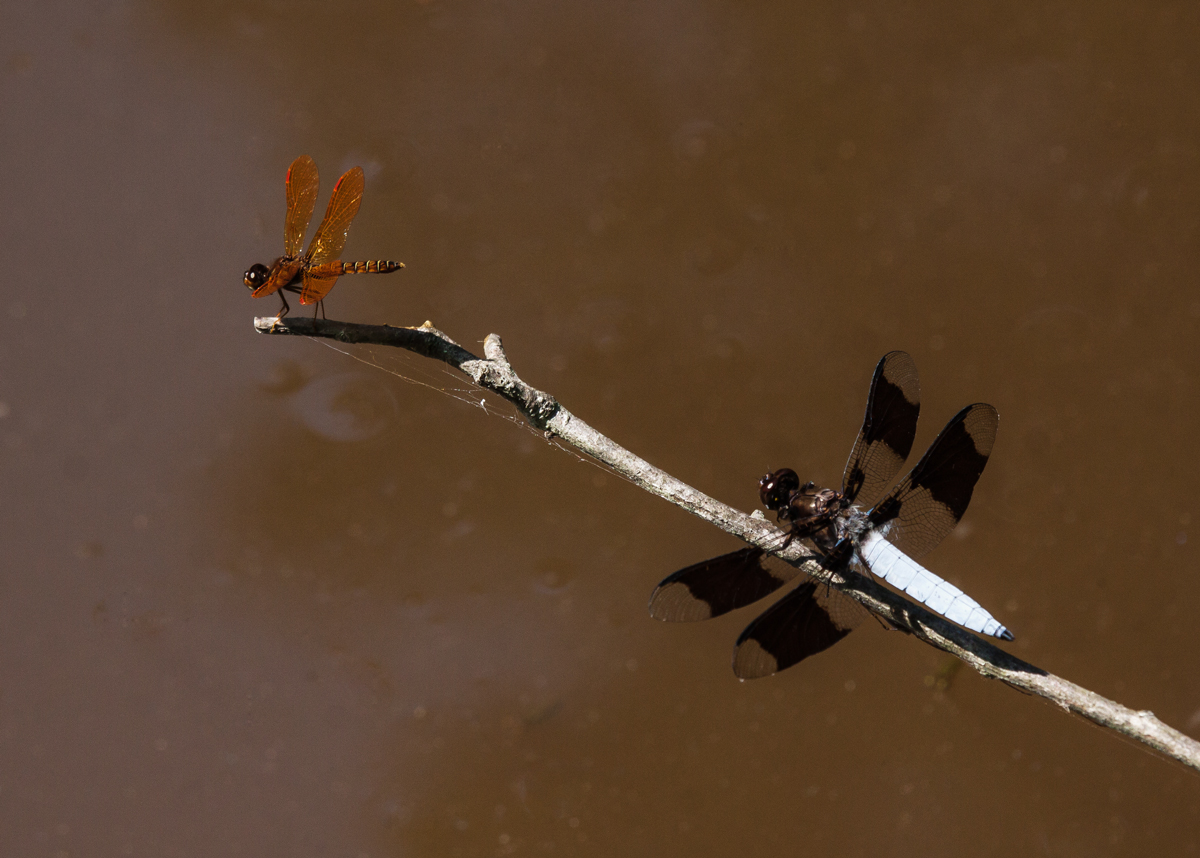
Despite their differences in size and appearance, the Eastern Amberwing (Perithemis tenera) and the Common Whitetail (Plathemis lydia) dragonflies were able to co-exist peacefully and both were able to enjoy the same perch this morning at Huntley Meadows Park.

Why is it so hard for us to do the same?

coexist1_8Jul_blog

© Michael Q. Powell. All rights reserved.

Read Full Post »

Although I was still here in Northern Virginia, the colors and desolate character of the landscape surrounding this Variable Dancer damselfly (Argia fumipennis violacea) reminded me of the desert Southwestern portion of the United States. It looked almost like the damselfly was posing for a photo while perched at the edge of the Grand Canyon.

The reality was a little less exciting. I spotted this Variable Dancer during the 4th of July weekend while I was exploring Pohick Creek in Springfield, Virginia, only a few miles from where I live.

Variable Dancer

© Michael Q. Powell. All rights reserved.

Read Full Post »

There is a whole family of damselflies called bluets that all look similar and the pattern of the males is generally some combination of black and blue (though there is one family member called an Orange Blue, which sure sounds like an oxymoron to me). On Saturday as I was exploring Pohick Creek in Springfield, Virginia, I came across two damselflies in tandem position that looked to be bluets. I suspect that they had just mated and were getting ready to deposit the eggs.

I managed to get a decent angle for a shot that allowed most of their bodies to be in focus and figured that identification would be simple. I was wrong. I went back and forth over a series of images and drawings in two guidebooks before deciding that they were probably Stream Bluets (Enallagma exsulans). The habitat was right and the markings seemed to be almost right, but I waffled for a long time.

Am I correct in my identification? I’m still not really confident, but so far one person has agreed with me in a Facebook group in which I posted the photo. The creative side of me, though, is really happy with the image, irrespective of the correctness of my identification.

Stream Bluet

© Michael Q. Powell. All rights reserved.

Read Full Post »

A Blue Dasher dragonfly (Pachydiplax longipennis) seemed to covet a prime perching position yesterday at Hidden Pond Nature Center in Springfield, Virginia and took action to try to dislodge the Slaty Skimmer dragonfly (Libellula incesta) that was occupying the perch.

The Blue Dasher was successful and occupied the top position for a little while, but eventually the larger Slaty Skimmer resumed the position at the top and the Blue Dasher was relegated to a lower spot on the plant.

Coming in for the attack

Coming in for the attack

The attack

The attack

Temporarily on top

Temporarily on top

battle4_blog

Relegated to the bottom

© Michael Q. Powell. All rights reserved.


Read Full Post »

This female damselfly blended in almost perfectly with her surroundings yesterday as she deposited eggs in the shallow water at the edge of Mulligan Pond at Jackson Miles Abbott Wetlands Refuge at Fort Belvoir. I love the way that the shadows changed as she dipped the tip of her abdomen into the water.

I have real difficulties in identifying female damselflies, but in this case I am not too concerned.  I was so caught up with the colors, shapes, and lighting in this image that identification seemed of secondary importance.

damselfly ovipositing


damselfly ovipositing

damselfly ovipositing

© Michael Q. Powell. All rights reserved.

Read Full Post »

Cabbage White butterflies (Pieris rapae) are very active and their blindingly white wings often cause images to be overexposed. When the light is right, though, you can see their enchanting speckled green eyes, like those of this butterfly that I spotted during a recent trip to Brookside Gardens in Wheaton, Maryland.

Cabbage White

© Michael Q. Powell. All rights reserved.

Read Full Post »

When I was first getting serious about my photography, I remember being told how important it was to isolate my subject in order to prompt the viewer to focus on what I thought was important. At this time of the year I take a lot of photos of insects and it is often a real challenge to isolate them from their backgrounds. As I was going through some images from this past weekend, I noted that I tried a couple of different approaches when photographing male Widow Skimmer dragonflies (Libellula luctuosa) at Jackson Miles Abbott Wetlands Refuge.

In one case, I tried to isolate the dragonfly by shooting at an upwards angle, thereby eliminating the clutter of the vegetation. Of course, it helped that the dragonfly cooperated by perching at the tip of the stem. I really like the way that the colors and shapes of the background almost match those of the dragonfly.

Widow Skimmer

In a second case, the dragonfly was perched in the midst of the vegetation. I moved to a position so that my camera’s sensor was on a parallel plane to the dragonfly’s open wings and opened the aperture pretty wide. Normally I try to keep the aperture stopped down in an effort to get more parts of the dragonfly in focus. This time, however, the dragonfly was relatively flat and I was able to throw the background a bit out of focus without losing the details of the dragonfly. The contrast of the background colors with those of the dragonfly helps it to stand out, while retaining a sense of the environmental setting.

Widow Skimmer

There are lots of other ways to isolate subjects. Sometimes we have the luxury of being able to think about them, but often we are forced to make rapid decisions about shooting angles and camera settings that will have a huge impact on our final images.


© Michael Q. Powell. All rights reserved.


Read Full Post »

Summer is definitely here. In the Washington D.C. area where I live, summer means endless stretches of hot, humid weather. Even the insects seem to move more slowly, like this Eastern Amberwing dragonfly (Perithemis tenera) that I recently photographed as it languidly buzzed around the vegetation at Brookside Gardens in Wheaton, Maryland.

Eastern Amberwing

© Michael Q. Powell. All rights reserved.

Read Full Post »

I love the juxtaposition of natural and man-made elements in this shot of a Slaty Skimmer dragonfly (Libellula incesta) perched recently on a piece of rebar sticking out of the water at Mulligan Pond at Jackson Miles Abbott Wetlands Refuge.

The colors and shape enhance the visual contrast between the two primary elements in this very graphic and simple composition. Photography doesn’t always have to be complicated to be effective—I need that reminder from time to time.

Slaty Skimmer

© Michael Q. Powell. All rights reserved.

Read Full Post »

Yesterday I spotted my first Banded Pennant dragonfly (Celithemis fasciata) of the season at Jackson Miles Abbott Wetlands Refuge at Fort Belvoir, Virginia. I love the beautiful blue color of its body and its boldly patterned wings. The males of this species seem to like to show off a bit by perching on the very tip of vegetation, which is both a blessing and a curse. It is a blessing because the dragonflies are easier to spot than those that perch low in the vegetation. It is a curse, however, because the slightest breeze causes the dragonflies to oscillate madly, making it tougher to get sharp shots of them.

Banded Pennant


Banded Pennant

© Michael Q. Powell. All rights reserved.

Read Full Post »

Yesterday I spotted a very cool-looking, but unfamiliar dragonfly. I ended up posting an image in several Facebook groups in an effort to get an identification from some of the experts and was a little shocked to learn that it is a male Swift Setwing dragonfly (Dythemis velox), a primarily southern species that may never before have been spotted in Fairfax County, the county where I live.

It looks like this species is spreading northward. According to a posting on an Ohio natural history blog, this dragonfly species was spotted for the first time in Ohio in 2014 and a photo was posted today of a teneral female Swift Setwing in Champaign County, Ohio.

Why are these dragonflies called “setwings?” According to the blog posting cited above, setwings “spend a lot of time perched, typically on the tip of branches and frequently with their wings angled down and forward and their abdomen slightly raised…(the) English name of “setwings” (came) from this posture, which reminded them of a sprinter at a track meet on the blocks in the “ready, set, go” position.”

Swift Setwing

Swift Setwing

Swift Setwing


© Michael Q. Powell. All rights reserved.

Read Full Post »

When the mating is done, damselflies have to decide where to deposit the eggs. Who decides? In many damselfly species, the male remains attached to the female as she deposits the eggs in vegetation or in the water, so I would assume that it is a joint decision of sorts.

When I observed this pair of dragonflies flying around together this past weekend at Jackson Miles Abbott Wetlands Refuge, I decided to try to track them and see where they chose to land. Would they choose a solitary spot where they could be alone or would they choose to join their friends in a post-mating frenzy at a popular hangout? They chose the former, perhaps because the hangout had reached its maximum capacity.

These may be Slender Bluet damselflies (Enallagma traviatum), although I must confess that I don’t have great confidence in my identification of bluets, which all look pretty much the same to my untrained eye.

damselflies

damselflies

damselflies

© Michael Q. Powell. All rights reserved.

Read Full Post »

“I’m the king of the world.” This Red Milkweed Beetle (Tetraopes tetrophthalmus) is not exactly Leonardo DiCaprio, but it assumed his Titanic pose after it climbed to the tip of a milkweed plant this past weekend at Green Spring Gardens in Alexandria, Virginia.

I have been fascinated by Red Milkweed Beetles since I first encountered them several years ago when I first started getting into macro photography. They are bright and colorful and relatively easy to find—whenever I spot a milkweed plant I immediately begin to search for these little red bugs.

There is something almost cartoonish about the appearance of the Red Milkweed Beetle, as though an artist started with the shape of a horse’s head, added the horns of a longhorn bull, and then made it a really bold color to make it stand out.

For a fleeting moment, this little beetle is the king of the world.

Red Milkweed Beetle

© Michael Q. Powell. All rights reserved.

Read Full Post »

The light falling on this Silver-spotted Skipper butterfly (Epargyreus clarus) yesterday was beautiful and dramatic at Brookside Gardens in Wheaton, Maryland. I was focusing on the butterfly with my camera set for spot metering and I think that setting was largely responsible for creating the dark, underexposed background.

I was going to crop the image, but decided that I like the composition as it came out of the camera. My normal impulse is to zoom in or crop the shot so that my subject fills a larger part of the frame, but in this case I really like the large amount of negative space.

This shot reminds me a bit of a studio shot, the kind that would have required a number of carefully placed lights to create the same dramatic effect, not to mention a cooperative butterfly. Taking advantage of the natural lighting required a whole lot less effort. “More drama and less effort”—I like the sound of that as an approach to photography, which often seems so complicated.

Silver-spotted Skipper

© Michael Q. Powell. All rights reserved.

Read Full Post »

Are you attracted to dark-eyed beauties? If so, you would have loved this Slaty Skimmer dragonfly (Libellula incesta) that flew directly toward me and hovered in mid-air while appearing to check me out this past weekend at Jackson Miles Abbott Wetlands Refuge.

On his Dragonflies of Northern Virginia website, dragonfly expert Kevin Munroe offered two explanations for this kind of behavior by Slaty Skimmer dragonflies. It is possible that these dragonflies are exceptionally curious, if not actually friendly. However, he suggested, it is more likely that this dragonfly was exhibiting territorial aggression toward a perceived intruder.

After a few seconds of staring at me, the dragonfly turned and flew away, ready to fight off other intruders and search for a potential mate.

Slaty Skimmer

Slaty Skimmer


Slaty Skimmer

© Michael Q. Powell. All rights reserved.

Read Full Post »

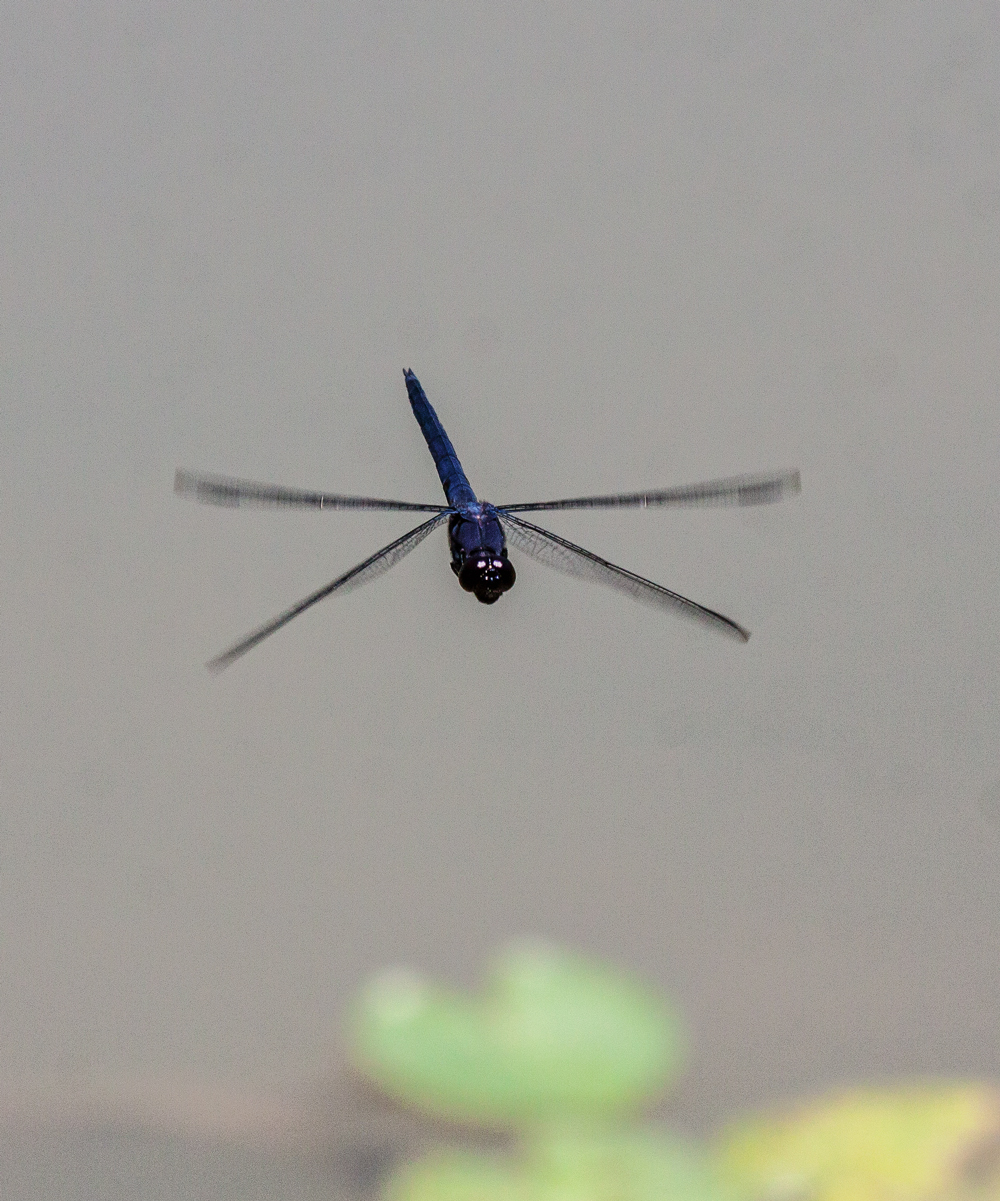
If you want a really lesson in patience, trying photographing dragonflies in flight. Yesterday I spent several hours trying to capture images of Prince Baskettail dragonflies (Epitheca princeps) as they conducted long, low patrols over a small pond at Jackson Miles Abbott Wetlands Refuge in Fort Belvoir, Virginia.

The Prince Baskettails didn’t always follow the same flight paths and their changes in flight direction often were unpredictable, but they kept coming back, giving me lots of chances to attempt to get shots. With some species you can wait for the flying dragonflies to take a break and perch for a moment or two, but Prince Baskettails have amazing stamina—I have never seen one stationary.

There are a number of different approaches to capturing in-flight images. Some folks like to pre-focus on a zone and wait until the dragonfly comes into that area. I like to acquire my target with my naked eye as it approaches and then track it through the camera’s viewfinder for as long as I can. The biggest problem is acquiring focus.  My preferred lens for shooting dragonflies is my trusty Tamron 180mm macro lens. Its focal length lets me use it as both a telephoto and a macro lens, but it is somewhat slow in focusing, so I ended up with lots of blurry shots.

However, I was able to capture some shots that were in focus, including this image that shows the amazing eyes and beautiful markings of this spectacular dragonfly. It’s probably my imagination, but the dragonfly in the photo almost seemed to be glancing in my direction as it flew by and giving me a little smile.

Prince Baskettail

© Michael Q. Powell. All rights reserved.


Read Full Post »

As I was looking over a whole range of the colorful flowers yesterday at Green Spring Gardens, I gradually realized that I was drawn most to those with simple shapes and relatively subdued colors, like the modest spiderwort (g. Tradescantia). There is a real beauty in its simplicity.

The bees seemed to like the spiderworts too, including one that I photographed with overfilled pollen sacs.

spiderwort

spiderwort

© Michael Q. Powell. All rights reserved.

Read Full Post »
For a change of pace I decided today to visit Green Spring Gardens, a historical county-run garden that always has lots of beautiful flowers. Some purple poppies were among my favorites. Several of them were in bloom, surrounded by a large number of seed pods. A honey bee and I were attracted to the same flower at the same time—the bee ignored me and busily went about its work.

Purple Poppy

© Michael Q. Powell. All rights reserved.

Read Full Post »

Purple Milkweed (Asclepias purpurascens) is in bloom in multiple locations at Huntley Meadows Park and the butterflies are loving it, including this Silver-spotted Skipper (Epargyreus clarus) that I spotted this past Monday.
Generally I have trouble identifying little skipper butterflies and Wikipedia notes that there are more than 3500 species of skippers worldwide.  The Silver-spotted Skipper, though, is pretty easy to identify, given its distinctive colors and markings.
There are several species of milkweed in my favorite marshland park and I have noticed more Purple Milkweed this year than in the past. This is really good news, because Purple Milkweed is considered to S2 (“imperiled”) in the Commonwealth of Virginia, according to the 2016 plant list of the Virginia Department of Conservation and Recreation.
Silver-spotted Skipper

© Michael Q. Powell. All rights reserved.

Read Full Post »

« Newer Posts - Older Posts »