Milkweed plants were flowering at Occoquan Bay National Wildlife Refuge on Tuesday (9 June) and the pollen baskets (corbiculae) on the hind legs of this bee were filled to overflowing. The bright orange concentration of pollen made it easy to track the bee, though its constant motion made it really tough to get a decent photograph.
Most often I think of pollen as being yellow in color, but in the past I have taken photos of bees covered in pollen that was another color. The third photo below from a post in May 2020 shows red pollen from Purple Deadnettle flowers (Lamium purpureum). The final photo below showing a bee covered in white pollen from a chicory flower is from one of my posts in August 2014.
I have a pretty memory of the subjects that I have photographed, but often can’t remember when I took the photos. When I did a Google search of “Mike Powell multi-colored pollen,” the results began with an AI summary that surprised me. It indicated that “Nature photographer Mike Powell frequently highlights the fascinating, vibrant spectrum of pollen colors collected by pollinators. Through his macro photography in Northern Virginia’s parks, he captures how pollen isn’t just yellow, but can appear in brilliant shades of blue, orange, red, pink, and white.”
Google also included a link to my blog, which my help to explain why my views have been unusually high this year, despite the fact that I have been posting less frequently than in the past. I am not a big fan of AI and am particularly negative about generative AI, but I have to admit that AI did a pretty good job in summarizing a large body of information, in this case my blog postings from 2012 to the present. Wow! It’s hard to believe that I have kept the blog going for that long.
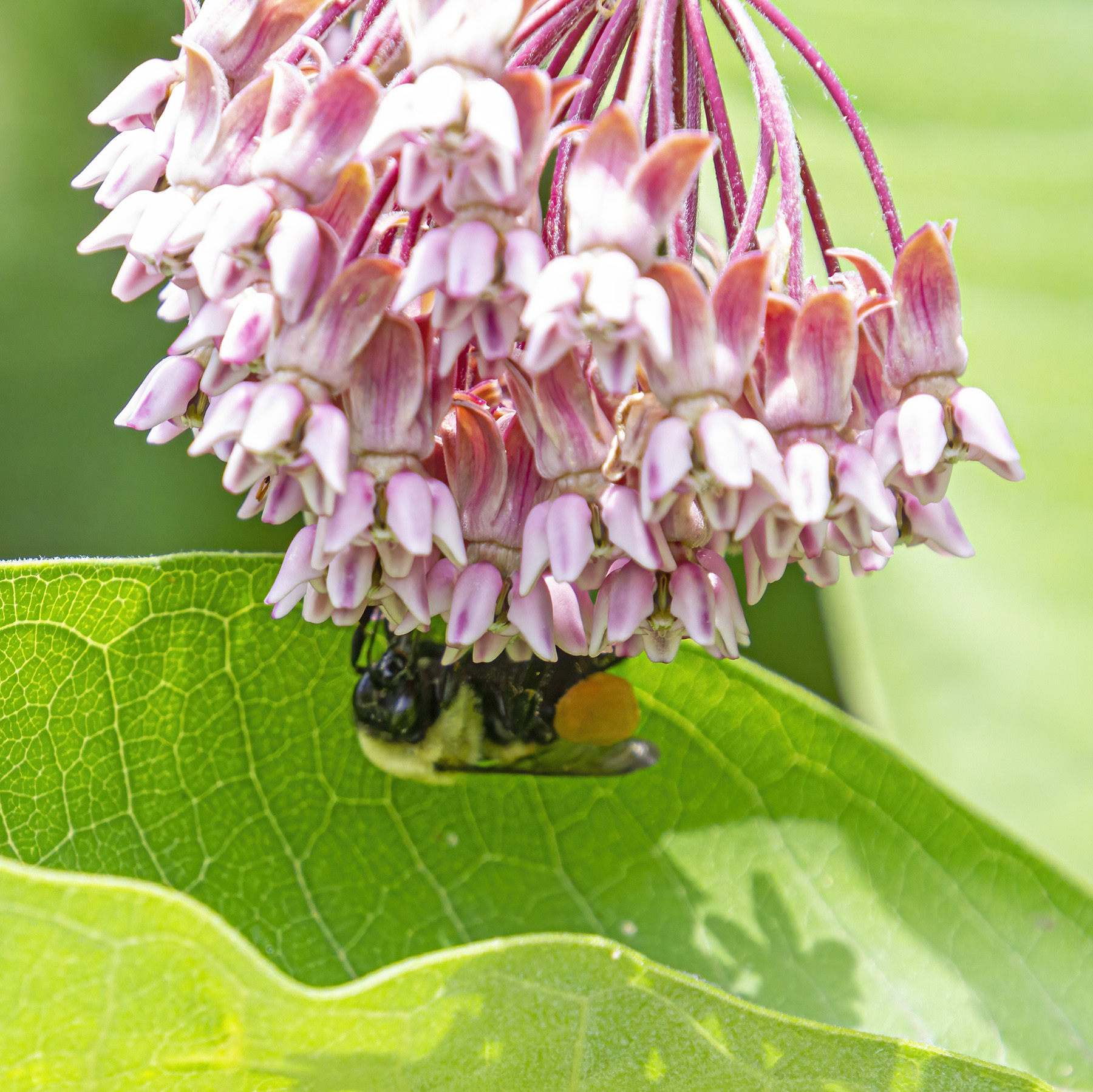
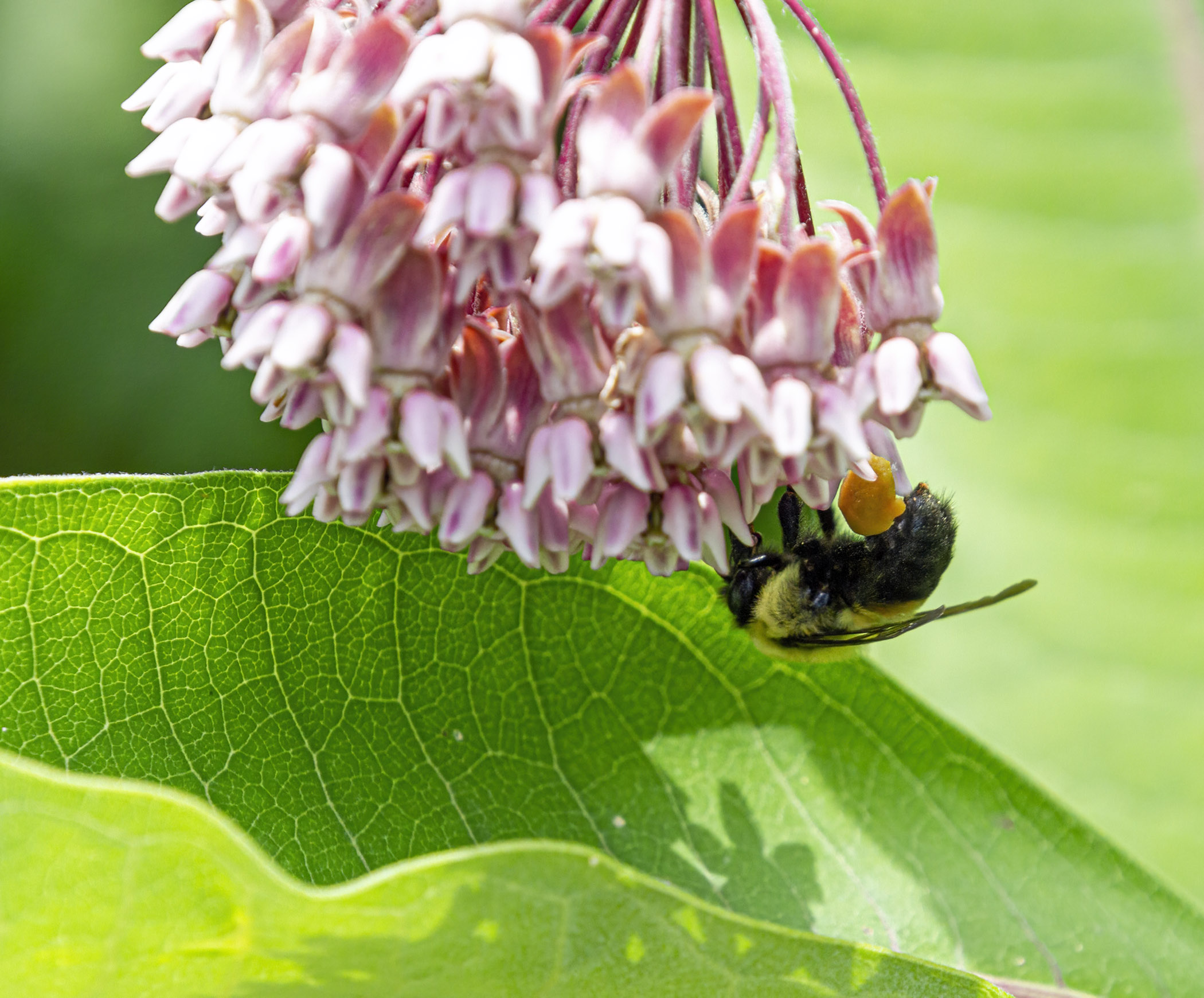


© Michael Q. Powell. All rights reserved.


I’ll not comment on AI from either a positive or negative stance. I must admit that your commentary is well thought out and illuminating. Yet, I prefer to focus on this posts #1 and #2 Bee photos. I Love them! Upon viewing them I was immediately taken way back to a post on Jodi McKinney’s The Creative Life In Between from July 31, 2017. The watercolor and poem by Jodi “A Bumble Bee Named Buzz” was featured and a then 3 year old Benjamin was enchanted. The following year we learned of the first observance of World Bee Day on May 20, 2018. We’ve celebrated, whether together or separately, every year since using Jodi’s poem and searching for bees collecting pollen! Lars Chittka ( zoologist, ethologist, and ecologist) in July of 2022 published a book titled “The Mind of A Bee” in which is written : “We owe the bees. Act accordingly.” A worthwhile read indeed, as we both agreed. Thank-you, Mr. Mike!!
Thanks so much for your thoughtful comments, Ellen. I feel all warm and fuzzy (kind of like a bee) when you share little vignettes of your interactions with Benjamin. I was always impressed by his surprising maturity at a young age. I was happy to be able to find Jodi’s blog posting (https://lifeinbetween.me/2017/07/31/a-bumble-bee-named-buzz/) and read the poem with delight. The watercolor painting reminds me that I need to get out my watercolors and play around–it’s been a while.
A trip down Memory Lane always make me smile…so very happy that you could join me. You may also recall that “Buzz” was part of Jodi’s Sept. 2017 book “Klaus the Mouse”. I have several of Benjamin’s favorite posts from his special friend “My Jodi” archived on my computer. You might also enjoy one of those blog posts dated Jan. 29, 2018 : “Orange Flowers For Benjamin”.
a
So sweet. Thanks. I actually have a stash of physical letters that I have retained over the years (which essentially says that I am old and am grew up in the analogue (vice digital) age). Memories of past happy and meaningful moments help to sustain us when things get rocky and difficult on our individual journies. 🙂