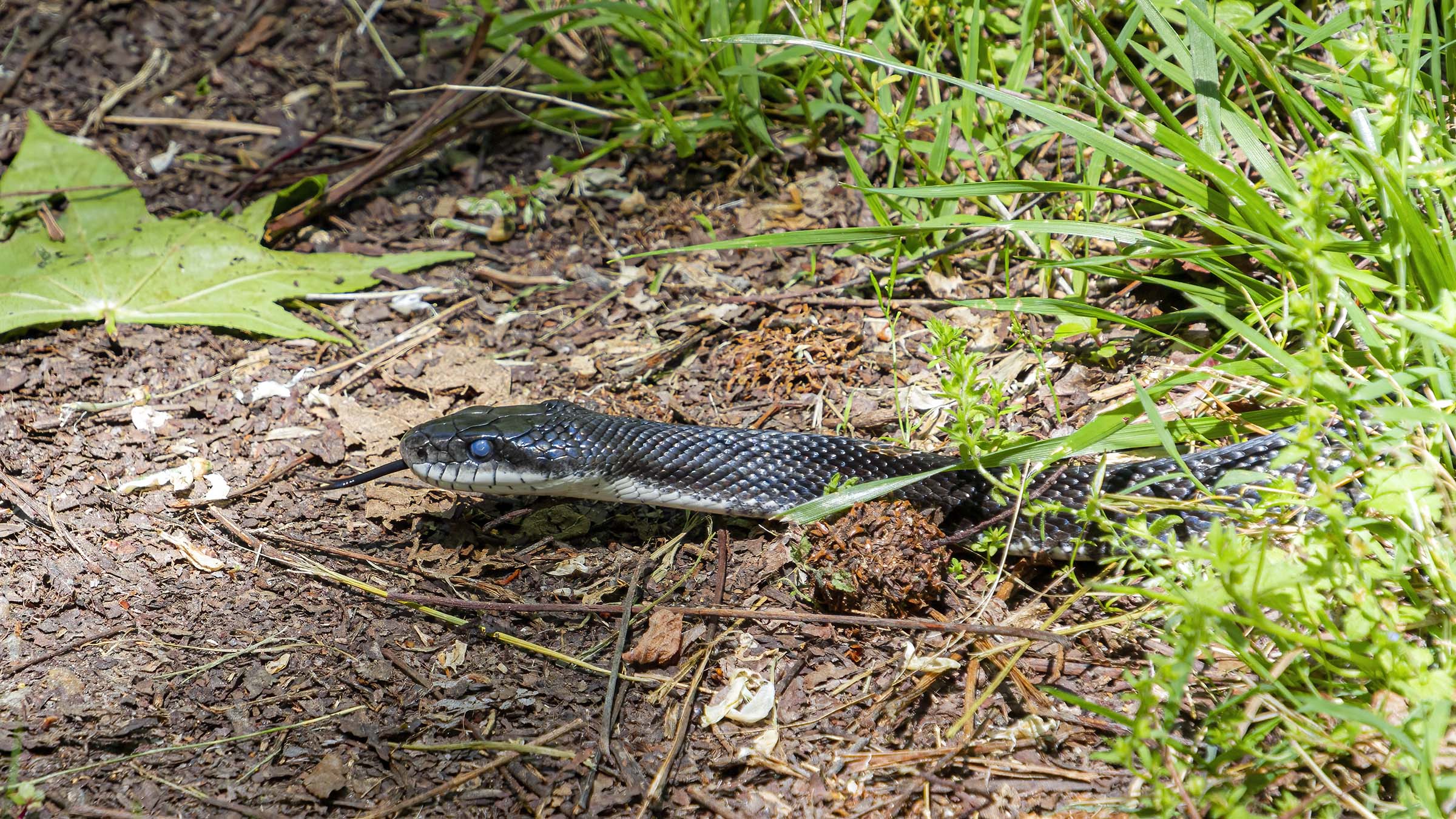
As I was walking down a trail last Friday at Occoquan Bay National Wildlife Refuge, I noticed a large black snake preparing to cross the trail. I know that there are very few poisonous snakes in my area, so I was not worried about being bitten. Instead I stopped walking and focused my camera on an open area that the snake would be moving through.
The snake was moving quite slowly and was flicking its tongue a lot, which I thought was a little strange. Later, when I was reviewing the images on my computer, I noticed that the eyes of the snake were cloudy and bluish, a definite sign that the snake was getting ready to shed its skin, a process that generally takes about a week. Perhaps the snake’s vision was impaired and it was using its tongue to assist in navigation.
I believe that this is a Central Ratsnake (Pantherophis alleghaniensis), a large snake that is quite common in Virginia. After I captured a few images and the snake finished crossing the trail and I continued along it, with my eyes and ears on alert to find my next subject to photograph.
© Michael Q. Powell. All rights reserved.


Lovely portrait. I have never thought about how visually impaired reptiles might be during this stage of their shed. I encountered my first snake of the year last week, a happy sign of warmer months.
Thanks, Laura. From what I understand, at certain stages of the shedding of their skin, including the eye coverings, the snakes are almost blind.
Hi Mike!
Just saw your picture of the rat snake. I take care of a six footer at a nature center and can tell you they are never blue eyed. What you’re seeing is called an eye cap, it is an indicator that the snake is about to go into shed. Over the next two weeks, his skin will turn a bluish tint and eventually he’ll slip out of it. During this time, they generally like to be left alone as they are conserving the energy necessary to shed. They are non venomous and non aggressive but will sometimes fake rattling noise to scare off predators
Lisa
Thanks, Lisa, for all of the additional information, much of which was new to me. I did know that the “blue-eyed” condition was a temporary one while the snake was preparing to shed its skin, but I figured that it was easier to grab viewers’ attention with the title I used. For what it’s worth, I did a blog posting a number of years ago of a garter snake with the same “blue eyes.” (https://michaelqpowell.com/2016/05/09/blue-eyed-garter-snake/).