I was thrilled on Thursday to spot several Gray Petaltail dragonflies (Tachopteryx thoreyi) while I was exploring a small local pond. Actually I was exploring a mucky seep area beyond the pond, a habitat that I knew was preferred by this species. When I find an area with a lot of skunk cabbage, I know I am in the right kind of place to find this species.
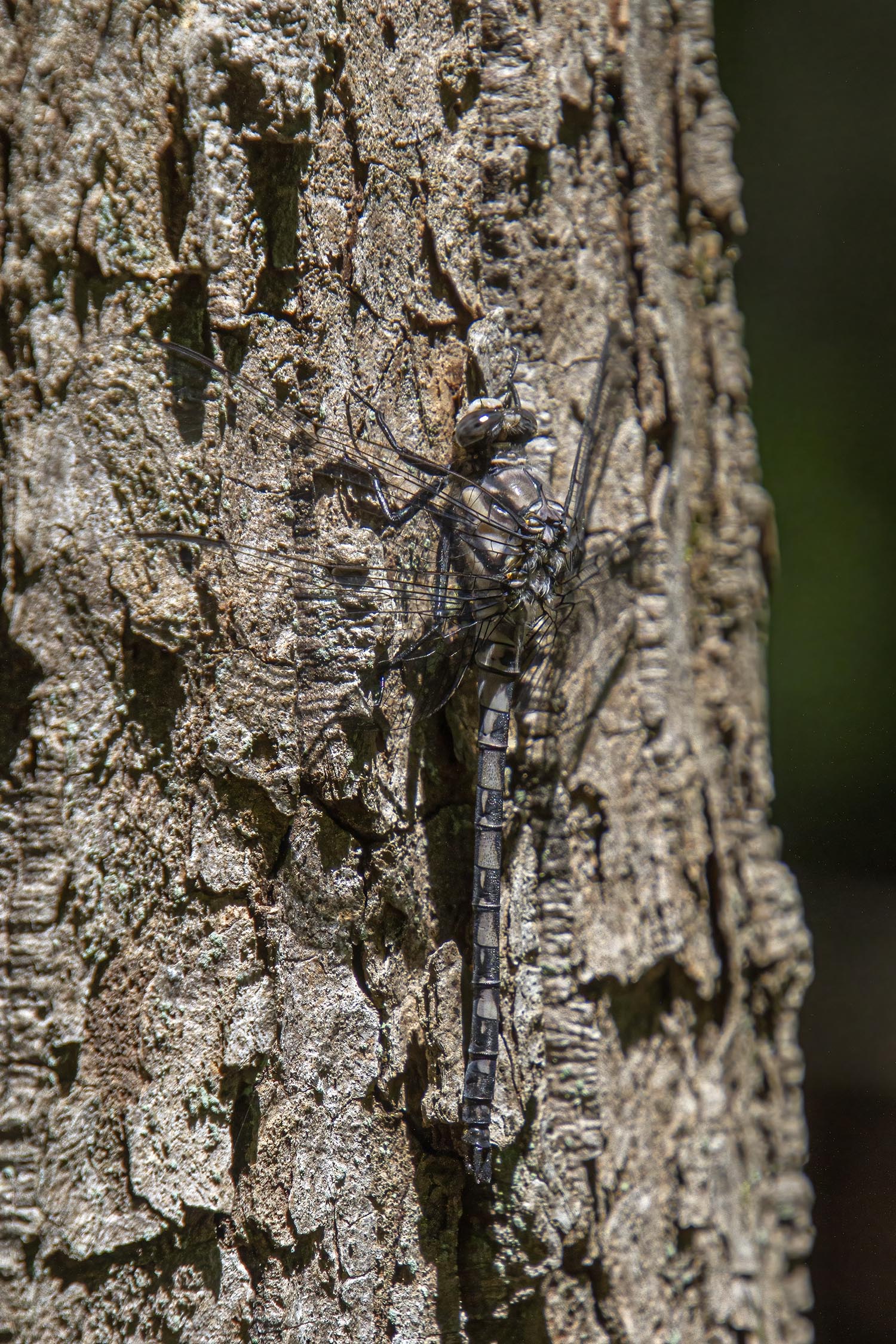
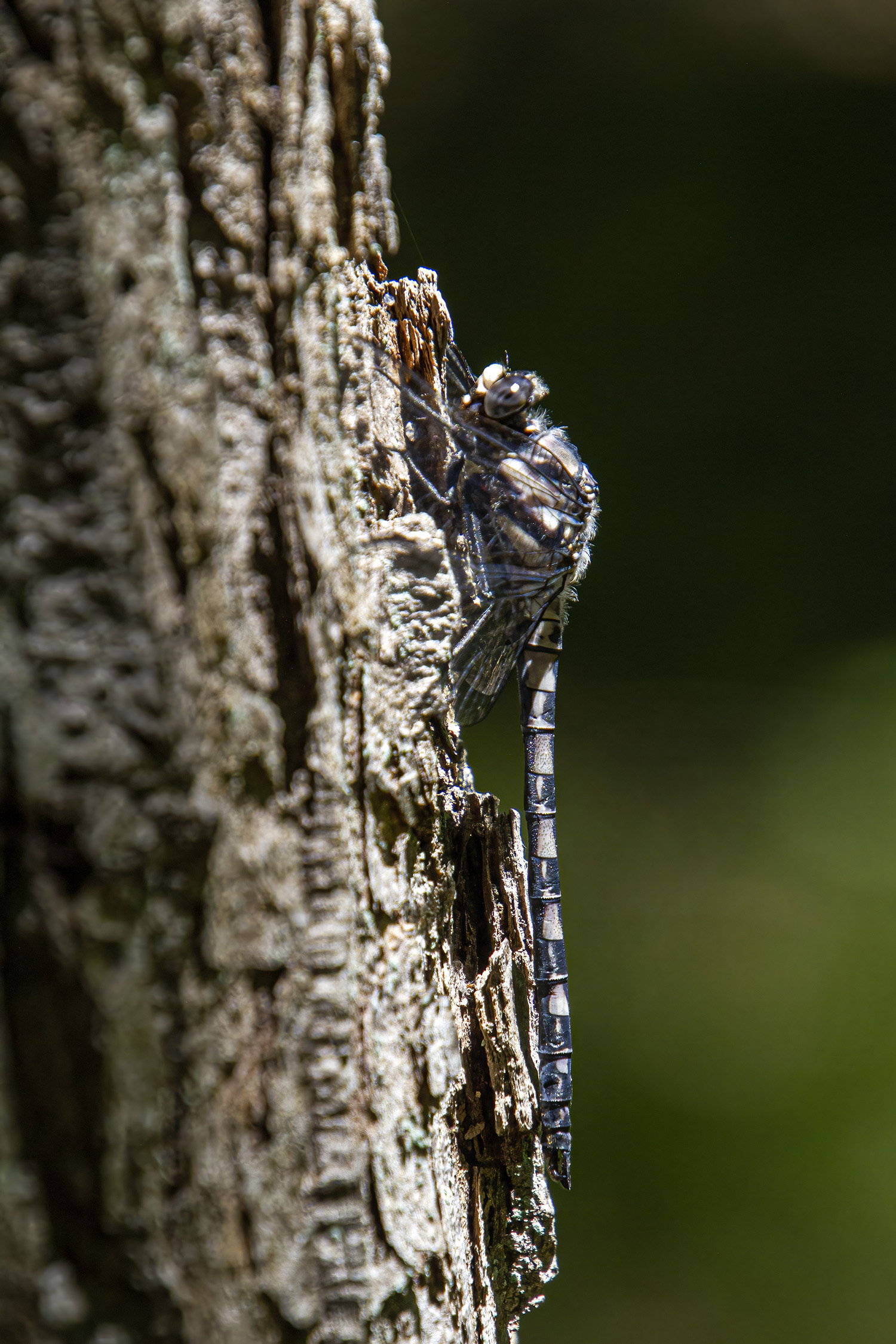
Gray Petaltails are amazing. They are the only member of the monotypic genus Tachopteryx and are often considered to be the most primitive living odonates. Colorwise, they are mostly grey and black, which allows them to blend in perfectly with the bark of tree trunks on which they often perch.
The first photo below shows an almost perfectly camouflaged Gray Petaltail. I watched it land on the tree trunk and still had some difficulty finding it in my camera’s viewfinder. I carefully moved to the side a bit and captured the second image in which you can see the dragonfly a bit better.
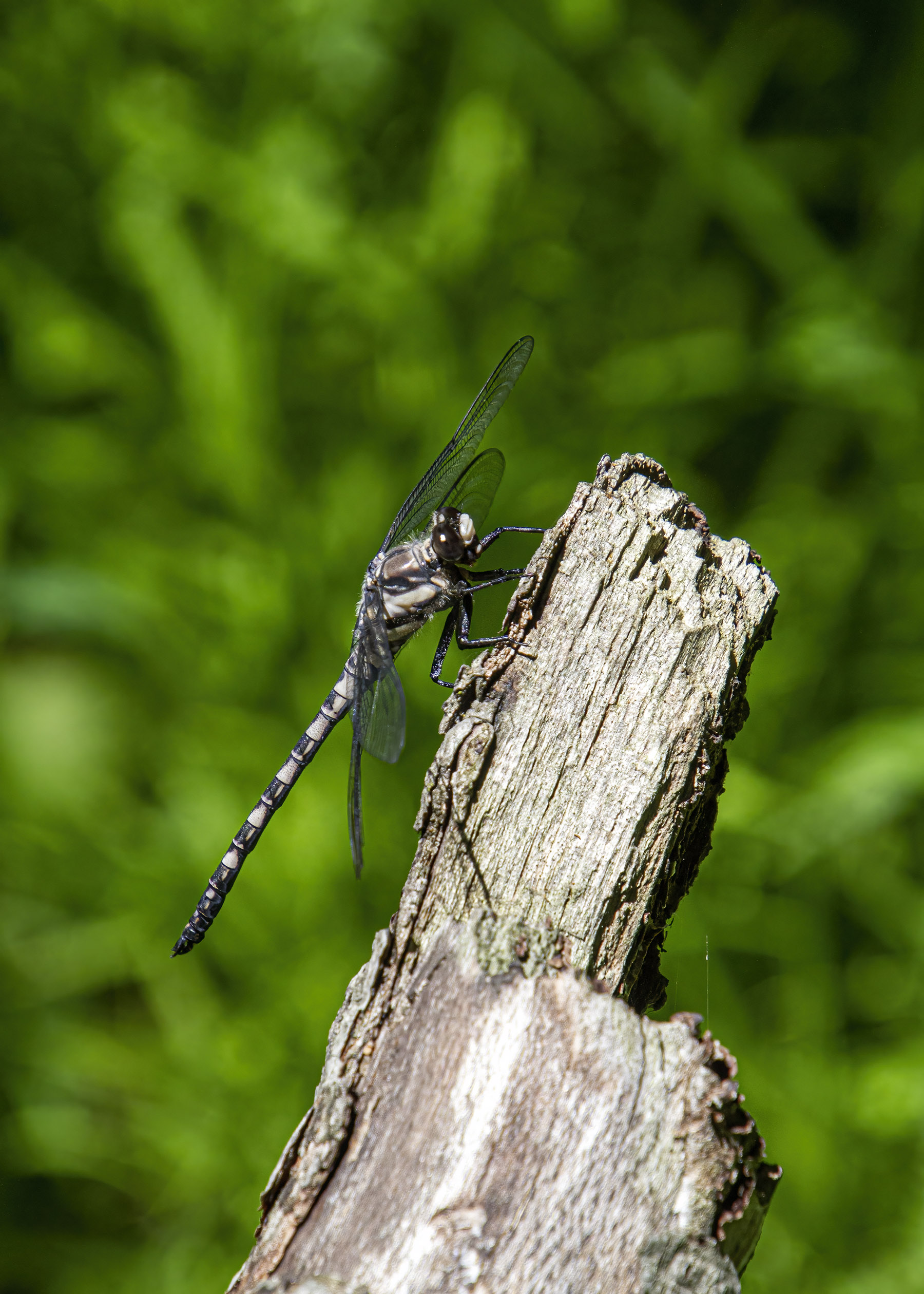
Once I had spotted my first Gray Petaltail, I hung around the seep area for quite a while and had a number of additional encounters. The third photo shows a Gray Petaltail perching on a broken off tree in the distance and I really like the way that the background looks in the shot.
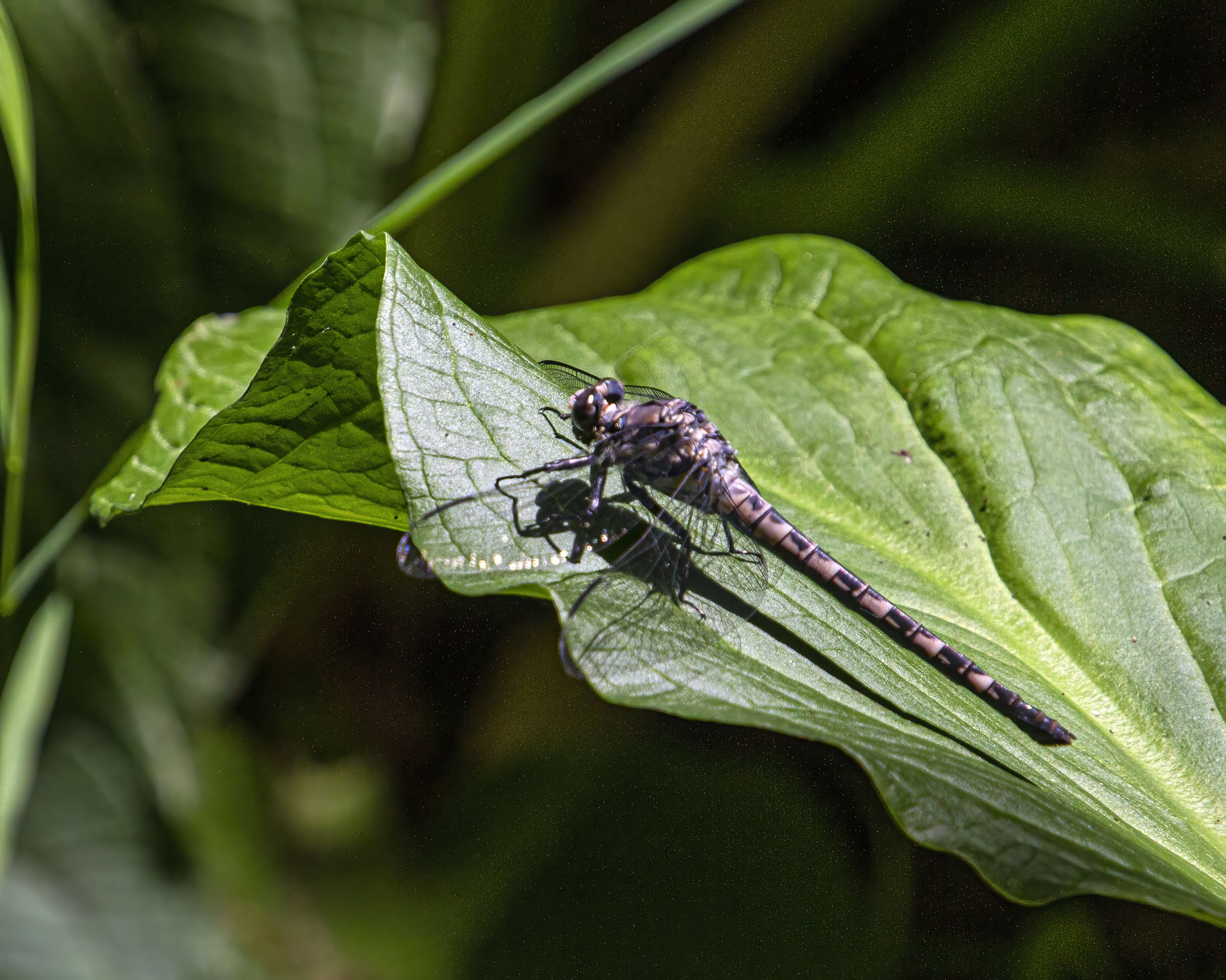
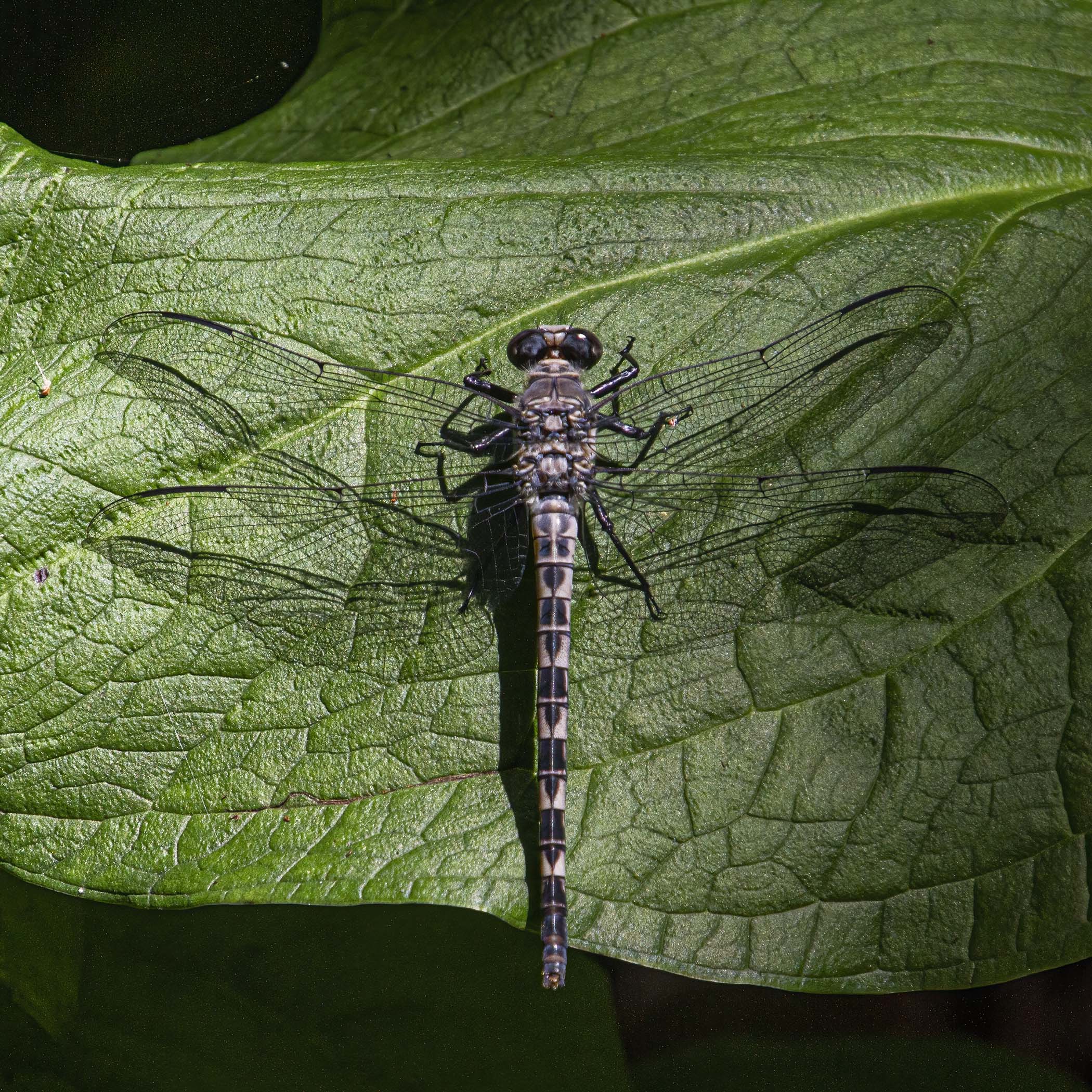
The final two shots are among my favorites, because they show a Gray Petaltail perched horizontally on skunk cabbage leaves. I have often tried to get shots like these, but in the past the Gray Petaltails have rarely perched on this vegetation. In the final image the dragonfly looks like it is perched vertically, but I took the shot with my camera pointed downward at the Gray Petaltail that was perched horizontally on the skunk cabbage leaf. I love the way I was able to capture the texture of the leaf and the shadows of the wings was a nice bonus.
© Michael Q. Powell. All rights reserved.

 Mike Powell