Feeds:
Posts
Comments

Posts Tagged ‘Woodbridge VA’

This Eastern Bluebird (Sialia sialis) was totally focused on a single remaining berry when I spotted it last Wednesday at Occoquan Bay National Wildlife Refuge. The “prize” seems modest, but this little bird was determined. I believe it was successful in achieving its goal.

Eastern Bluebird

© Michael Q. Powell. All rights reserved.

Read Full Post »

In addition to the large raft of American Coots (Fulica americana) that I spotted in the waters off of Occoquan Bay Wildlife Refuge last week and featured in a posting entitled A raft of coots, I also saw three coots near to the shore swimming around in a little circle like they were lost. I do not know if they had somehow gotten separated from the group, but they struck me as being very vulnerable—as several readers have noted, coots are vulnerable to being picked off by bald eagles.

This close-up shots highlight some of the notable characteristics of this species, including their red eyes and their legs that are placed rather far back on their bodies, making walking a bit of a challenge.

American Coot

© Michael Q. Powell. All rights reserved.

Read Full Post »

It is a bit of a cliché, but I have to admit that bluebirds really do make me feel happy. I was therefore absolutely delighted to spot a small flock of them flitting in and out of the vegetation on Wednesday at Occoquan Bay National Wildlife Refuge. The rusty color on the breasts of these Eastern Bluebirds (Sialia sialis) fit in well with the fall foliage palette.

These three images show different approaches I used in trying to capture images of these beautiful little birds. Sometimes I tried to take shots when the blue birds were almost imbedded in the vegetation; sometimes I tried to get an unobstructed angle with the natural landscape providing a visual backdrop for the bird; and sometimes I tried to isolate the bird and use an uncluttered background such as the sky in the final photo.

I am not sure that any of these three approaches is necessarily better than the others. Instead I personally like the visual variety that comes from using somewhat different approaches when shooting a subject. What do you think?

Eastern Bluebird

Eastern Bluebird

Eastern Bluebird

© Michael Q. Powell. All rights reserved.


Read Full Post »

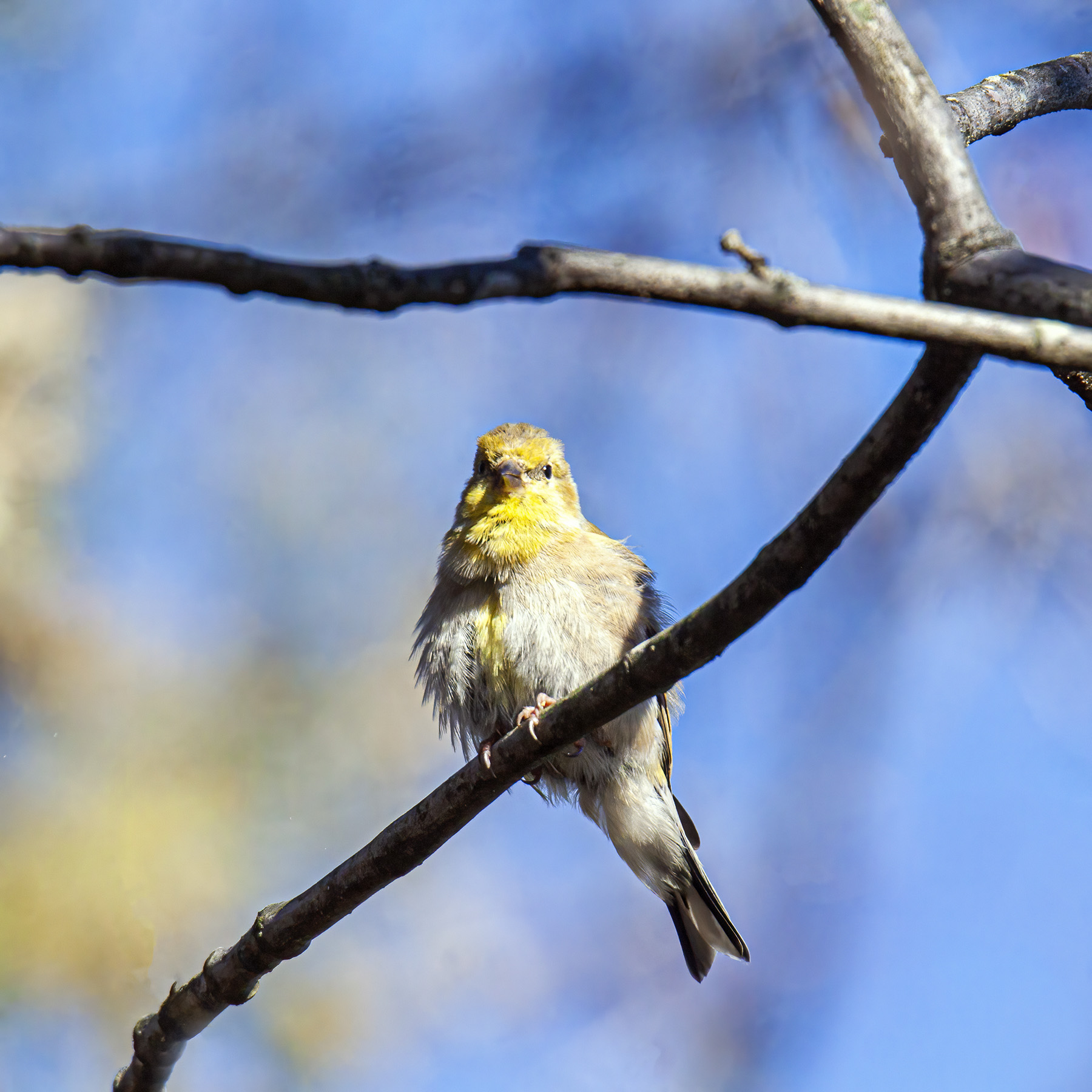
I was happy to spot this somewhat scruffy looking American Goldfinch (Spinus tristis) as I wandered the trails at Occoquan Bay National Wildlife Refuge yesterday seeking a respite from election news coverage. As is often the case, nature served as a soothing balm to calm my anxieties and reestablish my internal balance.


American Goldfinch

American Goldfinch

© Michael Q. Powell. All rights reserved.


Read Full Post »

I was excited to spot this beautiful Palm Warbler (Setophaga palmarum) last Friday at Occoquan Bay National Wildlife Refuge. I had more or less given up on seeing any warblers except for Yellow-rumped Warbler, which will remain with us for a while, so this was a pleasant surprise. The little bird was full of energy and shortly after it leaned forward a little, as you can see in the second image, it flew to a more distant part of the field in which it was foraging.

Palm Warbler

Palm Warbler

© Michael Q. Powell. All rights reserved.

Read Full Post »

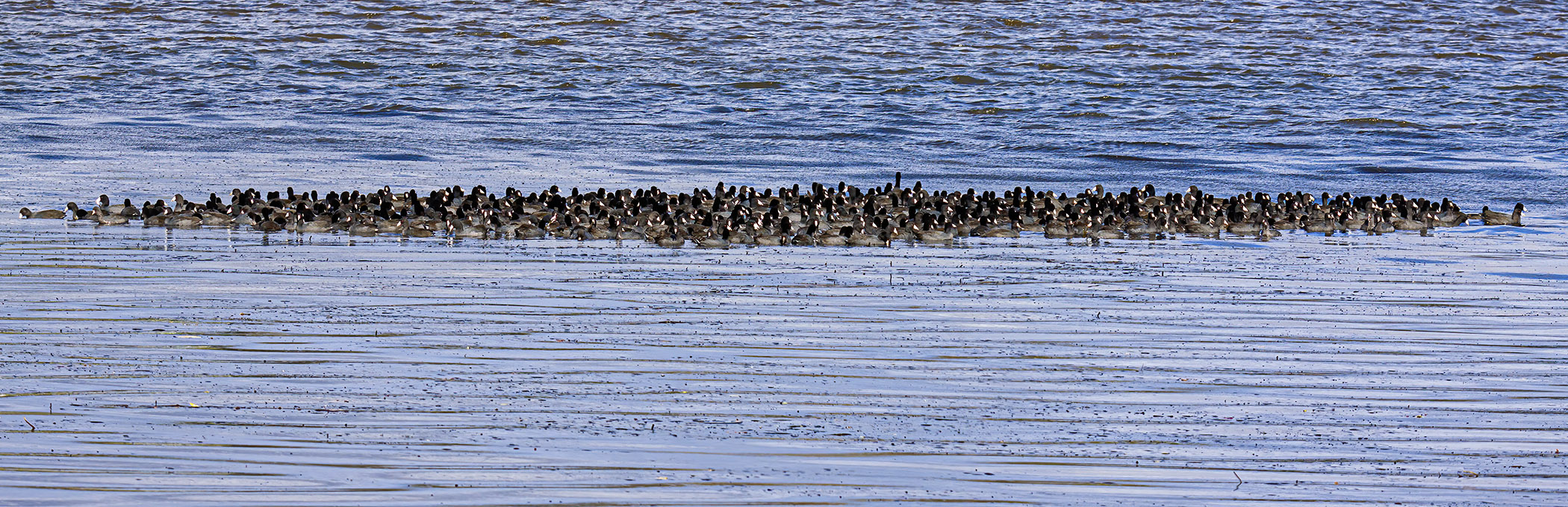
Normally when I see American Coots (Fulica americana) I see only a few of them at a time, but last Friday I spotted a whole raft of them in the waters off of Occoquan Bay National Wildlife Refuge. They seemed to be of mixed ages, not just old coots like me.

I zoomed out with my 150-600mm lens to capture the whole raft and then zoomed in to capture some details. I recommend that you double-click on the images, especially the second one, to see wonderful details, like all of the red eyes. There seem to be a number of different colored beaks in the group, suggesting the possibility that there are some other species mixed in, though it appears to be mostly coots.

American Coots

American Coots

© Michael Q. Powell. All rights reserved.

Read Full Post »

I spotted this bird from a distance on Friday at Occoquan Bay National Wildlife Refuge when it was perched and when it took to the air. The tail struck me as being exceptionally long and the wings seemed relatively short in length, so I decided it was probably not a Red-shouldered Hawk or a Red-tailed Hawk, the two most common hawks where I live. Was it a falcon or one of the smaller hawks?

As I usually do in situations like this, I asked for help in a Facebook group devoted to birding in Virginia. Some experts there identified this as a mature Cooper’s Hawk (Accipiter cooperii). The Cornell Lab of Ornithology described the species with these words, “Among the bird world’s most skillful fliers, Cooper’s Hawks are common woodland hawks that tear through cluttered tree canopies in high speed pursuit of other birds…Finding a Cooper’s Hawk is typically a matter of keeping your eyes peeled – they’re common but stealthy, and smaller than other common hawks like the red-tailed, so your eye might skip over them in flight.”

Cooper’s Hawks are about the size of crows, although males are significantly smaller than their mates. Mating can therefore be a tricky proposition for a male Cooper’s Hawk, given that females Cooper’s Hawks specialize in eating smaller birds.

Cooper's Hawk

Cooper's Hawk

© Michael Q. Powell. All rights reserved.


Read Full Post »

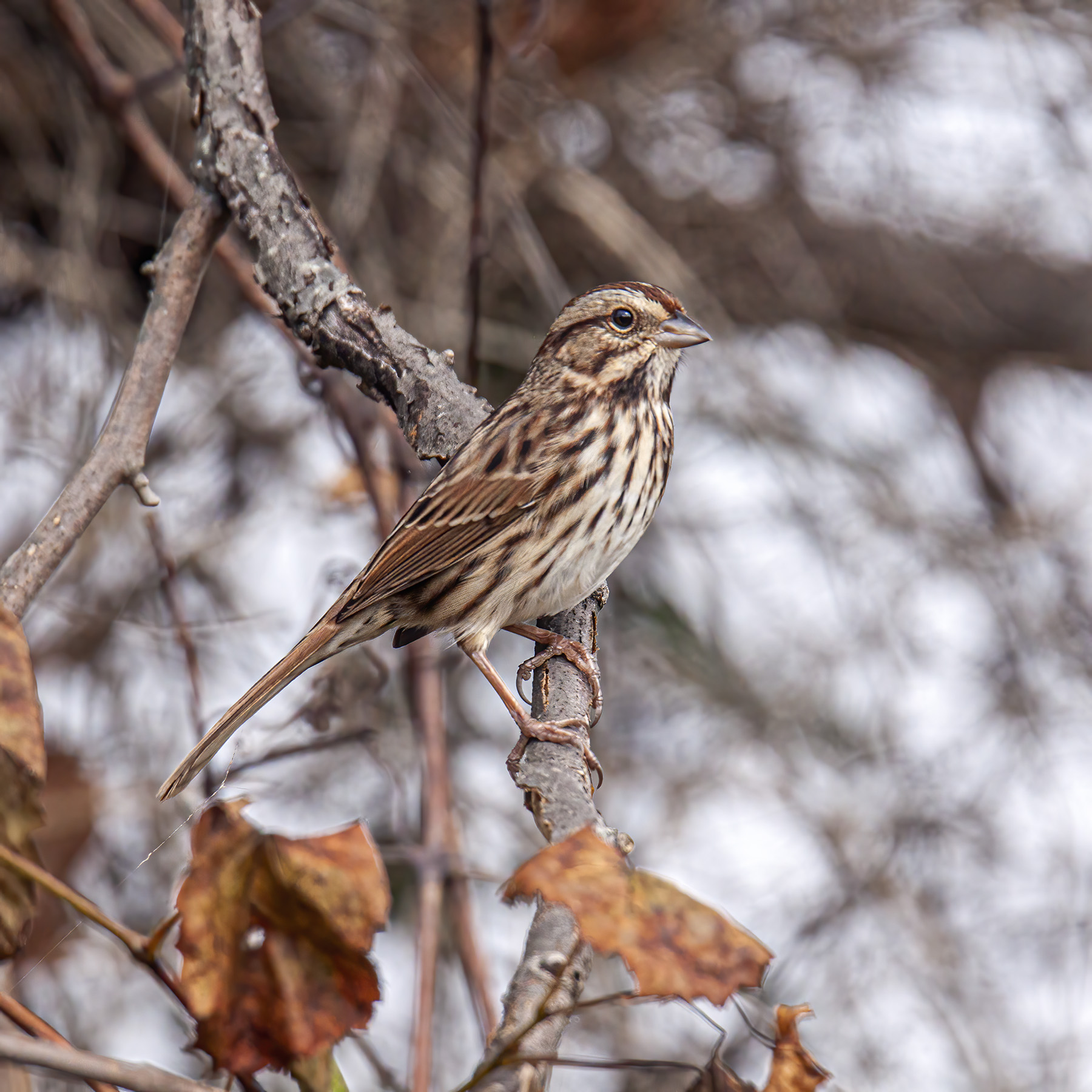
When I first started photographing birds, all sparrow looked the same to me—they were all nondescript little brown birds. Over time I have come to appreciate the subtle variations in color and markings that help to differentiate the species, although identification is still a bit of a hit-or-miss proposition for me.

I spotted this handsome sparrow on Monday as I was exploring at Occoquan Bay National Wildlife Refuge. I believe that it is a Song Sparrow (Melospiza melodia), one of the relatively common sparrow species where I live. I really like the sparrow’s perch and the fact that it includes some of the dried leaves that will soon be falling from the branch. The white skies in the background give this image an almost wintry feel, though it is way too early for me to be even thinking of snow.

Song Sparrow

© Michael Q. Powell. All rights reserved.

Read Full Post »

It is hard to appreciate the length of the wings of a Great Blue Heron (Ardea herodias) when it is standing in the water. When it takes off, however, the heron extends its wings fully and the sight is amazing, especially when the heron is flying away from you. This Great Blue Heron that I spotted on Monday at Occoquan Bay National Wildlife Refuge initially was standing on a small sandbar, but took to the air when it detected my presence. It started out heading away from me and gradually turned to my right as it gained altitude.

In case you are curious, the wingspan of a Great Blue Heron is 65.8-79.1 inches (167-201 cm), according to the Cornell Lab of Ornithology website. Wow!

Great Blue Heron

Great Blue Heron


Great Blue Heron

© Michael Q. Powell. All rights reserved.


Read Full Post »

With Halloween on the horizon, I thought I would share an image today of a Rusty Blackbird (Euphagus carolinus) that I spotted on Monday at Occoquan Bay National Wildlife Refuge. The bird’s wide-open pale eyes give it an eerie look that fits in well with other Halloween icons like black cats, witches, and skeletons.

According to the Cornell Lab of Ornithology website, “Rusty Blackbird is one of North America’s most rapidly declining species. The population has plunged an estimated 85-99 percent over the past forty years and scientists are completely puzzled as to what is the cause.” Needless to say, I was thrilled to see this Rusty Blackbird that appeared to part of a small flock high in the trees.

Rusty Blackbird

© Michael Q. Powell. All rights reserved.

Read Full Post »

On Monday at Occoquan Bay National Wildlife Refuge I spotted Yellow-rumped Warblers (Setophaga coronata) multiple times.  However, there is a huge difference between getting a glimpse and getting a shot of one of these hyperactive little birds, particularly when many of the trees still have their leaves.

I captured the first image when one of the warblers was feasting on clusters of poison ivy berries. I definitely was not complaining when he did not offer to share his “treats.” I was surprised to learn several years ago that these berries are a primary food source for a number of small birds during the winter months.

In the second image, I believe the warbler was getting ready to move to a new perch or may have just arrived at this one. In either case, I think it looks pretty cool to see the one wing partially extended.

The composition of the final photo is the simplest—it is just a shot of the perched warbler. However, I really like the way that some of the foliage shows through in the blurry background. You may have noted that the backgrounds are light-colored. On the day when I took these shots, the skies were completely overcast and appeared to be a solid white.


Yellow-rumped Warbler

Yellow-rumped Warbler

Yellow-rumped Warbler

© Michael Q. Powell. All rights reserved.

Read Full Post »

My idea of a perfect bird shot during this autumn season would be to capture a pretty bird perfectly posed against a background of colorful foliage. Alas, things don’t often work out that well in the real world, so I have to make the best of what I am able to find.

In this case, it was a Gray Catbird (Dumetella carolinensis) that I spotted during a recent visit to Occoquan Bay National Wildlife Refuge. The feathers of this catbird are muted in color, as are the colors of the dying leaves that surround it. Nonetheless, I like this rather pleasing portrait of a bird that has a vocal repertoire equal to that of a mockingbird.

Gray Catbird

© Michael Q. Powell. All rights reserved.

Read Full Post »

Flowers are slowing giving up their colors and fewer insects are flying as we move deeper into fall. It lifts my spirits to see the survivors, like this Cabbage White butterfly (Pieris rapae) that I spotted during a trip to Occoquan Bay National Wildlife Refuge at the end of September. The Cabbage White may appear to be completely monochromatic, but if you double-click on the image, you can get a look at its beautiful speckled green eyes.

Cabbage White

© Michael Q. Powell. All rights reserved.

Read Full Post »

Red Admiral butterflies (Vanessa atalanta) are quite common in my area, but for some unknown reason I have not seen very many of them this year. I was therefore quite happy to spot this one during a recent visit to Occoquan Bay National Wildlife Refuge. In this image, the red leaf in the bottom of the frame helps to remind us that we are well into autumn and more and more of the foliage is changing colors or dropping to the ground—after a recent heavy rainstorm, the grown was covered with fallen leaves.

Red Admiral

© Michael Q. Powell. All rights reserved.

Read Full Post »

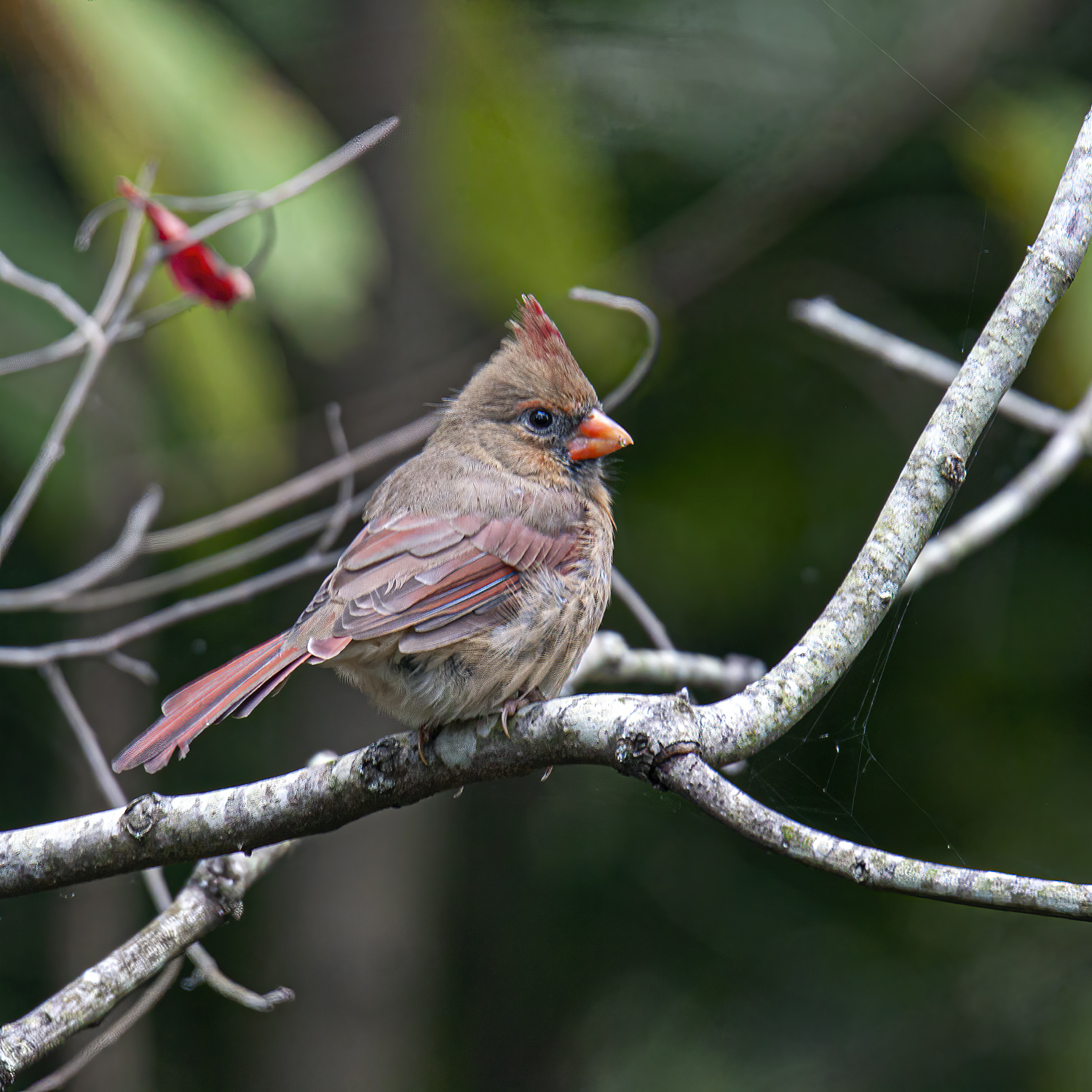
Although I really like the bright red color of the male Northern Cardinal (Cardinalis cardinalis), there is something even more special about the subtle beauty of a female cardinal, like this one that I spotted last week at Occoquan Bay National Wildlife Refuge. The muted colors of this bird seem particularly appropriate for autumn in this area. The changing foliage here rarely has the brilliant yellows and reds found in other parts of the country, but transitions to paler shades before the leaves all fall to the ground.

Northern Cardinal

© Michael Q. Powell. All rights reserved.

Read Full Post »

As I was walking along one of the trails recently at Occoquan Bay National Wildlife Refuge, my eyes were drawn to the bright orange of a patch of fungus. Orange is one of the colors that I tend to associate with autumn and with holidays like Halloween and Thanksgiving, so I was feeling very seasonal. I do not know my fungi very well, but I think that this might be Chicken of the Woods (Laetiporus sulphureus).

From what I have read, this mushroom can be used as a substitute for chicken and can be sautéed, deep fried, baked, and used in soups. I prefer to enjoy its beauty with my eyes only—the consequences of eating the wrong mushroom can be pretty dire.

The third image gives you an overall view of the mushroom “patch.” However, I had a macro lens on my camera, so I had fun exploring the different elements of the scene. The first image reminds me of Halloween candy corn, a traditional candy that most people either love or hate. In the second image, I was attracted to the circular rows of water droplets that paralleled the rings of colors of the mushroom.

Chicken of the Woods

Chicken of the Woods

Chicken of the Woods

© Michael Q. Powell. All rights reserved.

Read Full Post »

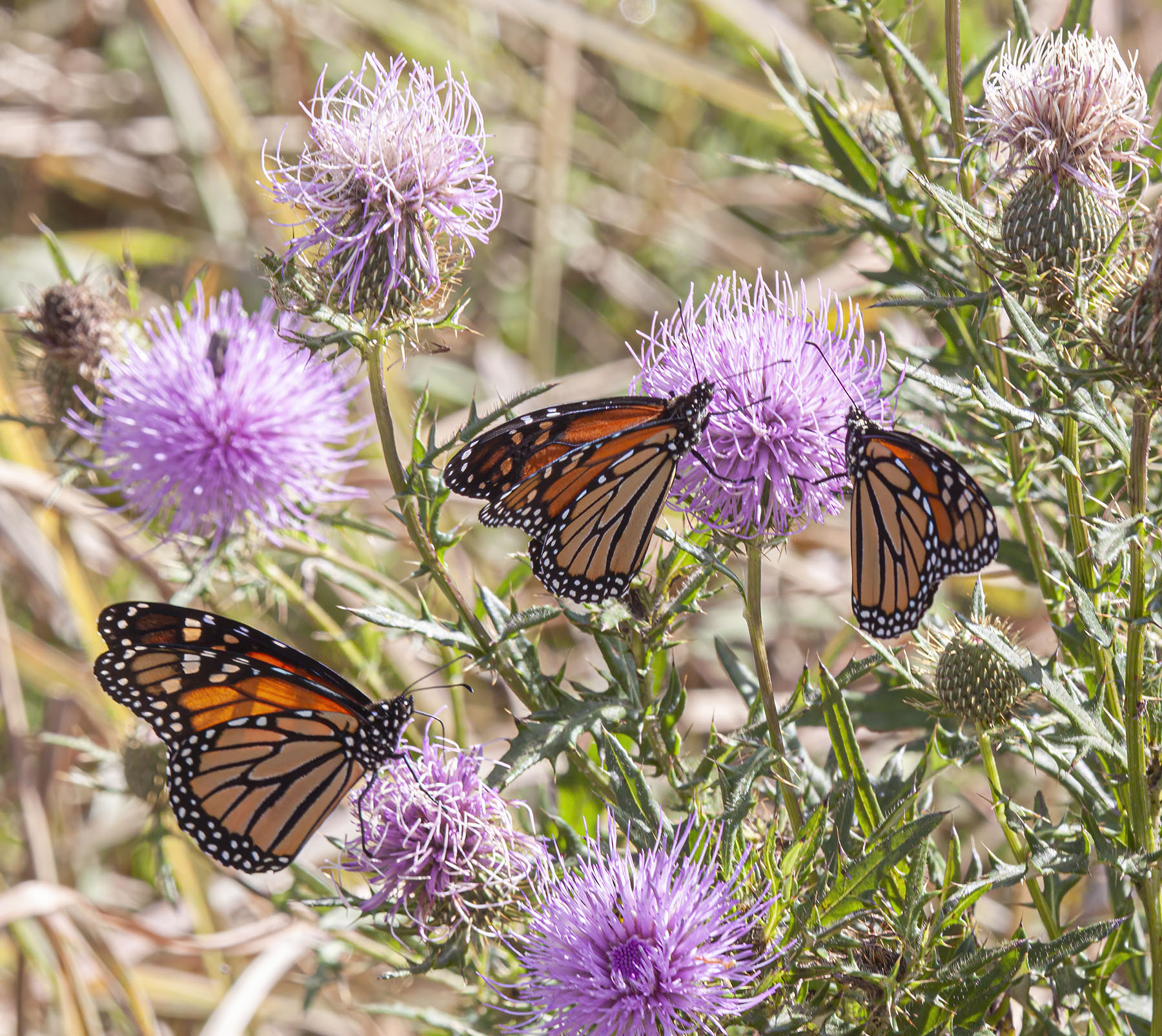
As many of you know, I am always excited to see a Monarch Butterfly (Danaus plexippus). This season started slowly and after a few months I feared that I would not see any of them at all. However, late in the season I began to spot them at multiple locations. Often they were by themselves and only occasionally did I see two of them in the same location.

Imagine my joy when I managed to capture three of them in a single shot on the first of October at Occoquan Bay National Wildlife Refuge, long after I expected them to have migrated out of our area. The butterflies were feverishly feeding on some thistles that were flowering, probably packing in energy for the long migratory journey south.

I suspect that this will be my last sighting of this colorful butterfly species this year. I bid these three monarchs farewell and wish them a safe onward journey.

Monarch butterflies

© Michael Q. Powell. All rights reserved.

Read Full Post »

I have always admired Downy Woodpeckers (Picoides pubescens), the smallest woodpeckers in our area, because they are so energetic, hard-working, and focused. They are fun to watch as they move all around in a tree, poking and probing as they search for a tasty treat. I spotted this Downy Woodpecker, which looks to be a female because it does not have a patch of red on the back of its head, last week as I was exploring Occoquan Bay National Wildlife Refuge.

Downy Woodpecker

Downy Woodpecker

© Michael Q. Powell. All rights reserved.


Read Full Post »

How sticky are the toe pads of a tree frog? This Green Tree Frog (Hyla cinerea) had no problems clinging to the painted surface of a sign when I spotted it last Thursday at Occoquan Bay National Wildlife Refuge.

Was it technically in violation of the access policy?

Green Tree Frog

Green Tree Frog

© Michael Q. Powell. All rights reserved.

Read Full Post »

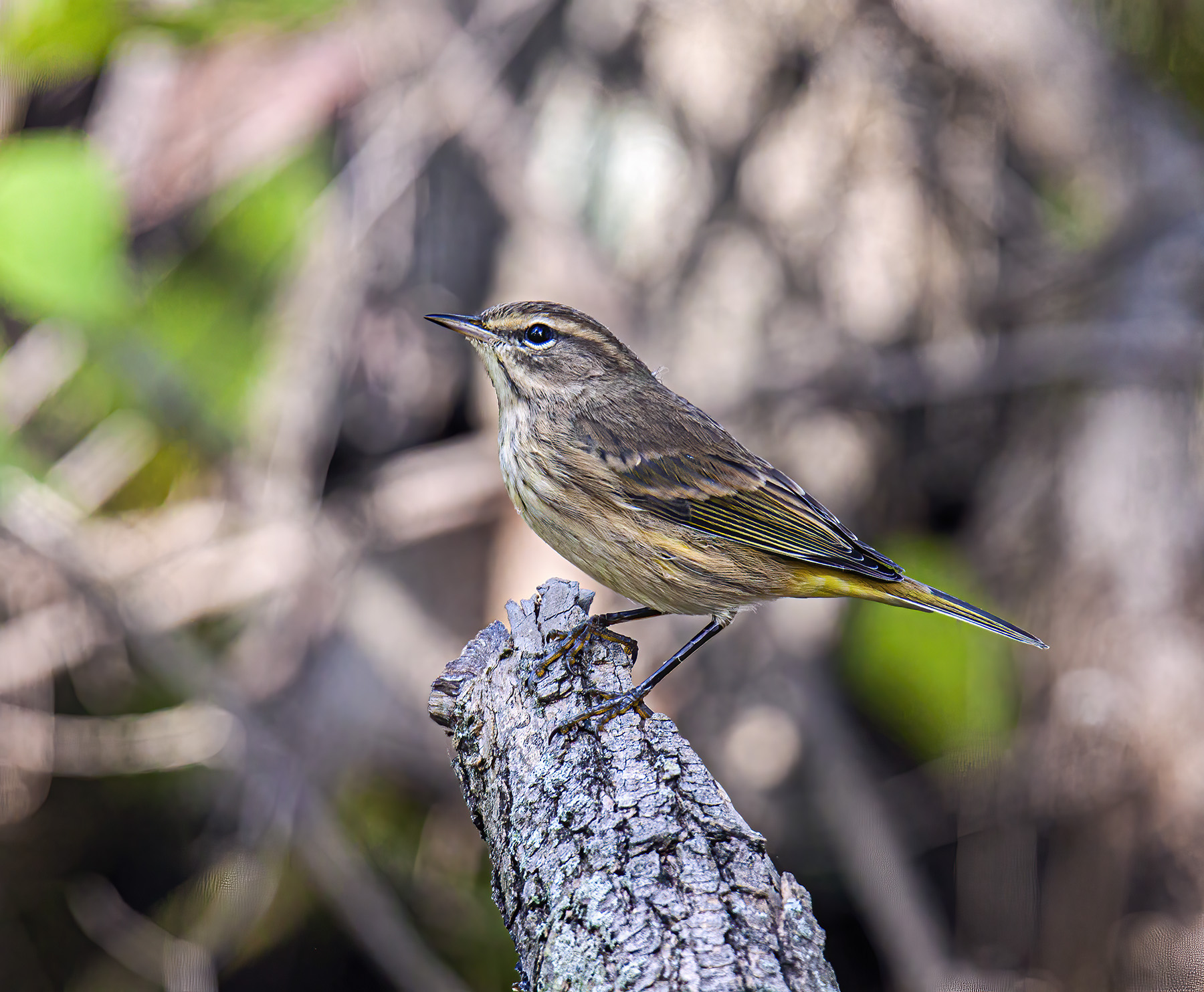
When I first saw this bird bouncing around on the ground on Monday at Occoquan Bay National Wildlife Refuge, I thought that it might be a sparrow. Then I caught a flash of yellow as the bird wagged its tail and I realized that it was a Palm Warbler (Setophaga palmarum).

Most warblers forage high in the trees, where they are difficult to see. The Palm Warbler, however, forages mainly on open ground or in low vegetation, making it marginally easy to spot and to identify.

Palm Warbler

© Michael Q. Powell. All rights reserved.

Read Full Post »

I was fortunate when the Black Saddlebags dragonfly (Tramea lacerata) that I was tracking finally landed on Monday at Occoquan Bay National Wildlife Refuge and I was able to capture this image. Black Saddlebags spend most of their time gliding and circling overhead and it is rare for me to see one perching. This species is one of only a handful of dragonfly species in North America that migrate and this dragonfly may have been merely visiting the refuge on a southward journey.

As I noted in my posting yesterday, I have now switched to my 150-600mm telephoto zoom lens as my walkaround lens and I captured this image with that lens. The lens was fully extended to 600mm for this shot and I was using a monopod for some additional stability. It is a little unusual for me to try to photograph such a small subject with my long lens, but this shot shows that it is possible to get a reasonably sharp image if I pay a lot of attention to my technique.


Black Saddlebags

© Michael Q. Powell. All rights reserved.

Read Full Post »

Yesterday marked the change of seasons for me—I switched the walkaround lens on my camera from my 180mm macro, which has been my almost constant companion throughout the spring and summer, to my much longer 150-600mm telephoto zoom lens. The change signifies my reluctant acceptance of the reality that the insect season is slowly drawing to a close and that increasingly I will be focusing on birds.

Warblers are still passing through our area as they head south, so I decided yesterday to try to find some at Occoquan Bay National Wildlife Refuge, a location where I know that other photographers have spotted a variety of warblers. Although early morning is usually the best time for birding, I went at midday to avoid any potential crowds.

Most of the leaves are still on the trees, so it is a challenge to spot little birds and even tougher to photograph them. I was thrilled when I caught a glimpse of yellow after a long fruitless search and managed to get this mostly unobstructed view of a handsome warbler. I had no idea what species it was, but some experts on a Facebook birding forum informed me that it was a Cape May Warbler (Setophaga tigrina), a species that I had never before encountered.

Cape May Warblers breed in the spruce-fir forests in the North and winter in the Caribbean, in lush habitats with plenty of insects and flowers—I think I might enjoy that lifestyle. According to the Cornell Lab of Ornithology website, the tongue of the Cape May Warbler is unique among warblers—it is curled and semi-tubular and is used to collect nectar, almost like a hummingbird does.

Cape May Warbler

© Michael Q. Powell. All rights reserved.

Read Full Post »

I am always excited to see brightly-colored Blue-faced Meadowhawk dragonflies (Sympetrum ambiguum) at this time of the year when the overall number of dragonflies is dropping. This couple that I spotted last Thursday at Occoquan Bay National Wildlife Refuge was doing its best to ensure that I see this species for years to come. The acrobatic pose in the photo, sometimes referred to as the “wheel position,” is used by dragonflies and damselflies when mating, with the male clasping the female by the back of her head.

Blue-faced Meadowhawk

© Michael Q. Powell. All rights reserved.

Read Full Post »

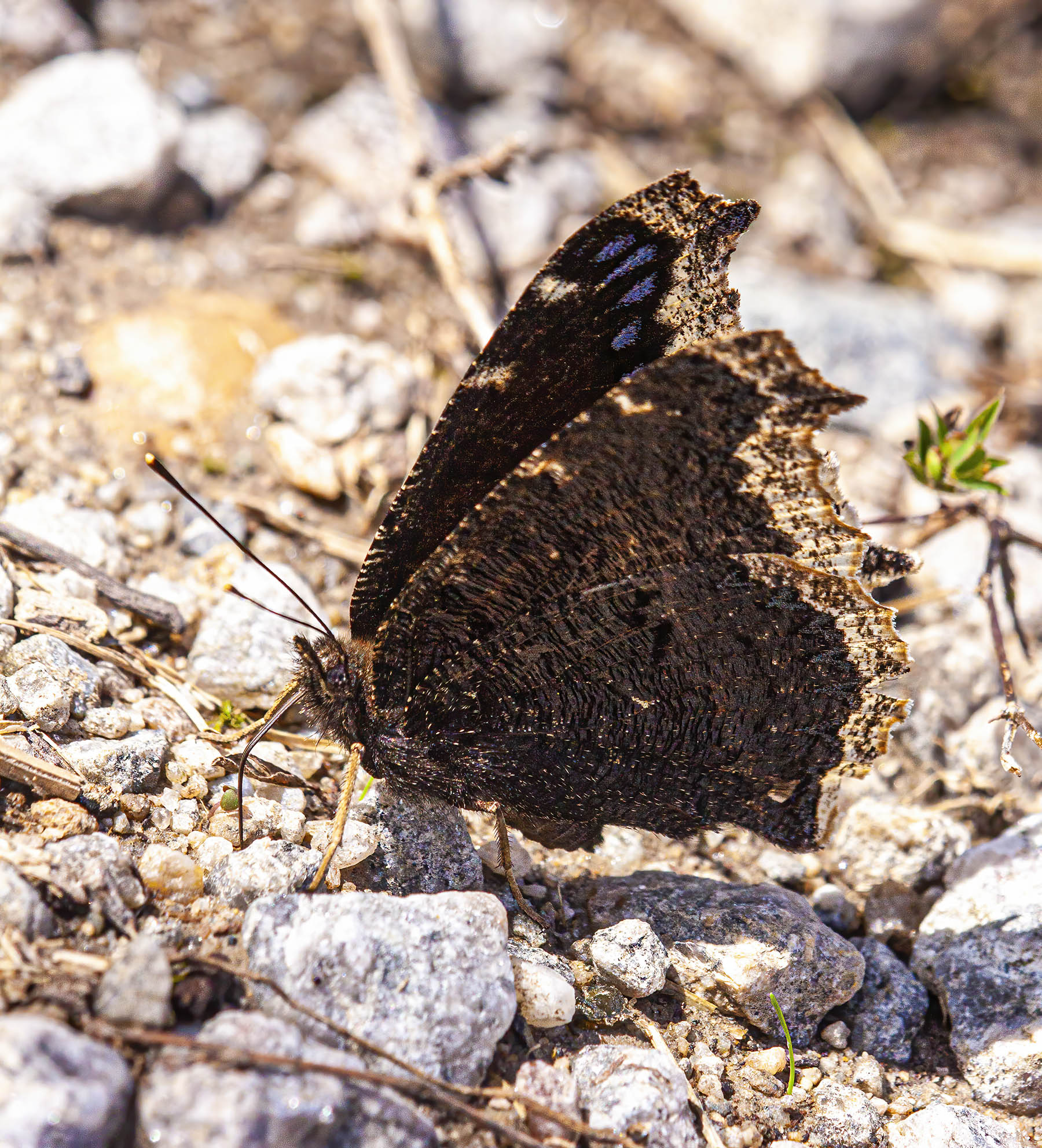
How long do butterflies live? According to most sources, Mourning Cloak butterflies (Nymphalis antiopa), which can live for 10-11 months, are thought to be the longest living butterflies in their range. I am always thrilled to see these darkly colored butterflies, which are known as “Camberwell beauties” in Great Britain, in the early spring and in the autumn.

Where are they the rest of the time? Mourning Cloaks spend part of the summer in aestivation, a hibernation-like state of inactivity to avoid the heat and lack of water. They are active in the fall, eating voraciously to fatten up and then overwinter as adults in another state of dormancy, often on the underside of fallen trees. In the spring, they reawaken to eat, mate, and die. In the north, there is often only a single brood annually, but in the south there may be two or more.

I spotted this butterfly on the first of October at Occoquan Bay National Wildlife Refuge. It looked to me like the butterfly was getting nutrients from the soil or possibly from animal droppings—unlike some butterflies, Mourning Cloaks do not rely on nectar from flowers as a primary source of nutrition.

Mourning Cloak

Mourning Cloak

© Michael Q. Powell. All rights reserved.


Read Full Post »

Common Whitetail dragonflies (Plathemis lydia) are among the first dragonflies to appear in our area in the spring and among the last to disappear in the fall. They thrive in a wide variety of habitats and are probably our most frequently seen and easily identified dragonfly—the name “common” seems to fit quite well.

Despite their ubiquitousness, I enjoy trying to photograph these little dragonflies whenever I can. Many of my photos are almost carbon copies of previous photos (you have to pretty old to remember carbon copies), but sometimes I manage to capture an image that is different and distinctive. At times I can envision such a moment when I am out in the field, but often I discover that things “clicked” only when I am examining the images on my computer.

I captured this image of a female Common Whitetail last Tuesday at Occoquan Bay National Wildlife Refuge. The dragonfly had been perching on the ground, as dragonflies of this species are wont to do, and flew up to a precarious perch on a bent stalk of vegetation. She was not there long, but it was enough time for me to snag this shot. For me, it is the wonderful twisting curve of the vegetation that makes the shot work so well as an “artsy” environmental portrait of a Common Whitetail dragonfly.

Common Whitetail

© Michael Q. Powell. All rights reserved.

Read Full Post »

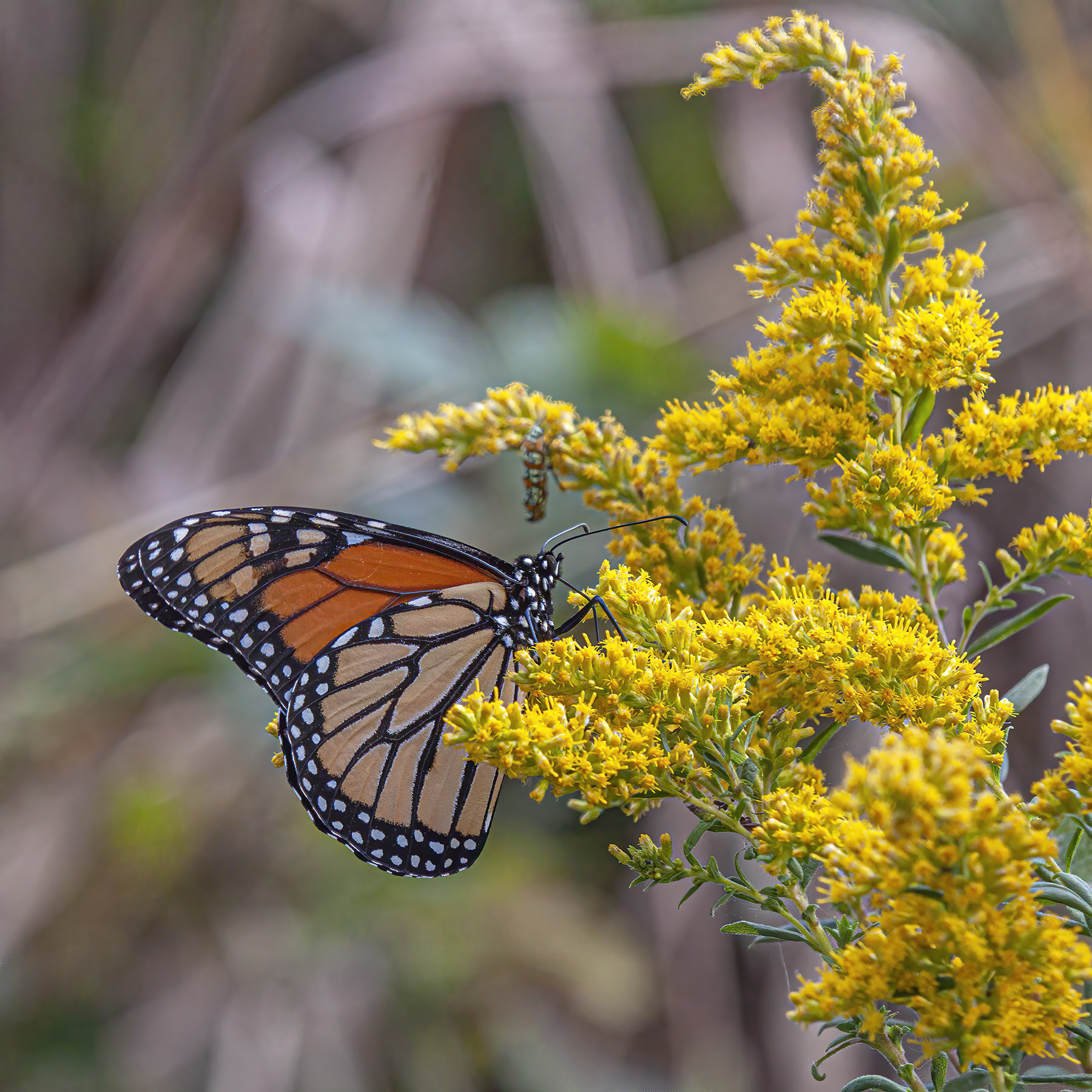
Have Monarch butterflies (Danaus plexippus) started their migration southward? I thought that they were already gone from my area, but was delighted to spot this one on Tuesday at Occoquan Bay National Wildlife Refuge in a newly blooming patch of goldenrod.

Is this butterfly a bit behind schedule? Perhaps this is a butterfly that started its migration journey from a point farther north and stopped in for a snack. Whatever the reason for its presence, my spotting of this beautiful butterfly added a colorful highlight to my day.

Keep your eyes open and look expectantly for colorful highlights in your own daily lives. That sense of joyful expectation will have a positive influence on your entire day.

Monarch butterfly

© Michael Q. Powell. All rights reserved.


Read Full Post »

Humans shed skin cells all of the time—according to one source, in one year, each of us sheds more than 8 pounds (3.6 kg) of dead skin. Snakes have an entirely different shedding process. Several times a year they grow a complete new layer of skin underneath the old layer. During shedding, snakes secrete a fluid to help separate the old skin from the new, and this fluid runs under their specialized eye caps, resulting in the opaque or blue quality of the eye.

Last Friday I encountered one of these blue-eyed snakes while exploring Occoquan Bay National Wildlife Refuge. Snakes are vulnerable during this stage when their vision is impaired and I was a little surprised to see this snake was in a fairly open area. I think this may be an Eastern Ratsnake (Pantherophis alleghaniensis), but did not examine the snake at length for fear of disturbing it.

Moving as stealthily as I could, I leaned in with my macro lens to capture this image. If you look carefully into the eye (or double-click on the image to enlarge it) you will see that I managed to capture a “selfie” reflection.

As an interesting coincidence, my most viewed posting of 2020 has been a May 2016 posting that also featured a snake with a blue eye. That posting, entitled Blue-eyed garter snake, has had 597 views so far this year. If you are not totally creeped out by today’s photo, you might want to check out the 2016 posting, which has some full body shots as well as a close-up shot of the snake’s head.

Eastern Ratsnake

© Michael Q. Powell. All rights reserved.

Read Full Post »

How flexible are you? I used to run marathons and, like most runners, I am not very flexible. I marvel at ordinary people who can bend down and touch the floor while keeping their knees straight and am utterly fascinated when I watch gymnasts and acrobats. Several years ago I attended a Cirque de Soleil performance and was mesmerized the entire time.

I don’t think of grasshoppers and katydids as being particularly flexible—their outer shell seems rigid and armor-like. Imagine my surprise and delight when I stumbled upon this flexible female Handsome Meadow Katydid (Orchelimum pulchellum) last week at Occoquan Bay National Wildlife Refuge. Normally her ovipositor, the yellow scimitar shaped appendage at the end of her abdomen, faces to the back. In this case, though, she has arched her back so much that the tip of the ovipositor extends further forward than her head.

What is she doing? I think that she is somewhere in the process of depositing eggs. I do not know exactly how that works, but a University of Arkansas website described the ovipositing for a similar katydid with these words, “An ovipositing female embraces a plant stem with her prothoracic and mesothoracic legs and brings the curved and sword-like ovipositor far forward so its tip can scrape the substrate.” There are a lot of unfamiliar scientific words there, but I think I get the gist of what is going on.

I do not recall photographing this process before, but a search of my blog revealed that, in fact, I captured a series of images in a September 2013 posting entitled “Rainbow katydid depositing eggs?“. Be sure to check out that earlier posing for more fascinating photos of a flexible katydid.

Handsome Meadow Katydid

© Michael Q. Powell. All rights reserved.

Read Full Post »

The weather has turned cooler, but traces of summer still remain, like this tiny Summer Azure butterfly (Celastrina neglecta) that I spotted last Wednesday at Occoquan Bay National Wildlife Refuge. The Azure butterflies are among the smallest butterflies in our area, with a wing span of just over one inch (25 mm). My current approach is to shoot any insect that I can find—it won’t be long before they are all gone and I will change to a longer lens and focus primarily on birds.

Summer Azure

© Michael Q. Powell. All rights reserved.

Read Full Post »

At this time of the year, the vegetation is thick and the leaves are still on the trees, so it is hard for me to spot birds. Of course, it is a bit easier when the birds are large in size, like this Great Blue Heron (Ardea herodias) that I spotted amidst the reeds and lily pads this past Wednesday at Occoquan Bay National Wildlife Refuge.

The heron did not show any signs that it was actively hunting, but with herons, it is hard to tell—they will stand for lengthy periods of time in a single spot and then strike suddenly and violently. As a photographer, it is tough for me to have that same amount of patience and vigilance. After a reasonable amount of waiting, I will often move on, as I did here, and leave the heron peacefully in place.

Great Blue Heron

© Michael Q. Powell. All rights reserved.


Read Full Post »

This year has been full of question marks as our lives have been turned upside down by the pandemic and so many of those questions have gone unanswered. Somehow, then, it seemed appropriate that I spotted this Question Mark butterfly (Polygonia interrogationis) on Tuesday when I was exploring Occoquan Bay National Wildlife Refuge.

At this time of the year, when the leaves are turning brown and falling to the ground, this butterfly blends in well with its surroundings. This butterfly, however, did not seem interested in blending in and chose instead a rocky surface to help highlight the irregular shape of its wings. Normally Question Marks are more opaque in their brown coloration, but the sun was illuminating the wings from behind and gave us a hint of the beautiful orange interior and distinctive markings of this butterfly—I love it when internal beauty shines through.

Question Mark butterfly

© Michael Q. Powell. All rights reserved.

Read Full Post »

« Newer Posts - Older Posts »