Feeds:
Posts
Comments

Archive for the ‘spring’ Category

I was totally fascinated by the shapes and colors of this tiny flower that has started to bloom in the garden of my friend and neighbor Cindy Dyer. Cindy told me it was a type of Grape Hyacinth, which confused me a little, because all of the grape hyacinths that I had previously seen were shaped more like grapes than little bells.

I searched on-line and eventually discovered that this flower is Muscari azureum, a species also referred to as Pseudomuscari azureum or Hyacinthella azurea. According to gardenia.net, “Muscari azureum is a lovely, compact china-blue grape hyacinth, with bell-shaped flowers that are not constricted at the mouth. Therefore it looks more plump and fuller than others.”

It was a challenge for me to photograph these flowers because they are so small and grow so close to the ground. Additionally the rather naked early spring garden soil in which the flowers were growing does not make a very photogenic backdrop. I used a macro lens to get close to the flowers for the first two shots in order to isolate them somewhat from the background and focus the viewer’s attention on the intricate details of the flowers.

For the final image, I backed up a little to give you a view of the overall scene and the challenges I described above. As you can probably tell, the two flowers at the far left of the frame were the ones that were featured in the first two photos.


Muscari azureum

Muscari azureum

Muscari azureum

© Michael Q. Powell. All rights reserved.

Read Full Post »

Sometimes the colors in a photo draw me in as much as the actual subject, as is the case with this image of a Northern Mockingbird (Mimus polyglottos) that I spotted last Saturday at Occoquan Regional Park.

The soft shades of brown and gray harmoniously create a mood that I really like. Even the wispy, dried grasses in the foreground, which might have bothered me under most circumstances, add a nice texture and organic feel to this in situ portrait.

Northern Mockingbird

© Michael Q. Powell. All rights reserved.

Read Full Post »

Some people find Turkey Vultures (Cathartes aura) to be creepy, but I think they are handsome in their own way and fill a useful function in keeping our roads at least partially free from carrion. I spotted quite a few Turkey Vultures on Monday at Occoquan Bay National Wildlife Refuge, some clustered on the ground and some circling in the skies.

The two vultures in the first photo were part of a group of five that were spread across a trail near the partial remains of what looks to have been some kind of animal. I did not want to disturb them, so I gave them a wide berth and continued on my way after capturing the image.

I had no such worry with the vulture in the second shot that was effortless soaring overhead and did not seem disturbed at all by my presence. It probably was my imagination, but at times it seems like the vulture was tracking me. I think I watched too many cowboy movies as a child in which a lost cowboy stumbled through the desert as vultures circled overhead, waiting for him to die.

Turkey Vultures

Turkey Vulture

© Michael Q. Powell. All rights reserved.

Read Full Post »

Some birds return silently in the spring and you have to search hard to find them. Ospreys (Pandion haliaetus), on the other hand, make their presence known as they soar overhead, often calling out in their loud, high-pitched voices that the Cornell Lab of Ornithology compared to “the sound of a whistling kettle taken rapidly off a stove.”

I spotted only a few ospreys yesterday at Occoquan Bay National Wildlife Refuge, some of which I managed to photograph, but know from experience that they are only the advance guard of a larger group of osprey that will arrive soon and begin to build or repair their nests. As you may notice in the second photo, trees in our area are being to produce buds and it won’t be long before leaves begin to complicate my efforts to spot birds.

Osprey

osprey

© Michael Q. Powell. All rights reserved.

Read Full Post »

My neighbor and photography mentor Cindy Dyer has a new raised flower bed in her back yard and the first flowers to appear in it are some tiny Snowdrops (g. Galanthus), including this one that I photographed on Friday. For me there is something really beautiful about the simple shape and restrained colors of this little flower. I have seen snowdrops appear much earlier at other locations, including in 2012 when I photographed some in bloom in late December—see my blog posting entitled Winter Snowdrops.

snowdrop

© Michael Q. Powell. All rights reserved.


Read Full Post »

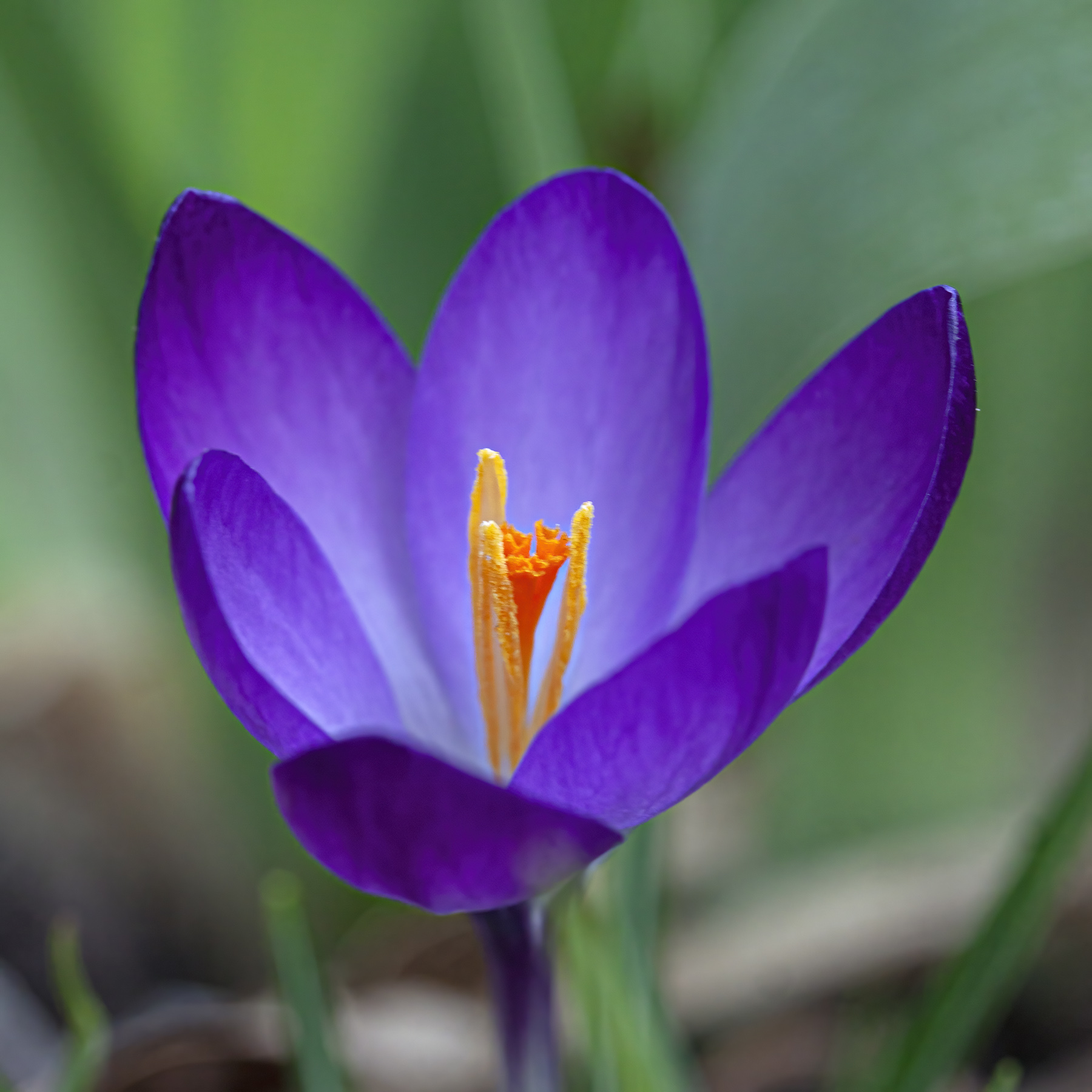
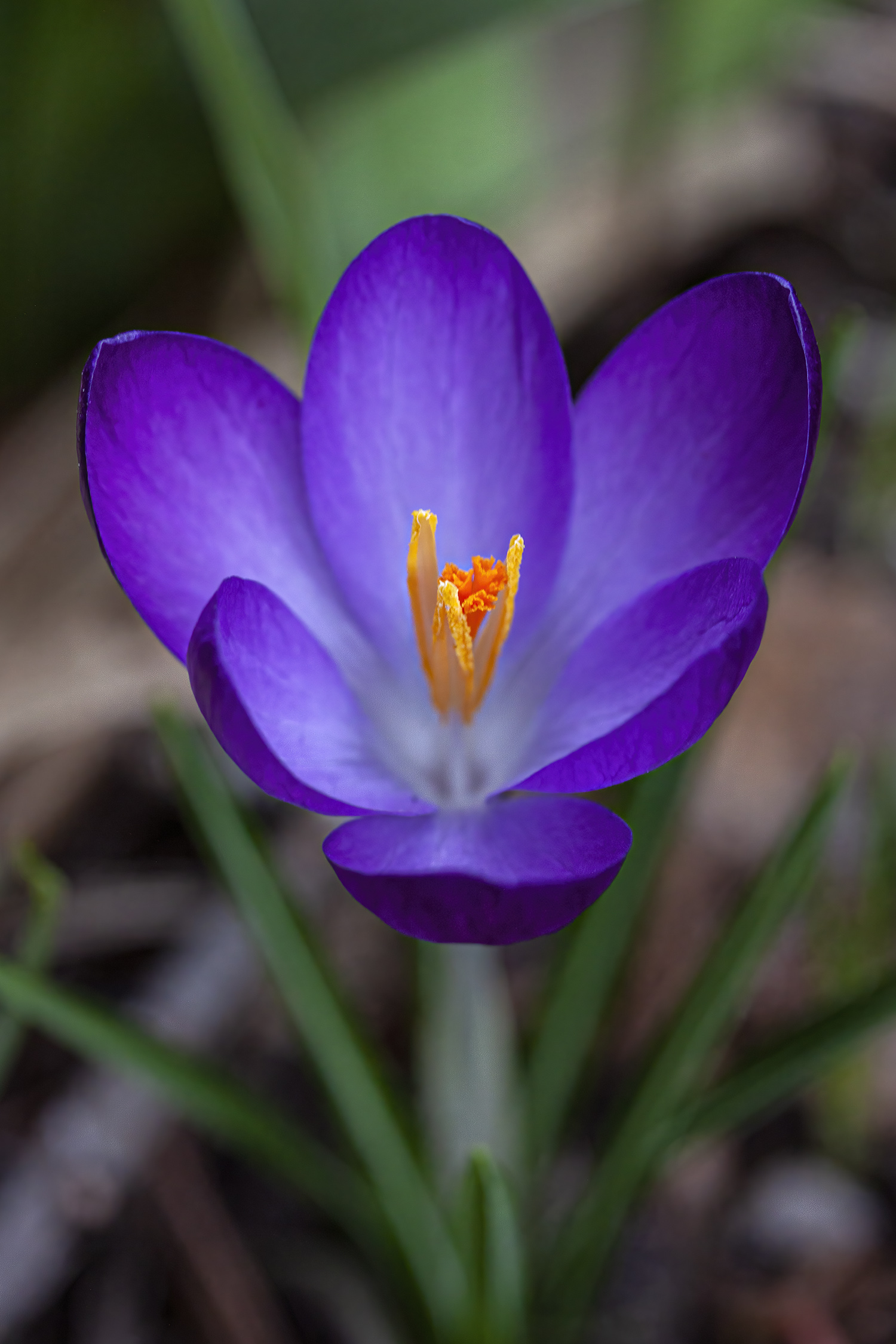
I do not have my own garden, but my friend and neighbor Cindy Dyer has a wonderful one that I visit often during the growing season. I was thrilled on Friday to see that one of her crocuses is blooming, the first one that I have seen this year. A second crocus had not yet opened, but I was so excited to see these colorful signs of spring that I photographed it too.

During the colder months of the year I shoot almost exclusively with a long telephoto zoom lens. For these images, however, I switched to a 60mm macro lens, a sign of the changing seasons—during the summer months my favorite lens is my 180mm macro lens. As the leaves start to reappear to on the trees, I will be photographing fewer birds and will be focusing on smaller, close-in subjects like butterflies and dragonflies, hopefully within a month or so.

crocus

crocus

crocus

© Michael Q. Powell. All rights reserved.

Read Full Post »

It was early in the morning when I spotted this Bald Eagle (Haliaeetus leucocephalus) on Tuesday at Occoquan Bay National Wildlife Refuge. Utterly fascinated, I watched the eagle methodically preening, moving from one area of its body to another, adjusting the feathers and removing some small wispy ones. When you are a national symbol, I guess you have to try to look majestic at all times.

This particular eagle was pretty relaxed and I managed to walk almost underneath the overhanging branch without disturbing it. If you look carefully at the final photo, you can tell that I was shooting almost straight up in order to get the shot. Remarkably the eagle remained in place when I continued on my way down the trail. I would like to be able to claim that I was really stealthy in my movements, but I think it was more likely that the eagle was simply willing to tolerate my presence, of which he was undoubtedly aware.

Bald Eagle


Bald Eagle

Bald Eagle

© Michael Q. Powell. All rights reserved.


Read Full Post »

Frost covered the ground early on Tuesday morning when I arrived at Occoquan Bay National Wildlife Refuge. The first creature that I spotted was an Eastern Cottontail rabbit (Sylvilagus floridanus) foraging in the wintery grass that has not yet turned green. The sunlight was soft and low, making the bunny glow.

It was a wonderfully gentle way to begin a new day.

Eastern Cottontail Rabbit

Eastern Cottontail Rabbit

Eastern Cottontail Rabbit

© Michael Q. Powell. All rights reserved.

Read Full Post »

It was great on Tuesday to see that some Tree Swallows (Tachycineta bicolor) have returned to Occoquan Bay National Wildlife Refuge. One was even checking out the local real estate market and was shocked at how expensive housing rentals are in this area.

In the wild, Tree Swallows nest in tree cavities, but they seem to adapt readily to using nesting boxes, like the one in the final photo. At this spot of the refuge there are two nesting boxes and each year there seems to be a competition between Tree Swallows and Easter Bluebirds for their use.

According to the Cornell Lab of Ornithology, “Tree Swallows winter farther north than any other American swallows and return to their nesting grounds long before other swallows come back. They can eat plant foods as well as their normal insect prey, which helps them survive the cold snaps and wintry weather of early spring.”

Welcome back, beautiful little swallows.

Tree Swallow

Tree Swallow

© Michael Q. Powell. All rights reserved.


Read Full Post »

I do not know about the reactions of the lady turkeys, but I was mighty impressed by the display of this male Wild Turkey (Meleagris gallopavo) early yesterday morning at Occoquan Bay National Wildlife Refuge. A lot of male birds go to great lengths to impress and attract females during the early spring, but this wild turkey’s presentation might take the prize for being so flamboyant and ostentatious. I guess he has truly embraced the motto, “Go big or go home.”

Wild Turkey

© Michael Q. Powell. All rights reserved.


Read Full Post »

How good are you at identifying a bird by its silhouette? When you are shooting directly into the light, one of the challenges of photographing a bird is that many of the details, or even all of them, disappear into the shadows—you often have to rely more on the shapes than the colors to identify the bird.

I could not see the eyes or any of the facial features of this bird that I spotted last Saturday at Occoquan Bay National Wildlife Refuge, but its long bill and distinctive “punk rock” head feathers made it relatively easy to identify it as a Male Red-breasted Merganser (Mergus serrator), a type of diving duck that I see only occasionally. For the record, the white collar also helped in making the identification.

Red-breasted Mergansers are one of the bird species that spend their winters with us. I suspect that it will not be long before they depart for more more northern locations for the breeding season.


Red-breasted Merganser

© Michael Q. Powell. All rights reserved.

Read Full Post »

For the last six weeks or so, I have been monitoring two Bald Eagle couples (Haliaeetus leucocephalus) at Occoquan Bay National Wildlife Refuge as they have repaired and renovated two different nests. On Saturday morning I made my way to one of them and was delighted to see an eagle sitting low in the nest. I cannot be completely certain, but I think that the eagle is sitting on one or more eggs. If true, the eaglets should hatch in about 35 days or so.

This relatively small nest was damaged last summer when it looks like one of the supporting branches broke off and half of the nest fell to the ground. I observed some of the reconstructions efforts and documented it in an early February posting called Rebuilding the nest. It looks to me like the nest has grown considerably in size since that time.

This nest is located in a sycamore tree just off one of the major trails at the wildlife refuge. Each year the authorities block off all of the nearby roads to allow the eagles to nest in peace. The final photo shows the tree in which the nest is located and the current barrier across the trail from which I took the first photo. A telephoto lens tends to compress distances, so it is hard to judge exactly how far away the tree is from the barrier—I estimate that it is about a hundred yards (91 meters).

I will continue to keep an eye on this nest and hopefully will manage to get a glimpse of some eaglets in the upcoming months. Last year I believe that there was only a single eaglet (check out my May 2020 posting entitled One little eaglet), although in past years there were often two eaglets (check out this April 2018 posting called Baby bald eagles for a look at two adorable little eaglets).

Bald Eagle nest

Bald Eagle nest

© Michael Q. Powell. All rights reserved.

Read Full Post »

I really enjoy posting photos here on my blog because I have the freedom to post multiple images and spend as much time and text as I want talking about them—most other forms of social media have implicit or explicit limits on the content. I post a subset of my blog content on my personal Facebook page and in several Facebook groups.

Many of these Facebook groups are very specialized and are full of experts. I actually prefer to post to groups that are aimed more towards generalists who have a broad interest in nature and wildlife. One of my favorites is called “Nature Lovers of Virginia” and I was thrilled when one of my recent photos of a Bald Eagle (Haliaeetus leucocephalus) at Occoquan Bay National Wildlife Refuge was selected as the banner photo for the group for the month of March. The enclosed photo shows the banner photo as it looks in Facebook.

I take photos mostly for my own enjoyment, but do love to share them with others. It is a nice plus to get a little recognition from time to time.

banner image

© Michael Q. Powell. All rights reserved.

Read Full Post »

Sometimes you cannot get your subject to cooperate in posing and sometimes it simply does not matter, especially when you are focused primarily on capturing the mood of the moment, rather than the anatomical details of the wildlife creature.

On a recent early-morning trip to Occoquan Bay National Wildlife Refuge, I spotted a distant Great Blue Heron (Ardea herodias) perched in a tree. The heron was facing away from me and appeared to be basking in the sun, trying to warm up a little after what had been a frigid night. The morning light was beautiful as it illuminated the interlocking grid of branches—in many ways that light became the main subject of this image.

There is a kind of abstract feel to this image that I really like, though it is quite different from most of the photos that I normally take. Somehow it recaptures for me the serenity of that early-morning encounter in a way that a detailed close-up shot would not have been able to do.

Great Blue Heron

© Michael Q. Powell. All rights reserved.


Read Full Post »

Do you remember what it was like to be so totally in love that you wanted to be physically close to the other person every single moment of every single hour? That was the first thought that came to mind when I spotted these two Bald Eagles (Haliaeetus leucocephalus) close together in a tree last Tuesday at Occoquan Bay National Wildlife Refuge. I tend to think of eagles as being fierce, powerful, and independent, but this image suggests that they also have a tender, vulnerable side as well.

Look into the eyes of the eagle on the right, which I believe is the male. Doesn’t he look like he is totally smitten, wide-eyed and in love? This stage of total infatuation often happens when you are young, though it can strike you at any time in your life. It brings to mind a playground chant of my youth that was designed to embarrass the persons named in the song. Do you remember the song?

Imagine these two eagles were named Chris and Mike. It would go like this:

Chris and Mike
Sitting in a tree
K-I-S-S-I-N-G!
First comes love
Then comes marriage
Then comes baby
In a baby carriage!

Can you imagine an eagle with a baby carriage? Let your creative imagination run wild. If I had skills as a cartoonist, it would be fun to make a drawing with this eagle couple pushing a baby carriage. Alas, I have no such skills, but would encourage any of you who possess those skills to take on the challenge.

Have a wonderful weekend.

Bald Eagle

© Michael Q. Powell. All rights reserved.

Read Full Post »

The early morning sun was still low on the horizon last Tuesday when I spotted this Bald Eagle (Haliaeetus leucocephalus) at Occoquan Bay National Wildlife Refuge. The light at this time of the day is so warm, soft, and beautiful that I desperately wanted to get a shot of the eagle.

There was, however, one big problem—the eagle was looking away from me and the view of the back of its head was not very attractive. So I watched and waited and watched some more. Finally, the eagle made a quick glance over its shoulder, smiled, and seemed to ask if I was now satisfied. I was.

Bald Eagle

© Michael Q. Powell. All rights reserved.

Read Full Post »

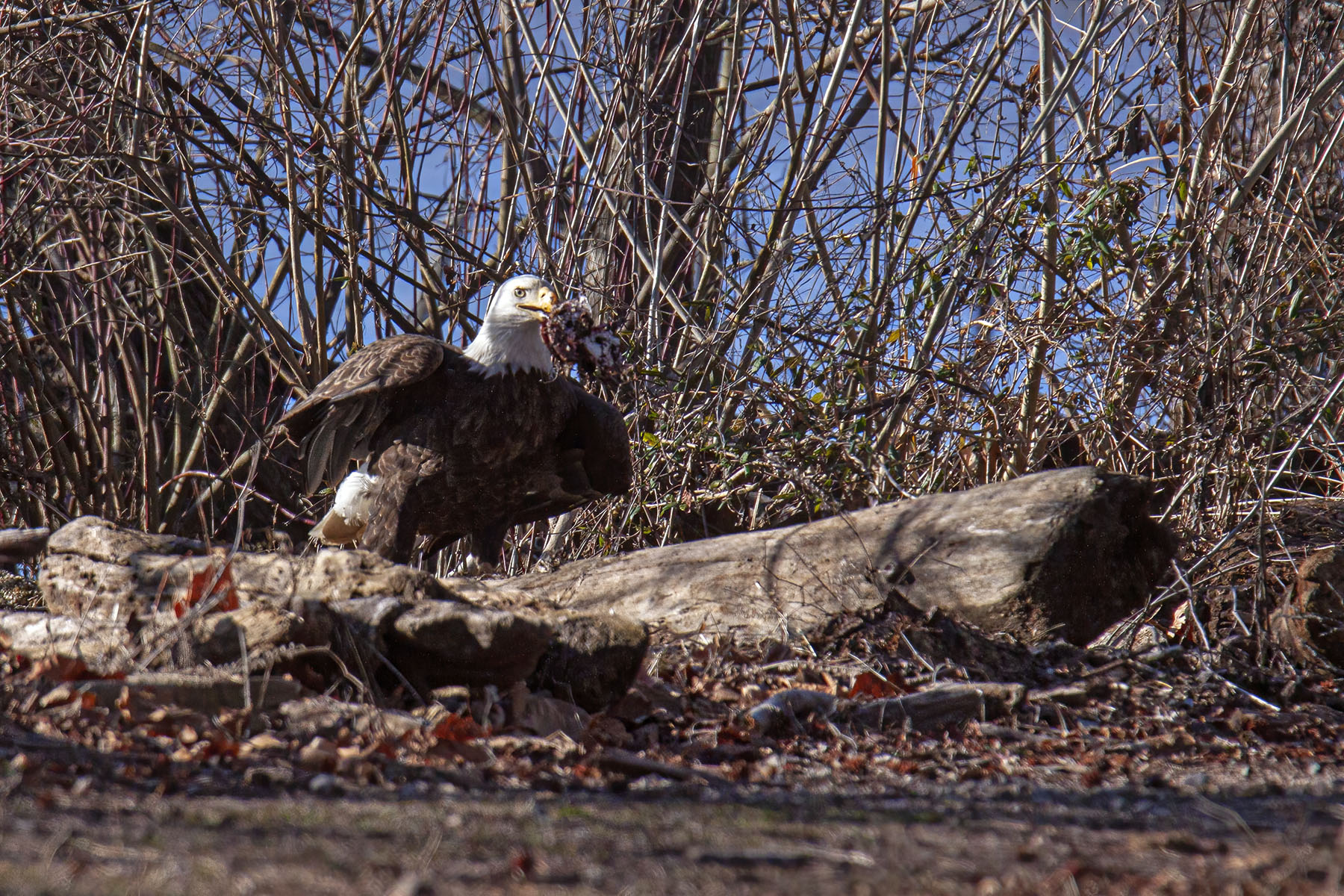
As I rounded a curve in a trail on Tuesday at Occoquan Bay National Wildlife Refuge, I saw a flash of white at ground level further down the trail. My eyes immediately registered the fact that it was a Bald Eagle (Haliaeetus leucocephalus), but my mind seemed to have trouble processing the presence of an eagle in this incongruous location. What was it doing there?

The second and third images suggest that I inadvertently interrupted the eagle as it was consuming its breakfast. I cannot identify the eagle’s prey, but it does not look like a fish to me. If you click on the images you can get a closer look at the remains of the prey and maybe you can tell what it is/was. Perhaps it was one of the many ducks that I could see on the waters of the bay that is visible through the vegetation.

As you can tell from the final photo, the eagle took off as soon as it sensed my presence, taking with it the remains of his meal. I never get tired of visiting this wildlife refuge as often as I can. There is an old adage that insanity can be defined as doing the same thing over and over again and expecting different results, so some might consider me to be a little crazy. The truth, however, is that each wildlife encounter is a unique combination of environmental factors and subject behavior, so each time there are new possibilities and opportunities to capture views of nature’s endless diversity.

Bald Eagle

Bald Eagle

Bald Eagle

© Michael Q. Powell. All rights reserved.

Read Full Post »

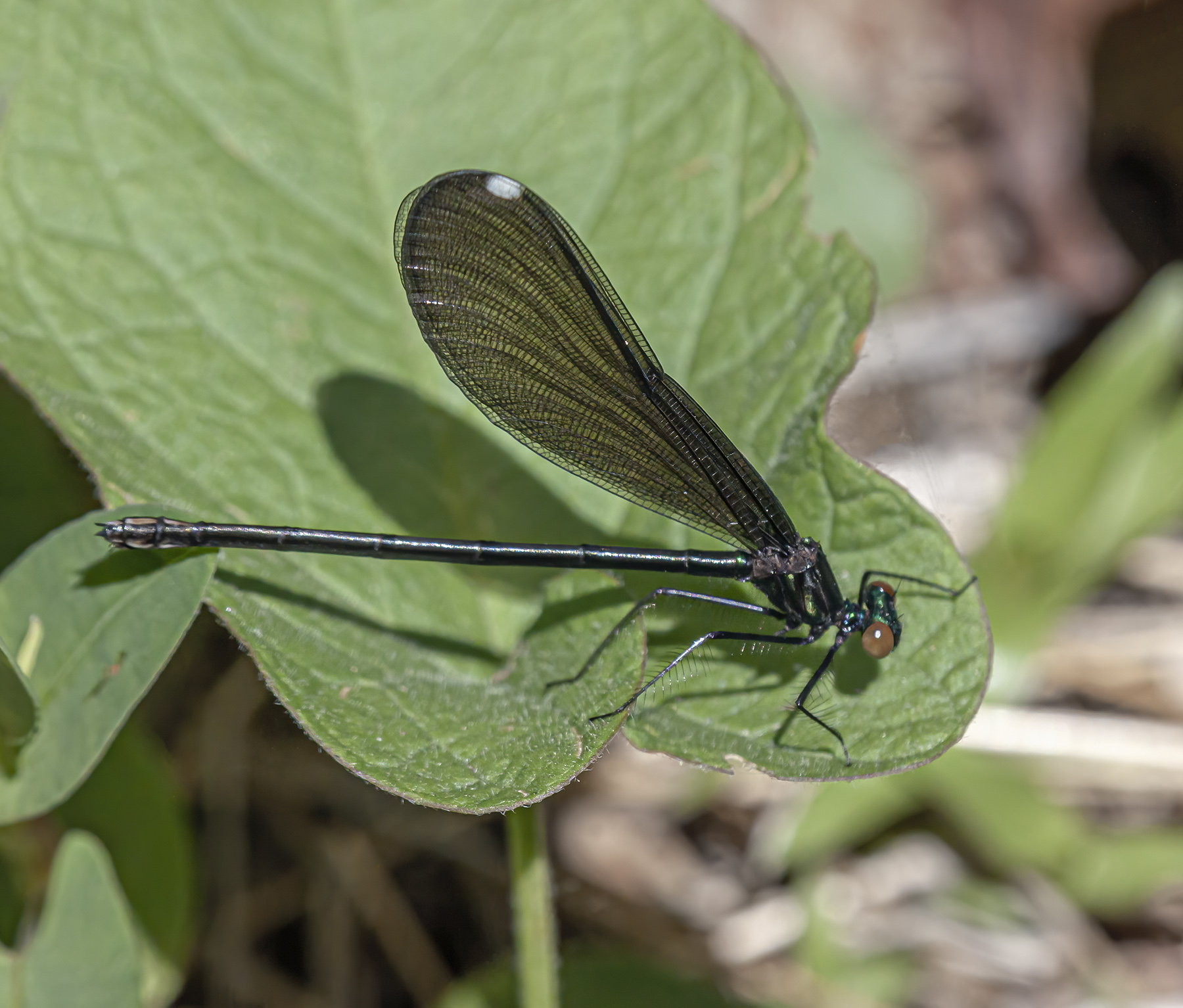
Yesterday I posted images of Eastern Amberwings, one of the most easily identified dragonfly species in my area. Today I am going to continue the mini-trend of going easy on my identification skills by presenting our most easily identified damselfly species, the Ebony Jewelwing damselfly (Calopteryx maculata).

I spotted this beautiful female Ebony Jewelwing last week as I was exploring in Occoquan Regional Park. Ebony Jewelwings are found most often along wooded slow-moving streams and frequently perch on low shrubbery in sun-lit openings in the forest canopy, which pretty well describes the circumstances of my encounter with this little beauty.

How do I know that it is an Ebony Jewelwing? There is no other damselfly in our area that has completely dark wings like the Ebony Jewelwing. How can I be sure that it is a female? Females have a conspicuous little white patch on their wings, technically known as a “pseudostigma,” that is pretty obvious in the photo below.

Some recent postings have noted the difficulties in making a correct identification of the dragonflies and damselflies that I photograph. I enjoy a mystery from time to time, but there is something reassuring about spotting a familiar species and being able to identify it immediately.


Ebony Jewelwing

© Michael Q. Powell. All rights reserved.

Read Full Post »

Dragonflies have been around for a long time, with fossils showing dragonfly-like creatures that date back to the Jurassic period, more than 150 million years ago. It is generally believed that dragonflies of the Petaluridae family, including the Gray Petaltail (Tachopteryx thoreyi) most closely resemble those ancient species.

I was thrilled to find several Gray Petaltails this past Monday at Occoquan Regional Park, about 20 miles (32 km) from where I live. Most of the time Gray Petaltails perch vertically, flat against tree trunks at eye level or higher. The first photo is a little deceptive, because it makes it look like it is easy to spot these rather large dragonflies (three inches (76 mm) in length). However, in my experience it is rare to see a Gray Petaltail on a smooth-barked tree. When they perch on trees with coarser bark, these dragonflies almost melt into the trees. You get a hint of how this camouflage works in the second image below.

The final image shows a more typical scenario. From a distance, I saw a Gray Petaltail land on a tree. When I snapped the photo, though, I could not see the dragonfly, even though I knew exactly where it was. Can you see the Gray Petaltail in the final photo? I think that my post processing may have made it a little easier to spot, but the dull color and pattern of the dragonfly help it to blend in with the light and shadows on the tree trunk.

Gray Petaltail

Gray Petaltail

Gray Petaltail

© Michael Q. Powell. All rights reserved.

Read Full Post »

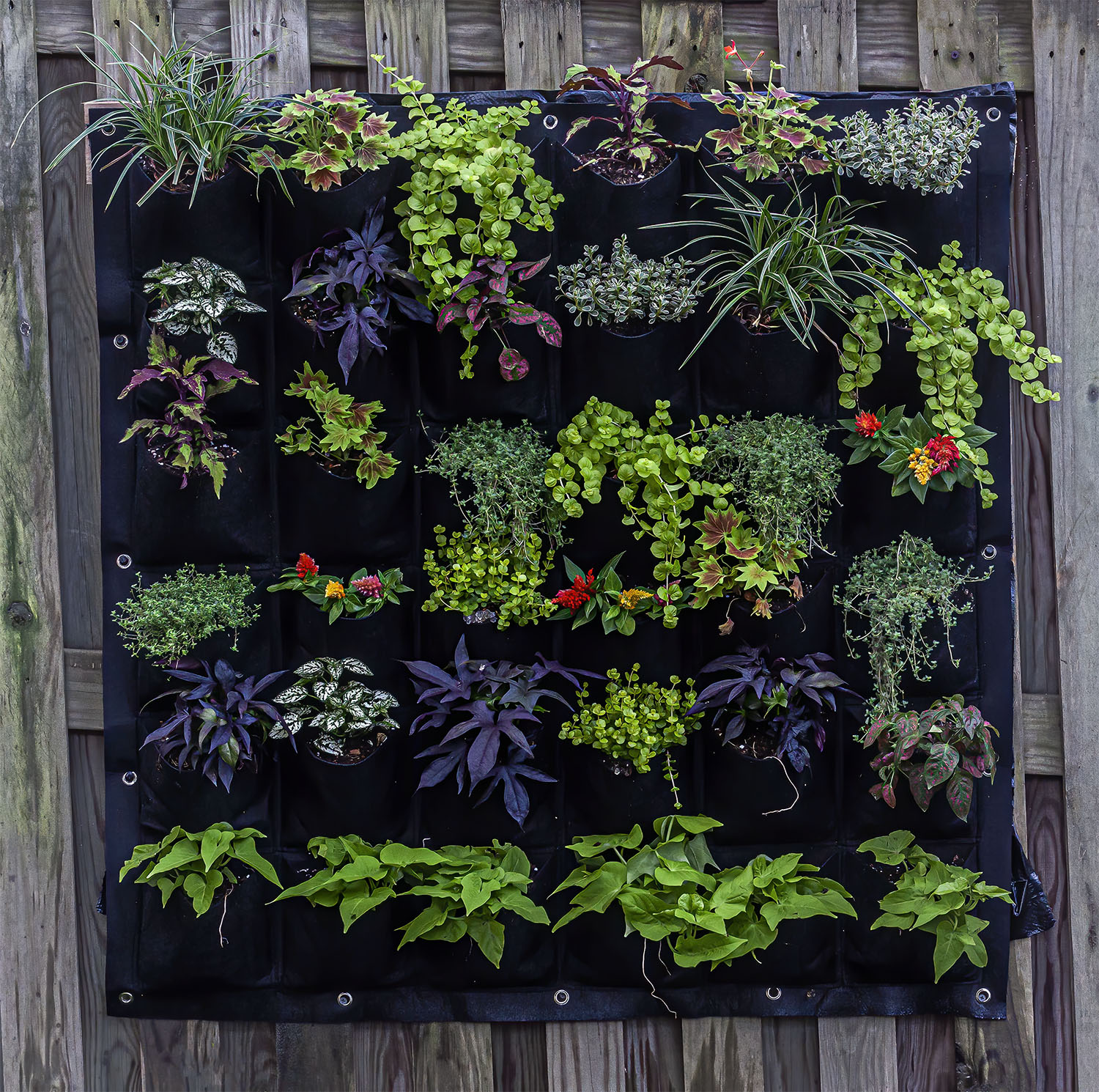
How do you grow a lot of plants in a small space? My amazingly creative friend, neighbor, and photography mentor Cindy Dyer decided to take advantage of vertical space and created this incredible wall of flowers and plants on the interior portion of the fence that encloses her back yard. Wow!

I do not know all of the details about how she set it up, but I think that the material, which Cindy describes as “felt-like,” has sewn-in pouches into which she inserted all of the plants and flowers. She mentioned to me that she had mixed some water-storing crystals in with the potting soil to reduce water stress and plans to water the wall regularly.

flower wall

© Michael Q. Powell. All rights reserved.

Read Full Post »
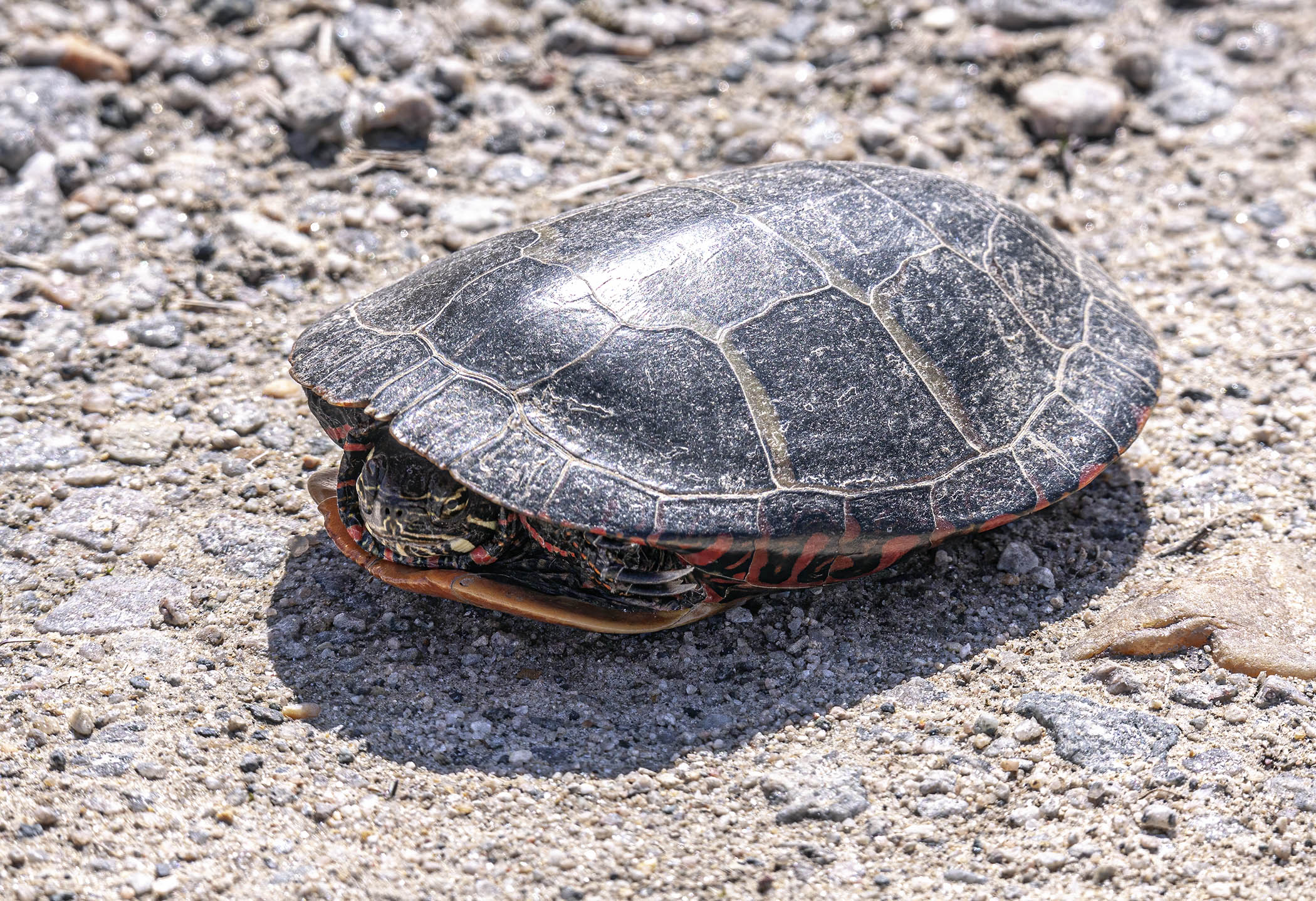
I was thrilled on Monday to see lots of butterflies as I was exploring Occoquan Regional Park. Many of them were small skippers that skittishly flew away whenever I approached them. Only a few were large and colorful, like the Red-spotted Purple butterfly (Limenitis arthemis) in the first photo. When it first landed on the plant, its wings were closed, but I waited and eventually the butterfly opened its wings. The damage to one of those wings this early in the season really emphasizes the fragility of these beautiful little creatures.

I also saw some brown woodland butterflies and I chased after several of them. I was out of breath but finally managed to catch up to one. Identification of this type of butterfly is always problematic, because there are quite a few similarly-colored species that vary only in the number and placement of the the eyespots. I think that the butterfly in the second shot is a Little Wood Satyr butterfly (Megisto cymela). I contemplated cropping closer, but decided I liked the little plant on the right side of the image and kept it. With this framing, I am able to create the illusion that the butterfly is staring at the plant.

Red-spotted Purple

Little Wood Satyr

© Michael Q. Powell. All rights reserved.

Read Full Post »

Most of you know that I love to photograph dragonflies. In a recent posting, I thought I was featuring photos of a Cobra Clubtail dragonfly, but it turns out that it was a Splendid Clubtail dragonfly. Here is Walter Sanford’s behind the scenes account of the initial misidentification of the dragonfly, with photos showing the differences between the two species, and how experts determined that we had made an error. His posting provides some fascinating insights into the complications sometimes associated with making an identification of a species (and why it is important to photograph subjects from multiple angles, if possible).

Be sure to click on the “View original post link” if you are using the WordPress Reader to read Walter’s complete posting on his blog or go directly to his posting by using this link.

waltersanford's avatarwalter sanford's photoblog

A Splendid Clubtail dragonfly (Gomphurus lineatifrons) was spotted during a photowalk with Michael Powell at an undisclosed location in Fairfax County, Virginia USA. Easy for me to say now. As it turns out, my initial identification was incorrect.

The first photo I took of the dragonfly — the record shot — is shown below. Notice the pattern of yellow lateral marks/spots on its abdomen. Also notice the yellow blotch on the side of abdominal segment eight (S8) extends onto the club flange, as shown in the full-size version of the image. (Thanks to Michael Boatwright, founder and administrator of the Virginia Odonata Facebook group, for sharing these key field marks for Splendid.)

26 MAY 2020 | Fairfax County, VA | Splendid Clubtail (female)

In contrast, the pattern of yellow lateral marks/spots on the abdomen of a female Cobra Clubtail (Gomphurus vastus), shown below, looks…

View original post 449 more words

Read Full Post »

On Tuesday I spotted this handsome male Spangled Skimmer dragonfly (Libellula cyanea) at Occoquan Regional Park. This species is fairly easy to identify because of the “spangles,” the little white patches on the leading edges of the wings, often referred to as stigmata or pterostigmata. Most other species have darker colored stigmata or none at all.

If you use the meteorological calendar, summer started on the first of June. For most of us, though, who use the astronomical calendar, we have a few weeks to wait until the summer begins on the 20th of June. No matter how you calculate summer, I have noticed a lot more of the summer dragonfly species during my most recent outings. If things work out well, June could be a great month for dragonfly hunting, with the possibility of seeing some of the remaining spring species, plus the new summer ones.

spangled skimmer

© Michael Q. Powell. All rights reserved.


Read Full Post »

Last Tuesday I spotted this cute little toad—I think it may be a Fowler’s Toad (Anaxyrus fowleri)—while exploring the wilds of Fairfax County. The toad was just chilling (or more accurately may have been warming itself) on a rock ledge with a bumpy texture and mottled coloration that matched those of the toad pretty well.

It is hard to know what the frog was thinking, but it appeared to be in deep contemplation. “I think, therefore I am.”

Fowler's Toad

© Michael Q. Powell. All rights reserved.


Read Full Post »

We have started a new month and new flowers are blooming in the garden of my friend and photography mentor Cindy Dyer. Iris season has almost ended, but more lilies are opening each day. Today’s featured star is the bold, fragrant oriental hybrid known as the Stargazer Lily (Lilium ‘Stargazer’). Wow—there is nothing subtle about this flower that overwhelms both the eyes and the nose.

The words “star gazer” bring to mind some words from one of my favorite songs, The Rainbow Connection as sung by Kermit the Frog. “What’s so amazing that keeps us stargazing and what do we think we might see? Someday we’ll find it, that rainbow connection, the lover, the dreamer, and me.” Now more than ever, we all need hope.

I want to share with you the concluding portion of a prayer distributed to us by our local Episcopal bishop yesterday, a National Day of Mourning and Lament for those who have died of COVID-19. “God of all hope, God of all goodness, we are a people hurting, lost and divided. Our world seems a strange and foreign land, our days a blur of separation and isolation. Gather us to your very heart as we pray for our nation, receive all who have died into the fulness of your heaven, guide the hands of all who serve others. Bless our efforts to love all people in concrete action and, in your powerful ways and in your perfect time, make us whole for the sake of a world so desperately in need of You. Amen.”

Stargazer Lily

Stargazer Lily

© Michael Q. Powell. All rights reserved.


Read Full Post »

Names can sometimes be misleading. There is a genus of damselflies, consisting of 35 species, called American bluets. As the common name “bluet” suggests, most members of the genus are primarily blue in color. One notable exception is the adult male Orange Bluet (Enallagma signatum) that often does not appear to have even a speck of blue on its body.

I spotted this little guy last Friday at Jackson Miles Abbott Wetland Refuge and was a bit shocked by his bright red eyes when I looked through the viewfinder of the camera. The male Orange Bluet was perched at the extreme end of some vegetation overhanging a pond.

I would have liked to have gotten a shot in which more of its body was in focus, but I did not want to risk falling in the water, which looked to be pretty deep at that spot. As I look at the photo now, I realize that the soft focus of the body may actually be a good thing, because it draws a viewer’s attention even more to the eyes of the handsome little damselfly.

orange bluet

© Michael Q. Powell. All rights reserved.

Read Full Post »
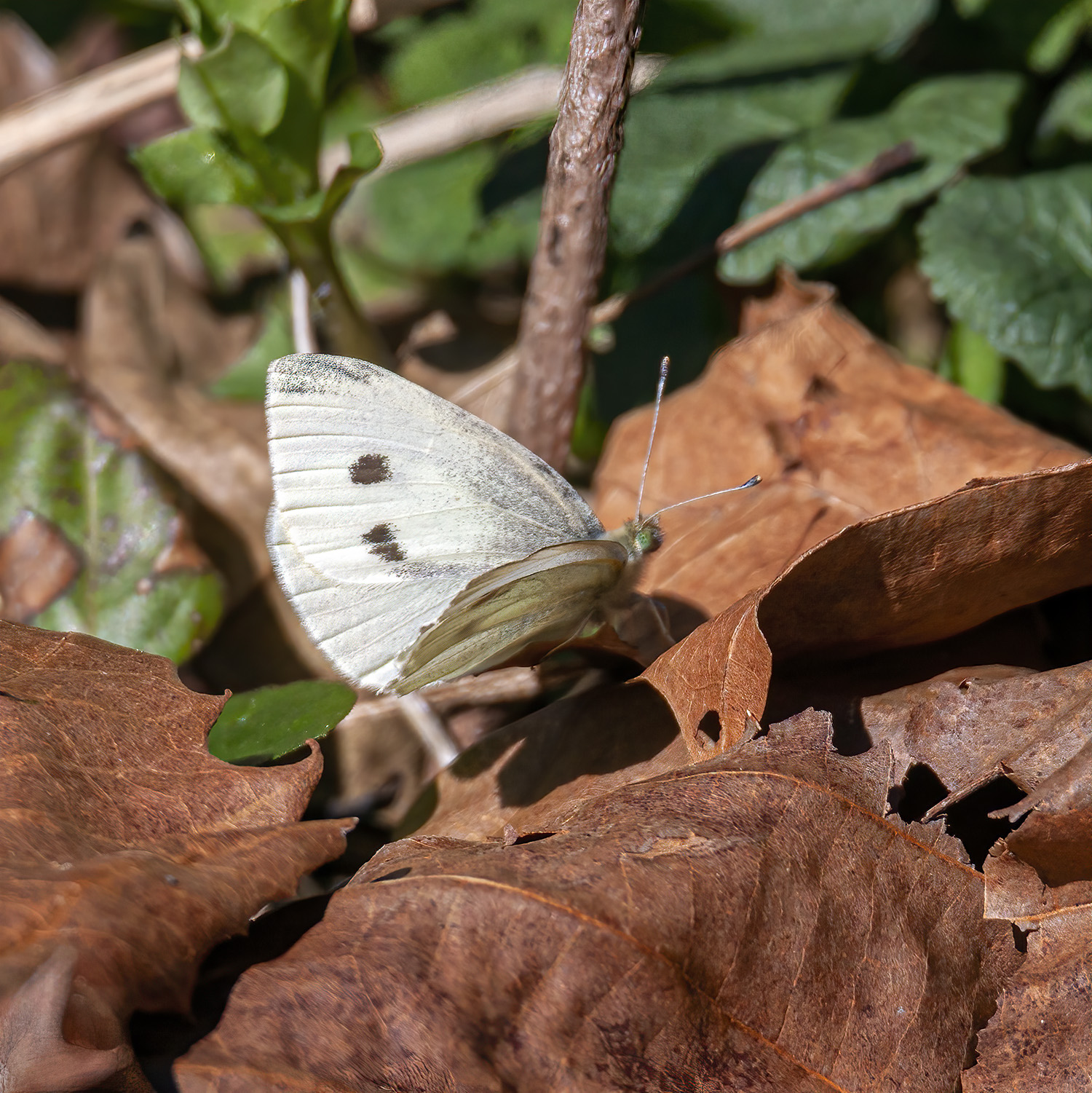
UPDATE: Some experts have looked at the photos that Walter took of and it appears that the dragonfly in the first photo (and possibly all of the ones in this posting) is a Splendid Clubtail (Gomphurus lineatifrons), a new species for me. The differences between the two species are subtle enough that I am definitely relying on the expertise of others in making this identification.

I spent most of this past Tuesday exploring wild areas in Fairfax County, Virginia, hunting for dragonflies with my friend and fellow dragonfly enthusiast Walter Sanford. It is still a little early for many species, so we had to work really hard for each one that we were able to find.  I was really excited when we spotted several Cobra Clubtail dragonflies (Gomphorus vastus) during the day, all of which turned out to be females.

As you can see from these photos, the Cobra Clubtails were hanging vertically with their abdomens pointing downwards, which made them hard to spot when they landed in the abundant green vegetation. In one nearby location, there is an annual mass emergence of Cobra Clubtails, with dozens emerging at the same time. We made a brief stop there, hoping to see more Cobra Clubtails, but learned from employees there that the Cobra Clubtails have not yet arrived this year—we may make another try sometime fairly soon.

If you would like to see Walter’s posting on our adventures with the Cobra Clubtails, click on this link to his blog.

Cobra Clubtail

Cobra Clubtail

Cobra Clubtail

© Michael Q. Powell. All rights reserved.

Read Full Post »
This is the time of the year when warblers are moving through the area in which I live and bird photographers have been congregating at Occoquan Bay National Wildlife Refuge, a local hotspot for warblers and other birds that, unlike many other parks, has been open during this shutdown. Not wanting to risk contact with so many people, I have been avoiding this refuge for the most part, even though it is my favorite place to take photos.

Last week, though, I made a trip to the wildlife refuge on a weekday morning when the weather was less than optimal. As I had hoped, the weather kept most of the other photographers away and I was able to visit some of my favorite spots. I checked out several osprey nests, hoping to see some baby ospreys. The ospreys were no longer sitting on any of the nests, but I could not tell if there were baby ospreys in them or not.

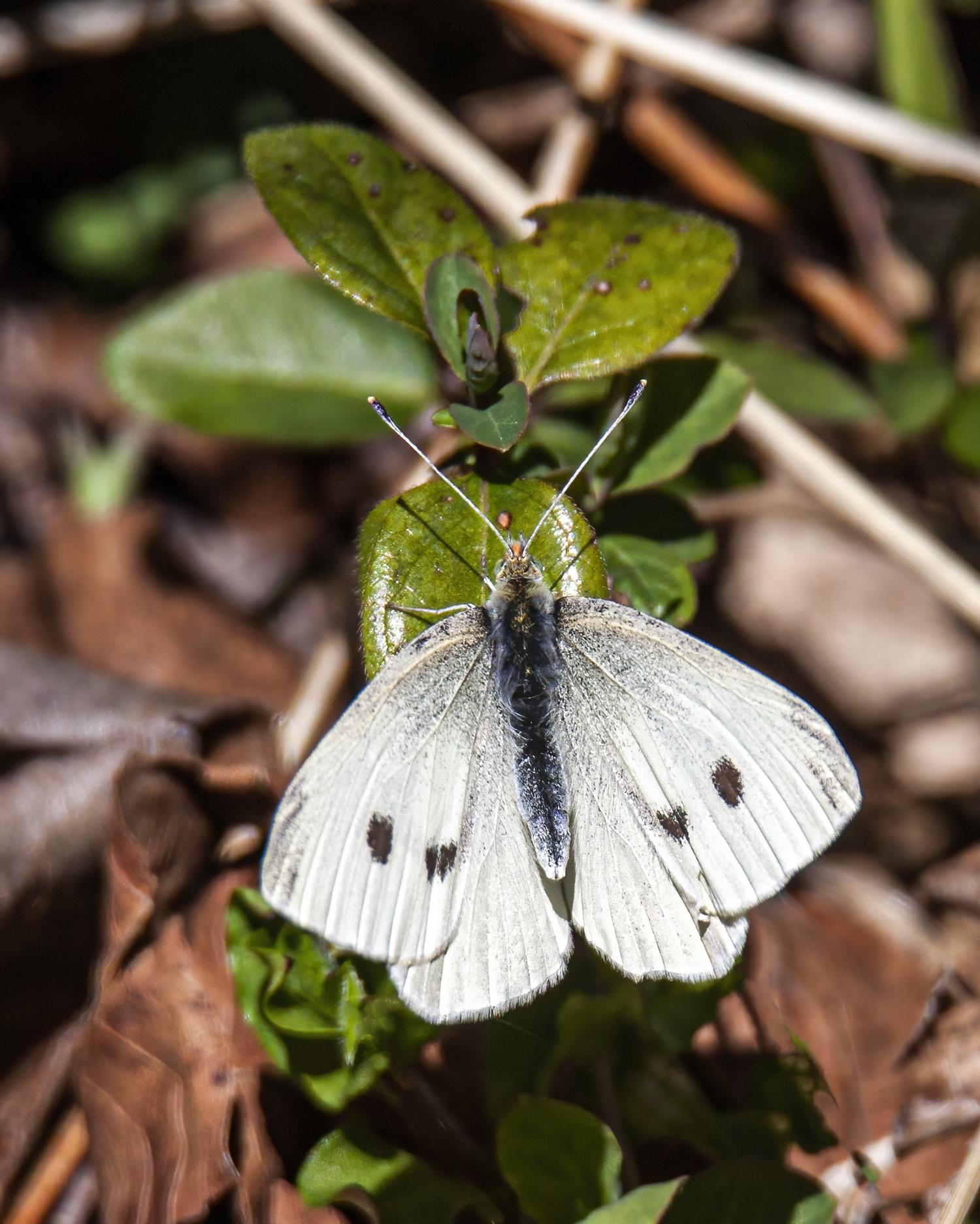
Peering through the branches near one nest, I spotted this perched Osprey (Pandion haliaetus) with a fish in its talons. The osprey was at the stage of consumption when quite often it will take the remaining portion to its mate. I never did see its mate, but was happy to capture this shot before the osprey flew away.

Osprey

© Michael Q. Powell. All rights reserved.


Read Full Post »

The irises in the garden of my neighbor Cindy Dyer have mostly faded, but her lilies are starting to flower. I believe that this beauty is an Asiatic lily, the second lily bloom of the season in her garden with many more to follow.

I captured this image late one morning this week as the rain was beginning to taper off and the colors were wonderfully saturated. I also love the multiple raindrops on the flowers—these are a few of my favorite things.

Asiatic lily

© Michael Q. Powell. All rights reserved.


Read Full Post »

From a distance I did not notice the large snake coiled up in the grass near the bank of the river—I spotted it only when I was a footstep or two away from stepping on it. My first thought was that it was probably a non-poisonous Northern Watersnake (Nerodia sipedon). After my encounter with an Eastern Copperhead snake last year, though, I have been a little more anxious to get a good look at any snake that I see, especially its head, in order to assess my relative risk—the copperhead has a large angular head and its eyes have a vertical pupil.

So my eyes began to trace the coils of the snake, trying to find its head. This image gives you a pretty good idea of the view that I had as I bent over slightly to look at the snake. In the photo, it is easy to be distracted by the beautiful colors and pattern of its scales and by the sinuous curves of its body. I was a bit relieved when my eyes finally found the round pupils of the eye of this snake which, believe it or not, is visible in this image. Can you find it?

In case you are curious, I took this photo this past Tuesday when I was exploring in the wilds of Fairfax County, Virginia, hunting for dragonflies with my friend and fellow dragonfly enthusiast Walter Sanford. Although our primary target was dragonflies, my eyes were always scanning surrounding areas for other interesting creatures. (If you still have not found the snake’s eye in the image, here is a clue—look near the extreme left in the photo towards the middle.)

Northern Water Snake

© Michael Q. Powell. All rights reserved.

Read Full Post »

On Tuesday morning I was thrilled to spot this female Umber Shadowdragon dragonfly (Neurocordulia obsoleta) while exploring in Fairfax County, Virginia with my friend and fellow dragonfly enthusiast Walter Sanford. We were searching for perched dragonflies in a sunlight field with vegetation that was often waist-high and occasionally as tall as I am. One of my aspirational goals is to be able to photograph a dragonfly covered with drops of morning dew.

I was attracted to a stalk of vegetation when I spotted a cicada perched at eye-level. As I was looking into the cicada’s bright red eyes, I noticed that there was an exuvia, the discarded exoskeleton from which a cicada had recently emerged, a bit lower on the plant.  I looked downward and was shocked to see a dragonfly hanging from the underside of the broad leafy stalk of the vegetation, using it like an umbrella to shade itself from the sun.

I did not know what kind of dragonfly it was, but suspecting that it might be something unusual, I stopped dead in my tracks and called out to my friend Walter. I bent a little bit from the knees and captured a few shots, but was afraid to move any more than that for fear of spooking the dragonfly—the wings are clipped in the photo because I was using my macro lens, which does not zoom, which meant I would have had to back up to capture a shot of the entire dragonfly. Unfortunately, as Walter was approaching, the dragonfly took off, spooked perhaps by my efforts to point out its location, and Walter was not able to get a shot of it.

When I got home, I was able to identify the dragonfly as an Umber Shadowdragon, a species that I had never seen before and about which I knew very little. Kevin Munroe, who created the wonderful website Dragonflies of Northern Virginia, described this species in almost poetic language: “The name alone creates images of a shadowy creature, mysterious and unique. It also sent me to a dictionary to look up “umber”. It turns out to be a clay pigment containing iron oxides that have an attractive red to golden brown coloring, originally found in the hills of Umbria, Italy. Even better, “umber” comes from the Latin word umbra, which means shadow. So the name means, Shadow Shadowdragon. This species certainly lives up to its enigmatic name – it does in fact only show itself among shadows, waiting to leave its high, leafy haunts until after 8:00 PM (2000 hours) on summer evenings. It can even be as late as 8:30 before they start their river patrols. Listen for that brief period when the day-singing cicada and nighttime katydids are both calling; the changing of the guard between light and dark. That’s when shadowdragons make their appearance and will often fly into early night, cruising fast and low, just above the river’s surface.”

I feel like I was really, really lucky to spot this dragonfly in broad daylight. The nocturnal habits of this species are such that most sources indicate that it is not even known if this species is rare or if it is common. If you are interested in learning more fascinating information about this species, be sure to check out this page of the website referenced above. I also highly recommend that you double click on the image to get a better look at the amazing details of this beautiful dragonfly, including the rows of little golden dots on the leading edges of its wings.

Umber Shadowdragon

© Michael Q. Powell. All rights reserved.

Read Full Post »

« Newer Posts - Older Posts »