Feeds:
Posts
Comments

Archive for the ‘Insects’ Category

The milkweed plants were dirty and dried up, but I knew from past experience that there might be ladybugs crawling around on them. The first two plants that I checked were full of aphids, a favorite food of ladybugs, but I did not see any ladybugs at all. As I approached a third plant, I saw a flash of red and spotted a small ladybug crawling quickly down the stem of the plant. I was not as close as I could have like to have been, but managed to capture some images before the ladybug disappeared from sight.

I like the way that this shot turned out because the reddish-orange of the ladybug really stands out against the blues and greens in the rest of the photos. In case you are curious, the little specks of yellow are aphids. In this case, the aphids were safe, for this ladybug seemed to be in too much of a hurry to stop for a snack.

ladybug

© Michael Q. Powell. All rights reserved.

Read Full Post »

I spotted this beautiful American Lady butterfly (Vanessa virginiensis) during a quick visit this past Saturday morning to Green Spring Gardens, a county-run historic garden not far from where I live. A lot of butterflies were active that day, but my eyes were immediately drawn to this American Lady, a species that I do not see very often. I had to chase it a bit before it stopped to feed on this flower, which was so popular that the American Lady had to share it with a much smaller skipper butterfly. The flower was growing near a fenced in area of public plots where people grow vegetables and the fence caused the striped effect in the background.

Although I spend most of my time photographing subjects in the wild, it was nice to visit a more cultivated place that was still ablaze with summer colors. I am quite conscious of the fact that the summer is slowly slipping away.

American Lady

© Michael Q. Powell. All rights reserved.

Read Full Post »

What do you see first when you look at this image? Do you see the beautiful colors, textures, and shapes of the rock that makes up both the foreground and the background? Are you drawn to the lines and somber coloration of the Powdered Dancer damselfly (Argia moesta) and its shadow? Do you focus on the damselfly’s brightly shining gray eye?

I spotted this little damselfly this past week while exploring a creek in Fairfax County with fellow dragonfly enthusiast Walter Sanford. There is a simplicity to this image that I find really appealing. I especially like the limited color palette and the sense of harmony in the way that the colors work together.

What do you think?

Powdered Dancer

© Michael Q. Powell. All rights reserved.


Read Full Post »
Really, an image of a horsefly? That sentence fragment was part of an internal dialogue that I had with myself when considering whether to post this image. I know that most people find flies to be fairly disgusting.  However, I was really taken with the details that I managed to capture when this enormous horsefly—it looked to be about 2 inches (50 mm) in length—perched in front of me earlier this week as I was resting alongside a rocky creek.

The fly’s eyes seem to have multiple colors and its body has several wonderful patterns. It is not all beauty, though, and I find those sharp points protruding from the face to be menacing, an impression enhanced by the enlarged shadow that cast by the fly.

I have to admit that I was fascinated by this giant horsefly and that fascination prompted me to post the photo despite my initial inhibitions. What do you think?

horsefly

© Michael Q. Powell. All rights reserved.

Read Full Post »

Yesterday I was thrilled to spot this spectacular female American Rubyspot damselfly (Hetaerina americana) while exploring a creek in Fairfax County, Virginia with my good friend and fellow  dragonfly enthusiast Walter Sanford.  This species is found along streams and rivers and this in only the second time that I have ever seen American Rubyspots. The green and brown colors on the thorax (the “chest”) of this damselfly are incredible and I highly recommend you click on the images to get an even better look at the amazing details.

Signs are starting to appear that we are approaching the end of summer. Already I have noted that the number of dragonflies is dropping, though there still seem to be plenty of butterflies. It was therefore particularly gratifying to see this unfamiliar damselfly yesterday. The dragonfly season, though is far from over—there are some autumn dragonfly species that I have not yet seen.  Birds are starting to migrate through this area, so some may appear in this blog soon, but there should still be dragonfly photos for the next few months at least.

American Rubyspot

American Rubyspot

© Michael Q. Powell. All rights reserved.

Read Full Post »

The only other time that I can remember a butterfly perching on me was when I was in an indoor enclosed butterfly garden. This time, though, it was out in the wild and I was a bit shocked when Walter told me that there was a butterfly on my head. Thanks to Walter Sanford, my friend and fellow dragonfly enthusiast, for capturing this encounter. Be sure to check out his blog for lots of wonderful images of dragonflies and other cool creatures.

waltersanford's avatarwalter sanford's photoblog

There’s a butterfly on your hat. A Red-spotted Purple butterfly (Limenitis arthemis astyanax).

16 AUG 2019 | Occoquan Bay NWR | Red-spotted Purple butterfly

This comical butterfly-man union was observed during a photowalk with Michael Powell at Painted Turtle PondOccoquan Bay National Wildlife Refuge, Prince William County, Virginia USA.

16 AUG 2019 | Occoquan Bay NWR | Red-spotted Purple butterfly

The weather was extremely hot and humid. (Notice the Cumulus congestus clouds building in the background.) Both Mike and I were soaked with sweat as soon as we started our photowalk earlier the same day at another site. The butterfly was feeding upon mineral salts on Mike’s “Duck Dynasty” hat.

Copyright © 2019 Walter Sanford. All rights reserved.

View original post

Read Full Post »

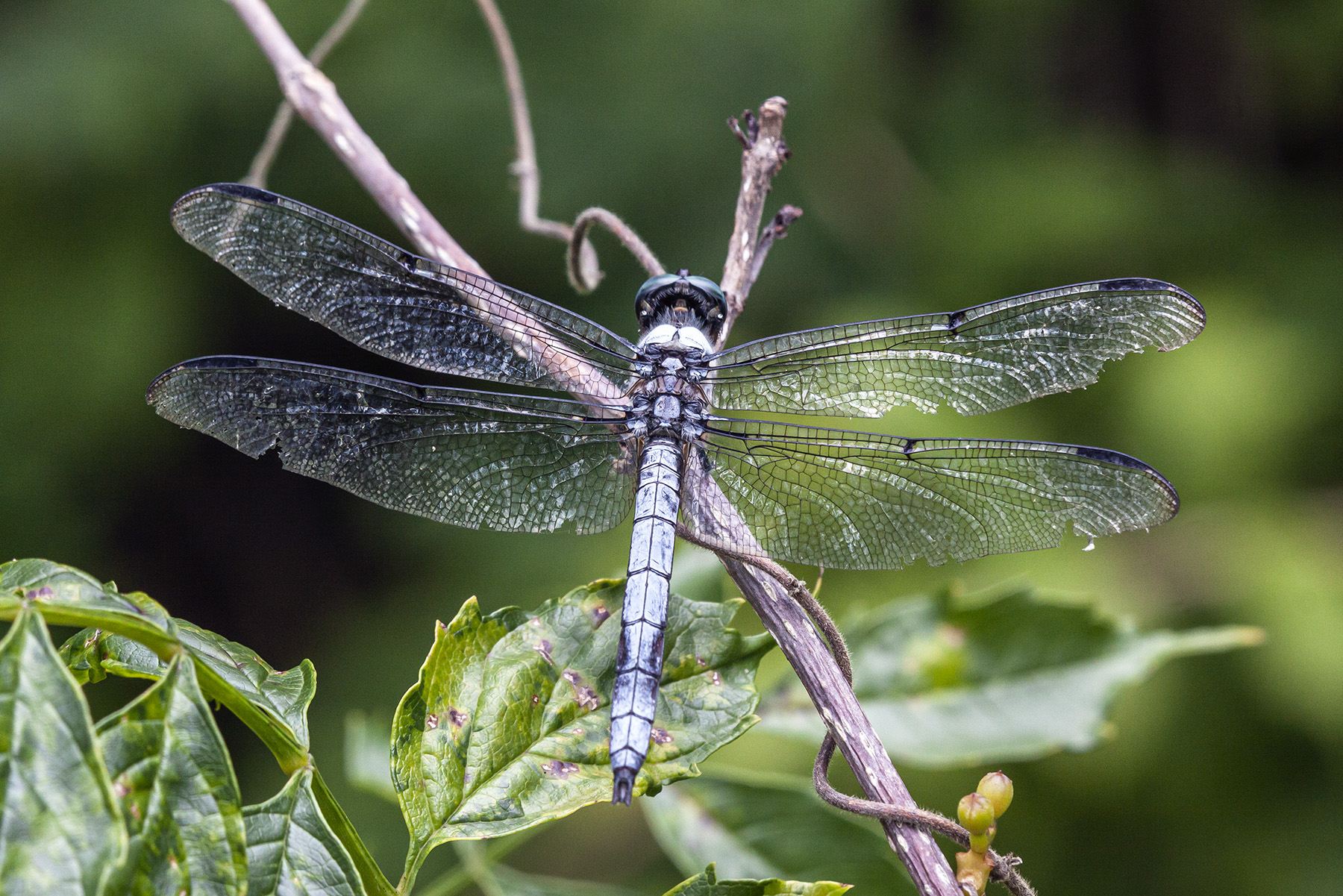
Great Blue Skimmer dragonflies (Libellula vibrans) are really common, but I enjoy photographing them anyways, like this grizzled male that I spotted earlier this week at Jackson Miles Abbott Wetland Refuge. The curling vines of the plant on which this dragonfly chose to perch add some additional visual interest to these photos.

I must confess that ordinary blue dragonflies have a special place in my heart, because my very first blog posting on July 7, 2012 featured a photo of a Blue Dasher, another common species. My photography skills and my knowledge about dragonflies have increased significantly since that time, though I am still quite proud of that initial photo that started me on this long journey into photography.


blue dasher

Blue Dasher

© Michael Q. Powell. All rights reserved.

Read Full Post »

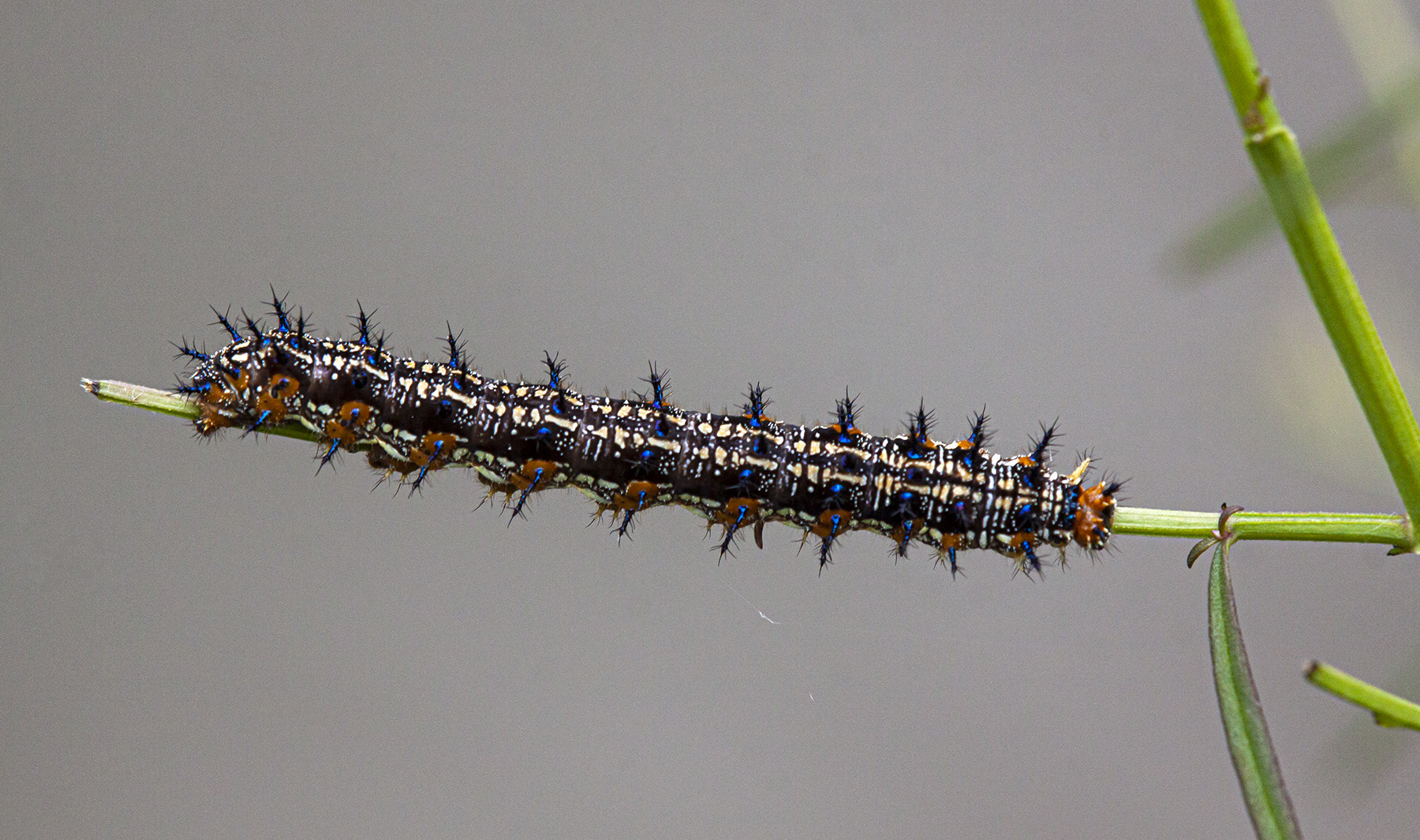
Yesterday I spotted this amazing looking caterpillar alongside a pond at Jackson Miles Abbott Wetland Refuge. I have not yet been able to identify it, but I was really struck by the stunning blue dots and the prickly spikes that run the length of the caterpillar’s body. Often these types of spikes are an indication of a venomous stinging caterpillar, so I kept my distance as I was taking this shot. Click on the image if you want to get a closer look at the wonderful details of the caterpillar.

UPDATE: Several helpful folks have weighed in and have identified this as a Common Buckeye caterpillar (Junonia coenia). Thanks for the help.

caterpillar

© Michael Q. Powell. All rights reserved.

Read Full Post »

There were quite a few grasshoppers yesterday at Occoquan Bay National Wildlife Refuge and this one cooperated for me by posing momentarily. Initially the grasshopper hung upside down as shown in the first image, but eventually it climbed around on the stalk of vegetation and assumed a more upright pose.

I couldn’t help but notice that the background of the two shots seems really different. I think this was caused by the fact that I shot them from very different angles, even though I remained more or less in the same spot.

grasshopper

grasshopper

© Michael Q. Powell. All rights reserved.

Read Full Post »

As many of you know, I love trying to capture images of dragonflies in flight. This Slaty Skimmer dragonfly (Libellula incesta) cooperated by periodically hovering a bit during a recent trip that I made to Jackson Miles Abbott Wetland Refuge. The first two images show you some of the details of the dragonfly’s body, including the way it tucks in its legs when in flight, and the final image gives you a wider view of the environment in which I was shooting.

Slaty Skimmer

slaty skimmer

slaty skimmer

© Michael Q. Powell. All rights reserved.

Read Full Post »

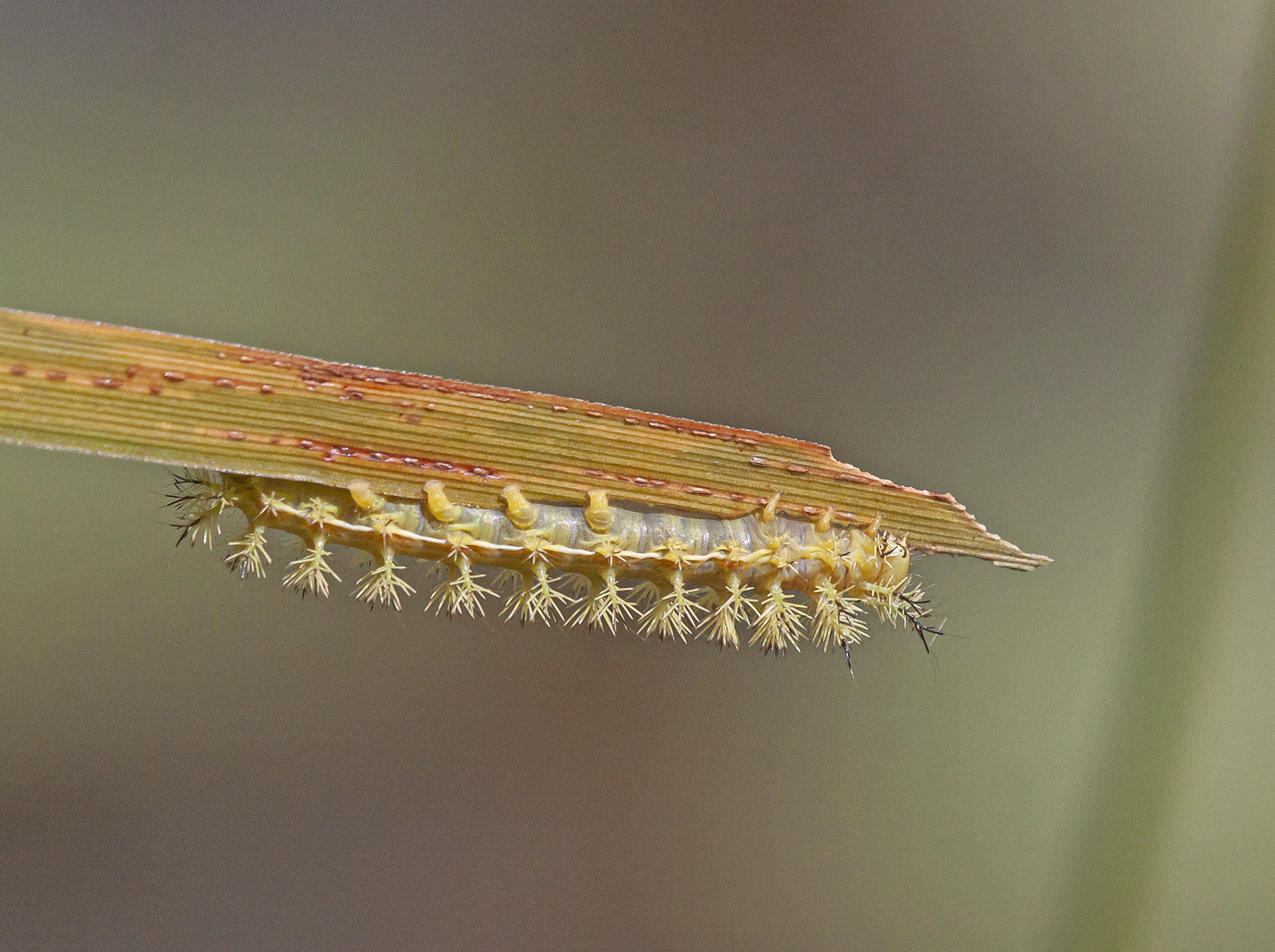
I spotted this strange looking caterpillar recently while exploring Jackson Miles Abbott Wetland Refuge. I was intrigued by all of the tufted spines sticking out of its back—I am pretty sure that it is upside down in this photo. Over the years, I have learned that it is best to avoid spiny caterpillars, because many of them are poisonous.

I sent a copy of a photo of this caterpillar to the helpful folks at bugguide.net and one of the viewers there suggested that this is an Eastern Buck Moth caterpillar (Hemileuca maia). I have not yet been able to get a confirmed identification, but according to Wikipedia, the caterpillars of this species are, “covered in hollow spines that are attached to a poison sac. The poison can cause symptoms ranging from itching and burning sensations to nausea.”

Fortunately I kept my distance when I captured this image with my long macro lens. I have no desire for a close encounter with a spiny caterpillar.

Eastern Buck Moth

© Michael Q. Powell. All rights reserved.

Read Full Post »

I was really thrilled to spot this spectacular Black Swallowtail butterfly (Papilio polyxenes) last week as it fed on some kind of thistle plant at Occoquan Bay National Wildlife Refuge. There are several dark swallowtail species in our area and I often have trouble telling them apart. In this case, though, I could see the distinctive back dot inside the orange dot which is telltale sign that this is Black Swallowtail. I highly recommend a helpful posting by Louisiana Naturalist that points out way to distinguish among four dark swallowtails—it is a reference that I repeatedly return to when I have a question about a dark swallowtail.

Black Swallowtail

© Michael Q. Powell. All rights reserved.

Read Full Post »
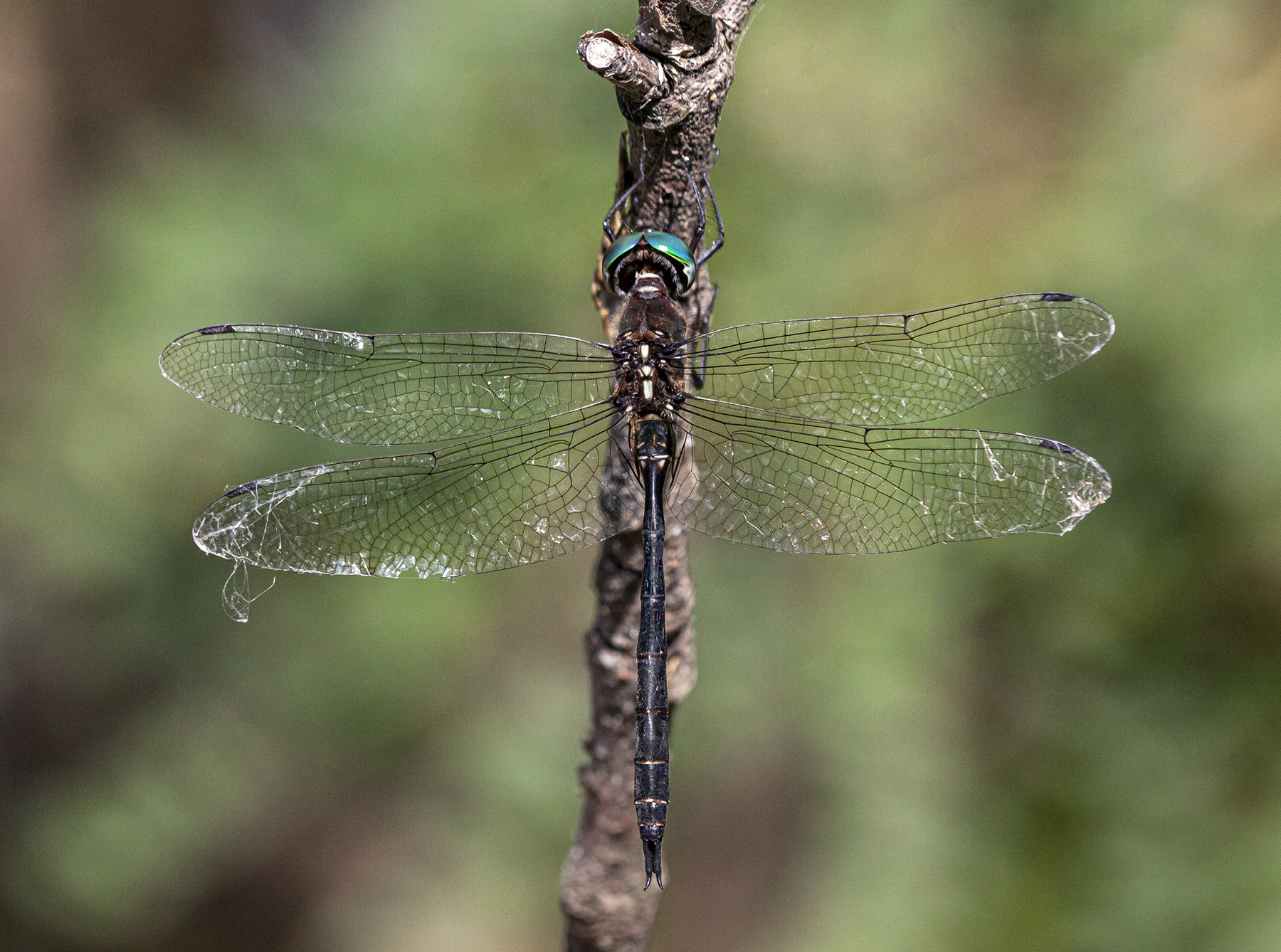
This tattered male Great Blue Skimmer dragonfly (Libellula vibrans) seemed to be auditioning for a role as a replacement for the goose on this sign on Monday at Occoquan Bay National Wildlife Refuge. Or perhaps he was merely seeking a place of refuge—all dragonflies are welcome here.

Great Blue Skimmer

© Michael Q. Powell. All rights reserved.

Read Full Post »

Liaison dangereuse? Living life on the edge? That’s how I would characterize these mating Big Bluet damselflies (Enallagma durum) that I spotted on Monday at Occoquan Bay National Wildlife Refuge. Neither of them was harmed during their “activity,” though those thorns look really menacing.

It is definitely not what I would call “safe sex.”

Big Bluet

© Michael Q. Powell. All rights reserved.

Read Full Post »

On Friday I spotted this female Blue-tipped Dancer damselfly (Argia tibialis) alongside a creek in Prince William County, Virginia. The fallen leaves provided a nice backdrop for the damselfly and remind me that the days of the summer are numbered.

Some of you undoubtedly noticed that there is no blue tip on this Blue-tipped Dancer. As is often the case for species names for insects (and for birds too), the name applies primarily to the males of the species. There is, however, some variety among female Blue-tipped Dancers, with a blue variant, as seen below, and a brown variant.

Blue-tipped Dancer

© Michael Q. Powell. All rights reserved.


Read Full Post »

Dragonfly wings are amazing, but most of the time they are so transparent that it is hard to see all of the tiny little “cells” that make up the wings. Last Friday, though, I captured this shot of an immature male Calico Pennant dragonfly (Celithemis elisa) at Occoquan Bay National Wildlife Refuge that really highlights the beautiful mosaic-like pattern of its hind wings. Wow!

Calico Pennant

© Michael Q. Powell. All rights reserved.


Read Full Post »

Does you mood affect how you react to images? When I am reviewing images that I have captured, most of the time I use an analytical approach. I seek to identify the species of my subject and then look at the technical aspects of the photo, such as the sharpness of the focus. Finally I will see if I can improve the composition by cropping the image.

For some images, though, I respond initially with my heart and not my head. I don’t worry about “what” it is and simply enjoy the beauty of the shapes and colors that make up the image. That was the case with this shot of a male Needham’s Skimmer dragonfly (Libellula needhami) that I captured during a recent visit to Occoquan Bay National Wildlife Refuge.

I love the contrast between the orangish-red of the dragonfly’s body and the green background. The shape and texture of the vegetation, which I believe is Eastern Gamagrass (Tripsacum dactyloides), also really grabbed my eye (in part because I missed focus a little and the sharpest part of the image is the grass in front of the dragonfly). The composition is simple and straightforward and is pretty much the way I shot it.

We all like what we like. Most often we don’t even ask ourselves why we like something. I personally find it beneficial to try to articulate why I like something. Words fail me quite often when attempting to describe with words what is primarily an emotional reaction, but I think that the effort itself makes the process worthwhile.

Needham's Skimmer

© Michael Q. Powell. All rights reserved.

Read Full Post »

Are you always in search of new subjects or are you content to photograph the same subjects over and over again? Several years ago I came across an author who described two different types of people—those who prefer to live “widely” and those who prefer to live “deeply.” Those in the first group are always seeking new experiences and traveling to new places and, as photographers, are constantly looking for new things to photograph. By contrast, those in the second group are looking for a deeper experience and are likely to repeatedly return to the same locations over and over and photograph the same limited set of subjects.

As you might suspect, I see myself primarily as a member of the second group. Many of you have undoubtedly noted that I tend to hang out a lot in the same wildlife refuges throughout the year and often photograph familiar subjects. Why? For me, each encounter is unique—the lighting is different, the poses are different, and the age and genders of my subjects vary. I enjoy documenting the seasonal changes in fora and fauna at these locations. Each time I strive to capture different and, if possible, better images.

So, I am posting another photo of a Halloween Pennant dragonfly (Celithemis eponina), even though I posted several images of this species last week. My angle of view for this image from this past weekend was better; the lighting was coming from a better direction; and the slight breeze prompted the dragonfly to move its wings in a way that created a better pose. Consequently, I like this image more than the ones I posted earlier.

My simple approach to blog postings is to present something that is interesting to viewers. The photos may be visually appealing or show details or behavior that you may not have noticed before. You may learn something from my words or may have a better understanding of how the images came into being. Each day we have new opportunities to fill our lives with beauty and meaning. Photography and blogging have become part of my daily journey and I feel blessed to be able to share my experiences with so many of you.

Halloween Pennant

© Michael Q. Powell. All rights reserved.

Read Full Post »

What is the best way to photograph a dragonfly that perches low to the ground? How can you create an image in which the dragonfly is not lost amidst the clutter of the vegetation? That was the challenge that fellow dragonfly enthusiast Walter Sanford and I faced last Monday when we journeyed to Riverbend Park in Great Falls, Virginia  in search of Eastern Ringtail dragonflies (Erpetogomphus designatus).

Walter has a lot of experience with dragonflies and knew where to find Eastern Ringtails in the park. He knew, for example, that they like to perch on a section of concrete aggregate and indeed we spotted one not long after we arrived. Walter likes to maximize the chance of getting the entire dragonfly in focus by shooting downwards, ideally from as close to overhead as possible. For him, the concrete background is uncluttered and allows him to capture all of details of the dragonfly.

Although I prefer to photograph dragonflies on natural vice manmade surfaces, I took some photos, including the third one below, while the dragonfly was on the concrete—you have to shoot when the opportunity arises and I was not confident that I could wait for the dragonfly to choose a better perch. Rather than shooting from above when the dragonfly is on the ground, I usually choose to get down with the dragonfly.

Eventually I was able to get some shots of Eastern Ringtails perched in the grass. The middle image shows the dragonfly tilting its head to look towards me as I photographed it. I like the pose, but I was not fully satisfied. Those of you who have followed my blog for a while know that I like to get as close to a dragonfly as it will let me. The initial photo of this posting was one of my final shots of my session with the Eastern Ringtails and it is probably my favorite.

I began this post with a question and feel like I owe you a response. In reality, there is no “best” way to photograph a dragonfly on the ground, but my preferred option is to get low to the ground and close to the subject so that I am able to focus on part of the dragonfly, hopefully the eyes, and blur out the background because of the shallow depth of field when shooting that close. If you would like to see Walter’s wonderful photos of Eastern Ringtails from the same trip, I encourage you to check out his blog postings Eastern Ringtail reunion, continued and  Reconnecting with Eastern Ringtail. Those postings provide his visual response to the question that I posed.

Eastern Ringtail


Eastern Ringtail

Eastern Ringtail

© Michael Q. Powell. All rights reserved.

Read Full Post »

Eastern Tiger Swallowtails (Papilio glaucus) were definitely enjoying this patch of Joe Pye Weed (Eutrochium purpureum) when I spotted them last Saturday at Riverbend Park. The butterfly in the foreground is a dark morph female and I believe the one in the background is a male. One of the cool things about Eastern Tiger Swallowtails is that females come in two varieties, one with coloration close to that of the male and one with the dark colors that you see in the image below.

This image is a a pretty straightforward presentation of a fairly common subject, but there is something about the composition that I really like. Maybe it’s the contrasting colors or the overlapping shapes. Who knows? So often I like what I like without being able to articulate the precise reasons why.

Eastern Tiger Swallowtail

© Michael Q. Powell. All rights reserved.


Read Full Post »

Recently there seems to have been an explosion of Big Bluet damselflies (Enallagma durum) at Occoquan Bay National Wildlife Refuge. This damselfly species is a coastal species and usually likes brackish water. Not surprisingly I saw them repeatedly yesterday as I walked along a trail near the water’s edge.

I like the first shot a lot, because of the repeated angled lines that provide a nice contrast with the damselfly. The second image shows a mating Big Bluet couple in a position known as the “wheel” that is viewed by many as a sidewards heart. As is usually the case with insects and with birds, the male Big Bluet is the more brightly-colored than his female counterpart.


Big Bluet

Big Bluet

© Michael Q. Powell. All rights reserved.


Read Full Post »

Although we still have quite a lot of summer remaining, some of my favorite dragonfly species have already disappeared for the season. I have been fortunate this year to see Gray Petaltail dragonflies (Tachopteryx thoreyi) on multiple occasions in several different locations. A little over a week ago I spotted this one at Occoquan Regional Park on the date that the Dragonflies of Northern Virginia website lists as the tail end of the season for this species. It is quite possible that I will have to wait until next year to see another one.

Gray Petaltails are remarkable dragonflies. They will sometime perch on you, which can be a bit disconcerting because they are so large and you can hear them when they fly by your head. Additionally, many scientists view this species as an ancient one. According to the website cited above, Gray Petaltails are “our oldest and most primitive dragonfly; species almost identical to petaltails flew alongside dinosaurs during the Jurassic period. Imagine petaltails and a herd of Brontosaurus sharing the same giant, fern-filled forests.”

It is hard to know exactly how long dragonflies have been around, but according to Wikipedia, fossils of very large dragonfly ancestors with wingspans of 30 inches (750 mm) have been found that are 325 million old. Given the ferocity of most dragonflies as predators, I am happy that modern day dragonflies are quite a bit smaller in size.


Gray Petaltail


© Michael Q. Powell. All rights reserved.


Read Full Post »

Last Saturday I spotted this Blue-fronted Dancer damselfly (Argia apicalis) couple while exploring Riverbend Park in Great Falls, Virginia. I like this shot because it gives a good sense of the differences in coloration between the male and the female of this species. Most of the time when the damselflies are coupled, they are in contorted positions and most of the body of one or the other damselfly is out of focus in my photos. In this case, the damselflies are in the tandem position, but appear to be resting.

Blue-fronted Dancer

© Michael Q. Powell. All rights reserved.

Read Full Post »

Last Thursday I spotted this beautiful Halloween Pennant dragonfly (Celithemis eponina) perched on a very photogenic plant at Occoquan Bay National Wildlife Refuge. I love the curlicue curves of the plant that remind me of ornamental wrought iron.

The perch in the second and third images is not as interesting, but I thought that I would share those images because of the way that I was able to capture the sky and the clouds in the background. As you can probably tell, the vegetation was really high and I was shooting at an upwards angle.


Halloween Pennant

Halloween Pennant

Halloween Pennant

© Michael Q. Powell. All rights reserved.

Read Full Post »
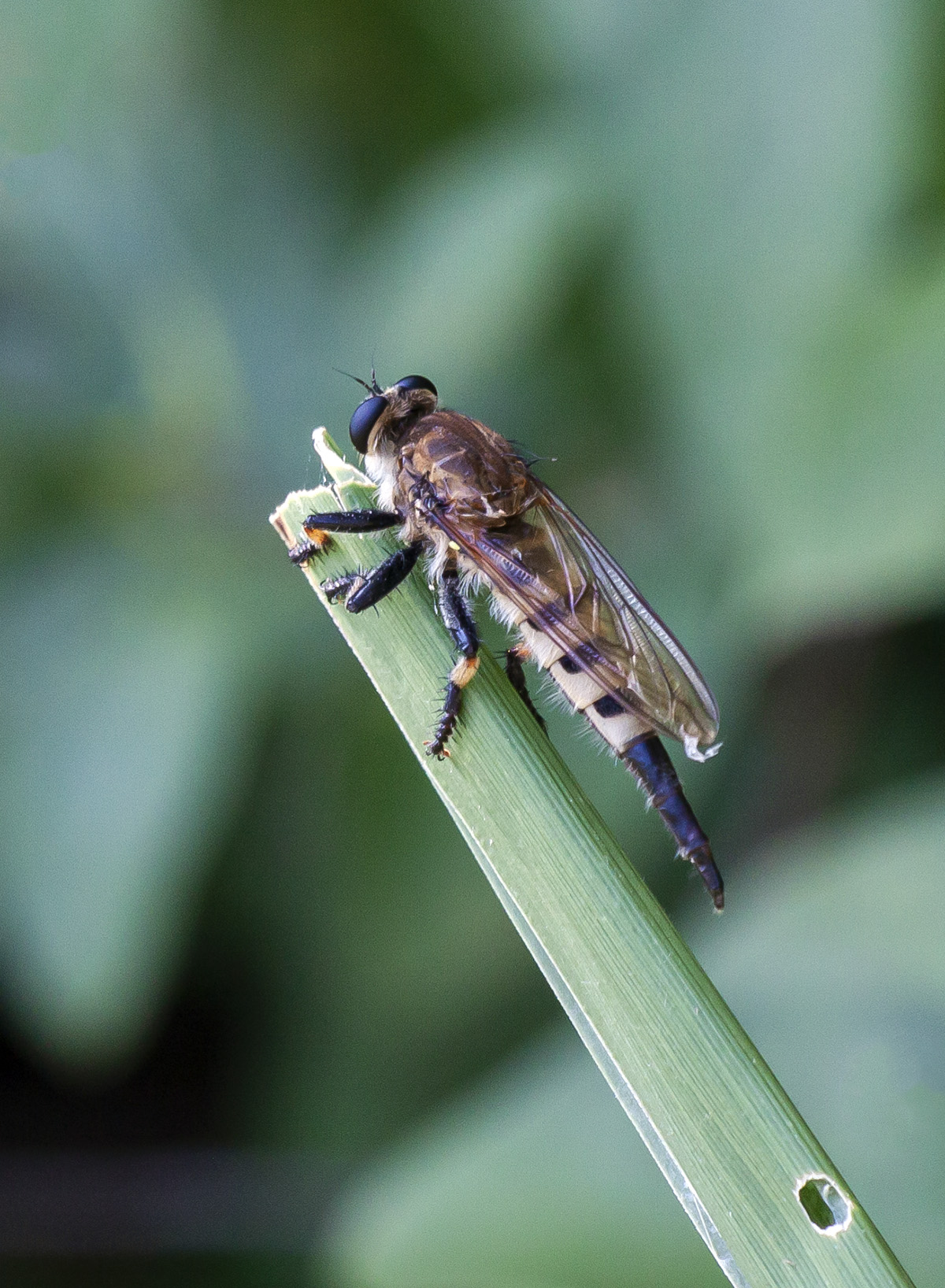
This seems to be the prime season for butterflies and I have been seeing lots of them this past week. I spotted this spectacular Eastern Tiger Swallowtail (Papilio glaucus) as I was exploring Occoquan Regional Park last Thursday. It was attracted to a pink flowering plant that I think is some kind of milkweed—I am a whole lot more confident in identifying butterflies than plants.

I am happy with both shots, but must that I particularly like the background in the first image.

Eastern Tiger Swallowtail

Eastern Tiger Swallowtail

© Michael Q. Powell. All rights reserved.

Read Full Post »

Calico Pennants (Celithemis elisa) have really distinctive markings and are among the prettiest dragonflies in our area. I spotted this female Calico Pennant on Thursday at Occoquan Bay National Wildlife Refuge. As is usually the case for pennant dragonflies, she was perched on the very tip of the vegetation. As a slight breeze began to blow, she seemed to be holding on tightly with her tiny feet.

Calico Pennant

© Michael Q. Powell. All rights reserved.

Read Full Post »

Eastern Amberwings (Perithemis tenera) are one of the smallest dragonfly species where I live—less than one inch (25 mm) in length. I often see the amber-colored males buzzing around at the ponds that I visit, but it is rare for me to find a female.

According to the wonderful website Dragonflies of Northern Virginia, female Eastern Amberwing dragonflies are often found far from the water in meadows where they share perches with hornet and other wasps. When they are threatened, these dragonflies will rhythmically move their wings up and down while pulsing their abdomens in imitation of a wasp in order. Their goal is to scare off potential predators that believe they are about to be stung.

I spotted this tiny beauty yesterday while I was exploring Occoquan Bay National Wildlife Refuge. I was, in fact, far from the water when I photographed her.  She posed briefly, it seemed, when I raised my camera and seemed to smile a little.

Eastern Amberwing

© Michael Q. Powell. All rights reserved.

Read Full Post »

Most of us associate butterflies with flowers, but they sometimes can be found on the sandy banks of creeks, like this cluster of male Eastern Tiger Swallowtails (Papilio glaucus) that I spotted earlier this month in Prince William County, Virginia.

I went looking for information about this behavior and learned the following on the thoughtco.com website:

“Butterflies get most of their nutrition from flower nectar. Though rich in sugar, nectar lacks some important nutrients the butterflies need for reproduction. For those, butterflies visit puddles. By sipping moisture from mud puddles, butterflies take in salts and minerals from the soil. This behavior is called puddling, and is mostly seen in male butterflies. That’s because males incorporate those extra salts and minerals into their sperm. When butterflies mate, the nutrients are transferred to the female through the spermatophore. These extra salts and minerals improve the viability of the female’s eggs, increasing the couple’s chances of passing on their genes to another generation.”

Eastern Tiger Swallowtail

© Michael Q. Powell. All rights reserved.

Read Full Post »

Last week I spotted this female Needham’s Skimmer dragonfly (Libellula needhami) at Occoquan Bay National Wildlife Refuge. The direct sunlight was a little harsh, but the high perch of the dragonfly allowed me to capture a beautiful, uncluttered background.

I love the golden edges of the wings of this species and the wonderful two-toned eyes of the females like this one. It was an additional bonus that she seemed to be smiling for her moment in the spotlight.

Needham's Skimmer

© Michael Q. Powell. All rights reserved.

Read Full Post »

What do you think is going on when you see this cluster of Silvery Checkerspot butterflies (Chlosyne nycteis)? Perhaps you think that they all are feeding on something particularly tasty. If you look closely you will noticed that they are facing in different directions and you get the feeling that something else is going on.

I had the benefit of seeing the situation unfold in front of my eyes. A few moments earlier I spotted the mating couple that you see in the second image. I do not see mating butterflies very often so my attention was very much focused on them. Suddenly another butterfly burst on the scene and attempted to turn this into a ménage à trois. In the first image, the interloper is the one on the left.

I suspect that the third butterfly is a male rival and he is trying to steal the female away. He made attempts from several angles to break apart the couple, but was not successful and eventually gave up. I decided that the couple needed some privacy, so I too departed.

Pearl Crescent

Pearl Crescent

© Michael Q. Powell. All rights reserved.

Read Full Post »

Eastern Pondhawk dragonflies (Erythemis simplicicollis) are voracious predators and I spotted this female pondhawk munching on another insect this past Tuesday at Occoquan Bay National Wildlife Refuge. At this time of the year the vegetation has grown high in many of the locations that I visit and I am now seeing more dragonflies perching at eye level or even higher. This heightened perspective allows me to get some cool, uncluttered backgrounds, like the one in this image that reminds me of a watercolor painting.

Eastern Pondhawk

© Michael Q. Powell. All rights reserved.

Read Full Post »

« Newer Posts - Older Posts »