Feeds:
Posts
Comments

Archive for the ‘dragonfly’ Category

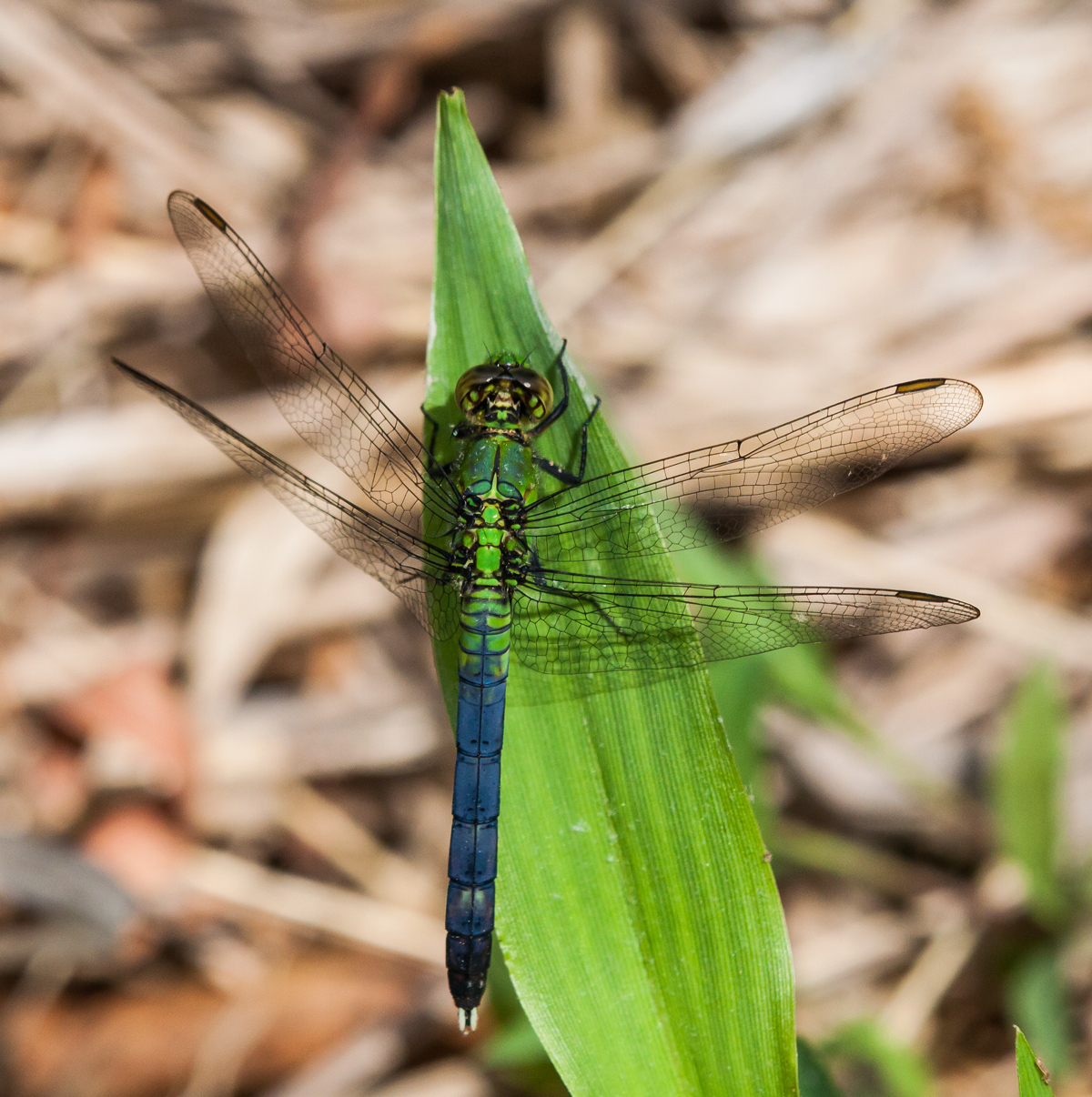
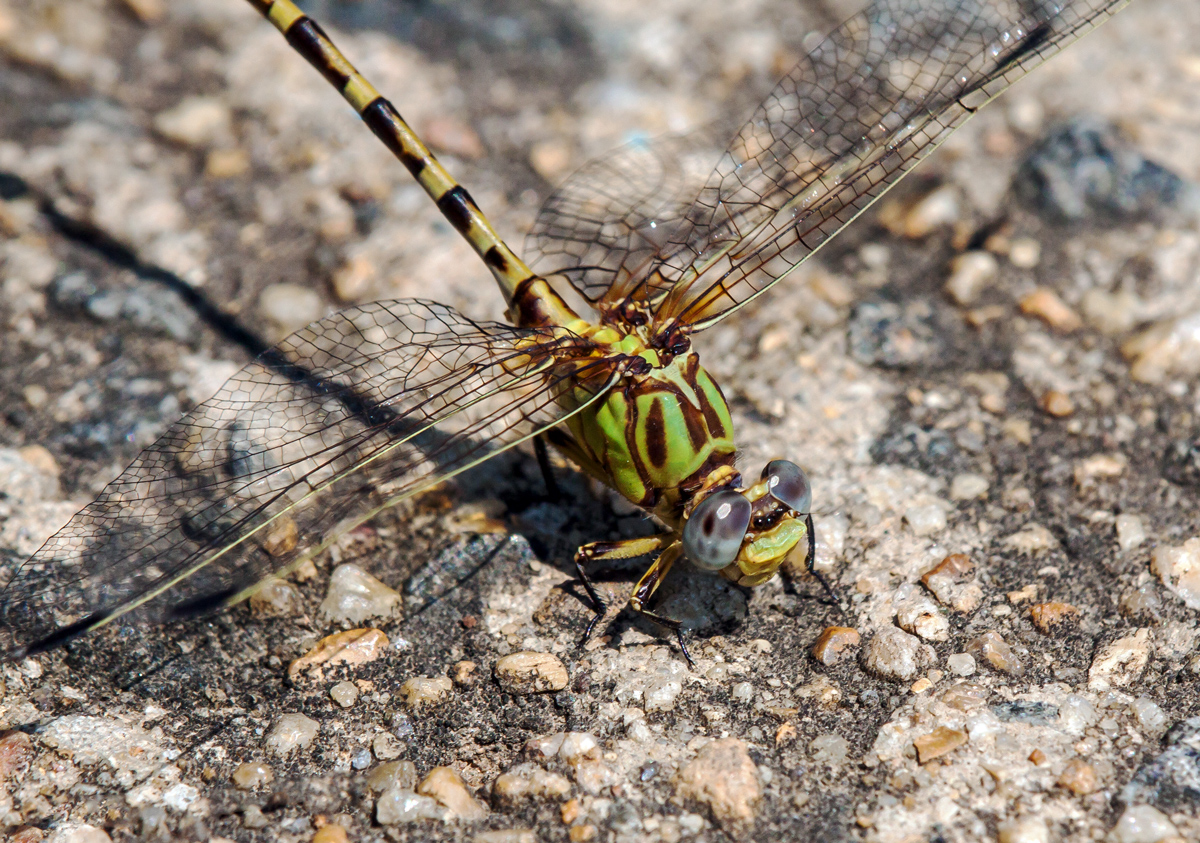
This past week I was excited to see several Eastern Ringtail dragonflies (Erpetogomphus designatus) while exploring Riverbend Park in Great Falls, Virginia. This species is relatively uncommon in our area and I had only encountered one once before at a location in Maryland. Fellow dragonfly enthusiast and photographer Walter Sanford had alerted me to the presence of these dragonflies at the park and their location, so I was fairly confident that I would be able to find some of them. (With wildlife photography there are few guarantees—you can never be sure how long a species will remain at a given location, particularly when it comes to insects like dragonflies that have a limited season.)

Well, I managed to find some Eastern Ringtails and was faced with the challenge of how to photograph them. The bad news was that this species likes to perch on the ground, but the good news was that the ground on which they chose to perch was uncluttered—it was a boat ramp made of some kind of aggregate concrete. The background of these shots is not natural, but it does allow you to see some of the beautiful details of this stunning dragonfly, especially their spectacular blue eyes.
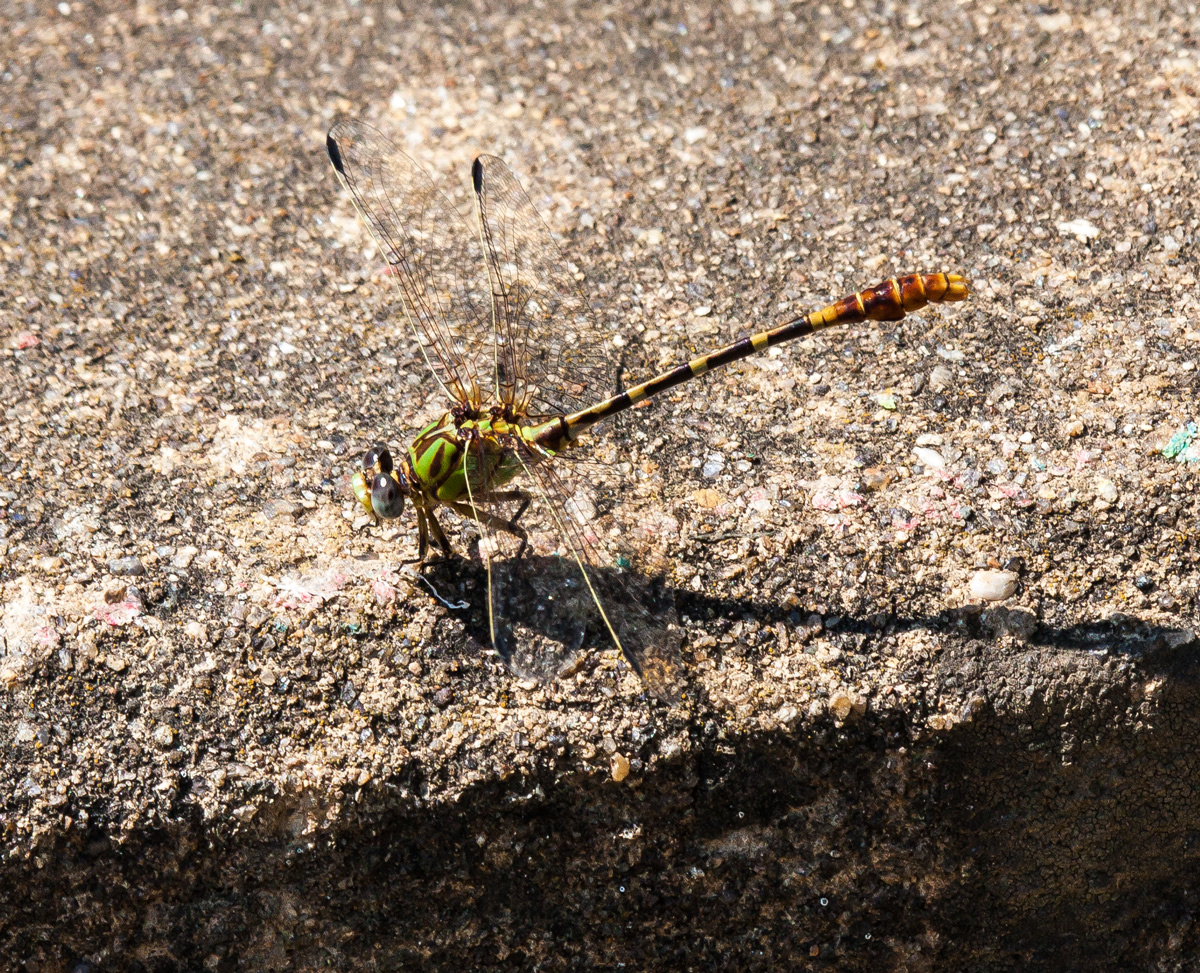
Eastern Ringtail

Eastern Ringtail

Eastern Ringtail

© Michael Q. Powell. All rights reserved

Read Full Post »

Is it possible that I am sharing too many dragonfly images, that I am oversaturating the market and taxing the patience and tolerance of my readers? I realize that not everyone is as drawn as I am to these amazing little creatures and that some folks are repelled by insects of any variety or are simply not interested in them.

An old adage asserts that beauty is in the eyes of the beholder and to a certain extent I agree with that statement. However, I would counterargue that beauty is not entirely subjective, that there are cases in which the majority of people would agree that something is beautiful.

I somehow think that this might be the case for an image I captured this past Friday of a spectacular female Halloween Pennant dragonfly (Celithemis eponina) at Huntley Meadows Park. Most of the Halloween Pennants that I have photographed this year have been males, which tend to be more visible, since they are trying to attract females, so it was a treat to spot a female. In the dragonfly world, females usually are the ones that choose the partner for mating and they frequently remain in the treeline or in open fields until they are ready.

I had my 150-600mm lens mounted on my camera, because I was hoping that I might see a bald eagle or a hawk, so I was able to shoot this dragonfly from a distance without disturbing her. I focused manually and was able to capture some beautiful details of the dragonfly, such as the two-toned eyes and the long, two-toned legs. I love the organic shape and feel of the cool-looking perch that the dragonfly had chosen. The background dropped out of focus so much that it almost looks like a studio shot and draws the eyes of viewers to the subject.

When you first read the title, you might have scratched your head in puzzlement, because the color palette is more subdued than oversaturated. By now, it should be clear that I was not referring to the colors, but to the question of whether or not I am posting too many images of dragonflies. Fear not, not all of my postings will be about dragonflies, but we are in the prime period for dragonflies, so stay tuned for more images of these amazing aerial acrobats. When it comes to the quantity of my dragonfly images, I feel like some Southerners do about sugar in their sweet tea—you can never have too much of a good thing.

Halloween Pennant

© Michael Q. Powell. All rights reserved


Read Full Post »

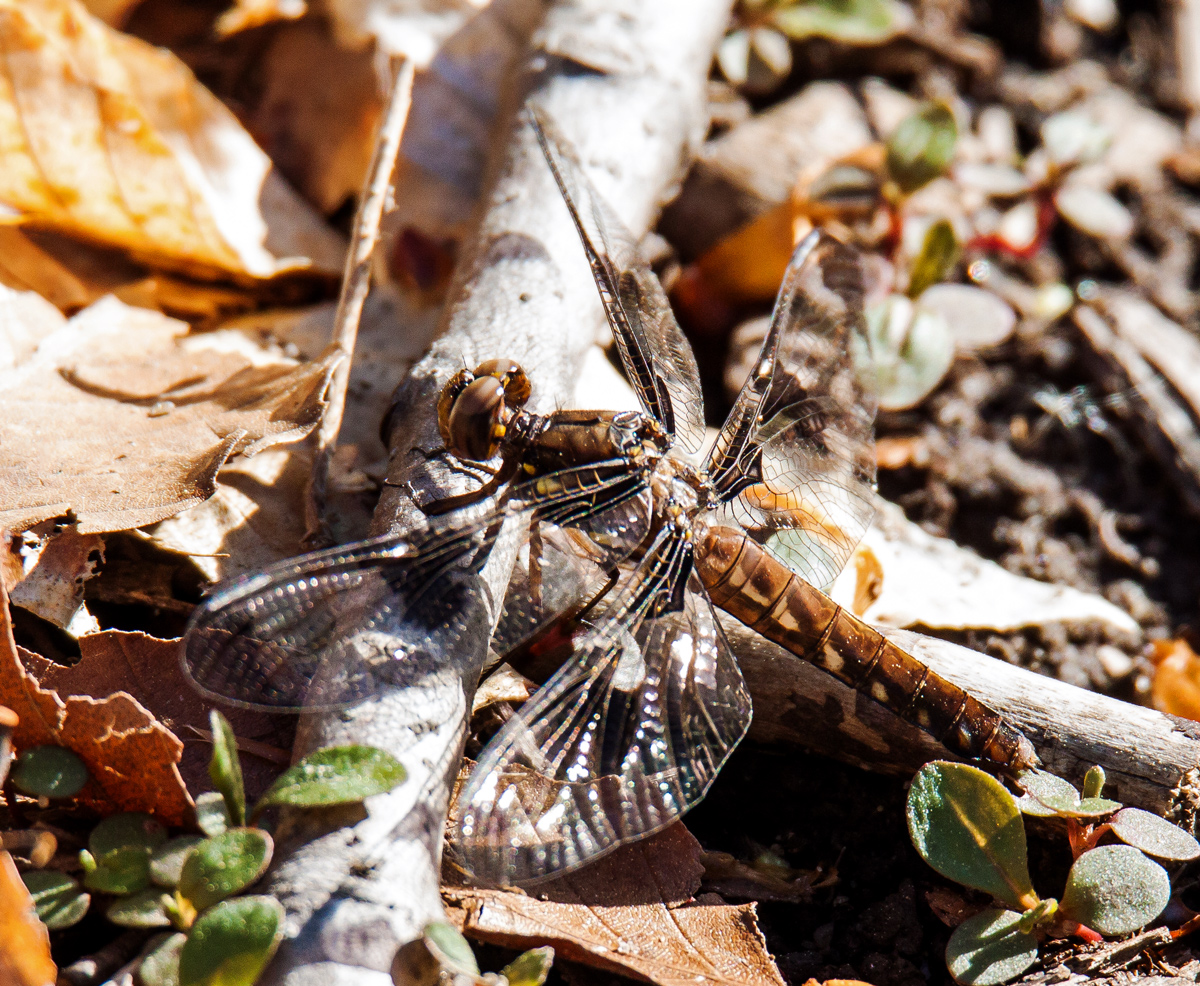
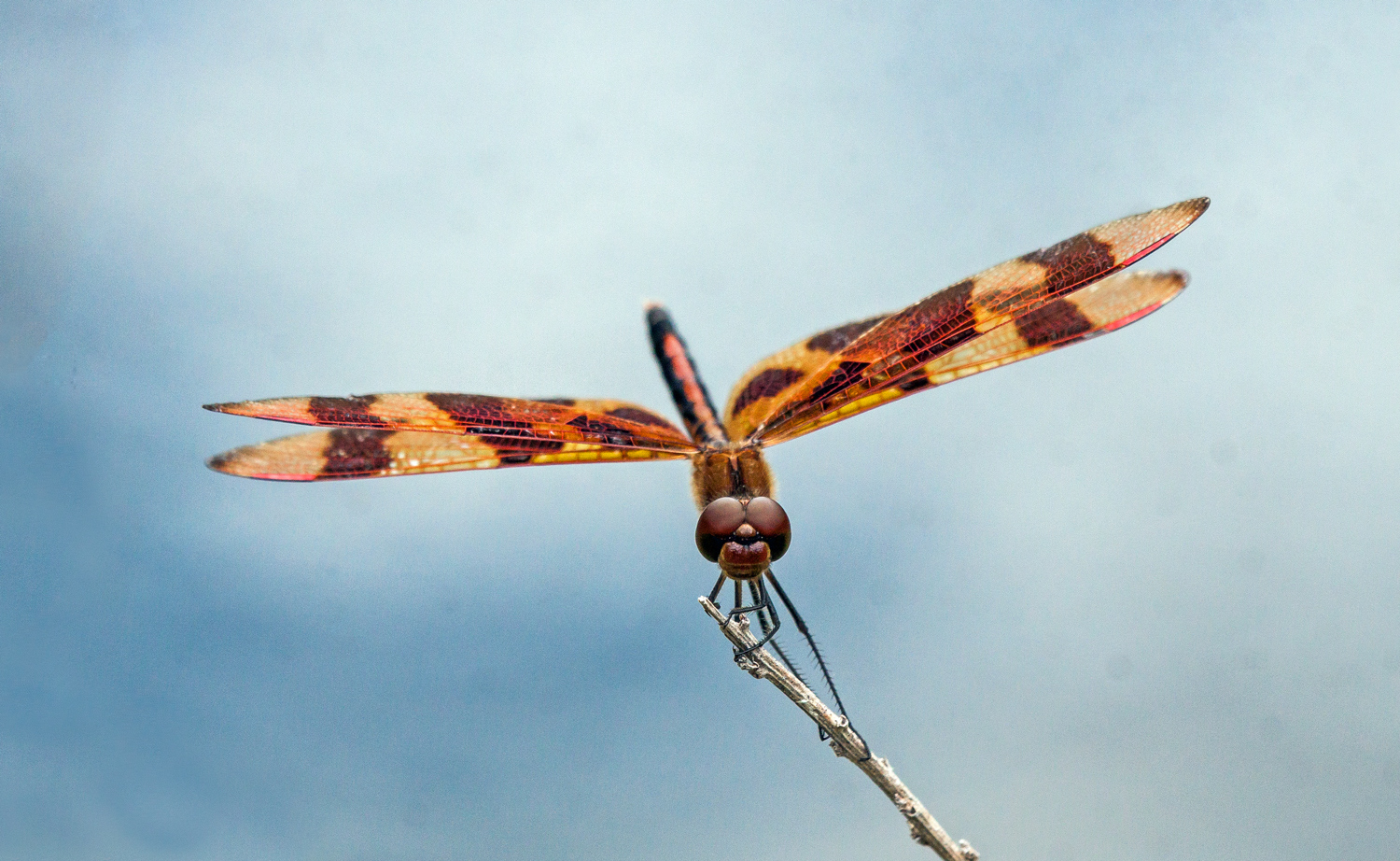
Painted Skimmer dragonflies (Libellula semifasciata) have distinctive patterns on their wings that make them fairly easy to identify. Unlike the pennant dragonflies that I have featured recently, Painted Skimmers have chunkier bodies and tend to perch lower down on the stems of the vegetation. I spotted this slightly damaged female Painted Skimmer yesterday as I was exploring some of the back areas of Huntley Meadows Park. There were a lot of blackberry bushes nearby with plenty of sharp thorns, so I wonder if they were responsible for the damage to the dragonfly’s wings—I drew blood a few times when I got too close to the thorns, but fortunately I am not missing a chunk of me.

Painted Skimmer

© Michael Q. Powell. All rights reserved
Read Full Post »

Like many guys, I have trouble remembering anniversaries, so it came as a surprise a few days ago when WordPress reminded me that it was the fifth anniversary of the launching of my blog. Five years old probably qualifies as middle age or maybe even old age for a blog.

I remember well how my photography mentor Cindy Dyer sat me down and virtually insisted that I start a blog to showcase and share the results of my growing interest in photography. I’ve captured thousands and thousand of images since that time and made close to 2400 postings on this blog. My confidence, awareness, and skills as a photographer have grown significantly. More importantly, though, this blog has helped me to gain a new voice as I have learned to use my words and photographs to express a creative part of myself that has been dormant most of my life.

I am very appreciative of the support, encouragement, and suggestions that so many readers have provided these last five years. Thanks to all of you—you have helped to sustain me during times when my energy and enthusiasm have waned.

My very first posting was an image of a perching dragonfly and was simply titled Blue Dasher dragonfly. If you look at that posting, you can see that my fascination with dragonflies is not a new phenomenon. It is altogether appropriate, therefore, that I “celebrate” with another dragonfly image.

Halloween Pennant dragonflies (Celithemis eponina) generally perch facing away from me. Although it gives me a good view of their spectacular wings, I like it better when I get a frontal view and can look straight into the dragonfly’s eyes. This weekend I found a cooperative subject while exploring Meadowlark Botanical Gardens in Vienna, Virginia, and was able to capture this image.

Halloween Pennant

Like this dragonfly, I am ready to spread my wings and fly, resting briefly before taking off again.  It’s a bit of a cliche, but from the blog’s inauguration the sub-title has always been, “My journey through photography.” Where will I go next? I honestly don’t know, but I definitely welcome fellow travelers to accompany me on my continuing journey of exploration.

Perhaps I will set my sights really high and point my camera, to use the famous words of Buzz Lightyear, “to infinity and beyond.” Come fly with me.

© Michael Q. Powell. All rights reserved


Read Full Post »

As the breeze kicked up yesterday at Meadowlark Botanical Gardens in Vienna, Virginia, this male Halloween Pennant dragonfly (Celithemis eponina) hung on tightly to his perch. From the angle at which I was shooting, though, it looked like he was participating in a pole vault competition.

Halloween Pennant

© Michael Q. Powell. All rights reserved

Read Full Post »

Eastern Amberwing dragonflies (Perithemis tenera)  are tiny, less than an inch (20-25mm) in length, but they are distinctive and stunningly beautiful. According to information on the wonderful Dragonflies of Northern Virginia website, Eastern Amberwings are the smallest dragonflies in our area and the second smallest in the United States—only Elfin Skimmers are smaller.

I spotted this perching male this past weekend at Jackson Miles Abbott Wetland Refuge in the vegetation surrounding a small pond. I was happy to be close enough that I was able to capture so many of the details of the dragonfly, including its captivating eyes and segmented body.

Eastern Amberwing

© Michael Q. Powell. All rights reserved.

Read Full Post »

Yesterday I was thrilled to spot some Common Sanddragon dragonflies (Progomphus obscurus) at Wickford Park, a small park adjacent to the normal marshland park where I do a lot of my shooting. This species, one of my favorites, prefers to perch on the sandy shores of a creek more than on vegetation and the spots at Huntley Meadows Park where I have seen them in the past are underwater at present, so I have not been able to find them there.

Common Sanddragon

© Michael Q. Powell. All rights reserved.

Read Full Post »

Halloween in June? I spotted a beautiful female Halloween Pennant dragonfly (Celithemis eponina) this past Saturday in one of the back areas of Huntley Meadows Park.

Although it is now summer, the colors of this beautifully-patterned dragonfly bring to mind those of the autumn, which thankfully is still a long way off.

Halloween Pennant

Halloween Pennant

Halloween Pennant

© Michael Q. Powell. All rights reserved.

Read Full Post »

With most of my dragonfly shots, I try to get as close as I can to the dragonfly, either my moving or by zooming, in order to highlight my subject. If I am not able to do so, I will often crop the image during post-processing.

Sometimes, though, I will intentionally keep my distance and will carefully compose the image to include more environmental elements. That was the case yesterday during a quick trip to Kenilworth Park and Aquatic Gardens with my photography mentor Cindy Dyer. Cindy needed to drop off some prints at the gift shop and I had a few minutes to grab a few shots.

Dragonfly perches generally are not very interesting, often just dried-out branches sticking out of the water. I was excited, therefore, when I spotted a male Slaty Skimmer dragonfly (Libellula incesta) perching on a purple Pickerelweed plant (Pontederia cordata).  I positioned myself to capture an additional pickerelweed plant in the background, pretty sure that it would be out of focus and not be too distracting. The cool colors and the sinuous curves of the plants in the background combine to create an “artsy” image that I really like.


Slaty Skimmer

© Michael Q. Powell. All rights reserved.

Read Full Post »

Yesterday at Occoquan Bay National Wildlife Refuge in Woodbridge, Virginia,  I was able to photograph a new dragonfly species for me, the beautiful Calico Pennant (Celithemis elisa). Fellow photographer and dragonfly enthusiast Walter Sanford had alerted me to the presence of these dragonflies at this location and had given me a general idea of where I might find them.

When I arrived at the wildlife refuge, which I had never visited before, I was a bit disoriented at first, but eventually found the pond that was my target location. The challenge, though, was to find the diminutive dragonflies. I walked about for quite some time before I finally spotted one perched on the very top of some vegetation in a field adjacent to the pond. Like other pennant dragonflies, Calico Pennants usually hang on to the most fragile, flimsy branches of plants and are often flapping in the breeze like a pennant.

Here are a couple of shots of Calico Pennant dragonflies that I observed. The one with the yellow abdomen is a female and the male has the red abdomen. As is the case with many species, immature males have the same coloration as the females, so it usually pays to look at the terminal appendages to determine the gender.

female Calico Pennant

male Calico Pennant

© Michael Q. Powell. All rights reserved.

Read Full Post »

There is something really special about green eyes, especially when you see them up close, really close. Every dragonfly season I try to find at least one cooperative dragonfly that sees eye-to-eye with me and lets me get a shot like this. I photographed this female Eastern Pondhawk (Erythemis simplicicollis) earlier this month at Huntley Meadows Park in Alexandria, Virginia.

Eastern Pondhawk

© Michael Q. Powell. All rights reserved.

Read Full Post »

Dragonflies seem to love to perch on this piece of rusted rebar that sticks out of the water at Jackson Miles Abbott Wetland Refuge. I really like the juxtaposition of the man-made and natural elements in this shot of a male Eastern Amberwing dragonfly (Perithemis tenera) that I spotted on Monday.

You can’t see it really well in the first shot, but there is a spider on the rebar in addition to the dragonfly.  I got a better shot of the spider later in the day. I don’t know for sure that it could capture the dragonfly, but it’s a potentially dangerous situation for the dragonfly (and I have photographed several dragonflies that had fallen prey to spiders in the past).

Eastern Amberwing


spider

© Michael Q. Powell. All rights reserved.

Read Full Post »

Yesterday morning at Jackson Miles Abbott Wetland Refuge at Fort Belvoir, Virginia I spotted my first Swift Setwing dragonfly (Dythemis velox) of the season. Last year. I believe, was the first time one was spotted in Fairfax County, where I live, and it looks like they are here to stay.

I spotted this dragonfly from pretty far away and recognized the shape and perching style. I took a few shots and moved a little closer and took a few more shots. I was hoping to get even closer, but the dragonfly apparently sensed my presence and flew away. As it turned out, that was the only Swift Setwing that I saw all day. I am pretty confident, though, that I will have some more opportunities to photograph this beautiful little dragonfly in the upcoming weeks and, hopefully, months.

Swift Setwing

© Michael Q. Powell. All rights reserved.

Read Full Post »

It’s a fun challenge to try to capture an image of a dragonfly in flight and I spent a lot of quality time this morning with a Prince Baskettail (Epitheca princeps) at Jackson Miles Abbott Wetland Refuge. Generally he flew patrols in the center of the pond, out of range of my lens (a 180mm macro), but occasionally he would fly tantalizingly close and give me a split second to react.

Most of the time I was unable to track him and focus quickly enough, but eventually I did manage get a few relatively sharp photos. This one is my favorite.

Prince Baskettail

© Michael Q. Powell. All rights reserved.

Read Full Post »

As I was exploring Jackson Miles Abbott Wetland Refuge last weekend, I spotted some Eastern Amberwing dragonflies (Perithemis tenera) flying low above the surface of the pond. One of them, a female, kept returning to a particular spot and would dip down and touch the water to deposit eggs. A male would periodically make an appearance and I couldn’t tell for sure if he was guarding the female or was trying to put the moves on her.

This is my favorite shot of the encounter. The dragonfly on the left is a male Eastern Amberwing and the one coming in from the right is a female. I thought about cropping the image in closer, but decided to keep it like this in order to retain the ripples and the reflection, elements that I really like.


Eastern Amberwing

© Michael Q. Powell. All rights reserved

Read Full Post »

What’s a Widow Skimmer? The name may bring to mind a gigolo chasing after rich old ladies, but it is actually a strikingly beautiful dragonfly. I spotted this handsome male Widow Skimmer (Libellula luctuosa) on Monday at Jackson Miles Abbott Wetland Refuge in at Fort Belvoir, Virginia.

When I took this shot, I was facing toward the sun. As a result, the body of the dragonfly is almost a silhouette. What was more important to me was the detail of the wings and I am happy I was able to capture some of the detail that was revealed as the light streamed through the almost transparent wings.

widow skimmer

© Michael Q. Powell. All rights reserved

Read Full Post »

Unicorns in Northern Virginia? One of the coolest dragonflies at Huntley Meadows Park is the Unicorn Clubtail (Arigomphus villosipes), like this one that I spotted along a stream in a remote area of the park on Saturday morning. The U-shaped tip of the abdomen is quite distinctive and makes this dragonfly fairly easy to identify.


Unicorn Clubtail

© Michael Q. Powell. All rights reserved

Read Full Post »

I am so happy that dragonfly season is finally here. There is just something about the beauty, complexity, and acrobatic skills of these amazing insects that never fails to grab my attention and I can easily spend hours watching and photographing them. I spotted this particular dragonfly, a female Spangled Skimmer (Libellula cyanea), last week at Huntley Meadows Park in Alexandria, Virginia.

Spangled Skimmer dragonfly

© Michael Q. Powell. All rights reserved

Read Full Post »

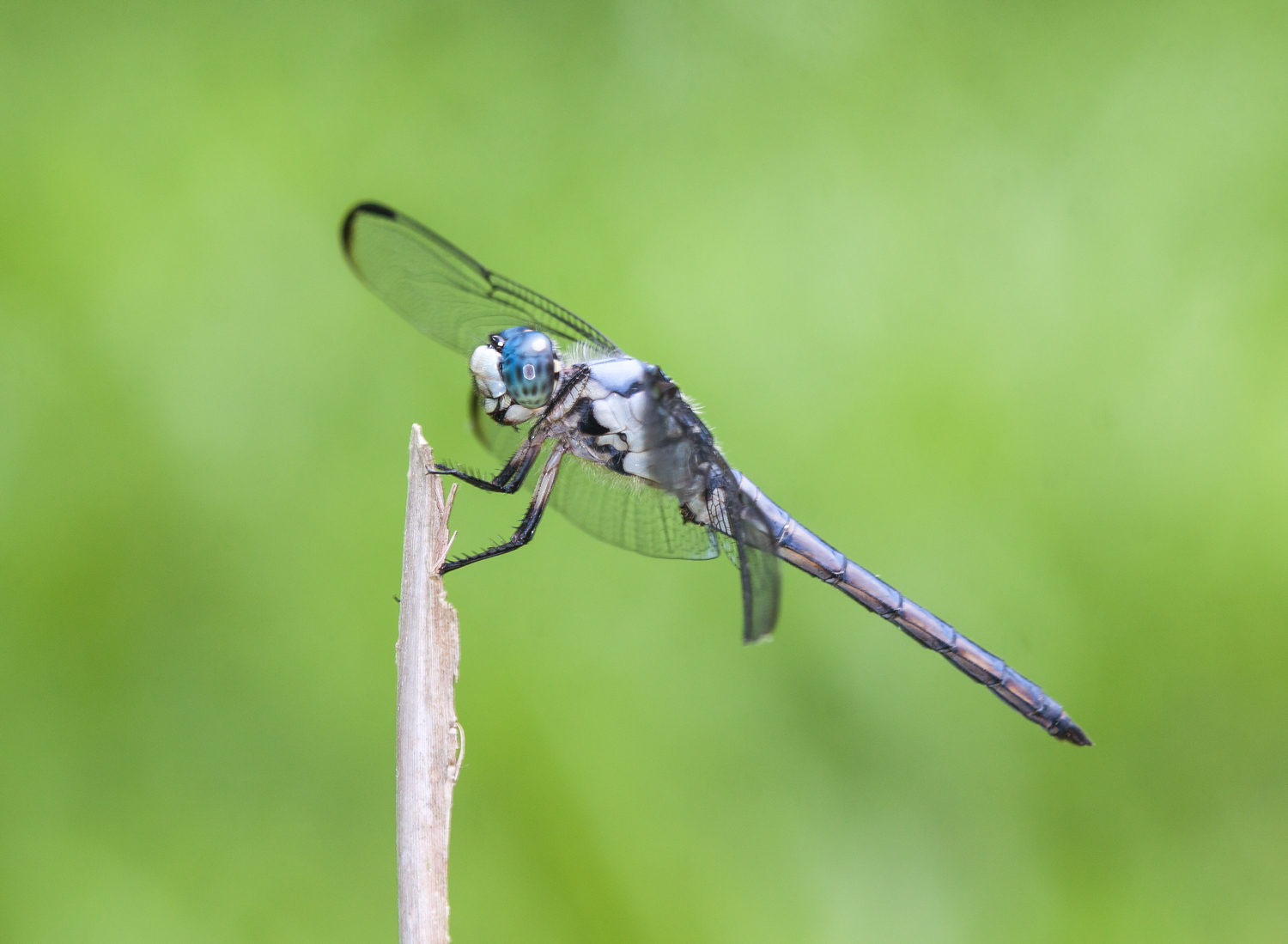
Most folks can readily identify a Great Blue Heron, but would you recognize a Great Blue Skimmer if you encountered one? This dragonfly’s wing pattern is fairly distinctive, but I usually look for its beautiful blue eyes and bright white face. I spotted these male Great Blue Skimmers (Libellula vibrans) on Monday at Huntley Meadows Park in Alexandria, Virginia.

Great Blue Skimmer

Great Blue Skimmer

Great Blue Skimmer

Great Blue Skimmer

© Michael Q. Powell. All rights reserved

Read Full Post »

The time drew near for our departure and I had pretty much given up hope of getting any good shots of dragonflies during a visit with some friends last Saturday to Lewis Ginter Botanical Garden in Richmond, Virginia. There were several streams and ponds and I would occasionally see dragonflies flying around, but the planted areas of the garden prevented me from getting close to the water and the spots where the dragonflies were perching.

As I was crossing a small bridge that connected the boardwalk to the “shore,” a dragonfly suddenly flew up from the level of the water into a tree and perched on some relatively low-hanging leaves, about eight feet (243 cm) from the ground. I was able to track the dragonfly to its location and approached it slowly and cautiously.

The dragonfly was perching vertically and the first thing I noticed was that its wings were bright and shiny, suggesting that it had only recently emerged. My initial thought was that it was a Unicorn Clubtail (Arigomphus villosipes), because of the distinctive curved tip of the abdomen. When I got home, I looked at photos of Unicorn Clubtails and doubts began to creep into my mind about the identity of this dragonfly, because the colors seemed different from the ones depicted, which were more yellow than green. I posted a photo into a Facebook group and some experts confirmed that my initial instincts had been correct.

I took shots from several different angles, wishing that I was about a foot taller so that I would not have been shooting upwards at an angle. It turned out, though, that there was an advantage to shooting upwards, for I was able to get a pretty good view in the final image of the distinctive yellow “horn” between the dragonfly’s eyes that caused it to be named “unicorn.”

Unicorn Clubtail

Unicorn Clubtail

Unicorn CLubtail

© Michael Q. Powell. All rights reserved

Read Full Post »

Male Eastern Pondhawk dragonflies (Erythemis simplicicollis) start out with the same bright green coloration and bold black and white stripes as the female that I featured in a posting earlier this week. Over time the males turn a fairly nondescript blue and are outshone by their female counterparts.

On Monday, I was fortunate to capture this image of a male Eastern Pondhawk in a transitional  stage, with beautiful two-toned shades of green and blue. I was thrilled when it perched on a green plant, which helps to draw the viewer’s eye to the dragonfly in a background of dried-up fallen leaves.

Eastern Pondhawk

© Michael Q. Powell. All rights reserved

Read Full Post »

I celebrated May Day yesterday by searching for dragonflies at Huntley Meadows Park and was rewarded by spotting my first Eastern Pondhawk dragonflies (Erythemis simplicicollis) of the season. This bright green female pondhawk was almost hidden in the fresh vegetation, but she really showed her colors when she perched on the brittle fallen leaves on the forest floor. The muted tones of gray and brown created a wonderful (albeit cluttered) backdrop that really let her beautiful colors and patterns stand out.

Eastern Pondhawk

© Michael Q. Powell. All rights reserved

Read Full Post »

The weather yesterday was hot and sunny—perfect for dragonflies, although a little uncomfortable for me. I decided to search in the vicinity of a vernal pool, one of my favorite spots for dragonflies at Huntley Meadows Park. As I was walking along a small water-filled ditch, a large dragonfly flew up from the water and perched in a tree just a short distance away. I suspected it might be a Swamp Darner (Epiaeschna heros) and it turns out that I was right.

About this time each year, a number of female Swamp Darners descend on this small ditch to lay their eggs. Unlike many other dragonflies, which lay their eggs in the water, Swamp Darners lay their eggs in moist, often rotten logs. Essentially they tunnel into the wood before they lay the eggs.

I spotted the most likely target log and sat on the bank of the ditch to see if the dragonflies would come. It didn’t take long for them to arrive. Sometimes it was just one dragonfly, while at other times there were two or even three of them laying eggs in the same log. I was shooting with a 180mm macro lens, so I could not zoom out to include all of them (and I did not want to move for fear of scaring them away). In one of the photos, you can see two of the Swamp Darners in action and part of the abdomen of a third one in the upper left corner.

I don’t know if it is some biological imperative for species preservation that compels them to deposit these eggs, but the females were putting them everywhere. I was a little shocked when one of them landed on my mud-covered shoes and began to deposit eggs there.

The dragonflies were so focused on depositing their eggs that I was able to lean forward and get a close-up view of the face of one of them. I love dragonfly faces and especially their amazing giant eyes.

Swamp Darner

Swamp Darner

Swamp Darner

Swamp Darner

Swamp Darner

© Michael Q. Powell. All rights reserved

Read Full Post »

During the summer it seems like dragonflies are everywhere, perching prominently in plain sight, but this early in the season there are a whole lot fewer of them and the ones that are around are hard to find. Fellow dragonfly enthusiast and blogger Walter Sanford recently did a posting about some Ashy Clubtail dragonflies (Phanogomphus lividus) that he had spotted at Jackson Miles Abbott Wetlands Refuge.

I had never seen this species before, so I set off this past Friday to see if I could find one of my own. Walter had alerted me to look for the Ashy Clubtails perched in the grass and in the low vegetation that surrounds the small pond at the wildlife refuge. I circled the pond several times in vain before I suddenly caught sight of some dragonfly wings shining in the sunlight. I was able to track the dragonfly during its short flight and saw where it landed in the grass.

Almost certain that I had found an Ashy, I approached the dragonfly slowly and cautiously, fearful of scaring it away before I could get a shot. I was face-to-face with dragonfly, which is not the greatest position for capturing its details, and was able to confirm that it was an Ashy Clubtail. Its pale coloration and very clear wings indicate that it is newly emerged, what is often called a “teneral,” and it looks to be a female. Having gotten a few shots, I tried to get a better angle and spooked the dragonfly.

Ashy Clubtail

Buoyed by my success, I was motivated to search even harder and eventually spotted two more teneral female Ashy Clubtails. One was in some chest-high thorny bushes and I had to push up against them to get as parallel as possible with its body for a detailed shot. I was able to photograph the third Ashy from almost directly overhead and the final photo gives you the best overall view of this beautiful dragonfly.

These Ashy Clubtails ares not as brightly colored as some of the dragonflies that will appear later in the summer, but they were definitely a welcome sight for me.

Ashy Clubtail

Ashy Clubtail

© Michael Q. Powell. All rights reserved

Read Full Post »

Now that the dragonfly season has started in my area, I am devoting more and more of my available photography time to searching for these beautiful little creatures. Some dragonflies can be found almost anywhere, but many of them require a very specific kind of habitat and may be present for only limited periods of time.

Yesterday afternoon I visited Jackson Miles Abbott Wetland Refuge, which features a small pond surrounded by a pathway. Last year I found several different dragonfly species there, so I knew that I might have a chance of seeing some dragonflies. I looked in the brush and in the vegetation and came up empty-handed until I looked at the water and spotted several dragonflies flying low above the water.

I recognized the dragonflies as Common Baskettail dragonflies (Epitheca cynosura) and knew that I faced a challenge—this species seems to fly continuously and rarely have I seen one perch. I realized that if I wanted to get some shots of the dragonflies I would have to capture the images while they were flying.

I had my Tamron 180mm macro lens on my camera and started to track the flying dragonflies. I have tried a number of focusing techniques in the past and have had the most success when I focus the lens manually (although I hesitate to use the word “success,” given the high rate of failure in getting an in-focus shot). This was my favorite shot of a Common Baskettail flying above the water. There is a bit of motion blur in the wings and I had to crop the image quite a bit, but I managed to keep most of the dragonfly in focus.

Common Baskettail

I walked multiple circuits around the pond, still searching for more dragonflies. I tend to like to keep moving, rather than sticking in one spot. As I reached one end of the pond, I suddenly realized that a dragonfly was hovering in mid-air right in front of me. The dragonfly was moving slowly above a grassy patch adjacent to the pond, but did not seem interested in heading for the water.

I could hardly believe my good fortune and tried to compose myself and focus on the dragonfly. I managed to get some detailed shots that show, for example, how the Common Baskettail folds up its legs when flying. I took the first shot below while on my knees, so that I was almost level with the dragonfly. For the second shot, I was shooting down on the dragonfly and it looks almost like it was taken by a drone, hovering above the hovering dragonfly.

Common Baskettail

Common Baskettail

© Michael Q. Powell. All rights reserved

Read Full Post »

On the same day that I saw the Common Whitetail dragonfly that I featured yesterday in my blog posting, I was thrilled to have the chance to photograph an uncommon dragonfly, a male Stream Cruiser (Didymops transversa). I had never before seen a Stream Cruiser, but local dragonfly expert and fellow photographer Walter Sanford had observed them in the past at Accotink Bay Wildlife Refuge and offered to guide me.
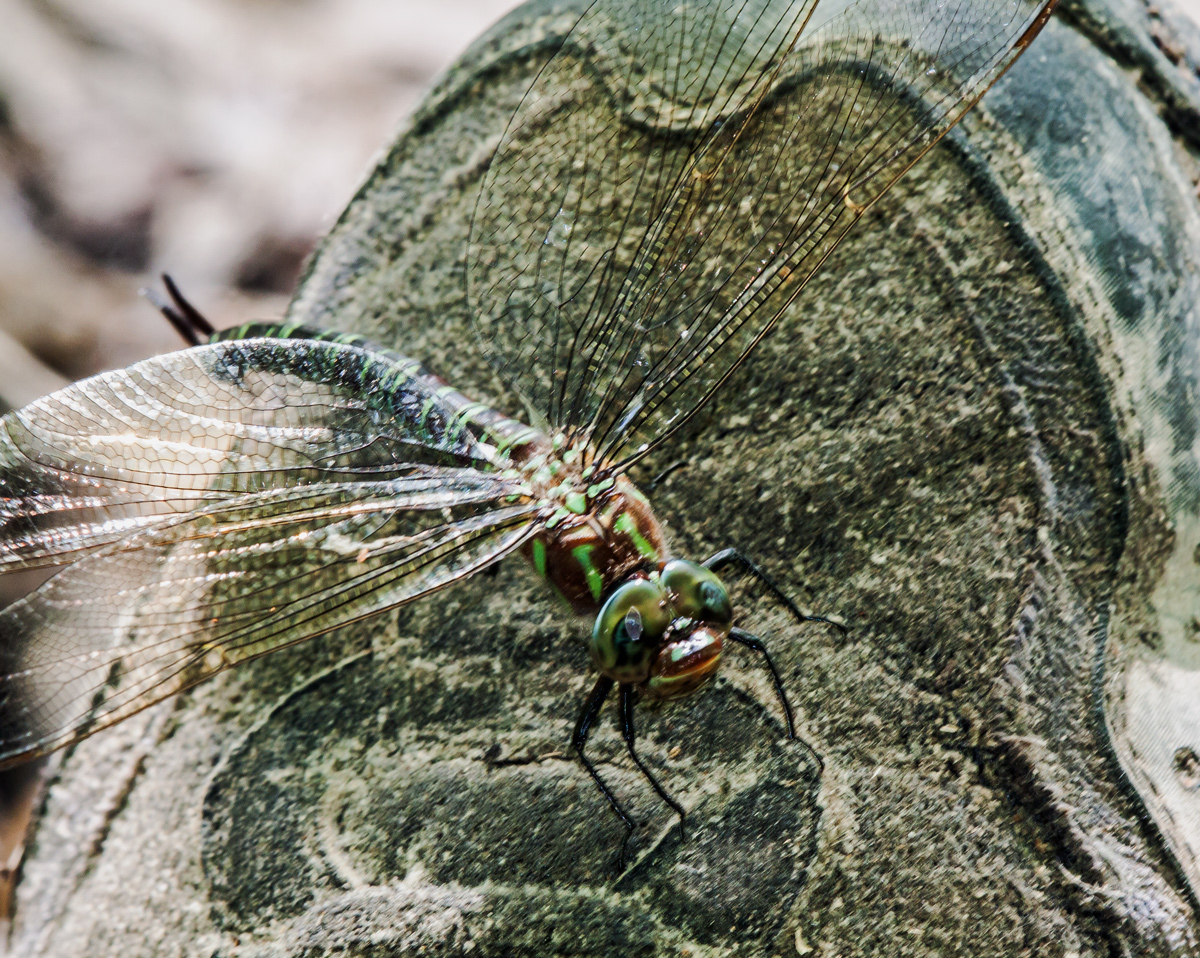
It’s somewhat of an understatement to say that Stream Cruisers are hard to spot. The are not very big (about 2.2 inches (56-60mm) in length), they are skittish, and they often perch on the stems of low vegetation. During the hours that we searched for them, I observed a couple of probable Stream Cruisers in the air, but lost them in the blur of the vegetation and never saw a single one land. Walter saw the first one of the day, a female, and posted an awesome photograph of the beautiful dragonfly in a blog posting yesterday. Unfortunately for me, I was unable to make it to the dragonfly’s location before she flew away. Walter spotted a few more Stream Cruisers during the day, but each time I couldn’t get there quickly enough to see one.

I was beginning to think that I was going to end up empty-handed for the day when Walter called out that he had spotted a male perched in the underbrush. This Stream Cruiser was cooperative enough to stay perched as I rushed to try to get a shot. I had my Tamron 180mm macro lens on my camera at that moment. The dragonfly and the stem on which it was perched were so small in the viewfinder that my camera’s autofocus would not lock on my subject, so I had to resort to focusing manually. Dragonflies have so many fine details that it is really hard to tell when they are in focus. This image was the best I could get after cropping the initial shot quite a bit.

Stream Cruiser

I decided to push my luck and see if I could get a better shot with my Tamron 150-600mm lens that I use primarily to photograph birds. Amazingly the dragonfly stayed put while I changed lenses. Once again I had to focus manually, which is an even bigger problem with this lens, because the focus ring is located really close to the lens mount. It’s hard to hold the camera steady and focus manually at the same time.

Here’s an image that I shot at 600mm. I managed to get the eye pretty sharp and to capture some of the details of the dragonfly’s incredibly long legs, but the depth of field was so shallow that the abdomen is out of focus. Normally I will try to move around the subject to be as parallel as I can be, but in this case I stayed fixed at one spot and remained as immobile as I could.

Stream Cruiser

It is really nice to start off this dragonfly season with a new species. If you want to learn more about the Stream Cruiser dragonfly, check out this page from the Dragonflies of Northern Virginia website (and stay tuned for Walter’s shots of this dragonfly that should appear tomorrow morning in his blog).

© Michael Q. Powell. All rights reserved.


Read Full Post »

Thanks to recent warmer weather, dragonflies are finally starting to emerge in Northern Virginia. I captured this image of a female Common Whitetail dragonfly (Plathemis lydia) on Monday at Accotink Bay Wildlife Refuge. Unlike many species with the word “common” in their names, Common Whitetail dragonflies are actually pretty common. They are among the first species to emerge in the spring and among the last to depart in the fall. Unlike many of the early spring species, they are habitat generalists—you can find them pretty much anywhere  and do not have the scour the underbrush or walk through streams in remote locations.

Although I spotted a Common Green Darner dragonfly earlier this month, I was not able to get a photo of it and suspect that it had migrated from another location. This is my first photo of the season of a “native” dragonfly, with plenty more sure to follow in the coming months.

Common Whitetail dragonfly

© Michael Q. Powell. All rights reserved.

Read Full Post »

It’s still a bit early for dragonflies in Northern Virginia, but when temperatures soared to almost 80 degrees (27 degrees C) yesterday in Columbus, Georgia, I decided to see if I could find some here. I had a wonderful time exploring some of the area of the Oxbow Meadows Environmental Learning Center that is not far from Fort Benning, where I was staying.

I came up empty-handed for dragonflies, but did spot some beautiful little damselflies. Later in the spring, these will be fairly common, but after a long period with no odonates, they seem rare and exotic.

The first one looks like a Fragile Forktail damselfly (Ischnura posita), but I am not sure about the others. Several of them flew so weakly that I wondered if they had only recently emerged.

Fragile Forktail

damselfly

damselfly

damselfly

damselfly

© Michael Q. Powell. All rights reserved.

Read Full Post »

How do you get your subject to smile when you want to take a picture? This Blue Dasher dragonfly (Pachydiplax longipennis) didn’t need any prompting at all when I went in for an extreme close-up shot yesterday at McKee-Beshers Wildlife Management Area in Maryland.

Start each day with a smile.

Blue Dasher

© Michael Q. Powell. All rights reserved.

Read Full Post »

One of my favorite summer dragonflies is the tiny Eastern Amberwing (Perithemis tenera). Its distinctive coloration makes it pretty easy to identify, even from a distance.

Eastern Amberwing

Michael Q. Powell. All rights reserved.

Read Full Post »

I love the delicate beauty of dragonflies and they can be spectacular, especially in dramatic lighting and from unusual angles, like these recent shots of a Painted Skimmer (Libellula semifasciata).

Painted Skimmer

Painted Skimmer

Michael Q. Powell. All rights reserved.

Read Full Post »

« Newer Posts - Older Posts »