Feeds:
Posts
Comments

Archive for the ‘Autumn’ Category

This past Friday I was delighted to spot this Question Mark butterfly (Polygonia interrogationis) during a visit to Occoquan Bay National Wildlife Refuge. Although these butterflies are with us the entire year—they overwinter as adults—I do not see them all that often. Question Mark butterflies (and their “cousins,” the Eastern Comma butterflies) hang out mostly in the woods, where their drab coloration helps them to blend in with the bark and the dried leaves of the trees, as you can see in the second photo.

I was particularly happy with the first shot, because it lets you see both the drab outer wing and the gorgeous orange and black of the inner wing. I was shooting with my Tamron 150-600mm, which is sometimes a little soft at the long end of the zoom, but managed to capture a good amount of detail nonetheless.

The butterfly’s warm orange coloration seems to be a perfect match for the season, as displays of pumpkins have start to appear.

Question Mark

Question Mark

© Michael Q. Powell. All rights reserved.

Read Full Post »

The colors of the fall foliage in my area of Northern Virginia are not very impressive. Generally we fade gradually from green to brown and then the leaves fall off of the trees. Fortunately, though, pops of bright color periodically remind me of the colors that I would see when I was growing up in New England.

It is still a bit early for those colors to appear, but I did notice a few traces of autumn color when I was out with my camera this week. Mostly it was individual colorful leaves, but I did notice a few trees as I gazed across the pond at Huntley Meadows Park that had jumped ahead of their compatriots and were already showing their blazing red autumn color.

Autumn is my favorite time of the year, especially the early days of autumn.

autumn color

autumn color

autumn color

© Michael Q. Powell. All rights reserved.

Read Full Post »

When I went out with my camera on Wednesday, it was cool and cloudy, but fortunately the rain had stopped falling. I was not optimistic that I would see a lot of wildlife, but it felt good to get out of the house and to spend some time in nature.

Most dragonflies prefer warm weather and become inactive when it is cool, so I did not expect to see many during my walk. I was thrilled therefore when I spotted this male Common Whitetail dragonfly (Plathemis lydia). I watched as he was flying and saw him land low in the vegetation, just off of the ground.

The background in this shot is really busy, but somehow the dragonfly really stands out. It’s kind of a fun little photo of one of the few remaining dragonflies as we move through October.

Common Whitetail

© Michael Q. Powell. All rights reserved.

Read Full Post »

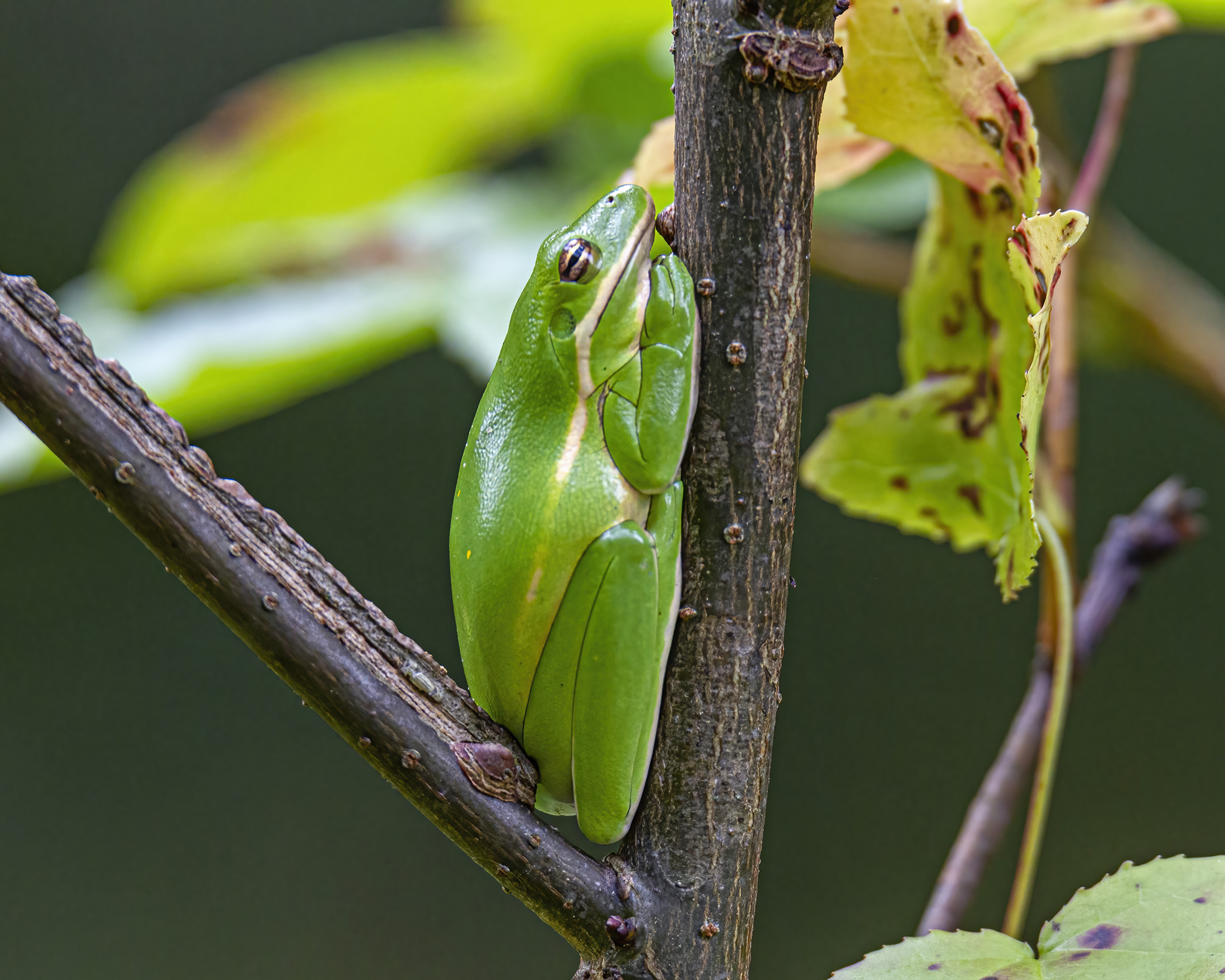
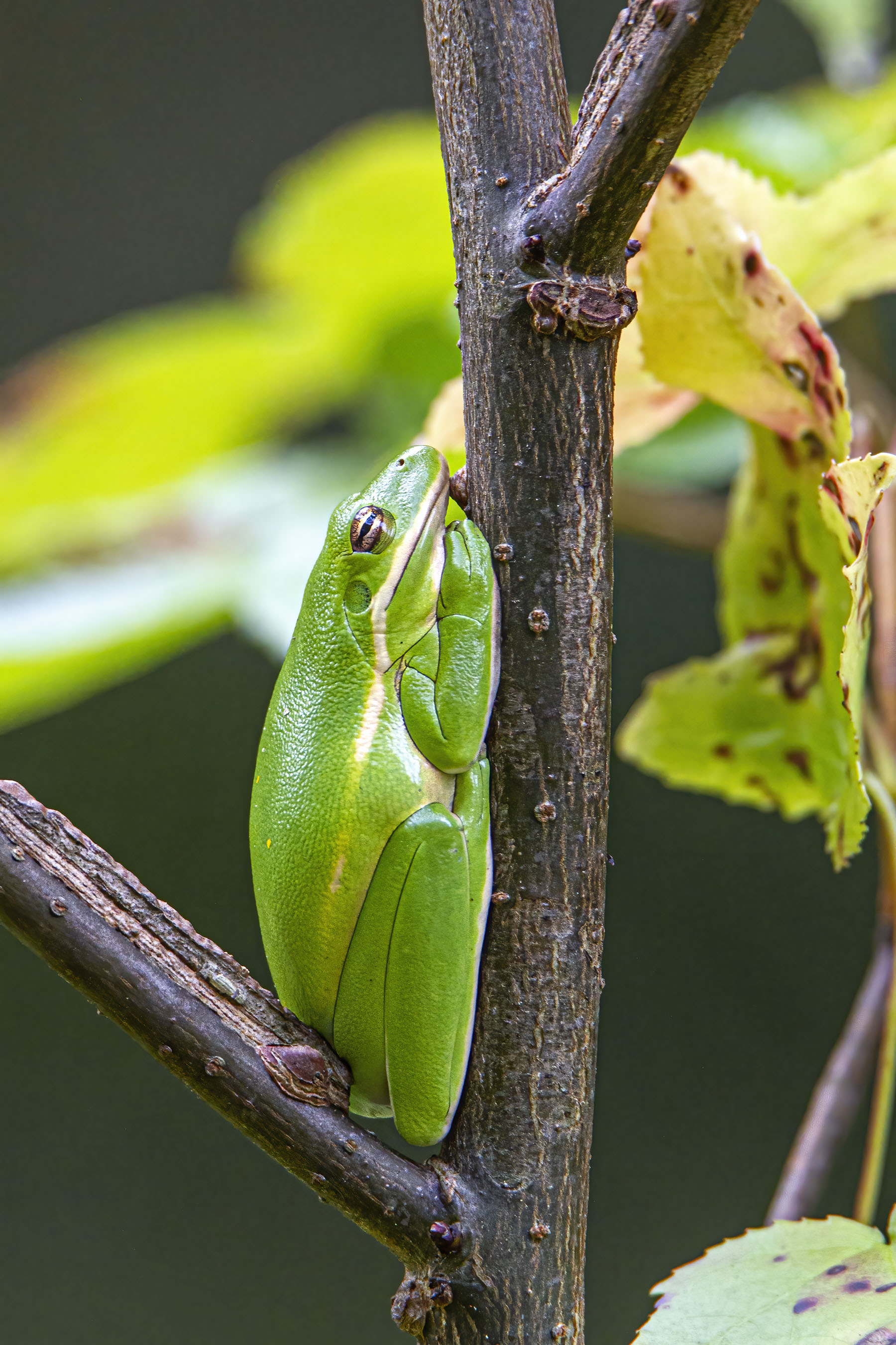
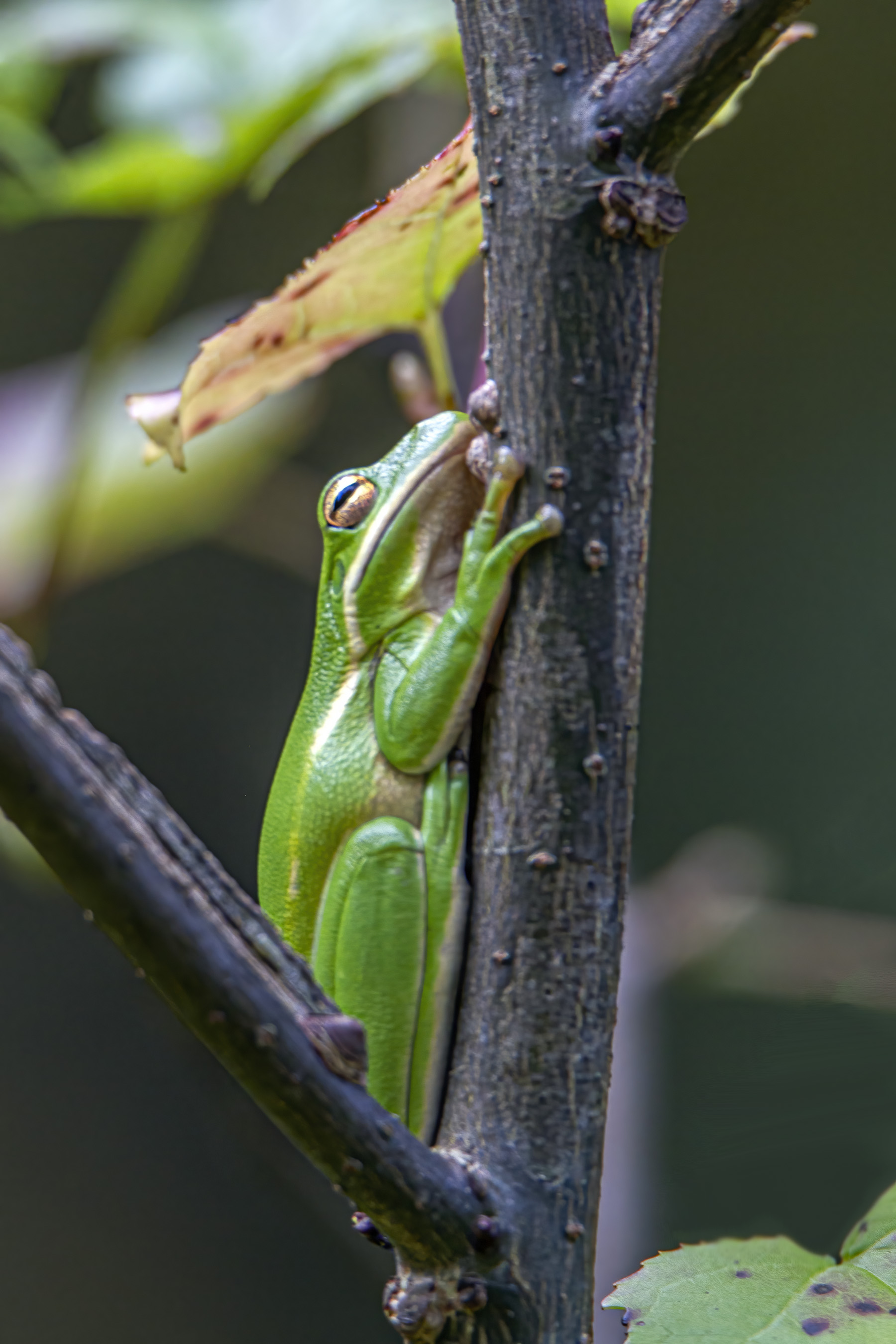
Most of the time when I am lucky enough to spot a Green Tree Frog (Hyla cinerea), the frog appears to be sleeping. Why is that the case? Many frogs spend their time in the water and have an easy way to regulate their body temperatures. Tree Frogs probably need to avoid direct sunlight and I suspect they are more active earlier and later during the day.

Yesterday afternoon the rain finally stopped and the skies were gradually clearing, so I decided to go out with my camera. I spotted this tree frog when I was walking along one of the trails at Huntley Meadows Park, a nearby marshland park that I have avoided the last few years because it tends to be overcrowded. The frog was perched in the crotch of a small tree just off of the trail.

When I first saw the tree frog, it had its front feet tucked under its head and appeared to be dozing, as you can see in the first two photos. I experimented with slightly different angles and formats and can’t decide if I like the landscape format of the first photo or the portrait format of the second one.

Later in the day I passed the frog again and it seemed to be a little more alert. The frog had pulled one of its feet out from under its head and appeared to be daydreaming.

When I returned home from my outing, I decided to take a cue from the frog and took a short nap.


Green Tree Frog

Green Tree Frog

Green Tree Frog

© Michael Q. Powell. All rights reserved.

Read Full Post »

At this time of the year, I sometimes complain that the leaves that are still on the trees prevent me from spotting birds. While that is definitely true for small birds like warblers, Great Blue Herons (Ardea herodias) are so big that it is hard to miss them when they are perched in a tree, even when they are partially hidden by the foliage.

Last week I was walking down one of the trails at Occoquan Bay National Wildlife Refuge when I heard the unmistakable squawk of a Great Blue Heron. It is hard to describe this distinctive sound, but the Farmer’s Almanac website did so with these words, “The Great Blue Herons “squawk” or croak has an almost prehistoric sound. If you surprise this bird as it is hunting on the water, it will squawk as it leaves, almost as if it’s annoyed by your disturbance.”

After hearing the squawk, I watched as the Great Blue Heron landed in a nearby tree. There was a good deal of foliage between me and the heron, which helped to conceal my presence, but it made it tough for me to get a clear shot of this big bird. Eventually I managed to capture some shots of the heron in a number of different poses. The background is pretty cluttered, but it helps to give you a good sense of the environment in which I found this Great Blue Heron.

Unlike Great Egrets, which migrate south for the winter, Great Blue Herons remain with us throughout the year. Do not be surprised if you see a few more heron shots in the upcoming months. As the leaves fall from the trees and many other birds depart, I suspect that I will be spending more time observing Great Blue Herons.

Great Blue Heron


Great Blue Heron

Great Blue Heron

© Michael Q. Powell. All rights reserved.
Read Full Post »

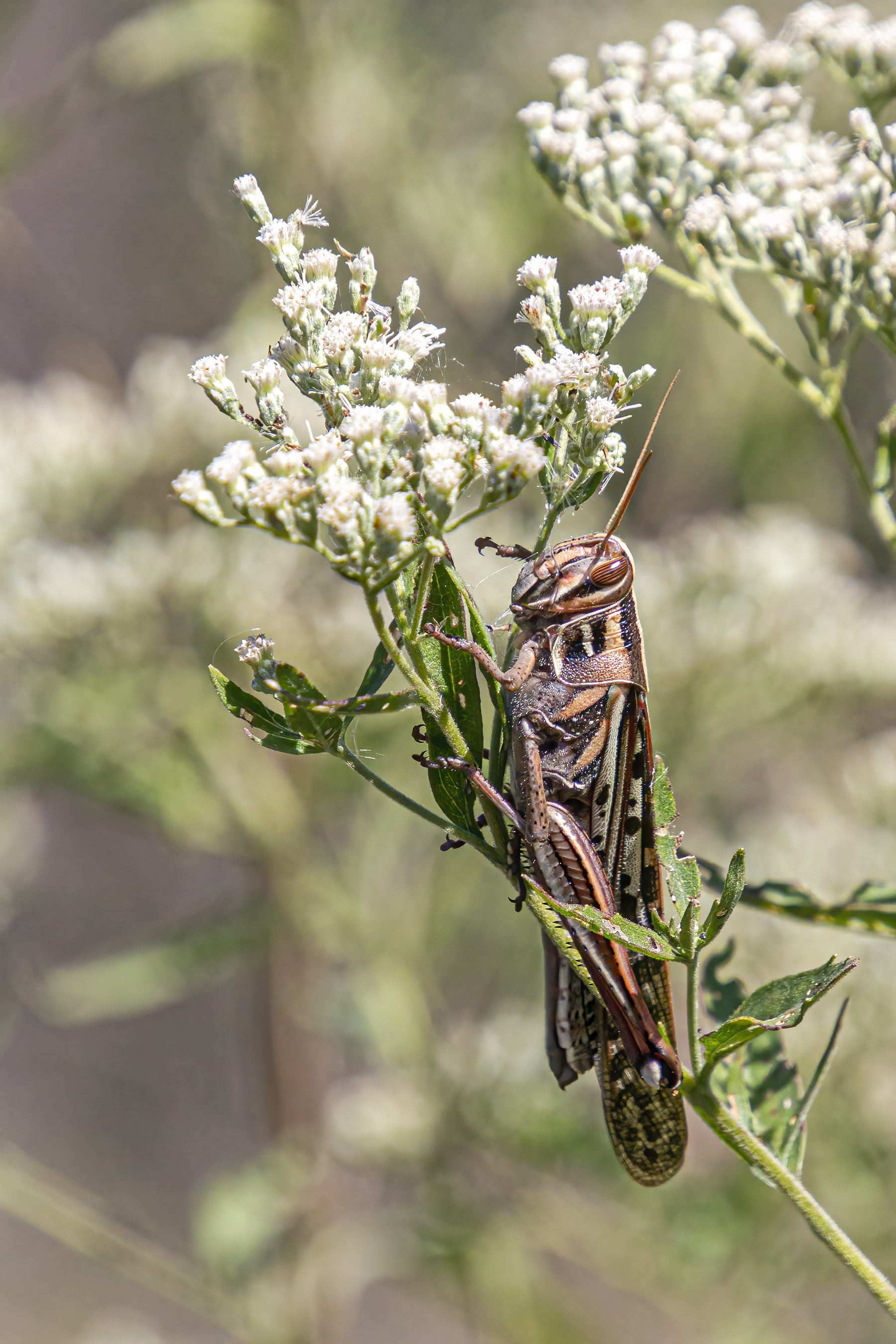
Quite often when I am walking through grassy fields, the ground in front of me seems to explode with grasshoppers arcing through the air in all directions. Last week during a visit to Occoquan Bay National Wildlife Refuge, I managed to capture images of two of them.

I am not certain of the species of the formidable looking grasshopper in the first photo. When I looked through sources on line, however, it looked most like an American Bird Grasshopper (Schistocerca americana). Grasshoppers like this always make me think of medieval knights, suited up in protective armor.

The insect in the second image is almost certainly a katydid, and not a grasshopper—the extremely long antennae are often an easy identification feature. I love the brilliant green of the katydid’s body and its matching green eyes. There are lots of different kinds of katydids and I do not know to which species “my” katydid belongs.

We have had a lot of rainy weather recently and temperatures have noticeably dropped. Today’s forecast calls for intermittent rain and a high temperature of only 50 degrees (10 degrees C). I wonder if this cool, rainy period will mark the end of the season for some of the insects that I have been photographing during the past few months.

grasshopper

katydid

© Michael Q. Powell. All rights reserved.
Read Full Post »

As many of you probably realize, I generally do not spend much time photographing landscapes and focus primarily on insects, in the warmer months, and birds, in the colder months. This past Wednesday, however, I was absolutely captivated by the clouds and tried to capture them in both landscape and seascape images at Occoquan Bay National Wildlife Refuge. I used my Canon 7D for the first two images and shot the panorama in the final shot with my iPhone 11.

As I look at these images, I can’t help but think that I should keep my eyes open more often for opportunities to take landscape shots. Last year I managed to capture some of the fall foliage in Virginia when I traveled to Shenandoah National Park and I may try to do so again later this month. There is a chance, though, that I will miss the peak color, because I will be driving to Austin, Texas near the end of the month for a wedding.

Occoquan Bay National Wildlife Refuge

Occoquan Bay National Wildlife Refuge

Occoquan Bay National Wildlife Refuge

© Michael Q. Powell. All rights reserved.
Read Full Post »

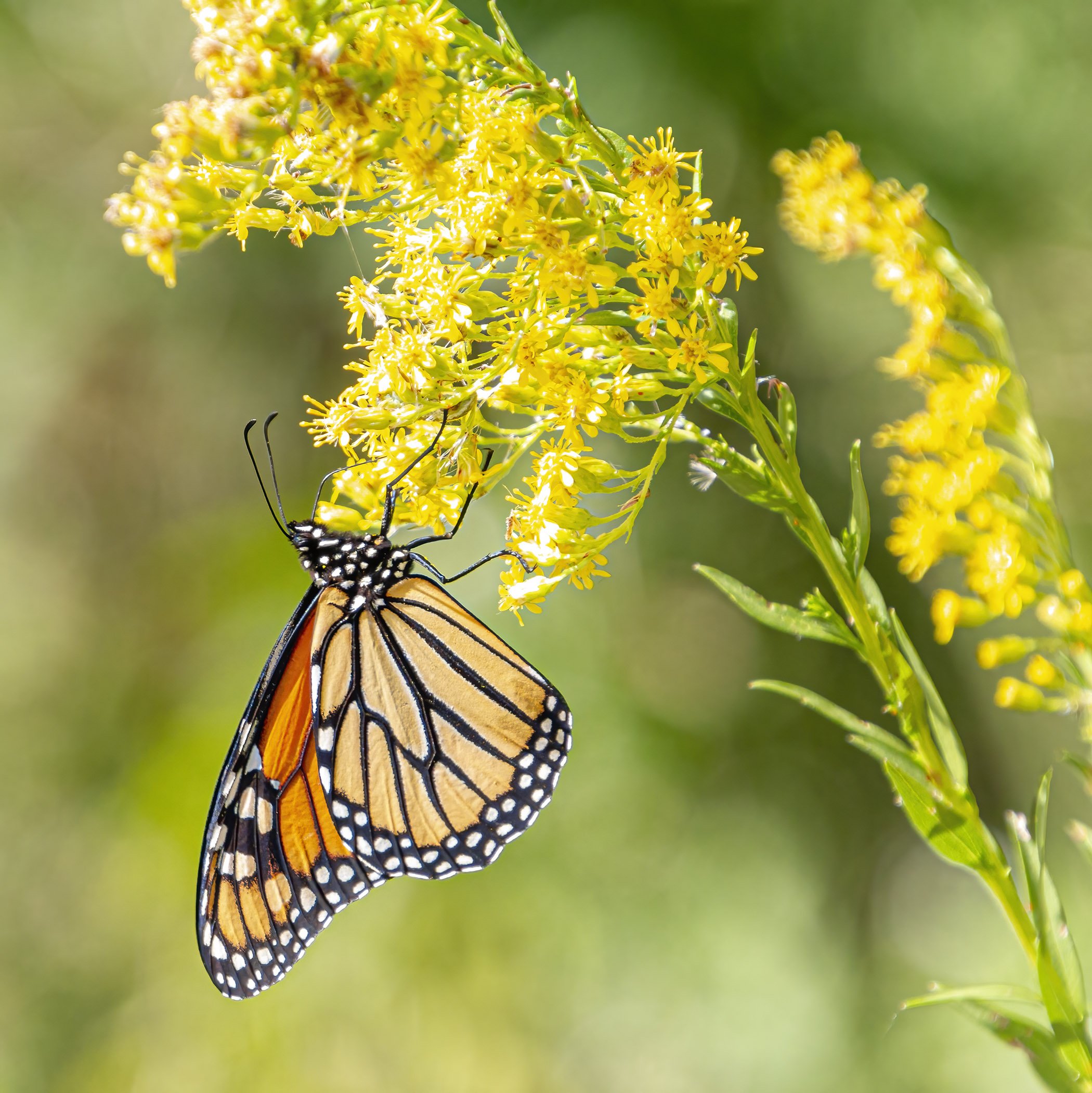
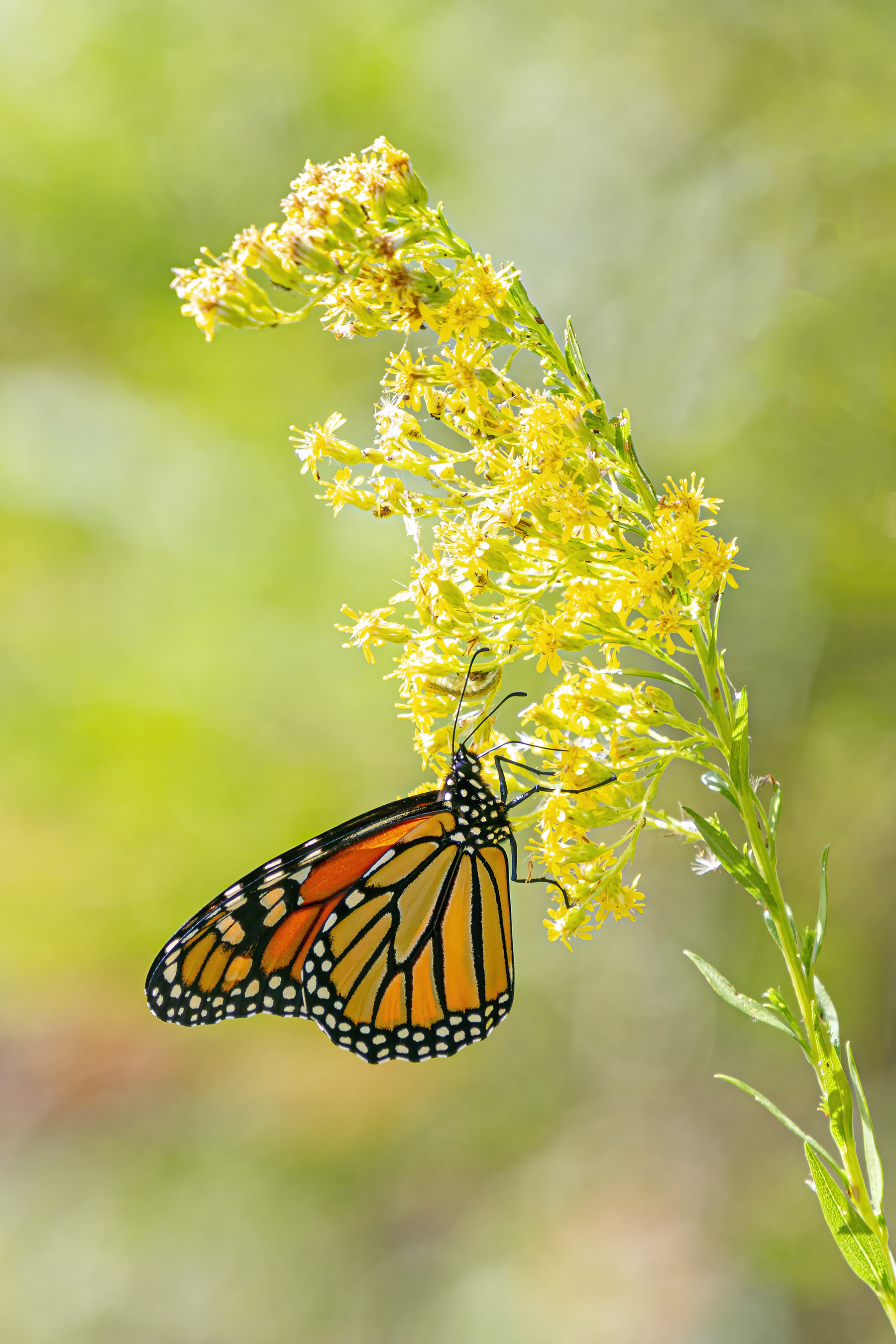
I was delighted this past Wednesday to spot several Monarch butterflies (Danaus plexippus) during a visit to Occoquan Bay National Wildlife Refuge. I often see news stories about Monarchs being threatened or becoming endangered, so I am happy whenever I see some. The ones that I saw looked to be in perfect condition—perhaps they have recently emerged and are preparing for migration.

I tried several different angles when photographing this Monarch. The first photo shows the detail of the butterfly best, but I really like the way that I was able to capture the curve of the vegetation in the second shot by shooting in a vertical format.


Monarch butterfly

Monarch butterfly

© Michael Q. Powell. All rights reserved.

Read Full Post »

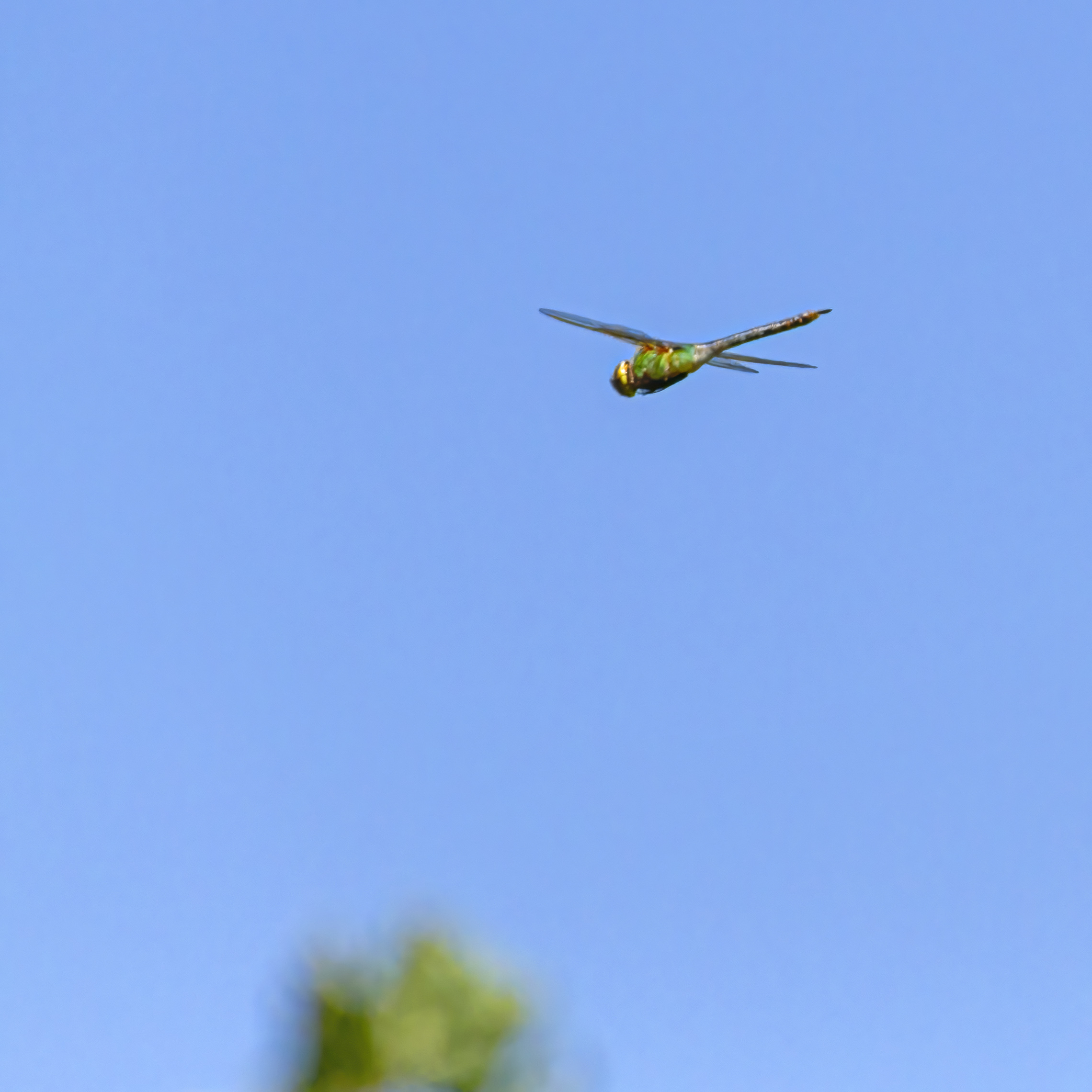
On Wednesday I spotted a small group of a half-dozen of so Common Green Darner dragonflies (Anax junius) patrolling over a large field at Occoquan Bay National Wildlife Refuge. Common Green Darners are one of few species of dragonflies that migrate. Perhaps the ones that I saw are preparing to migrate from the local area or are just stopping off on their journey southward.

It is a fun challenge to point your camera toward the sky and to try and capture photos of these colorful dragonflies as they zoom overhead. The first image is the sharpest image that I was able to capture and it provides a good look at the dragonfly. In many ways, though, I am even happier with the second and third image that include some vegetation and help to provide some context to the shots.

The migration cycle of the Common Green Darner involves three generations. I highly recommend a research article entitled “Tracking dragons: stable isotopes reveal the annual cycle of a long-distance migratory insect” that was published in 2018 in the journal Biology Letters that explains the migration cycle and has some fascinating maps and diagrams. Despite the geeky-sounding title, it is actually quite easy to read and understand.

Here is an extract from the abstract for the article, in case you do not want to read the entire article:

“Using stable-hydrogen isotope analysis of 852 wing samples from eight countries spanning 140 years, combined with 21 years of citizen science data, we determined the full annual cycle of a large migratory dragonfly, the common green darner (Anax junius). We demonstrate that darners undertake complex long-distance annual migrations governed largely by temperature that involve at least three generations. In spring, the first generation makes a long-distance northbound movement (further than 650 km) from southern to northern range limits, lays eggs and dies. A second generation emerges and returns south (further than 680 km), where they lay eggs and die. Finally, a third resident generation emerges, reproducing locally and giving rise to the cohort that migrates north the following spring. Since migration timing and nymph development are highly dependent on temperature, continued climate change could lead to fundamental changes in the biology for this and similar migratory insects.”

Wow!

Common Green Darner

Common Green Darner

Common Green Darner

© Michael Q. Powell. All rights reserved.

Read Full Post »

Yesterday I was delighted to spot another Blue-faced Meadowhawk dragonfly (Sympetrum ambiguum), one of my favorite dragonflies, while wandering the trails at Occoquan Bay National Wildlife Refuge.  The previous one that I saw earlier this month was perched high in a tree, so it was difficult for me to get a good shot of it.

The newest Blue-faced Meadowhawk, a male, was perched on the ground amid the leaf litter, which is where I usually see this species. I love the way that the fallen leaves provide an instant indication that we are now in the autumn season. The drab brown color of those leaves really helps to make the bright red and blue of this spectacular dragonfly really pop.

It was almost impossible to blur out the background completely, but I got low and carefully chose an angle that makes the clutter a bit less distracting. It turned out that this was the only Blue-faced Meadowhawk, so I was happy that I managed to get some decent shots of this one before he flew away.

Blue-faced Meadowhawk

© Michael Q. Powell. All rights reserved.


Read Full Post »

Generally I prefer to photography my wildlife subjects in natural surrounding and often try to frame my shots so that they do not include manmade elements. During a recent visit to Occoquan Bay National Wildlife Refuge, I inadvertently spooked a small bird, which looks to me to be a juvenile Eastern Bluebird (Sialia sialis), and I watched as it flew to a tall wooden post. I looked at it as a mixed blessing, because I had a clear view of the bird, even though the perch was manmade.

I captured this image when the bluebird turned its head to look at me. I really like the way that the composition of this modest little image turned out. I remember moving a bit to make sure that the sky was in the background, but hadn’t really counted on the background being as pleasantly blurred as it is. The wires and other hardware attached to the post add some additional visual interest to the foreground without being too distracting.


Eastern Bluebird

© Michael Q. Powell. All rights reserved.
Read Full Post »

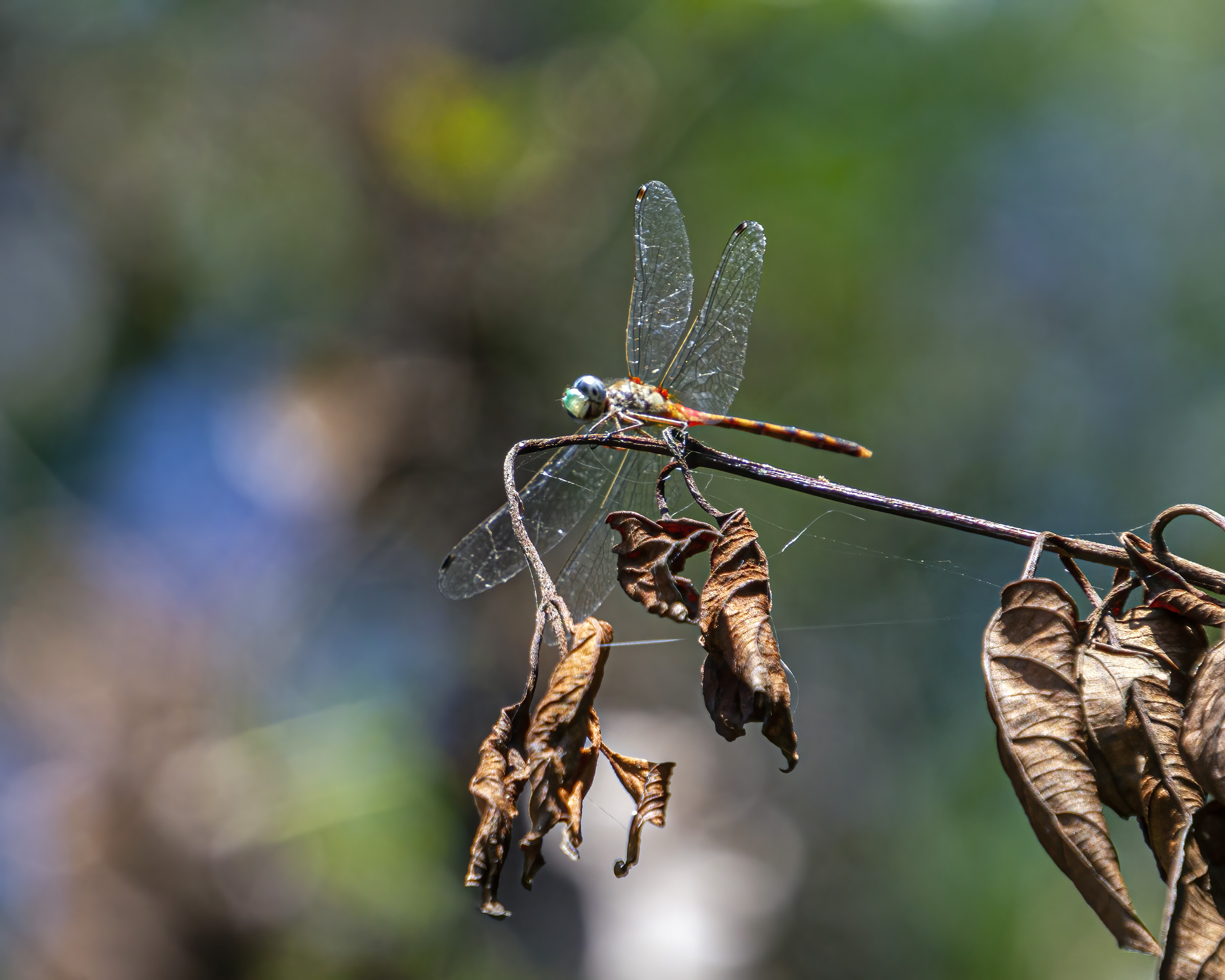
As we approach the end of September, I am keeping a mental checklist of the dragonflies that I continue to see. Some species have already disappeared for the season. With other species, I see only the tattered survivors. There are a few other species that will remain with for at least another month.

Here are some shots of three of the dragonflies that I saw last Tuesday at Occoquan Bay National Wildlife Refuge. The first one is a colorful male Calico Pennant (Celithemis elisa). We are nearing the normal late date for this species, so I was particularly happy to see this dragonfly.

The second image shows a female Common Whitetail (Plathemis lydia), one of the most common dragonflies in our area. This species is always one of the first to appear in the spring and one of the last to disappear in the autumn.

The final photo shows a male Slaty Skimmer (Libellula incesta) perching in the vegetation at the edge of a pond. This species is probably the most common one that I see right now when I am visiting a pond. I thought about cropping the image a little closer, but decided I really like the pops of pinkish-purple provided by the flowers near the edge of the frame.

There are, of course, other species still around that I have featured in recent postings, such as the Russet-tipped Clubtail, the Blue-faced Meadowhawk, and the Prince Baskettail, as well as several others. I am still searching for my first Autumn Meadowhawk of the season, a small red dragonfly that is often the last species to disappear.  I have seen Autumn Meadowhawks as late as the 3rd of December. If you want a sneak preview of what an Autumn Meadowhawk looks like, check out the December 2018 blog posting of that late sighting.

Calico Pennant

Common Whitetail

Slaty Skimmer

© Michael Q. Powell. All rights reserved.

Read Full Post »

Carolina Chickadees (Poecile carolinensis) are small and active, so I rarely get a clear view of one of them, especially during the times of the year when there are leaves on the trees. Last week I was happy to get some photos of this chickadee at Occoquan Bay National Wildlife Refuge as I was searching for warblers.

The leaves in the first two images and the tiny acorns in the final photo provide indications of the change in seasons. Temperatures are really dropping as we approach the end of September and the leaves are just beginning to change colors. In my area, unfortunately, the leaves mostly tend to turn brown—the fall foliage is definitely not as bright and vibrant as the colors in New England, where I was born and grew up.

Carolina Chickadee

Carolina Chickadee

Carolina Chickadee

© Michael Q. Powell. All rights reserved.

Read Full Post »

As I was looking over my photos from my visit last Wednesday to Jackson Miles Abbott Wetland Refuge, I was struck by the variety of perching styles of the dragonflies that I had photographed. The dragonfly on the left in the first photo, a Slaty Skimmer (Libellula incesta), was using the style that I see most often—he was perched horizontally with his wings extended outwards. The dragonfly on the right, a male Swift Setwing (Dythemis velox) had his abdomen raised to about a 45 degree angle and had pulled his wings forward.

In the second image, the dragonfly was perched at a slight angle as it held onto the vegetation. The coloration of this dragonfly is so faded that it is hard for me to identify its species, though I think it might be an old Great Blue Skimmer (Libellula vibrans).

In the final photo, the dragonfly is in an almost vertical position as it clings to the stalk of the vegetation. The shadows make it tough to identify this dragonfly, but I am not worried about that—I like the “artsy” feel of the photo.

This little posting barely scratches the surface of the topic of dragonfly perching behavior, but I hope it raises your awareness of the diversity in the world of dragonflies, not just in their appearances, but also in their behavior.


dragonfly perches

dragonfly perches

dragonfly perches

© Michael Q. Powell. All rights reserved.


Read Full Post »

I never realized how much the face of a Russet-tipped Clubtail dragonfly (Stylurus plagiatus) looks like the face of a human—the one in the first photo appears to have a nose, a chin, and even lips. The dragonfly was flying over the pond at Jackson Miles Abbott Wetland Refuge this past Wednesday and I watched it land in the goldenrod at the edge of the water, where I was able to capture the image.

When the Russet-tipped Clubtail was flying, it stayed in the center of the pond and did not come near to the shore, which made it tough for me to capture an in-flight shot. I was thrilled when I managed to capture a long distance shot of the dragonfly and its cool, distorted reflection in the water, as you can see in the second photo below.

As I was walking around the small pond, I inadvertently flushed another Russet-tipped Clubtail and it flew into a tree. I could see where it was perched, but the lighting was tricky, because I was shooting almost directly into the sun. I liked the interplay of the light and shadows on the leaves of the tree and the way that sunlight illuminated the “tail” (which is technically the abdomen) of the dragonfly, which made for a nice environmental portrait.

Generally I consider myself lucky if I have a single encounter with a dragonfly like this, so it felt amazing to have multiple encounters with the Russet-tipped Clubtails and multiple chances to capture some beautiful images.

Russet-tipped Clubtail

Russet-tipped Clubtail

Russet-tipped Clubtail

© Michael Q. Powell. All rights reserved.

Read Full Post »

I was a little surprised on Wednesday to see a Prince Baskettail dragonfly (Epitheca princeps) flying over the pond at Jackson Miles Abbott Wetland Refuge—I thought they were all gone by now. There were not too many other dragonflies around, so I concentrated on trying to capture in-flight shots of this elusive dragonfly that I never saw perch.

Photographing dragonflies while they are flying is a huge challenge for both my skill and my patience. I had a general idea of the area in which this dragonfly was flying as he flew repeatedly over a patch of lily pads. However, his specific flight path varied a lot and he often changed directions without warning.

Most of my photos were blurry or did not contain my subject, but I eventually managed to get a few decent shots of the Prince Baskettail. The first one is the sharpest, but it does not give you much of a sense of the environment in which the dragonfly was flying. The second shot has a bit of blur, but I really like the background pattern of the water of the pond. The dragonfly was flying away from me when I took the final photo, but I like the way that the image shows the pond vegetation and the tiny perched Eastern Amberwing dragonfly in the foreground was a nice bonus.

Prince Baskettail

Prince Baskettail

Prince Baskettail

© Michael Q. Powell. All rights reserved.
 

Read Full Post »

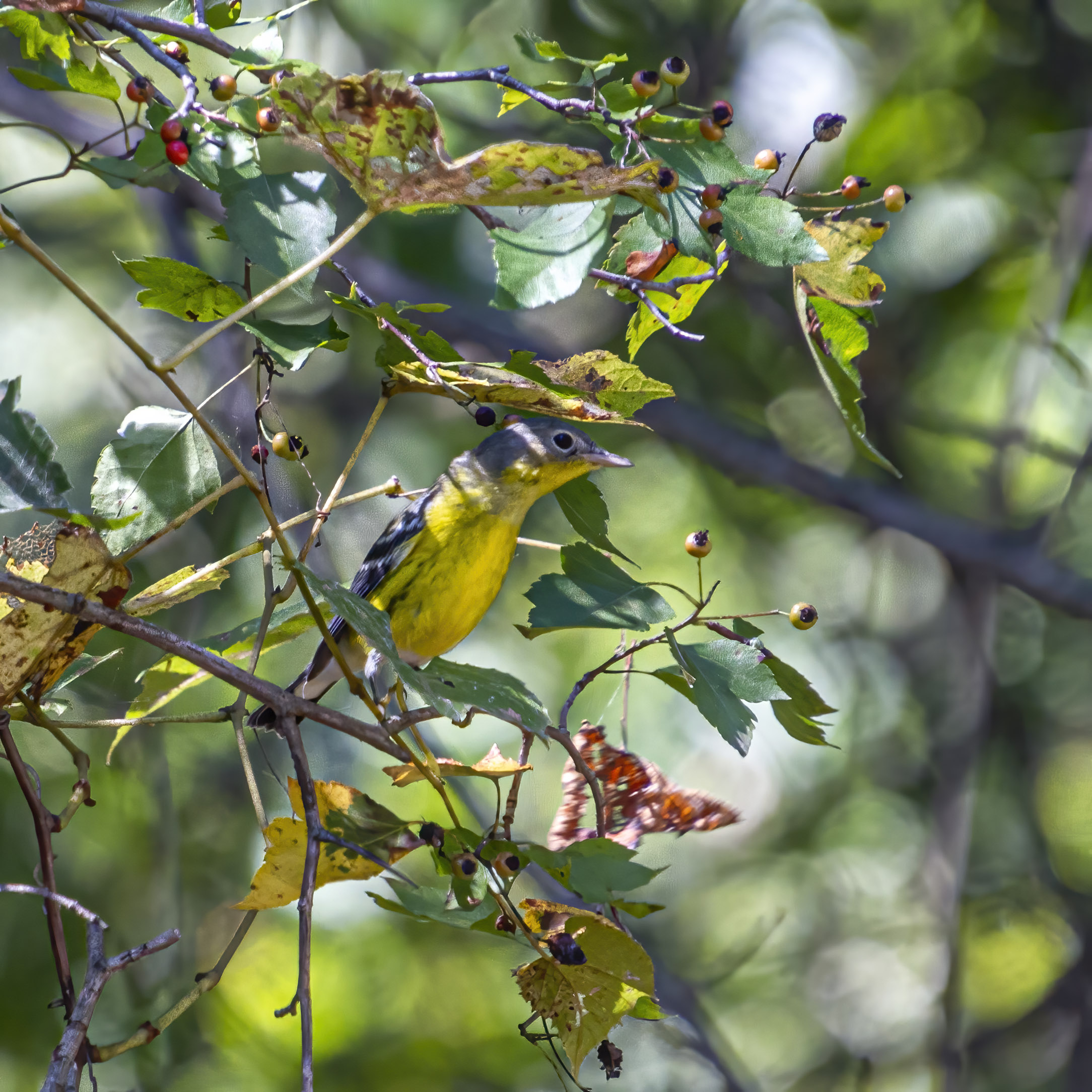
During a short period in the spring and again in the early autumn, migrating warblers move through the area in which I live. Occasionally I will manage to get a shot of one during the spring, when the warblers are sporting their colorful breeding plumages. During the autumn, however, their plumage is duller in color and the leaves on the trees block them from view, so I rarely see a warbler (though I can hear them) and even less frequently photograph one.

On Tuesday during a visit to Occoquan Bay National Wildlife Refuge, I spotted a flash of yellow high in a tree. Although I did not get a good look at the bird itself, I knew immediately that it was some kind of warbler. I focused on the area in which the bird moving about and watched and waited, snapping off shots whenever even the slightest bit of yellow was visible.

I never did get an unobstructed shot of the warbler, but different shots helped me to identify various features of the bird. In the first photo, for example, I can see the gray head and white eye ring. In the second and third images, I can see the extent of the yellow underparts, the white wing bars, and the moderate streaking.

What kind of warbler is it? I went through my bird identification guide—I use the Peterson Field Guide to Birds of North America—and decided that it was possibly a Magnolia Warbler (Setophaga magnolia). I was uncertain of my identification, though, so I sought confirmation on a birding forum on Facebook. Shockingly I was correct in my identification. I think I have about a 50 percent success rate in correctly identifying warblers and similar birds.

I would love to get clear unobstructed close-up shots of these beautiful birds as some photographers are able to do, but I am quite content with these shots. They highlight for me the beauty and mystery of the warbler in what I consider to be its natural habitat.

Magnolia Warbler

Magnolia Warbler

Magnolia Warbler

© Michael Q. Powell. All rights reserved.
Read Full Post »

I was thrilled yesterday to spot my first Blue-faced Meadowhawk dragonfly (Sympetrum ambiguum) of the season during a visit to Occoquan Bay National Wildlife Refuge. Although there are reports of this dragonfly emerging in mid-summer, I tend to see them in September and October. I have repeatedly searched for Blue-faced Meadowhawks this month in areas of the refuge where I have seen them in past years, but had come up empty-handed until yesterday.

The Blue-faced Meadowhawk is somewhat uncommon in our area, according to the Dragonflies of Northern Virginia website, and “Although black rings over the top of the abdomen make this one of the easiest meadowhawks to ID in our area, it is in fact the rarest and hardest to find.” You would think that the bright red bodies would make them easy to spot, but they are pretty small (about 1.4 inches (36 mm) in length and blend in surprisingly well with the autumn foliage.

I absolutely love the striking colors of this dragonfly—the turquoise face, blue eyes, and red body—and consider it to be one of my favorites. It is also special to me too, because I took second place in a local photo contest in 2015 with a macro shot of a Blue-faced Meadowhawk. Check out this December 2015 posting to see that photo and learn the back story of how I overcame my inhibitions and entered the contest.

Normally I see Blue-faced Meadowhawks closer to the ground, but the yesterday’s subject was perched high in a tree. As you can see, I tried several slightly different shooting angles, but couldn’t get any closer. As it turned out, that was my sole sighting of a Blue-faced Meadowhawk for the day. I will probably return to the wildlife refuge next week to see if I can find some more of these beautiful dragonflies.

Blue-faced Meadowhawk

Blue-faced Meadowhawk

© Michael Q. Powell. All rights reserved.

Read Full Post »

I was thrilled to spot this Great Blue Heron (Ardea herodias) last Saturday as it sheltered in the vegetation at the edge of a small pond at Occoquan Bay National Wildlife Refuge. Initially I took a photo from a distance, but then followed the trail along the edge of the pond and managed to get some closer shots.

Most of the time, Great Blue Herons seem stoic and impassive, but this one showed a lot of personality, especially in the first image. When I asked him to smile for the close-ups, though, he decided he wanted a more serious, dignified look, as you can see in the final two photos. I liked the resulting images and the think the heron would have been happy too.

Great Blue Heron

Great Blue Heron

Great Blue Heron

© Michael Q. Powell. All rights reserved.

Read Full Post »

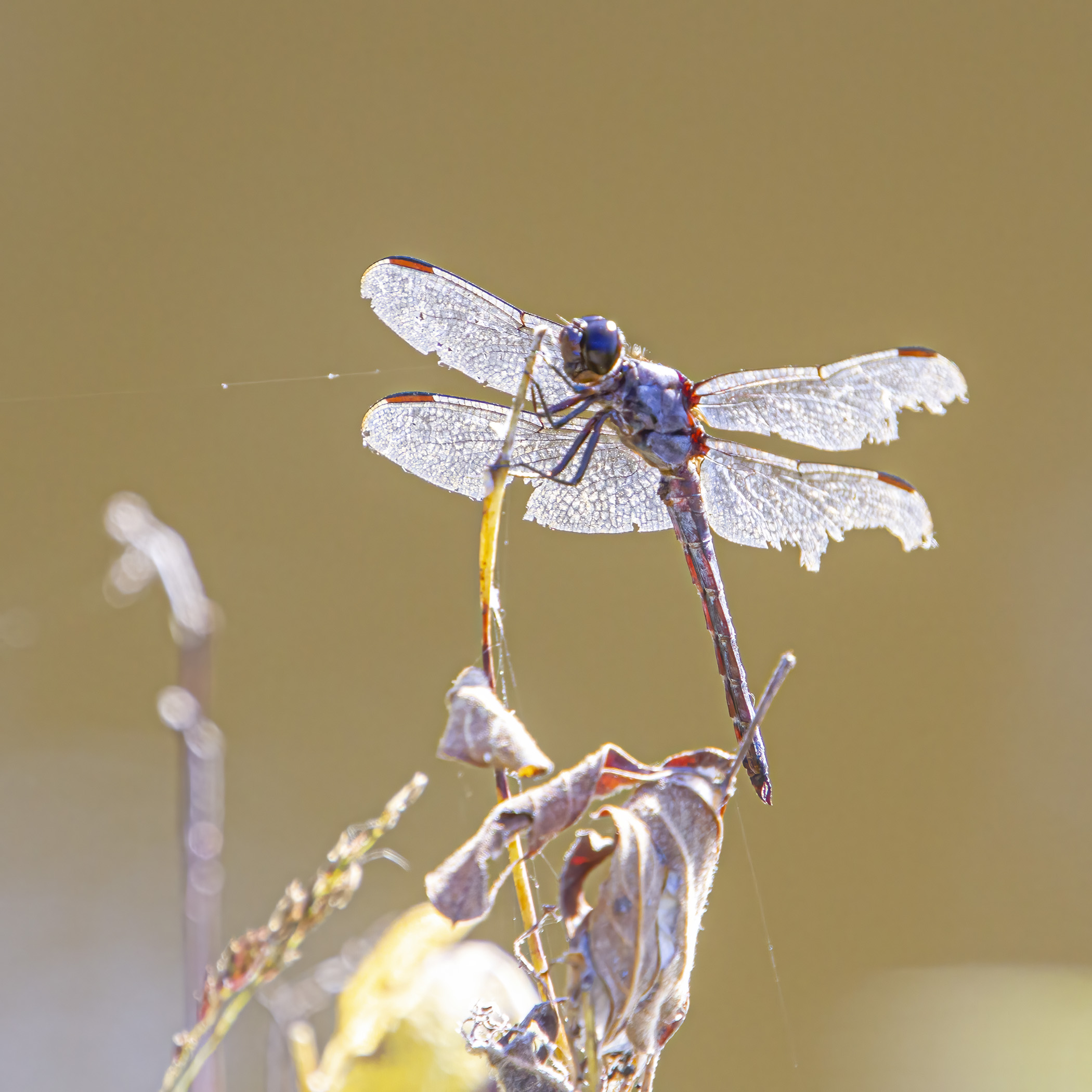
In everything, give thanks. I am thankful today for friends and family and for all creatures great and small, including this male Autumn Meadowhawk dragonfly (Sympetrum vicinum) that I photographed last week at Occoquan Bay National Wildlife Refuge.

I will return home in early December and I can’t exclude the possibility that this will be the last dragonfly that I see this season.

Autumn Meadowhawk

© Michael Q. Powell. All rights reserved.
Read Full Post »

During the early days of the pandemic, the bathrooms at Occoquan Bay National Wildlife Refuge were closed. I think that there was a fear of possible virus transmission and possibly because people were stealing the toilet paper rolls because of the widespread shortage at the time. Earlier this year the bathrooms were reopened with a warning sign that stated that you should use them at your own risk, because they were being cleaned only once a week—I wonder if I should post the same signs at my house.

In the last few months they rebuilt the vault toilets of the facility near the central parking area. I was delighted when I arrived one day recently to see a group of teenagers painting a brightly-colored mural on the bathroom facility. I love the quirky, illustrative style of the wild creatures and the building puts a big smile on my face every time that I drive past it.

For those of you following my blog regularly, I need to warn you that my posting schedule will be irregular this week and next week. I am currently visiting family outside of Seattle, Washington and may or may not have the change to do a lot of wildlife photography. So far, the only wildlife I have experiencing are their three dogs in the house and the chickens and duck in their backyard.

For those of you celebrating Thanksgiving Day tomorrow, I wish you all of the best. Even if you are not celebrating this American holiday, it is a good thing to pause and give thanks for all of your blessings in your life, no matter how large or how small.

Life is so precious and so fleeting—we should never take it for granted. Beauty is everywhere and even the functional can be made beautiful.

Occoquan Bay National Wildlife Refuge

© Michael Q. Powell. All rights reserved.

Read Full Post »

It was cool and breezy last Saturday at Occoquan Bay National Wildlife Refuge and most birds seemed to be out of sight, seeking shelter to stay warm. I was thrilled therefore when I managed to spot this pair of Bald Eagles (Haliaeetus leucocephalus) perched together on a distant tree.

I suspect that this is an eagle couple and the two eagles appeared to be carrying on a spirited discussion. Although it is hard to be certain of their genders, female eagles tend to be larger than their male counterparts, so I suspect that the eagle on the right is the female one.

Bald Eagles

© Michael Q. Powell. All rights reserved.

Read Full Post »

A large raft of American Coots (Fulica americana) has been hanging out recently in the waters off of Occoquan Bay National Wildlife Refuge. The coots stay together pretty closely and have remained out in the deep waters, so getting a close-up shot of a single coot has proven to be impossible.

I have tried a number of different approaches to capturing a sense of this group of active water birds and here are some of the resulting images. The first image gives the viewer a feeling of the chaotic activity at the center of the group as one coot flaps its wings. The second image focuses on the coot in the foreground, facing in the opposite direction from most of the others in the foreground. The final photo is a more panoramic shot and includes more of the environment—I especially love the pops of color in it provided by the floating fallen leaves.

American Coots

American Coots

American Coots

© Michael Q. Powell. All rights reserved.

Read Full Post »

It was cold and breezy yesterday at Occoquan Bay National Wildlife Refuge and most of the birds seemed to have taken shelter and were hidden from view. There were large rafts of some kind of ducks visible in the distance on the bay, so periodically I would look out at the water, hoping that some bold bird had ventured close enough for me to identify it.

As I was scanning the surroundings, my eyes detected a bit of motion and I caught a glimpse of this Great Blue Heron (Ardea herodias). Normally I see herons in the water or occasionally perched in a tree. This heron, however, was perched atop a duck hunting blind a short distance from the shore. In some years this blind has been used by ospreys for nesting, so there always seems to be sticks piled on the roof that you can see behind the heron.

I am not sure why the heron chose this particular location, but maybe it felt secure and sheltered there. I noted that the heron was perched on one leg and recalled that herons will sometimes tuck the other leg underneath its feathers to keep it warm.

I was careful not to disturb the heron from its chosen spot while I grabbed a few shots and then I moved slowly down the trail in search of additional subjects to photograph.

Great Blue Heron

© Michael Q. Powell. All rights reserved.


Read Full Post »

As I was walking through a grassy field on Thursday at Huntley Meadows Park, I inadvertently disturbed a grasshopper that flew to a nearby tree. It had been weeks since I had last seen a grasshopper, so I searched carefully for the insect and was happy when I managed to locate it on the trunk of the tree.

Although I carefully composed my shot, I did not have high expectations for it—it was a simple shot with a simple composition. I was stunned when I reviewed the image on my computer at how well it turned out. I love the way I was able to capture the texture of the tree bark and of the grasshopper, though I must confess that the background on the right hand side of the image may be my favorite element of the image.

One of the joys of photography for me is the discovering images like this, appealing images in which the separate components work together to create a harmonious whole. If someone had asked me when I first returned home from the shoot if I had captured any good images, I probably would have responded negatively—I would have been wrong.

Have a wonderful weekend.

grasshopper

© Michael Q. Powell. All rights reserved.

Read Full Post »

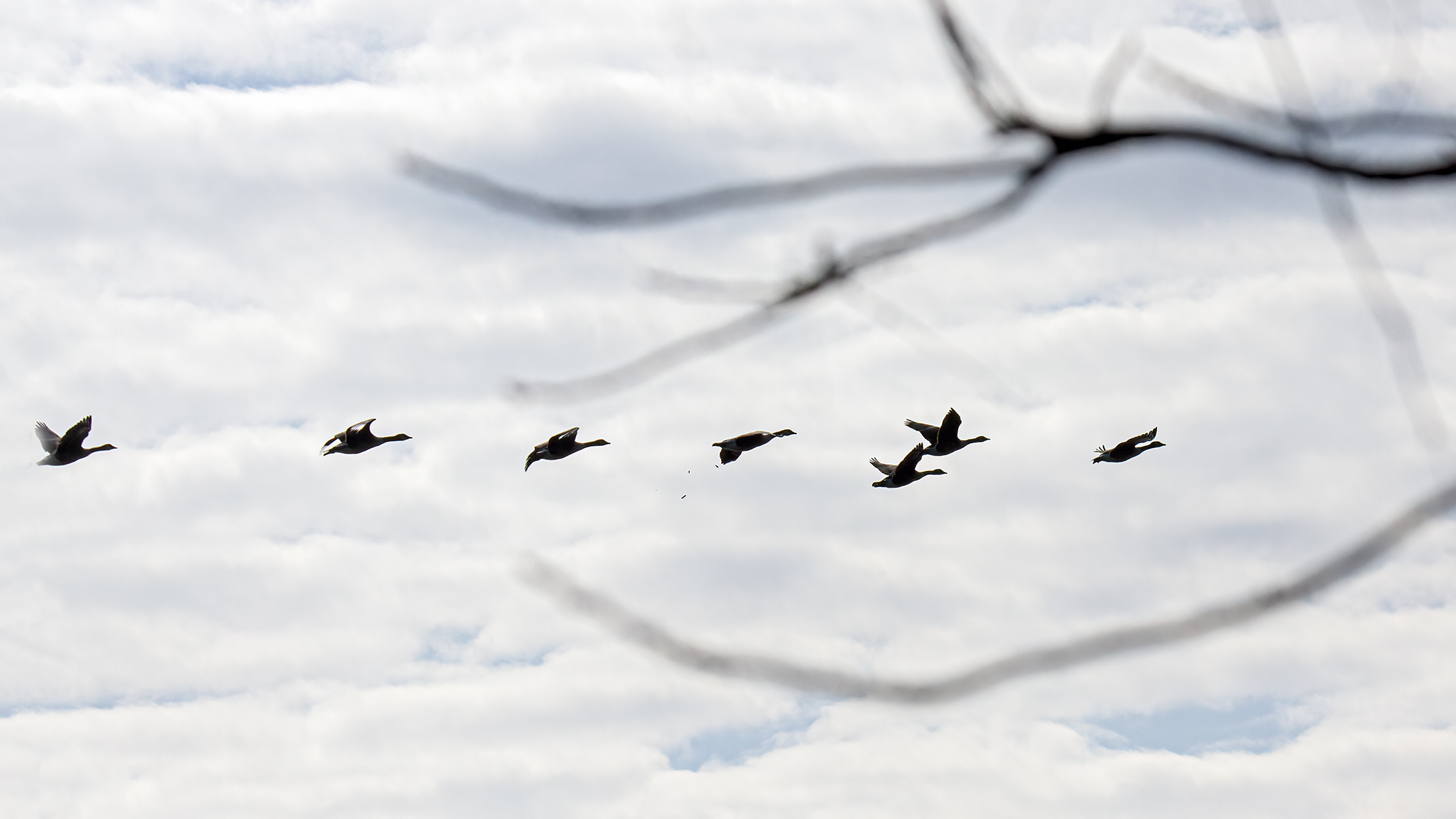
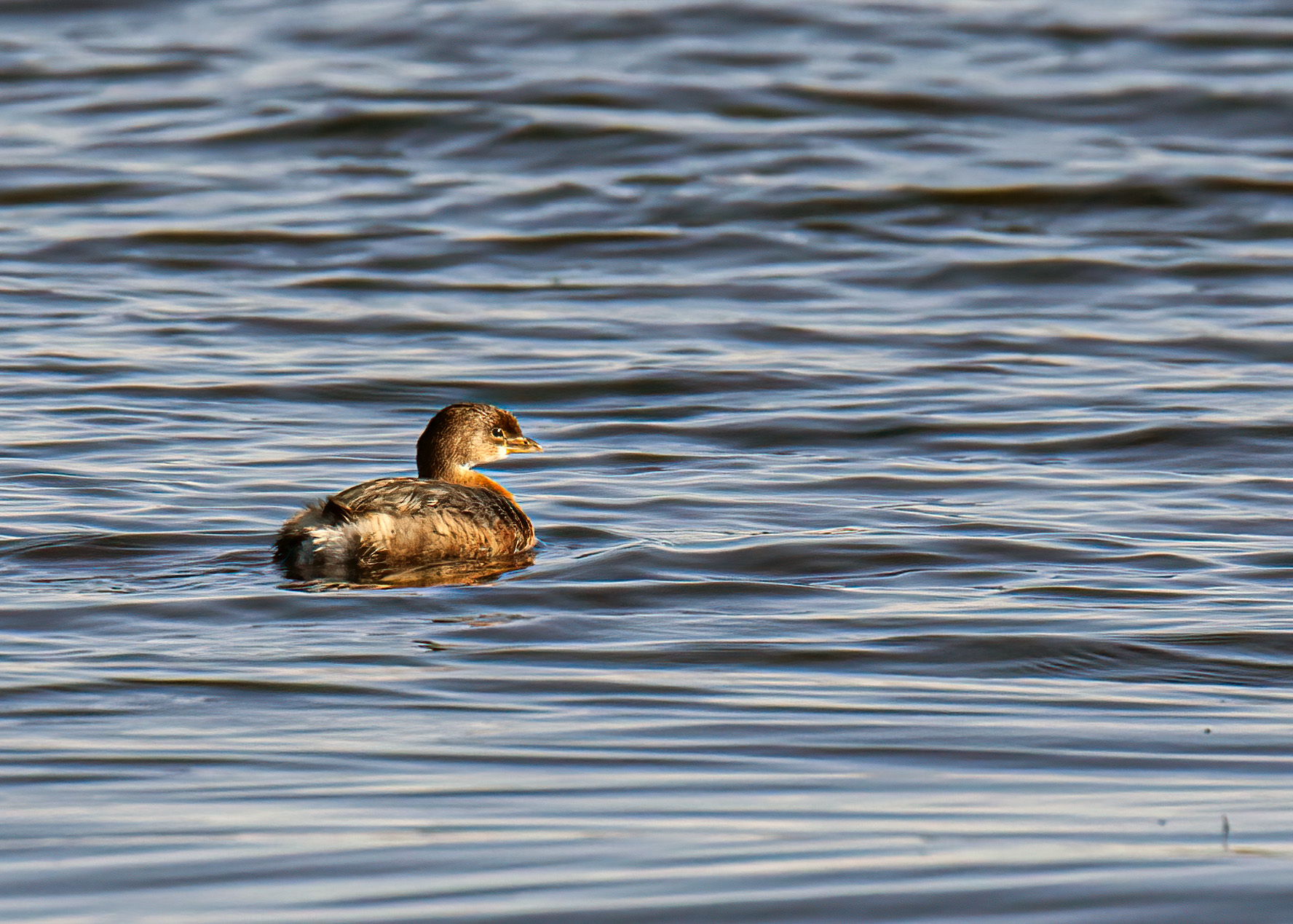
There was a lot of bird activity on Tuesday at Occoquan Bay National Wildlife Refuge both in the air and on the water. Unfortunately most of the action took place well out of the optimal range of my camera, so I had to be content with capturing long distance photos.

Flocks of Canada Geese (Branta canadensis) periodically announced their presence as they passed by. A large flock of crows was equally vocal as it harassed a pair of Bald Eagles (Haliaeetus leucocephalus) perched peacefully in a distant tree. Only the shy little Pied-billed Grebes (Podilymbus podiceps) were silent as they paddled about, periodically diving in search of food.

I spent several hours walking about, listening and observing, enjoying the fresh air and the beauty of natural surroundings, unconcerned that I was not able to capture amazing photos during this outing. That is the uncertain fate of a nature photographer. To borrow a line from Paul in his letter to the Philippians, I have learned to be content whatever the circumstances.

I returned home from this walk in the wild feeling renewed and refreshed—that was my biggest reward.

Canada Geese

Bald Eagle

Pied-billed Grebe

© Michael Q. Powell. All rights reserved.

Read Full Post »

We may be down to a single active dragonfly species in my area. Yesterday I went out with my camera to Occoquan Bay National Wildlife Refuge, my favorite location for wildlife photography the last few years, and found only Autumn Meadowhawk dragonflies (Sympetrum vicinum)—the Wandering Gliders seem to have departed from the areas where I had seen them previously during the last few weeks.

The good news is that I saw multiple Autumn Meadowhawks, so the population seems to be still strong. I was planning to return to the refuge tomorrow, when temperatures are supposed to soar to 73 degrees (23 degrees C), but just noted that the refuge is closed all day for one of the annual managed deer hunts. I may have to go to another location to see if the warmer temperatures coax any stragglers or survivors from other dragonfly species to make a final curtain call.

I captured these three photos of Autumn Meadowhawks last week and really like them for different reasons. In the first photo, I love the way that the color and shape of the leaf stems match the body of the dragonfly. In the second shot, I was thrilled to be able to include the sky in the composition when the dragonfly chose a high perch—I also am quite fascinated by the interplay of light and shadows in the image and the shapes that they help to create.

The simple, stark composition of the final shot appeals to me a lot. The monochromatic color palette of the branch and the background really help to draw a viewer’s eyes to the handsome male Autumn Meadowhawk and his bright red coloration really pops.

Autumn Meadowhawk

Autumn Meadowhawk

Autumn Meadowhawk

© Michael Q. Powell. All rights reserved.


Read Full Post »

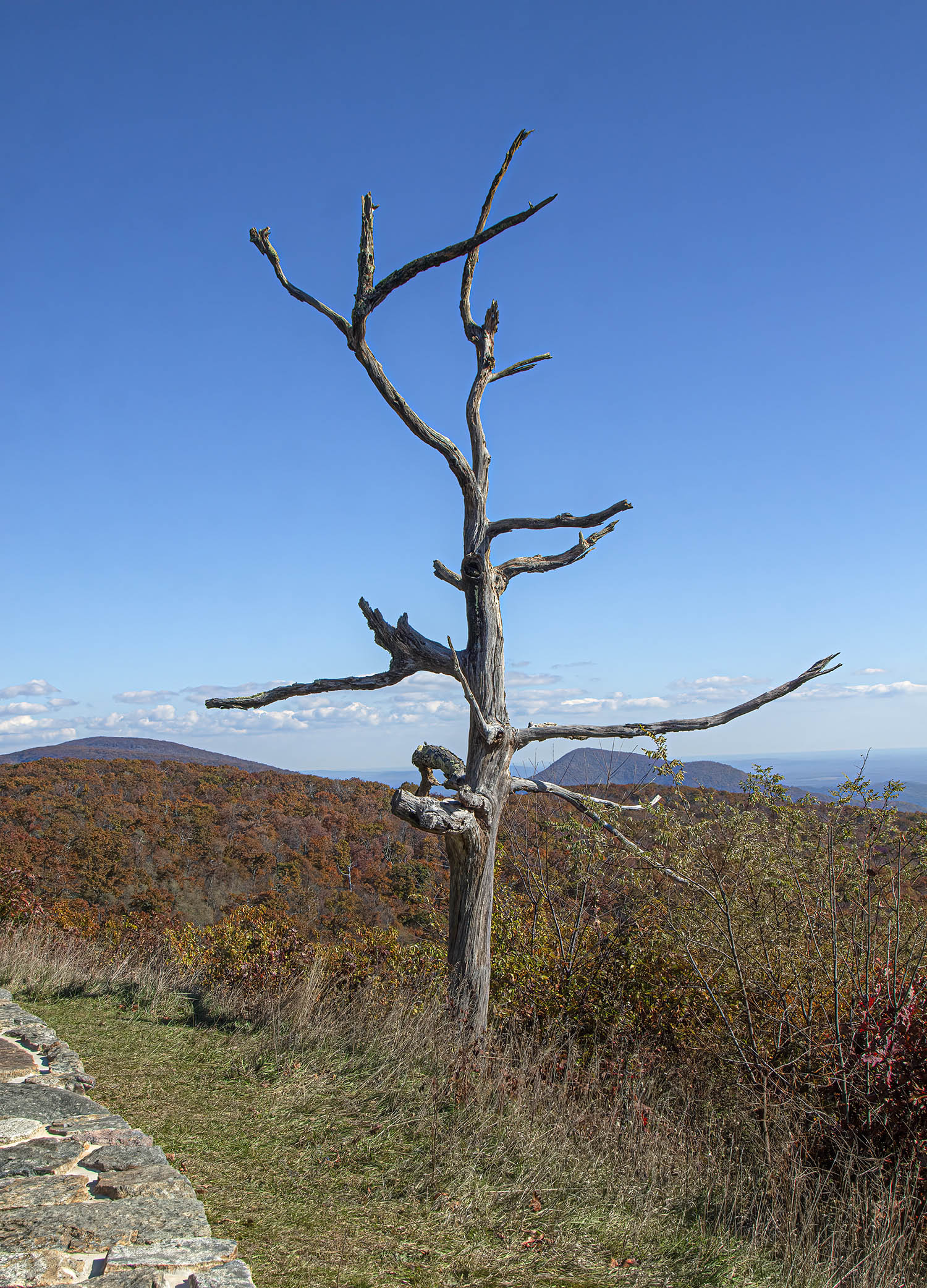
Fall foliage color are now past their peak in the mountains and fallen leaves are increasing littering the lawns and the streets of the suburbs where I live. Today I thought I would share a few more foliage photos from my trip to Shenandoah National Park earlier this month before those memories are swept away with those fallen leaves.

While I was driving along Skyline Drive in the national park, I was repeatedly struck by the “skeleton trees.” That is my term for the bare white trees that I often saw interspersed with their leafy counterparts—they somehow reminded me of the ribs of a skeleton.

I could not determine if my skeleton trees were dead or had simply lost their leaves, but did not spending too much time pondering that question. Instead, I concentrated on capturing a sense of their stark beauty. The first photo is definitely my favorite of the three—I remember spending a lot of time trying to compose the image very carefully, a kind of luxury for me that I do not usually get when taking wildlife photos.

I am not quite ready to bid farewell to autumn, but there are definitely signs that winter is on its way. I’m hanging on tenaciously to the final month of autumn, enjoying the remaining bits of fall color.

skeleton tree

skeleton tree

skeleton tree

© Michael Q. Powell. All rights reserved.


Read Full Post »

As I noted in a recent posting, there appear to be only two active dragonfly species remaining in my area—Wandering Gliders and Autumn Meadowhawks (Sympetrum vicinum). Today I decided to feature some shots of Autumn Meadowhawk dragonflies that I spotted last week during a visit to Huntley Meadows Park, a local marshland refuge.

Quite often Autumn Meadowhawks perch flat on the ground which makes it easy for me to get shots of them. However, those shots tend to be relatively uninteresting from an artistic point of view. I am always on the lookout for those dragonflies that choose more photogenic perches, especially those that include colorful fall foliage.

I was quite fortunate that the Autumn Meadowhawks were cooperative last week in helping me to capture images that matched my “artistic vision,” which does not always happen in wildlife photography. Wildlife photography has so many variables over which I have little or not control, including the weather, the lighting, the environment, and the subjects themselves. Success is certainly not guaranteed, but I have found that patience, persistence, knowledge, and a bit of skill can often help to tip the odds a bit in my favor.

Autumn Meadowhawk

Autumn Meadowhawk

Autumn Meadowhawk

© Michael Q. Powell. All rights reserved.


Read Full Post »

Throughout this autumn season I have frequently seen large wasp-like insects as I have explored Occoquan Bay National Wildlife Refuge. Often I would catch a glimpse of red color as one flew by and I would think that it was an Autumn Meadowhawk dragonfly, which has a bright red body. Once I got a better look at my target, I could easily see that it was not a dragonfly.

What was it? Earlier this month I finally get a decent photo of the insect and began my search to identify it. I have come to the conclusion that it is probably a European Hornet (Vespa crabro). As the name suggests, this species originated in Europe and was first reported in North America about 1840 in New York. SInce then it has spread to most of the eastern United States, according to an article by North Carolina State University.

The first thing I noticed about European Hornets is that they are big, over an inch (25 mm) in length for workers and 1. 5 inches (38 mm) for queens. Fortunately they do not appear to be very aggressive, so I have never had to worry about being stung by one, although I must admit that I keep a healthy distance from them. In fact, I took the photo below with my telephoto zoom lens fully extended to its maximum focal length of 600 mm.

In the fall all of the workers die and the only individuals that survive are fertilized queens. The queens overwinter in protected places, such as under the bark of fallen trees, and construct new nests the following spring.

European Hornet

© Michael Q. Powell. All rights reserved.
Read Full Post »

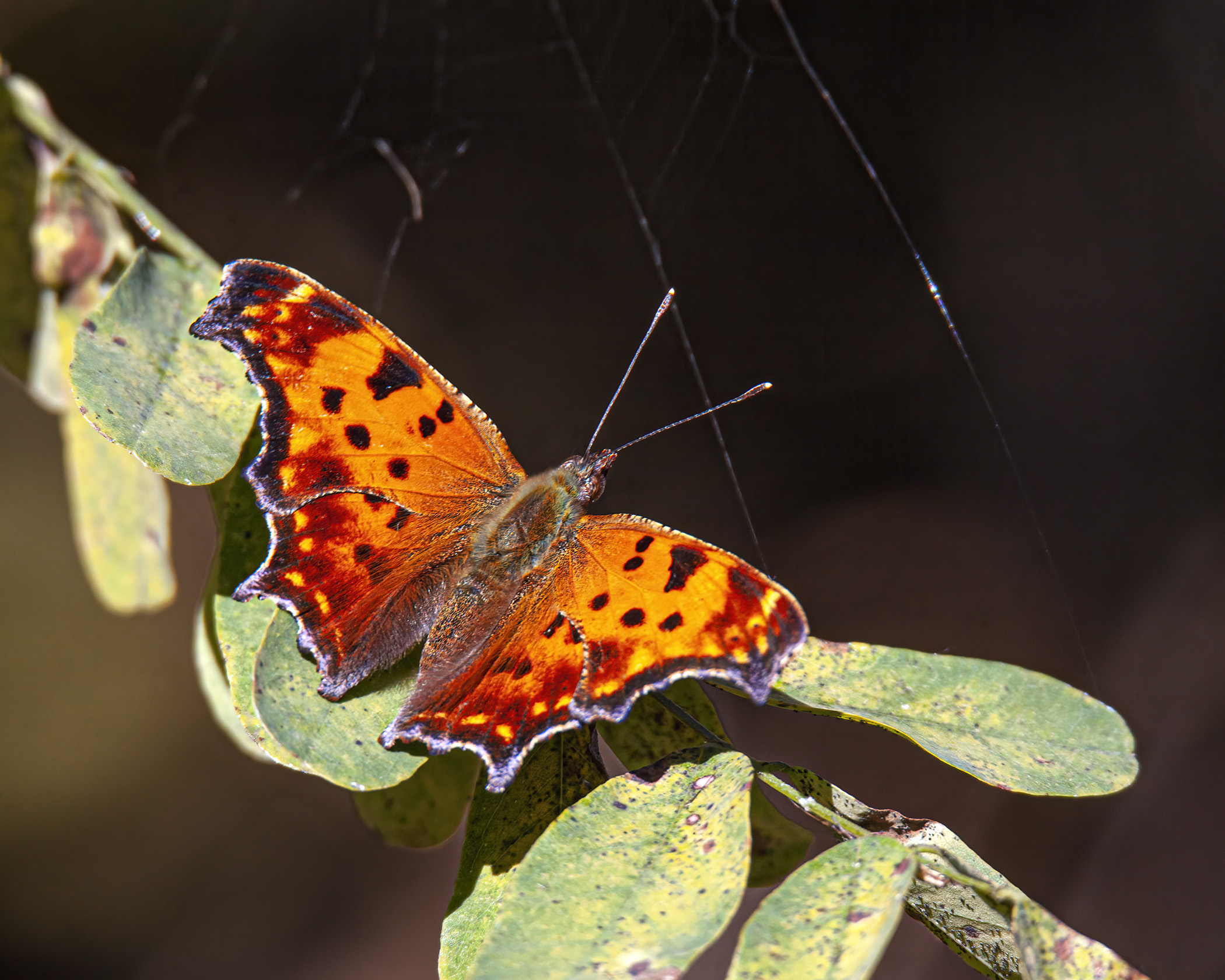
I am happy to see that some butterflies are still with us as we move deeper into November. Eastern Comma butterflies (Polygonia interrogationis), like the one in first photo, overwinter as adults, rather than as eggs or pupae as most butterflies do, so there is a chance that I will continue to see them for a while longer if the weather does not get too bad.

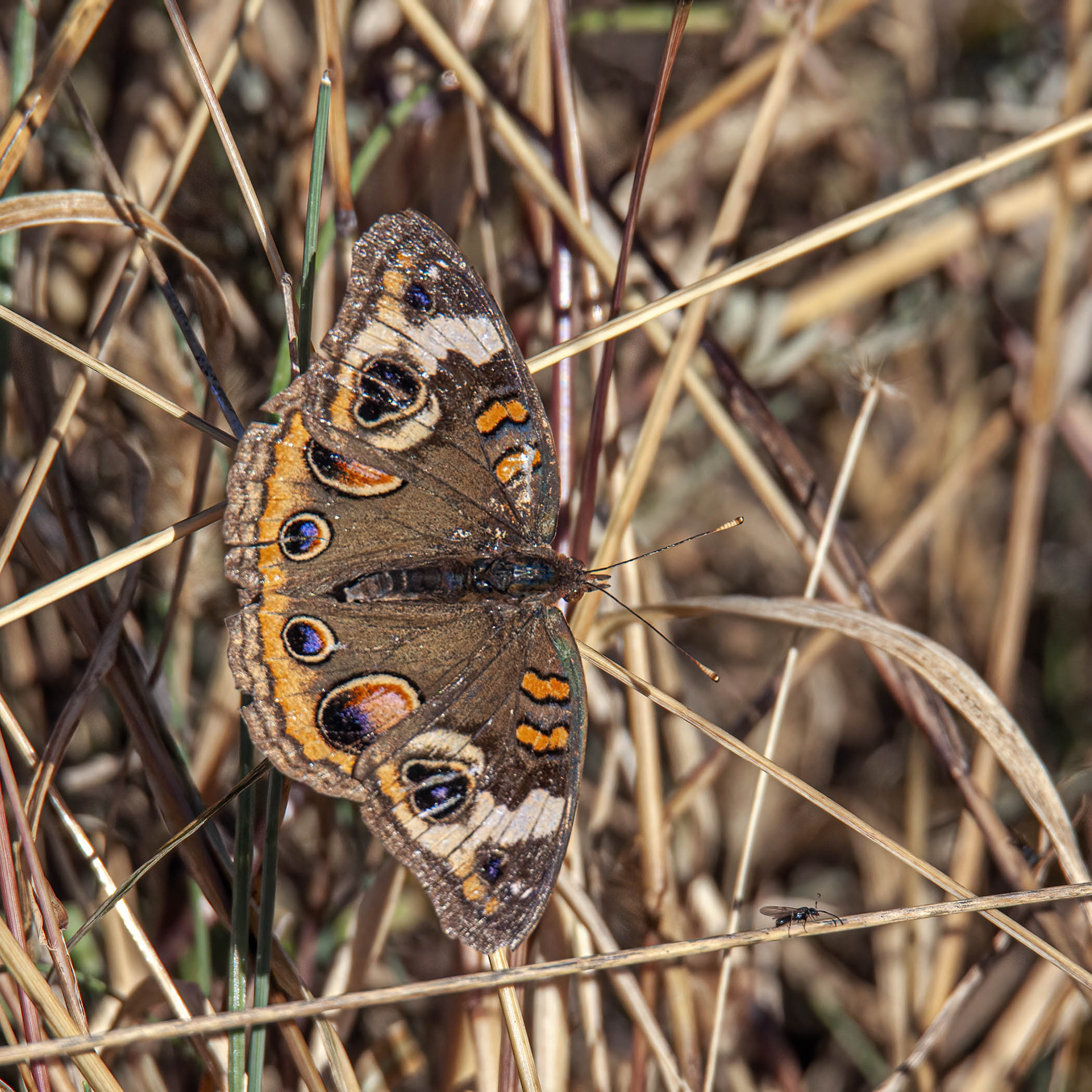
Common Buckeyes (Junonia coenia), like the one in the second photo, cannot tolerate cold temperatures. Some of them, according to Wikipedia, migrate to the south for the winter and then return when the weather warms up in the spring.

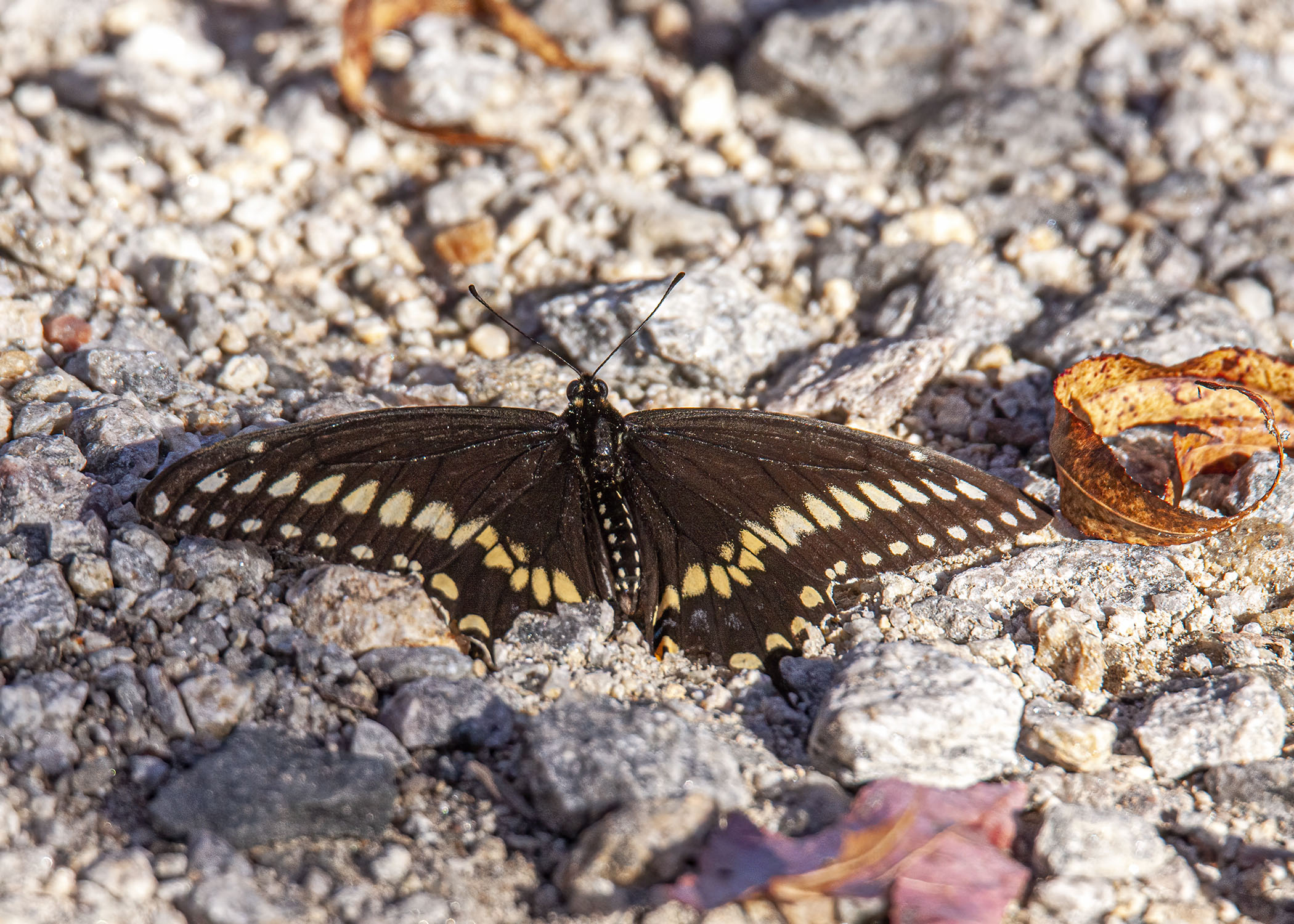
I was most surprised this week to spot the Black Swallowtail (Papilio polyxenes) in the final photo—it had been a month or so since I had last seen a Black Swallowtail. This species spends the winter in the chrysalis stage, and adults emerge in the spring to seek out host plants.

We are nearing the end of the butterfly season, but I am delighted to share my walks in nature with these fragile little creatures for a little while longer.

Eastern Comma

Common Buckeye

Black Swallowtail


© Michael Q. Powell. All rights reserved.


Read Full Post »

« Newer Posts - Older Posts »