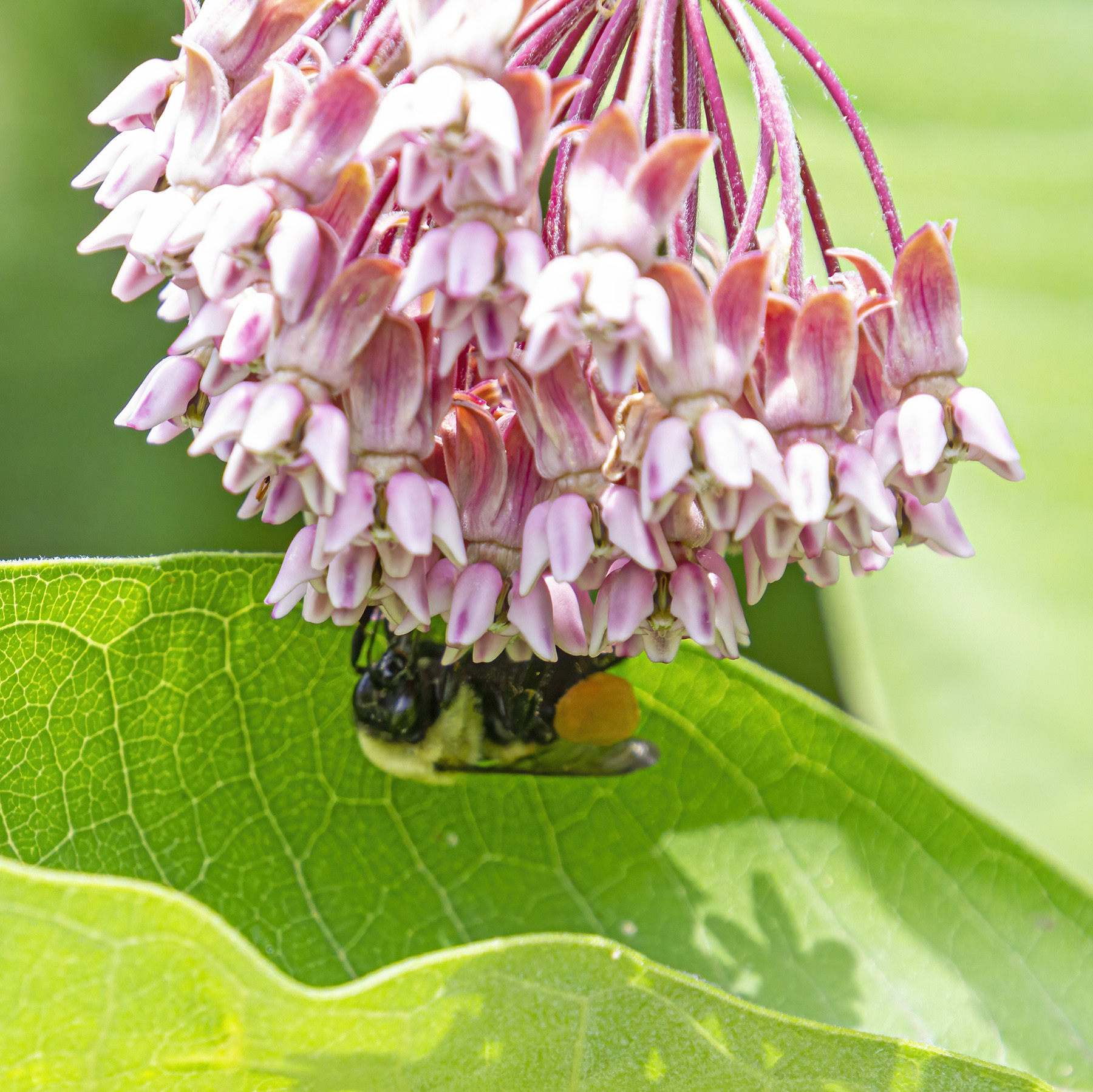
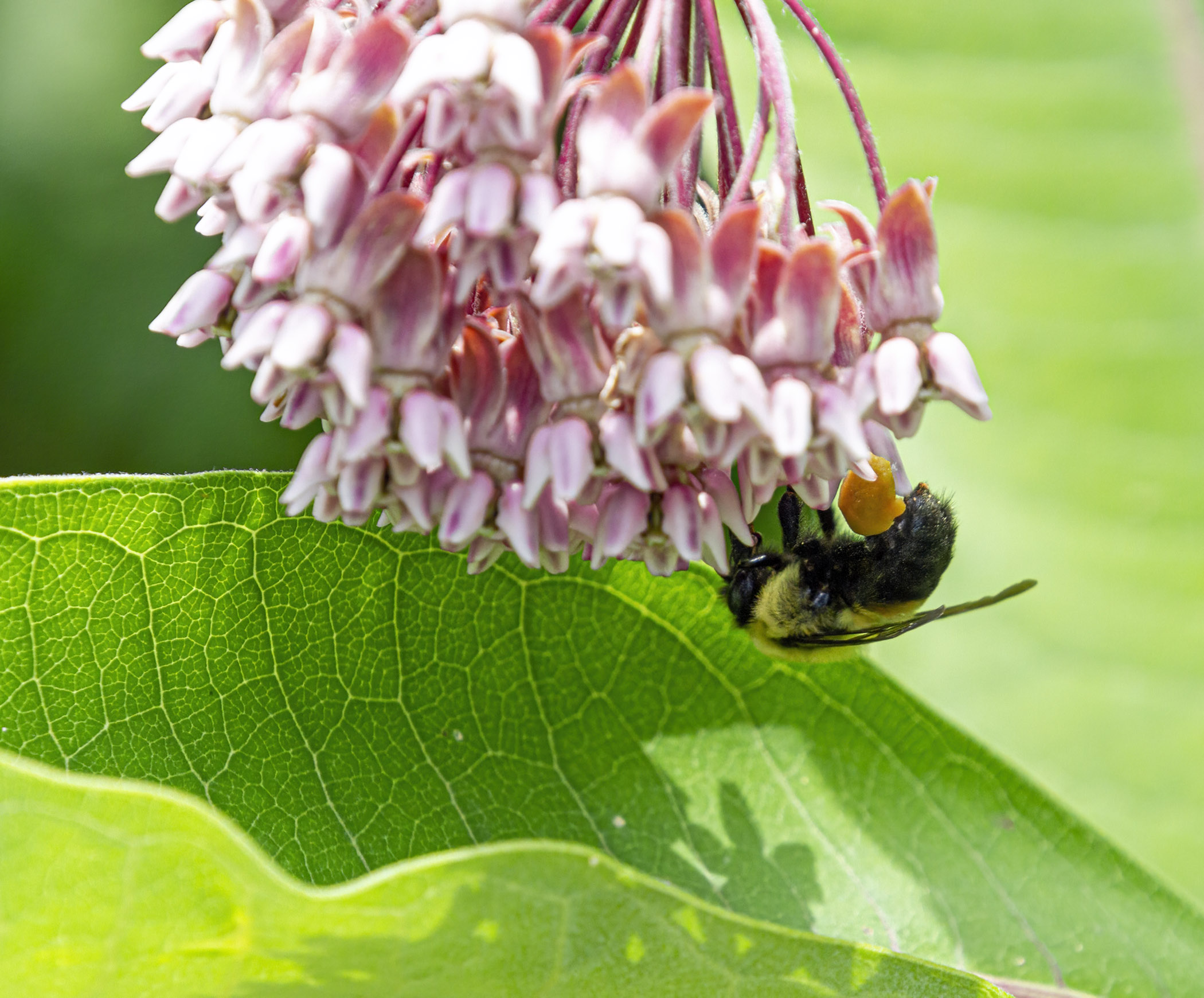
Milkweed plants were flowering at Occoquan Bay National Wildlife Refuge on Tuesday (9 June) and the pollen baskets (corbiculae) on the hind legs of this bee were filled to overflowing. The bright orange concentration of pollen made it easy to track the bee, though its constant motion made it really tough to get a decent photograph.
Most often I think of pollen as being yellow in color, but in the past I have taken photos of bees covered in pollen that was another color. The third photo below from a post in May 2020 shows red pollen from Purple Deadnettle flowers (Lamium purpureum). The final photo below showing a bee covered in white pollen from a chicory flower is from one of my posts in August 2014.
I have a pretty memory of the subjects that I have photographed, but often can’t remember when I took the photos. When I did a Google search of “Mike Powell multi-colored pollen,” the results began with an AI summary that surprised me. It indicated that “Nature photographer Mike Powell frequently highlights the fascinating, vibrant spectrum of pollen colors collected by pollinators. Through his macro photography in Northern Virginia’s parks, he captures how pollen isn’t just yellow, but can appear in brilliant shades of blue, orange, red, pink, and white.”
Google also included a link to my blog, which my help to explain why my views have been unusually high this year, despite the fact that I have been posting less frequently than in the past. I am not a big fan of AI and am particularly negative about generative AI, but I have to admit that AI did a pretty good job in summarizing a large body of information, in this case my blog postings from 2012 to the present. Wow! It’s hard to believe that I have kept the blog going for that long.


© Michael Q. Powell. All rights reserved.
 Mike Powell