September 13, 2018 by Mike Powell
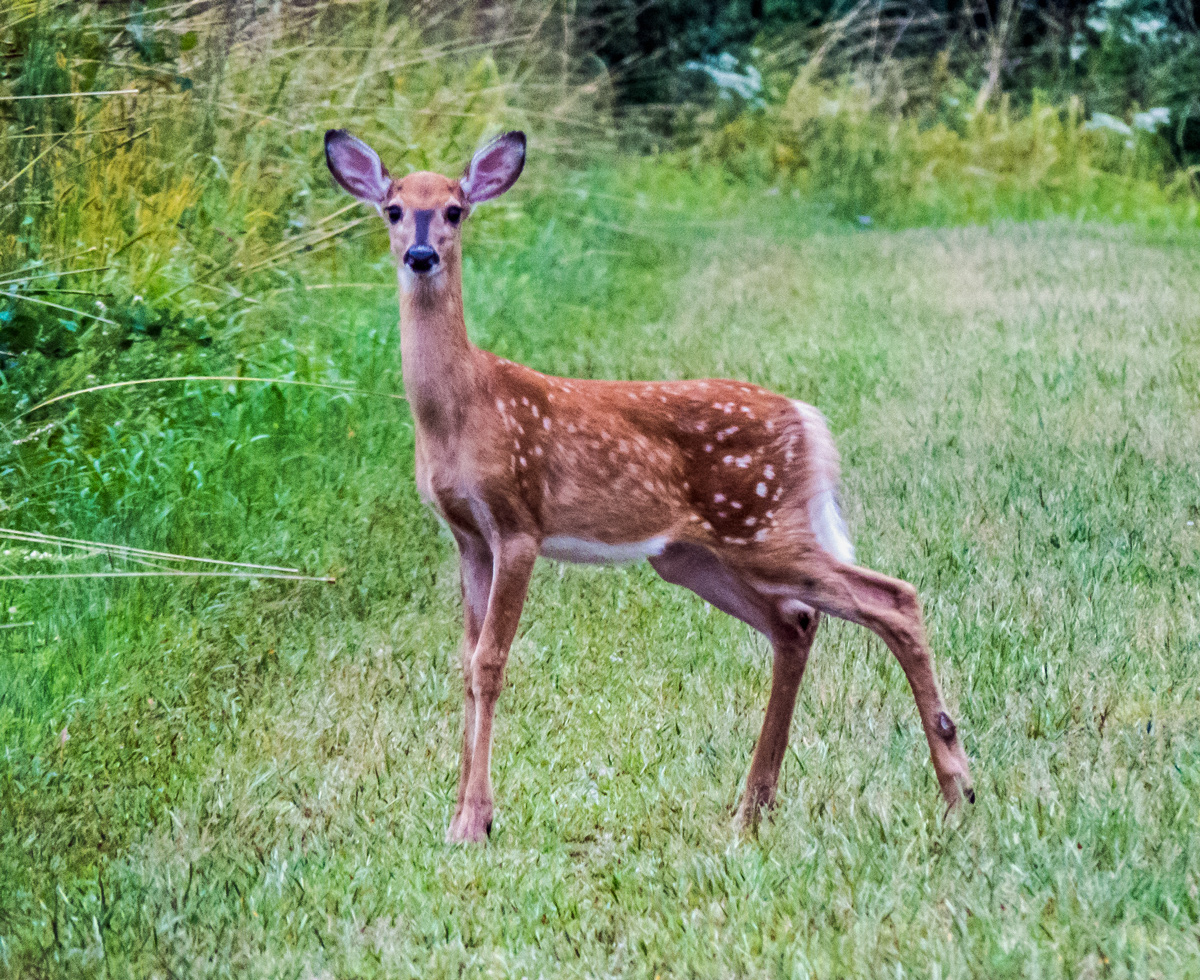
I spotted this curious little White-tailed Deer (Odocoileus virginianus) on Monday at Occoquan Bay National Wildlife Refuge. The deer appears to have moved out of the cute little Bambi phase and seemed more like a gawky adolescent to me (though I confess I know very little about deer development).
I like the fact that you can still see some of its white spots, which look to be a little faded.

© Michael Q. Powell. All rights reserved
Posted in animals, Nature, Photography, wildlife | Tagged adolescent Bambi, Bambi, Canon SX50, deer, Occoquan Bay National Wildlife Refuge, Odocoileus virginianus, white-tailed deer, Woodbridge VA | 9 Comments »
September 12, 2018 by Mike Powell
It was cool and wet on Monday and clouds covered the entire sky, but I felt an irresistible need to return to the wild after a week in the urban confines of Brussels, Belgium. Many of the trails at Occoquan Bay National Wildlife Refuge, my recent favorite shooting location, were blocked by standing water and there was not a great abundance of wildlife to be seen.
Most dragonflies prefer warm, sunny weather, so I was not surprised when I did not see many of them. I was happy, though, to see that damselflies were active and I spent quite a bit of time trying to capture images of them. They seemed more skittish than normal and the poor lighting made it tough to keep my shutter speed high enough to keep my images from being blurry.
This is one of my favorite damselfly shots of the day. I was able to isolate the subject, which I believe is a male Big Bluet (Enallagma durum) damselfly, while still including enough of the vegetation to give you a sense of the environment in which I found him.

© Michael Q. Powell. All rights reserved
Posted in damselfly, Dragonflies, dragonfly, Insects, Macro Photography, Nature, Photography, wildlife | Tagged Big Bluet, Big Bluet damselfly, Canon 50D, Enallagma durum, Occoquan Bay National Wildlife Refuge, Tamron 180mm, Woodbridge VA | 6 Comments »
September 11, 2018 by Mike Powell
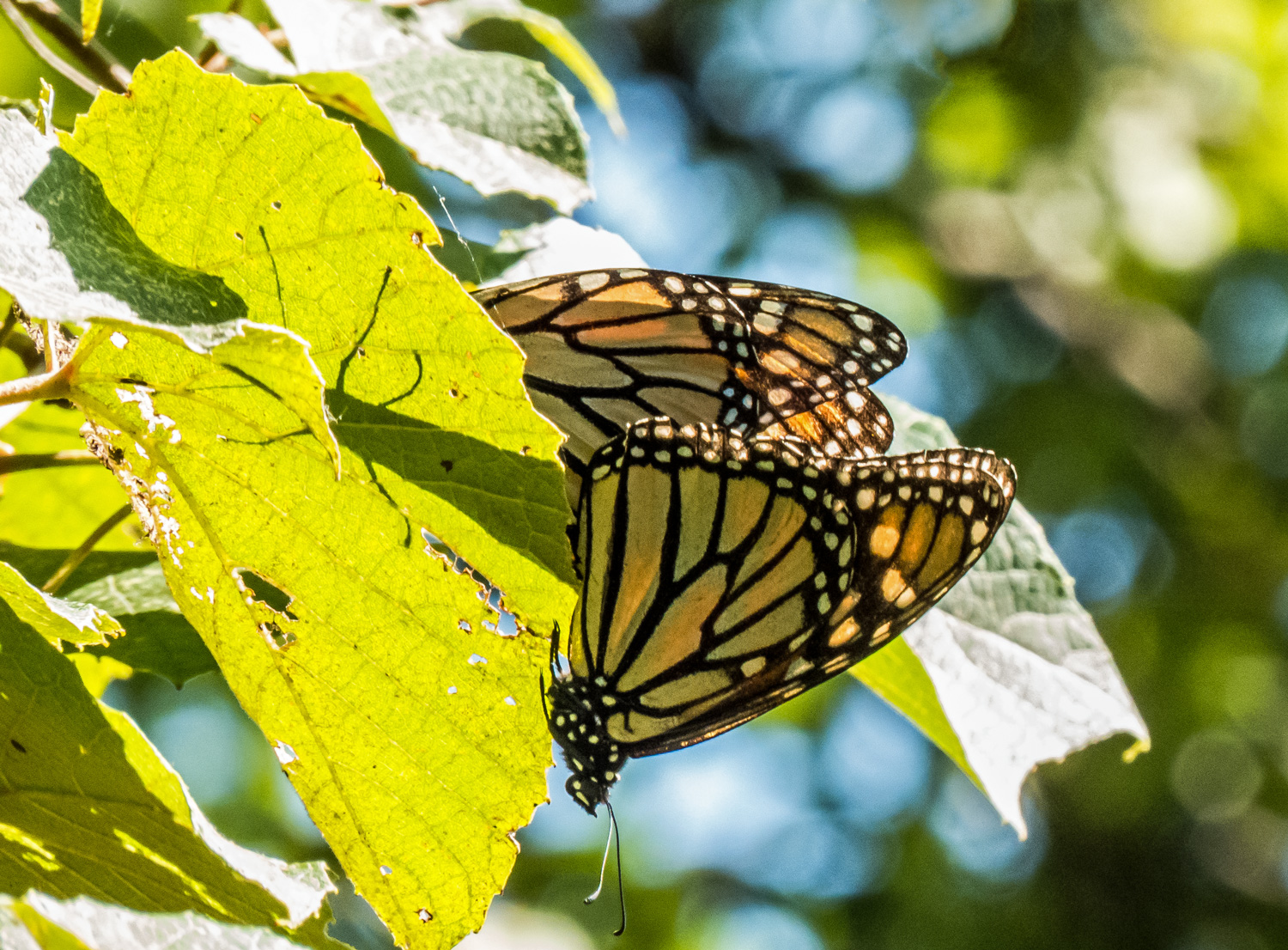
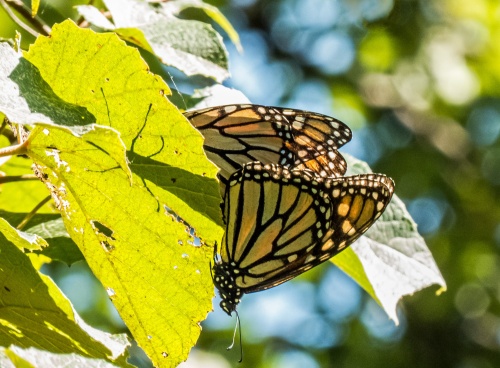
Nestled gently in the leaves of a tall tree, these two Monarch butterflies (Danaus plexippus) were mating, doing their part to perpetuate a species often considered at risk. I captured this image in late August at Occoquan Bay National Wildlife Refuge and re-discovered it yesterday when I was going through my photos from the week before my recent trip to Brussels.
I love the way that the upper butterfly is discreetly hidden by the leaves, but is revealed in its shadow. I find the colors in this image to be especially beautiful. with a wonderful contrast between the warmth of the orange and the coolness of the blue. Most of all, though, I love the way that the background turned out, with its soft circles of out-of-focus highlights.
This is the kind of image that I strive to capture, one that gently draws in viewers and speaks to them softly, reminding them of the undiscovered beauty that surrounds them all of the time.
© Michael Q. Powell. All rights reserved
Posted in Butterflies, Insects, Nature, Photography, Summer, wildlife | Tagged Canon SX50, Danaus plexippus, mating monarchs, Monarch, monarch butterfly, Occoquan Bay National Wildlife Refuge, Woodbridge VA | 6 Comments »
September 10, 2018 by Mike Powell
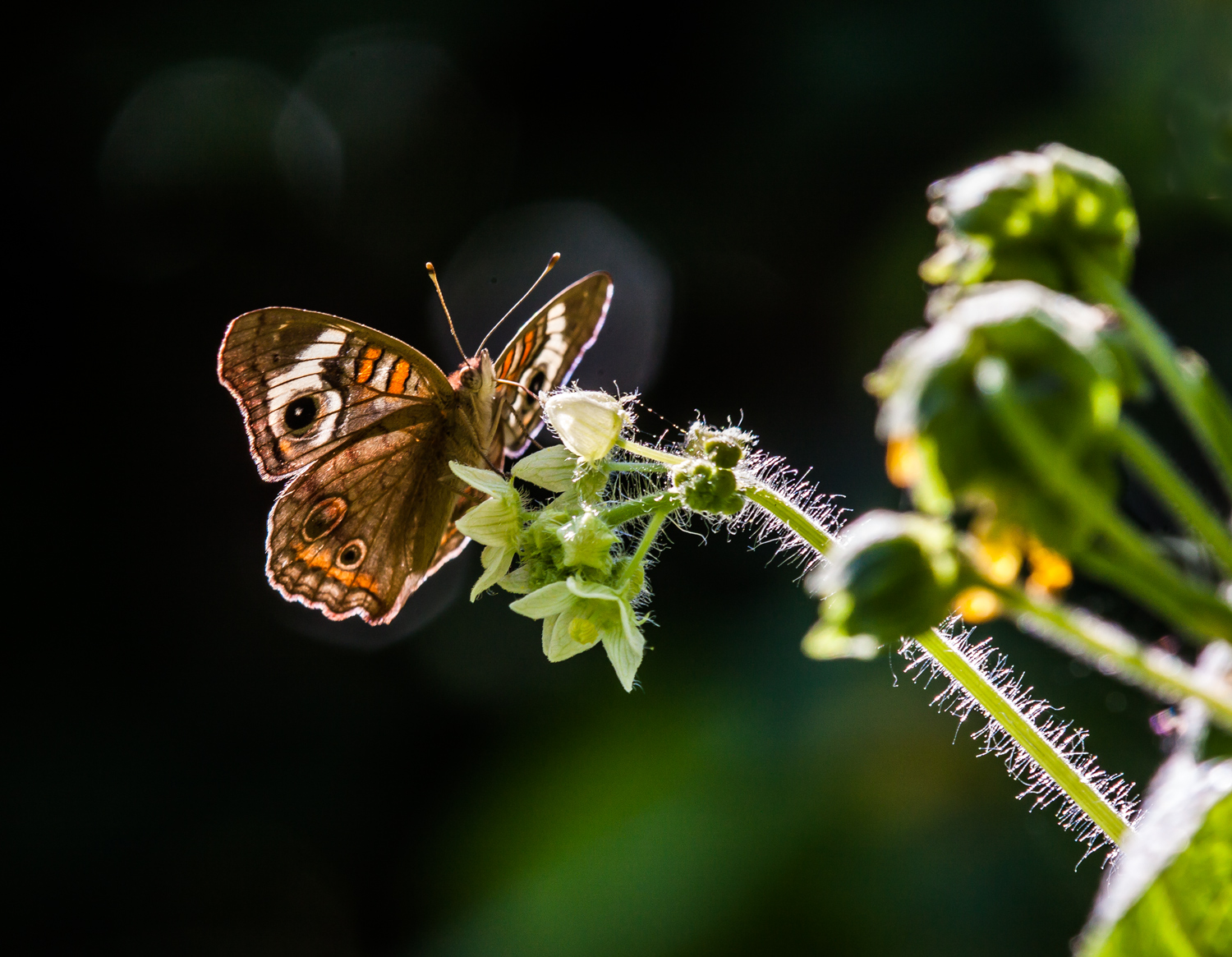
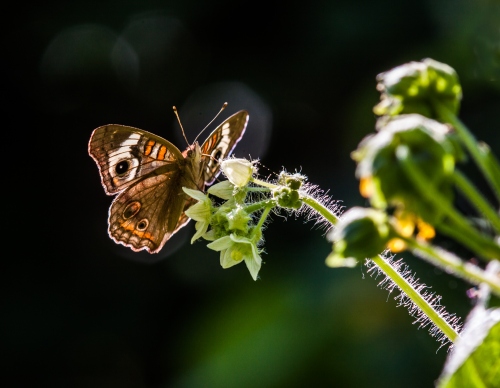
The directional lighting from the back and side gave a cool and dramatically uncommon vibe to this image of a Common Buckeye butterfly (Junonia coenia) that I photographed on 31 August at Occoquan Bay National Wildlife Refuge.
The ground is saturated and rain continues to fall, so I am not sure that I will be out and about today with my camera. It is actually a good thing, I think, to go back and look over my photos—I sometimes get so caught up in taking new photos that I don’t stop and look over my slightly older ones. I am often pleasantly surprised to discover some jewels, like this image.
© Michael Q. Powell. All rights reserved
Posted in Butterflies, Insects, Nature, Photography, wildlife | Tagged Canon 50D, Common Buckeye, Common Buckeye butterfly, Junonia coenia, Occoquan Bay National Wildlife Refuge, Tamron 180mm, uncommon beauty, Woodbridge VA | 5 Comments »
September 9, 2018 by Mike Powell
The incessant rain and cooler weather since my return from Brussels make it feel like it’s already autumn. Like this Monarch butterfly (Danaus plexippus) at Occoquan Bay National Wildlife Refuge, however, I am not quite ready to cease sipping the sweet nectar of summer.
I captured this image on 31 August, the day before my departure for my recent overseas trip. The combination of rainy weather can jet lag have so far kept me from venturing out with my camera, but I hope to do so this coming week.

© Michael Q. Powell. All rights reserved
Posted in Autumn, Butterflies, Insects, Nature, Photography, Summer, wildlife | Tagged Canon 50D, Danaus plexippus, Monarch, monarch butterfly, Occoquan Bay National Wildlife Refuge, Tamron 180mm, Woodbridge VA | 9 Comments »
September 8, 2018 by Mike Powell
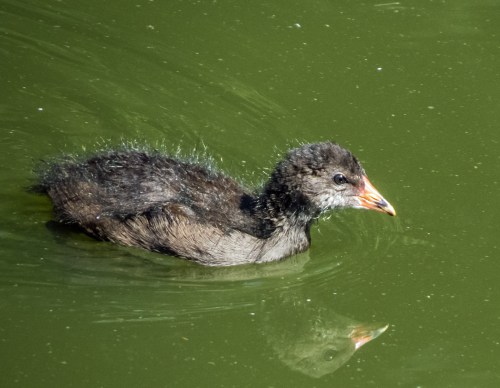
I am back now in the USA, but thought I’d post one last image from my recent trip to Brussels. I spotted this young Common Moorhen (Gallinula chloropus) swimming around in the small pond at the botanical garden. There were several other moorhens, but they all stayed in the reeds and I was not able to get a good shot of them. I really like the spiky feathers of young moorhens. When they become adults, their feathers appear to be much smoother in appearance.
© Michael Q. Powell. All rights reserved
Posted in Birds, Nature, Photography, Travel, wildlife | Tagged botanical garden of Brussels, Brussels Belgium, Canon SX50, Common Moorhen, Gallinula chloropus, young moorhen | 3 Comments »
September 7, 2018 by Mike Powell
Later today I will board an airplane and fly across the Atlantic Ocean with the assistance of a significant amount of sophisticated machinery. I can’t help but marvel at the way that dragonflies and damselflies, by contrast, maneuver through the air so skillfully and effortlessly. Wouldn’t it be cool to be able to fly like that?
This past weekend I spent a good amount of time in one of my favorite photographic pursuits—trying to capture images of a dragonfly in flight. When I am traveling I usually don’t have my best camera gear with me and opt instead to use a Canon SX50, a superzoom point-and-shoot camera. It gives me a lot of reach, but is sometimes slow to focus and has a low frame rate. What that means is that I have to be even more careful than usual, because I can’t capture a lot of shots in an extended burst.
Mostly I was trying to photograph Migrant Hawker dragonflies (Aeshna mixta) at the botanical garden in Brussels. The good news is that Migrant Hawkers are relatively large in size and will sometimes hover a bit over the water. That increases slightly my chances of getting a shot, though many of my attempts resulted in cut-off or out-of-focus shots of the dragonflies.
This was probably my best shot of the session. I like the way that I captured a pretty clear view of the body, including the legs that are tucked in during the flight and managed to get the eyes in relatively sharp focus. One of my Facebook friends commented that it would make a handsome piece of jewelry made with gold, turquoise and onyx—I totally agree with her.

© Michael Q. Powell. All rights reserved
Posted in Dragonflies, dragonfly, Insects, Nature, Photography, Travel, wildlife | Tagged Aeshna mixta, botanical garden of Brussels, Brussels Belgium, Canon SX50, Migrant Hawker, Migrant Hawker dragonfly | 19 Comments »
September 6, 2018 by Mike Powell
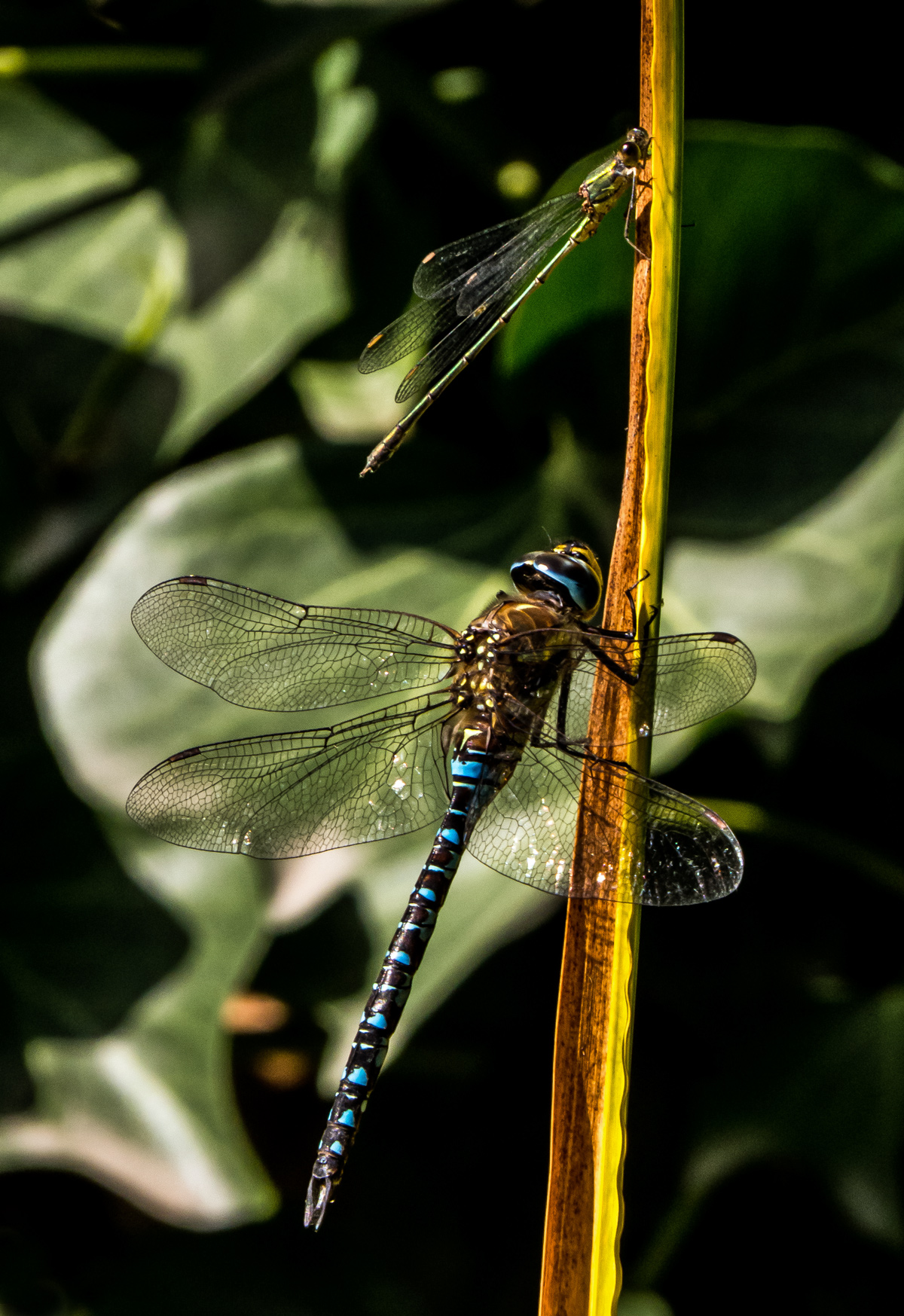
I can’t help but wonder what was going through the minds of these two insects as they perched on the same stalk of vegetation this past weekend at the botanical garden in Brussels, Belgium. Their postures suggest to me a heightened sense of alertness and a kind of wariness. The much smaller damselfly at the top seems to be cautiously looking down over its shoulder at the Migrant Hawker (Aeshna mixta), who appears to be focusing his attention upward. Was it a sign of curiosity or one of hunger? There was never any sign of direct aggression, but I note that the damselfly was the first one to take off and the dragonfly did not pursue it.
For those of you who are not as hooked on dragonflies as I am, this image shows pretty clearly some of the differences in the body shape and eye positions of a damselfly versus a dragonfly. It is important, though, to keep in mind the amazing diversity within the community of dragonflies and damselflies in terms of color, size, and behavior—these are some of the reasons why I am drawn to them as subjects for my photography.

© Michael Q. Powell. All rights reserved
Posted in damselfly, Dragonflies, dragonfly, Insects, Nature, Photography, Travel, wildlife | Tagged Aeshna mixta, botanical garden of Brussels, Brussels Belgium, Canon SX50, damselfly, friend or foe, Migrant Hawker, Migrant Hawker dragonfly | 9 Comments »
September 5, 2018 by Mike Powell
Its colors are not quite as ostentatious as those of the Migrant Hawker dragonfly that I featured yesterday, but the bright red bodies of what I believe are Common Darter dragonflies (Sympetrum striolatum) made them equally hard to miss at the botanical garden in Brussels, Belgium. The colors of these beautiful little dragonflies remind me of those of the Autumn Meadowhawk (Sympetrum vicinum), a species that I see quite often in my home area of Northern Virginia and the shared Latin genus name of Sympetrum indicates their relationship.
I was able to photograph male Common Darters perched in several different spots and I particularly like the way that the fiery red of their bodies contrasts with the cooler green of the backgrounds.


© Michael Q. Powell. All rights reserved
Posted in Dragonflies, dragonfly, Insects, Nature, Photography, Travel, wildlife | Tagged botanical garden of Brussels, Brussels Belgium, Canon SX50, Common Darter, Common Darter dragonfly, dragonfly in Brussels, Sympetrum striolatum, T | 5 Comments »
September 4, 2018 by Mike Powell
Last year when visiting Brussels, Belgium in early September, I was excited to discover dragonflies at the botanical garden in the center of the city. I headed back to the same location on Sunday right after checking into my hotel to see if I could find some dragonflies there this year.
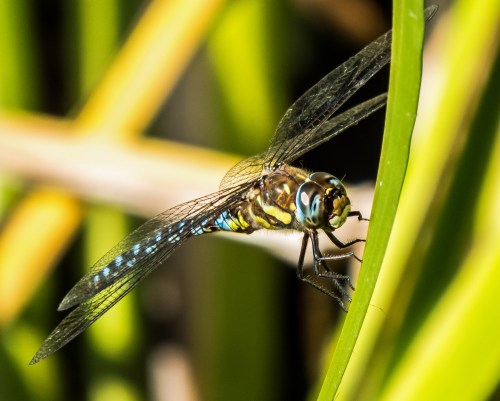
As soon as I arrived at the small pond at the botanical garden, I was thrilled to see a number of large, colorful dragonflies flying about. Although they spent most of their time flying patrols over the water, occasionally one of the dragonflies would perch on the vegetation at water’s edge, which allowed me to capture some images of them.
I absolutely love the beautiful colors and patterns of these dragonflies, which I believe are Migrant Hawker dragonflies (Aeshna mixta). I am definitely not an expert on European dragonflies, however, and there are a number of other hawker species that are somewhat similar in appearance. In North America, there are dragonflies of this same Aeshna genus, which are usually referred to as mosaic darners, but I don’t think that this particular species can be found on the other side of the Atlantic.


© Michael Q. Powell. All rights reserved
Posted in Dragonflies, dragonfly, Insects, Nature, Photography, Travel, wildlife | Tagged Aeshna mixta, botanical garden of Brussels, Brussels Belgium, Canon SX50, dragonfly in Brussels, Migrant Hawker, Migrant Hawker dragonfly | 4 Comments »
September 3, 2018 by Mike Powell
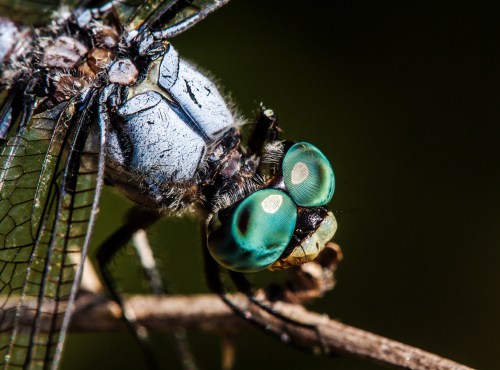
It almost looks like this Great Blue Skimmer dragonfly (Libellula vibrans) was wearing cool wraparound sunglasses this past weekend when I spotted him chilling out at Occoquan Bay National Wildlife Refuge. From a distance, it looks like dragonflies have smooth bodies, but when you get a good look up close, you discover that they have tiny hairs covering various parts of their bodies.
© Michael Q. Powell. All rights reserved
Posted in Dragonflies, dragonfly, Insects, Macro Photography, Nature, Photography, wildlife | Tagged Canon 50D, Great Blue Skimmer, Great Blue Skimmer dragonfly, Libellula vibrans, Occoquan Bay National Wildlife Refuge, Tamron 180mm, Woodbridge VA | 12 Comments »
September 2, 2018 by Mike Powell
As a nature photographer, I am used to living with compromises. Unlike some other kinds of photographers, I don’t have the luxury of waiting for perfect light or photographing only perfect subjects. I can make a few adjustments or move about a bit to improve my composition, but most of the time I deal with imperfections of one sort or another.
Every once and a while, though, I’ll take a photo that doesn’t require any substantial adjustments or even cropping–it looks just like I imagined it would. That was the case with a recent image I captured of a female Eastern Amberwing dragonfly (Perithemis tenera) at Occoquan Bay National Wildlife Refuge. I like the way that I captured the subject, I like the curved of the vegetation on which it is perched, and I like the background. It’s a bonus that I didn’t need to crop.
Perfection is elusive in any pursuit—this is about as close as I can come to it in my photography.

© Michael Q. Powell. All rights reserved
Posted in Art, Dragonflies, dragonfly, Insects, Nature, Photography, Summer, wildlife | Tagged Canon 50D, Eastern Amberwing, Eastern Amberwing dragonfly, female Eastern Amberwing, Occoquan Bay National Wildlife Refuge, Perithemis tenera, Tamron 180mm, Woodbridge VA | 13 Comments »
September 1, 2018 by Mike Powell
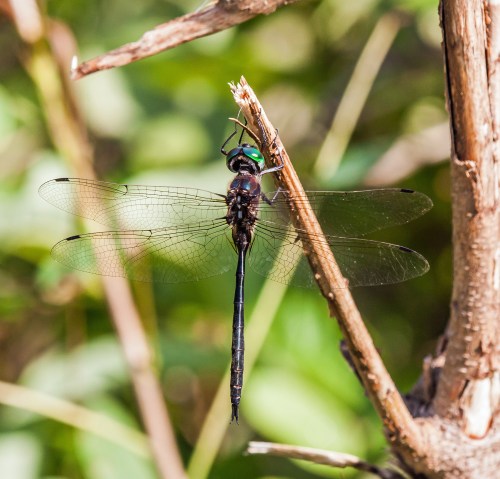
I tend to be an opportunistic photographer, content to wander about and shoot whatever I happen to find. For the last couple of weeks, though, I have been searching diligently for a particular species of dragonfly, the Fine-lined Emerald (Somatochlora filosa), and yesterday, the final day of August, I finally found one at Occoquan Bay National Wildlife Refuge.
What makes this dragonfly so special? In his excellent website Dragonflies of Northern Virginia, Kevin Munroe described some of the allure of this particular species— “One of Northern Virginia’s most rare dragonflies, possibly our rarest, this species is seldom seen and little known throughout its range, from New Jersey to Florida, and west to Kentucky and Texas. Most field guides describe its breeding habitat as “unknown”.”
Last year I was lucky enough to see a Fine-lined Emerald several times, but I wanted more. As befits its name, my first glimpse yesterday of the dragonfly was of its brilliant green eyes as it flew by me. Unlike some species that fly high the air, Fine-lined Emeralds often patrol at waist to eye level. I was able to follow and track the dragonfly until it perched. This species hangs vertically from vegetation when perching, so it can be tough to spot one unless you have seen it land.
I was fortunate to be able to photograph this beautiful dragonfly on several different perches until it finally disappeared from sight. Here are a couple of my favorite shots from our altogether too brief encounter yesterday.

© Michael Q. Powell. All rights reserved
Posted in Dragonflies, dragonfly, Insects, Nature, Photography, Summer, wildlife | Tagged Canon 50D, Fine-lined Emerald, Fine-lined Emerald dragonfly, Occoquan Bay National Wildlife Refuge, Somatochlora filosa, Tamron 180mm, Woodbridge VA | 4 Comments »
August 31, 2018 by Mike Powell
When recently at Occoquan Bay National Wildlife Refuge I spotted these two damselflies, which an expert identified as probable Big Bluets (Enallagma durum), I initially thought they were mating. Then I realized that the positions were all wrong and the nibbling on the neck was probably indicative of a literal hunger. Yikes.
As Tina Turner once sang, “What’s love got to do with it?”


© Michael Q. Powell. All rights reserved
Posted in damselfly, Dragonflies, dragonfly, Insects, Macro Photography, Photography, wildlife | Tagged Big Bluet, Big Bluet damselfly, cannibalism, Canon 50D, Enallagma durum, Occoquan Bay National Wildlife Refuge, Tamron 180mm, tina turner, Woodbridge VA | 10 Comments »
August 30, 2018 by Mike Powell
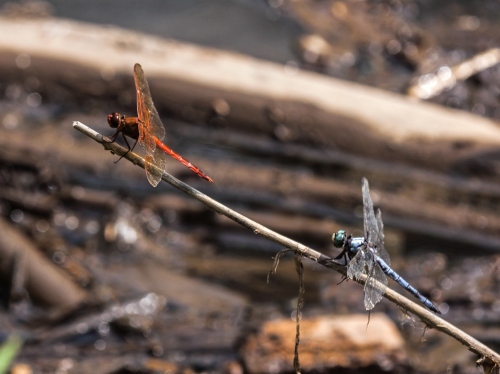
Two different colored dragonflies, a Needham’s Skimmer (Libellula needhami) and a Great Blue Skimmer (Libellula vibrans), were peacefully sharing a prime perch on Monday at Occoquan Bay National Wildlife Refuge.
Why is it so hard for us to peacefully coexist with one another?
© Michael Q. Powell. All rights reserved
Posted in Dragonflies, dragonfly, Insects, Nature, Photography, Summer, Uncategorized, wildlife | Tagged Canon 50D, co-existence, Great Blue Skimmer, Great Blue Skimmer dragonfly, Libellula needhami, Needham's Skimmer, Needham's Skimmer dragonfly, Occoquan Bay National Wildlife Refuge, peaceful co-existence, peaceful coexistence, Tamron 180mm, Woodbridge VA | 9 Comments »
August 29, 2018 by Mike Powell
Have you ever gotten into a staring contest with a dragonfly? Dragonfly eyes can have an almost hypnotic effect on you when you look directly into them..
I went eye-to-eye with this Eastern Pondhawk dragonfly (Erythemis simplicicollis) on Monday at Occoquan Bay National Wildlife Refuge. She was the one to break eye contact first as she cocked her head, smiled at me, and decided the contest was over.


© Michael Q. Powell. All rights reserved
Posted in Dragonflies, dragonfly, Humor, Insects, Nature, Photography, Summer, wildlife | Tagged Canon 50D, Eastern Pondhawk, Eastern Pondhawk dragonfly, Erythemis simplicicollis, Occoquan Bay National Wildlife Refuge, Tamron 180mm, Woodbridge VA | 4 Comments »
August 28, 2018 by Mike Powell
When you check out spider webs really carefully, you can often discover really cool-looking tiny spiders, like this Arrowhead Orb Weaver spider (Verrucosa arenata) that I spotted yesterday at Occoquan Bay National Wildlife Refuge. If you look really closely in between its uppermost legs, you can see some of its multiple eyes looking straight at you. Information on BugGuide.net indicates that this spider is unusual because it rests in the web with its head up, not head down like most other Orb Weavers.
It’s hard to get a sense of scale when you look at this image, but I’d estimate that this little spider was less than an inch in length (25 mm). It was hanging in the air in its web at the edge of a trail when I first spotted it. I was able to move in pretty close with my macro lens—unlike many other spiders, it did not scurry away to the edge of the web. Sharpness is always an issue when shooting at at close range, but my monopod helped to steady me enough to get a relatively sharp image.
You may not like spiders, but you have to admit that this is a cool-looking spider.

© Michael Q. Powell. All rights reserved
Posted in Arachnids, Macro Photography, Nature, Photography, spiders, wildlife | Tagged Arrowhead Orb Weaver, Arrowhead Orb Weaver spider, Arrowhead Orbweaver, Arrowhead Spider, Canon 50D, Occoquan Bay National Wildlife Refuge, Tamron 180mm, Verrucosa arenata, Woodbridge VA | 8 Comments »
August 27, 2018 by Mike Powell
It is great to see that at least a few colorful Calico Pennant dragonflies (Celithemis elisa) are still around. I photographed this handsome male last Friday as he perched at water’s edge at the small pond at Occoquan Bay National Wildlife Refuge.
Summer is slowly slipping away. Some species of dragonflies are already gone for the year and others will soon follow suit. A few species have yet to appear, so all of the news is not bad. Still, as kids return to school and the daylight hours become noticeably shorter, it’s hard not to have the feeling that the lazy days of summer are coming to a close.
Autumn is my favorite season for a number of different reasons, but I am not quite ready to give up on summer. So I’ll keep sweating and searching, seeking to capture the summer beauty that still surrounds us. Like this dragonfly, I’m still holding on.

© Michael Q. Powell. All rights reserved
Posted in Dragonflies, dragonfly, Insects, Nature, Photography, Summer, wildlife | Tagged Calico Pennant, Calico Pennant dragonfly, Canon SX50, Celithemis elisa, male Calico Pennant, Occoquan Bay National Wildlife Refuge, Woodbridge VA | 10 Comments »
August 26, 2018 by Mike Powell
This little buck seemed more curious than fearful when he spotted me on Monday at Occoquan Bay National Wildlife Refuge. He continued to forage in a marshy area for a while before he finally disappeared from sight.
I know that we have a herd of White-tailed Deer (Odocoileus virginianus) on the wildlife refuge, though I see deer only on rare occasions. This little deer seemed to be alone and I was really struck by the shape of his antlers. It looks to me like they might be his first set of antlers, though I confess to knowing almost nothing about the stages of development of a deer. The shape of the antlers reminds me of photos that I have seen of several species of antelope in Africa.

© Michael Q. Powell. All rights reserved
Posted in animals, Nature, Photography, wildlife | Tagged buck, Canon SX50, little buck, Occoquan Bay National Wildlife Refuge, Odocoileus virginianus, white-tailed deer, Woodbridge VA | 4 Comments »
August 25, 2018 by Mike Powell
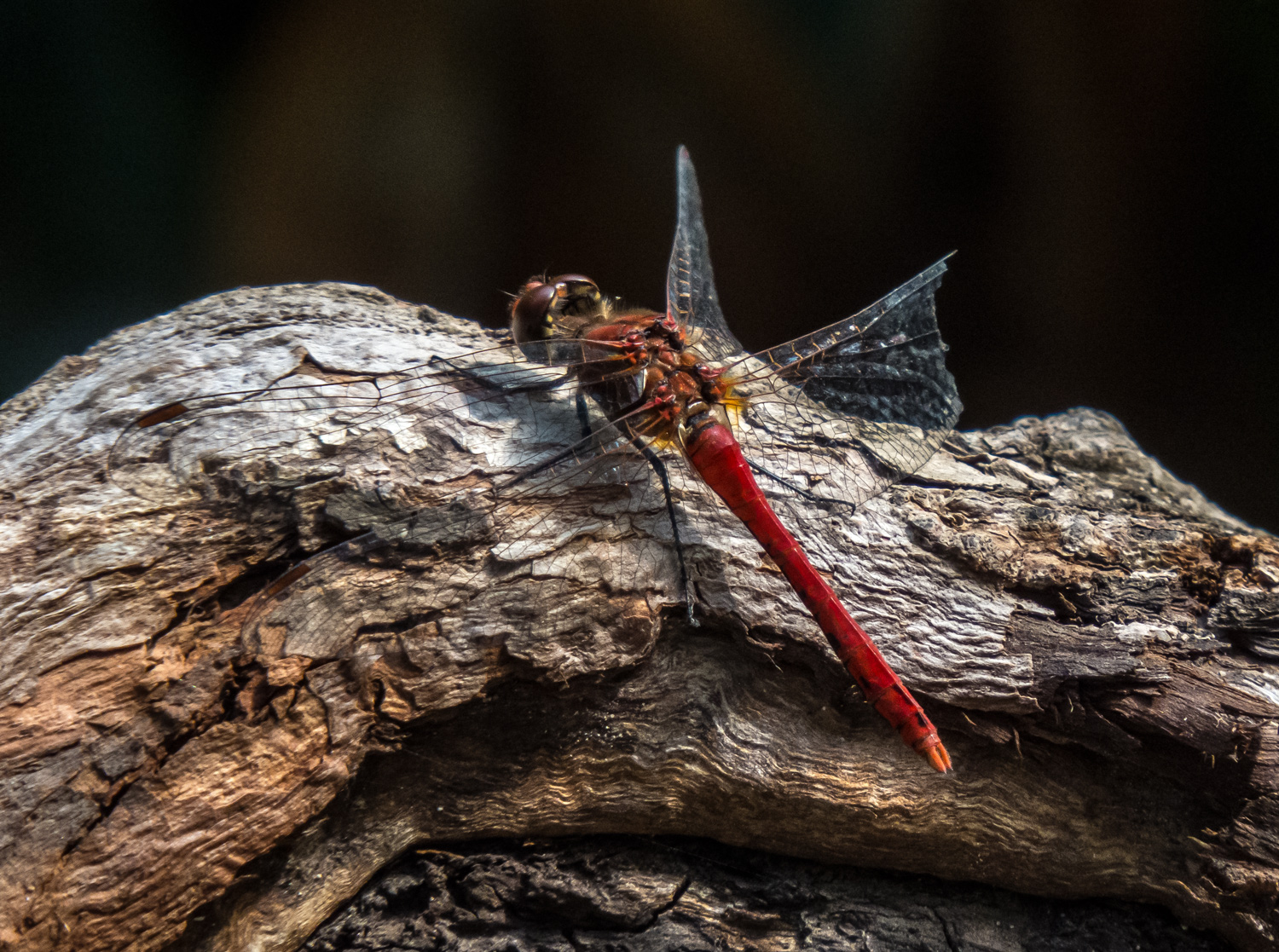
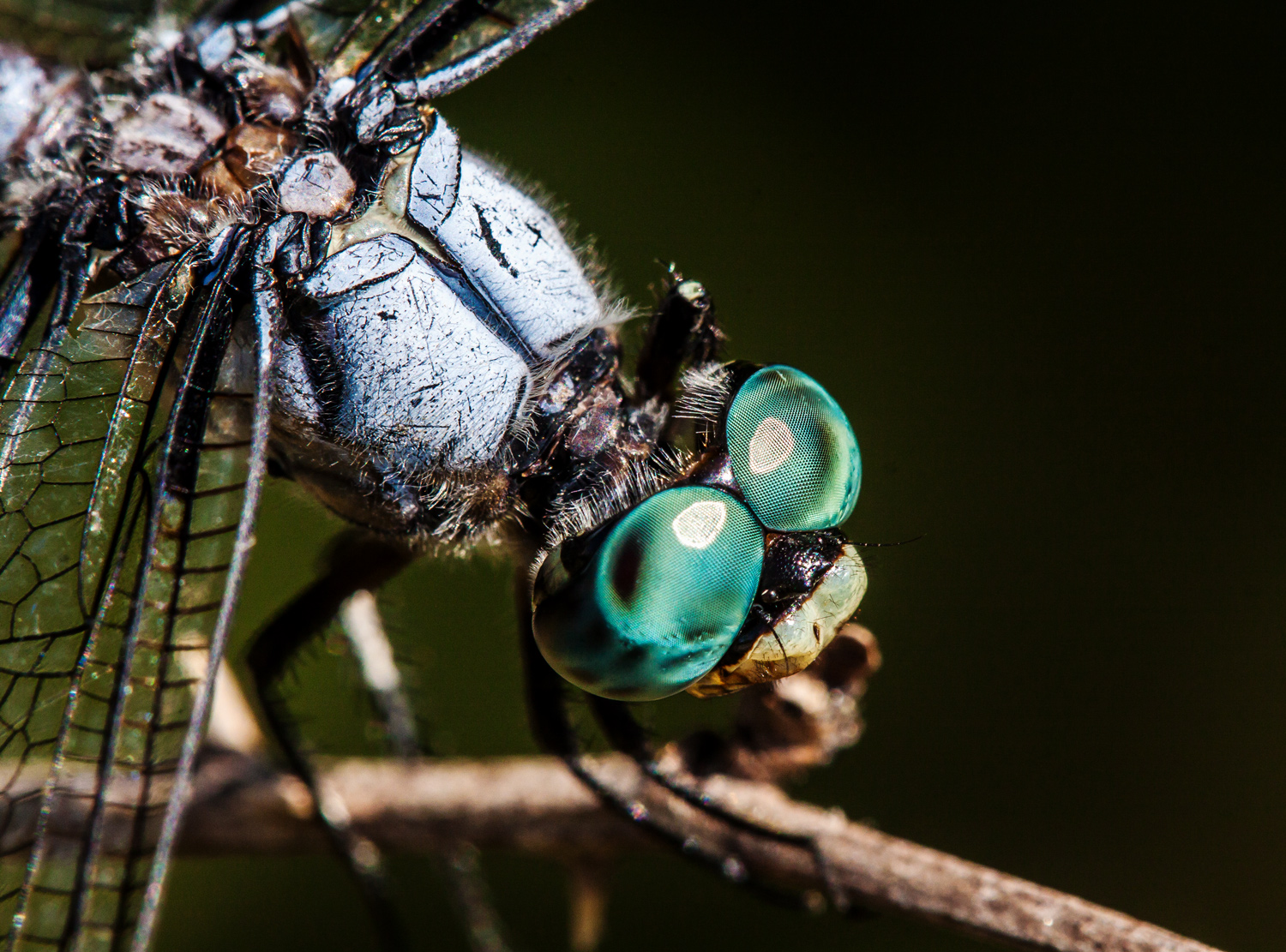
Dragonflies have amazing compound eyes that wrap around their heads. With up to 30,000 facets (ommatidia, to be technical), dragonflies have incredible vision and can even see colors beyond human visual capabilities, like UV light. For an easy to read discussion about dragonfly eyes, i.e. not overly scientific, check out this posting by “grrl Scientist” that was posted on scienceblogs.com.
I captured this close-up image of a Great Blue Skimmer dragonfly (Libellula vibrans) yesterday at Occoquan Bay National Wildlife Refuge. At least once a season, I manage to get a shot like this when a cooperative dragonfly lets me get close. I captured the image below with my trusty Tamron 180mm macro lens on my Canon 50D DSLR. This lens, which has a longer focal length than most macro lenses, gives me some stand-off distance so I can get a macro shot like this without actually being on top of the subject. The only downside to the lens is that it has no built-in image stabilization, so I have to pay extra attention to remaining steady when shooting with it—I generally use a monopod to help reduce camera shake and I think it helped for this image.
The image is framed just as I saw it in my viewfinder. Most of the time I end up cropping my images as part of my normal post-processing, but in this case it looked pretty good without any cropping whatsoever.

© Michael Q. Powell. All rights reserved
Posted in Dragonflies, dragonfly, Insects, Macro Photography, Nature, Photography, Summer, wildlife | Tagged Canon 50D, compound eyes, Great Blue Skimmer, Great Blue Skimmer dragonfly, Libellula vibrans, Occoquan Bay National Wildlife Refuge, ommatidia, Tamron 180mm, Woodbridge VA | 14 Comments »
August 24, 2018 by Mike Powell
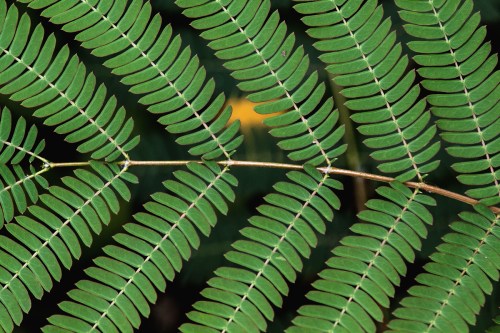
Sometimes when I have my camera in my hands, my attention is drawn to the amazing shapes, colors, and pattern of the natural world—I don’t need a specific animate subject to shoot. Here are a few of my more abstract shots from Monday at Occoquan Bay National Wildlife Refuge.
Even though I may not have had a main subject, in the traditional sense,I wouldn’t say that I was photographing nothing—au contraire, I was photographing everything.


© Michael Q. Powell. All rights reserved
Posted in abstract, Art, Nature, Photography, Summer | Tagged Canon 50D, ferns, grass, lily pads, Occoquan Bay National Wildlife Refuge, Tamron 180mm, Woodbridge VA | 9 Comments »
August 24, 2018 by Mike Powell
I just love the colors of this Red Admiral butterfly (Vanessa atalanta) that I photographed on Monday at Occoquan Bay National Wildlife Refuge. I mean, really, how can you not like an insect that sports the red, white, and blue?
You don’t have to be American to like those three colors—it seems like there are an awful lot of countries that use them in various shades and patterns in their national flags.

© Michael Q. Powell. All rights reserved
Posted in Butterflies, Insects, Nature, Photography, Summer, wildlife | Tagged Canon 50D, Occoquan Bay National Wildlife Refuge, Red Admiral, Red Admiral butterfly, Tamron 180mm, Vanessa atalanta, Woodbridge VA | 3 Comments »
August 23, 2018 by Mike Powell
I was thrilled to capture some shot of a Spicebush Swallowtail butterfly (Papilio troilus) this past weekend at Green Spring Gardens as it fed on a lantana flower. I am so used to more muted colors when I am shooting in the “wild” that the brightness of these flowers seem almost unnatural.
If you look closely at the butterfly’s legs in the first image, you will see that one of them is blurred. Obviously the butterfly was moving about and my camera’s shutter speed was too slow to stop the motion. In many cases I would be disappointed with that lack of sharpness, but I find that it acceptable here, because it doesn’t really distract the viewer’s eyes.
There are a number of dark-colored swallowtails in our area, but the Spicebush Swallowtail is the only one with a blue swoosh on its wings in the middle of a row of orange spots.


© Michael Q. Powell. All rights reserved.
Posted in Butterflies, Insects, Nature, Photography, Summer, wildlife | Tagged Alexandria VA, Canon 50D, green spring gardens, Papilio troilus, Spicebush Swallowtail, Spicebush Swallowtail butterfly, Tamron 180mm | 8 Comments »
August 22, 2018 by Mike Powell
The vegetation at Occoquan Bay National Wildlife Refuge was so high recently that these two foraging wild turkeys (Meleagris gallopavo) disappeared from view each time they leaned forward. It was like a game trying to figure out where they would pop up next. I played the game for for quite some time before I was able to capture them both in a single frame with their eyes visible—in most of the other shots the turkeys were looking away from me.

© Michael Q. Powell. All rights reserved.
Posted in Birds, Nature, Photography, Summer, wildlife | Tagged Canon SX50, foraging, Meleagris gallopavo, Occoquan Bay National Wildlife Refuge, turkey, Wild Turkey, Woodbridge VA | 2 Comments »
August 21, 2018 by Mike Powell
Imagine an insect so powerful that it is reportedly able to take down a hummingbird. Then give it the macabre monniker of Red-footed Cannibalfly (Promachus rufipes). If I were an insect, I would be really worried. Actually I don’t think that I would want to allow one to bite me, because a cannibalfly stabs its prey with its proboscis and injects saliva that help to liquify the prey’s insides. Then the cannibalfly sucks out the liquid through its proboscis.
I don’t know why exactly, but the last week or so I have seen a lot of Red-footed Cannibalflies during my trips to Occoquan Bay National Wildlife Refuge. Here are a few of my recent shots. The first one reminded one of my Facebook viewers of The Lorax, a Dr. Seuss character with a big mustache. Maybe this insect needs to overhaul its public image so that it is viewed as being less threatening. One possible first step might be to change its name to the Bee Panther, a nickname that is sometimes used for this species.
On a side note, each of the last four years, including this year, a 2013 posting entitled simply Red-footed Cannibalfly has been my most viewed posting. If I calculated correctly, the posting has been viewed almost 2400 times, including 293 times in 2018.
Why is that posting so popular? Apparently a lot of people do Google searches for “red-footed cannibalfly” and stumble onto my blog posting. I’m proud of a number of my postings and the images that I have captured, but I must confess that I don’t consider that 2013 posting as one of my best.
It’s a little scary to think that I may be inextricably linked in some people’s minds with Red-footed Cannibalflies. Yikes!


© Michael Q. Powell. All rights reserved.
Posted in Insects, Macro Photography, Nature, Photography, Summer, wildlife | Tagged Canon 50D, mating Red-footed Cannibalflies, Occoquan Bay National Wildlife Refuge, Promachus rufipes, red-footed cannibalflies, Red-footed Cannibalfly, Tamron 180mm, Woodbridge VA | 7 Comments »
August 20, 2018 by Mike Powell
There were only a few water lilies in bloom at the small pond at a local garden that I visited this past weekend. Surprisingly, they were all pink in color and not the white ones that I am more used to seeing—perhaps it is late in the season for the white ones. Not surprisingly, there were quite a few dragonflies buzzing about and I decided that I wanted to get a shot of one of them perched on one of the water lilies.
So I waited and hoped and waited some more. My patience was eventually rewarded when a tiny male Eastern Amberwing dragonfly (Perithemis tenera) landed on a partially open water lily bud and perched momentarily.
I really like the image that I managed to capture because of the way it conveys a sense of the mood of the moment, a calm, almost zen-like feeling of tranquility. The colors are subdued and the composition is minimalist—there is a real beauty in simplicity.

© Michael Q. Powell. All rights reserved.
Posted in Art, Dragonflies, dragonfly, Flowers, Insects, Nature, Photography, Summer | Tagged Alexandria VA, Eastern Amberwing, Eastern Amberwing dragonfly, green spring gardens, male Eastern Amberwing, Perithemis tenera, pink water lily, water lilies, waterlily | 10 Comments »
August 19, 2018 by Mike Powell
Last night I was playing again with watercolors and found inspiration in some videos about Chinese sumi-e brush painting, particularly one by Daleflix on YouTube that showed him painting a dragonfly and a frog. I really like the way that sumi-e painting, which is often done in ink on rice paper, emphasizes the importance of each brush stroke.
My painting skills still need a lot of work, but I especially like how the dragonfly turned out. There is a kind of minimalism in the dragonfly that appeals to me. It was really all-or-nothing when I painted it. Each of the wings, for example, was a single brush stroke, with a little bit of outlining done later. Similarly, the segmented body was done in a single pass.
I kind of got a little lost after I had painted the frog and the dragonfly and tried to add some contextual elements. The water ended up way too dark and some of the branches got too thick. In case you are curious, the painting is 4 x 6 inches in size (10 x 15 cm), so the brush strokes were pretty small.
Still, I like the overall feel of this little painting, which represents a new step for me as I explore watercolors. I think that I may explore this style of painting some more.

© Michael Q. Powell. All rights reserved.
Posted in Amphibians, Art, Dragonflies, dragonfly, Insects, Nature, painting, watercolor | Tagged beginning watercolor, Chinese painting, dragonfly, dragonfly and frog, frog, sumi, sumi-e, watercolor | 17 Comments »
August 19, 2018 by Mike Powell
There were lots of flowers in bloom yesterday at Green Spring Gardens, a historic county-run garden not far from where I live. One of my favorites was the Zowie Zinnia and a Monarch butterfly (Danaus plexippus) seemed to like it a lot too.
I was at the garden with my dear friend and photography mentor, Cindy Dyer, and her husband. We were all taking a break at one point and I told Cindy that I was going to return to a patch of Zowie Zinnias to see if I could get a shot of a butterfly landing on one. We both recalled a photo that she took in 2010 (check out her blog posting) when an Easter Tiger Swallowtail butterfly appeared out of nowhere and landed on one of the two Zowie Zinnias that she was focusing on with her camera on a tripod.
Imagine her surprise when a couple of minutes later I returned with this photo. She grabbed her camera and went to the patch of zinnia, but, alas, the butterflies were not as cooperative for her as they had been for me.

© Michael Q. Powell. All rights reserved.
Posted in Butterflies, Flowers, Insects, Nature, Photography, Summer | Tagged Alexandria VA, Canon 50D, Cindy Dyer, Danaus plexippus, green spring gardens, monarch butterfly, Tamron 180mm, Zowie Zinnia | 9 Comments »
August 18, 2018 by Mike Powell
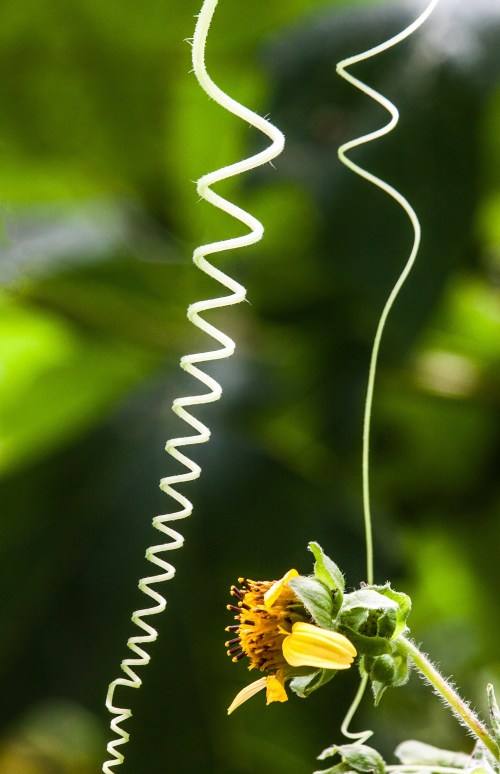
Many of us are old enough to remember when wall phones had long coiled cords that usually ended up stretched out and elongated. That’s exactly what I was thinking of when I spotted these coiled tendrils of some kind of flower yesterday when I was exploring Occoquan Bay National Wildlife Refuge.
I wasn’t sure how to capture them in an image and tried a couple of different approaches. The image below was my favorite. It is kind of a natural abstract image, but I included the flower in the corner of it to give the image a sense of context.
Those who read my postings regularly know that this is not the usual kind of photo that I post—sometimes it is fun to venture outside of my normal box.
© Michael Q. Powell. All rights reserved.
Posted in abstract, Art, Flowers, Nature, Photography | Tagged Canon 50D, coil, coiled, flower, Occoquan Bay National Wildlife Refuge, Tamron 180mm, wall phones, Woodbridge VA | 8 Comments »
August 18, 2018 by Mike Powell
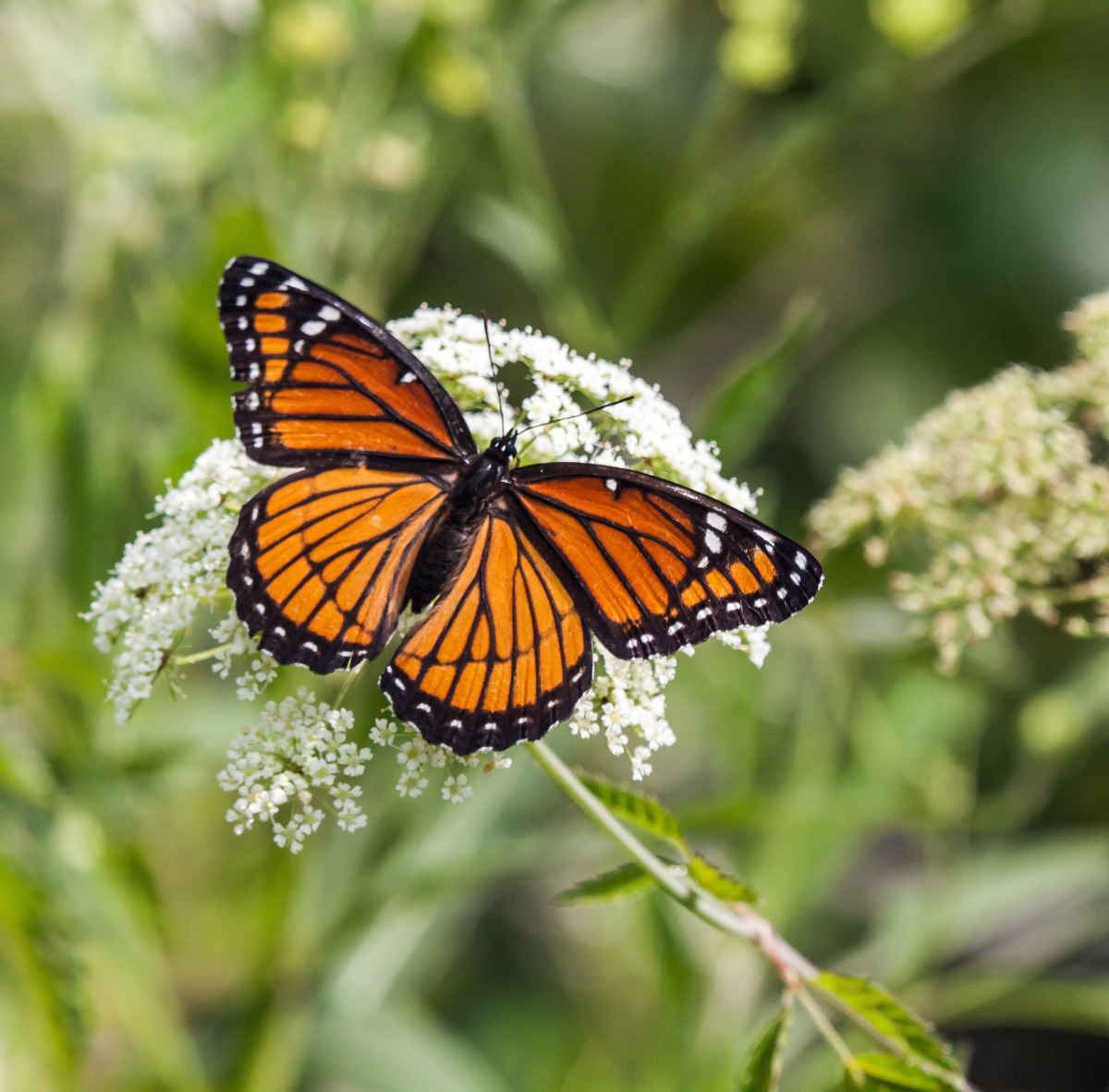
I suppose that I should call this a royal posting for it features both a viceroy and a queen. Of course, here in the USA we don’t have a monarchy, but that doesn’t keep us from having Viceroy butterflies (Limenitis archippus) and Queen Anne’s Lace (Daucus carota). I spotted this royal pair on Monday at Occoquan Bay National Wildlife Refuge where the Viceroy repeated probed the clusters of Queen Anne’s Lace.
You probably have noticed that the coloration of the Viceroy butterfly matches that of the Monarch butterfly. One of the easiest ways to tell them apart is the black line across the hind wings which is present with Viceroys but not with Monarchs.


© Michael Q. Powell. All rights reserved.
Posted in Butterflies, Flowers, Insects, Nature, Photography, Summer, wildlife | Tagged Canon 50D, dau, Limenitis archippus, Occoquan Bay National Wildlife Refuge, Queen Anne's Lace, Tamron 180mm, Viceroy, Viceroy butterfly, Woodbridge VA | 6 Comments »
August 17, 2018 by Mike Powell
Unlike those that construct elaborate webs, some spiders instead perch at the shore with extended legs and sense prey through vibrations on the surface of the water. When the prey is detected, the spider runs across the top of the water, prompting some to call it the “Jesus spider.”
I spotted this cool-looking Six-spotted Fishing Spider (Dolomedes triton) in the shallow water of a pond this past Monday at Occoquan Bay National Wildlife Refuge.

© Michael Q. Powell. All rights reserved.
Posted in Arachnids, Insects, Nature, Photography, spiders, Summer, wildlife | Tagged Canon SX50, Dolomedes triton, fishing spider, Occoquan Bay National Wildlife Refuge, Six-spotted Fishing Spider, Woodbridge VA | 16 Comments »
« Newer Posts - Older Posts »