Feeds:
Posts
Comments

Archive for the ‘spring’ Category

This past Monday as I was exploring Huntley Meadows Park with fellow photographer Walter Sanford, he spotted an Eastern Garter Snake (Thamnophis sirtalis sirtalis). We both like to photograph snakes, so we sprung into action. Following my normal instincts, I moved in close to the snake. How close did I get? At a certain point in time I actually had to back up a little to make sure I included the snake’s entire head in the image.

Some readers of this blog may recall that Walter and I use different camera systems and approach our shots in different ways, partly because he is using a zoom lens and I am often using a macro lens with a fixed focal length. If you shoot side by side with another photographer, you’ll often get the same shots, but that’s usually not the case for Walter and me. We normally choose different angles of view and frame our shots differently—I am usually the one sprawled on the ground.

Walter and I have shot together often enough that he knows the “tricks” that I employ when shooting. From my earliest days, my photography mentor Cindy Dyer emphasized to me the importance of using a tripod. Frequently I carry a tripod with me, but for low-angle shots, I prefer to use my camera bag as a kind of improvised tripod to help steady my camera. In the past month I have used this techniques with varying subjects including a jumping spider and a beaver. Special thanks to Walter for allowing me to use one of the photos he shot of me in action with my improvised tripod.

The snake was amazingly tolerant of our presence. Unbelievably it stayed in place when I moved a stalk of grass next to its head that was getting in the way of a clear shot. The first shot below was shot with my improvised tripod and was not cropped at all. The other two shots, I believe, were handheld and cropped slightly, because the snake had changed positions and I did not have the luxury of stabilizing my camera. In all cases I tried to focus on the snake’s eye and I really like the way that I managed to capture a reflection in the eye.

Walter will soon be posting a companion post that I will reblog, so that you can contrast the images that we captured when shooting the same subject together.

Eastern Garter Snake

alternative tripod

Using my camera bag as an improvised tripod (Photo by Walter Sanford)


Eastern Garter Snake

He’s got lips like Jagger

Eastern Garter Snake

Environmental portrait of a garter snake

© Michael Q. Powell. All rights reserved.


Read Full Post »

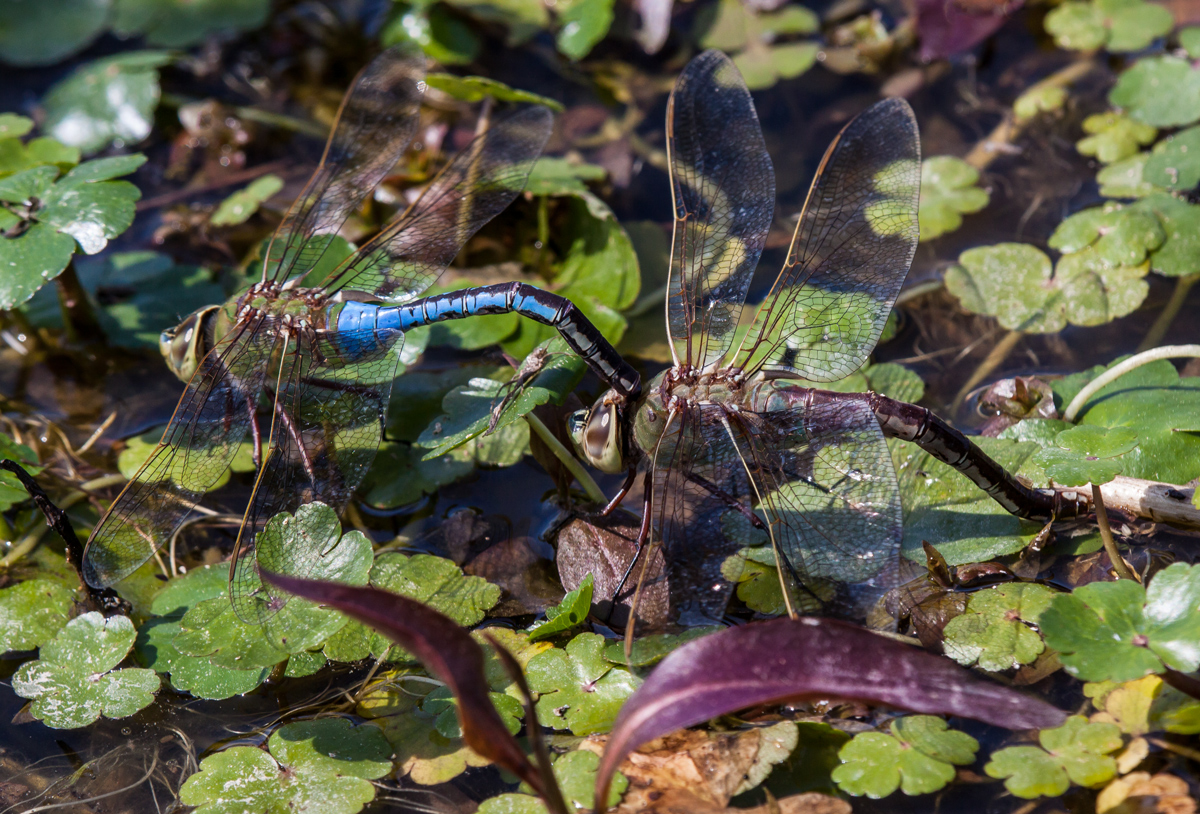
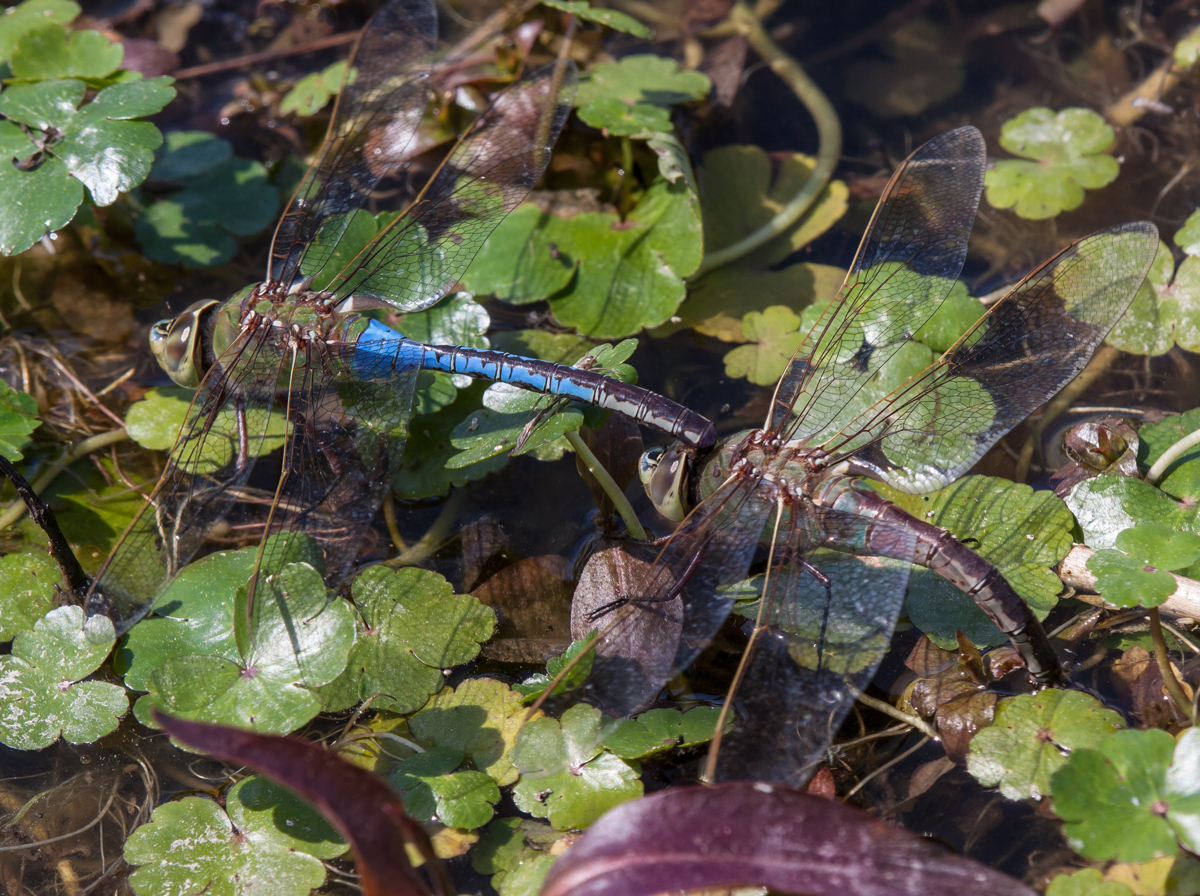
Now that the weather is warming up, I am searching in earnest for dragonflies, one of my favorite subjects to photograph. I am still having difficulties locating native-born species, but fortunately there are some migratory species in the area. Yesterday I spotted this Common Green Darner (Anax junius) dragonfly couple in tandem, with the male holding on as the female deposited her eggs in the floating vegetation.

In some dragonfly species the male will hover above the female as she oviposits, but in others, like the Common Green Darner, the male remains attached. I suspect that this method is one way of ensuring that the eggs that the male has fertilized are deposited before the female hooks up with another male.

Common Green Darner

Common Green Darner

© Michael Q. Powell. All rights reserved.

Read Full Post »

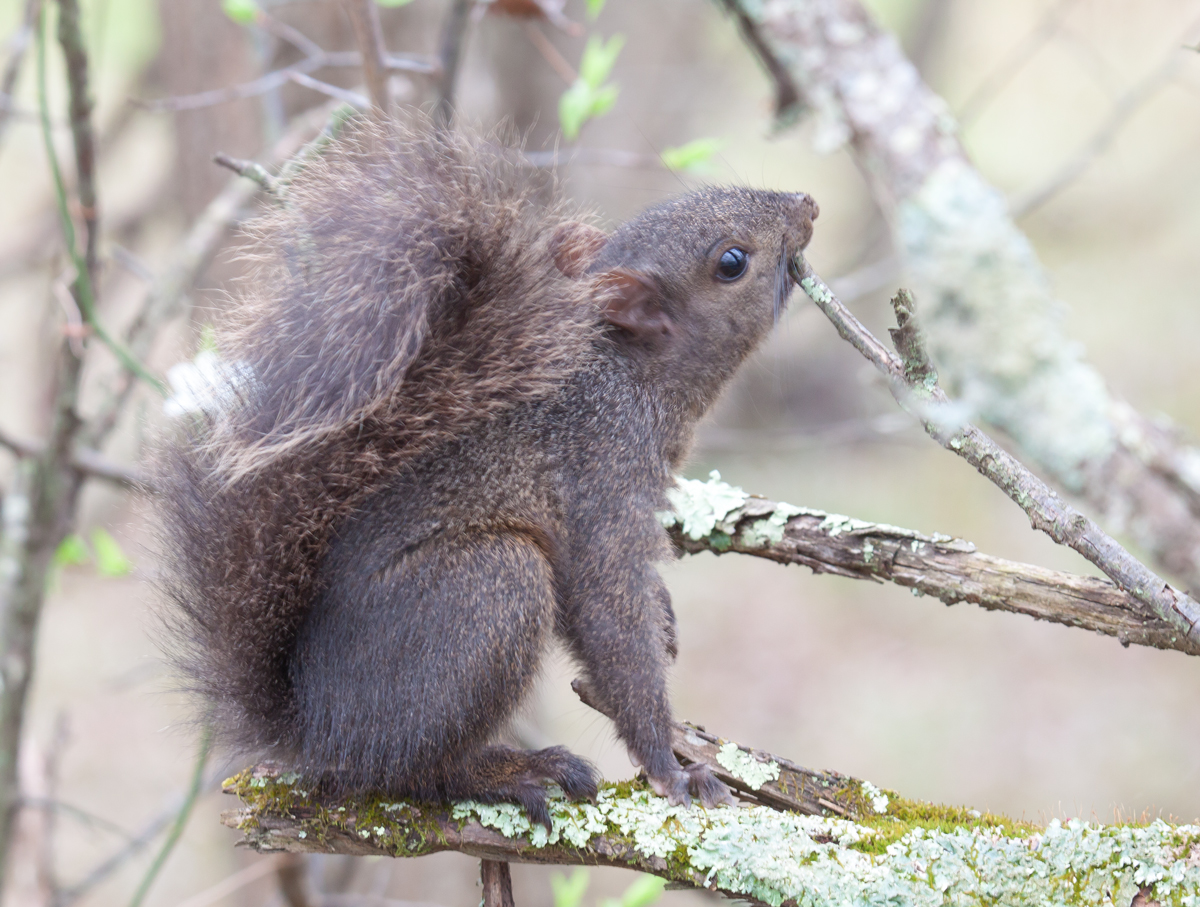
Would you stop to watch a squirrel as it nibbled on a branch or would you move on in search of more exciting wildlife? I love trying to capture the beauty in the ordinary and spent quite some time recently observing and photographing this Eastern Gray Squirrel (Sciurus carolinensis) at Huntley Meadows Park.

Although the tree looks kind of dead, I think that the squirrel spotted a fresh bud on the end of the branch and decided to chew on it for a little while. Normally a squirrel has its head down when feeding and it was nice to be able to get this shot with its neck extended. The little reflection in its eye was a bonus.

Eastern Gray Squirrel

© Michael Q. Powell. All rights reserved.

Read Full Post »

On Monday, I finally captured my first dragonfly shots of the season at Huntley Meadows Park, a recently emerged Common Basketttail dragonfly (Epitheca cynosura). For a couple of weeks I’ve been periodically seeing migrating Common Green Darners, but this is the first “native-born” dragonfly I have spotted.

The dragonfly is in a juvenile stage known as “teneral,” which initially confused me when I was trying to identify it. I looked through a lot of photos on the internet and they didn’t quite match up with some of the markings of “my” dragonfly.

Fortunately an expert came to the rescue when I posted the photos on the Northeast Odonata Facebook page and asked for help. Ed Lam, who literally wrote the book on odonata in the Northeast, replied that, “It’s a Common. It’s teneral so the stigmas and the hind wing patch will darken as it matures.” You can check out Ed’s book, Damselflies of the Northeast: A Guide to the Species of Eastern Canada and the Northeastern United States, on Amazon.

From my perspective, the dragonfly season has now officially opened. It is still really challenging, however, to find them this early, given that most species won’t emerge until much later in the spring and in early summer.

Common Baskettail dragonfly

Common Baskettail dragonfly

Common Baskettail dragonfly

© Michael Q. Powell. All rights reserved.


Read Full Post »

I spotted this Hooded Merganser couple (Lophodytes cucullatus) last Friday at Huntley Meadows Park enjoying a few quiet moments together.

The male duck has a wide-eyed goofy look on his face that makes me think of a teenager who has fallen in love. He worked up the courage to ask the cute girl on a date and she actually said yes. She’s playing it cool, but he can hardly contain his excitement.

It’s springtime and love is in the air.

Hooded Merganser

© Michael Q. Powell. All rights reserved.

Read Full Post »

I am not sure why, but this male Red-winged Blackbird (Agelaius phoeniceus) was acting differently this past weekend. Rather than standing tall and singing out loudly, as is normally the case, he was instead hunched over and making a more gentle peeping sound.

Was he in pain or distress? Was this simply a different way of communication? It’s overwhelming sometimes to consider how little I know about the behavior of the subjects that I try to photograph, despite the fact that I am learning all of the time.

From a photographic perspective, I really like the geometric. almost abstract shape of the blackbird in this image.

Red-winged Blackbird

© Michael Q. Powell. All rights reserved.

Read Full Post »

I know that spring has truly arrived when I start to walk around with a macro lens on my camera. I captured this shot of a Bold Jumping Spider (Phidippus audax) on the boardwalk yesterday at Huntley Meadows Park.

As I was walking into the park, a departing fellow photographer alerted me to the presence of the spiders, so I changed lenses in the hope that I would see one. Most of the winter months I have been using my Tamron 150-600mm lens to shoot birds and other wildlife, but I had my Tamron 180mm macro lens with me. It’s amazing how my field of vision changes with the shift in lenses. With the long lens, I am used to looking up and out, in part because it has a minimum focus distance of 8.9 feet (1.7 meters). With the macro lens, I am am scanning a much smaller area, primarily near my feet and just beyond.

Eventually I located a jumping spider. It seemed to be spending most of its time in the cracks between the synthetic boards of the boardwalk, but occasionally would venture out. Despite its name, the Bold Jumping Spider seemed to be pretty timid. In fact, I never did see it jump—it seemed content to crawl slowly.

The coolest thing about jumping spiders, of course, is their eyes. I am absolutely mesmerized by their multiple eyes and I was really happy that I was able to capture some reflections in the eyes. The reflections are most noticeable in the head-on shot, but they are also visible in the action shot. It’s a fun challenge to try to capture action when this close to a subject, but somehow I managed, though the higher shutter speed needed when shooting handheld meant that that my depth of field was pretty limited.

Bold Jumping Spider

Bold Jumping Spider

© Michael Q. Powell. All rights reserved.

Read Full Post »
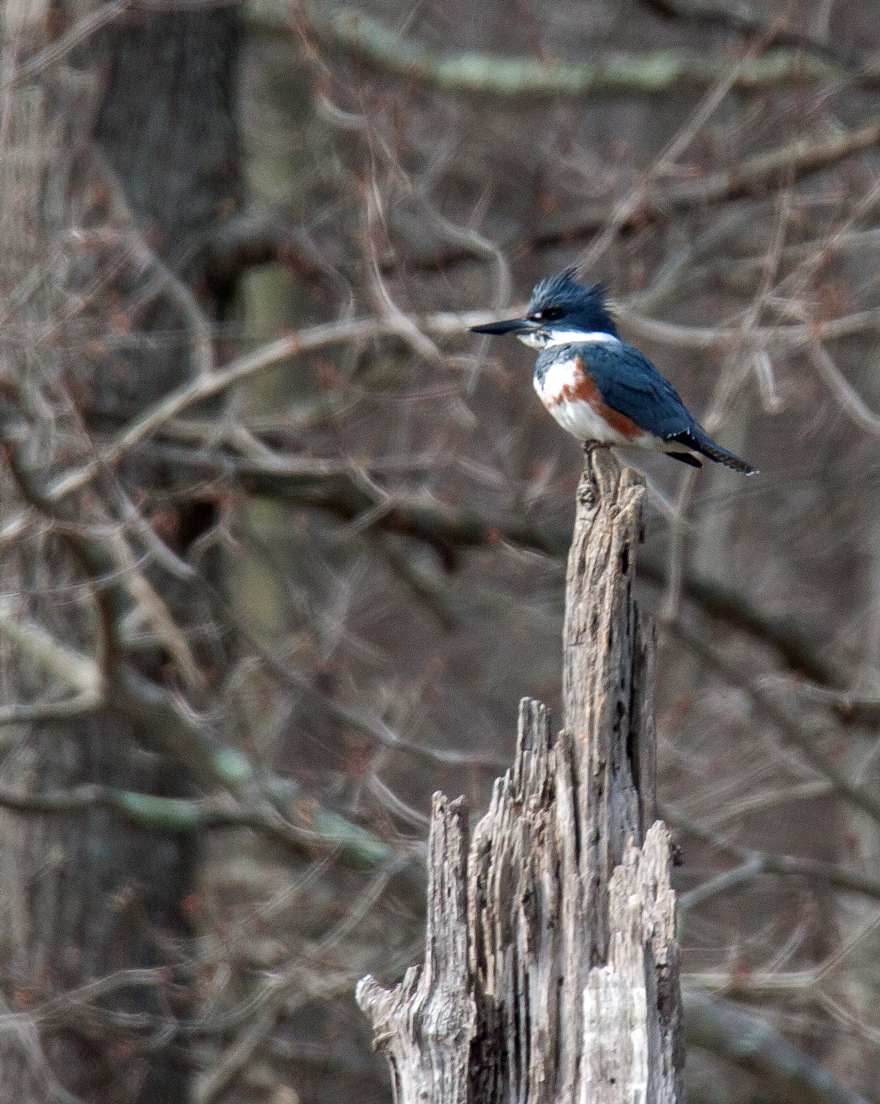
I keep trying without much success to get a close shot of a Belted Kingfisher, but they are very skittish and always seem to be perched on the opposite bank of the stream or pond from where I am standing.

This past weekend I was happy to get a clear (albeit distant) look at this beautiful female Belted Kingfisher (Megaceryle alcyon) at my favorite marshland park. The kingfisher seemed to be taking a break from fishing and spent most of her time looking to the left and to the right rather than down at the water.

I’ve spotted a kingfisher before on this perch, but can’t get any closer from this side of the pond. Occasionally I will trek to the other side of the pond and hope that eventually I will be able to sneak closer to this elusive bird from that direction.

Belted Kingfisher

Belted Kingfisher

© Michael Q. Powell. All rights reserved.

Read Full Post »

I heard this Wood Duck couple take off at Huntley Meadows Park this past weekend before I actually saw them. Wood Ducks (Aix sponsa), especially the female, make a distinctive shrieking noise when disturbed and when taking flight. (Check out this page from the Cornell Lab of Ornithology website to hear some of the sounds made by Wood Ducks.)

Normally Wood Ducks fly away from me and I often don’t even get to see them before they disappear in the distance. This time, however, the birds flew across my field of vision and I was able to capture this long-distance shot as they passed me. I really like the way that we get a glimpse of the beautiful colors on the inside part of the wings of these striking ducks.

Wood Duck

© Michael Q. Powell. All rights reserved.

Read Full Post »

Spring has definitely arrived in our area, but I was still quite surprised this past Saturday to see an Eastern Tiger Swallowtail butterfly (Papilio glaucus) at Huntley Meadows Park—it seems so early for butterflies like this.

I chased after the butterfly several times, to the extent that you can chase something while on a boardwalk, but each time the butterfly flew away. I had more or less reconciled myself to the likelihood that I was unlikely probably not going to get a shot of this early spring butterfly when I caught sight of it again.

The butterfly landed in a muddy open area where a flock of Canada Geese had previously been feeding.  There were no flowers around from which to get nectar, so the butterfly resorted to an organic source of nutrients.

This is definitely not the prettiest shot of a butterfly that I have ever taken, but it’s the first butterfly that I have photographed this season. Like the butterfly in the photo, I am content to settle for what I can find, hopeful that better things are to come as we move deeper into spring.

Eastern Tiger Swallowtail

© Michael Q. Powell. All rights reserved.

Read Full Post »

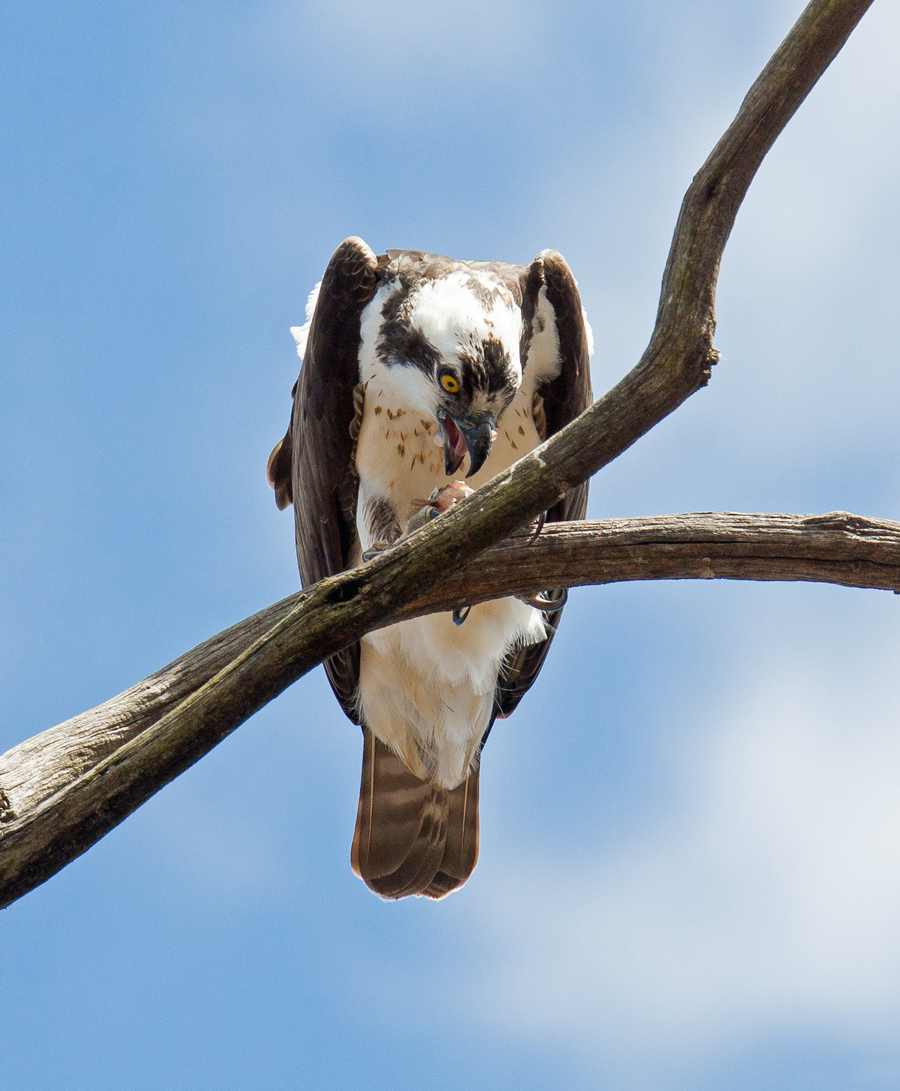
Yesterday afternoon I came upon this Osprey (Pandion haliaetus) at Huntley Meadows Park as it was enjoying a freshly caught fish. The osprey was perched in an exposed dead tree and I had a front row seat as it consumed its lunch. Despite taking what looked to be pretty small bites, the osprey downed the fish in a matter of minutes.

I managed to take quite a few shots of the osprey, which seemed so focused on its food that it tolerated my presence almost directly below the tree. I am still going through those photos and may do another posting later, but wanted to post one of my initial favorites.

Osprey

© Michael Q. Powell. All rights reserved.

Read Full Post »
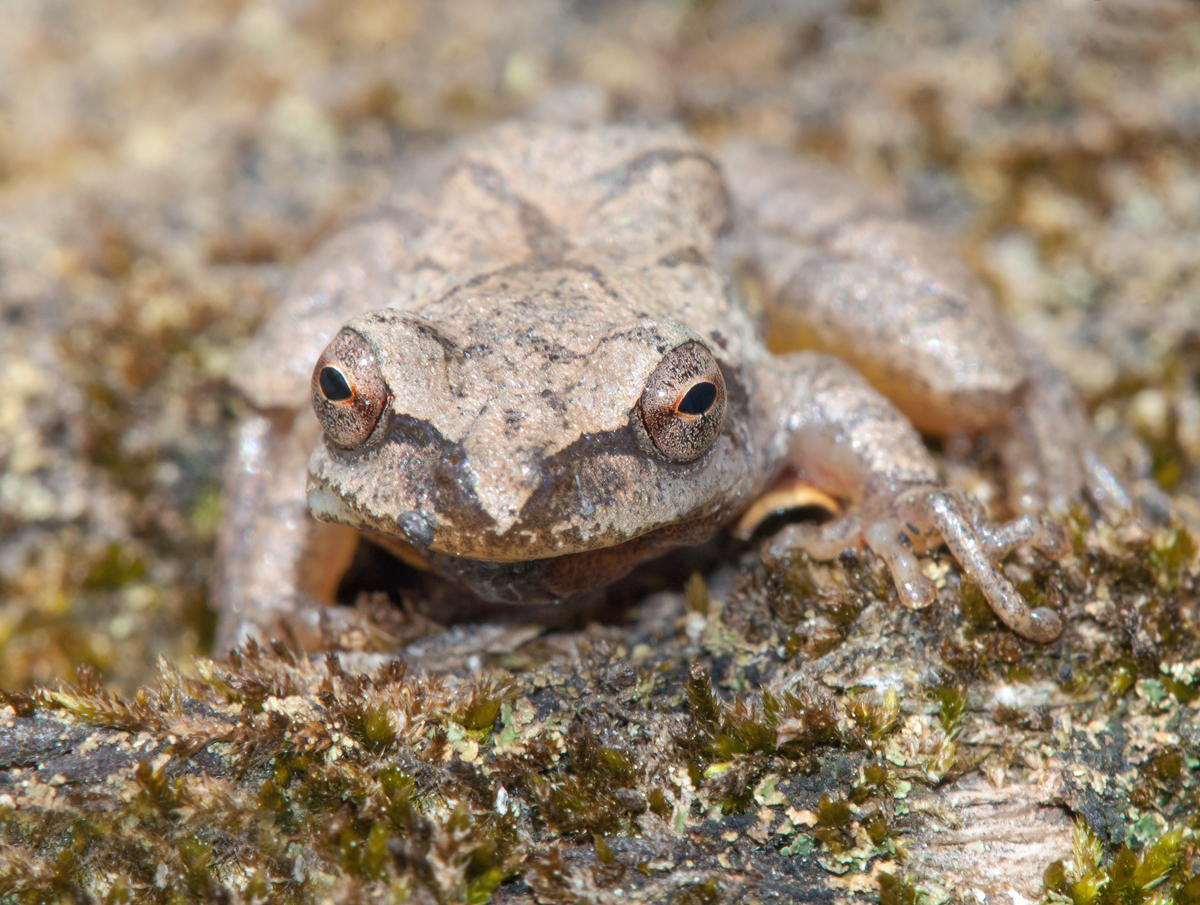
Now that spring is here, you can see and hear frogs throughout Huntley Meadows Park. One of the most common types in our area is the Southern Leopard Frog (Lithobates sphenocephalus), like this one that I spotted this past weekend.

Southern Leopard Frog

© Michael Q. Powell. All rights reserved.

Read Full Post »

Happy Easter (and best wishes to those not celebrating this holiday). This has been a really busy and special Holy Week for me and I am getting ready now to go to a sunrise Easter service.

I spotted this pretty little Eastern Bluebird (Sialia sialis) yesterday during a daylong trek around Huntley Meadows Park.

Happy Easter!

Eastern Bluebird

© Michael Q. Powell. All rights reserved.

Read Full Post »
A dark head broke the surface of the water just after sunrise yesterday at Huntley Meadows Park and the animal slowly and silently swam by me. Was it a beaver or a muskrat? It looks like a Norther American Beaver (Castor canadensis) to me, but I never got a look at its tail—the tail would have provided definitive proof of the animal’s identity.

The many gnawed off tree stumps testify to the presence of beavers in several lodges in the park, but the beavers themselves have remained remarkably elusive. Muskrats are active in the same areas and many park visitors have spotted them in action during the daylight hours.

Beaver or muskrat? What do you think?

North American Beaver

© Michael Q. Powell. All rights reserved.

Read Full Post »

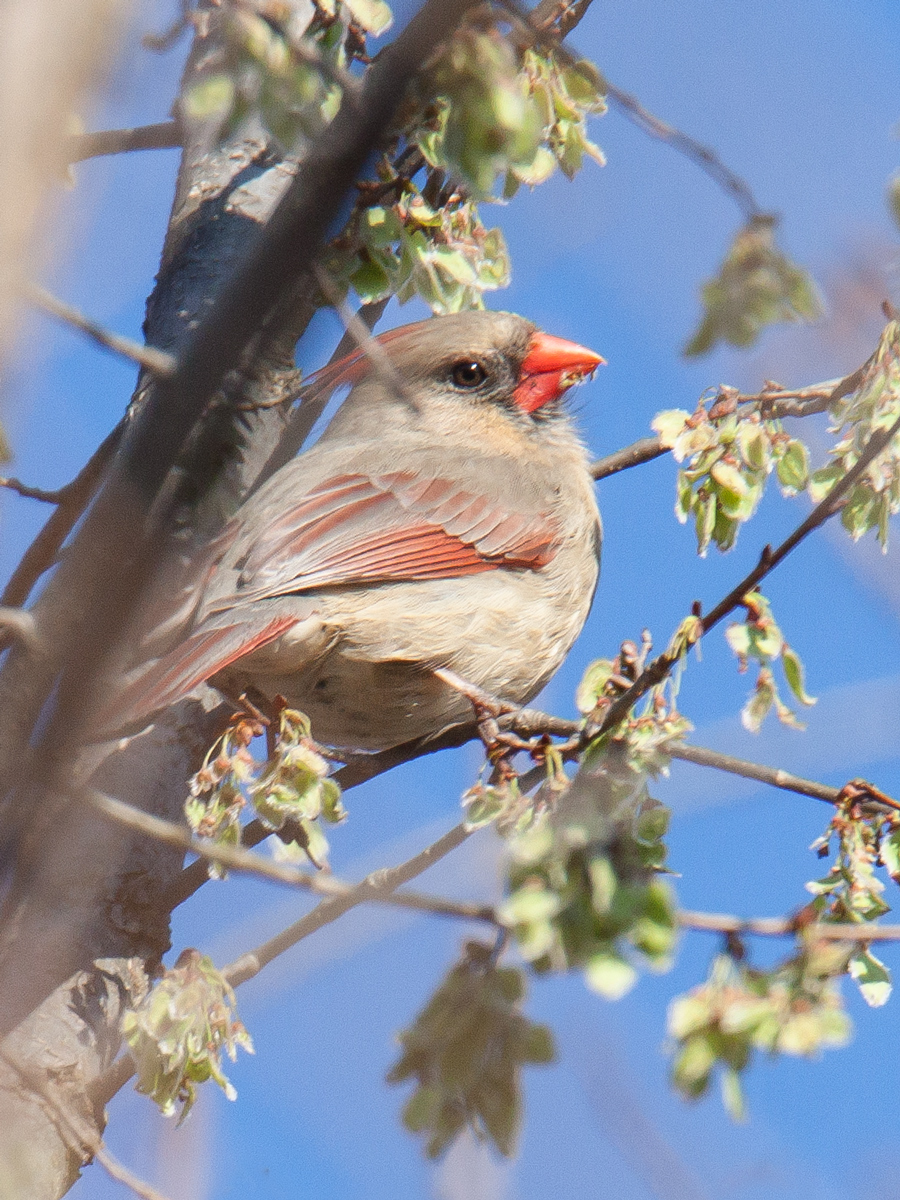
Now that springtime leaves and blossoms are reappearing, birds in the trees are getting harder for me to spot. Earlier this week I was happy to find this semi-hidden female Northern Cardinal (Cardinalis cardinalis) at Huntley Meadows Park.

One of my friends asserts that female cardinals are more beautiful than their more boldly-colored male counterparts—it’s hard to disagree with him.

Northern Cardinal

© Michael Q. Powell. All rights reserved.

Read Full Post »

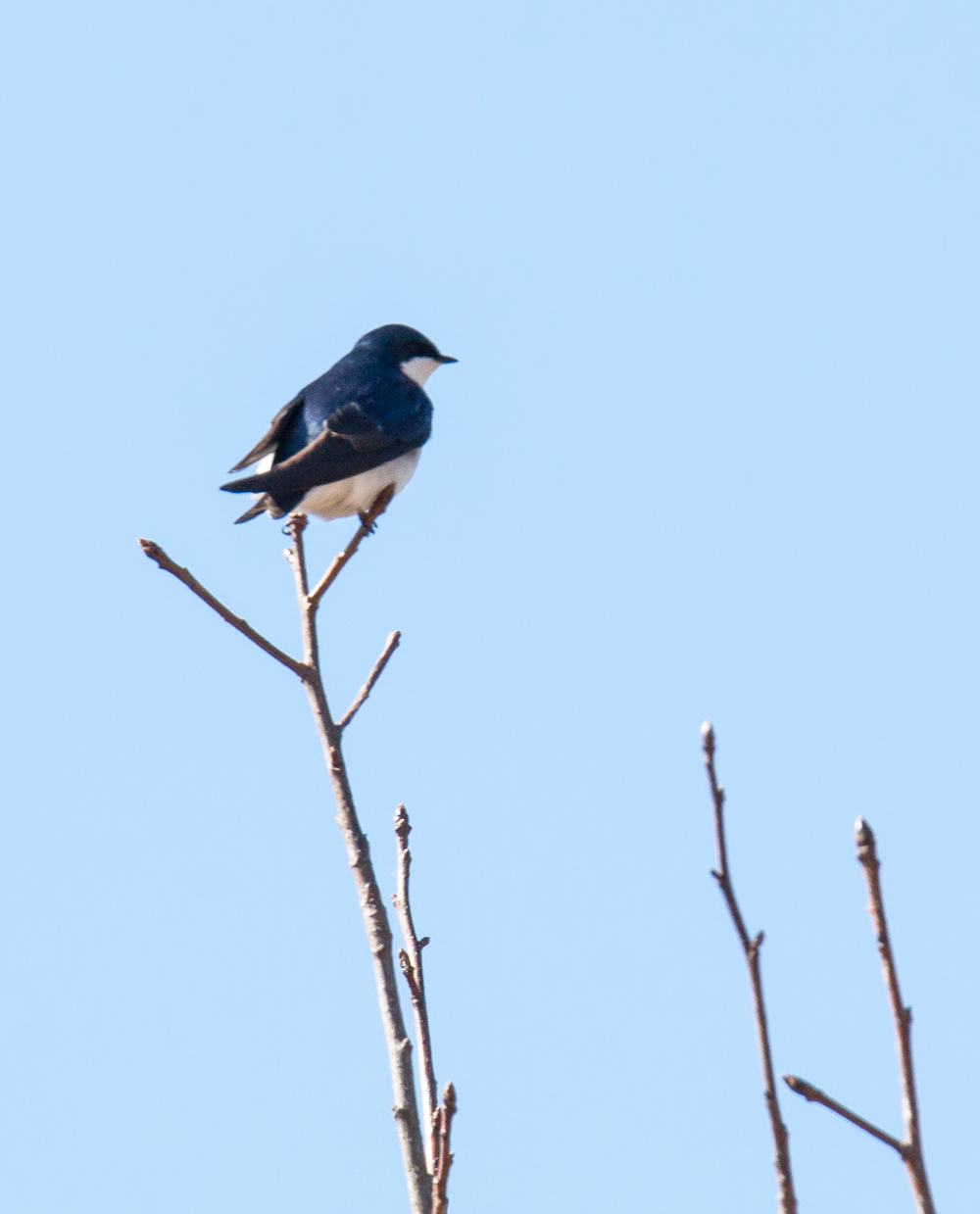
Tree Swallows (Tachycineta bicolor) have moved into at least some of the nesting boxes at Huntley Meadows Park as they get ready for babies. The accommodations are spacious and comfortable, but the views are undoubtedly much better from high atop the trees.

Strange as it sounds, it is unusual for me to get shots of Tree Swallows in a tree. Normally they are zooming about in the air when I see them and it seems rare for them to stop for a rest. They seem to weigh almost nothing, so they can perch on the flimsiest of branches at the very top of trees. As I learned earlier this week when observing them, however, those perches can become pretty precarious when the wind starts to blow, but that’s a story for another posting.

Tree Swallow

Tree Swallow

© Michael Q. Powell. All rights reserved.

Read Full Post »

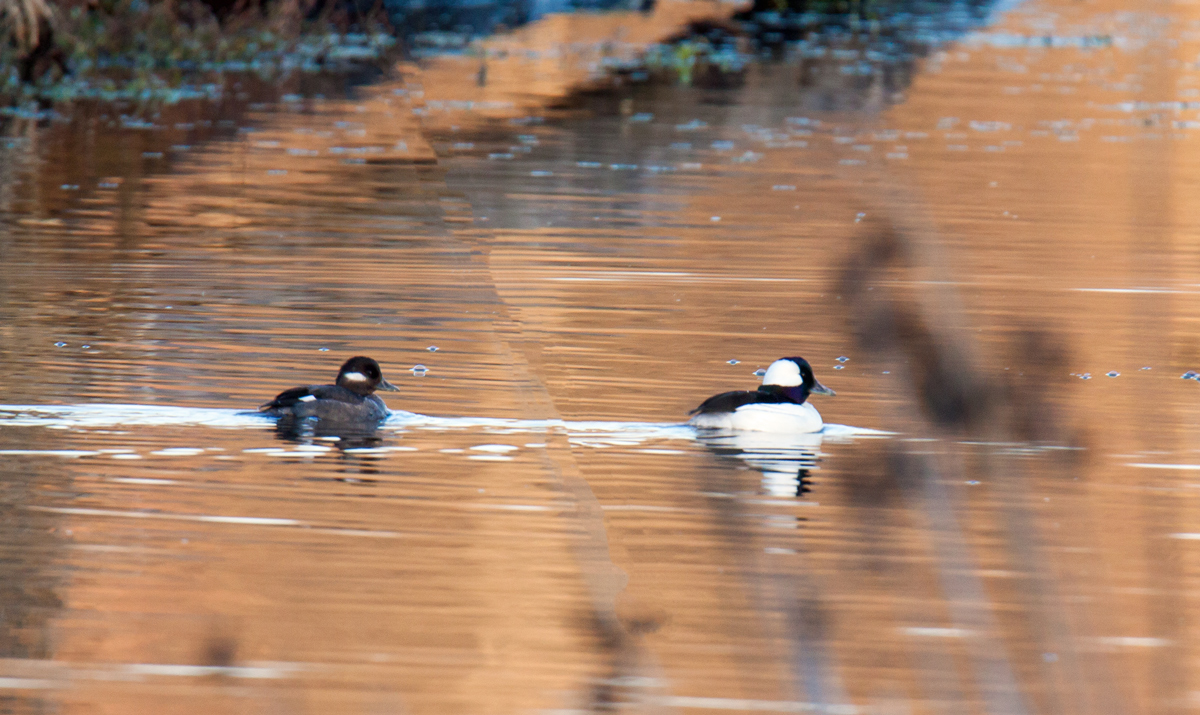
The early morning light was a beautiful golden orange yesterday morning at Huntley Meadows Park and I was thrilled when I spotted a pair of Pied-billed Grebes (Podilymbus podiceps) and a Bufflehead couple (Bucephala albeola), two species of water birds that I rarely have encountered there.

I took these shots from a pretty good distance away, so I initially wasn’t sure what kind of birds they were. WhenI took a quick look afterwards at a couple of the images, the shapes and markings of these birds were so different from the usual birds that I knew I needed to do a little research. Fortunately they were not hard to find in my identification guide.

Somehow I can’t help but smile when I speak aloud the names of these two birds—they seem a little silly and slightly pejorative, though not overtly rude. I can imagine a grizzled cowboy confronting another and saying, “You’re nothing but a pied-billed grebe,” and the other cowboy responding, “And, you, you’re a bufflehead.” (My favorite bird name that makes a great cowboy cuss word, though, has to be the yellow-bellied sapsucker.)

Pied-billed Grebe

Bufflehead

© Michael Q. Powell. All rights reserved.


Read Full Post »

The single American Toad (Anaxyrus americanus) inched closer and closer to the couple, looking like he wanted to cut in. Growing impatent, he decided that the only way to dislodge his rival was to take action.  With a big splash, he jumped right onto the other male’s back.

Was the maneuver successful? Well, I think he separated the couple, but I couldn’t tell which of the males ended up with the female.

American Toad

American Toad

© Michael Q. Powell. All rights reserved.


Read Full Post »

Early yesterday morning, a fellow photographer pointed out some foraging water birds in the distance and I was fortunate to get a shot of some Blue-winged Teal ducks (Anas discors), a species of small dabbling ducks that I see only rarely. I love the bold white facial markings of the male Blue-winged Teal during breeding season.

One of the big advantages of going out early in the morning to take photos is that I am able to see some birds and animals that are more concealed later in the day. Blue-winged Teals, for example, tend to forage at the edges of ponds, where they are almost impossible to spot, but early in the morning they were in relatively open water. The downside, of course, is that there is not much light so early in the day, so it’s hard to get images with sharp focus and good contrast.

We are definitely in bird migration season in my area and it’s always exciting to see what birds will show up next. The trees are starting to put out buds now and soon there will be leaves, which will made it more and more difficult to the birds when I hear them singing—I have more of a fighting chance of getting a shot when the birds are in the water.


Blue-winged Teal

© Michael Q. Powell. All rights reserved.

Read Full Post »

This colorful male Wood Duck (Aix sponsa) was standing tall yesterday as he kept watch over a nesting box at Huntley Meadows Park. I kept watch for a while myself, hoping to photograph a female entering or exiting the box, but came up empty-handed.

It’s breeding time and all of the animals and birds seem to be looking for mates and preparing for the arrival of babies. At least some of the Hooded Mergansers and Wood Ducks use the nesting boxes at various locations throughout the park. Tree Swallows also use nesting boxes, although those boxes are much smaller than the ones used by the ducks.

I don’t know if this male Wood Duck is guarding eggs that have already been laid in the box or is merely helping to reserve the box for use by his partner. In the past I have spent extended periods of time waiting for the arrival and departure of female ducks at nesting boxes. I find it amazing that the females are able to arrest their forward momentum and enter the box through a hole that is a tight fit.

Wood Duck

© Michael Q. Powell. All rights reserved.

Read Full Post »

I was a little surprised when an unusually shaped mound of dirt slowly began to move in the shallow waters of a muddy pond at Huntley Meadows Park. When it raised its massive head, I realized it was an Eastern Snapping Turtle (Chelydra serpentina serpentina) newly arisen from the bottom of the pond.

The extra weight of the mud on its back didn’t seem to affect the turtle’s swimming ability—it must be nice to be so big and strong.

Snapping Turtle

© Michael Q. Powell. All rights reserved.

Read Full Post »

The marsh at Huntley Meadows Park is alive with the sound of frogs and toads—it’s the start of the breeding season.

Yesterday, I captured this shot of an Eastern American Toad (Anaxyrus americanus americanus) as he was calling out to females. It’s amazing how long the toad is able to hold that long, high-pitched trill, as much as 20 to 30 seconds according to the Virginia Herpetological Society.

His expanded pouch (officially called a dewlap) reminds me of my childhood days, when I would attempt to blow large bubbles with the ever present bright pink bubble gum. One of my favorite gums was called Bazooka and the individually wrapped pieces of gum included a comic strip starring Bazooka Joe. (For more information about Bazooka, check out this Wikipedia article.)

I’ve decided I want to call this little guy Bazooka Joe and my unofficial name for the Eastern American Toad is the Bubble Gum Toad. As a side note, fellow photographer and blogger Walter Sanford has given nicknames to several of my lenses and he calls my Tamron 150-600mm lens Bazooka Joe. This, of course, is more a reference to the anti-tank rocket launcher than to the bubble gum—the size and length of the lens brings to mind a bazooka. (If you are not familiar with this weapon, check out this Wikipedia article.)

In case you are curious, I captured this image of Bazooka Joe with Bazooka Joe.

Eastern American Toad

© Michael Q. Powell. All rights reserved.

Read Full Post »

With our recent warm weather, turtles have risen from the mud at Huntley Meadows Park.  Sunning turtles are now vying for space on logs that are more crowded than a mall parking lot on Black Friday.

On Monday, a Spotted Turtle (Clemys guttata) tried a different approach. He slowly clawed his way up out of the water onto some vegetation amid the cattails and assumed an almost vertical perch.

Who needs a log?

Spotted Turtle

© Michael Q. Powell. All rights reserved.

Read Full Post »

It was so cold yesterday morning at Huntley Meadows Park that the breath of a Red-winged Blackbird (Agelaius phoeniceus) was visible as he sang out from atop a cattail.

Spring is definitely in the air and potentially record high temperatures are forecast for later in the week. However, it was right about at the freezing level when I arrived at the local marshland park where I spent so much of my free time wandering with my camera in hand.

I’ve photographed Red-winged Blackbirds lots of times, but I rarely pass up an opportunity to shoot them again—I just never know when I may capture an unusual moment. The sun had risen and light was starting to reach the cattails. I turned toward the light when I heard a blackbird call out.

As I zoomed in on the bird, I was amazed to see that the blackbird’s breath was visible as he forcibly exhaled when singing. In the still morning air the visible breath swirled about and the bird looked like a smoker getting his early morning nicotine fix.

I was fascinated by the differing patterns of the condensation as the blackbird moved his head or body position and was thrilled to be able to capture several different views of the blackbird’s visible song.

As I went to bed last night, I noticed that the counter for my blog was right at a hundred thousand views. Thanks to so many of you for helping me to reach this milestone and for encouraging me and supporting me as I journey on into photography.

Red-winged Blackbird

Red-winged Blackbird

Red-winged Blackbird

© Michael Q. Powell. All rights reserved.


Read Full Post »

Do dabbling ducks double date? It sure looked like that was the case earlier this week when I spotted a Mallard (Anas platyrhynchos) couple and a Hooded Merganser (Lophodytes cucullatus) couple swimming away from a larger group of mostly mallards for a few quiet moments together. I grew up in a family with eight siblings, so I can really understand their pursuit of peace and privacy. 

It’s almost springtime and many of the birds are searching for mates. Usually it’s the males that put on elaborate displayes, but I think the female “Hoodie” here was the one that went all out to impress her date with an elaborate hairstyle.

duck dating

© Michael Q. Powell. All rights reserved.

Read Full Post »

I know that there are deer at Huntley Meadows Park, the suburban marshland park where I take many of my photos, but I rarely see any of them. Perhaps they too see the posted signs warning of archery hunting to keep the population in control.

Saturday morning, however, I spotted three White-tailed deer (Odocoileus virginianus) in an open area in front of a stand of cattails.  The deer grazed for a little while before fading silently back into the forest and I managed to get a few shots of them.

It’s a nice change of pace to get some shots of mammals at a time of the year when so many of my postings are devoted to insects.

White-tailed deer

Michael Q. Powell. All rights reserved.

Read Full Post »

Yesterday, the last full day of spring, I spotted a Halloween Pennant (Celithemis eponina), one of my favorite dragonflies, at Huntley Meadows Park, a place where I had previously never seen one. It was an auspicious end to spring, even if it seems a bit strange to speak of spring and Halloween in the same posting.

As you can see, these dragonflies like to perch on the very top of the vegetation in the fields. That’s an advantage in isolating the subject, but the slightest breeze causes them to wave back and forth like a pennant.

I snapped away when I spotted the Halloween Pennants and have not yet gone through all of my images, but I am so excited that I can’t help but share a couple with you now. There may be a few more to come later.

Halloween Pennant

Halloween Pennant

Michael Q. Powell. All rights reserved.

Read Full Post »

If I had wings as fragile as those of this male Spangled Skimmer dragonfly (Libellula cyanea), I am not sure that I would choose to perch on a branch with so many thorns. I can personally attest to the fact that those thorns are sharp, very sharp.

Although I see quite a few blue dragonflies, Spangled Skimmers are pretty easy to identify—they are the only local dragonflies with both black and white stigmas on their wings. I love it when the differences among species are that obvious.

On the day I took this shot, the field seemed to be full of Spangled Skimmers and Great Spangled Fritillary butterflies. If I had only seen an American flag, i.e. the Star Spangled Banner, I would have exhausted the short list of items that I associate with the word “spangled.”

Spangled Skimmer

Michael Q. Powell. All rights reserved.

Read Full Post »
Flying slowly and weakly with its patterned wings, a male Widow Skimmer dragonfly (Libellula luctuosa) looks amazingly like a butterfly as it flutters by. Fortunately this one stopped to perch on some vegetation at the edge of a small stream and I was able to get this shot.

Widow Skimmer

This was the second time that I have seen a male Widow Skimmer this spring. It’s easy to tell that this is a male, because the females do not have the white spots on their wings. When I saw one last month, though, it was a little tougher to make the call. Immature male Widow Skimmers look a lot like females, as is the case with many dragonfly species. The colors of “fresh” dragonflies tends to be pale and wing patterns may not have developed fully yet. The photo below provides a pretty clear view of the “claspers” at the tip of the abdomen, which indicates that this is a male. Eventually he will grow up and begin to look more like the mature Widow Skimmer in the first photo.

Widow Skimmer

Michael Q. Powell. All rights reserved.


Read Full Post »
Swamp Milkweed (Asclepias incarnata) is now in bloom at my local marshland park and the Great Spangled Fritillary butterflies (Speyeria cybele) are loving it.

Great Spangled Fritillary

Michael Q. Powell. All rights reserved.

Read Full Post »
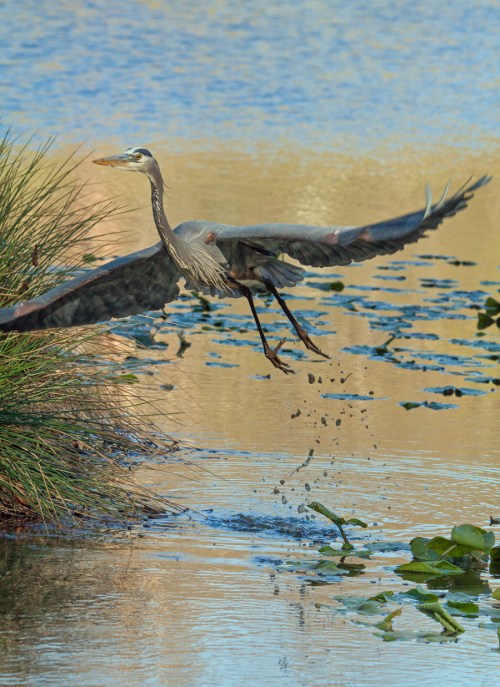
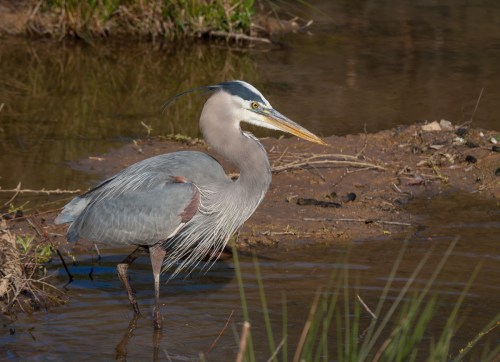
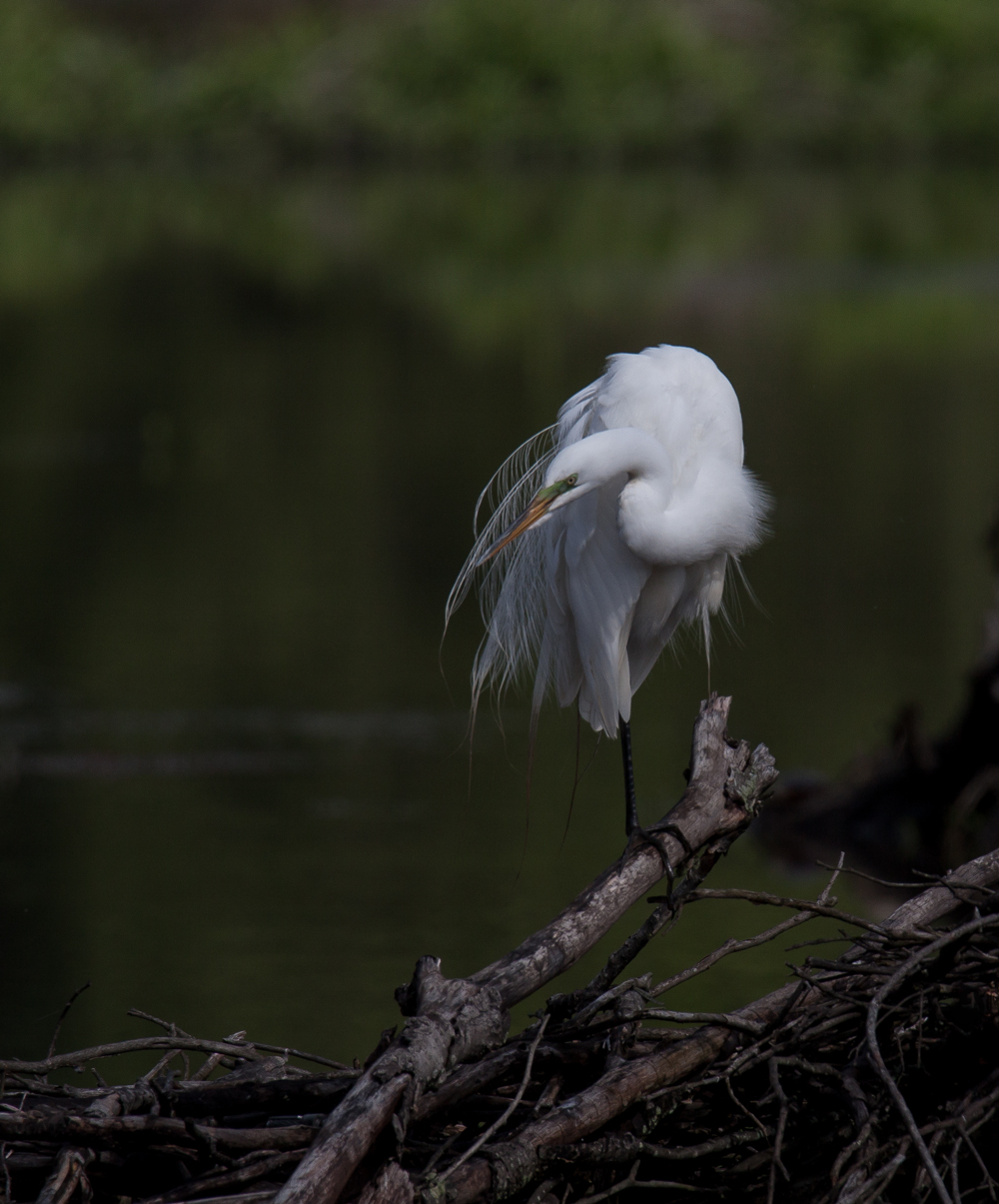
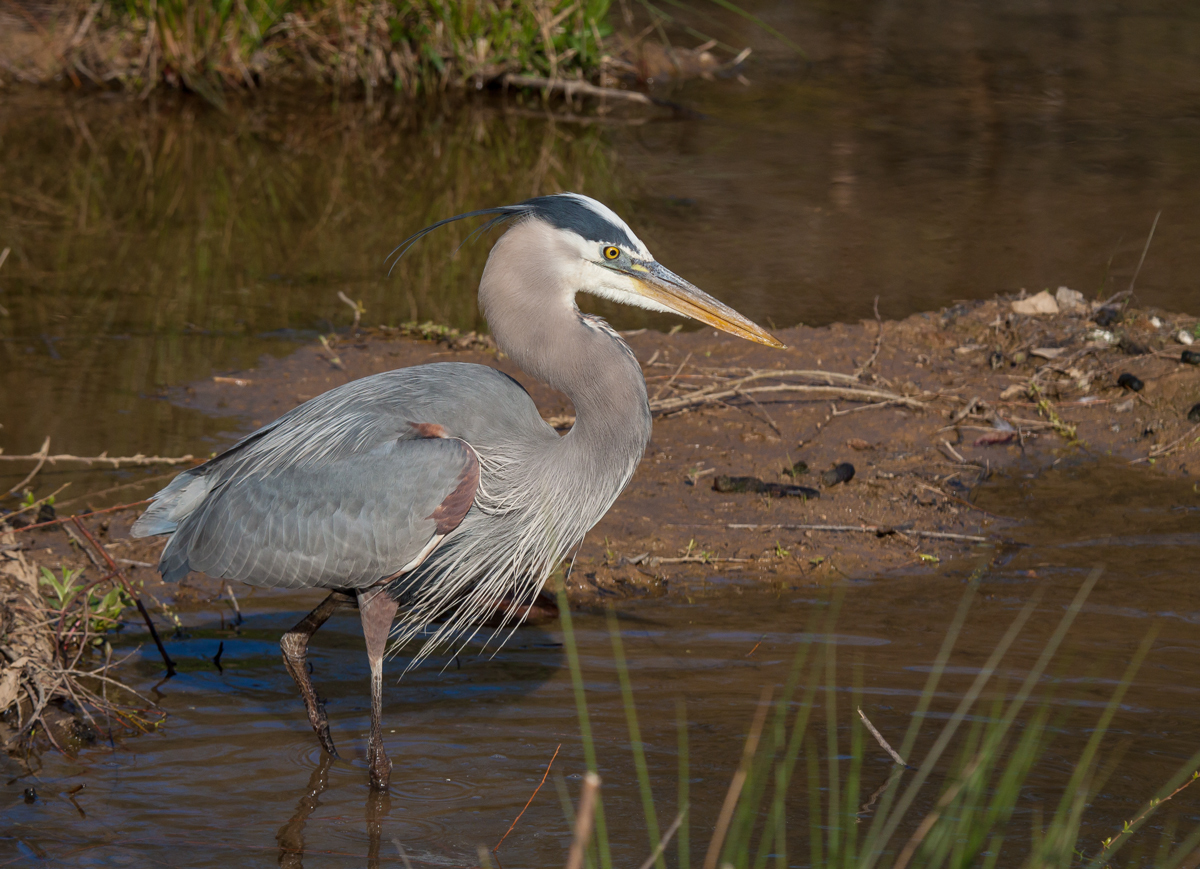
Shortly after dawn one morning last week, I encountered a Great Blue Heron (Ardea herodias) that seemed to be pensively contemplating the new day. He glanced in my direction as I took a few shots, but remained in place as I continued on my way, both of us lost in our thoughts.

Great Blue Heron

Michael Q. Powell. All rights reserved.

Read Full Post »

« Newer Posts - Older Posts »