Age is a relative thing. I chuckled a little yesterday when I read a sign next to this spectacular Gingko tree (Gingko biloba) that characterized it as a “young man,” despite the fact that it was planted in 1895. Putting aside the fact that there are male gingko trees and female gingko trees, a concept that blows my mind, gingko trees, which originated in China, can live to be 1200 years old and are “potentially immortal.”
I spotted this tree while visiting the Jardin des Serres d’Auteil. This botanical garden, located near the Bois de Boulogne on the edge of Paris, dates back to 1761 and has an immense complex of different greenhouses, some with groupings based on botanical species and some geographically based. I was particularly struck by the ones ones focused on the Sahara desert and one focused on tropical South America. In the latter case, I had to keep wiping off the lens of my camera, because it was fogging up in the steaming heat of the greenhouse. Unfortunately, some of the greenhouses with the most spectacular plants were only open when gardeners were physically present, so I was not able, for example, to see their collection of orchids.
The leaves of the gingko tree were mostly faded and fallen this late in the year, but I still marveled at the size of the tree and the golden carpet that surrounded it. A sign noted that in 2011 this tree was 82 feet (25 meters) in height and its trunk had a circumference of 13 feet (395 cm).
I think that this gingko tree was the only one of its species at the garden. Somehow I felt like a personal ad, “Young male gingko tree in Paris seeks companion.” I wonder if there is a special category for its type on dating apps.


© Michael Q. Powell. All rights reserved.
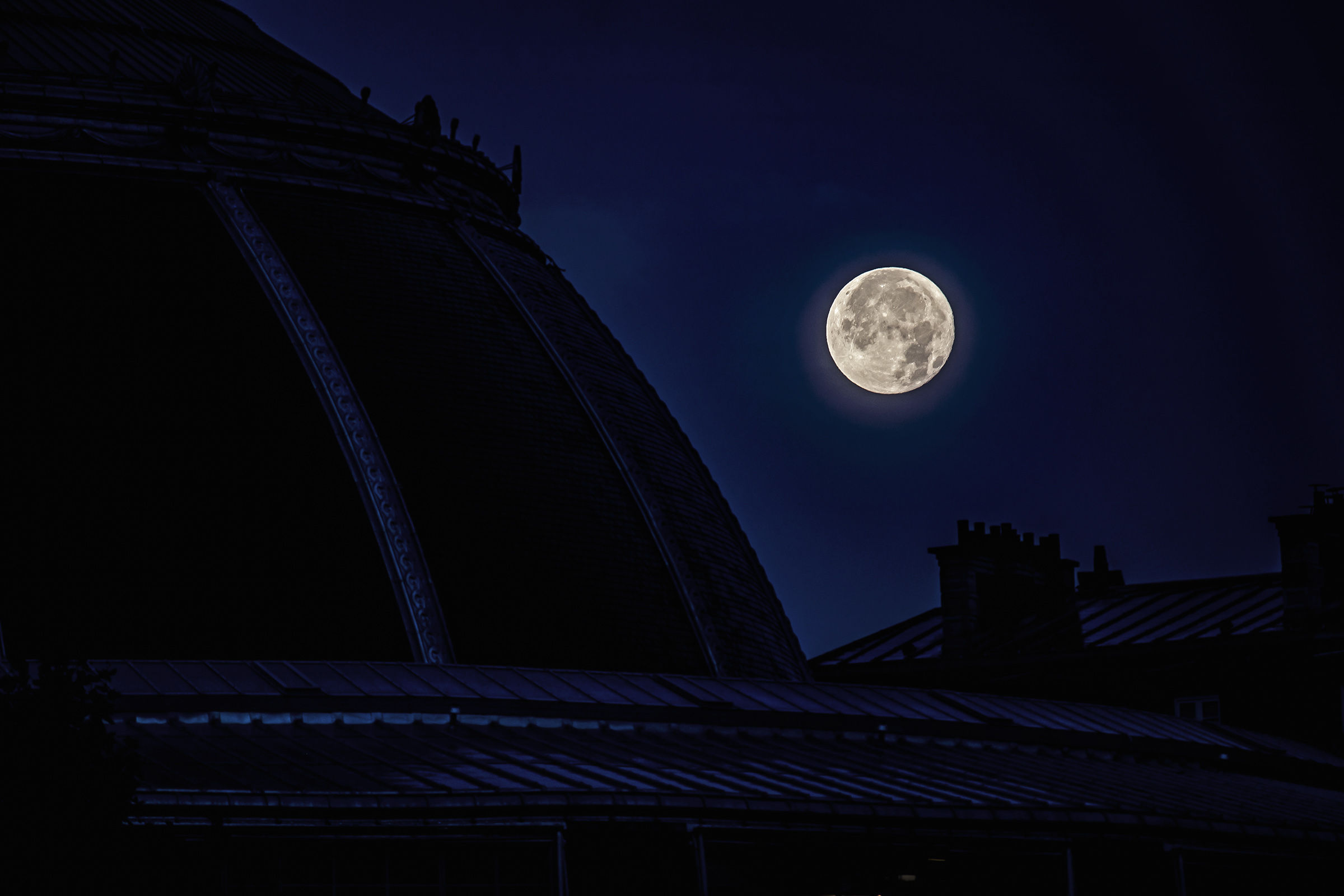



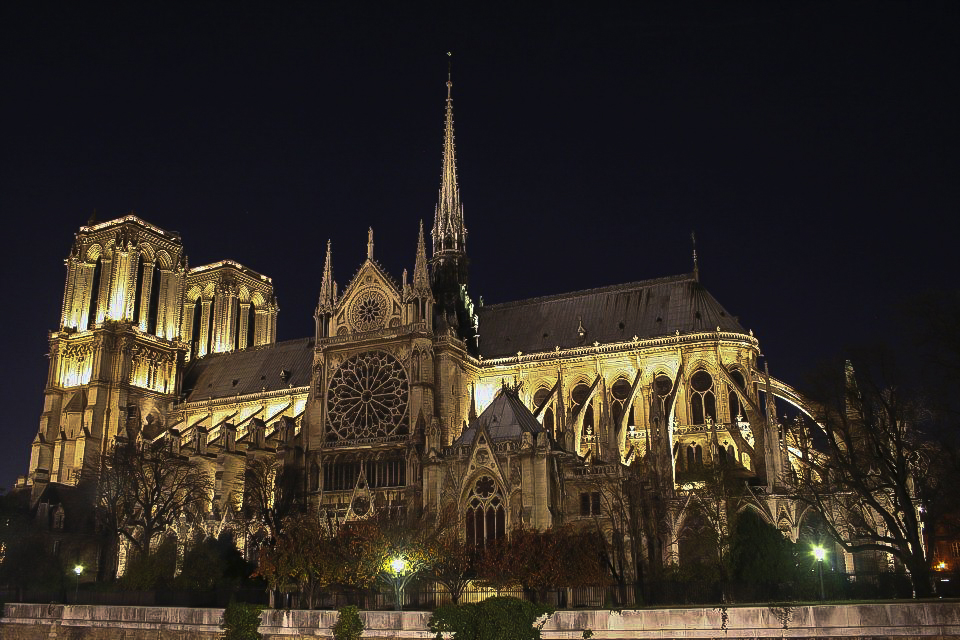


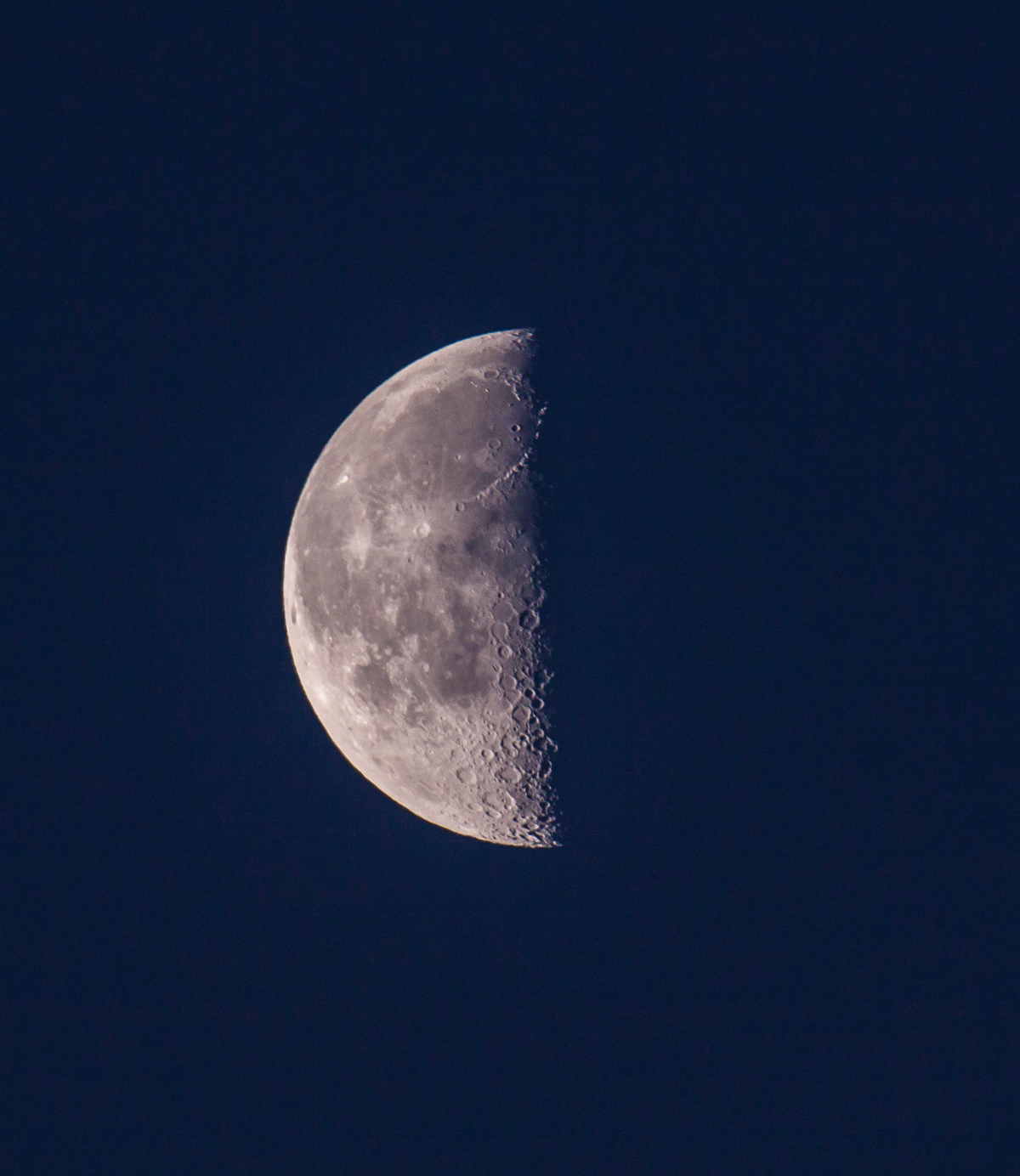









Montparnasse Tower at night
Posted in Architecture, Art, commentary, Landscape, Paris, Photography, Travel, Urban, tagged canon 55-250mm, Canon SL2, Casablanca, Montparnasse Tower, Paris, paris 2019, paris france, We'll always have Paris on November 14, 2019| 4 Comments »
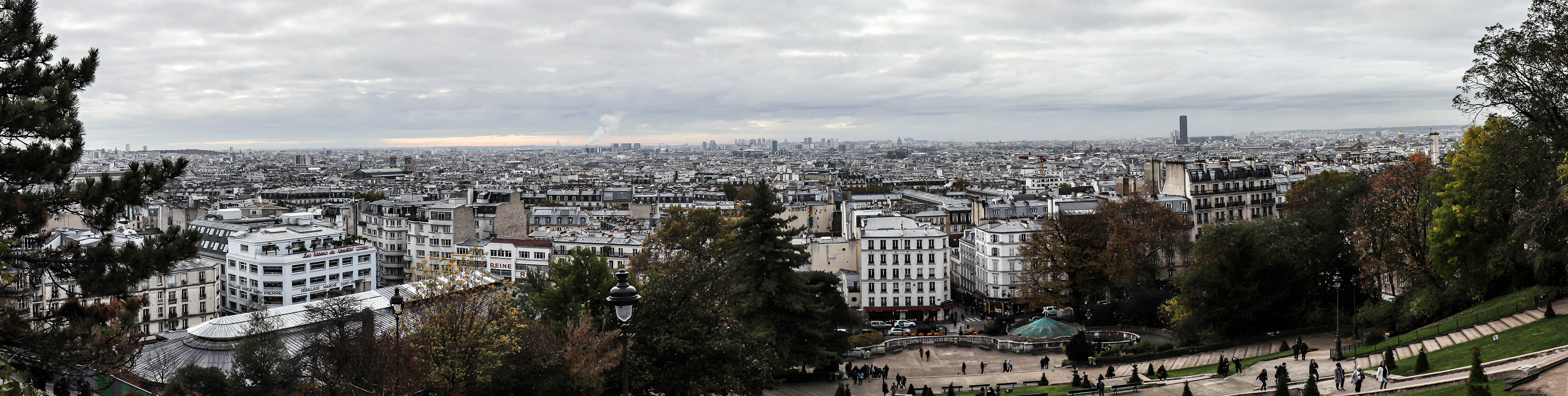
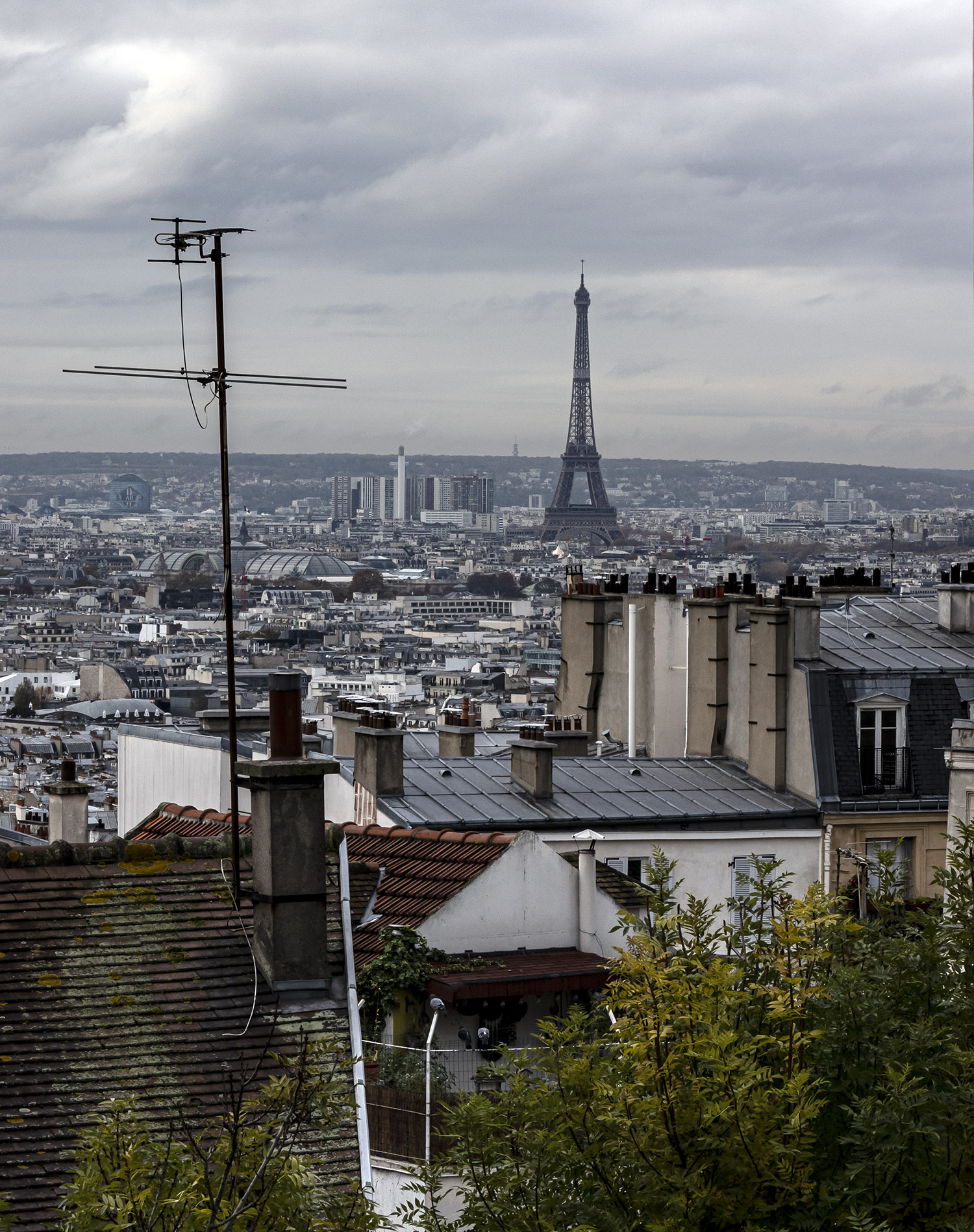
So much of Paris merges together when viewed from the step of Sacre-Coeur in Montmartre, in part because new construction in Paris was limited to 121 feet (37 meters) as of 1977. One notable exception is the Montparnasse Tower at 689 feet (210 meters), which is quite visible in this photo from yesterday evening—the height limitation was imposed in reaction to the construction of this building in 1973, whose size and appearance were loudly criticised. (By comparison, the Eiffel Tower is 1,063 feet tall (324 meters.)
In case you are curious, the giant ferris wheel is a temporary structure in the Tuileries Garden for what I think is a Christmas market. When I first arrived in Paris, the circular portion of the wheel was only partially completed. Since that time, the wheel was completed, cabins were added, and, as of yesterday, the wheel was moving, probably in test mode.
In recent years, the rules on construction have been relaxed and some taller buildings are planned, primarily on the outer edges of the Paris. I highly recommend an article at newweek.com entitled “Will Skyscrapers Ruin Paris?” that argues, in part, that the traditional architecture of the city is part of what sets the city apart from others in the world.
Here is one thought-provoking paragraph from the article:
“When a dense area has low buildings, it forces residents to interact and puts more life out on the streets—a large part of what gives Paris its character. According to Swiss writer and philosopher Alain de Botton, five stories is the ideal height of a city building because anything higher begins to make us feel “insignificant, small, and trivial”—all words rarely used to describe life in the City of Lights. It’s no wonder artists and scholars have flocked to Paris for years for inspiration. Would the same be true if the spirit of Paris were essentially locked away in modern towers?”
In the 1942 classic movie Casablanca (my all-time favorite movie), Rick (Humphrey Bogart) famously told his ex-lover Ilsa (Ingrid Bergman), “We’ll alway have Paris.” Will we?
© Michael Q. Powell. All rights reserved.
Share this:
Read Full Post »