Feeds:
Posts
Comments

Archive for the ‘Dragonflies’ Category

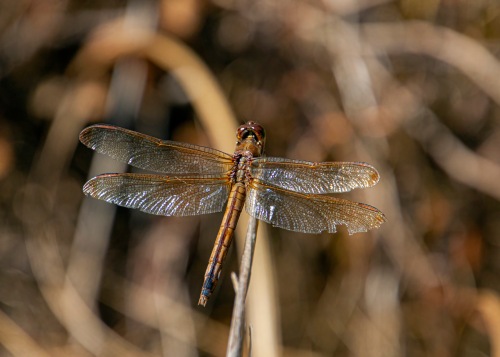
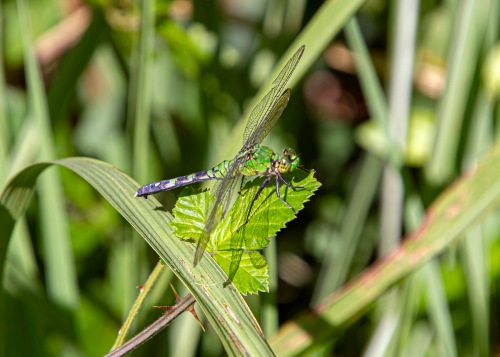
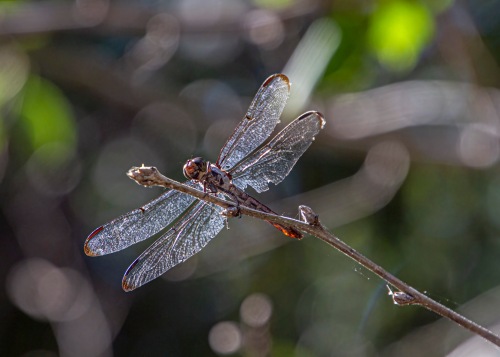
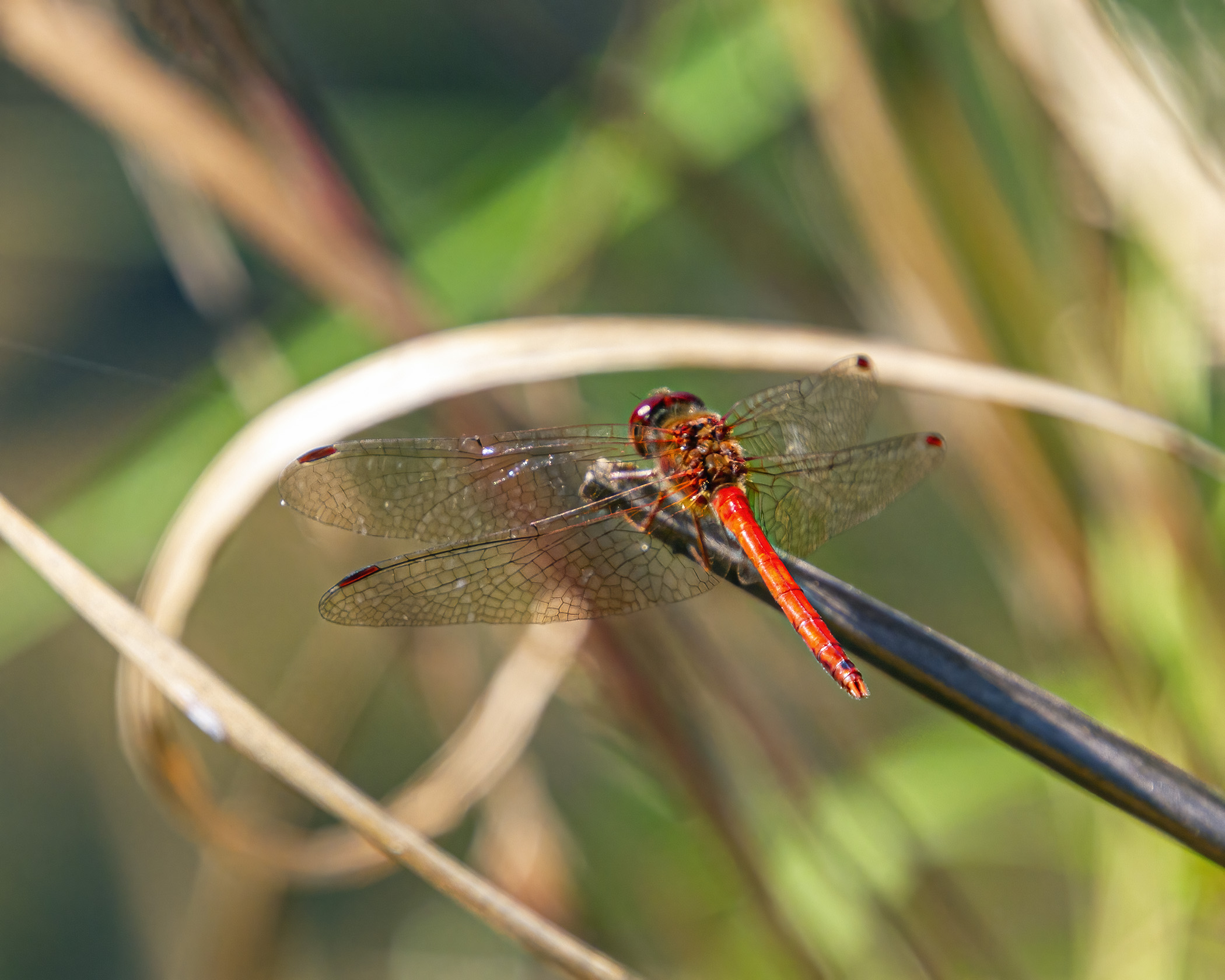
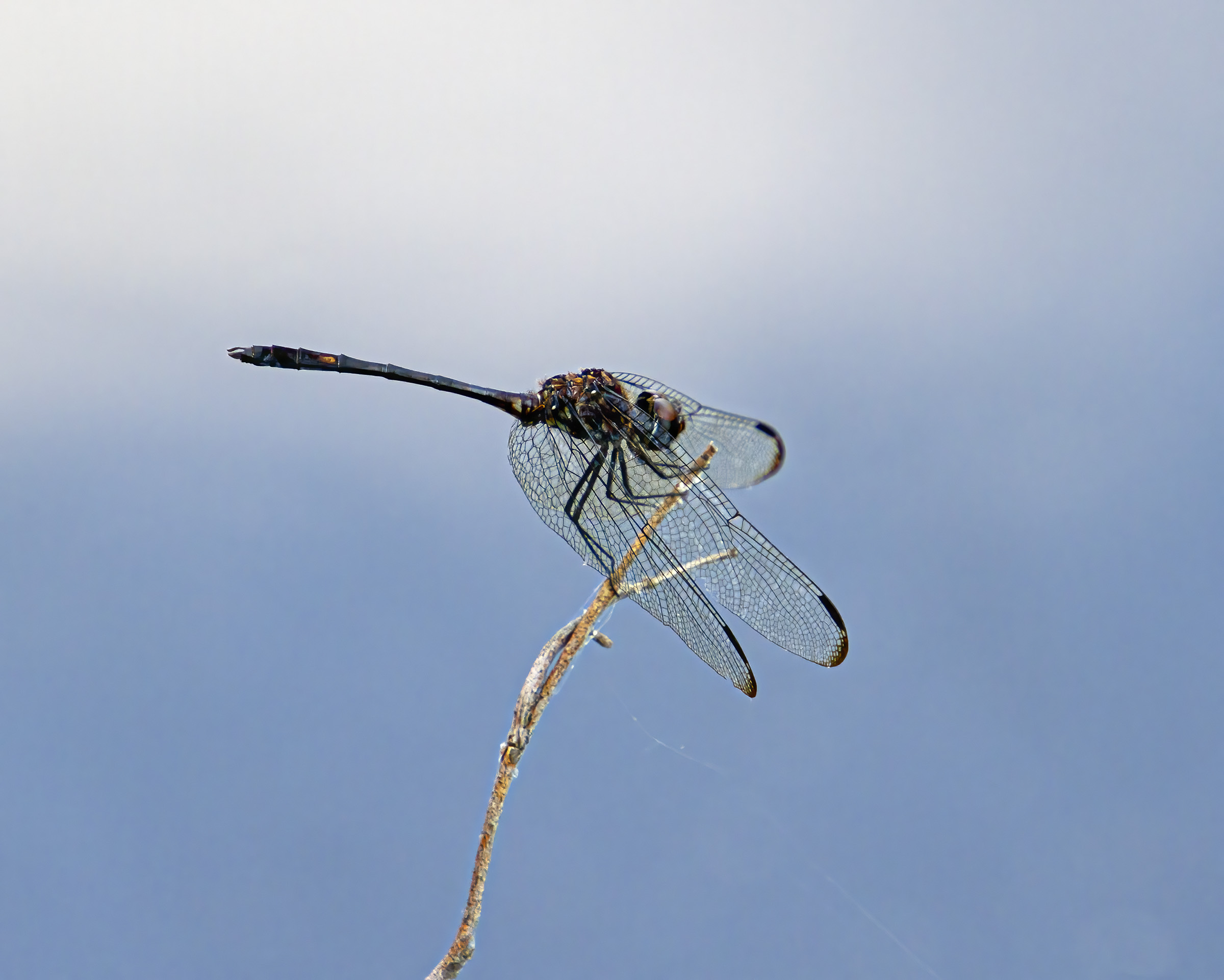
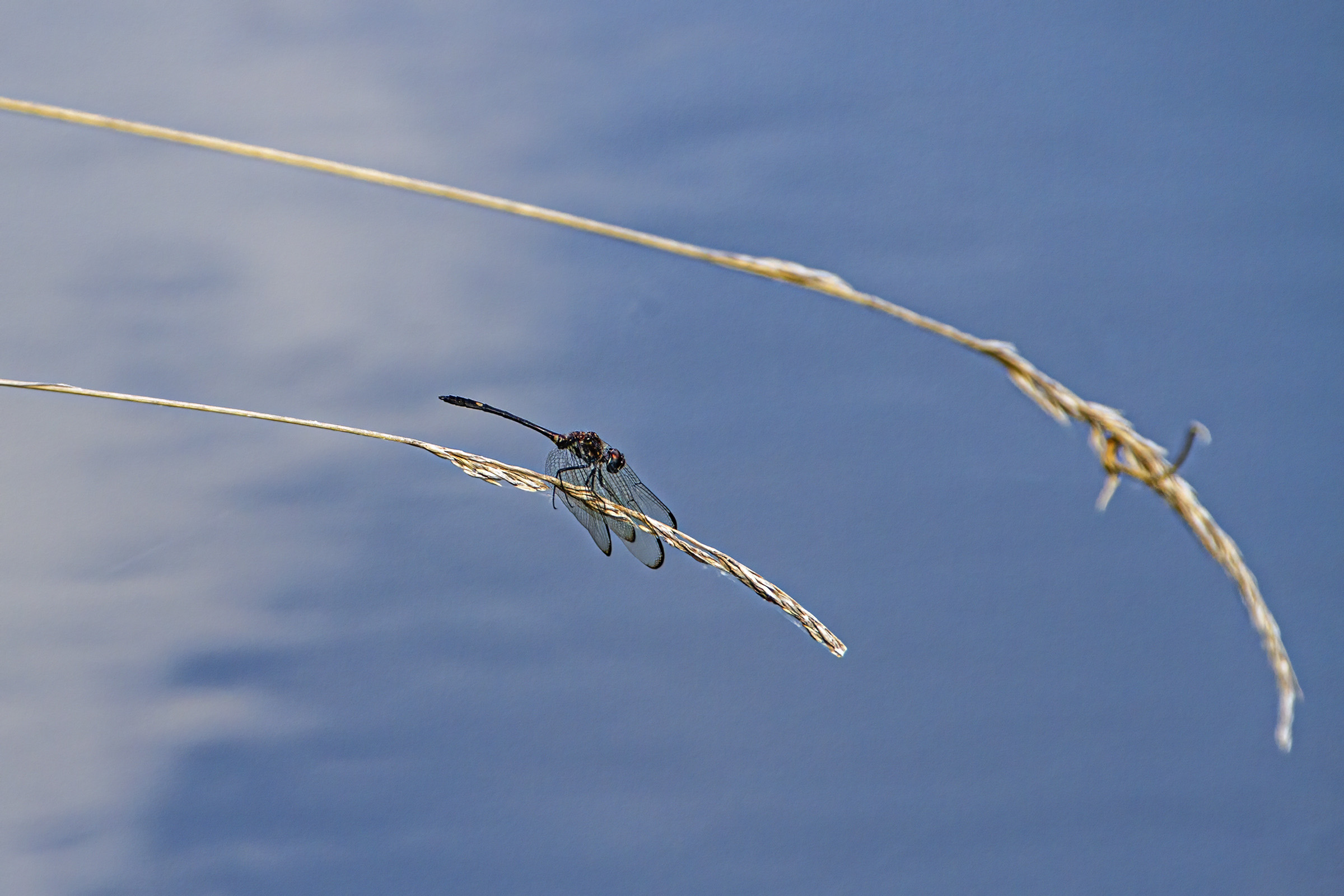
Autumn Meadowhawk dragonflies (Sympetrum vicinum) are still hanging in there as we approach the end of November. At other times of the year their bright red bodies would stand out, but there are lots of red and brown leaves on the ground now that help to camouflage them when they land. If the dragonflies remain still while on these perches, they are almost undetectable.

I photographed these little beauties on Wednesday at Occoquan Bay National Wildlife Refuge. Amazingly, I used the same telephoto zoom lens for these images that I used to capture shots of a Bald Eagle that same day—check out yesterday’s posting called What’s for dinner? that featured shots of an eagle with a duck that it had captured. The Tamron 150-600mm lens is a really versatile lens that, if I am careful, can capture a wide range of subjects ranging from an eagle in flight to a tiny perched dragonfly.

Autumn Meadowhawk

Autumn Meadowhawk

© Michael Q. Powell. All rights reserved.


Read Full Post »

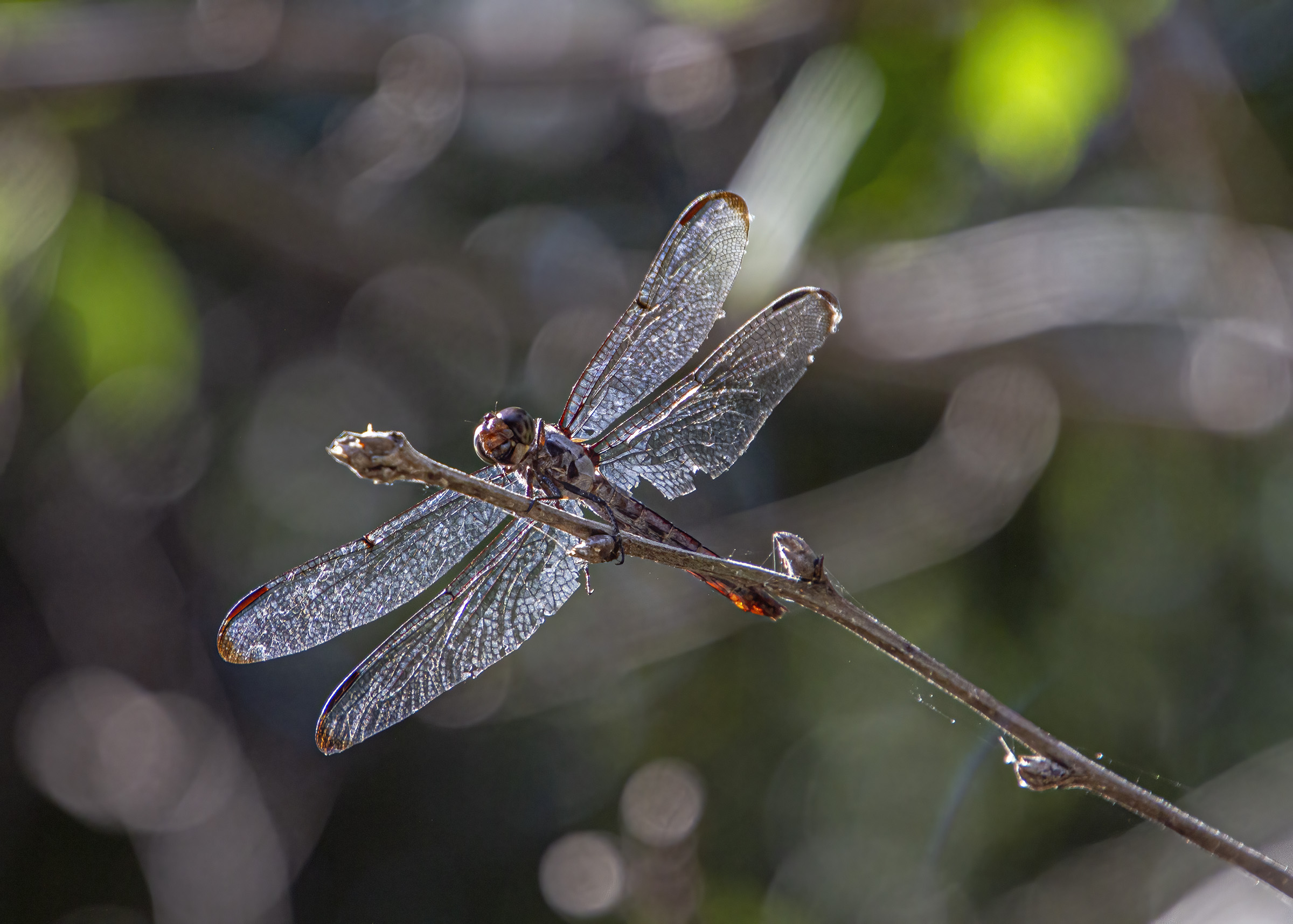
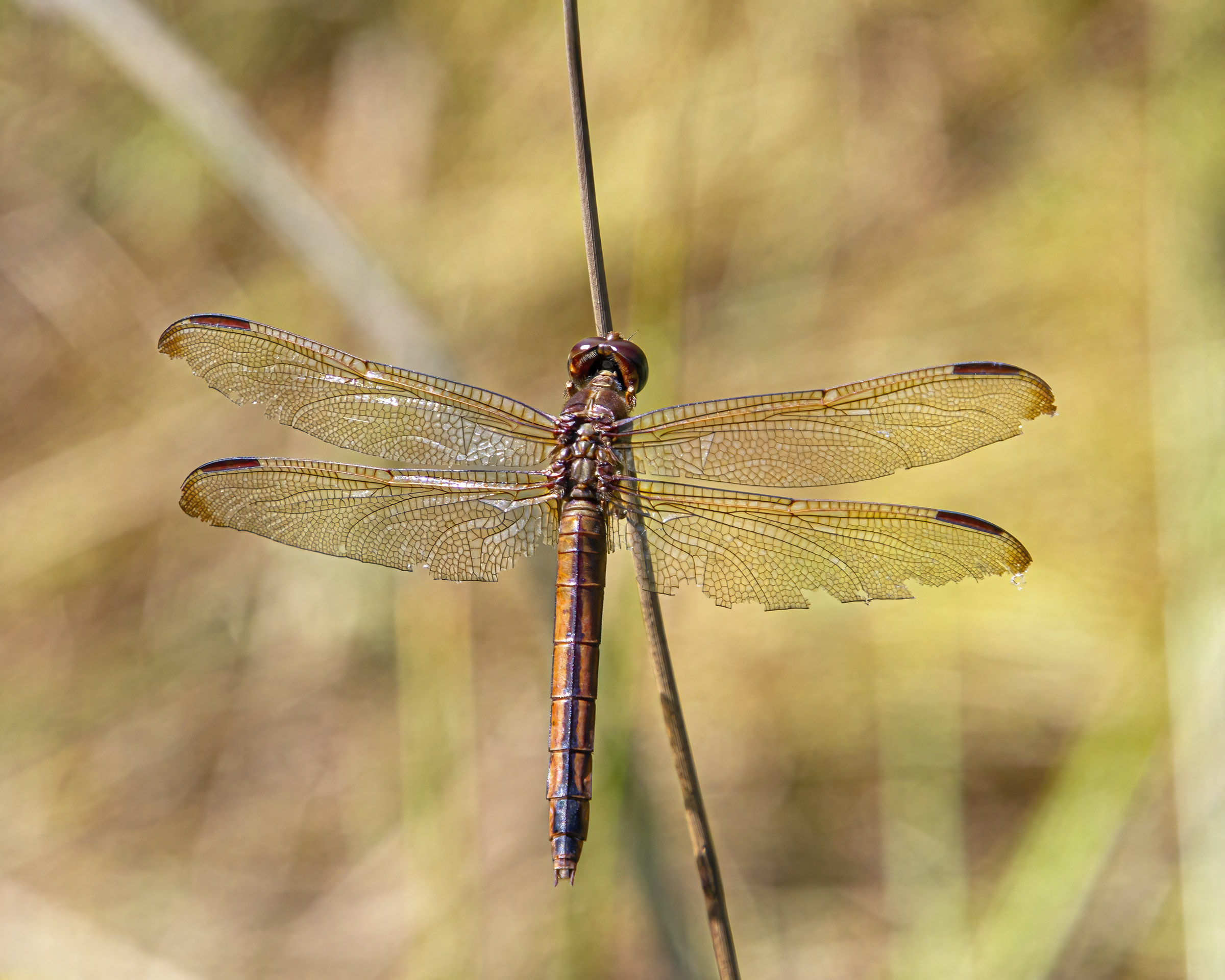
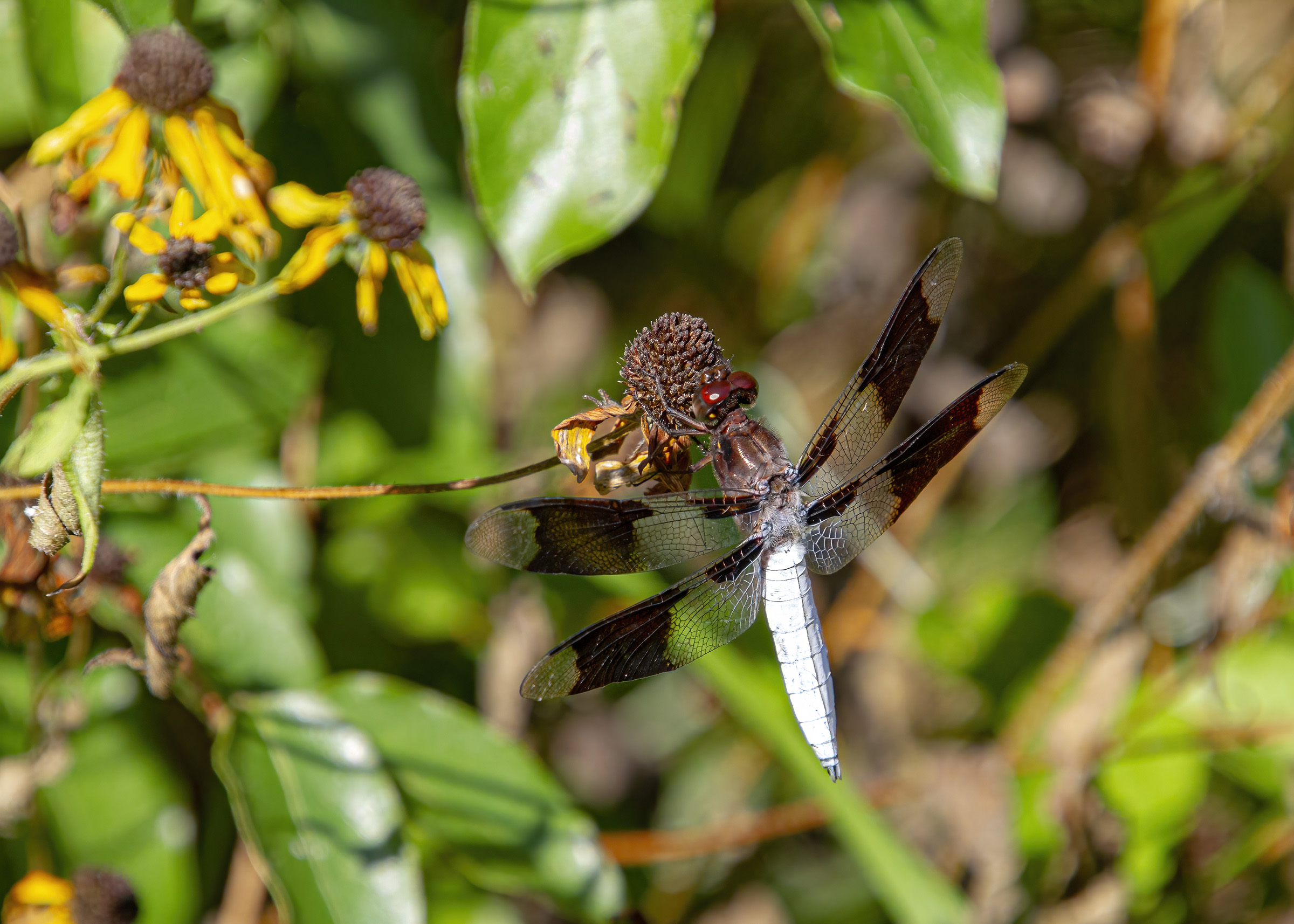
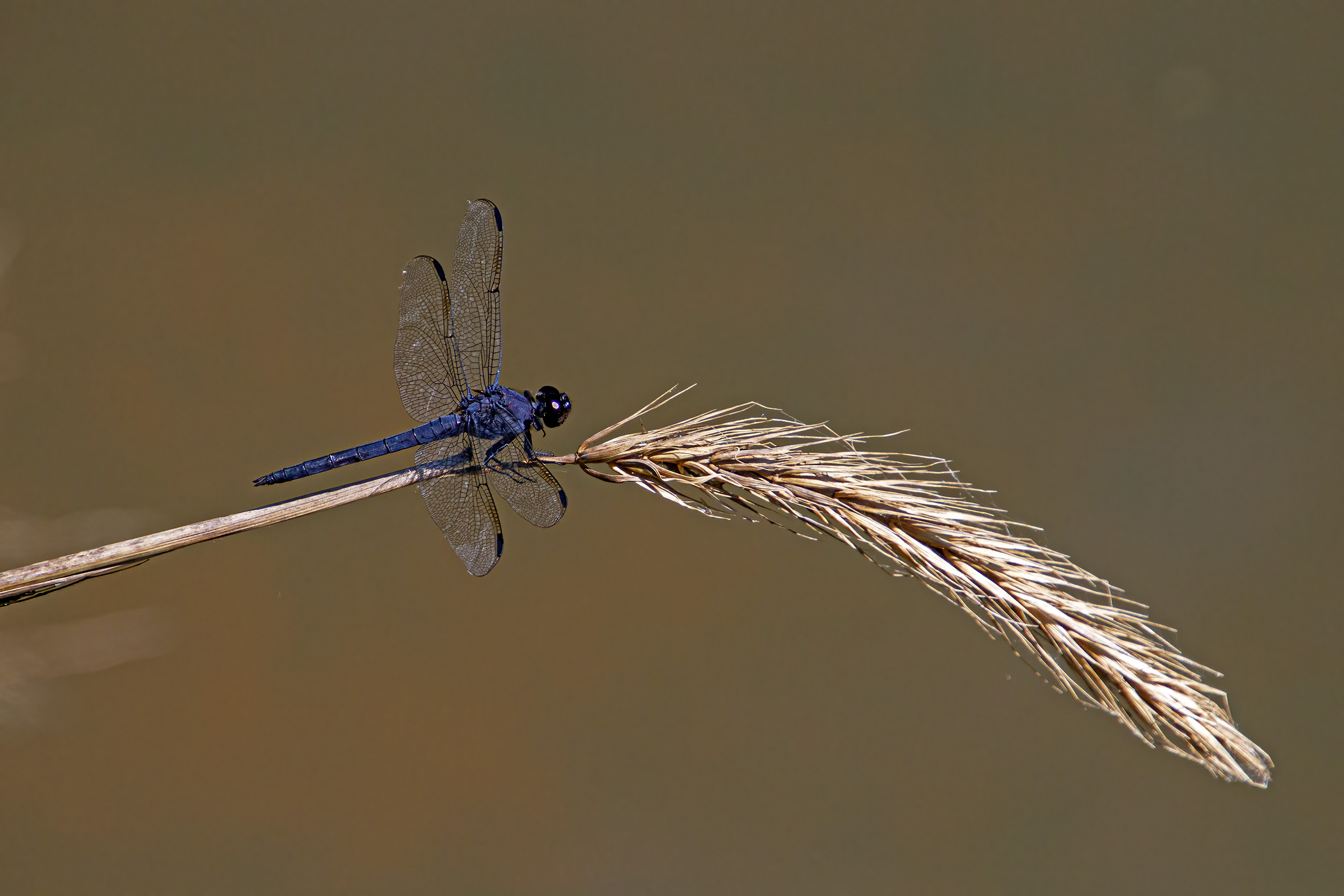
“Take Flight 2023” has landed. I was thrilled yesterday when the post office delivered my copy of a just-published poetry anthology that has one of my dragonfly photos on the cover.

Since 2020 I have attended almost monthly Zoom poetry readings conducted by Flight of the Dragonfly Spoken Word, a UK-based poetry group, and feel blessed to be part of this community of incredibly talented poets and writers. Pre-pandemic, the group hosted poetry readings at a pub in Brighton, but during the pandemic its readings became virtual and its reach became worldwide.

Flight of the Dragonfly inaugurated a quarterly e-journal of poetry, prose, and flash fiction called Flights and is currently working on Issue 10 of the journal. “Take Flight 2023” is a printed anthology of selected poems from Flights issues five to eight. A little over a year ago Flight of the Dragonfly Press was founded and has already published a number of poetry collections.

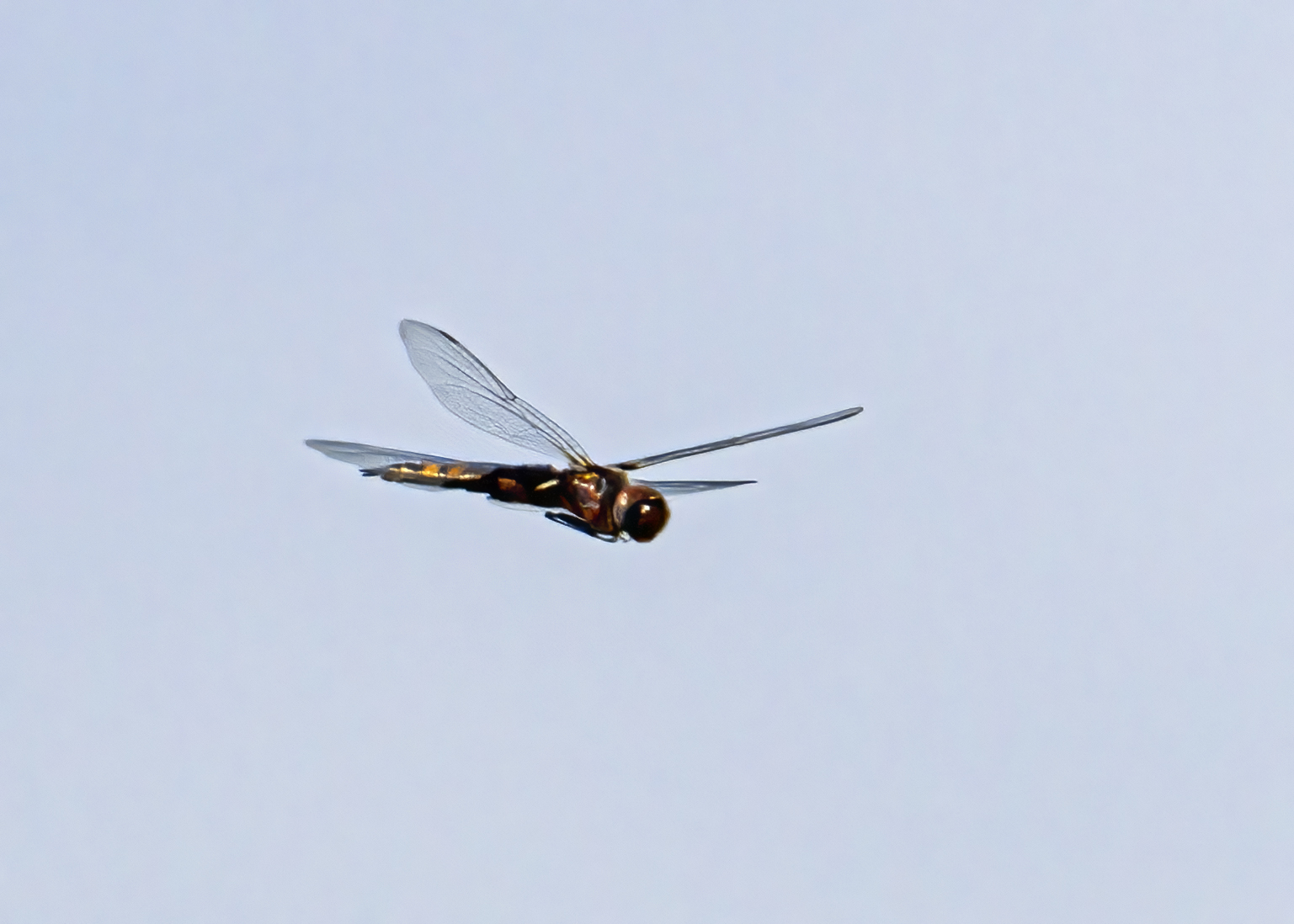
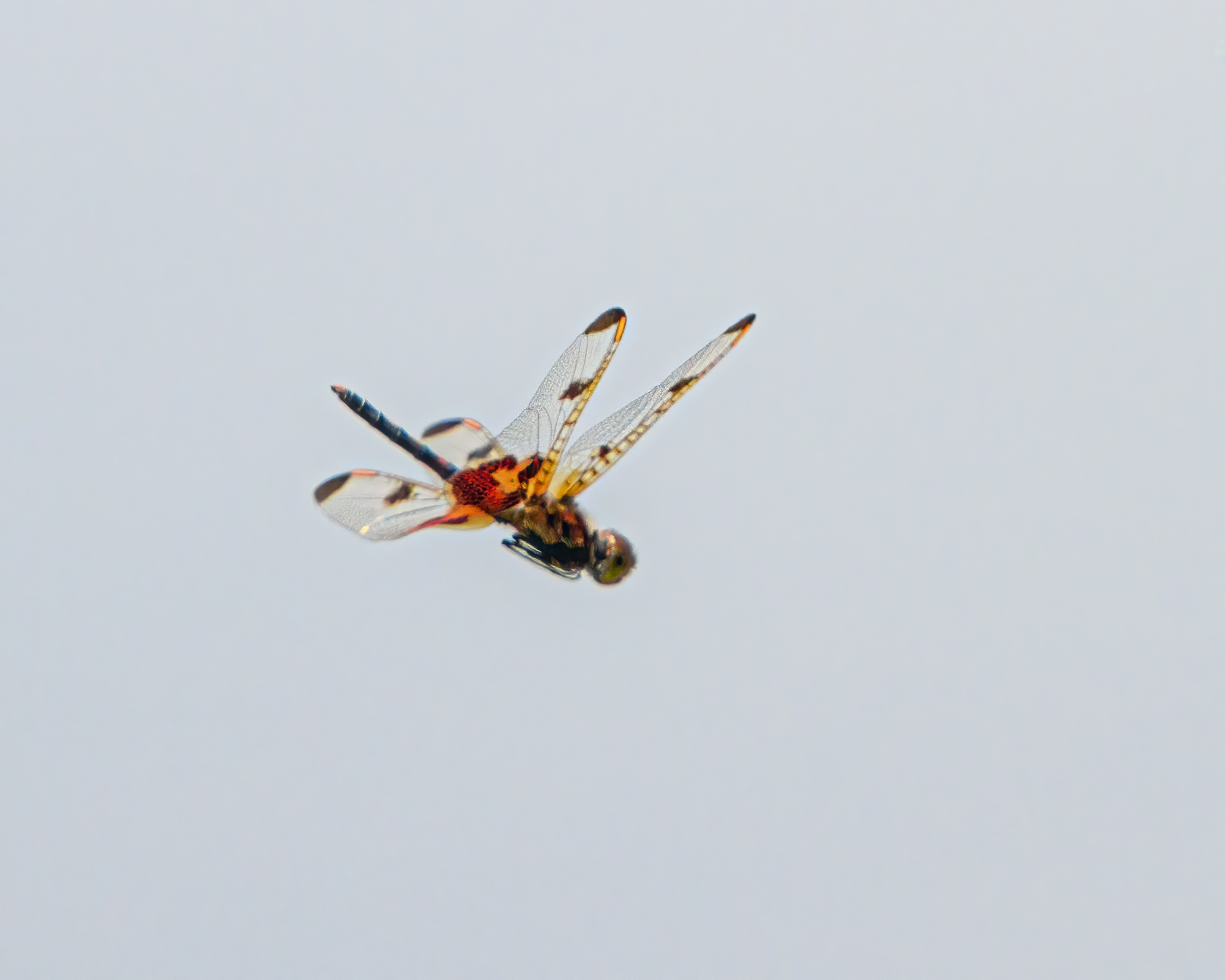
In case you are curious, I captured the in-flight shot of the Migrant Hawker dragonfly (Aeshna mixta) in 2018 at the Botanical Garden in Brussels, Belgium during a work trip there. If you would like more details about the circumstances surrounding the capture of the image, check out my September 2018 blog posting entitled “Migrant Hawker in flight.”

I am one of the few non-poets who regularly attends the poetry readings—thought I have been encouraged on multiple occasions to start writing poetry. I believe that it is important to support the creative people who pour themselves into creating works that touch me deeply in so many different ways. I was deeply moved by the words in the “Thanks” section of the anthology that said, ” A very special thanks to Michael Powell, who has been turning up and cheering for the last three years and who has now allowed us to use one of his fabulous dragonfly photographs as the cover for this book.” Thanks, Darren and Barbara, the co-founders of Flight of the Dragonfly, for those very kind words.

I encourage you all to support your local poets, writers, and artists. The next Zoom poetry reading of Flight of the Dragonfly Spoken Word is on 28 November—click on the link at the beginning of this sentence to get details on how to sign up for this free event. The featured poets for this reading will be Gaynor Kane and Damien B. Donnelly, two of my favorite poets. For further detail on Damien, whom I met in Paris in 2019, check out this December 2019 blog posting and for information on the dynamic duo, check out my March 2021 posting entitled “I joined a cult.” I hope to see some of you at the event.

Take Flight

© Michael Q. Powell. All rights reserved

Read Full Post »

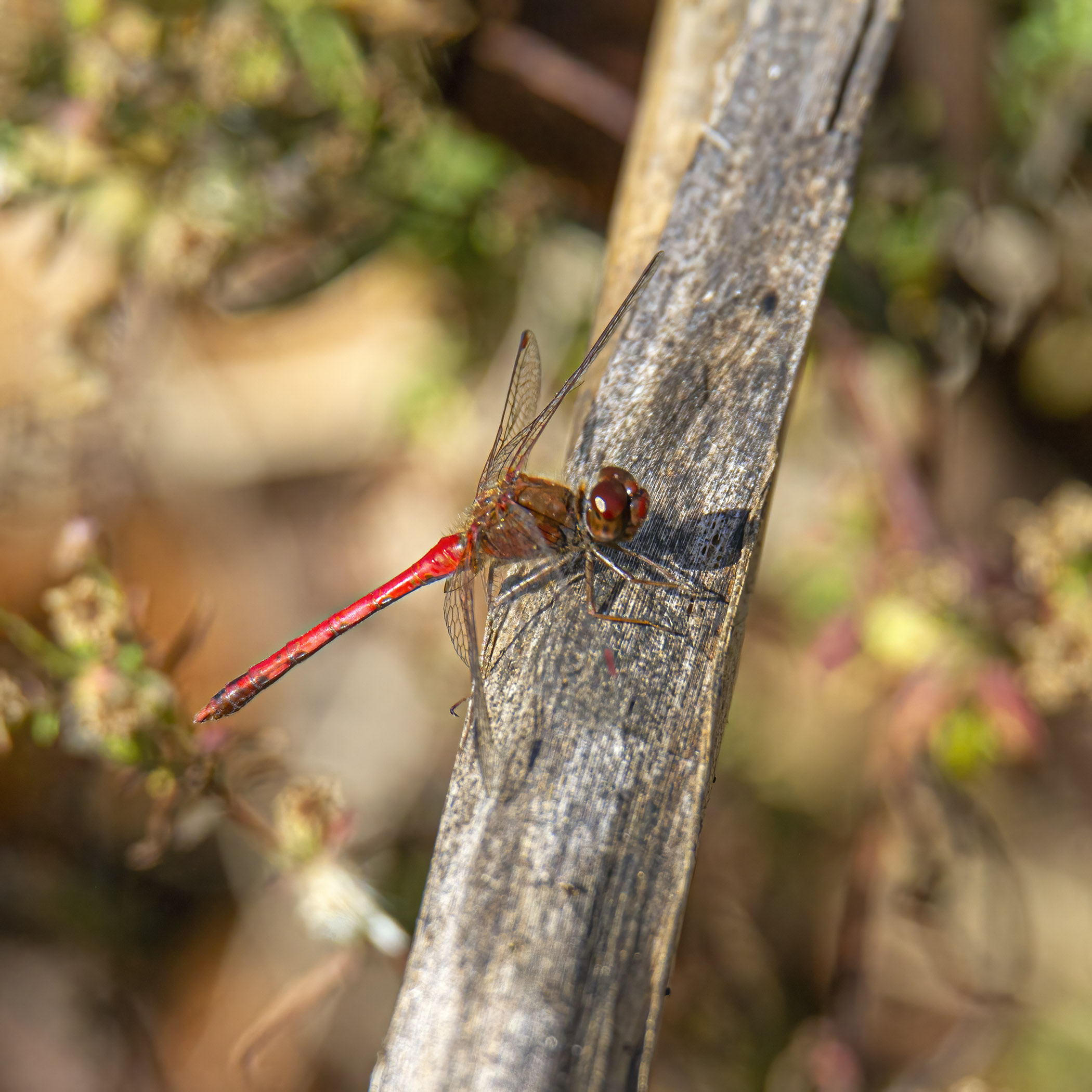
We have reached the point of the season when the only dragonflies remaining are the hardy Autumn Meadowhawks (Sympetrum vicinum). I try to photograph every one that I see, knowing that it could be the last one that I spot for the year. In past years I have sometime seen Autumn Meadowhawks in December, but their continued presence is dependent on a number of factors, including the weather.

I photographed this Autumn Meadowhawk last Friday at Occoquan Bay National Wildlife Refuge in Northern Virginia—it was one of a half-dozen or so that I spotted that day. The little dragonfly appeared to be staring right at me with a mixture of curiosity and defiance. The dragonfly was perched on a log and I was happy to capture some of the texture of the wood along with a bit of autumn color in the background.

I will continue to keep an eye out for these little red dragonflies, knowing full well that their time is rapidly coming to an end.

Autumn Meadowhawk

© Michael Q. Powell. All rights reserved.

Read Full Post »

It has been quite a while since I have seen any dragonflies other than Autumn Meadowhawks, so I was thrilled yesterday (17 November) when I spotted this Wandering Glider (Pantala flavescens) patrolling over a field at Occoquan Bay National Wildlife Refuge. I watched and waited for a long time and the dragonfly finally landed for a moment.

I captured the image below with my Tamron 150-600mm telephoto zoom lens extended all the way to 600mm on my Canon 7D DSLR. The dragonfly was perched only a few inches above the ground, so I had to crouch down quite low to get this shot. Although I had my camera on a monopod, it was tough to get into a steady shooting position and I had to focus manually, because my camera’s autofocus kept locking onto the vegetation. I took lots of photos and happily a few of them were in focus and were relatively sharp.

Wandering Gliders are a migratory species and are considered to be the most widespread dragonfly on the planet, with good population on every continent except Antarctica. According to Wikipedia, Wandering Gliders, also known as Globe Skimmers, “make an annual multigenerational journey of some 18,000 km (about 11,200 miles); to complete the migration, individual globe skimmers fly more than 6,000 km (3,730 miles)—one of the farthest known migrations of all insect species.” Wow!

Wandering Glider

© Michael Q. Powell. All rights reserved.

Read Full Post »

I can’t totally exclude the possibility that I may see a hardy survivor of another species, but it is beginning to look like Autumn Meadowhawks (Sympetrum vicinum) are the sole remaining dragonfly species. Last week I spotted quite a few of them during a visit to Huntley Meadows Park, a county-owned marshland not far from where I live.

I tried to capture images of these bright red beauties in as many different environments as I could. Autumn Meadowhawks often perch on the ground, which does not provide a very interesting background, as you can see in the final photo. It is much more interesting if they perch on fallen leaves, or even better if they choose a more elevated perch.

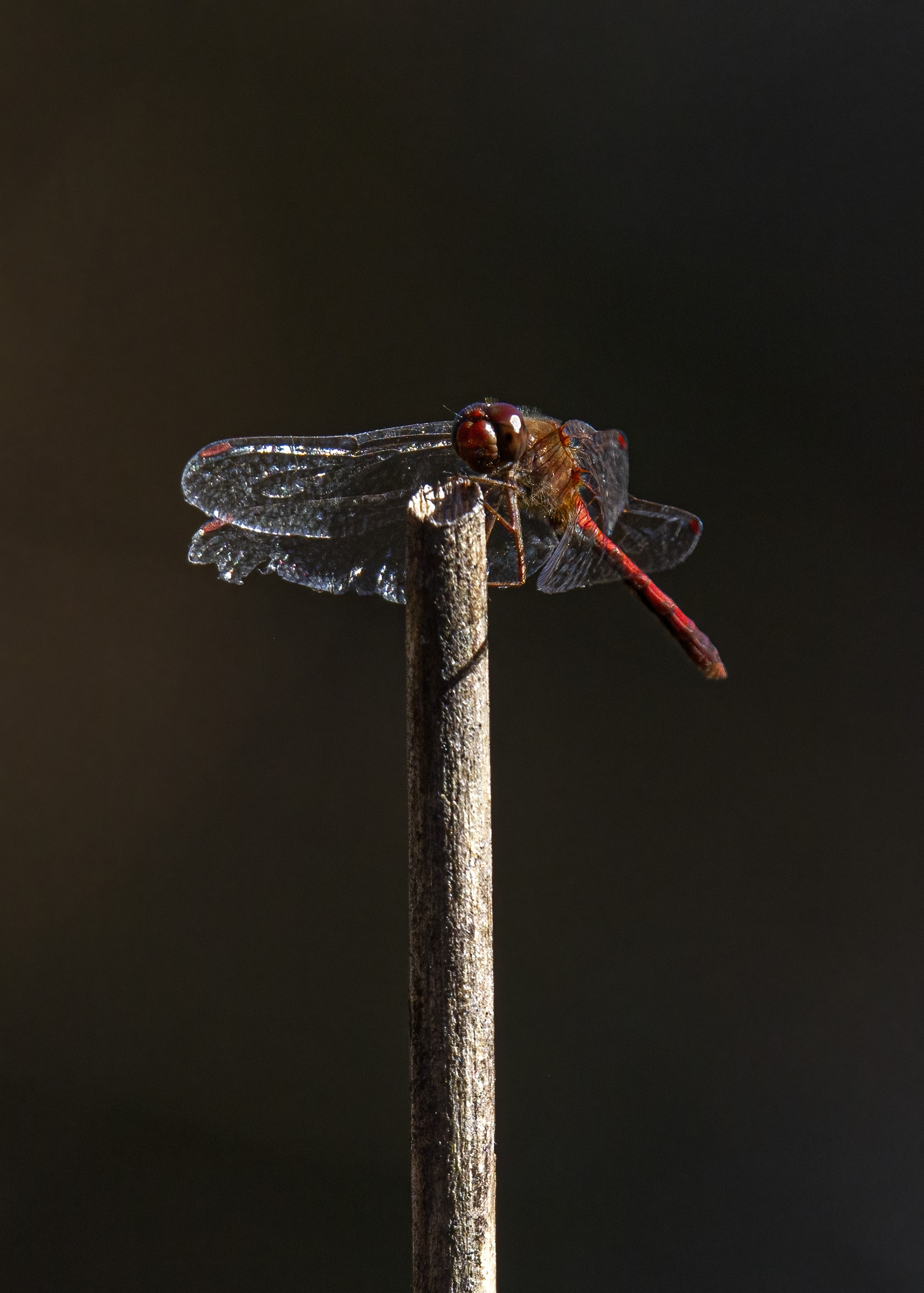
The photos below give you an idea of how I try to “work” a subject. I try to shooting from different angles and distances.  When possible, I try to selectively include or exclude background elements by choosing the appropriate camera settings, as you can see in the fourth photo, where I caused the background to be totally out of focus. Paying attention to the direction of the light really helps too, as you can see particularly in the second image in which the light is so directional that it almost looks like a studio portrait.

Autumn Meadowhawks will probably be around for another few weeks or maybe a month or so, depending in part on the severity of the local weather. At that point, I will rekuctantly turn my focus to birds, landscapes, and other non-insect subjects. I also hope to devote a bit more attention to learning more about creating videos—I have a modest YouTube channel that I have allowed to languish this past year.

Autumn Meadowhawk

Autumn Meadowhawk

Autumn Meadowhawk

Autumn Meadowhawk

Autumn Meadowhawk

© Michael Q. Powell. All rights reserved.

Read Full Post »

And then there was one…

Now that the calendar has turned over to November, we have reached the point in the dragonfly season when there is essentially only one remaining species, the Autumn Meadowhawk (Sympetrum vicinum). There is a chance that I will encounter a hardy survivor from some of the summer species or a migratory dragonfly species passing through our area, but in all likelihood, the only dragonflies that I am likely to see this month are the tiny red Autumn Meadowhawks.

This past Thursday I visited Occoquan Bay National Wildlife Refuge and spotted a total of about ten Autumn Meadowhawks at various points throughout the refuge. Unlike some species that require specific habitats, Autumn Meadowhawks seem to be pretty adaptable and I have found them in a variety of different environments.

The dragonfly in the first photo is a female Autumn Meadowhawk—you can tell it is female by looking at her terminal appendages, i.e. the tip of her “tail.” She was perching more or less in the open, so I managed to capture an obstructed shot of her.

Most of the time, though, Autumn Meadhawks perch low to the ground on fallen leaves and dried-up vegetation, as you can see in the final two shots. Both photos show male Autumn Meadowhawks. I love the lighting in the penultimate shot, although the cluttered background makes the dragonfly a little hard to see. In the final photo, I really like the way that the dragonfly appeared to be looking up at me with a sense of curiosity.

Autumn Meadowhawk

Autumn Meadowhawk

Autumn Meadowhawk

© Michael Q. Powell. All rights reserved.


Read Full Post »

Now that Autumn Meadowhawk dragonflies (Sympetrum vicinum) have become the only dragonflies that I see regularly, I have been paying a great deal of attention to their perches when I am photographing them—when there are a limited number of subjects available, I try to make each encounter count. During a recent trip to Huntley Meadows Park, a county-run marshland park only a few miles from where I live, I managed to capture images of these colorful little dragonflies perching on a variety of different types of vegetation.

Often I have to choose between zooming in close to show the details of my subjects or pulling way back to show the environment in which I found them. In the case of these Autumn Meadowhawks, though, the images balance those competing priorities quite well, in part, I believe, because the dragonflies were so immersed in their environment, i.e. they do not choose high perches that produce “dragonfly on a stick” photos that isolate the subject too much from its surroundings.

Autumn Meadowhawk

Autumn Meadowhawk

Autumn Meadowhawk

© Michael Q. Powell. All rights reserved

Read Full Post »

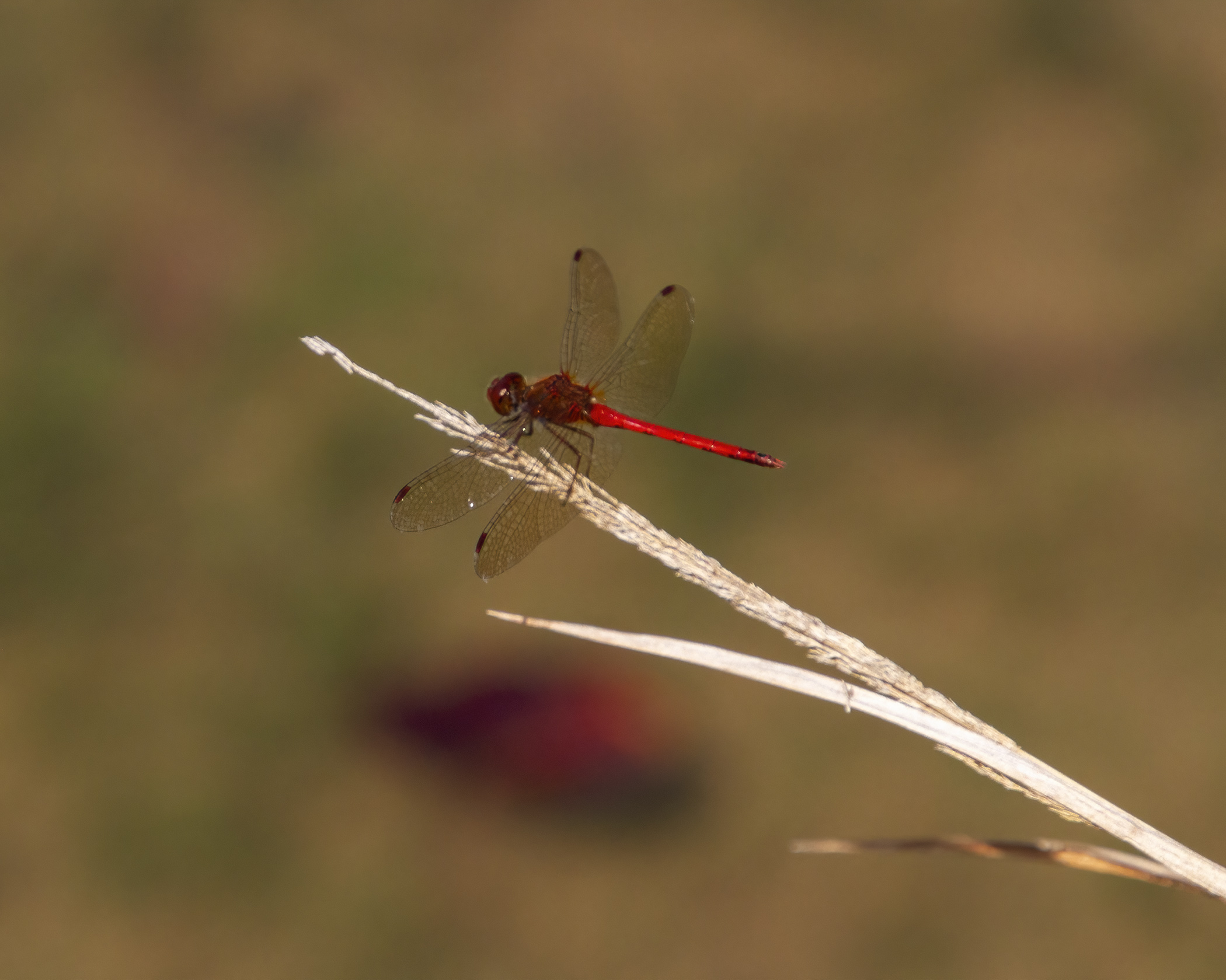
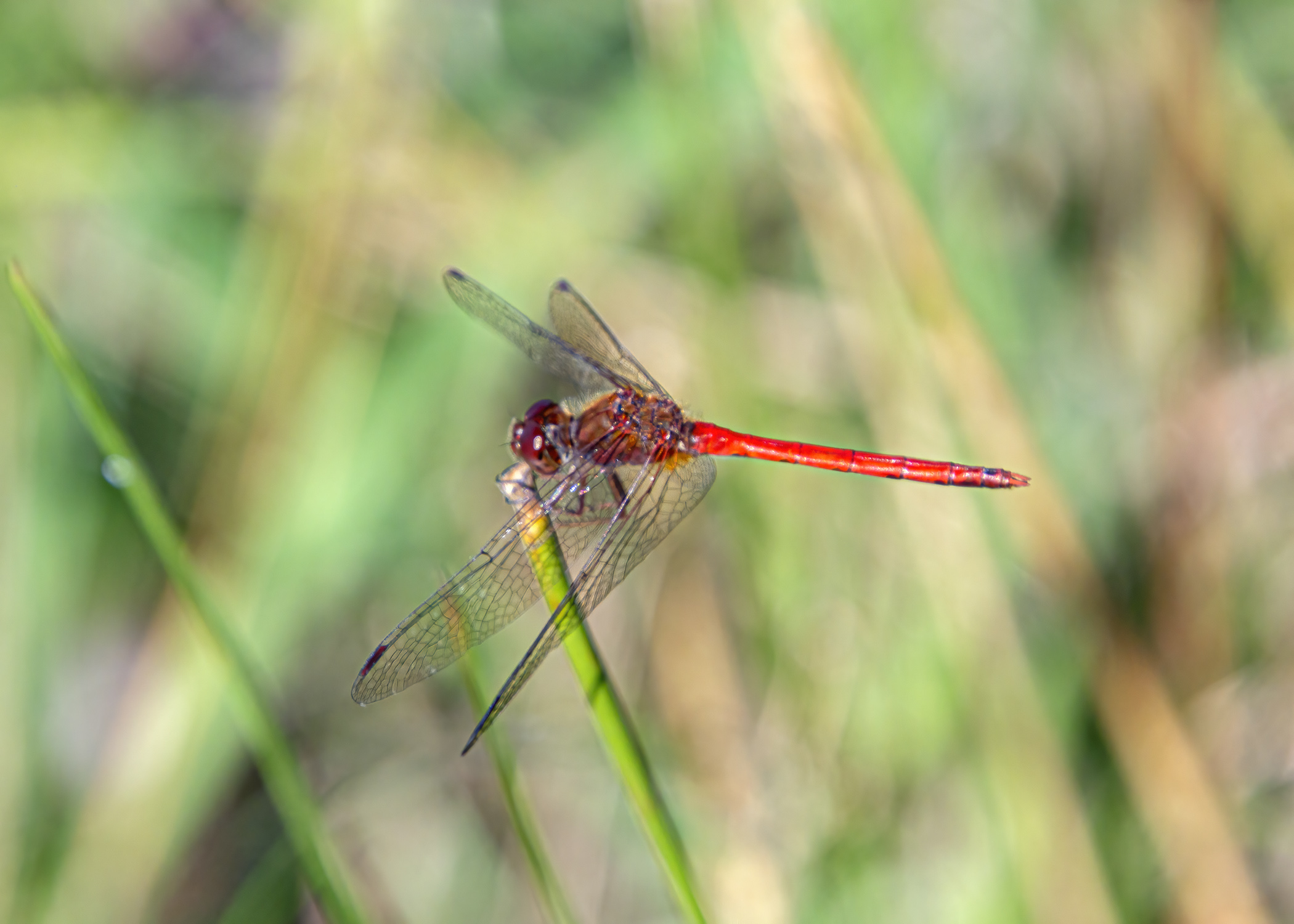
The red bodies of male Autumn Meadowhawk dragonflies (Sympetrum vicinum) make them relatively easy to spot.  However, when they choose to perch on foliage that matches their coloration, they can sometimes be well camouflaged.

The first photo shows an Autumn Meadowhawk perched on some kind of red vegetation (Virginia Creeper ?) at Huntley Meadows Park last Thursday. The red leaves really help to give the image a feel of autumn.

In the second image, the dragonfly stands out a bit more, but the dying leaves provide an artistically pleasing backdrop for the beautiful little dragonfly—I love this composition a lot.

Autumn Meadowhawk

Autumn Meadowhawk

© Michael Q. Powell. All rights reserved.


Read Full Post »

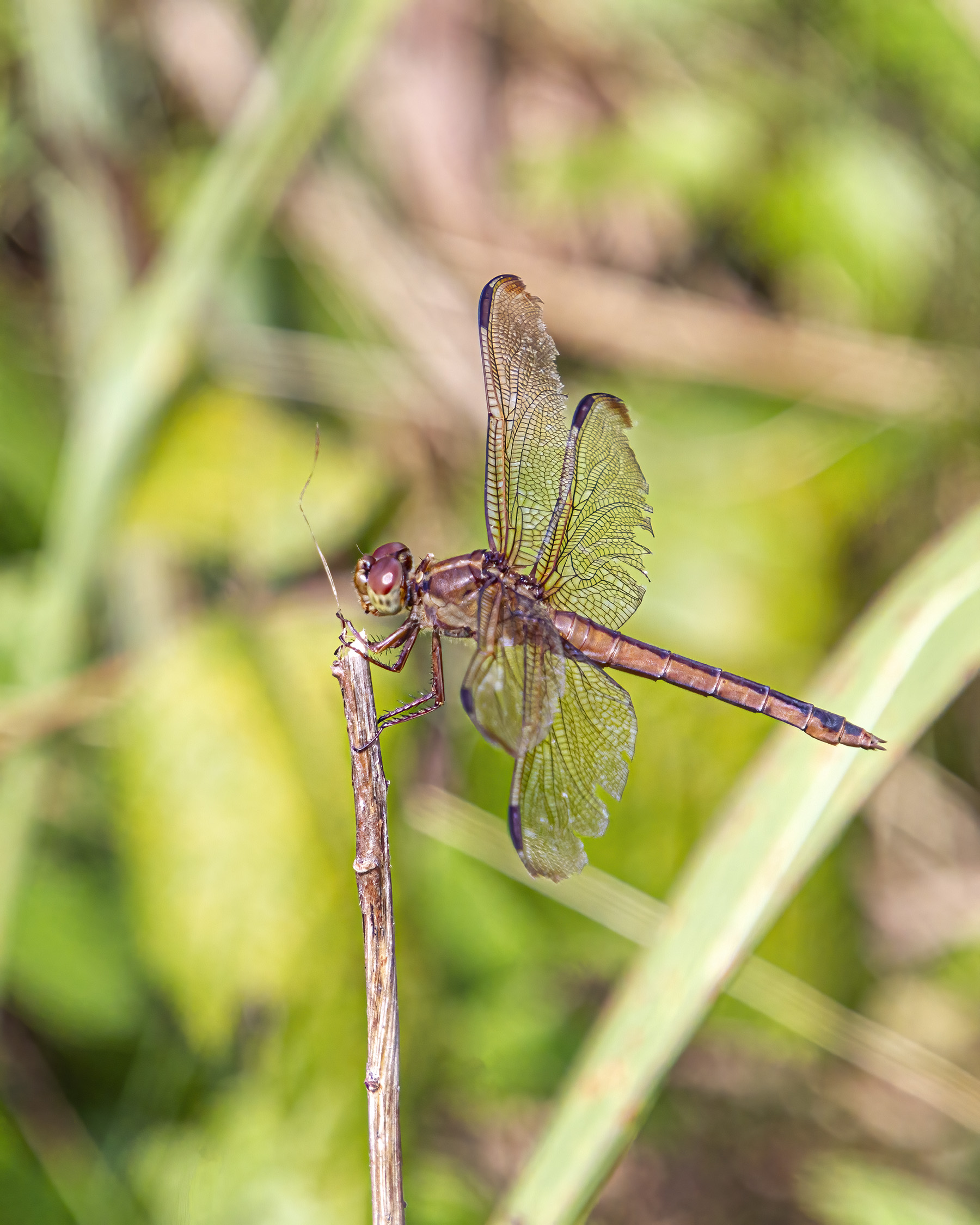
I was thrilled yesterday on Thursday at Huntley Meadows Park, a local marshland park, when I finally spotted some Blue-faced Meadowhawk dragonflies (Sympetrum ambiguum), a stunning species that is one of my favorites, after searching in vain for them at other locations for over a month. The Blue-faced Meadowhawk is a late-season dragonfly that is somewhat similar in appearance to the more common Autumn Meadowhawk—males of both species have bright red bodies, but the Autumn Meadowhawks have brown eyes.

The females of both species are more muted in their coloration than their male counterparts, as is often the case with many dragonflies and birds, so they have more natural camouflage and are frequently more difficult to find. The second image shows a female Blue-faced Meadowhawk that I managed to spot in the same general area as the male in the first photo. I love the way that the female dragonfly appeared to be singing a song as she basked in the sunlight on some dried-out vegetation.

Blue-faced Meadowhawk

Blue-faced Meadowhawk

© Michael Q. Powell. All rights reserved.


Read Full Post »

I walked about for a couple of hours on Wednesday at Occoquan Bay National Wildlife Refuge and visited some of my favorite dragonfly sites, but managed to spot only three dragonflies. Of those three, the only one that I managed to photograph was this pretty little Autumn Meadowhawk (Sympetrum vicinum).

Autumn Meadowhawks are quite small, about 1.3 inches (33 mm) in length, so they are not easy to spot, despite their bright red color. They tend to stay close to the ground, making short flights most of the time, so you have to be looking down to see them. At this time of the year, I focus a good amount attention on birds, so I end up alternating between looking up for birds and down for insects.

I really like the color and texture of the rocks on which the dragonfly chose to perch. Their cool muted tones contrast nicely with the red and brown colors of the dragonfly.

Autumn Meadowhawk

© Michael Q. Powell. All rights reserved.

Read Full Post »

There were several Common Green Darner dragonflies (Anax junius) flying overhead on 10 October at Occoquan Bay National Wildlife Refuge. One of them landed and perched momentarily low in the vegetation and I was able to capture this image.

I have been seeing fewer and fewer dragonflies on the ground as we move deeper and deeper into October, but in the air I have been seeing quite a few Common Green Darners, Black Saddlebags, and Wandering Gliders, the dragonfly species that migrate through our area. Many of the members of the surviving summer species appear to be faded and tattered, but the migrants appear to be bright and pristine.

The tangled grasses and vegetation where the dragonfly was perched were dried out and mostly void of color, which helps the green of the dragonfly’s thorax to really stand out in the photo. I also like the way that I was able to capture the transparency and details of the dragonfly’s wings.

Common Green Darner

© Michael Q. Powell. All rights reserved.

Read Full Post »

What signals the arrival of autumn for you? Perhaps it is the changes in the foliage, the cooling of the temperatures, or the shortening of the daylight hours. In recent years Autumn Meadowhawk dragonflies (Sympetrum vicinum) have become the harbingers of autumn, visible signs that the end of the dragonfly season is inexorably drawing near.

I spotted my first Autumn Meadowhawks this year on 2 October at Occoquan Bay National Wildlife Refuge. This species usually appears in late September and most years is the last dragonfly species to disappear—I have seen Autumn Meadowhawks as late as December some years and there have been some reports of them in early January.

A number of other dragonflies are still active, but by early November most of them will be gone. I will still be looking to photograph those hardy survivors in the upcoming months, but, as recent postings suggest, I will eventually be shifting a lot of my focus from insects to birds.

Autumn Meadowhawk

Autumn Meadowhawk

Autumn Meadowhawk

© Michael Q. Powell. All rights reserved.


Read Full Post »

I was thrilled to spot this handsome Russet-tipped Clubtail dragonfly (Stylurus plagiatus) last Wednesday at Jackson Miles Abbott Wetland Refuge. I love the way that the dragonfly was clinging to the leaf, looking almost like it was peeping over the edge.

Russet-tipped Clubtails are a late season species and are seen most often in August and September in my area. Unlike many of the dragonflies that I see regularly that prefer pole-like perches or perch flat on the ground, Russet-tipped Clubtails like to hang from the leaves of vegetation at an angle or almost vertically—members of the genus Stylurus are sometimes called “Hanging Clubtails.”

Russet-tipped Clubtail

© Michael Q. Powell. All rights reserved.

Read Full Post »

The weather this past week has been cool, cloudy, and rainy, with high temperatures struggling to reach 65 degrees (18 degrees C). I fear that many dragonflies will not survive and so I celebrate each sighting of a dragonfly species, conscious that it could be the last one that I see this season.

Last Thursday I spotted this Needham’s Skimmer dragonfly (Libellula needhami) while I was visiting Occoquan Bay National Wildlife Refuge. Its wings are tattered and its colors have faded, but it was still active.

Autumn often makes me pensive and I become more aware of the passage of time. Our lives are just as fragile and limited as those of the beautiful little insects that I am so fond of photographing. May we all find beauty, meaning, and love as we live our lives.

Needham's Skimmer

© Michael Q. Powell. All rights reserved.

Read Full Post »

I was happy last Thursday when a Black Saddlebags dragonfly (Tramea lacerata) that I had been tracking overhead at Occoquan Bay National Wildlife Refuge perched for a moment, allowing me to capture this first image.  While it was flying, I attempted multiple times to get a shot of it, with minimal success. The second photo is my best one.

Some dragonflies spend a lot of their time perched, but Black Saddlebags are one of the species that spends most of its time in the air, so it is rewarding to be able to see one land and to get a shot of it. Black Saddlebags are also one of the few dragonfly species that are migrate although, according to the Dragonflies of Northern Virginia website, scientists do not fully understand why they do so and have been studying their migratory patterns.

Black Saddlebags

Black Saddlebags

© Michael Q. Powell. All rights reserved.

Read Full Post »

For the last few weeks I have been searching diligently for the late-season dragonfly species that appear on the scene in late August and early September. So far I have come up mostly empty-handed, but I was thrilled to spot this cool-looking Russet-tipped Clubtail dragonfly (Stylurus plagiatus) on 6 September at Jackson Miles Abbott Wetland Refuge. In my area, Russet-tipped Clubtails  are seen most often in August and September, but they are somewhat uncommon.

As some of you know, I dabble a bit with YouTube. At about this time last year I did a little video about Russet-tipped Clubtails that you might enjoy watching. It was one of my first videos and lasts about a minute and a half.  Click on this link to view the video in YouTube. I am also embedding a YouTube link at the end of this posting. Depending on how you are reading this blog, you may be able to watch the video from within the blog.

A year ago, I had aspirations of shooting more video footage during my photography outings. I have made only minor progress in that area, but it is still something that interests me a lot. I have learned the basics of making and editing videos, but am struggling to figure out what stories I want to tell and how a video can help me tell those stories.

Russet-tipped Clubtail

© Michael Q. Powell. All rights reserved.


Read Full Post »

In many of my blog postings, I concentrate on a single species of dragonflies, but today I want to celebrate the diversity of species that I have been seeing during the month of September. Despite my warnings in some earlier postings about the decreasing numbers of dragonflies, I continue to see a variety of species—Northern Virginia, where I live, is blessed to have an abundance of different dragonflies and damselflies.

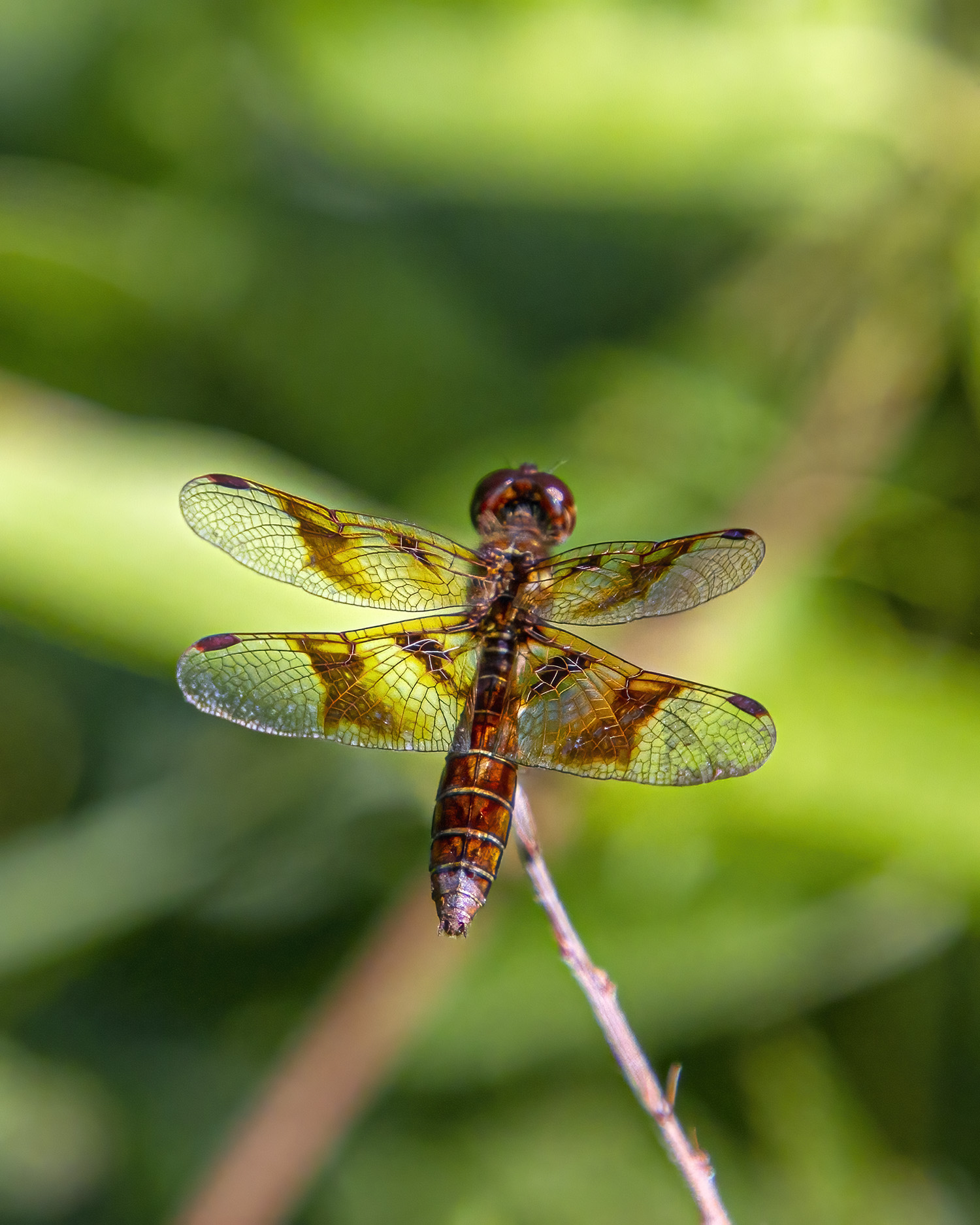
The first photo shows a female Eastern Amberwing (Perithemis tenera), the smallest dragonfly in our area.  Males of this species hang out at ponds, but the females, which do not have amber wings like the males, are usually found in vegetation some distance from the water.

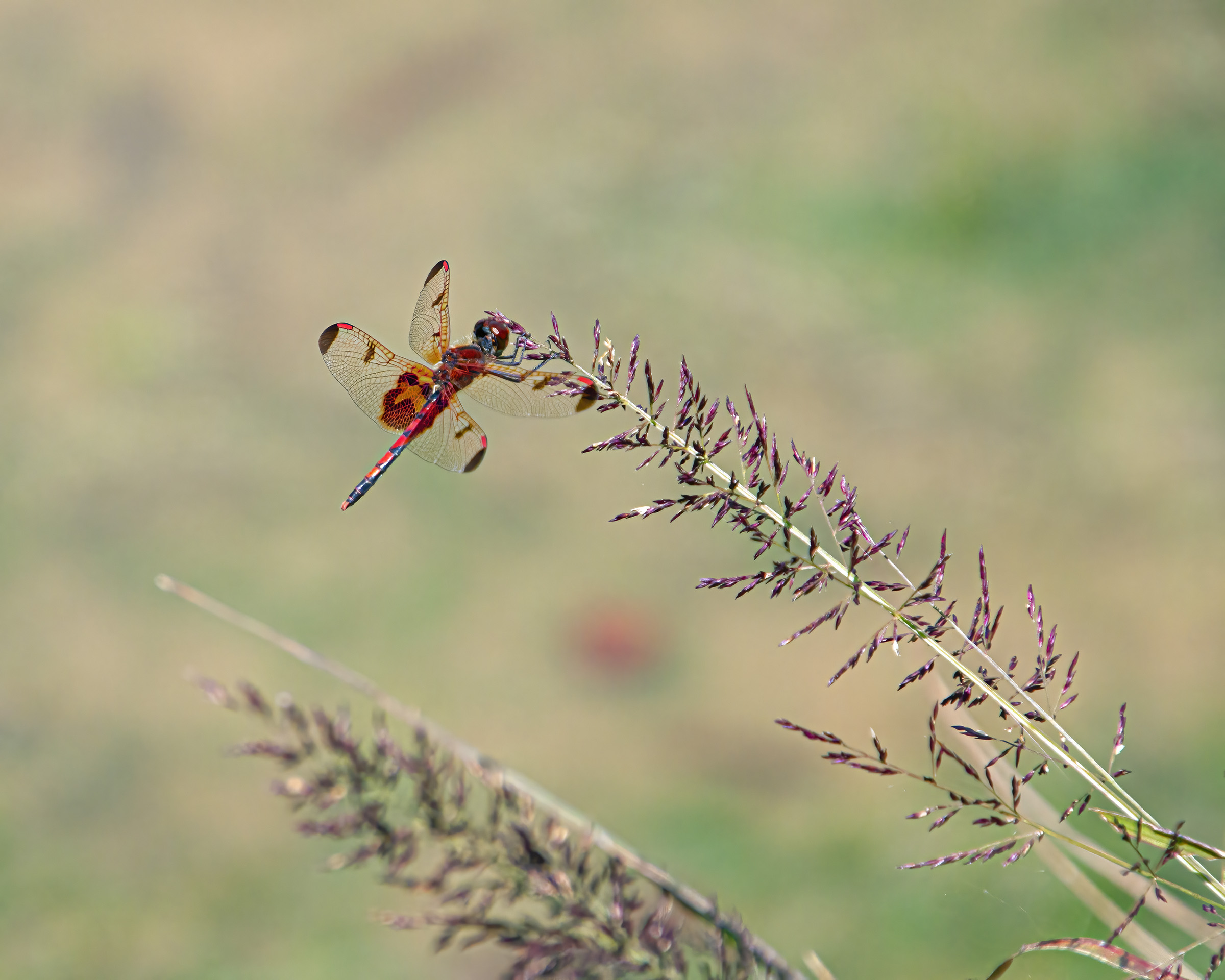
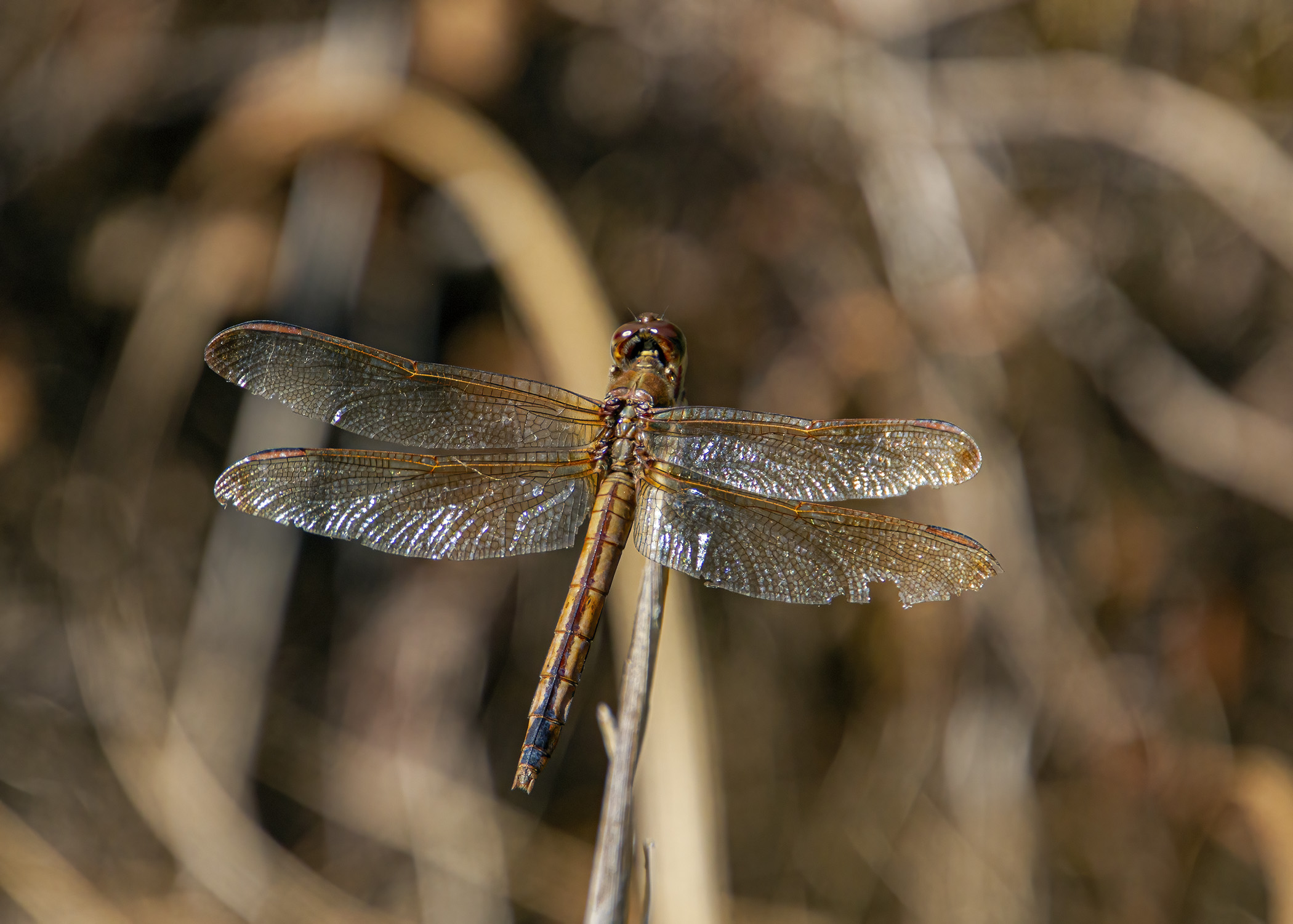
The second image shows a male Calico Pennant (Celithemis elisa), a beautifully colored dragonfly with distinctive patterns on its wings. The third image shows a mature female Needham’s Skimmer (Libellula needhami). Her wings show some damage and her color has fades, but she is still beautiful and the golden strands on the front edges of her wings were sparkling in the sunlight when I captured this image.

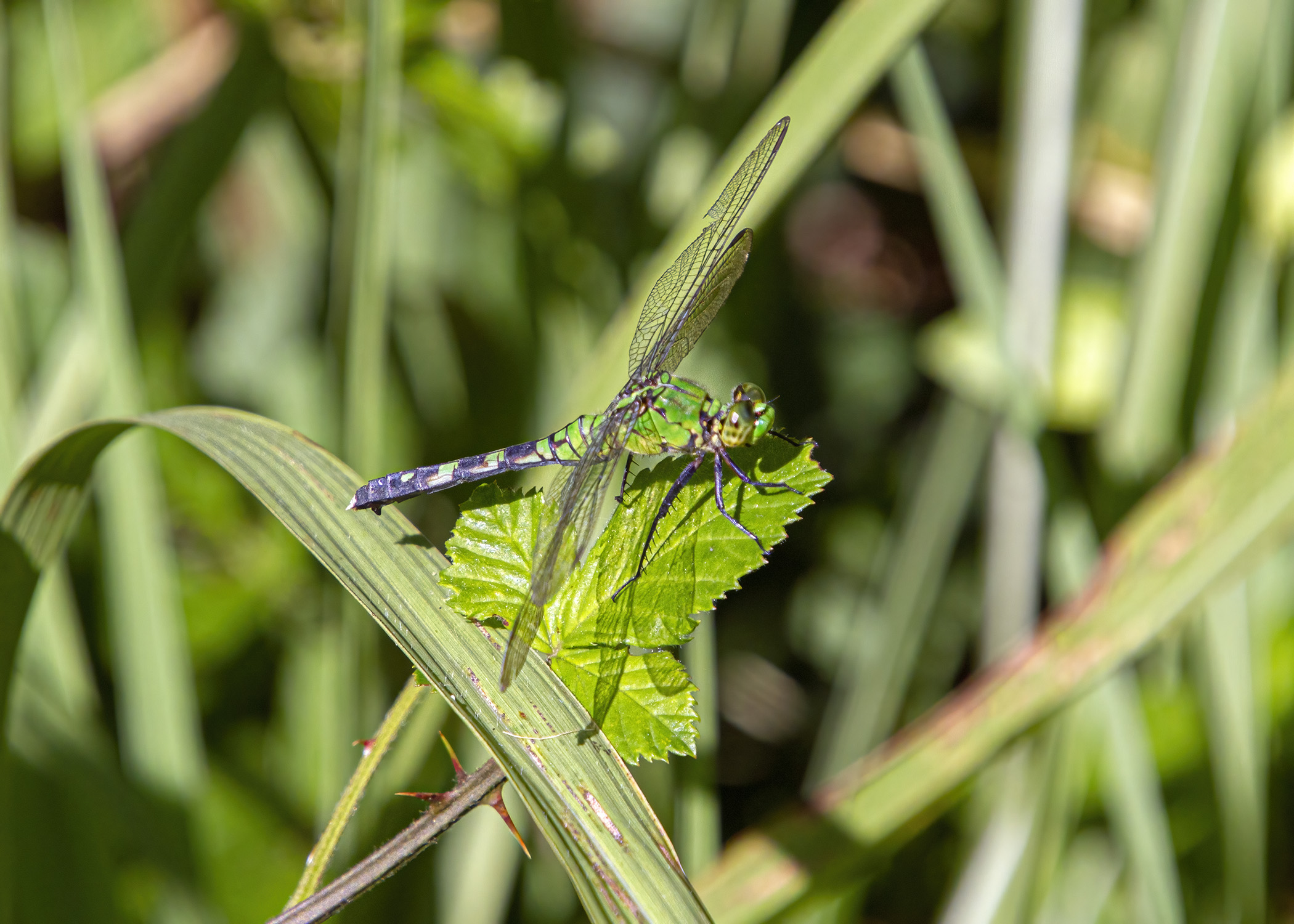
The fourth image shows a female Eastern Pondhawk (Erythemis simplicicollis), one of the most common dragonfly species in my area. I love the brilliant emerald color of the females (and immature males) of this species and the black markings on the abdomen.

The dragonfly in the last photo was the toughest one for me to identify. It had flown up into a tree and I was looking into the sun when I captured the image. However, I am pretty sure that it is a female Great Blue Skimmer (Libellula vibrans).

All of these dragonflies belong to the Skimmer family, the largest dragonfly family that includes the species most likely to be seen by a casual dragonfly watcher. The other families, which are generally harder to find, include Clubtails, Cruisers, Darners, Emeralds, Petaltails, and Spiketails. If I remember correctly, I have managed this season to photograph at least one dragonfly in all seven of these dragonfly families.
Eastern Amberwing

Calico Pennant

Needham's Skimmer

Eastern Pondhawk

Great Blue Skimmer

© Michael Q. Powell. All rights reserved.


Read Full Post »

Dragonflies were flying overhead at several locations at Occoquan Bay National Wildlife Refuge on Thursday, including a Common Green Darner (Anax junius), multiple Black Saddlebags (Tramea lacerata), and at least one Wandering Glider (Pantala flavescens). The Wandering Glider, alas, was elusive and I could not get an in-flight shot of it, but I did manage to get a shot of a Common Green Darner (1st photo) and a Black Saddlebags (2nd photo).

All three of these dragonfly species are migratory species. Migrating dragonflies will often fly in mixed swarms that are large enough that they are sometimes picked up by weather radars. For more details about this phenomenon, check out this September 2019 article in the Washington Post entitled “Weather radar is picking up swarms of dragonflies from the Midwest to the Mid-Atlantic.”

Common Green Darner

Black Saddlebags

© Michael Q. Powell. All rights reserved.

Read Full Post »

For those of us in the northern hemisphere who use the astronomical calendar, tomorrow (23 September) marks the beginning of the autumn season. In so many of the photos that I have taken during the past few weeks, I have noted signs of the changing seasons.

The warm orange tones in this shot of a female Needham’s Skimmer dragonfly (Libellula needhami) remind me of pumpkins and autumn leaves. The fading flowers in the photo of a male Common Whitetail dragonfly (Plathemis lydia) remind us that the growing season is coming to an end. The dryness of the stalk on which the Slaty Skimmer (Libellula incesta) dragonfly perch brings to mind the droughts and extreme weather that many have experience during this summer.

Embrace the new season and the opportunities is provides, whether it be autumn in the northern hemisphere or spring for those in the southern hemisphere.

Needham's Skimmer

Common Whitetail

Slaty Skimmer

© Michael Q. Powell. All rights reserved.


Read Full Post »

Wings are tattered. Flowers have faded. Summer is ending. (Blue Dasher dragonfly (Pachydiplax longipennis) photographed on 6 September at Jackson Miles Abbott Wetland Refuge.)

Blue Dasher

© Michael Q. Powell. All rights reserved.

Read Full Post »

I don’t often see dragonflies perch on flowers, so I was delighted when this female Blue Dasher (Pachydiplax longipennis) decided to rest for a moment on an aster plant in bloom last week at Jackson Miles Abbott Wetland Refuge.

I decided not to crop this photo to show the dragonfly better, because I really like the sweep of bright color on the left side of the image and the more muted out-of-focus colors on the right side. I am growing to love this type of environmental portrait, which goes against my normal approach of trying to fill as much of the frame as possible with my primary subject.

Blue Dasher

© Michael Q. Powell. All rights reserved.

Read Full Post »

Do you prefer to live your life widely or deeply? That is a curious question, but it is one that affects the way that many of us approach our photography and our lives in general. Let me reframe the question. Are you always seeking to visit new places to see new things, i.e. living “widely”, or would you rather spend your time in familiar locations with familiar subjects, going back to the same places repeatedly, i.e. living “deeply?”

As you may have guessed, I tend to put myself in the second category. I like to observe the seasonal changes at a few local areas, watching for new species to arrive and to depart (or disappear), observing the changes in the flora and the fauna, and discovering favorite spots for my photography. I am not really consumed by a need or desire to add to my “life list” of birds or insects that I have seen, though I do enjoy visiting other locations.

All of these thoughts were percolating in my brain on Wednesday when I visited Jackson Miles Abbott Wetland Refuge to see which dragonflies were still present. I was particularly delighted to spot several Swift Setwing dragonflies (Dythemis velox). In June 2016 at this same refuge, I first photographed a Swift Setwing—a primarily southern species that had never before have been spotted in Fairfax County, the county where I live—and each year since I have eagerly returned to learn more about the species. For more details on my initial sighting, check out my 2016  blog posting Swift Setwing dragonfly.

It is always tough to frame shots of Swift Setwings, because they like to perch on vegetation that overhangs the water and they face the water. The sun was shining brightly and I was happy to capture a couple of images in which the dragonfly appears to be perching among the clouds. I did try to get down low, but I think the background is a reflection of the sky in the water of the pond and not the sky itself.

For the second image, I was far away from the dragonfly. I couldn’t get a clear shot of the Swift Setwing, so I chose to use some vegetation blocking my view as a framing element in the foreground. I like the way that the image turned out.

Swift Setwing

Swift Setwing

© Michael Q. Powell. All rights reserved.

Read Full Post »
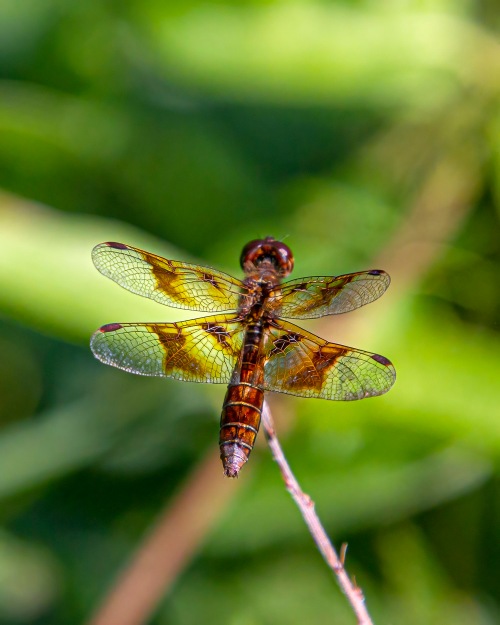
From a distance, many dragonflies are hard to identify. However, the wing markings on a male Twelve-spotted Skimmer dragonfly (Libellula pulchella) are so distinctive that I could identify this dragonfly immediately when I spotted it yesterday in the marshland at Jackson Miles Abbott Wetland Refuge.

If you take the time to count all of the spots on the wings of the dragonfly, you come up with a number much higher than 12. Why then is it called a Twelve-spotted Skimmer? Someone decided that it was best to count only the dark spots, because only the males generally have the white spots. It is a rare case when gender equality seems to have factored into the name of a species—normally species’ names are based on the characteristics of the male.

Twelve-spotted Skimmer

© Michael Q. Powell. All rights reserved.

Read Full Post »
The clock is ticking as we move towards the end of the dragonfly season and I see a lot of mating dragonflies that appear to be driven by the biological imperative of ensuring the perpetuation of their species. Late in August I observed this pair of Blue Dasher dragonflies (Pachydiplax longipennis) at Occoquan Regional Park in the mating position that is sometimes referred to as “the wheel.”

When mating is completed, the female, the lower dragonfly in the photo, will may lay 500 or more eggs by flying low over the water usually near a heavily vegetated pond edge and repeatedly tapping her abdomen to the surface. Once the eggs hatch, the life cycle of a dragonfly larva begins as a nymph that live underwater and eat smaller aquatic insects. The nymphs, also referred to as naiads, live underwater for up to two years and shed their exoskeletons six or more times.

According to an article in Cambridge Day, “When a naiad is ready to metamorphose into an adult dragonfly, it swims to the surface at night. There, it lifts its head out of the water as its body adapts to breathing air, then climbs a plant stem out of the water, where its skin splits behind its head and the adult dragonfly emerges. The adult swallows air to plump up its body and pumps hemolymph, the bloodlike substance of insects, into its wings.”

For more information about the life cycle of Blue Dasher dragonflies, check out these postings at Life on CSG Pond and at Cambridge Day.

Blue Dasher

© Michael Q. Powell. All rights reserved.


Read Full Post »
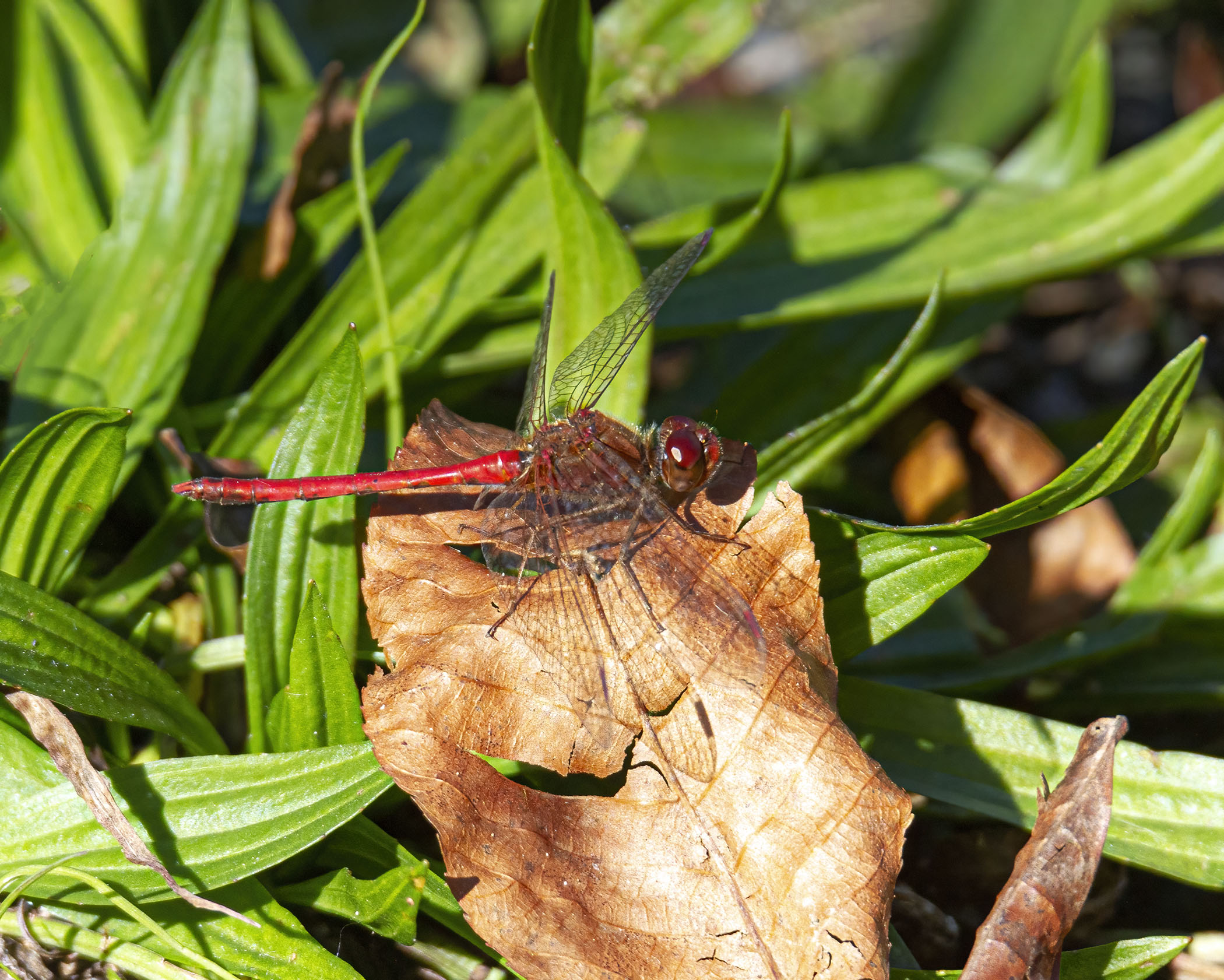
As we flip the pages of our monthly calendars from August to September, it is not unusual for me to encounter dragonflies with tattered wings. For many of these dragonflies, it has been a long, tough summer and they will only be with us for a few more weeks or perhaps a month or two. Despite the damage to their wings, the dragonflies appear to be fully capable of flight—somehow they are able to compensate for their infirmities.

I spotted this Great Blue Skimmer dragonfly (Libellula vibrans) this past Monday at Jackson Miles Abbott Wetland Refuge. It is a little tough to tell in this image, but several of the wings showed wear-and-tear. The shredded appearance of the vegetation is a perfect complement to this late season dragonfly—they both speak to me of the inexorable passage of time and the inevitable changes in our appearance and capabilities brought on the aging process.

Great Blue Skimmer

© Michael Q. Powell. All rights reserved.

Read Full Post »
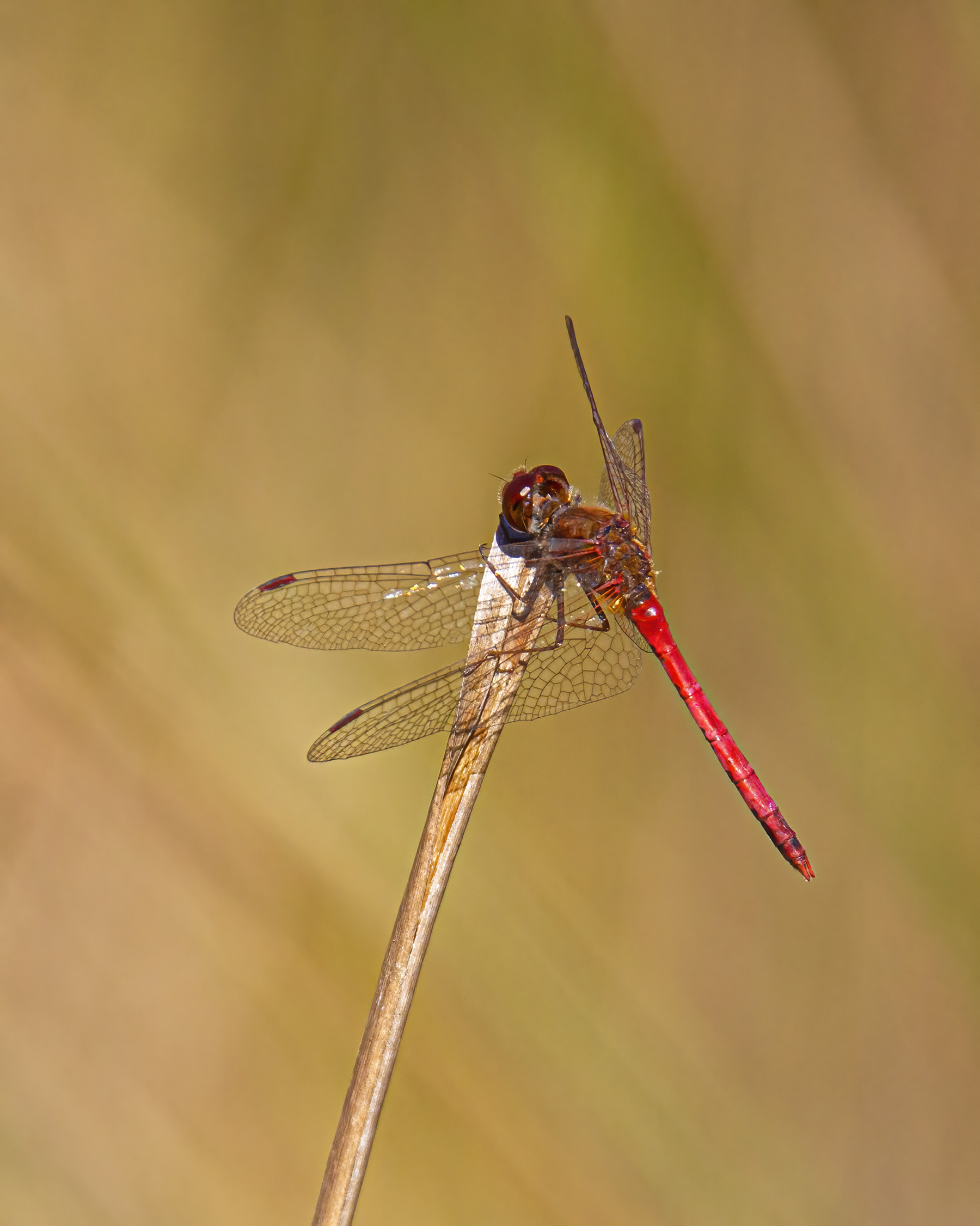
I do not see Carolina Saddlebags dragonflies (Tramea carolina) very often and when I am lucky enough to spot one, it is usually in flight. According to the Dragonflies of Northern Virginia website, “Carolina Saddlebags appear to stick to shallow, thickly vegetated ponds and marshlands,” which is a pretty good description of the place where I spotted this one last Saturday at Occoquan Bay National Wildlife Refuge. The same website described the Carolina Saddlebag’s flight tendencies as “Strong flier, often high, rarely perches.”

I had been watching several Calico Pennant dragonflies, another species that is red and has patterned wings, as they flew around over the pond when suddenly a somewhat larger red dragonfly flew into view—Calico Pennants are approximately 1.3 inches (33 mm) in length, while Carolina Saddlebags are 2.0 inches (51 mm). I visually tracked the Carolina Saddlebags and was able to follow it as it perched high on a stalk of vegetation in an adjacent field.

I moved slowly and stealthily, but did not have room for maneuver to compose a few shots. The lighting was best when from the angle at which I captured the first shot and you can see some of the details and markings on the dragonfly’s body. In the second image, you get a better look at the “saddlebags,” the reddish-brown patches on the rear wings, but most of the body is silhouetted.

For the third shot, I changed the height of my shooting angle to make the background a bit more interesting than the sky. The blurry greenish background in the image was some distant trees. As you may have noticed, the dragonfly’s position in the second and third images is almost the same

Carolina Sadddlebags

Carolina Sadddlebags

Carolina Sadddlebags

© Michael Q. Powell. All rights reserved.

Read Full Post »
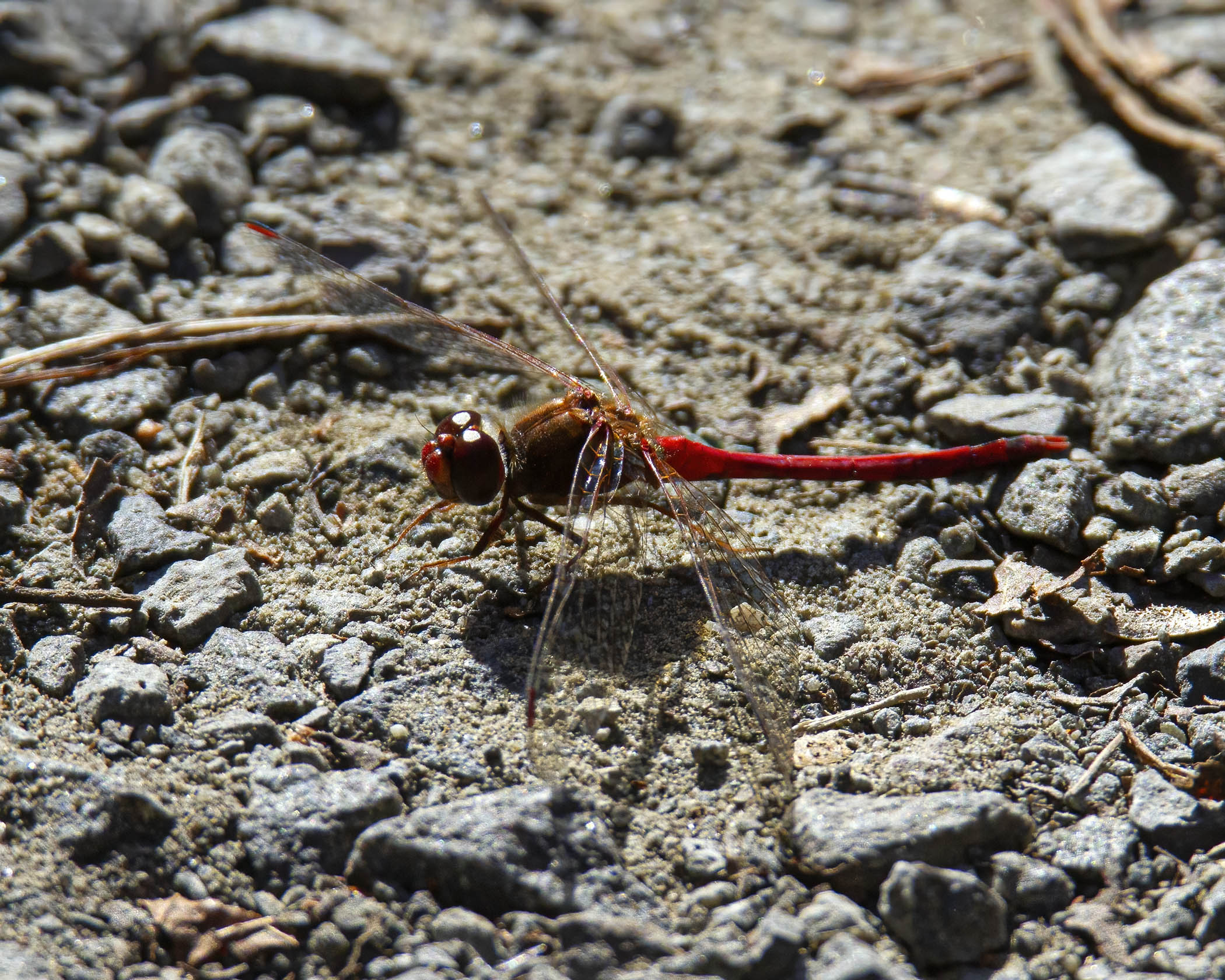
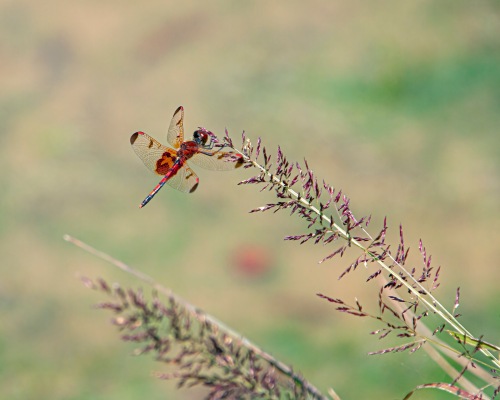
Calico Pennant dragonflies (Celithemis elisa) often remind me of pole vaulters. They hold on to a long, narrow “pole” at the very end and flex it, as though they were trying to propel themselves over a bar. I spotted this handsome male Calico Pennant last Saturday at Occoquan Bay National Wildlife Refuge, one of the few local spots where I encounter this spectacular species.

This will probably be my last blog posting this week. I will be driving from Virginia to Massachusetts later today to deal with some family issues and will return home this coming weekend, when I hope to resume my habit of posting nature and wildlife photos almost daily.

Calico Pennant

© Michael Q. Powell. All rights reserved.


Read Full Post »

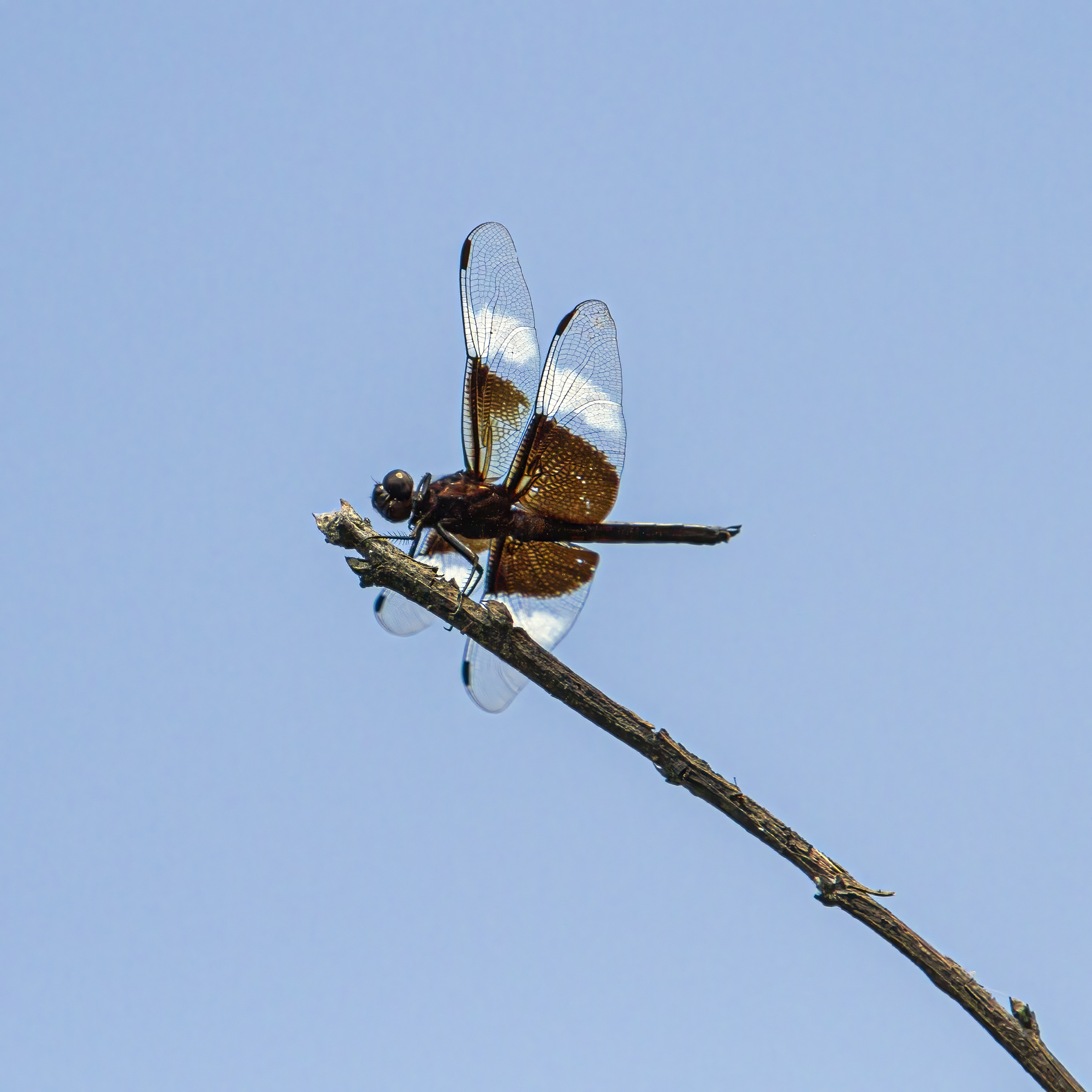
I spotted this handsome male Widow Skimmer dragonfly (Libellula luctuosa) this past Saturday at Occoquan Bay National Wildlife Refuge. Only the males of this species have white patches on their wings—the females have only the dark patches.

The Latin name for this species includes the word “luctuosa,” which means “sorrowful” or “mournful.” Apparently someone thought that the dark patches on the wings of dragonflies of this species looked like the kind of mourning crepe veils that traditionally widows were supposed to wear up to four years to show their grief.

I think that I have been reading too many warnings about people taking advantage of older people, because the name “Widow Skimmer” initially conjured up visions of young gigolos chasing after rich old ladies in Florida who have lost their husbands.

Widow Skimmer

© Michael Q. Powell. All rights reserved.

Read Full Post »

Last Monday I spotted this striking female Halloween Pennant dragonfly (Celithemis eponina) perched high in the eastern gamagrass (Tripsacum dactyloides) at Occoquan Bay National Wildlife Refuge. It was somewhat unusual for me to have a chance to photograph a dragonfly above eye level and I did my best to isolate the subject against the pale blue sky.

I really like the minimalism of this composition.  The color and texture of the gamagrass add some visual interest to the image without distracting the viewer from the primary subject.

Halloween Pennant

© Michael Q. Powell. All rights reserved.

Read Full Post »

When I am writing a blog posting with multiple photos, I will usually lead with the “best” photo. Most of the time I have a clear favorite image, but today I struggled a bit in trying to decide which image of a Calico Pennant (Celithemis elisa) was the “best” one. I was delighted on Monday at Occoquan Bay National Wildlife Refuge to have multiple opportunities to photograph male Calico Pennants, which are among the most striking dragonflies that I encounter, thanks to their bold coloration and wonderfully patterned wings.

From a technical perspective, the first image could be considered the “best.” The background is pleasantly blurred and virtually all of the dragonfly’s features are in sharp focus. Graphically this image stands out, even when viewed as a thumbnail on a cell phone.

The background in the second image is considerably more cluttered than in the first image. However, I think the color contrast between the bright red of the dragonfly and the pinkish-purple colors in the background makes it easy to see the primary subject. The vegetation helps to provide the viewer with a sense of the environment in which I photographed the dragonfly.

The third image was the most challenging to capture. Several Calico Pennants were flying around over the waters of a pond and I was thrilled to capture this in-flight shot, my first such photo of this species. Most of the other dragonflies that I have photographed as they were flying were considerably larger—a Calico Pennant is only about 1.3 inches (33 mm) in length—and it took a lot of persistence and concentration to get this shot.

The final shot was a lucky one. I was focused on the perched dragonfly and reacted quickly when it took off. From an artistic perspective, I really like this image. The mottled colors of the pond works well as a backdrop for the action and the contrast between the muddy brown and the bright red of the dragonfly makes the subject “pop.” I love the texture of the branch and the branch helps to lead the viewer’s eyes to the dragonfly. Finally, the dragonfly’s wing patterns are displayed beautifully as I managed to capture a moment when they were fully extended.

I don’t know if it is possible for me to state definitively which one of these images is the “best”—I like each of them for different reasons. Is there one that stands out to you more than the others? I’d welcome your views on this question.

Calico Pennant

Calico Pennant

Calico Pennant

Calico Pennant

© Michael Q. Powell. All rights reserved.

Read Full Post »
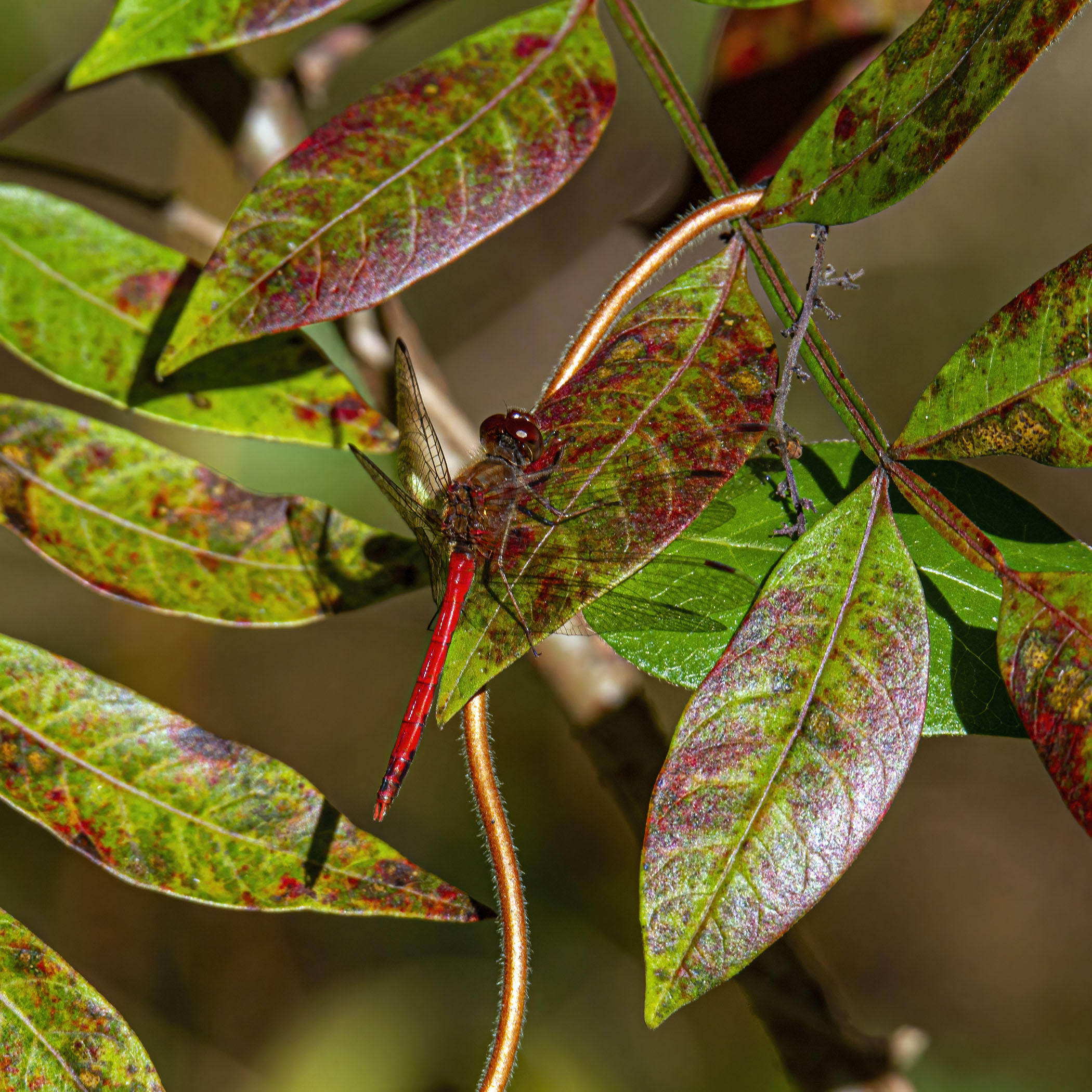
Female Eastern Pondhawk dragonflies (Erythemis simplicicollis) are quite easy to spot when they are out in the open—they are bright emerald green in color and have distinctive black stripes on their abdomens. When they land in a grassy area, however, they virtually disappear from sight, thanks to their almost perfect camouflage.

During a recent visit to Jackson Miles Abbott Wetland Refuge, I spotted this Eastern Pondhawk while it was flying and watch it land on this fallen branch. If I had not seen the dragonfly land and it had remained still on its perch, I doubt that I would have detected its presence.

Eastern Pondhawk

© Michael Q. Powell. All rights reserved.

Read Full Post »

« Newer Posts - Older Posts »