Feeds:
Posts
Comments

Posts Tagged ‘Five-lined Skink’

The temperatures were a bit lower yesterday and the air quality was better, so I finally ventured out with my camera. I managed to capture a number of fun images of things that caught my eye as I was walking along a hike-bike trail at Huntley Meadows Park, a local, county-run wetland park that I used to visit frequently until it became too popular and overcrowded.

This was my first photo expedition in the wild in more than a month and a half. I was busy with Pride things during parts of June, so I spent time in urban environments, enjoying the events, capturing only a few snapshots with my iPhone. Various combinations of high temperatures, thunderstorms, and unhealthy air quality have kept me indoors this month. To be perfectly honest, I have felt a bit sluggish and lazy, which is a bit unusual for me.

Yesterday I feel like I reconnected with my “mojo,” fully immersing myself in the environment with all of my senses engaged. I couldn’t help but notice, however, how many people that passed me had their eyes focused on their cell phones and were virtually oblivious to the beauties of nature that surrounded them.

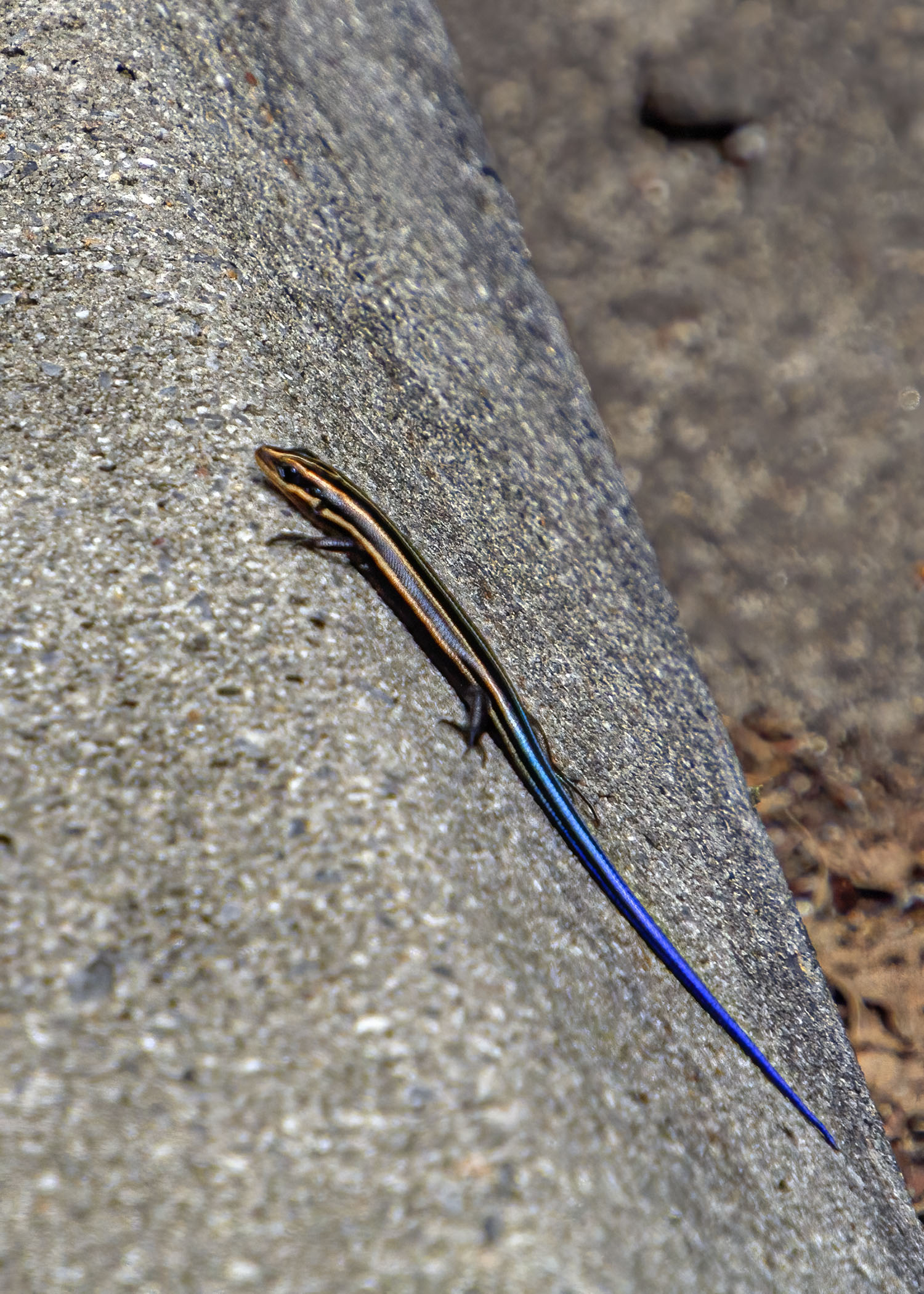
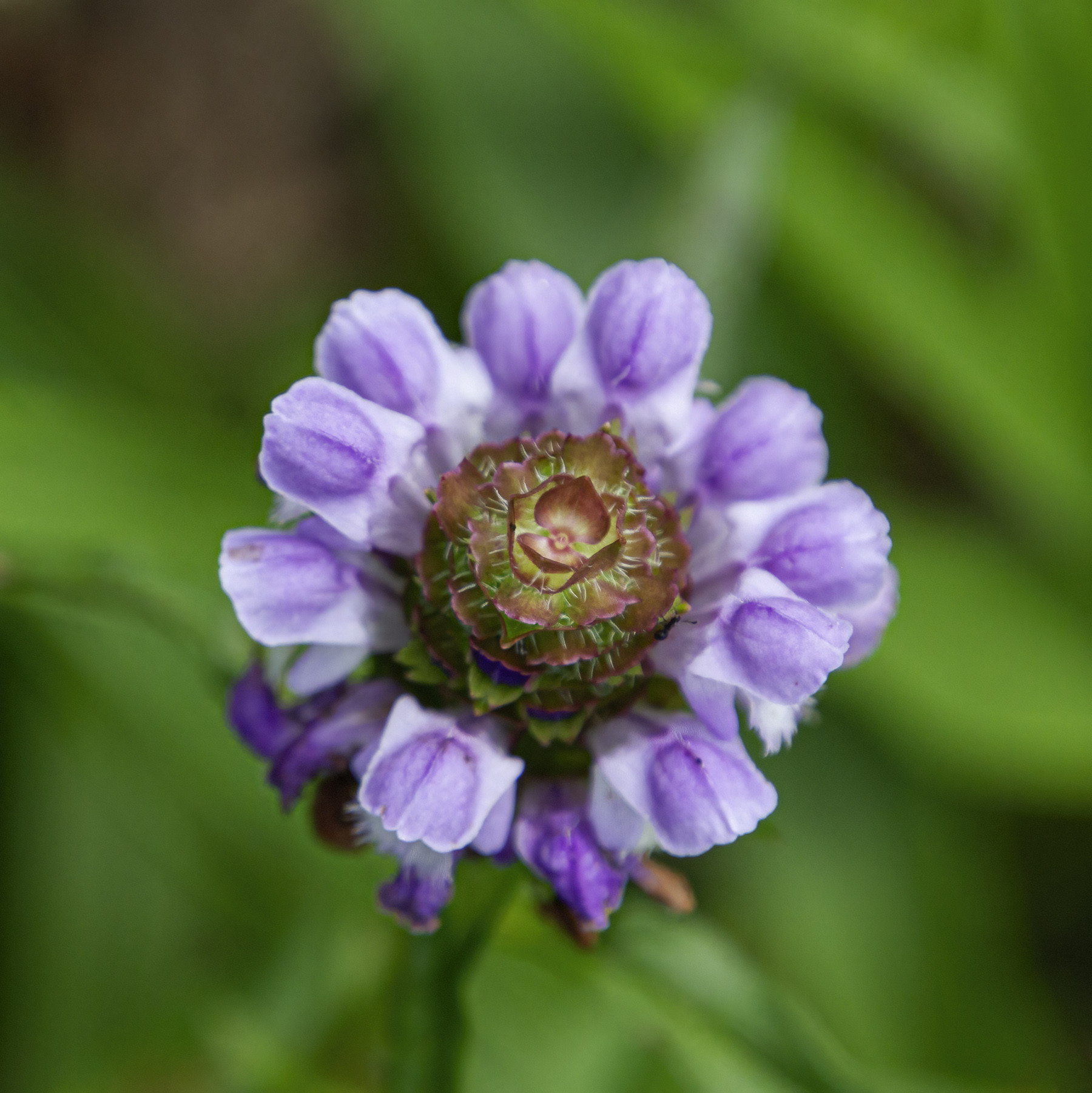
What about you? Would you have noticed the tiny flowering plant growing inches off of the ground? (Please let me know if you can identify it—I came up empty-handed after a cursory internet search.”) Would you have stared down at the murky waters of the pond long enough to spot the snapping turtle that had poked its eyes above the surface and seemed to be watching me? Would you have reacted quickly enough to capture a shot of the bright blue tail of the five-lined skink that momentarily flashed into view as I was walking back to the parking lot?

If you have walked along with me yesterday, different subjects might have caught your attention and you undoubtedly would have captured different images. This little set of photos gives you a general idea of how I view the natural world. What catches your eye?
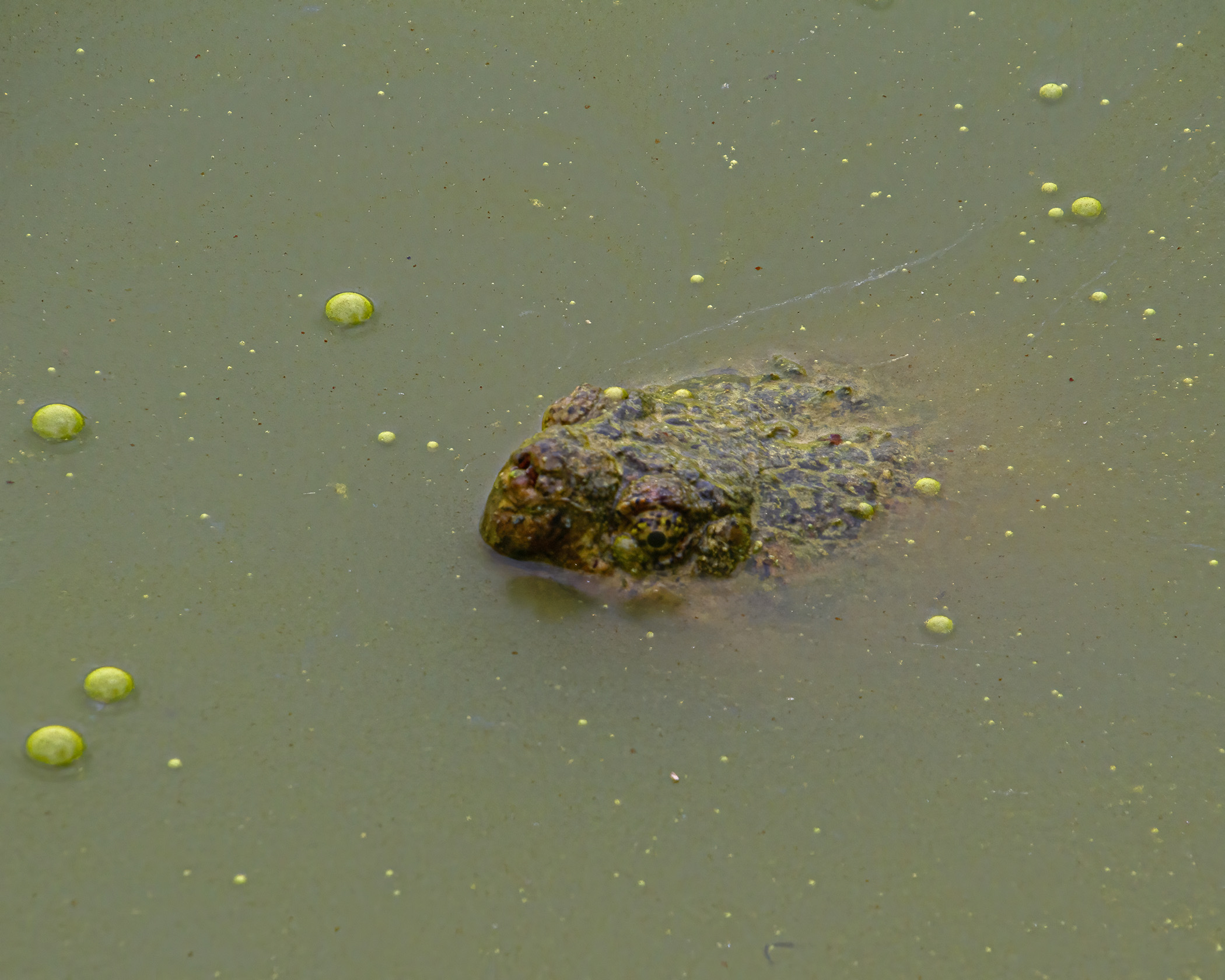
Snapping Turtle

five-lined skink

© Michael Q. Powell. All rights reserved.


Read Full Post »

Common Five-lined Skinks (Plestiodon fasciatus) are indeed quite common, but they are so skittish that they are tough to photograph. As soon as they see me (or sense my presence), they will usually scamper away to the underside of the logs on which they like to perch. On a recent visit to Jackson Miles Abbott Wetland Refuge, I spotted this skink sunning itself on a log and was able to get this shot because I approached him from behind—this technique does not work as well for dragonflies, which have massive compound eyes that provide them with a field of view of almost 360 degrees.

It is always fun to encounter juvenile skinks that have bright blue tails, but this one appeared to be an adult. I noted too that its tail was intact. Like many lizards, skinks possess the unique defense mechanism of being able to drop their tail to escape predators. The dropped tail continues to wiggle, distracting the predator, while the skink flees. Skinks can regenerate their lost tail, though the new tail may differ in structure and coloration from the original.

As many of you know, I love bad “Dad” jokes and this skink reminded me of one of them. “Where do skinks go to find a replacement for a lost tail? A retail outlet.” Sorry!

Five-lined Skink

© Michael Q. Powell. All rights reserved.

Read Full Post »

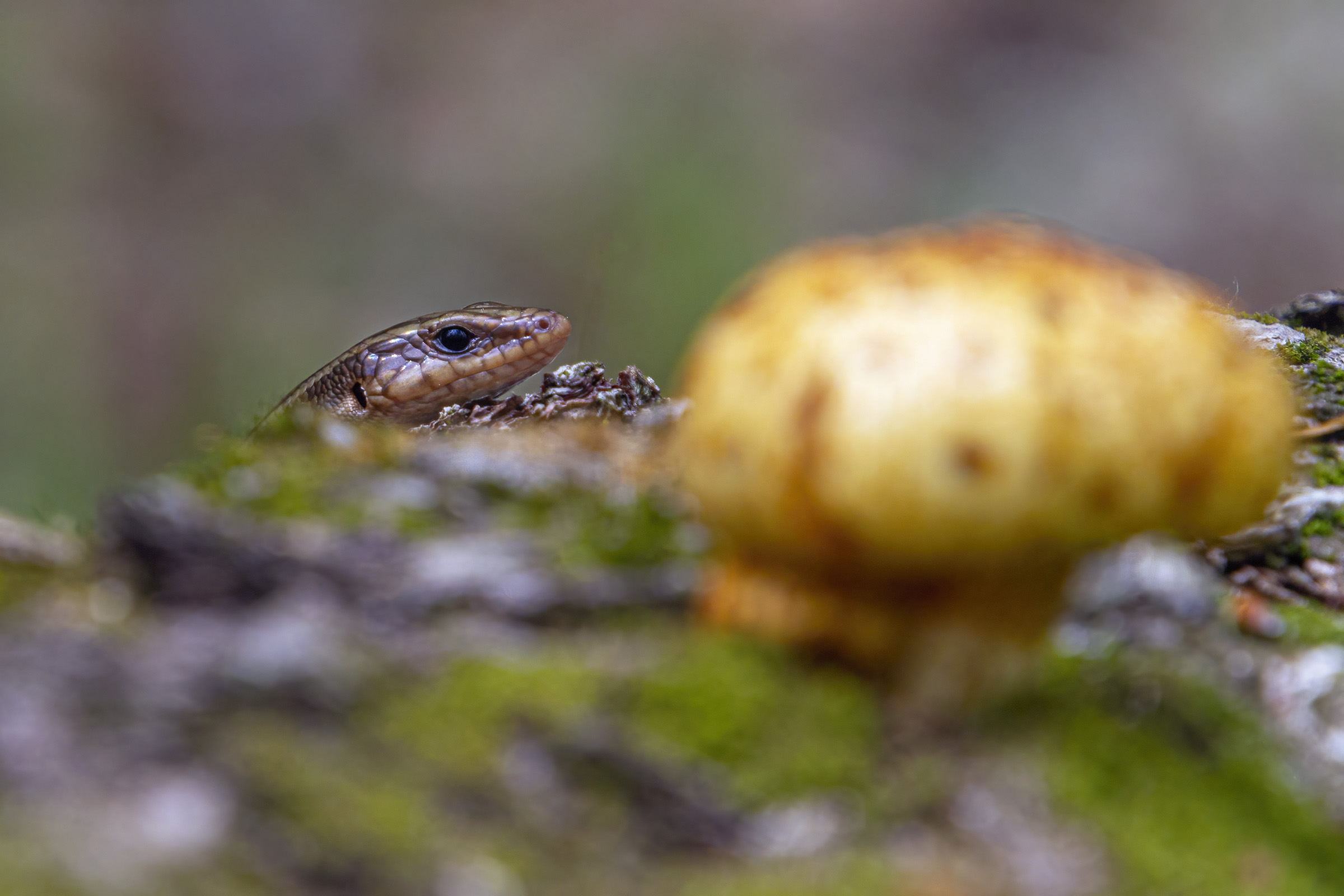
As I was hiking last Thursday in Prince William Forest Park, I spotted a cool-looking mushroom on a moss-covered fallen tree. I crouched low to the ground so that I could capture an eye-level shot of the mushroom. While I was carefully composing a few shots in the camera’s viewfinder, my eyes detected some movement in the corner of the frame and I was a bit shocked to see the head of a Five-lined Skink (Plestiodon fasciatus), one of the few lizard species in Virginia.

Skinks are generally very skittish, so I froze in place and slowly changed the focus point from the mushroom (first photo) to the skink (second photo). Once I knew that I had captured those shots, I moved slightly to the side to see if I could get a better angle on the skink.

I never could not see the skink’s entire body, but really like the final shot that shows a lot of the details of the skink. I am not sure what the skink was doing, but it seemed to be focusing intently on something. Perhaps it was so focused on a potential prey that it was less aware of me than it might otherwise have been.

A small change in focus made a big difference in the final results. Maybe that’s true in other aspects of our lives.

mushroom

Five-lined Skink

Five-lined Skink

© Michael Q. Powell. All rights reserved.
Read Full Post »

When the weather turns warm and sunny, it is not uncommon for me to spot Common Five-lined Skinks (Plestiodon fasciatus), one of the few lizards that are present in my area. Most of the time I see them on the trunks of trees or on fallen logs, but occasionally I will see one on a man-made structure that has crevices and overhangs where they can hide.

Skinks are skittish and will scamper away if they detect my presence, so I have to be super stealthy in approaching them to get a shot. In the case of these photos, I was at the edge of a small pond at Jackson Miles Abbott Wetland Refuge last week looking for dragonflies when some movement on a nearby concrete fishing platform caught my eye. The skink had just crawled out of the shadows and was surveying the area when I captured these images.

Juvenile skinks have blue tails and there appears to be some blue on the tail that is especially visible in the second photo, so I am guessing that it is almost a full-grown adult. Some scientists believe that the blue color functions as a decoy, diverting the attention of predators to this “expendable part” of the body—the tail is detachable and regrows if it is lost. Other scientists propose that the blue coloration serves to inhibit attacks by aggressive adult males, who might otherwise view the juveniles as rivals.

If you are curious and would like to see a photo of the blue tail of a juvenile skink, check out this 2021 blog posting entitled Juvenile Skink in April.


Five-lined Skink

Five-lined Skink

© Michael Q. Powell. All rights reserved.

Read Full Post »