Feeds:
Posts
Comments

Posts Tagged ‘Alexandria VA’

Last week I watched as a Great Blue Heron (Ardea herodias) slowly flew across the sky and perched high in a tree in the middle of the woods. The perch seemed precarious and the heron’s position did not appear to be at all comfortable. I honestly don’t know how the heron managed to land amidst all of the small branches—it required precision flying for the heron to pull in its wide wings at precisely the right moment as it decelerated.

Great Blue Heron

© Michael Q. Powell. All rights reserved.

Read Full Post »

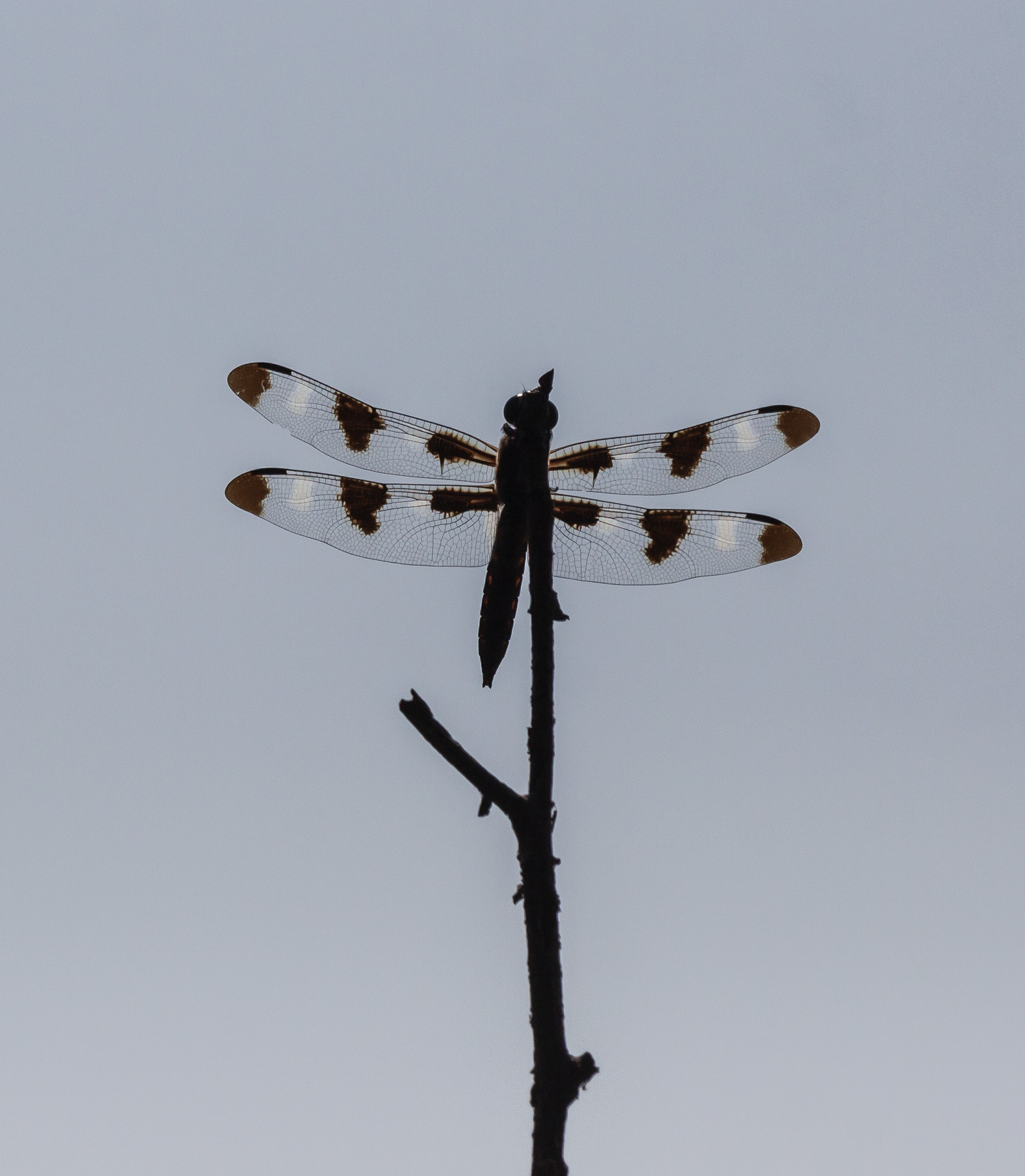
I was looking into the sun when I took this shot of a Twelve-spotted Skimmer dragonfly (Libellula pulchella) last week at Huntley Meadows Park. The body and the perch were silhouetted, but the light showed through the dragonfly’s wings and highlighted the beautiful patterns.

I really like the graphic, almost abstract quality of this image. It has a different feel than most of my other images that tend to provide more detailed views of the subject.

Twelve-spotted Skimmer

© Michael Q. Powell. All rights reserved.
Read Full Post »

Butterflies in October? October has been a crazy month weather-wise in Northern Virginia where I live. Yesterday we had a record high temperature of 98 degrees (37 degrees C) and it feels a lot more like summer than autumn. Therefore it did not seem at all strange that I saw lots of butterflies on Tuesday when I visited Huntley Meadows Park.

I spent quite a while chasing after this beautiful little butterfly, which I think is an Orange Sulphur butterfly (Colias eurytheme). Most of the time the butterfly would perch sidewards and then fly away when I tried to circle around to get a better angle for a shot. I was thrilled when I finallly managed to capture this image with the butterfly’s wings partially open. I also like the way that the light helped to illuminate some of the details in the wings.

I look forward to the cooler autumn weather that will eventually come, but for now I am continuing to enjoy some of the delights of this endless summer.

Orange Sulphur

© Michael Q. Powell. All rights reserved.


Read Full Post »

My dragonfly season is not over yet! Yesterday, the 1st of October, I managed to get my first good shots of the year of Blue-faced Meadowhawk dragonflies (Sympetrum ambiguum). This species emerges a bit earlier in the season, but generally does not make an appearance until September. (Fellow dragonfly enthusiast Walter Sanford posits that they spend that interim time in the tree tops.)

I really love the combination of colors of the Blue-faced Meadowhawk—I find the colors to be striking without being garish. You might think that these colors would make it easy to spot these dragonflies, but they are small in size with a length of 1.4 inches (36 mm) and are found only in very specific habitats.

I have been searching unsuccessfully for these little beauties the last few weeks at Occoquan Bay National Wildlife Refuge, my most frequent “habitat,” and ended up returning to Huntley Meadows Park, where I had seen them in the past. Huntley Meadows Park is a wonderful county-run marshland refuge and used to be my favorite location for nature photography. In recent years, though, the park has become a victim of its own success and there are often mobs of photographers on its boardwalk through the wetlands.

Perhaps I am a little selfish, but I do not like to share my wildlife experience with a large group of other people. For me, my treks with my camera are most often a solitary pursuit, a meandering one-on-one experience with nature.

What about you? Do you prefer to experience nature alone or with others?

Blue-faced Meadowhawk

Blue-faced Meadowhawk

Blue-faced Meadowhawk

© Michael Q. Powell. All rights reserved.


Read Full Post »

The milkweed plants were dirty and dried up, but I knew from past experience that there might be ladybugs crawling around on them. The first two plants that I checked were full of aphids, a favorite food of ladybugs, but I did not see any ladybugs at all. As I approached a third plant, I saw a flash of red and spotted a small ladybug crawling quickly down the stem of the plant. I was not as close as I could have like to have been, but managed to capture some images before the ladybug disappeared from sight.

I like the way that this shot turned out because the reddish-orange of the ladybug really stands out against the blues and greens in the rest of the photos. In case you are curious, the little specks of yellow are aphids. In this case, the aphids were safe, for this ladybug seemed to be in too much of a hurry to stop for a snack.

ladybug

© Michael Q. Powell. All rights reserved.

Read Full Post »

Monarch butterflies (Danaus plexippus) are beautiful in any situation, but when you surround them with red, orange, and yellow flowers, they absolutely explode with color. I was thrilled when I spotted this Monarch during a short visit to Green Spring Gardens this past Saturday morning. The butterfly was initially quite skittish and flew all around before finally settling on what I believe to be some kind of lantana flower. I had to maneuver around to try to get a good shooting position, but the butterfly stayed put for a minute and accommodated me. I was super happy when I managed to include some of the colorful flowers in the background and I just love the way that the colors work so well together.

monarch

© Michael Q. Powell. All rights reserved.

Read Full Post »

I spotted this beautiful American Lady butterfly (Vanessa virginiensis) during a quick visit this past Saturday morning to Green Spring Gardens, a county-run historic garden not far from where I live. A lot of butterflies were active that day, but my eyes were immediately drawn to this American Lady, a species that I do not see very often. I had to chase it a bit before it stopped to feed on this flower, which was so popular that the American Lady had to share it with a much smaller skipper butterfly. The flower was growing near a fenced in area of public plots where people grow vegetables and the fence caused the striped effect in the background.

Although I spend most of my time photographing subjects in the wild, it was nice to visit a more cultivated place that was still ablaze with summer colors. I am quite conscious of the fact that the summer is slowly slipping away.

American Lady

© Michael Q. Powell. All rights reserved.

Read Full Post »

When I first started getting serious about photography almost seven years ago, I often went shooting with my photography mentor Cindy Dyer. Cindy is accomplished in many areas of photography, but she is particularly passionate about capturing the beauty of flowers with her trusty macro lens. I learned a lot about the art of photography by shooting flowers side by side with her and reviewing my images with her.

Yesterday she and I made a short visit to Green Spring Gardens, a historical, county-run garden not far from our neighborhood, and it was wonderful to see how many flowers were in bloom. I was especially attracted by the poppies that I saw growing in several areas of the gardens—the star-like centers of the poppies seemed to beckon me.

Here are a few photos of those wonderful poppies, which came in a surprising variety of colors.

purple poppy

white poppy

purple poppy

© Michael Q. Powell. All rights reserved.

Read Full Post »

Daffodils have popped up all over my neighborhood the past few days, but none of them says Spring to me as much as this single crocus that I spotted in a neighbor’s yard last week. Backgrounds are always a big problem with flowers this early—it’s hard to avoid having mulch or fallen leaves in a shot. For this shot I used my 180mm macro lens and a really shallow depth of field. I like the softness that the settings gave the edges of the flower, while the center on which I was focusing was pretty sharp.

crocus

© Michael Q. Powell. All rights reserved.

Read Full Post »

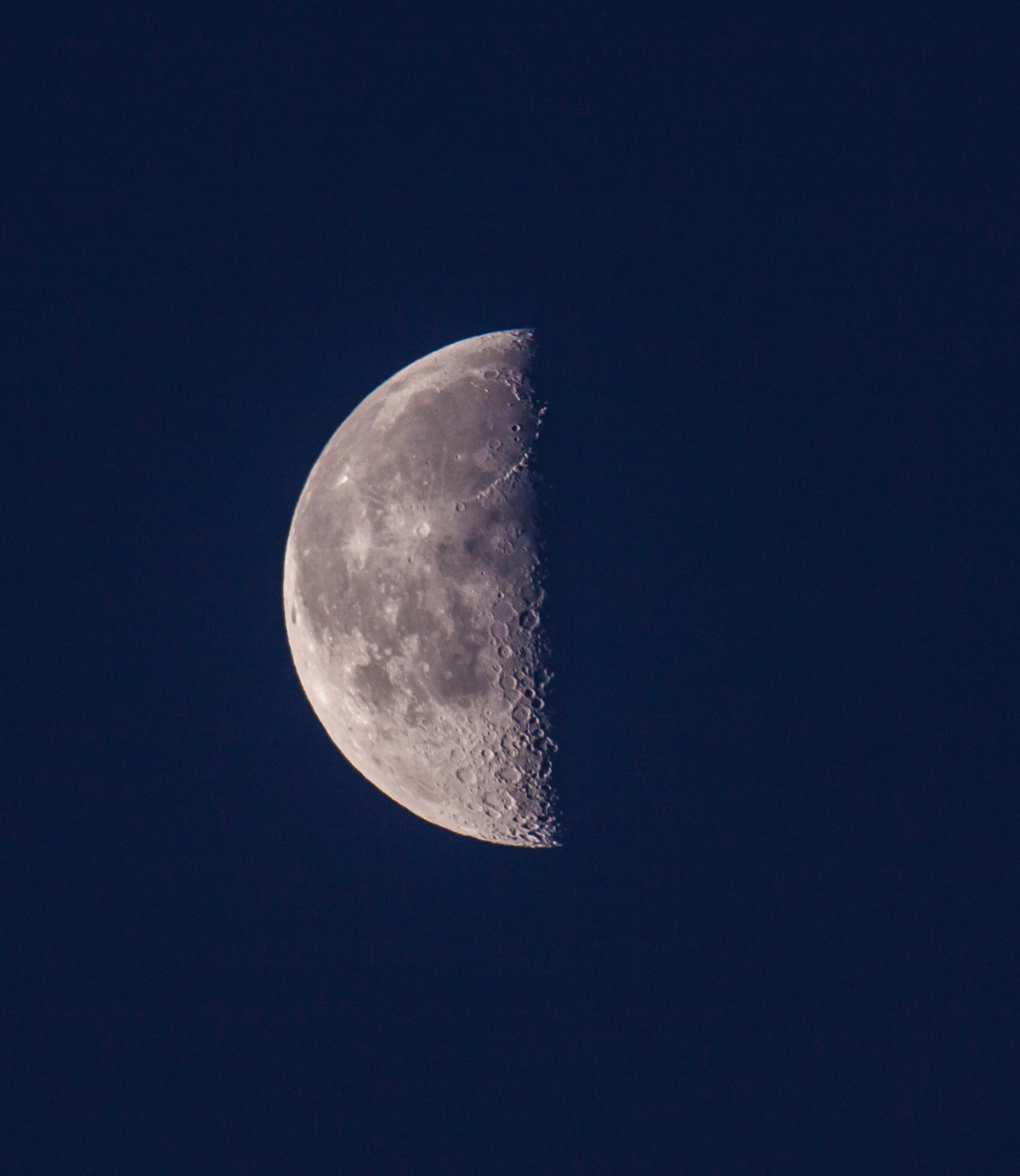
The moon was especially beautiful early yesterday morning—an almost perfect half moon. I love photographing the moon, no matter what phase it happens to be in,

I zoomed all of the way in with my 150-600mm telephoto lens and was able to capture the first image. I love the way that you can see so many details of the moon. However, the image is lacking a bit in context.

I zoomed out with the same lens and captured the second image. I would have like to have included some wonderful landscape features, but I was shooting in my neighborhood and had to be content with including the tops of some trees. In many ways the second image does a better job than the first in capturing the sense of serenity that I was experiencing at that moment.

half moon

half moon

© Michael Q. Powell. All rights reserved.


Read Full Post »

These Hooded Merganser (Lophodytes cucullatus) couples appeared to be on a double date when I spotted them earlier this week at a little suburban pond near where I live. It is now getting to be that time of the year when more and more birds are pairing off.

I took a lot of shots these ducks as they swam by and this is one of the few photos in which all four heads are visible and facing in the same direction. No matter whether you are  photographing animals, birds, or people, it is always a challenge to take a group photograph in which all subjects have pleasing poses..

Hooded Merganser

© Michael Q. Powell. All rights reserved.

Read Full Post »

It will be a few more months until dragonflies reappear in our area, so for now I have to content myself with this one in my front yard that I photographed yesterday as the snow was gently falling. This metal dragonfly is part of a raised sprinkler that stands about three feet tall (about a meter).

I really like the way that the dragonfly has weathered and acquired various colors. I suppose I could talk of rust and tarnish, but I prefer to think of it as “patina.”

dragonfly

© Michael Q. Powell. All rights reserved.

Read Full Post »

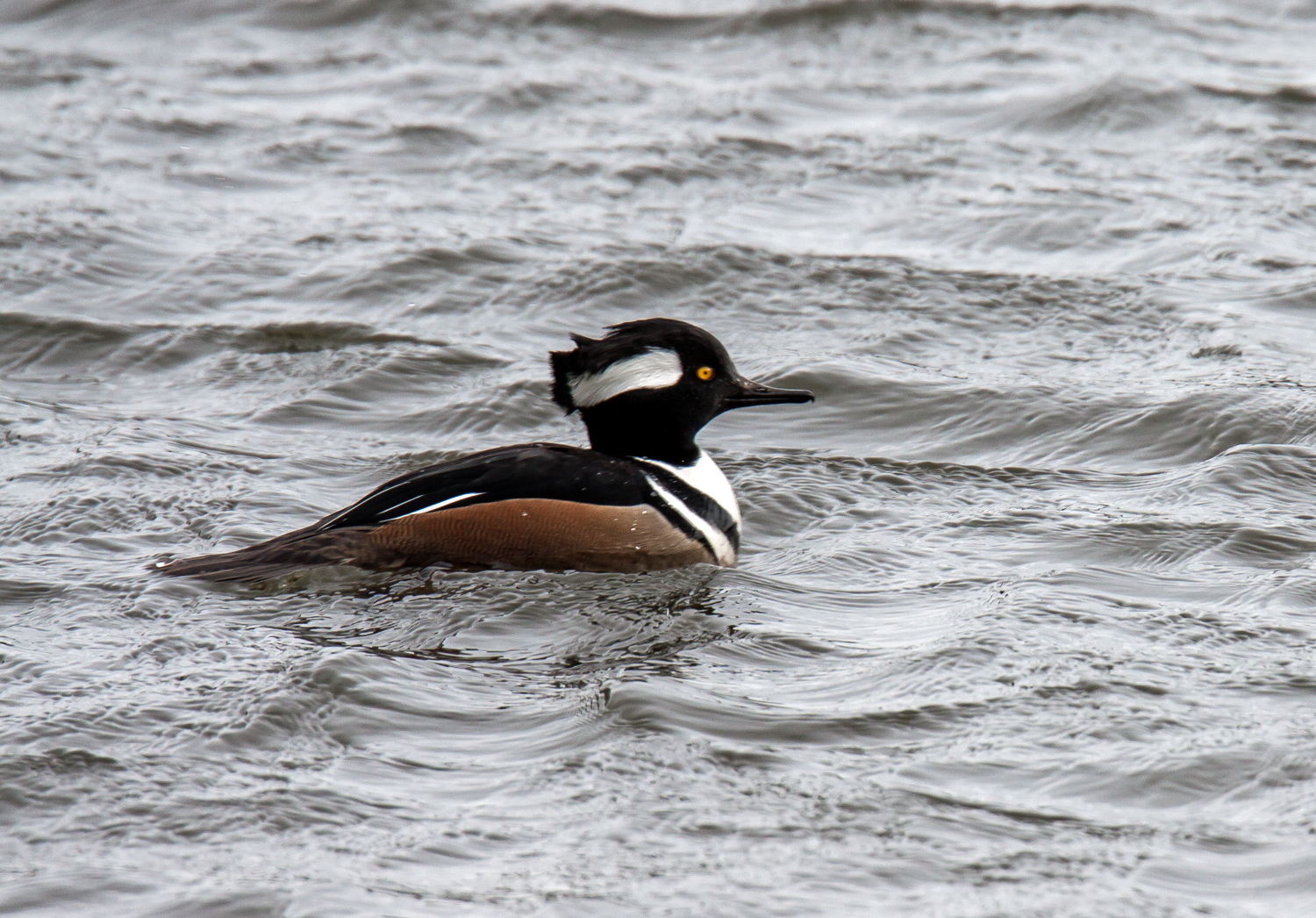
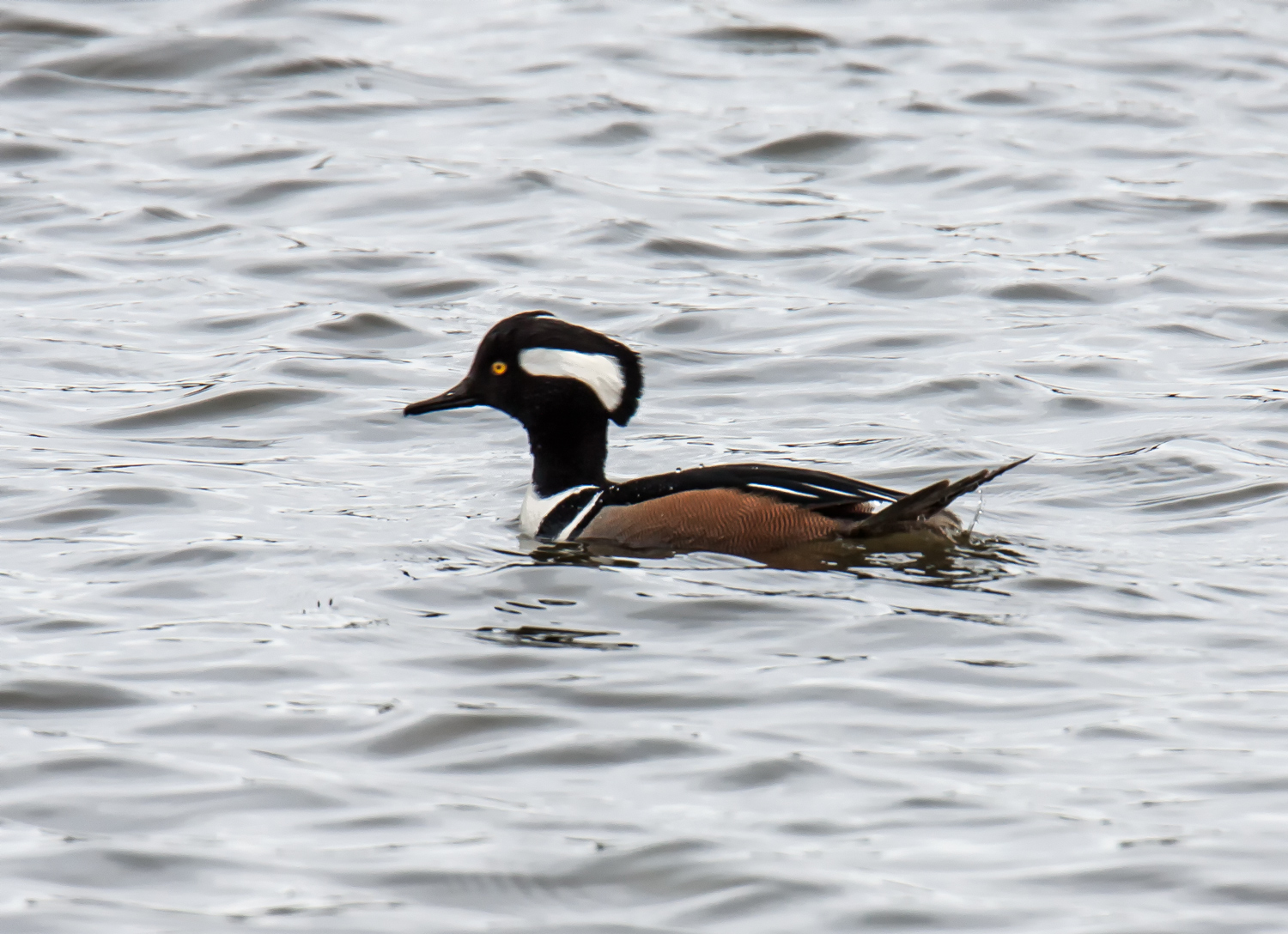
With most birds the shape of their heads is a constant, but with Hooded Mergansers (Lophodytes cucullatus), the shape can be wildly variable. I am not really sure how of the bird’s anatomy, but the “hood” appears to be pretty floppy, creating the effect of multiple “hairstyles.” Here are a few of the styles that a male Hooded Merganser was sporting during a brief period last week at a local suburban pond.

Hooded Merganser

Hooded Merganser

Hooded Merganser


© Michael Q. Powell. All rights reserved.


Read Full Post »

There was a sheet of ice in the center of the pond, but I had no idea how thin it was until a Ring-billed Gull (Larus delawarensis) that I was watching fell through the ice. I captured this little series of shots as the gull scrambled to regain its footing. Undeterred by its brief contact with the frigid water, the gull continued its solitary march across the ice, although it did seem to move a bit more slowly and cautiously.

Ring-billed Gull

Ring-billed Gull

Ring-billed Gull

© Michael Q. Powell. All rights reserved.
 

Read Full Post »

How would you dry off after a bath without a towel or a blow dryer? You might have to try the approach of this male Hooded Merganser duck (Lophodytes cucullatus), who rose out of the water and flapped his wings to dry off and fluff his feathers. Afterwards, the little duck spent a considerable amount of time adjusting the feathers with his bill, presumably to maximize their insulation value on a cold winter day.

Hooded Merganser

Hooded Merganser

Hooded Merganser

© Michael Q. Powell. All rights reserved.

Read Full Post »

The blue and gray colors of this male Ring-necked duck (Aythya collaris) seemed to be a perfect match for the cool tones of the icy waters of the suburban pond where I spotted him earlier this week. All of those cool colors also really make the warm yellow of his eyes stand out.

Ring-necked duck

© Michael Q. Powell. All rights reserved.

Read Full Post »

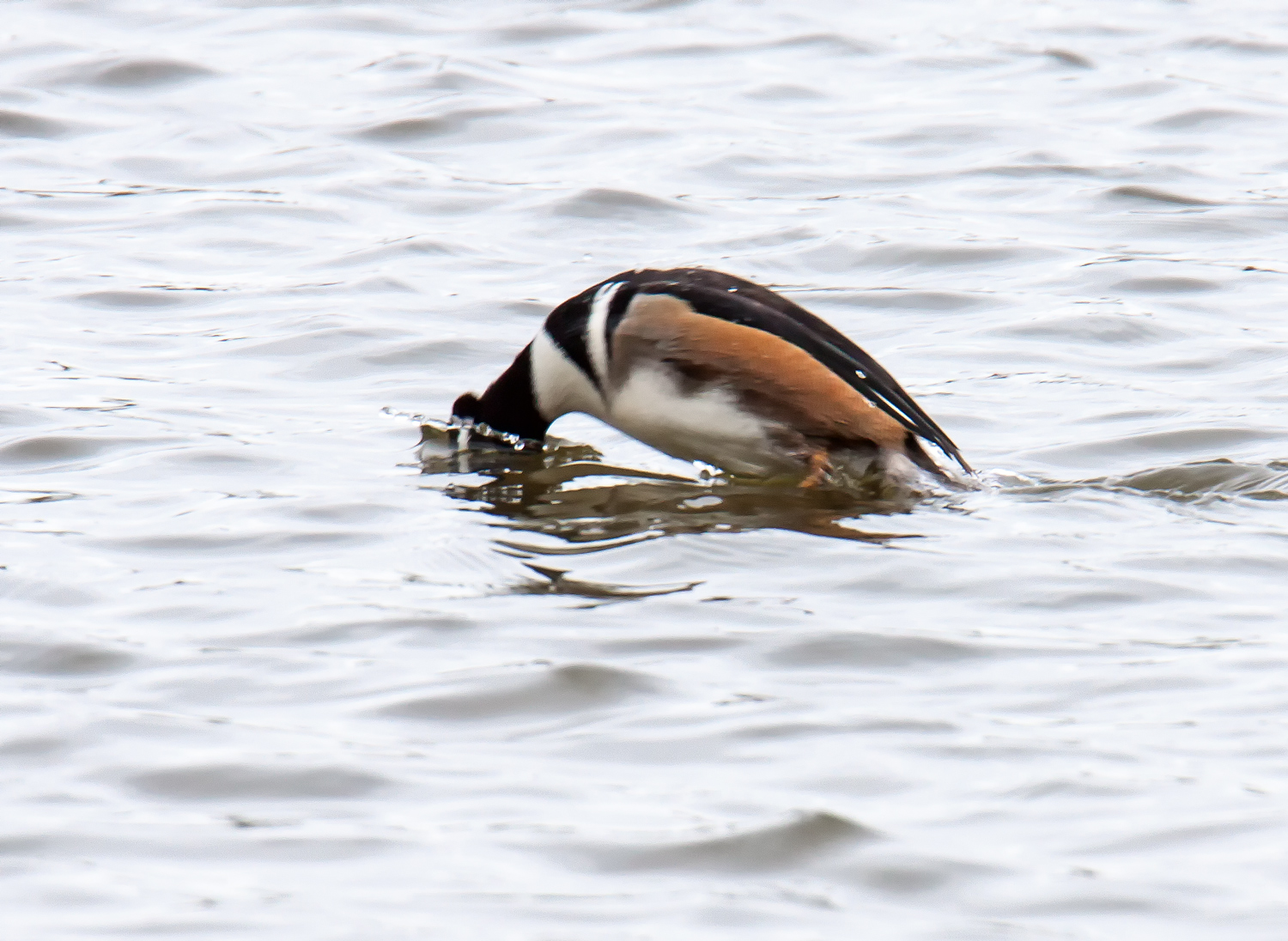
During the winter, there are fewer wildlife subjects to photograph than at other times of the year, so I find myself paying a lot of attention to each and every one. Earlier this week at a small suburban pond not far from where I live, I spent a lot of time watching a male Hooded Merganser duck (Lophodytes cucullatus) diving for food. “Hooded Merganser” is a long multi-syllabic name, so I affectionately refer to these ducks as “hoodies.”

This duck appeared to be the only member of his species at the pond, so he was not distracted by having to show off for the females. The “hoodie” would swim along and suddenly would dive. Initially I thought that there was no way that I could capture an image mid-dive—his actions seemed too unpredictable.

However, I gradually began to detect a pattern. It was fascinating to see how he would extend his neck, arch his back, and then plunge into the water. So, I watched and waited for him to extend his neck and then would start shooting. Most of the shots were not successful, but I did manage to capture a few fun photos of the diving “hoodie.”

Hooded Merganser

Hooded Merganser

Hooded Merganser

© Michael Q. Powell. All rights reserved.

Read Full Post »

Today I decided to feature two of the smallest birds that I spotted in the trees in my neighborhood after our recent snowfall. The first one is a Tufted Titmouse (Baeolophus bicolor), a little bird that is in the same family as the chickadee. The second one, I believe, is a House Finch (Haemorhous mexicanus), a bird that I don’t recall having seen before. I was really drawn to its red coloration and learned from the Cornell Lab of Ornithology website that the red of a male House Finch comes from pigments contained in its food during molt (birds can’t make bright red or yellow colors directly).

tufted titmouse

housefinch

© Michael Q. Powell. All rights reserved.
Read Full Post »

Female Northern Cardinals (Cardinalis cardinalis) do not stand out as much as their bright red male counterparts, but their beauty is at a minimum comparable, albeit in a more dignified and understated way. The male cardinal is like a loud, raucous call, while the female is more like a soft, seductive whisper.

female Northern Cardinal

female Northern Cardinal

female Northern Cardinal

© Michael Q. Powell. All rights reserved.

Read Full Post »

One of the cute little birds that I saw in the snow in my neighborhood earlier this week was this Dark-eyed Junco (Junco hyemalis). I can’t help but smile at the bird’s pose, which gives the image a really whimsical,almost cartoonish feel.

Dark-eyed Junco

© Michael Q. Powell. All rights reserved.


Read Full Post »

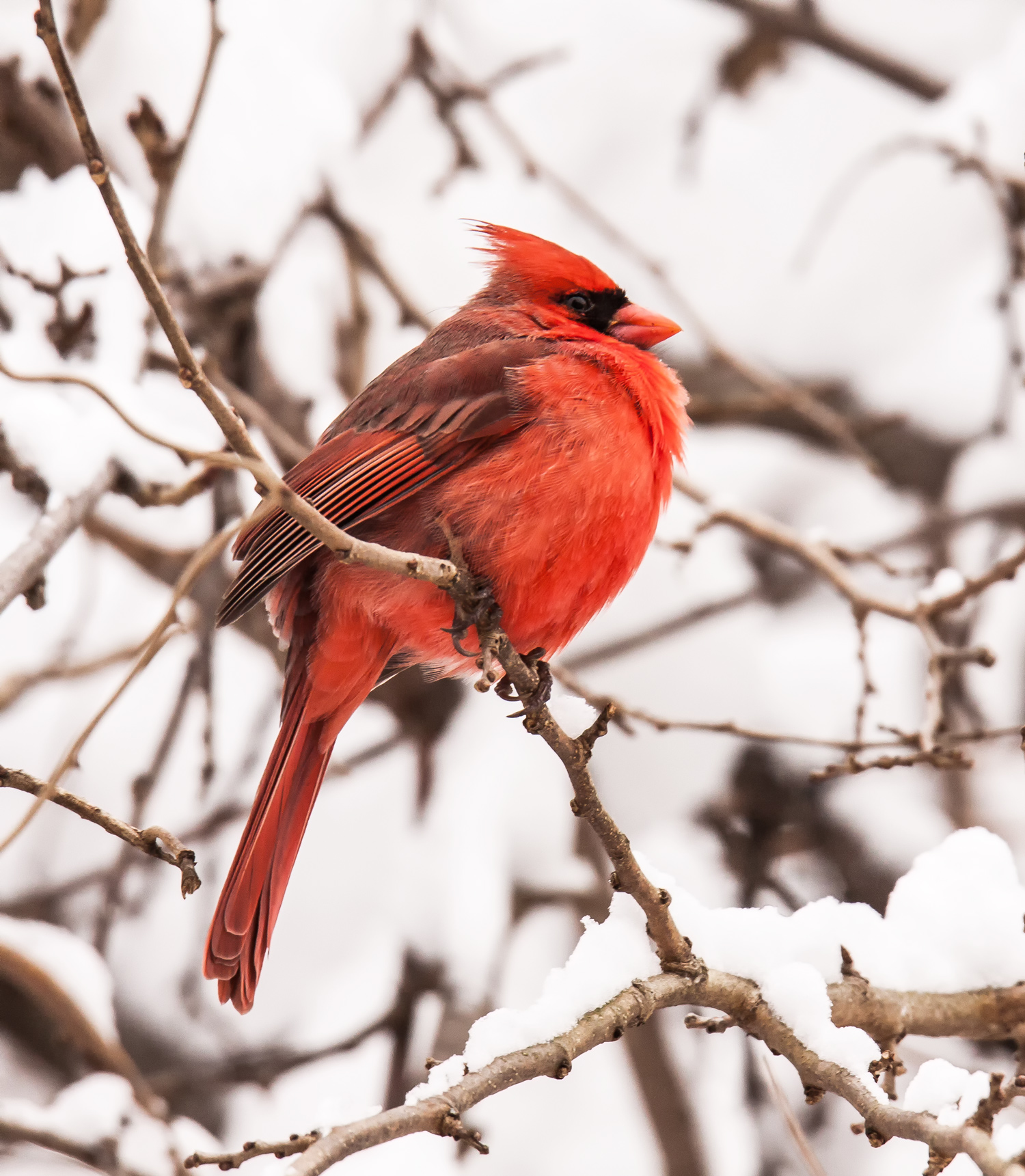
Images of a bright red cardinal in the brilliant white snow—some might view such shots as a bit cliché, but I view them instead as iconic. I ventured out into my neighborhood earlier this week after the snow had stopped falling and was thrilled to find a small group of Northern Cardinals (Cardinalis cardinalis). They spent most of their time buried in the branches, but eventually I was able to capture some unobstructed images of some male cardinals.

Although I like the details of the second shot, the first shot really draws me in by presenting a better depiction of the snowy environment. In some parts of the country this is a typical winter scene, but here in Northern Virginia, this is the biggest snow storm we have had since 2016, so it was pretty unusual to have this kind of photo opportunity.

Northern Cardinal

Northern Cardinal

© Michael Q. Powell. All rights reserved.

Read Full Post »

The pastor at the Christmas service today reminded us of the theological implications of saying “Merry Christmas.” Every time that we utter those words, he said, we are telling another person that God loves them, that the true message of Christmas is God Incarnate, God taking on a human form to dwell among us.

Earlier this morning I was thinking about what kind of a photo I would post today. I considered selecting a recent wildlife photo, but not of them spoke to me. As I walked the dog while it was still dark, I thought about taking a photo of some of the colorful lights and decorations in my neighborhood, but somehow they didn’t represent Christmas to me at that moment.

I finally went out to my front yard and took this modest photo of one of the bushes there. I think it is called Heavenly Bamboo (Nandina domestica) and its simple form and traditional colors seemed an accurate reflection of my inner thoughts and feelings about Christmas this year. Christ came into the world in a humble way and meets us today where we are, no matter what our circumstances may be.

With the angel chorus and the heavenly host, I think about these words of the traditional Christmas story that I learned so long ago in the King James version: Glory to God in the highest, and on earth peace, good will toward men.

Merry Christmas to you all.

Heavenly Bamboo

© Michael Q. Powell. All rights reserved.

Read Full Post »

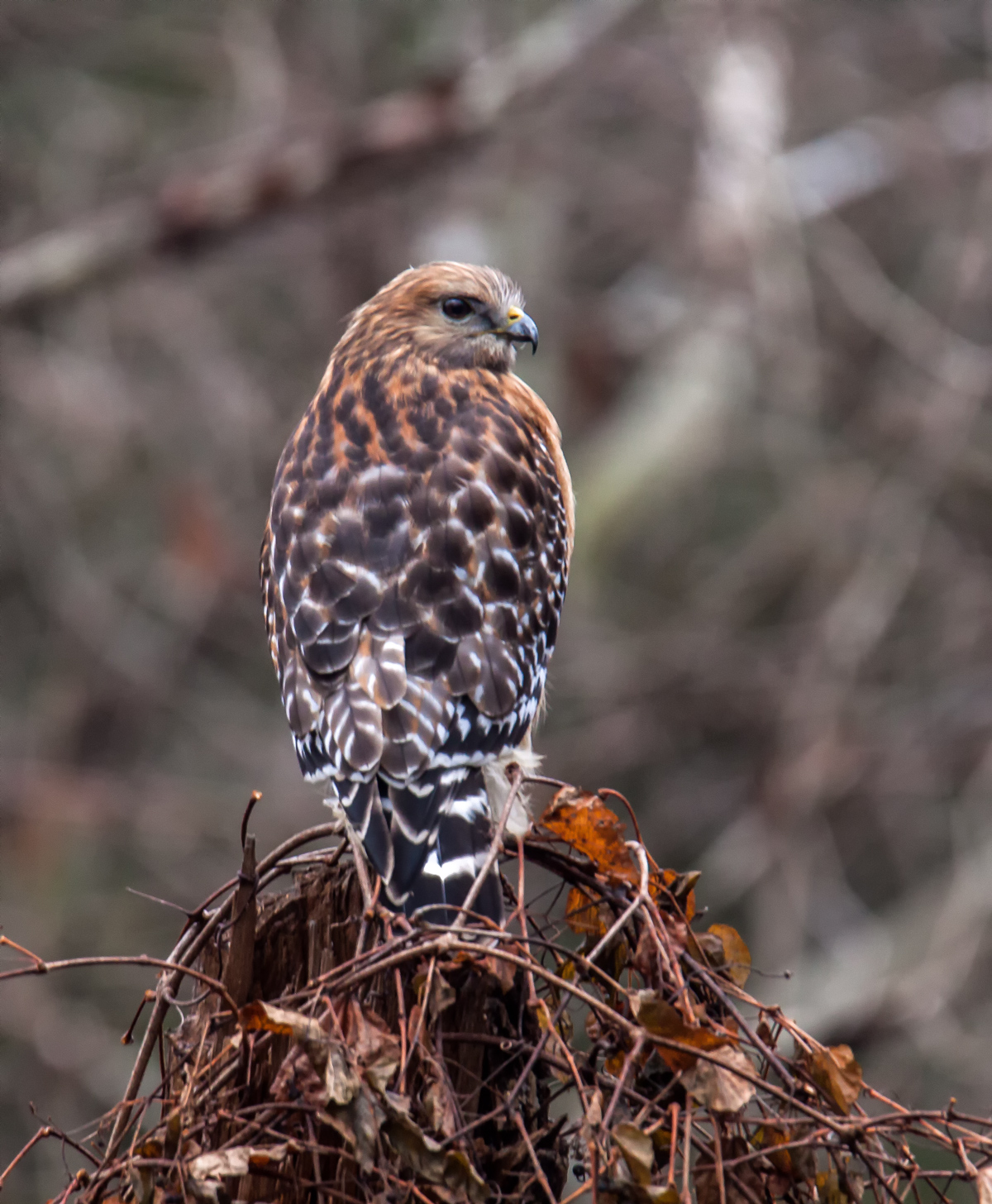
I didn’t have to go far to find this Red-shouldered Hawk (Buteo lineatus)—I spotted it while walking a friend’s Cocker Spaniel in my suburban townhouse neighborhood. I rushed home to get my camera and was thrilled when I returned to find that the hawk was still perched on a broken-off tree in a small marshy area.

Red-shouldered Hawk

Red-shouldered Hawk

© Michael Q. Powell. All rights reserved.

Read Full Post »

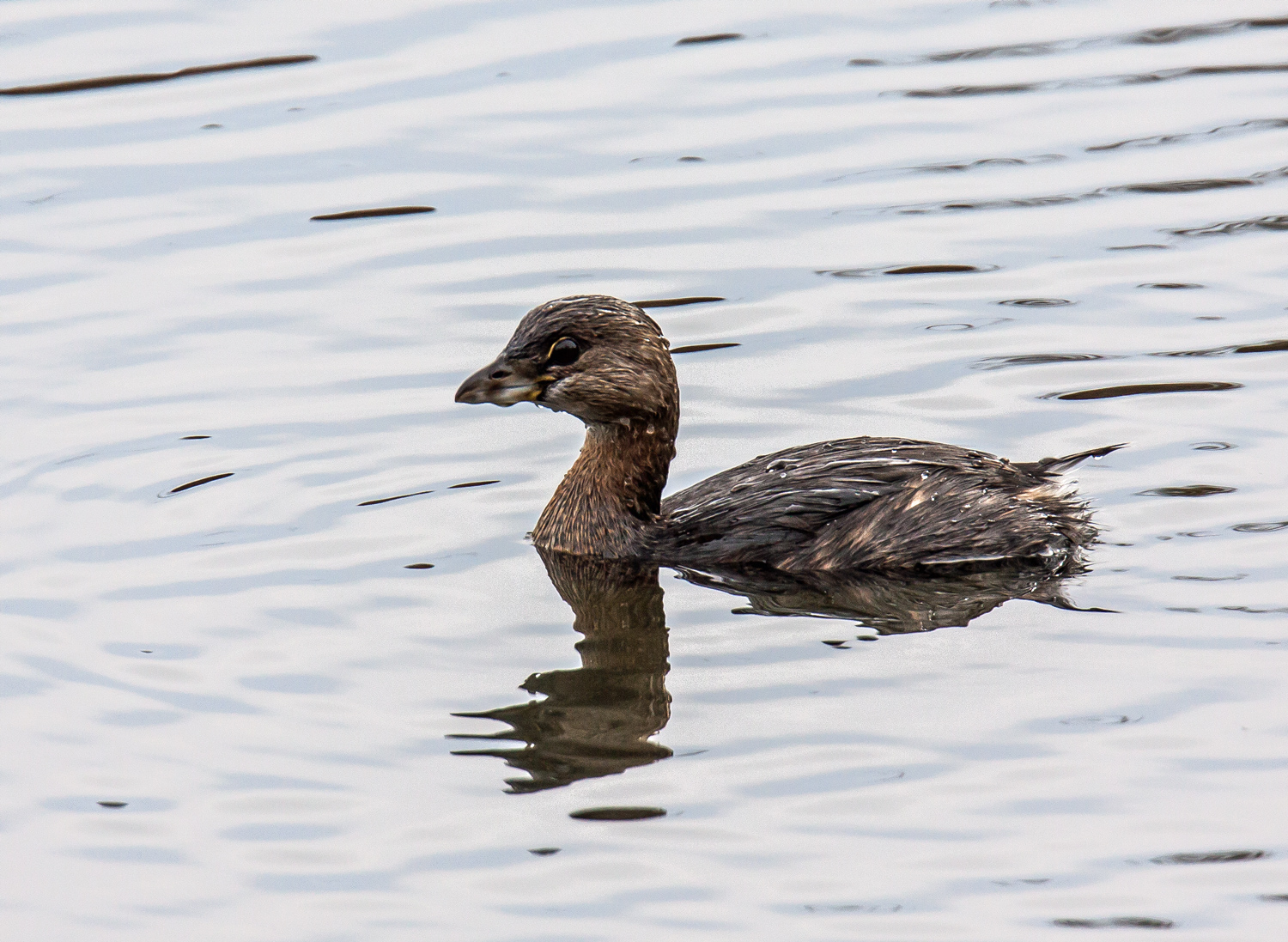
The gentle paddling of this Pied-billed Grebe (Podilymbus podiceps) produced such wonderful patterns in the water that it was easy to fight the temptation to crop this image more closely. This is another one of the waterbirds that appeared recently at a pond in a nearby suburban neighborhood.

Virtually all of the visiting birds are skittish enough that they will swim away toward the center of the pond as I approach. Fortunately for me they swim a lot more slowly than they fly, so I generally have a chance to track them as they swim, hoping they will turn their heads periodically to the side.

Pied-billed Grebe

© Michael Q. Powell. All rights reserved.

Read Full Post »

This male Ruddy Duck (Oxyura jamaicensis) and I spotted each other at almost the same time and we both immediately sprung into action. As I was bringing my camera up to my eye, the duck was swimming away. I thought that I had lost the photo opportunity when suddenly the duck turned his head to the side and I was able to capture this image.

This Ruddy Duck, like the Hooded Merganser duck that I featured yesterday, has taken up residence in a small pond in a suburban neighborhood not far from where I live. I am thrilled, because it gives me a place where I can experience wildlife without having to travel too far. Things can get busy sometimes, especially at this time of the year, and I cannot always spend hours on end in the wild with my camera as I prefer to do.

Ruddy Duck

© Michael Q. Powell. All rights reserved.

Read Full Post »

I have occasionally been described as a bit of an “odd duck,” which Wiktionary defines as “an unusual person, especially an individual with an idiosyncratic personality or peculiar behavioral characteristics.” That definition certainly fits me (and most other wildlife photographers too, I suspect).

In a more literal sense, “odd duck” is a great way to describe the unusual-looking Hooded Merganser duck (Lophodytes cucullatus). There are no other ducks in my area that look anything like these ducks, so identification is never a problem. Getting good photographs of one, though, can be a problem, because Hooded Mergansers are small and often skittish.

I spotted this handsome male Hooded Merganser yesterday at a suburban pond not far from where I live in Northern Virginia. He was part of a group of about a dozen or so Hooded Mergansers. Most of the members of the group were out in the middle of the pond, but this one hanging out nearer the shore and I was able to get off a few shots before he swam away to link up with the rest of his group.

hooded merganser

© Michael Q. Powell. All rights reserved.

Read Full Post »

I am not sure what is so special about the small pond in Kingstowne, a suburban development not far from where I live, but every year about this time a group of Ring-necked ducks (Aythya collaris) shows up and generally spends the winter there. There are not too many other local places where I find this particular duck species.

I know that Ring-necked ducks are diving ducks rather then dabbling ducks like Mallards and I wonder if the depth of the water in the pond is the determining factor in their decision. I am always happy each year to see the golden eyes, striped bills, and odd-shaped heads of these Ring-necked ducks.

Ring-necked Duck

Ring-necked Duck

Ring-necked Ducks

© Michael Q. Powell. All rights reserved.


Read Full Post »

Although Pied-billed Grebes (Podilymbus podiceps) swim like ducks and dive like ducks, it only takes a quick look at one to see that they definitely are not ducks. The shape of the bill and of the body are quite different from those of a duck. I’ve always found the overall look the Pied-billed Grebe to be so unusual that it looks almost cartoonish to me.

I spotted this grebe yesterday in a small suburban pond not far from where I live. This little bird repeatedly was diving underwater. presumably in search of food, though I never saw him catch anything. If you look closely at the photos, you can see droplets of water on the body of the grebe and, in some cases, on his face.

Pied-billed Grebe

Pied-billed Grebe

Pied-billed Grebe

© Michael Q. Powell. All rights reserved.
Read Full Post »

I never got around to posting a shot of my final Halloween Pennant dragonfly (Celithemis eponina) of the 2018 season, so today seems an appropriate time to do so. I spotted this tattered beauty on 29 September at Ben Brenman Park, a small suburban park not far from where I live in Alexandria, Virginia.

Happy Halloween!

Halloween Pennant

© Michael Q. Powell. All rights reserved.
Read Full Post »

I love to photograph bees and realize that I have not featured one for quite some time. I captured this image of one as it perched on some pickerelweed this past weekend at Ben Brenman Park in Alexandria, VA.

In many ways, this image is as much about the flowering plant as it is about the bee. It speaks to me of the interaction between those two main subjects.

For me, photographing nature is about balancing the depiction of the small details, as I often do, with the “bigger” picture—the framing of this shot helps to give the viewer a better sense of the environment than if I had done an extreme close-up shot of the bee itself.

bee and pickerelweed

© Michael Q. Powell. All rights reserved.

Read Full Post »

Semi-submerged in the duckweed in the shallow water, this snake patiently awaited an unseen prey yesterday at the pond at Ben Brenman Park, a small suburban park not far from where I live in Alexandria, Virginia. I did not get a really good look at the snake, which dove into the water shortly after I took this shot, but I think it might be a Northern Water Snake (Nerodia sipedon).

In many ways I was more interested in the sinuous curves of the snake’s body than in the identification of the snake’s species. There is an abstract beauty in the colors and the shapes in this image that appeals to me, though I know that some of my viewers are so creeped out by the main subject that they will find it hard to see any beauty whatsoever in the image.

Northern Water Snake

© Michael Q. Powell. All rights reserved.

Read Full Post »

« Newer Posts - Older Posts »