Feeds:
Posts
Comments

Posts Tagged ‘Alexandria VA’

I love the triangular shape of Spiderwort plants (genus Tradescantia). I tend to think of spiderworts as being a bluish-purple in color, but was delighted to discover them blooming in a variety of colors during a recent visit to Green Spring Gardens, a county-run historical garden near where I live. I think my favorite color combination may be the one in the middle photo, with the white flowers and the purple “fuzz” in the center.

Spiderwort

Spidewort

spiderwort

© Michael Q. Powell. All rights reserved.

Read Full Post »

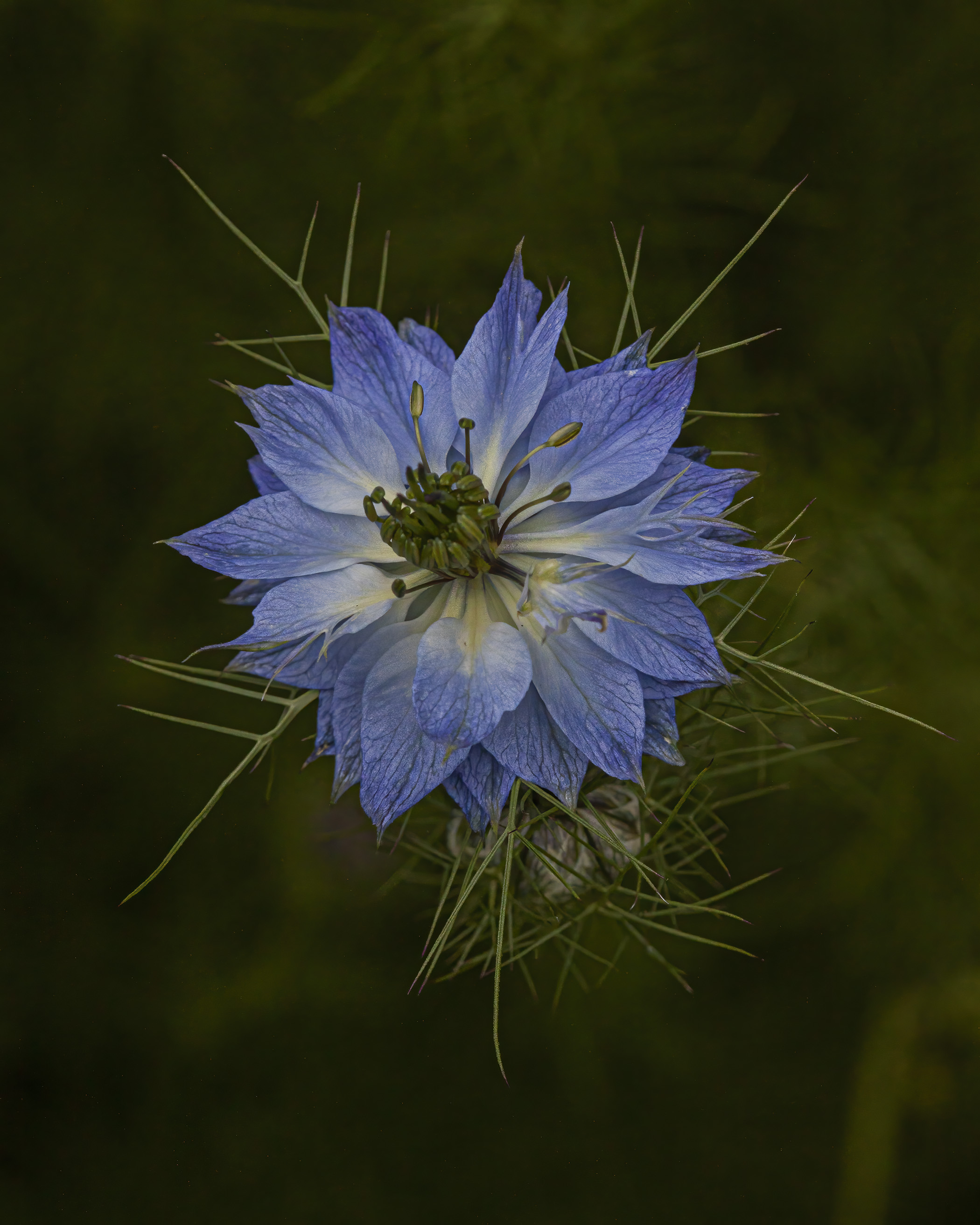
During a recent trip to Green Spring Gardens, a county-run historic garden near where I live, I was delighted to see that Love-in-a-mist (Nigella damascena) was in bloom. Love-in-a-mist  is a flower that looks like it came from outer space, with wild tendrils shooting out of its middle and green spiky vegetation surrounding it. Like many forms of love, the flower simultaneously looks to be both inviting and threatening.

I find this flower to be incredibly beautiful and exotic and it is one of my favorites. Typically Love-in-a-mist is blue, but it also comes in shades of white, pink, and lavender. Many flowers lose our interest after they have bloomed, but I find the seedpods of Love-in-a-mist to at least as intriguing as the flower itself, as you can see in the final photo.

When I did a little research I learned that the striped, balloon-shaped object that I call a seedpod, is actually an inflated capsule composed of five fused true seedpods, according to an article by Wisconsin Horticulture. I also discovered that the thorny-looking spikes that make up the “mist,” which are not sharp, despite their appearance, are technically bracts, a specialized kind of leaves.

I smile whenever I use the name of this flower—we can always use more Love, whether it comes in a mist, in the sunshine, or even in a downpour.


Love-in-a-mist

Love-in-a-mist

Love-in-a-mist

© Michael Q. Powell. All rights reserved.

Read Full Post »

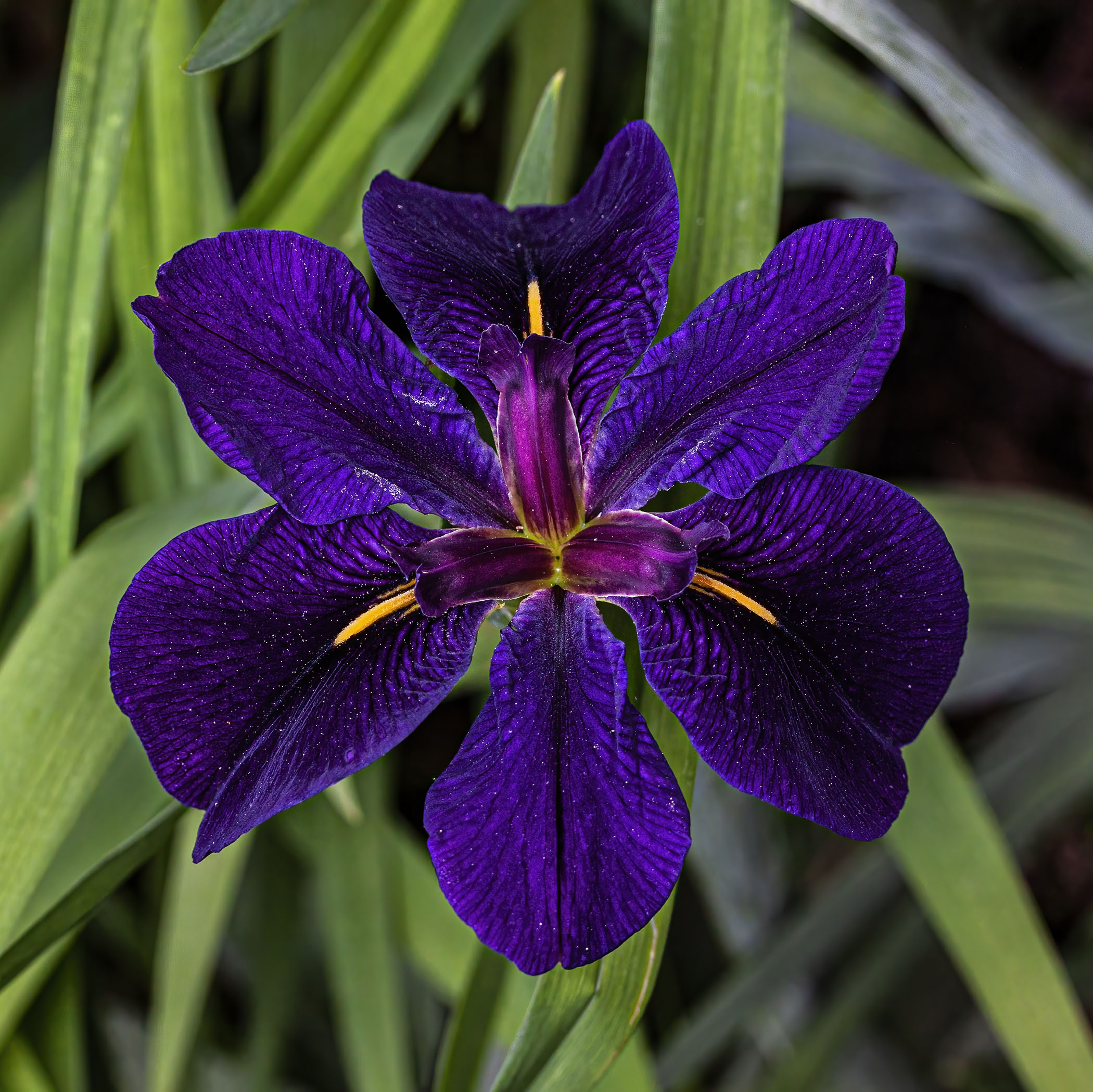
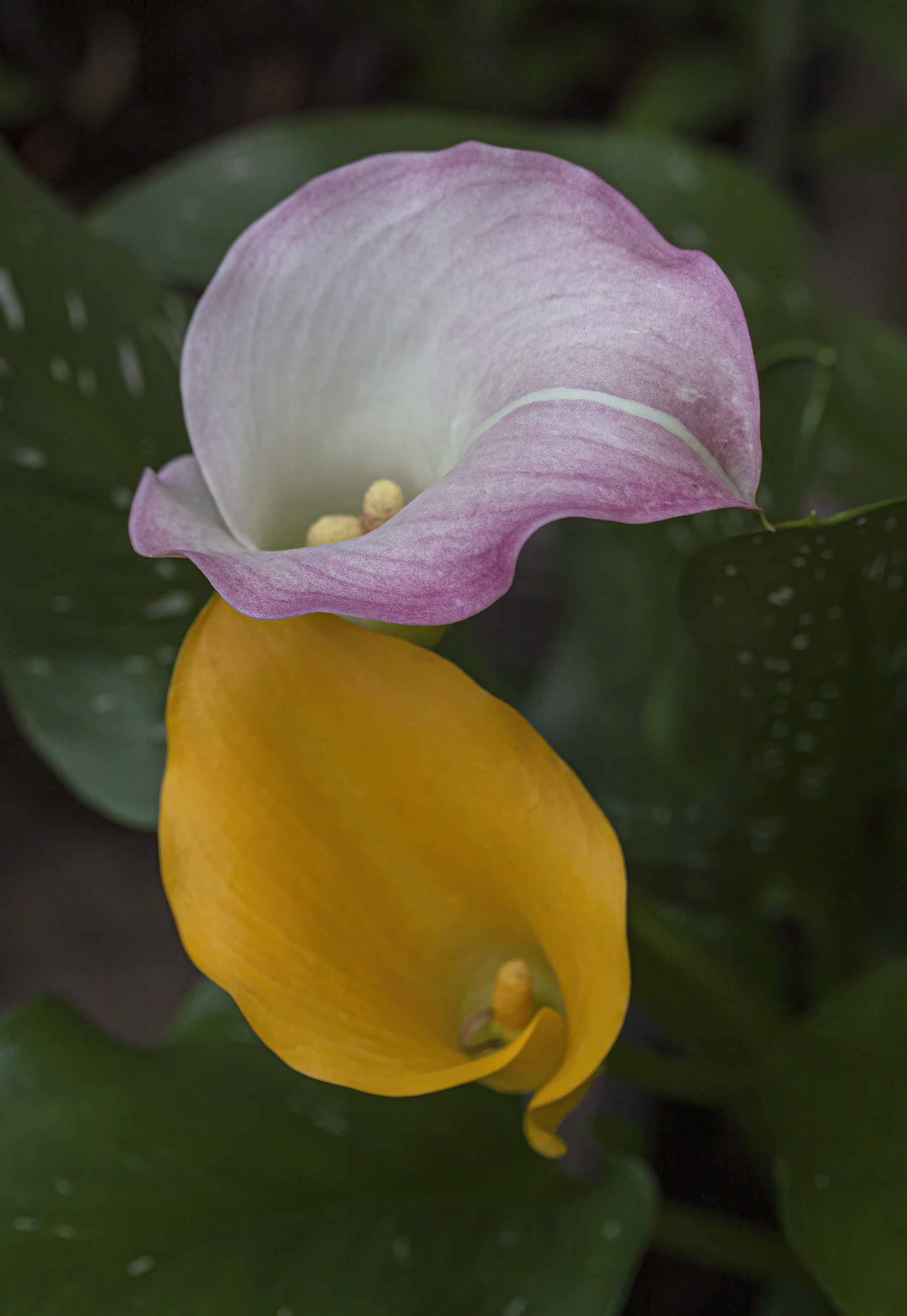
Many irises have come and gone this spring, but I was delighted to see that this stunning dark violet one was blooming yesterday in the garden of my neighbor and fellow photographer Cindy Dyer, a variant that she told me is a Louisiana iris ‘Black Gamecock.’ Cindy also has some gorgeous Calla Lilies blooming in a container on her front porch in a wide variety of colors.

Intermittent thunderstorms are in the forecast for most of today and I doubt that we will see the sun. My senses need the stimulation provided by bright colors, like those of these beautiful flowers in Cindy’s garden in late May.

iris

Calla Lily

Calla Lily

© Michael Q. Powell. All rights reserved.


Read Full Post »

It is prime time for the bearded irises in the garden of my dear friend and fellow photographer Cindy Dyer. There are several dozen irises in bloom now in multiple colors, including these beauties, and it looks like even more flowers will be blooming soon.

Beauty is everywhere.

bearded irises

Bearded Iris

Bearded Iris

© Michael Q. Powell. All rights reserved.

Read Full Post »

It is now the season for irises. All kinds of irises are starting to pop open in the garden of my dear friend and photography mentor Cindy Dyer. We are neighbors in a townhouse community in Northern Virginia, which means there is relatively little space for gardening, but Cindy manages to pack an amazing amount of flower power into her limited area. Fortunately, she and her husband, who is also a Michael, live in an end-unit, so they have a bit more space than the interior units.

Cindy likes to select flowers to grow that she knows will be photogenic and love to pore over the flower catalogues on line. Our challenge is to figure out how to capture the  beauty of these carefully selected flowers in the crowed garden. One of Cindy’s techniques is to use a small artificial background to help to isolate the flower. Often she uses a white foam core board to which she has attached a piece of black velvet-like material. She can then create studio-like images with a black or white background, depending on the flower.

This technique requires two people, because it is almost impossible to hold the background in place and frame a shot at the same time. I took these iris photos yesterday while Cindy held the background in place for me and then we reversed positions. In some of the images it looks like I was using some kind of studio lighting, but it was all natural night on a somewhat cloudy day that diffused the light nicely.

You don’t really need any special equipment to create this effect—you could use almost anything for a background. The day before, our improvised background was a collapsible black storage cube from IKEA that Cindy had just given me. The final photo, taken by Cindy with her iPhone, shows me holding that black cube and gives you a sense of the garden environment and how the technique is used.

bearded iris

bearded iris

bearded iris

iris

background

© Michael Q. Powell. All rights reserved.
Read Full Post »

As we move deeper into spring, more and more flowers are popping up in the garden of my neighbor, fellow photographer Cindy Dyer. It is a fun adventure to walk over to the garden every few days to see what new bits of beauty have sprung forth out of the earth.

One of my favorites that I look forward to seeing each spring is the Lady Jane tulip (Tulipa clusiana var. ‘Lady Jane’), featured in the first photo below. It is a small tulip with pointed petals and a delicate pink and white coloration.

The red tulips are a bit more traditional in terms of their shape and coloration. I love to explore them from all angles and their bright, cheery color is a joy to behold.

Some more tulip buds are beginning to mature and it looks like there may be yellow tulips next. Spring is such a beautiful season.

Lady Jane tulip

tulip

tulip

© Michael Q. Powell. All rights reserved.


Read Full Post »

In the springtime we often watch and wait in the garden, anticipating the beauty that is to come. Sometimes, as was the case with these tulip buds, we have a sneak preview of the coming colors, but often the blooms take us by surprise. I love those kinds of surprises.

As many of you know, I do not have my own garden. However, fellow photographer Cindy Dyer is one of my neighbors and she has an amazing garden, full of fun flowers to photograph.

tulip

© Michael Q. Powell. All rights reserved.
Read Full Post »

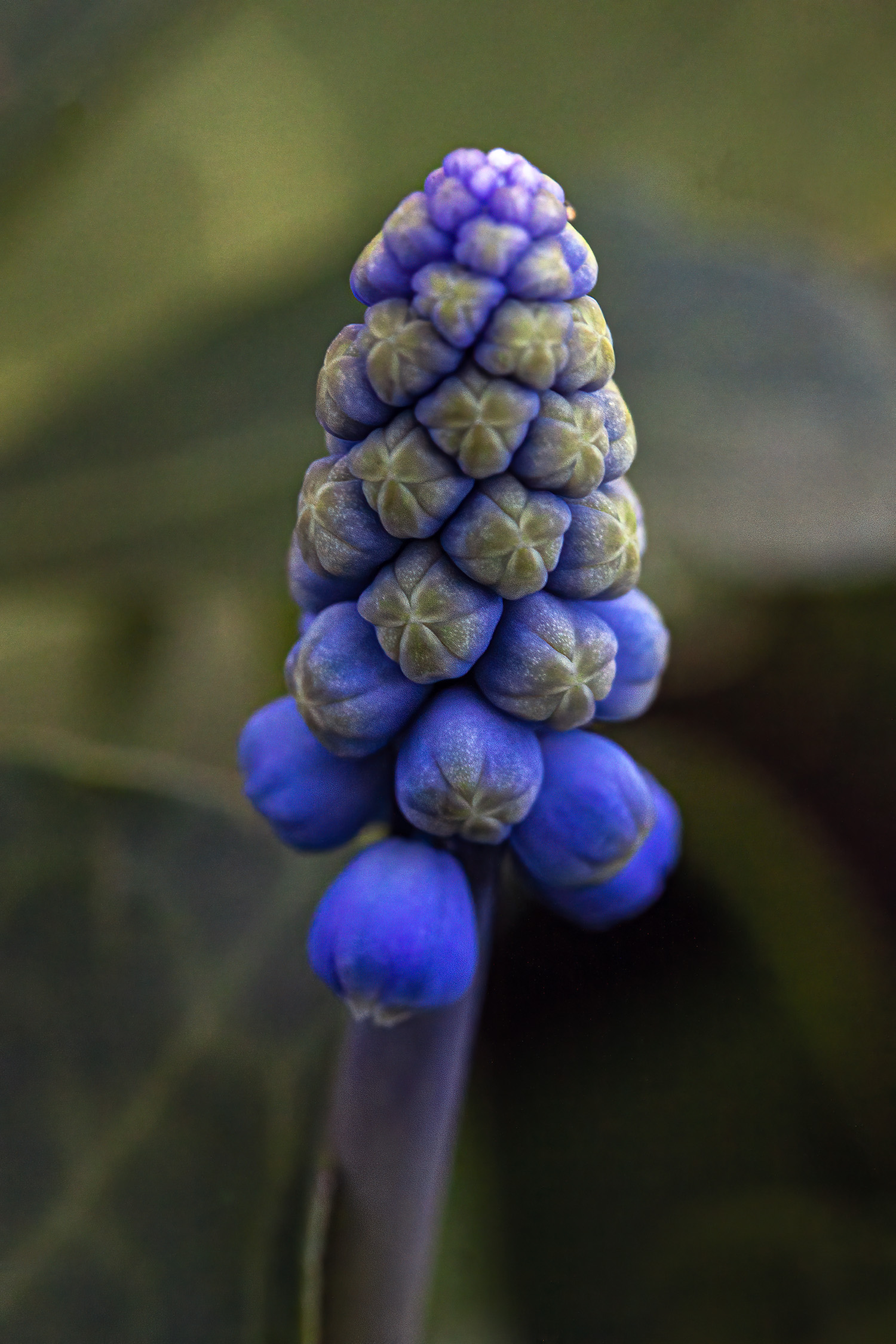
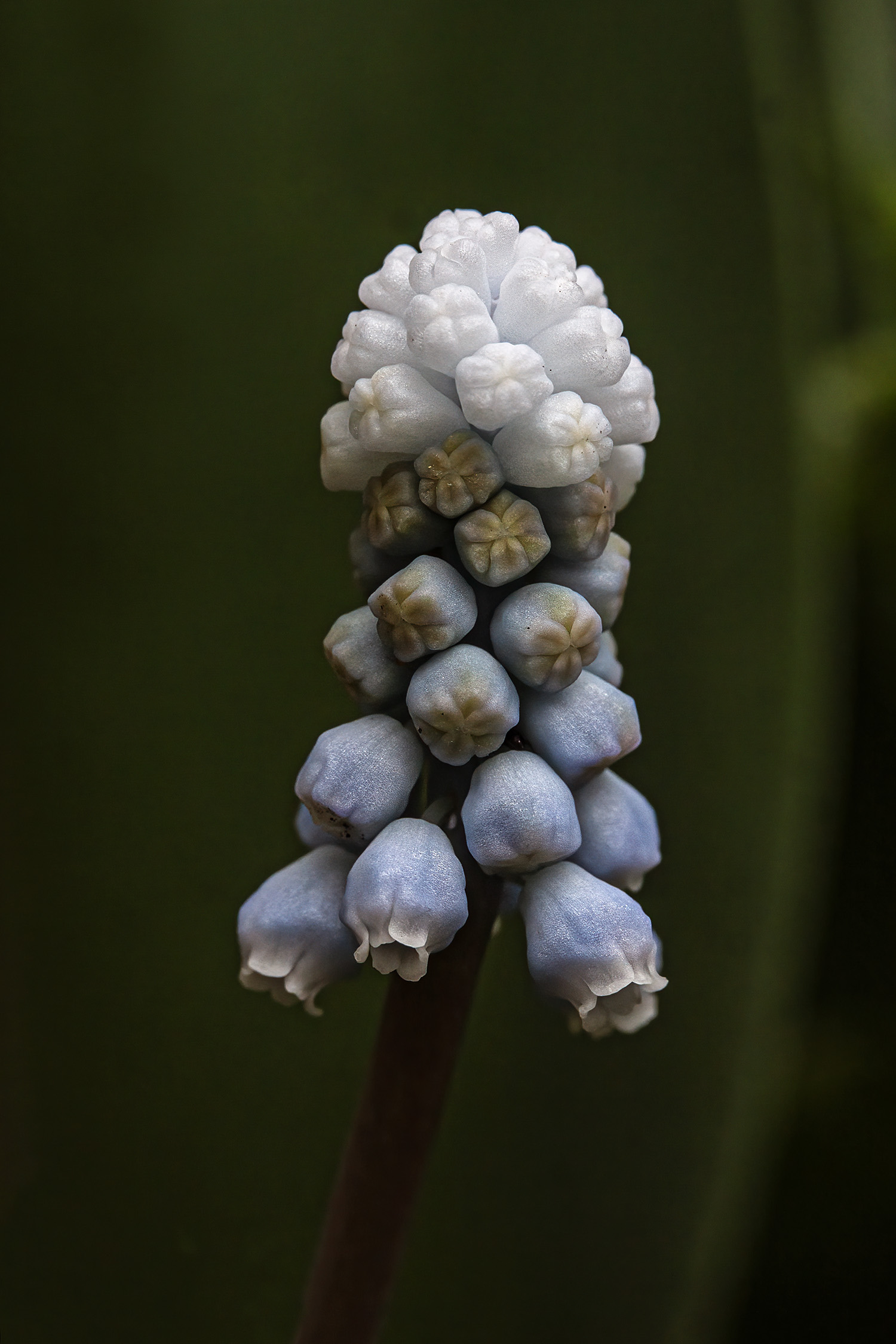
One of the early signs of spring is the emergency of the tiny stalks of Grape Hyacinths (g. Muscari). As their name suggest, these spiky little flowers look a bit like bunches of grapes. Most of the time grape hyacinths are bluish in color, but they come in other colors too and sometimes, as you can see in the second photo, there may be multiple colors on the same flower stalk.

I captured these images in the garden of my dear friend and neighbor Cindy Dyer. Cindy is used to seeing me skulking about in her garden and I usually am able to keep her informed about what is blooming in her own garden.

Using my short macro lens, I was able to capture some of the interesting patterns of these grape hyacinths. In the first image you can see how the little “grapes” grow in a spiral pattern. The second image shows how the “grapes” open up at their ends as they mature. I really like the way that both images feature the raised three-petalled impression on so many of the grapes—the shape looks almost like it was embossed.

Grape Hyacinth

Grape Hyacinth

© Michael Q. Powell. All rights reserved.
Read Full Post »

As I was scanning my neighbor’s garden for new growth yesterday, a small bit of bright orange caught my eye. I moved closer to see what it was and was shocked to find a tiny ladybug crawling around one of the plants.

The ladybug was pretty active, moving up and down the leaf, so it was challenging to get a shot of it. Eventually, though, my patience paid off and I was able to capture this image. Later in the year photos like this will become more commonplace, but during the month of March I am overjoyed whenever I have a chance to photograph an insect.

I did not get a good look at the face of this insect, so I cannot tell if it is an Asian Lady Beetle (Harmonia axyridis) or one of the native ladybugs, which are less common in most areas. Whatever the case, there is something whimsical about ladybugs that makes me smile, so I was happy to spot this one.

ladybug

© Michael Q. Powell. All rights reserved.

Read Full Post »

Early yesterday morning, I walked out of my house and captured this shot of the full moon. The full moon this month is primarily known as the Worm Moon, but has a lot of other names including the Lenten Moon, the Sugar Moon, the Goose Moon, and the Wind Strong Moon.

Although I love to photograph a full moon like this, I really do need to find a way to integrate some cool background elements in the shot. I haven’t yet been able to scout a location where I can catch the moon rising, but that is a future goal. In this case there was no pre-planning involved.

Full Moon

© Michael Q. Powell. All rights reserved.


Read Full Post »

I spotted this tiny red tulip yesterday morning in the garden of my dear friend and photography mentor Cindy Dyer, my first tulip sighting of the year. One of Cindy’s passions is gardening and she deliberately plants a lot of flowers that she believes will be photogenic.

Last fall she planted bulbs for some large, frilly, multi-colored tulips that she hopes will bloom later this year. (See my posting from last spring entitled Fire-breathing dragon to see an example of one of those crazy-looking parrot tulips.) I will be looking for those exotic flowers, but I have to say that am often drawn more to the simple, spare elegance of a single bloom, like today’s tulip.

When I first started to get serious about my photography almost ten years ago, I imitated the type of photographs that Cindy was taking, with a lot of emphasis on macro shots of flowers. Cindy taught me a lot about photography during those early days, lessons that have stuck with me as I have ventured into other areas of photography.

One of those lessons was about the value of a well-composed, graphic image, like today’s simple shot. Anyone, in theory, could have taken this shot, but they would have had to be willing to get on their hands and knees in the dirt to do so, another one of Cindy’s lessons. (If you want to see more of Cindy’s tips, check out her article How to Grow Your Garden Photography Skills that was featured several years ago on the NikonUSA.com website.)

tulip

© Michael Q. Powell. All rights reserved.

Read Full Post »

My thoughts have already turned to spring, with visions of colorful flowers and dragonflies dancing in my head. However, it turns out that winter was not quite done and last weekend we had a couple of inches of snow, a final hurrah for the season of winter.

Here are a couple of shots of my “winter dragonfly,” a metal sprinkler in my front yard that I featured in a previous post that showed the intricate detail of the dragonfly. I am also including a shot of some of the green shoots in the garden of my neighbor and fellow photographer Cindy Dyer. I think some of these might be tulips, but must confess that I am pretty clueless when it comes to plants.

Many of you know that I am somewhat obsessed with dragonflies. In 2020 I saw my first dragonflies of spring on the 3rd of April, the earliest I have ever seen dragonflies—see my 6 April 2020 posting First dragonflies of the season. I will probably go out and search for them in earnest during the final week of March. There are a couple of early emerging local species that I will be searching for along with migrant species like the Common Green Darner that might be passing through our area.


dragonfly

dragonfly

plant

© Michael Q. Powell. All rights reserved.

Read Full Post »

Pushing out of the still dormant winter earth, several crocuses in the garden of my dear friend Cindy Dyer were shining brightly yesterday, a hopeful sign of the spring beauty that is yet to come.

For the first image, I shielded the sun with my body to avoid the harsh highlights that the sunlight was creating. I then changed my shooting position so that the sunlight was streaming from another angle, which caused the yellow parts of the flower to glow.

Please continue to pray for the people of Ukraine and for all those affected by Putin’s invasion of Ukraine.

Crocus

crocus

© Michael Q. Powell. All rights reserved.

Read Full Post »

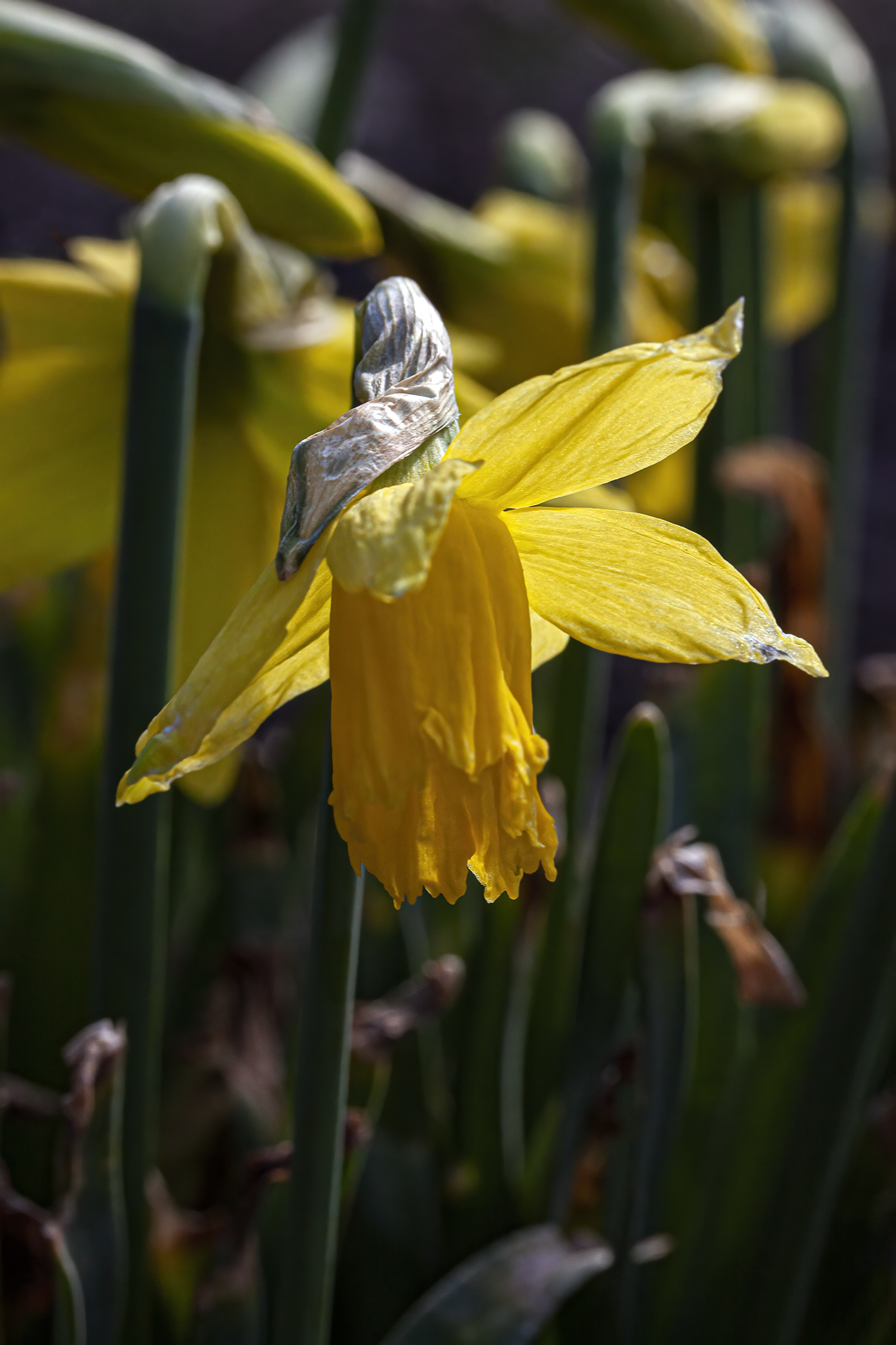
As I was walking through my neighborhood yesterday, I was delighted to spot some daffodils (g. Narcissus) that were already in bloom. The ground is still brown and bare and not very photogenic, so it is hard to take a “pretty” picture of these beautiful little flowers.

I used a short macro lens capture these images of the early daffodils, the advance guard for a multitude of spring flowers that will arrive before long. I am ready for the spring.

daffodil

daffodil

daffodil

© Michael Q. Powell. All rights reserved.

Read Full Post »

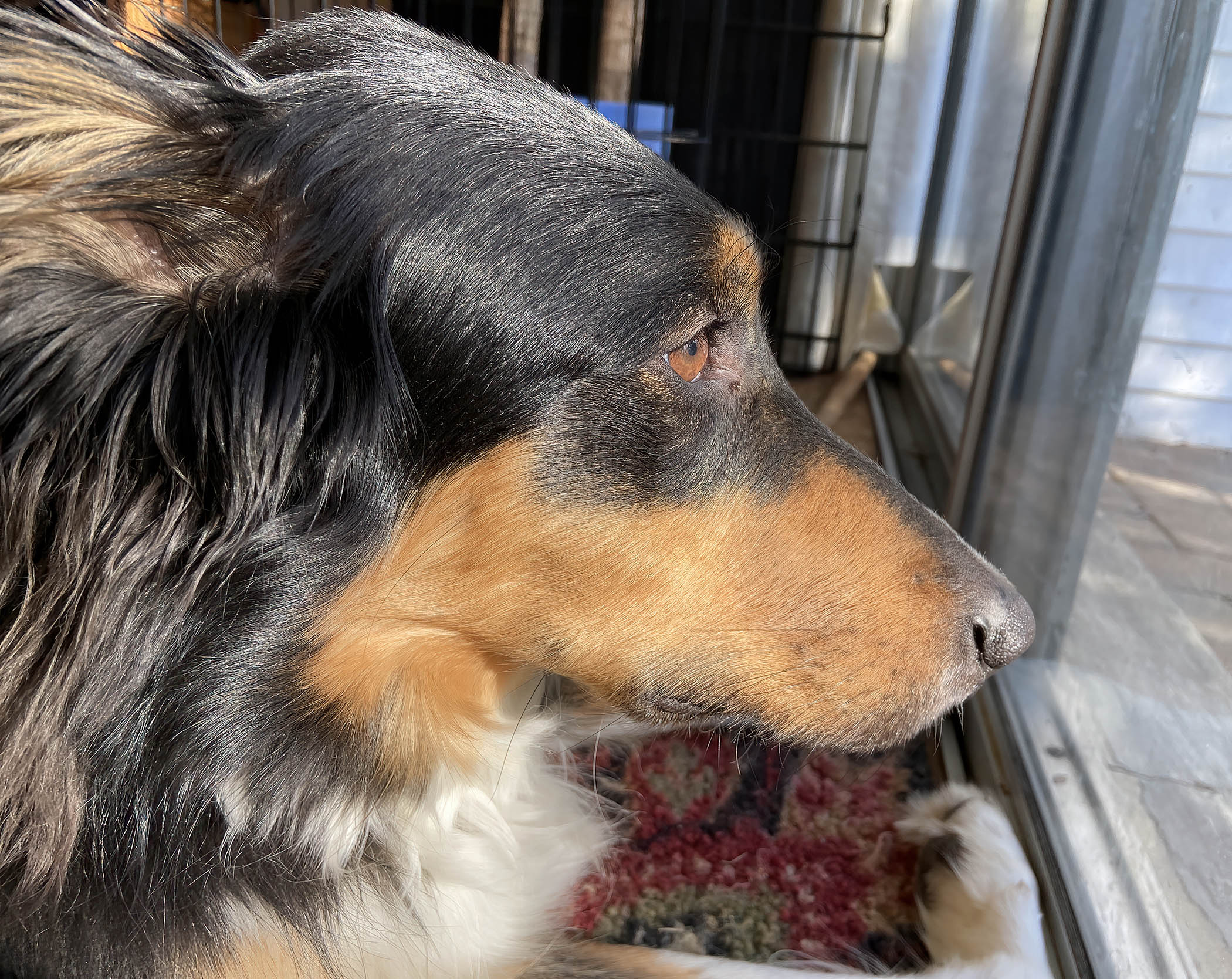
I was dogsitting for some friends this past weekend, so I did not have a chance to go out into the wild with my camera. So I decided to try to capture some images of Apollo, my weekend companion. Apollo was adopted from a shelter and is still a bit anxious and a little hyper, so I decided that it would be less disruptive for me to come into his environment than for him to come into mine.

In the first image, I captured one of the rare moments when Apollo, who I believe is some variety of collie, was relaxing. Most of the time he was really alert, as you can see in the second image. His favorite spot was in front of a sliding glass door that allowed him to keep a close eye on activity in the back yard. When we went outside, he seemed to think that it was one of his responsibilities to chase away any birds that dared to perch on the ground.

Over the course of our time together, Apollo warmed up more and more, though he does not appear to be a snuggling kind of dog. On Sunday morning, though, he curled up on one end of the sofa as I participated in a virtual church service while seated at the opposite end. I really like dogs and my time with Apollo was a welcome change to my pandemic routine—a different kind of encounter with wildlife.

Apollo

Apollo

Apollo

© Michael Q. Powell. All rights reserved.


Read Full Post »

It has been several months since I last saw a dragonfly and I will have to wait for a couple more months before they reappear in my area. As many of you know, dragonflies are one of my favorite subjects to photograph—there is something almost magical about these beautiful aerial acrobats.

As I was shoveling snow after a recent storm, I glanced over at the front yard of my townhouse and was struck by the beautiful patina of the dragonflies that are part of a lawn sprinkler.

The metal dragonflies reminded me of the beauty that is to come, of the new life that will burst forth when spring arrives. Those thoughts filled me with hope and happiness and help to sustain me through the often bleak days of the winter.

dragonfly

© Michael Q. Powell. All rights reserved.
Read Full Post »

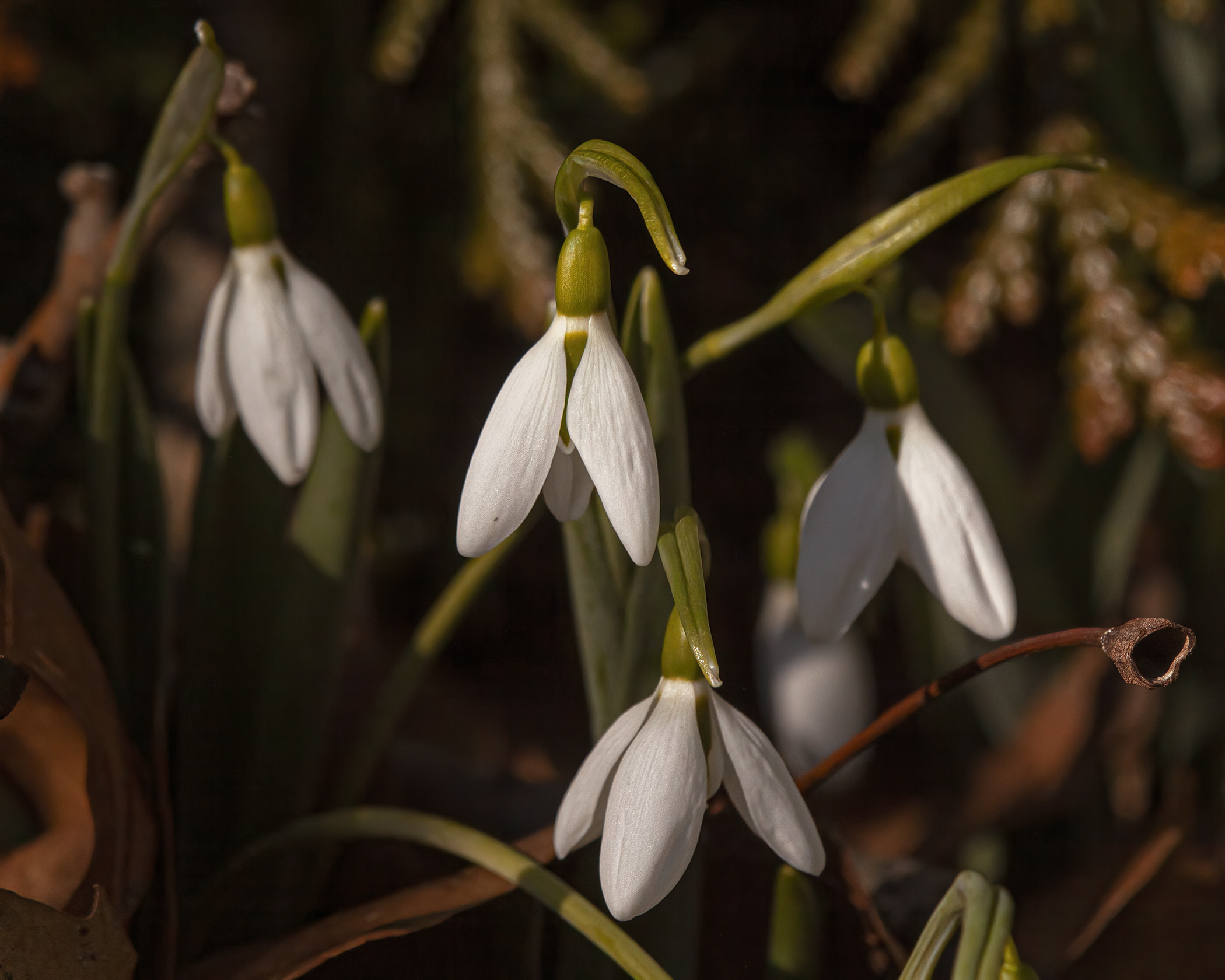
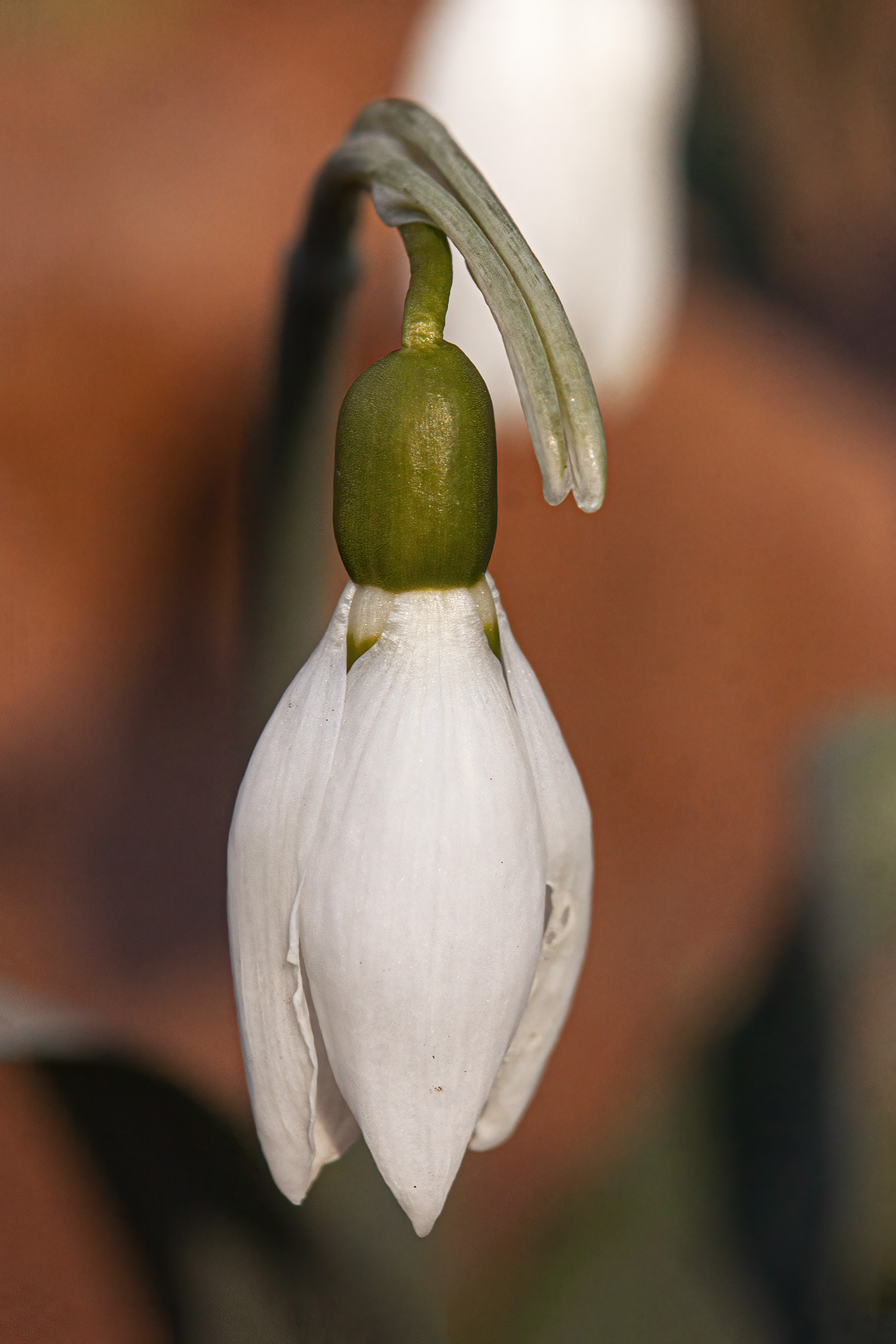
In the deepest darkest days of winter, there is still new growth, like these snowdrop flowers (g. Galanthus) that I spotted yesterday at Green Spring Gardens, a county-run historic garden not far from where I live.

I decided to mix things up a bit and put my macro lens on my camera for the first time in months, hoping that I might find flowers in bloom. What can I possibly find that would be flowering in late January? We have had over a foot (30 cm) of snow already this month and some frigid temperatures, a harsher winter than in recent years. I knew from past experience, though, that there was a good chance that some snowdrop flowers would be in bloom—my challenge was to find them.

I searched in vain in flowerbed after flowerbed, until finally I found several small patches of these pretty white flowers. The words to the song Edelweiss from The Sound of Music, one of my favorite musicals, came to mind. Although edelweiss is a completely different flower, the words of the song seemed to fit my snowdrops so well.

“Every morning you greet me
Small and white, clean and bright
You look happy to meet me
Blossom of snow, may you bloom and grow
Bloom and grow forever.”

snowdrops

snowdrop

snowdrop

© Michael Q. Powell. All rights reserved.

Read Full Post »

There is something really soft and gentle about Mourning Doves (Zenaida macroura), and we seem to have quite a few of them in my neighborhood, as I discovered while walking about on Tuesday after our snowstorm the previous day. Some of the ones that I saw were by themselves, like the dove in the first and second photo, while others were in pairs, like the two in the final photo.

Mourning Doves always seem long and angular to me. In these shots, the birds seem to have puffed up their feathers a bit in an effort to stay warm. I am always amazed that birds and other wildlife manage to survive when conditions get this harsh and inhospitable. On this day, at least, there was some sunshine, which allowed the birds to warm up a bit.

mourning dove

mourning dove

mourning dove

© Michael Q. Powell. All rights reserved.


Read Full Post »

It was delightful on Tuesday to photograph cardinals with a brilliant blue sky as a backdrop, but many of the birds that I try to photograph do not perch high up in the trees. Birds like this White-throated Sparrow (Zonotrichia albicollis) spent most of the time near the ground, poking about in the undergrowth. If I am lucky enough to get a clear view of one of these birds, the background is likely to be cluttered and distracting.

Snow has a way of decluttering the image, obscuring some of the pesky background branches. This was the case in the first image when I was able to capture the intensity of the sparrow in mid-cry. His little white “beard” is a perfect for the match for the snow and I was happy to be able to capture his little yellow eye stripe.

The second image has a much more gentle feel to it. The blurred snowy background allows us to focus on the puffed-up sparrow perched on the tiny branch protruding from the snow. The sparrow seemed to be taking a break, resting and recovering as it contemplated its next moves. As is usually the case, the sparrow did not sit still for very long and resumed its foraging a short time later.

White-throated Sparrow

White-throated Sparrow

© Michael Q. Powell. All rights reserved.


Read Full Post »

Yesterday afternoon I trudged through the snow in the wooded areas of my townhouse community and was thrilled to spot a few birds. The sun was shining brightly and the skies were blue, but the temperatures never really rose above the freezing level.

It felt invigorating to be outdoors, though I must admit that I felt a little self-conscious skulking about behind my neighbors’ houses with a camera with a long lens. However, nobody called the police to report a peeping Tom, so I guess that I was ok.

When it comes to iconic shots of birds in the snow, nothing beats the impact of a bright red Northern Cardinal (Cardinalis cardinalis). The only problem was that I could not find one. Fortunately I was able to spot an equally stunning female cardinal that appeared to be basking in the warmth of the sunlight. I had to maneuver about quite a bit to get a clear shot of her, but am pretty happy with the composition that I was able to get, especially in the first photo that captured some of her personality.

Eventually I did find a male cardinal, but he was not very cooperative. I could see his color clearly—it is impossible to hide when you are that brightly colored—but branches kept me from getting a clean shot. The final image shows the only unobstructed view I could get of the cardinal when I was almost directly below him as he steadfastly ignored me and refused to look down at me. Still, I really like the shot, which has an abstract feel to it that I find really appealing.

Northern Cardinal

Northern Cardinal

Northern Cardinal

© Michael Q. Powell. All rights reserved.

Read Full Post »

I always admire the agility and balancing skills of tiny birds—I know that I could not hold a position like that of this sparrow that I spotted last week at Huntley Meadows Park. I think that it is a Song Sparrow (Melospiza melodia), but I am always a bit uncertain when it comes to sparrows.

As for balance, I know that I can always use more of that in my life. When I was still working full-time, all my employers gave lip service to the importance of “work-life balance.” The sad reality was that most of us were workaholics devoting way too much energy to our work and neglecting our lives. It was only when I cut back on my hours during the final decade of my work life that I began to discover some of that mythical sense of balance.

Part of that process has been a deliberate cultivation of my creative side, which I have neglected most of my life. My photography and this blog have played a critical role in that journey of discovery and rediscovery. I really appreciate all of the support and encouragement that so many of you have provided over the years and continue to provide as my journey continues. Thanks.

Song Sparrow

© Michael Q. Powell. All rights reserved.

Read Full Post »

Most woodpeckers have simple patterns of black and white feathers and sometimes a touch of red. Northern Flickers (Colaptes auratus), on the other hand, have a beautiful brown plumage that is richly patterned with black spots, bars, and crescents and also have brightly-colored wing and tail feathers that, alas, are often hidden from view when they are perched—I like to think of flickers as the “rock stars” of the woodpecker world.

I was fascinated to read on the Cornell Lab of Ornithology website that there are two variants of Northern Flickers, an Eastern one and a Western one. “The key difference is the color of the flight-feather shafts, which are either a lemon yellow or a rosy red. Yellow-shafted forms have tan faces and gray crowns, and a red crescent on the nape. Males have a black mustache stripe. Red-shafted forms have a gray face, brown crown, and no nape crescent, with males showing a red mustache stripe.”

The flicker’s flight-feathers are not visible in the photo below, but you can see the male’s black mustache stripe, indicating that he is an Eastern variant. I highly recommend clicking on the image to get a closer view of the fascinating patterns in the plumage of this beautiful bird that I spotted on Wednesday at Huntley Meadows Park.

Northern Flicker

© Michael Q. Powell. All rights reserved.


Read Full Post »

As I was walking through a grassy field on Thursday at Huntley Meadows Park, I inadvertently disturbed a grasshopper that flew to a nearby tree. It had been weeks since I had last seen a grasshopper, so I searched carefully for the insect and was happy when I managed to locate it on the trunk of the tree.

Although I carefully composed my shot, I did not have high expectations for it—it was a simple shot with a simple composition. I was stunned when I reviewed the image on my computer at how well it turned out. I love the way I was able to capture the texture of the tree bark and of the grasshopper, though I must confess that the background on the right hand side of the image may be my favorite element of the image.

One of the joys of photography for me is the discovering images like this, appealing images in which the separate components work together to create a harmonious whole. If someone had asked me when I first returned home from the shoot if I had captured any good images, I probably would have responded negatively—I would have been wrong.

Have a wonderful weekend.

grasshopper

© Michael Q. Powell. All rights reserved.
Read Full Post »

We may be down to a single active dragonfly species in my area. Yesterday I went out with my camera to Occoquan Bay National Wildlife Refuge, my favorite location for wildlife photography the last few years, and found only Autumn Meadowhawk dragonflies (Sympetrum vicinum)—the Wandering Gliders seem to have departed from the areas where I had seen them previously during the last few weeks.

The good news is that I saw multiple Autumn Meadowhawks, so the population seems to be still strong. I was planning to return to the refuge tomorrow, when temperatures are supposed to soar to 73 degrees (23 degrees C), but just noted that the refuge is closed all day for one of the annual managed deer hunts. I may have to go to another location to see if the warmer temperatures coax any stragglers or survivors from other dragonfly species to make a final curtain call.

I captured these three photos of Autumn Meadowhawks last week and really like them for different reasons. In the first photo, I love the way that the color and shape of the leaf stems match the body of the dragonfly. In the second shot, I was thrilled to be able to include the sky in the composition when the dragonfly chose a high perch—I also am quite fascinated by the interplay of light and shadows in the image and the shapes that they help to create.

The simple, stark composition of the final shot appeals to me a lot. The monochromatic color palette of the branch and the background really help to draw a viewer’s eyes to the handsome male Autumn Meadowhawk and his bright red coloration really pops.

Autumn Meadowhawk

Autumn Meadowhawk

Autumn Meadowhawk

© Michael Q. Powell. All rights reserved.
 

Read Full Post »

As I noted in a recent posting, there appear to be only two active dragonfly species remaining in my area—Wandering Gliders and Autumn Meadowhawks (Sympetrum vicinum). Today I decided to feature some shots of Autumn Meadowhawk dragonflies that I spotted last week during a visit to Huntley Meadows Park, a local marshland refuge.

Quite often Autumn Meadowhawks perch flat on the ground which makes it easy for me to get shots of them. However, those shots tend to be relatively uninteresting from an artistic point of view. I am always on the lookout for those dragonflies that choose more photogenic perches, especially those that include colorful fall foliage.

I was quite fortunate that the Autumn Meadowhawks were cooperative last week in helping me to capture images that matched my “artistic vision,” which does not always happen in wildlife photography. Wildlife photography has so many variables over which I have little or not control, including the weather, the lighting, the environment, and the subjects themselves. Success is certainly not guaranteed, but I have found that patience, persistence, knowledge, and a bit of skill can often help to tip the odds a bit in my favor.

Autumn Meadowhawk

Autumn Meadowhawk

Autumn Meadowhawk

© Michael Q. Powell. All rights reserved.


Read Full Post »

I am still on the lookout for summer dragonfly stragglers and survivors. There are certain dragonfly species that I expect to see during the autumn, but there are also a few particularly hard individuals from the summer species that are managing to hang on. Over the past week and a half I have spotted one Great Blue Skimmer (Libellula vibrans), one Eastern Pondhawk (Erythemis simplicicollis), and one Blue Dasher (Pachydiplax longipennis), as shown in the photos below.

It is interesting to note that all three of these dragonflies appear to be females. I wonder if female dragonflies tend to outlive their male counterparts, as is the case with humans.

I went looking for dragonflies today, after several frosty nights, and did not see a single dragonfly. The daytime temperature was only about 52 degrees (11 degrees C), which is a bit cold for dragonfly activity. Temperatures are forecast to rise to 68 degrees (20 degrees C) early next week and I anticipate that I will see a few dragonflies then.


Great Blue Skimmer

Eastern Pondhawk

Blue Dasher

© Michael Q. Powell. All rights reserved.

Read Full Post »

Autumn leaves floating on the dark waters of a marsh—a static moment in a season of change, a time for reflection.

Sometimes I am content to capture a feeling in my photos rather than focusing on a well-defined subject.

autumn leaves

autumn leaves


© Michael Q. Powell. All rights reserved.

Read Full Post »

It is a fun challenge to try to photograph little birds moving about in the trees. I managed to capture this shot of an American Goldfinch (Spinus tristis) on Tuesday during a visit to Huntley Meadows Park, a local marshland refuge.

I like how the muted colors of this bird seem to reflect the autumn colors of its surroundings. I am more used to seeing goldfinches in the spring, when the adult males are bright yellow in color and are really easy to spot.

American Goldfinch

© Michael Q. Powell. All rights reserved.


Read Full Post »

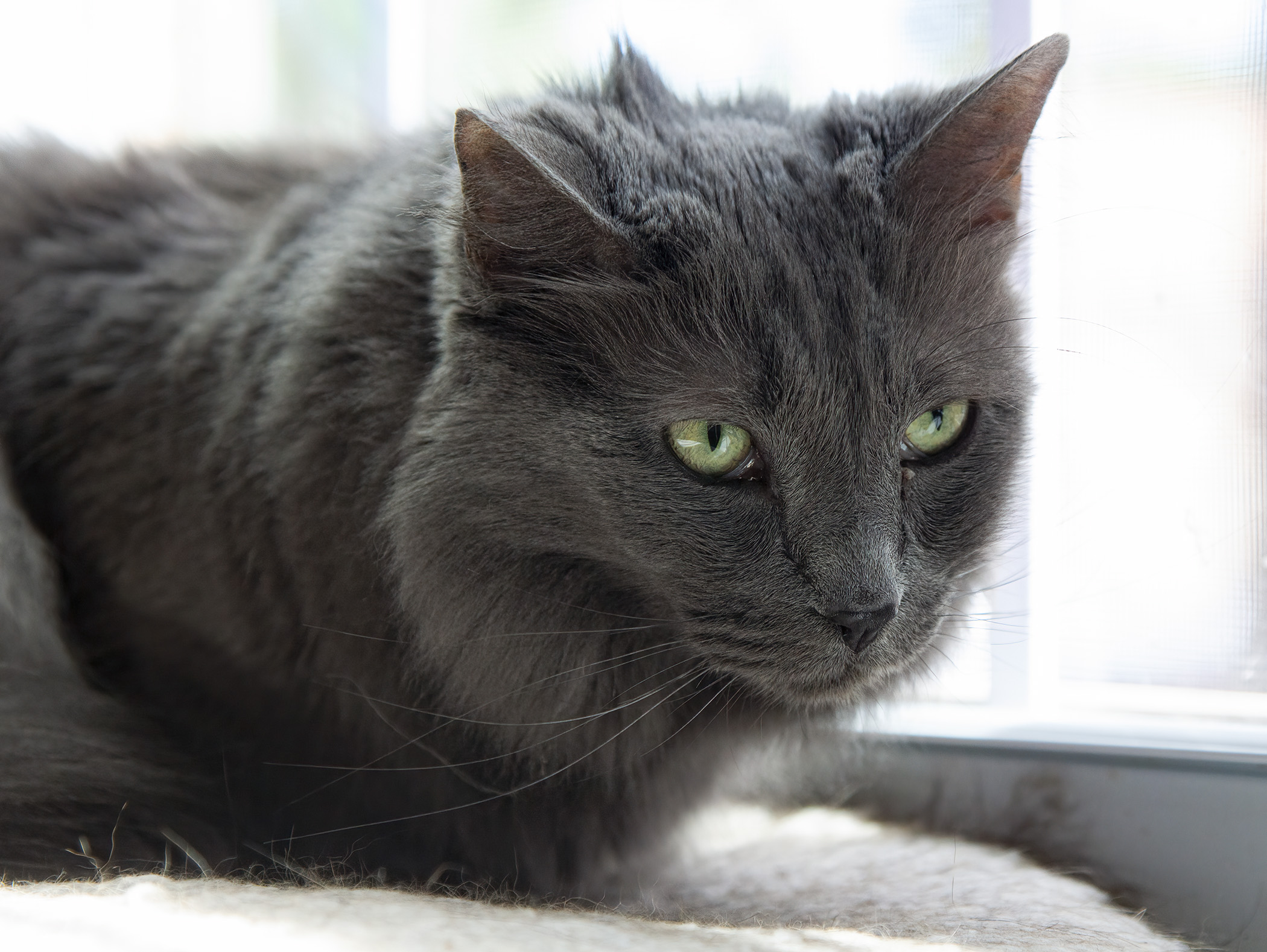
I am helping this weekend to take care of three cats that belong to my friend Cindy Dyer and her husband. I mention Cindy fairly often on this blog because she is a constant sources of encouragement and inspiration in my photography and has mentored me over the years—she is a freelance photographer and graphic designer. She is also an amazing gardener and most of the times when I feature flower photos, I have taken the shots in her garden.

Cindy works from home, so her three cats are used to having someone around during most of the day. Over the years I have taken care of the cats multiple times and they are relatively comfortable with my presence in the hours. That being said, each of the three cats has his own personality and shows me varying degrees of attention and affection.

I took these shots of Lobo, Pixel, and Queso yesterday afternoon when I stopped in to check on them. All three cats seemed to be evaluating me and I like the way that I was able some of their personality in these informal little portraits.

Lobo

Pixel

Queso

© Michael Q. Powell. All rights reserved.

Read Full Post »

As I glanced down at the dark waters of the pond last Thursday at Huntley Meadows Park, a damselfly couple (Orange Bluets (Enallagma signatum), I think) flew by in tandem and I snapped this shot. I love how it looks like we are peering into a night sky, watching the damselflies fly past the celestial bodies of the Milky Way.

I couldn’t help but think about the opening title sequence from the Star Wars movies that begins with the words, “A long time ago in a galaxy far, far away….”

Orange Bluet

© Michael Q. Powell. All rights reserved.
Read Full Post »

As we move deeper into summer, the days of the dragonflies are gradually coming to an end. Their biological clocks are ticking as they feel compelled to make efforts to ensure the perpetuation of their species.

On Thursday I made a trip to Huntley Meadows Park, a local marshland park, and spotted this pair of mating Great Blue Skimmer dragonflies (Libellula vibrans). I could not help but notice that the wings of the dragonflies were looking tattered, especially those of the female, the dragonfly that is light brown in color. I can also see scratches along the the body of the male.

I also noticed that the female appears to be holding onto some kind of insect in her front legs. Was she planning for a snack during mating? Is the insect the dragonfly equivalent of a post-coital cigarette? I know a lot about dragonflies, but some things are meant perhaps to always remain a mystery.

Great Blue Skimmer

© Michael Q. Powell. All rights reserved.

Read Full Post »

« Newer Posts - Older Posts »