July 17, 2019 by Mike Powell
Yesterday I spotted this Common Wood Nymph butterfly (Cercyonis pegala) at the edge of a wooded area as I was exploring Occoquan Bay National Wildlife Refuge. Although the colors of this butterfly are somewhat muted, I really like the distinctive yellow patch that makes it easy to identify.
When I first saw the butterfly, it was on the ground and initially I was disappointed when it flew up into a tree. Fortunately, it perched on a leaf that was at eye level and I was happy to be able to capture this image.

© Michael Q. Powell. All rights reserved.
Posted in Butterflies, Insects, Nature, Photography, Summer, wildlife | Tagged Canon 50D, Cercyonis pegala, Common Wood Nymph, Common Wood Nymph butterfly, Occoquan Bay National Wildlife Refuge, Tamron 180mm macro, Woodbridge VA | 6 Comments »
July 16, 2019 by Mike Powell
Life can be tough and can wear you down if you are a prince, at least if you are a Prince Baskettail dragonfly (Epitheca princeps). Last Saturday I spent a pretty good amount of time observing Prince Baskettails patrolling a pond at Jackson Miles Abbott Wetland Refuge.
As I am wont to do, I tried to photograph them in flight and managed to get a few shots in focus. As I reviewed the images, I couldn’t help but notice that the wings of all of the dragonflies were worn down and/or damaged. I am used to seeing such damage with dragonflies that fly through thickets and heavy vegetation, but I was a little surprised to see it with dragonflies that seem to spend most of the time flying over open water.
As we move deeper into summer, I am certain to encounter more and more dragonflies with damaged wings. I am always amazed to see that such dragonflies are still capable of amazing aerial acrobatics despite their physical limitations—somehow they manage.


© Michael Q. Powell. All rights reserved.
Posted in Dragonflies, dragonfly, Insects, Nature, Photography, Summer, wildlife | Tagged Canon 50D, Epitheca princeps, Fort Belvoir VA, Jackson Miles Abbott Wetland Refuge, Prince Baskettail, Prince Baskettail dragonfly, Tamron 180mm | 5 Comments »
July 15, 2019 by Mike Powell
Last Saturday I spotted this Pearl Crescent butterfly (Phyciodes tharos) on what looks to be a Black-eyed Susan flower (Rudbeckia hirta) at Jackson Miles Abbott Wetland Refuge. Initially the butterfly’s wings were open, which made for an ok shot. When the butterfly partially closed its wings, however, the light coming from the back helped to illuminate one wing like a stained glass window.
It is amazing how a slight change in the position of a subject can radically change the feel of an image—that is one of the reason why I like to shoot in short bursts, hoping to capture a variety of poses in a short period of time.

© Michael Q. Powell. All rights reserved.
Posted in Butterflies, Flowers, Nature, Photography, Summer, wildlife | Tagged black-eyed susan, Canon 50D, Fort Belvoir VA, Jackson Miles Abbott Wetland Refuge, Pearl Crescent, pearl crescent butterfly, Phyciodes tharos, Rudbeckia hirta, Tamron 180mm | 8 Comments »
July 14, 2019 by Mike Powell
Normally a dragonfly’s abdomen is straight. Occasionally, though, I encounter one with an abdomen that has a noticeable curve, like this male Eastern Pondhawk dragonfly (Erythemis simplicicollis) that I spotted yesterday at Jackson Miles Abbott Wetland Refuge. (For those of you not familiar with dragonfly anatomy, the upper portion of the body is the thorax and the lower two-thirds is the abdomen.)
I suspect that the curvature was the result of a problem that occurred when the dragonfly was first emerging. It does not seem to have any effect on his ability to fly or to catch prey, but it might pose a problem when he attempts to mate.

© Michael Q. Powell. All rights reserved.
Posted in Dragonflies, dragonfly, Insects, Nature, Photography, Summer, wildlife | Tagged Canon 50D, Eastern Pondhawk, Eastern Pondhawk dragonfly, Erythemis simplicicollis, Fort Belvoir VA, Jackson Miles Abbott Wetland Refuge, male Eastern Pondhawk, Tamron 180mm | 3 Comments »
July 13, 2019 by Mike Powell
Should I present a subject in landscape mode or portrait mode? That is a question I face frequently when I am composing photos initially and later when I am processing the images. Some subjects or scenes lend themselves naturally to one of the modes, but often it is not clear which one will be more effective. I remember reading somewhere that it is best to take shots from multiple angles, at varying distances, and using multiple modes and I try to follow that advice whenever I can.
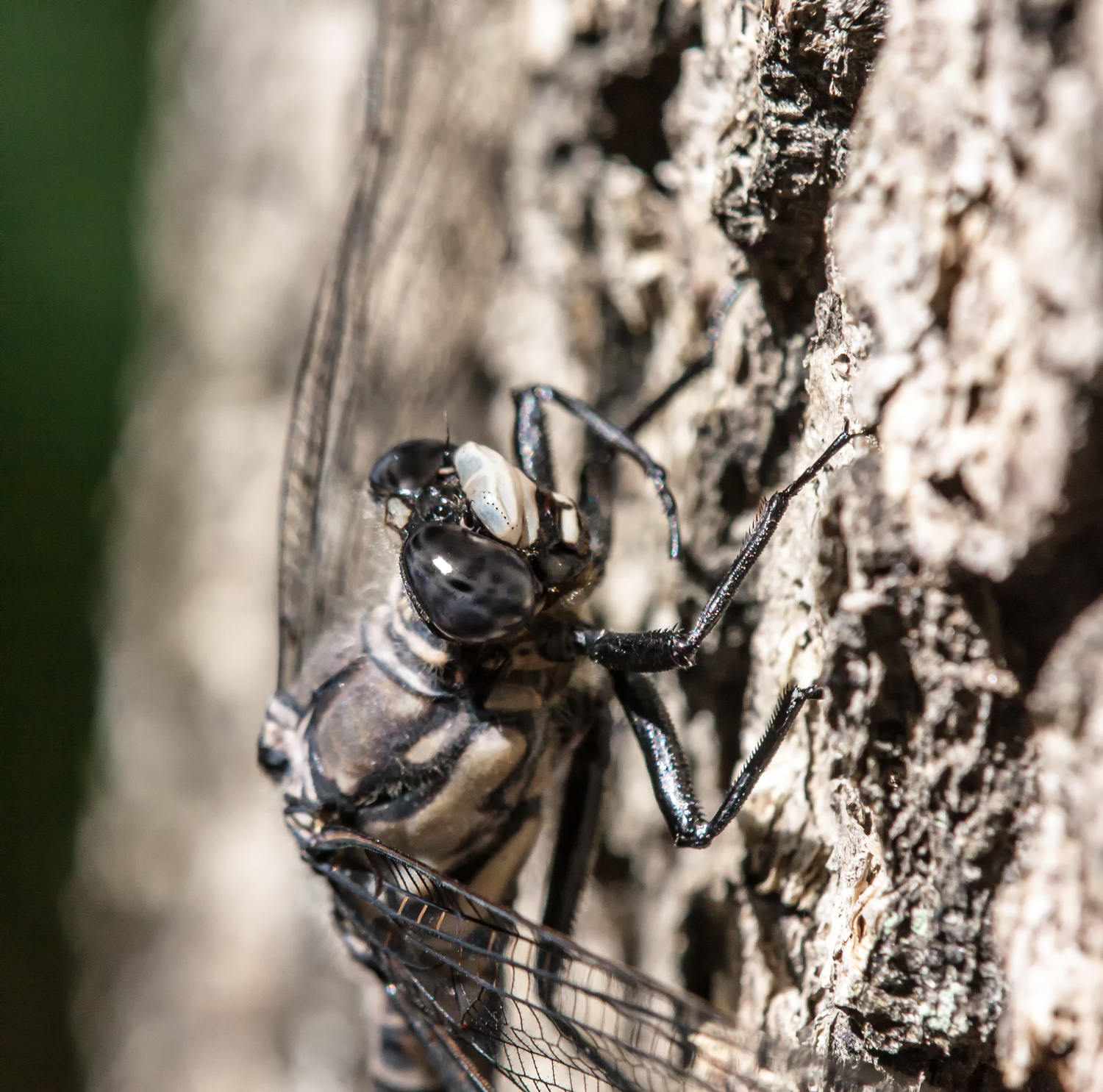
This past week I encountered a large dragonfly as I was exploring a small creek in Prince William County, Virginia. The creek was mostly in the shadows and I was unable to identify the species of the dragonfly until it perched on a sun-lit tree. Then it was easy to determine that it was a Gray Petaltail dragonfly (Tachopteryx thoreyi).
The dragonfly was pretty cooperative and I was able to take multiple shots, two of which I have included in this posting. From an artistic perspective I particularly like the first image, which gives equal weight to the dragonfly and to the environmental elements. The second image draws your attention more to the details of the dragonfly and give greater emphasis to the texture of the tree.
Are you drawn more to one of the two images? If so, why? I know how I react to my own images and am always curious to hear what you think and/or feel about them.


© Michael Q. Powell. All rights reserved.
Posted in Dragonflies, dragonfly, Insects, Nature, Photography, Summer, wildlife | Tagged Canon 50D, Gray Petaltail, Gray Petaltail dragonfly, Prince William County VA, Tachopteryx thoreyi, Tamron 180mm | 21 Comments »
July 12, 2019 by Mike Powell
A couple of weeks ago I posted a photo of a Black-shouldered Spinyleg dragonfly (Dromogomphus spinosus) that prompted one of my readers, Molly Lin Dutina of Treasures in Plain Sight, to comment, “Spinyleg —sounds like something a child would be afraid of!” That photo, alas, did not give a very good view of the spiny legs.
This week, however, as I was exploring a creek in Prince William County, Virginia, I was fortunate to capture some images of a Black-shouldered Spinyleg that show off those fearsome spines. If you click on the image below and focus your attention on the back legs, you will see the long pointed spines that help the dragonfly hold on to prey.
Ouch!

© Michael Q. Powell. All rights reserved.
Posted in Dragonflies, dragonfly, Insects, Nature, Photography, Summer, wildlife | Tagged Black-shouldered Spinyleg, Black-shouldered Spinyleg dragonfly, Canon 50D, Dromogomphus spinosus, Prince William County VA, Tamron 180mm | 4 Comments »
July 11, 2019 by Mike Powell
Yesterday as I was exploring a creek in Prince William County, Virginia I spotted this large damselfly. I marveled at its beautiful coloration and was happy to be able to capture an image that shows it off well. At the time I took the photo I was not certain of the species, but when I returned home and looked in my damselfly book, I learned that it is a male Powdered Dancer damselfly (Argia moesta).
As a Powdered Dancer male gets older, its thorax and the tip of its abdomen become covered with a powdery blue or gray substance in a process known as pruinescence. Eventually the male will look almost white, which makes it even easier to identify. So many damselflies have a lot of blue on their bodies that it is hard for me to be confident in my identification when I see a damselfly with blue coloration.

© Michael Q. Powell. All rights reserved.
Posted in damselfly, Insects, Nature, Photography, Summer, wildlife | Tagged Argia moesta, Canon 50D, Powdered Dancer, Powdered Dancer damselfly, Prince William County VA, Tamron 180mm | 4 Comments »
July 10, 2019 by Mike Powell
During the hot, humid days of mid-summer, I often hear the sounds of birds, but rarely see them. Although I may be out in the blazing sun, most of the birds seem to use common sense and take shelter in the shade of the trees.
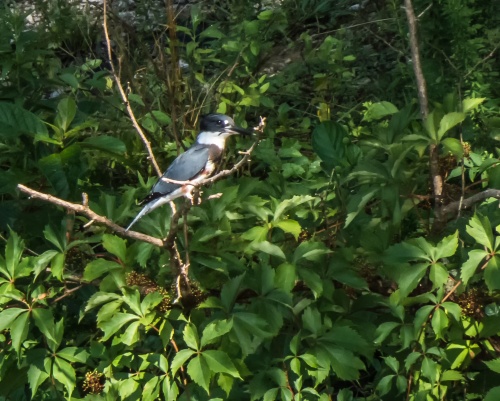
Last week as I was exploring Jackson Miles Abbott Wetland Refuge, I heard the unmistakable call of a kingfisher and caught a glimpse of it skimming across the water of a small pond. I was a bit surprised when it chose briefly to perch in a small tree overhanging the water. I was a long way away, but had a clear line of sight and captured this image of the female Belted Kingfisher (Megaceryle alcyon). I can tell that it is a female because I can see a reddish-colored band across its chest that the male lacks.
Many of you know that I photograph birds more frequently during the winter months, when insects disappear and the lack of foliage makes it easier to spot the birds. Throughout the year, however, I try to be ready in case a bird decides to be cooperative and poses for me.
© Michael Q. Powell. All rights reserved.
Posted in Birds, Nature, Photography, Summer, wildlife | Tagged Belted Kingfisher, Canon SX50, female Belted Kingfisher, Fort Belvoir VA, Jackson Miles Abbott Wetland Refuge, kingfisher, Megaceryle alcyon | 9 Comments »
July 9, 2019 by Mike Powell
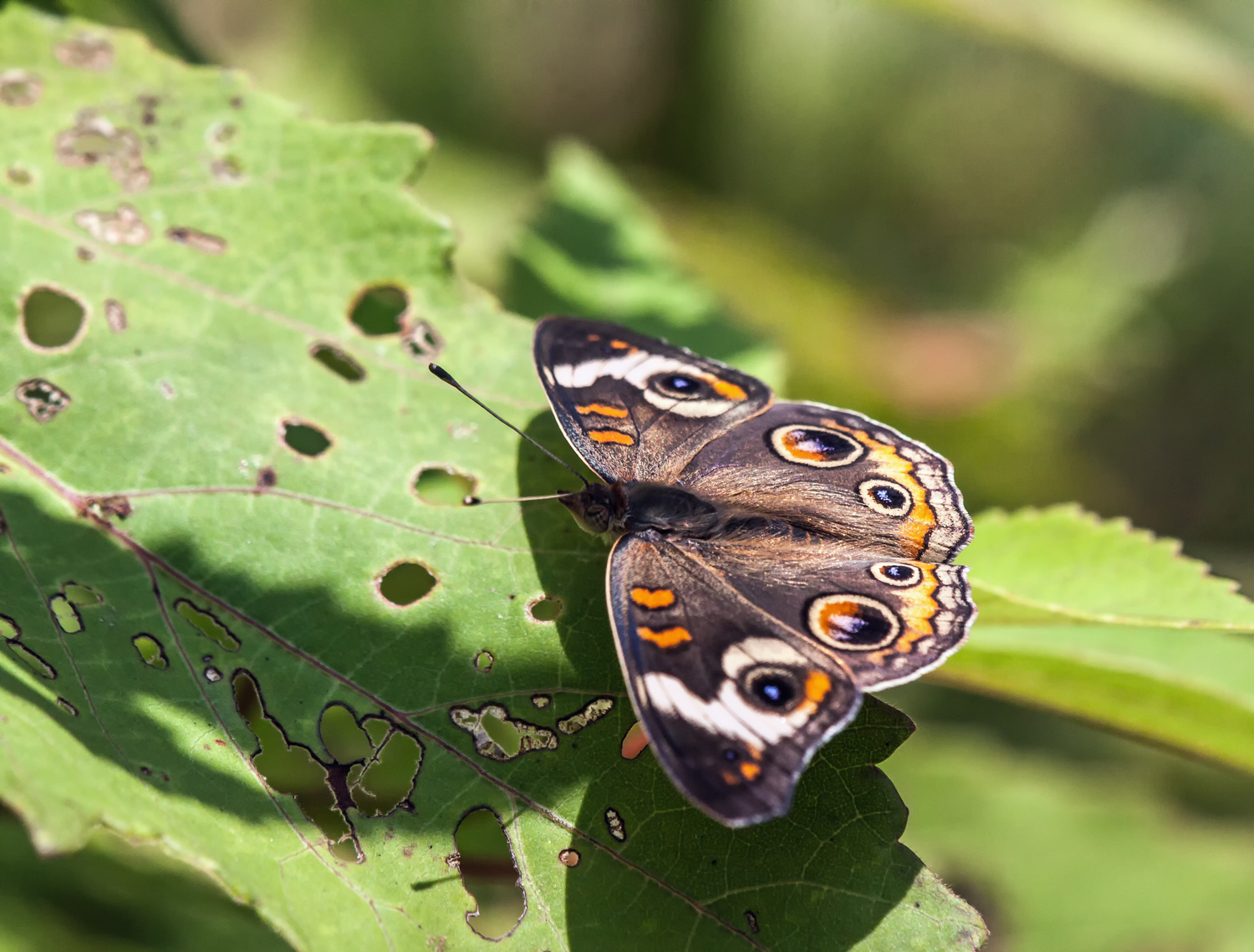
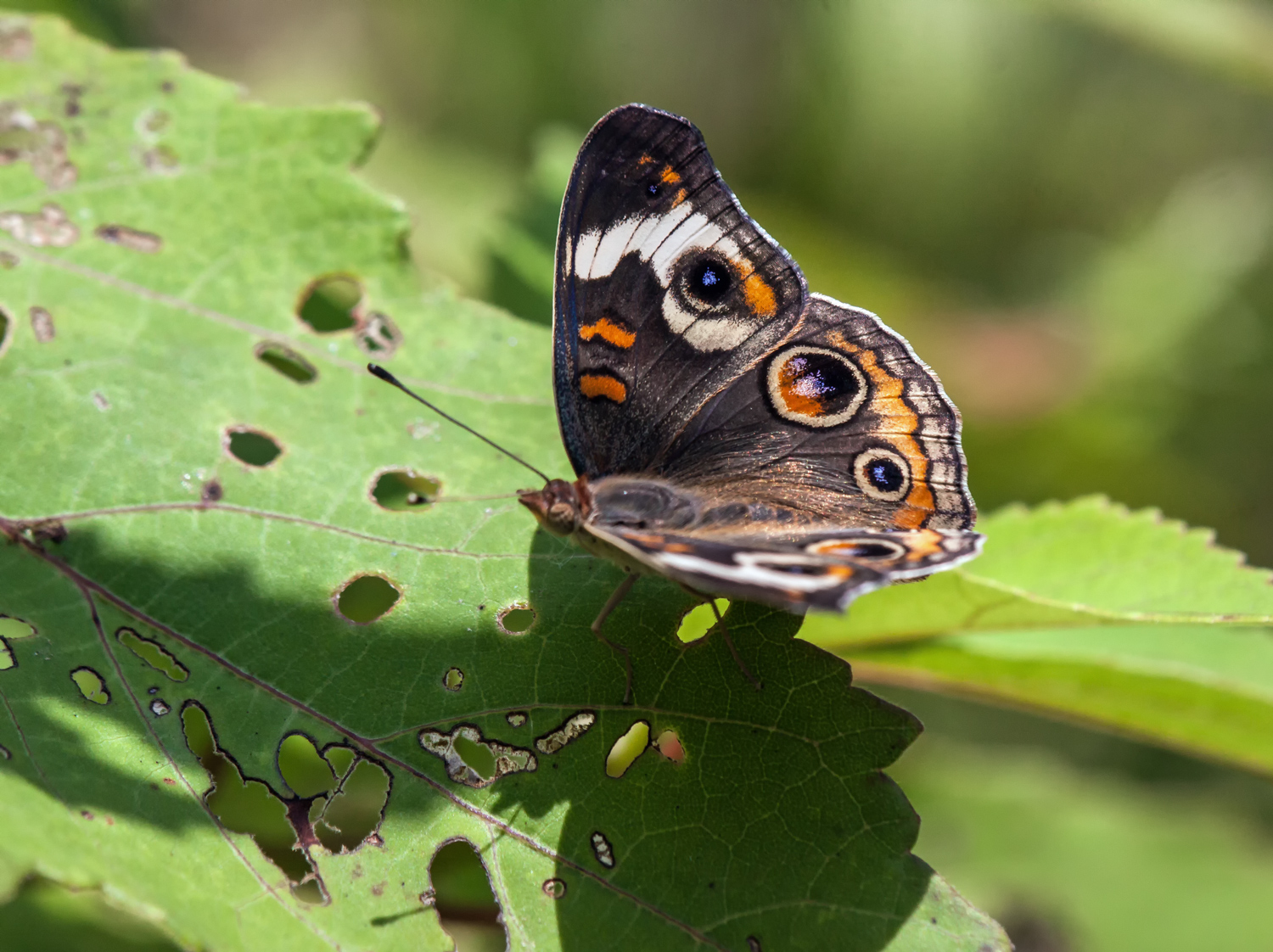
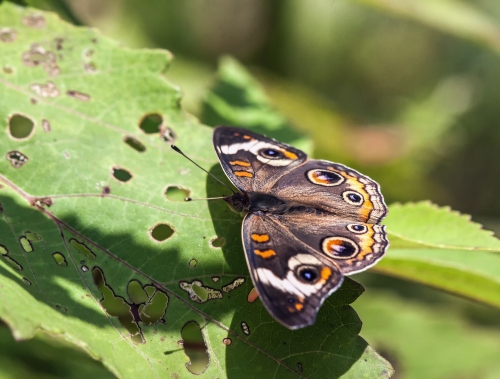
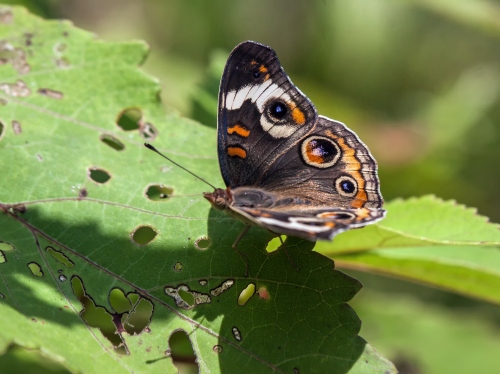
One of the real joys of the summer is having the chance to see colorful butterflies, like this Common Buckeye butterfly (Junonia coenia) that I observed last week at Jackson Miles Abbott Wetland Refuge. I am not sure what creature has been munching on the vegetation on which the butterfly is perched, but I really like the way that the holes in leaves mirror the circular shapes of the butterfly’s eye spots.
© Michael Q. Powell. All rights reserved.
Posted in Butterflies, Insects, Nature, Photography, Summer, wildlife | Tagged Canon 50D, Common Buckeye, Common Buckeye butterfly, Fort Belvoir VA, Jackson Miles Abbott Wetland Refuge, Junonia coenia, Tamron 180mm | 6 Comments »
July 8, 2019 by Mike Powell
Thanks to a reminder from WordPress, I realized this morning that I am starting my 8th year with this blog. On July 7, 2012 I made my first posting “Blue Dasher dragonfly” and, as they say, the rest is history. According to WordPress stats, I have had 205,209 views of 3,177 posts. Some of those were re-reposts of blogs written by others, but I figure that I have written over 3,100 individual posts with well over 5,000 photos.
This morning I decided to share three of my all-time favorite photos—a singing Red-winged Blackbird (Agelaius phoeniceus); a Red Fox (Vulpes vulpes) on a frozen pond; and a close-up shot of a Blue-faced Meadowhawk dragonfly (Sympetrum ambiguum). I think that these three images taken together give you a good idea of my approach to photography.
I could not have made it this far on my journey in photography without the support and encouragements of so many of you. You have helped to make blogging part of my daily life. Thanks so much to you for enriching my life in a whole range of different ways.
I owe a special debt of gratitude to Cindy Dyer, my dear friend and photography mentor. She was the one who sat me down seven years ago and helped me with the mechanics of starting this blog. She continues to inspire me and to support me in both my personal life and in my photography. Thanks, Cindy.
What’s ahead? For the foreseeable future I plan to continue my adventures in photography. Having recently retired, I may start to venture to somewhat more distant locations, but mostly I anticipate more and more hours of walking around with my camera in hand, trying to capture all of the beauty of the natural world.


© Michael Q. Powell. All rights reserved.
Posted in animals, Birds, dragonfly, Nature, Photography, wildlife | Tagged 7th anniversary, Agelaius phoeniceus, Blue-faced Meadowhawk, favorite photos, red fox, red-winged blackbird, Sympetrum ambiguum, Vulpes vulpes | 34 Comments »
July 7, 2019 by Mike Powell
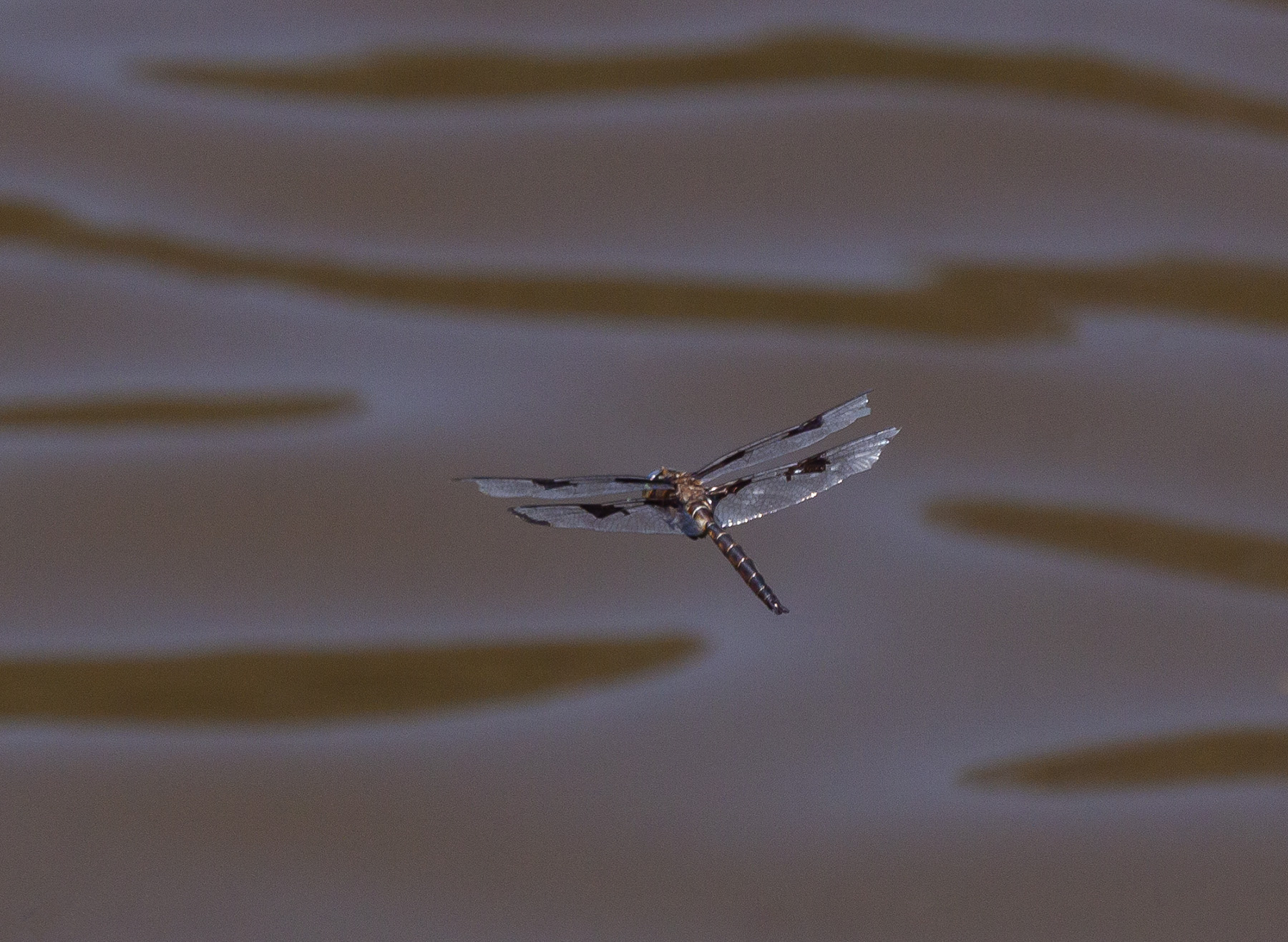
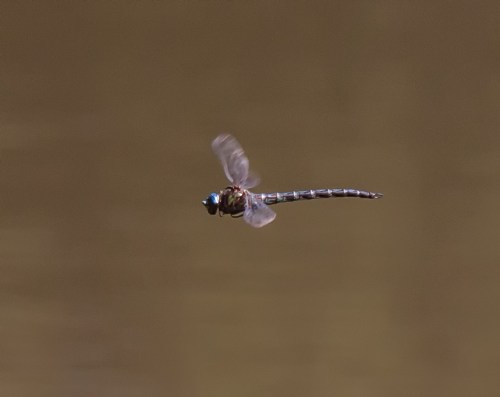
Do dragonflies have noses? That sounds like a crazy question, but it is the first one that came to mind when I looked at the image that I had captured of a dragonfly in flight this past week at Jackson Miles Abbott Wetland Refuge. I could not immediately identify it, so I consulted with experts in a Facebook group and learned that it is a Cyrano Darner (Nasiaeschna pentacantha). This species has a protruding forehead—it’s not a nose— that is reminiscent of the long nose of literary character Cyrano de Bergerac.
The species in the second shot is a Prince Baskettail (Epitheca cynosura), a species that I have featured multiple times in this blog. During much of the summer, I can usually spot one or two Prince Baskettail dragonflies patrolling over the pond at the same wetland refuge and I love trying to capture shots of them in flight. What makes this image distinctive, though, is not so much the dragonfly, but the background. There were ripples in the pond and the way that I shot and processed the image turned them into a wonderfully abstract background.
When I post photos like these, I often get questions about how I am able to capture images of flying dragonflies. Luck and persistence are the keys to getting shots like these. I use my 180mm macro lens and focus manually as the dragonflies zoom by, because the dragonflies don’t fill enough of the frame for my auto-focus to engage quickly and accurately. I have found that is almost impossible for me to use a zoom lens in this task—I get overwhelmed when I try to zoom, track, and focus simultaneously.

© Michael Q. Powell. All rights reserved.
Posted in Dragonflies, dragonfly, Insects, Nature, Photography, Summer, wildlife | Tagged Canon 50D, Cyrano Darner, Cyrano Darner dragonfly, dragonfly in flight, Epitheca cynosura, Fort Belvoir VA, Jackson Miles Abbott Wetland Refuge, Nasiaeschna pentacantha, Prince Baskettail, Prince Baskettail dragonfly, Tamron 180mm | 13 Comments »
July 6, 2019 by Mike Powell
Do you suffer from recency bias? Recency bias is a type of cognitive bias that causes you to give greater weight in decision-making to things that have happened recently than to those that happened in the past, even the recent past. It is the only explanation I can come up with for not having already posted these shots of a Sable Clubtail dragonfly (Stenogomphurus rogersi) that I observed on 12 June. Essentially, I got so caught up in excitement over newer photos that that I pushed this dragonfly out of my mind or at least off of my “To-do” list.
Sable Clubtails are rare in our area. Although I have searched for them repeatedly this season, including in a location where I saw some last year, this is the only one that I have seen in 2019. According to the website Dragonflies of Northern Virginia, “Sables appears to prefer small, relatively clean, shallow and stable forest streams, with plenty of low vegetation and a gentle flow.” That is a pretty good description of the stream in Prince William County, Virginia where I spotted this Sable Clubtail, but it also means that I am unlikely to stumble upon a member of this species at the ponds and marshes that I often visit.
In addition to being found only in a very specific type of habitat, Sable Clubtails have a very limited flight season—only a few weeks in length. That window of opportunity has almost certainly closed for the year. If you would like to see some additional photos of Sable Clubtails or read of my thoughts about chasing after rare dragonflies, check out this posting from a year ago.


© Michael Q. Powell. All rights reserved.
Posted in Dragonflies, dragonfly, Insects, Nature, Photography, Summer, wildlife | Tagged Canon 50D, Prince William County VA, Sable Clubtail, Sable Clubtail dragonfly, Stenogomphurus rogersi, Tamron 180mm | 8 Comments »
July 5, 2019 by Mike Powell
Is the best image of a butterfly only one in which its wings are fully open so that you can see all of the beautiful colors and patterns? Generally that is the angle that most of us seek to shoot. This past Wednesday I was observing an Eastern Tiger Swallowtail (Papilio glaucus) at Jackson Miles Abbott Wetland Refuge when it struck me that the butterfly was “attacking” the flower from all kinds of different angles, even hanging upside down. Why shouldn’t I take the same approach with the butterfly (minus the hanging upside down part)?
I like the way in which the three shots below capture some of the activity of the butterfly and not merely its beauty. At times it seems like beauty and function are at odds with each other, that beauty is best captured in controlled settings like in a studio, where portraits are often taken.
I fully accept that the natural world in which I like to work is chaotic and out of my control, but in the midst of it I still find incredible beauty, a beauty that may be imperfect by some standards. I encourage you to look at your world from a different angle at least from time to time and you may be amazed by the way that a change of perspective can cause you to see things in a totally different way.


© Michael Q. Powell. All rights reserved.
Posted in Butterflies, Insects, Nature, Photography, Summer, wildlife | Tagged angles, Canon 50D, Eastern Tiger Swallowtail, Eastern Tiger Swallowtail butterfly, Fort Belvoir VA, Jackson Miles Abbott Wetland Refuge, Papilio glaucus, Tamron 180mm | 3 Comments »
July 4, 2019 by Mike Powell
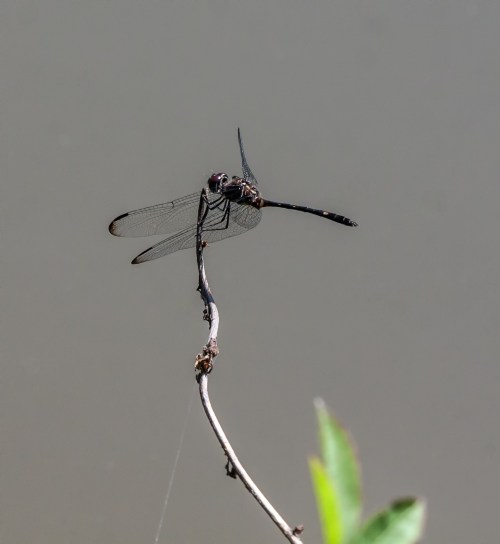
Yesterday I spotted this male Swift Setwing dragonfly (Dythemis velox) at Jackson Miles Abbott Wetland Refuge. Unlike most dragonflies that hold their wings straight out to the side, this species pulls its wings forward and adopts a ready-set-go position when perching.
This species is really special to me. A few years ago I had the first documented sighting of a Swift Setwing in the county in which I live and each year I am thrilled to see them again. Late in June I saw my first one this year, but was not able to capture any decent images, so these are my first successful Swift Setwing shots this season.
Swift Setwings like to perch on the end of vegetation overhanging the water and are always almost facing the water, which makes it tough to get shots without getting wet. One of the cool things about their perching patterns is that it usually allows me to get uncluttered backgrounds in the shots that I am able to take. In both of these images, the water forms a neutral background that almost makes them look like they were shot in a studio setting.

© Michael Q. Powell. All rights reserved.
Posted in Dragonflies, dragonfly, Insects, Nature, Photography, Summer, wildlife | Tagged Canon 50D, Dythemis velox, Fort Belvoir VA, Jackson Miles Abbott Wetland Refuge, Swift Setwing, Swift Setwing dragonfly, Tamron 180mm | 4 Comments »
July 3, 2019 by Mike Powell
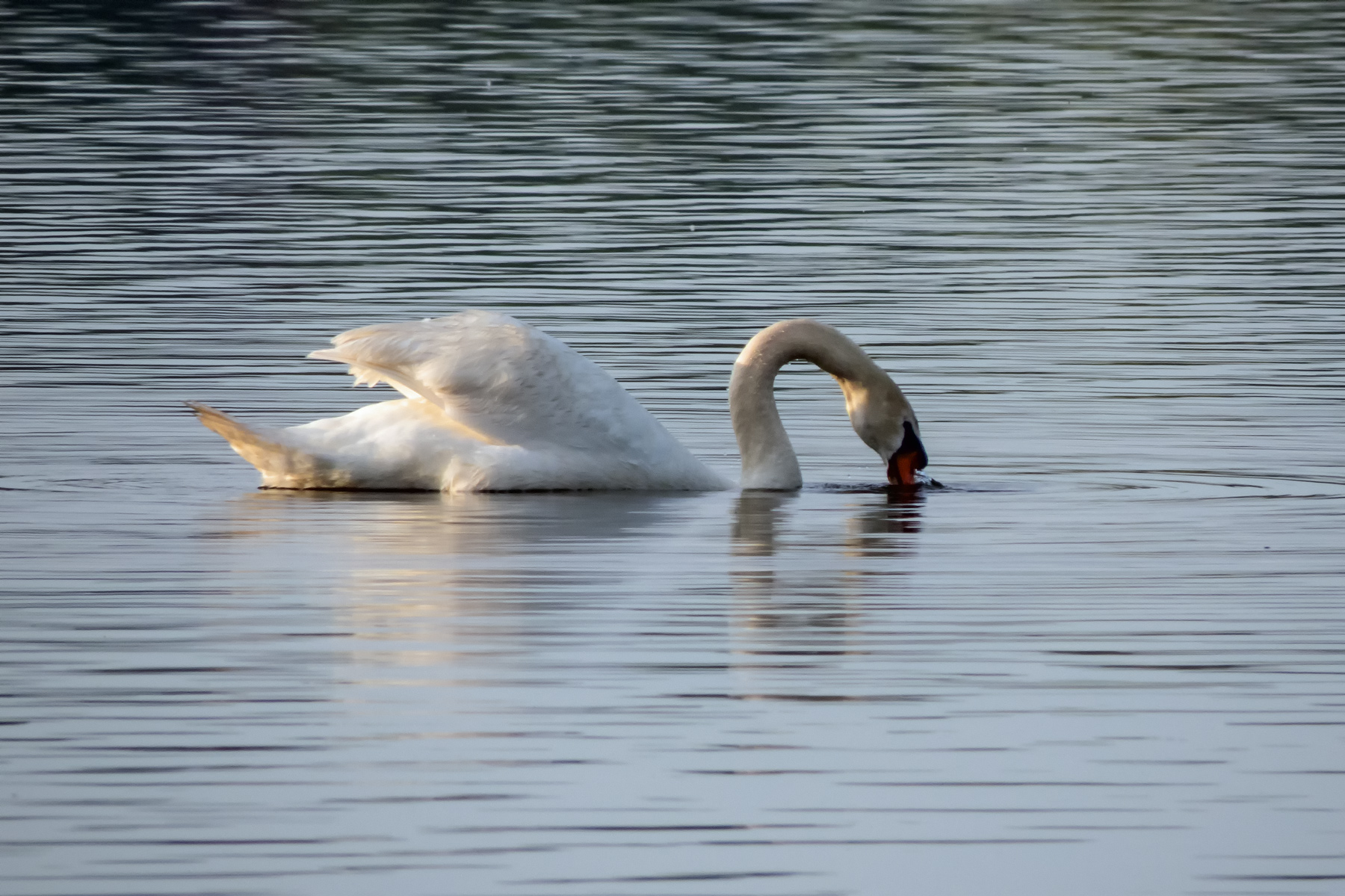
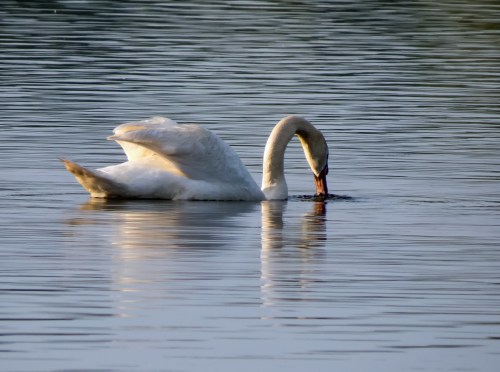
I was thrilled last Friday to spot this Mute Swan (Cygnus olor) at Horn Pond in Woburn, Massachusetts. Growing up in a suburb of Boston, I remember visiting the Boston Public Garden and riding in the famous pedal-powered Swan Boats there. As a result, the mere sighting of a swan is enough to trigger fond memories of my childhood.
Readers of my generation (and maybe even younger folks) may recall that the Swan Boats were featured prominently in the beloved book “Make Way for Ducklings.” I was a little surprised to learn from Wikipedia that the Swan Boats have been in operation since 1877.
“Robert Paget first created the Swan Boats in the Public Garden in 1877, after seeing the opera Lohengrin with his wife Julia Paget. Inspired by the knight’s gallant rescue of the damsel by riding a swan across the lake, Paget decided to capitalize on the recent popularity of the bicycle and combine the two, designing a two-pontooned boat with two wooden benches and a brass seat on top of a paddlebox concealed by a swan. The driver would sit inside the swan and pedal passengers around the pond.”
One of the amazing things is that the Swan Boats have remained virtually unchanged since that time.


© Michael Q. Powell. All rights reserved.
Posted in Birds, Nature, Photography, Summer, Travel, wildlife | Tagged Boston Public Garden, Canon SX50, Cygnus olor, Horn Pond, Make Way for Ducklings, Mute Swan, swan, swan boats, Woburn MA | 3 Comments »
July 2, 2019 by Mike Powell
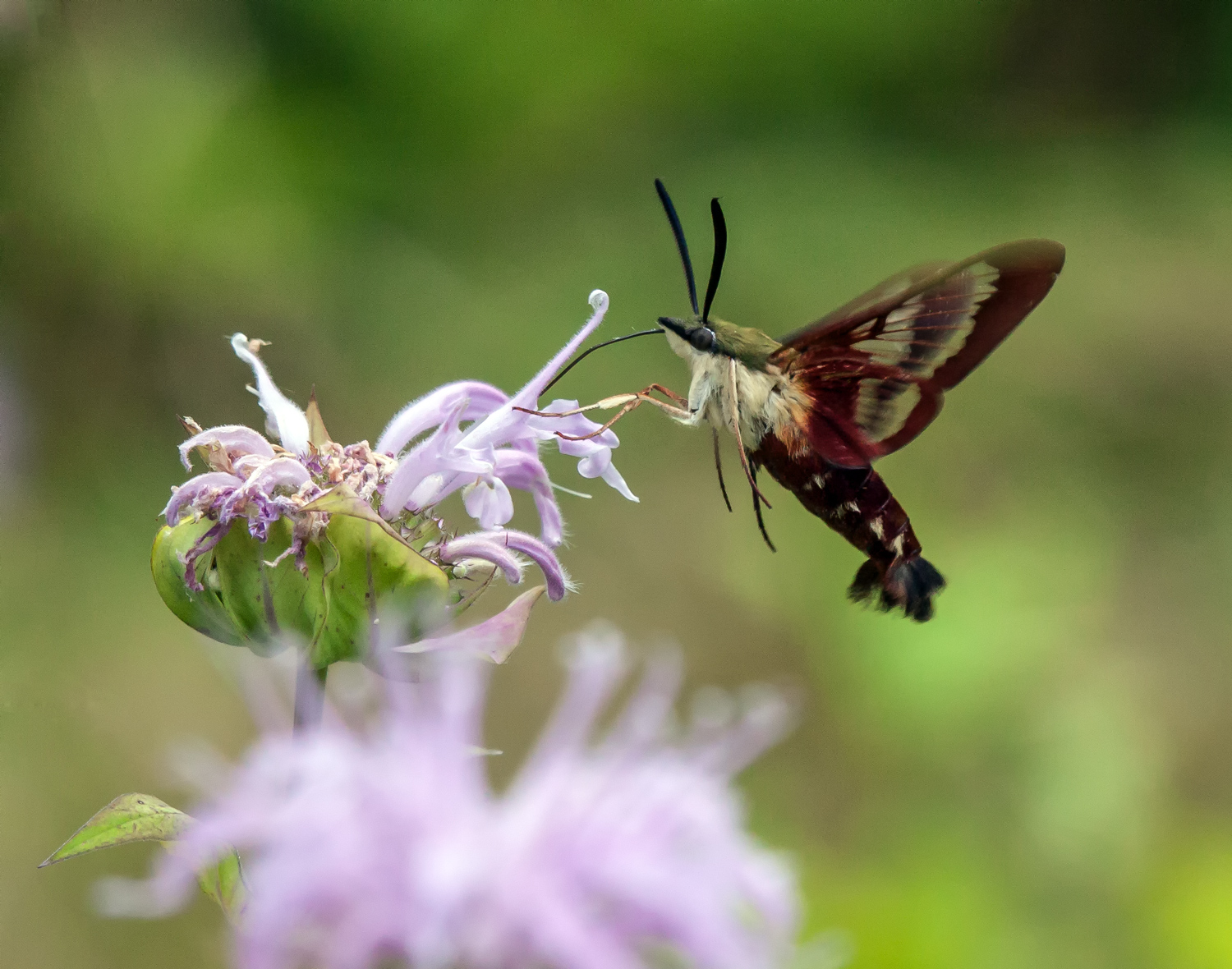
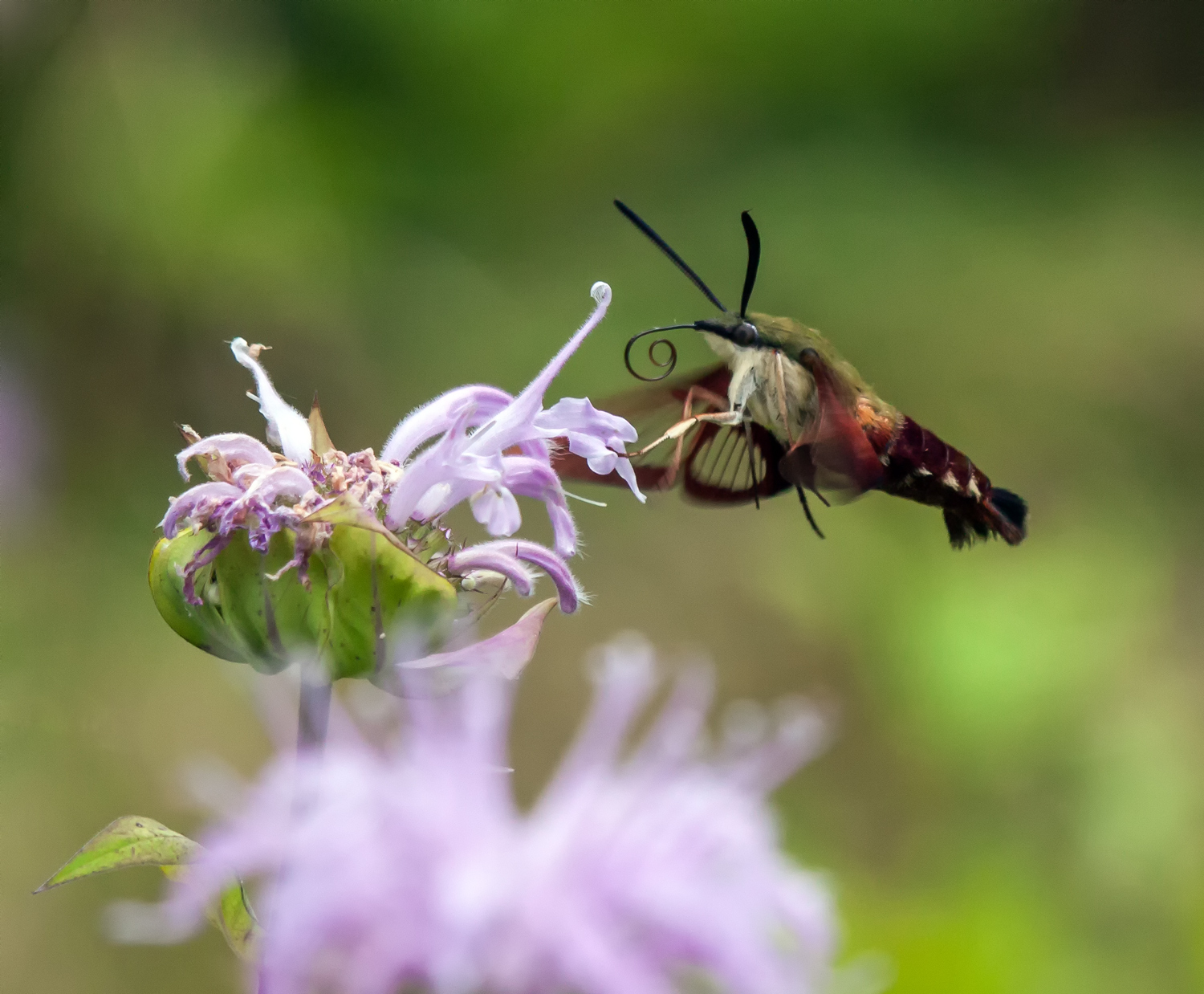
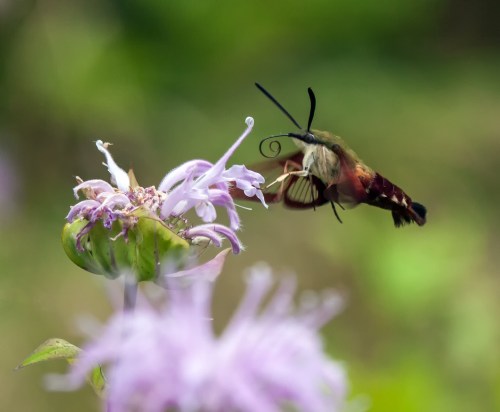
I love to photograph birds and I love to photograph insects, so what could possibly be better than photographing an insect that looks and acts like a bird? Last week I was observing a patch of flowers at Jackson Miles Abbott Wetland Refuge when I spotted what looked like a large bee. As I got closer, I realized that it was a Hummingbird Clearwing Moth (Hemaris thysbe).
Like a hummingbird, this insect hovers as it gathers nectar from flowers. Instead of a long skinny beak, though, the Hummingbird Clearwing Moth uses its long proboscis to get to the nectar. As the second photo shows, the moth curls up its proboscis when it is not in use—in this case, the moth was preparing to fly off to another flower.

© Michael Q. Powell. All rights reserved.
Posted in Insects, Nature, Photography, Summer, wildlife | Tagged Canon 50D, clearwing moth, Fort Belvoir VA, Hemaris thysbe, Hummingbird Clearwing Moth, hummingbird moth, Jackson Miles Abbott Wetland Refuge, Tamron 180mm | 19 Comments »
July 1, 2019 by Mike Powell
During a brief trip to Massachusetts last weekend, I photographed this beautiful damselfly, which I believe is an immature female Eastern Forktail damselfly (Ischnura verticalis), while exploring Horn Pond in Woburn.
When I looked at the range map for this species, it looked like it is not present in my home area of Northern Virginia. However, when I did a search of my blog postings, I was surprised to discover that I had previously photographed an orange Eastern Forktail at one of my favorite local spots. Obviously I am not someone who keeps a “life list” of all the species that I have seen and photographed. 🙂

© Michael Q. Powell. All rights reserved.
Posted in damselfly, Insects, Nature, Photography, Summer, Travel, wildlife | Tagged Canon 50D, Eastern Forktail, Eastern Forktail damselfly, Horn Pond, Ischnura verticalis, Tamron 180mm, Woburn MA | 7 Comments »
June 30, 2019 by Mike Powell
Early Friday morning I spotted this Double-crested Cormorant (Phalacrocorax auritus) at Horn Pond in Woburn, Massachusetts. Although the bird’s facial features were in the shadows, I was happy to be able to capture its distinctive hooked beak in this silhouetted view.
As many of you know, I try to find opportunities to capture nature images even when I am traveling. On Thursday I drove from Virginia to Massachusetts to attend a surprise 60th birthday party on Friday evening for one of my brothers. Although I was somewhat worn out from the drive, which took almost 12 hours thanks to numerous road construction projects and rush hour traffic in Boston, I was out on the trails of Horn Pond by 6:30 in the morning. In many ways immersing myself in nature helps to recharge my batteries as much as sleep does.
A few seconds after I spotted the cormorant, it sensed my presence and flew away. I was anticipating that it might do so and was able to capture this shot just as the bird was starting to take off.

© Michael Q. Powell. All rights reserved.
Posted in Birds, Nature, Photography, Summer, wildlife | Tagged Canon SX50, cormorant, Double-crested Cormorant, Horn Pond, Phalacrocorax auritus, Woburn MA | 6 Comments »
June 28, 2019 by Mike Powell
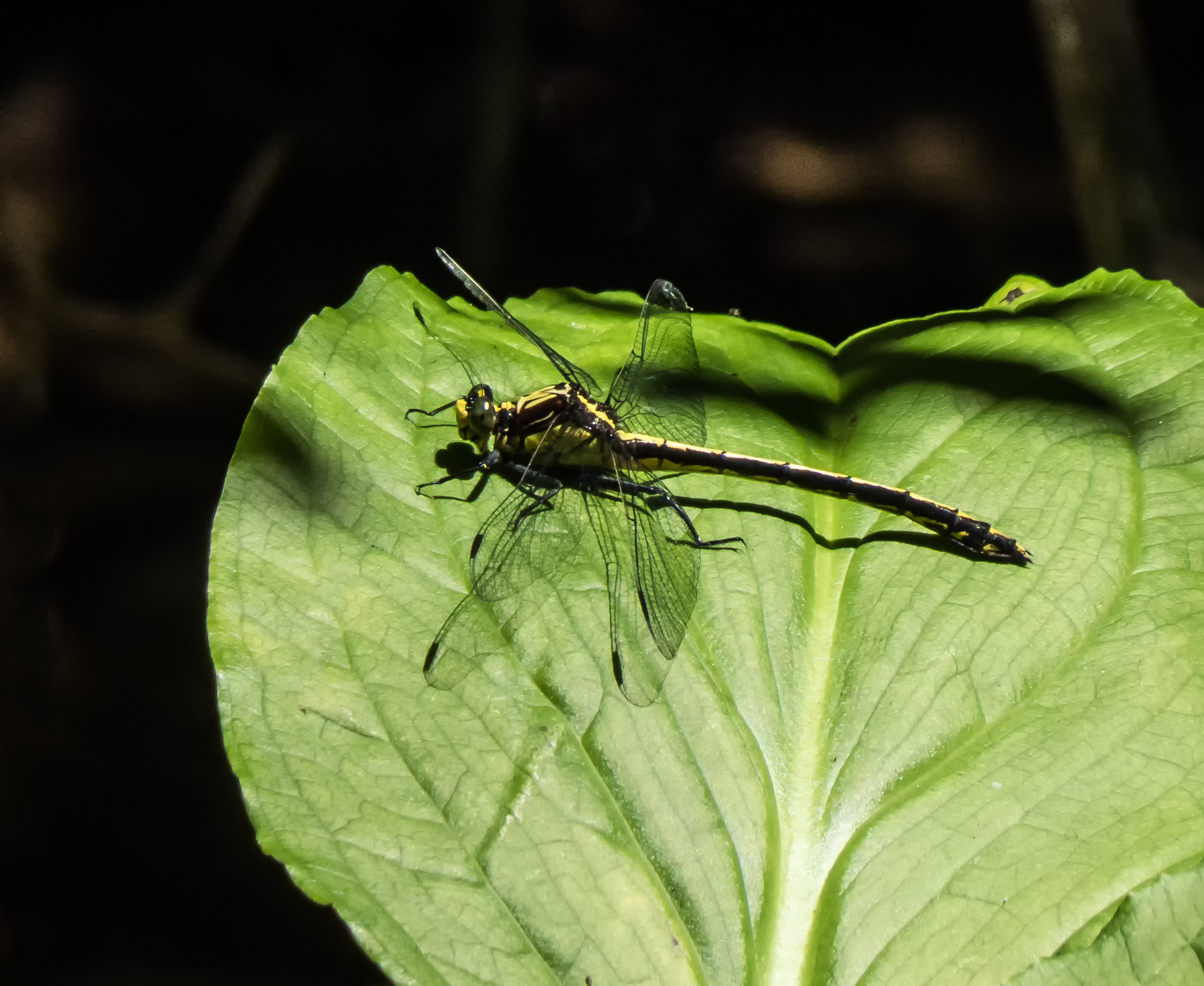
Perhaps there are dragonflies with longer names than the Black-shouldered Spinyleg dragonfly (Dromogomphus spinosus), but none of them immediately come to mind. Sometimes I will complain about the inaccurate names given to various species, but in this case the descriptors are accurate. Alas, when I spotted this dragonfly in a boggy area of Prince William County, Virginia last week, I couldn’t get close enough to capture those details very well.
The vegetation on which the dragonfly is perched is skunk cabbage, a plant that grows in the mucky confines of seeps and swamps. It is said that bruised leaves present a fragrance reminiscent of skunk, so I try to step carefully whenever I am near any skunk cabbage.

© Michael Q. Powell. All rights reserved.
Posted in Dragonflies, dragonfly, Nature, Photography, Summer, wildlife | Tagged Black-shouldered Spinyleg, Black-shouldered Spinyleg dragonfly, Canon 50D, Dromogomphus spinosus, Prince William County VA, Tamron 180mm | 7 Comments »
June 27, 2019 by Mike Powell
Last Tuesday as I was exploring Occoquan Bay National Wildlife Refuge I spotted this handsome male Calico Pennant dragonfly (Celithemis elisa). Unlike some species that perch close to the ground and are hard to see, Calico Pennants perch on the uttermost tips of vegetation. Although they are visible, they are often hard to photograph, because their precarious perches start to sway at the slightest hint of a breeze.

© Michael Q. Powell. All rights reserved.
Posted in Dragonflies, dragonfly, Insects, Nature, Photography, Summer, wildlife | Tagged Calico Pennant, Calico Pennant dragonfly, Canon 50D, Celithemis elisa, male Calico Pennant, Occoquan Bay National Wildlife Refuge, Tamron 180mm, Woodbridge VA | 4 Comments »
June 26, 2019 by Mike Powell
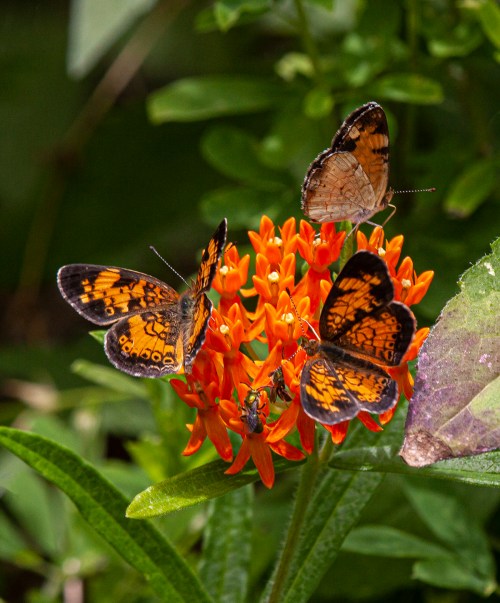
On Monday I spotted this small patch of Butterfly Weed (Asclepias tuberosa) at Jackson Miles Abbott Wetland Refuge. True to its name, the Butterfly Weed had attracted several butterflies, which I think are Pearl Crescent butterflies (Phyciodes tharos), as well as several metallic green sweat bees (genus Agapostemon). The insects seemed to love the plant’s nectar and the scene provided a visual feast for viewers like me.
© Michael Q. Powell. All rights reserved.
Posted in Butterflies, Insects, Nature, Photography, Summer, wildlife | Tagged Agapostemon, Asclepias tuberosa, Butterfly Weed, Canon 50D, Fort Belvoir VA, Jackson Miles Abbott Wetland Refuge, metallic green sweat bee, Pearl Crescent, pearl crescent butterfly, Phyciodes tharos, Tamron 180mm | 13 Comments »
June 25, 2019 by Mike Powell
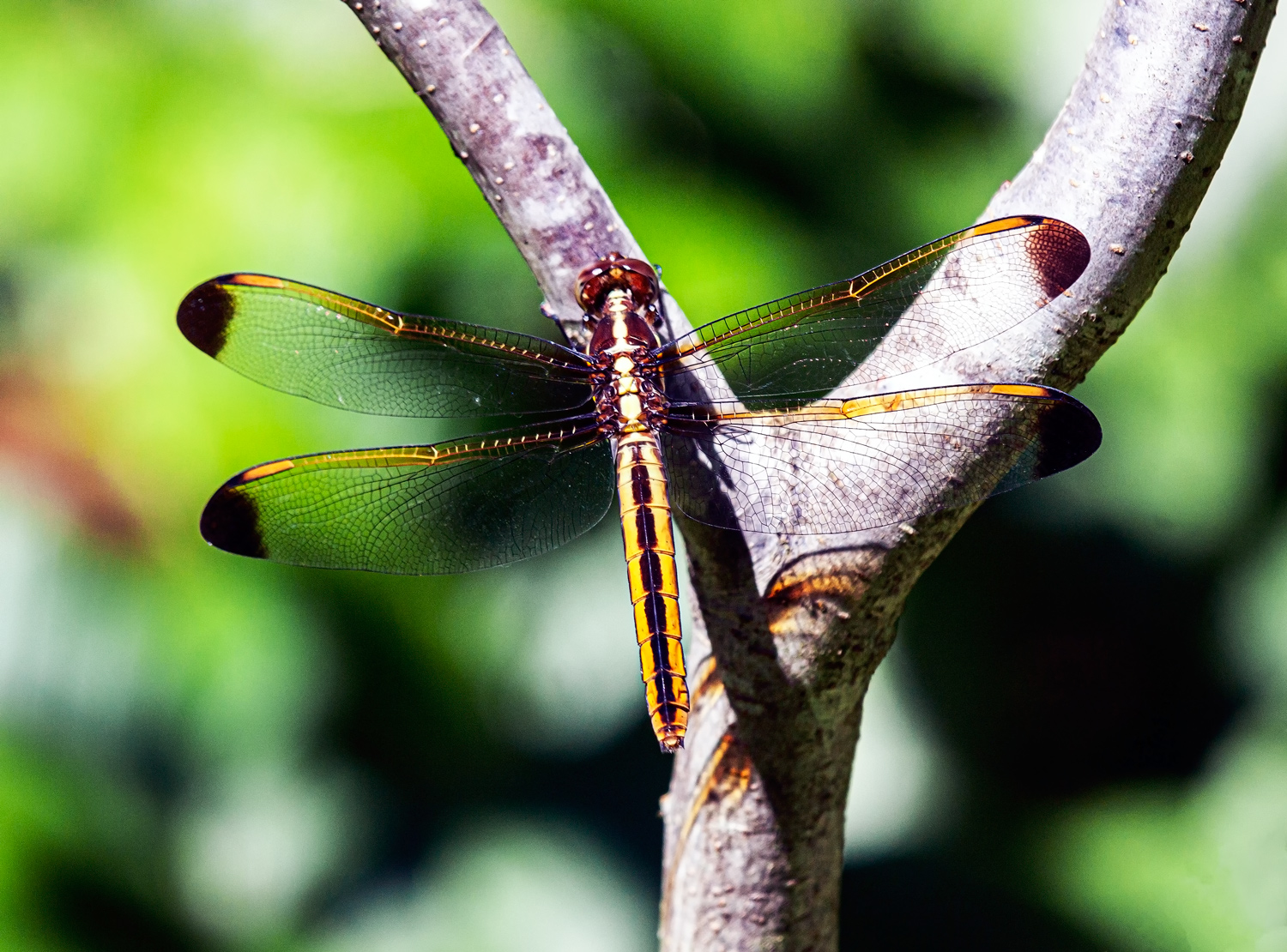
Although I love seeing my old familiar dragonfly friends, it is always exciting to observe new species. Last week while I was exploring in Prince William County, Virginia with fellow dragonfly enthusiast Walter Sanford, I spotted this dragonfly perched on a small tree. I really liked the pose and moved closer for some shots.
I initially thought it was a Needham’s Skimmer, a fairly common species in our area, but the more I looked at my photos afterwards on my computer screen, the more I began to note some differences in the colors and patterns on wings and the body. After consultations with some dragonfly experts on Facebook, I learned that it is a Yellow-sided Skimmer (Libellula flavida).
As far as I know, this is the first time that I have seen a Yellow-sided Skimmer. There is a possibility that I have unwittingly seen one in the past and dismissed it as “only” a common species. I try not to do that, because this is not the first time that I have photographed something new without realizing until later that it was in fact new.

© Michael Q. Powell. All rights reserved.
Posted in Dragonflies, dragonfly, Insects, Nature, Photography, Summer, wildlife | Tagged Canon 50D, Libellula flavida, Prince William County VA, Tamron 180mm, Yellow-sided Skimmer, Yellow-sided Skimmer dragonfly | 8 Comments »
June 24, 2019 by Mike Powell
Dragonhunter dragonflies (Hagenius brevistylus) love to perch and wait for their prey to come by and then use their powerful back legs to snag that prey, which is often another dragonfly. Those legs are so long and ungainly, though, that Dragonhunters’ poses often seem awkward when they are perched—they remind me of teenage males who have undergone a recent growth spurt and haven’t gotten used to their longer limbs.
Last Friday as I was exploring a stream at Prince William Forest Park with fellow blogger and dragonfly enthusiast Walter Sanford, he spotted this female Dragonhunter perched at the edge of the water. I was walking toward him when I spotted the Dragonhunter on the rocks that I featured yesterday and was delayed in getting to see this dragonfly. Fortunately, she was relatively tolerant of our presence and remained in place long enough for me to get some shots.
All of the images that I captured show a side view of the Dragonhunter, because she was facing toward the water and I was trying not to get wet. Walter, however, wanted more of a frontal view and waded into the water to get that shot. Check out today’s posting on his blog and you can compare the results of our different approaches.

© Michael Q. Powell. All rights reserved.
Posted in Dragonflies, dragonfly, Insects, Nature, Photography, Summer, wildlife | Tagged Canon SX50, Dragonhunter, dragonhunter dragonfly, female Dragonhunter, Hagenius brevistylus, Prince William County VA, Prince William Forest Park | 9 Comments »
June 23, 2019 by Mike Powell
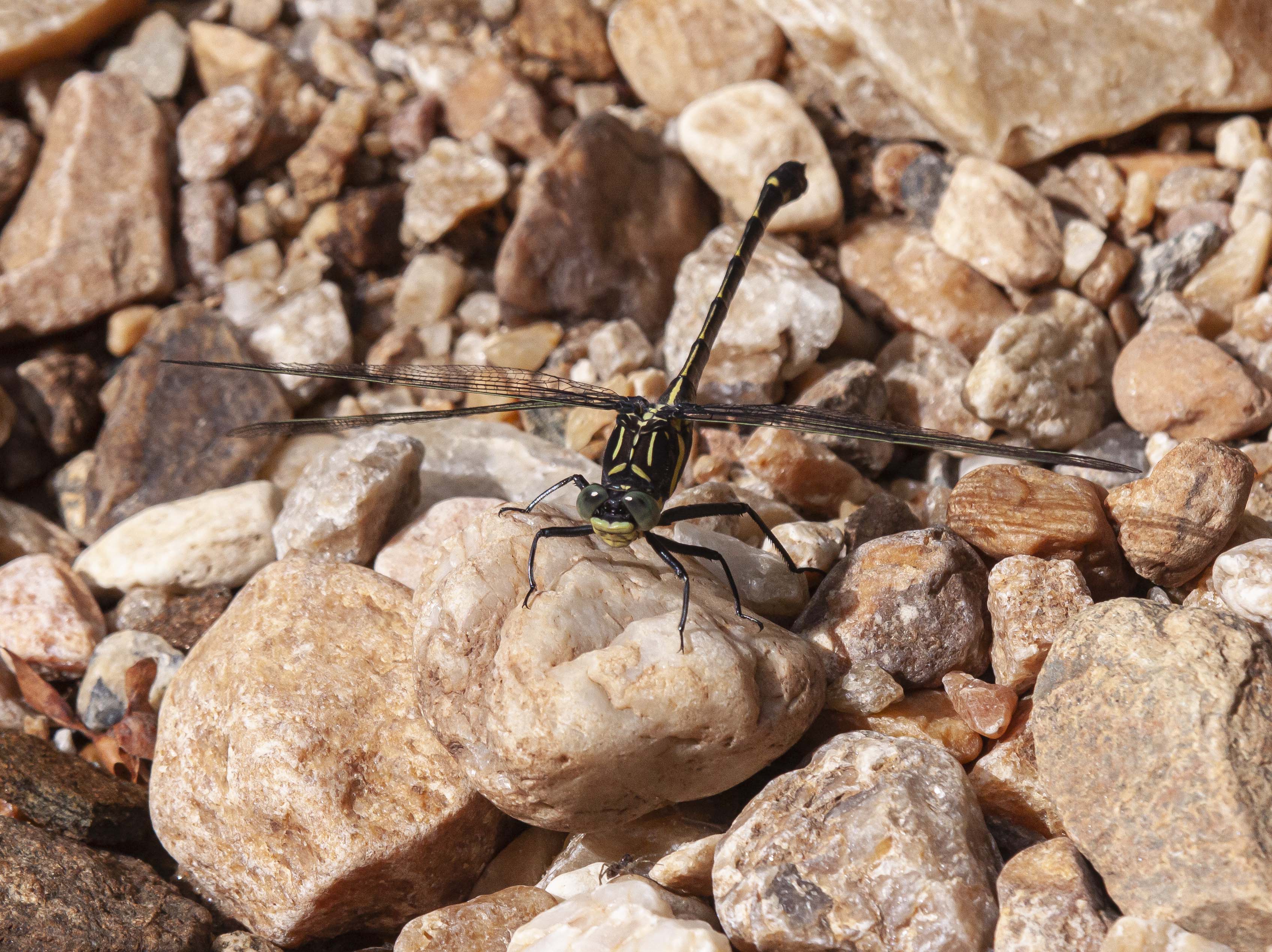
Dragonfly on the rocks? It sounds like a summertime beverage, but it accurately describes what I saw last Friday while exploring a stream in Prince William County, Virginia with fellow dragonfly enthusiast Walter Sanford. I think it is a Dragonhunter dragonfly (Hagenius brevistylus), but the unusual angle makes it tough to made a definitive determination of the species, because I am not able to see critical portions of the dragonfly’s anatomy.
In the past when I have spotted Dragonhunters, they have been perched on branches overhanging the water and that is where I expect to find them. This encounter is a good reminder for me to stay alert at all times—my subjects may not have read the identification guides about how they are supposed to behave.

© Michael Q. Powell. All rights reserved.
Posted in Dragonflies, dragonfly, Insects, Nature, Photography, Summer, wildlife | Tagged Canon 50D, dragonfly on the rocks, Dragonhunter, dragonhunter dragonfly, Hagenius brevistylus, Prince William County VA, Tamron 180mm | 10 Comments »
June 22, 2019 by Mike Powell
When the weather gets hot, some dragonflies will raise their abdomens (the “tail”) in what is believed to be an attempt at thermoregulation. I can’t say for sure if it works, but the theory is that in this position, sometimes referred to as the “obelisk,” dragonflies are able to stay cooler by reducing the amount of their bodies subject to direct sunlight.
Earlier this week I spotted this male Eastern Amberwing dragonfly (Perithemis tenera) in a modest obelisk position at Jackson Miles Abbott Wetland Refuge. I characterized the position as “modest,” because sometimes a dragonfly will elevated its abdomen until is almost vertical.
© Michael Q. Powell. All rights reserved.
Posted in Dragonflies, dragonfly, Insects, Nature, Photography, Summer, wildlife | Tagged Canon 50D, Eastern Amberwing, Eastern Amberwing dragonfly, Fort bel, Jackson Miles Abbot Wetland Refuge, male Eastern Amberwing, Perithemis tenera, Tamron 180mm | 6 Comments »
June 21, 2019 by Mike Powell
When I spotted a small patch of milkweed while exploring Occoquan Bay National Wildlife Refuge earlier this month, I stopped and waited. I knew that numerous butterflies are attracted to this plant. Before long, several butterflies in fact appeared.
Here are photos of two of them, both swallowtail butterflies. The first one, a Spicebush Swallowtail (Papilio troilus), appears to be in perfect condition. Its wings and “tails” are intact and its colors are vibrant. By contrast the second butterfly, a Zebra Swallowtail (Protographium marcellus), is clearly a veteran. There are chunks missing from its wings and its long beautiful swallowtails are gone.
Do you find one of the butterflies to be more inherently beautiful than the other? Here in the United States, we tend to worship beauty and a standard of supposed perfection. We are daily bombarded with advertising messages that tell us we can look young again, that we can cover up our imperfections. The current focus on selfies and dating apps that allow you to judge others with a swipe encourages a kind of narcissism and attention to superficial appearances that I personally find to be unhealthy.
I remember watching a video several years ago about photographing nature. The photographer encouraged viewers to photograph only perfect specimens of flowers and insects, following the lead of those who say that in order to create beautiful photographs, you need beautiful subjects.
The photos here are my response to that kind of thinking. There is an incredible beauty to be discovered in the ordinary, everyday subjects that surround us, full of imperfections and blemishes. Take a moment today to slow down and truly experience that beauty.


© Michael Q. Powell. All rights reserved.
Posted in Butterflies, Insects, Nature, Photography, Summer, wildlife | Tagged Canon 50D, Occoquan Bay National Wildlife Refuge, Papilio troilus, Protographium marcellus, Spicebush Swallowtail, Spicebush Swallowtail butterfly, Tamron 150-600mm, Woodbridge VA, Zebra Swallowtail, Zebra Swallowtail butterfly | 17 Comments »
June 20, 2019 by Mike Powell
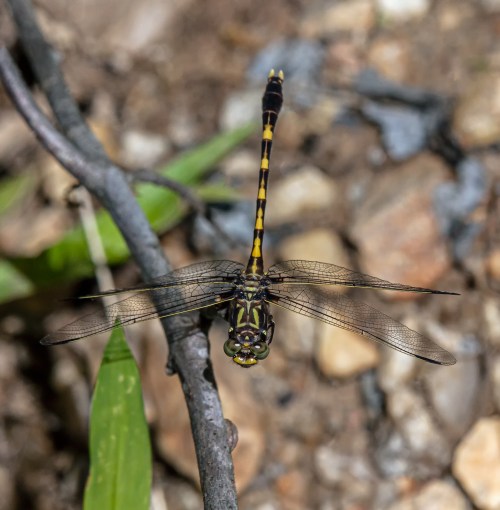
Most of the times that I have observed a Common Sanddragon dragonfly (Progomphus obscurus) it has been perched directly on the sand, which makes sense, given its name. Last week, however, I spotted this Common Sanddragon perched in some vegetation overhanging the water of a stream in Prince William County, Virginia.
I like the way that the dragonfly almost looks like he is flying, because I managed to take the photograph from almost directly overhead, causing the perch almost to disappear. I also really like the look of rocky portion of the stream that makes up most of the background of this image.
© Michael Q. Powell. All rights reserved.
Posted in Dragonflies, dragonfly, Insects, Nature, Photography, wildlife | Tagged Canon 50D, Common Sanddragon, Common Sanddragon dragonfly, Prince William County VA, Progomphus obscurus, Tamron 180mm | 3 Comments »
June 19, 2019 by Mike Powell
The most common view that I have had of White-tailed Deer (Odocoileus virginianus) the last few months has been of their bobbing tails as they ran away from me. Last week, however, I managed to capture some shots of a young buck as it ran laterally across a trail at Occoquan Bay National Wildlife Refuge.
When I first spotted the deer, its head was just sticking out of the vegetation at the edge of the trail. As you can see in the first image, the deer looked straight at me and seemed to hesitate a moment before deciding what to do. Without much warning, the deer sprung into action and I was able to capture these shots as the young deer bounded across the trail. Note how the deer had only a single hoof in contact with the ground in many of the photos.


© Michael Q. Powell. All rights reserved.
Posted in animals, Nature, Photography, wildlife | Tagged Canon 50D, deer, Occoquan Bay National Wildlife Refuge, Odocoileus virginianus, Tamron 150-600mm, white-tailed deer, Woodbridge VA, young buck | 13 Comments »
June 18, 2019 by Mike Powell
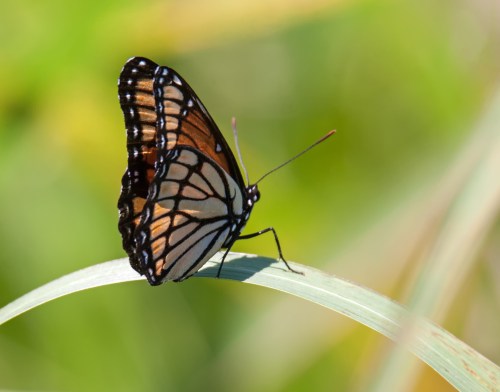
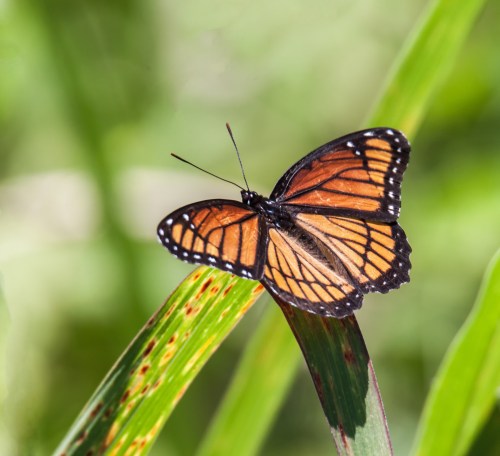
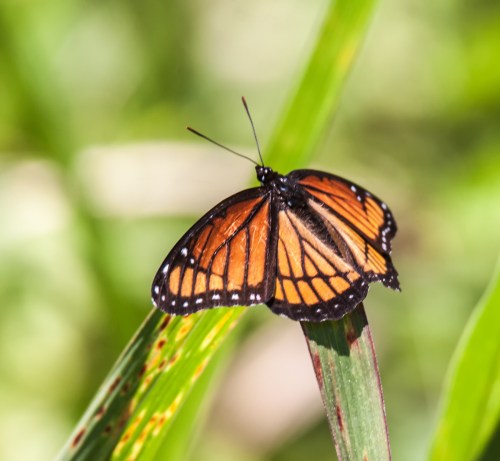
I have not yet spotted any Monarch butterflies this season, but last week at Occoquan Bay National Wildlife Refuge I did see a number of the similarly-colored Viceroy butterflies (Limenitis archippus). Viceroy butterflies are smaller than Monarchs, but the main visual difference between the two is the black line across the hind wings that is present with Viceroys, but not with Monarchs.
I chased after one Viceroy last week for quite some time and eventually managed to get these shots.
© Michael Q. Powell. All rights reserved.
Posted in Butterflies, Insects, Nature, Photography, Summer, wildlife | Tagged Canon 50D, Limenitis archippus, Occoquan Bay National Wildlife Refuge, Tamron 150-600mm, Viceroy, Viceroy butterfly, Woodbridge VA | 11 Comments »
June 17, 2019 by Mike Powell
Last week as I was exploring Prince William County, I encountered this large dragonfly perched in a tree overhanging a fairly large stream. When I captured these images, I was not sure what kind of dragonfly it was. After consultations with some experienced dragonfly experts, I learned that this is a female Dragonhunter dragonfly (Hagenius brevistylus).
Dragonhunters are among the largest dragonflies in our area. Unlike darners, another group of large dragonflies that fly almost continuously as they seek prey, dragonhunters prefer to perch and wait patiently before they strike. As their name suggests, they specialize in hunting other dragonflies, reportedly including members of their own species.


© Michael Q. Powell. All rights reserved.
Posted in Dragonflies, dragonfly, Insects, Nature, Photography, Summer, wildlife | Tagged Canon 50D, Dragonhunter, dragonhunter dragonfly, female Dragonhunter, Hagenius brevistylus, Prince William County VA, Tamron 180mm | 6 Comments »
June 15, 2019 by Mike Powell
This past Wednesday I encountered a really cooperative Gray Petaltail dragonfly (Tachopteryx thoreyi) as I explored nearby Prince William County and was able to capture this tight head shot. I simply love this dragonfly’s beautiful gray eyes, which are a perfect for the monochromatic palette of the rest of its body and give this dragonfly a more sophisticated look than many of its more gaudily-clad brethren. (The coloration also helps this dragonfly to almost disappear from view when it is perched on a tree like this one.)

© Michael Q. Powell. All rights reserved.
Posted in Dragonflies, dragonfly, Insects, Nature, Photography, Portraits, wildlife | Tagged Canon 50D, Gray Petaltail, Gray Petaltail dragonfly, Prince William County VA, Tachopteryx thoreyi, Tamron 180mm | 4 Comments »
« Newer Posts - Older Posts »