Feeds:
Posts
Comments

Archive for the ‘Urban’ Category

With the recent onset of cold and rainy weather here in Paris, it is hard to remember that we had a bit of sunshine earlier in the week. As I was walking along the banks of the Seine River during one such sunny period, I grew entranced by the shadows that trees were casting onto the embankment walls. People passing by me must have wondered what I was photographing, given that I was facing a seemingly blank wall and had my back to the river.

The images show mostly skeletal tree forms, but some show evidence of hardy leaves persistently clinging to the branches, not yet ready to fall. If you examine the photos carefully, you can see some of the details and textures of the materials used to build these embankments. Just a few yards above, there is busy world, full of cars and people hurrying about, but here, life moves at a slower pace.

I love too seeing the giant iron rings intermittently embedded in the embankment walls.  These, I believe, are a legacy of past commerce along this river, places where barges would tie up, perhaps for safety or sleep, or simply to silently surveil the scenic surroundings. There are times in our lives when we could all use spots like that.

shadow tree

Shadow Trees on Seine River

© Michael Q. Powell. All rights reserved.


Read Full Post »

When I spotted this bird as I was walking along the Seine River yesterday morning, I knew immediately that it was some kind of cormorant. Unlike most water birds that float on the surface of the water, cormorants sit really low in the water with their bodies barely visible. Their long necks always make me think of a periscope coming out of a semi-submerged submarine.

Although this bird looks a lot like the Double-crested Cormorant (Phalacrocorax auritus) that I am used to seeing at home, I have determined that it is most likely a Great Cormorant (Phalacrocorax carbo). This cormorant followed a familiar pattern of behavior—it would be swimming along when without warning it would dive deeply into the water and remain underwater for a long time. It was a fun challenge trying to figure out when and where the cormorant would reappear.

Most of the time the cormorant stayed far from the banks of the river, but on one occasion it popped up right in front of me and I was able to capture this image. It was nice to be able to capture some of the orange coloration around the cormorant’s mouth, but the real prize for me was getting a clear view of its spectacular blue eyes. It is definitely worthwhile to click on the image to get a closer look at that amazing shade of blue. If you look closely at the water, you will also notice some small concentric ripples created by the falling raindrops.

When I went walking in the rain yesterday, I knew there was a good chance that I would see ducks and gulls and maybe a swan or two. Who knew there were Great Cormorants on the Seine RIver? No matter where I am, I am always thrilled by the joy of the unexpected, by those little surprises that add so much texture to life. So I choose to live my life in hopeful expectation as I scan the world for marvelous subjects to photograph, confident that they will present themselves if I keep my eyes and my heart open,

Great Cormorant

© Michael Q. Powell. All rights reserved.

Read Full Post »

When it is pouring rain all day in Paris, what can you possibly photograph? Like wildflowers in the spring, colorful umbrellas have sprung up all over the city and they make cool subjects.

I captured the first little scene along the Seine River this morning. I envisioned the possibility of the photo and hung around the location as the group of three people approached. I took multiple photos as the moved toward and under the bridge. The biggest challenge I had was a distractingly bright orange bicycle parked in the middle of the pathway beyond the exit. Fortunately the green umbrella was large enough in this shot to hide the offending bicycle.

I semi-stalked the next group of three young ladies as they walked through the Tuileries Garden toward the pyramid entrance to the Louvre. It was a little frustration because they kept stopping for selfies, but I finally got a shot when they moved together for a moment. I love the way that the three subjects had complementary shades of umbrellas and stylishly distinctive backpacks.

The final photo highlights the umbrellas themselves and not the owners. Although it was still raining, the owners had carefully placed their umbrellas to the side so that they could take photos of themselves with the Louvre pyramid in the background. I like the angle at which the umbrellas are placed, which, along with their black color, emphasizes the form of the umbrellas. The shadows on the wet cobblestones add additional visual interest to the image.

It was cold throughout the day today, about 34 degrees right now (one degree C) and the possibility of snow is forecast for this evening. Yikes! Fortunately I have warm clothes with me and most importantly my camera bag has proven to be as waterproof as advertised. I don’t exclude the possibility of an after dark adventure a bit later.

Umbrellas along the Seine

Umbrellas in Paris

Umbrellas in Paris

© Michael Q. Powell. All rights reserved.

Read Full Post »

Place du Tertre, a small square in the center of Montmartre, is a special place where artists of all varieties set up their easels every day and work in the open air, surrounded by the milling public. Many of them are portrait artists, who gently try to convince you to sit for a portrait.

I watched several of those artists at work and they are amazing talented, creating true-to-life drawings over an extended period of time. This is in sharp contrast with the large number of quick sketch “artists” who aggressively pursue you in the streets, trying to convince you to stand for a “portrait,” which is often a mere caricature that barely resembles the subject.

A number of other artists worked on small canvases with oil paint using palette knives. I had the impression that some of them were working in almost assembly line fashion, cranking out the same limited number of scenes of Paris suitable for souvenirs.

After circling the square, I returned to the only artist who was working in watercolor. He would sketch out his detailed paintings in India ink using a pointed fragment of bamboo as a drawing instrument. After the ink had dried, he would carefully apply multiple washes of color. Some of you know that I have dabbled with watercolor and I was absolutely enthralled as I watched this artist at work, mixing and applying the colors from a watercolor set not all that different than ones that I have.

Watercolor painting is time-consuming and unforgiving—you really cannot hide your mistakes. Supplies are relatively expensive, compared to oil and acrylic painting. Why would an artist choose this style of painting? It does not seem like an economically rational decision.

I did not want to interfere with the artist’s efforts, so I watched from a respectful distance and discreetly took a few photos. When he reached a certain stage when he needed to let a layer dry, he stopped for a smoke break. As he lit up an unfiltered, hand-rolled cigarette, I started to talk with him.

At first I asked him about the materials that he uses. He paints on high quality Arches 100% cotton paper, using a mix of artist quality paints from Winsor and Newton, Sennelier, and others. For brushes, he uses several rather large natural hair brushes. He pointed to one of them and noted that it had cost over 80 Euros (about $100), but he had used it for close to ten years.

He said that he had been painting from a young age and preferred painting in public like this and had done so for almost 40 years. Based on some comments he made about other painters, he seemed to reject the almost elitist idea of painting in seclusion in a studio, with works hanging in high-priced galleries.

He obviously loved what he was doing, but somewhat wistfully talked of eventually retiring to a place in the country. As he puffed on the final fragments of his cigarette, he announced that it was time to get back to work. I thanked him for talking with me—we spoke exclusively in French—and sharing his experience and perceptions. He graciously agreed to let me take a quick portrait shot and that photo, the last one below, is one of my favorite remembrances of this trip to Paris.

The first photo below gives you an overall sense of the environment at the Place du Tertre. Note the assemblage of easels and the passing tourists and compare that with the focus of the painter, who appears to be in his own little world.

The second image provides a slightly closer view of the work in progress. Note the large size of the brush that he is using and the initial delicate washes of color that he has applied.

The final shot, as noted above, is a quick portrait of the artist. It’s a candid pose from where he was standing. I really like the way that it turned out, capturing in part the unique personality of this awesome artist that I was happy to encounter, a man content with doing what he loves outdoors in all kinds of weather (except, he noted, in the rain, which obviously is bad for watercolor paintings).

Painter at Place du Tertre

Painter at Place du Tertre

Painter at Place du Tertre

© Michael Q. Powell. All rights reserved.

Read Full Post »

When I first spotted a police zodiac boat yesterday morning as I was walking along the Seine River, it was moving really slowly and seemed to be doubling back periodically. I wondered if someone had jumped off one of the many bridges over the Seine. Then I spotted a floating body, or at least I thought initially that it was floating.

As I zoomed in with my telephoto lens, I could see that the body was moving rhythmically and then I spotted an orange-tipped snorkel. It was a diver in a wet suit who appeared to be getting in his morning training—from what I could see he had flippers and was using a short blue board rather than performing swimming strokes.

The driver of the boat that was marked “Prefecture de Police” also appeared to be in a wet suit. I don’t know if he was bored, but from time to time he would speed ahead and make a sharp u-turn in order to zoom through the arches of a bridge, as you can see in the second image.

When the diver I was following neared what looked to be his destination, I suddenly realize that there were a total of three divers in the water—maybe the other two divers had been waiting for their slower colleague. In the third photo, the divers were getting ready to turn to the left, to an area where I believe the police/firefighting boats are docked. If you look closely at that final image, you can see a small flock of ducks in the background that did not appear to be surprised or disturbed to see humans swimming in the Seine River.

swimming in the Seine

© Michael Q. Powell. All rights reserved.

Read Full Post »

So much of Paris merges together when viewed from the step of Sacre-Coeur in Montmartre, in part because new construction in Paris was limited to 121 feet (37 meters) as of 1977. One notable exception is the Montparnasse Tower at 689 feet (210 meters), which is quite visible in this photo from yesterday evening—the height limitation was imposed in reaction to the construction of this building in 1973, whose size and appearance were loudly criticised. (By comparison, the Eiffel Tower is 1,063 feet tall (324 meters.)

In case you are curious, the giant ferris wheel is a temporary structure in the Tuileries Garden for what I think is a Christmas market. When I first arrived in Paris, the circular portion of the wheel was only partially completed. Since that time, the wheel was completed, cabins were added, and, as of yesterday, the wheel was moving, probably in test mode.

In recent years, the rules on construction have been relaxed and some taller buildings are planned, primarily on the outer edges of the Paris. I highly recommend an article at newweek.com entitled “Will Skyscrapers Ruin Paris?” that argues, in part, that the traditional architecture of the city is part of what sets the city apart from others in the world.

Here is one thought-provoking paragraph from the article:

“When a dense area has low buildings, it forces residents to interact and puts more life out on the streets—a large part of what gives Paris its character. According to Swiss writer and philosopher Alain de Botton, five stories is the ideal height of a city building because anything higher begins to make us feel “insignificant, small, and trivial”—all words rarely used to describe life in the City of Lights. It’s no wonder artists and scholars have flocked to Paris for years for inspiration. Would the same be true if the spirit of Paris were essentially locked away in modern towers?”

In the 1942 classic movie Casablanca (my all-time favorite movie), Rick (Humphrey Bogart) famously told his ex-lover Ilsa (Ingrid Bergman), “We’ll alway have Paris.” Will we?

Montparnasse Tower

© Michael Q. Powell. All rights reserved.


Read Full Post »

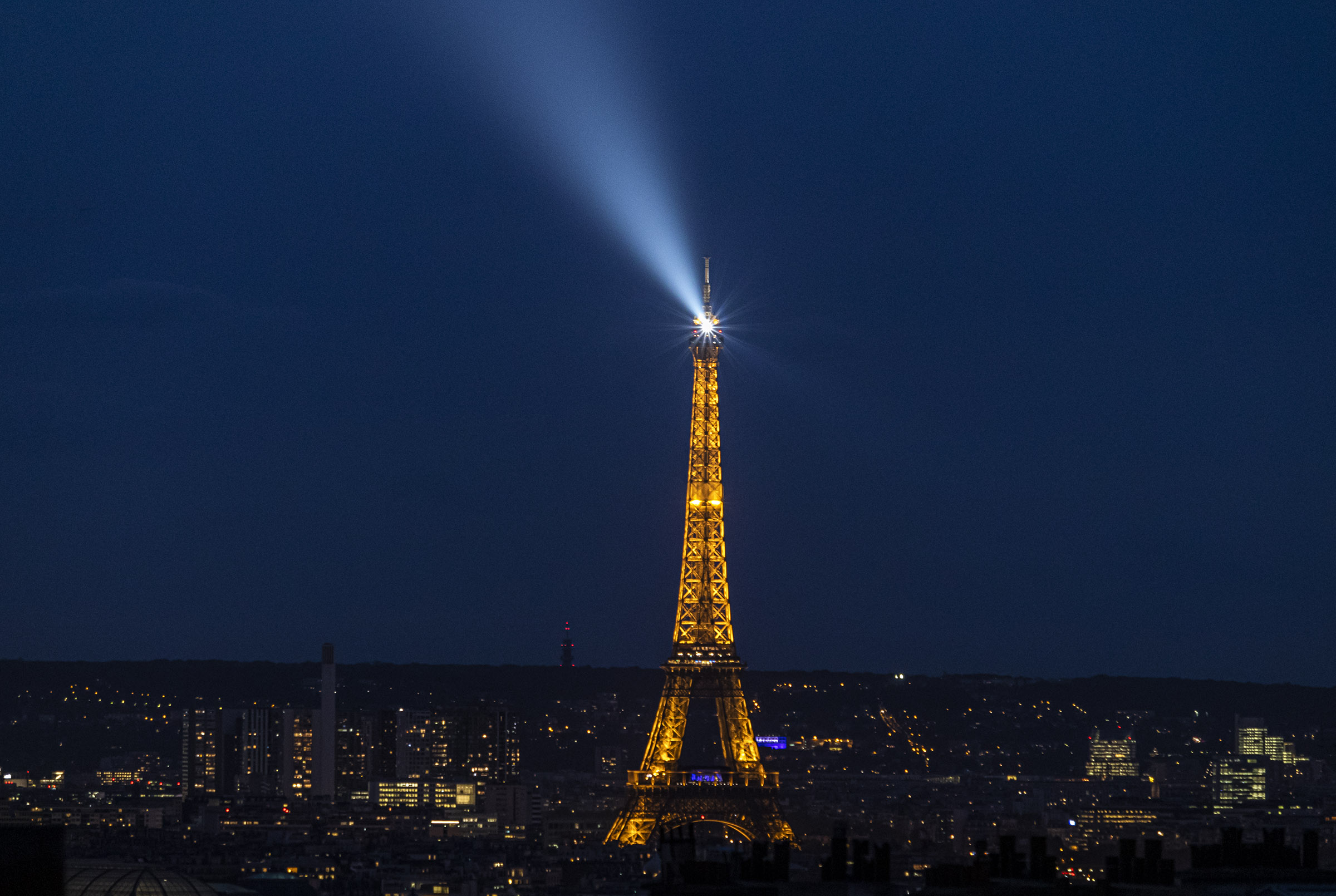
I finally figured out a way to get an unobscured view of the Eiffel Tower from the hills in Montmartre. Yesterday evening was relatively clear and I managed to get a few cool shots just after sunset. There was a small group of tourists that jostled me a little as they tried to get similar shots with their cell phones but my monopod and longish telephoto lens (55-250mm) almost certainly helped me to get better shots.

However, it turns out that the night lighting of the Eiffel Tower is covered under a copyright, so please don’t use my shot for commercial purposes. I have a friend who reviews photos of a stock company and she unsurprisingly was well aware of this reality. Copyrights in the European Union, including France, are good for the lifetime of the artist plus 70 years. So, in 1993, the Eiffel Tower entered into the public domain (and a legal replica was later made in Las Vegas).

Here is a link to an article from PetaPixel that explains this whole issue and includes an informative video. The bottom line is that the night lighting was installed in 1985 and is considered an artistic work, covered by a separate copyright law. As many of you know, I spend most of my time photographing wildlife, not buildings, so I have never really thought about problems like this.

In the end, though, I’ve decided to post these photos, because my blog is not a commercial endeavor. If at some time I were to decide to do this professionally, these photos, no matter how much I like them, would not be part of my portfolio.

Eiffel Tower

Eiffel Tower

© Michael Q. Powell. All rights reserved.


Read Full Post »

Swans seem almost angelic in their beauty and I was thrilled to spot this pair of Mute Swans (Cygnus olor) yesterday as I strolled along the Seine River in Paris. I had the impression that the swans wanted to swim nearer to the middle of the river channel but were unable to do so because of the numerous boats filled with gawking tourists.

Periodically, as you can see in the second and third photo below, the swans had to deal with the waves created by the passing boats. However, they did not complain out loud—they are mute swans after all. The swan in the first image may have been signaling its displeasure, though I believe it was merely trying to dry its wings after being doused by a high wave.

Mute Swan in Paris

Mute Swan in Paris

Mute Swans in Paris

Mute Swan on the Seine

Mute Swans on the Seine

© Michael Q. Powell. All rights reserved.


Read Full Post »

We had crazy weather yesterday, with two big rainstorms, intermittent blue skies, and  thunder and lightning. The biggest surprise for me, though, was a hailstorm that dropped a coating of pea-sized hailstones everywhere.

There was such an accumulation of hail that in the first photo it looks almost like snow had fallen on the outdoor seating of the cafe. When I arrived at my apartment, however, I examined the small table on the balcony of “my” apartment up close and could see the individual, spherical hailstones. Wow!

I carefully tried to avoid the patches of hailstorms when walking after I nearly fell—hailstones on cobblestones are a treacherous mix.

Hail to Paris

Hail to Paris


Hail to Paris

© Michael Q. Powell. All rights reserved.

Read Full Post »

I think the spiky protrusions were intended to keep birds from perching on this post along the Seine River, but somehow this gull did not get the point.

gull on the Seine

© Michael Q. Powell. All rights reserved.

Read Full Post »

Paris inspires me to try “artsy” shots. On a recent early rainy morning, I was struck by the elongated shadow of this bicycle on the wet pavement and captured this image. The light seemed to be coming from two different sources, with different color temperatures and directionality.

bicycle in Paris

© Michael Q. Powell. All rights reserved.

Read Full Post »

I did not plan to make birding a focus of my trip to Paris, but I can’t help but take shots of them when the occasion arises. I’ve seen lots of gulls and pigeons, some mallards, and a few swans, but so far have not gotten close enough to get shots of them—I have relatively modest telephoto lenses with me on this trip.

The first image shows a crow, what I think is a Carrion Crow (Corvus corone). I am not at all certain about identifying birds in Europe, so please correct me if I am wrong. I photographed this crow and the other birds featured in this posting in the Tuileries Garden, which is located in between the Louvre and the Place de la Concorde.

The second bird is a Common Moorhen (Gallinula chloropus). Several other moorhens were swimming about in a small pond, but this one decided to boldly look for food. Perhaps it was looking for a handout from tourists.

The final birds are Common Starlings (Sturnus vulgaris). This small flock of starlings flew about from place to place. I did not detect any signals, but all of them seemed to take off and land at the same time.

If you have followed my blog for any length of time, you know that I like to photograph anything that catches my eye. Even in a place like Paris, where there appear to be famous landmarks in every direction I turn, I am just as likely to be spending time photographing these modest little birds. I think it would make me a maddening travel companion for a more normal person.

Carrion Crow

Common Moorhen

Common Starlings

© Michael Q. Powell. All rights reserved.


Read Full Post »

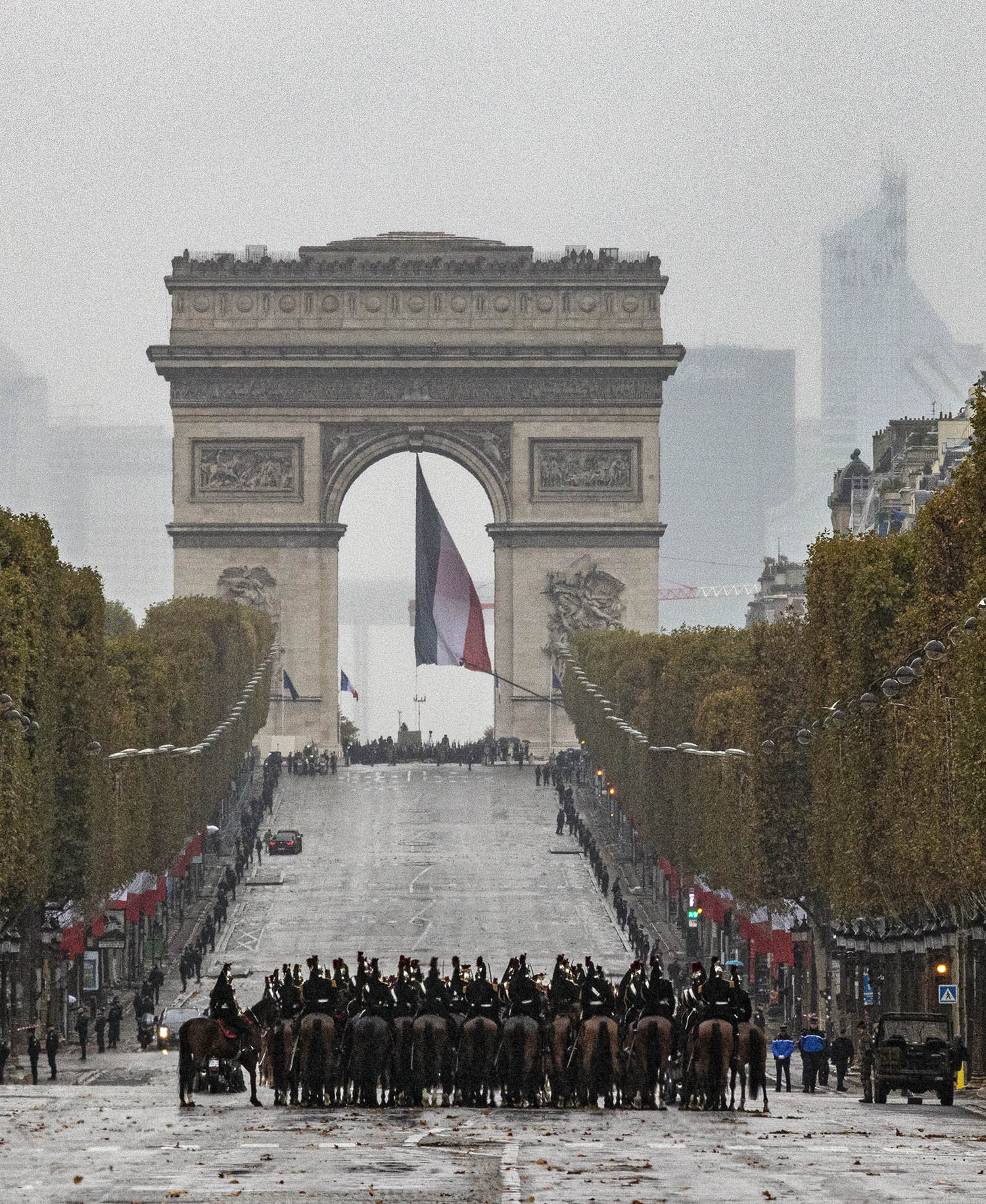
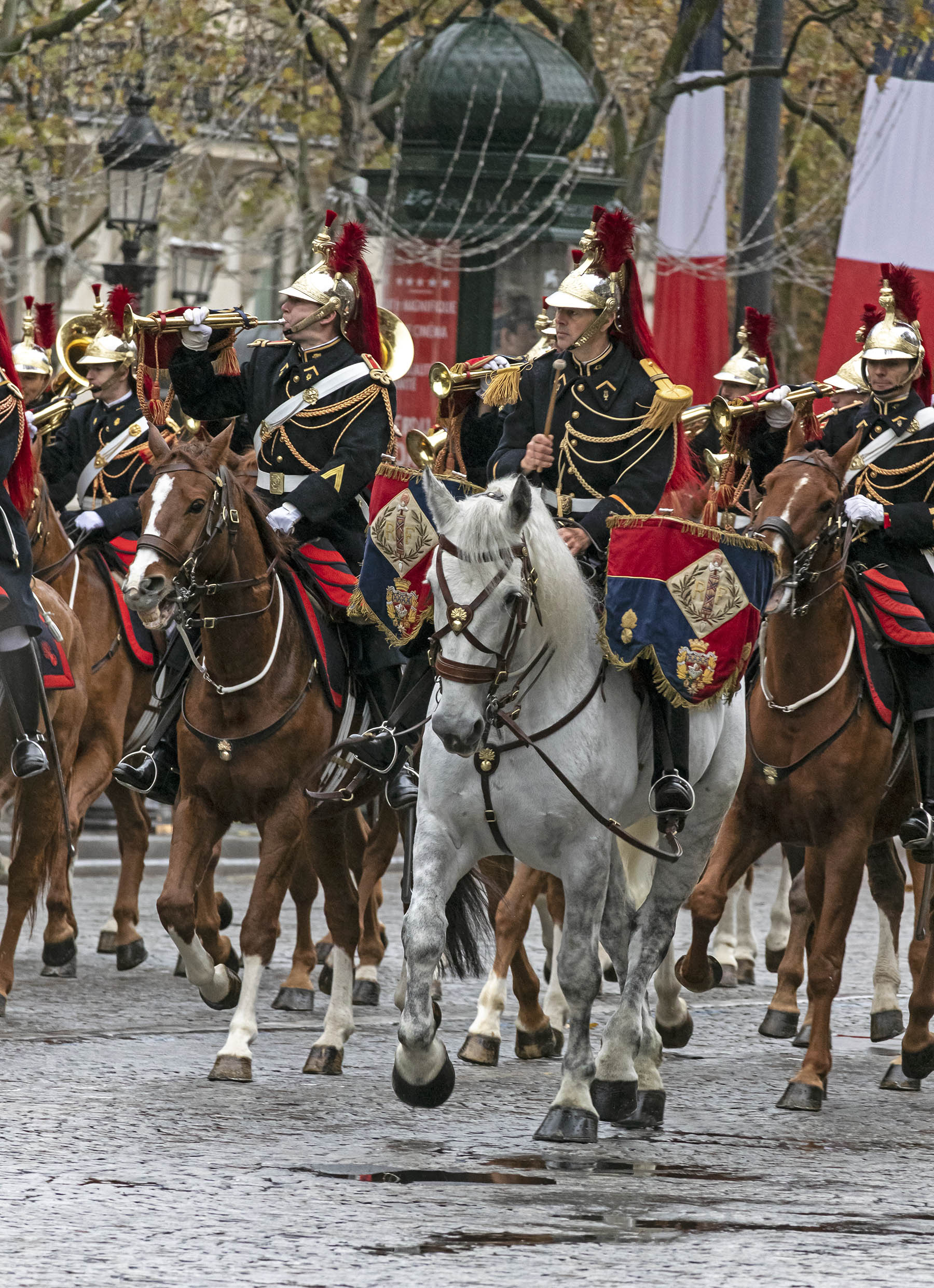
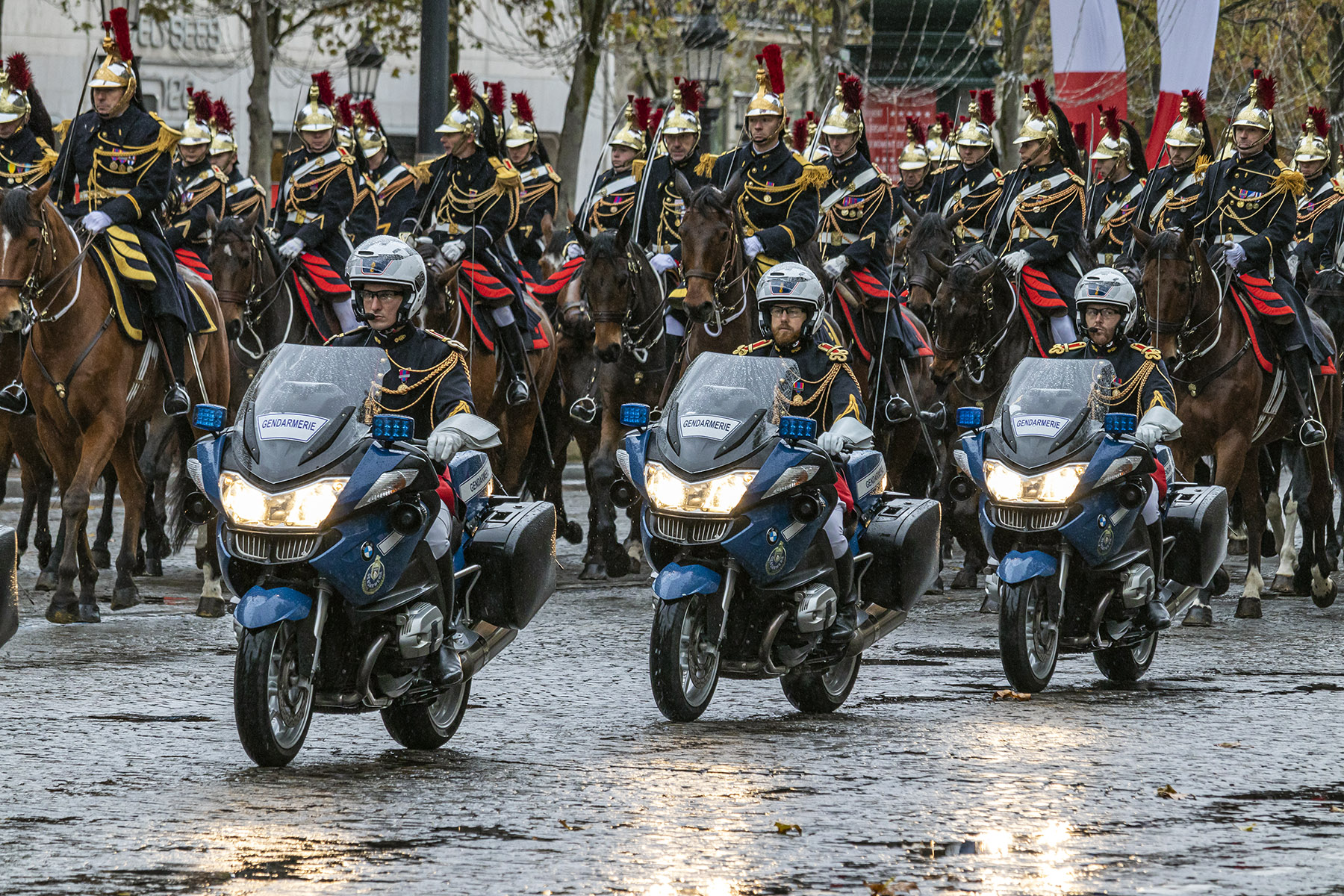
All of the Avenue des Champs-Élysées was blocked off today to permit French President Macron unimpeded access to the Arc de Triomphe, where he laid a wreath at the Tomb of the Unknown Soldier and made a speech in honor of Armistice Day. I did not make it all of the way down to the Arc de Triomphe, but captured a few photos of the ceremonial guards as they made their way past my vantage point on the Champs-Élysées.

Armistice Day 2019

Armistice Day 2019

Armistice Day 2019

© Michael Q. Powell. All rights reserved.


Read Full Post »

I got up early yesterday morning, hoping to get some photos of the sun rising over Paris from the steps of the Sacre Coeur Basilica, the highest point in Paris. Unfortunately it rained on me the entire walk there and while I was there. The sun did not cooperate and it is tough to take photos in limited light when it is windy and rainy.

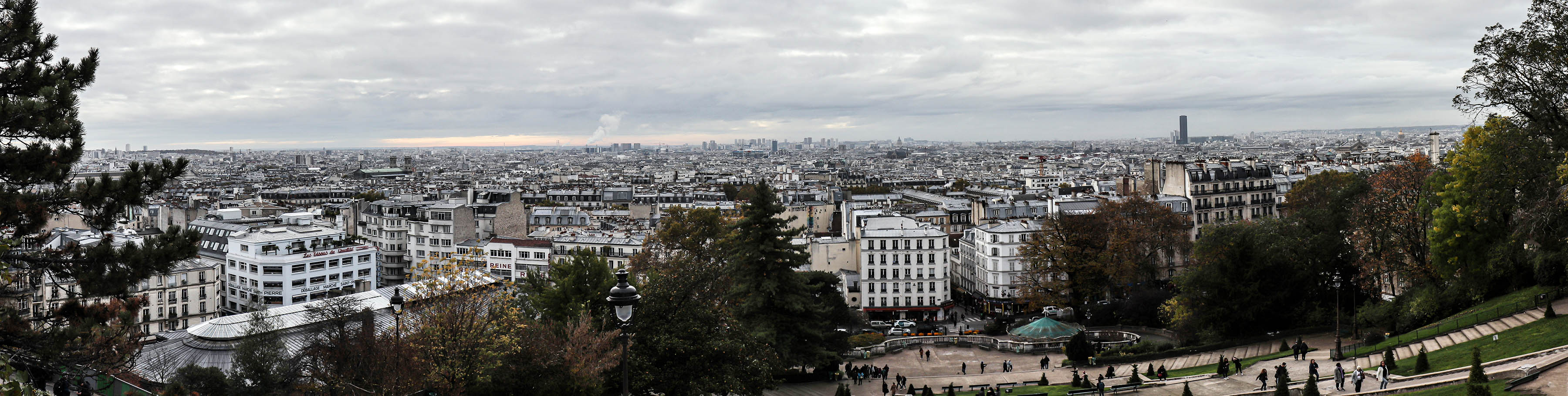
I hope to try again when the weather is better. In the meantime, here is a composite panoramic shot that I took earlier in the week that gives you an idea of the view from that spot. I am curious to see how WordPress handles a panorama shot and encourage you to click on the image to see some of the amazing details.

I took a series of eight shots and stitched them together with the Photo Merge feature of Photoshop. Only later did I come to realize that I might had been able to achieve a similar feature with my new iPhone, but I am still so unaccustomed to it that I have not even used the phone (or camera in it) in several days.

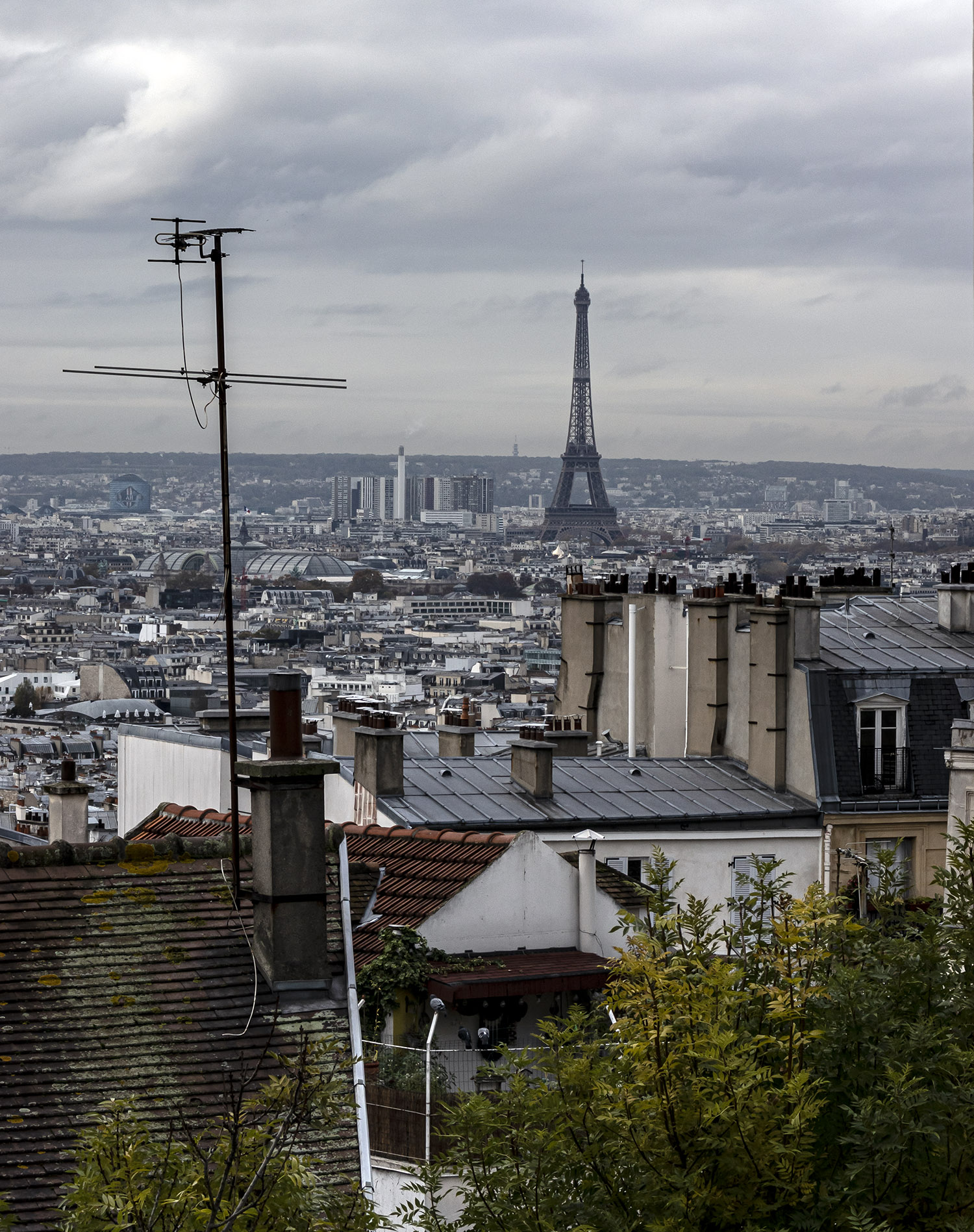
It was a bit cloudy and dark the day that I took these photos and it is a bit hard to pick out landmarks. One of the most notable landmarks, the Eiffel Tower, is not visible in the image—it is off to the far right, hidden by the trees. As I was walking away, I caught a glimpse of the tower and by climbing on a wall and leaning against a railing, I was able to capture the second image below. You can definitely see how much the structure towers over the surrounding buildings (pun intended).

Panorama of Paris

Eiffel Tower

© Michael Q. Powell. All rights reserved.


Read Full Post »

During my three-week vacation in Paris, I am staying in a small studio apartment that I rented through Airbnb. It is located on the top floor of an old building on Rue Montorgueil, a pedestrian zone in the center of the city that is lined with shops and restaurants.

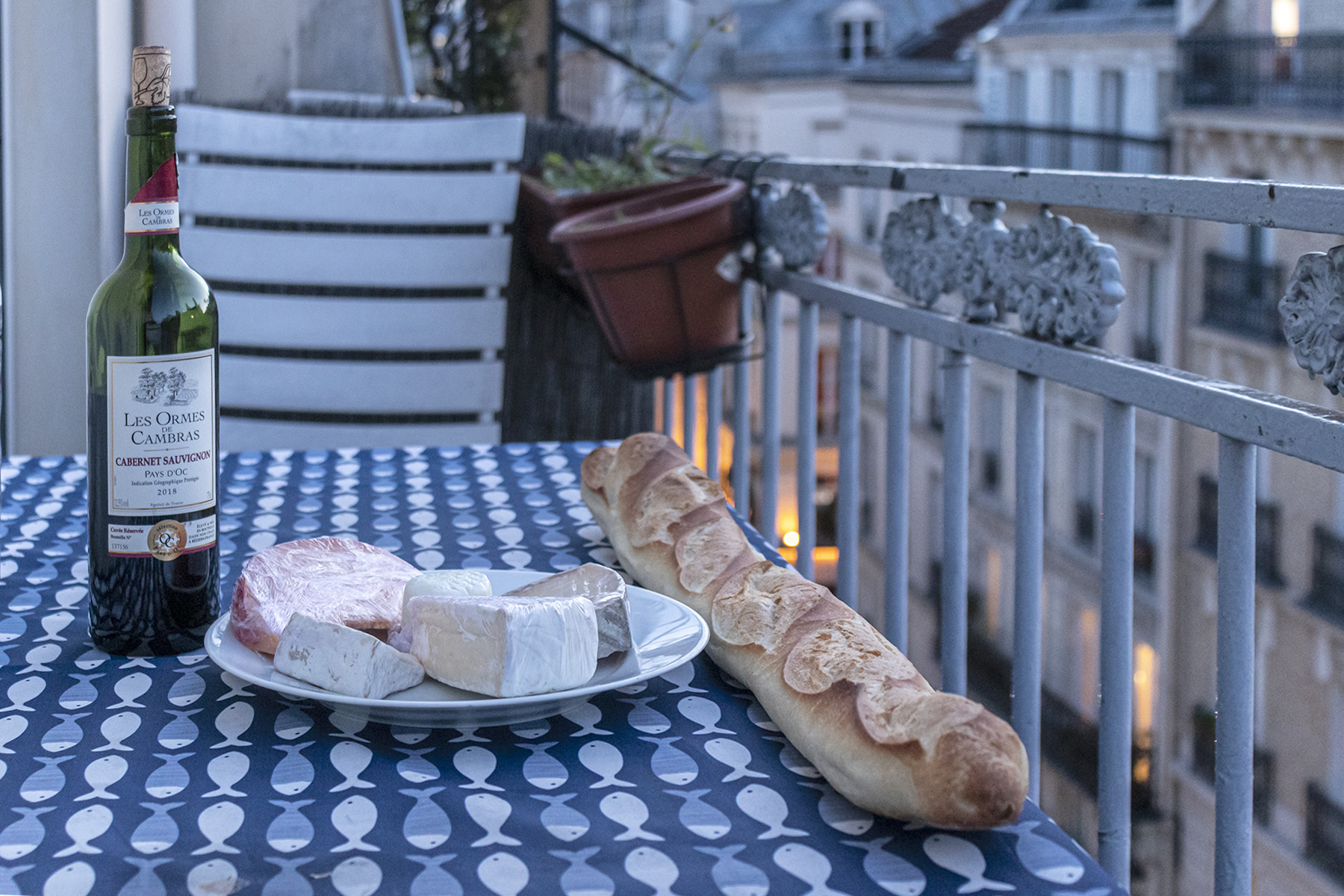
One of the apartment’s wonderful features is that it has a balcony overlooking the street. Although I have had to bundle up a bit in the cool November weather, I love spending as much time as I can sitting outside, observing the people below. The first shot shows one of my first dinners here. I don’t usually photograph my food, but this image gives you a sense of the balcony setting as well as a look at some of my basic food groups here.

The second shot gives you an idea of the view from the balcony. Yes, it is a long way down, but it is literally not for the faint of heart, because you have to walk up 96 stairs in a narrow winding stairway in order to get this view.

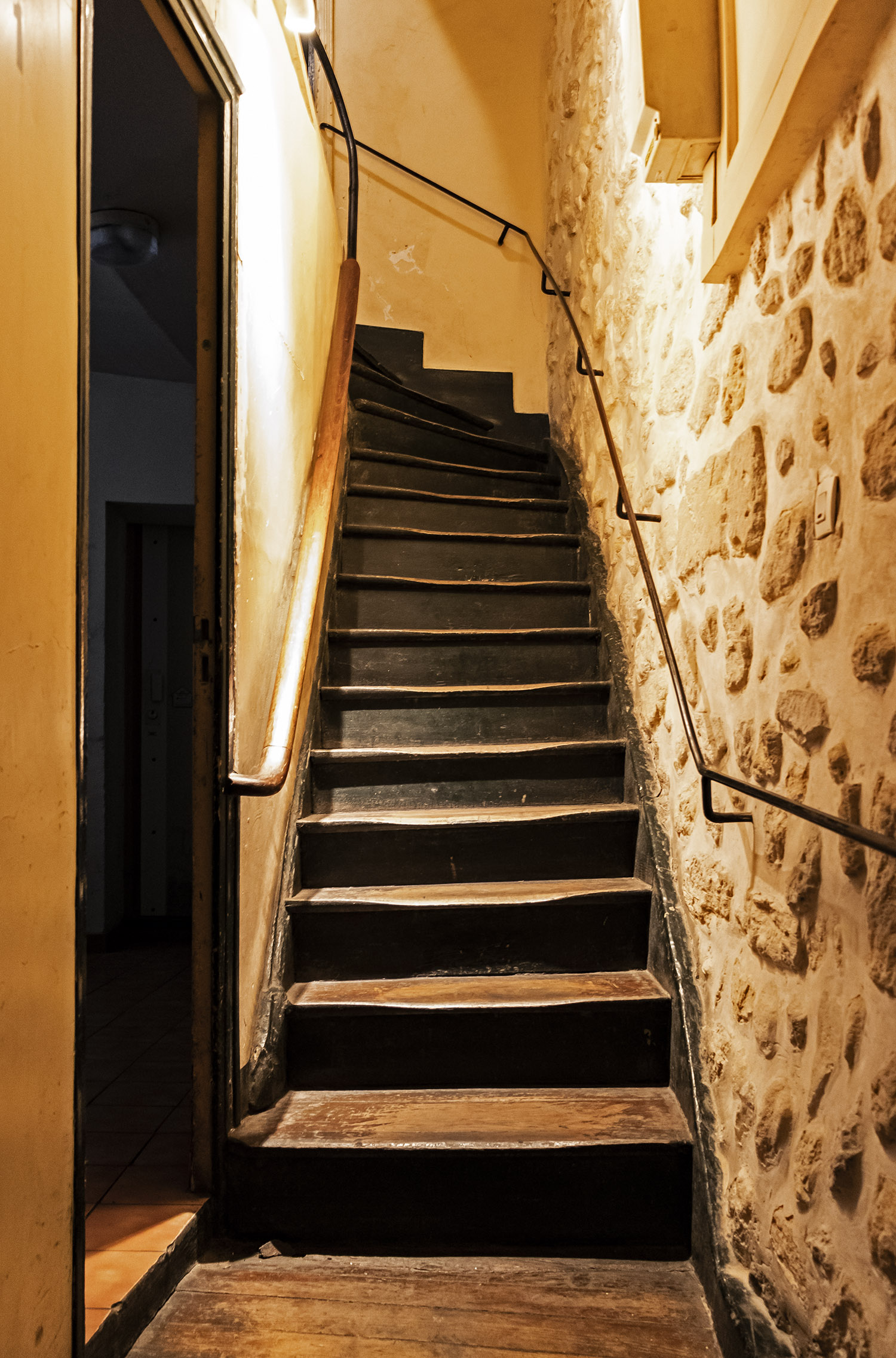
The final photo shows one small set of the stairs I have to climb. On each of the six floors, there is a small landing and one apartment to the left and one to the right.

dinner in Paris

Paris balcony view

Paris apartment stairs

© Michael Q. Powell. All rights reserved.

Read Full Post »

Saturday morning sunrise on the Seine River. What a great way to start today in Paris.

Sunrise on the Seine

© Michael Q. Powell. All rights reserved.

Read Full Post »

Evenings in Paris can be magical. Many of the buildings are wonderfully illuminated and it is easy to feel a sense of enchantment. The moon was moving in and out of the clouds yesterday evening as I walked past the Louvre, providing some natural illumination. I managed to capture this two second image of part of the traditional Louvre building by leaning my camera against a railing.

I am gradually getting used to the I. M. Pei glass pyramid that stands in the middle of the traditional courtyard. It was early evening and there were still a lot of people around, preventing me from capturing the simple geometric view I had in mind. In the end I settled for a somewhat closer view that cut off the lower corners of the pyramid.

The final shot is a view of the St Eustache church that is located not far from where I am staying. This church was built between 1532 and 1632 and, according to Wikipedia, its façade is in a Gothic style, while its interior is in the Renaissance and classical styles. I have not yet gone inside it, but definitely plan to do so. I also would love to be able to hear the church’s organ that has 8,000 pipes and is the largest pipe organ in France.

Louvre Museum

Louvre Museum

St Eustache

© Michael Q. Powell. All rights reserved.

Read Full Post »
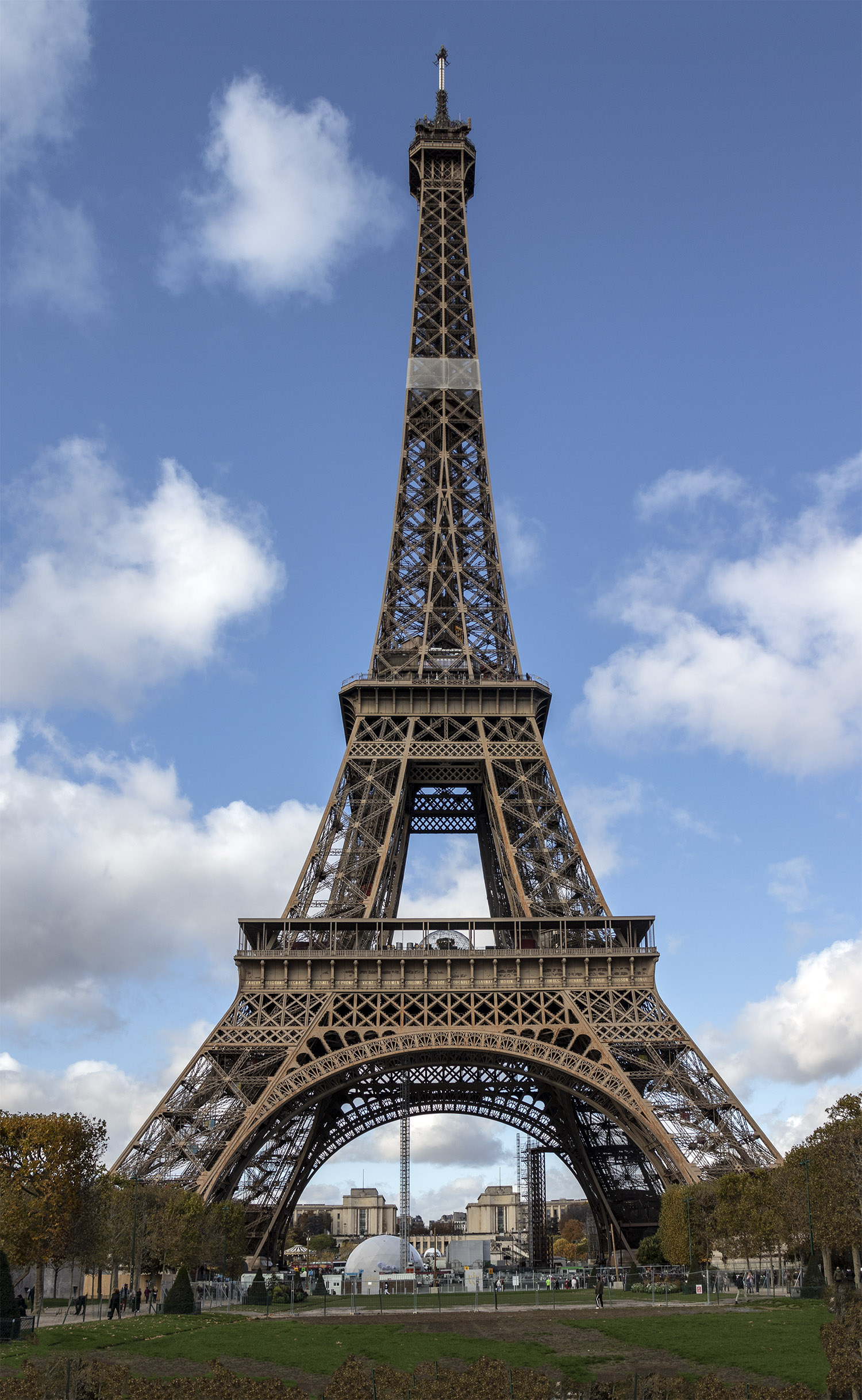
How do you photograph a structure like the Eiffel Tower that is so iconic and so well-known? The first choice is to decide which side of the Seine River you want to be on when taking the photos. You can get some good photos from the hilly area across the river called Trocadéro, or you can stay on the same side as the tower itself. I chose the latter option.

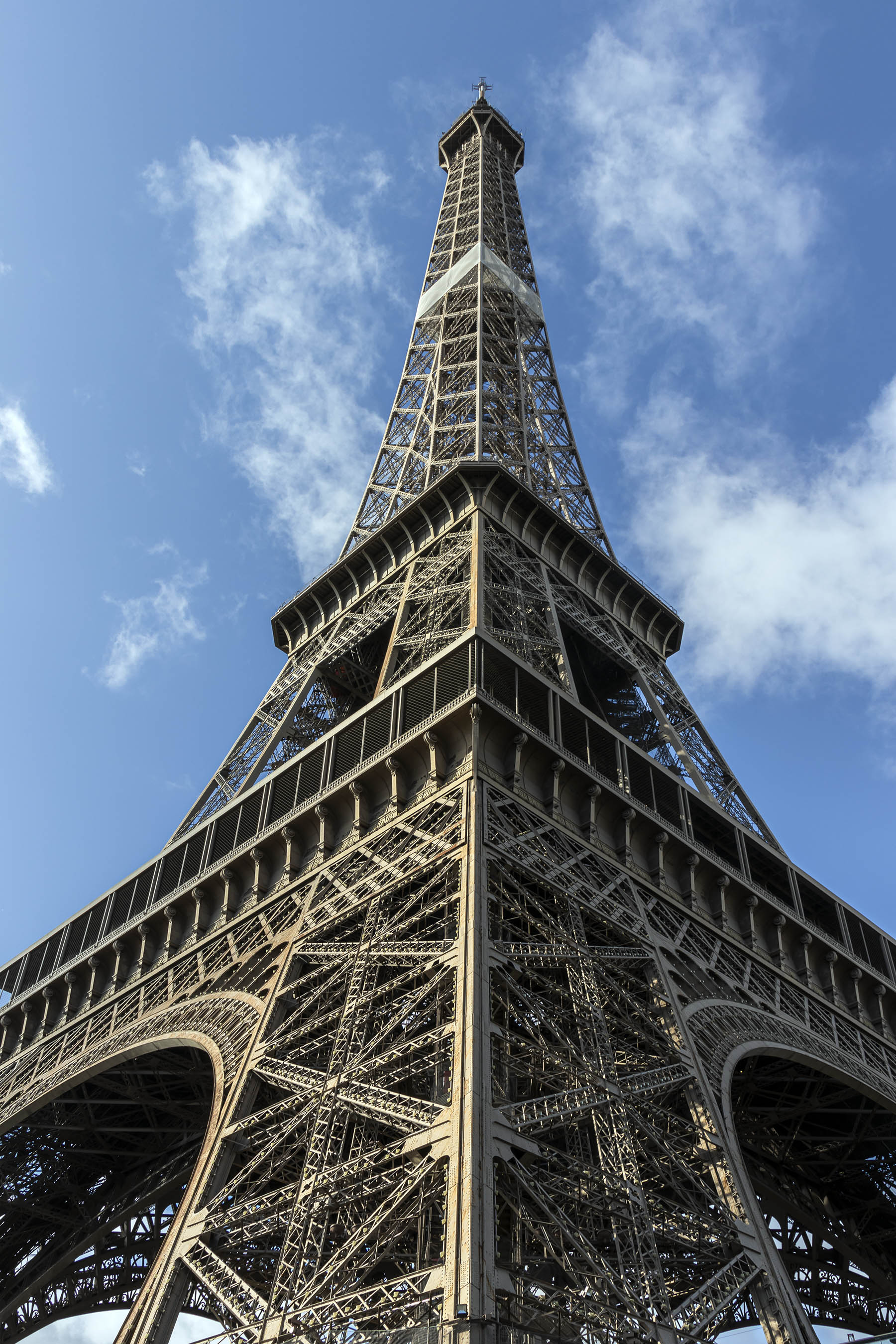
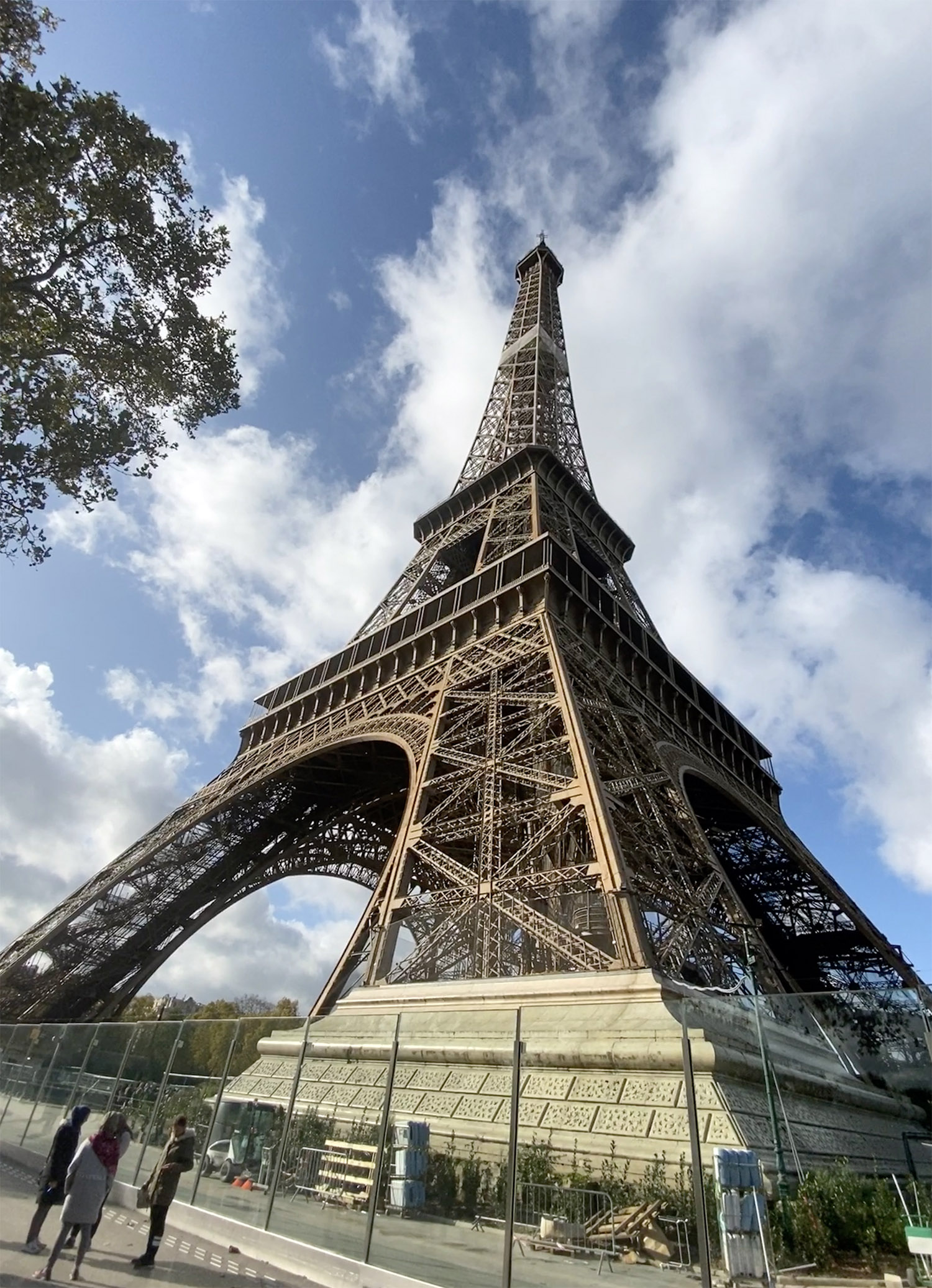
There are some real limitations, because the grassy areas leading away from the tower are fenced off.  If you get far enough away, you can get the traditional full-length shot like the second image below. I personally like to move closer and shoot upwards.

Unfortunately, my favorite angle is no longer available. In 2011 I was able to walk right underneath the tower and shoot direct upwards while standing in the middle of the four legs. Now there are plexiglass barriers surrounding the entire tower that are used to funnel visitors to a single entrance with fees and security checks for those who want to climb the tower or take the elevator.

The first show below is my favorite. I like the angle and was able to wait for the clouds to move into a photogenic position. I took the shot with a DSLR and a zoom lens. Recently, I bought my first real smartphone, an iPhone 11, and during this trip I am learning how to use it. I am still not used to the idea of taking photos with a phone and it feels so unnatural to hold at arms length to take a photo. However, this iPhone has a super-wide mode and I decided to use it to take the final photo. The perspectives are a little distorted, almost like a fisheye lens, but I like the effect.

As you probably have noticed, I am combining the roles of a tourist and a photographer, thinking a lot about my shots as I take them. Unlike most of the tourists I saw yesterday, though, I don’t plan to spend a lot of time taking multiple selfies.

Eiffel Tower

Eiffel Tower

Eiffel Tower

© Michael Q. Powell. All rights reserved.

Read Full Post »

Yesterday, on the day of my arrival in Paris, I felt drawn to visit Notre Dame de Paris, anxious to assess its current condition. There was a lot of worldwide press on the fire in April 2019, but since that time Notre Dame has  disappeared from the headlines, at least in the United States.

My first view of the cathedral was of the towers, which appear to be relatively intact. From that angle, as shown in the second photo, I had no idea of the extent of the damage the fire had caused.

When I crossed to the bank of the Seine River and walked down to the water level, I could clearly see the massive devastation. There is scaffolding supporting part of the structure and tarps covering other areas. This is a familiar angle for me, and I distinctively sense and feel the loss of the roof and the spire that are no longer present.

I am sure that I will photograph Notre Dame multiple times during this stay in Paris, but it seems appropriate to share these photos today, as I compose my first post from this beautiful city.

If you have not seen my photos of Notre Dame de Paris in 2011 that were featured in my last post, Temporary change of venue, check it out and you can do your own comparisons.

Notre Dame de Paris

Notre Dame de Paris


© Michael Q. Powell. All rights reserved.


Read Full Post »

The content of my blog will be radically different during the next three weeks because I will be in Paris, France, not Northern Virginia. The “wild life” that I am likely to photograph in Paris will definitely not be the same as the usual (and unusual) creatures that are featured regularly in my posts.

Those of you who have followed me for a while know that in the past I have made week-long work trips to places like Vienna, Austria and Brussels, Belgium. During those trips I generally had limited periods of time to simply wander through the streets. I am now fully retired, so my upcoming trip to Paris is strictly for pleasure, not for business. I do not have a detailed itinerary beyond my airline flights and Air Bnb reservation—I am going to just follow where my feet, eyes, and nose lead me.

Paris has a special place in my heart and in my personal history. I majored in French language and literature in college and spent my junior year of college studying in Paris. During those day, when I spoke and thought and read in French, I felt a sense of liberation from my introverted, bookwormish self to the point that some of my friends noted that my personality changed perceptibly when I switched languages. How else can I explain why I was entranced by 19th century French romantic poetry?

In some ways this is a repeat of a similar trip I made in November 2011, after I ceased working full-time as a government employee. (I worked part-time as a contractor for almost eight years after that.) Both trips were intended to be journeys of discovery and re-discovery. Not long ago I qualified for Medicare, which means I am certifiably growing old, and since then I have been quite contemplative, pondering the past, present, and future and looking for those strands in my life that been consistent.

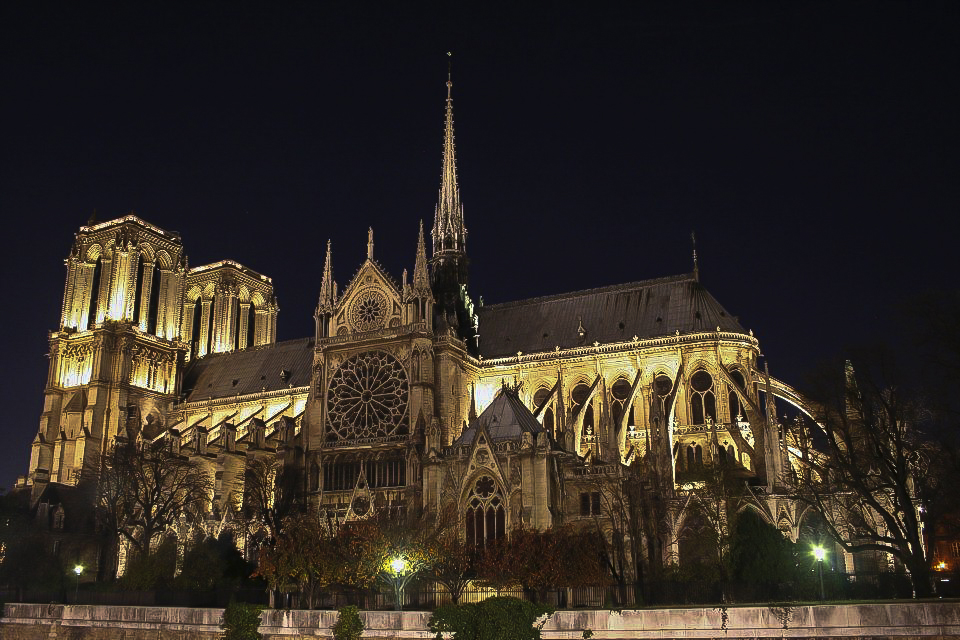
Anyways, I thought I would feature a few photos of Notre Dame that I took in November 2011. It was during that trip that I discovered the joy of shooting with my first DSLR, a Canon Rebel XT. The first two images below show the exterior of the cathedral as it was so beautifully illuminated in the evening. I took the final photo from behind the altar. It saddens me greatly to realize that after the tragic fire earlier this year, I will not be able to take similar shots of Notre Dame during this trip.

Notre Dame de Paris

Notre Dame de Paris

Notre Dame de Paris

© Michael Q. Powell. All rights reserved.

Read Full Post »

How long a lens do you need to photograph birds? Conventional wisdom dictates that you need a lens with a focal length of at least 300mm and ideally much longer than that. I generally use my Tamron 150-600mm lens when I anticipate shooting birds, especially small ones. If I want to get even closer, the zoom lens of my Canon SX50 has a field of view equivalent to 1200mm.

On Friday, I traveled into Washington D.C. to visit some friends using the Metro subway. I planned to walk a lot and I didn’t want to weigh myself down with all kinds of gear, so I put a 24-105mm lens on my DSLR. For those of you who are not technically oriented, this lens goes from mildly wide angle to mildly telephoto.

The camera and lens combination is less than ideal for photographing birds. I couldn’t help myself, however, when I spotted some birds in an urban park and decided to attempt to get some shots. My first attempt was with a Carolina Wren and it was a disaster—it was small and fast and so skittish that I could not get a decent shot.

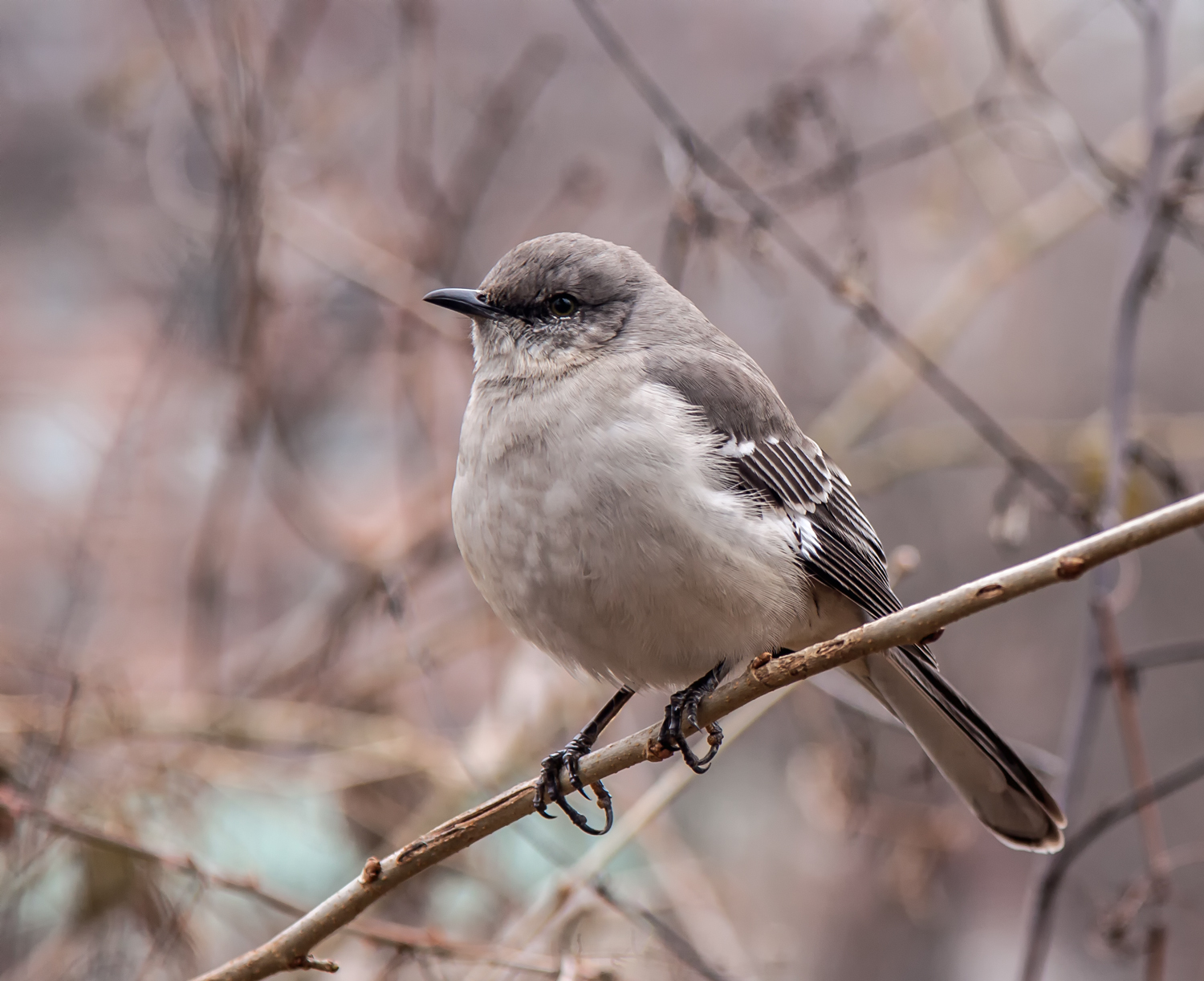
Then I spied a Northern Mockingbird (Mimus polyglottos) perched on a bush in the distance. I took some initial shots and then slowly began to move forward. Eventually I was able to get to within about three feet (one meter) of the mockingbird and captured this image.

This incident served as a reminder not to limit myself to following conventional wisdom. It is definitely possible to take a good bird photo without a long telephoto lens. Why not take landscape photos with a long telephoto lens instead of a wide angle lens?

No matter what lens I have on my camera (or what camera I am using), I try to keep my eyes open for possible subjects. I will then try to capture those subjects as well as I can within whatever equipment I happen to have with me. It turns out that gear is often not the most critical element in making good images—simply being there is half the battle.

Northern Mockingbird

© Michael Q. Powell. All rights reserved.

Read Full Post »

We won’t see them for a few months in Northern Virginia, but I got a sneak preview of daffodils in bloom here in Brussels, Belgium near a small pond at the botanical gardens yesterday morning.

daffodil

© Michael Q. Powell. All rights reserved.


Read Full Post »

As I was walking across the Key Bridge from Georgetown on Wednesday night, I glanced down at the Potomac River and saw that the Kennedy Center was aglow with rainbow colors. I believe that the colors were part of the celebration of the Kennedy Center Honors, an annual honor given to those in the performing arts for their lifetime of contributions to American culture. Honorees receive a medallion that hangs from a rainbow colored ribbon.

Most of the landmarks shown here will be familiar only to locals, but some of you may recognize the Washington Monument in the middle left in the photo. In case you are curious, I took this shot with a Canon A620 camera, an old 7.1 megapixel point-and-shoot camera that I carry with me sometimes because it fits easily into my pocket. I leaned against the railing of the bridge to take this shot in what turned out to be a one second exposure.

Although I know what the subject matter of the image is, I enjoy it equally as a kind of abstract, man-made landscape, a beautiful combination of lines and shapes and colors, with some of them reflected in the dark waters of the river.

Kennedy Center Honors

© Michael Q. Powell. All rights reserved.


Read Full Post »

I am in Vienna, Austria for a brief work trip and had a chance to stop by the Christmas Market in front of the Rathaus (City Hall). Even on a Monday afternoon, the market was crowded with shoppers. The market is noisy, busy, and a bit gaudy, but despite all of the commercialization, I could still feel the spirit of Christmas.

As the big sign in front of the market states in German, “Merry Christmas.”

Vienna Christmas Market 2017

Vienna Christmas Market 2017

© Michael Q. Powell. All rights reserved.

Read Full Post »

Initially I did a double take when I saw the sign for a restaurant in Brussels called O’Tacos and I figured it was some kind of Irish-Mexican fusion cuisine. I almost burst out laughing, however, when I read the words, “Original French Tacos.” French tacos? Who knew?

I did some further investigation when I returned to my hotel and found out that O’Tacos is a chain that is now worldwide. OK, but what exactly is a French taco? A review on foodrepublic.com described it in these words—”Less like a taco and more like a pressed San Diego-style burrito, the French taco is stuffed with fries, a white creamy cheese sauce, a protein (choices include grilled chicken breast, nuggets, tenders, ground beef or sausage), an additional sauce (mustard, Tabasco, ketchup, mayonnaise, barbecue) and other ingredients (cheese, mushrooms, grilled veggies, an egg, bacon, ham and more) all wrapped up in a flour tortilla.”

original French tacos

© Michael Q. Powell. All rights reserved

Read Full Post »

During my recent trip to Wheeling, West Virginia, I repeatedly encountered symbols of the town’s glorious past. Trains no longer run to the historic Baltimore and Ohio train station. The beautiful building has now been converted for use by West Virginia Northern Community College.

B&O Railroad

A prominent sign indicates the availability of the buildings of Marsh Wheeling Stogies. Could this possibly be a reference to cigars? As I did a little research, I learned that Mifflin M. Marsh began producing cigars in Wheeling in 1840. His cheap cigars were favored by the drivers of the Conestoga wagons that carried pioneers West and “stogies” are a shortened version of the wagon’s name. According to the website Archiving Wheeling, in 1877 almost 24 million cigars were sold in Wheeling. In 2001, the plant was closed after Marsh Wheeling was bought by National Cigar.

Marsh Wheeling Stogies

I suppose that Verizon now owns the Bell Telephone building in Wheeling, but Verizon is definitely not know for having buildings as interesting and beautiful as this one.

Bell Telephone

© Michael Q. Powell. All rights reserved.

Read Full Post »

This past Thursday I made a quick trip to Wheeling, West Virginia and fell in love with the signs that had been painted long ago on the sides of some of the brick buildings in the downtown area. Here are a few of my favorite ones.

Wheeling

Wheeling

Wheeling

© Michael Q. Powell. All rights reserved.

Read Full Post »

A few colored lights still stretch across some of the streets here in Brussels, but the signs of Christmas have gradually disappeared during my short stay here. The massive Christmas tree has disappeared from the Grand-Place—all that is left to remind us of the impressively beautiful tree is a hole in the ground and several sections of the tree’s trunk.
 
Seasons change and life quickly moves on, no matter how much we want to slow it down to better savor its special moments.

Brussels Christmas tree

Brussels Christmas tree

Brussels Christmas tree

© Michael Q. Powell. All rights reserved.

Read Full Post »

Here’s a photo of another wall mural that I came across here in Brussels. This one I recognizes as a scene from The Adventures of Tintin, a comic book series by Belgian cartoonist Georges Remi, who wrote under the pen name Hergé. This scene shoes Tintin, his dog Snowy (Milou), and Captain Haddock, his best friend, a seafaring Merchant Marine Captain.

It’s a little sad to see the ugly graffiti that has defaced the bottom part of this beautiful mural, but that is the unfortunate reality in many parts of this city.

Tin-TIn mural

© Michael Q. Powell. All rights reserved.


Read Full Post »

Every time that I walk through the Grand-Place in Brussels I end up with a sore neck. The ornate architecture of the buildings that surround the square is so amazing that I can’t help but spend an extended period of time with my neck outstretched as I take in the beautiful architectural details. This image shows the view that I had earlier this week as I approached the square from one of the side streets and suddenly was treated to the sight of an overwhelming number of spires and statues on one of the buildings.

Grand-Place

© Michael Q. Powell. All rights reserved.

Read Full Post »

One of the cool things about wandering through the narrow winding streets in the center of Brussels is that I will occasionally come upon wall murals that cover the entire side of a narrow building. They most often appear to depict scenes from comic book series like Tin-Tin, but most of them are unfamiliar to me.

This past weekend I stumbled upon this funny little scene on the side of a building. I am clueless about its context, but it made me smile as I stopped to examine it.

UPDATE:  I did a little research and think this may be a depiction of Nero, the title character of a Belgian comic book series The Adventure of Nero.

Brussels mural

© Michael Q. Powell. All rights reserved.

Read Full Post »

« Newer Posts - Older Posts »