Feeds:
Posts
Comments

Archive for the ‘Insects’ Category

Globe Thistles (Echinops ritro) have an interesting geometric look when viewed from a distance, but they get even more magical up close, when the spiky parts of the flower seem to glow like little Christmas lights.

As I was admiring the thistles in my neighbors’ garden, I spotted this beetle, which I think might be a Banded Longhorn Beetle (Typocerus velutinus). The beetle was slowing searching for prey, weaving his way through the spiked protrusions of the plant. I decided to try to get at eye level with the beetle and to shoot through the thistle.

In most of the shots that I took, the beetle’s face was hidden, but I was happy to get this image in which the face and antennae are visible. Given that the beetle was moving, I am also content that this macro shot is pretty much in focus and the important elements are not blurred.

thistle_bug_blog

© Michael Q. Powell. All rights reserved

Read Full Post »

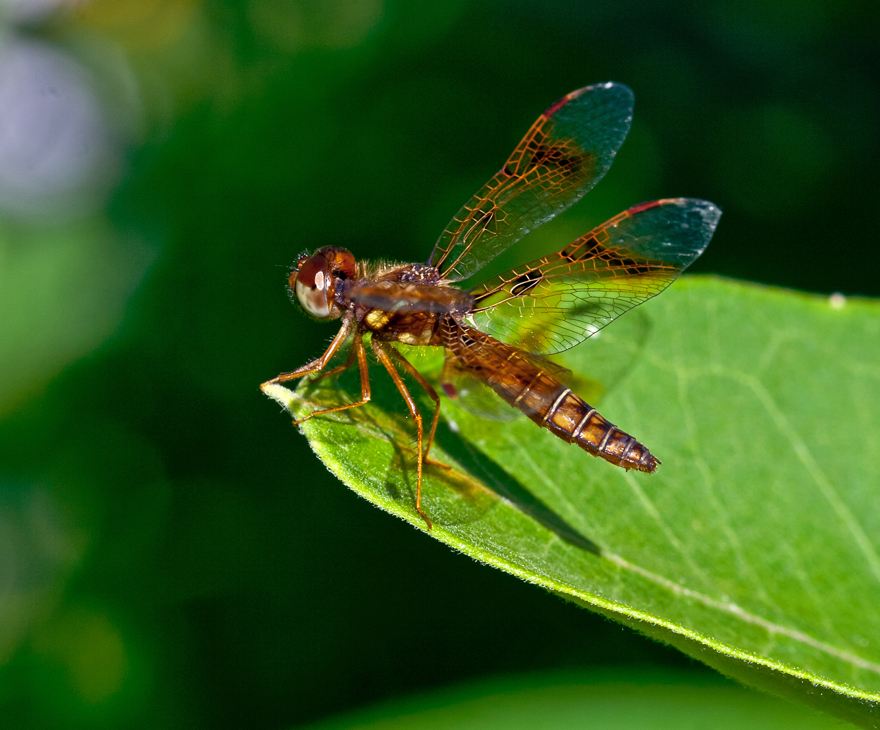
It’s tough enough to try to photograph any dragonfly in flight, but this past weekend I chased after some of the smallest ones, the Eastern Amberwing dragonflies (Perithemis tenera).

According to Bugguide, these dragonflies are typically 21-24mm in length, which is less than one inch. There were lots of Eastern Amberwings buzzing around the edges of a small pond at one of the local gardens that I like to visit. They were within range of the 100mm macro lens that I was using, but focusing was my big problem. Even though they tended to hover a bit, it was tough to get them in focus when focusing manually and impossible to do so with auto-focus.

The amber wings of this dragonfly are distinctive and I was happy to get some images that showcase the wings. The shots are not quite as sharp as they might have been if I had captured the dragonflies perched, but they seemed to be in constant motion and never posed for me. Focusing manually is still an adventure for me when the subject is moving, but it is a fun challenge.

amber1_blog

amber2_blog

© Michael Q. Powell. All rights reserved

Read Full Post »

One of my favorite plants in my neighbors’ garden is the Globe Thistle (Echinops ritro), a magical plant that has fantastic balls of tiny flowers tinged with blue, purple, and pink and has the additional benefit of attracting bees.

The plant’s spherical shape makes it a little tough to photograph and creates real issues with depth of field, but I managed to get a few shots that highlight both the shape and texture of the plants and the activity of the bees that were gathering pollen from them.

thistle2_blogthistle_blog

© Michael Q. Powell. All rights reserved

Read Full Post »

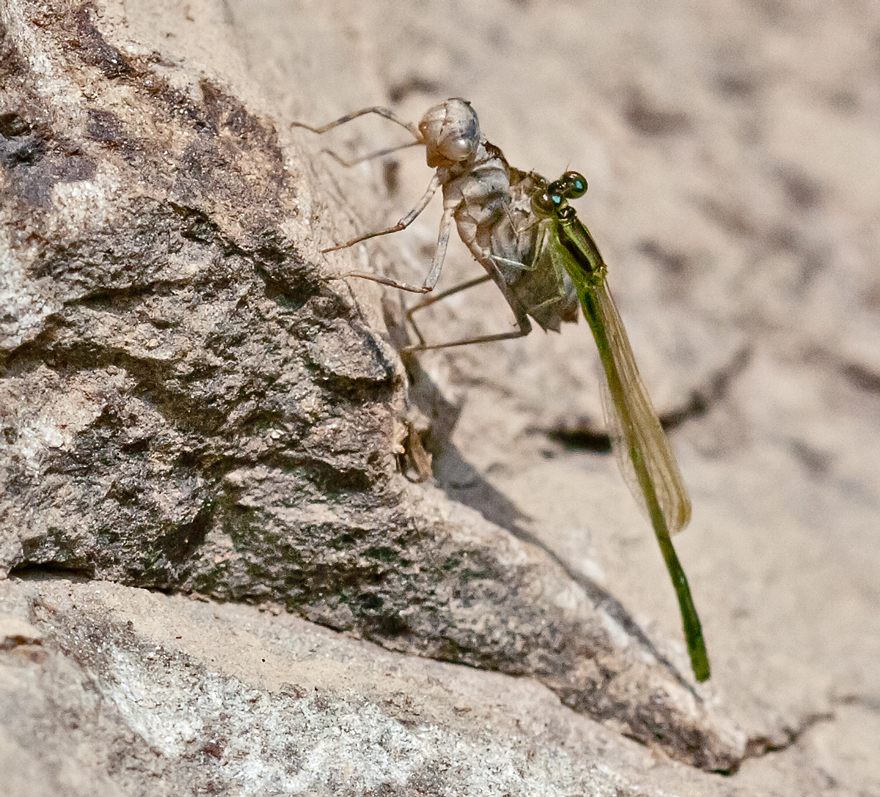
This photo leaves me a little confused, because the larval shell to which this damselfly is clinging seems too big for its body and looks more like it belonged to a dragonfly.

There are plenty of places on the internet where you can read about the life cycle of dragonflies and damselflies, but the short version is that they spend most of their lives in the water as nymphs. There they go through a series of larval stages in which they shed their skin that has grown too tight. Just before they molt for the final time, they climb out of the water and, once the skin dries, the damselflies emerge. They then have to rest for a little while as their wings unfurl and their legs get stronger. Only then can they fly away.

This pretty little damselfly seems to be in the resting phase on a little rock ledge at the edge of a pond at a local garden. I wanted to try to get a bit closer, but the embankment where the ledge was located was steep and muddy and I would have had to be standing in the water to get a better angle.

I like the photo a lot and find it to be weirdly fascinating. The landscape is simple and rugged, with some texture in the foreground. The moulted shell still seems lifelike and seems to be looking at us with a slightly tilted head. The damselfly itself has the only color in the image and attracts the viewers’ eyes. There is a kind of tension in the damselfly’s pose, as it hangs on with all of its strength, waiting until the moment when it can fly away.

Imagine what it would be like waiting, waiting for the moment when you take to the air for the first time, leaving behind forever your old life in the water.

emerging_blog

© Michael Q. Powell. All rights reserved

Read Full Post »

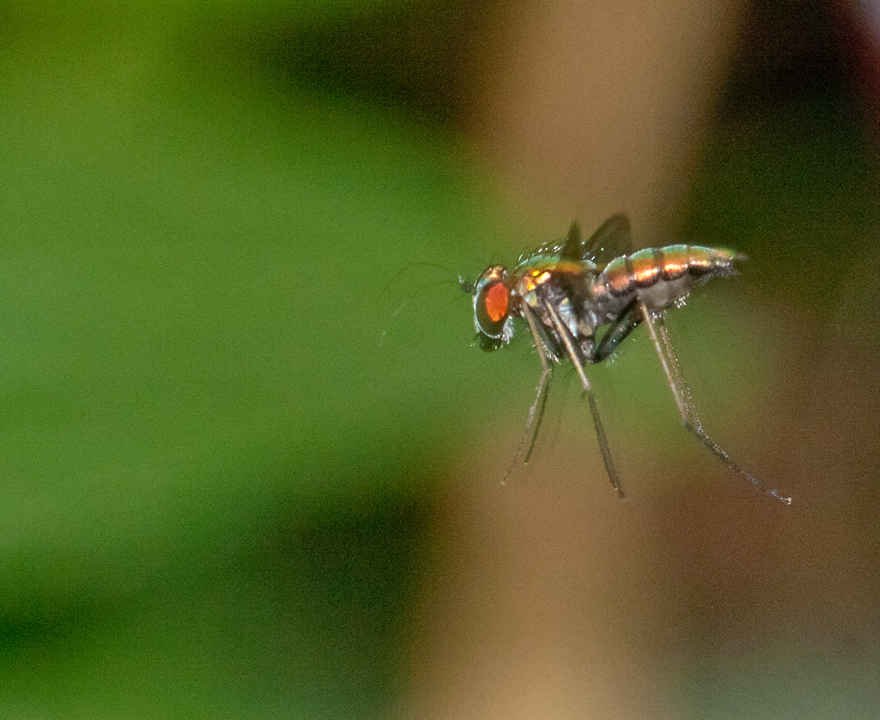
Yesterday evening when I saw a fly with a golden body perched on a leaf and decided to try to get a shot of it using my pop-up flash, several remarkable things happened.

Almost every time that I tripped the flash, the fly flew away for a split second and returned to the the leaf. Most of the the shots showed only a part of the fly’s body in the frame, but several of the images show the fly in mid-air, as you can see in the first and third image.

The flash also revealed that the fly is multi-colored to the point that I have named it a rainbow fly. (I have no idea of its real name). You can really see a lot of different colors in the second image, the only one that I managed to get of the fly sitting still.

Those who follow my blog know that I enjoy trying to capture shots of birds and insects in flight, but I never expected that I would get shots of a fly in flight, even accidentally. It shows once again the significant role that luck plays in getting interesting images.

fly1_blogfly3_blogfly2_blog

© Michael Q. Powell. All rights reserved

Read Full Post »
I have encountered some cool-looking spiders in the past, but I think that this Bold Jumping spider (Phidippus audax) just leaped to number one on my personal list.

I was checking out my neighbor’s garden (fellow blogger and photographer Cindy Dyer) this past weekend, when I saw a little movement among the flowers. The first thing that i noticed was the fuzzy body and I suspected that I had a jumping spider in front of me. It crawled all around a couple of different plants and most of the time it had its back to be. I tried to be patient as I waited for it to turn toward me, so that I could get a shot of its amazing eyes.

It is equally remarkable that the Bold (also known as Daring) Jumping spider has iridescent blue-green mouth parts that are technically known as chelicerae. At first, I thought the spider was eating something brightly colored that really made it stand out—you can’t really camouflage yourself when you have a color that distinctive.

This is the third species of jumping spider that I have now seen in this one little garden. I am not sure what attracts the spiders to it, but the garden has an equal attraction for me.

Jumping_spider_A_blogjumping_spiderB_blog

© Michael Q. Powell. All rights reserved

Read Full Post »
Cabbage White butterflies (Pieris rapae) may look very ordinary at first glance, but when you look more closely, you find that they have amazingly beautiful, green speckled eyes.

cabbage_A_blog

© Michael Q. Powell. All rights reserved

Read Full Post »

Damselflies have such narrow bodies that it’s often hard for me to get my camera to focus on them, but I love to chase after them, hoping to capture some of their beautiful colors. I was happy that I managed to get this shot of mating damselflies with enough detail to see some of the differences in coloration between the male and the female. I don’t dare try to explain the physiology of the mating process—I don’t really understand it and will leave that to the experts.

mating_blog

Click on the photo to see a higher resolution view of it.

© Michael Q. Powell. All rights reserved

Read Full Post »

I just can’t get enough of the Blue Dasher dragonfly. Here’s a shot I like of a male Blue Dasher (Pachydiplax longipennis) on an unidentified green plant that I took at Hidden Pond Nature Center here in Springfield, VA. Often I will try to go for maximum possible sharpness and realism, but I like the composition of this image and it has a kind of an “artsy” look that appeals to me.

plant_dragonfly_edited-1_blog

© Michael Q. Powell. All rights reserved

Read Full Post »
The response was so positive to my recently posted photos of a bee on a lavender plant that I decided to post a couple more of my favorite images from that session. Unlike my previous shots that attempted to capture a bee in flight, these ones were taken while the bee was busily working. The light was starting to fade, so both of these were shot with my pop-up flash and I am happy that the flash did not totally blow out the highlights.

Using flash is an area that I have not paid much attention to, but it looks like it’s worth spending some time learning more about it and experimenting with different ways of adding additional light to my photos.

top_blogmist_blog

© Michael Q. Powell. All rights reserved

Read Full Post »
Today there seemed to be a lot of small hover flies buzzing around the flowers, so I decided to try to get a shot of one of them. As their name suggests, these flies spend much of their time hovering, but fortunately they land sometimes, which gave me a chance to get an image of a hover fly.

Hover flies, which are also known as flower flies and syrphid flies,  are part of the insect family Syrphidae. There are quite a few different species of hover flies and I find it difficult to tell them apart, so I’ll merely identify this one as a hover fly.

hoverfly_blog

© Michael Q. Powell. All rights reserved

Read Full Post »
My normal instinct is to move in really close to my subject, whether it is physical movement with my macro lens or virtual movement with my telephoto zoom, but when I saw this dragonfly, I consciously pulled back in order to bring more of the stalk of the lily into the image.

This is a new species of dragonfly for me and I think it is probably a Slaty Skimmer (Libellula incesta). I love the contrast between the dark blue color of the dragonfly’s body and the orange shade of the lily.  This dragonfly’s muted colors give it a somewhat more sophisticated look that the more garishly colored Blue Dasher (Pachydiplax longipennis) that I also photographed that day. (Check out my previous posting to see the contrast between the images of the two dragonflies in similar positions.)

In addition to the colors, I like the composition of the image and the water in the background blurred out pretty nicely too. In the next few weeks, I’ll be off trying to catch some shots of dragonflies on lotus flowers and waterlilies—it’s that time of the year again.

slaty_orange1a_blog

© Michael Q. Powell. All rights reserved

Read Full Post »
Have you ever tried to take photos of a bee in flight? In the past, I have managed to get a few such shots accidentally, when a bee took off as I was shooting.

However, a few days ago when the light was fading in the early evening, I decided to try to photograph a bee in flight using my pop-up flash. I knew that timing would be critical, because the time required for the flash to recycle meant that I would get only one shot each attempt, and not a burst. It was a fun little challenge, even though most of my shots were out of focus.

I especially like the first image, in which the bee appears to be attempting to hover in mid-air. The second shot makes it look like the bee was free-falling, waiting for the optimal moment to deploy his tiny parachute.

It’s easy to get ultra-serious about photography and get bogged down thinking of settings and exposures and composition—it’s nice sometimes to just have fun and then share the results of the fun time.

hover_bee_blogjump_blog

© Michael Q. Powell. All rights reserved

Read Full Post »

When I get the urge to take some photos and don’t have much time, I like to walk over to a neighbor’s house and take photos of the bees that are usually buzzing around the lavender plants there.

A little over a week ago, I did a posting that had a super close-up shot of a bee. Today’s shot was taken from farther away and has the blurry background that I really like, with the bee still in pretty sharp focus in the foreground.  I like the way that the image shows the way the lavender droops a little from the weight of the bee and I also like the the second stalk of lavender standing tall in the mid-range area of the shot.

It’s a pretty simple composition, but the result is a pleasing image of a bee happily at work.

double_blog

© Michael Q. Powell. All rights reserved

Read Full Post »

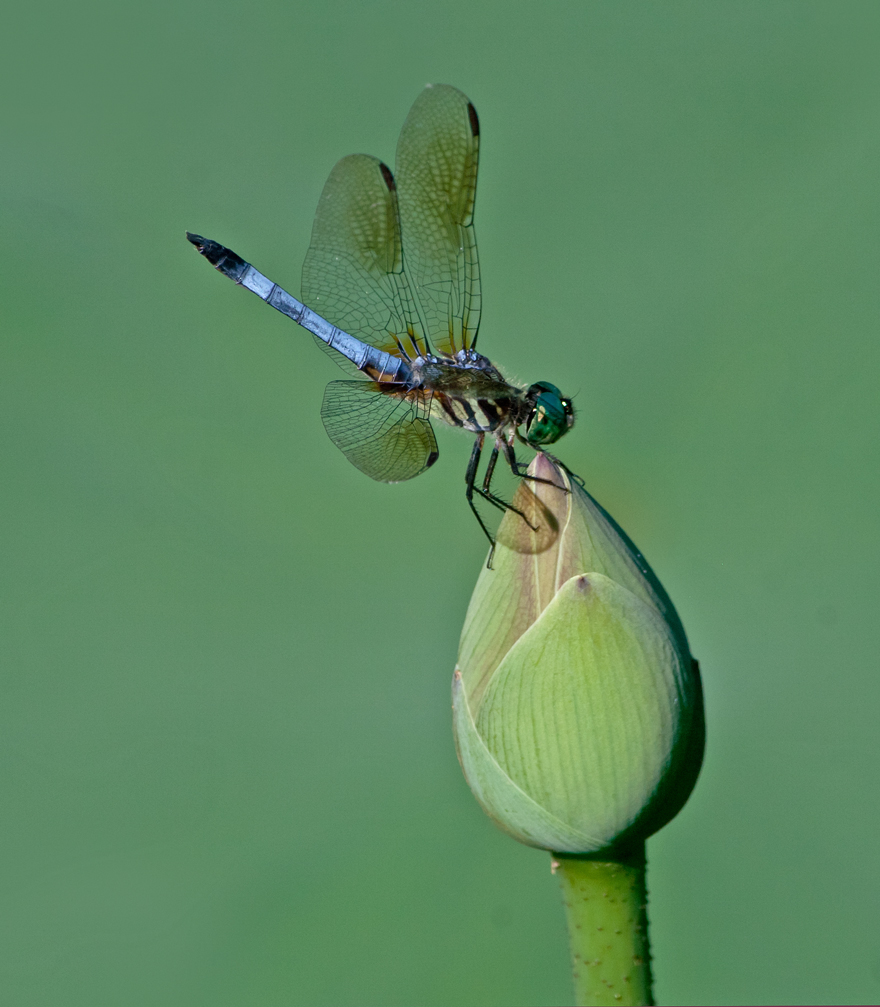
I couldn’t believe my luck when this male Blue Dasher dragonfly (Pachydiplax longipennis) perched on one of the orange lilies at the edge of the pond.

The lily had not yet bloomed, making it a perfect place for the dragonfly to land, and I had positioned myself to take this shot, but I was a little doubtful that a dragonfly would cooperate.

The green of the background complements the blues of the dragonfly, but it is the orange that makes this image pop for me.

I am happy with the image.

lily1_blog© Michael Q. Powell. All rights reserved

Read Full Post »
Last summer I confessed to being obsessed with Red Milkweed Beetles (Tetraopes tetrophthalmus) in one of my postings and initial signs this summer suggest that the fascination remains strong.

This past weekend, I spotted several of my little red friends when visiting Green Spring Gardens, a local county-run historical garden, and I stalked them like a paparazzo, trying to get a good shot. I particularly like this image, in which the beetle is staring down at me from a partially eaten leaf. (I don’t know if it was the one that chewed up the leaf.)

The colors of the photo may suggest Christmas, but I am not sure that there would be much of a market for this as a Christmas card image.

redbug1_blog

© Michael Q. Powell. All rights reserved

Read Full Post »
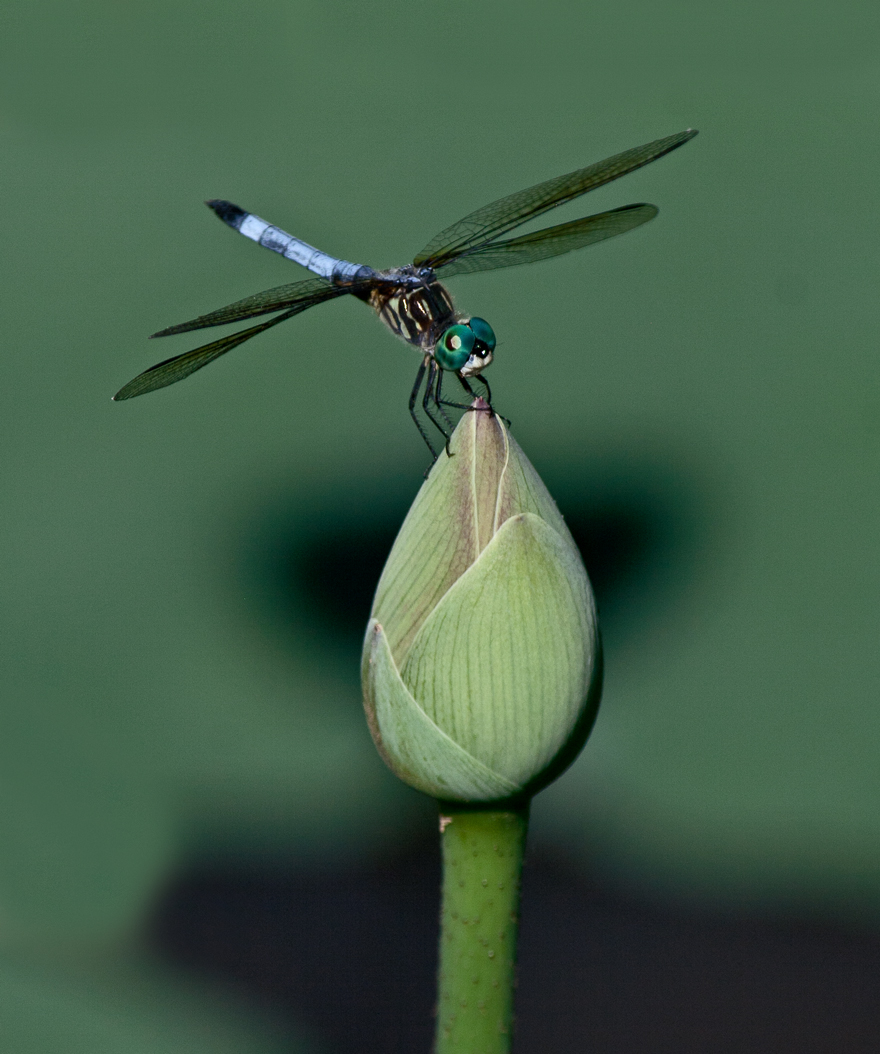
Do you ever have days when you crave solitude, but others just won’t stop bothering you? That may be how this male Blue Dasher dragonfly (Pachydiplax longipennis) felt today, when other dragonflies harassed him from the back and from the front.

behind_blogsuspended_blog© Michael Q. Powell. All rights reserved

Read Full Post »

It was exciting for me to spot a new dragonfly this weekend, a male Widow Skimmer dragonfly (Libellula luctuosa).

I really like the brown and white pattern on the wings, which was distinctive enough that it also helped me in identifying it. According to Bugguide, the species name means sorrowful or mournful, perhaps because the wings of both male and female seem to be draped in mourning crepe.

The weather has turned hot and humid, which is typical for the Washington D.C. area, which seems to be great for the dragonflies, so I’ll be out as often as I can tolerate the heat, searching for new dragonflies to photograph.

brown_white1_blogbrown_white2_blog

© Michael Q. Powell. All rights reserved

Read Full Post »

Some bees seem to be really tidy when they are gathering pollen, but this bee was a total mess, with pollen sticking all over its legs and underside. The bee looks to be some kind of honey bee, although the striped markings on its lower body seem a little unusual.

Often when I am shooting a macro shot, I am so worried about the technical aspects of the shot that I forget that photography is also an art. This image helps remind me that photography remains a creative pursuit, a fusion of art and science.

pollen_1a_blog

© Michael Q. Powell. All rights reserved

Read Full Post »
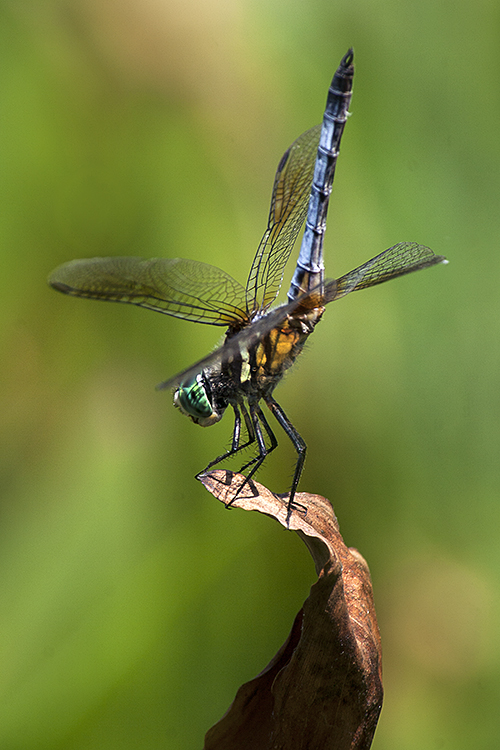
Male Blue Dasher dragonflies (Pachydiplax longipennis) assume this handstand-like position, called the obelisk posture, when they feel threatened or want to minimize exposure to the sun. I was leaning a little closer than normal to this dragonfly, because I had a 100mm lens attached to the camera and not a longer zoom lens, so maybe that caused him to be a little alarmed. As the weather warms up and more dragonflies appear, I am sure that I will be getting a lot more shots of Blue Dashers, which were my favorite dragonflies to photograph last summer.

dasher1a_blog

© Michael Q. Powell. All rights reserved

Read Full Post »

Dragonflies are super-predators, according to a posting today by one of my favorite bloggers, Sue of Back Yard Biology, thanks to their agile flying ability and incredible eyesight, but predators can also become prey. You should check out that posting for a wonderful explanation of dragonflies’ visual acuity and some beautiful dragonfly images.

The Tree Swallow (Tachycineta bicolor) in this photo has captured a male Blue Dasher dragonfly (Pachydiplax longipennis) that appears to be struggling to extricate itself from the grip of the bird. In the second shot, the swallow is offering its prize to its mate, which pokes its head of the nesting box and takes a bite of one of the wings. (If you look carefully at the first shot, you’ll see that it was taken after the second shot and part of one of the dragonfly’s wing seems to have been bitten off.)

Predator or prey? There always seem to be some creature above you on the food chain. It’s no wonder that so many of the birds, animals, and insects are so hyper-vigilant and skittish when we try to take photographs of them—their survival may depend on it.

breakfast1_blogbreakfast2_blog

Michael Q. Powell. All rights reserved

Read Full Post »

Do you have a favorite insect? I realize that’s a strange question and, if pressed, most people would respond with the name of a beautiful butterfly or perhaps a ladybug, but my favorite is a very special katydid.

Last summer, though, I fell in love with a multi-colored grasshopper-like insect called the Handsome Meadow Katydid (Orchelimum pulchellum). I was absolutely thrilled yesterday to encounter and photograph a tiny insect that is almost certainly one a juvenile Handsome Meadow Katydid.

Although its colors are pretty distinctive, it’s the blue eyes that make it really stand out. The eyes really draw me in, even if they do look a little cartoonish.

Each time I visit the marsh, I will now be on the lookout for these insects, which actually grow more handsome as they age. If you want to see what they look like as adults check out my previous postings called Neon-colored grasshopper; More Handsome Meadow Katydids; and Ol’ Blue Eyes is Back.

Be forewarned, though, that you too may fall in love and end up with a new favorite insect.

katy1_blog

Michael Q. Powell. All rights reserved

Read Full Post »

Before going out to the marsh park to shoot this morning, I decided to check out my neighbor’s garden and came across this bumblebee, hanging from the side of a a beautiful Small Globe Thistle (Echinops ritro).

I took some initial shots and then began to wonder if the bee was still alive, because it was not moving at all. When I blew gently on its face, however, it moved a little, so I figure that it was probably just sleeping. I carefully set up my tripod and got as close as my lens would let me get, which caused the bee to fill a substantial part of the frame.

I managed to capture some details that normally I do not see, like the little lines on the antennae and the hairs on the bee’s face. The bee was still sleeping when I departed—I didn’t want to risk the possibility that bees get angry if you wake them up prematurely.

close-up_bee1_blog

Michael Q. Powell. All rights reserved

Read Full Post »

As you walk through certain areas of my local marsh, the air is filled with the fragrance of the wild roses, probably Virginia Roses (Rosa virginiana), which, according to Wikipedia, are native to eastern North America.

I stooped down closer to draw in the perfumed air and my eyes were attracted to the bold pattern of a beetle that was gathering nectar from the flower.  It appears to be a kind of Flower Longhorn beetle,  which I have tentatively identified as a member of the species Strangalia luteicornis. 

Check out the entry in Bugguide, one of my favorite on-line sources of information on insects, if your want additional information on this species.

long_beetle1_blog

Michael Q. Powell. All rights reserved

Read Full Post »

I chased around this beautiful female Eastern Pondhawk dragonfly (Erythemis simplicicollis), hoping in vain that she would land on something more natural-looking than the composite boards of the marsh boardwalk. Several times she took off and circled around a bit, but returned each time to the boardwalk.

Shooting from a high angle, I was able to capture some of the details of the dragonfly that I do not usually see, like the little hooks at the end of the hairy legs. I really like her pose as she seemed to lean toward me, without seeming threatening in any way.

As always, I was struck by the strikingly beautiful emerald color of the females of this species. It’s even more impressive in real life.

green_blog

Michael Q. Powell. All rights reserved

Read Full Post »

Continuing my quixotic quest to photograph dragonflies in flight, I went boldly out into the wild, armed with my trusty 100mm macro lens, and managed to capture this cool image of a dragonfly as it hovered over the water.

In previous attempts, I used longer telephoto zoom lenses, which increased the number of potential subjects but gave only mixed results. Using a shorter, fixed focal-length lens, I had to change my strategy a little and try to get closer to the subject.

I noticed this dragonfly hovering about the water to the side of the boardwalk on which I was walking. I crept as close as I could and tried to shoot as close to straight down as I could (the boardwalk was at least a foot (30 cm) above the level of the water and it looked like the dragonfly was hovering almost level with the boards of the boardwalk). I was really sensitive to my shadow, because I have learned that nothing scares away an insect faster than casting a shadow on it.

I used autofocus and was a little surprised to see that my dragonfly is in pretty clear focus, although the shutter speed was not fast enough to stop the action of  the wings. I shot this handheld and really tried to pay attention to my technique, because my macro lens does not have any built-in image stabilization. As I thought about it afterwards, I realized that the auto focusing on the macro lens (using what Canon calls an ultrasonic motor) is much faster and better than the focusing on my Canon 55-250 or my Sigma 135-400mm zoom lens.

I have been having some difficulties identifying this dragonfly. The coloration of the tail looks a little like a female Blue Dasher, but the beautiful blue eyes do not seem right for the female. The tip of the tail should be a help, but I can’t seem to find one that matches it.

Although I can’t identify the dragonfly, it’s my best shot to date of a dragonfly in flight and I’m pretty content with it today, though my quixotic quest is likely to continue this weekend.

hover1_blog

Michael Q. Powell. All rights reserved

Read Full Post »
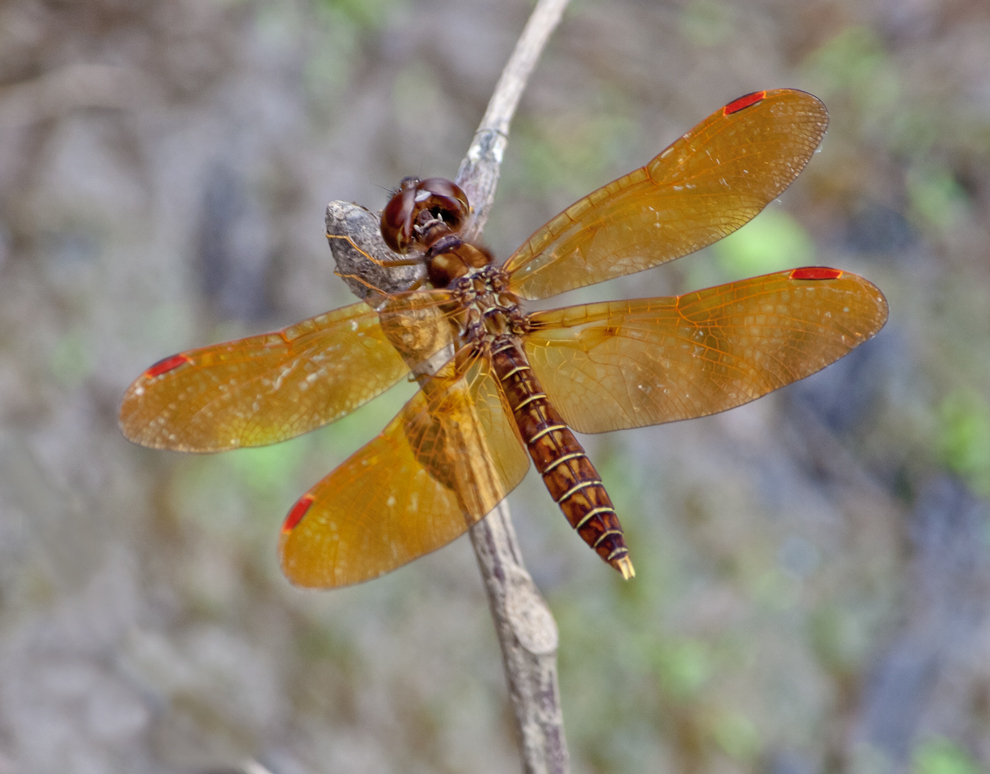
As I was checking out the cattails that are growing like crazy at my local marsh, I spotted this little beetle chewing on the soft insides of a broken cattail.  I immediately recognized him as a Spotted Cucumber beetle (Diabrotica undecimpunctata), a species that I encountered numerous times last summer when photographing flowers.

I really like the texture of the immature cattail, both on the outside as well as on the inside, and the bold design of the beetle.  I think that those elements and the varied shades of green make for a cool, graphic image.

cucumber1_blog

Michael Q. Powell. All rights reserved

Read Full Post »

One of the first rules of photography that I learned was the importance of keeping a subject’s eye in focus and I managed to accomplish that with this bee that I photographed yesterday. However, the depth of field turned out to be so shallow that only a few other parts of the bee are as precisely focused as the eye.

I was hand-holding my macro lens, which is not image-stabilized, and the sky was overcast, so I had to open up the aperture and keep the shutter speed fairly high to get a decent shot (f/6.3, 1/100 sec, ISO400). The bee was moving all around a patch of lavender in a neighbor’s garden, gathering nectar with its tongue, which is visible in the photo.

I stalked the bee for quite a while and a lot of my shots turned out to be blurry, but I ended up with a few that were ok. This is my favorite of the bunch and I think that the shallow depth of field, which is a shortcoming in many situations, is the primary reason that I like it.

lavender1_blog

Michael Q. Powell. All rights reserved

Read Full Post »
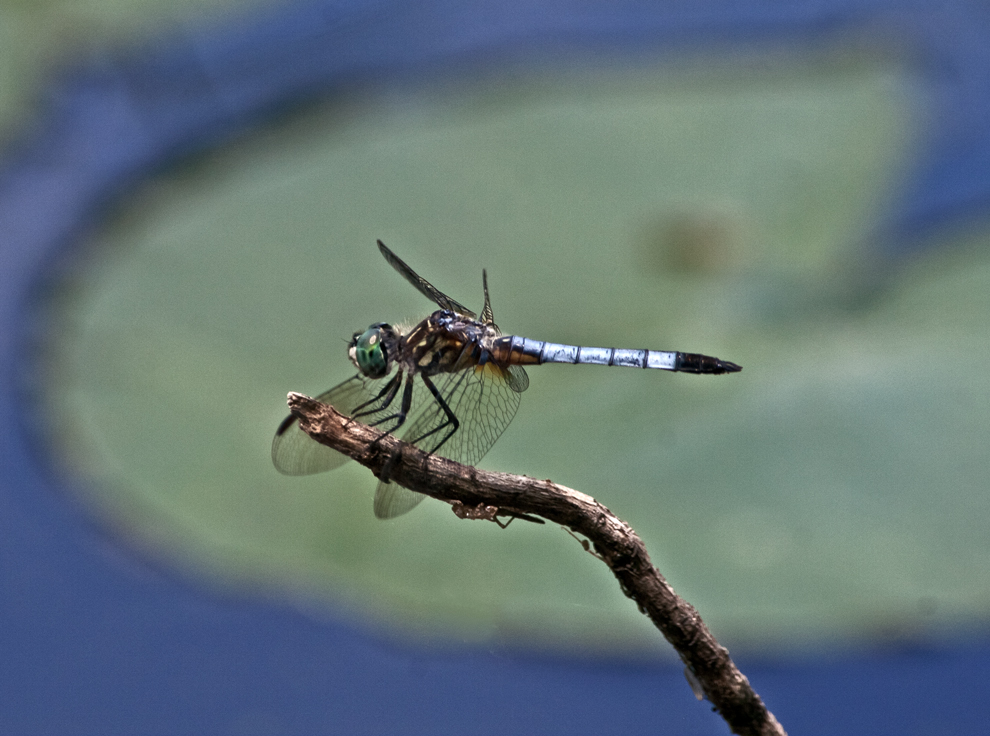
When an unfamiliar dragonfly zoomed by me, one of my fellow photographers told me it was a unicorn, at least that is what I thought he said.

Sometimes when I am concentrating on a shot, I shut out my surroundings and I had had to ask him to explain his comment. It turns out that he said that it was a Unicorn Clubtail dragonfly (Arigomphus villosipes), a type that he had rarely seen in our local marsh.

I extended my 135-400mm zoom to almost maximum range and it still was tough to get a clear shot. The dragonfly flew off and returned to his perch a couple of times, but the log on which he posed was so far away that my shot doesn’t permit me to say with great certainty that it is a Unicorn Clubtail. It is clear, though, that it not a Common Whitetail or Blue Dasher, the two types of dragonflies that I see most often.

Overall, I like the effect of the triple view of the dragonfly—the dragonfly, its shadow on the log, and its reflection in the water, which, for me, helps to compensate for the softness of the focus.

unicorn_blog

Michael Q. Powell. All rights reserved

Read Full Post »
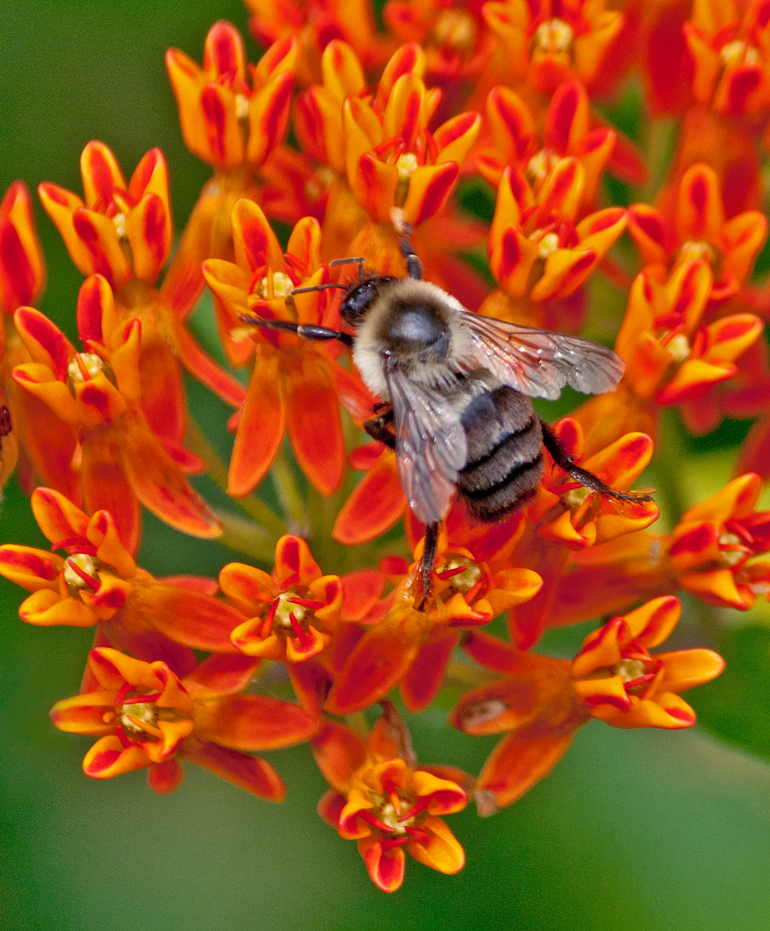
As we move through spring, I am finally starting to see more hover flies and bees, busily at work collecting food and pollinating the flowers.

The insect in the first photo is, I believe, an American Hover Fly (Eupeodes americanus). A year ago, I would almost certainly have called it a bee, but I have learned a lot about insects since then, thanks to my photography.

The second photo feature a beautiful variegated flower and what looks to be a honey bee, though it’s a little difficult to make a positive identification, because of the angle.

It’s early in the season, so I am having to recall some lessons from last year, like the need to pay attention to my distance. In my desire to get closer, I have already managed a few times to bump the flower and scare off the bee, forgetting that the lens hood on my macro lens is pretty big.

hover1_blogbee1_blog

Michael Q. Powell. All rights reserved

Read Full Post »

This past weekend I chased around this little butterfly—which I think may be a Summer Azure butterfly (Celastrina neglecta)—for quite some time until it finally landed.

This butterfly was really tiny, with a wing span of only about an inch (2.5 cm), so it was hard to get close enough to get a decent shot without spooking it. It took flight a couple of times, but landed nearby so I could continue the hunt.

It is always fun to photography the larger, more colorful butterflies like the Eastern Swallowtail or the Monarch, but I find that these little butterflies have a simple beautiful of their own.

little_white1_blog

Michael Q. Powell. All rights reserved

Read Full Post »

« Newer Posts - Older Posts »