Feeds:
Posts
Comments

Archive for the ‘Insects’ Category

Is photography an art or a science? One of the reasons why I enjoy photography so much is that it engages me on both levels—it speaks to my inner artist and to my inner geek.

Growing up, I remember watching Olympic figure skating and I was struck by the fact that the skaters received two sets of scores, one for “artistic impression” and one for “technical merit.” In many ways, I use a similar internal scoring system for my photographs.

Some of my photographs rate high on one scale, but fall short on the other. Every now and then, though, one of my images stands out, with high marks all around, like this shot of a Hummingbird Clearwing Moth (Hemaris thysbe).

I posted an earlier photo of this remarkable insect and I thought it was really cool that I was able to get a close-up with the wings open and frozen in action, a somewhat impressive technical feat. This image, shot from a bit farther away, gives a better view of the moth in action and is a more interesting pose. The background, which I recall was evergreen bushes, is uncluttered. Even the flower cooperated by following the “odd rule” of composition, with three clusters of tiny flowers.

It’s hard to be objective when analyzing my own work, but I know that I like this image a lot.

clearwing2_blog

© Michael Q. Powell. All rights reserved

Read Full Post »

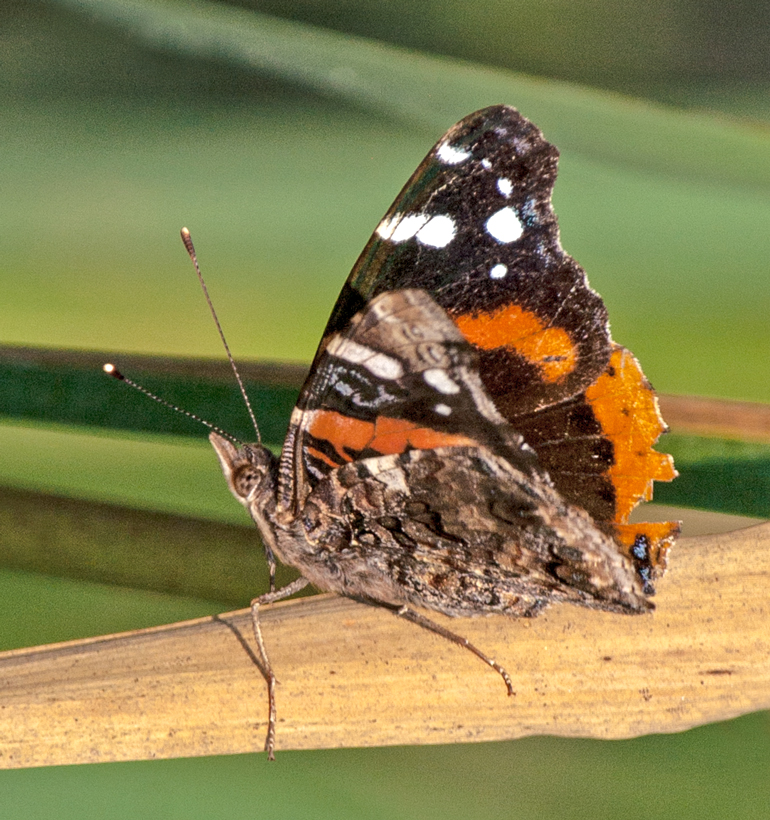
I am finally starting to see more butterflies, like this Red Admiral butterfly (Vanessa atalanta) that I spotted recently in the cattails at my local marsh.

It seems like we had a slow start this year with butterflies compared with last year and I had been fearful that I would not be treated to their colorful displays that I enjoy so much. Gradually my concerns are disappearing as I see different varieties appear and I am happy that I can even identify some of them.

Sharp-eyed readers might notice that something does not look quite right with this photo. I rotated the image ninety degrees, because I found myself cocking my head when the butterfly was pointing downward.

admiral_blog

© Michael Q. Powell. All rights reserved

Read Full Post »

Have you noticed that I really like purple water lilies? I was so struck by their beauty the first time that I saw one last year that a purple water lily appears at the top of my blog most of the time.

Earlier this week, as I was visiting Brookside Gardens in Wheaton, Maryland,  I came across an area in which two types of purple, tropical water lilies were growing. My photography mentor, Cindy Dyer, always recommends photographing the little signs that identify flowers and other plants and these water lilies were called “Panama Pacific” and “Blue Beauty.”

As I was photographing one of the waterlilies—I think it was a Panama Pacific—a bee dove headfirst into the center of the flower. Even before the bee arrived, I had noticed that the center of the water lily seemed to be glowing and that was what I was trying to capture by underexposing the shot. If you click on the photo, you can see a higher resolution view of the image, which shows an almost three-dimensional view of the flower’s center.

diving_blog© Michael Q. Powell. All rights reserved

Read Full Post »

Yesterday was my first chance to try out my new lens, a Tamron 180mm macro, and I managed to get some shots of a Hummingbird Clearwing Moth (Hemaris thysbe) at Brookside Gardens in Wheaton, Maryland.

Clearwing1_blog

This was my first encounter with this moth, which I have admired in the photos of others, and I took a lot of photos of it, using a variety of settings. I think that I got my best shots when I set the ISO to 800 and underexposed a bit, which kept the shutter speed up pretty high, although the images are a little grainy. I still have a lot of photos to go through, so don’t be surprised if I come up with an even better image to post. However, I am so happy with this image that I want to share my excitement.

I had previously used the Nikon version of this lens with a friend’s camera and was impressed enough that I eventually decided to get one for my Canon. The lens does not have any built-in image stabilization, so it probably gives optimal results when used on a tripod or when there is a lot of light. However, I was impatient to use it, so I shot handheld when shooting this moth and probably need to work a bit more on my technique for steadier shooting.

I am pretty sure that I’ll be posting many more macro shots from this lens in the future—I plan on having a lot of fun with it.

© Michael Q. Powell. All rights reserved

Read Full Post »

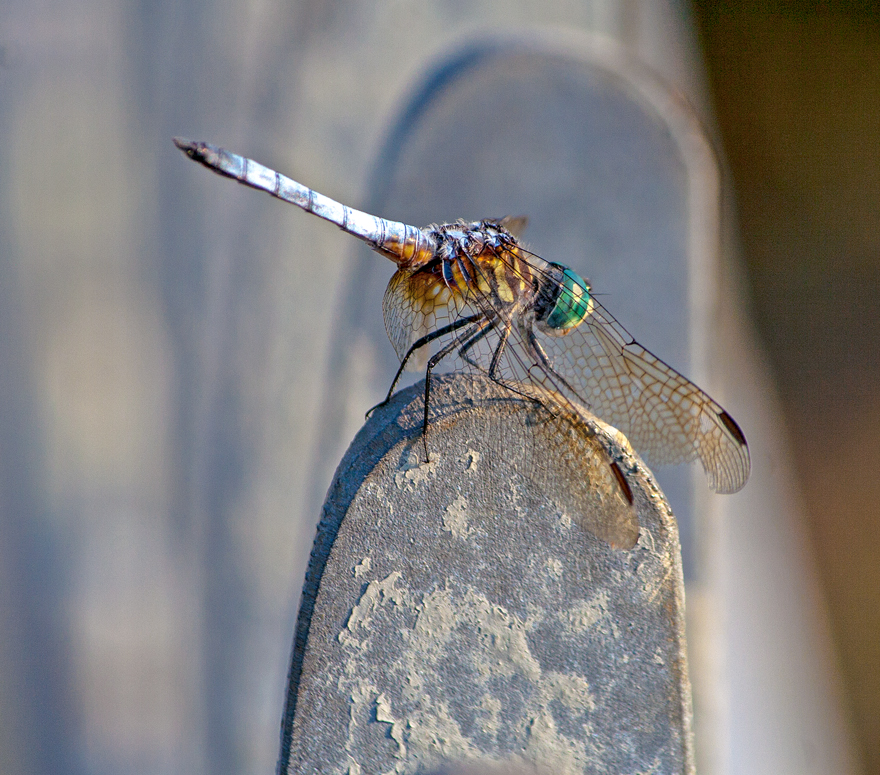
What do you do when the wildlife subject that you are attempting to photograph puts itself in a man-made setting, rather than a more natural environment? That was my dilemma when a Blue Dasher dragonfly (Pachydiplax longipennis) landed on one of the slats of a railing surrounding part of the boardwalk at Huntley Meadows Park, the local marshland where I take a lot of my photographs.

As I looked down the railing at the dragonfly, my eye was attracted to the repeating pattern of the slats, and I decided to try a creative approach to an image using that pattern. I chose camera settings that would give me a relatively shallow depth of field. Then I carefully composed the shot so that some other slats would appear in the background in a blurry form, but the one on which the dragonfly perched would be in sharp focus.

Although I generally prefer a more natural setting for my wildlife subjects, I think I managed to achieve a pretty cool effect that was relatively close to what I had in mind. I especially like the detail that I was able to capture of the weathered metal slat in the foreground (click on the photo to see a higher resolution view).

railing_blog

© Michael Q. Powell. All rights reserved

Read Full Post »

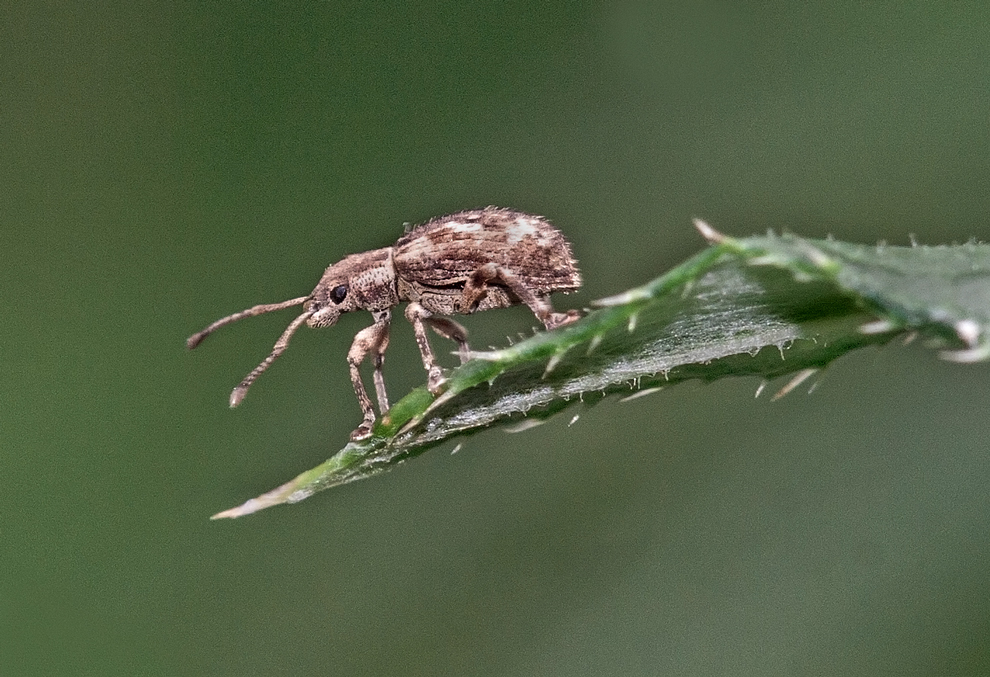
Last week, I stalked this little insect in my neighbors’ garden, trying hard to get a decent image of it with my 100mm macro lens. When it paused at the end of a leaf, I was able to get this shot, capturing some of the details of its body, which looks like a miniature dinosaur to me. Click on the photo to see some more details of the skin/shell of this little creature.

Normally I try to identify an insect before I post its photo, but in this case I am having trouble figuring out what it is. Perhaps one of my readers can help in identifying it.

Life_on_edge_blog

© Michael Q. Powell. All rights reserved

Read Full Post »

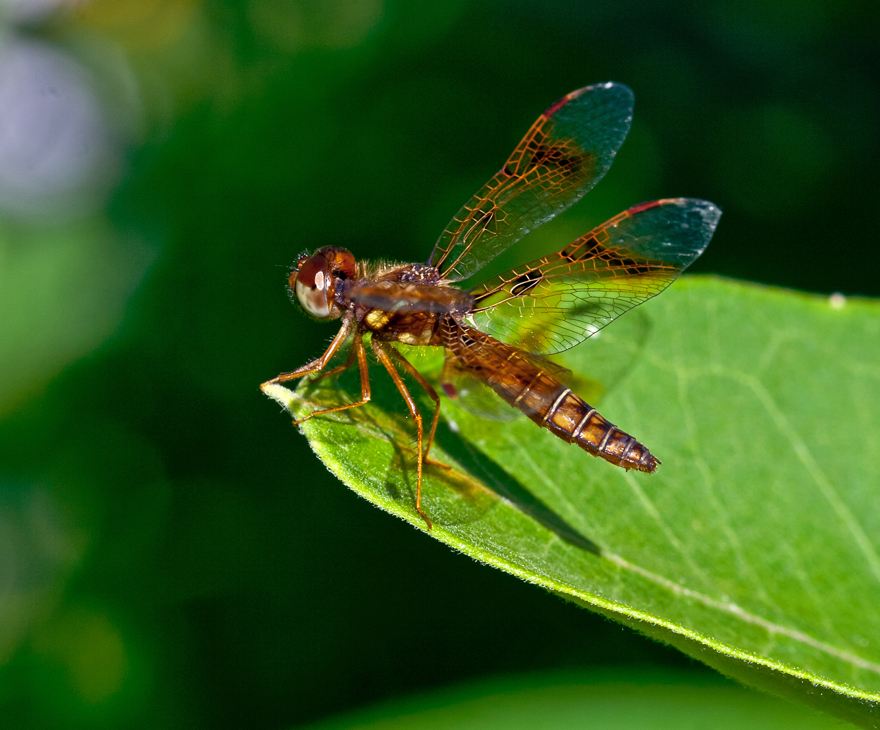
Only a tiny, lightweight dragonfly, like this Eastern Amberwing (Perithemis tenera), could assume this pose and hold it for an extended period of time. I have watched other dragonflies land near the end of a leaf like this, but gravity forced them to quickly give up their perch.

I was able to take a lot of photos of this dragonfly and this is one of my favorites, because its abdomen is raised, its wings are spread, and its head is cocked a little to the side—a near perfect pose.

amber_grass_blog

© Michael Q. Powell. All rights reserved

Read Full Post »

As I was photographing sunflowers this past weekend, I came across this Dogbane Beetle (Chrysochus auratus), peering over the edge of a leaf. I can not confirm if it was responsible for the hole in the leaf, but I do like the way that the hole looks in the photo.

I took this shot at the minimum focusing distance of my 55-250mm telephoto zoom (3.6 feet (1.1 m), even though it looks like it was photographed with a macro lens. Often when shooting nature shots, I’ve found it best to make do with the lens that is on the camera at that moment, rather than risk losing the shot by changing to the best lens for the situation.

Dogbane Beetle lorez

© Michael Q. Powell. All rights reserved

Read Full Post »

Every time that I look at a dragonfly head-on, I can’t help but think of the biplanes of World War I, like the Sopwith Camel that Snoopy famously imagined piloting in his battles with the Red Baron.

Considering the colors of this Needham’s Skimmer dragonfly (Libellula needhami), I guess that he would have to represent the Red Baron, not Snoopy. Aerial dogfights are not without danger, and it looks like this dragonfly has survived several encounters with the enemy, with all of his wings showing some damage.

red_dragonfly_headon_blog© Michael Q. Powell. All rights reserved

Read Full Post »

I was out yesterday on a trip to photograph sunflowers, but couldn’t resist capturing images of insects that my fellow photographers and I discovered, like this beetle—probably a blister beetle—on a chicory flower.

chicory_bugA_blog

In many ways this image was part of an experiment for me. I was using a camera that is new to me, a used Canon 50D that I recently purchased, and this was my test run with it. The Canon 50D is several years old and is far from the bleeding edge of technology, it’s a considerable step up from my Canon Rebel XT. I also was trying to shoot macro-like photos with a telephoto zoom, because my macro lens has been acting up and is now on its way to Canon for repair. Finally, I jumped a couple of versions of Photoshop Elements and discovered today that the interface has changed considerably between versions 9 and 11, so it was interesting trying to work on this image.

Once I get the hang of my new camera and new software, I’m hoping to improve that you’ll be able to see some improvement in the quality of my images.


© Michael Q. Powell. All rights reserved

Read Full Post »

How many kinds of black swallowtail butterflies can there possibly be? Until yesterday, the only black swallowtail that I had ever encountered was the black variant of the female Eastern Tiger Swallowtail. (Check out my posting from last year to see the two variants of the female Eastern Tiger Swallowtail, a characteristic known as dimorphism.)

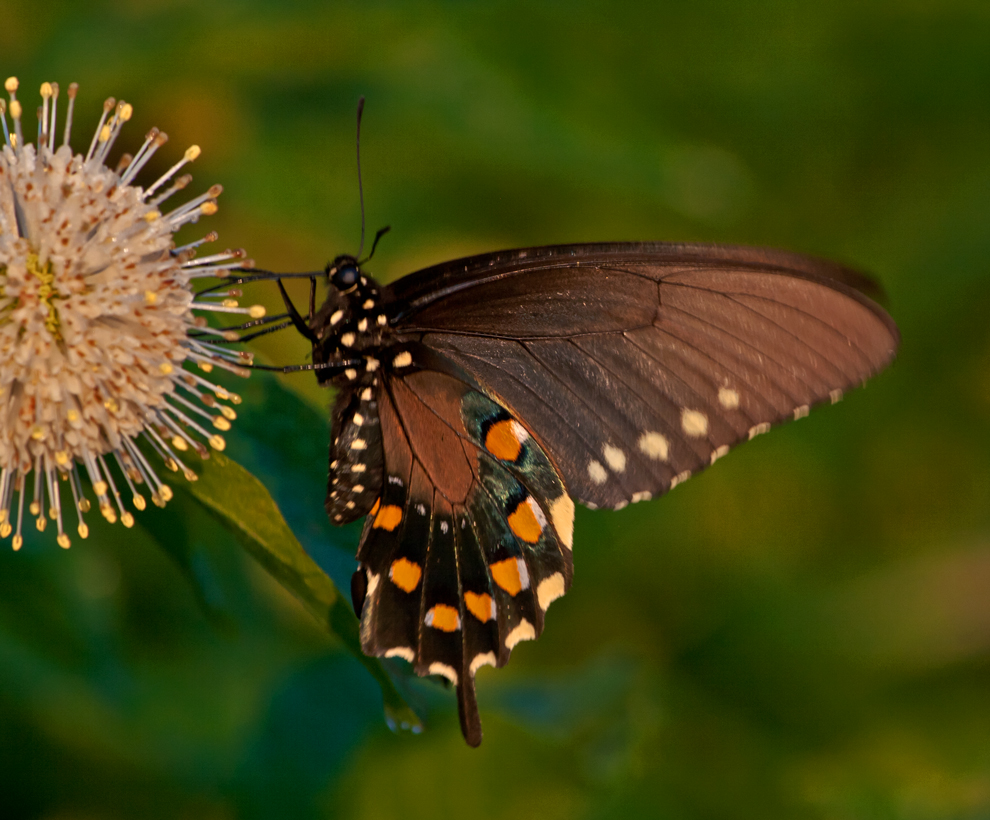
Yesterday, while walking along the boardwalk at my local marshland park, I came across a black butterfly feeding on a Buttonbush. Clearly it was a swallowtail and it was equally obvious that it was not an Eastern Tiger Swallowtail. I remembered that there was another black swallowtail called a Spicebush, so I figured that was what it had to be. When I checked out the photos of the Spicebush Swallowtail on-line, though, none of them seemed to match my butterfly exactly.

It was only today, when I was looking through photos with my photograph mentor, Cindy Dyer, that I realized that there was yet another black swallowtail and have concluded that the unknown butterfly is almost certainly a Pipevine Swallowtail butterfly (Battus philenor). It looks a lot like the Spicesbush, but the pattern of the orange dots are different, as pointed out in this posting by Don Lambert on the Earth Science Picture of the Day blog.

pipevine1_blogpipevine2_blog

© Michael Q. Powell. All rights reserved

Read Full Post »

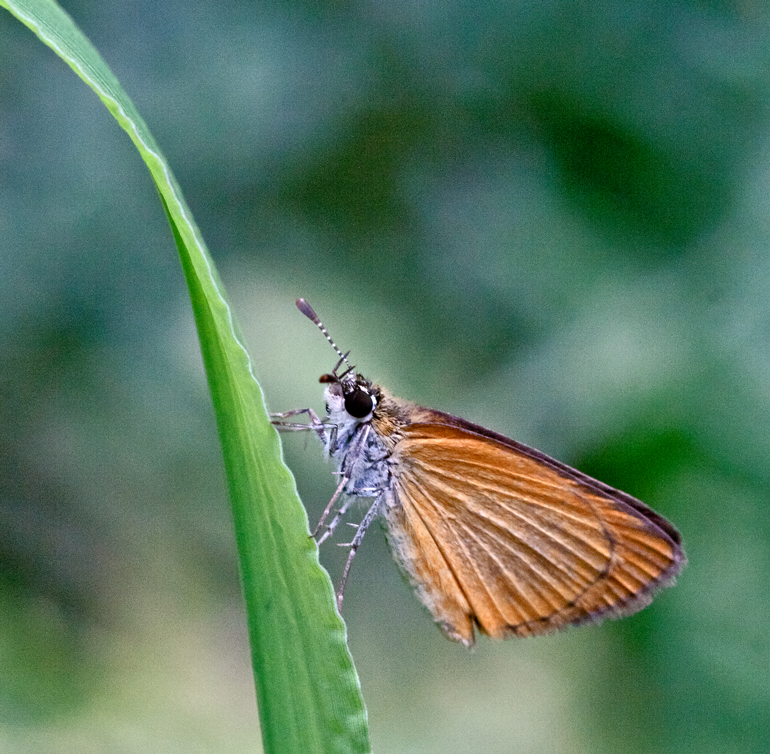
Although I enjoy chasing after large, colorful insects, I also will try to get shots of the smaller ones too, like this tiny butterfly that I think is a Least Skipper (Ancyloxypha numitor). Somehow this little butterfly struck me as having an attitude—maybe it’s because it looks like he is wearing a pair of Ray-Ban aviator sunglasses, like an insect Tom Cruise.

tiny_orange_blog

© Michael Q. Powell. All rights reserved

Read Full Post »

All of the photos that I have posted this year of the Eastern Pondhawk dragonfly (Erythemis simplicicollis) have been of females, which are a beautiful emerald green, but I think that you will agree that the male in this photo is equally stunning. I love the mixture of blue and green on its body and was particularly happy to capture this one perched on a colorful flower.

This is a shot from couple of weeks ago, when I was able to borrow my friend’s Nikon D7000 and Tamron 180mm macro lens for a little while while we were shooting at Kenilworth Aquatic Gardens in the District of Columbia. Every time that I look over the images that I shot, I am impressed by the results that I was able to achieve with a “foreign” camera—normally I shoot with a Canon.

Pondhawk lorez

© Michael Q. Powell. All rights reserved

Read Full Post »

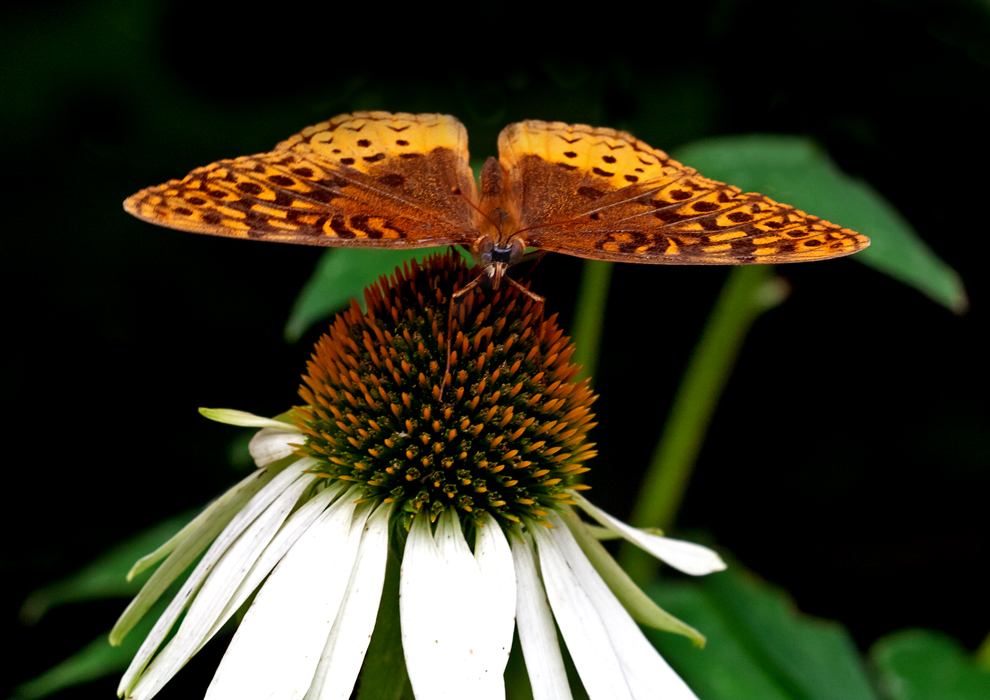
This Great Spangled Fritillary butterfly (Speyeria cybele) was so cooperative that I was able to get amazingly close to it with my 100mm macro lens and photograph it from some unusual angles.

This is the third (and final) posting from this session with the Fritilary (I love saying the butterfly’s name) and I realize that I have moved in a kind of progression. My first posting showed the butterfly from a “normal” perspective. Then I shifted to a somewhat unusual perspective in the second posting by shooting from below the butterfly.

In these final shots, I tried to get eye-to-eye with the fritillary. In the first image, I was almost directly over the butterfly and managed to capture some wonderful details. Who knew the butterfly would be so hairy? In the second shot, I tried to put myself on the same level as the Fritillary as it got nectar from a beautiful white cone flower. If you want to see the photos in greater resolution, click on the images.

fritillary5A_blogfritillary6_blog

© Michael Q. Powell. All rights reserved

Read Full Post »

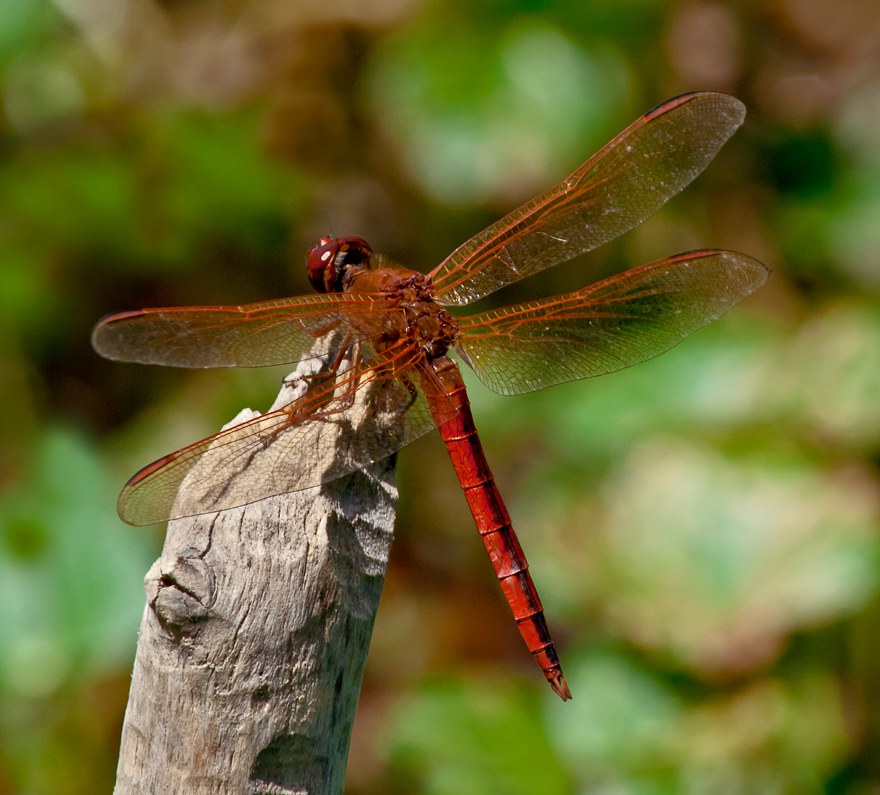
It’s unusual for me to see a red dragonfly, so yesterday I chased around several of them and have concluded that they are probably Needham’s Skimmer dragonflies (Libellula needhami), a species that I have never before encountered.

In addition to the red-orange bodies, these dragonflies have reddish-brown veins in their wings, which make them very striking. There is another species, Golden-winged skimmers (Libellula auripennis), that is supposed to look like the Needham’s Skimmers, so I may be off in my identification—I will leave the final call to experts.

I’m keeping my eyes open and hope that I’ll be able to find a few more species that are new to me before the summer ends, though it’s tough right now to go outdoors with temperatures in the daytime around 95 degrees F (35 degrees C) and very humid.

red_dragonfly2_blog

© Michael Q. Powell. All rights reserved

Read Full Post »

I am always amazed that butterflies can fly with wings that are severely damaged. This morning I encountered this beautiful female Eastern Tiger Swallowtail butterfly (Papilio glaucus) that had suffered some major damage to the area where the wings attach to the body. Despite the tears to the wings, the butterfly seemed unhindered in its flight and was busily at work, flying from bush to bush.

wounded_blog

© Michael Q. Powell. All rights reserved

Read Full Post »

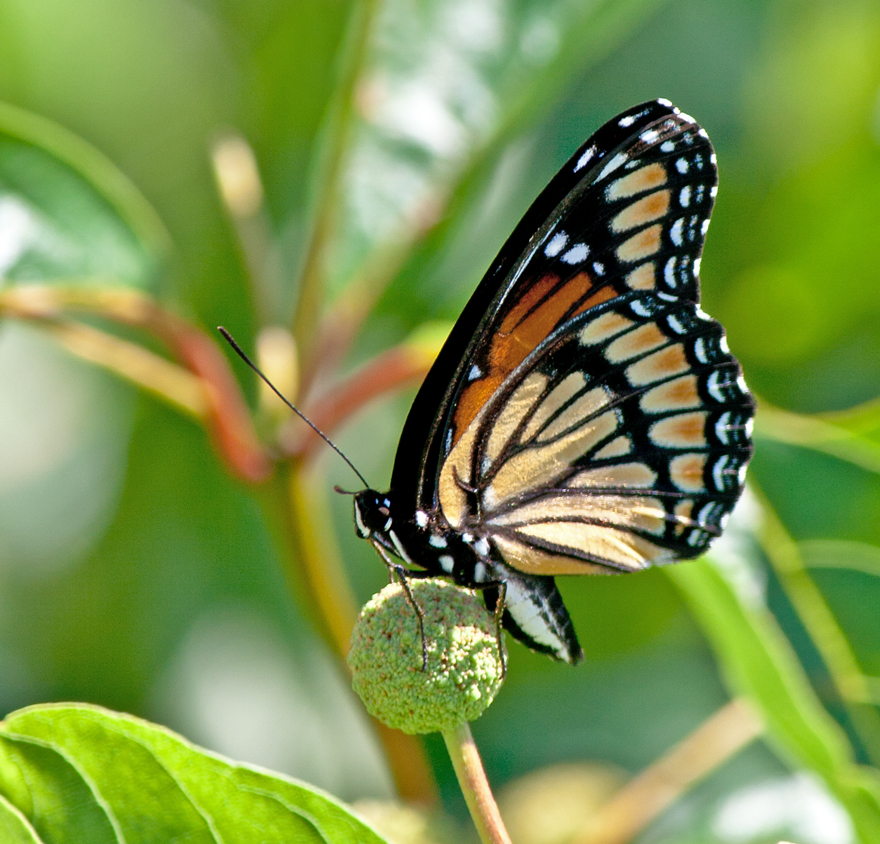
I haven’t seen a huge number of butterflies this summer, so I was happy to see a colorful butterfly this past weekend, which I believe is a Monarch butterfly (Danaus plexippus).

UPDATE: My tentative identification as a Monarch was not correct. Thanks to Jeremy Sell at The Life of Your Time for his help in identifying this as a Viceroy butterfly (Limenitis archippus archippus).

monarch_blog

© Michael Q. Powell. All rights reserved

Read Full Post »

It was fun chasing this Great Spangled Fritillary butterfly (Speyeria cybele) around my neighbors’ garden as it moved from flower to flower. I tried to capture it from different perspectives and got some artsy looking shots that I really like.

fritillary1_blog

fritillary3_blog

© Michael Q. Powell. All rights reserved

Read Full Post »

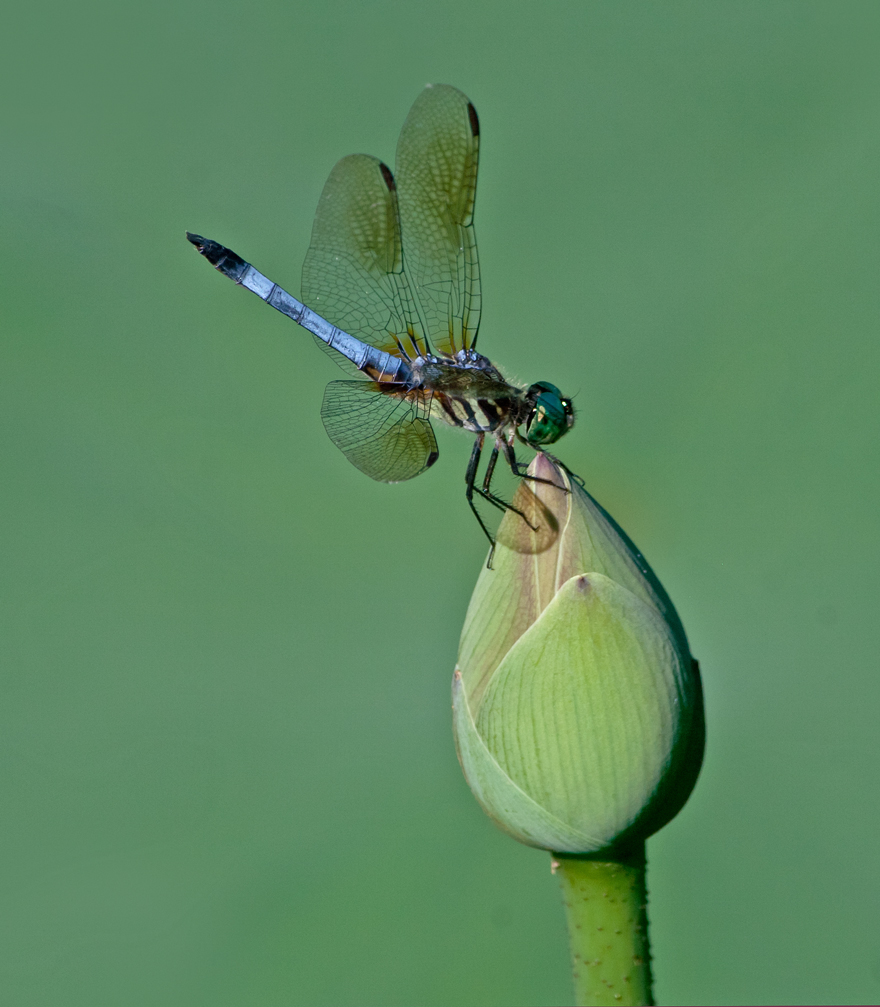
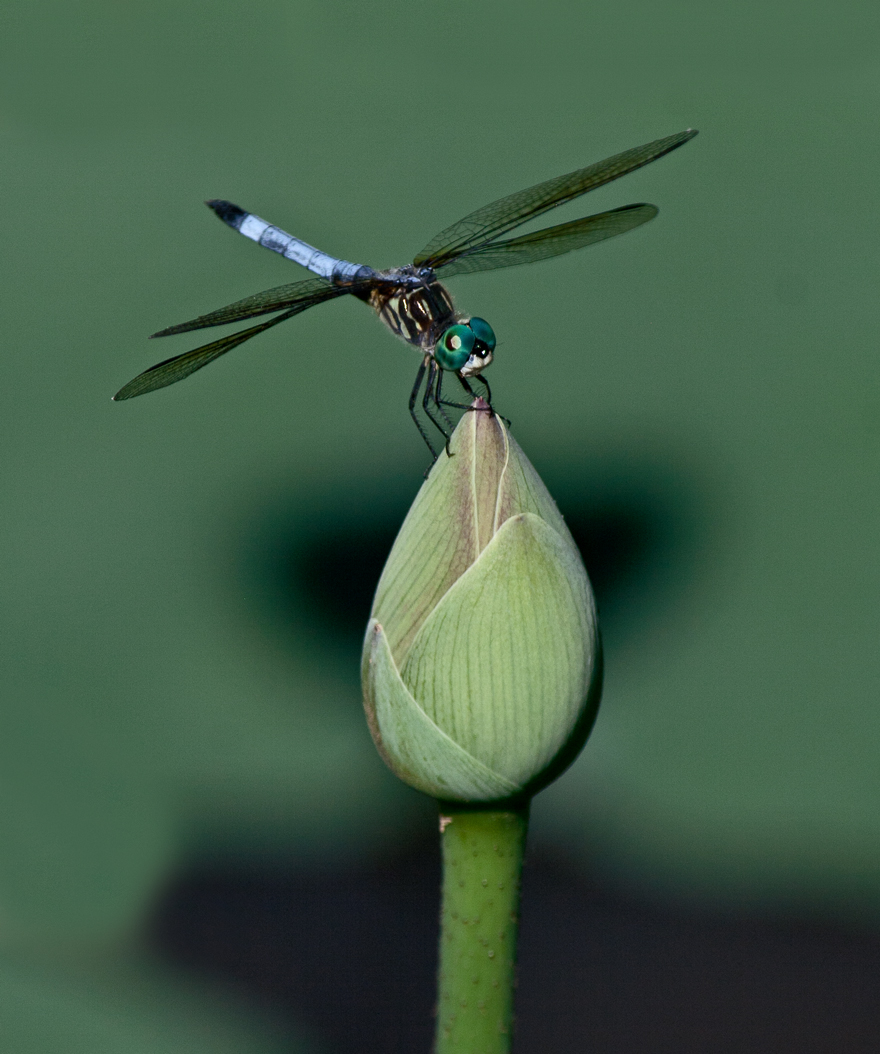
Having spotted some lotus flower buds at the aquatic garden last weekend, I remember thinking how cool it would be to see a dragonfly perching  on a lotus bud and then it happened—a male Blue Dasher dragonfly (Pachydiplax longipennis) landed on the tip of one of the buds.

When stalking dragonflies, I always hope that they will choose a photogenic perch, but most of the time the perches are nondescript, at best, and the background is often cluttered.

I would like to claim that I have special powers as a dragonfly whisper, but I was unusually fortunate and am happy that I was able to get some good photos when the circumstances presented themselves.

lotus_bud2_blog

lotus_bud_blog© Michael Q. Powell. All rights reserved

Read Full Post »

I continue to be amazed at the insects that visit my neighbors’ garden and yesterday I was thrilled to see this Great Spangled Fritillary butterfly (Speyeria cybele). The beautiful butterfly moved around a lot among the flowers and even returned after flying away, which gave me time to change lenses.

I took this shot of the butterfly on a cone flower with my 100mm macro lens. I wanted take the photograph at eye-level with the butterfly, but initially the background was too cluttered and there was too much light coming from the back, which caused the butterfly to be shadowy.  I decided to use my pop-up flash, suspecting that the background would go black and the detail of the butterfly would be revealed, which is what happened.

The result looks a little bit artificial, but I like the effect that I managed to achieve. I am working on a couple more images of the butterfly taken in natural light, so you may see it again soon.

fritillary2_crop_blog

© Michael Q. Powell. All rights reserved

Read Full Post »

I love the coloration of this male Slaty Skimmer dragonfly (Libellula incesta) that I photographed last weekend at Kenilworth Aquatic Gardens in the District of Columbia.  Somehow I was able to get both an interesting perch and a blurred background—all too often I get one or the other.

Black Dragonfly lorezB

© Michael Q. Powell. All rights reserved

Read Full Post »

When I first spotted this dragonfly, I thought it was a wasp—it was that small. As I continued to observe it, however, I realized that it was a tiny dragonfly.

Its wings reminded me a little of a Halloween Pennant dragonfly (Celithemis eponina), one of the most exotic-looking dragonflies that I have ever photographed, but it was far too small. (Check out this previous posting for a look at the Halloween Pennant.)

This dragonfly seemed even smaller than the Eastern Amberwing dragonfly (Perithemis tenera), the smallest dragonfly that I had encountered, and I figured it couldn’t be an Eastern Amberwing, because it did not have amber wings. I was wrong. Once again I had allowed myself to be misled by the name of a species. It turns out that this is almost certainly a female Eastern Amberwing, and females have clear wings with brown spots, not amber wings.

I continue to be amazed at the dragonfly’s diminutive size. According to the Field Station at the University of Wisconsin at Milwaukee, Eastern Amberwings are considered to be wasp mimics, because of their coloring, their rapid, erratic flight, and the way they twitch their wings and abdomens when at rest. The Latin name tenera means “tender” or “delicate,” a description that seems to fit this little dragonfly quite well. If you want to learn more about the Eastern Amberwing, you should check out the Field Station website.

Large or small, at rest or in motion, dragonflies are one of my favorite photographic subjects at this time of the year. Their beautiful colors and incredible agility never cease to amaze me.

tiny1_blog

© Michael Q. Powell. All rights reserved

Read Full Post »

During my trip last weekend to Kenilworth Aquatic Gardens, I used a Nikon D7000 with a Tamron 180mm macro lens to take some shots while my fellow photographer, Cindy Dyer, relaxed in the shade on a hot, steamy day.

I use a Canon, so it was not immediately obvious to me where the controls were for various functions on the Nikon.  I didn’t really have much time to poke around in the menus, so I just shot. I knew that the camera was set for aperture priority, but I didn’t realize until later that it was set at f/20.  What that meant was that the two shots that I am posting here were shot at 1/100 and 1/80 of a second respectively. I am a little surprised that they came out relatively sharp, because the Tamron lens is pretty heavy and is not a VR lens.

The subject matter is pretty familiar for folks who follow my blog—a Cabbage White butterfly (Pieris rapae) and a Blue Dasher dragonfly (Pachydiplax longipennis). I like the way that both images turned out, with beautiful backgrounds.

Did the Nikon set-up make a difference? It was nice shooting with a camera with a bigger and brighter viewfinder than my Canon Rebel XT, but that is more a function of shooting with a much newer camera. What was especially nice, though, was shooting with a 180mm macro lens. The lens felt comfortable and gave sharp results, even if focusing was a bit slow when it had to move through the full range in autofocus mode.

I probably am not ready to go over to the dark side and embrace a Nikon—in my experience it seemed that the Nikon was different from my Canon, but not necessarily better. I may consider, however, the Tamron 180mm macro lens. I love my Canon 100mm macro lens, but sometimes it would be nice to have that little extra reach and still be able to get true macro results.
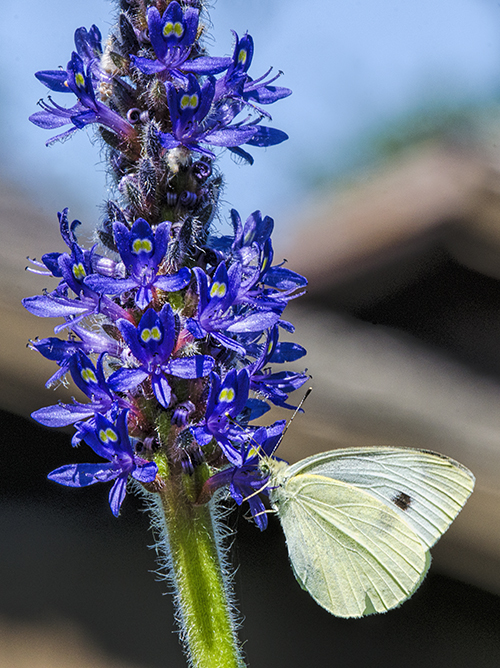
Cabbage White lorezBlue Dasher lorez

© Michael Q. Powell. All rights reserved

Read Full Post »

It was bound to happen. No more than I few days ago I lamented that I had never seen a dragonfly eating, in responding to a wonderful posting by Sue of Backyard Biology about dragonflies as super predators—you should check out her posting, unless you are squeamish about things like headless dragonflies.

Sure enough, this past weekend I was able to get some photos of a female Eastern Pondhawk dragonfly (Erythemis simplicicollis) with a bee that she had captured. Initially, I was just trying to get a photo of the beautiful emerald-colored dragonfly on the plant in the second photo. I didn’t even realize that she was cuddling a bee in her front legs, almost like a little baby.

Eventually she flew down from the plant to the edge of the boardwalk to enjoy her meal and I got the first shot. I had to lean over the edge of the boardwalk to get the photo and just barely avoided falling into the bushes below.

My usual experience is that I am so excited about photographing a subject the first time that I not very concerned about the quality of the images. I will keep my eyes open and hope to capture some more images of dragonflies feeding.

dragonfly_bee1_blogdragon_bee2_blog

© Michael Q. Powell. All rights reserved

Read Full Post »

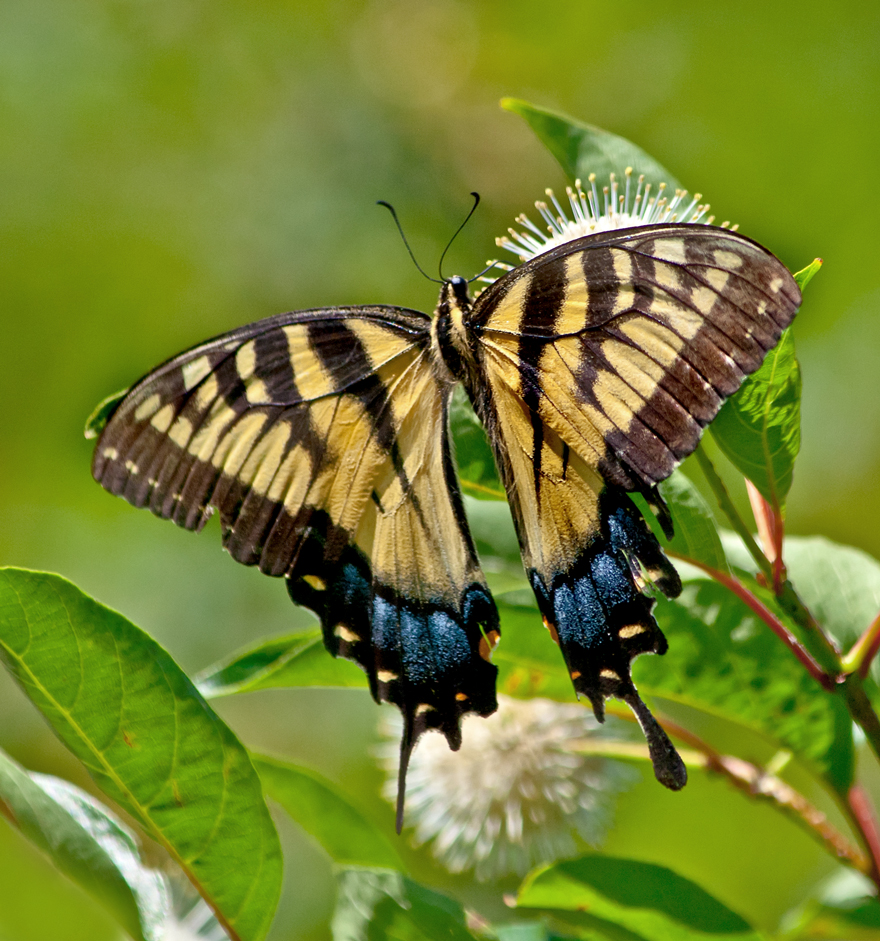
I have not yet seen many colorful butterflies this summer, so I was thrilled this past weekend when I observed a female Eastern Tiger Swallowtail butterfly (Papilio glaucus) feeding on a Buttonbush (Cephalanthus occidentalis) and managed to get a couple of good shots.

The first image has a dreamy quality and a softness that I like, with a background that is almost pastel. The body of the butterfly is clearly visible, with its proboscis fully extended.

In the second shot, the colors are more vivid and the butterfly’s head is obscured. However, the wings are open wide and in a beautiful position.

My favorite is the first one. Is there one that you prefer?

swallowtail_blogswallowtail2_blog

© Michael Q. Powell. All rights reserved

Read Full Post »

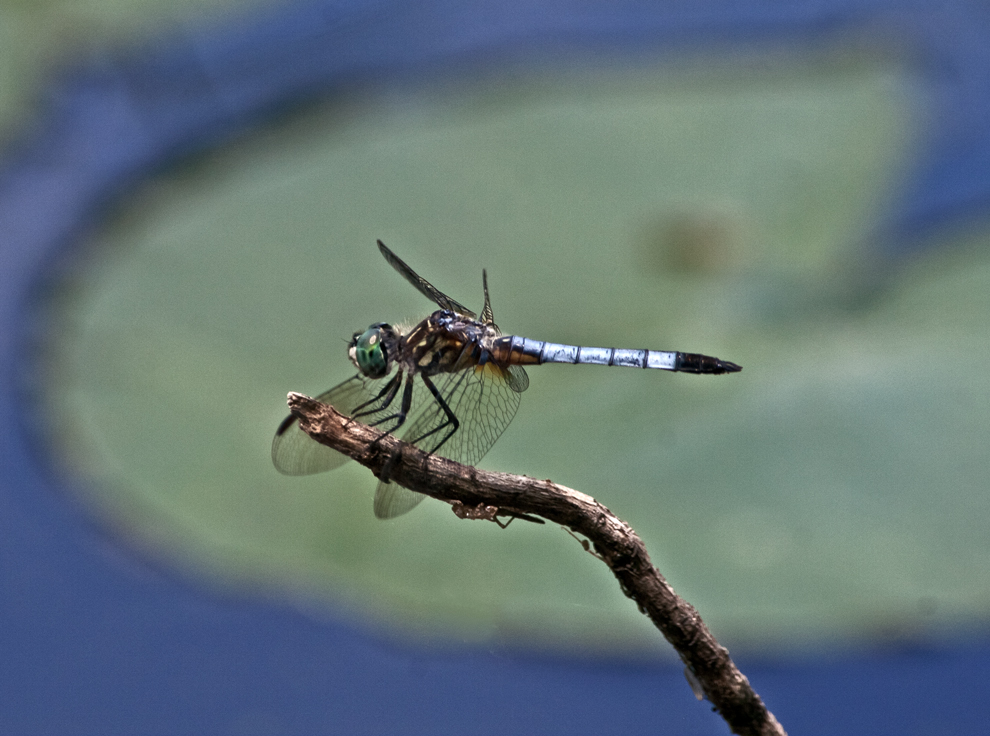
It’s not often that I have the luxury of consciously composing the background when I am photographing a dragonfly, but this Blue Dasher (Pachydiplax longipennis) was cooperative enough that I was able to frame the shot with a lily pad in the background. As a bonus, the colors of the background are a pretty good match for the colors of the dragonfly.

Who knew that dragonflies were so stylish? Maybe the coordinated colors helps the males to attract prospective mates. The less stylish dragonflies probably have to rely on the insect equivalent of eHarmony.com.

dasher_pad_blog

© Michael Q. Powell. All rights reserved

Read Full Post »
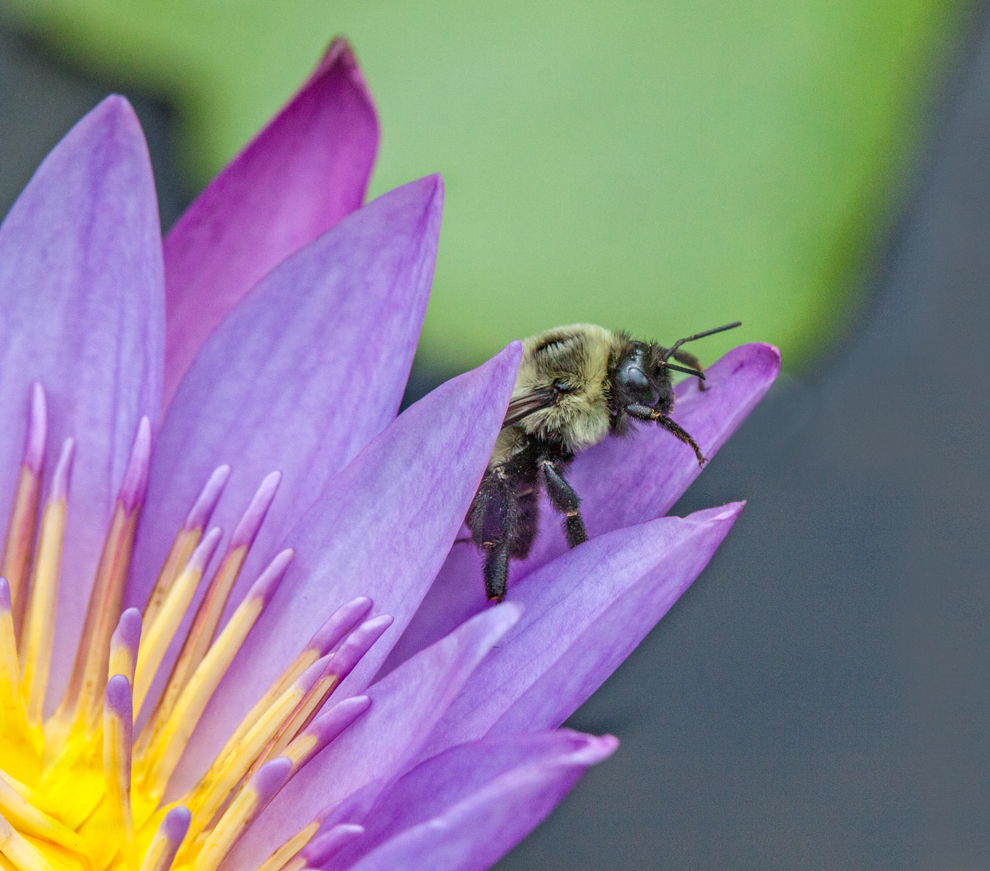
Imagine what it would be like to climb out of the secure watery world that you have always known onto an exposed blade of grass to wait for a transformation to take place, a transformation from the inside.

Impatiently waiting for your skin to dry in the sun, you prepare to break out of your former body, unfurl your wings, and fly into the air. You’ve waited all your life for this moment, when you emerge as a dragonfly. How hard it must be to wait for the transformation to be complete. At last you take off, forever changed, leaving behind the empty outer shell as the sole evidence of your former existence.

shell_blog

© Michael Q. Powell. All rights reserved

Read Full Post »

One year ago today I made my first posting on this blog, an image of a Blue Dasher dragonfly in a pose that I later learned was called the obelisk pose, and it seems appropriate on this anniversary to post a similar shot that I took yesterday.

Blue Dasher Undulate

I remember well that first day, when my photography mentor and good friend, Cindy Dyer, sat me down at her computer and helped me set up my account. She was pushing me to get more serious with my photography and she somehow sensed that a blog would be a good creative outlet. Given the fact that this is my 723rd posting on this blog, it turns out that she was amazingly prescient. I could not have done it without here constant support, encouragement, and inspiration. Thanks, Cindy.

I have learned a lot about photography this past year, but more significantly I have learned a lot about myself through all of these postings. I have also had the wonderful experience of being part of an incredibly supportive community of fellow bloggers, who have been extravagantly free in providing encouragement and assistance. I look forward to my daily interaction with so many of my readers.

Statistically speaking, I’ve had over 23,00o views of my previous 722 posts from readers in 85 countries. I am honored that 479 of them have chosen to follow my blog.

My audience is a diverse one—some of you take photos of the same subjects as I do, but many of you express yourselves in words and photos of different themes. I looked over some of the statistical formation that WordPress provides to see if I could determine what type of postings were the most popular, based on the number of views, and realized that there is no magic formula. Some photos with single posts worked well, but sometimes ones with multiple photos and a lot of text were equally popular. Creepy bugs and beautiful flowers—there seems to be an audience for all kinds of images.

I continue to follow the approach that I started with a year ag0, to post photos that I personally find interesting or beautiful and share some of my thoughts about the subject or the situation in which I took the photo.

Some of you may be curious about the posting that had the most hits this past year. I though about reprising the photos themselves, but I decided that it was better to include links instead, so that you could read the text that surrounded the images, in order to understand better the context.

Here are the ten most popular postings this past year on my blog, starting from the one with the most views:

The dominant theme that connects these diverse subjects my insatiable curiosity to know more about the world around me and to capture some of nature’s beauty in my photography. Somehow in the process of this ongoing journey of discovery, I have come to finally consider myself to be a photographer, and not just someone who takes pictures.

© Michael Q. Powell. All rights reserved

Read Full Post »

How do you approach each day? Do you embrace it with all of your energy, like this bumblebee seems to be doing as it leaps into a patch of Butterfly Weed (Asclepias tuberosa)? Most mornings, my body needs the stimulation of coffee and bright colors like those in this photo have the same effect in awakening my other senses.

I had never seen Butterfly Weed until a few days ago, when I encountered it at a local garden, and I was immediately captivated by its vibrant color. According to Wikipedia, it is a species of milkweed native to North America that attracts butterflies and hummingbirds (and obviously bees too).

I love the unusual position of this bee. It looks like he is skydiving, gliding through the air.

orange_bee_blog

© Michael Q. Powell. All rights reserved

Read Full Post »
Earlier this week I posted some images of the Eastern Amberwing dragonfly (Perithemis tenera) in flight, but you can see the details of this tiny dragonfly better in this shot of one perched on a branch. It’s always a treat for me to get shots of these beautiful little dragonflies, because they are so small (less than one inch (25mm) and very active.

amberwing_branch© Michael Q. Powell. All rights reserved

Read Full Post »

It doesn’t get much more simple or more beautiful than this—a fuzzy bumblebee on a Purple Cone Flower (Echinacea purpurea).

I got as close as I could with my macro lens, eye-to-eye with the bee, and managed to capture some of the incredible details and colors of both the flower and the bee. Except for a minor amount of cropping and tweaking, this is pretty much what the image looked like when I first pulled it up on my computer.

It’s enjoyable to chase after more exotic creatures and environments to photograph, but it is reassuring to know that beauty is never far away—it is present in the ordinary.

big_bee_blog

© Michael Q. Powell. All rights reserved

Read Full Post »

« Newer Posts - Older Posts »