Feeds:
Posts
Comments

Archive for the ‘Flowers’ Category

In the springtime we often watch and wait in the garden, anticipating the beauty that is to come. Sometimes, as was the case with these tulip buds, we have a sneak preview of the coming colors, but often the blooms take us by surprise. I love those kinds of surprises.

As many of you know, I do not have my own garden. However, fellow photographer Cindy Dyer is one of my neighbors and she has an amazing garden, full of fun flowers to photograph.

tulip

© Michael Q. Powell. All rights reserved.

Read Full Post »

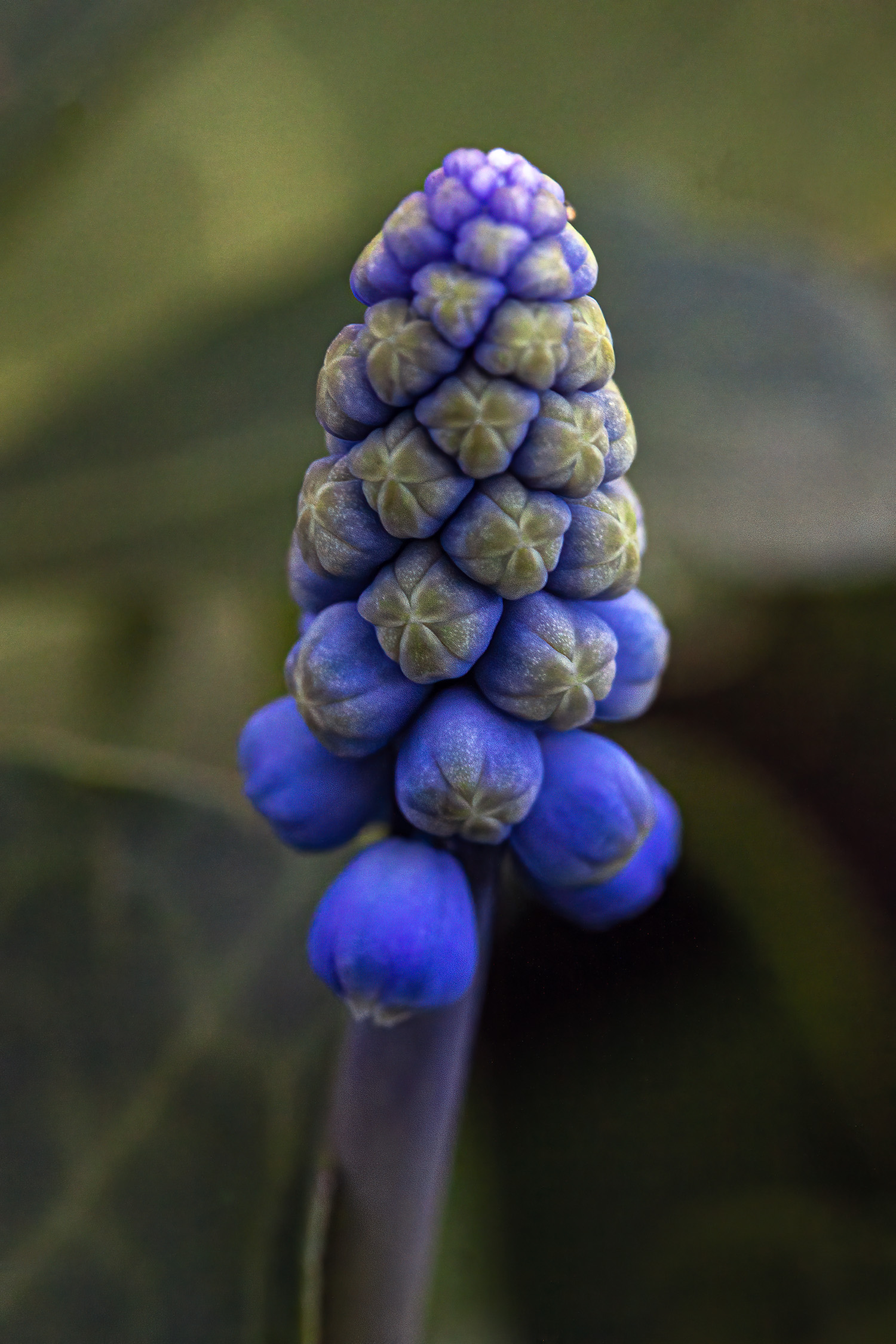
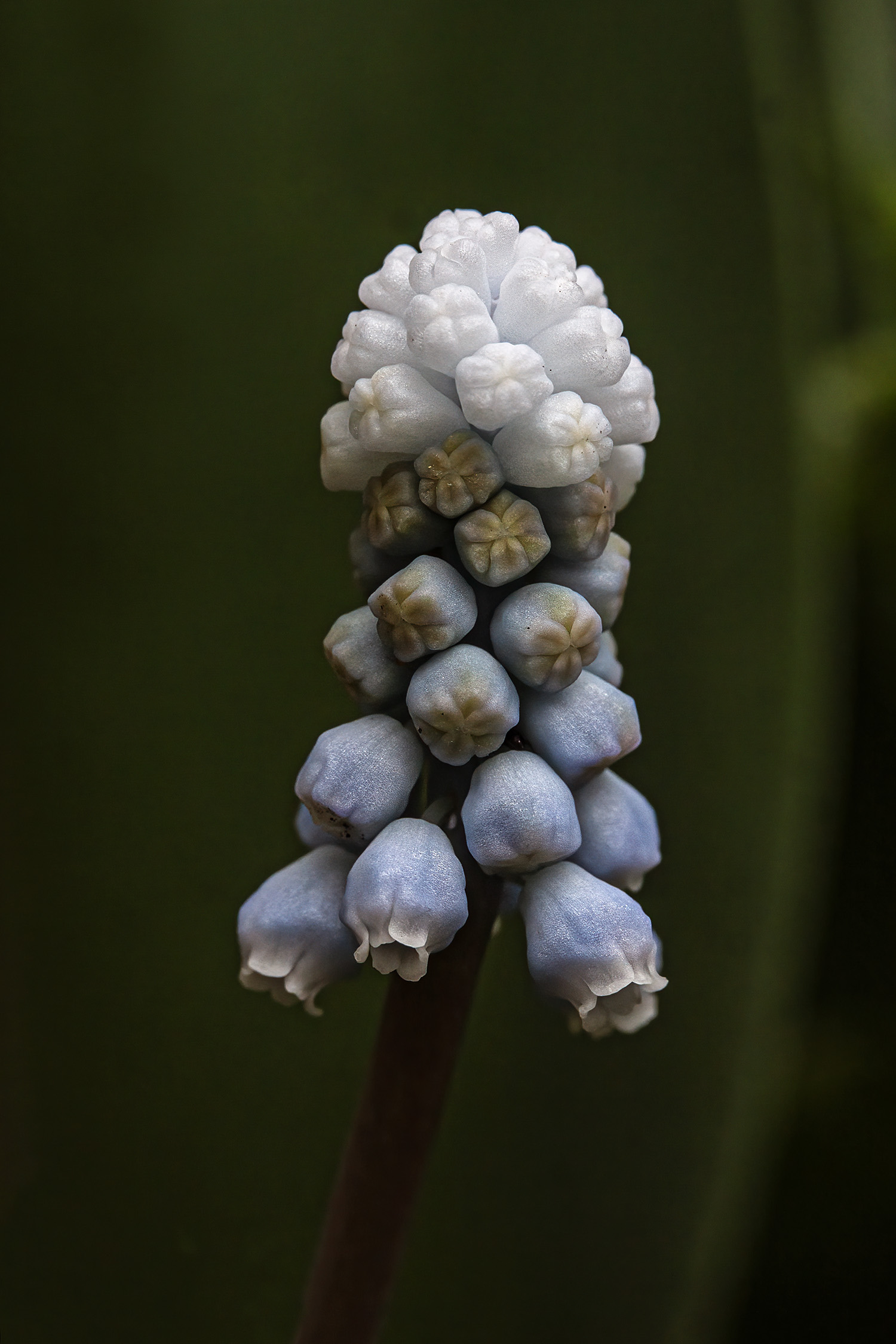
One of the early signs of spring is the emergency of the tiny stalks of Grape Hyacinths (g. Muscari). As their name suggest, these spiky little flowers look a bit like bunches of grapes. Most of the time grape hyacinths are bluish in color, but they come in other colors too and sometimes, as you can see in the second photo, there may be multiple colors on the same flower stalk.

I captured these images in the garden of my dear friend and neighbor Cindy Dyer. Cindy is used to seeing me skulking about in her garden and I usually am able to keep her informed about what is blooming in her own garden.

Using my short macro lens, I was able to capture some of the interesting patterns of these grape hyacinths. In the first image you can see how the little “grapes” grow in a spiral pattern. The second image shows how the “grapes” open up at their ends as they mature. I really like the way that both images feature the raised three-petalled impression on so many of the grapes—the shape looks almost like it was embossed.

Grape Hyacinth

Grape Hyacinth

© Michael Q. Powell. All rights reserved.

Read Full Post »

I note the transition to spring in small ways, quite often in the reappearance of familiar species of plants, insects, and other living creatures. I was delighted on Monday to discover that tiny Virginia Spring Beauty wildflowers (Claytonia virginica) have already started to push their way up from the forest floor in Prince William County. According to Wikipedia, the individual flowers bloom for three days, although the five stamens on each flower are only active for a single day.

On the same day, I spotted an Eastern Comma butterfly (Polygonia comma), the first full-sized butterfly that I have been able to photograph this year. I was not able to get very close to the butterfly, but you can see the beautiful orange pattern of its inner wings in the middle shot below.

The final image shows a Spotted Turtle (Clemmys guttata) that I spotted last week. This species seems to be found only in shallow marshy areas and I rarely encounter one, so it was exciting to be able to photograph it.

We all celebrate different signs of spring at this time of the year (or of autumn if you live in the Southern Hemisphere). What indications do you look for that signal the change of the season?

Spring Beauty

Eastern Comma

spotted turtle

© Michael Q. Powell. All rights reserved.
 

Read Full Post »

I spotted this tiny red tulip yesterday morning in the garden of my dear friend and photography mentor Cindy Dyer, my first tulip sighting of the year. One of Cindy’s passions is gardening and she deliberately plants a lot of flowers that she believes will be photogenic.

Last fall she planted bulbs for some large, frilly, multi-colored tulips that she hopes will bloom later this year. (See my posting from last spring entitled Fire-breathing dragon to see an example of one of those crazy-looking parrot tulips.) I will be looking for those exotic flowers, but I have to say that am often drawn more to the simple, spare elegance of a single bloom, like today’s tulip.

When I first started to get serious about my photography almost ten years ago, I imitated the type of photographs that Cindy was taking, with a lot of emphasis on macro shots of flowers. Cindy taught me a lot about photography during those early days, lessons that have stuck with me as I have ventured into other areas of photography.

One of those lessons was about the value of a well-composed, graphic image, like today’s simple shot. Anyone, in theory, could have taken this shot, but they would have had to be willing to get on their hands and knees in the dirt to do so, another one of Cindy’s lessons. (If you want to see more of Cindy’s tips, check out her article How to Grow Your Garden Photography Skills that was featured several years ago on the NikonUSA.com website.)

tulip

© Michael Q. Powell. All rights reserved.
Read Full Post »

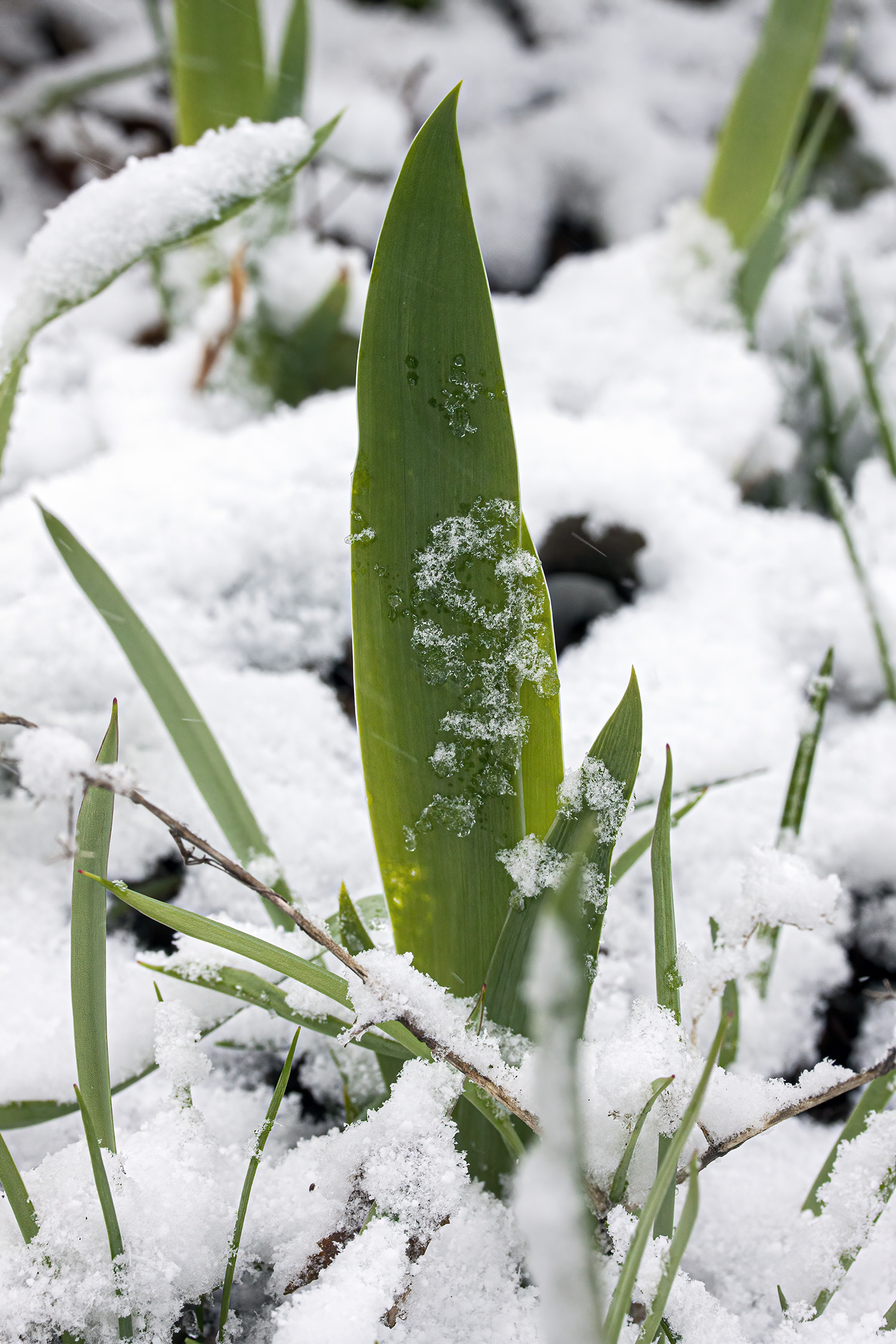
My thoughts have already turned to spring, with visions of colorful flowers and dragonflies dancing in my head. However, it turns out that winter was not quite done and last weekend we had a couple of inches of snow, a final hurrah for the season of winter.

Here are a couple of shots of my “winter dragonfly,” a metal sprinkler in my front yard that I featured in a previous post that showed the intricate detail of the dragonfly. I am also including a shot of some of the green shoots in the garden of my neighbor and fellow photographer Cindy Dyer. I think some of these might be tulips, but must confess that I am pretty clueless when it comes to plants.

Many of you know that I am somewhat obsessed with dragonflies. In 2020 I saw my first dragonflies of spring on the 3rd of April, the earliest I have ever seen dragonflies—see my 6 April 2020 posting First dragonflies of the season. I will probably go out and search for them in earnest during the final week of March. There are a couple of early emerging local species that I will be searching for along with migrant species like the Common Green Darner that might be passing through our area.


dragonfly

dragonfly

plant

© Michael Q. Powell. All rights reserved.

Read Full Post »

Pushing out of the still dormant winter earth, several crocuses in the garden of my dear friend Cindy Dyer were shining brightly yesterday, a hopeful sign of the spring beauty that is yet to come.

For the first image, I shielded the sun with my body to avoid the harsh highlights that the sunlight was creating. I then changed my shooting position so that the sunlight was streaming from another angle, which caused the yellow parts of the flower to glow.

Please continue to pray for the people of Ukraine and for all those affected by Putin’s invasion of Ukraine.

Crocus

crocus

© Michael Q. Powell. All rights reserved.

Read Full Post »

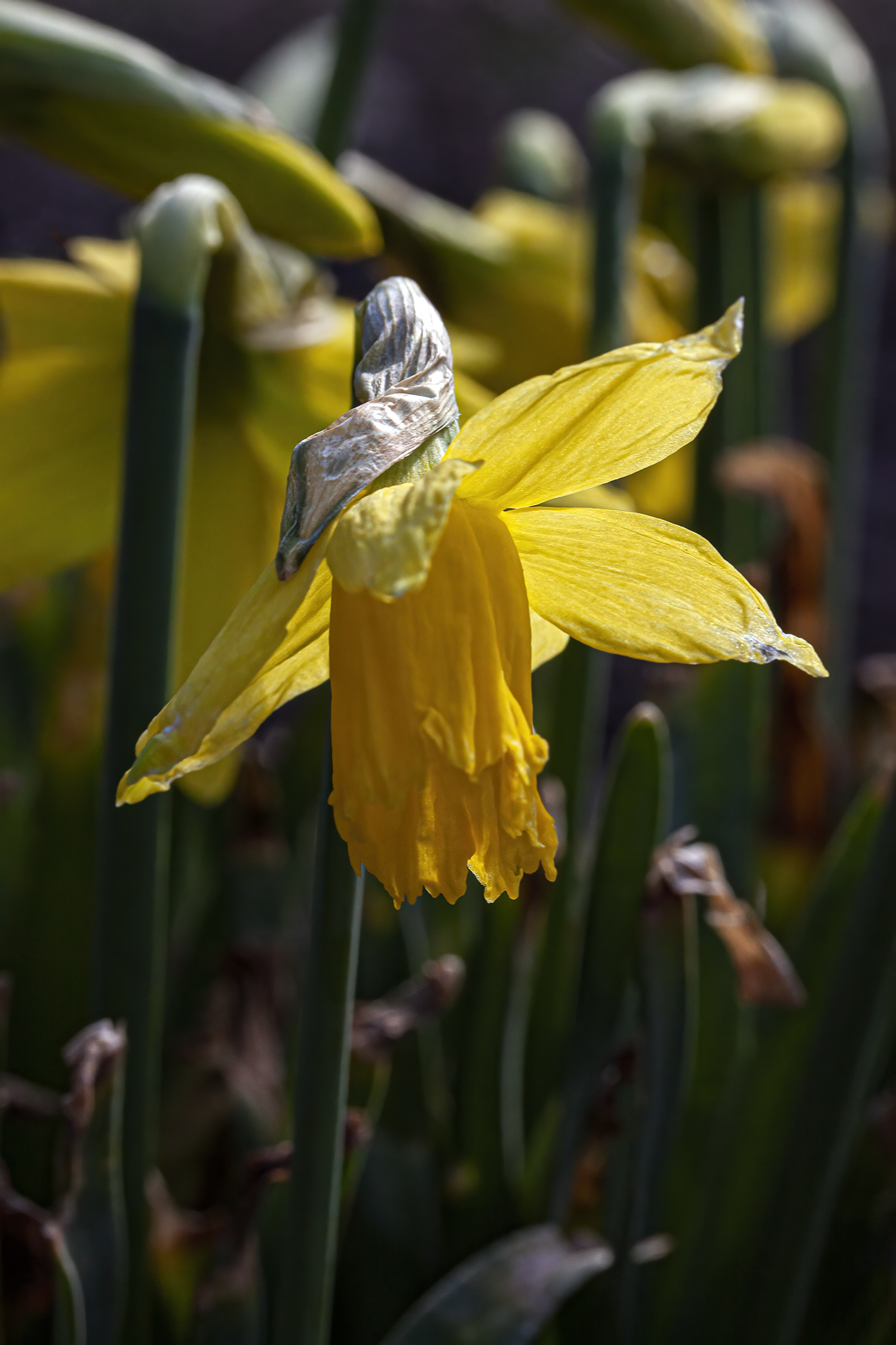
As I was walking through my neighborhood yesterday, I was delighted to spot some daffodils (g. Narcissus) that were already in bloom. The ground is still brown and bare and not very photogenic, so it is hard to take a “pretty” picture of these beautiful little flowers.

I used a short macro lens capture these images of the early daffodils, the advance guard for a multitude of spring flowers that will arrive before long. I am ready for the spring.

daffodil

daffodil

daffodil

© Michael Q. Powell. All rights reserved.

Read Full Post »

The situation in Ukraine is growing increasing grim as Putin’s attacks become more indiscriminate, causing countless civilian casualties and unimaginable suffering and devastation.  Please pray for peace.

#sunflowersforukraine

© Michael Q. Powell. All rights reserved.

Read Full Post »

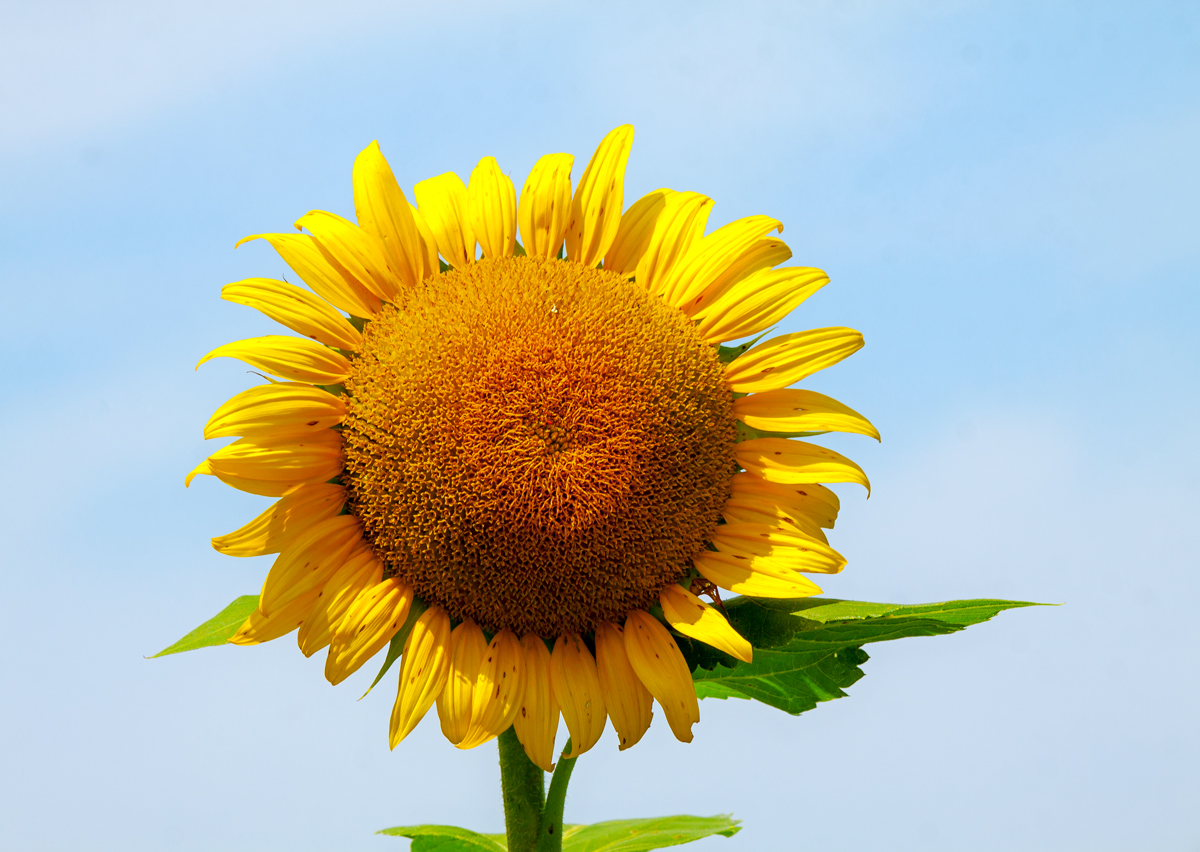
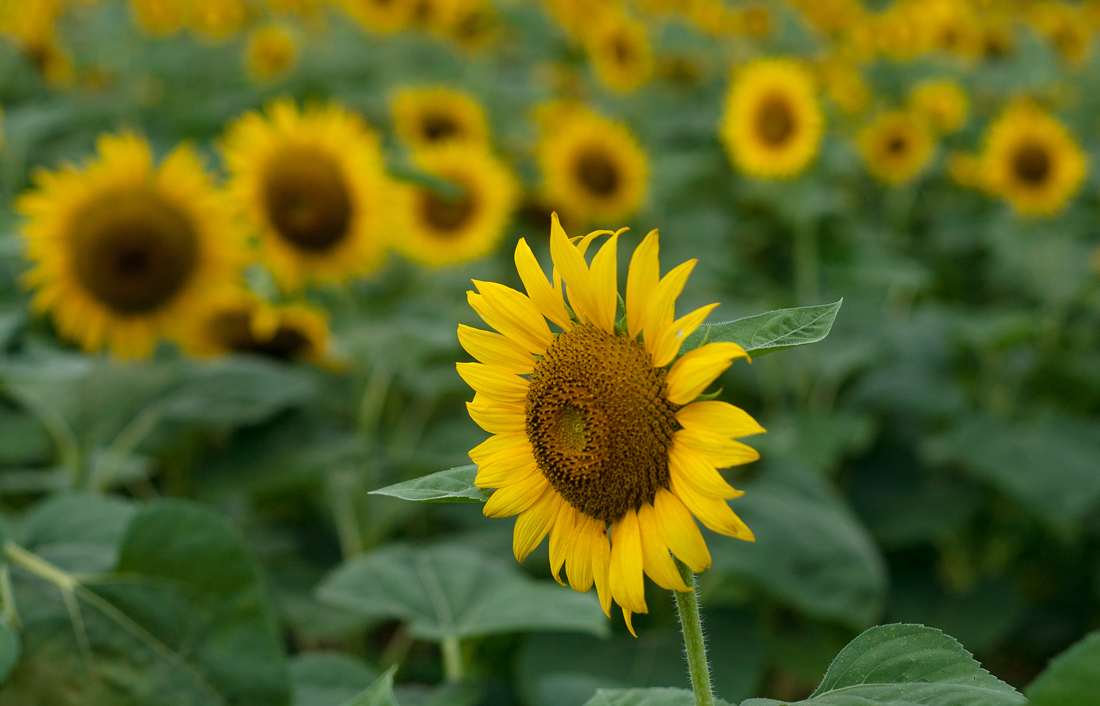
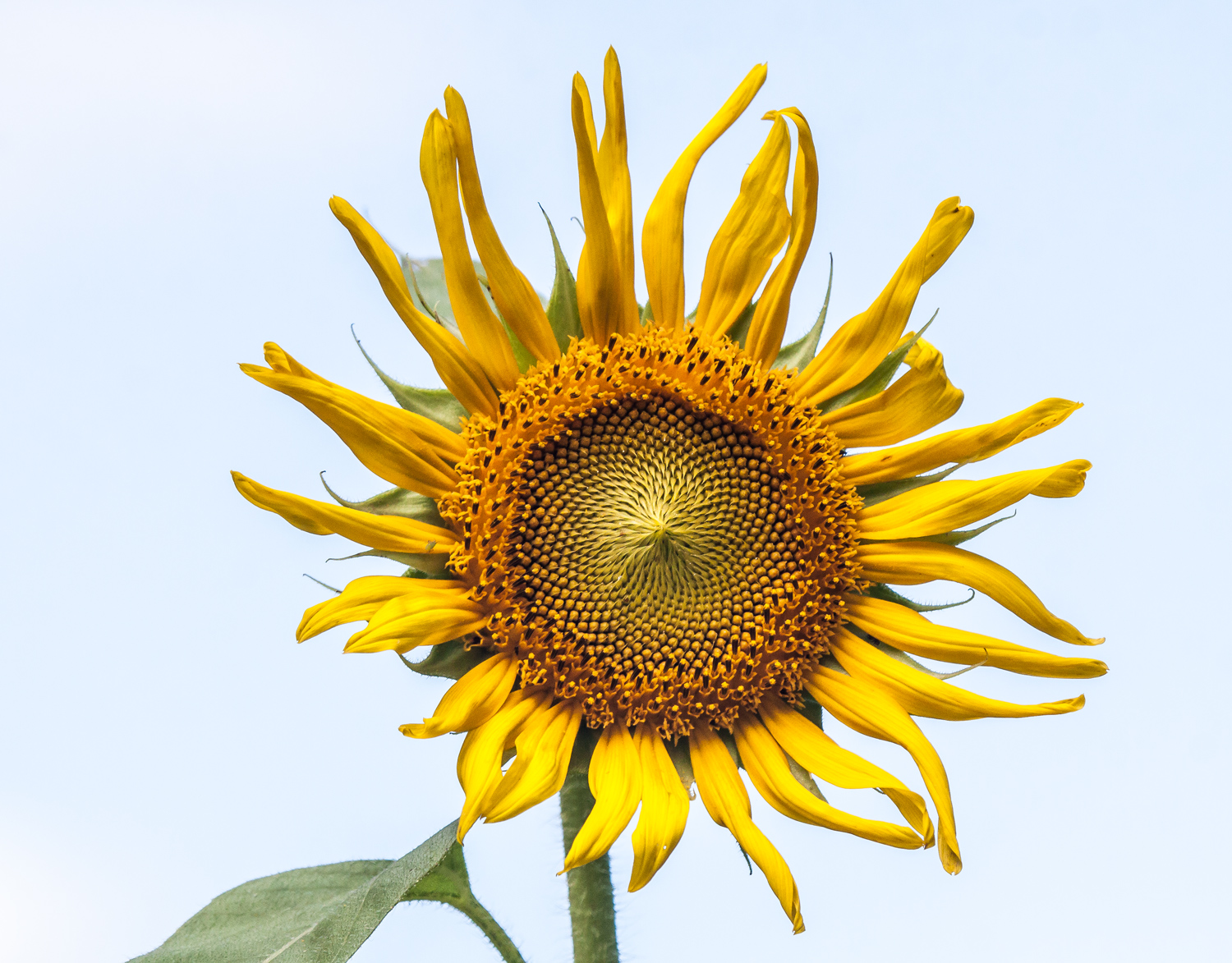
Sunflowers were already Ukraine’s national flower, but they have emerged as a symbol of resistance after a widely shared video clip appeared to show a Ukrainian woman berating Russian soldiers, telling them to put sunflower seeds in their pockets so that flowers would grow after they died in battle—see this article in Business Insider India for more information on this subject.

I just listened the words of Ukrainian President Zelensky as he described the horrific Russian cruise missile strike on Freedom Square in the center of Kharkiv and the tears are still wet on my cheeks. These sunflowers photos that I have taken in recent years are a visual sign of my support for the ongoing heroic actions of the Ukrainian people. Please pray for all of those affected by Putin’s unprovoked war, especially the Ukrainians, who are paying the highest price.

sunflower for Ukraine

Sunflowers for Ukraine

Sunflower for Ukraine

© Michael Q. Powell. All rights reserved.

Read Full Post »

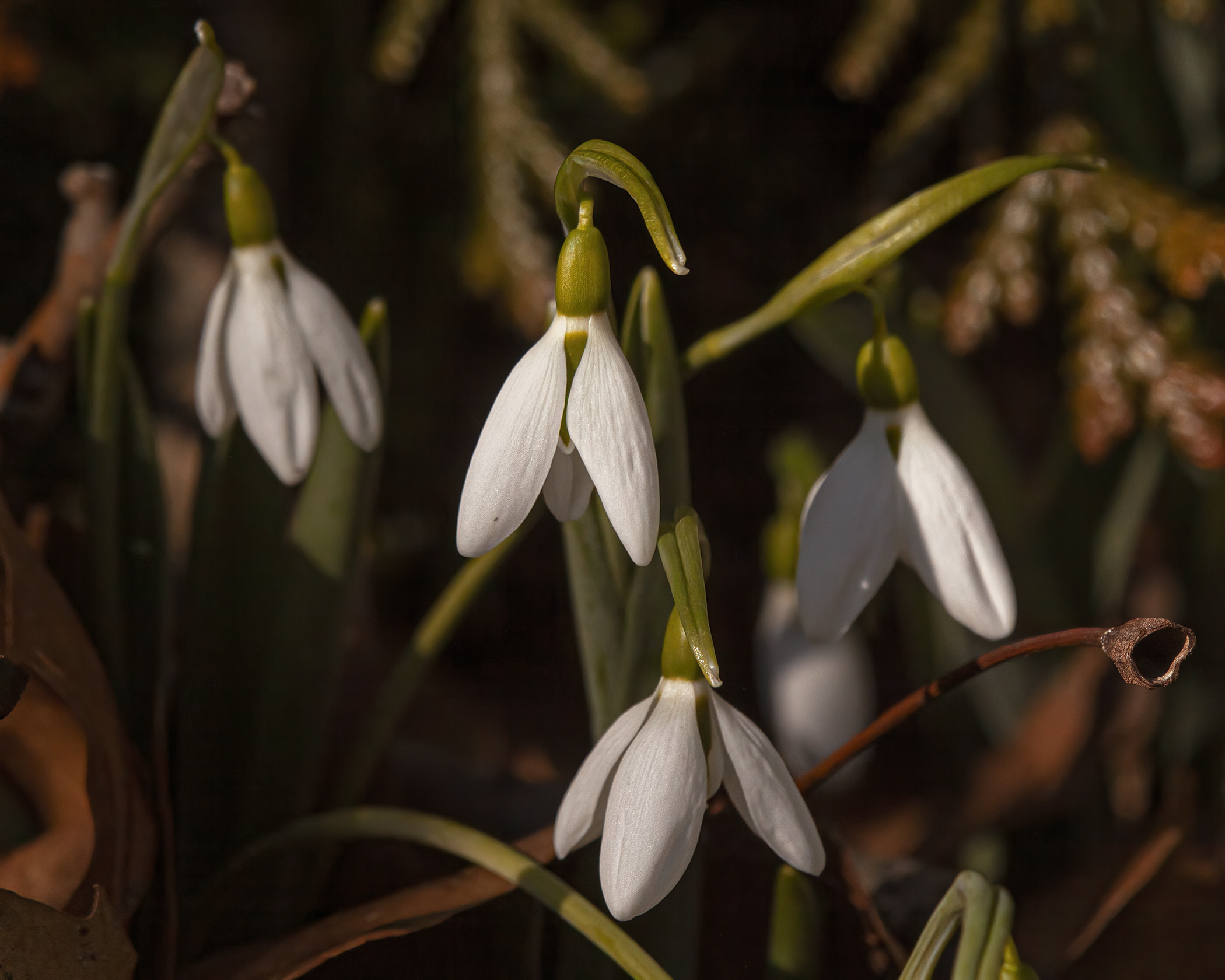
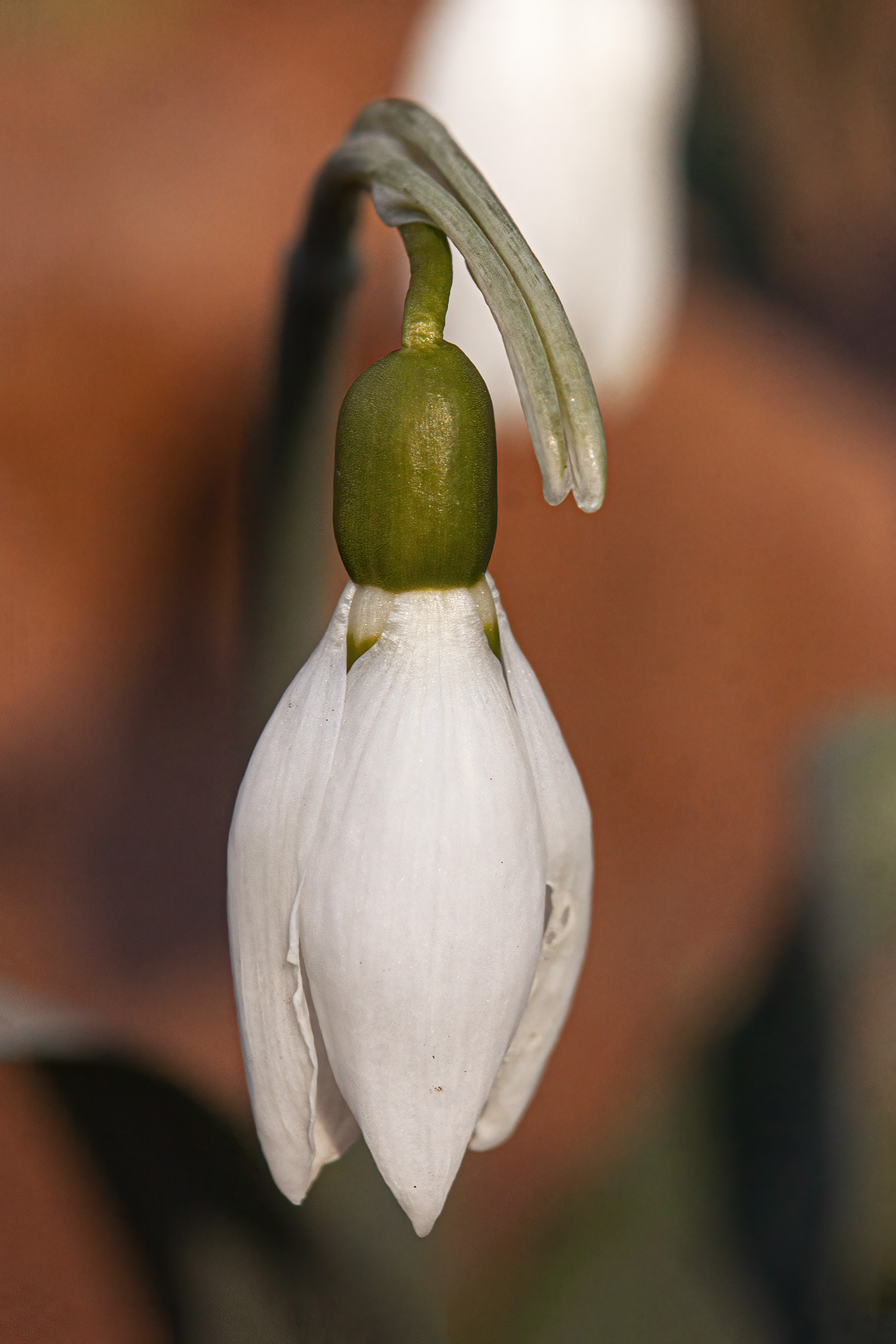
In the deepest darkest days of winter, there is still new growth, like these snowdrop flowers (g. Galanthus) that I spotted yesterday at Green Spring Gardens, a county-run historic garden not far from where I live.

I decided to mix things up a bit and put my macro lens on my camera for the first time in months, hoping that I might find flowers in bloom. What can I possibly find that would be flowering in late January? We have had over a foot (30 cm) of snow already this month and some frigid temperatures, a harsher winter than in recent years. I knew from past experience, though, that there was a good chance that some snowdrop flowers would be in bloom—my challenge was to find them.

I searched in vain in flowerbed after flowerbed, until finally I found several small patches of these pretty white flowers. The words to the song Edelweiss from The Sound of Music, one of my favorite musicals, came to mind. Although edelweiss is a completely different flower, the words of the song seemed to fit my snowdrops so well.

“Every morning you greet me
Small and white, clean and bright
You look happy to meet me
Blossom of snow, may you bloom and grow
Bloom and grow forever.”

snowdrops

snowdrop

snowdrop

© Michael Q. Powell. All rights reserved.

Read Full Post »

When the urge to take photos strikes me, I am undeterred by drizzle or intermittent light rain, though heavier rain and gusty winds tend to keep me at home. Of course, weather is unpredictable and I have gotten drenched in downpours a number of times. I carry an array of plastic bags and coverings to protect my gear, which is usually my number one priority.

Last Friday, it was raining off and on and I decided to visit Jackson Miles Abbott Wetland Refuge to see if any creatures were stirring. Not surprisingly, dragonflies were at the top of my list, though I doubted that any of them would be flying in the rain. I was therefore pleasantly surprised when I spotted this male Eastern Pondhawk dragonfly (Erythemis simplicicollis). I watched him land on a droplet-laden plant and managed to capture the first image below.

As I continued to walk around the small pond, I noticed a Black and Yellow Garden Orbweaver (Argiope aurantia) in its web, patiently waiting for a passing prey to be snagged. I thought the long brown object just below the spider might be a caterpillar or some other insect, but it turned out to be only a small twig.

There were a lot of flowers in bloom and my eyes were attracted to a cluster of small purple asters. The colors seemed really saturated and I liked the way that the droplets of water stood out on the petals.

So, I was able to capture a few photos to share, despite the rain. About the only thing that the images have in common is that they all include raindrops, which I believe add an additional element of interest to what otherwise might have been rather ordinary shots.

Eastern Pondhawk

Argiope aurantia spider

asters

© Michael Q. Powell. All rights reserved.
Read Full Post »

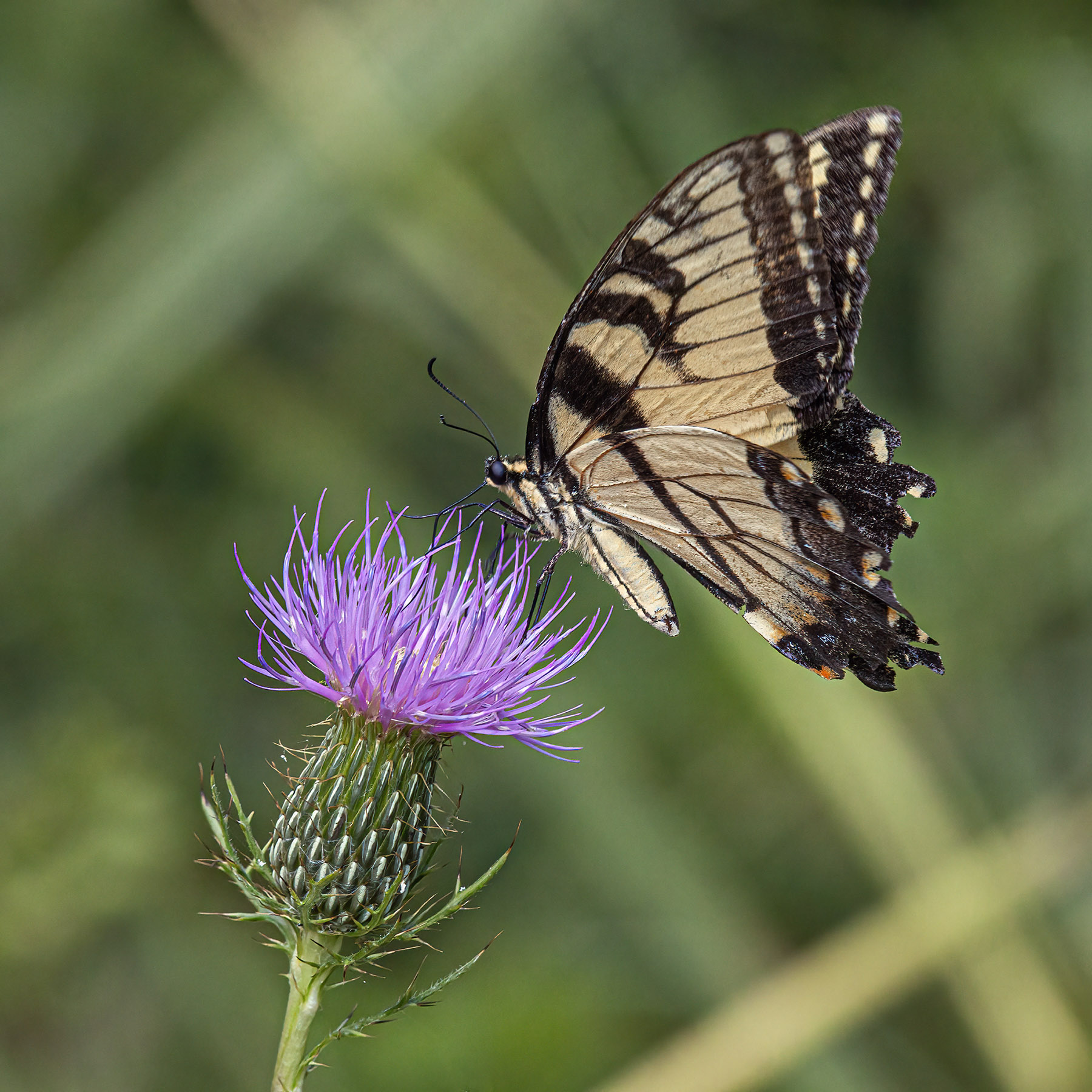
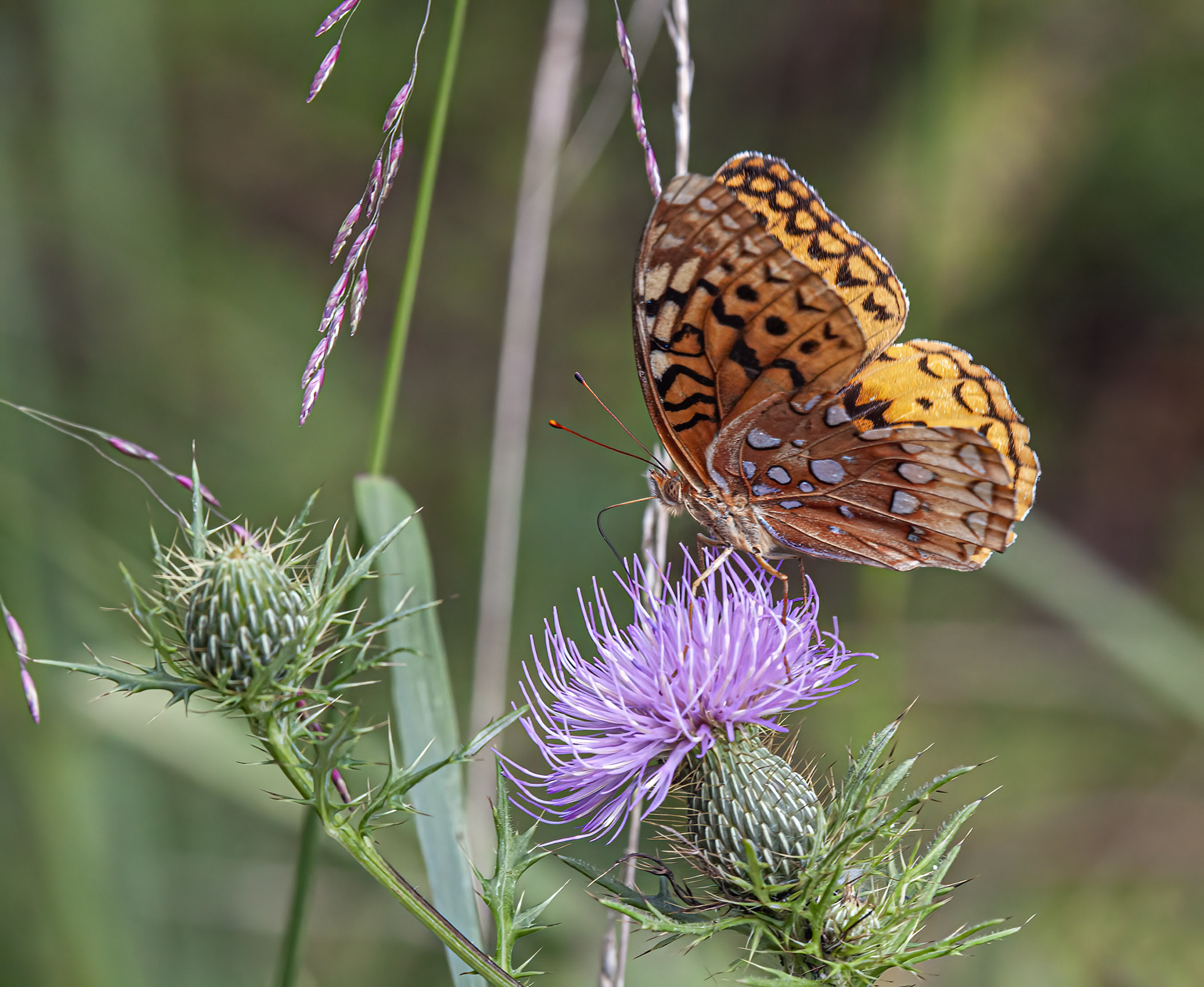
The thistles  in bloom must have been absolutely irresistible to butterflies on Saturday at Occoquan Bay National Wildlife Refuge. I was delighted to spot an Eastern Tiger Swallowtail butterfly (Papilio glaucus) and a Great Spangled Fritillary butterfly (Speyeria cybele) feeding almost side-by-side at a small patch of thistle plants.

I love the color combinations in these shots that contrast the warmer tones of the butterflies with the cooler colors of the flowers and the background. I also really like the texture of the thistles that appear to be hard and thorny, but are actually quite soft to the touch.

Eastern Tiger Swallowtail

Great Spangled Fritillary

© Michael Q. Powell. All rights reserved.

Read Full Post »

If photography were an Olympic sport, would it be an individual sport or a team sport? Generally I prefer to go out with my camera on my own, following my own interests at my own pace. I like the sounds of silence punctuated only by the songs of the birds singing or the wind rustling through the treats, rather than by the harsher tones of the human voice.

I also like to keep moving and start to feel restless if I stay in a spot for more than a few minutes. I guess my style would be most closely related to that of the Olympic biathlon. This winter sport combines cross-country skiing and rifle shooting. Competitors spend most of their time in motion, stopping periodically to take a few shots and then moving on—that is my preferred style. Oh, I can be quite patient at times, like when I am trying to photograph a dragonfly in flight, but that is more the exception than the rule.

One of the consequences of my approach is that I am often in a reactive mode. I chase the action rather than wait for it to come to me, which means I have to react really quickly when a situation presents itself.

I knew from Facebook posts that Ruby-throated Hummingbird (Archilochus colubris) were active at Green Spring Gardens when I decided to visit last Friday. When I arrived, I immediately spotted a cluster of photographers that had staked out a flower bed, some of whom are shown in the final photo. It was hard to miss them, because many of them had large lenses and heavy tripods.

I avoided this group and went about my solitary pursuit of butterflies and dragonflies with my more modest and portable camera setup. Later in the day I did manage to spot a hummingbird in a distant patch of Cardinal flowers (Lobelia cardinalis). The shots are essentially record shots that merely document the presence of the hummingbird. However, hummingbirds are so cool that I am really happy whenever I manage to capture a recognizable image of one.

Ruby-throated Hummingbird

Ruby-throated Hummingbird

Green Spring Gardens

© Michael Q. Powell. All rights reserved.

Read Full Post »

It was definitely exciting to see my first Monarch butterflies of the season last Friday at Green Spring Gardens, but I was equally delighted to see some other beautiful butterflies that day. The one in the first photo is an Eastern Tiger Swallowtail (Papilio glaucus) on a flower that I later learned is a Mexican sunflower. I am pretty sure that the butterfly in the second image is a Spicebush Swallowtail (Papilio troilus), although the angle of this shot keeps me from being absolutely certain. I am not sure what kind of flower it is feeding on, but it sure was pretty.

Although I spend a lot of time in streams, fields, and marshes, I enjoy visiting gardens from time to time. It is stimulating to all of the senses to see all of the bright colors and smell the fragrant flowers. There were plenty of bees too and occasional forays into the flowers by goldfinches and hummingbirds. It was a good day.

Eastern Tiger Swallowtail

Spicebush Swallowtail

© Michael Q. Powell. All rights reserved.
 

Read Full Post »

Several times recently I have noted with regret that I had not yet seen any Monarch butterflies (Danaus plexippus) this summer. On Friday my luck changed and I was absolutely delighted to have multiple encounters with Monarchs during a visit to Green Spring Gardens, a country-run historical garden only a few miles from where I live. Obviously I had been looking for Monarchs in all the wrong places.

I felt carefree as a child as I chased the butterflies all over as they flitted from flower to flower. It was a hot, humid day and it was not long before I was drenched in sweat, but I was content in what I was doing.

I will let the beauty of the Monarchs speak for itself through these photos. I will only add that it was definitely worth the wait.

Monarch butterfly

Monarch butterfly

Monarch butterfly

© Michael Q. Powell. All rights reserved.

Read Full Post »

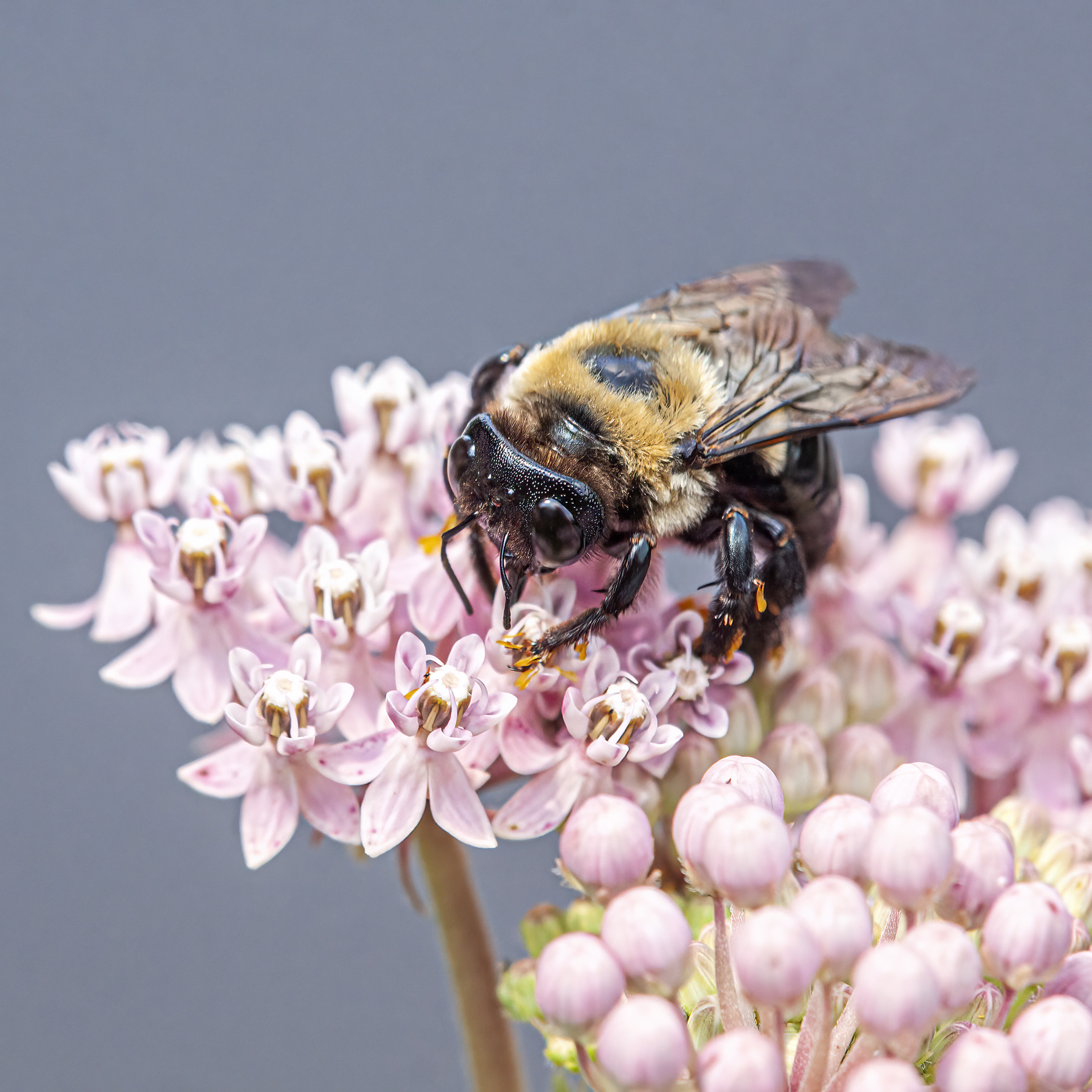
I was hoping to find a Monarch butterfly when I checked out some patches of milkweed last week at Jackson Miles Abbott Wetland Refuge, but ended up instead with some action shots of an Eastern Carpenter Bee (Xylocopa virginica). The bee was quite distracted while feeding, so I was able to get really close to it for these shots.

I like the way that I was able to capture some wonderful details of the bee as well as those of the beautiful pink milkweed.

carpenter bee

carpenter bee

© Michael Q. Powell. All rights reserved.


Read Full Post »

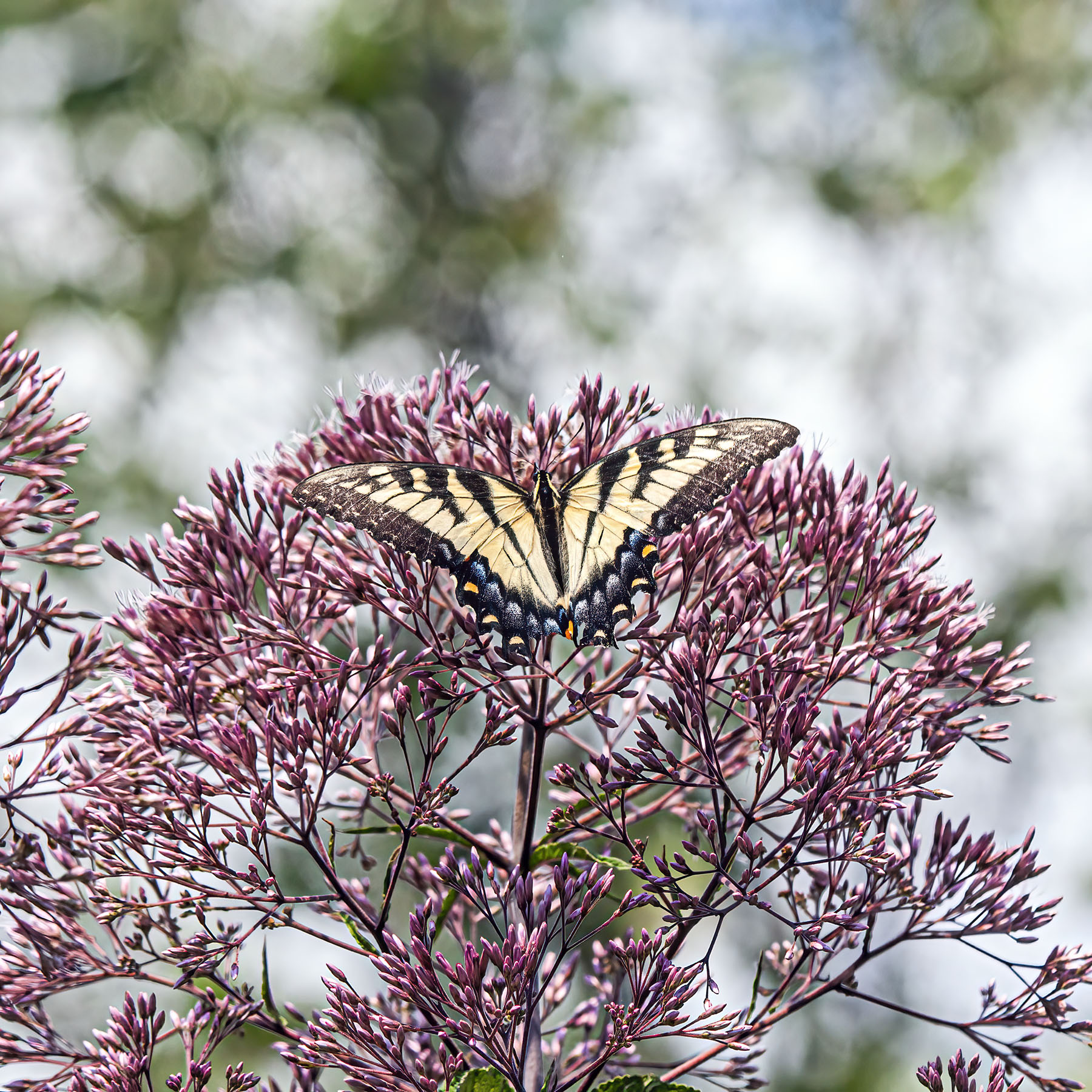
The Joe Pye Weed (Eutrochium purpureum) at Jackson Miles Abbott Wetland Refuge grows so high that I have to point my camera almost straight up to get a shot of the butterflies that seem to really enjoy this flowering plant. Although it is a somewhat uncomfortable shooting angle, it allows me to include the sky in some of my shots, as was the case with this Eastern Tiger Swallowtail (Papilio glaucus) on Monday.

I seem to be in an artistic mood recently. I noted this morning that this is the third consecutive posting in which the colors and shapes of my subjects have been of equal or greater importance as the subjects themselves. There is something about the first image especially that just seems so beautiful to me. I really like the way that the different elements in the image work together to create a harmonious whole.

In the second image, I deliberately violated one of the “rules” of photography and placed my primary subject in the center of the frame. Why? I wanted to emphasize the symmetry of the butterfly when it spread its wings. I think the photo works pretty well, though perhaps not quite as well as the first image, which has a slightly more dynamic feel to it.

Eastern Tiger Swallowtail

Eastern Tiger Swallowtail

© Michael Q. Powell. All rights reserved.

Read Full Post »

I have previously featured water lilies and lotuses that I photographed during a trip earlier in July to Kenilworth Park and Aquatic Gardens. Those flowers were beautiful, of course, but the flower that really grabbed my attention was this alien-looking one that looks like a spider or a Portuguese man o’ war. From what I have been able to find on the internet, I believe that this is a Cahaba lily (Hymenocallis coronaria), an aquatic, perennial flowering plant species that is also known as a shoal lily, or shoals spider-lily.

I was quite a challenge to try to figure out how to photograph this wild-looking flower that spreads out in all directions. I think that this angle gives you a pretty good look at all of the plant parts without being too distracted by the busy background. In many ways the image becomes an almost an abstract one, because the viewer initially takes in the shapes and colors without immediately being able to tell what the main object is.

Cahaba lily

© Michael Q. Powell. All rights reserved.
 

Read Full Post »

Water lilies always bring to mind the paintings of Claude Monet, my favorite artist. Monet produced a series some 250 paintings of water lilies (Nymphéas in French) that were the main focus of his artistic production over the last thirty years of his life. One of the museums that I most love visiting is the Musée de l’Orangerie in Paris, because it houses eight massive water lily murals by Monet in two specially-built oval rooms. It is an incredible, meditative experience to just sit in one of those rooms, surrounded by those amazing paintings. (For more details on the water lily murals, including a virtual visit, click here.)

Conditions were considerably more chaotic than calm on 10 July when I visited  Kenilworth Aquatic Gardens in Washington D.C. with several photographer friends. The weather was comparatively cool and comfortable, a welcome respite from the heat and humidity of recent days, and bustling throngs of people had gathered at the park to view the lotuses and water lilies. Fortunately the crowds concentrated in clusters at a few spots and I was able to explore many of the other lily ponds in peace.

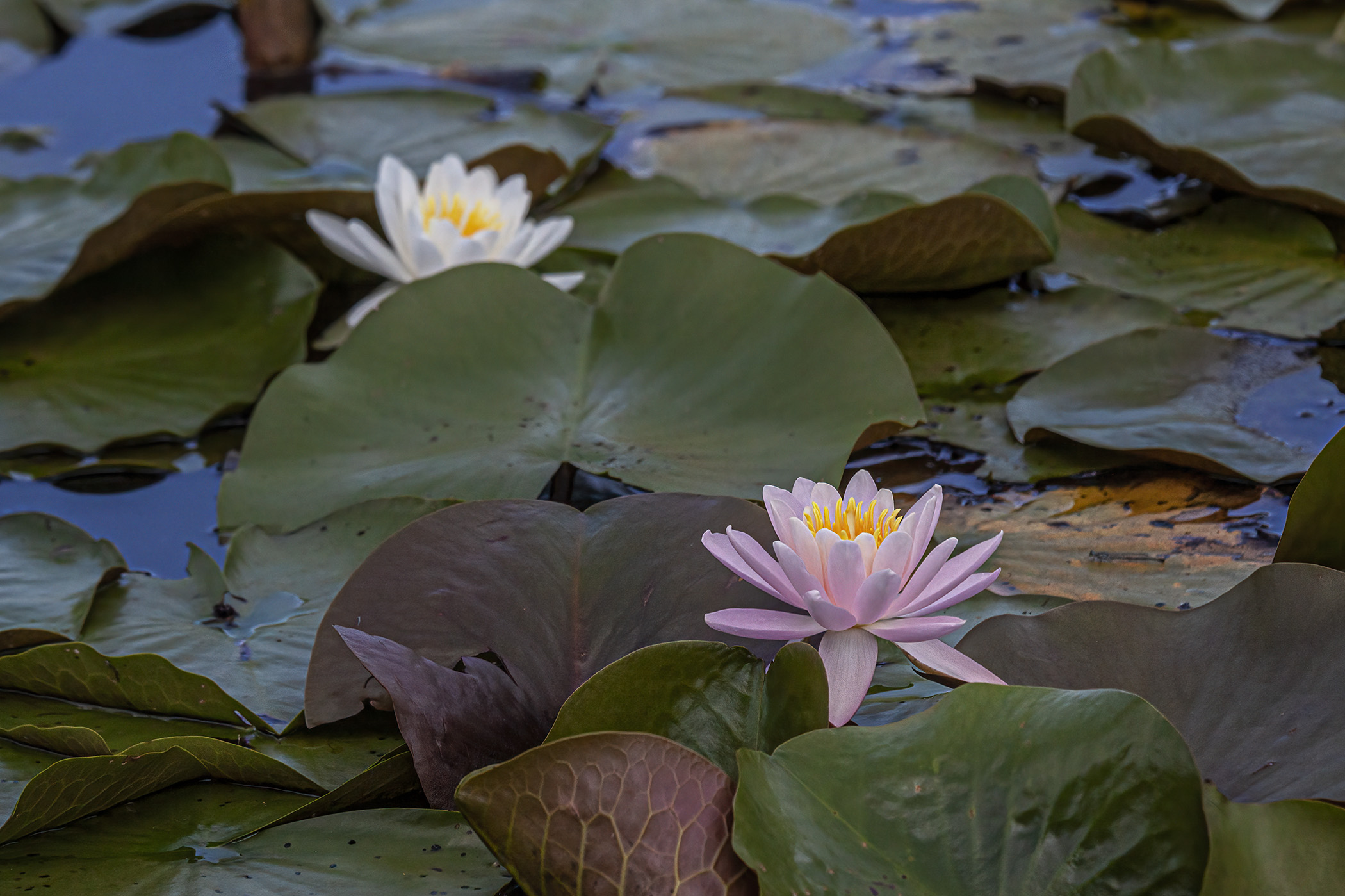
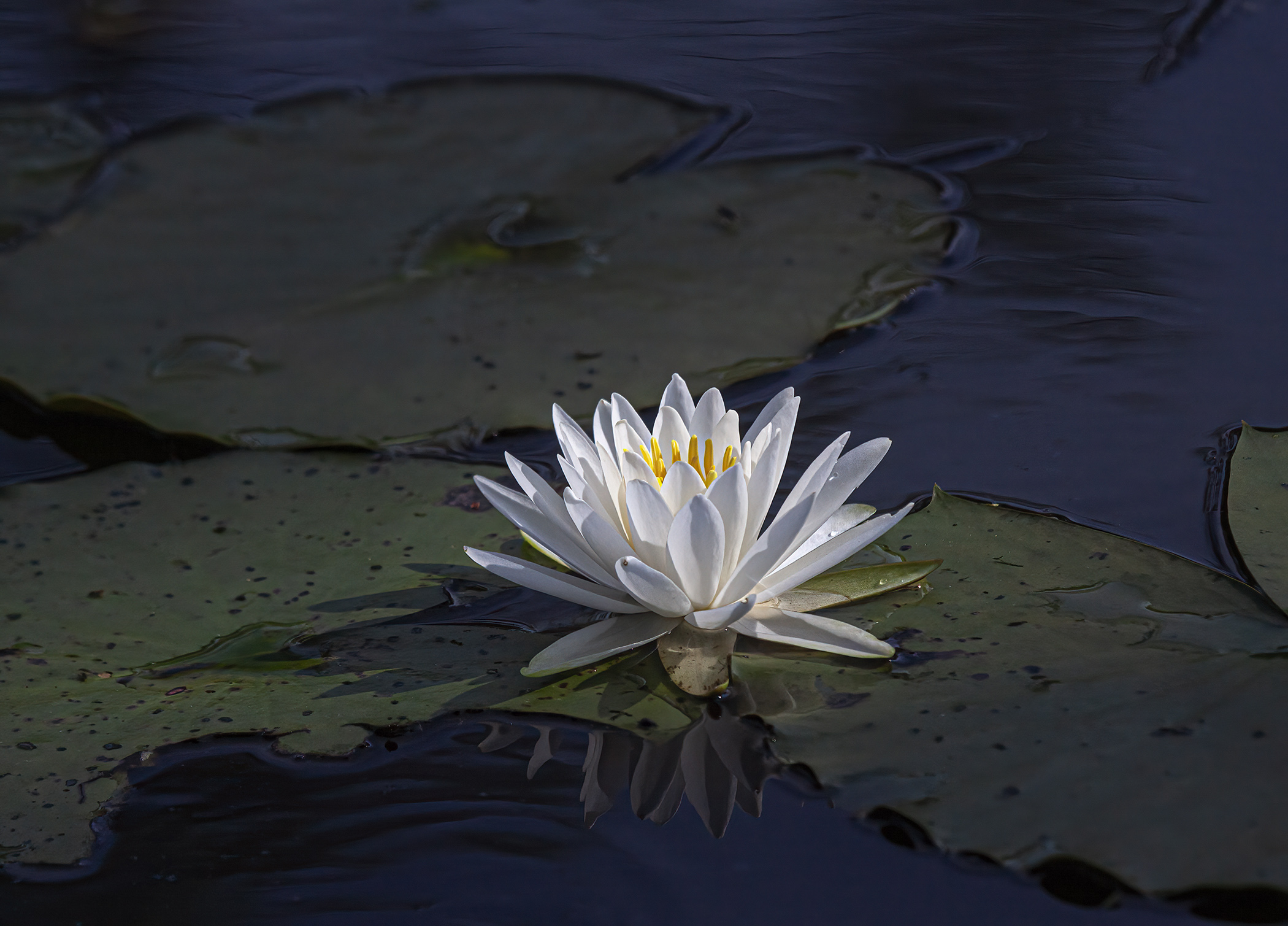
One of the things that I love most about water lilies is the way that they seem to glow from within with a soft, warm light. It is always a challenge to figure out how to capture the beauty of the water lilies. Normally I concentrate on individual flowers, but for the first photo I decided to capture a wider view with two flowers in the midst of a carpet of lily pads.

As you can see, lily pads were inevitably a component in all of my compositions. Sometimes the lily pads make me smile. Why? Maybe it is just me, but when I look at the final photo, I can’t help but think of Pac-Man, a beloved video game of my younger days. I never really got into the complicated video game systems as technology advanced, but really enjoyed the relative simplicity of Pong and Pac-Man.


water lilies

water lily

water lily

water lily

© Michael Q. Powell. All rights reserved.
 

Read Full Post »

I captured this image last Saturday at Kenilworth Aquatic Gardens and love the way that it shows lotuses at various stages of development, from budding to flowering to turning into seed pods. I have included a close-up shot of a seed pod, in case you have never looked closely at one. These seed pods always get a mixed reaction from my friends—some find them to be fascinating, while others find them to be creepy.

lotus

Lotus seed pod

© Michael Q. Powell. All rights reserved.
 

Read Full Post »

On Saturday I traveled with a few fellow photographers to Kenilworth Park and Aquatic Gardens, a National Park Service site in Washington D.C. whose main attractions are the the numerous water lilies and lotuses in a series of interlocked cultivated ponds. It was tough for me to figure out how to tackle photographic subjects like these and I must confess that I spent a fair amount of time chasing after the numerous dragonflies that were present at the park.

Here are a few shots of some of the lotuses that I encountered that day. The first image is a peek through the petals at the distinctive seed pod in the center of one lotus. The second shot shows a lotus in full bloom. Only about half of the lotus plants that I encountered were flowering and many of them were beyond the reach of the lens that I was using or were in harsh, direct sunlight, so I was happy to capture this one so well. The final photo shows a lotus bud with petals that are just beginning to open.

I think it is good to push myself sometimes to photograph different subjects and to step outside of my comfort zone. It forces me to think creatively about what I am doing and how I am approaching the subject. Flexibility is a key ingredient in all of this, which seemed appropriate as I was trying to get into the lotus positions.


lotus

lotus

lotus

© Michael Q. Powell. All rights reserved.
Read Full Post »

My dear friend and neighbor Cindy Dyer has some crazy-looking colorful flowers in her garden, like this one, which I think is some kind of double Tiger Lily. The not-yet-opened petals in the center of the flower at this stage of development remind me of the tentacles of an octopus. I love the way the fence in the background turned out, with all of the colorful bokeh balls in parallel columns.

tiger lily

© Michael Q. Powell. All rights reserved.
Read Full Post »

I was feeling a little “artsy” on Saturday morning when I composed this close-up image of one of day lilies now growing in the garden of my dear friend and neighbor Cindy Dyer. Over the last nine years of so Cindy has served as my photographic mentor and muse.  I remember how liberated I felt when she first told me it was ok to photograph parts of a flower and not just the whole thing—it opened my eyes to all kinds of new creative possibilities that went way beyond merely documenting “reality.”

Beauty is everywhere!

day lily

© Michael Q. Powell. All rights reserved.

Read Full Post »

It was pretty early this morning when I walked over to the garden of my dear friend and neighbor Cindy Dyer, but a bee was already busy on one of her lavender plants. A shot like this is easy to get with my 180mm macro lens, which lets me stand back farther from my subject. However, I happened to have a much shorter 60mm macro lens on my camera, which meant that I had to be almost on top of the bee. The bee was focused on the flower and did not seem to be bothered by my presence.

bee

© Michael Q. Powell. All rights reserved.

Read Full Post »

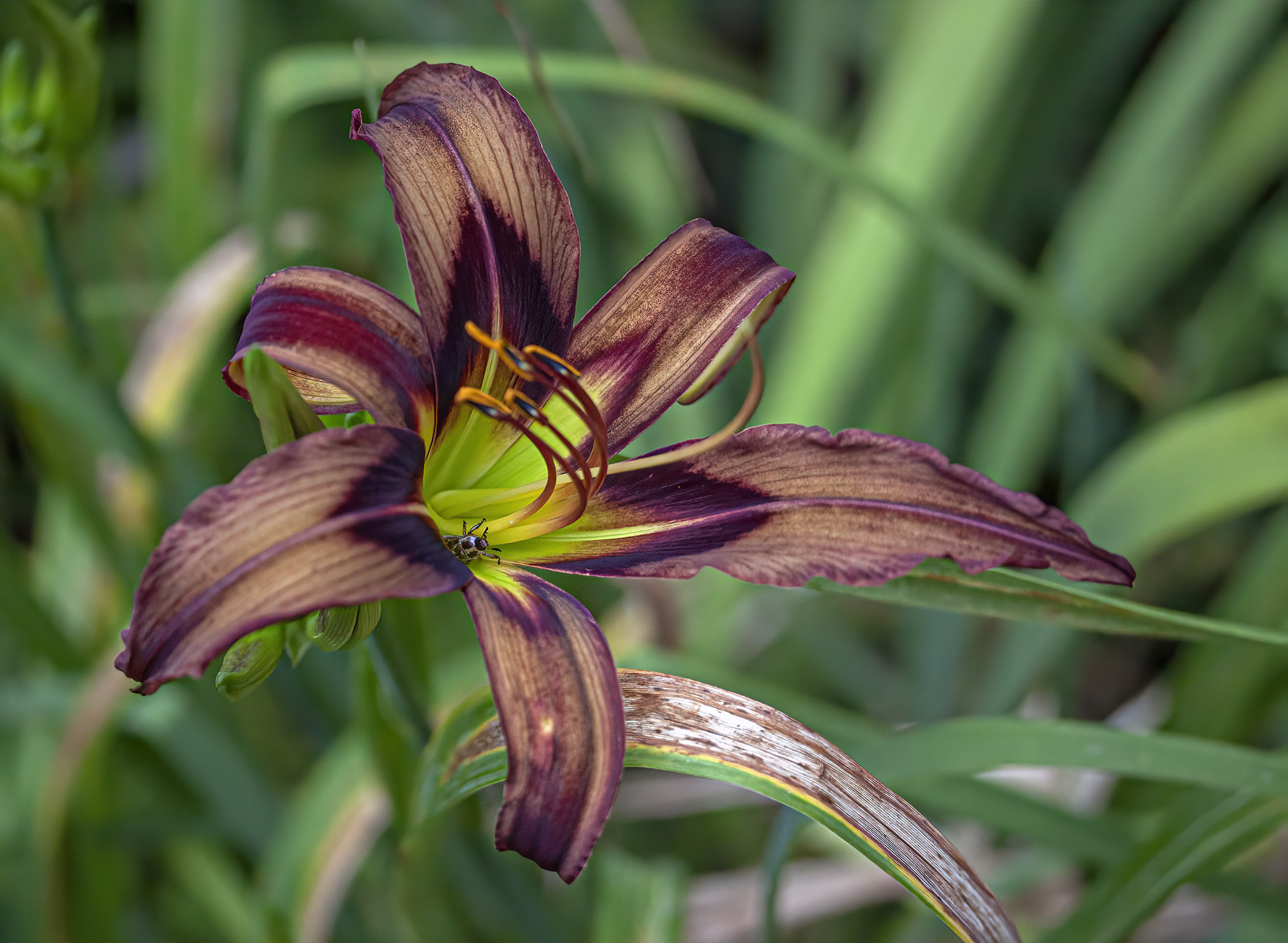
It’s amazing the things that show up in my photos that I did not notice when taking the shot, like this little beetle in the center of a striking lily that I photographed recently in the garden of my dear friend and neighbor Cindy Dyer. Cindy likes to call them “bonus bugs.” According to our rules, any bugs that you see when capturing a shot don’t “count” towards a bonus.

I do not have enough information to identify the insect. At first I thought it might be a cucumber beetle, but the pattern does not quite match the ones I have seen before. Cindy suggested that it might possibly be a carpet beetle. I also checked out a lot of different types of scarab beetles, but eventually decided that I was ok with not knowing the identity of the bonus bug.

I have included the second photo as a bonus. My original purpose in photographing the lily was to capture its beauty and unusual coloration and the second shot accomplished that goal. I carefully focused on the stamens (and particularly the anthers) and allowed the rest of the flower to fall out of focus. If I had not looked at the first photos, I might not have noticed the fuzzy shape of the bonus bug in the second image, but it is definitely there.

lily

lily

© Michael Q. Powell. All rights reserved.

Read Full Post »

How do you draw attention to the main subject in your photograph? One effective way is to choose a camera setting that will give you a shallow depth of field, so that only the subject is in sharp focus and the rest of the image is blurred. Another way is to ensure that the colors and texture of the background contrast with those of the subject.

I used both of these techniques yesterday morning when I spotted this metallic green sweat bee (g. Agapostemon) on one of the Shasta daisies growing in the garden of my neighbor and photography mentor Cindy Dyer. I love these little bees with their large speckled eyes and shiny green bodies and got as close to this one as I dared with my Canon 60mm macro lens.

I opened the aperture of the lens all the way to f/2.8 to let in lots of light and to achieve the narrowest possible depth of field. That is why the center of the daisy falls so quickly out of focus. As I was composing the shot, the flower reminded me of an egg that had been fried “sunny-side up” and I chose an angle that emphasized that look. (In case you are curious about the other camera settings, the ISO was 800 and the shutter speed was 1/800 sec.)

There is nothing super special about this image, but it is a fun little photo taken close to home that reminds me that beauty is everywhere. A series of creative choices in camera settings and composition by the photographer can often help to draw a viewer’s attention to that beauty. (I encourage you to click on the image to get a better view of the beautiful details of the little green bee.)

green sweat bee

© Michael Q. Powell. All rights reserved.

Read Full Post »

I was delighted on Monday to see that Swamp Milkweed (Asclepias incarnata) is now flowering at Huntley Meadows Park, a local marshland refuge. Butterflies really seem to like all varieties of milkweed and I was thrilled to photograph several different species that were feeding on these fabulous flowers, including a Spicebush Swallowtail(Papilio troilus) in the first image; an Eastern Tiger Swallowtail (Papilio glaucus) in the second image; and in the final image, a Silver-spotted Skipper (Epargyreus clarus), a smaller skipper that I cannot identify, and a bee.

Spicebush Swallowtail

Eastern Tiger Swallowtail

Silver-spotted Skipper

© Michael Q. Powell. All rights reserved.
 

Read Full Post »

I love the spectacular colors of the Asiatic lilies that are now blooming in the garden of my dear friend and neighbor Cindy Dyer. These brilliant colors, which look almost neon in their intensity, were especially welcome yesterday, when it was gray and rainy the entire day.

Asiatic lily

Asiatic lily

Asiatic lily

© Michael Q. Powell. All rights reserved.
 

Read Full Post »

Many of the irises have withered in the garden of my dear friend and neighbor Cindy Dyer, but her lilies are now starting to open, like this beauty that I photographed early on Sunday morning. It is hot and humid today, so I did not feel much like venturing outside with my camera. Instead I decided to share this burst of bright color.

Have a wonderful Monday.

lily

© Michael Q. Powell. All rights reserved.

Read Full Post »

I have been seeing the flowers of tulip trees (Liriodendron tulipifera) on the ground during some recent photo excursions and yesterday I finally found a tree at Occoquan Regional Park where the flowers were low enough for me to get a shot of one of them. I like to call it a tulip tree because of the shape of these flowers, but it has lots of other names by which it is known including American tulip tree, tulipwood, tuliptree, tulip poplar, whitewood, fiddletree, canoewood, and yellow poplar.

Tulip trees are fast-growing and can get to be really tall. According to the Arbor Day Foundation, a tulip tree can have height increases of more than 24 inches (61 cm) per year. George Washington is reported to have planted some tulip trees at Mount Vernon that are now 140 feet (43 meters) tall. They can grow even taller than that—according to Wikipedia, the current tallest tulip tree on record in North America is 191.9 feet (58 meters) in height. Wow!

You may notice that I managed to capture an insect in this image, one that I cannot immediately identify. My friend Cindy Dyer like to call them “bonus bugs,” when you discover them only after you have taken the photo. In this case, I was watching the insect crawl around as I was composing the shot, so it does not qualify as a “bonus bug.”

tulip tree

© Michael Q. Powell. All rights reserved.


Read Full Post »

As I was wandering about last Saturday in Prince William County, I was thrilled to spot my first flower on a Mountain Laurel shrub (Kalmia latifolia). I had been noticing lots of buds during recent trips, but this was the first one that I spotted that was open. I think there may be cultivated versions of mountain laurel, but it is naturally found on rocky slopes and in mountain forest areas, which was exactly the environment that I was exploring.

I simply love the shape, colors, and pattern of the gorgeous flowers of this plant. After I published this post, I decided to add a second photo, one that shows the unopened buds of a mountain laurel, their additional beauty waiting to be revealed.

mountain laurel

mountain laurel

© Michael Q. Powell. All rights reserved.


Read Full Post »

« Newer Posts - Older Posts »