Feeds:
Posts
Comments

Archive for the ‘Birds’ Category

When I caught a glimpse of the body of this bird at Occoquan Bay National Wildlife Refuge last week, I initially thought it was some kind of sparrow. However, even though I was shooting into the light, I could see that its head was read. What could it possibly be?

Some experts in a Facebook birding forum informed me that it is an immature male House Finch (Haemorhous mexicanus). According to Wikipedia, this species was originally only a resident of Mexico and the southestern United States. It was introduced to eastern North America in the 1940s when the birds were sold illegally in New York City as “Hollywood Finches.” To avoid prosecution under the Migratory Bird Treaty Act of 1918, vendors and owners released the birds into the wild and they have since become naturalized in largely unforested land across the eastern U.S.

House Finch

© Michael Q. Powell. All rights reserved.

Read Full Post »

As I was exploring in Huntley Meadows Park last Friday, I heard the unmistakeable rattling call of a kingfisher. After a bit of searching, I located this female Belted Kingfisher (Megaceryle alcyon) on a perch high above an osprey nesting platform jutting out of the water. I watched and waited and eventually kingfisher flew down from the perch in an attempt to catch a fish.

The kingfisher was successful and returned to the perch with a sizable fish. The first challenge for the kingfisher was to subdue the fish and it beat the fish repeatedly against the perch. At the same time it adjusted the fish in order to swallow the fish headfirst, in the same way that a great blue heron does. In the second image, you can see that the kingfisher has maneuvered the fish into almost the proper position.

I am a bit more used to watching ospreys and eagles consume fish, which they accomplish by tearing away pieces of the fish with their sharp beaks while holding down the fish with their equally sharp talons. Kingfishers have differently-shaped bills and talons, so they have to swallow their fish in a single gulp.

The kingfisher has little margin for error as it makes its forceful movements while balancing itself on a narrow perch high above the water. The final photo shows that mistakes can happen—the fish slipped out of the kingfisher’s bill when she lifted her head upwards to swallow it.

I am able to happily report that the kingfisher was able to fly down to the water, retrieve the fish, and eventually consume it. As always, I encourage you to double-click on the images to get a closer look at the wonderful details of the photos.

Belted Kingfisher

Belted Kingfisher

Belted Kingfisher

© Michael Q. Powell. All rights reserved.

Read Full Post »

This Eastern Bluebird (Sialia sialis) was totally focused on a single remaining berry when I spotted it last Wednesday at Occoquan Bay National Wildlife Refuge. The “prize” seems modest, but this little bird was determined. I believe it was successful in achieving its goal.

Eastern Bluebird

© Michael Q. Powell. All rights reserved.

Read Full Post »

In addition to the large raft of American Coots (Fulica americana) that I spotted in the waters off of Occoquan Bay Wildlife Refuge last week and featured in a posting entitled A raft of coots, I also saw three coots near to the shore swimming around in a little circle like they were lost. I do not know if they had somehow gotten separated from the group, but they struck me as being very vulnerable—as several readers have noted, coots are vulnerable to being picked off by bald eagles.

This close-up shots highlight some of the notable characteristics of this species, including their red eyes and their legs that are placed rather far back on their bodies, making walking a bit of a challenge.

American Coot

© Michael Q. Powell. All rights reserved.

Read Full Post »

It is a bit of a cliché, but I have to admit that bluebirds really do make me feel happy. I was therefore absolutely delighted to spot a small flock of them flitting in and out of the vegetation on Wednesday at Occoquan Bay National Wildlife Refuge. The rusty color on the breasts of these Eastern Bluebirds (Sialia sialis) fit in well with the fall foliage palette.

These three images show different approaches I used in trying to capture images of these beautiful little birds. Sometimes I tried to take shots when the blue birds were almost imbedded in the vegetation; sometimes I tried to get an unobstructed angle with the natural landscape providing a visual backdrop for the bird; and sometimes I tried to isolate the bird and use an uncluttered background such as the sky in the final photo.

I am not sure that any of these three approaches is necessarily better than the others. Instead I personally like the visual variety that comes from using somewhat different approaches when shooting a subject. What do you think?

Eastern Bluebird

Eastern Bluebird

Eastern Bluebird

© Michael Q. Powell. All rights reserved.


Read Full Post »

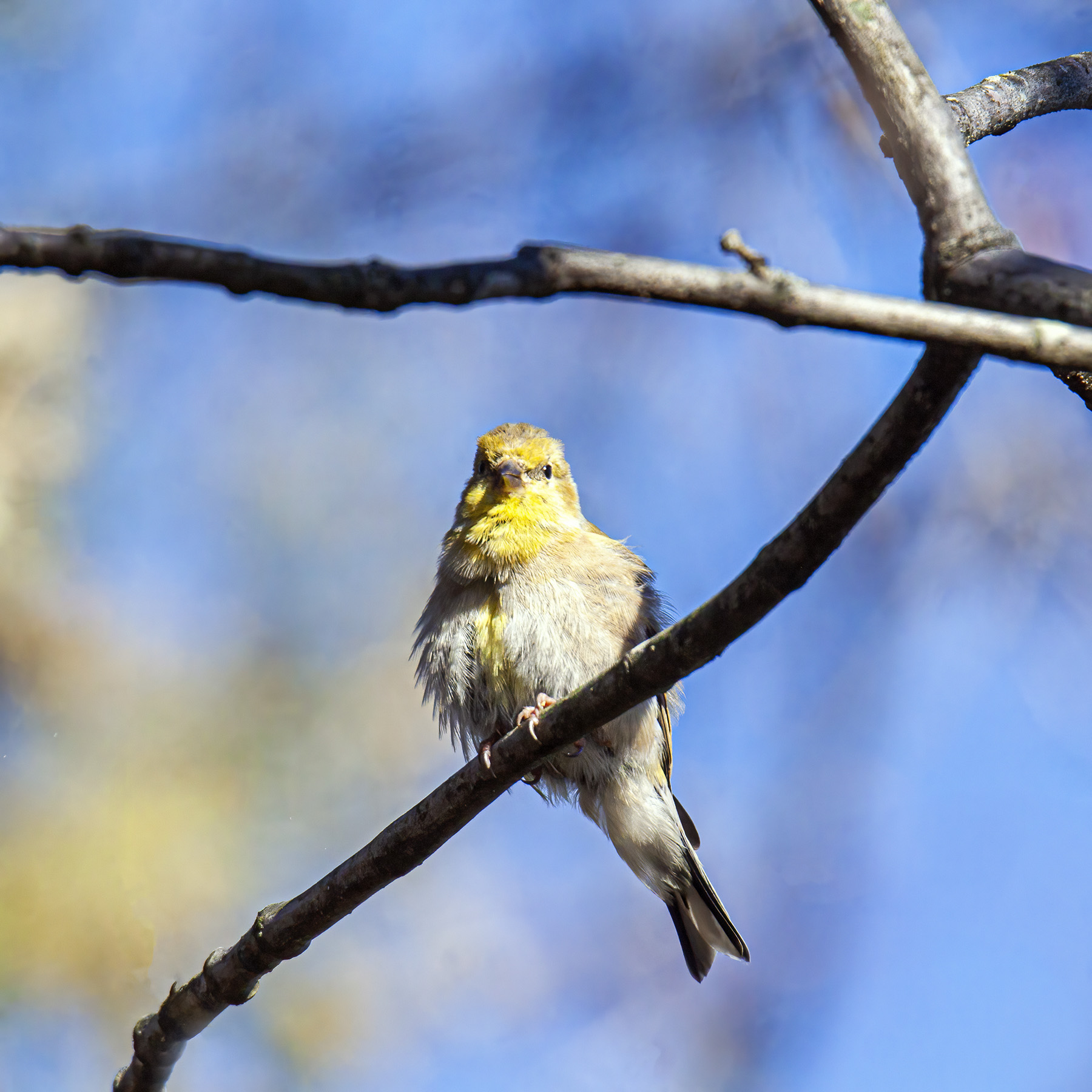
I was happy to spot this somewhat scruffy looking American Goldfinch (Spinus tristis) as I wandered the trails at Occoquan Bay National Wildlife Refuge yesterday seeking a respite from election news coverage. As is often the case, nature served as a soothing balm to calm my anxieties and reestablish my internal balance.


American Goldfinch

American Goldfinch

© Michael Q. Powell. All rights reserved.


Read Full Post »

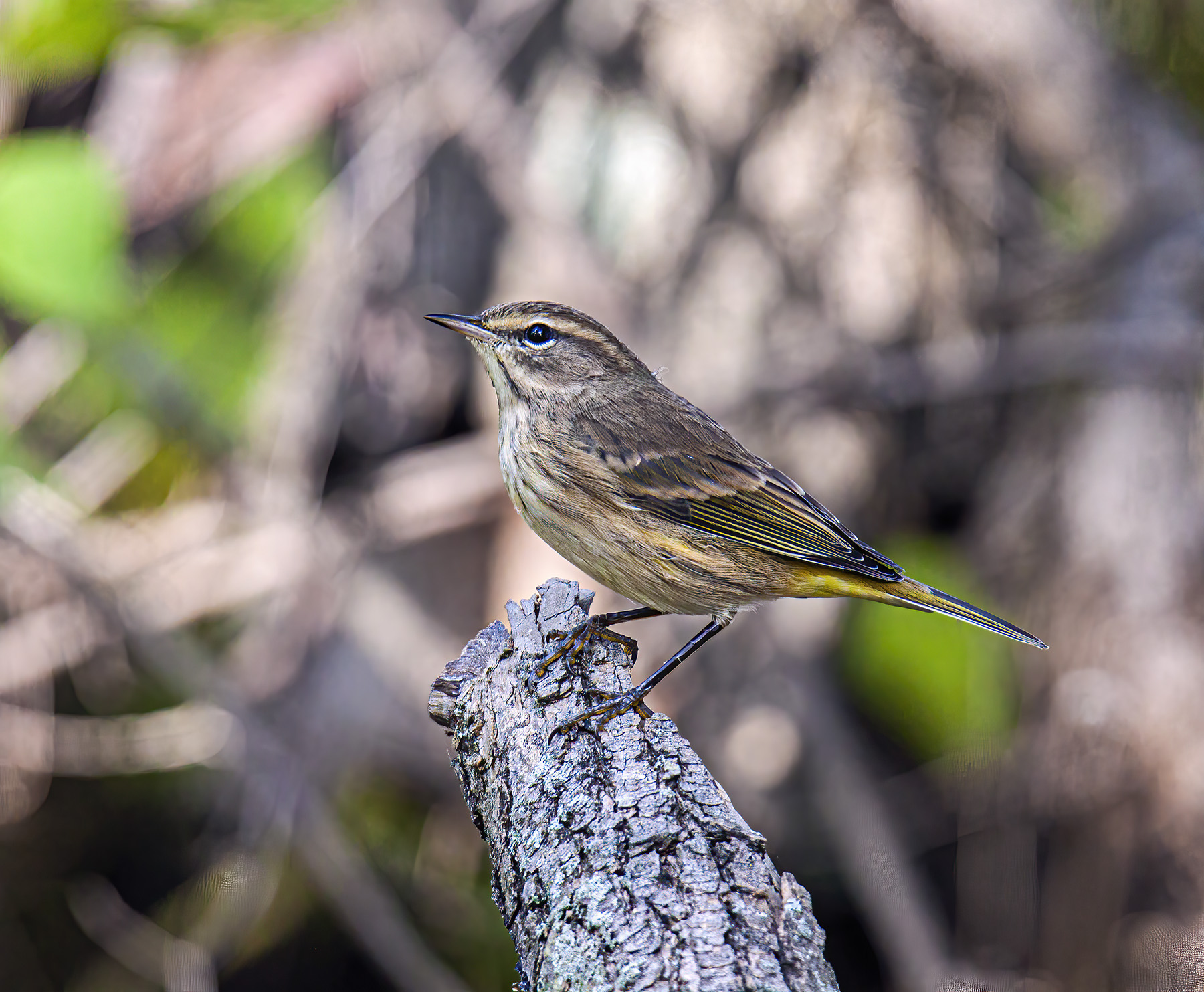
I was excited to spot this beautiful Palm Warbler (Setophaga palmarum) last Friday at Occoquan Bay National Wildlife Refuge. I had more or less given up on seeing any warblers except for Yellow-rumped Warbler, which will remain with us for a while, so this was a pleasant surprise. The little bird was full of energy and shortly after it leaned forward a little, as you can see in the second image, it flew to a more distant part of the field in which it was foraging.

Palm Warbler

Palm Warbler

© Michael Q. Powell. All rights reserved.

Read Full Post »

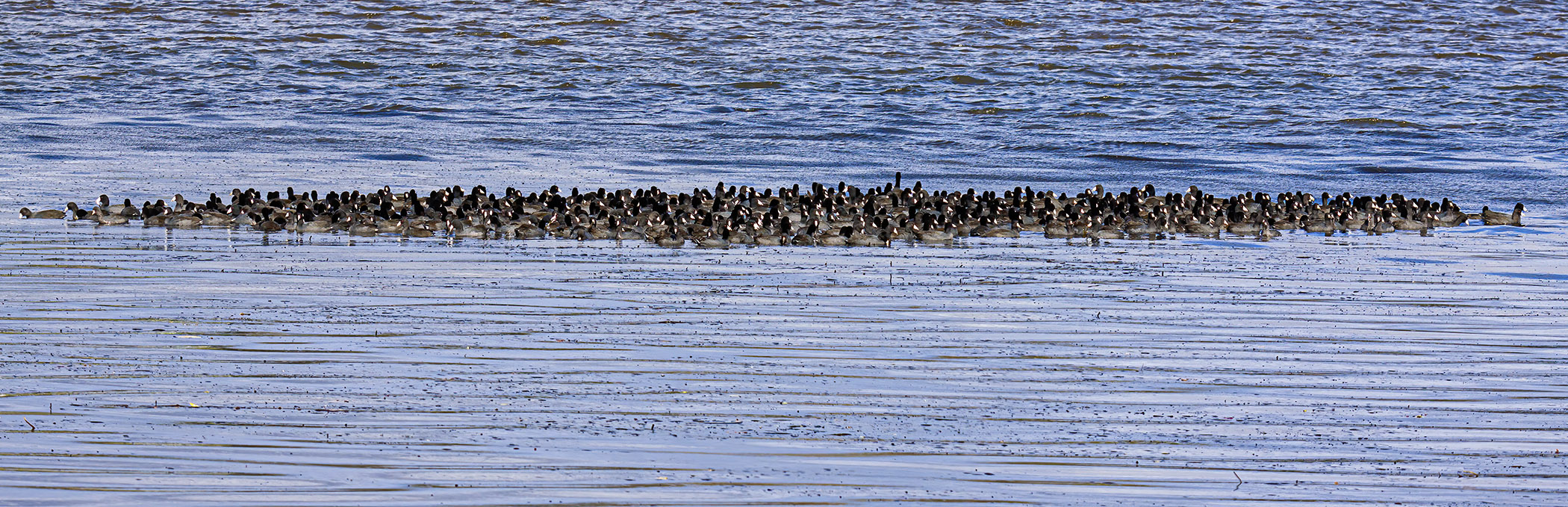
Normally when I see American Coots (Fulica americana) I see only a few of them at a time, but last Friday I spotted a whole raft of them in the waters off of Occoquan Bay National Wildlife Refuge. They seemed to be of mixed ages, not just old coots like me.

I zoomed out with my 150-600mm lens to capture the whole raft and then zoomed in to capture some details. I recommend that you double-click on the images, especially the second one, to see wonderful details, like all of the red eyes. There seem to be a number of different colored beaks in the group, suggesting the possibility that there are some other species mixed in, though it appears to be mostly coots.

American Coots

American Coots

© Michael Q. Powell. All rights reserved.

Read Full Post »

I spotted this bird from a distance on Friday at Occoquan Bay National Wildlife Refuge when it was perched and when it took to the air. The tail struck me as being exceptionally long and the wings seemed relatively short in length, so I decided it was probably not a Red-shouldered Hawk or a Red-tailed Hawk, the two most common hawks where I live. Was it a falcon or one of the smaller hawks?

As I usually do in situations like this, I asked for help in a Facebook group devoted to birding in Virginia. Some experts there identified this as a mature Cooper’s Hawk (Accipiter cooperii). The Cornell Lab of Ornithology described the species with these words, “Among the bird world’s most skillful fliers, Cooper’s Hawks are common woodland hawks that tear through cluttered tree canopies in high speed pursuit of other birds…Finding a Cooper’s Hawk is typically a matter of keeping your eyes peeled – they’re common but stealthy, and smaller than other common hawks like the red-tailed, so your eye might skip over them in flight.”

Cooper’s Hawks are about the size of crows, although males are significantly smaller than their mates. Mating can therefore be a tricky proposition for a male Cooper’s Hawk, given that females Cooper’s Hawks specialize in eating smaller birds.

Cooper's Hawk

Cooper's Hawk

© Michael Q. Powell. All rights reserved.


Read Full Post »

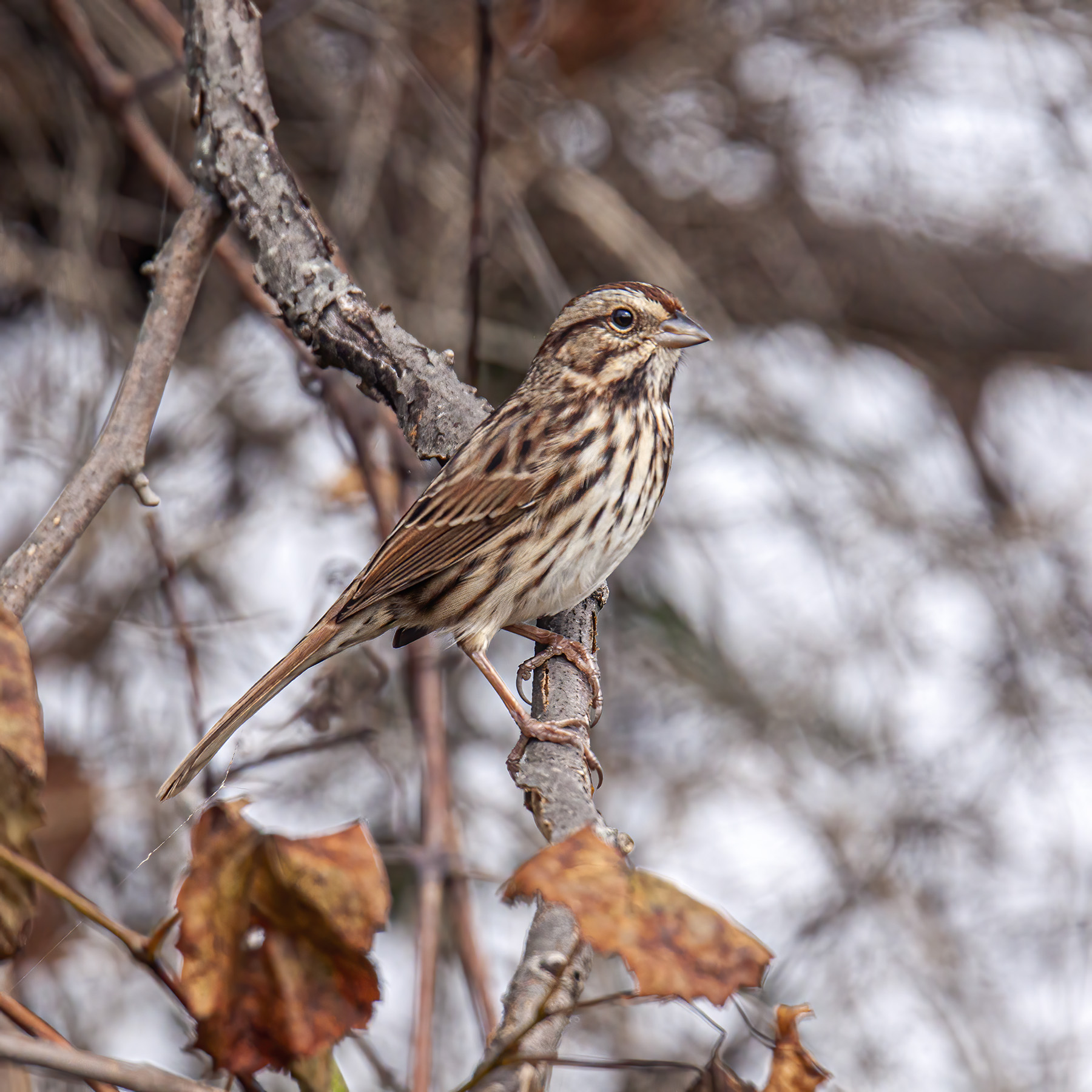
When I first started photographing birds, all sparrow looked the same to me—they were all nondescript little brown birds. Over time I have come to appreciate the subtle variations in color and markings that help to differentiate the species, although identification is still a bit of a hit-or-miss proposition for me.

I spotted this handsome sparrow on Monday as I was exploring at Occoquan Bay National Wildlife Refuge. I believe that it is a Song Sparrow (Melospiza melodia), one of the relatively common sparrow species where I live. I really like the sparrow’s perch and the fact that it includes some of the dried leaves that will soon be falling from the branch. The white skies in the background give this image an almost wintry feel, though it is way too early for me to be even thinking of snow.

Song Sparrow

© Michael Q. Powell. All rights reserved.

Read Full Post »

It is hard to appreciate the length of the wings of a Great Blue Heron (Ardea herodias) when it is standing in the water. When it takes off, however, the heron extends its wings fully and the sight is amazing, especially when the heron is flying away from you. This Great Blue Heron that I spotted on Monday at Occoquan Bay National Wildlife Refuge initially was standing on a small sandbar, but took to the air when it detected my presence. It started out heading away from me and gradually turned to my right as it gained altitude.

In case you are curious, the wingspan of a Great Blue Heron is 65.8-79.1 inches (167-201 cm), according to the Cornell Lab of Ornithology website. Wow!

Great Blue Heron

Great Blue Heron


Great Blue Heron

© Michael Q. Powell. All rights reserved.


Read Full Post »

With Halloween on the horizon, I thought I would share an image today of a Rusty Blackbird (Euphagus carolinus) that I spotted on Monday at Occoquan Bay National Wildlife Refuge. The bird’s wide-open pale eyes give it an eerie look that fits in well with other Halloween icons like black cats, witches, and skeletons.

According to the Cornell Lab of Ornithology website, “Rusty Blackbird is one of North America’s most rapidly declining species. The population has plunged an estimated 85-99 percent over the past forty years and scientists are completely puzzled as to what is the cause.” Needless to say, I was thrilled to see this Rusty Blackbird that appeared to part of a small flock high in the trees.

Rusty Blackbird

© Michael Q. Powell. All rights reserved.

Read Full Post »

On Monday at Occoquan Bay National Wildlife Refuge I spotted Yellow-rumped Warblers (Setophaga coronata) multiple times.  However, there is a huge difference between getting a glimpse and getting a shot of one of these hyperactive little birds, particularly when many of the trees still have their leaves.

I captured the first image when one of the warblers was feasting on clusters of poison ivy berries. I definitely was not complaining when he did not offer to share his “treats.” I was surprised to learn several years ago that these berries are a primary food source for a number of small birds during the winter months.

In the second image, I believe the warbler was getting ready to move to a new perch or may have just arrived at this one. In either case, I think it looks pretty cool to see the one wing partially extended.

The composition of the final photo is the simplest—it is just a shot of the perched warbler. However, I really like the way that some of the foliage shows through in the blurry background. You may have noted that the backgrounds are light-colored. On the day when I took these shots, the skies were completely overcast and appeared to be a solid white.


Yellow-rumped Warbler

Yellow-rumped Warbler

Yellow-rumped Warbler

© Michael Q. Powell. All rights reserved.

Read Full Post »

Some birds are with us for only a season or two before they migrate to new locations. Great Blue Heron (Ardea herodias), however, stay in our area throughout the year and I can generally find one if I look hard enough. When I spotted this one recently at Huntley Meadows Park, it was perched on a single leg on a wood pile near the edge of the forest.

The heron was in the process of preening and if you look closely, you can see what I think are tiny feathers in its long bill. I noticed that the heron’s eyeswere only half-open, almost like the heron was still half-asleep as it prepared for the new day.

Great Blue Heron


© Michael Q. Powell. All rights reserved.

Read Full Post »

I thought that all of the migrating warblers had already finished passing through our area, so I was delighted when I spotted this beautiful little Palm Warbler (Setophaga palmarum) this past Monday at Huntley Meadows Park. We had several days of warmer than average temperatures, so I had switched back to my macro lens from my longer telephoto lens, thinking there was a chance I might get some close-ups of late season dragonflies. As it turned out, I did not see many dragonflies, but did see a small group of birds including this one.

Close-up shots of the warbler were out of the question, but I was determined get some shots nonetheless as the little warbler bounced all around in the vegetation. Although I had to crop these three shots quite a bit, I was pretty happy with them, because collectively they provide a nice view of the yellow coloration on various parts of this warbler’s body. The colors of the warblers in the autumn are beautiful, I believe, even though they tend to be significantly more subdued than the bird’s brighter colors in the spring.

Palm Warbler

Palm Warbler

Palm Warbler

© Michael Q. Powell. All rights reserved.

Read Full Post »

My idea of a perfect bird shot during this autumn season would be to capture a pretty bird perfectly posed against a background of colorful foliage. Alas, things don’t often work out that well in the real world, so I have to make the best of what I am able to find.

In this case, it was a Gray Catbird (Dumetella carolinensis) that I spotted during a recent visit to Occoquan Bay National Wildlife Refuge. The feathers of this catbird are muted in color, as are the colors of the dying leaves that surround it. Nonetheless, I like this rather pleasing portrait of a bird that has a vocal repertoire equal to that of a mockingbird.

Gray Catbird

© Michael Q. Powell. All rights reserved.

Read Full Post »

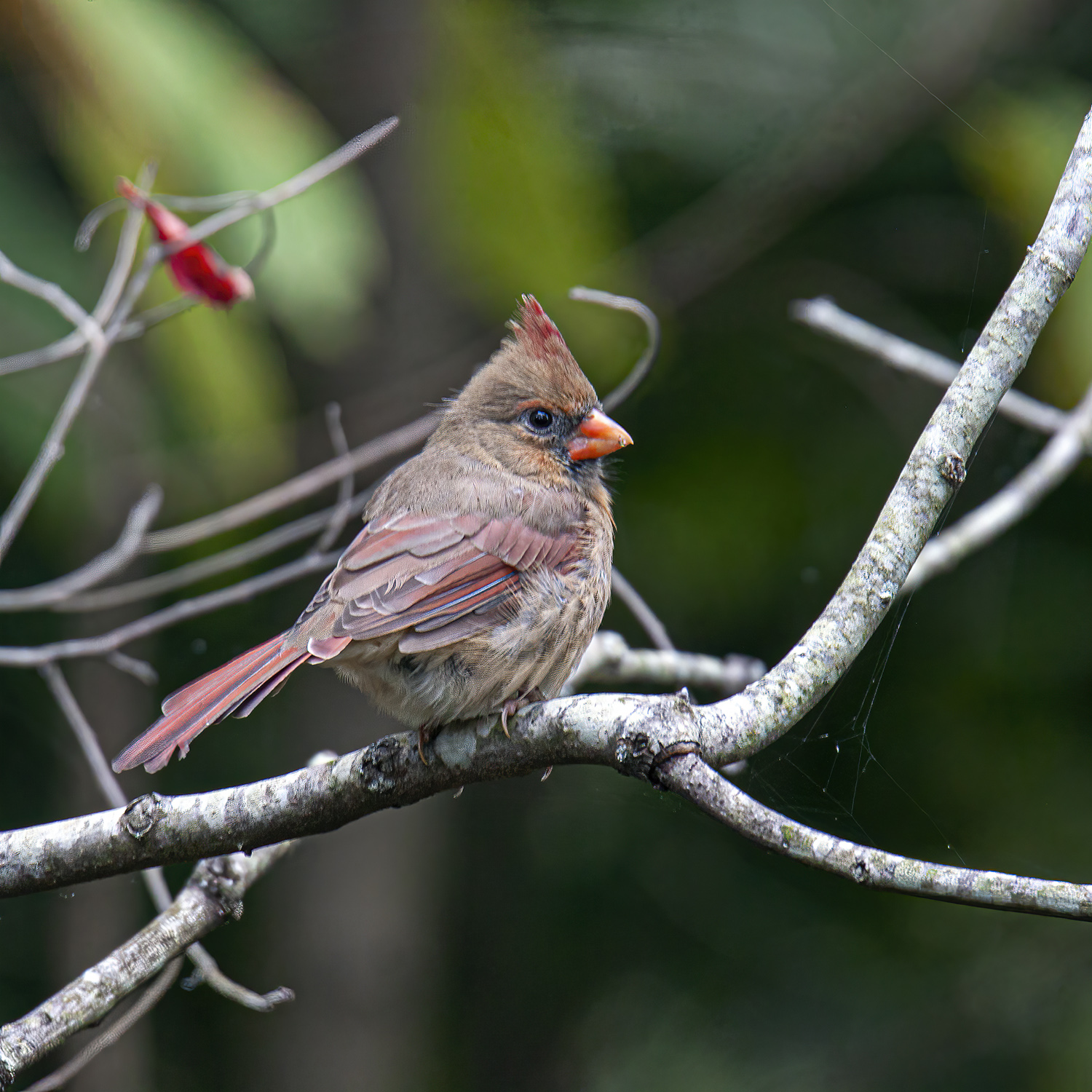
Although I really like the bright red color of the male Northern Cardinal (Cardinalis cardinalis), there is something even more special about the subtle beauty of a female cardinal, like this one that I spotted last week at Occoquan Bay National Wildlife Refuge. The muted colors of this bird seem particularly appropriate for autumn in this area. The changing foliage here rarely has the brilliant yellows and reds found in other parts of the country, but transitions to paler shades before the leaves all fall to the ground.

Northern Cardinal

© Michael Q. Powell. All rights reserved.

Read Full Post »

I have always admired Downy Woodpeckers (Picoides pubescens), the smallest woodpeckers in our area, because they are so energetic, hard-working, and focused. They are fun to watch as they move all around in a tree, poking and probing as they search for a tasty treat. I spotted this Downy Woodpecker, which looks to be a female because it does not have a patch of red on the back of its head, last week as I was exploring Occoquan Bay National Wildlife Refuge.

Downy Woodpecker

Downy Woodpecker

© Michael Q. Powell. All rights reserved.


Read Full Post »

When I first saw this bird bouncing around on the ground on Monday at Occoquan Bay National Wildlife Refuge, I thought that it might be a sparrow. Then I caught a flash of yellow as the bird wagged its tail and I realized that it was a Palm Warbler (Setophaga palmarum).

Most warblers forage high in the trees, where they are difficult to see. The Palm Warbler, however, forages mainly on open ground or in low vegetation, making it marginally easy to spot and to identify.

Palm Warbler

© Michael Q. Powell. All rights reserved.

Read Full Post »

Yesterday marked the change of seasons for me—I switched the walkaround lens on my camera from my 180mm macro, which has been my almost constant companion throughout the spring and summer, to my much longer 150-600mm telephoto zoom lens. The change signifies my reluctant acceptance of the reality that the insect season is slowly drawing to a close and that increasingly I will be focusing on birds.

Warblers are still passing through our area as they head south, so I decided yesterday to try to find some at Occoquan Bay National Wildlife Refuge, a location where I know that other photographers have spotted a variety of warblers. Although early morning is usually the best time for birding, I went at midday to avoid any potential crowds.

Most of the leaves are still on the trees, so it is a challenge to spot little birds and even tougher to photograph them. I was thrilled when I caught a glimpse of yellow after a long fruitless search and managed to get this mostly unobstructed view of a handsome warbler. I had no idea what species it was, but some experts on a Facebook birding forum informed me that it was a Cape May Warbler (Setophaga tigrina), a species that I had never before encountered.

Cape May Warblers breed in the spruce-fir forests in the North and winter in the Caribbean, in lush habitats with plenty of insects and flowers—I think I might enjoy that lifestyle. According to the Cornell Lab of Ornithology website, the tongue of the Cape May Warbler is unique among warblers—it is curled and semi-tubular and is used to collect nectar, almost like a hummingbird does.

Cape May Warbler

© Michael Q. Powell. All rights reserved.

Read Full Post »

At this time of the year, the vegetation is thick and the leaves are still on the trees, so it is hard for me to spot birds. Of course, it is a bit easier when the birds are large in size, like this Great Blue Heron (Ardea herodias) that I spotted amidst the reeds and lily pads this past Wednesday at Occoquan Bay National Wildlife Refuge.

The heron did not show any signs that it was actively hunting, but with herons, it is hard to tell—they will stand for lengthy periods of time in a single spot and then strike suddenly and violently. As a photographer, it is tough for me to have that same amount of patience and vigilance. After a reasonable amount of waiting, I will often move on, as I did here, and leave the heron peacefully in place.

Great Blue Heron

© Michael Q. Powell. All rights reserved.


Read Full Post »

During my recent trips to Occoquan Bay National Wildlife Refuge I have been seeing a lot of Wild Turkeys (Meleagris gallopavo). Most of the time they have been in small groups, but occasionally I will run across one that seems to be alone or maybe simply separated temporarily from its group.

In the first photos, you will notice the long “beards” of two of the turkeys, which suggest that they are mature males. Generally flocks of turkeys are separated by gender and by age, so these may all be mature males, though the one on the left looks to be smaller than the other three, though that might simply be a factor of the viewing angle. The turkey in the second photo has a shorter “beard” and may be a jake, the term used for an immature male turkey.

It is interesting to watch wild turkeys. They seem slow and deliberate in all that they do, strutting and poking about for food. Even when they are spooked, they don’t accelerate quickly as most birds do, but instead they slowly fade into the underbrush.

Wild Turkey

Wild Turkey

© Michael Q. Powell. All rights reserved.


Read Full Post »

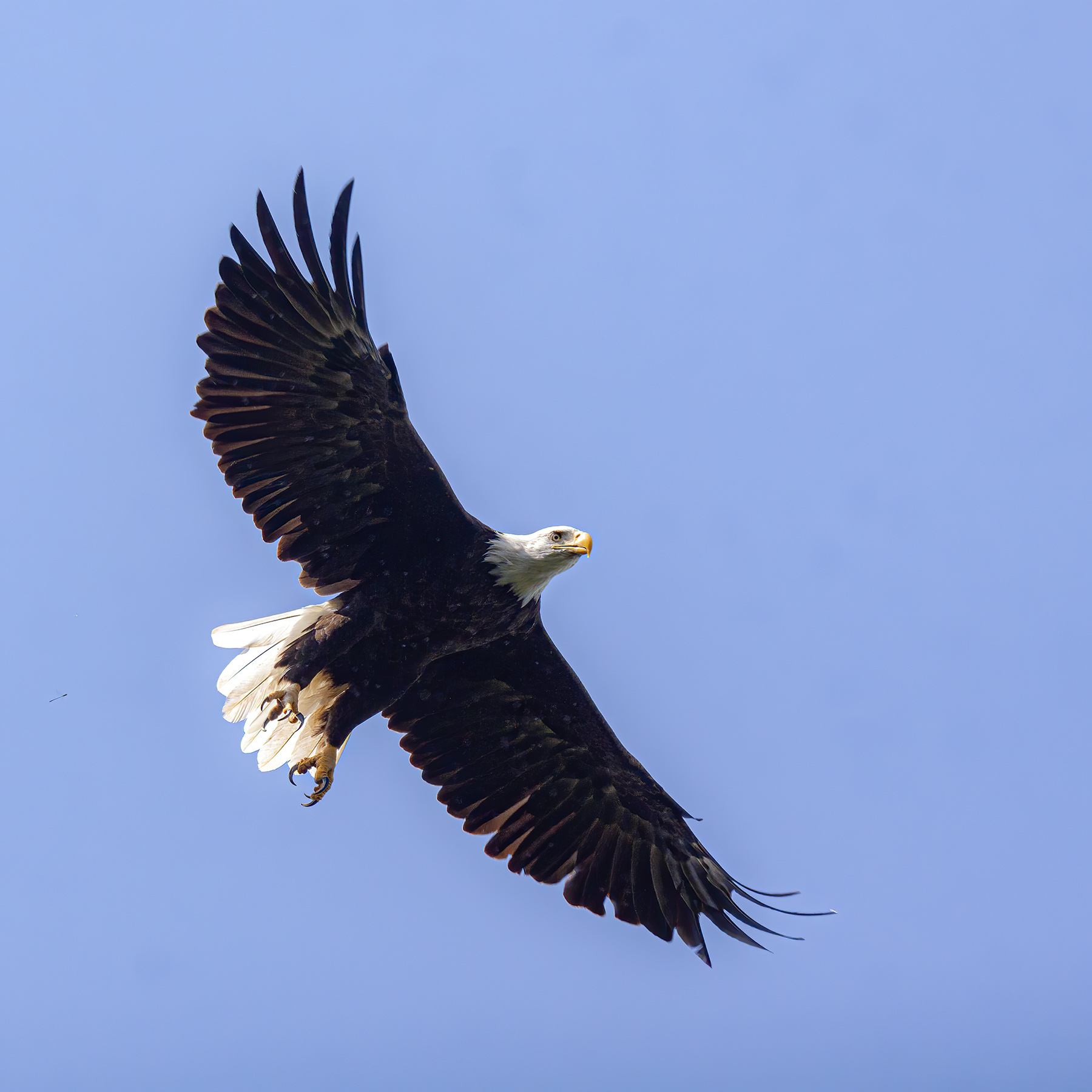
I was thrilled yesterday at Occoquan Bay National Wildlife Refuge to spot this beautiful Bald Eagle (Haliaeetus leucocephalus). Unfortunately it also spotted me. I captured these images as the eagle began to take off and then as it was flying away.

I was looking for an uncommon dragonfly that had been seen recently at this refuge, so I had my macro lens on my camera and was mostly looking down. As I was passing through a section of the trail that had a lot of tree cover, though, I heard what I thought was the call of an eagle. I slowed down and started scanning the trees. I spotted eagle out on a limb when I stepped partially out of the tree cover. I knew that I was exposed and would be seen, so I positioned myself and prepared for what I anticipated would happen.

I am surprised that I was able to capture such detailed images considering that I was shooting with such a short lens—my 180mm macro lens has an equivalent field of view of a 288mm lens because my camera has an APS-C crop sensor. Be sure to double click on the images if you want to see the details of this majestic bird, including its beak and its talons.

In a way, however, it was an advantage that I was not shooting with my zoom lens, because I could focus all of my efforts on tracking the eagle and did not have to worry about zooming in and out. For example, if I had zoomed in on the eagle for the second shot when its body was compact, I would probably have clipped its wings when it spread them wide open in the third shot.

I did not find the dragonfly that I was looking for, but, as I have said repeatedly in this blog, any day that I see a bald eagle is a good day, especially when I manage to photograph it.

Bald Eagle

Bald Eagle

Bald Eagle

© Michael Q. Powell. All rights reserved.


Read Full Post »

Even before this pandemic, I liked to avoid people when I was out photowalking in the wild. Ideally my contemplation of nature is a solitary and silent pursuit. Now that I am retired, I have the luxury of avoiding the weekends, the peak times when my favorite spots are sometime overrun by groups of noisy people. 

Most of our weather in recent weeks has been either hot and humid or rainy, so I have not gone out as often as I would have liked to do. Last Sunday afternoon, however, the weather was nice and I was really itching to take some pictures. I decided to visit Ben Brenman Park in nearby Alexandria, Virginia to search for dragonflies. This wide-open park has large athletic fields for playing soccer and baseball and also has a small pond where I have found dragonflies in previous years. There were a good number of people there, but it was easy to avoid them because there were no trails to restrict my movements.

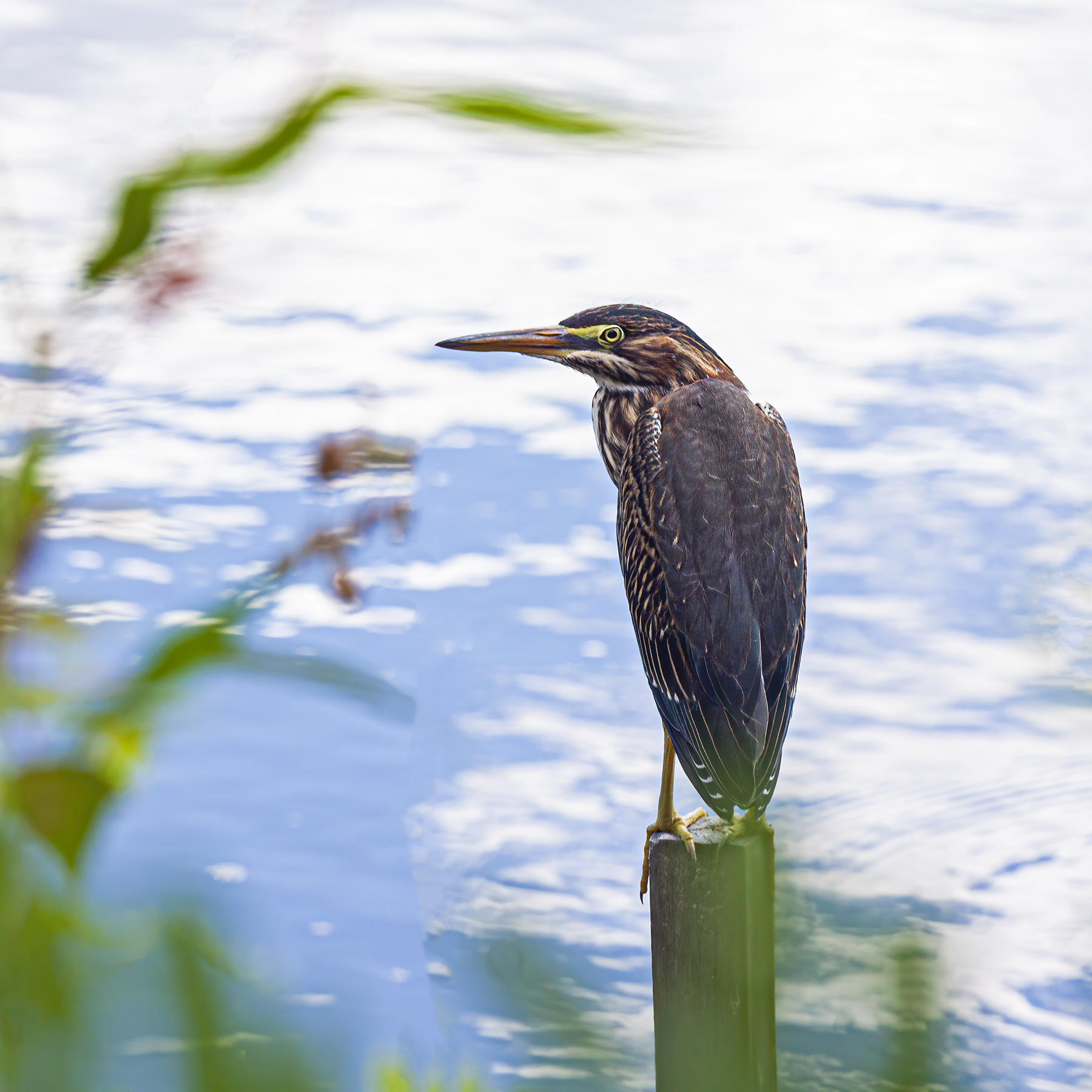
As it turned out, I did not find many dragonflies, but I did spot this cool-looking Green Heron (Butorides virescens) at the edge of the pond, perched on some kind of post in the water. My view was blocked by vegetation, but I was able to find a visual tunnel that gave me a mostly unobstructed view of the heron.

I have always loved Green Herons, which always seem to have more personality and a wider range of facial expression that the Great Blue Herons that I see more frequently. When they are hunting, Green Herons tend to stay near the water’s edge, where they blend in with the vegetation, which is why many people have never seen one.

We are still in dragonfly season, but I anticipate that I will be featuring more birds in my blog postings in upcoming months. This time of the year my eyes get a real workout, because I need to be simultaneously scanning low and close for insects and far and high for birds.

Green Heron

© Michael Q. Powell. All rights reserved.

Read Full Post »

As the pandemic continues, I encounter signs everywhere reminding me of the importance of social distancing. Most of them are quite straightforward, but some of them attempt to convey the message creatively, like this large banner that I encountered last week at Occoquan Bay National Wildlife Refuge.

This photo shows only the text in the top one-third of the banner and does not include the image of a Great Blue Heron that filled the bottom two-thirds of the banner. The bottom line message is simple—Be like the Great Blue Heron and practice social distancing, but the literal bottom line that made me laugh. You may need to double-click on the image to read the text in fine print, but I am sure that it will put at least a smile on your face if you do so.

Have a wonderful Wednesday.

social distancing

© Michael Q. Powell. All rights reserved.

Read Full Post »

At this time of the year it is hard to spot Bald Eagles (Haliaeetus leucocephalus) when they are almost hidden by the vegetation. I was really excited to get a tiny peek at this one yesterday at Occoquan Bay National Wildlife Refuge, my first eagle sighting in months. The eagle spotted me when I tried to move in for a closer shot and flew off. It is tough get a good shot when your subject has sharper vision and quicker reactions than you do.

As I mentioned in a post a few days ago, however, eagles have “stopping power” for me—I will invariably try to photograph a bald eagle when I see one, even if it is far away and almost hidden. Besides, I figured that some of you might like a momentary respite from an almost steady diet of insect photos recently.

Bald Eagle

© Michael Q. Powell. All rights reserved.


Read Full Post »

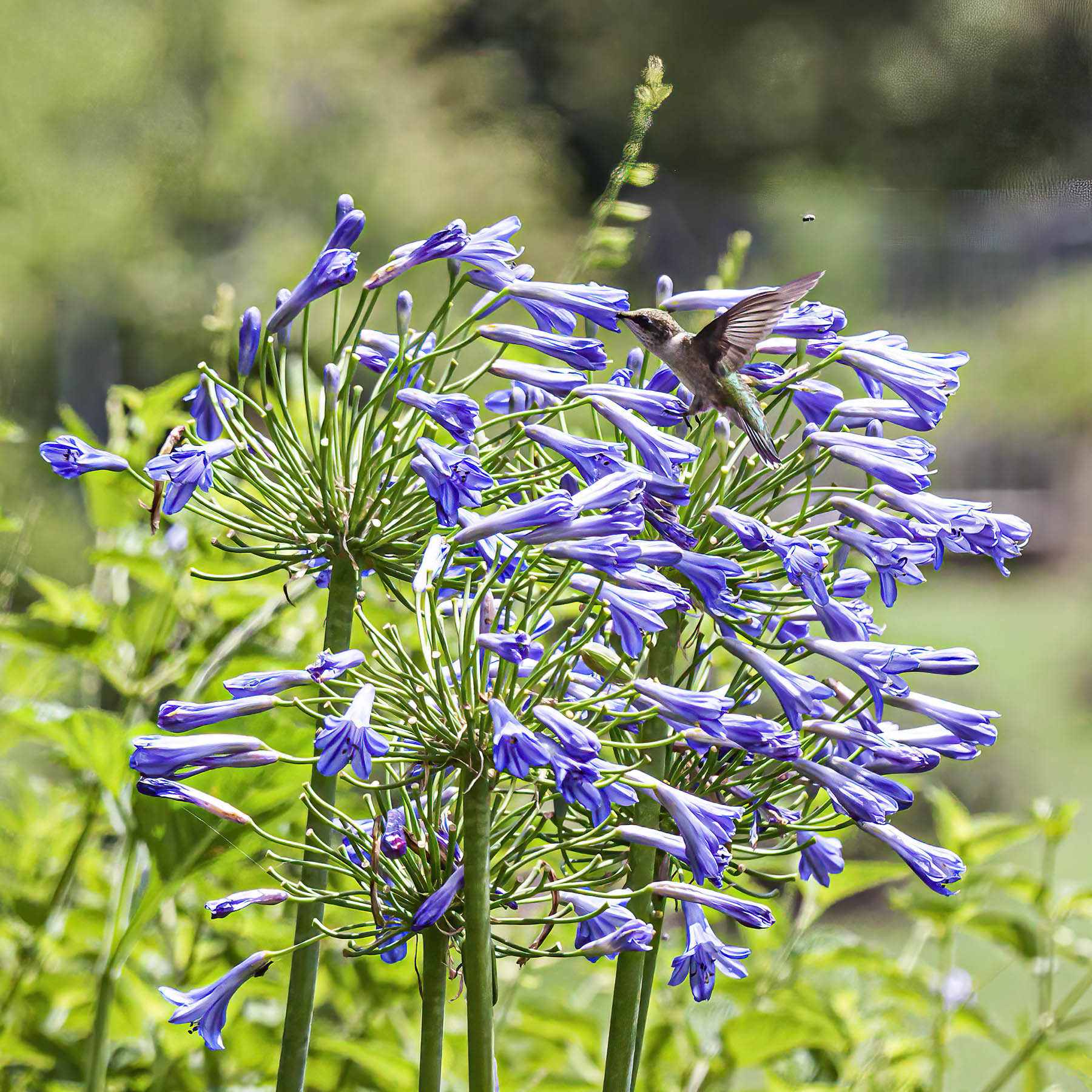
During a short visit to Green Spring Gardens yesterday I was thrilled not only to see some Ruby-throated Hummingbirds (Archilochus colubris), but also to get some shots of at least one of them. I am not sure that a 180mm macro lens is optimal for this subject, but it worked, albeit with a need for an often significant crop of the original images.

Even though it was over 90 degrees (32 degrees C) when I set out, I felt a need to get out of the house, stretch my legs, and shoot a little. I chose this county-run historic garden because it is not far from where I live and I knew it had some shady areas. I expected to be photographing mostly insects and flowers, so my trusty 180mm macro lens was affixed to my camera.

As I was chasing some little dragonflies in one patch of flowers, I remembered that I had seen hummingbirds in this same patch a few years ago. Recently I have seen some awesome shots of hummingbirds on Facebook taken by local photographers at this garden, so I was certainly aware I might spot the speedy little birds. Once I spotted a hummingbird flitting among the flowers, I decided to stay at this spot and see if I too could capture a shot.

This sun-lit patch of flowers was long and narrow and the hummingbird would make short forays into one part of it and then would fly up into the shade of a tall tree. I never could establish if I was seeing a single hummingbird, which looked to be a female, or if there were multiple hummingbirds taking turns.

As you can see from the photos below, the hummingbird gave attention to a variety of different flowers, none of which I can identify for sure—maybe that is bee balm in the second shot. I have read that hummingbirds prefer red-colored flowers, but this hummingbird did not seem to discriminate on the basis of color. It is interesting to see how the hummingbird’s approach varied a little depending on the characteristics of the flower, such as the length of the tubular section into which the hummingbird inserted its long, thin bill.

Be sure to click on the final photo and you will see that the hummingbird is using its tiny feet to perch on an unopened flower to get greater leverage and a better angle of attack. You’ll also see a little bee in flight that had been disturbed by the hummingbird’s efforts.

When I returned home, I saw an amazing close-up hummingbird photo on Facebook taken earlier that morning on the same bluish-purple flowers that you see in my final photo. When I asked the photographer how far away he was when he took his photo, he said he was at the minimum focusing distance of his lens—15 feet (457 cm)—so I suspect he was shooting with a 600mm lens. I think that I might have been at the same distance when I took my shot.

Periodically I think about purchasing one of those monster lenses, but am somewhat deterred by the $12,999 price tag for the newest Canon 600mm lens and by its weight and size. All in all, I am quite content with the results I get from my current camera gear, including these images of hummingbirds in July.

Ruby-throated Hummingbird

Ruby-throated Hummingbird

Ruby-throated Hummingbird

© Michael Q. Powell. All rights reserved.


Read Full Post »

July is World Watercolor Month, a month-long challenge in which watercolor painters of all ages and skill levels are encouraged to paint daily and post their work on-line. I have joined this challenge and am trying to paint something every day using the daily prompts at worldwatercolormonth.com. So far, I have managed to paint something every single day, generally following the daily prompt. Thanks to all of you for your support and encouragement as I have taken this little artistic detour on my photography journey.

If you want to see the first three installments of my painting efforts this month, check out my previous postings ‘More fun with watercolor‘, ‘World Watercolor Month 2020—part 2 ,’ and World Watercolor Month 2020—part 3.’ This fourth installment highlights my painting efforts of the past six days in reverse chronological order.

The prompt for 22 July was “valuable.” I decided to depict nature in a landscape done entirely in Payne’s Gray, because during this time of quarantine, nature has been a refuge for me, of inestimable value for my peace of mind. There is no particular significance to the color—I imply liked the idea of using a single color and focusing on values.

The prompt for 21 July was “organic.” When I thought of the word organics, all I could think of was fruits, vegetables, and fertilizer, none of which I wanted to paint. Instead I painted an “organic” landscape with no man-made objects in it. As you can see, all of the objects were stylized as I experimented with a different shape and brush strokes for pine trees.

The prompt for 20 July was “wiggle.”  I decided to do a little painting of a Northern Water Snake that I photographed swimming in the shallow water of the Potomac River earlier this year. The color and pattern is not quite realistic, but I like the way that I captured the snake’s undulation.

The prompt for 19 July was “favorite scent.” I love the smell of pine trees, so I tried to paint a mountain scene with pine trees in the mist after watching a YouTube tutorial by Grant Fuller. My version seems to have an almost Asian feel to it that I really like. This is probably my favorite painting of this little group.

The prompt for 18 July was “soft.” It’s a bit of a stretch, but I like to think the two little sumi-e style birds that I painted have soft feathers on their tummies and are soft-spoken. The birds look a little cartoonish, but I like the way that they seem to be engaged in a conversation.

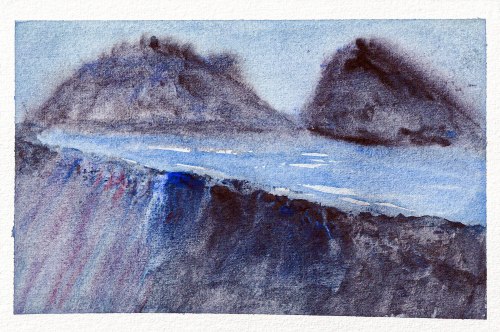
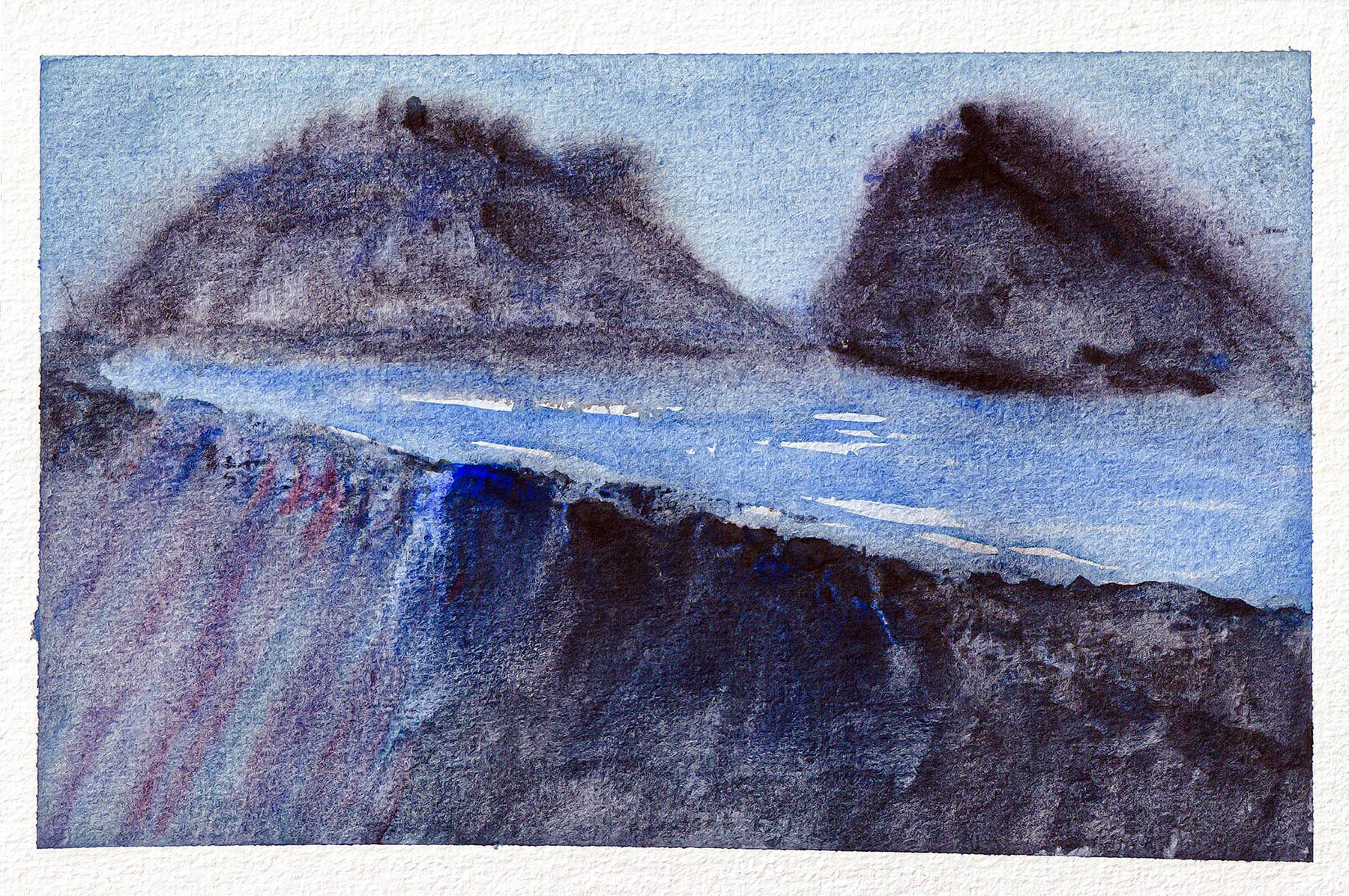
The prompt for 17 July was “spontaneous.” After watching some YouTube videos about painting loose landscapes, I decided to try an imaginary landscape without any reference photo. I had no idea what my result would look like and used techniques that included applying some of the paint with a palette knife, which explains the brilliant splotch of ultramarine blue in the middle of the painting. I like the colors and the feel of the painting and like to imagine that it is a lake in the crater of an inactive volcano, but you may well see something different.

As I look over these six paintings, I realize that I have used no bright colors at all—it seems that everything is blue, gray, or brown. That definitely was not intentional. Perhaps I will try to brighten things up a bit for the next installment as I push on towards the goal of trying to paint each day in July. Thanks again for your support and indulgence as I veer off my normal creative path.

If you want to learn more about World Watercolor Month, click on this link or go directly to doodlewash.com. In addition to raising awareness and interest about watercolor painting, World Watercolor Month raises support for The Dreaming Zebra Foundation, a charity providing support so that children and young adults are given an equal opportunity to explore and develop their creativity in the arts.

valuable

organic

wiggle

scent

soft

spontaneous

© Michael Q. Powell. All rights reserved.


Read Full Post »

Usually when I see a Brown Thrasher (Toxostoma rufum), it is buried in the underbrush, so I was excited to spot this one in the open during a visit on Tuesday to Green Spring Gardens with my friend and photography mentor Cindy Dyer. Two things that always stand out to me whenever I see Brown Thrashers are their extremely long tails and their beautiful yellow eyes.

Brown Thrasher

© Michael Q. Powell. All rights reserved.

Read Full Post »

I was both shocked and delighted to spot this brilliant male Prothonotary Warbler (Protonotaria citrea) on Monday during a trip to Huntley Meadows Park, a local marshland refuge. All of the other times that previously I spotted these colorful little birds were during the early spring and I did not know that they were still around in our area.

It is hard for a bird so brightly colored to hide itself completely, but I am used to seeing only flashes of yellow amidst the foliage high in the trees. In this case I spotted the warbler when it was perched on a wooden fence. As I got a little closer, it dropped down to ground level, but I was able to find a small visual tunnel that gave me an unobstructed view of this beautiful little warbler and was able to capture this image.

Prothonotary Warbler

© Michael Q. Powell. All rights reserved.


Read Full Post »

The shape of the silhouette is familiar and if the lighting is bad, you might be able to convince yourself that a Great Blue Heron (Ardea herodias) is standing in the corner of a small pond at Green Spring Gardens. I have visited the pond dozens of times, so I know that the heron is not real, but it still makes for a fun subject to photograph.

I love the heron’s distorted reflection in the first photo and the touches of green provided by a small tree to the side and the duckweed floating on the surface of the water. I was equally thrilled when a male Blue Dasher dragonfly (Pachydiplax longipennis) perched on the heron’s head after I had moved in closer. I doubt that a real heron would have been quite as accommodating in permitting the dragonfly to perch and seem to recall having seen a Great Blue Heron attempt to snatch a dragonfly out of the air as it flew by.

Great Blue Heron

Blue Dasher

© Michael Q. Powell. All rights reserved.


Read Full Post »
« Newer Posts - Older Posts »