Feeds:
Posts
Comments

Posts Tagged ‘Occoquan Bay National Wildlife Refuge’

Eagles in flight are always a challenge for me to photograph, so I was really happy when I managed to capture this image of a bald eagle (Haliaeetus leucocephalus) that flew by me on Monday morning at Occoquan Bay National Wildlife Refuge as rays of sunlight illuminated different parts of its body.

Quite often when I spot eagles in flight, they are really high up in the sky and it is difficult to capture details of the majestic birds. As you can probably tell from the angle of view in this shot, this eagle was flying at a relatively low angle when I took this shot. Additionally, the eagle was pretty close—I cropped some from the top of the original image, but not much at all from side to side. In fact, one of the biggest problems I had was keeping the eagle within the frame. On several other images I took, I cut off portions of the wings or of the body.

Bald Eagle

© Michael Q. Powell. All rights reserved.

Read Full Post »

Ospreys (Pandion haliaetus) were really active yesterday morning at Occoquan Bay National Wildlife Refuge, including this one that was gathering materials to either build or repair a nest.

Initially I was standing next to a field that had been cleared some time ago, when an osprey swooped in and snatched up some branches lying on the ground. I was surprised and remember wondering if the osprey would return to the readily available supply of building materials. The osprey returned two or three more times and I was able to capture some cool shots of the osprey transporting some pretty large branches. I was pretty fortunate that the osprey had to fly almost directly over me when it was making its return trips to the unknown nesting location.

There are several nesting platforms in the refuge for ospreys and later in the day I spotted an osprey in one of them. The nest seemed to be pretty much intact from last season, though the osprey seemed to be busily making adjustments and probably was doing some spring cleaning. That may be the subject for a future blog post.

Osprey

Osprey

Osprey

© Michael Q. Powell. All rights reserved.

Read Full Post »

Last Friday morning at Occoquan Bay National Wildlife Refuge, I spotted a Bald Eagle (Haliaeetus leucocephalus) in a distant tree further down the trail. I decided to try to sneak closer to the eagle, hoping it would not see me through the tangle of branches separating us.

When I got close enough for a mostly unobstructed shot, I focused on the eagle and realized it was glaring down right at me with what looked to be disapproval. A few seconds later the eagle took off and disappeared from sight.

Sneaking up on an eagle? I am not sure that it can be done—the eagle’s superior sight and reaction time seem to win out every single time.

Bald Eagle

Bald Eagle

 © Michael Q. Powell. All rights reserved.

Read Full Post »

 When I spotted a dark shape in the distance yesterday morning at the edge of a trail alongside the water at Occoquan Bay National Wildlife Refuge, I had no idea what it was—then it started to move. These images suggest to me that it was a North American River Otter (Lontra canadensis), the first time I have seen one at this location and the first time that I have seen one in the wild on land rather than in the water.
North American River Otter
As my mind was busy processing what my eyes were seeing, the otter scurried into the brush and then into the water, where it was joined by a second otter. When I watched the otters swimming away, I was facing almost directly into the sun, so all I was able to capture was this “artsy” silhouette of one of them. I really like the way that the backlighting shows off the otter’s whiskers as it turned its head around and watched as the other otter caught up.
North American River Otter
© Michael Q. Powell. All rights reserved.

Read Full Post »

This past Monday I was thrilled to catch a glimpse of several large wild turkeys (Meleagris gallopavo) foraging in a field just off of the road early in the morning as I was driving into Occoquan Bay National Wildlife Refuge. I stopped the car, grabbed my camera, and leaned out of the window, but was unable to frame a shot. I quietly got out of the car and was able to capture several images of one of them before they sensed my presence and scurried into the treeline and out of my sight.

wild turkey

wild turkey

© Michael Q. Powell. All rights reserved.

Read Full Post »

On a recent early morning trip to Occoquan Bay National Wildlife Refuge, I spotted a Bald Eagle (Haliaeetus leucocephalus) perched on a broken-off branch below what appears to be an active eagle nest. Perhaps this was the male keeping watch or possibly the female taking a break. The nest is so high up and deep that it is difficult to determine if another eagle was sitting on the nest.

Despite my best efforts at stealth, the eagle detected my presence as I tried to move further down the trail to get a better angle, but I was able to get these shots as the eagle was preparing to take off. In the middle shot, I did a less severe crop than on the other two in order to give you an idea of how closely the eagle was perched to the nest—the sticks in the upper portion of the image are the bottom of the nest.

Bald Eagle

Bald Eagle

Bald Eagle

© Michael Q. Powell. All rights reserved.

Read Full Post »

I know that rabbits don’t go south for the winter, but they seemed to disappear in late autumn and I did not see a single one during the winter months. Suddenly this past week, they started reappearing on the trails at Occoquan Bay National Wildlife Refuge.

Yesterday I spotted this cute little Eastern Cottontail (Sylvilagus floridanus) as it gathered up stalks of grass. Initially the rabbit grazed a bit before it started to accumulate a mouthful of the long, dry stalks of grass—perhaps there are little ones that need to be fed.

Eastern Cottontail

© Michael Q. Powell. All rights reserved.

Read Full Post »

Ospreys leave our area in the fall and spend their winters in warmer locations in Central and South America. Around this time of the year, I keep my eye open for their return and this past Saturday I spotted my first one of the year. The osprey (Pandion haliaetus) was perched in a tree with branches that partially blocked my view. As I tried to maneuver to get a clear shot, the osprey took off, giving me a view of its massive wingspan. As you can see from the two images, it was an overcast day and color is mostly absent. If you look closely, though, you can just get a glimpse of the yellow of the osprey’s eye.

osprey

Osprey

© Michael Q. Powell. All rights reserved.

Read Full Post »

I heard some rustling deep in the heavy brush this morning at Occoquan Bay National Wildlife Refuge and then caught sight of some bright colors—it was a male wild turkey (Meleagris gallopavo) along with several females. Focusing manually, I managed to get this shot.

Although I would have liked to get an unobstructed view of this magnificent bird, I actually like the way that the blurry vegetation creates a soft vignette that draws the viewer to the head of the turkey.

Wild Turkey

© Michael Q. Powell. All rights reserved.

Read Full Post »

When this immature Bald Eagle (Haliaeetus leucocephalus) fixed its eyes on me on Monday at Occoquan Bay National Wildlife Refuge and flew straight toward me, I couldn’t help but feel a little concerned. As it turned out, the young eagle was simply soaring and veered away—and my heartbeat eventually returned to a normal rate.

Bald Eagle

Bald Eagle

© Michael Q. Powell. All rights reserved.

Read Full Post »

One of the youngest viewers of my blog is a boy named Benjamin. His grandmother likes to share my photos with him and he especially likes bluebirds. Upon viewing some images of them and seeing their colors, he innocently asked why they aren’t called Orange Bluebirds. Why not indeed? This post is especially for him.

I too love Eastern Bluebirds (Sialia sialis) and am happy anytime I am able to catch a glimpse of their bright colors. Here are a couple of images of bluebirds that I spotted this past Monday at Occoquan Bay National Wildlife Refuge (and there is plenty of orange to be seen).

Eastern Bluebird

Eastern Bluebird

© Michael Q. Powell. All rights reserved.

Read Full Post »

If you talk to your dentist, you’ll certainly be told that cavities are bad, but your perspective might change if you were a bird. I am not sure if this Red-bellied Woodpecker (Melanerpes carolinus) was checking out potential nesting sites yesterday morning at Occoquan Bay National Wildlife Refuge or merely looking for insects, but it sure did give this tree cavity a careful examination.

There was definitely no need to fill this cavity.

Red-bellied Woodpecker

© Michael Q. Powell. All rights reserved.

Read Full Post »

At first I thought this Bald Eagle (Haliaeetus leucocephalus) that I spotted today at Occoquan Bay National Wildlife Refuge had a really dirty head, but I’m beginning to think that maybe it’s simply the feather pattern of an almost-mature eagle whose head will eventually be all white.

Bald Eagle

© Michael Q. Powell. All rights reserved.


Read Full Post »

Some birds are stealthy and fly silently through the skies. Canada Geese (Branta canadensis) would not fit into that category. They like to announce their presence for all to hear, like this pair that I spotted on Monday at Occoquan Bay National Wildlife Refuge as they were coming in for a landing.

Unlike at the airport, there was no need for a loudspeaker to announce this landing.

Canada Geese

© Michael Q. Powell. All rights reserved.

Read Full Post »

Do you take photos only when the weather conditions are optimal? If I followed that rule, I’d be staying at home most of the time. This winter in particular, it seems like I am at work on all of the days with good weather. So often I will choose to go out with my camera when I am free and not when the weather is good.

One particular morning last week it was really foggy and visibility was extremely limited. The subjects that I could see were hazy and indistinct, utterly lacking in contrast. It’s hard to know how what camera setting to use in situations like those.

I was at Occoquan Bay National Wildlife Refuge, my favorite spot this winter for wildlife photography, and as usual I managed to spot some Bald Eagles (Haliaeetus leucocephalus). It is always a challenge to photograph the eagles, because they tend to perch a good distance away from the trails that I follow and they are often quite skittish.

In this case, the difficulties were magnified, because of the heavy fog/mist. I ended up processing the images that I captured in a number of different ways, attempting at times to enhance the contrast or eliminate some of the fog, with varying degrees of success.

Here are a few of my favorite shots of the eagles in the mist.

Bald Eagles

Bald Eagles

Bald Eagle

© Michael Q. Powell. All rights reserved.

Read Full Post »

The skies were heavily overcast on Monday at Occoquan Bay National Wildlife Refuge, so colors didn’t “pop” at all. However, I really like the almost monochromatic feel of this image I captured of a young Bald Eagle (Haliaeetus leucocephalus), with just the slightest bit of yellow showing around its talons.

Bald Eagle

© Michael Q. Powell. All rights reserved.
Read Full Post »

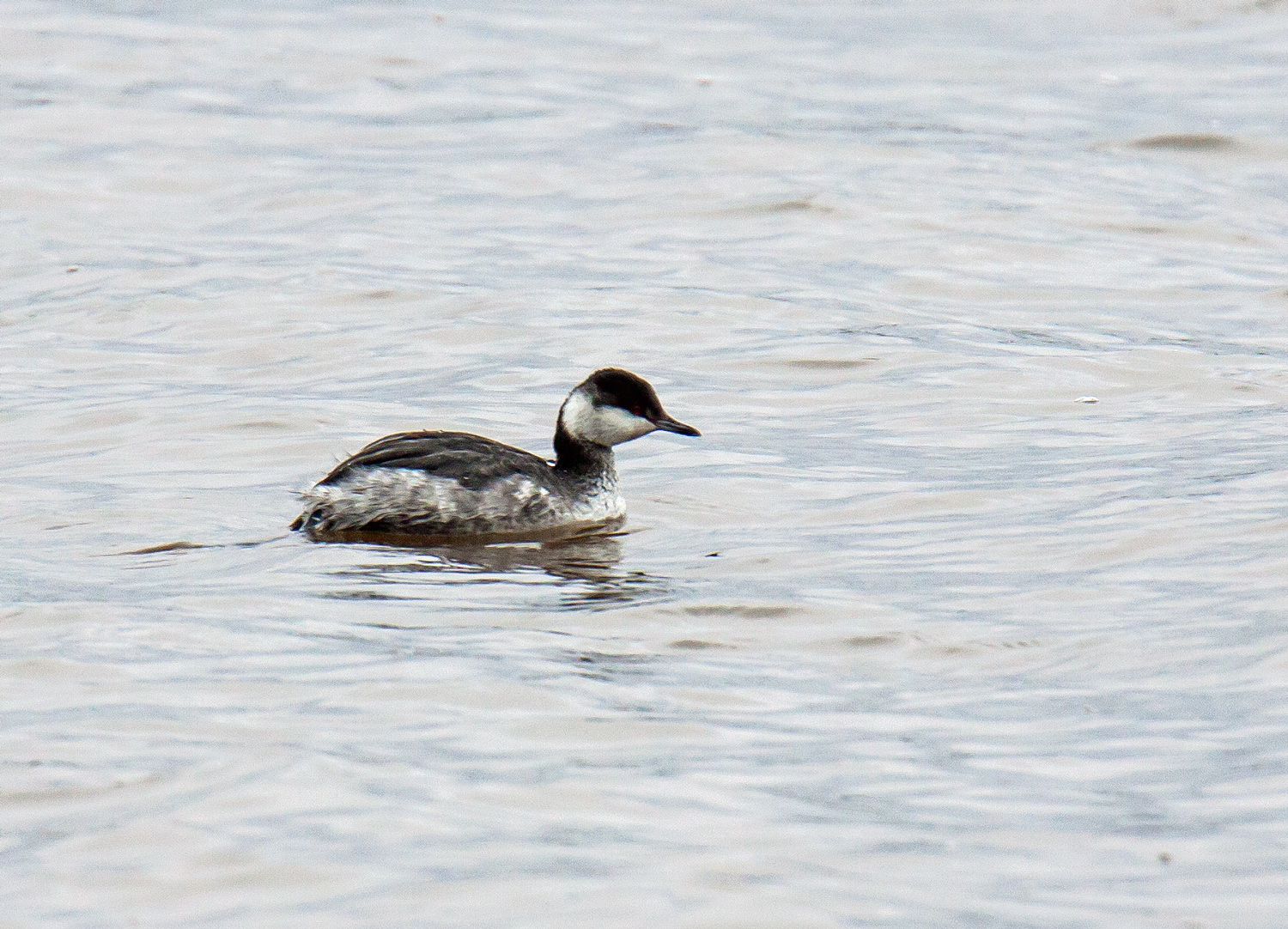
Thanks to some helpful folks in the Facebook forum “What’s this bird,” I learned that this little duck-like bird that I spotted on Monday morning at Occoquan Bay National Wildlife Refuge is a Horned Grebe (Podiceps auritus). I have seen several other kinds of grebes before, but this was a first-time sighting of this particular species.

When I looked at the Cornell Lab of Ornithology page for this species, I was a little shocked to see how different this bird looks when in breeding plumage. “Breeding adults have black heads with rich golden tufts, black back, and cinnamon neck, breast, and sides.” Wow! That would be quite a sight to see, but, alas, it looks like Horned Grebes do not breed in my area and are only visitors here for the winter.

Horned Grebe


© Michael Q. Powell. All rights reserved.

Read Full Post »

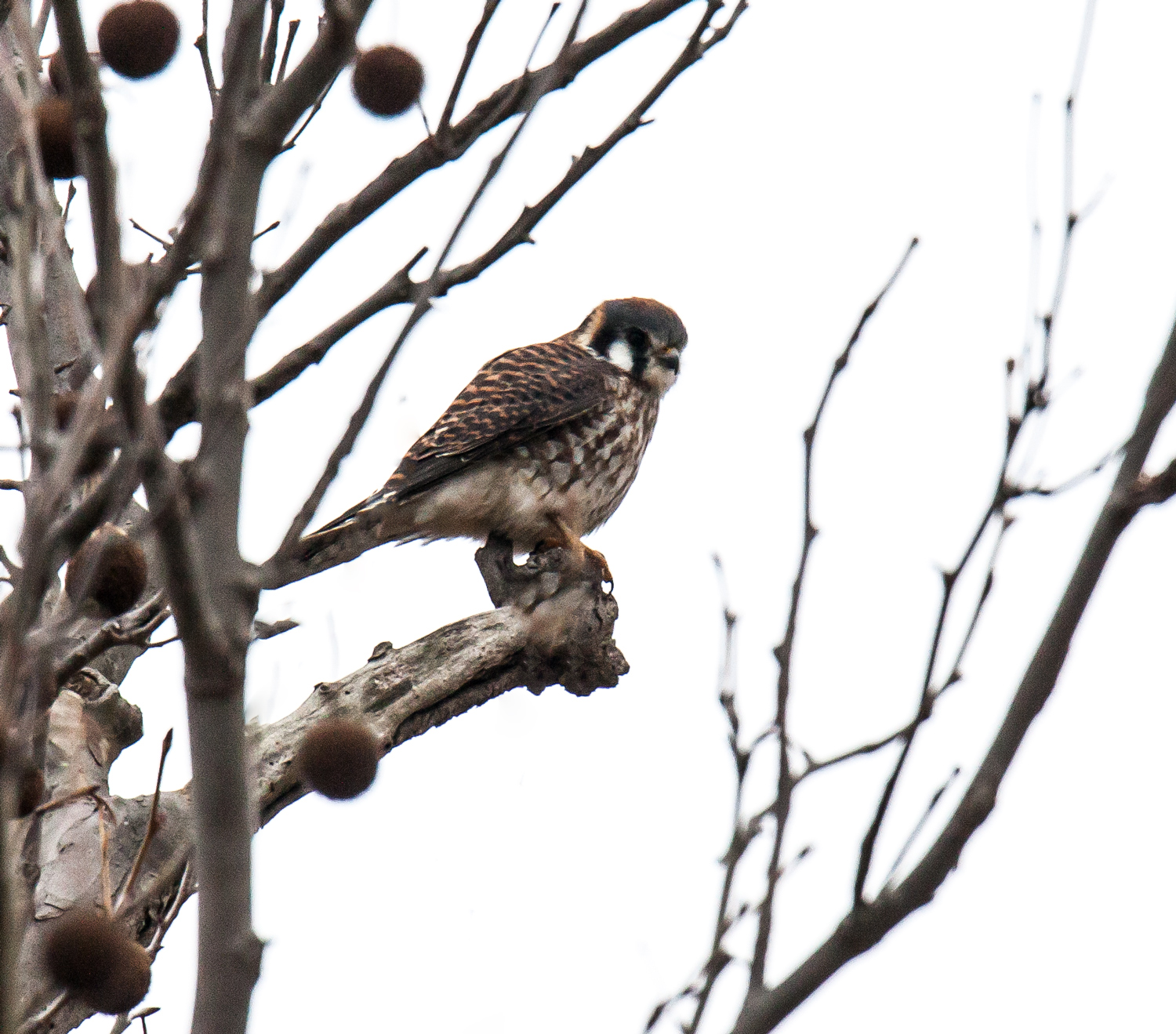
Yesterday morning I was thrilled to see this American Kestrel (Falco sparverius)  at Occoquan Bay National Wildlife Refuge. I had never before seen this little falcon, but its coloration and markings are awfully distinctive, so I had a pretty good idea what it was.

I was really struck by the small size of this bird, as compared with the Bald Eagles and vultures that I had seen earlier in the day. According to the Cornell Lab of Ornithology, the American Kestrel is about the size and shape of a mourning dove and is the smallest falcon in North America.

As you can tell from the background, it was heavily overcast when I took this shot, so the colors do not pop as much as they would in bright sunlight. One of my viewers on Facebook also noted that this is a female and, as is the case with most bird species, the colors of a female American Kestrel are more muted than those of her male counterpart.

I remember well the location of the tree in which the kestrel was perched, so I will add that location to my already long list of places to check when I visit this wildlife refuge, which has proven to have a pretty amazing variety of species to observe.

American Kestrel

© Michael Q. Powell. All rights reserved.

Read Full Post »

What kind of bird would be a perfect match for a gloomy, fog-filled day? I might suggest that this Black Vulture (Coragyps atratus) that I spotted this past weekend at Occoquan Bay National Wildlife Refuge would fit the bill admirably.

There was something shadowy, mysterious, and a little creepy about this large dark bird as it perched low in a tree and looked right at me through the fog. I felt a little shiver as I looked up at the vulture, but maybe it was just reaction to the cool temperature.

Black Vulture

© Michael Q. Powell. All rights reserved.

Read Full Post »

We don’t often have daytime fog where I live—most of the time it burns off shortly after sunrise. Yesterday, however, it hung around all morning and visibility was very limited at Occoquan Bay National Wildlife Refuge. Except for a lot of gulls and a few geese, the birds seemed to have decided to stay sheltered until the fog dissipated.

It was a nice challenge for me to try to capture a sense of the moment in the indistinct shapes that were visible as I looked out into the water of the bay. Here are a couple of images that have a kind of abstract, impressionist feel that I really like.

foggy impressions

foggy impressions

© Michael Q. Powell. All rights reserved.


Read Full Post »

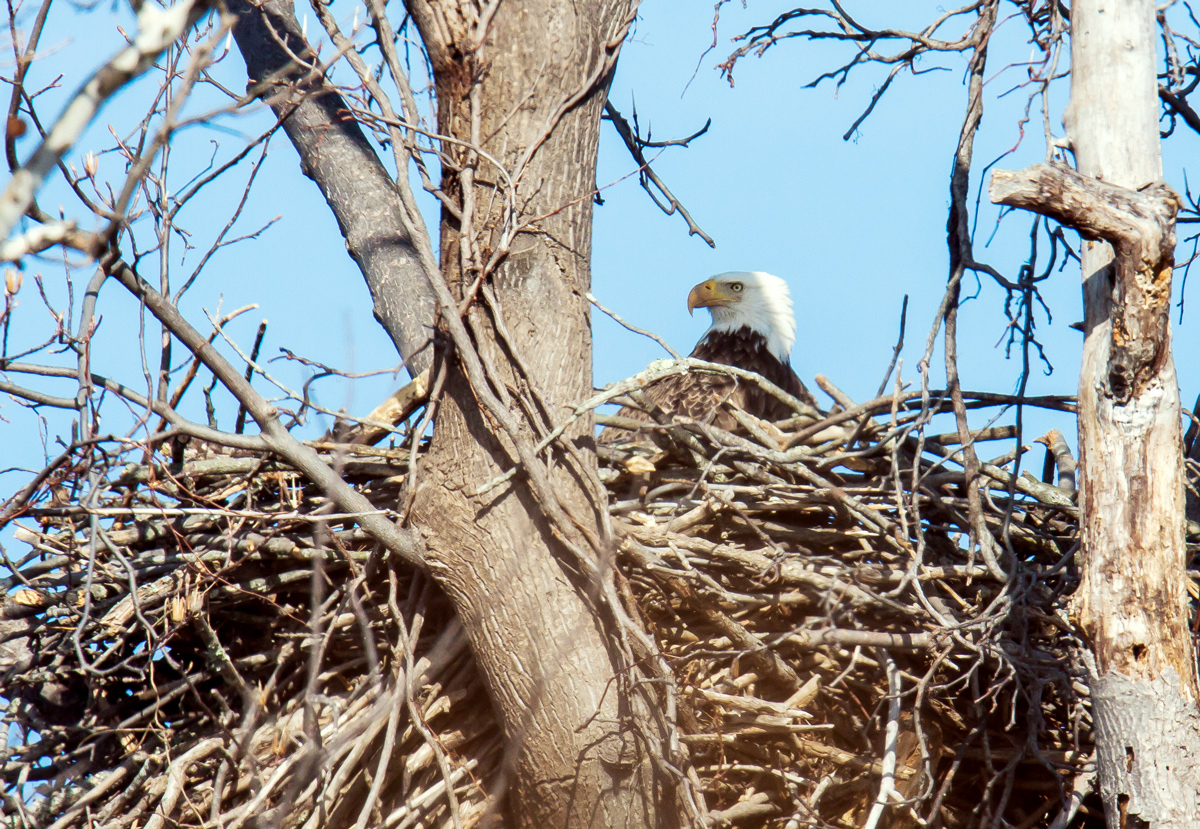
This eagle’s nest is nestled back in the trees at Occoquan Bay National Wildlife Refuge, somewhat obstructed though still visible from the trail. When I first sighted the nest this past Saturday morning, it looked like it was empty.  I kept my eyes glued to the nest as I slowly walked past it and suddenly I spotted a Bald Eagle (Haliaeetus leucocephalus) sitting on the nest, partially hidden in the shadow of the trees. This is the second nest at the refuge that I have spotted so far this winter that appears to be in use, though I suspect that there may be more. When leaves return to the trees, I fear that the nest will be completely hidden from view, which will give the eagles a little more privacy from paparazzi like me.

bald eagle

© Michael Q. Powell. All rights reserved.

Read Full Post »

Composition does not get much more simple than this—a single subject with its reflection against an uncluttered, almost monochromatic background.

The skies were heavily overcast this past Friday and rain fell intermittently on me as I walked along the trails at Occoquan Bay National Wildlife Refuge. Most of the birds seem to have taken shelter from the inclement weather. One hardy heron, however, had waded out into the shallow waters of the bay and I was thrilled to be able to capture this image of it. I see Great Blue Herons (Ardea herodias) pretty often, but will always stop to observe them. Sometimes I am patient enough to see one catch a fish, but most of the time the heron’s patience exceeds mine.

Recently I have been watching a lot of videos on pencil sketching and watercolors and it struck me that the shadowy reflection of the bird in this photo could have been rendered using one of those techniques.

Great Blue Heron

© Michael Q. Powell. All rights reserved.


Read Full Post »

The light was so beautiful early this morning at Occoquan Bay National Wildlife Refuge that it looked like this male Bufflehead duck (Bucephala albeola) was swimming in the clouds rather than in the water, giving this image an almost surreal feel that I really enjoy.

bufflehead

© Michael Q. Powell. All rights reserved.

Read Full Post »

Yesterday I spotted this cool-looking Brown Thrasher (Toxostoma rufum) in the vegetation at Occoquan Bay National Wildlife Refuge. I especially love the thrasher’s light-colored eyes and distinctive markings.

Brown Thrasher

Brown Thrasher

© Michael Q. Powell. All rights reserved.

Read Full Post »

I am rarely able to see the red belly of the Red-bellied Woodpeckers (Melanerpes carolinus) that I occasionally spot, but the light was coming from the right direction on Monday at Occoquan Bay National Wildlife Refuge to illuminate the reddish-brown color of this woodpecker’s belly.

When I first started taking photos of birds, I remember seeing the bright red color of a woodpecker like this one and thinking it must be called a “red-headed woodpecker.” I am somewhat more knowledgeable about birds now and have a greater appreciation for the difficulties associated with identifying them. In particular, I have learned that you often cannot rely on the name of a bird to identify its key features.

Red belly or not, I knew what this bird was as soon as I saw it, but it was nevertheless wonderful that it chose to pose so nicely for me. One of my Facebook viewers said that it reminded her of a similar pose in the movie The Lion King. It turns out that The Lion King is one of my favorite movies, and I was thrilled when I just now watched a You Tube video of The Circle of Life, one of the songs in the movie that features the rock outcropping that looks like the branch in my photo. I was particularly drawn to the beauty of the birds in the opening moments of the video. It is worth checking out if you have never seen it before or even if you have.

Red-bellied Woodpecker

© Michael Q. Powell. All rights reserved.

Read Full Post »

Bufflehead ducks (Bucephala albeola) recently were playing around off of Occoquan Bay National Wild Life Refuge, chasing each other around and even giving each other piggyback rides—or so it seemed.

buffleheads

© Michael Q. Powell. All rights reserved.

Read Full Post »

The weather was not very cooperative this past Monday, but my persistence was rewarded when I was able to observe a Bald Eagle (Haliaeetus leucocephalus) pulling a fish out of the waters off of Occoquan Bay National Wildlife Refuge in Northern Virginia. On multiple occasions I have seen an eagle with a fish in its talons, but this was the first time that I actually got the see the eagle catch the fish.

The only downside was that I was quite a distance away and the light was limited when I captured the shots. Like most wildlife photographers, though, I feel inspired by the images that I do capture to go out again and again, often to the same places, with the hope and expectation that I will have more opportunities to make better images. Unlike Olympic athletes, I won’t have to wait four more years to have another chance to test myself.

bald eagle

bald eagle

© Michael Q. Powell. All rights reserved.


Read Full Post »

This majestic Bald Eagle (Haliaeetus leucocephalus) was partially hidden behind some branches yesterday at Occoquan Bay National Wildlife Refuge, but I managed to find a visual tunnel and capture this image of it. Most of the time I prefer an uncluttered background, but in this case I really like the organic shapes and patterns of the out-of-focus branches.

Bald Eagle

© Michael Q. Powell. All rights reserved.

Read Full Post »

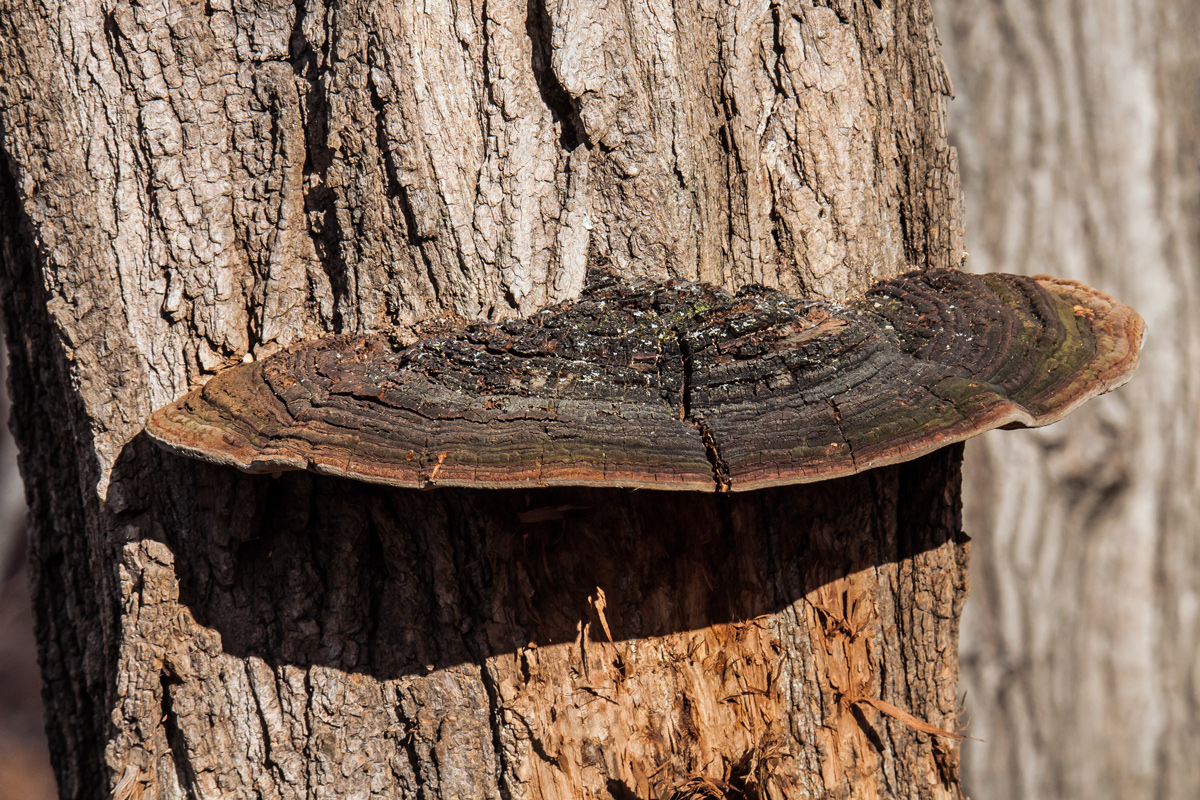
The skeletal forms of trees remain hidden during much of the year, but winter reveals them in all of their naked glory. Without the distractingly bright colors of leaves, it is easy during the cold season to become entranced by the delightful contours and textures of the trees and the unusual growths that protrude from their bark.

As I get older, it seems that I too am developing protrusions and discolorations, but I tend to keep them hidden under layers of clothing, especially during the winter.

natural growth

natural growth

© Michael Q. Powell. All rights reserved.
Read Full Post »

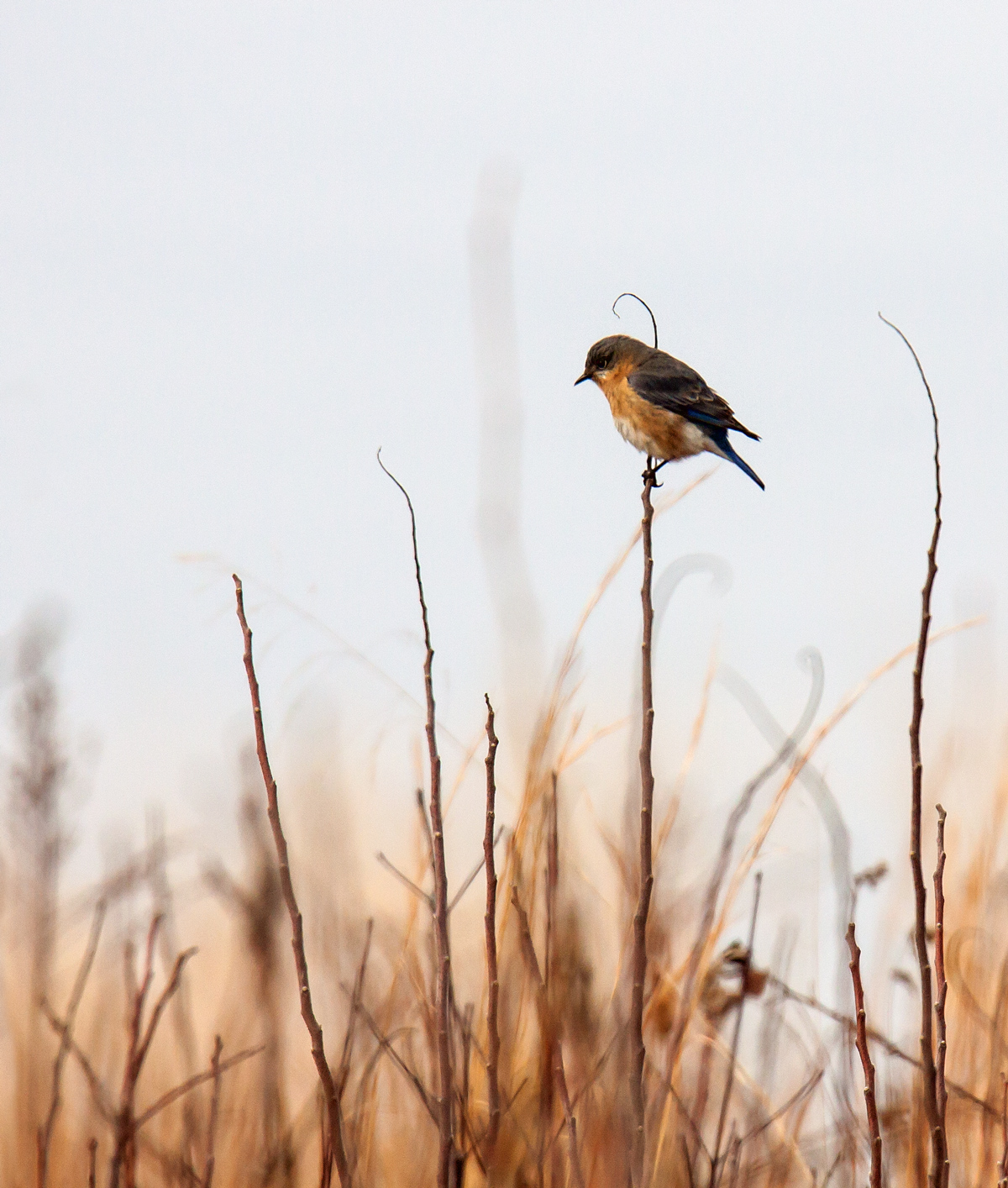
Sometimes I am content to capture a sense of the moment rather than a detailed image of my subject. That was certainly the case this past Friday at Occoquan Bay National Wildlife Refuge, when I experienced an overwhelming feeling of tranquility upon spotting this solitary Eastern Bluebird (Sialia sialis) peacefully perched in middle of a large field.

We were alone, but somehow together, as we each enjoyed the moment on our own terms.

Eastern Bluebird

© Michael Q. Powell. All rights reserved.
Read Full Post »

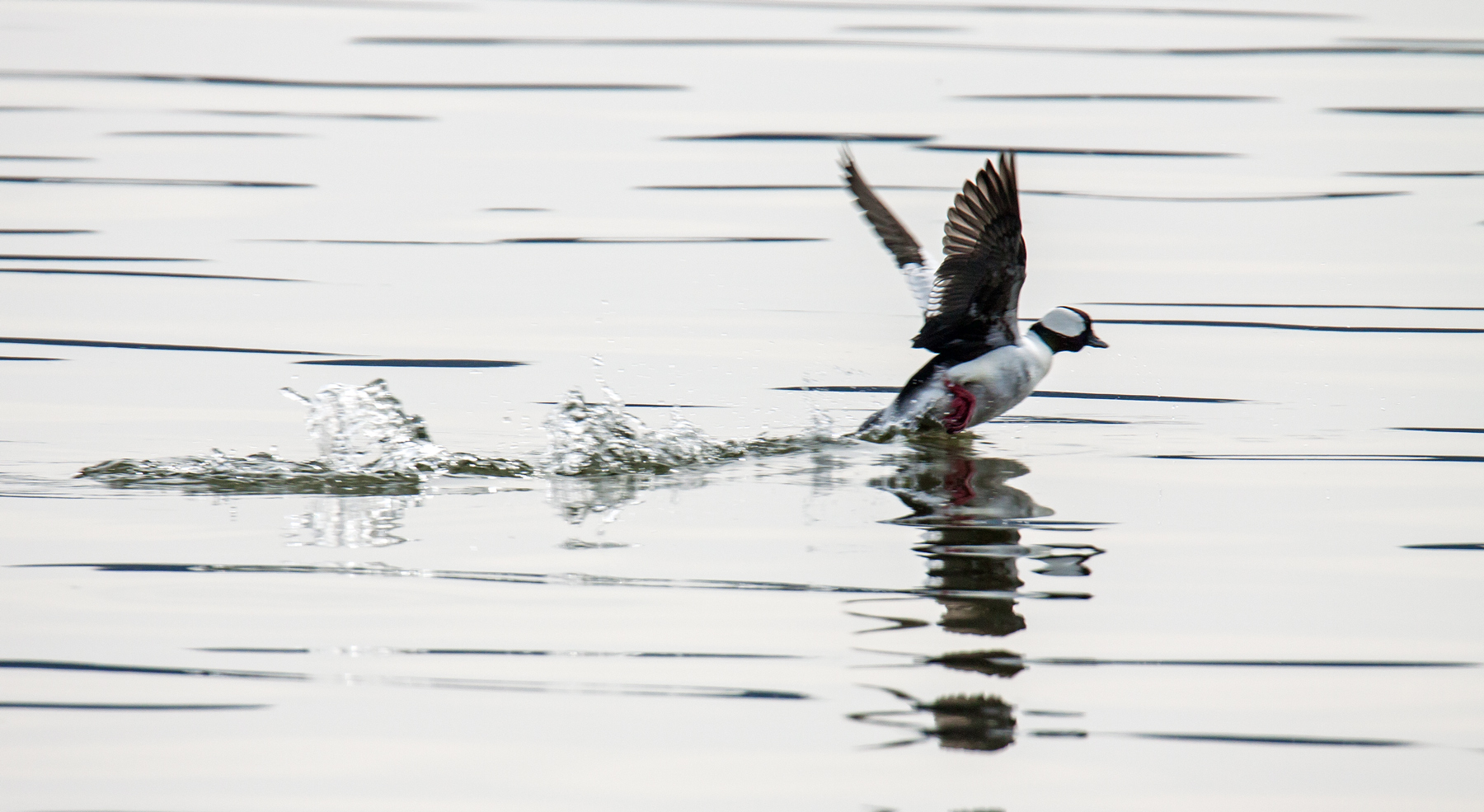
Although many ducks take to the air straight out of the water, some of them, like this tiny Bufflehead (Bucephala albeola) need to get a running start. It is simultaneously fascinating and amusing to watch them bounding across the surface of the water to generate enough lift for take-off.

I saw quite a few Buffleheads today at Occoquan Bay National Wildlife Refuge, but most of them were far away—diving ducks seem to prefer the deep water. This male Bufflehead was on his own a bit closer to the shore than the others. I had barely enough time to focus on him before he took off, but fortunately he was moving parallel to me, so I was able to retain focus on the bird and capture some of the water spikes that he was generating.

Bufflehead

bufflehead

Bufflehead

© Michael Q. Powell. All rights reserved.

Read Full Post »

« Newer Posts - Older Posts »