Feeds:
Posts
Comments

Posts Tagged ‘Canon 50D’

The last few years I haven’t seen many Monarch butterflies (Danaus plexippus) and I have read reports of their declining numbers. I was therefore pretty excited when I spotted one yesterday at Huntley Meadows Park. As I approached, the Monarch got spooked and flew up into a tree. Fortunately I was shooting with my long telephoto zoom lens and I managed to get this somewhat unusual shot of the beautiful butterfly.

Monarch butterfly


© Michael Q. Powell. All rights reserved.

Read Full Post »

I spotted this beautiful little butterfly while wandering through the woods at Huntley Meadows Park this morning. I think it might be an Appalachian Brown (Satyrodes appalachia), although there are a surprisingly large number of brown butterflies with eyespots, which complicates identification.

The woods were pretty dark in the area in which I first spotted the butterfly. However, luck was with me and the butterfly landed on a log that was in the sunlight. I tried to get as low as I could to get this shot, which is why you see the green moss in the foreground.

Update: One of my Facebook readers pointed out that this is probably a Northern Pearly-eye (Enodia anthedon), not an Appalachian Brown. My butterfly identification definitely need some more work.

Appalachian Brown


© Michael Q. Powell. All rights reserved.

Read Full Post »

Blue Dashers (Pachydiplax longipennis) are one of my favorite summer dragonflies. I spotted this one recently at Huntley Meadows Park, perched on the railing of an observation deck in the obelisk pose.

The dragonfly was pretty cooperative and I was able to try few different angles and shooting positions. Although I had my camera’s aperture set to f/10, you can see that the depth of field was relatively shallow and I tried to take advantage of that to isolate the subject and the specific rail on which it was perched.

Blue Dasher

Blue Dasher

Blue Dasher

© Michael Q. Powell. All rights reserved.

Read Full Post »

Despite this summer’s scorching heat and high humidity, the bees of Green Spring Gardens were busy at work gathering pollen and sipping nectar during a recent visit to the gardens. I’m certainly no expert on bees, but it looks like there are several different varieties in the photos below.

I’m pretty confident that the bee in the final shot is a carpenter bee because its abdomen is bare and shiny, unlike that of the bumblebee, which has a hairy abdomen. If you look closely at that image, you’ll see that this bee appears to be a nectar robber—it is piercing the flower from the side to extract the nectar and thereby is not playing any role in pollinating the flower.

bee

bee

bee

© Michael Q. Powell. All rights reserved.

Read Full Post »

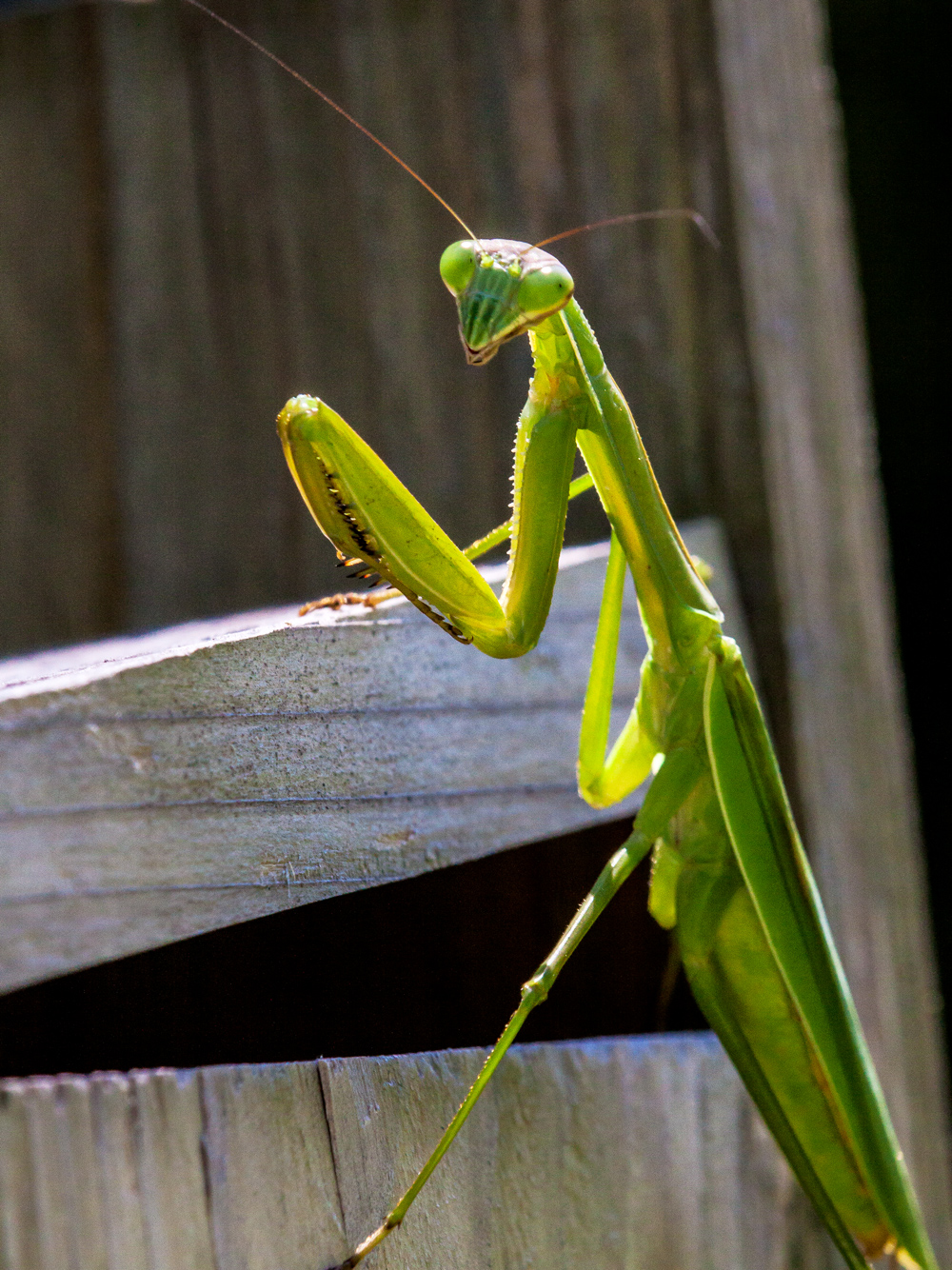
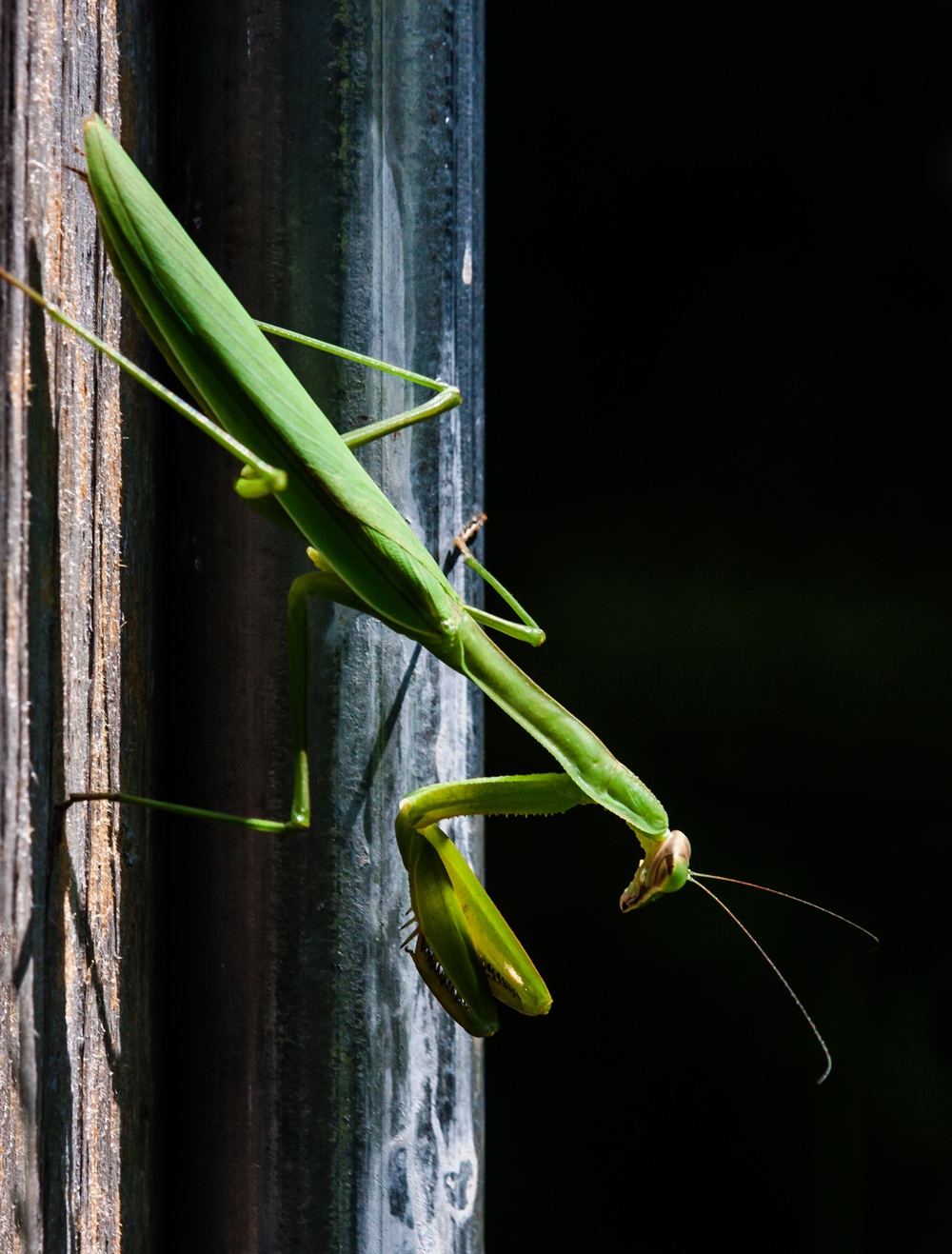
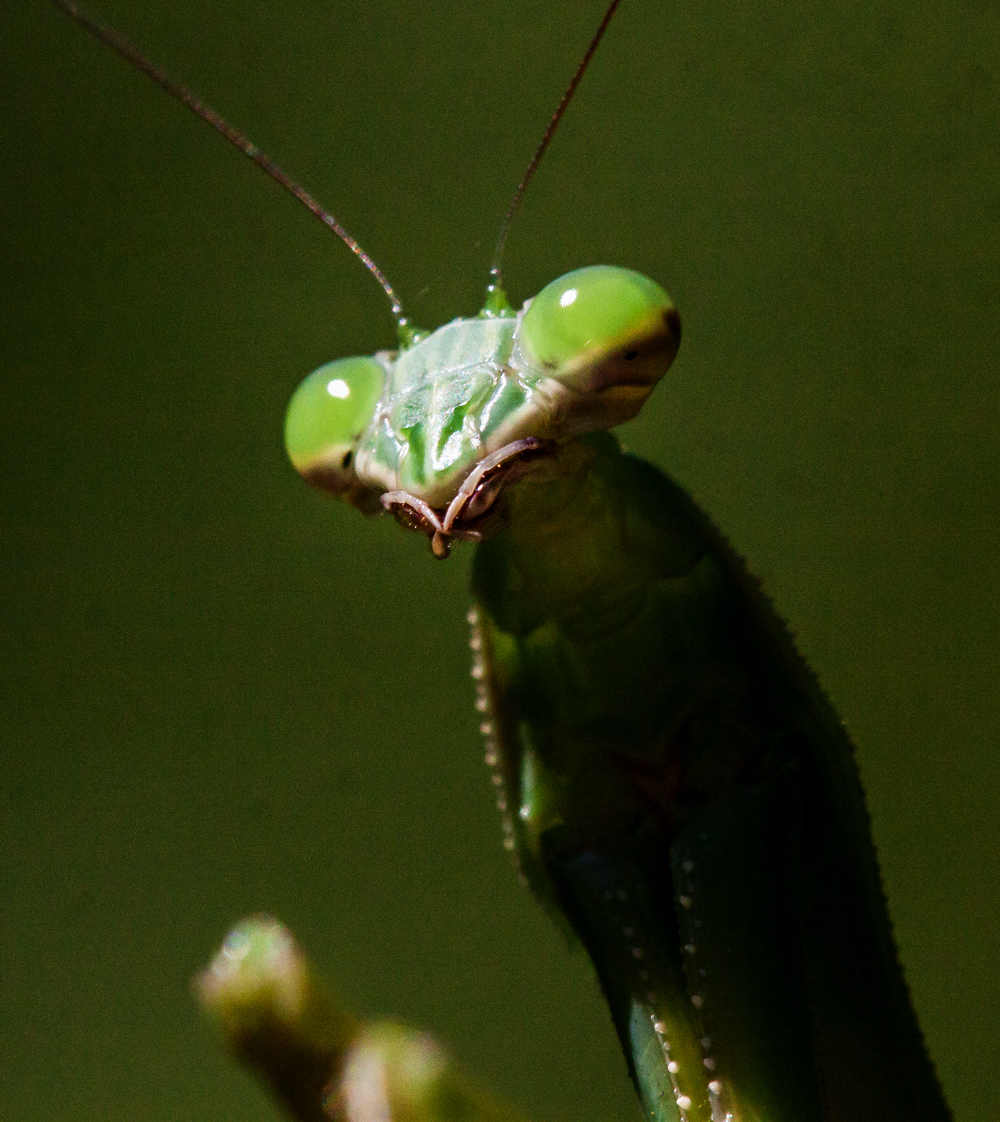
I spotted this Praying Mantis on Saturday at Huntley Meadows Park as it was crawling about on a nesting box for birds in one of the remote areas of the park. I am pretty confident that the nesting box, which was used by Tree Swallows earlier in the year, was no longer in active use—otherwise the mantis probably would not have survived for long. I was struck by the size of the insect, which seemed to be about six inches (15 cm) in length.

I think this may be a Mantis religiosa, one of the more common types of mantises, though Wikipedia notes that there are over 2400 species worldwide, so I could easily be incorrect in my identification.

Praying Mantis

Praying Mantis

Praying Mantis

© Michael Q. Powell. All rights reserved.

Read Full Post »

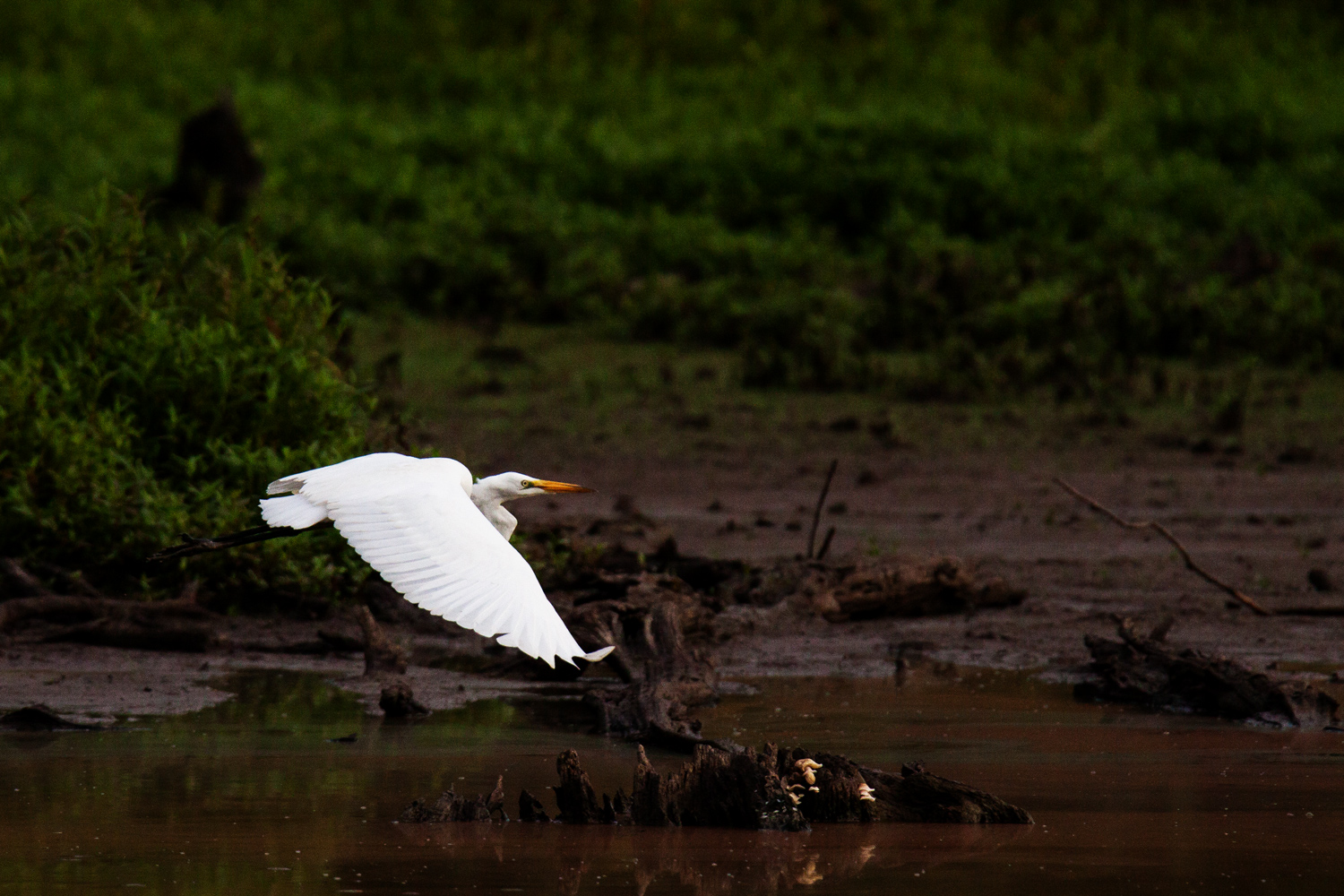
This Great Egret (Ardea alba) seemed to be trying to minimize energy expenditure in the heat as it flew low and slowly from one location to another part of Huntley Meadows Park. The recent extreme heat must be tough on many of the inhabitants of the park—temperatures yesterday soared to 101 degrees (38 degrees C) in the Washington D.C. area, a new record for the date.

I have a tendency to crop my images to emphasize the subject, but I took these shots at pretty long range and like the way that they give you a sense of the environment at my favorite marshland park.

Great Egret

© Michael Q. Powell. All rights reserved.

Read Full Post »

Yesterday afternoon at Huntley Meadows Park I captured this image of a female dragonfly as she hovered over the water, periodically dipping the tip of her abdomen into the water to lay eggs (and generate ripples).

hovering dragonfly

© Michael Q. Powell. All rights reserved.

Read Full Post »

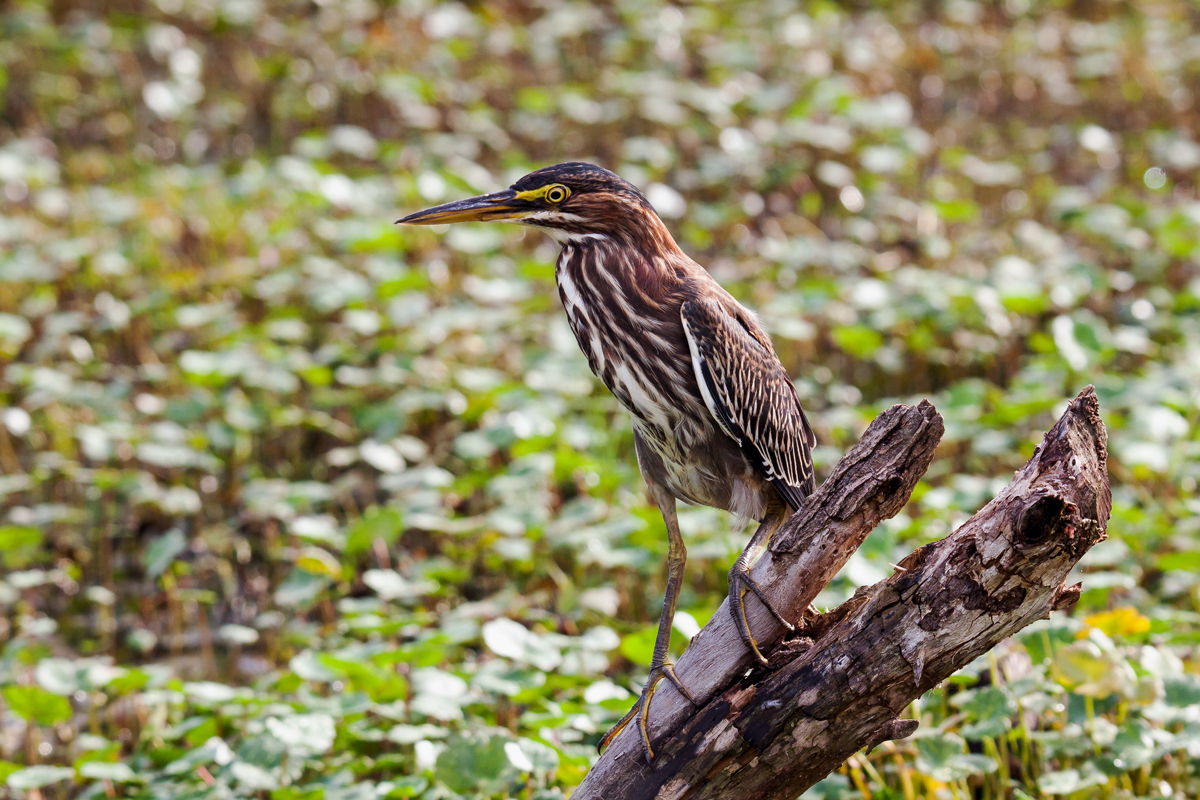
Although I enjoy watching the Great Egrets and Great Blue Herons at Huntley Meadows Park, the much smaller Green Herons (Butorides virescens) are my favorites. Green Herons just seem to have an amazing amount of personality packed in their compact bodies.

I think they deserve to have a “Great” in their name too.

Green Heron

© Michael Q. Powell. All rights reserved.

Read Full Post »

The leaves of the lotuses at Green Spring Gardens were well past their prime, but they turned out to be fascinating subjects for a series of abstract images.

lotus leaf

lotus leaf

lotus leaf

© Michael Q. Powell. All rights reserved.

Read Full Post »

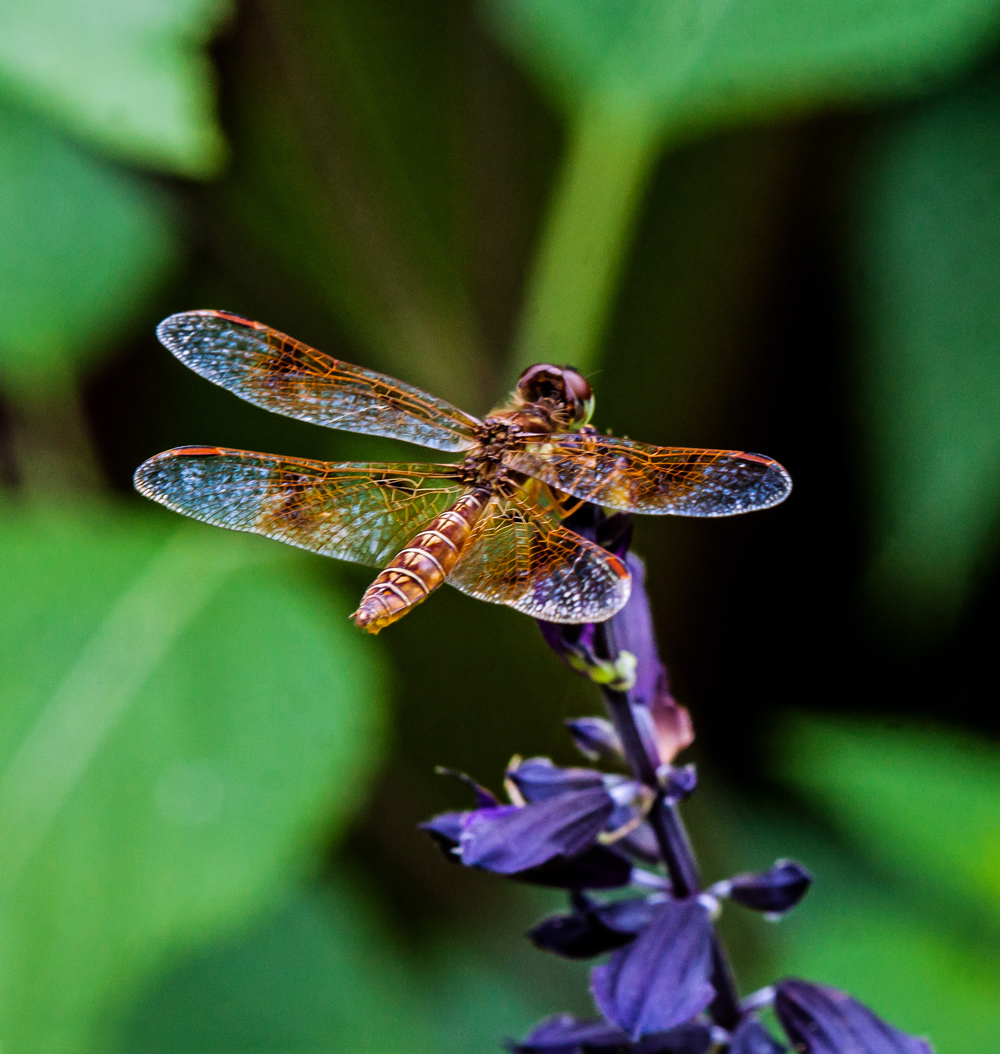
I don’t often see dragonflies in a garden, but spotted this female Eastern Amberwing dragonfly (Perithemis tenera) amidst the flowers earlier this week at Green Spring Gardens. There were lots of male Eastern Amberwings buzzing around the small ponds in another location at the gardens in hopeful expectation of finding a mate.

I have the impression that female dragonflies like to hang out in a different area from the males and then make an appearance at a time of their own choosing.

Eastern Amberwing

© Michael Q. Powell. All rights reserved.

Read Full Post »

Hot, humid summer days may be a little tough on us, but butterflies seem to love them. I captured this shot of a spectacular Eastern Tiger Swallowtail (Papilio glaucus) this past weekend at Huntley Meadows Park as it sipped nectar from what I think is Joe-Pye weed (g. Eutrochium). (I am a bit uncertain about the plant identification and wonder if it might instead be a kind of milkweed, but “Joe Pye” rhymes with butterfly and sounds cooler, so I’ll go with that as a possible identification.)

Unlike many butterflies that I see at this time of the year whose wings are tattered and torn, this butterfly seemed to be in perfect condition. The sun was shining brightly when I took these shots and I was really afraid of blowing out the highlights of this lightly-c0lored butterfly. I switched the metering on my camera to spot metering and was able to get a good exposure of the butterfly and the background went really dark, adding a bit of drama to the images.

Eastern Tiger Swallowtail

Eastern Tiger Swallowtail

Eastern Tiger Swallowtail

© Michael Q. Powell. All rights reserved.

Read Full Post »

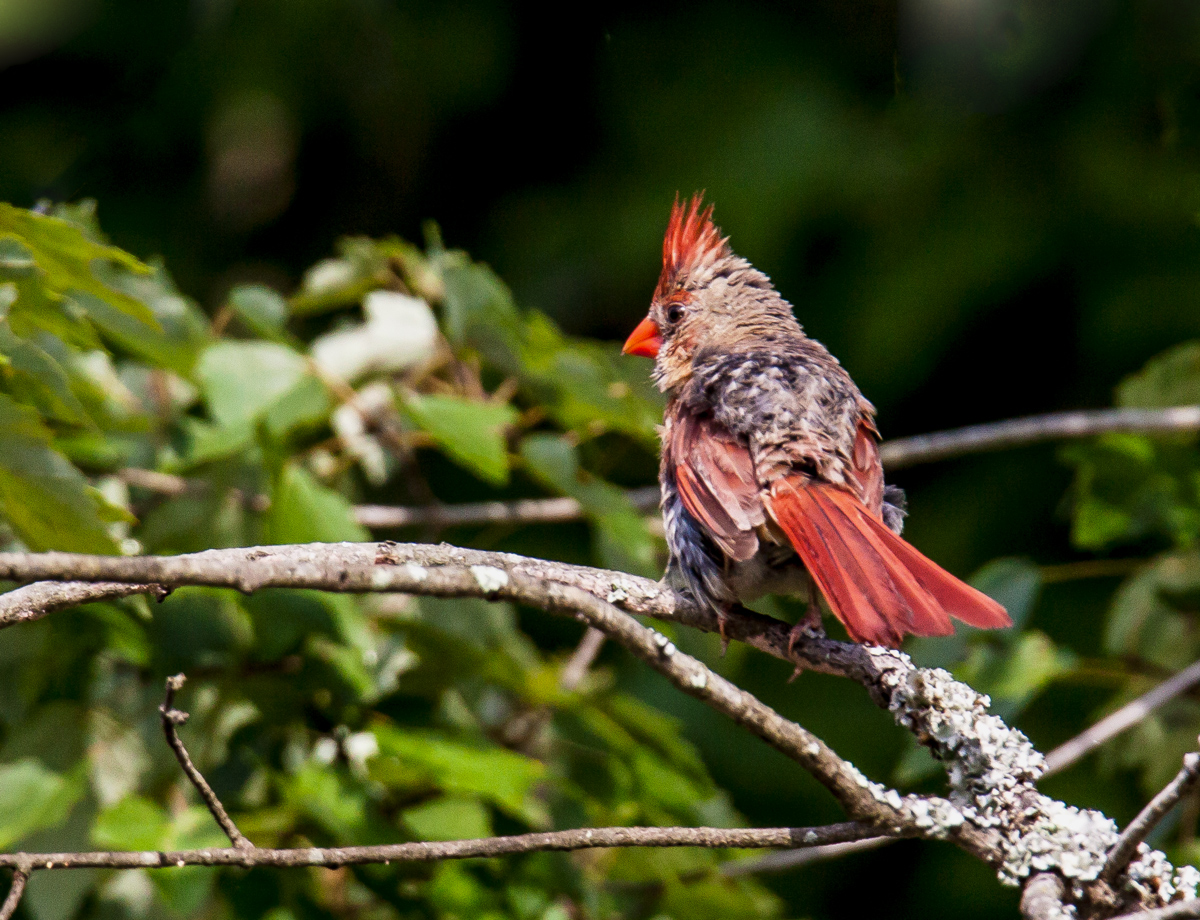
A Northern Cardinal (Cardinalis cardinalis) that I spotted on Saturday at Huntley Meadows Park seemed to be in an awkward feather phase that gave him an almost clown-like appearance.

I suspect that the cardinal feels as self-conscious as the average human male going through puberty.

Northern Cardinal


© Michael Q. Powell. All rights reserved.

Read Full Post »

A Great Egret (Ardea alba) and a Great Blue Heron (Ardea herodias) started goofing around yesterday at Huntley Meadows Park when I was trying to take their photo together—I think they are great friends. They looked like they were posing for a selfie.

I cropped the image to a square to make it easier for them to post to their Instagram pages.

great friends


© Michael Q. Powell. All rights reserved.

Read Full Post »

A Green Heron (Butorides virescens) was perched this morning on the raised edge of the boardwalk at Huntley Meadows Park, peering down into the murky water. Apparently the heron didn’t like what it saw, for it turned abruptly and decided to cross the boardwalk. I captured this shot as the heron was taking its first tentative step in the new direction.

Green Heron

© Michael Q. Powell. All rights reserved.

Read Full Post »

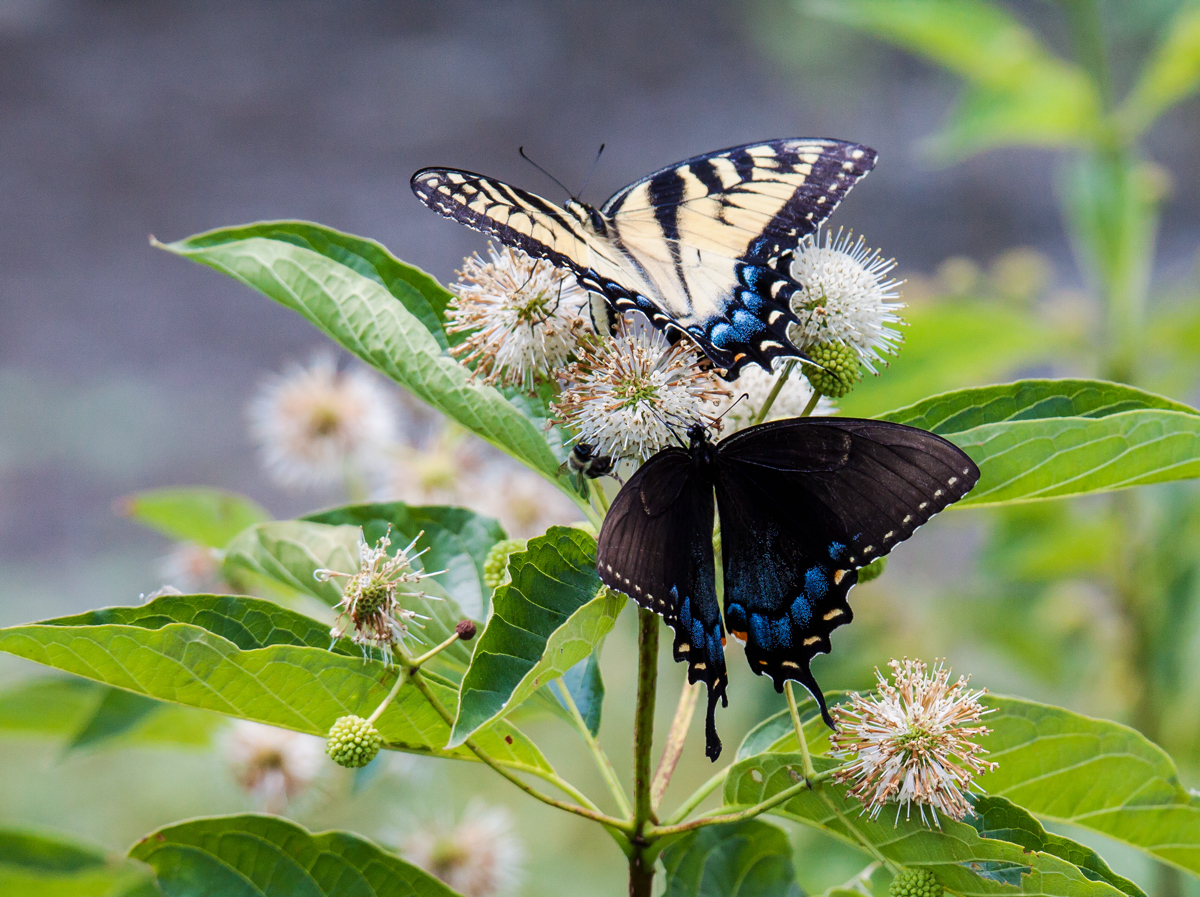
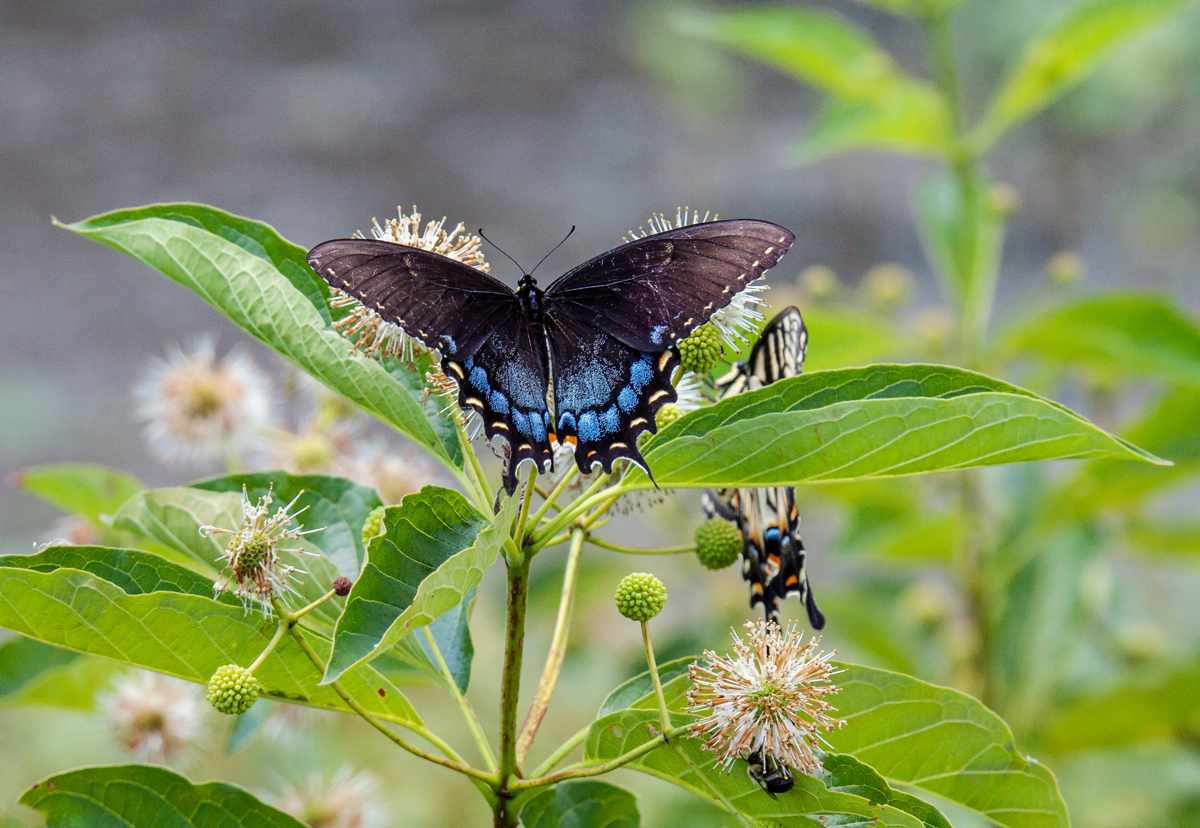
Eastern Tiger Swallowtail butterflies (Papilio glaucus) were really busy on the buttonbushes (Cephalanthus occidentalis) at Huntley Meadows Park recently, including what looks to be a dark morph female. Females of this species are dimorphic—there are both yellow morphs and dark morphs—but males are only yellow.

If you look closely at the second image you’ll see that I managed to capture a “bonus bug.” a bee that is also feeding on the buttonbush. My photography mentor likes to use the term “bonus bug” to refer to insects  in our photos whose presence was unknown at the time the photos were taken.

Eastern Tiger Swallowtail

Eastern Tiger Swallowtail

© Michael Q. Powell. All rights reserved.

Read Full Post »

So you  think you can dance? You might have trouble keeping up with my great nephew, who showed off some of his amazing moves at this past weekend’s wedding. It was such a joy to watch the uninhibited movements of this two year old in action.

Most adults, including me, have lost that innocent sense of spontaneity, which is a little sad.

brayden6_web

brayden3_web

brayden5_web

dance2_web

© Michael Q. Powell. All rights reserved.

Read Full Post »

Over the last four years I have grown comfortable photographing birds, insects, and other creatures, primarily in the friendly confines of my favorite local marshland park. I am familiar with many of the best spots and I know how to use my gear to capture images when the opportunities arise.

This past weekend I stepped way out of my comfort zone when I took pictures at my brother’s wedding. It was indoors, required the use of flash, and, worst of all, involved people. I guess that it is fair to say that I am pretty insecure about my ability to photograph people. Unlike many others, I don’t routinely snap photos of people with my cell phone. In fact, I got my first “smart” phone over a year ago and have yet to take a single photo with it.

The bride asked me to take some photos, so I decided to see what I could do. One of the best pieces of advice came from my niece’s boyfriend who was seated next to me at the reception—he looked at my camera gear and told me I could afford to be bold with gear like that.

Well, things turned out better than I expected. I got some pretty good candid shots. I came away from the experience realizing that all of my hours in the field with wildlife had prepared me better for the wedding than I had realized. I’m not ready to become a wedding photographer, but I might start thinking about photographing people more often.

Here are a few shots from the reception, including a couple of my brother that I converted to black and white.

Carole1_web


kiss_web

charlie1_bw_web

charlie2_bw_web

© Michael Q. Powell. All rights reserved.

Read Full Post »

It was really easy to find Blue Dasher dragonflies (Pachydiplax longipennis) near the hotel where I stayed in Woburn, Massachusetts this past weekend. The challenge was capturing them in interesting poses, which was a bit more difficult than usual because they were unusually skittish—maybe they are not used to seeing people.

Blue Dasher

Blue Dasher

Blue Dasher

© Michael Q. Powell. All rights reserved.

Read Full Post »

I generally feel inhibited and self-conscious about photographing people, but somehow felt emboldened at my brother’s wedding this past weekend. One of my favorite images of the wedding reception was this shot of my great nephew, who decided to share his cake with his Dad.

I just love their individual expressions.

brayden4_web


© Michael Q. Powell. All rights reserved.

Read Full Post »

Have you ever tried to photograph a wedding reception? I now have a greater appreciation for those photographers who do this for a living.

Yesterday I was blessed to be able to attend the joining in marriage of my 57 year old brother and his new bride.  They met as teenagers at a summer camp more than 40 years ago and now their lives are joined together forever. The wedding was a joyous celebration of family and friends.  The food was great and there was live music too.

However, the ceremony and the reception took place in a private club that appears to be used most often for live music. It was crowed and cluttered and it is an understatement to say that the lighting was variable. The bride, who is a big fan of my wildlife photography, asked me to take some photos of the wedding. I agreed, but only after ascertaining that there would be an “official photographer.”

The relatively dim lighting in the club meant that flash would be required for virtually all shots, and I did have an external flash with me, but I was using it for the first time. Throughout the reception, I ended up doing a lot of experimentation as I twisted and pointed the head in different directions to bounce the light.

As I was getting seated at my table, I decided to take some test shots of the little white bucket that served as my seating card. I was initially confused when I saw that all of my shots had a purple tinge to them.  What was I doing wrong? One of my brothers helpfully pointed out that there was a purple light shining down on us from right behind where I was sitting.

name1_blog

I quickly learned that uncluttered backgrounds were almost impossible to get and that composing shots of moving people in confined spaces is near impossible (and it’s even harder to get shots with decent expressions on their faces).  There was a live band and I managed  to get some decent shots of some of the band members, who were relatively stationary, though the constantly changing lighting made it a challenge.

singer1_web

singer2_web

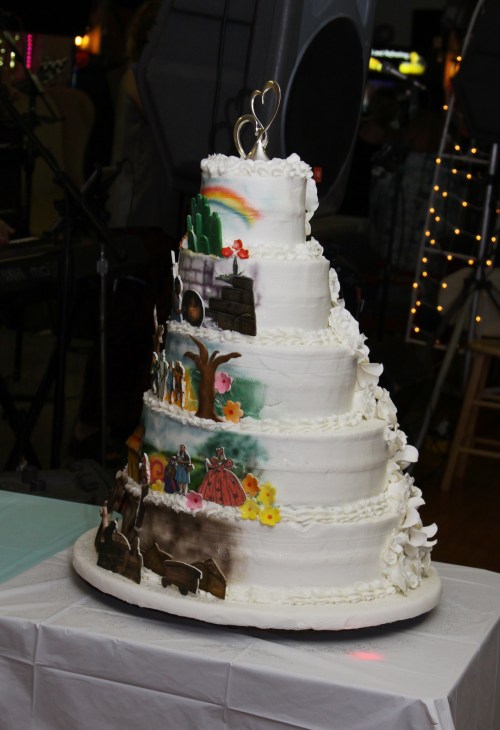
The groom has more than forty tattoos, including many of the characters of the Wizard of Oz, and the wedding cake featured numerous scenes from that wonderful movie.
cake1_web

I did eventually manage to get some candid shots of people during the reception, but I haven’t yet decided if I will share them on this blog—I’ll  probably check with the bride and groom to see what they think.

What did I learn? Most of the “official” wedding shots probably need to be staged, preferably in an outdoor setting or a place where you can control lighting and background. The candid shots from the reception that  look spontaneous and fun are really, really difficult to get and there are no guarantees that you will get good ones—you really do need a second shooter to increase the odds. Finally, it takes a lot of energy and stamina to take photos at a reception—I got a good workout doing all kinds of stretches and deep knee bends trying to get shots.

© Michael Q. Powell. All rights reserved.

Read Full Post »

Normally Blue Dasher dragonflies (Pachydiplax longipennis) perch on plants growing upwards, but this one decided to be different by perching on hanging vegetation. I love how the lighting makes it look like the image  was shot in the studio. I think I will call his position the “downward-facing dragonfly.” (I captured the image this morning in Woburn, MA at a small canal just outside of my hotel.)

Blue Dasher

© Michael Q. Powell. All rights reserved.

Read Full Post »

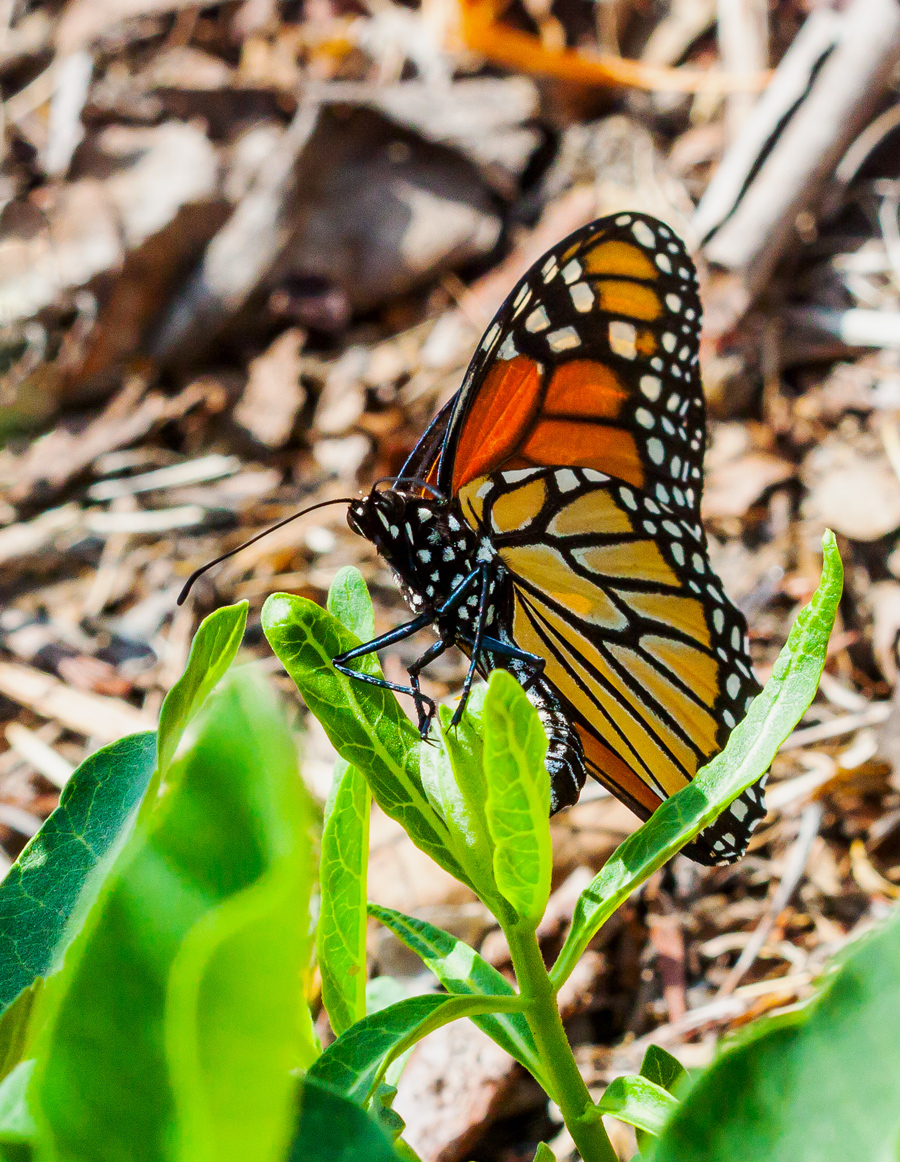
I was beginning to think that another year would go by without seeing a Monarch butterfly (Danaus plexippus) when yesterday I spotted one of them in the most unlikely of places—in the mulched plants at the back of the hotel where I am staying in Woburn, Massachusetts.

After a grueling eleven-hour ride from Northern Virginia, I arrived at the hotel yesterday afternoon ready to relax. Unfortunately, I was told that my room would not be ready for at least an hour. I grabbed my camera and decided to walk around the grounds of the hotel, which is adjacent to a small canal, to see what there might be to photograph.

As I was walking, I caught sight of an orange-and-black butterfly that kept landing momentarily on the low plants, never staying still long enough for me to get a good shot (I was shooting with a 100mm macro lens). I kept chasing and eventually got some shots. It has been such a  long time since I last saw a Monarch that any photo at all is a bonus, so it doesn’t bother me that these are far from being great shots.

My excitement at seeing a Monarch is tempered a bit by the fact that I did not get the right angle to conclusively exclude the possibility that this is a Viceroy butterfly. If that were to turn out to be the case, I’ll be out again chasing butterflies in search of the first Monarch of the season.

Monarch butterfly

Monarch butterfly


© Michael Q. Powell. All rights reserved.

Read Full Post »

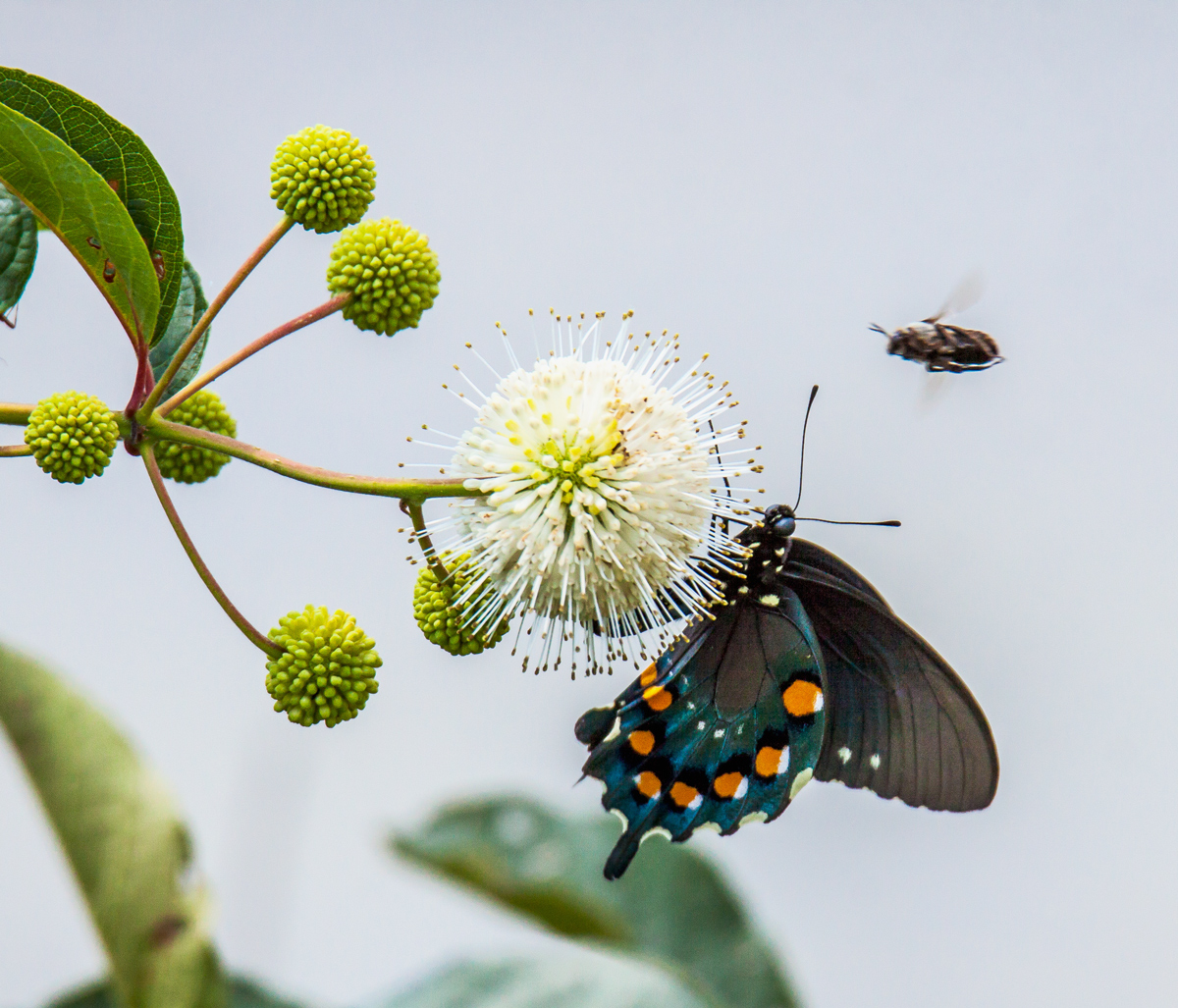
Butterflies were really active this past Monday at Huntley Meadows Park, especially around the buttonbushes (Cephalanthus occidentalis). A dark swallowtail butterfly caught my eye and my mind raced to remember how to distinguish among the various dark swallowtails. Fortunately I had enough presence of mind to capture some images, knowing I could search different resources when I got home.

I’m pretty confident that the butterfly in question is a Pipevine Swallowtail (Battus philenor). One of its distinguishing characteristics is a single row of orange spots in the shape of a C. As I was searching the internet, I came across a wonderful posting by Louisana Naturalist that has side-by-side photos of four different dark swallowtails —the Black Swallowtail, the dark morph of the female Eastern Tiger Swallowtail, the Spicebush Swallowtail, and the Pipevine Swallowtail.

As I was trying to get a shot of this butterfly, which was in constant motion, another insect decided to photobomb us. I think it is a bee and I am including a photo of the photobombing insect just for fun.

Pipevine Swallowtail

Pipevine Swallowtail

© Michael Q. Powell. All rights reserved.

Read Full Post »

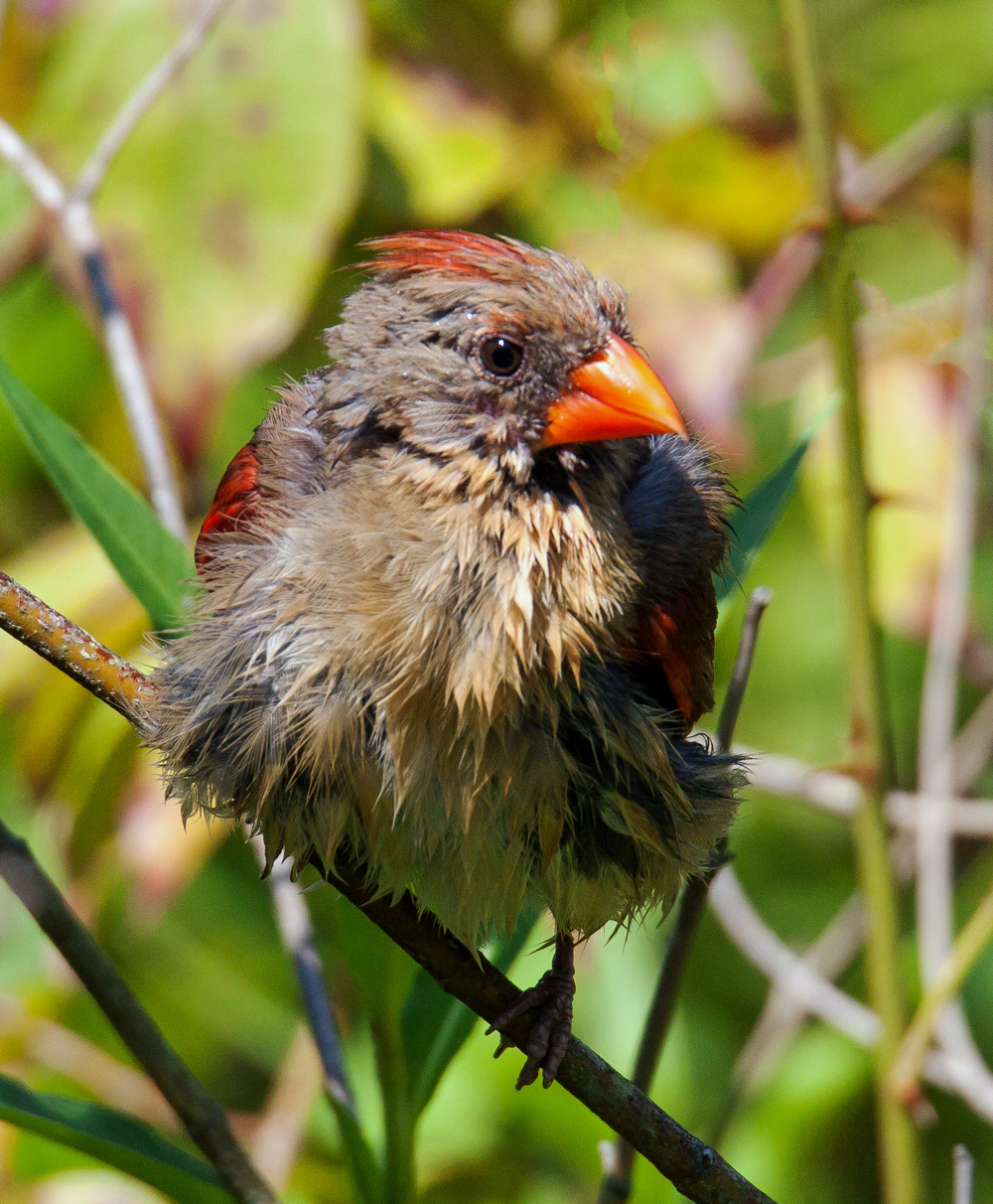
How do birds manage to survive the unbearable heat of summer? Monday, on a day when temperatures soared to 100 degrees (38 degrees C), I spotted this Northern Cardinal (Cardinalis cardinalis) at Huntley Meadows Park. It was sitting in the shade and looked like it had fluffed up its feathers or was drying off after a dip in the pond in an effort to stay cool.

I was the crazy one standing in the sun.

Northern Cardinal

Northern Cardinal

© Michael Q. Powell. All rights reserved.

Read Full Post »

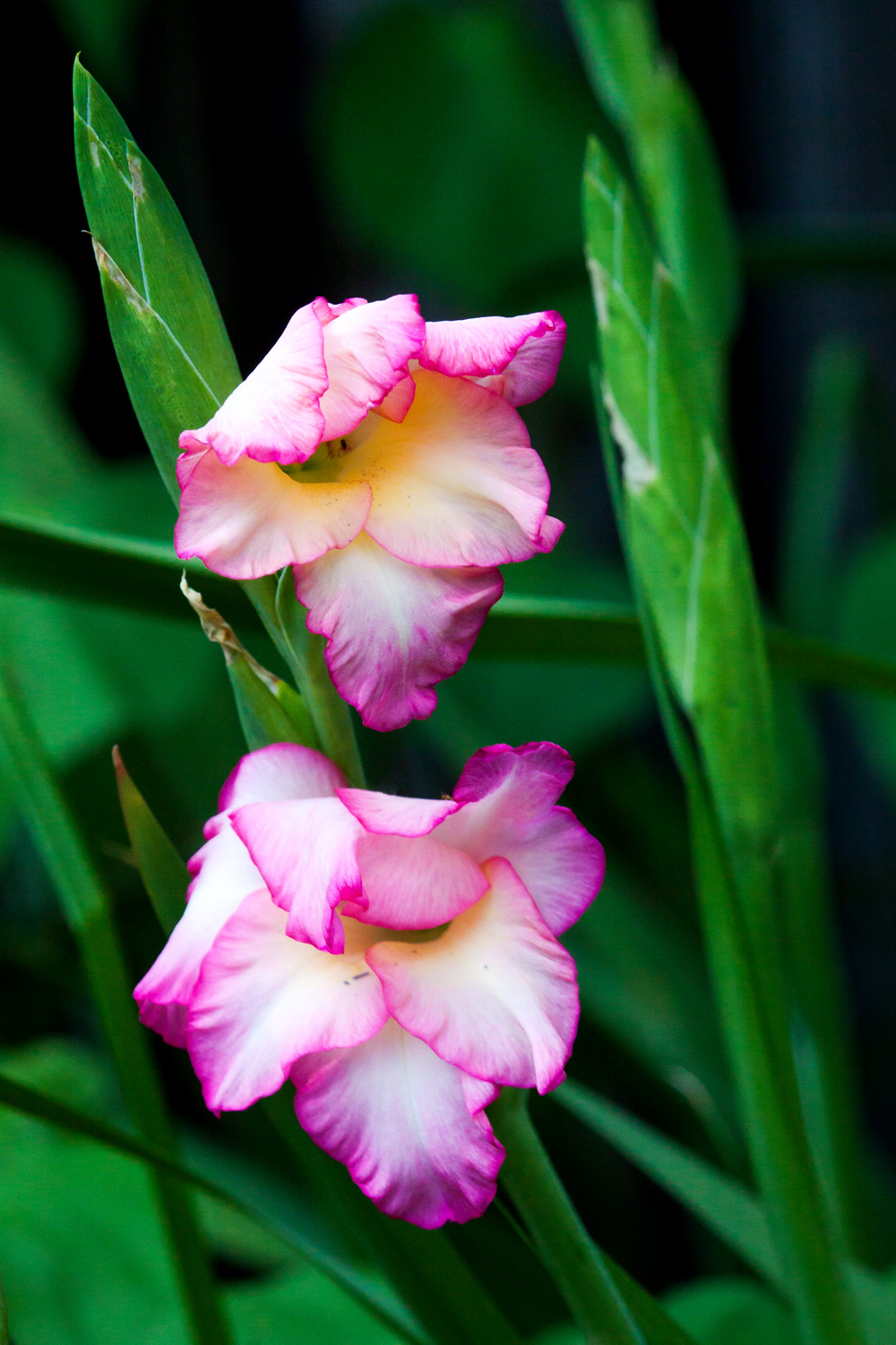
When the temperature is 96 degrees outside (about 36 degrees C), it’s hard to have the energy to go far with my camera. Fortunately, my neighbor, fellow photographer Cindy Dyer, has an awesome garden. I was glad to be able to capture this shot of some gladiolas that were blooming there this past weekend.

Thanks, Cindy.

gladiolas

© Michael Q. Powell. All rights reserved.

Read Full Post »

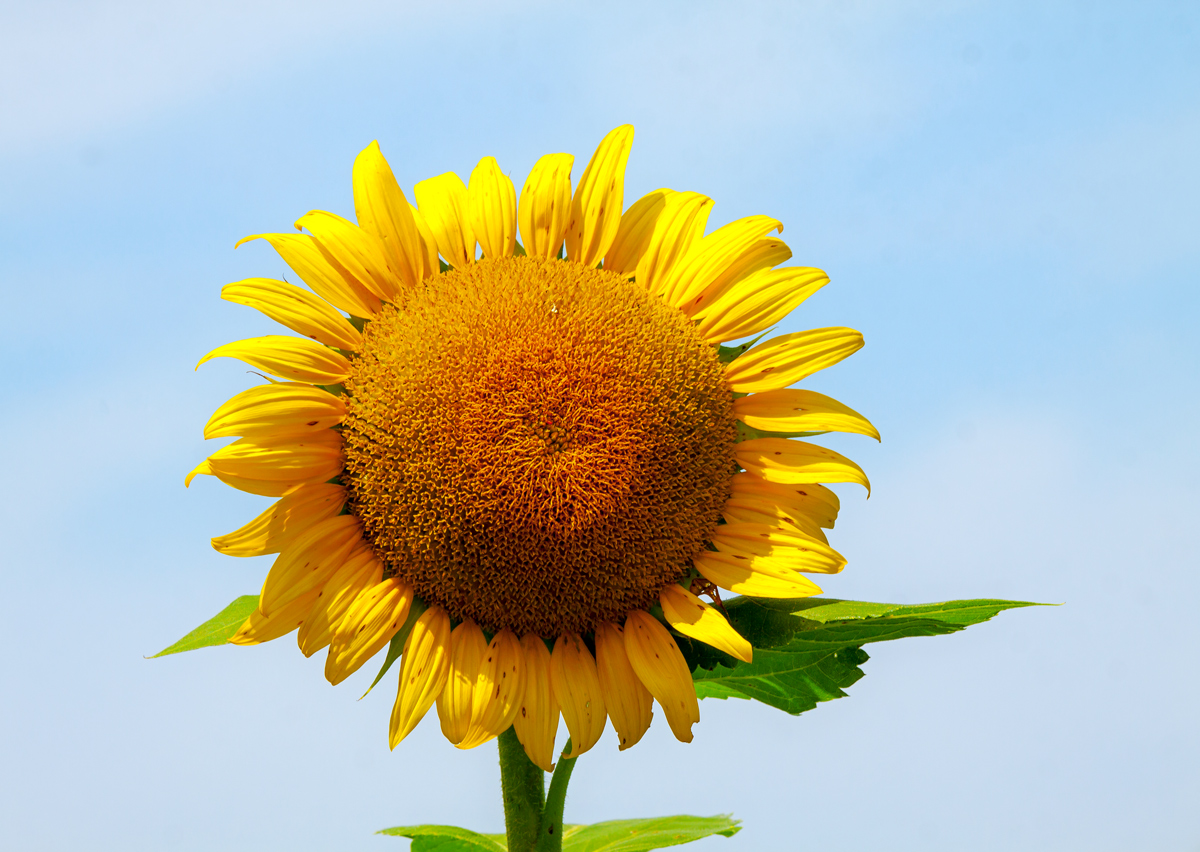
The bright colors and distinctive shape of sunflowers never fail to bring a smile to my face. Here’s a shot of one from my trip last Friday to McKee-Beshers Wildlife Management Area in Poolesville, Maryland.

sunflower

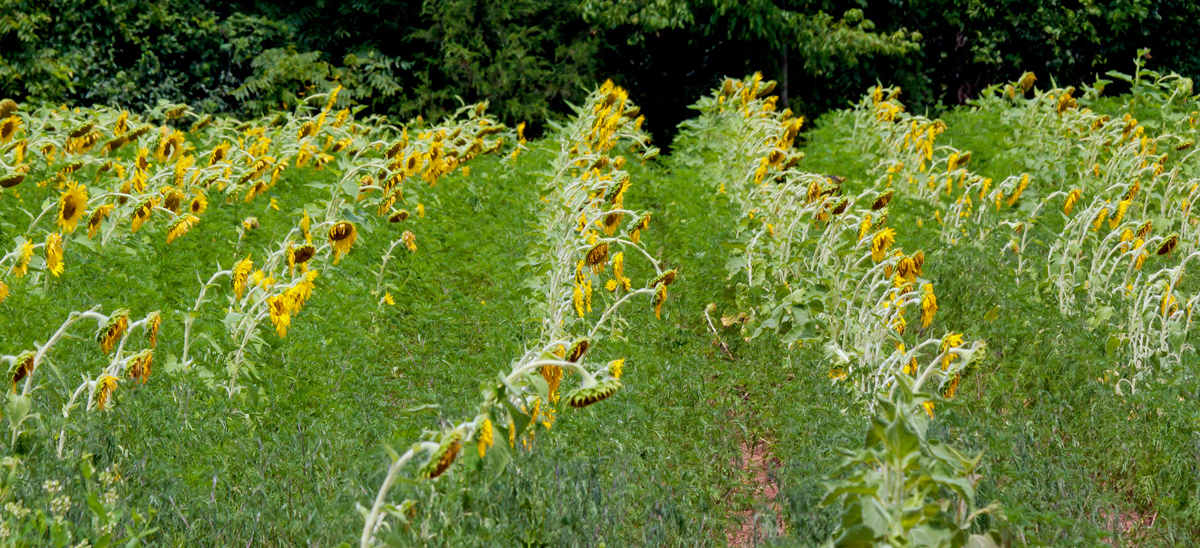
Normally a shot like this is easy to get when the towering sunflowers reach tall into the sky. In reality, however, the sunflowers at this site were not that tall and I had to crouch low to the ground to capture this image. In addition, many of the sunflowers were a bit wilted and past their peak. One of my Facebook readers commented that it looked like the flowers had their heads bowed in prayer in the following shot, which gives you and idea of the conditions in one area of the field of sunflowers.

sunflower

© Michael Q. Powell. All rights reserved.

Read Full Post »

How do you get your subject to smile when you want to take a picture? This Blue Dasher dragonfly (Pachydiplax longipennis) didn’t need any prompting at all when I went in for an extreme close-up shot yesterday at McKee-Beshers Wildlife Management Area in Maryland.

Start each day with a smile.

Blue Dasher

© Michael Q. Powell. All rights reserved.

Read Full Post »

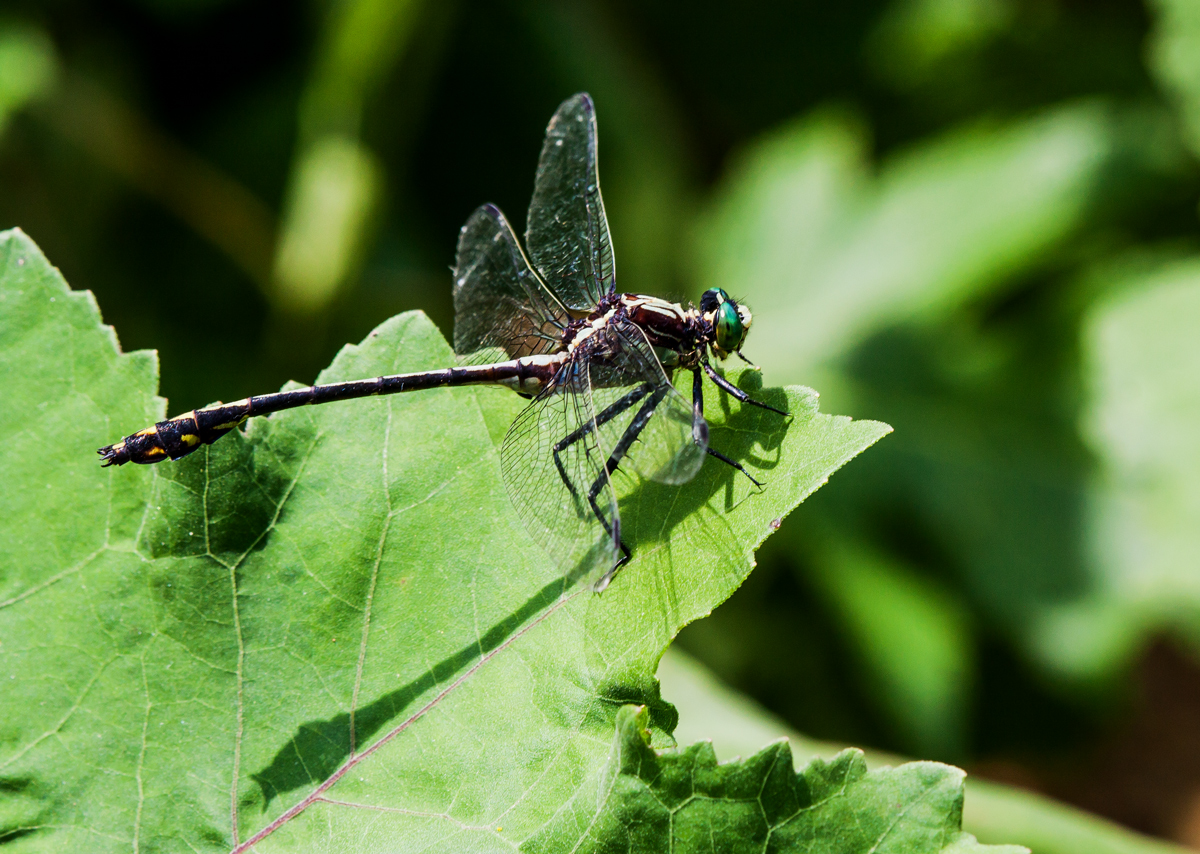
As I was walking through a field of sunflowers at McKee-Beshers Wildlife Management Area in Poolesville, Maryland, I spotted an unusual dragonfly that I couldn’t immediately identify. It turned out to be a Black-shouldered Spinyleg dragonfly (Dromogomphus spinosus)—a cool name for a cool-looking dragonfly.

When I first caught sight of the dragonfly, the dragonfly’s long, skinny abdomen and the enlarged area near the end suggested to me that it was a member of the clubtail family of dragonflies. (You can get a really good sense of the shape of the “clubtail” when you look at the shadows in a couple of the images). The only clubtails that I have seen with any kind of regularity have been Common Sanddragons and Unicorn Clubtails, and this was clearly not one of them. When I am out in the field, I don’t worry too much about identification—I practice what I call the “Law of the West,” i.e. “shoot first and ask questions later.”

Later in the day my shooting partner was able to identify the dragonfly after I pointed her to the website “Dragonflies of Northern Virginia.” This website is my favorite resources for information and photos of dragonflies in my area. I checked my past blog postings because I had a vague recollection that I had seen this species before and found a posting indicating that I saw one almost exactly a year ago on a trip to a different part of Maryland.

Black-shouldered Spinyleg

Black-shouldered Spinyleg

Black-shouldered Spinyleg

© Michael Q. Powell. All rights reserved.


Read Full Post »
During a quick trip to Jackson Miles Abbott Wetlands Refuge at Fort Belvoir, Virginia last weekend, I was thrilled to see that the spectacularly patterned Banded Pennant dragonflies are still around. This is the only location that I visit regularly where I have spotted this dragonfly species and I am never quite sure when an encounter will be the last one of the season.

As I was looking over the two shots that I chose to use with this posting, I realized that they represent two different approaches that I use when photographing dragonflies. Ideally I will try to position myself so that the camera’s sensor is parallel with the dragonfly’s wings and most of the dragonfly will be in focus. That was the case with the second shot and it really highlights the beautiful pattern of the wings. However, the image seems a bit too static for my taste. I prefer the first shot, in part because the pose is more dynamic and the direct eye contact with the dragonfly draws me in.

Banded Pennant

Banded Pennant

© Michael Q. Powell. All rights reserved.

Read Full Post »
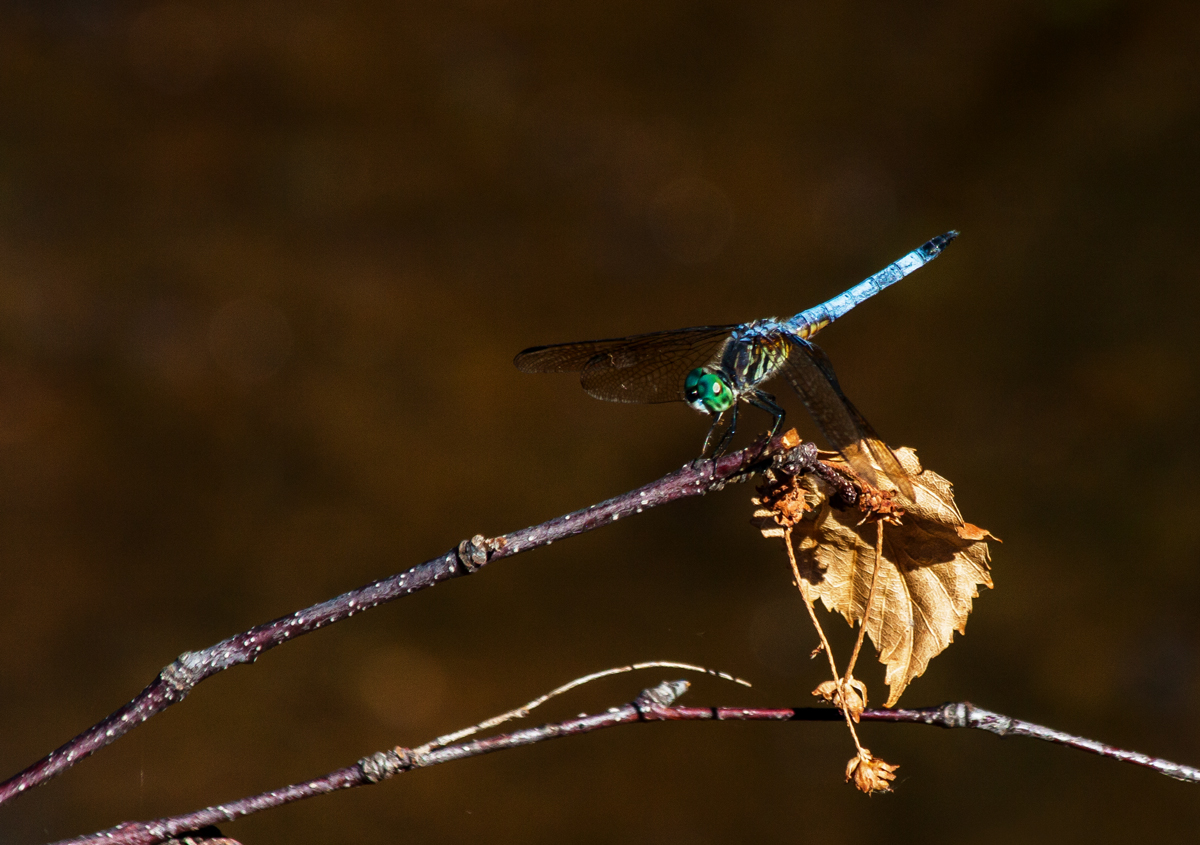
Blue Dasher dragonflies (Pachydiplax longipennis) have become for me one of the signs of summer in the area in which I live. When the weather turns hot and humid, they can often be seen flying lazily over the marshes and ponds, perching frequently on vegetation growing out of the water.

On a recent trip to Green Spring Gardens, I captured some images perched male Blue Dasher dragonflies. In the first shot, the dragonfly was perched on the edge of a lotus leaf. I really like the curves and softness of the leaves, which contrast with the details of the dragonfly. I think too that the shadow cast on the lower leaf adds some additional visual interest to the  image.

The second image features a Blue Dasher in the obelisk pose. It is generally believed that some dragonflies assume this pose to dissipate heat by reducing the amount of their bodies that is exposed to direct sunlight. I was shooting partially into the sun, which forced me to overexpose the image a bit and accounts for the lighter background. However, the surface of the water was covered with a lot of duckweed and was not uniform in color. As a result, the background ended ended up with some ugly gray patches that I seemed to be impossible for me to remove.

Blue Dasher

Blue Dasher

© Michael Q. Powell. All rights reserved.

Read Full Post »
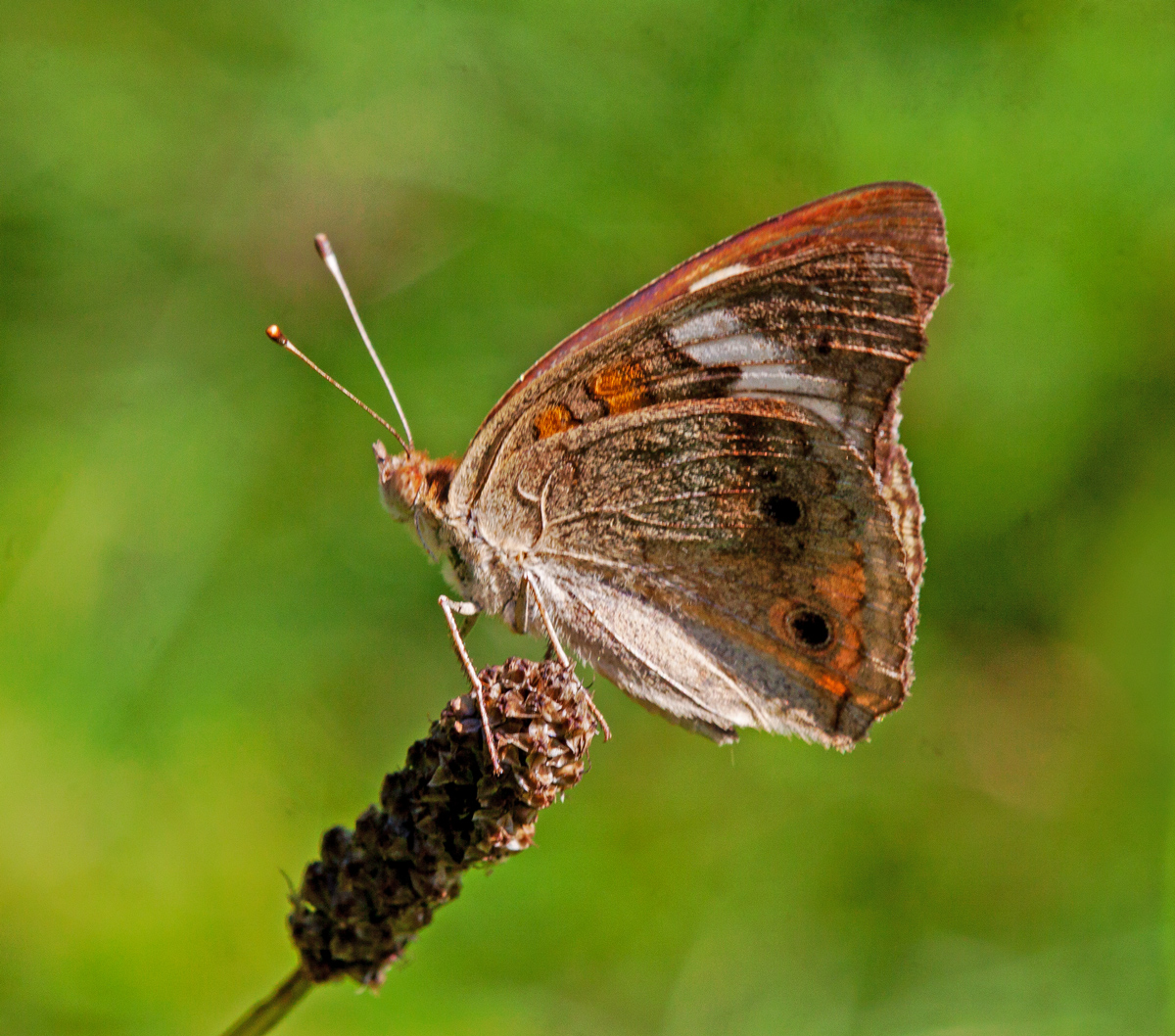
I first spotted this small Common Buckeye Butterfly (Junonia coenia) as it was flying low above a grassy patch at Jackson Miles Abbott Wetlands Refuge. Periodically it would stop and I would attempt to get a shot of it. It was probably hilarious to watch our little pas de deux—the butterfly would fly and perch and I would bend my knees and crouch, which served as a signal for the butterfly to take off again.

I’m pretty patient, so we danced this way for quite a while before the butterfly decided to perch on some low vegetation rather than on the bare ground. I was finally able to capture a shot, though the butterfly didn’t pose long before taking off again.

Common Buckeye

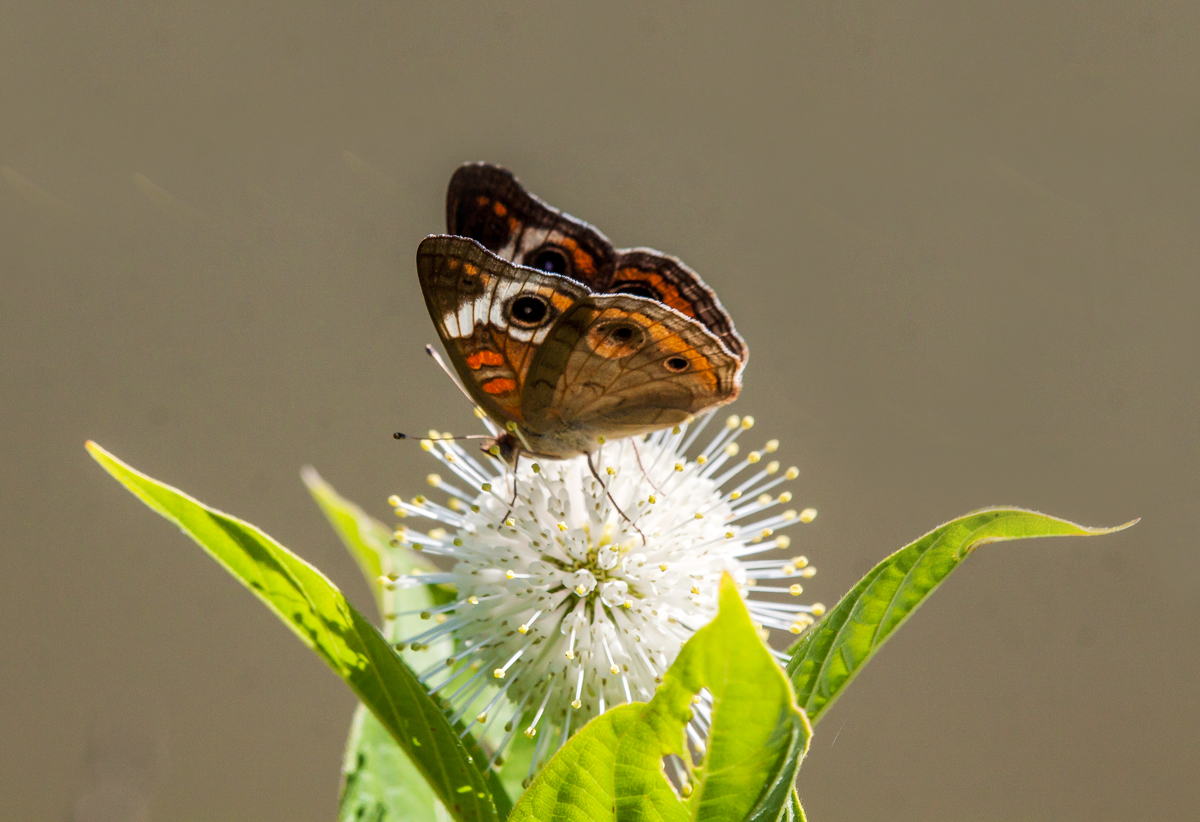
As I continued the chase, my knees started getting a bit sore. I was thinking of giving up the chase when suddenly the butterfly flew higher into the air and landed on a buttonbush (Cephalanthus occidentalis). These bushes are a virtual magnet for butterflies and I love the spiky spheres of the plant. I wasn’t able to get very close to the buttonbush, but captured this image that I really like.

Common Buckeye

The chase ended here and we went our separate ways. I hope that I never get too old or too self-conscious to chase butterflies, a pursuit that makes me feel like a carefree child again.

© Michael Q. Powell. All rights reserved.


Read Full Post »
« Newer Posts - Older Posts »