Feeds:
Posts
Comments

Posts Tagged ‘Alexandria VA’

The rays of sunshine illuminated her face and our eyes met and Katy and I shared a moment when time seemed to stand still. Alas, the spell was soon broken and she abandoned me. Yes, Katy did.

I took this shot last weekend at Jackson Miles Abbott Wetlands Refuge at Fort Belvoir, Virginia. I believe that “Katy” is a Handsome Meadow Katydid (Orchelimum pulchellum), although much of the katydid’s body remained in the shadows so I am not one hundred percent sure of the species identification, though the length of the antennae makes me confident that it is a katydid and not a grasshopper.

It was a fun challenge to get this shot, which I decided to post uncropped. I was sprawled on the ground, trying to get at eye level with the katydid and move in as closely as I could without disturbing the stalks of grass. For a shot like this, my 180mm macro lens was perfect, though I really have to focus on technique to make sure that my shooting position is steady, given that the lens does not have any built-in image stabilization (VR for Nikon folks).

Handsome Meadow Katydid

© Michael Q. Powell. All rights reserved

Read Full Post »

Despite the “common” in their name, I don’t see Common Wood Nymphs (Cercyonis pegala) very often. I was therefore pretty excited to spot one this past weekend at Huntley Meadows Park.
I’m pretty sure, though, that my excitement does not qualify as nymphomania.
Common Wood Nymph

© Michael Q. Powell. All rights reserved

Read Full Post »

I can identify most of the large butterflies here in Northern Virginia, but the tiny ones continue to confound me. This past weekend I was able to get some shots of some tiny beauties with my macro lens, but I am not really confident in my identification of any of them.

The first image, I think, may be an Eastern Tailed-blue butterfly (Blue Everes comyntas) or it could be some kind of hairstreak butterfly. The second one looks to be a sulphur, but I can’t decide if it is clouded, cloudless, or some other kind of sulphur butterfly. As for the final shot, I don’t even have a guess.

Despite my confusion about identification, I can’t help but be overwhelmed by the delicate beauty of this tiny creatures.

Eastern Tailed-blue

sulphur butterfly

tiny butterfly

© Michael Q. Powell. All rights reserved

Read Full Post »

Late Saturday afternoon I was exploring Cook Lake, a tiny urban fishing lake adjacent to a water park in Alexandria, Virginia. I accidently spooked a Great Blue Heron (Ardea herodias) that flew to a fallen tree on the shore. The lighting was beautiful and the heron struck a pose that I can only describe as heroic.

I never get tired of photographing Great Blue Herons.

Great Blue Heron

© Michael Q. Powell. All rights reserved

Read Full Post »

I have always been fascinated with frogs. As a child, I remember my amazement at seeing photos of colorful tropical frogs in National Geographic, especially the green tree frogs with big red eyes.  Growing older, I loved Kermit the Frog, especially his quirky sense of humor and his propensity for bursting out in song. Even now, one of my all-time favorite movie scenes is from the beginning of The Muppet Movie, where the view begins high above the trees and gradually zooms in on Kermit, who is sitting on a log playing the banjo and singing The Rainbow Connection. I try to hold on to the innocent, wide-eyed optimism of that song.

As a photographer, I have list of aspirational shots, made up of images, subjects, and situations that I would love to photograph. For a long time, I longed to capture a photo of a frog perched on a lily pad. After numerous unsuccessful attempts, I managed to capture such an image a couple of years ago. Despite that “success” I still keep my eyes open for frogs whenever I am in an area with lily pads.

This past weekend I hit the jackpot when I spotted three frogs on a single lily pad. I was exploring a small lake at Ben Brennan Park, a small suburban park in Alexandria, Virginia with a variety of recreational facilities. There is a small elevated bridge over one section of the lake and it was from this vantage point that I was able to capture this image. Initially the three frogs were all facing outwards, looking like they were defending their pad from outside intruders. Just before I took this shot, however, the frog in the back turned toward the middle and looked like he was trying to sneak up on his buddy.

Perhaps he simply wanted to play a game of leapfrog.

leapfrog

© Michael Q. Powell. All rights reserved

Read Full Post »

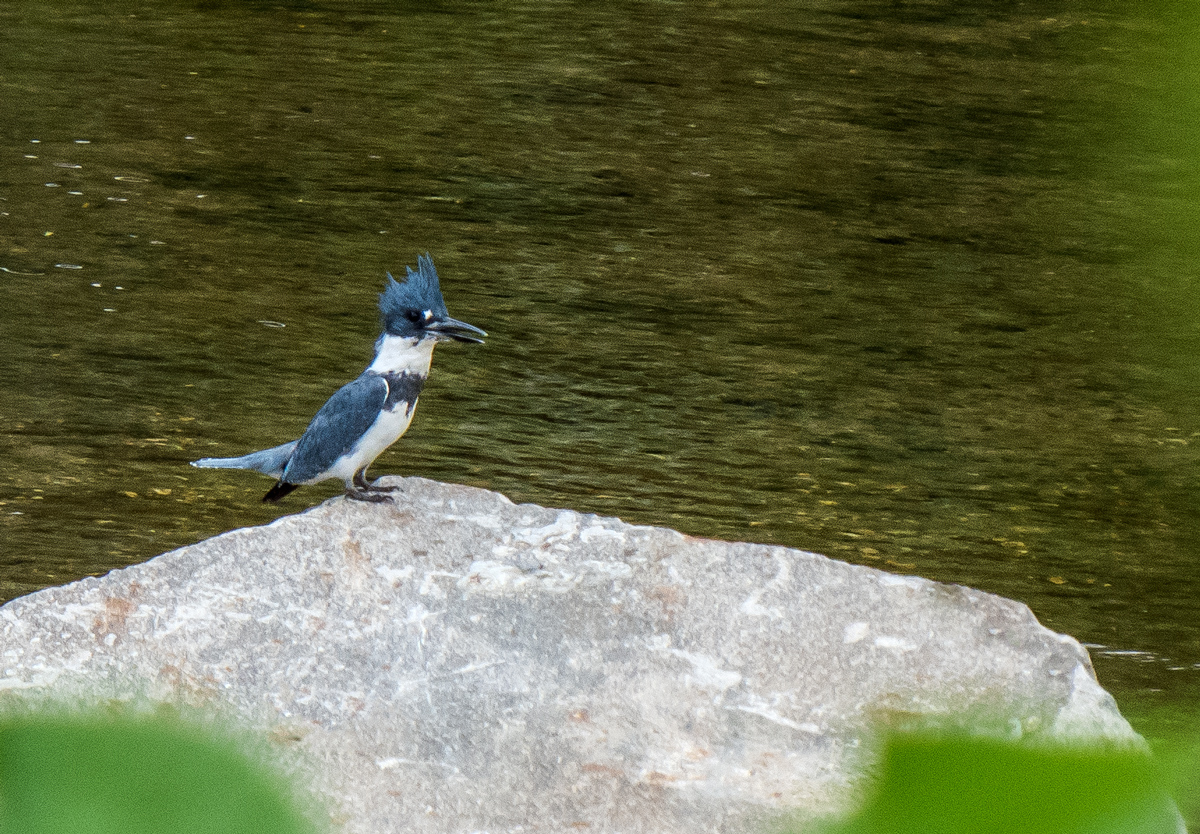
Yesterday I was on a biking/walking trail that follows Cameron Run, a tributary stream of the Potomac River, when I heard the unmistakable  rattling call of a Belted Kingfisher (Megaceryle alcyon). As I moved through the vegetation to investigate, I spotted a kingfisher perched on a rock jutting out of the water. I had my Canon SX50 zoomed out to its maximum length, but it wasn’t enough—I needed to get closer.

As I made my way slowly down a steep slope, my footing gave way and I unceremoniously slid for a short distance on my back side. No surprisingly I spooked the kingfisher. What was surprising was that the kingfisher did not fly up into the trees, but instead he flew to a more distant smaller rock that was barely bigger than he was. (You can tell that it is a male because, unlike the female, he does not have chestnut stripe across his chest.)

The kingfisher soon took to the air and was joined by another one. They proceeded to fly back and forth over a portion of the stream, calling out loudly the entire time. They didn’t actually buzz me, but they did fly in my general direction a couple of times before veering off. What was going on?

I got a somewhat blurry shot of the second kingfisher, a female, that confirmed my suspicion that this was a couple. According to the Cornell Lab of Ornithology website, “During breeding season the Belted Kingfisher pair defends a territory against other kingfishers. A territory along a stream includes just the streambed and the vegetation along it, and averages 0.6 mile long. The nest burrow is usually in a dirt bank near water. The tunnel slopes upward from the entrance, perhaps to keep water from entering the nest. Tunnel length ranges from 1 to 8 feet.”

This behavior suggests to me that there could be baby kingfishers in the area. I certainly didn’t see any babies and suspect that a nest would probably be on the opposite side of the stream from where I took these photos, an area that is more remote and inacessible.

Belted Kingfisher

Belted Kingfisher

© Michael Q. Powell. All rights reserved

Read Full Post »

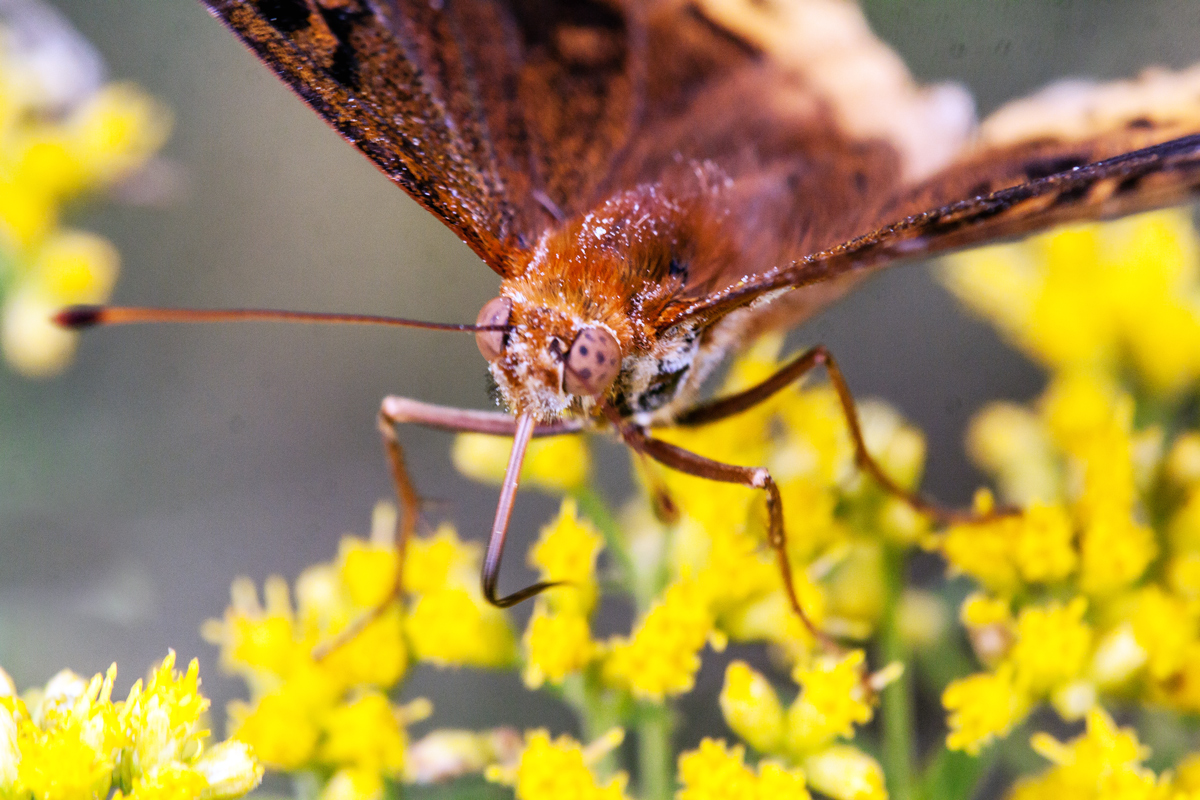
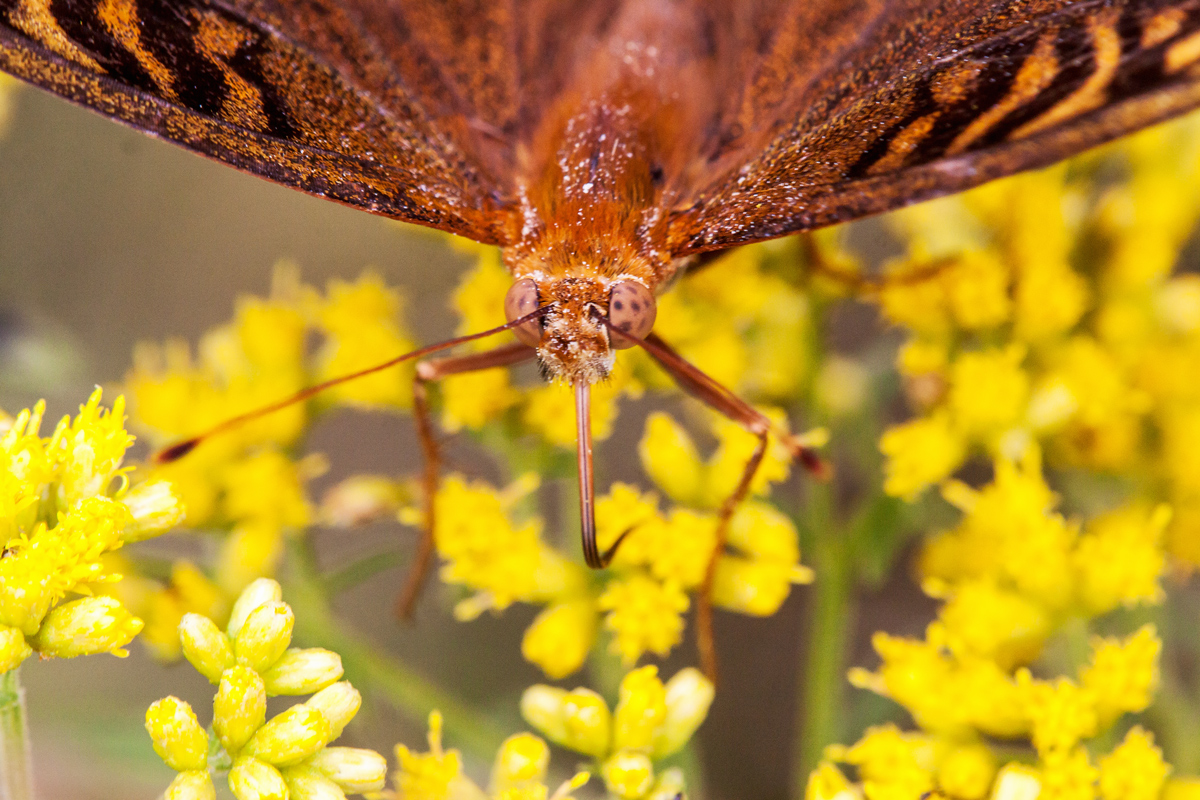
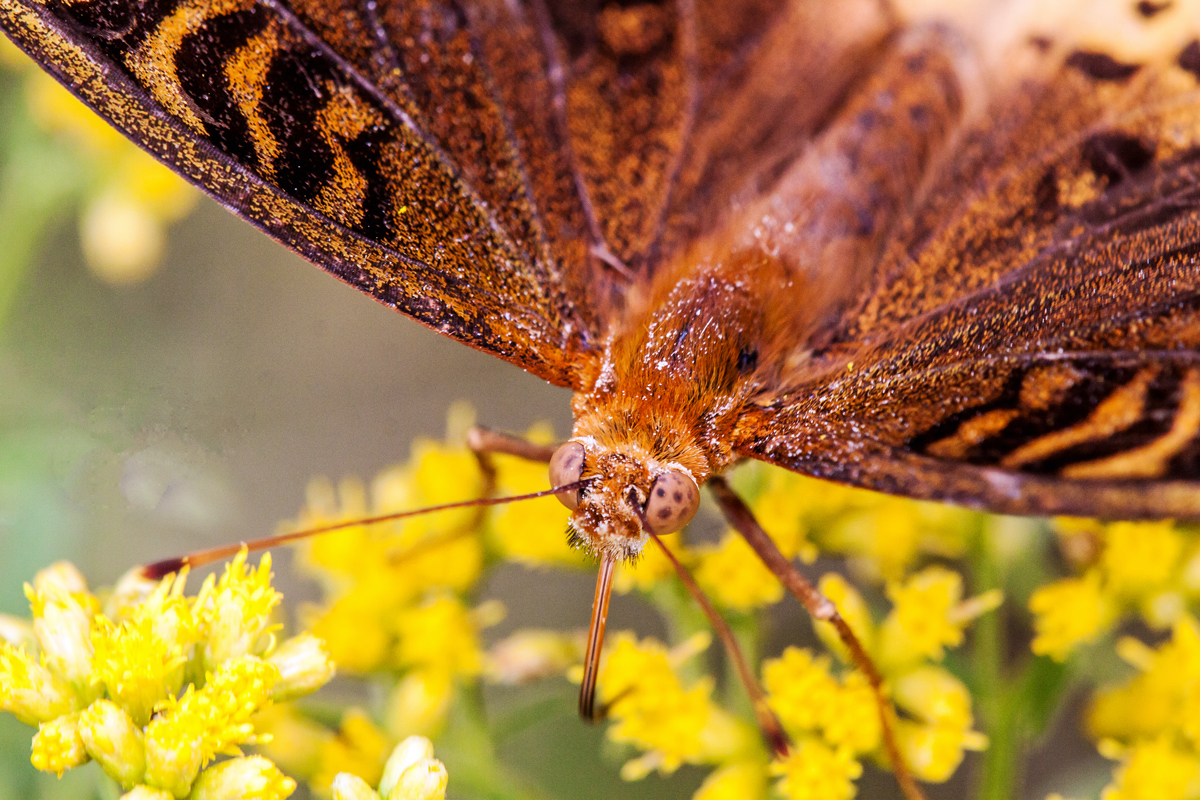
Have you ever gone eye-to-eye with a butterfly? Yesterday at Huntley Meadows Park this Great Spangled Fritillary butterfly (Speyeria Cybele) was so focused on feeding that it let me get pretty close, close enough to see its cool speckled eyes and its extended proboscis.

Great Spangled Fritillary

Great Spangled Fritillary

Great Spangled Fritillary

© Michael Q. Powell. All rights reserved

Read Full Post »

It’s grasshopper season and things are really hopping at Huntley Meadows Park. Every step that I took through the tall, dry grass earlier this week produced a small cloud of flying grasshoppers. Most of them settled back down in the tangled undergrowth, but occasionally one would perch on a stem for a moment, giving me an unobstructed view.
As I was going over my photos, I was struck by the diversity of sizes, shapes, and colors of the grasshoppers that I found in a single small meadow. Most of the time I try hard to identify the species of my subjects, but this time I simply want to celebrate their beauty and the amazing details of their bodies.
The word “grasshopper” is special to me also because it is the term of endearment that my photography mentor, Cindy Dyer, uses for me. You have to be pretty old to remember the old television series “Kung Fu” that was set in the Wild West that starred David Carradine as Kwai Chang Caine. As a child, Caine studied to be a monk at a Shaolin monastery, where Master Po referred to him as “Grasshopper,” in reference to this scene in the pilot episode, according to Wikipedia, a scene whose message I have always liked and try to remember.”
Master Po: Close your eyes. What do you hear?
 Young Caine: I hear the water, I hear the birds.
 Po: Do you hear your own heartbeat?
 Caine: No.
 Po: Do you hear the grasshopper which is at your feet?
 Caine: Old man, how is it that you hear these things?
 Po: Young man, how is it that you do not?”
grasshopper
grasshopper
grasshopper

© Michael Q. Powell. All rights reserved

Read Full Post »

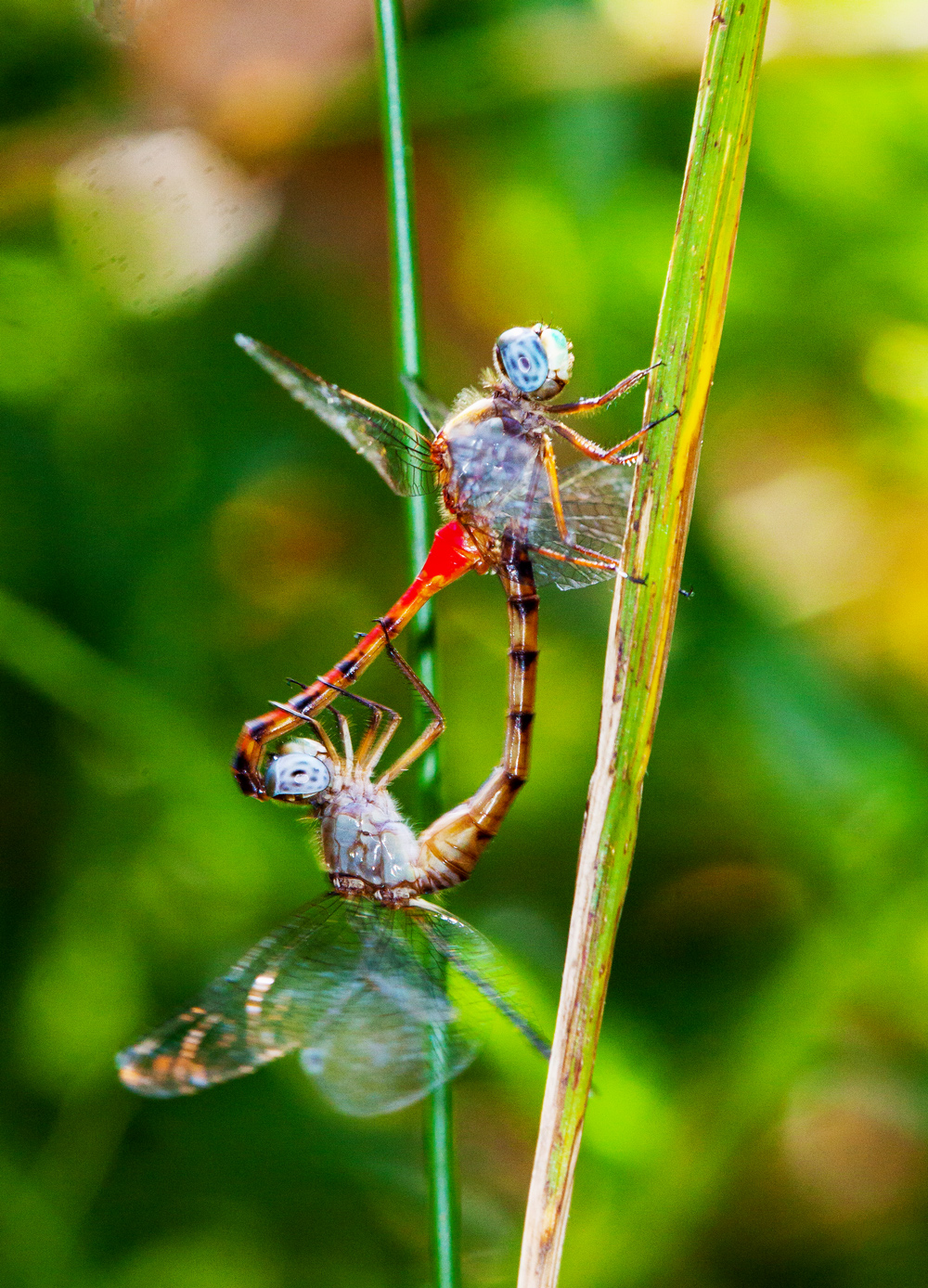
Most of the Blue-faced Meadowhawk dragonflies (Sympetrum ambiguum) yesterday at Huntley Meadows Park were perched alone in the bright sunlight, but some of them managed to find mates and were “getting busy.” No matter how many times I have seen this behavior, I continue to be amazed by the unusual and acrobatic method that dragonflies use when mating.

I usually start to see the brightly-colored Blue-faced Meadowhawks in early September, at a time when the overall number of dragonflies is declining and they are one of the signs for me of the end of the summer. This species seems to be generally tolerant of my presence, although some individuals are quite skittish, and I have managed to get some close-up shots of them in the past.

Don’t be surprised to see more photos of the Blue-faced Meadowhawks in upcoming weeks—they are one of my favorite species of dragonflies.

Blue-faced Meadowhawk


© Michael Q. Powell. All rights reserved

Read Full Post »

An Eastern Gray Squirrel (Sciurus carolinensis) was scampering across an open area at Green Spring Gardens last week. Suddenly it stopped, got up in its hind legs and turned to me with a half-smile. I think it was deliberately posing for me, so I took this shot.

The squirrel was so tall and upright in this pose that it looked like it was simply going out for a casual two-legged morning stroll through the garden, like so many of the people that were passing by us.

Eastern Gray Squirrel

© Michael Q. Powell. All rights reserved

Read Full Post »

I’ll often try to get shots of butterflies with their wings wide open, but when they turn sideward, you can sometimes get an equally spectacular view of them slowly sipping nectar. I can’t identify the flower, but the butterfly definitely is an Eastern Tiger Swallowtail (Papilio glaucus) that I chased about this past weekend at Green Spring Gardens.

Eastern Tiger Swallowtail

© Michael Q. Powell. All rights reserved

Read Full Post »

Butterflies are always beautiful no matter what their condition, but there is something really special about seeing a perfect specimen with its wings wide open, like this Eastern Tiger Swallowtail (Papilio glaucus) that I spotted this past weekend at Green Spring Gardens.

Eastern Tiger Swallowtail

© Michael Q. Powell. All rights reserved

Read Full Post »

The sun was shining through the wings of this Monarch butterfly (Danaus plexippus) from behind, making the butterfly glow like a stained glass window on Friday at Green Spring Gardens.
Monarch butterfly

© Michael Q. Powell. All rights reserved

Read Full Post »

A flash of light among the flowers caught my eye yesterday as I wandered about at Green Spring Gardens and I managed to capture this shot of a Ruby-throated Hummingbird (Archilochus colubris). I don’t see any red on its throat, so I’m guessing that it is a female or an immature male.
When I looked at the EXIF data I realized how lucky I was to get this shot, for the shutter speed used was only 1/250 of a second. That shouldn’t be fast enough to capture a hummingbird in flight and it also is not really fast enough to be shooting with at 552mm handheld with my zoom lens, even with its built-in image stabilization.
As you probably suspect, I wasn’t intentionally shooting with such a slow shutter speed. I had been shooting flowers in aperture priority mode in bright sunlight and had lowered my ISO to 250 right before I spotted the hummingbird from a distance. The hummingbird was darting in and out of the light among the flowers (I think the flower in the photo is a type of salvia flower). I knew that I would have only a limited chance to get a shot, so I aimed and shot with the existing settings.
I’m glad that I have used my Tamron 150-600mm so much this past year, because I was somehow able to rely on muscle memory and instincts to help me get this shot, though I must acknowledge that luck played a huge role too.
Ruby-throated Hummingbird
© Michael Q. Powell. All rights reserved

Read Full Post »

Great Blue Herons (Ardea Herodias) are so motionless when they are fishing that they look almost like statues. The Great Blue Heron that I spotted this morning at the edge of a pond at Green Spring Gardens actually was a statue that looked pretty realistic from a distance.

I’ve noticed that dragonflies are not fooled at all and I sometimes see them perching on the heron.

Great Blue Heron


© Michael Q. Powell. All rights reserved

Read Full Post »

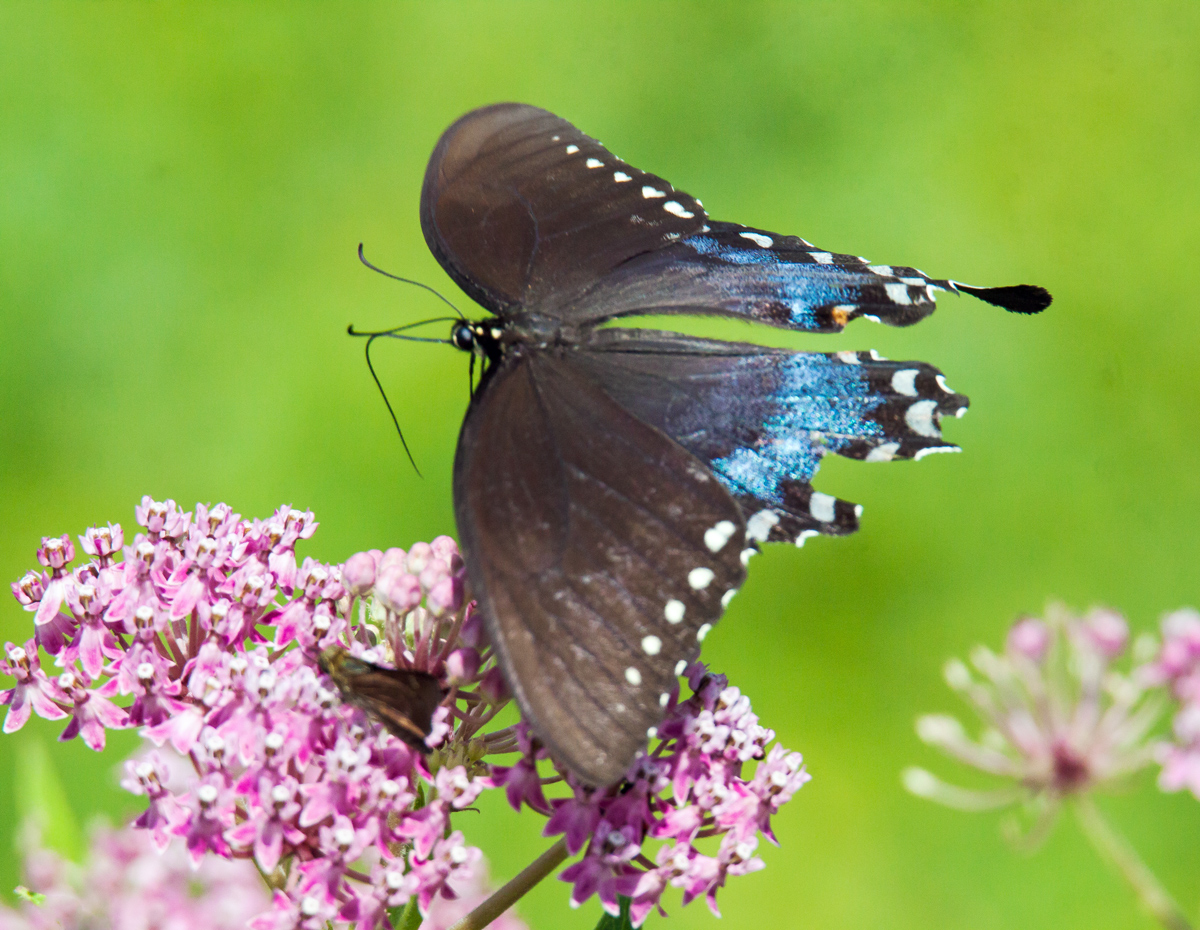
Butterflies fly so expertly that I often can’t tell that they have severe wing damage until I look closely. That was certainly the case this past weekend when I was observing a dark swallowtail at Huntley Meadows Park.

I didn’t get an absolutely clear look at it, but I think it might be a Spice Bush Swallowtail butterfly (Papilio troilus), judging from its colors and patterns. In the first photo, you can see only minor damage, but when the butterfly changed position, the extent of the damage became much more apparent.

I consider flight to be somewhat of a mystery in any case, but it is even more of a mystery how a butterfly can fly so well when one of its wings is almost completely detached from its body,

Spicebush Swallowtail

Spicebush Swallowtail


© Michael Q. Powell. All rights reserved

Read Full Post »

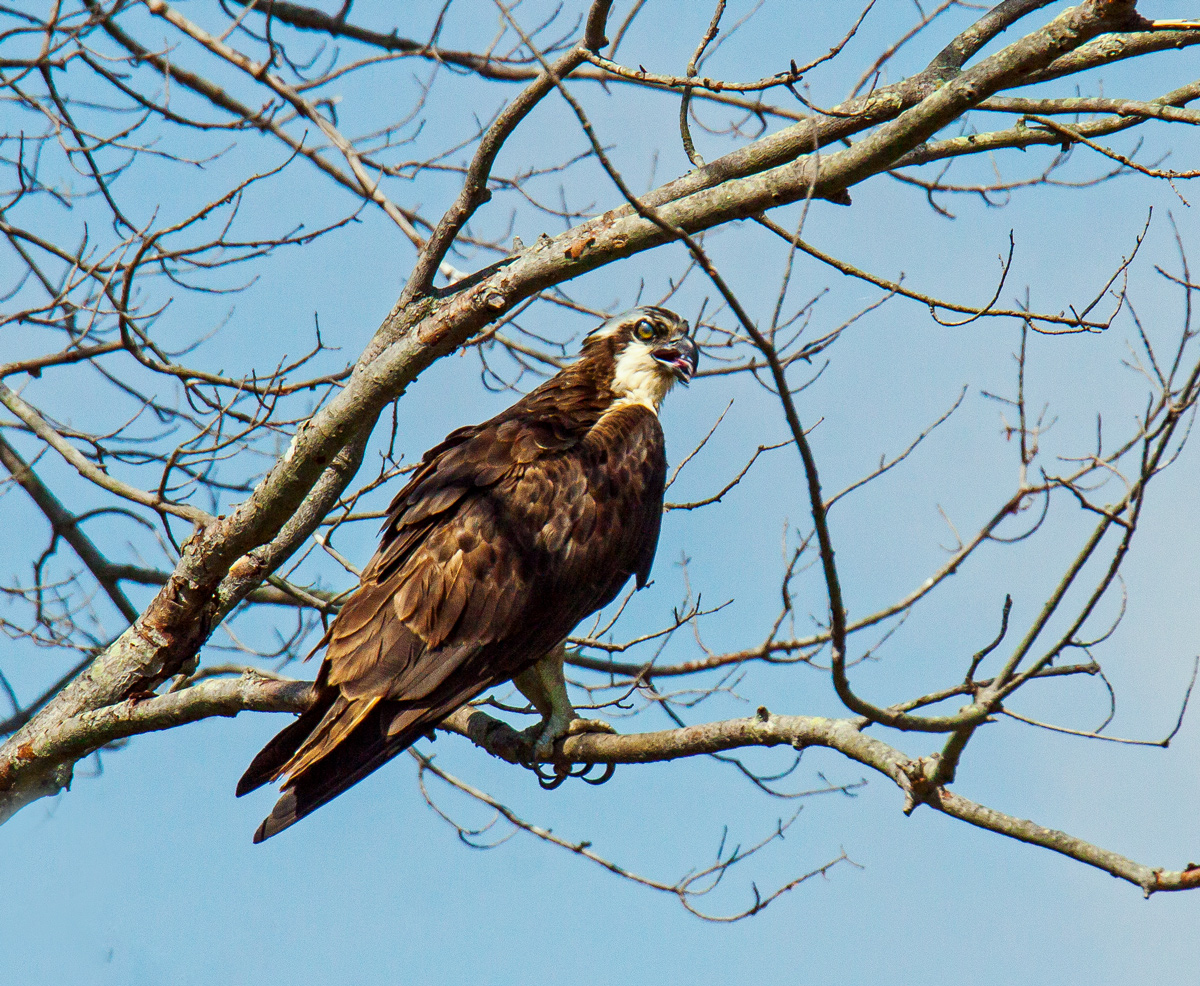
It’s hard to get an Osprey ( Pandion haliaetus) to cooperate in posing. When I asked this osprey to smile for me this past weekend at Huntley Meadows Park, this was the best look that it would give me, which looks more like a smirk than a smile to me.

Osprey

I was shooting from quite a distance away, waiting and waiting for the osprey to take flight. The osprey was in no hurry, however, and when I moved on, the osprey was still perched on the branch. I had the impression that the osprey wanted some solitude, because the osprey would periodically glare at me with this look, which suggested to me that my presence was not really welcome.

I am not sure how long the ospreys will remain with us. I have seen them off and on throughout the summer, but have never spotted a nest in the park. As we move into autumn, there will be a big turnover of birds, with some migrating south and others arriving to winter with us in Northern Virginia. Readers will probably notice too a changeover in the content of the blog postings, with fewer insects and more birds.

Osprey

© Michael Q. Powell. All rights reserved

Read Full Post »

This past weekend I spotted an unusual-looking spider at Huntley Meadows Park. I took this shot from a distance, so I didn’t capture all of its wonderful details, but it looks to me like a Triangulate Orb Weaver spider (Verrucosa arenata), also known as an Arrowhead Spider.

The spider was hanging in mid-air, which helped a slight bit with focusing, but Arrowhead Spiders are less than a half inch in size (about one cm), so it was a bit of a challenge getting any kind of shot with my telephoto zoom lens extended to 600mm.

Arrowhead Spider

© Michael Q. Powell. All rights reserved

Read Full Post »

Here’s a shot of another one of the colorful butterflies of Huntley Meadows Park. I spotted this Red Admiral (Vanessa atalanta) there this past Friday morning as it perched in a tree. What was the butterfly doing in the tree? It seemed to me that it was simply resting, though I suppose that it might also have been trying to attract a mate.

From a photography perspective, I really like the way that the background is divided into two separate colors, creating a kind of yin-yang effect.

Red Admiral

© Michael Q. Powell. All rights reserved

Read Full Post »

How do you measure popularity? WordPress keeps track of a lot of different statistics and one measure of a post’s popularity is the number of times that it has been viewed. For most of my blog postings, the majority of views come within a few days of the posting date. Occasionally I’ll have a few additional views when someone else posts a link to my post.

When I did a posting in November 2014 on the rescue of an injured bald eagle that I witnessed, a few news outlets in Washington D.C. ran a story with my photos and links to my blog. That posting has had 3396 view to date, far and away the most views for a single posting. In some ways I consider that post an anomaly, with much of the activity caused by the newsworthiness of the event that I photographed.

When it comes to “normal” posting, one that I did almost exactly three years ago stands head and shoulders above all others with 1327 views, including 244 within the last thirty days. The posting was simply called Red-Footed Cannibalfly and it has remained remarkably popular over an extended period of time. In fact, if you do a search for “Red-footed Cannibalfly” in Google, my posting has risen to the first page of results, occasionally rising as high as third place.

A lot of the spam I receive in WordPress informs me that  there is a secret to getting your material higher in Google search results using Search Engine Optimization and the senders undoubtedly want me to pay them to share the secret with me. Sorry, guys, I seem to have stumbled on it by myself, though I am not sure I could replicate that success.

I was thinking about all of this yesterday when I spotted a Red-footed Cannibalfly (Promachus rufipes) while wandering about Huntley Meadows Park. I’d hesitate to call a Red-footed Cannibalfly beautiful, but there is something fierce and distinctive about its appearance and I love its macabre moniker. I captured this image from a distance with a long telephoto lens and I am happy that I didn’t get close enough for one to land on me—I can’t help but remember that this insect paralyzes its victims, liquefies their insides, and then sucks up the liquefied material.

The Red-footed Cannibalfly may be a bit creepy, but seems to be quite popularwith a lot of folks, judging from my blog statistics.

Red-footed Cannibalfly

© Michael Q. Powell. All rights reserved

Read Full Post »

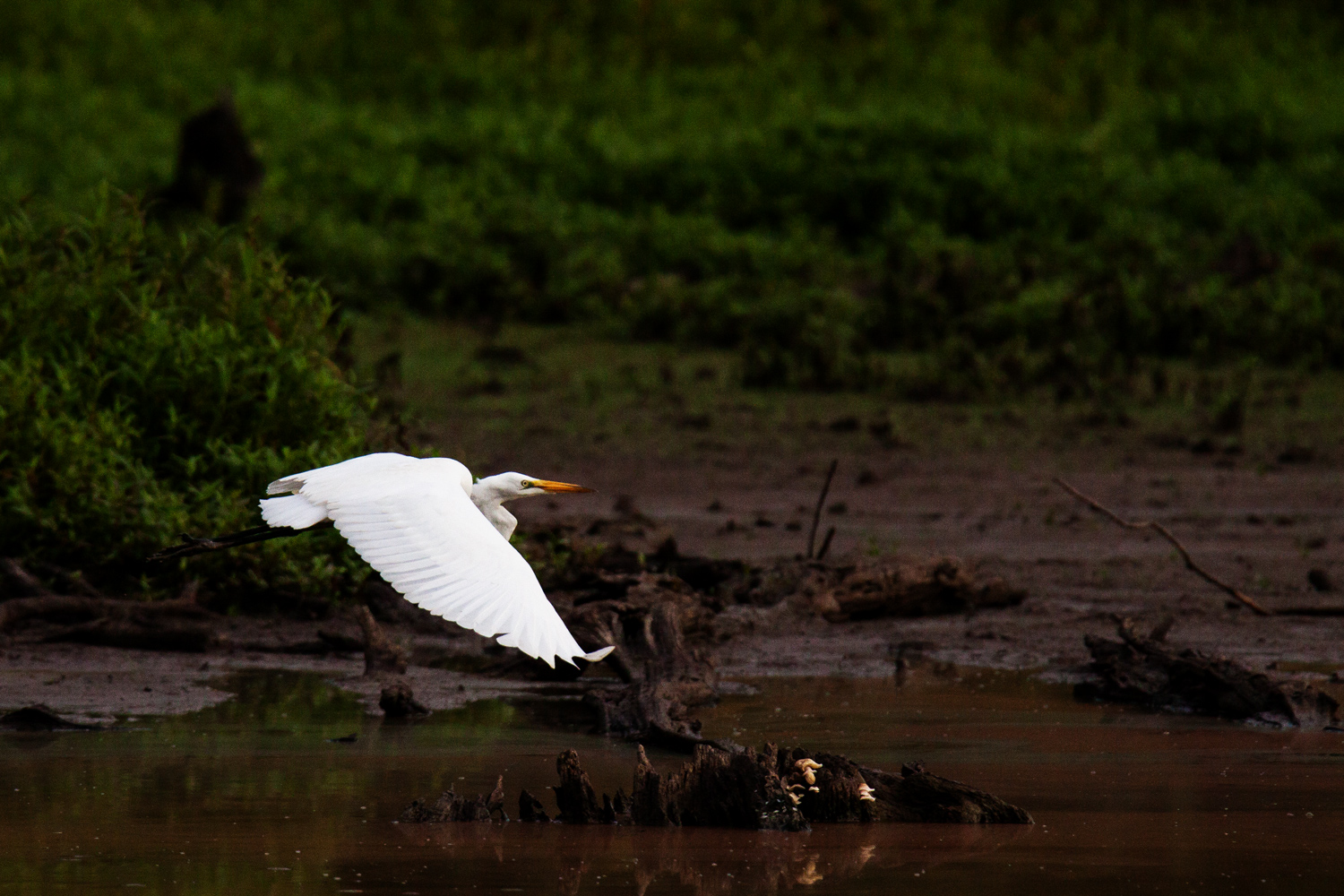
The Great Egret (Ardea alba) was beautiful in the bright sunlight. Its wingspan was impressive and its flight was graceful as it took to the air.

Yes, the takeoff indeed was great.

Great Egret

Great Egret

© Michael Q. Powell. All rights reserved.

Read Full Post »

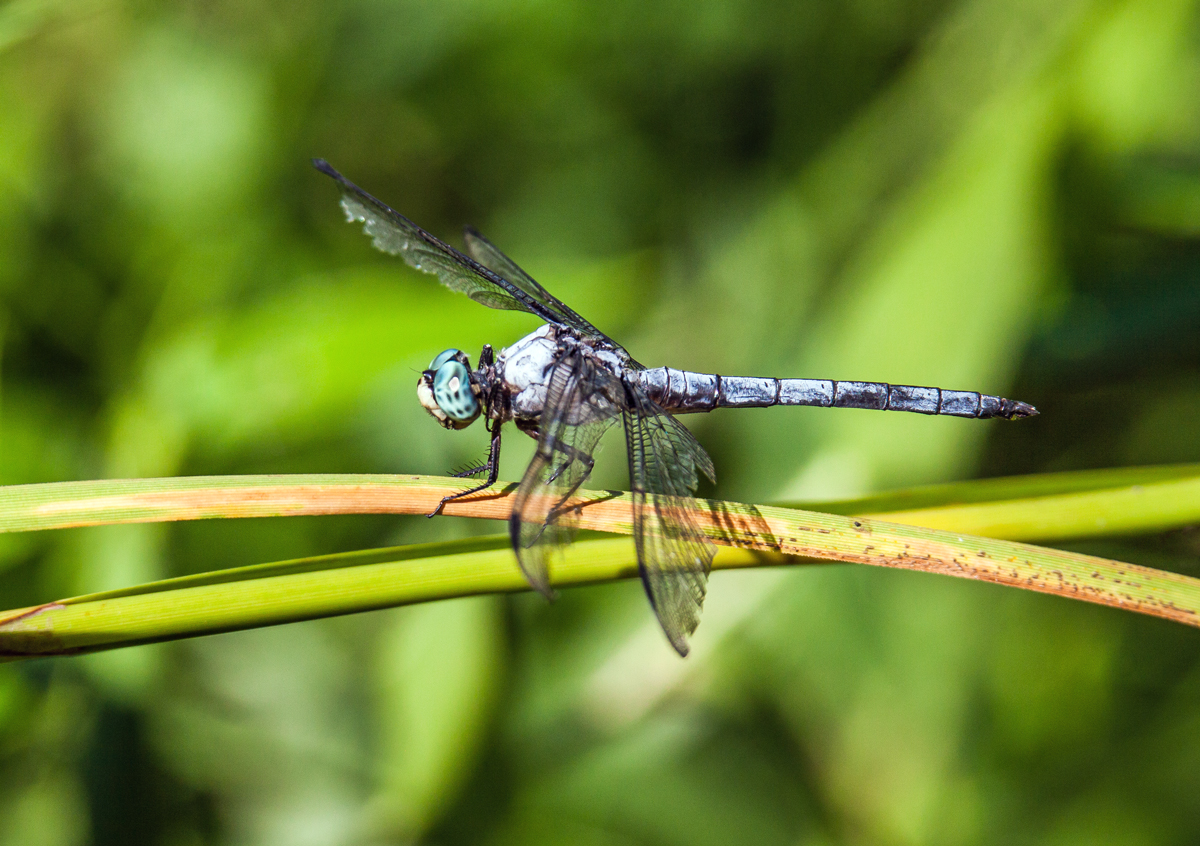
Many of the dragonflies that I see this late in the summer have wings that are torn and tattered, yet they seem to still fly perfectly well. The dragonflies clearly are survivors—survivors of encounters with predators and thorny vegetation or even of overly energetic mating sessions.

Last Friday I spotted this Great Blue Skimmer (Libellula vibrans) as it perched on some bent stalks of grass. He is not a perfect specimen, but I can’t help but be drawn in by his beautiful speckled blue eyes.

Yes, he still deserves to be called “great.”

Great Blue Skimmer

© Michael Q. Powell. All rights reserved.

Read Full Post »
The last few years I haven’t seen many Monarch butterflies (Danaus plexippus) and I have read reports of their declining numbers. I was therefore pretty excited when I spotted one yesterday at Huntley Meadows Park. As I approached, the Monarch got spooked and flew up into a tree. Fortunately I was shooting with my long telephoto zoom lens and I managed to get this somewhat unusual shot of the beautiful butterfly.

Monarch butterfly


© Michael Q. Powell. All rights reserved.

Read Full Post »

I spotted this beautiful little butterfly while wandering through the woods at Huntley Meadows Park this morning. I think it might be an Appalachian Brown (Satyrodes appalachia), although there are a surprisingly large number of brown butterflies with eyespots, which complicates identification.

The woods were pretty dark in the area in which I first spotted the butterfly. However, luck was with me and the butterfly landed on a log that was in the sunlight. I tried to get as low as I could to get this shot, which is why you see the green moss in the foreground.

Update: One of my Facebook readers pointed out that this is probably a Northern Pearly-eye (Enodia anthedon), not an Appalachian Brown. My butterfly identification definitely need some more work.

Appalachian Brown


© Michael Q. Powell. All rights reserved.

Read Full Post »
Blue Dashers (Pachydiplax longipennis) are one of my favorite summer dragonflies. I spotted this one recently at Huntley Meadows Park, perched on the railing of an observation deck in the obelisk pose.

The dragonfly was pretty cooperative and I was able to try few different angles and shooting positions. Although I had my camera’s aperture set to f/10, you can see that the depth of field was relatively shallow and I tried to take advantage of that to isolate the subject and the specific rail on which it was perched.

Blue Dasher

Blue Dasher

Blue Dasher

© Michael Q. Powell. All rights reserved.

Read Full Post »

Despite this summer’s scorching heat and high humidity, the bees of Green Spring Gardens were busy at work gathering pollen and sipping nectar during a recent visit to the gardens. I’m certainly no expert on bees, but it looks like there are several different varieties in the photos below.

I’m pretty confident that the bee in the final shot is a carpenter bee because its abdomen is bare and shiny, unlike that of the bumblebee, which has a hairy abdomen. If you look closely at that image, you’ll see that this bee appears to be a nectar robber—it is piercing the flower from the side to extract the nectar and thereby is not playing any role in pollinating the flower.

bee

bee

bee

© Michael Q. Powell. All rights reserved.

Read Full Post »

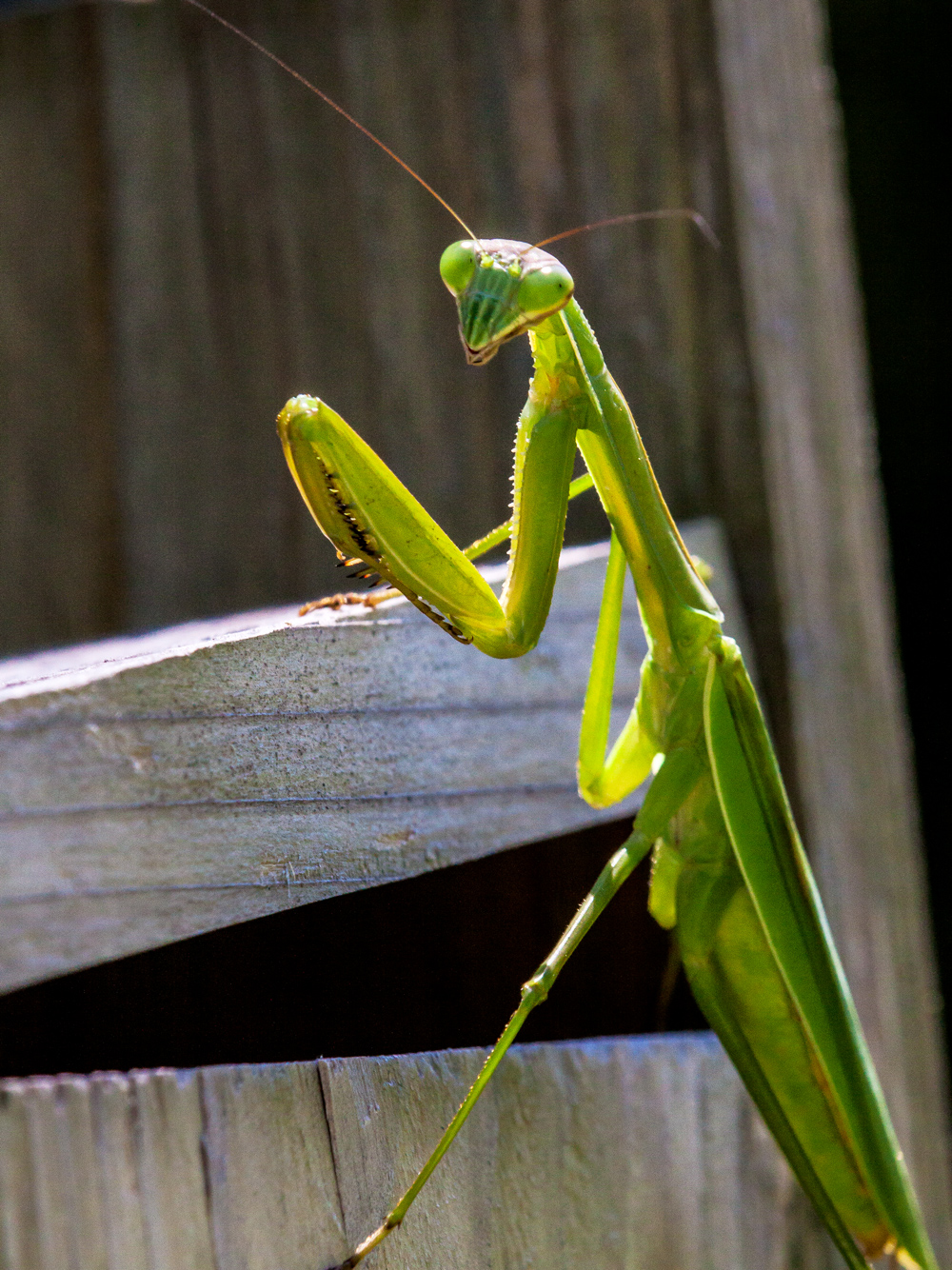
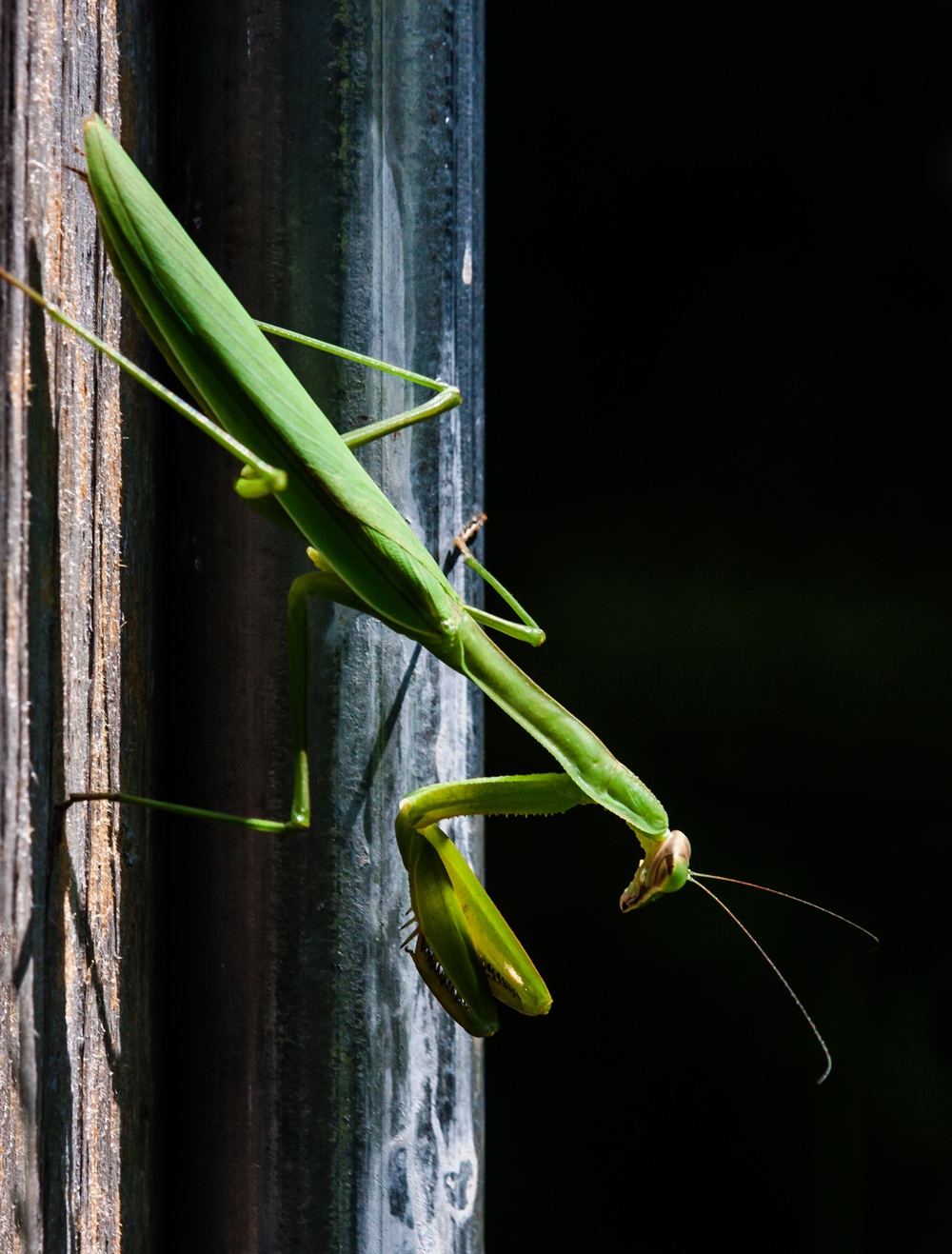
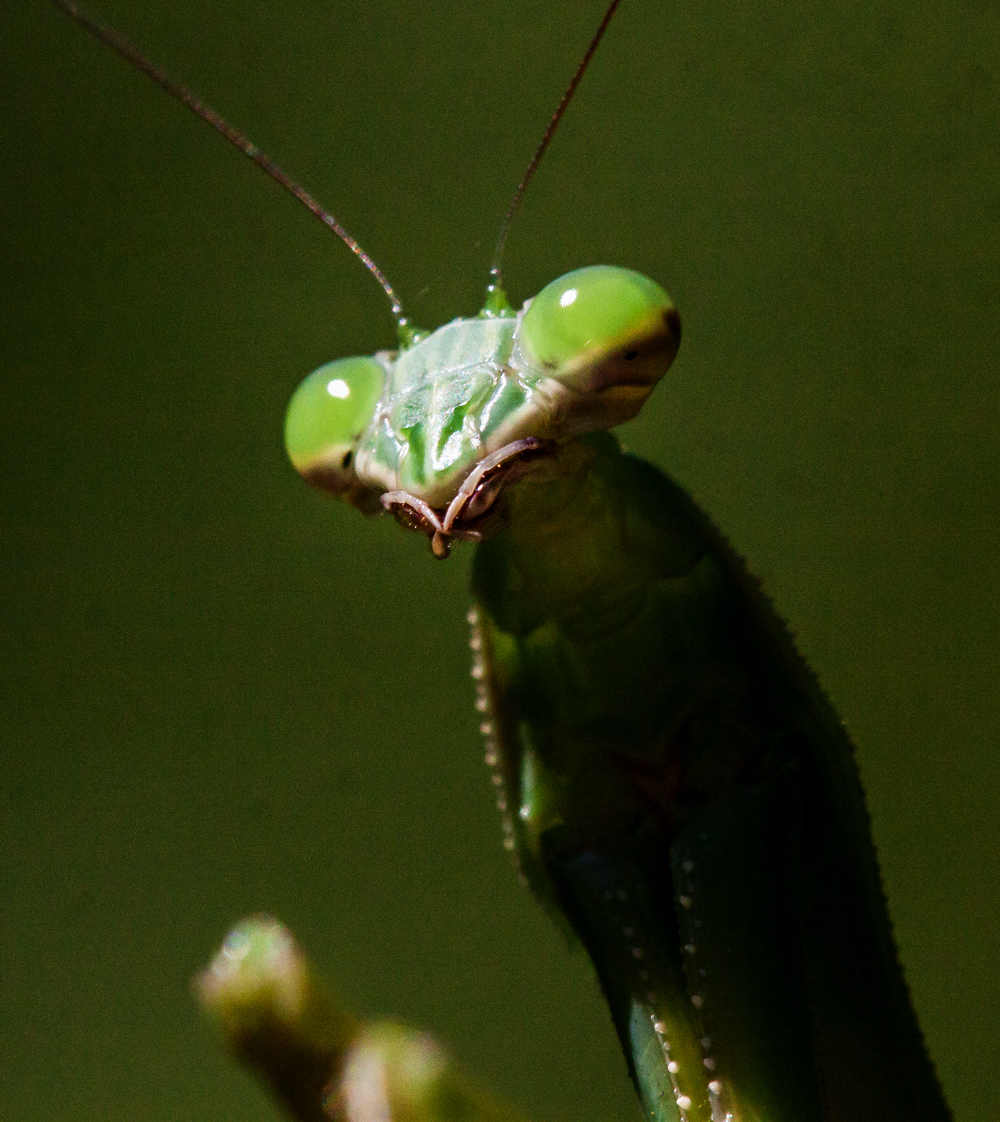
I spotted this Praying Mantis on Saturday at Huntley Meadows Park as it was crawling about on a nesting box for birds in one of the remote areas of the park. I am pretty confident that the nesting box, which was used by Tree Swallows earlier in the year, was no longer in active use—otherwise the mantis probably would not have survived for long. I was struck by the size of the insect, which seemed to be about six inches (15 cm) in length.

I think this may be a Mantis religiosa, one of the more common types of mantises, though Wikipedia notes that there are over 2400 species worldwide, so I could easily be incorrect in my identification.

Praying Mantis

Praying Mantis

Praying Mantis

© Michael Q. Powell. All rights reserved.

Read Full Post »

This Great Egret (Ardea alba) seemed to be trying to minimize energy expenditure in the heat as it flew low and slowly from one location to another part of Huntley Meadows Park. The recent extreme heat must be tough on many of the inhabitants of the park—temperatures yesterday soared to 101 degrees (38 degrees C) in the Washington D.C. area, a new record for the date.

I have a tendency to crop my images to emphasize the subject, but I took these shots at pretty long range and like the way that they give you a sense of the environment at my favorite marshland park.

Great Egret

© Michael Q. Powell. All rights reserved.

Read Full Post »

Yesterday afternoon at Huntley Meadows Park I captured this image of a female dragonfly as she hovered over the water, periodically dipping the tip of her abdomen into the water to lay eggs (and generate ripples).

hovering dragonfly

© Michael Q. Powell. All rights reserved.

Read Full Post »

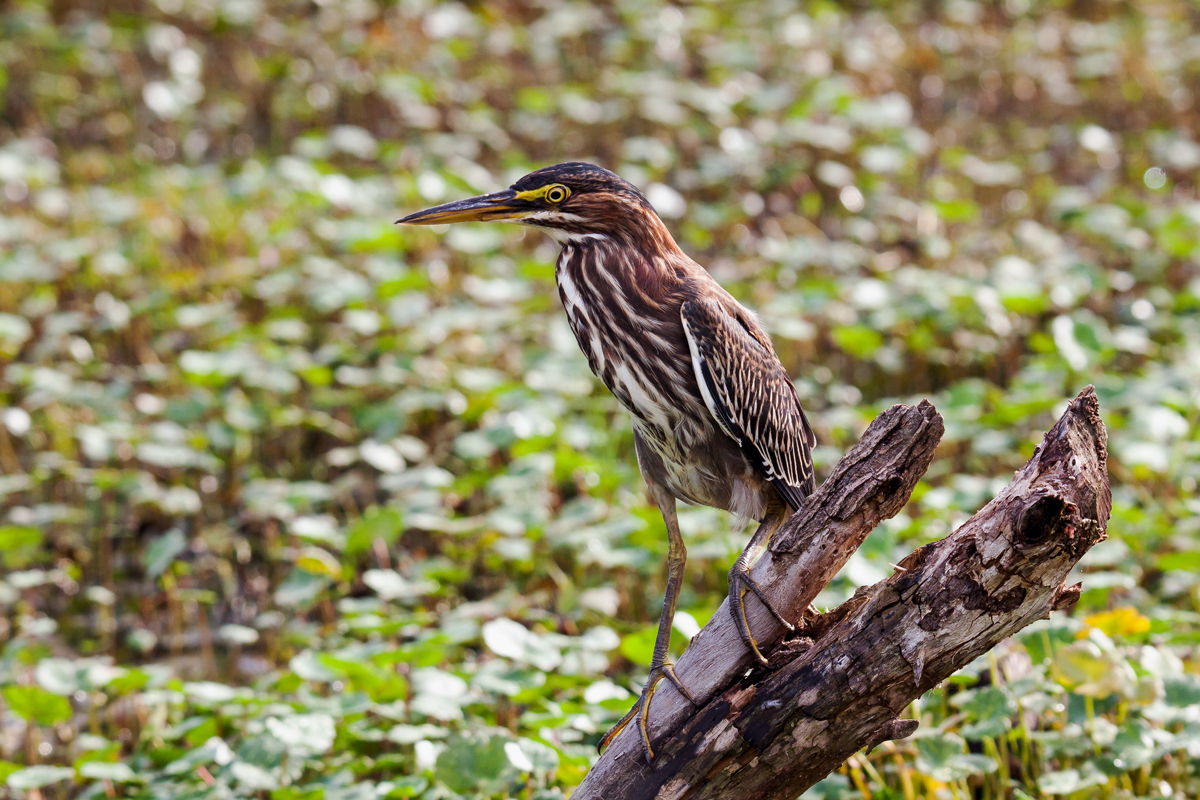
Although I enjoy watching the Great Egrets and Great Blue Herons at Huntley Meadows Park, the much smaller Green Herons (Butorides virescens) are my favorites. Green Herons just seem to have an amazing amount of personality packed in their compact bodies.

I think they deserve to have a “Great” in their name too.

Green Heron

© Michael Q. Powell. All rights reserved.

Read Full Post »
The leaves of the lotuses at Green Spring Gardens were well past their prime, but they turned out to be fascinating subjects for a series of abstract images.

lotus leaf

lotus leaf

lotus leaf

© Michael Q. Powell. All rights reserved.

Read Full Post »

« Newer Posts - Older Posts »