Feeds:
Posts
Comments

Posts Tagged ‘Alexandria VA’

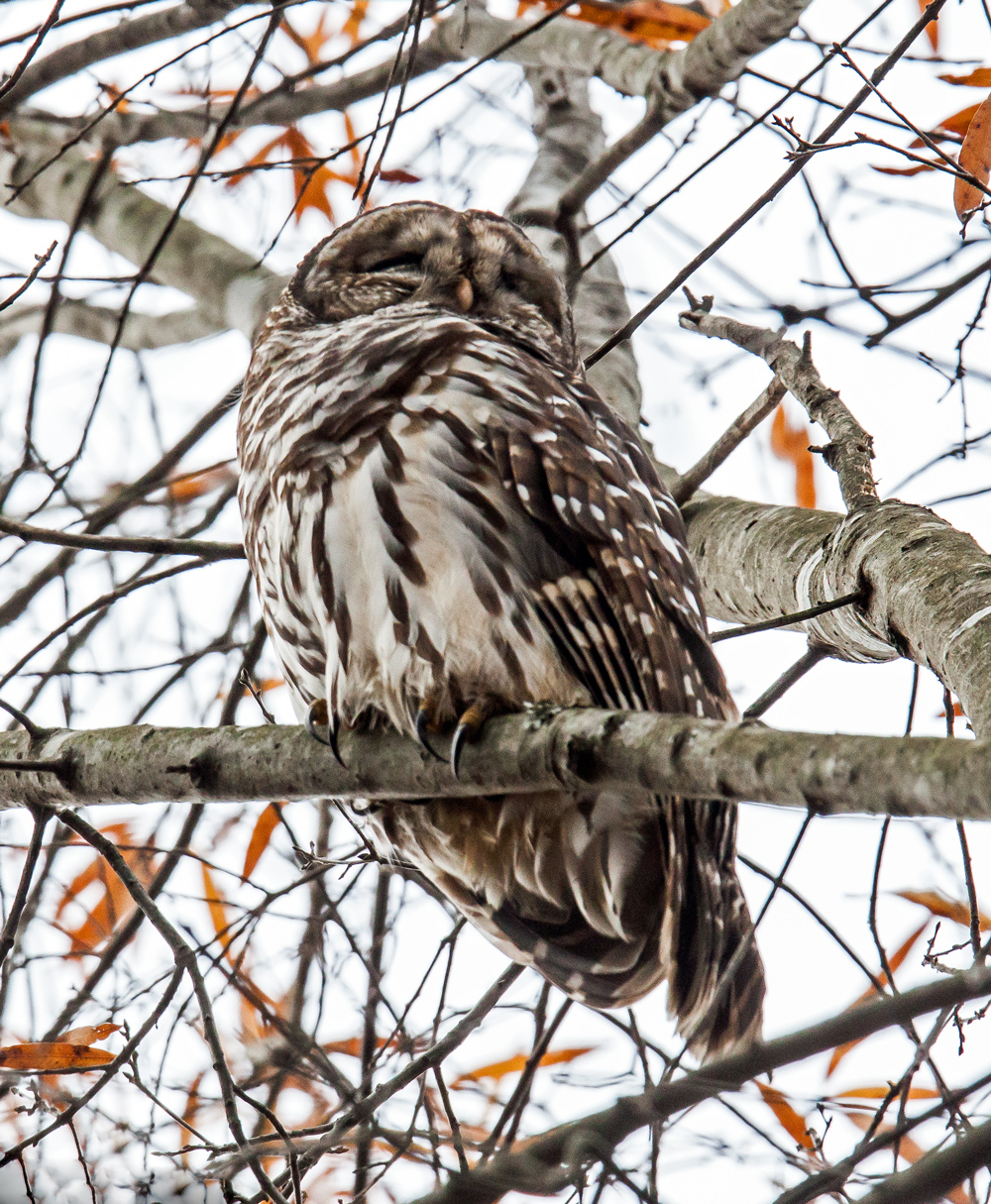
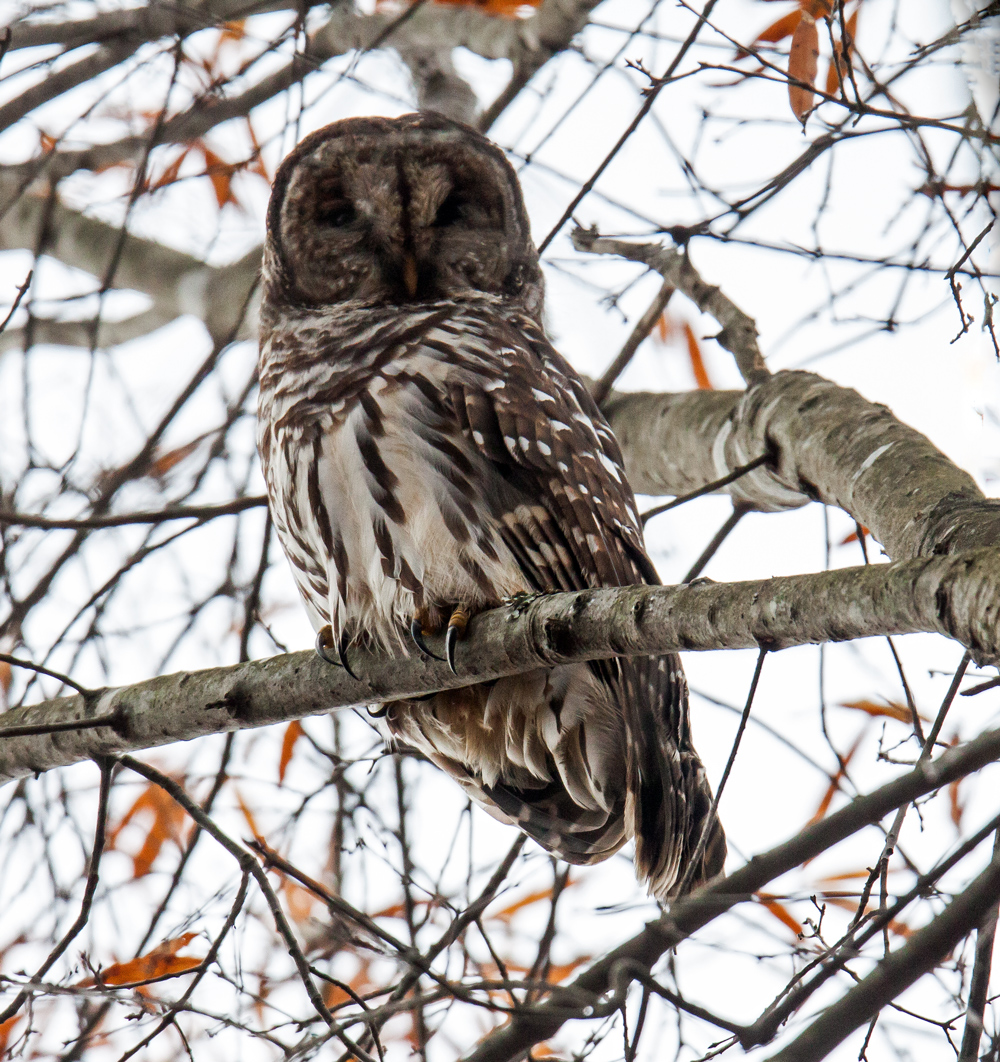
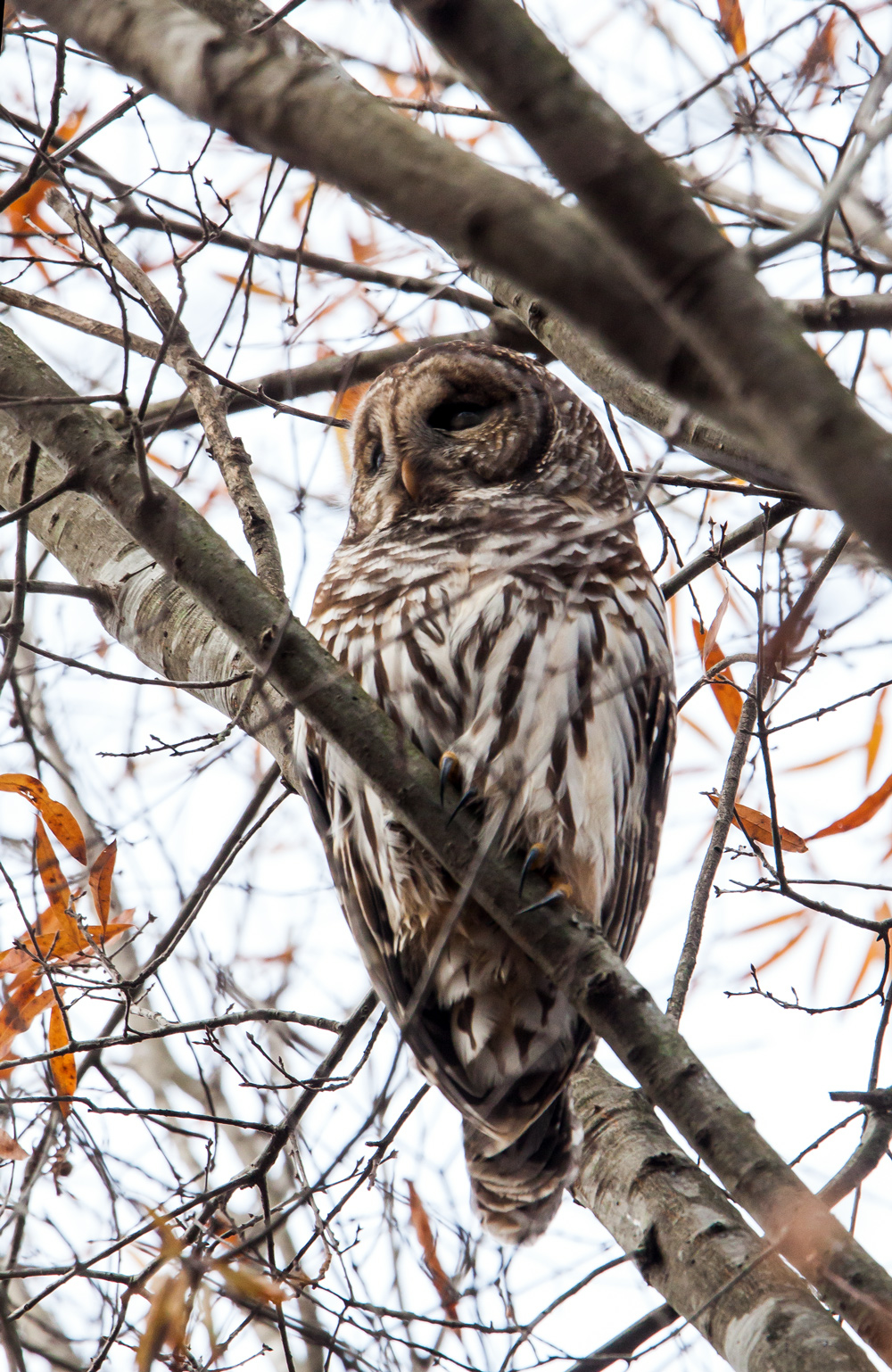
It’s not often that I see an owl during the day, but, thanks to a tip from a fellow visitor at Huntley Meadows Park, I managed to photograph this Barred Owl (Strix varia) on Saturday around noon.

Now, you might think that seeing an owl during daylight hours would make it simple to photograph, but, in fact, it was quite a challenge. The owl was perched high in a tree in a rather heavily wooded area. That meant that it was tough to get an unobstructed view of the owl. By moving a bit closer, I got a slightly better view, but was shooting almost straight up at an awkward angle. Then there was the problem of light, or more particularly the absence of light, especially on the face. I was patient and the owl appeared to be snoozing, so eventually I was able to get some decent shots.

I had never thought to look for an owl in that area of the park, but will now have to add it to my list of places to check out whenever I am visiting my favorite marshland park.

Barred Owl

Barred Owl

Barred Owl

© Michael Q. Powell. All rights reserved.
Read Full Post »

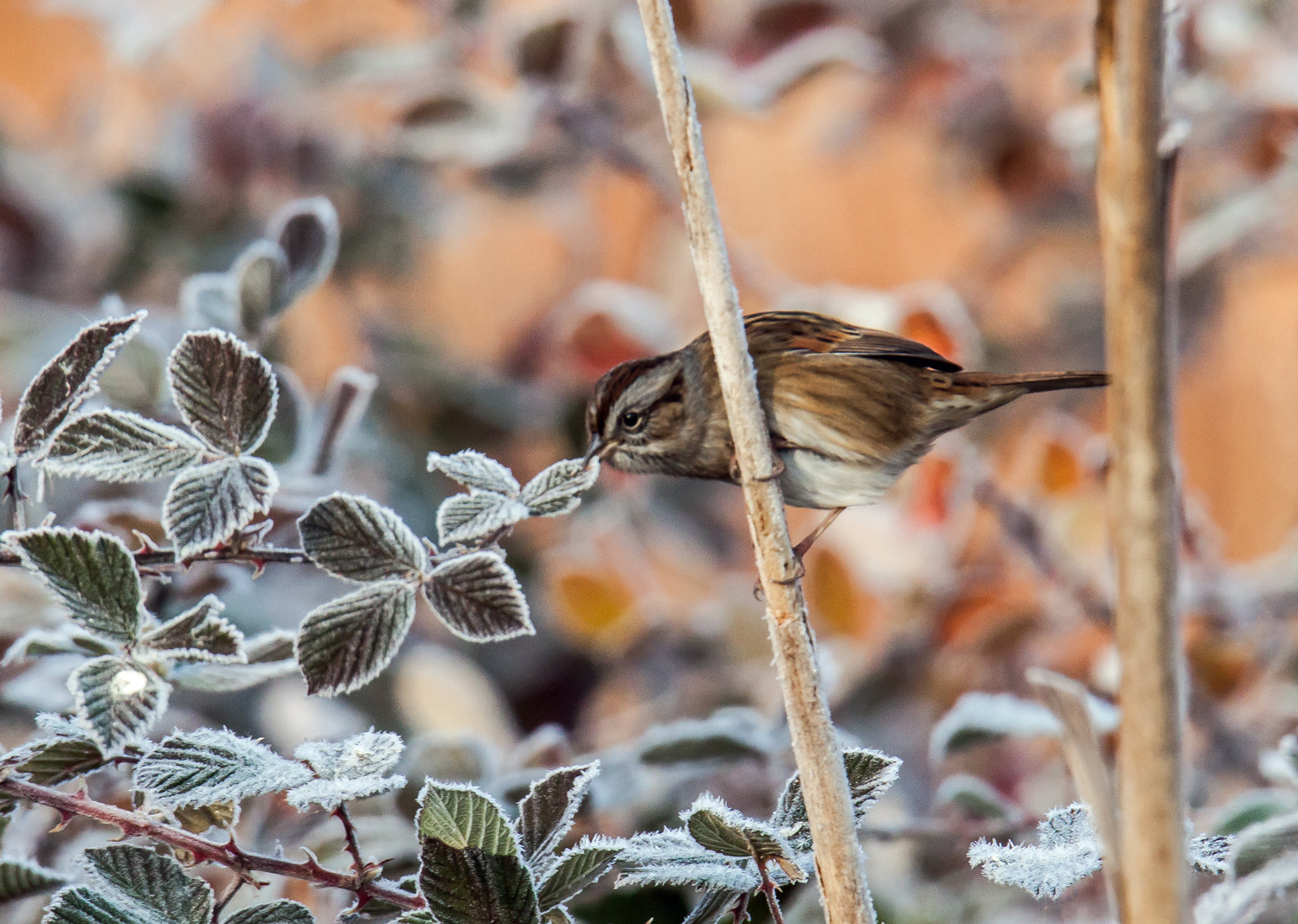
It was really frosty yesterday morning in the back area of Huntley Meadows Park where I spotted this Swamp Sparrow (Melospiza georgiana). I was standing in a mostly dried-up marshy area and noted that a series of little birds would stop at a little patch of vegetation in the middle as they pecked about in the cattails and denser vegetation at the tree lines on either side of me.

I parked myself with my monopod far enough away from the vegetation that I hoped that I would not disturb the birds and eventually the birds began to return to the area on which I was focused. There were a lot of small branches that kept misleading my auto-focus, so I switched to manual focus and waited. I could see birds pretty frequently, but most remained partially hidden down low near the ground.

Eventually my patience was rewarded and I got these two shots of a little sparrow.  I wasn’t sure what kind of sparrow it was, but got some assistance on-line and learned that it was a Swamp Sparrow.

The background looks a little unusual in terms of the coloration, but it is a pretty good reflection of what I was seeing. That is also the reason why I was willing to plant myself in one spot—generally I like to keep moving as I look for photo opportunities.

Swamp Sparrow

Swamp Sparrow

© Michael Q. Powell. All rights reserved.
Read Full Post »

This bird was tiny and elusive, but I finally managed to get a shot of what I confirmed is a Winter Wren (Troglodytes hiemalis) today at Huntley Meadows Park. The Winter Wren is smaller—about 3-4 inches (8-11 mm) in length—and has darker markings on its belly than the Carolina Wrens that I am more accustomed to seeing.

The description of this bird found on the website of the Cornell Lab of Ornithology matches perfectly the behavior I observed today. “It habitually holds its tiny tail straight up and bounces up and down. This rather weak flier hops and scampers among fallen logs mouselike, inspecting upturned roots and vegetation for insects.”

Winter Wren

© Michael Q. Powell. All rights reserved.


Read Full Post »

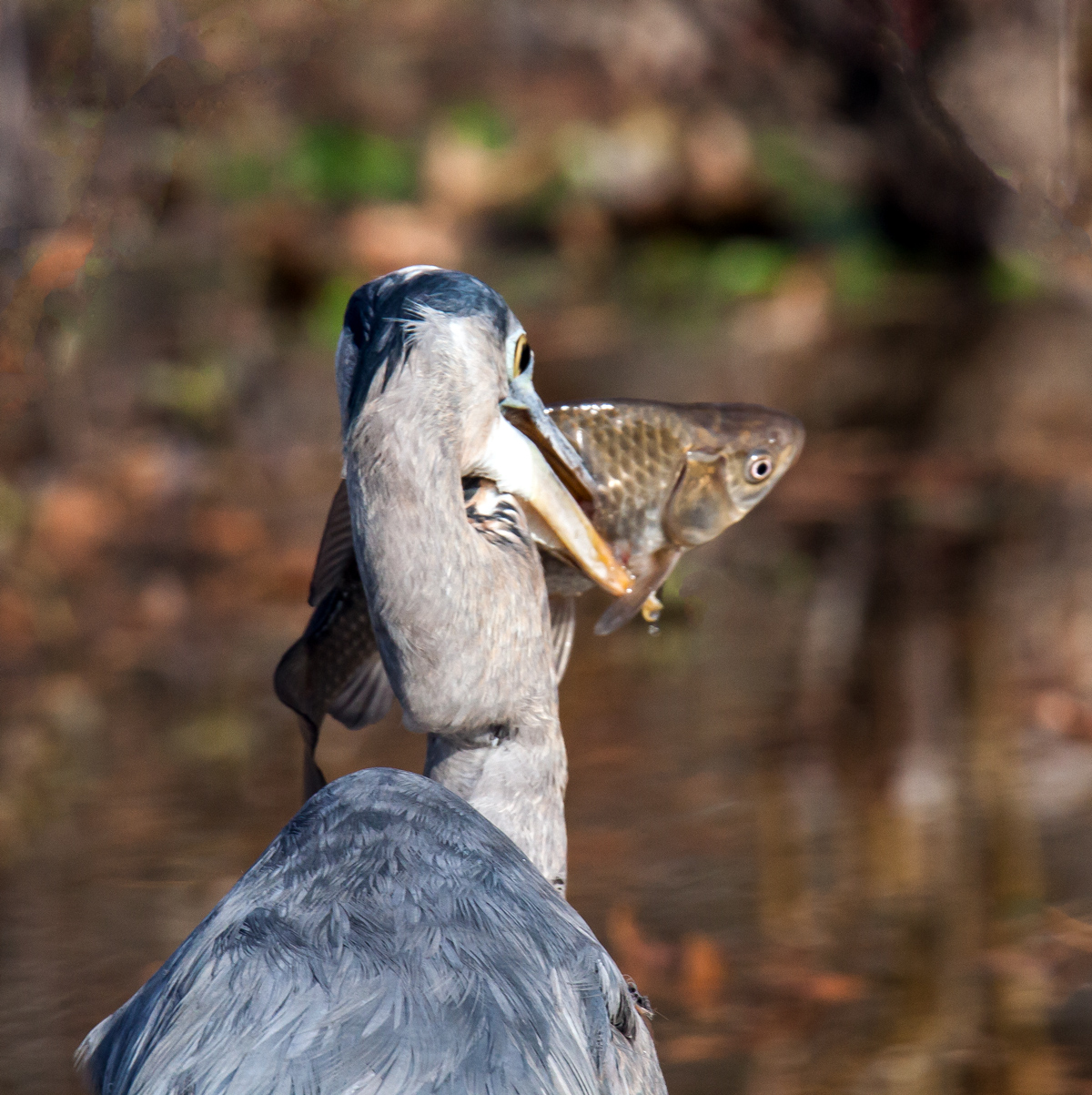
As I was watching a Great Blue Heron (Ardea herodias)  at pretty close range from the boardwalk today at Huntley Meadows Park, I wrongly assumed that his nonchalant attitude meant that he was not fishing. He struck quickly and speared a pretty good-sized fish and immediately turned his back to me and headed for the shore. Partially hidden by the vegetation, the heron consumed his catch.

Great Blue Heron

© Michael Q. Powell. All rights reserved.
Read Full Post »

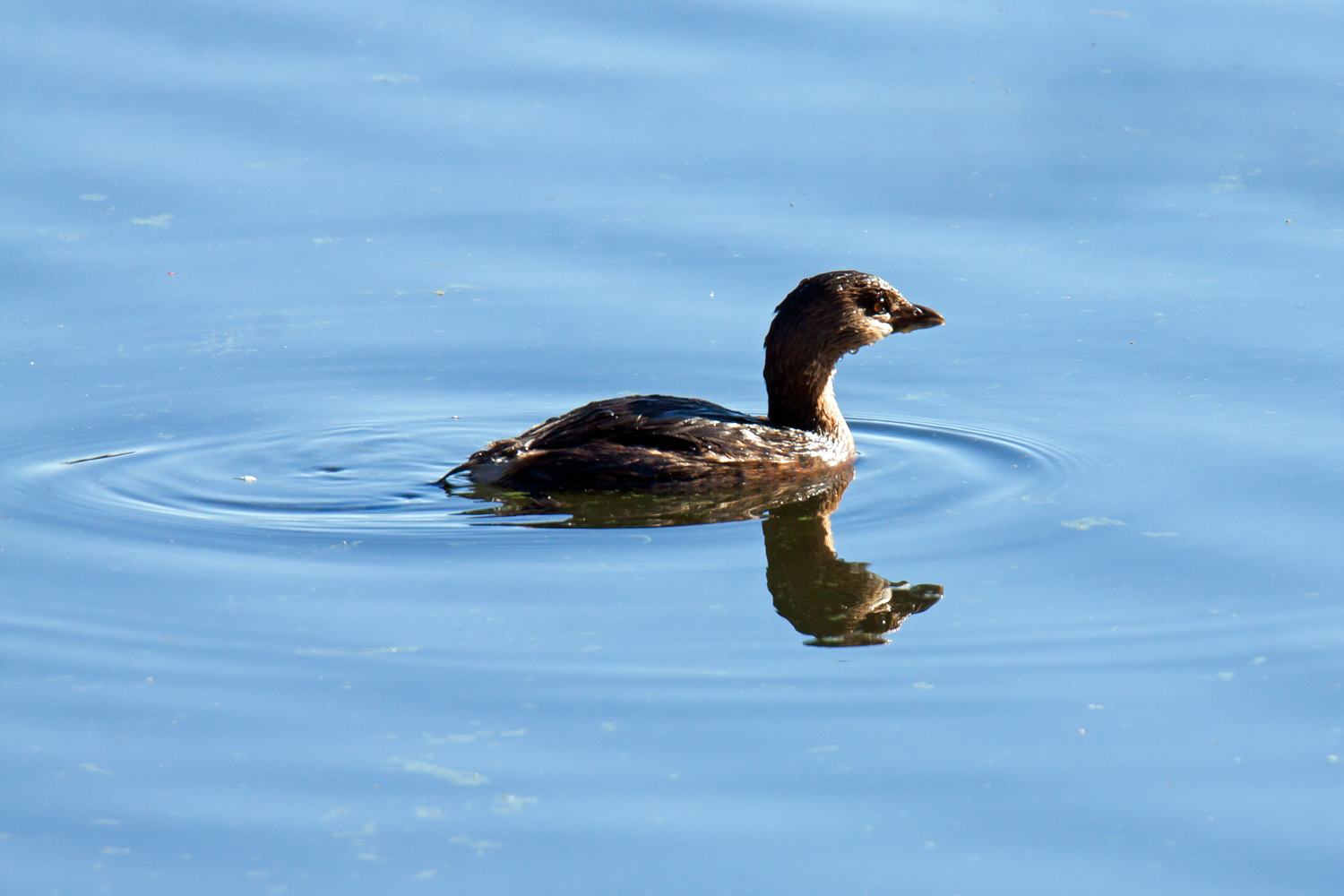
Although they behave like diving ducks, Pied-billed Grebes (Podilymbus podiceps) are members of an entirely different family and have small, distinctive bills that make them easy to identify. They tend to hang out in deeper water, are in constant motion, and are pretty small, which makes it a challenge to get a good shot of one. I spotted this grebe this past weekend at the same little suburban pond where I observed the Hooded Mergansers and Wood Duck that have been featured recently in recent blog posts.

As I do research on my subjects, I often run across quirky little facts about them. I smiled when I read the following information about Pied-billed Grebes on the website of the Cornell Lab of Ornithology:

“The Latin genus name for “grebe” means “feet at the buttocks”—an apt descriptor for these birds, whose feet are indeed located near their rear ends. This body plan, a common feature of many diving birds, helps grebes propel themselves through water. Lobed (not webbed) toes further assist with swimming. Pied-billed Grebes pay for their aquatic prowess on land, where they walk awkwardly.”

I haven’t yet seen grebes out of the water, but I am really curious now to get a look at their feet.

Pied-billed Grebe

© Michael Q. Powell. All rights reserved.


Read Full Post »

Can ducks smile? I realize that a duck’s bill is pretty inflexible, but I couldn’t help but think that this American Black Duck (Anas rubripes) was giving me a coy little smile as it dipped its bill into the water this past Monday at a small suburban pond in Kingstowne, Virginia..

When I first spotted two ducks swimming around together, I thought they were simply two female mallards. When I looked more closely at them, it seemed that their bills were brighter and more yellow than that of a a female mallard. When I got home, I pulled out my birding guide and looked through the section on ducks. I concluded that the two ducks, one of which is shown in the photo, are American Black Ducks.

When I am really uncertain about a bird species, I will post it to a Facebook page on which more experienced birders provide help with identification. In this case, I decided to be bold and make this posting without confirmation of my identification. If I am incorrect, it won’t be the first time, and certainly not the last time—bird identification is not easy, with lots of variation caused by gender, season, age, and location.

American Black Duck

© Michael Q. Powell. All rights reserved.

Read Full Post »

In the interests of gender equality, I decided to feature a handsome male Hooded Merganser duck (Lophodytes cucullatus) after spotlighting his beautiful female counterpart yesterday. I captured this image yesterday afternoon at a small suburban pond in Kingstowne, a community about a mile or so from where I live.

Hooded Merganser ducks are notoriously skittish and will usually fly away as soon as they sense my presence. The small group of “Hoodies” at this pond, however, react by swimming slowly away toward the center of the pond, where they are out of range of my long telephoto zoom lens. As a result, I have to react quickly whenever I am luck enough to catch one relatively close to the shore.

Hooded Merganser

Having captured this image, I was faced with choices of how to crop it. Conventional wisdom dictates that a bird swimming to the right should be placed in the left side of the image. In this case, though, I really liked the V-shaped wake that the duck was leaving behind it, so I put the “Hoodie” just to the right of center. I encourage you to double-click on the image to see some of the details of this shot, like the drop of water on the tip of the duck’s bill.

As I contemplate the image, I can’t help but think how much the water deserves equal billing as the primary subject. I love the wake in the rear, the ripples in the front, the ripples coming toward the viewer, and the beautiful reflections.

© Michael Q. Powell. All rights reserved.


Read Full Post »

I really enjoy capturing action sequences of the interaction between creatures in the wild. It’s not easy sometimes to explain the behavior that I observe, but often it seems that many wild creatures have a sense of territoriality and will fiercely defend their space against all encroachers.

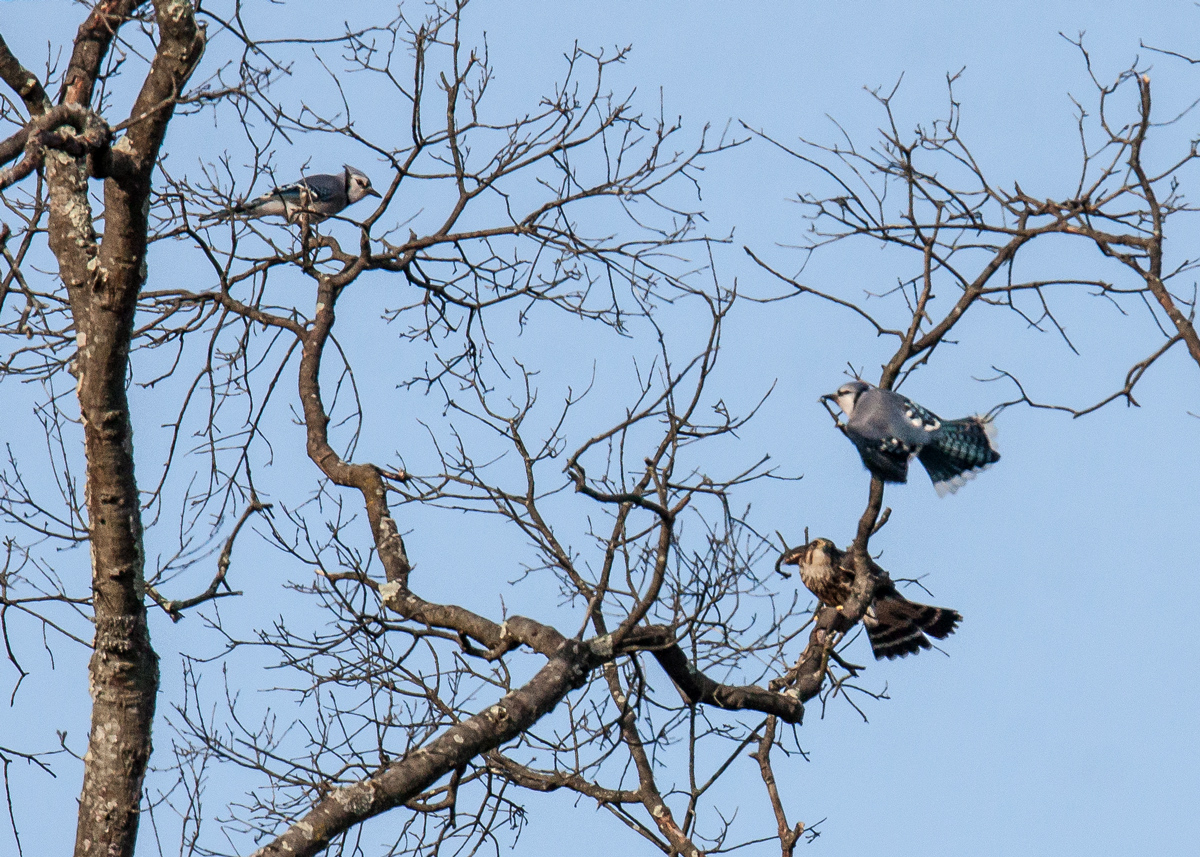
That seems to have been the case on Thanksgiving Day when I observed two Blue Jays (Cyanocitta cristata) harassing a Merlin (Falco columbarius) at Huntley Meadows Park in Northern Virginia. I have seen blackbirds and crows in the past harassing eagles and hawks and have been shocked to see how much smaller the aggressors were than the birds they were chasing. In this case, however, the blue jays and the merlin appeared to be about the same size.

The blue jays appeared to be using a variety of techniques. The two shots below show one of the blue jays buzzing the merlin, flying surprising close to the little falcon.

blue jays and merlin

blue jays and merlin

The next three shots show a concerted effort to crow the merlin. Initially the blue jays positioned themselves on opposite sides of the merlin. Then one of the blue jays moved closer, to a position almost directly below the merlin. In the final shot, the merlin exploded into the air and one of the blue jays simultaneously took off to chase after the merlin.

I took these shots from quite a distance away and still had to crop them a lot, but I think the images still manage to show some pretty fascinating behavior that I was privileged to observe and document.

blue jays and merlin

blue jays and merlin

blue jays and merlin

© Michael Q. Powell. All rights reserved.
Read Full Post »

What was on your menu for Thanksgiving? No, I did not dine on muskrat for Thanksgiving dinner, but early in the morning yesterday this little muskrat (Ondatra zibethicus) at Huntley Meadows Park decided to celebrate the holiday with some fresh greens. That was almost certainly a healthier meal than most of us consumed later in the day.

muskrat

© Michael Q. Powell. All rights reserved.

Read Full Post »

When I saw this bird in the distance being harassed by two blue jays on Thanksgiving Day at Huntley Meadows Park, I wasn’t sure what it was, but folks at What’s This Bird Facebook group identified it for me as a Merlin (Falco columbarius), a type of small falcon. I shot quite a few photos attempting to pbotograph the two blue jays flying by the merlin and perching close to it, but I am not sure how well I was able to capture the action. If I get a few that are reasonably clear, I may do another posting with the merlin, a bird that I believe that I had previously seen only once before.

Merlin

Merlin

© Michael Q. Powell. All rights reserved.

Read Full Post »

Early on Thanksgiving morning, some Northern Pintail ducks (Anas acuta) at Huntley Meadows Park in Northern Virginia decided to celebrate the holiday by sleeping in a bit. Their decision may have been prompted in part by the weather—it was just below freezing and a thin layer of ice covered some of the water at the park. Unlike the ducks, I did not sleep in and ventured out into the frosty morning to see what I could discover.

Happy Thanksgiving to all those who are celebrating this special day. Even if you are not, it’s always a good idea to pause for a minute to remember all of the blessings in our lives that so often we take for granted.

Northern Pintail

© Michael Q. Powell. All rights reserved.
Read Full Post »

I spotted this very blue Eastern Bluebird (Sialia sialislast Friday morning at Huntley Meadows Park. The brightness of its color suggests to me that it is probably a male—the females tend to have duller plumage.

When I posted this photo on Facebook, I got lots of “Likes,” which is not all that surprising to me. Over time I have come to realize that many of my best-like photos have been the ones with the simplest of compositions and often have featured relatively common subjects. In this case, I managed to capture the bluebird pretty well, but the branch on which it is perched has some nice texture and perhaps most important of all, the background is pretty cool, with the faint shapes of the tree trunks and autumn foliage rendered in a pleasing blur of shapes and colors.

Beauty is often very subjective, but in rare cases like this one an image seems to have an almost universal appeal.


Eastern Bluebird

© Michael Q. Powell. All rights reserved.

Read Full Post »

I spotted some cute little American Goldfinches (Spinus tristis) early on Friday morning as they foraged in the vegetation adjacent to the observation tower at Huntley Meadows Park. The lighting was somewhat limited, but it was soft and beautiful and gives the photos an overall sense of peace and serenity, the start of a new day.

American Goldfinch

American Goldfinch

© Michael Q. Powell. All rights reserved.

Read Full Post »

A group of five or so photographers stood on the boardwalk on Friday morning at Huntley Meadows Park watching a Red-shouldered Hawk (Buteo lineatus) in a tree above us. We waited and waited for the hawk to take off and when it finally did so, I almost managed to keep the hawk within the frame. I can’t really complain too much, though, because as far as I know, none of the others managed to get a shot off when the hawk took to the air.

We were in a really good position and the lighting was beautiful, but it is hard to remain alert and ready as you wait for a bird to spring into action. I was using a monopod again and I think it may be the reason why I was able to capture the hawk taking off. My camera was already at eye level and pointed in the direction of the hawk during the entire fifteen minutes or so that we watched the hawk. The other photographers had to raise their cameras and were not able to do so quickly enough.

It might be my imagination, but I also think that some of my shots with the monopod are sharper than they might otherwise be. I have balked a bit at carrying a big tripod, but think that the monopod will now be with me most of the time—it collapses to a pretty small size and, because it it carbon fiber, is both sturdy and light.
Red-shouldered Hawk

Red-shouldered Hawk

© Michael Q. Powell. All rights reserved.

Read Full Post »

Even at a distance I could tell that the ducks that I spotted on Monday at Huntley Meadows Park were Northern Shovelers (Anas clypeata)—the shape of their bills is pretty distinctive. It’s duck season now and I can hardly wait for more species to arrive at the park.

Northern Shoveler

© Michael Q. Powell. All rights reserved.


Read Full Post »

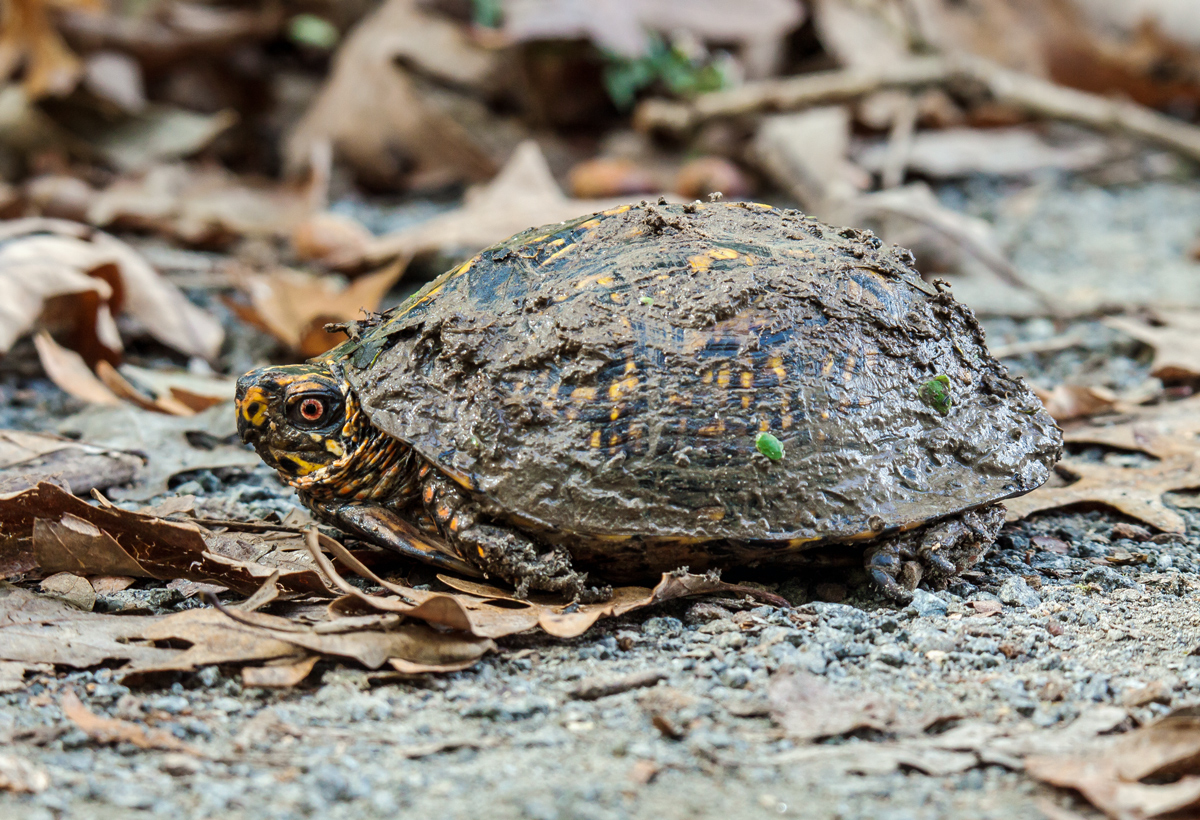
I was moving slowly this past Monday as I sought to get photos of birds at Huntley Meadows Park, but not quite as slowly as this Eastern Box Turtle (Terrapene carolina carolina) that looked like it had just crawled out of the mud. This species of turtle has a beautiful pattern on its shell, but it is mostly obscured by the mud. I think that I might have startled the turtle, because it pulled its head and body inside of the shell for a little while, making it almost perfectly camouflaged, despite the fact that it was sitting right on a path.

Eastern Box Turtle

© Michael Q. Powell. All rights reserved.

Read Full Post »

I am not sure why, but I have seen more warblers this autumn that I have ever seen before. In past years they always remained elusive, hidden behind the foliage, heard but not seen. This year I have seen them, especially Yellow-rumped Warblers (Setophaga coronata) at several locations and on several occasions.

Here are several of my favorite warbler shots from this past weekend at Huntley Meadows Park. The first image, my favorite, is one of those lucky shots that occur when a bird takes off just as I press the camera’s shutter button. Normally that results in a bird that is out of focus or partially out of the frame, but this bird took off slowly and in a direction parallel to where I was focusing. Sometimes it is better to be lucky than to be good.

Yellow-rumped Warbler

Yellow-rumped Warbler

Yellow-rumped Warbler


© Michael Q. Powell. All rights reserved.

Read Full Post »

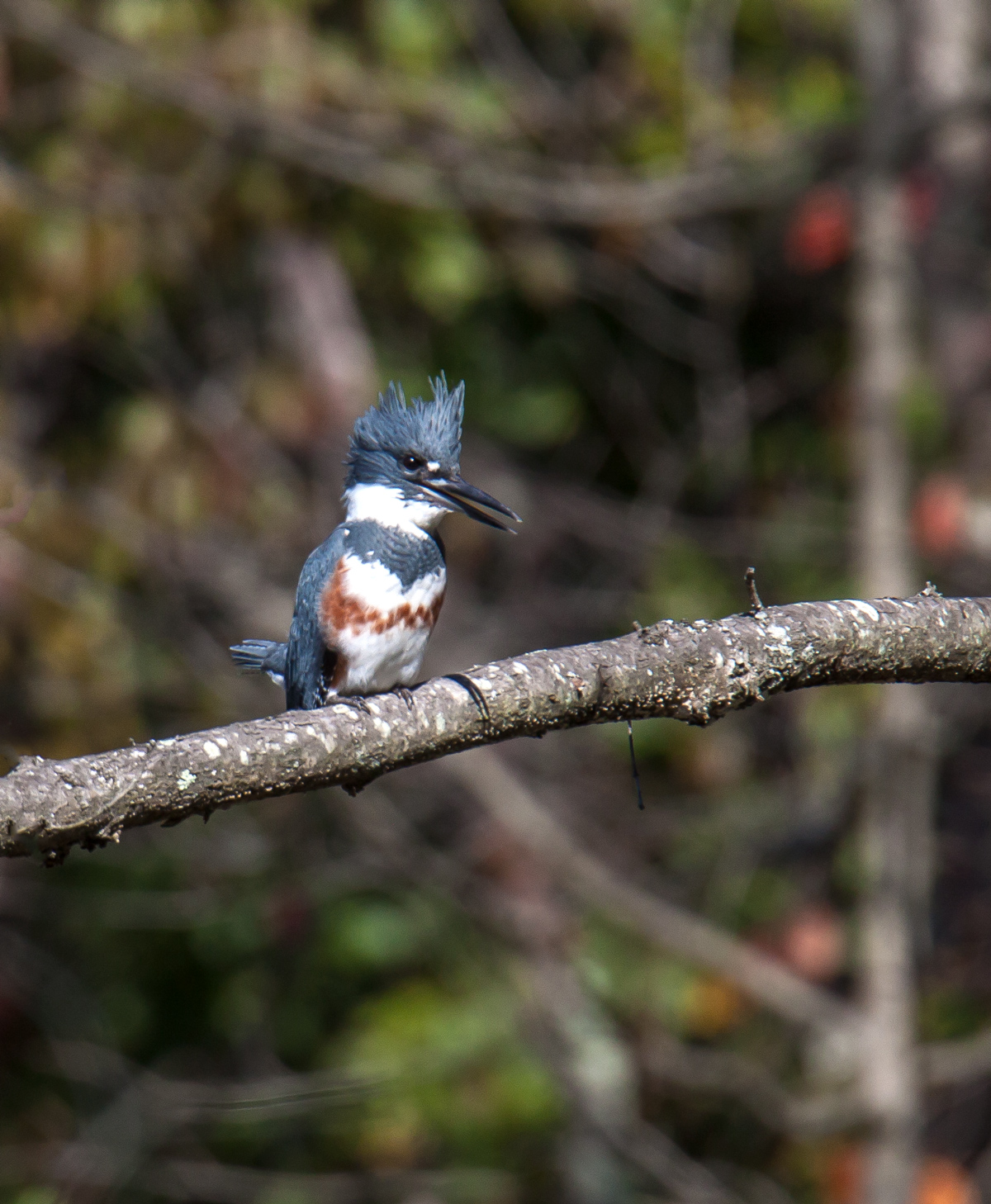
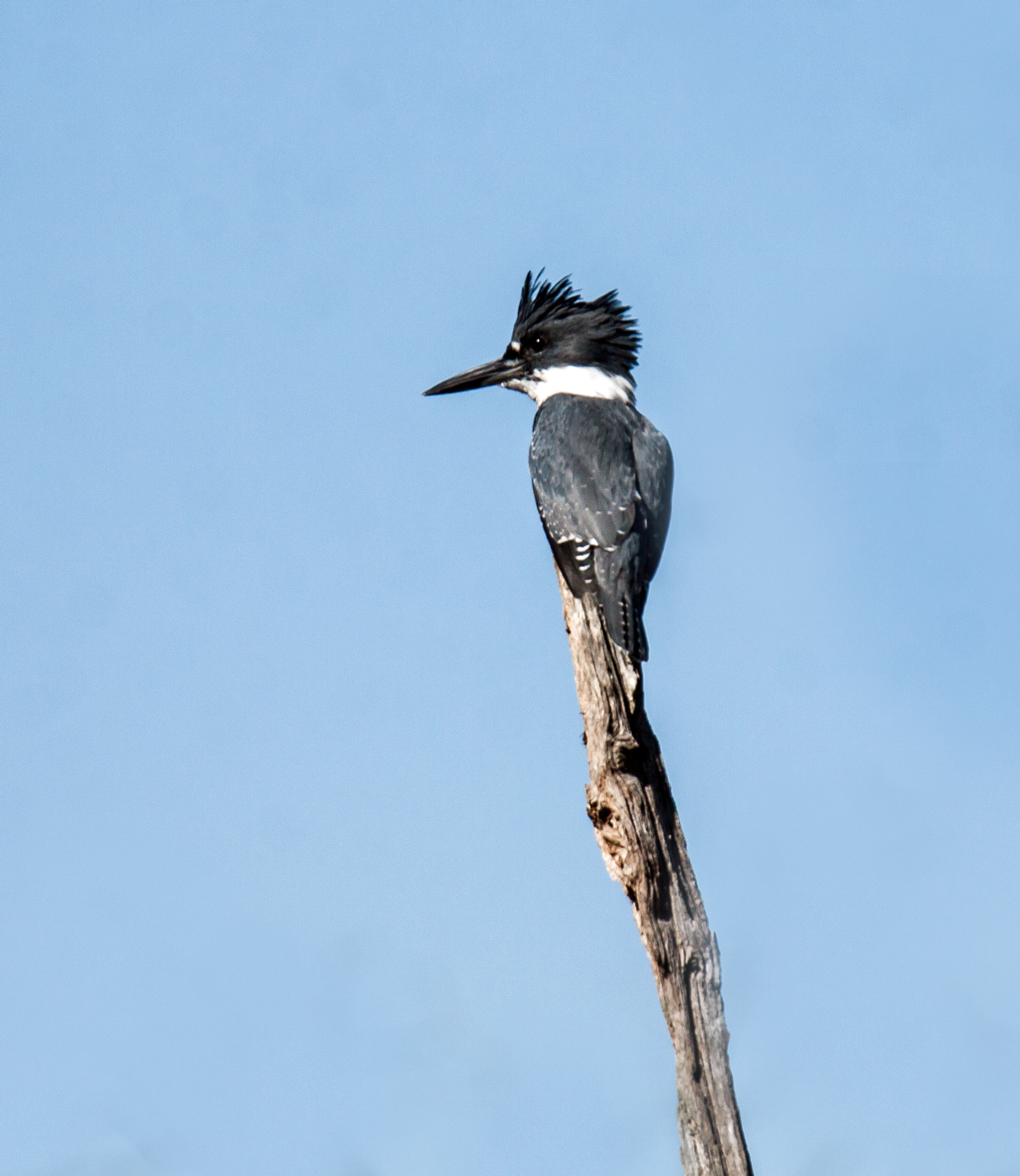
Belted Kingfishers (Megaceryle alcyon) are normally very skittish and it seems like they always choose to perch in distant trees. This past weekend, however, a female Belted Kingfisher flew to some trees that were a lot closer than usual and I was able to capture these shot. The images don’t exactly fill they frame, but they do show a lot of the cool details that make the kingfisher so special. In case you are curious, it is really easy to identify the gender of Belted Kingfishers—only the females have the rust-colored stripes on the chest, one of the few cases in which a female of a bird species is more colorful than the male.

Belted Kingfisher

Belted Kingfisher

Belted Kingfisher

© Michael Q. Powell. All rights reserved.

Read Full Post »

A Belted Kingfisher (Megaceryle alcyon) and a Red-headed Woodpecker (Melanerpes erythrocephalus) seemed to be eyeing each other with intense curiosity this past Friday at Huntley Meadows Park when they both chose to occupy the same tree at the same time.

Redheads have a mysterious attraction, it seems, in the bird world as well as in the human world.

Belted Kingfisher and Red-headed Woodpecker

© Michael Q. Powell. All rights reserved.

Read Full Post »

Eastern Bluebirds (Sialia sialis) were quite active yesterday at Huntley Meadows Park, including one that was investigating tree cavities. I am not sure if the bluebird was checking out potential nesting spots for next year or was merely searching for insects. Whatever the case, it was definitely cool when the bird climbed inside the cavity and poked its head out. I was particularly happy that the sun was shining brightly, which made the bluebirds’ brilliant blue really pop.

Eastern Bluebird

Eastern Bluebird

Eastern Bluebird

© Michael Q. Powell. All rights reserved.

Read Full Post »

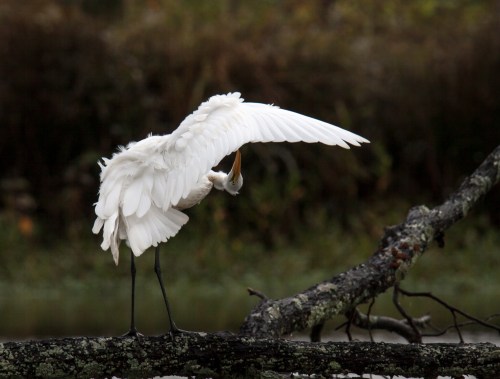
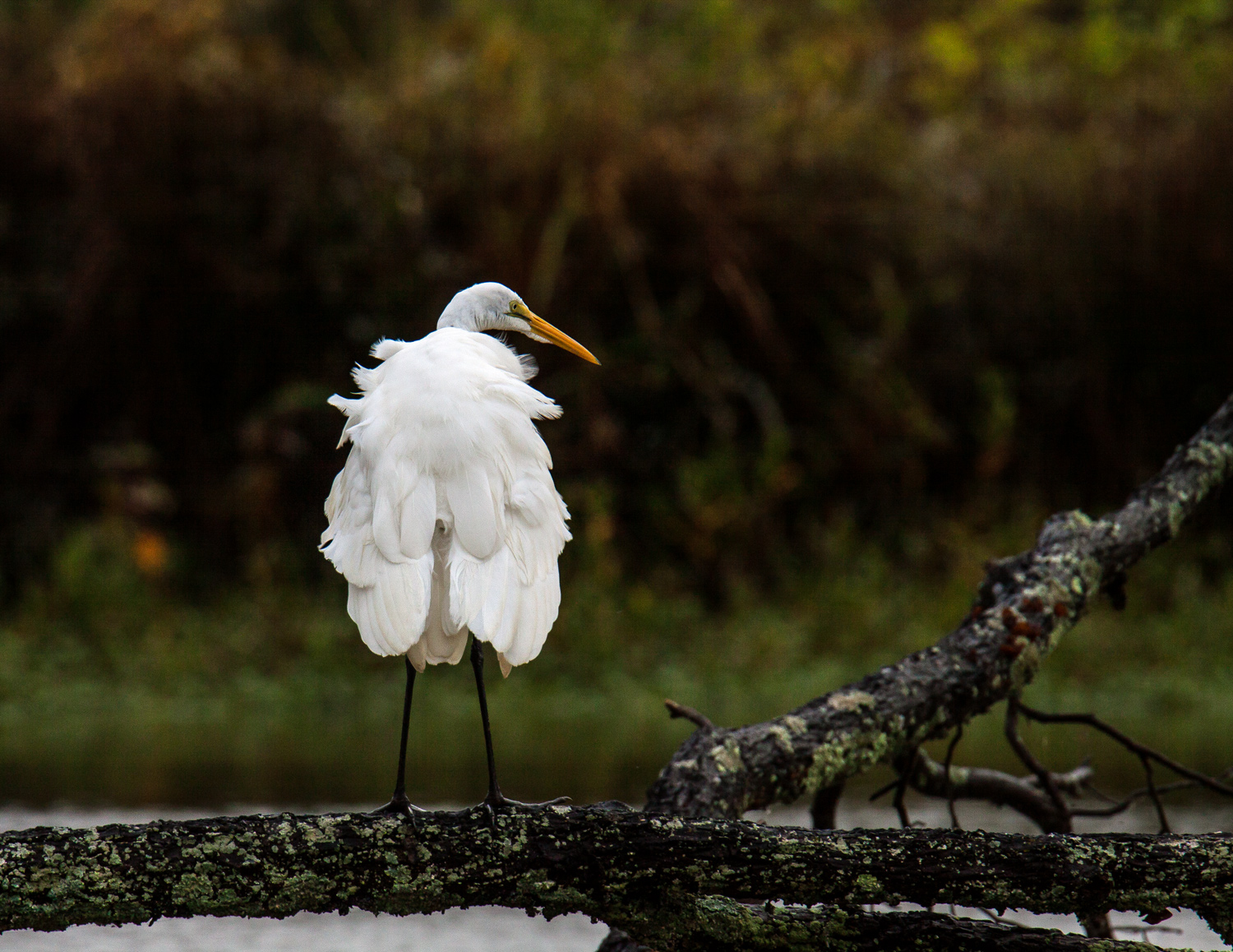
This Great Egret (Ardea alba) showed great balance and flexibility as it meticulously preened its feathers on Monday at Huntley Meadows Park. I would definitely need to see a chiropractor if I tried to imitate the position in the first image, assuming I did not completely fall over.

Great Egrets are relatively common in this park during the warmer months of the year, though they will soon depart for the winter. The Great Blue Herons, however, stay with us throughout the entire winter. I enjoy watching these large wading birds, never knowing when I will catch them in an unusual position or exhibiting an unusual behavior. The first shot is my clear favorite, because of the unusual body position, but I have included a couple of additional shots to show you various moments during the preening process.


Great Egret

Great Egret

Great Egret

© Michael Q. Powell. All rights reserved.

Read Full Post »


Read Full Post »

The heavy clouds and intermittent rain on Monday morning at Huntley Meadows Park limited the light and muted the colors, but in my eyes the beauty of this Eastern Bluebird (Sialia sialis) was in no way diminished.

The bluebird perched in a marshy area with lots of trees, so it was tough for me to get a clear shot. I was happy to find at last a gap between two lichen-covered trees that let me capture this image. A blue sky would have been nice, but I had to settle for the almost pure white sky that you see in the shot.

Eastern Bluebird

© Michael Q. Powell. All rights reserved.


Read Full Post »

It was dark and overcast yesterday morning at Huntley Meadows Park and became more eerie when a Turkey Vulture (Cathartes aura) started to circle lower and lower around me. Eventually it landed on the broken tip of a nearby tree.

After closing its wings initially, the vulture suddenly opened them wide and left them open for an extended period of time, perhaps to let them dry—it had been raining earlier in the morning. The wing position reminded me of the Double-crested Cormorants that I occasionally see with wings extended to dry them after an underwater dive.

Turkey Vulture

Turkey Vulture

Turkey Vulture

© Michael Q. Powell. All rights reserved.

Read Full Post »

It is often said that springtime is a time for love, but so apparently is autumn, especially if you are a Blue-faced Meadowhawk dragonfly (Sympetrum ambiguum). This species appears most often during the latter part of the summer and in early autumn, so springtime is not really an option for them.

I spotted this couple in flagrante delicto during a recent trip to Huntley Meadows Park. It is hard to get a real sense of scale from this photo, so you will have to trust me that these brightly-colored dragonflies are really small, about an inch and a half in length (38 mm).

Blue-faced Meadowhawk

© Michael Q. Powell. All rights reserved.

Read Full Post »

As the seasons change, some dragonflies begin to disappear, but happily some new ones appear, like this spectacular female Blue-faced Meadowhawk (Sympetrum ambiguum) that I spotted this past Monday at Huntley Meadows Park.

One of the really cool things about this species is that there are two different color variants of the females. Most of the females (and young males) are brown in color and are sometimes referred to as heteromorphs, while a smaller number of females, like the one in the photo, have a bright red color matching that of mature males and are sometimes referred to as andromorphs. This is roughly parallel to the Eastern Tiger Swallowtail butterfly, which has two different varieties of female, a yellow morph that matches the males and a black morph.

Blue-faced Meadowhawk

© Michael Q. Powell. All rights reserved.

Read Full Post »

When I spotted this praying mantis today at Huntley Meadows Park, I couldn’t help but think that it had chosen an appropriate pose to remember those who died and countless others whose live were forever changed by the tragic events of 9/11.

praying mantis

© Michael Q. Powell. All rights reserved.
Read Full Post »

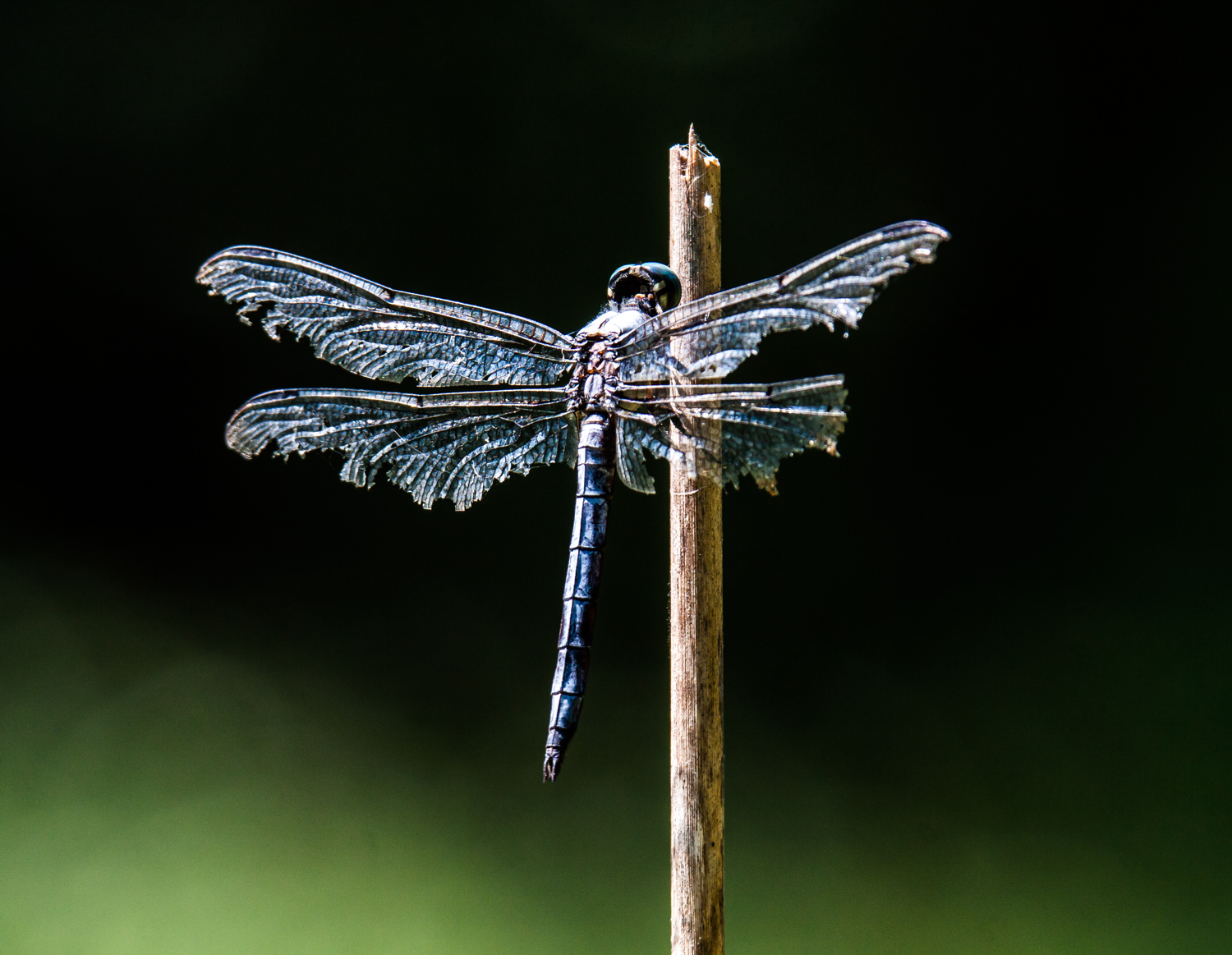
As the days of summer gradually wind down, I can’t help but notice a significant amount of wear and tear on the bodies and especially the wings of some of the dragonflies and butterflies that I see. Clearly it has been a long, tough season for some of them. Despite its tattered wings, this male Great Blue Skimmer dragonfly (Libellula vibrans) that I spotted on Monday at Huntley Meadows Park seemed to have no trouble flying, though I suspect that his days are numbered.
I hope that all of you have managed to survive this season well and that your “summer wear” refers to your clothes and not to the condition of your body.

Great Blue Skimmer

© Michael Q. Powell. All rights reserved

Read Full Post »

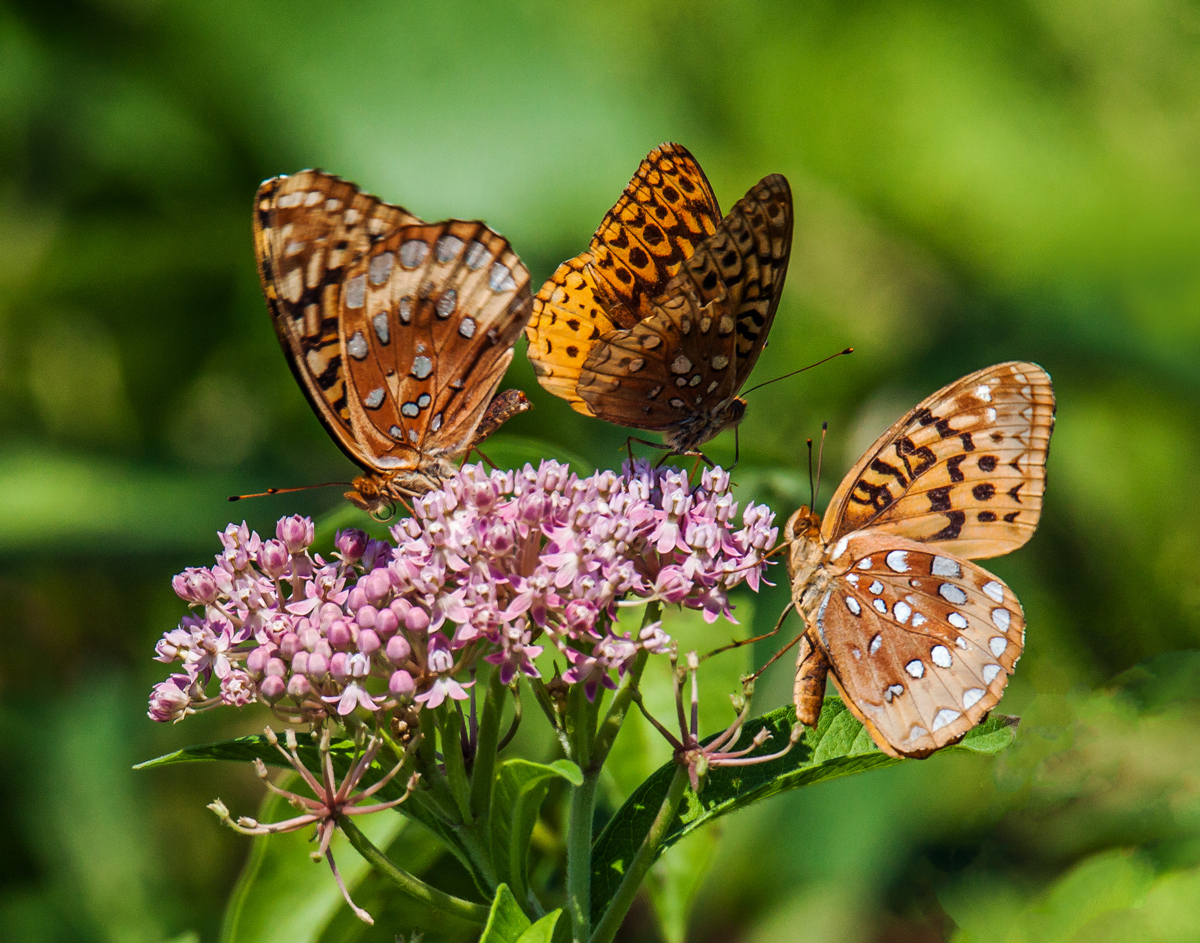
A clump of what I think is Swamp Milkweed (Asclepias incarnataseemed irresistible to a trio of Great Spangled Fritillary butterflies (Speyeria cybele) on Monday at Huntley Meadows Park. For a brief moment they coexisted peacefully, until one of them encroached into the territory of another and they all began to jostle each other for the prime spots.

I quickly snapped off a series of photos before the butterflies flew away. As is the case with almost any group, it was almost impossible to capture an image in which all of the subjects were more or less facing the camera and had interesting poses. It was roughly equivalent to trying to photograph a group of wiggly little children—single subjects seem easy by comparison.

Great Spangled Fritillary

© Michael Q. Powell. All rights reserved

Read Full Post »

When is a cluttered background so distracting that it draws attention away from the primary subject? When I have the luxury of time, I will normally attempt to compose my shots so that the background fades into the background as a creamy blur. As a wildlife photographer, though, I am often photographing live subjects that are likely to flee as soon as they become aware of my presence. Frequently I barely have time to bring the camera up to my eye and am forced to react rapidly and instinctively—I just don’t have time to think about the background.

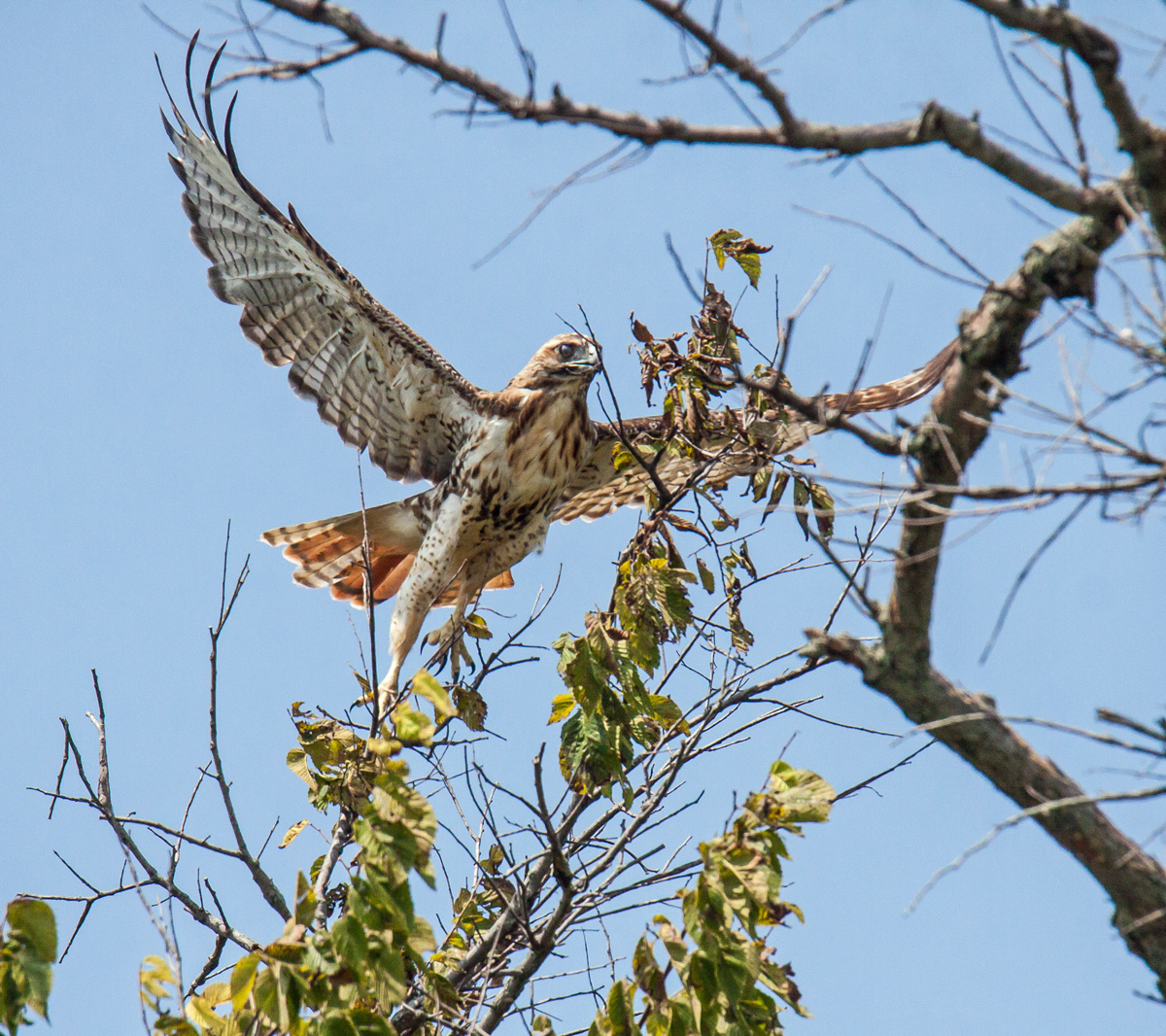
Yesterday as I was walking along the Mount Vernon Trail in Alexandria, Virginia parallel to the Potomac River, I spotted a bird at the very top of a distant tree. Earlier in the day I had seen an osprey in a similar position, so I initially assumed it was another osprey. I had just zoomed in on the bird when it exploded out of the tree into the air. From the way that it was flying, I realized that it was probably an eagle or a hawk. I tracked the bird, which I believe is a Red-tailed Hawk (Buteo jamaicensis) as it flew behind some trees and eventually into the clear blue skies.
Here are my three favorite shots of the encounter. Two of them are cluttered and one has a plain blue background. Which one do you like most? I am not bothered by the branches in the first two shots and like the way that they help to give a sense of context to the action that is depicted. The third shot shows some of the wonderful details of the beautiful hawk, but it seems a bit more sterile to me. (For the record, the first shot is probably my favorite of the three images.)

Are cluttered backgrounds ok? Like so many factors in photography, the correct response appears to be that it depends on the specific circumstances.

Red-tailed Hawk

Red-tailed Hawk

Red-taile Hawk

© Michael Q. Powell. All rights reserved

Read Full Post »

I spent a considerable amount of time one morning earlier this month at Huntley Meadows Park trying to get some shots of this skittish female Belted Kingfisher (Megaceryle alcyon). It was almost impossible to get really close, so I had to rely on my long telephoto zoom lens.

Belted Kingfisher

Belted Kingfisher

Belted Kingfisher

© Michael Q. Powell. All rights reserved

Read Full Post »

« Newer Posts - Older Posts »