April 20, 2021 by Mike Powell
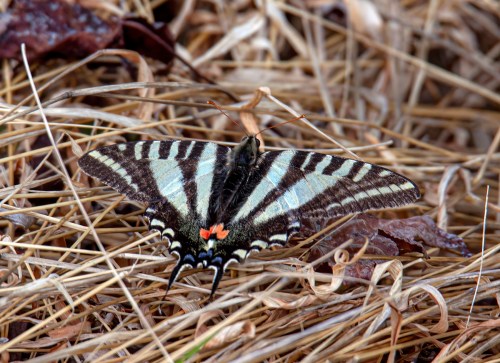
I was pleasantly surprised last week at Occoquan Bay National Wildlife Refuge to spot a few Zebra Swallowtail butterflies (Eurytides marcellus), including this one that posed momentarily for me. Generally this butterfly species is associated with the pawpaw tree, on which its larvae feed exclusively, but this one apparently spotted something of interest in the dry vegetation at the edge of the trail and decided to investigate it.
It is so exciting to see familiar spring species begin to reappear one-by-one.
© Michael Q. Powell. All rights reserved.
Posted in Butterflies, Insects, Nature, Photography, spring | Tagged Canon 50D, Eurytides marcellus, Occoquan Bay National Wildlife Refuge, Tamron 150-600mm, Woodbridge VA, Zebra Swallowtail, Zebra Swallowtail butterfly | 8 Comments »
April 20, 2021 by Mike Powell
One of the coolest spring birds in our area is the Blue-gray Gnatcatcher (Polioptila caerulea), a tiny bird that is only slightly larger than a Ruby-throated Hummingbird. I spotted this one last week in the trees at Occoquan Bay National Wildlife Refuge.
The Blue-gray Gnatcatcher has a distinctive call, so it is easy to know when one is around. Finding the bird, though, can be a real challenge because they are small, energetic, and spend a lot of time high in the trees. The trees are really starting to leaf out now, which adds another level of complexity to the challenge.
Several years ago I spotted a gnatcatcher’s nest (see my 2018 posting Gnatcatcher nest) and I am hoping to find one again this year. Blue-gray Gnatcatchers make their nests in a way that seems almost magical, using lichens and spiderwebs.


© Michael Q. Powell. All rights reserved.
Posted in Birds, Nature, Photography, spring, wildlife | Tagged Blue-gray Gnatcatcher, Canon 50D, gnatcatcher, Occoquan Bay National Wildlife Refuge, Polioptila caerulea, Tamron 150-600mm, Woodbridge VA | 6 Comments »
April 19, 2021 by Mike Powell
There always seems to be something fun and whimsical about ladybugs, like this one that I spotted last Saturday at Occoquan Regional Park. This is probably an invasive Harlequin Lady Beetle (Harmonia axyridis), rather than a native ladybug, but I still find it to be beautiful.
The Harlequin Lady Beetles, also known as Multicolored Asian Lady Beetles, may assist with control of some aphid pests, but may also harm native and beneficial insects and are considered by many to be pests.
My interests tend to be primarily photographic, so I tend not to make distinctions between weeds and flowers or between native and invasive species in the way that others, such as gardeners and farmers, may need to do. I am trying to capture my subjects as well as I can and I am pretty happy with the way this particular image turned out, given the small size of the ladybug and the fact that it was moving about as I was trying to get a shot.

© Michael Q. Powell. All rights reserved.
Posted in Insects, Macro Photography, Nature, Photography, spring, wildlife | Tagged Canon 50D, Harlequin Ladybug, Harmonia axyridis, ladybug, Lorton VA, Multicolored Asian Lady Beetle, Occoquan Regional Park, Tamron 180mm | 8 Comments »
April 19, 2021 by Mike Powell
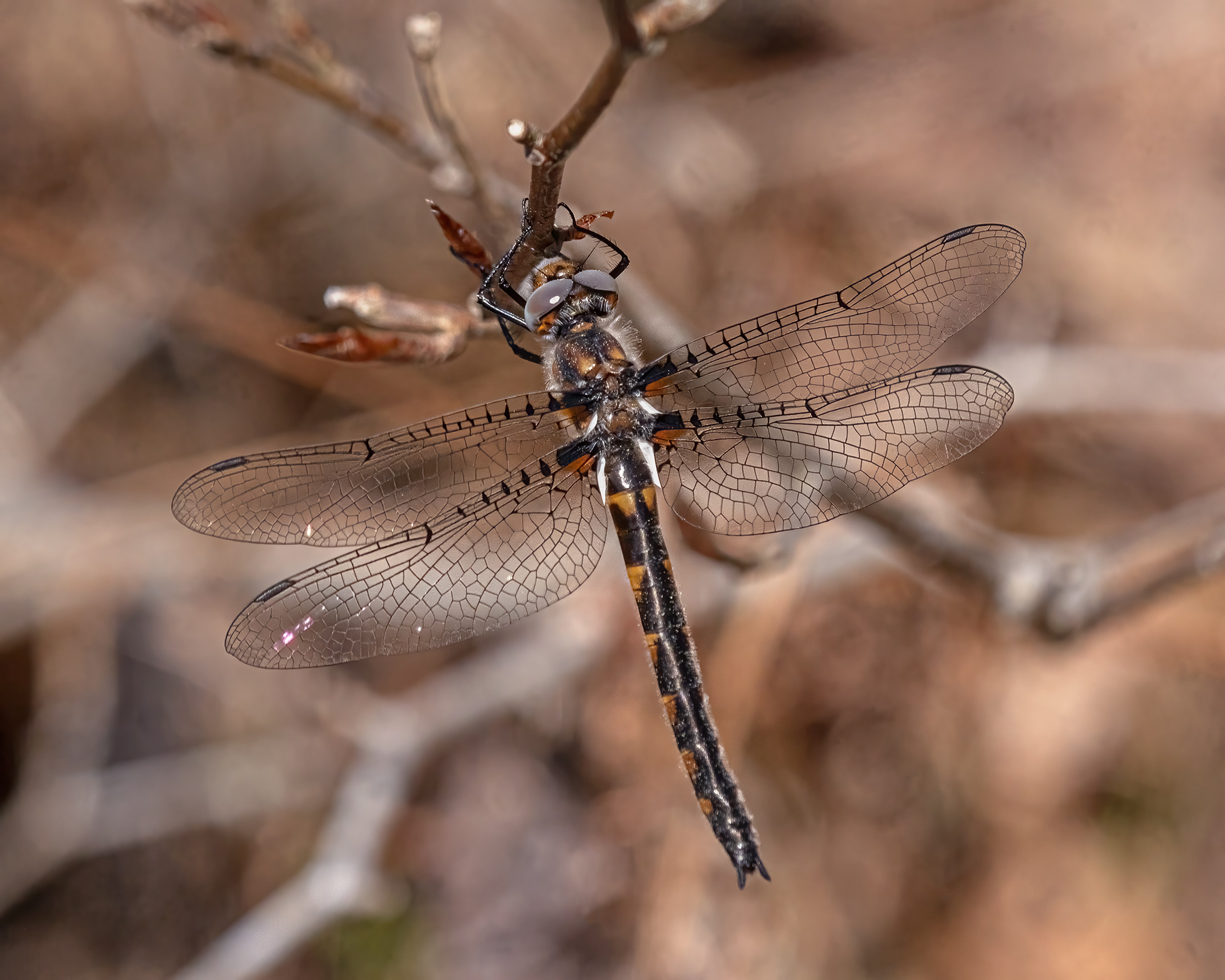
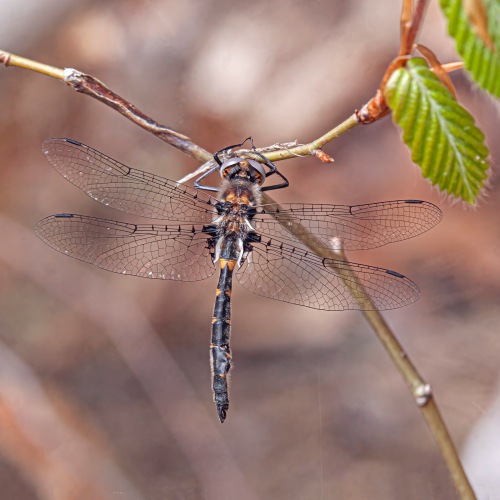
Here are a few shots of one of the cool early spring dragonflies in our area, the distinctive Twin-spotted Spiketail dragonfly (Cordulegaster maculata). I photographed what I believe are two different males on 16 April at Occoquan Regional Park. I was fortunate to spot these dragonflies as they were flying about low to the ground and was able to track them visually to their perches less than a foot (30 cm) above the ground. As you can see from the photos, Twin-spotted Spiketails hang from vegetation at an angle rather than perch horizontally as some dragonflies do.
This species is considered to be uncommon in our area, so I was quite happy to spot them again this year in a location where I had seen them last year. According to Kevin Munroe’s wonderful website Dragonflies of Northern Virginia, Twin-spotted Spiketails “are uncommon to rare, and need small, perennial, forest streams with stable, relatively un-eroded banks and a noticeable, steady current. They don’t need the cold, highly-oxygenated, rocky waters of a trout stream, but do need streams with halfway decent water quality and relatively low stormwater surges.”
Over the past few years I have learned, thanks to the helpful instruction of fellow dragonfly enthusiast Walter Sanford, that the habitat really matters for many of the uncommon dragonfly species in our area. There are no guarantees that I will find the my target species when I go searching for them, but there is a much greater chance if I know where to look and when, given that some of these species are present for only a few weeks each year.
In case you are curious, these dragonflies are much larger than the Uhler’s Sundragons and Selsys’s Sundragons that I featured in recent postings. The sundragons are about 1.5 inches (40 mm) in length, while the Twin-spotted Spiketail can be almost 3 inches (76 mm) in length.


© Michael Q. Powell. All rights reserved.
Posted in Dragonflies, dragonfly, Macro Photography, Nature, Photography, spring, wildlife | Tagged Canon 50D, Cordulegaster maculata, Lorton VA, Occoquan Regional Park, Tamron 180mm, Twin-spotted Spiketail, Twin-spotted Spiketail dragonfly | 10 Comments »
April 18, 2021 by Mike Powell
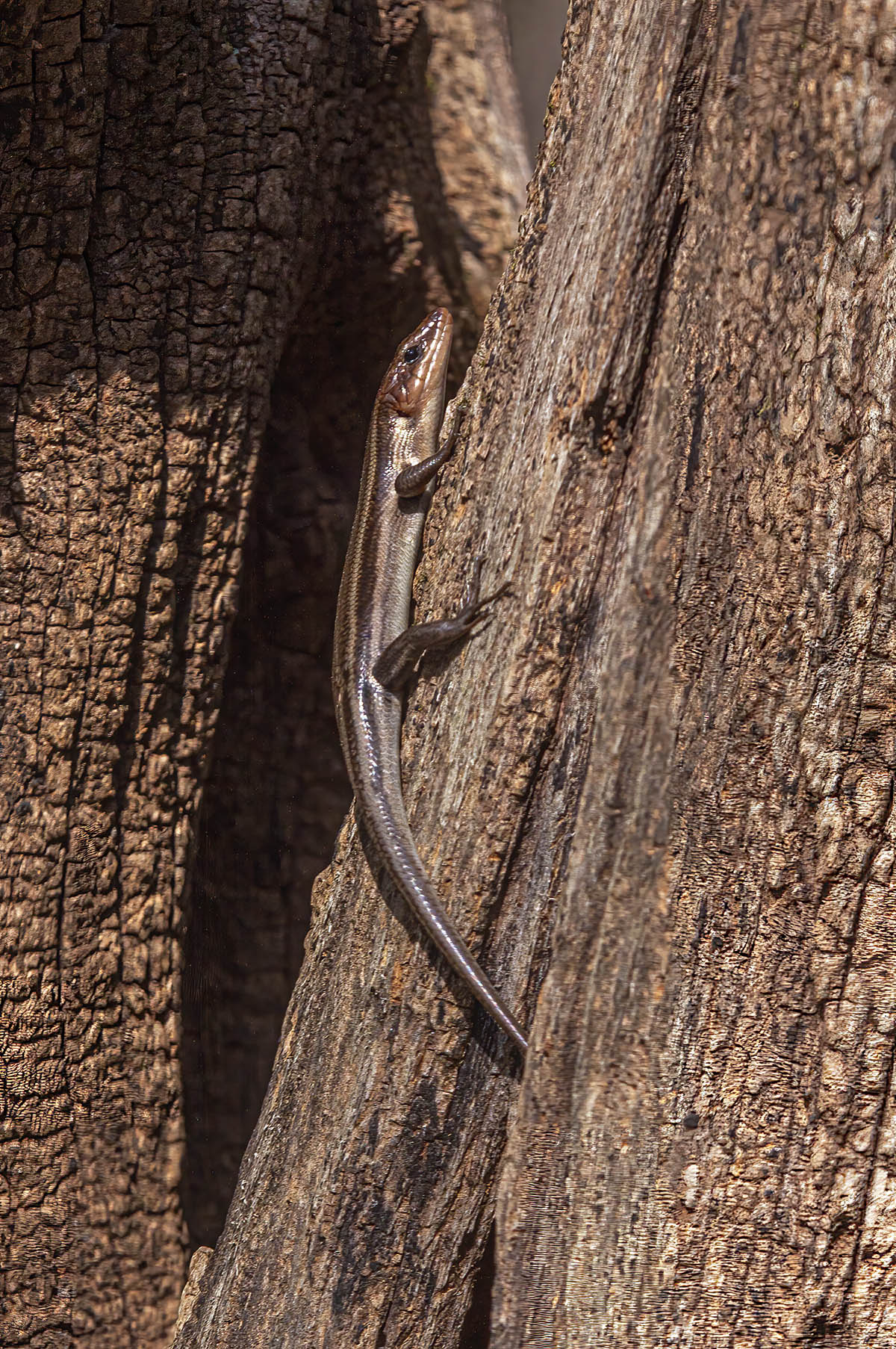
On Friday I was really happy to capture this image of a juvenile Common Five-lined Skink (Plestiodon fasciatus) at Jackson Miles Abbott Wetland Refuge. How do I know that it is a juvenile? Only juveniles have the distinctive blue tail that I find to be exceptionally cool and that, in this case, adds a touch of color to an almost monochromatic image.
The old stump on which the skink was perched made a wonderful background for this shot and I love the way that the concentric age rings and the uneven texture of the wood mirror the colors and scales of the skink’s body. The shadowy center shape makes this feel like an aerial shot, as if a giant skink were standing on a ledge, staring down into a deep crevasse.

© Michael Q. Powell. All rights reserved.
Posted in Nature, Photography, Reptiles, spring | Tagged Canon 50D, Common Five-Lined Skink, Fort Belvoir VA, Jackson Miles Abbott Wetland Refuge, juvenile skink, Plestiodon fasciatus, skink, Tamron 180mm | 11 Comments »
April 17, 2021 by Mike Powell
Although it has been almost a week since I last posted an image of a bird, let me reassure you that I have not given up on them. At this time of the year, however, my attention is divided and I am just as likely to be hunting for tiny subjects with my macro lens as I am to be scanning the increasing leafy trees through my long telephoto zoom lens. When I start walking (and I do a lot of walking), I have to decide which lens I will initially put on my camera and that will largely dictate where I will look for subjects.
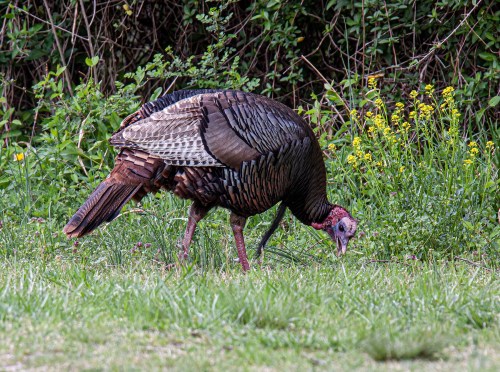
On Thursday, I went back to Occoquan Bay National Wildlife Refuge to look for birds and was delighted to spot a small flock of Wild Turkeys (Meleagris gallopavo). Sometimes the turkeys that I see appear relatively small, but some of the members of this flock seemed enormous, like the one in the first photo. The turkeys were picking about at the edge of the trail on which I was walking and slowly made their way into the undergrowth as I approached. The motion was fast enough, though, that one of the turkey’s legs is blurred in the second photo.
I am hoping to be able to capture some images of springtime warblers and of baby eaglets, but the transition has already begun from mostly telephoto shots to mostly macro shots—it is part of my seasonal transition.

© Michael Q. Powell. All rights reserved.
Posted in Birds, Nature, Photography, spring, wildlife | Tagged Canon 50D, Meleagris gallopavo, Occoquan Bay National Wildlife Refuge, Tamron 150-600mm, turkey, Wild Turkey, Woodbridge VA | Leave a Comment »
April 17, 2021 by Mike Powell
I was a little shocked last week at Prince William Forest Park, when I spotted a groundhog (Marmota monax) scampering down a trail heading right towards me as I was resting on a log. The groundhog must have sensed my presence, because it suddenly stopped, sniffed the air, and headed back in the direction from which it had come.
When I first detected the animal coming my way, I thought it might be a bear cub. Yes, I know that it is the wrong color and shape for a bear cub, but I had seen the signs at the park entrance to be aware of bears. According to news report, wildlife cameras at the park detected a black bear coming out of hibernation in February of this year. It may look like I was pretty far away from the groundhog, but I actually took this photo with the same 180mm macro lens that I used to photograph yesterday’s small dragonfly.
I thought about rewording the first paragraph that I had also used on a Facebook posting, but decided to leave it untouched. Several of my friends suggested that the groundhog might have gotten closer if I had taken a shower—I definitely left myself open for that interpretation by the way that I worded the last sentence of the first paragraph. I have always felt that it is good to be able to laugh at yourself—as someone once noted, it guarantees that you will have an endless source of humor.


© Michael Q. Powell. All rights reserved.
Posted in animals, Nature, Photography, spring, wildlife | Tagged Canon 50D, groundhog, marmota monax, Prince William Forest Park, Tamron 180mm, Triangle VA, woodchuck | 14 Comments »
April 16, 2021 by Mike Powell
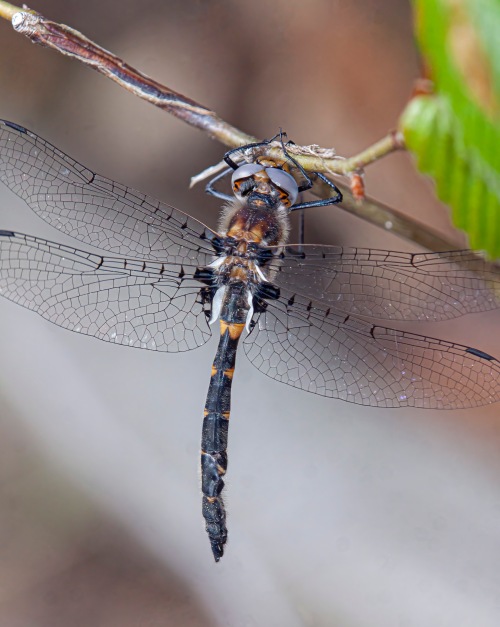
Normally when I photograph a new species of dragonfly I am immediately ecstatic, but that was not the case on Tuesday. After a long day of searching for Uhler’s Sundragons (Helocordulia uhleri) in Prince William County with fellow dragonfly enthusiast Walter Sanford, we were excited when we finally spotted a few of them. It had been an overcast day and it was only when the sun came out after noon that the dragonflies began to appear. Walter was thrilled, but my excitement was a little more muted, because I had photographed this species the previous week—check out my posting First dragonflies of the season for details and photos of my adventures that day.
After a while, Walter noted to me that all of the Uhler’s Sundragons that he had seen so far were female and that he hoped he would see a male. This may sound a little strange, but with some species of dragonflies, the females hang out in a separate area from the males until they are ready to mate, so you do not always see the genders intermixed.
I was wandering around the area a bit, as I am prone to do, when Walter called out to me that he had found a male. I rushed over and managed to get some shots of the specimen, including the first two images below. As it turns out, that was the only male that we saw all day.
The following day, Walter sent me an excited Facebook message informing me that the male dragonfly that we had both photographed was not a Uhler’s Sundragon, but was a Selys’s Sundragon (Helocordulia selysii), a similar species that neither of us had ever seen before. Walter did a records search and it looks the species had never before been documented in Prince William County. Finally I was ecstatic.
How did we not notice immediately that this was a different species? One of the primary differences between the species is that Uhler’s Sundragons have amber-colored markings mixed with dark ones at the base of their wings, while Selys’s Sundragons have only the dark markings. Given the small size of these dragonflies, these differences are hard to spot in the field, but are much easier to see when reviewing images afterwards.
For comparison purposes, I have included a photo of a male Uhler’s Sundragon that I photographed last week. If you look carefully, you can see the amber-colored markings in the final photo that are absent in the first two photos.
You may also notice that there is a spider on the branch in the final photo that appears to be reaching down and tapping the dragonfly on the “shoulder.” In this scenario, I am not sure which species would be the predator and which would be the prey. I have documented several cases in which dragonflies have been caught in spiderwebs and also a case when a jumping spider took down a much larger dragonfly (see my 2014 posting Spider captures dragonfly—the story for a fascinating series of images).
If you would like to see Walter’s account of our encounter with the Selys’s Sundragon, check out his blog posting today entitled Selys’s Sundragon dragonfly (male).
Selys’s Sundragon, 13 April 2021
Selys’s Sundragon, 13 April 2021

Uhler’s Sundragon, 8 April 2021
© Michael Q. Powell. All rights reserved.
Posted in Dragonflies, dragonfly, Insects, Macro Photography, Nature, Photography, spring, wildlife | Tagged Canon 50D, Helocordulia selysii, Helocordulia uhleri, Prince William County VA, Selys's Sundragon, Selys's Sundragon dragonfly, Tamron 180mm, Uhler's Sundragon, Uhler's Sundragon dragonfly, Walter Sanford | 24 Comments »
April 15, 2021 by Mike Powell
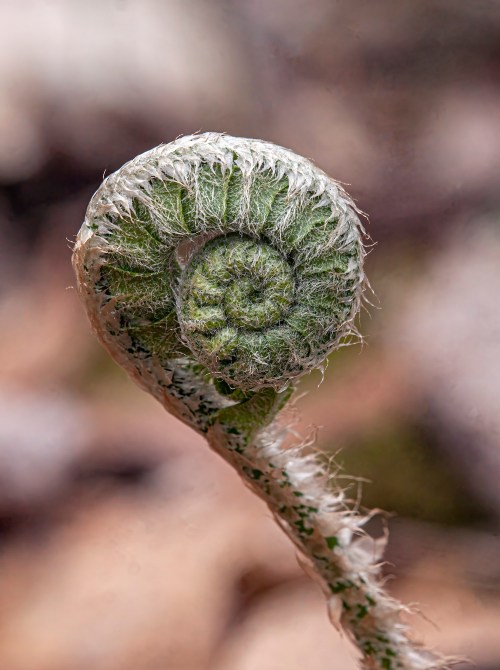
I am always attracted to the beautiful forms of a fiddlehead as it gradually unfurls from a tightly coiled spiral into a full-fledged fern frond. I have no idea if the process takes days or weeks, but but it was amazing to see the various stages of development of the fiddleheads that I have spotted during recent forays into a forest in Prince William County, Virginia.
The first two photos make it pretty obvious that the fiddlehead resembles the curled ornamentation (technically called a “scroll”) on the end of a stringed instrument, such as a violin that are traditionally carved in the shape of a volute (a rolled-up spiral). As I was poking about on the internet, I also learned that the fiddlehead stage of a fern is sometimes known as a crozier, the term used for the hooked staff carried by a bishop as a symbol of pastoral office.


© Michael Q. Powell. All rights reserved.
Posted in Art, Landscape, Nature, Photography, spring | Tagged Canon 24-105mm, Canon 50D, ferns, fiddlehead, Prince William County VA, Tamron 180mm | 18 Comments »
April 14, 2021 by Mike Powell
It is nearly impossible to miss the ostentatious displays of brilliant color as a succession of flowers and trees burst onto the springtime scene. Sometimes, though, they overwhelm my senses and I find myself more drawn to the delicate beauty of the tiny wildflowers that pop up in fields and forests.
Yesterday I was happy to photograph a skittish Eastern Tailed-Blue butterfly (Cupido comyntas) as it moved about in a small patch of Spring Beauty wildflowers (Claytonia virginica) in a forested area of Prince William County. With my macro lens, I was able to capture the distinctive “tail” and orange chevrons that help in identifying this tiny butterfly that has a wingspan of only ¾ – 1¾ inches (22 – 29 mm). I also managed to capture the beautiful pink markings of the spring beauties, including the anthers at the tips of the stamens.
It is easy to lose myself in this magical tiny world or perhaps it might be more correct to say that I find myself there.

© Michael Q. Powell. All rights reserved.
Posted in Butterflies, Flowers, Insects, Macro Photography, Nature, Photography, spring | Tagged Canon 50D, Claytonia virginica, Cupido comyntas, Eastern Tailed-blue, Eastern Tailed-blue butterfly, Prince William County VA, Spring Beauty, Spring Beauty wildflowers, Tamron 180mm | 17 Comments »
April 13, 2021 by Mike Powell
Are you the kind of person who sees shapes in the clouds? If so, then perhaps you too may see the shape of a fire-breathing dragon in this amazing parrot tulip that I photographed yesterday in the garden of my dear friend Cindy Dyer. As more of Cindy’s parrot tulips pop open I am becoming convinced that these are the craziest flowers that I have encountered, with all kinds of wild shapes and colors.
I am equally convinced that we all need a little whimsy, fantasy, and child-like fascination in our daily lives. As adults we tend to take ourselves too seriously too often. Wouldn’t it be cool to see the world afresh as a child does, full of excitement and imagination?
Keep your eyes open today—you too might unexpectedly encounter a fire-breathing dragon or equally fanciful creature.

© Michael Q. Powell. All rights reserved.
Posted in fantasy, Flowers, Gardening, Nature, Photography, spring | Tagged Alexandria VA, Canon 50D, Canon 60mm, Cindy Dyer, dragon, fantasy, fire-breathing dragon, imagination, parrot tulip, Runnymeade, tulip | 12 Comments »
April 13, 2021 by Mike Powell
Most snakes tend to lie horizontally, but the Northern Watersnake (Nerodia sipedon) that I spotted last week felt inclined to slither its way up a protruding tree branch and bask in the sun at a rather sharp angle. I was exploring the edge of a stream in Prince William County and was somewhat shocked to stumble upon this snake—I had been keeping an eye on the vegetated areas, knowing there was a chance there might be a snake there, but did not really expect to see one out in the open.
Most of the Northern Watersnakes that I have seen in the past have been darker and duller in color than this one, which has a distinctive colorful pattern. Given the brightness of the colors and the snake’s relatively small size, I wonder if this might be a juvenile snake.
The snake seemed comfortable on its perch and did not react when I took these photos, though I must admit that I kept a respectful distance away. When I continued on, the snake stayed put, enjoying the warmth of the springtime sun.


© Michael Q. Powell. All rights reserved.
Posted in Nature, Photography, Reptiles, snake, spring, wildlife | Tagged Canon 50D, Nerodia sipedon, Northern Water Snake, Northern Watersnake, Prince William County VA, Tamron 180mm | 19 Comments »
April 12, 2021 by Mike Powell
Last week I came across this carefully-balanced stack of rocks in a stream at Prince William Forest Park. These rock stacks are often called cairns, a word that comes from the Gaelic for “heap of stones” and can be quite beautiful. However, they can cause serious damage to the delicate river ecosystems and are illegal in most national parks—one of the fundamental policies of the National Park Service is to preserve natural resources in an unaltered state.
The Friends of the Smokies website offered these alternative recommendations for visitors who felt a desire to build a cairn in a posting entitled Don’t Move Rocks.
“If you feel so moved by the natural serenity around you, try a silent prayer.
If you feel the extreme urge to balance things, try balancing a drink can on your head (because apparently there’s a world record for everything).
And if you just want to see a stacks of things, hit up IHOP (International House of Pancakes) on the way home.”

© Michael Q. Powell. All rights reserved.
Posted in Landscape, Nature, Photography, spring | Tagged cairn, Canon 24-105mm, Canon 50D, ecosystems, Prince William Forest Park, stacked rocks, Triangle VA | 26 Comments »
April 12, 2021 by Mike Powell
Here’s another beautiful tulip that I spotted yesterday morning in the garden of my good friend and neighbor Cindy Dyer, an elegant variety known as the Lady Jane (Tulipa clusiana var. ‘Lady Jane’) . The pink speckles in the background are fallen petals from her crabapple tree.
As I returned back to my townhouse, I could not help but notice that my front yard was carpeted in pretty pink petals from my crabapple tree, thanks to the gentle wind and light rain in the early morning. I felt like I should be lighting candles and pouring champagne—clearly all of those lovely petals meant that I was loved. Yes, I am an unapologetic romantic.


© Michael Q. Powell. All rights reserved.
Posted in Flowers, Gardening, Nature, Photography, spring | Tagged Alexandria VA, Canon 50D, Canon 60mm, Cindy Dyer, crabapple blossoms, Lady Jane tulip, Runnymeade, Tulipa clusiana var. 'Lady Jane' | 10 Comments »
April 11, 2021 by Mike Powell
I love to stroll along the shore—the rhythmic sound of the waves relaxes me and often puts me into a contemplative frame of mind. When I spotted this crow on a recent trip to Occoquan Bay National Wildlife Refuge, I couldn’t help but think that the crow too was lost in its thoughts and enjoying the same therapeutic benefits of a stroll at the water’s edge.
I must confess that I do not know my crows very well. I assume that this is an American Crow (Corvus brachyrhynchos), but realize that it might instead be a Fish Crow (Corvus ossifragus). From what I have read, even experts sometimes have trouble visually distinguishing between the two species, though Fish Crows are substantially smaller than American Crows. Apparently some people can tell them apart by their calls, but this crow was silent, so I too will remain silent and simply identify the strolling bird as a crow.

© Michael Q. Powell. All rights reserved.
Posted in Birds, Nature, Photography, spring, wildlife | Tagged American Crow, Canon 50D, Corvus brachyrhynchos, Corvus ossifragus, crow, fish crow, Occoquan Bay National Wildlife Refuge, Tamron 150-600mm, Woodbridge VA | 4 Comments »
April 11, 2021 by Mike Powell
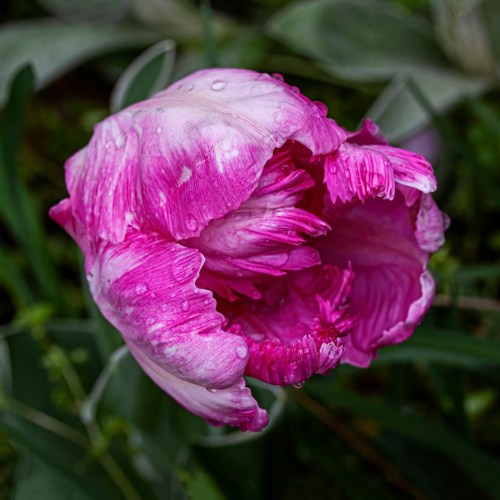
Tulips come in many varieties and my good friend and neighbor Cindy Dyer, who is also my photography mentor, likes to find photogenic ones to plant. For several weeks I have been keeping an eye on her garden, waiting and wondering what type and color tulips would emerge from the green growth that was slowing pushing upward.
This week some of those tulips finally burst open and I was delighted to see that they are Parrot tulips. Parrot tulips are whimsically-shaped, with uncontrolled ruffled edges that somehow make me think they have a bad case of “bed head.”
I captured these images on Friday, a gloomy day punctuated with periodic rain showers. The colors of the tulips are more subdued and do not “pop” as much as they do in the sunlight, but I like the moody feel of the images. The raindrops add a nice touch too—I love to photograph the drops of rain that bead up so beautifully on so many plants and flowers.


© Michael Q. Powell. All rights reserved.
Posted in Flowers, Gardening, Nature, Photography, spring | Tagged Alexandria VA, Canon 50D, Canon 60mm, Cindy Dyer, parrot tulips, Runnymeade, tulips | 13 Comments »
April 10, 2021 by Mike Powell
On Thursday I finally photographed my first dragonflies of the season. I had previously spotted Common Green Darners several time, but they don’t really “count” because I was not able to capture images of them. I initially checked out several locations at a stream in Prince William County, Virginia, where I had seen Uhler’s Sundragon dragonflies (Helocordulia uhleri) in recent years and came up empty-handed.
However, I was thrilled when later in the day I spotted Uhler’s Sundragons at several locations further upstream from my previous locations. Uhler’s Sundragons have a brief and very early flight period and are considered rare in our area. They also are habitat specialists and “they need clean, small to medium, rocky forest streams with gravelly and/or sandy substrate, and a decent flow,” according to the wonderful Dragonflies of Northern Virginia website.
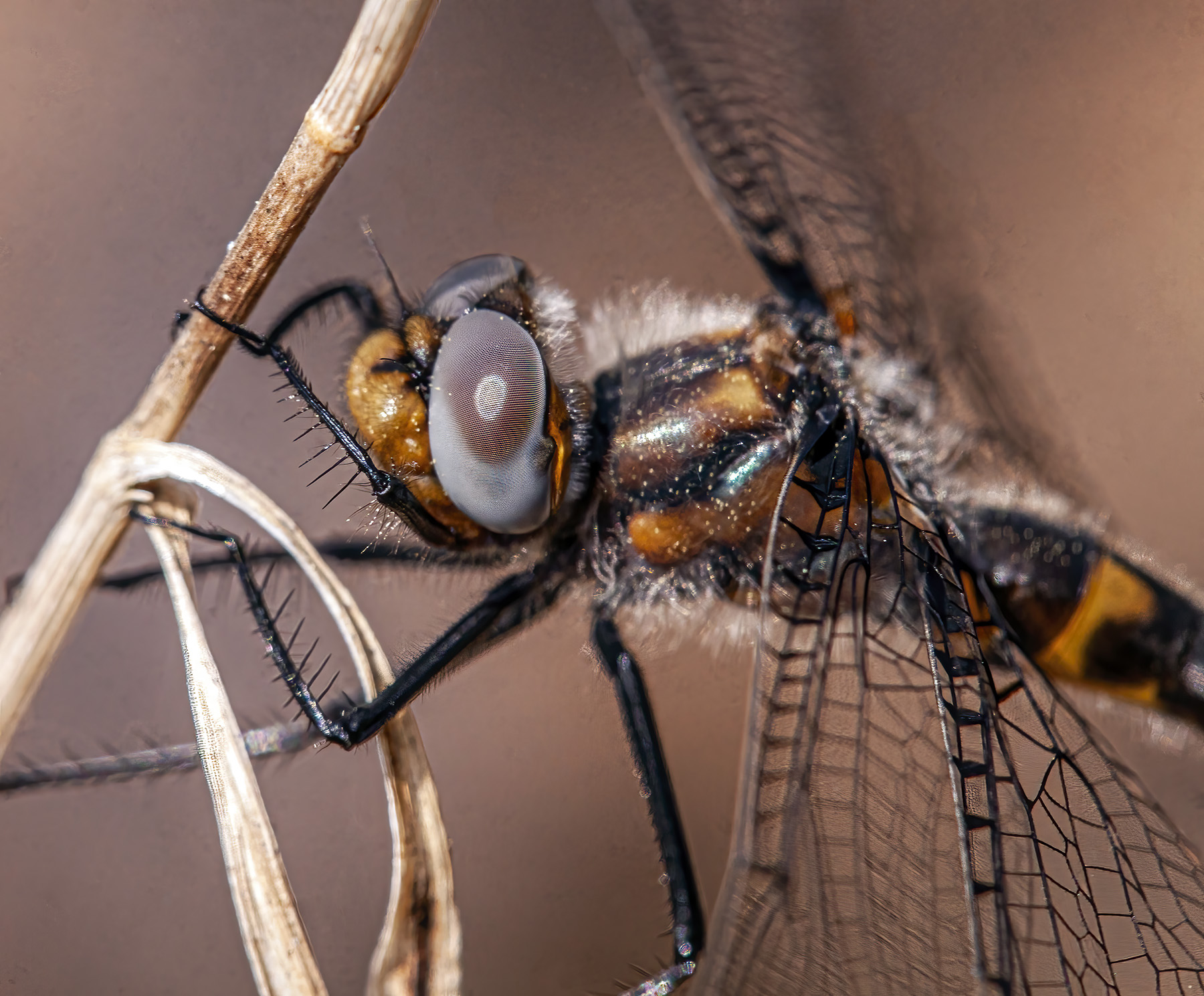
These three photos are indicative of the types of photos that I often try to capture of dragonflies. I love to try to get as close as I can and take extreme close-up shots, like the first one. You can easily see the spines on the legs of the dragonfly and even some of the ommatidia, the optical units that make up the amazing compound eyes of the dragonfly.
The second shot of a female Uhler’s Sundragon is a good illustration of the way that I try to separate my subjects from the background. The final shot of a male Uhler’s Sundragon shows more of the habitat in which I found the dragonfly. The background is a little busy, but I like the way that the image shows the transparency of the dragonfly’s wings.
In case you are curious about how I can tell the gender of these dragonflies, one of the primary keys is to look at the tips of the abdomens (the “tail”)—you will probably note the different anatomical shapes if you compare the second and third images.


© Michael Q. Powell. All rights reserved.
Posted in Dragonflies, dragonfly, Insects, Macro Photography, Nature, Photography, spring, wildlife | Tagged Canon 50D, Helocordulia uhleri, Prince William County VA, Tamron 180mm, Uhler's Sundragon, Uhler's Sundragon dragonfly | 26 Comments »
April 9, 2021 by Mike Powell
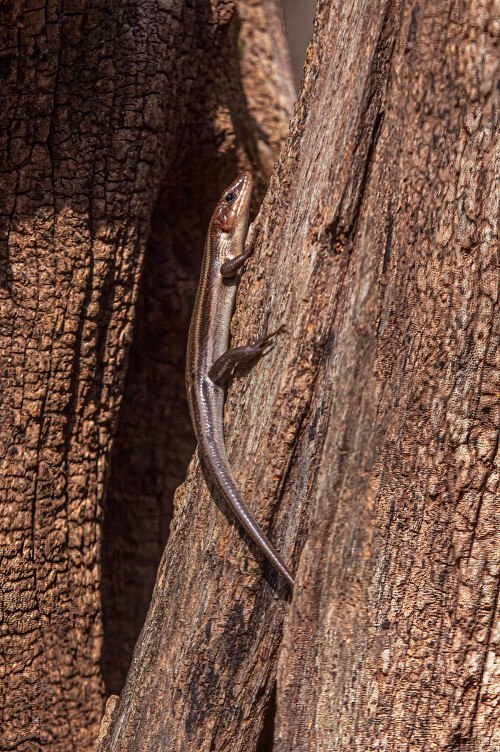
Our recent warm weather has brought out all kinds of creatures, like this Common Five-lined Skink (Plestiodon fasciatus) that I spotted on Wednesday at Jackson Miles Abbott Wetland Refuge. We do not have very many lizards in my area, so it is always a treat for me to spot one.
This skink blended in so well with the tree on which it was perched that I probably would not have spotted it if it had not moved. I love the way that the colors and texture of the skink’s body match the roughness of the tree’s bark, thereby creating a really harmonious color palette for the image.
© Michael Q. Powell. All rights reserved.
Posted in Nature, Photography, Reptiles, spring | Tagged Alexandria VA, Common Five-Lined Skink, Fort Belvoir VA, Jackson Miles Abbott Wetland Refuge, Plestiodon fasciatus, skink | 14 Comments »
April 8, 2021 by Mike Powell
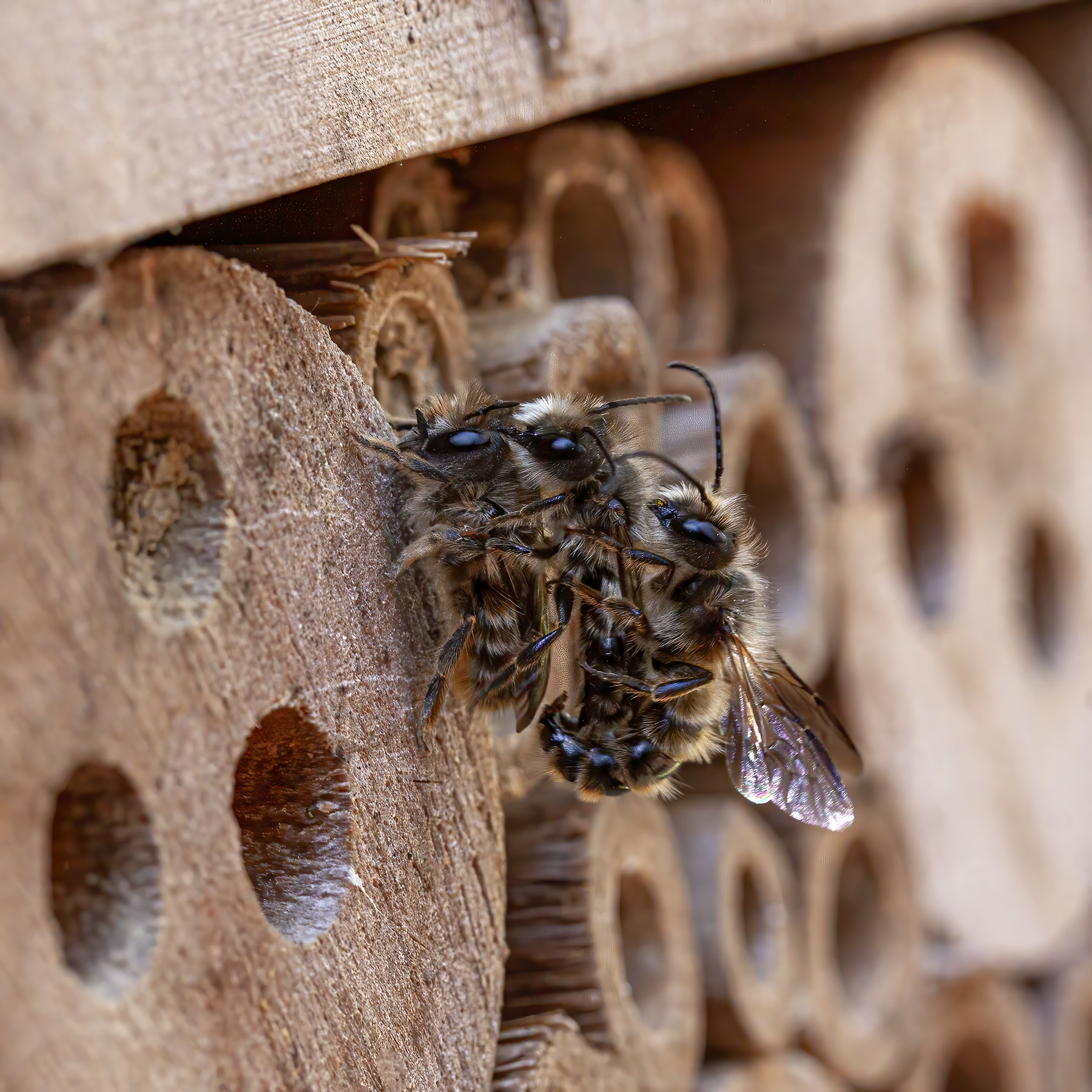
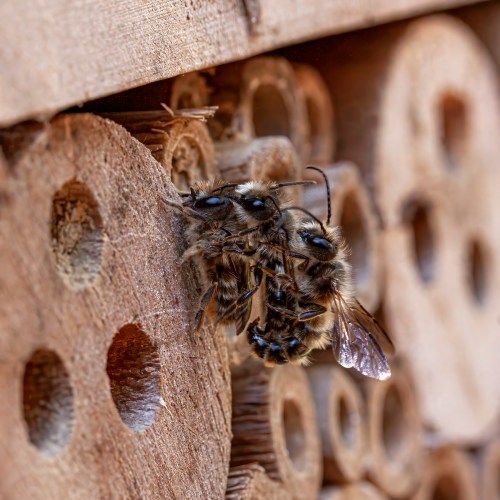
When it comes to mating, many male insects are really aggressive—they will do everything they can to prevent their rivals from hooking us with a desirable female. I think that is what was going on in this image I captured on Sunday of three bees outside of a bee house in the garden of my friend and neighbor Cindy Dyer. It looks to me that the top bee in this ménage à trois was trying to dislodge a rival and somehow gain access to the female. Yes, as the old song simply states, “birds do it, bees do it.”
Perhaps you have a better explanation of what was transpiring, like they were simply playing piggyback and wanted to see how strong the bottom bee was. What do you think? I encourage you to click on the image to see the details better.
I often tell you that I was not as close as it seems, because I generally shoot with a telephoto lens or a long macro lens. In this case, though, I was shooting with a 60mm macro lens and was only a few inches away from the “action” and had to dodge bees that were entering and exiting the tubes of the bee house.
© Michael Q. Powell. All rights reserved.
Posted in Bees, Insects, Macro Photography, Nature, Photography, spring, wildlife | Tagged Alexandria VA, bee house, bees, bees do it, Canon 50D, Canon 60mm, Cindy Dyer, mating, Runnymeade | 7 Comments »
April 7, 2021 by Mike Powell
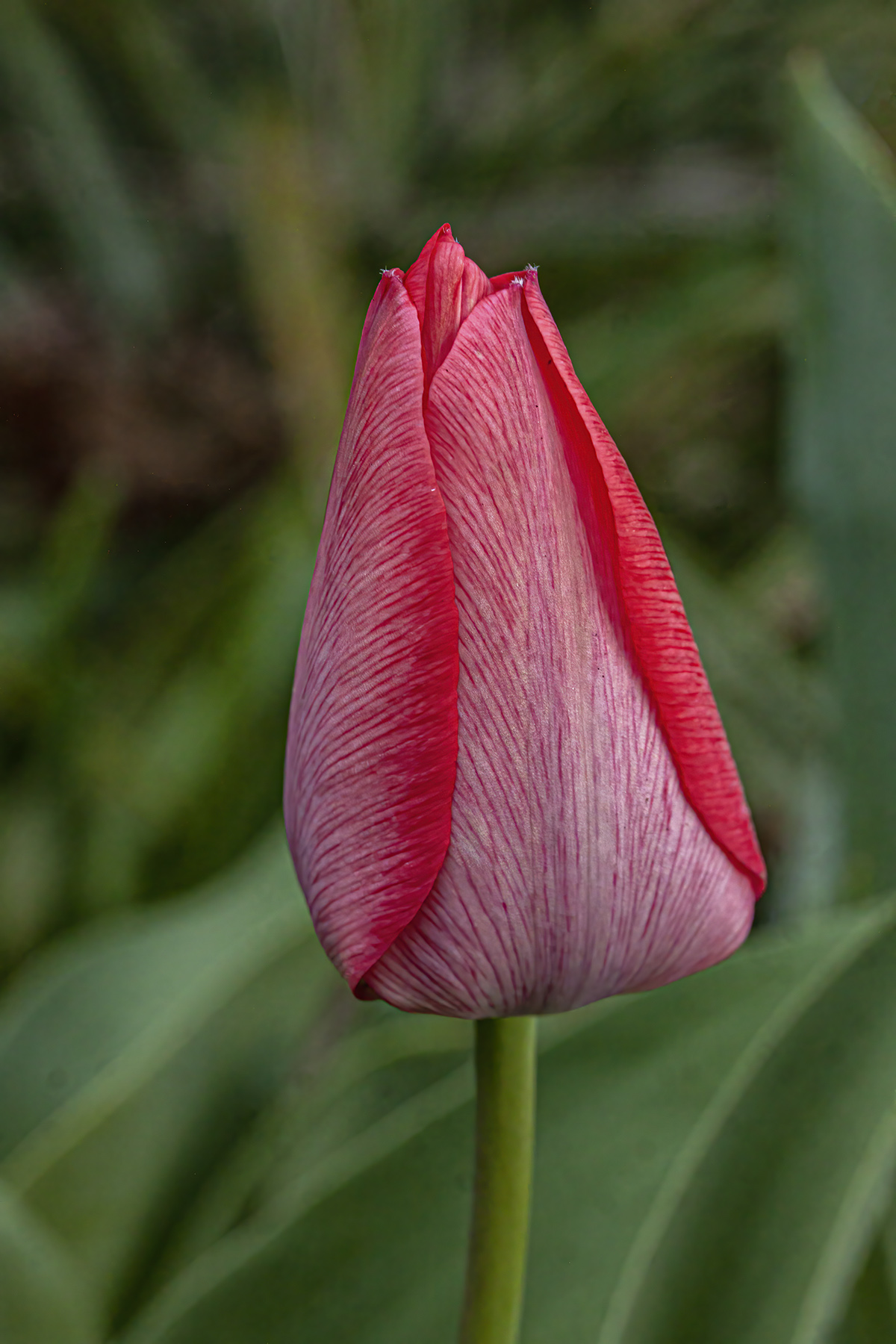
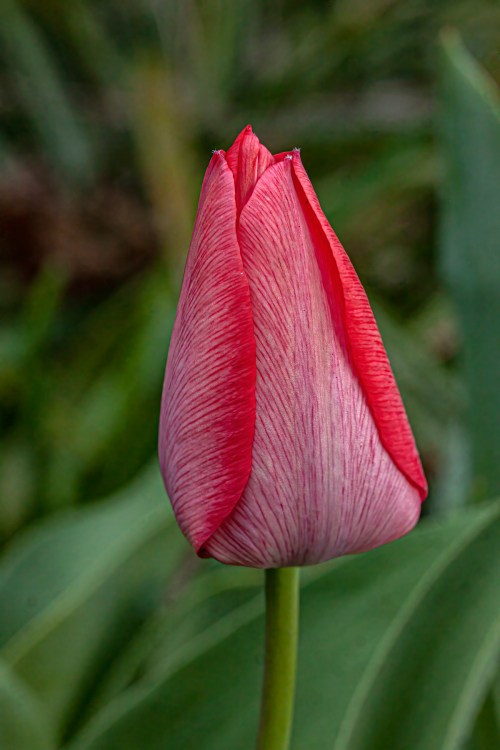
I love simple beauty, like that of a single tulip flower that opens in the sunlight to reveal its colorful center, and closes at night as if to protect its precious treasure. This red tulip was the first full-sized tulip to bloom in the garden of my friend and photography mentor Cindy Dyer. I spotted it early on Easter morning when it was closed up, as shown in the second image. I was pleasantly surprised that afternoon to see that the tulip was open and I captured the first image.
I love this time of the year, when so much color is beginning to appear. Take the time this season to smell the roses—tulips do not seem to be particularly fragrant.

© Michael Q. Powell. All rights reserved.
Posted in Art, Flowers, Nature, Photography, spring | Tagged Alexandria VA, Canon 50D, Canon 60mm, Cindy Dyer, red tulip, Runnymeade, spring, tulip | 14 Comments »
April 7, 2021 by Mike Powell
Many of you know that dragonflies and damselflies are my favorite subjects to photograph in the warm months of the year. There is something magical about these colorful aerial acrobats that spend most of their lives underwater before undergoing a remarkable metamorphosis. If you are not familiar with a dragonfly’s total transformation, you may want to check out a posting I did a few years ago called Metamorphosis of a dragonfly that documents in photos and in words the step-by-step metamorphosis of a Common Sanddragon dragonfly (Progomphus obscurus).
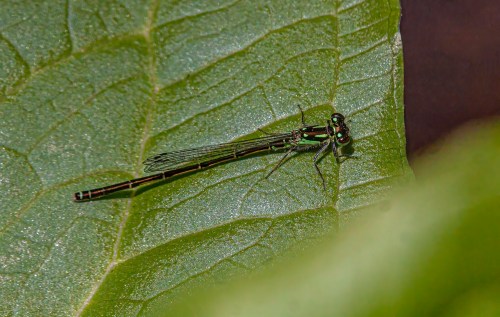
It is still a bit early in the season, but I have already been searching for dragonflies and damselflies for a couple of weeks now. Yesterday I finally found my first damselfly, the female Fragile Forktail (Ischnura posita) in the first photo that I spotted as she perched on some skunk cabbage in a muddy seep at Occoquan Regional Park. I scoured the area and eventually spotted a few more Fragile Forktails, including the male in the second photo that was also perched on the leaves of a skunk cabbage.
As their name suggests, Fragile Forktail damselflies are quite small and delicate and are only .8 to 1.1 inches (21-29 mm) in length. This species is fairly easy to identify, once you manage to spot one, because both genders have interrupted pale shoulder stripes that look like exclamation marks. I encourage you to click on the images, especially the first one, in which you can see the incredible details of this little lady, including her amazing wings, spiny legs, and tiny feet.
The dragonfly/damselfly season has now officially started for me and I will now begin to intensify my search for spring species, many of which can be found only in specific habitats for a limited period of time. Can you feel my excitement? Yeah, I an unapologetically a bit geeky about these little creatures.

© Michael Q. Powell. All rights reserved.
Posted in damselfly, Dragonflies, dragonfly, Macro Photography, Nature, Photography, spring, wildlife | Tagged Canon 50D, Fragile Forktail, Fragile Forktail damselfly, Ischnura posita, Lorton VA, Occoquan Regional Park, Tamron 180mm | 36 Comments »
April 6, 2021 by Mike Powell
What do you call a group of butterflies? There are apparently many collective nouns for butterflies in English, but my absolute favorite is “kaleidoscope.” The word combination “kaleidoscope of butterflies” captures well for me the magical and fanciful nature of these colorful creatures.
I was excited yesterday when I spotted an Eastern Tiger Swallowtail butterfly (Papilio glaucus) fluttering about near a stream at Prince William Forest Park—it was my first “big” butterfly of the spring season. I was even more thrilled later in the day when a spotted this kaleidoscope of Eastern Tiger Swallowtails clustered together on a rocky ledge at water’s edge, engaged in what is often referred to as “puddling.” Many species of butterflies congregate on wet sand and mud to partake in “puddling”, drinking water and extracting minerals from damp puddles or even from animal droppings.
According to a posting by Westborough Land Trust, “When tiger swallowtails emerge from their chrysalises, one of the first things they do – especially if they’re male – is to head for a mud puddle. There they fill up on water and get minerals needed for reproduction. They suck water and dissolved minerals up through their long “tongue” or proboscis, which they also use to drink nectar.”
It is really early in the season and all of the butterflies were in perfect condition, with fully intact wings and vibrant colors. I am always energized to see the emergence of new life in the spring in plants and in all of the small and large creatures that I love to photograph.

© Michael Q. Powell. All rights reserved.
Posted in Butterflies, Insects, Nature, Photography, spring, wildlife | Tagged Canon 50D, Eastern Tiger Swallowtail, Eastern Tiger Swallowtail butterfly, kaleidoscope of butterflies, Papilio glaucus, Prince William Forest Park, puddling, Tamron 180mm, Triangle VA | 38 Comments »
April 5, 2021 by Mike Powell
Walking through the forest is such a joy at this time of the year with all kinds of ephemeral spring wildflowers popping up, including the Bloodroot (Sanguinaria canadensis), Quaker Ladies (Houstonia caerulea), and Cutleaf Toothwart (Cardamine concatenata) that I spotted last Monday at Prince William Forest Park. Some of these flowers bloom for only a few days, so I am always thrilled when I am able to capture shots of them during that brief period.
I am definitely not an expert on wildflowers and welcome corrections if I have misidentified any of these species.


© Michael Q. Powell. All rights reserved.
Posted in Flowers, Nature, Photography, spring | Tagged Bloodroot, bluet, Canon 50D, Cardamine concatenata, Cutleaf Toothwart, Houstonia caerulea, Prince William Forest Park, Quaker Ladies, Sanguinaria canadensis, Tamron 180mm, Triangle VA | 29 Comments »
April 4, 2021 by Mike Powell
I photographed this beautiful hellebore flower, sometimes referred to as a Lenten rose, early this Easter morning in the garden of my dear friend and neighbor Cindy Dyer. Have a wonderful Sunday and don’t forget to stop and to look for the beauty that is everywhere around you.

© Michael Q. Powell. All rights reserved.
Posted in Easter, Flowers, Nature, Photography, spring | Tagged Alexandria VA, Canon 50D, Canon 60mm, Cindy Dyer, Easter 2021, hellebore, Lenten Rose, Runnymeade | 15 Comments »
April 4, 2021 by Mike Powell
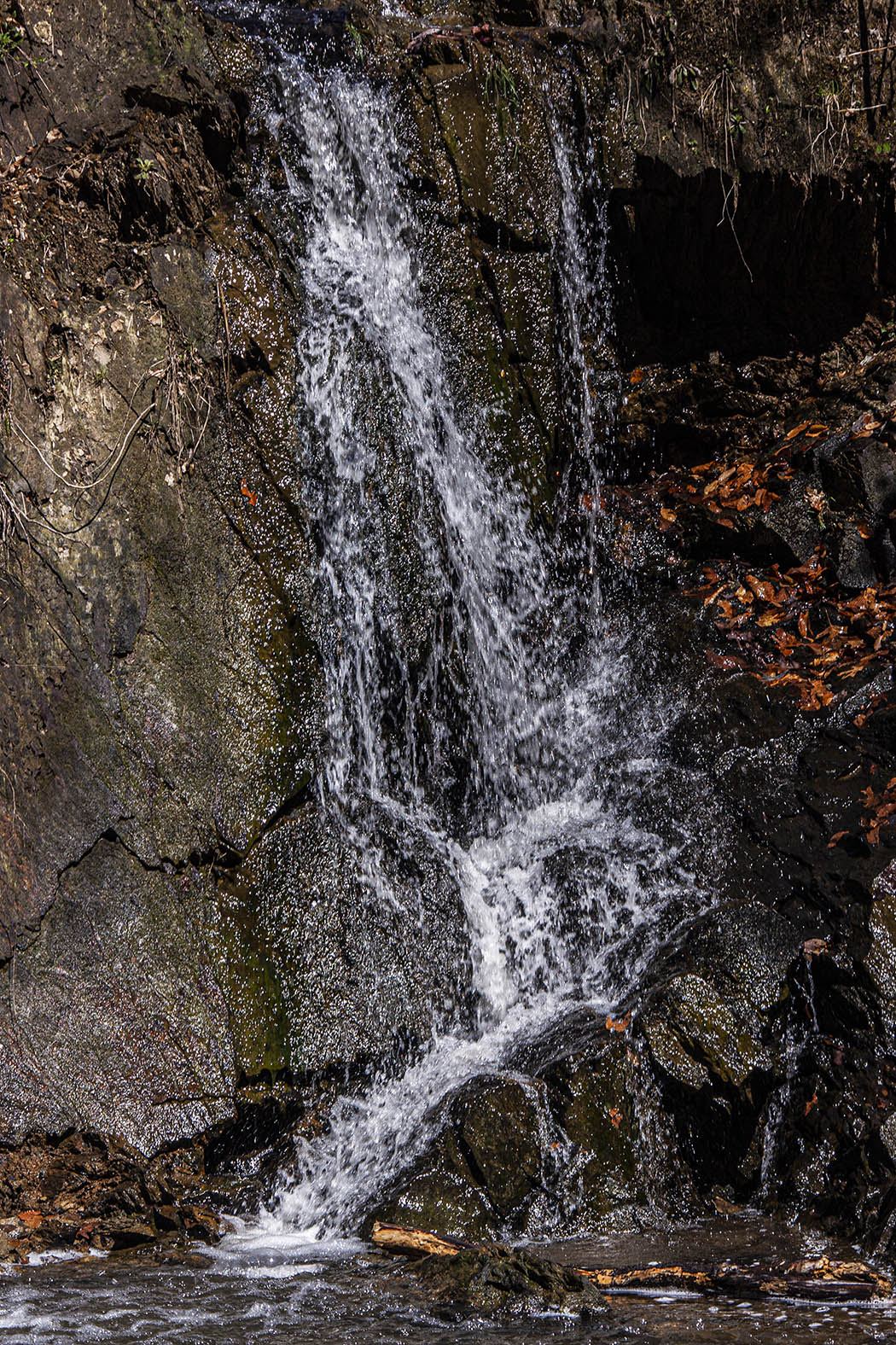
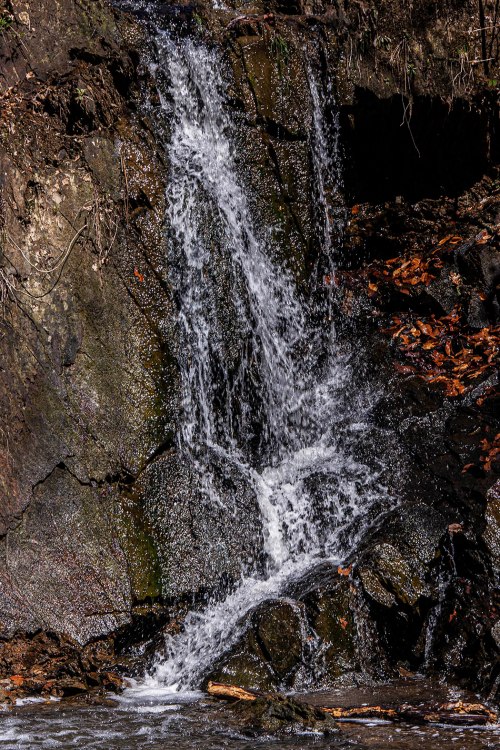
There is something so soothing to the soul in the sounds of a stream—I sat for quite some time last Monday beside this little waterfall at Prince William Forest Park, almost hypnotized by the sounds of the rushing water.
It has been a rather quiet, contemplative Holy Week for me this year, as we have prepared to celebrate our second Easter under pandemic restrictions. Normally I attend an outdoors Easter sunrise service on Easter morning, but the Episcopal church collaboration of which I am a part instead held a Great Vigil service last night.
When I woke up this Easter morning, it was still dark and I read through all four Gospel accounts of the resurrection right in a row, the first time I have ever done that. I was struck by the differences in the details that each writer chose to include. As the skies began to lighten, I went out on my little outdoor deck that faces to the east and sang aloud three of my favorite Easter songs, unconcerned that early morning runners or dog walkers might hear me singing.
For many of us, this has been had a long, troubling year. I have found comfort and reassurance in these words from John 14:27, “Peace I leave with you, my peace I give unto you: not as the world giveth, give I unto you. Let not your heart be troubled, neither let it be afraid.”
I wish a happy Easter to those of you who are celebrating this glorious holy day and a blessed weekend to all of you.
© Michael Q. Powell. All rights reserved.
Posted in Landscape, Nature, Photography, spring | Tagged Canon 50D, Easter 2021, Prince William Forest Park, Tamron 180mm, Triangle VA, waterfall | 17 Comments »
April 3, 2021 by Mike Powell
It was cool and windy yesterday at Occoquan Bay National Wildlife Refuge and most of the birds seemed to be taking refuge from the elements. I was therefore especially thrilled to spot and photograph my first warbler of the season, this Yellow-throated Warbler (Setophaga dominica).
This is the time of the year when a lot of colorful warblers pass through our area on their northward migration. Many of the warbler stay for only a short time, so it is a hit-or-miss proposition for me to find them. This is also the time of the year when the trees are budding, flowering and pushing out new leaves. All of this new growth is beautiful, but it makes it harder for me to spot the little birds as they flit about, often at the tops of the trees.
We had some spring-like temperatures a week ago and I was walking around in a T-shirt or at most a sweatshirt. Yesterday, though, the day started with temperatures below freezing and eventually made it up to only 47 degrees (8 degrees C) with almost constant winds of 15 miles per hour making it feel much colder. I dug out my heavier coat, insulated boots, and thermal underwear and was comfortable walking about, though most of the wildlife seemed to have taken the much more commonsense approach of simply staying sheltered.

© Michael Q. Powell. All rights reserved.
Posted in Birds, Nature, Photography, spring, wildlife | Tagged Canon 50D, Occoquan Bay National Wildlife Refuge, Setophaga dominica, Tamron 150-600mm, warbler, Woodbridge VA, Yellow-throated Warbler | 10 Comments »
April 2, 2021 by Mike Powell
Do spiders overwinter as adults? Most of the crawling creatures that I tend to spot this early in the spring are quite small, so it was a little surprising to spot several large Wolf Spiders ( probably Tigrosa georgicola) on Monday at Prince William Forest Park. I was pretty sure these spiders had not hatched recently, so I did a little research and learned that “a surprisingly large number of spider species overwinter as adults or immatures, forsaking the cozy shelter of an egg sac in which to endure the harsh, cold extremes,” according to a blog posting by Bug Eric entitled Spider Sunday: Spring Spiders.
The spider in the first photo was actively crawling about in the leaf litter when I first spotted it, probably searching for prey, given that wolf spiders do not spin webs and instead are opportunistic hunters. The second spider was scurrying down a trail at a surprisingly fast pace when it paused for a moment to let me capture an image.
I encourage you to click on the photos to get a closer look at the fascinating details of these spiders, including their multiple eyes and the spiky hairs on their legs.


© Michael Q. Powell. All rights reserved.
Posted in Arachnids, Macro Photography, Nature, Photography, spiders, spring, wildlife | Tagged Canon 50D, Prince William Forest Park, Tamron 180mm, Tigrosa georgicola, Triangle VA, wolf spider | 14 Comments »
April 1, 2021 by Mike Powell
As temperatures rise, the springtime air is frequently filled with the sounds of frogs, ranging all the way from the high-pitched choruses of spring peepers to the solitary bass notes of croaking bullfrogs. When I walk along the edge of marshes and ponds at this time of the year, the ground in front of me often seems to explode as well-camouflaged frogs arc through the air seeking to escape me.
On Monday as I wandered about in Prince William Forest Park, I spotted quite a number of tiny frogs at the edge of the water, but did not hear them calling, so I had to rely on their physical appearance to identify them. On the basis of the dark triangle between their eyes and their other markings, I believe the frogs in the photos below are both Eastern Cricket frogs (Acris crepitans crepitans).
Eastern Cricket frogs are small frogs, reaching lengths of 5/8 to 1-3/8 inches (16-35 mm), which make them a challenge to photograph. According to the Virginia Herpetological Society, part of the scientific name for the species is derived from the Latin word crepit which means “rattle” and the call of these frogs sounds like pebbles being clicked together. Perhaps they will be calling, the next time that I visit the park.
The evidence is mounting that spring is really here. What are your favorite signs of the arrival of spring?


© Michael Q. Powell. All rights reserved.
Posted in Amphibians, frog, Macro Photography, Nature, Photography, spring | Tagged Acris crepitans, acris crepitans crepitans, Canon 50D, Eastern Cricket Frog, Northern Cricket frog, Prince William Forest Park, Tamron 180mm, Triangle VA | 17 Comments »
March 31, 2021 by Mike Powell
Is it a bee? Is it a fly? It is a Greater Bee Fly (Bombylius major), a parasitic bee mimic that is one of the earliest spring pollinators of wildflowers. I photographed this bee fly as it was feeding on the nectar of a Spring Beauty (Claytonia virginica) on Monday at Prince William Forest Park.
I was quite happy to be able to capture so many of the details of this curious creature, including its long proboscis, spindly legs, patterned wings, and fuzzy body. In case you are curious, the body of one of these bee flies is about six-tenths of an inch (15mm) in length and its wing span is about one inch (25mm). I recommend that you double-click on the image to get a better looks at the little details of this bee fly.
If you would like to learn more about these fascinating little bee flies, including their parasitic behavior, check out the article on the US Forest Service website by Beatriz Moisset entitled “A Pollinator with a Bad Reputation.”

© Michael Q. Powell. All rights reserved.
Posted in Flowers, Insects, Macro Photography, Nature, Photography, wildlife | Tagged bee fly, Bombylius major, Canon 50D, Claytonia virginica, Greater Bee Fly, Prince William Forest Park, Spring Beauty, Tamron 180mm, Triangle VA | 16 Comments »
March 31, 2021 by Mike Powell
Some of the tulips in the garden of my good friend Cindy Dyer are almost ready to bloom. Already we have a hint of the beauty that is to come—a preview of coming attractions. Many of the flowering trees in my neighborhood recently popped open, seemingly overnight, but others plants, like this tulip, force us to wait patiently for their fully beauty to be revealed.
Delayed gratification is supposed to be good for the soul, but sometimes I feel like a small child cooped up in a car on a long journey, incessantly repeating the same question—”Are we there yet?”

© Michael Q. Powell. All rights reserved.
Posted in Flowers, Gardening, Nature, Photography, spring | Tagged Alexandria VA, Are we there yet?, Canon 50D, Canon 60mm, Cindy Dyer, closed tulip, Runnymeade, tulip | 7 Comments »
March 30, 2021 by Mike Powell
One of the signs of spring where I live is the emergence of small wildflowers in the wooded areas, including Spring Beauties (Claytonia virginica), like this one that I photographed yesterday at Prince William Forest Park in nearby Triangle, Virginia. According to the description of the Spring Beauty in Wikipedia, “the individual flowers bloom for three days, although the five stamens on each flower are only active for a single day.”
I do not know if this was “the day” for the stamens of this particular flower, but a large hairy fly was definitely attracted to its nectar. I cannot identify the species of the fly, but think that it is a kind of Tachinid fly. The large family of Tachinid flies differ in color, size, and shape but many somewhat resemble house flies and tend to feed on liquids such as nectar.
When I showed this image to fellow blogger and dragonfly enthusiast Walter Sanford, he noted the low angle at which I had taken this shot and characterized it as a “belly flopper photo.” Walter has seen me in action multiple times and knows that I will often try to get as low as I can to get a shot, which was pretty low in this case, given the fact that Spring Beauties are often only a few inches tall.
How low do I go? Check out a posting that Walter did in 2016 called Opposing viewpoints to see a shot of me sprawled on the ground trying to get at eye level with a snake and my posting that same day called Close to a garter snake to see the kind of images that you get when shooting at such close range.

© Michael Q. Powell. All rights reserved.
Posted in Flowers, Insects, Macro Photography, Nature, Photography, spring | Tagged Canon 50D, Claytonia virginica, Prince William Forest Park, Spring Beauty, Spring Beauty wildflowers, tachinid fly, Tamron 180mm, Triangle VA | 26 Comments »
« Newer Posts - Older Posts »