January 21, 2014 by Mike Powell
Yesterday when the sun was shining and the temperature soared to the high 50’s (15 degrees C), I was blissfully ignorant that snow was headed our way. Like this Eastern Painted Turtle (Chrysemys picta picta) that I observed at my local marsh, I wanted only to bask in the warmth of the sun.
Today in the Washington D.C. area, the federal government and most of the schools are closed and we are all hunkered down as we await the arrival of what is forecast to be the biggest snowstorm we’ve had in a few years, as much as eight inches (20cm).
During the summer, I often see a whole row of turtles on this particular log, but yesterday this was the only turtle that had bee roused from its slumbering state by the surprisingly warm, sunny weather. The mud on its shell suggests that this turtle did not swim around a lot, but made a beeline for this log after rose to the surface.
I suspect that this turtle is already back in the mud at the bottom of the pond today, comfortably dreaming of spring, when it will reemerge into the sun.

Click on the photo to see a higher resolution view of the turtle.
© Michael Q. Powell. All rights reserved
Posted in Nature, Photography, Reptiles, wildlife, Winter | Tagged Alexandria VA, Canon 50D, Canon 70-300mm telephoto zoom lens, Chrysemys picta picta, Eastern Painted Turtle, Huntley Meadows Park, painted turtle, turtle | 7 Comments »
January 20, 2014 by Mike Powell
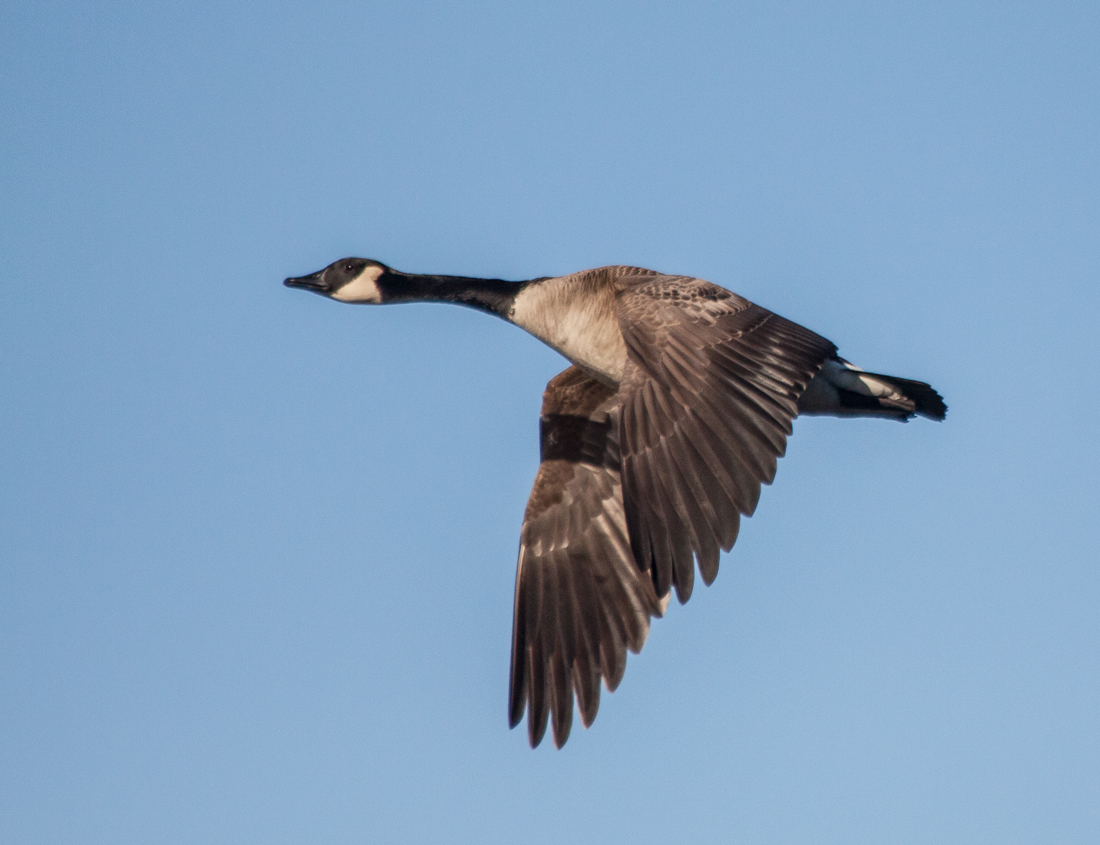
So many factors have to work together perfectly to get good shots of a bird in flight—the lighting has to be right, the exposure needs to be correct, the shutter speed needs to be fast enough to stop the motion, and, most critically perhaps, the camera has to focus properly on the moving subject. Of course, it helps also to be able to capture the wings in an interesting position and to have a background that is not distracting.
I have been working on taking photos of birds in flight, especially Canada Geese, but it has been rare for me to get all (or even most) of the variables to fall into place at the same time. However, in late December I took a series of shots of a Canada Goose (Branta canadensis) that turned out really well. The background was the sky, which some folks don’t find to be very interesting, but at least the goose was not obscured by branches. Click on the photos to see them in higher resolution—I was thrilled that I even managed to get a catchlight in the visible eye.
The challenge for me will be to repeat this success with smaller birds that fly faster and less predictably.


© Michael Q. Powell. All rights reserved
Posted in Art, Nature, Photography, Portraits, wildlife, Winter | Tagged Alexandria VA, bird in flight, Branta canadensis, Canada Goose, Canon 50D, Canon 70-300mm telephoto zoom lens, goose, Huntley Meadows Park | 9 Comments »
January 19, 2014 by Mike Powell
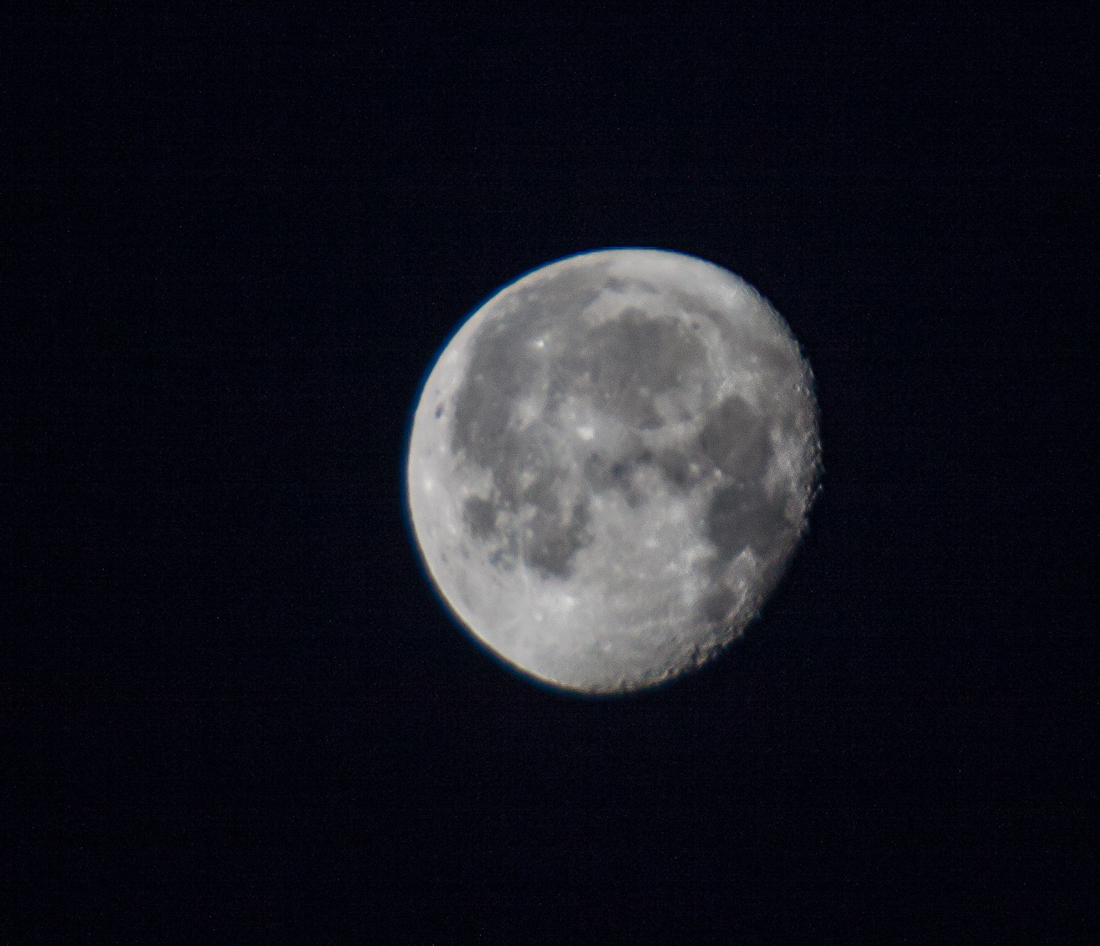
The moon looked amazing at 7:00 this morning when I went out to get my newspaper from my front steps. It was still dark and in the opposite direction, the sun was just beginning to rise. I rushed back into the house, put some socks on my sandaled feet, and ran outside with my camera to get some shots.
I used the longest lens that I have, a Sigma 135-400mm lens, and leaned it against the roof of a parked car to stabilize it. I was surprised at the detail that I managed to capture of the craters near the dark side of the moon. (I think the full moon was a few nights ago.) Click on the photo to see it in higher resolution.

© Michael Q. Powell. All rights reserved
Posted in Art, Landscape, Nature, Photography, Winter | Tagged Alexandria VA, Canon 50D, full moon, moon, Runnymeade, Sigma 135-400mm telephoto zoom lens | 7 Comments »
January 19, 2014 by Mike Powell
It’s nice to be back home from my recent overseas trip and to have the chance to go out in the wild for some photos. Urban shooting is ok, but somehow I feel more comfortable chasing after wildlife.
Yesterday I spotted this Pileated Woodpecker (Dryocopus pileatus) high in the trees at Huntley Meadows Park, the local marsh that is my favorite spot for wildlife shooting. I’ve been trying for quite a while to get some good shots of this spectacular woodpecker and they are getting better, though they are not quite there yet.
These two shots are part of a series that I took as the woodpecker moved its head from side to side as well as up and down, chiseling out a hole in the tree. I was amazed to see how far back the woodpecker pulled its head before each stroke and the powerful force with which it struck—it was enough to give me a headache.
I’m still hoping that I will find a Pileated Woodpecker a bit lower in a tree (or working on a fallen log) in a location that will permit me to get some better shots, but I am content that I was able to get these shots when I caught sight of this woodpecker yesterday.


© Michael Q. Powell. All rights reserved
Posted in Birds, Nature, Photography, Portraits, wildlife, Winter | Tagged Alexandria VA, Canon 50D, Canon 70-300mm telephoto zoom lens, Dryocopus pileatus, Huntley Meadows Park, Pileated Woodpecker, woodpecker | 6 Comments »
January 18, 2014 by Mike Powell
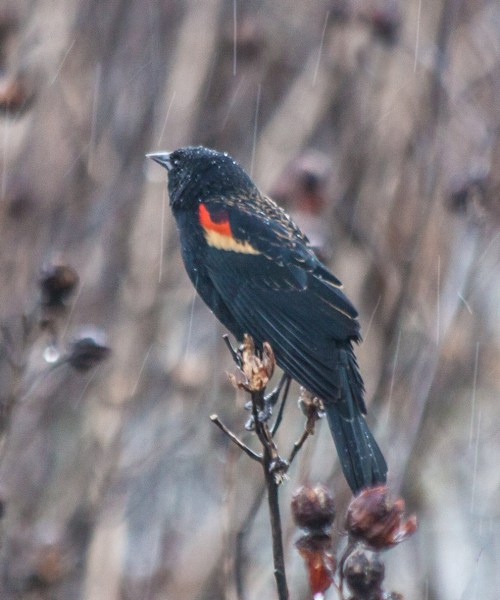
Most birds seem to seek shelter when it is raining (and most people too), but this male Red-winged Blackbird (and this photographer) were an exception to that rule in late December.
© Michael Q. Powell. All rights reserved
Posted in Art, Birds, Nature, Photography, Portraits, wildlife, Winter | Tagged Agelaius phoeniceus, Alexandria VA, blackbird, Canon 50D, Canon 70-300mm telephoto zoom lens, Huntley Meadows Park, male Red-winged Blackbird, red-winged blackbird | 7 Comments »
January 17, 2014 by Mike Powell
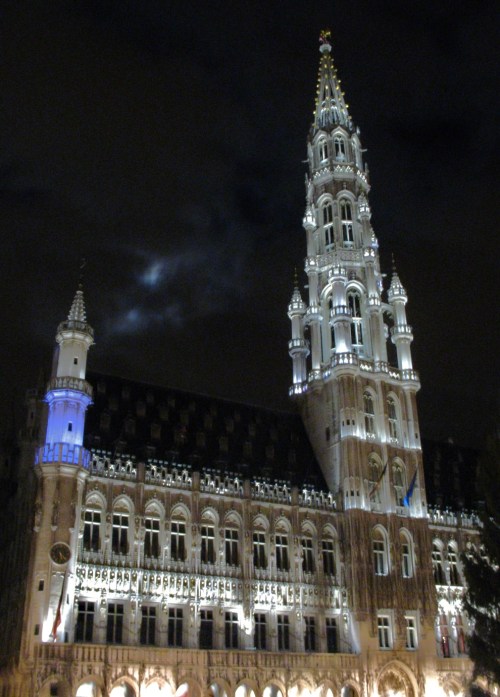
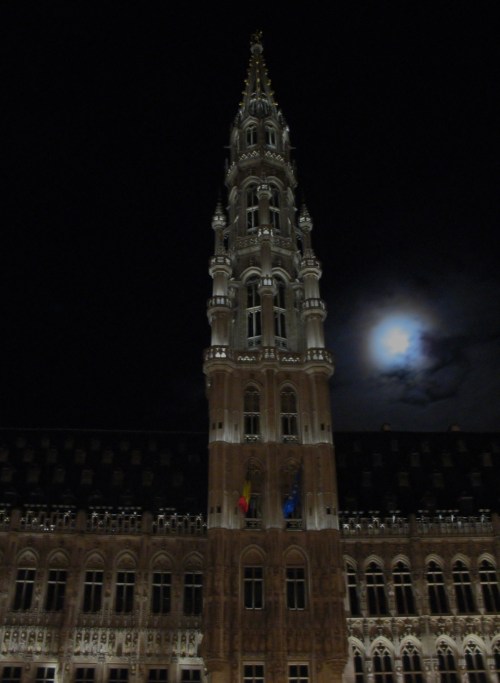
The city was mostly deserted when I took a walk through the center of Brussels at 5:00 this morning, my last day in Brussels for this trip. It was a little eerie to visit some of the major tourist sites in the moonlight and to be mostly alone.
Mountains of bulging trash bags and folded cardboard were piled up outside the businesses as I made my way through the cobblestone streets of the pedestrian area. The buildings of the Grand Place were as beautiful as ever, though I didn’t really care for the series of off-and-on lights that illuminated them (and they made it tough to get a proper exposure). I finished up my early morning stroll with a visit to the Mannekin Pis, the little boy who is one of the symbols of Brussels. Occasionally I have seen him in one of his many costumes, but this morning, he was au naturel.
Despite seeing again some of the famous landmarks, my favorite subject this morning was the moon as it lit up the clouds in the sky. I tried to capture some of the feeling in the first photo, where the moon shows itself in between parts of the roofs in a downtown house.


© Michael Q. Powell. All rights reserved
Posted in Architecture, Landscape, Photography, Travel, Urban | Tagged belgium, brussels, Canon A620, city hall, Grand-Place, mannekin pis, moon | 3 Comments »
January 16, 2014 by Mike Powell
Words exist in a cultural context and here in Brussels, perhaps nobody smiles when they pass this sign for the “Bimbo Fashion Store.” As an American male, though, my imagination goes into overdrive as I imagine the type of clothing that would be deemed suitable fashion for a bimbo. Tight jeans and a tube top? Plunging necklines?

© Michael Q. Powell. All rights reserved
Posted in Humor, Photography, Travel | Tagged belgium, bimbo, brussels, Canon A620, fashion, humor | 5 Comments »
January 16, 2014 by Mike Powell
I really like the different types and colors of light in this shot of a portion of Brussel’s nightime skyline, taken from an overlook near the city’s Central Train Station.

© Michael Q. Powell. All rights reserved
Posted in Architecture, Landscape, Photography, Travel, Urban, Winter | Tagged belgium, brussels, Canon A620, city hall, night photography | 6 Comments »
January 15, 2014 by Mike Powell
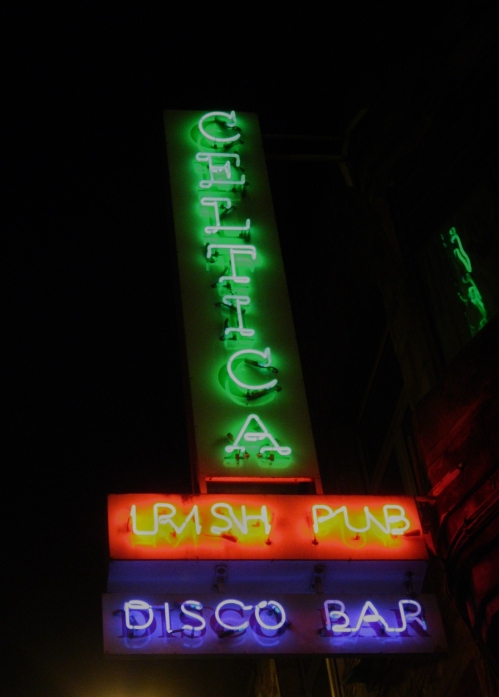
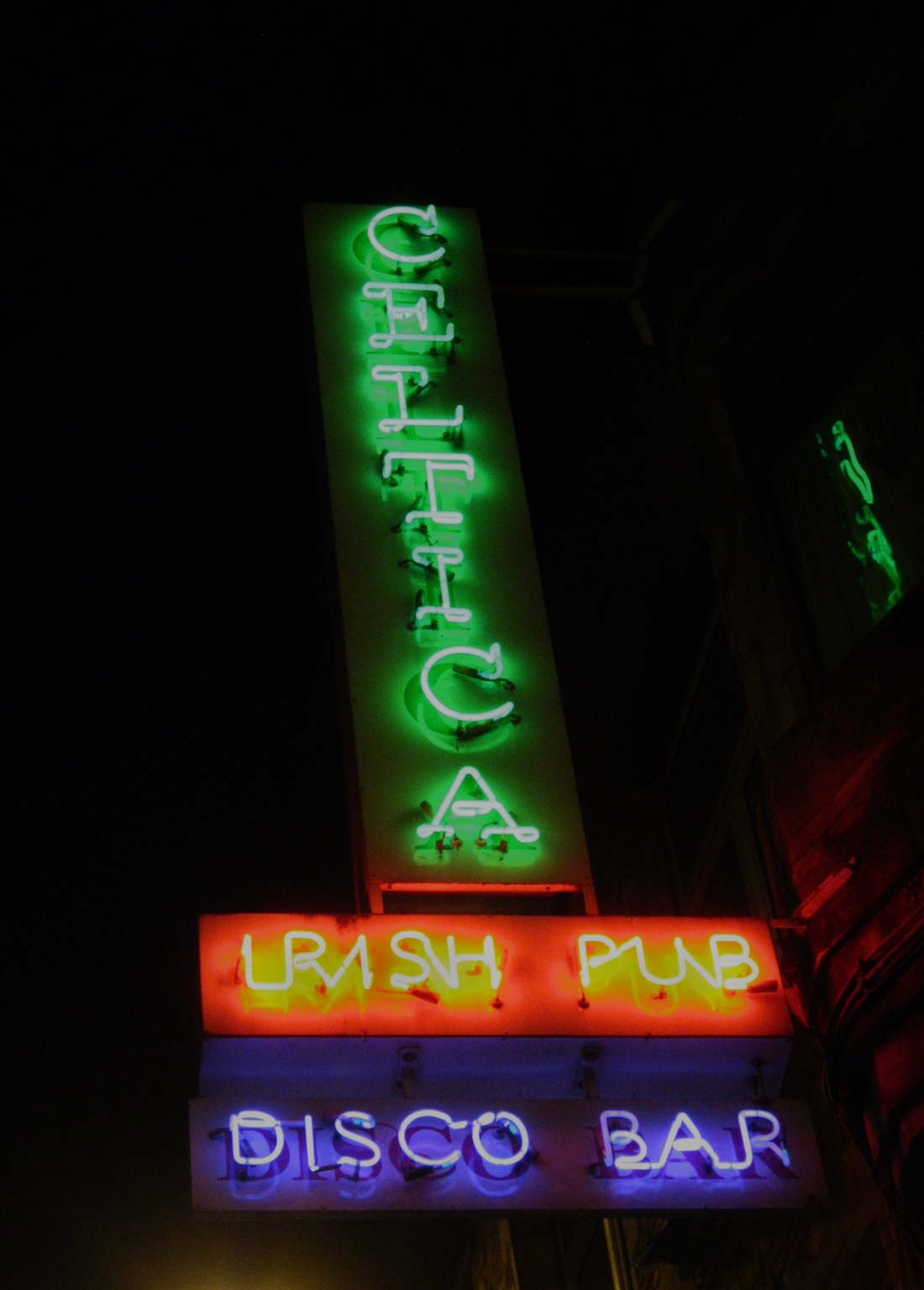
What kind of music can they possibly play in a place that advertises itself as an Irish pub disco bar?
I did a double-take when I saw this sign as I was walking around in the center of Brussels and suffered a moment of cognitive dissonance—there is little room for overlap in my preconceived notions of the clientele of an Irish pub and that of a disco bar and the main activities seem different too.
I wonder if the pub has a big mirrored ball hanging from the ceiling.
© Michael Q. Powell. All rights reserved
Posted in Architecture, Humor, Landscape, Photography, Travel | Tagged belgium, brussels, Canon A620, disco, humor, Irish pub | 4 Comments »
January 15, 2014 by Mike Powell
It rained most of the day in Brussels, but finally the skies cleared a little in the evening and the moon was visible from time to time, peeking through the clouds. I enjoy walking through this old city at night and observing the interplay of the light and shadows.
It’s a fun challenge to try and capture the effects of light at night with an older point-and-shoot digital camera and I am always looking for solid objects against which to lean to steady myself.
This was my most “artistic” shot of the evening, an attempt to balance the effect of the weak light of the moon with the artificial lights that illuminated this statue.

© Michael Q. Powell. All rights reserved
Posted in Art, Landscape, Photography, Travel, Urban, Winter | Tagged belgium, brussels, Canon A620, moon, night, night photography, statue | 3 Comments »
January 13, 2014 by Mike Powell
I am drawn to the colors and shapes and patterns in this image of the roof of the Brussels City Hall, one of the iconic buildings of the central square of this beautiful city.
I am back in Brussels for a brief business trip and have not yet had a chance to shoot any new photos. I took this shot last year in mid-January, when the city was covered with a light coating of snow. This year, it looks like it’s a bit warmed and I was shocked to see some sunshine yesterday, the day of our arrival. In my experience, the skies are usually gray and cloud-covered and it is unusual to see the sun at this time of the year.
I hope to have some new photos of Brussels soon, work permitting, which you should be seeing for the next few days.

© Michael Q. Powell. All rights reserved
Posted in Architecture, Art, Landscape, Photography, Urban, Winter | Tagged belgium, brussels, Canon A620, city hall, snow | 8 Comments »
January 12, 2014 by Mike Powell
It concerns me that this young Great Blue Heron (Ardea herodias) at my local marsh may be too tolerant of people and desensitized to the reality of genuine predators that could do it harm. I worry too about its ability to catch enough food to survive, especially if this is the same young heron that I observed during the fall striking in vain at leaves in the water.
On a cold, wet day this past week, the heron was hunkered down on a log not far from the boardwalk. Other than a few movements of its head as it watched me, the heron didn’t budge a bit as I snapped away and even stayed in place when a noisy group of people walked by us.
When I see this little heron, I try to get a few pictures and then move on, thankful for the photo opportunity, but not wanting to reinforce its comfort level with the presence of people.

© Michael Q. Powell. All rights reserved
Posted in Birds, Nature, Photography, Portraits, wildlife, Winter | Tagged Alexandria VA, Ardea herodias, Canon 50D, Canon 70-300mm telephoto zoom lens, Great Blue Heron, heron, hunkering down, Huntley Meadows Park | 8 Comments »
January 11, 2014 by Mike Powell
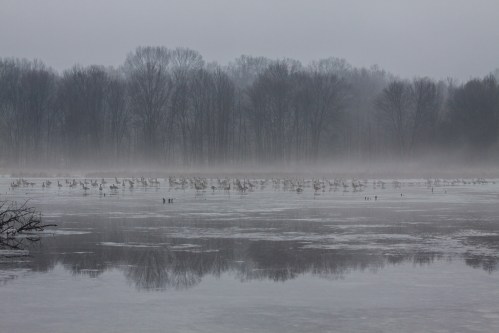
Yesterday’s cloudy, rainy, foggy day made it a little tough to take photos, but I like the effect it had on the landscape, creating almost monochromatic scenes of different shades of gray. This is an unfamiliar style of shooting for me, so I played around a bit, trying to capture both a wide view of the marsh, and some close-views of isolated areas.
The snow here is gone now, but the ice is still hanging on.


© Michael Q. Powell. All rights reserved
Posted in Art, Landscape, Nature, Photography, Winter | Tagged Alexandria VA, Canon 50D, Canon 70-300mm telephoto zoom lens, fog, gray, Huntley Meadows Park, ice, landscape, monochromatic | 9 Comments »
January 10, 2014 by Mike Powell
I’m not sure if and when we will see more snow in Northern Virginia this winter, so I am posting a couple of shots as an homage to the departed snow.
As you can tell, I was looking up a lot when I walked through my neighborhood and captured somewhat similar images of the snow that had accumulated on a pine tree and an oak tree.


© Michael Q. Powell. All rights reserved
Posted in Landscape, Nature, Photography, Winter | Tagged Alexandria VA, Canon 50D, Canon 70-300mm telephoto zoom lens, oak, pinecones, Runnymeade, snow, winter | 5 Comments »
January 10, 2014 by Mike Powell
Winter is the time of the year when I am finally able to photograph some of the small birds that are with us all year, but are hidden in the leafy branches and undergrowth during the other seasons, like this Carolina Chickadee (Poecile carolinensis). Generally I see these little birds at the feeders at the Visitor Center at my local marshland park, so I was really happy when this chickadee posed for me in a more natural setting.

© Michael Q. Powell. All rights reserved
Posted in Birds, Nature, Photography, wildlife, Winter | Tagged Alexandria VA, Canon 50D, Canon 70-300mm telephoto zoom lens, Carolina Chickadee, chickadee, Huntley Meadows Park, Poecile carolinensis | 7 Comments »
January 9, 2014 by Mike Powell
Winter days are often so drab and gray that any splashes of color are especially welcome during this time of year.
I am always happy to encounter the cheerful red color of male Northern Cardinals (Cardinalis cardinalis), which brighten any landscape in which they find themselves. During our recent cold snap, I took this shot of a cardinal foraging in a cattail field covered in snow and ice. I think that he was busy extracting the center portions of the rose hips. (I often see the abandoned shells of rose hips scattered about, so I figure the cardinals don’t eat the entire fruit.)

© Michael Q. Powell. All rights reserved
Posted in Birds, Nature, Photography, wildlife, Winter | Tagged cardinal, Cardinalis cardinalis, Northern cardinal | 4 Comments »
January 8, 2014 by Mike Powell
On New Year’s Day, as I was hiking with a fellow photographer to one of my favorite spots at the local marsh, she spotted this skull, flipped upside down on a mossy log. Had it been placed on the log by a fellow hiker or had it been abandoned there by another animal?
Judging from the length of the one remaining tooth, it looks like this is a skull of a North American Beaver (Castor canadensis). There is no way for me to tell how this animal died, but the tooth marks around the eye socket suggest that something has been gnawing on the skull.
We both took some photographs of the skull and then hurried along, hoping to see a live beaver at its lodge. We saw the lodge, but, alas, did not see a living beaver that day.


© Michael Q. Powell. All rights reserved
Posted in animals, Art, Nature, Photography, wildlife, Winter | Tagged Alexandria VA, beaver, Canon 50D, Canon 70-300mm telephoto zoom lens, Castor canadensis, Huntley Meadows Park, North American Beaver | 11 Comments »
January 7, 2014 by Mike Powell
Like most Downy Woodpeckers, this little male woodpecker started spiraling his way up the tree as soon as he landed on it. Then to my surprise, he worked his way back down the tree and stopped at eye level, where he stayed long enough for me to take a number of shots and even make a few adjustments in between the shots.
I really like Downy Woodpeckers (Picoides pubescens). Their high energy and acrobatic activities are a constant source of interest for me as I watch them at work in the trees and in the cattails. I’ve usually had a tough time, though, getting an uncluttered shot of a Downy Woodpecker.
I took this shot in an area where there were mostly young trees, which made it easier for me to isolate the woodpecker as he moved about and to slowly move closer and fill the frame with the little bird. The area was shaded, so I ended up using my pop-up flash to add a little fill light. I opened up the aperture as wide as I could, which had the effect of blurring out the background.
I ended up with a portrait-like shot of the Downy Woodpecker that I really like. Click on the image to see it in higher resolution.

© Michael Q. Powell. All rights reserved
Posted in Art, Birds, Nature, Photography, Portraits, wildlife, Winter | Tagged Alexandria VA, Canon 50D, Canon 70-300mm telephoto zoom lens, Downy Woodpecker, Huntley Meadows Park, Picoides pubescens, woodpecker | 8 Comments »
January 6, 2014 by Mike Powell
This past weekend I caught a glimpse of a fox in motion at Huntley Meadows Park—I’m pretty sure it was doing the foxtrot. I was staring across a mostly frozen beaver pond, when suddenly this red fox (Vulpes vulpes) burst into my field of view. It was running slowly around one edge of the pond, heading in the direction of a wooded area.
I didn’t have much time to react, so I had to make do with the existing camera settings. The exposure was dialed in about right and the shutter speed was fast enough. What I didn’t realize at that moment, though, was that I was in servo mode, because I had been shooting some geese in flight, so I was happy that I somehow managed to lock the focus on the moving fox pretty well. I was a little chagrined after the fact to realize that my zoom lens had not been fully extended—the images were shot at about 200mm on a 70-300mm lens.
I did get some action shots of the fox, but the first image is my favorite. The fox had paused for a split second and was looking back in the direction from which it had come and there is a lot of facial detail.
It’s especially fascinating for me to see the position of the bushy tail when the fox was moving. Often it seems like the tail is parallel to the ground. It’s cool too that I was able to catch the fox in mid-jump, with its feet almost entirely in the air. The snow is mostly gone from the ground today, so I am particularly thankful that I was able to capture some images of this brief encounter with the fox in a wintery scene.


 © Michael Q. Powell. All rights reserved
Posted in animals, Humor, Nature, Photography, wildlife, Winter | Tagged Alexandria VA, Canon 50D, Canon 70-300mm telephoto zoom lens, fox, fox trot, foxtrot, Huntley Meadows Park, red fox, Vulpes vulpes | 31 Comments »
January 5, 2014 by Mike Powell
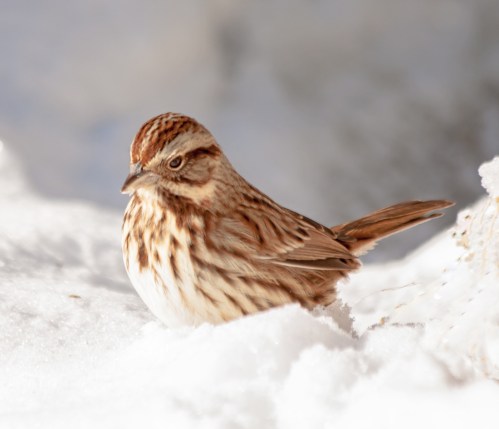
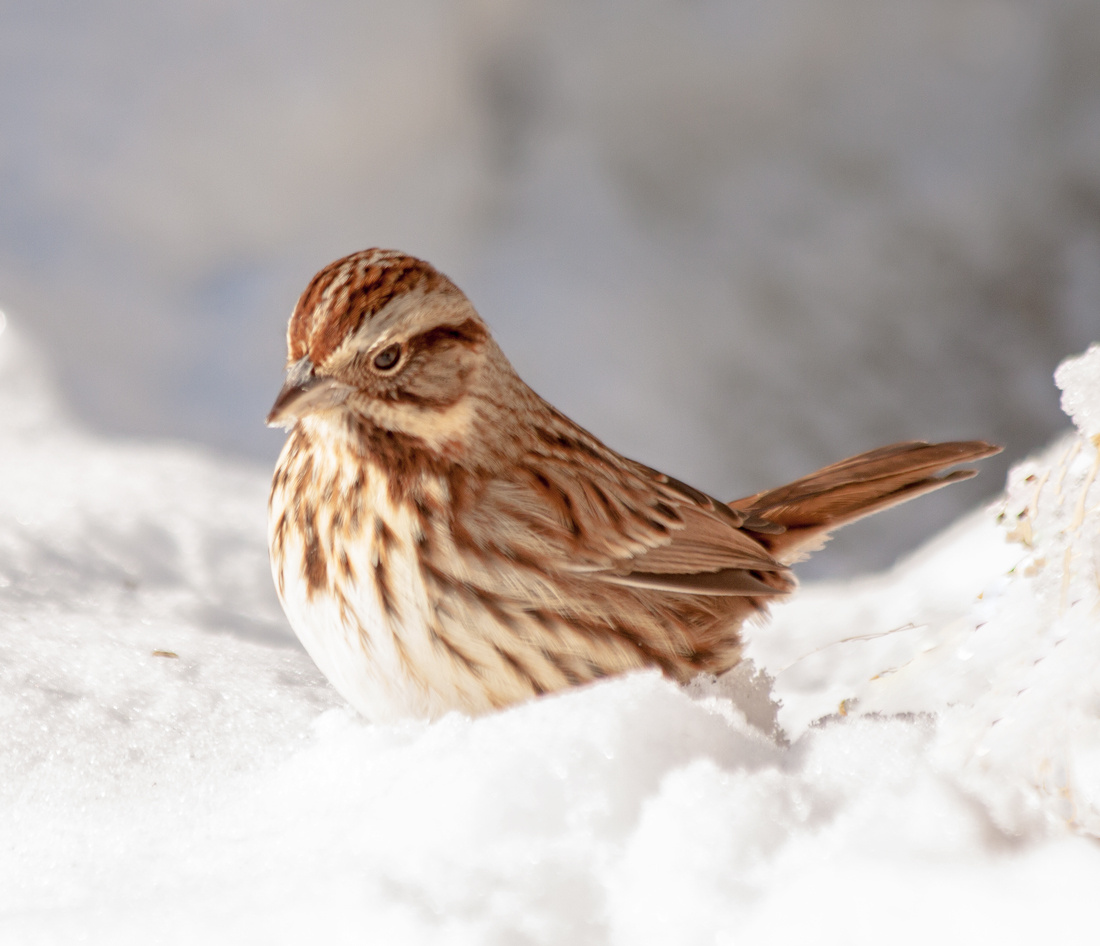
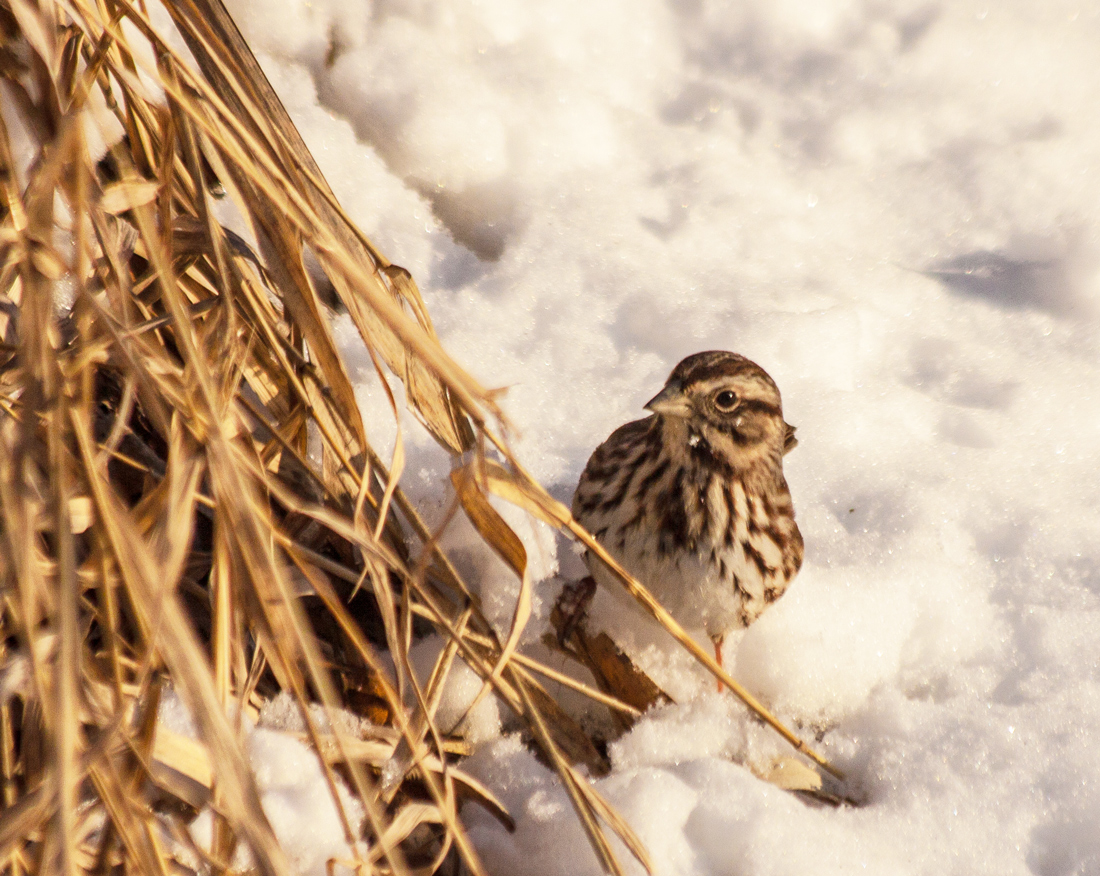
Although I already posted a photo earlier today of a Song Sparrow (Melospiza melodia) in the snow, I came across one I liked even more as I was going through yesterday’s images. This sparrow (and I am never certain of my sparrow identifications) seemed to be posing for me. Somehow I was able to capture details in its eyes that I have never seen before.
After our brief portrait session, the sparrow hurried back to work.
© Michael Q. Powell. All rights reserved
Posted in Art, Birds, Nature, Photography, Portraits, wildlife, Winter | Tagged Alexandria VA, bird in snow, Canon 50D, Canon 70-300mm telephoto zoom lens, Huntley Meadows Park, Melospiza melodia, snow, song sparrow, sparrow | 11 Comments »
January 5, 2014 by Mike Powell
We don’t get much snow here is Northern Virginia, so I was really excited to visit my marshland park yesterday to see what birds and animals were active. There were lots of crows and Canada Geese, but I was mostly attracted by the frenetic activity of the sparrows.
The sparrows moved around quickly in the snow and on the ice, foraging for food in the dried out vegetation in the cattail field. This little sparrow, which I think is a Song Sparrow (Melospiza melodia), paused for a split second and lifted its head, which made it possible for me to get this shot. (Most of my other shots have the sparrow’s head in the shadows or buried in the vegetation).

© Michael Q. Powell. All rights reserved
Posted in Birds, Nature, Photography, wildlife, Winter | Tagged Alexandria VA, Canon 50D, Canon 70-300mm telephoto zoom lens, Huntley Meadows Park, Melospiza melodia, song sparrow, sparrow | 5 Comments »
January 4, 2014 by Mike Powell
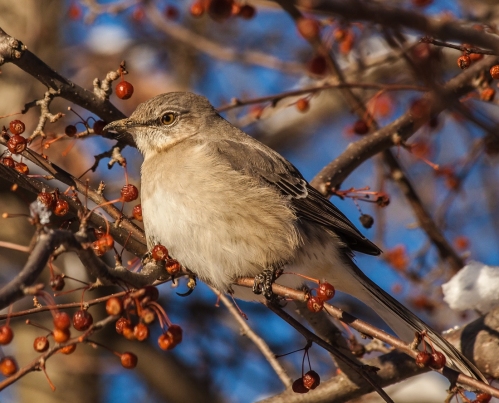
Although the sun was shining brightly yesterday, it seemed to be generating little heat and the gusts of wind made staying outdoors uncomfortable after a short while. Even the birds in the neighborhood seemed to have taken shelter, with the exception of this Northern Mockingbird (Mimus polyglottos) that I was able to photograph as it foraged for food.
At other times of the year, the cheerful, energetic calls of the mockingbird announce its presence long before my eyes detect it. This mockingbird, however, was completely silent and seemed to be minimizing its expenditure of energy as it sought to sustain itself in the frigid temperatures.
Returning indoors to the warmth of my house, I pondered anew the question of how these fragile creatures are able to survive during the winter. (It’s about 13 degrees outside (minus 10 C) as I make this posting.)
© Michael Q. Powell. All rights reserved
Posted in Birds, Nature, Photography, wildlife, Winter | Tagged Alexandria VA, Canon 50D, Canon 70-300mm telephoto zoom lens, Franconia, Mimus polyglottos, mockingbird, Northern Mockingbird | 12 Comments »
January 3, 2014 by Mike Powell
The weathermen thought the snowstorm that is now dumping a lot of snow on the Northeast would skirt around us, but they were wrong—I ended up shoveling a couple of inches of the white stuff yesterday evening and this morning. So, I decided to post this photo of a male Northern Shoveler (Anas clypeata) that I took on New Year’s Day, in honor of all of the shovelers in the north that will be busy today.
I remember well the first time I saw a Northern Shoveler last winter. At first I thought it was a Mallard, but then I got a look at the elongated bill, which still seems cartoonish to me. In this image, I really like the way that you can see the shape of the duck’s bill in the reflection in the water.
Our storm started out with rain and then turned to snow and everything is now frozen solid. With strong gusts of wind and a current temperature of 18 degrees (about minus 8 C), I may stick close to home today, but hope to get some shots of the snow.

© Michael Q. Powell. All rights reserved
Posted in Birds, Humor, Nature, Photography, wildlife, Winter | Tagged Alexandria VA, Anas clypeata, Canon 50D, Canon 70-300mm telephoto zoom lens, duck, Huntley Meadows Park, Northern Shoveler, shoveler | 8 Comments »
January 2, 2014 by Mike Powell
The title for this visual pun immediately came to mind when I first saw the photo—I can’t help myself when it comes to puns.
For the record, the colorful duck in the foreground is a male Northern Shoveler (Anas clypeata) and the two in the background are male Green-Winged Teals (Anas carolinensis).
As the new year begins, should I be getting my ducks in a row?

© Michael Q. Powell. All rights reserved
Posted in Birds, Humor, Nature, Photography, wildlife, Winter | Tagged Alexandria VA, Anas carolinensis, Anas clypeata, Canon 50D, Canon 70-300mm telephoto zoom lens, Green-winged teal, Huntley Meadows Park, Northern Shoveler | 9 Comments »
January 2, 2014 by Mike Powell
Some birds (and some people I know) really like to make an entrance. This Canada Goose (Branta canadensis) made a big splashy arrival in the marsh that seemed to be intended to catch the attention of the spectators already there.
They did not seem to be impressed.
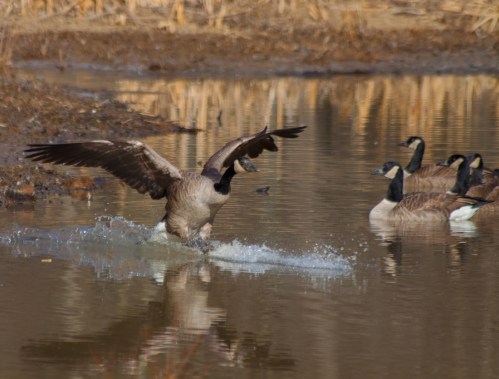
Click on the photo to see a higher resolution view.
© Michael Q. Powell. All rights reserved
Posted in Birds, Nature, Photography, wildlife, Winter | Tagged Alexandria VA, Branta canadensis, Canada Goose, Canon 50D, Canon 70-300mm telephoto zoom lens, Huntley Meadows Park, making entrance, splashy arrival | 5 Comments »
January 1, 2014 by Mike Powell
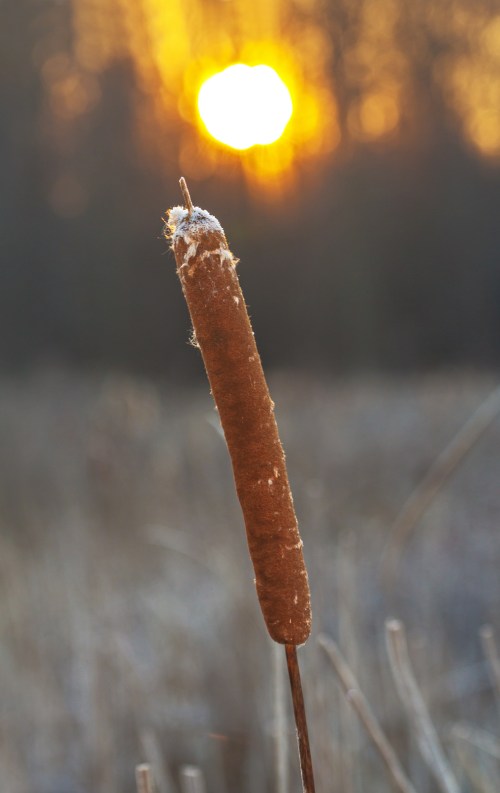
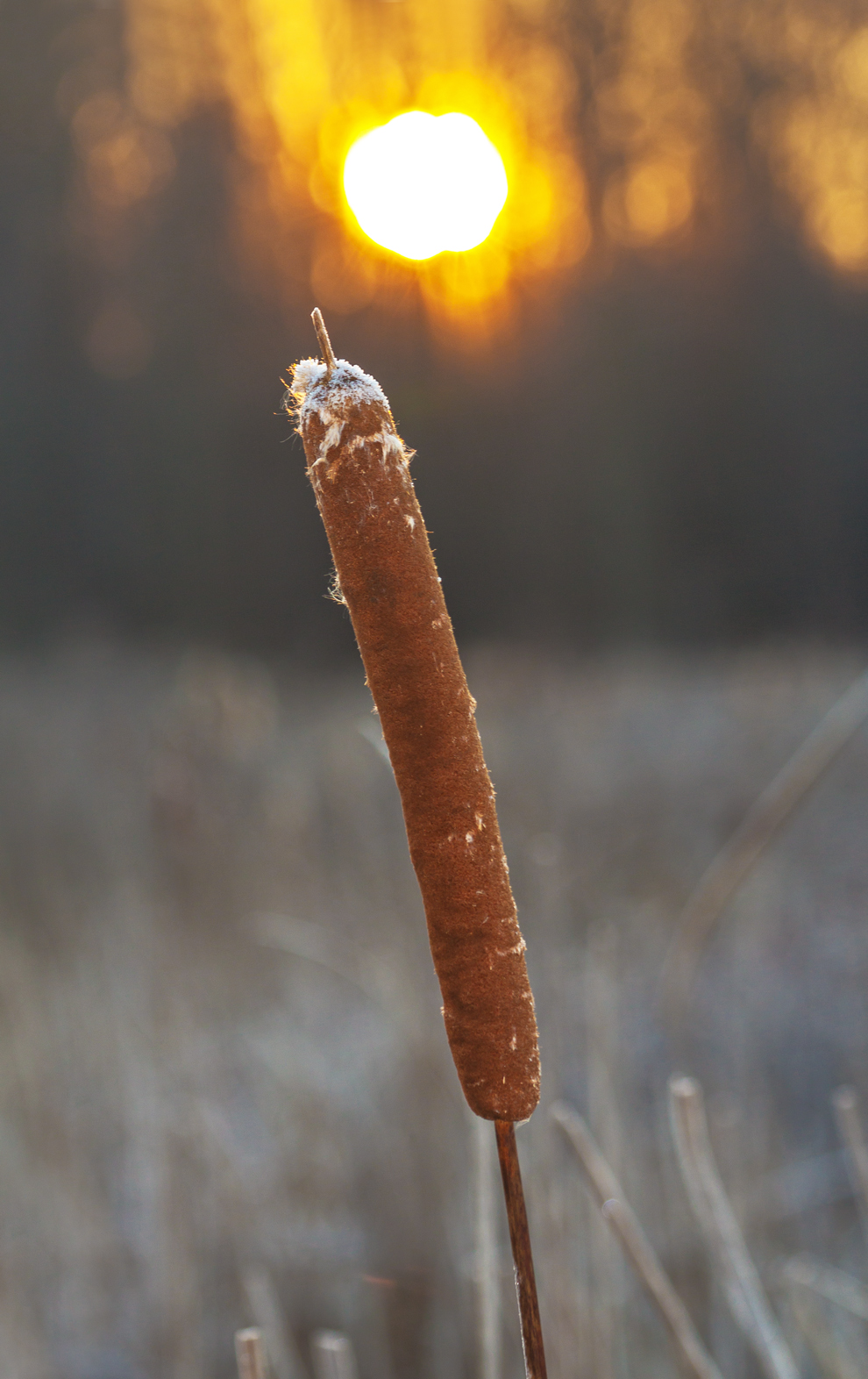
As the new year dawns, it seems appropriate to post this photo I took last weekend at my local marsh, as the early morning sun peeked through the trees and cast its first rays of light onto the cattails.
Best wishes to all for a happy, safe, and blessed 2014.
© Michael Q. Powell. All rights reserved
Posted in Art, Landscape, Nature, Photography, Winter | Tagged Alexandria VA, Canon 50D, Canon 70-300mm telephoto zoom lens, cattails, dawn, Huntley Meadows Park, new year | 6 Comments »
December 31, 2013 by Mike Powell
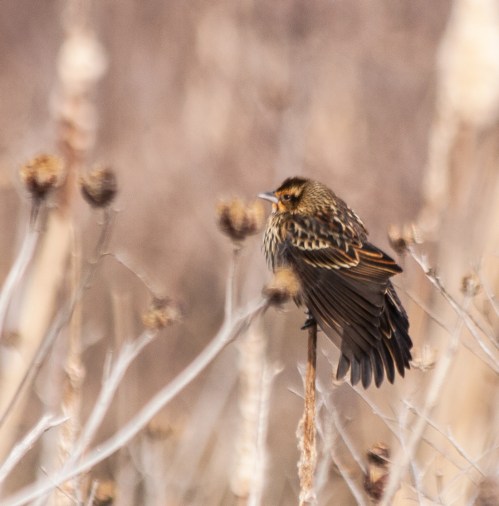
Have you ever seen a bird that looked like it was wearing a costume? When I caught sight of this female Red-winged Blackbird (Agelaius phoeniceus) in the cattails last week, it looked to me like she had donned a large head scarf and an additional coat of feathers as protection from the cold.
© Michael Q. Powell. All rights reserved
Posted in Art, Birds, Humor, Nature, Photography, wildlife, Winter | Tagged Agelaius phoeniceus, Alexandria VA, blackbird, Canon 50D, Canon 70-300mm telephoto zoom lens, female Red-winged Blackbird, Huntley Meadows Park, red-winged blackbird | 6 Comments »
December 30, 2013 by Mike Powell
Do you like long walks in the rain? Although this sounds like a question for an on-line dating service, it’s really about your style of photography.
I enjoy taking wildlife photos in the rain, if the rain is not coming down too hard and if it is not too windy. Of course, I can’t control the intensity of the rain, so I have various levels of protection. Generally, I’ll try to hold an umbrella in one hand and shoot one-handed, steadying my shot by leaning against the umbrella handle, if possible. If the rain starts to fall harder I’ll cover up my camera inside my raincoat or sometimes will pull out a plastic trash bag for additional protection until the rain slows down.
Last week, I was walking in the rain at Huntley Meadows Park, my local marshland park, when I came upon a Great Blue Heron (Ardea herodias), standing on the boardwalk. I approached the heron quietly and stopped. The heron was looking right at me and somehow I knew that it was going to take off.
I dropped to one knee, turned the camera sideways, and pulled way back on the zoom lens, hoping to fit the heron into the frame. This image was shot at 75mm on a 70-300mm lens, so you can tell that I was relatively close to the heron. The other settings were f5, 1/400 sec., and ISO 500 for those who might be interested in the technical aspects of the shot.
It’s always interesting to see which birds are active in the rain and I did get some shots of other birds that day, but I will save them for another blog posting.

© Michael Q. Powell. All rights reserved
Posted in Art, Birds, Nature, Photography, Portraits, wildlife, Winter | Tagged Alexandria VA, Ardea herodias, birds in flight, Canon 50D, Canon 70-300mm telephoto zoom lens, Great Blue Heron, heron, Huntley Meadows Park, rain | 15 Comments »
December 29, 2013 by Mike Powell
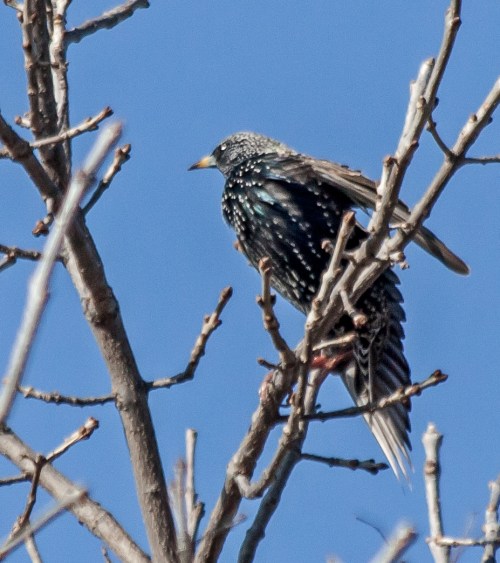
Starlings are supposed to be common birds, but I never knew what they looked like up close, so I initially had a lot of trouble identifying the odd-looking bird in these photos that I took in early December.
I’m pretty sure now that it is a European Starling (Sturnus vulgaris), a bird that was first introduced into North America in the 19th century by Shakespeare enthusiasts, according to the Cornell Lab of Ornithology. What does Shakespeare have to do with it?
Well, Shakespeare mentions them in one of his plays. Steve Mirsky explained the reference in an article in Scientific American entitled “Shakespeare to Blame for Introduction of European Starlings to U.S.”
“In the late 1590s Shakespeare noted the mimicking ability of the starling while writing Henry IV, Part 1. Hotspur is contemplating driving King Henry nuts by having a starling repeat the name of Hotspur’s brother-in-law Mortimer, whom Henry refuses to ransom out of prisoner status. “Nay, I’ll have a starling shall be taught to speak nothing but ‘Mortimer,’ ” Hotspur whines.”
In 1871, a group called the American Acclimatization Society was formed in New York, dedicated to introducing European plants and animals and birds into North America, according to Wikipedia. The group’s chairman was an avid admirer of Shakespeare and is said by some to have desired to introduce every bird mentioned by the playwright. The Cornell Lab notes that the more than 200 million starlings now in North American are descendants of the original 100 starlings released in New York’s Central Park in the early 189o’s. Yikes!
I am always curious about the origin of bird names and learned from the Cornell Lab that the starlings got their name because their wings are short and pointed, making them look rather like small, four-pointed stars when they are flying.

© Michael Q. Powell. All rights reserved
Posted in Birds, Nature, Photography, Portraits, wildlife, Winter | Tagged Alexandria VA, American Acclimitization Society, Cameron Run, Canon 50D, Canon 70-300mm telephoto zoom lens, European Starling, Shakespeare, starling, Sturnus vulgaris | 12 Comments »
December 28, 2013 by Mike Powell
I don’t ever go out shooting with the express intent of taking landscape shots, but sometimes when I am looking for wildlife to photograph, the natural beauty of the setting virtually compels me to try to capture it.
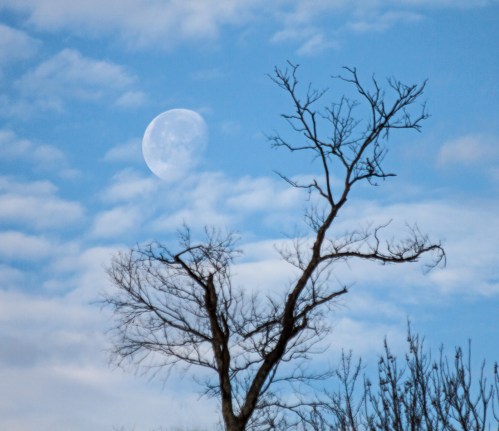
That was the case last week, when I was at the location where I had photographed the otter and the fox and happened to glance up into the sky. I was surprised to see how well the colors of the moon, which was pretty prominent for mid-morning, matched the colors of the clouds. It was almost like the moon was a perfectly round cloud.
I didn’t have a lot of room to maneuver in the thick underbrush to help me frame the shot better, so I tried to capture the scene in both portrait and landscape format. I think I like the first image a little better, but decided to include both views.

© Michael Q. Powell. All rights reserved
Posted in Landscape, Nature, Photography | Tagged Canon 50D, Canon 70-300mm telephoto zoom lens, clouds, daylight moon, Huntley Meadows Park, moon | 18 Comments »
December 27, 2013 by Mike Powell
My heartbeat accelerates every time I see a Bald Eagle (Haliaeetus leucocephalus), a combination of patriotism and awe at the power and beauty of this majestic bird.
Normally the eagles are soaring high in the sky, making it almost impossible for me to get a decent shot. Last Saturday, though, one of them seem to be hunting and circled around me a couple of times at a somewhat lower altitude, which allowed me to get some shots of the eagle in different flight positions.
I took these shots from the same spot at my marshland park where I recently saw an otter, a fox, and a raccoon. If only the park would let me pitch a tent in there.

© Michael Q. Powell. All rights reserved
Posted in Birds, Nature, Photography, wildlife, Winter | Tagged Alexandria VA, Bald Eagle, birds in flight, Canon 50D, Canon 70-300mm telephoto zoom lens, eagle, Haliaeetus leucocephalus, Huntley Meadows Park | 7 Comments »
« Newer Posts - Older Posts »













 Mike Powell