Feeds:
Posts
Comments

Archive for the ‘wildlife’ Category

This portrait of a Tree Swallow (Tachycineta bicolor) looks almost like it was shot in a studio, but I am pretty sure that if it had been, I would have chosen a more attractive item on which to have her perch.

The green rusted metal post holds up a nesting box and this swallow may be building a nest in it or in one of the other nearby boxes, because she had a long piece of grass in her mouth when I started shooting. I think it might be a female, but it’s hard to tell, because males and females look a lot alike, though, according to my Peterson bird guide, the female is “slightly duller” than the male.

This was another shot that I took this past Monday, when the sky was heavily overcast. I made an effort to frame this shot with the swallow up against the sky and I think that I used my pop-up flash to add a little light. I probably will continue to experiment with the technique, especially when it’s really cloudy,  for I like the result that I got here. It does looks a little sterile and unnatural, but so often the background gets really cluttered and distracting.

treesparrow_post_blog

Michael Q. Powell. All rights reserved

Read Full Post »

On Monday as it was raining,  I encountered a Green Heron (Butorides virescens), one of my favorite birds. Initially he was perched atop an abandoned beaver lodge, but he took to the air as I approached. He flew to the edge of a cattail patch, where new shoots have started to appear during the last couple of weeks. The cattail shoots help contribute to the green backdrop for this Green Heron.

I was happy that I was able to get an unobstructed path to this little heron—normally Green Herons are at the edge of the water or are in trees, where it’s almost impossible to get a clear shot.

greenheron_rain_blog

Michael Q. Powell. All rights reserved

Read Full Post »

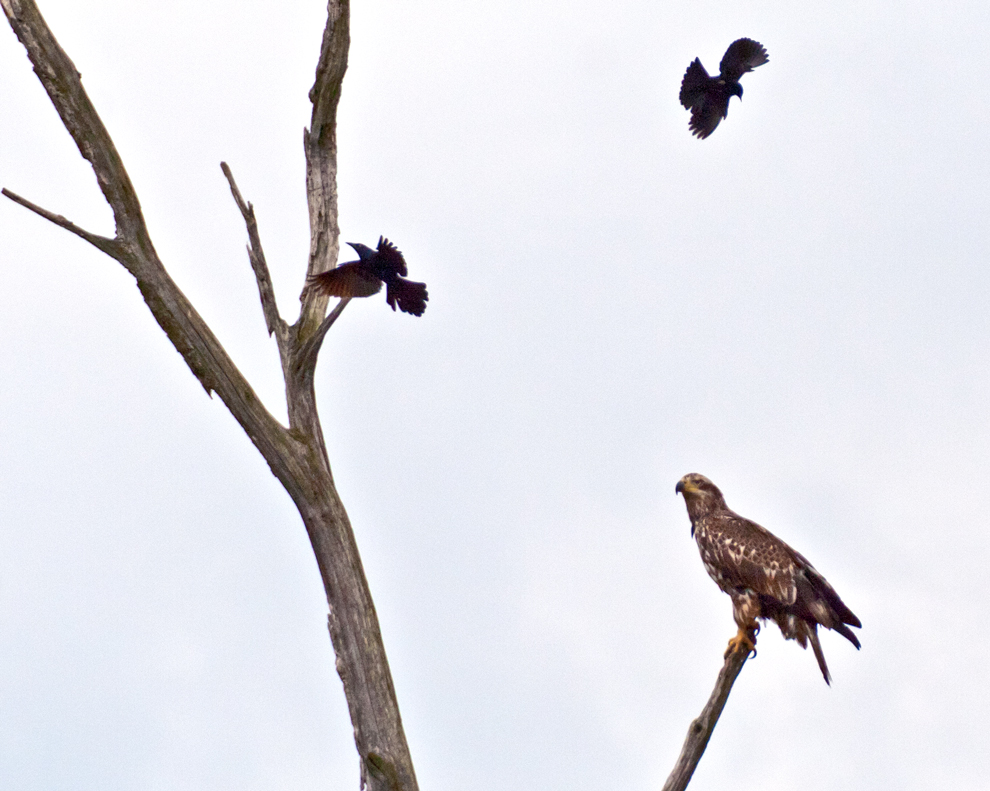
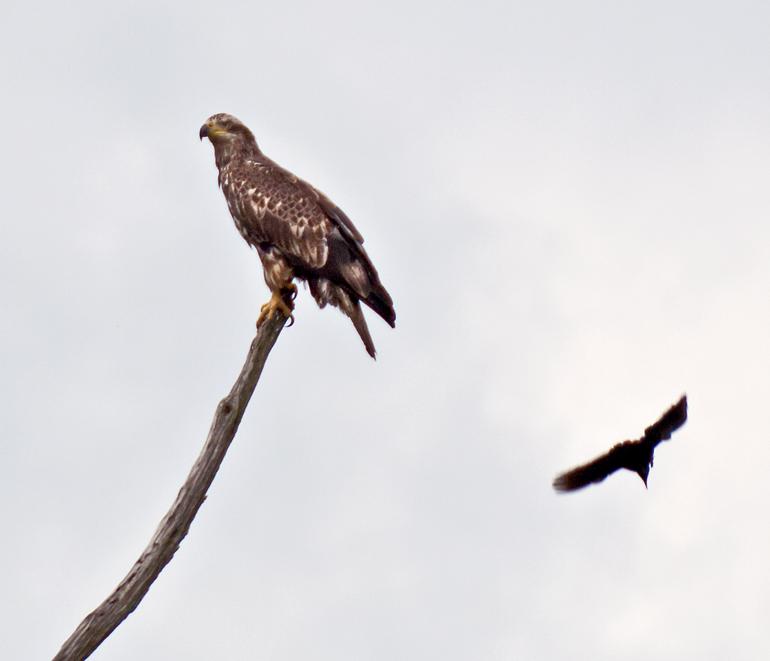
I haven’t seen many hawks in the last month or two, so I was delighted when I spotted this Red-tailed Hawk (Buteo jamaicensis) circling in the distance this past weekend.

Most of the hawks that I had previously seen at my local marsh have been Red-shouldered Hawks, but I am pretty sure this one is a Red-tailed. The hawk never came close enough for me to get a really good shot, but I am content that I was able to get some shots in which the hawk is recognizable as more than an indistinct blob in the distance. Several of the shots I am posting look almost like they have a rock formation in the background—it was only, however, a dead tree.

These images are aspirational ones for me. They represent the kind of photographs that I am working to be able to produce in the future with greater sharpness and more pixels (I had to do a lot of cropping). They are a step on the path of my journey into photography.

hawk1_bloghawk2_bloghawk3_bloghawk4_blog

Michael Q. Powell. All rights reserved

Read Full Post »
Here’s a photo of the Barn Swallow (Hirundo rustica) that I took today just prior to the confrontation that I featured in my previous blog entry. The sky was almost completely white, because the day was heavily overcast, and it totally disappeared when I was adjusting the RAW image.

This was one of the first times that I used flash to add a little light and bring out the colores and it seems to have worked out pretty well. Some of the more dedicated bird photographers that I see use a Fresnel lens attachment for their external flash units to give more reach to the flash—I am not sure that I am ready to go that far yet.

I managed to get a pretty good amount of detail in this shot, even capturing some of the raindrops on the swallow’s wing.

swallow1_tree_blog

Michael Q. Powell. All rights reserved

Read Full Post »
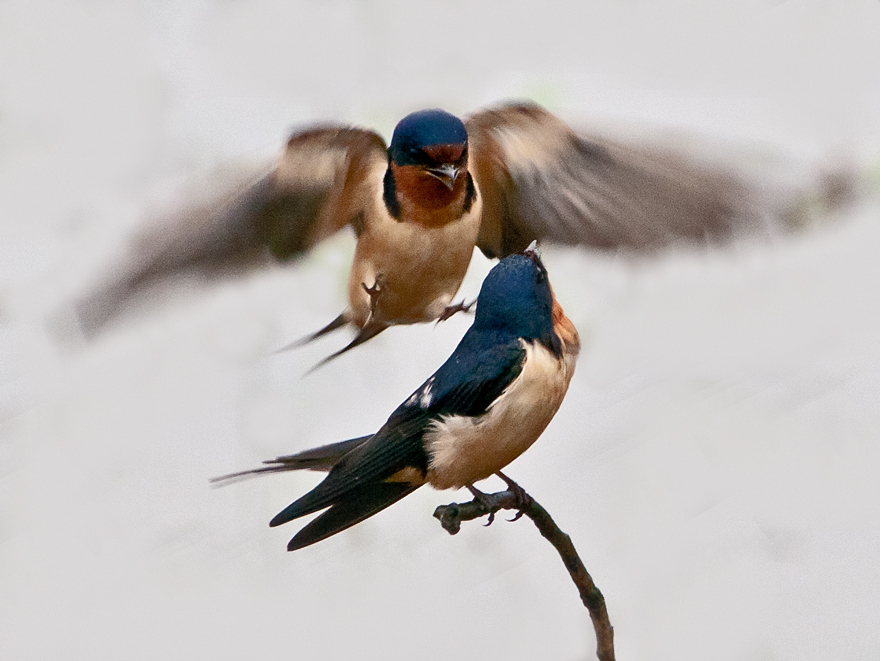
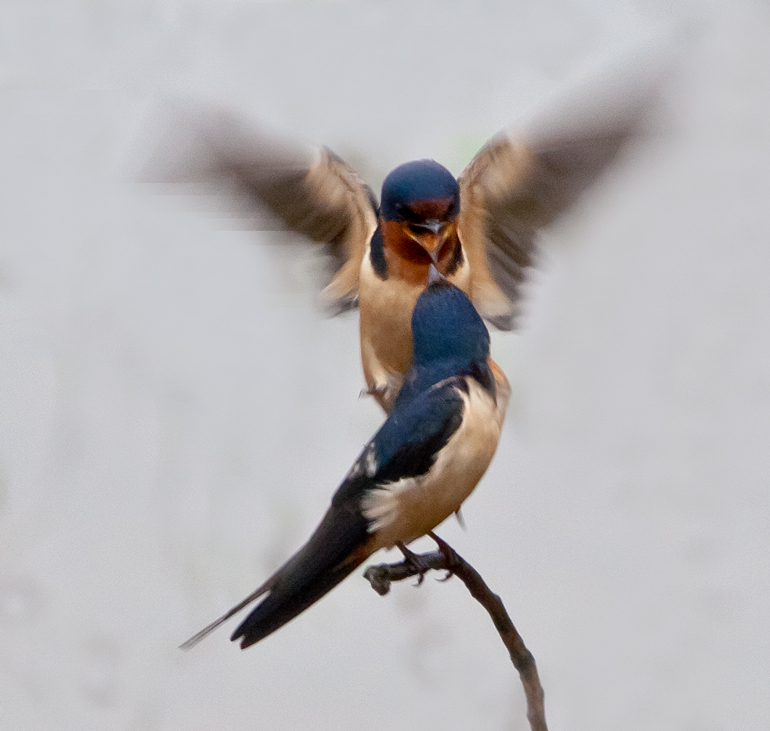
I was focusing my camera on a Barn Swallow (Hirundo rustica) perched on a branch, when out of nowhere another Barn Swallow appeared and started screeching as it hovered in midair. Fortunately I had enough presence of mind to press the shutter release.

It was raining most of the day and I was shooting one-handed under an umbrella much of the time. For this shot, I decided to use the built-in flash on my camera to add a little additional light. The reflections in the screeching bird’s eyes add to its almost maniacal look.

The bird on the branch was totally impassive. It turned its head toward the hovering bird, but did not appear to react in any other way.

The overall feel of the image is almost like a cartoon.  I really like the way it came out (and recognize that it was mostly luck and fortunate timing).

confrontation_blog

Michael Q. Powell. All rights reserved

Read Full Post »
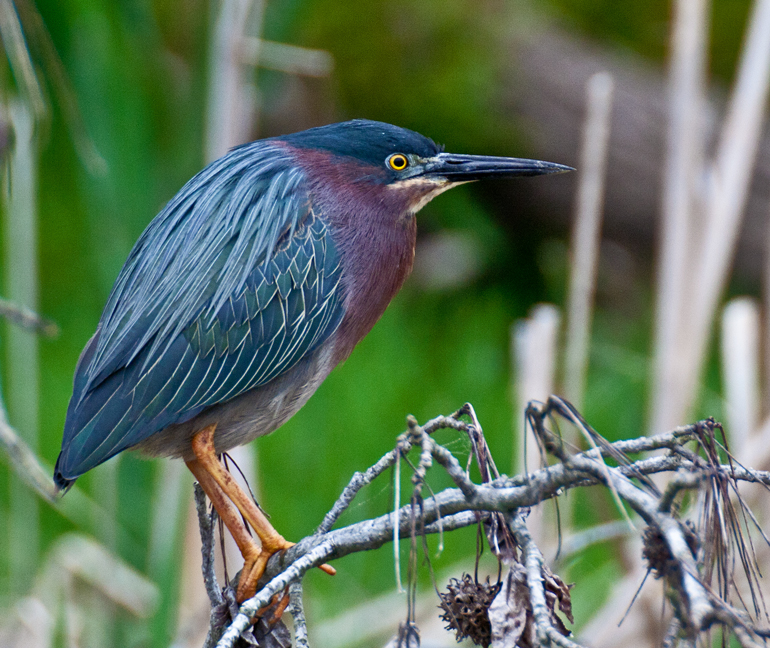
I was thrilled this past Saturday when I caught sight of this Green Heron (Butorides virescens), because green herons have only recently returned to the area after spending their winter in warmer locations.

The lighting situation, however, was really problematic. There was beautiful dappled sunlight in the background, but the heron was mostly in heavy shade and his back was illuminated with harsh sunlight. I played around with a number of different settings and this was one of the better images.  I still had to make some adjustments in post-processing to pull some of the details out of the shadows, which made the final image a bit grainy.

I really like the Green Heron’s pose, as he looks off into the distance. I don’t think that he was actively fishing, but was merely relaxing in the shade of the tree.

greenheron1_blog

Michael Q. Powell. All rights reserved

Read Full Post »

Snake eyes are often cold and menacing, but somehow this snake that I encountered yesterday seems to have warm brown eyes that look almost like he is smiling.

This snake, which I think is a Common Garter Snake (Thamnophis sirtalis), was curled up in some underbrush near the edge of the marsh. It was a real challenge getting a clear view of his head, the more so because I was using my 135-400mm lens that has a minimum focusing distance of almost seven feet (two meters).

For this shot, I used my tripod so that I could get an exposure of 1/30 second at f/9, with the lens zoomed out to about 350mm. I like the fact that I was able to capture some of the beautiful texture of the scales on his skin. You can easily see how I had to look for little sight windows through the brush, which is mostly blurred and hopefully is not too distracting. Finally, I am happy that I managed to capture some of the sinuous curves that help to guide the viewer’s eye to the snake’s head.

snake1_blog

Michael Q. Powell. All rights reserved

Read Full Post »

Although most people probably associate the descriptor “whitetail” with deer, it’s also part of the name of this dragonfly that I photographed yesterday, an immature male Common Whitetail dragonfly (Plathemis lydia).

I remember seeing the adult male Whitetail a lot last summer, and its body is a chalky white in color, as its name suggests. Males start out looking a lot like the female, which has a brown body with some white or yellow markings, according to Bugguide. However, it’s relatively easy to tell the immature males from the females, because their wing patterns are different. Males have wider bands of brown and clear wingtips (no, they are not wearing dress shoes—I am talking about the literal tips of the wings).

I am sure that I’ll get lots more photos of Common Whitetail dragonflies this summer, including some in much better light, but it was nice to see them appearing already in April.

dragonfly1_blog

Michael Q. Powell. All rights reserved

Read Full Post »
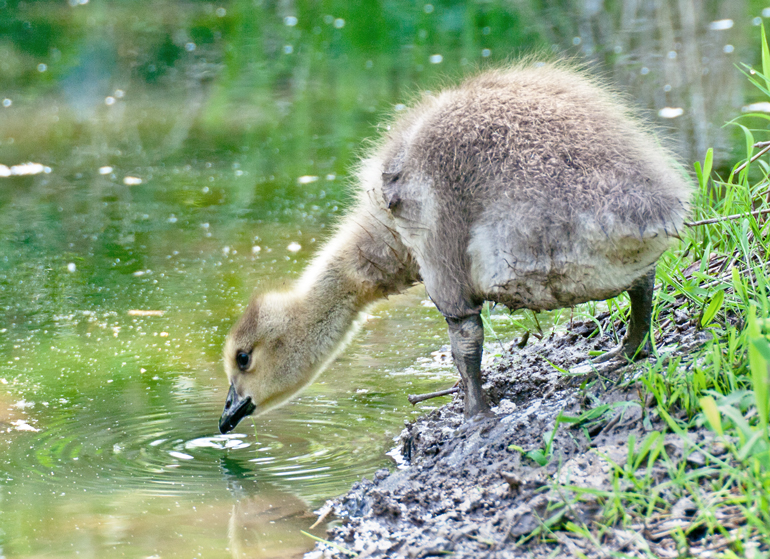
It’s hard to imagine anything cuter than this tiny little Canada Goose that climbed into the water at my local marsh for a swim along with his siblings and his parents. They were close enough to me that I was able to frame the shot pretty much like you see it.

I really like the expression of the gosling as he seemed to turn his head to look at me and also like the contrast between the bright colors of the gosling and the more muted tones of the full-grown geese.

I just missed the drop of 15 Hooded Merganser ducklings from the nesting box this morning by about twenty minutes. Hopefully I will have the chance to celebrate more new lives like this little goose in the coming weeks.

gosling1_blog

Michael Q. Powell. All rights reserved

Read Full Post »
Male Red-winged Blackbirds (Agelaius phoeniceus) are loud and visible almost all of the time, but this one blackbird seemed even more determined than usual to pose for me. It was almost as though he was an experienced model, changing poses and holding them for a few seconds to allow me to get the shot before striking a new pose.

I wonder if he could have his own fashion show. Of course, we might have to alter the terminology a bit—I am not sure he would be keen to strut his stuff on something called a “catwalk.”

pose_blogAttention_blogstretch_blog

Michael Q. Powell. All rights reserved

Read Full Post »

Walking through some of the parks here in Vienna, Austria, I couldn’t help but notice that the crows here are not at all the same as the crows in my part of the United States.

I am here in Vienna for work for a few days and have spent my free time walking through the parks, checking out the birds and plants.  Most of the birds that I see are pigeons, but I was really struck by the large black-and-white crows that periodically fly onto the scene.

A little research on the internet reveals that these are Hooded Crows (Corvus cornix), and not the  all-black American Crow (Corvus brachyrhynchos) that I am used to seeing.

The only camera that I have with me is my trusty Canon A620 point-and-shoot. It is compact, but its 4x zoom makes it less than ideal for capturing birds. However, several crows were relatively cooperative yesterday and let me get close enough to get these shots.

I’ll probably post a few photos of buildings in the next day or two, but wanted to let folks know that I am still drawn to seek out nature, even in the midst of a big city.

crow1b_blogcrow_frontb

Michael Q. Powell. All rights reserved

Read Full Post »

The soggy, overcast weather this past Friday kept people away from my local marshland park and allowed me to get these shots of a Greater Yellowlegs (Tringa melanoleuca).

I don’t normally see these birds and if I do, they are almost always beyond the range of my lens. This day, however, there were a couple of yellowlegs and another smaller shorebird, which I was told was a Solitary Sandpiper, that moved back and forth in the water, remaining within range for quite some time.

The lighting was a little  tricky for me, with the sky almost white most of the time, though sometimes the sun would peek out from behind all of the clouds. Most of the shots were a little underexposed, but I was able to correct them with a few little tweaks in post-production. I especially like the lighting in the first photo, in which the water has some color to it.

I am happy, though, that I was able to get some pretty clear shots of this beautiful bird, thanks in part to some careful focusing and the use of a tripod. (If you want to see another shot of the yellowlegs, checkout my earlier posting.)

yellowlegs4_blogyellowlegs3_blogyellowlegs2_blogyellowlegs1_blog

Michael Q. Powell. All rights reserved

Read Full Post »

Yesterday on a heavily overcast day, a few shorebirds were closer to the shore than usual at the pond area of my local marsh, including this one, which I was told is a Greater Yellowlegs (Tringa melanoleuca). As I looked through my bird identification book, I realize that identification of shorebirds is pretty difficult, given that many of them look almost the same, so I can’t guarantee that my identification is accurate.

I am working on a few more images of the yellowlegs, but thought that I would share this one initially, because I was able to capture the bird as it was reaching into the water. The light was not bright, but there was enough of if to produce a beautiful reflection in the water as the bird reached below this surface with its bill.

yellowlegs5_blog

Michael Q. Powell. All rights reserved

Read Full Post »

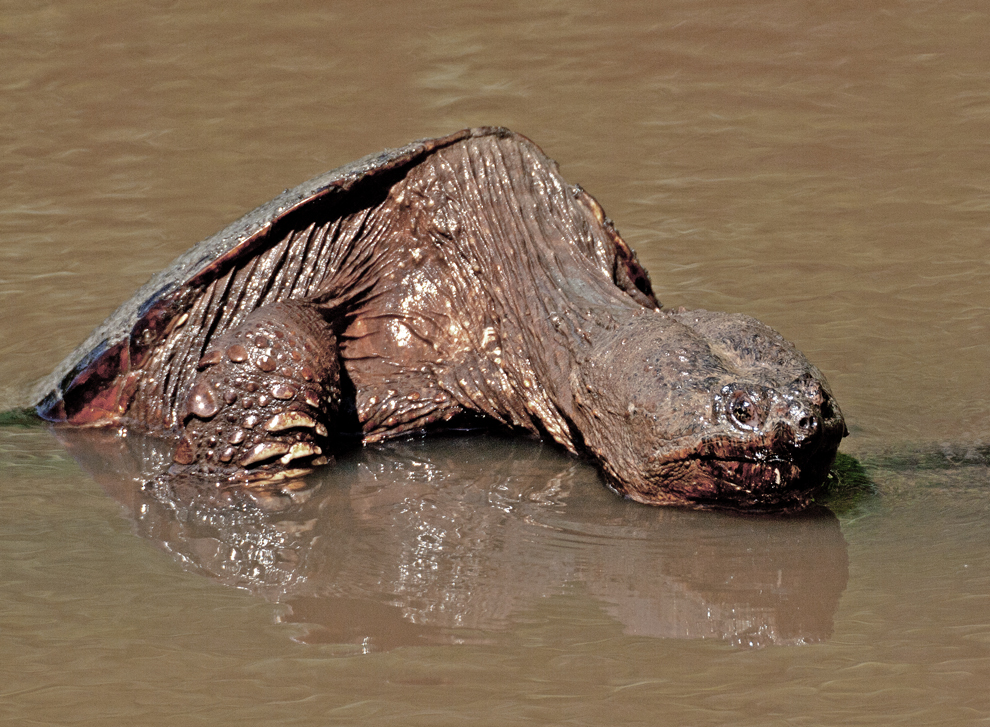
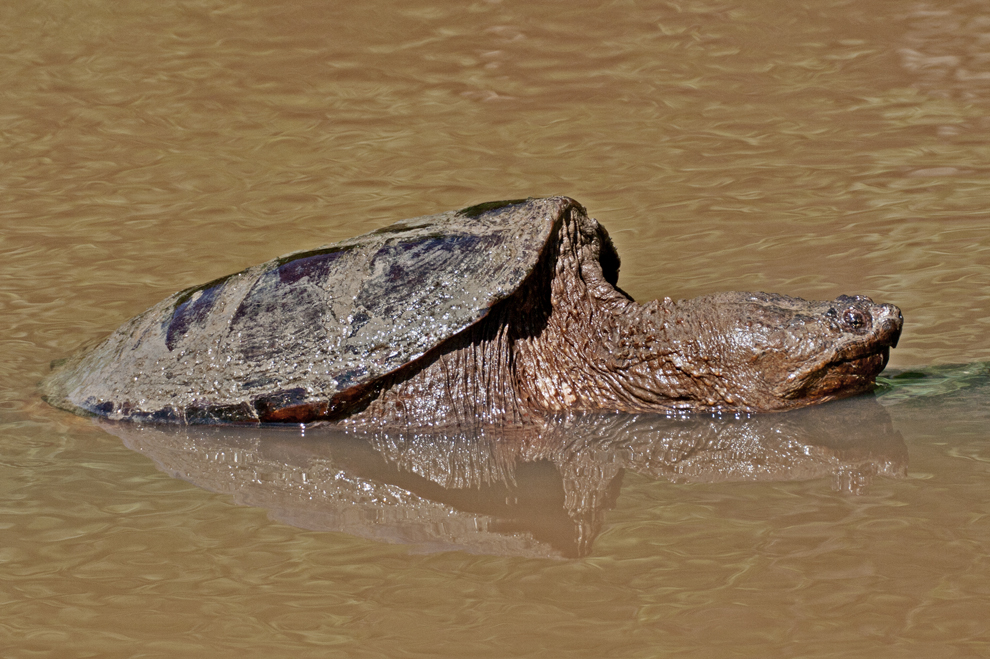
Last weekend I kept seeing snapping turtles in the water with their shells at an angle to the surface. Initially I couldn’t figure out what was going on, until a helpful fellow photographer explained that the turtles were mating.

Mating? That sort of made sense, but I was a little confused, because in each case I could see only a single turtle. Doesn’t it take two to tango? I kept watching and eventually I was able to see that there were two turtles, but one of them was being held underwater most of the time. It seemed pretty violent. On the positive side, it seems that the female did not bite off the male’s head in the process, as praying mantises are said to do while mating.

As I look the photos below, I have trouble identifying body parts and determining which ones belong to which turtle. I don’t understand the anatomy of the Eastern Snapping Turtle (Chelydra serpentina serpentina) and will leave that to the experts.

turtles2_edited-1_blogturtle1_edited-1_blog

Michael Q. Powell. All rights reserved

Read Full Post »

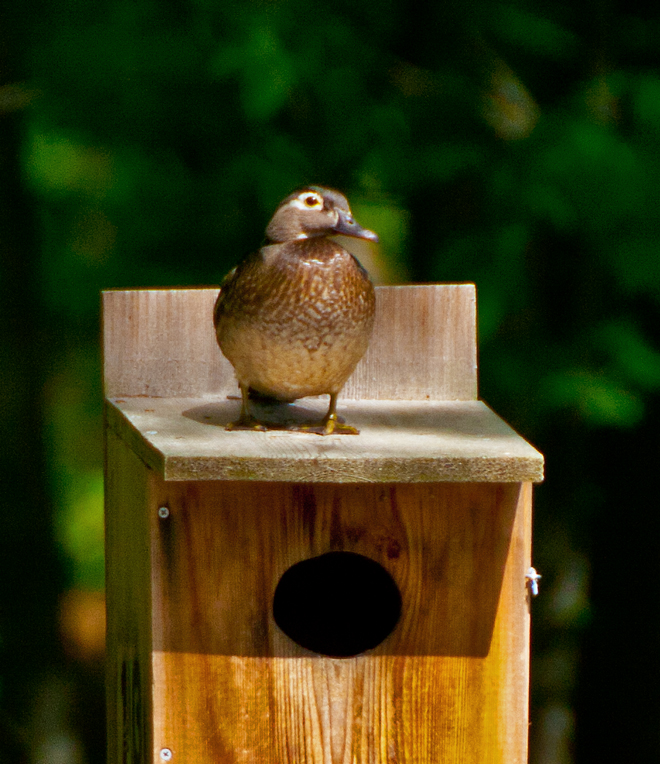
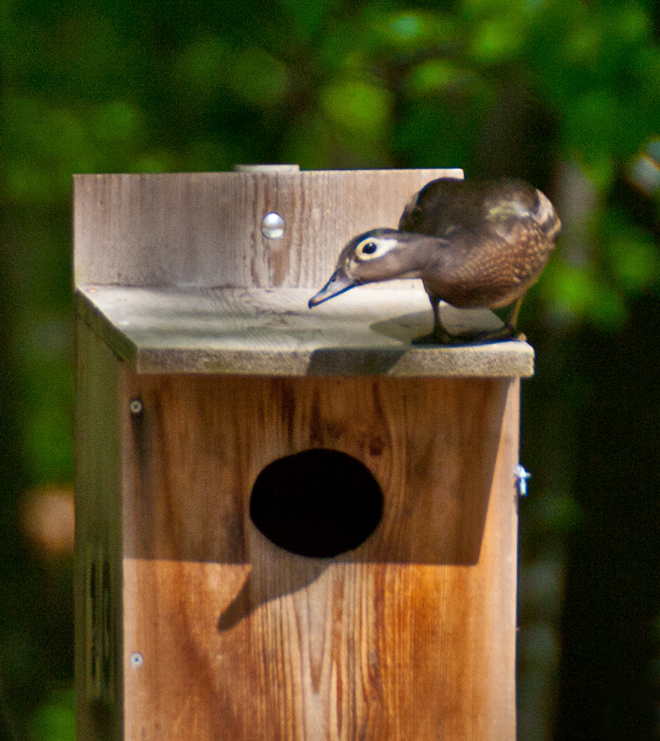
The last month or so I have been keeping an eye on a couple of female Hooded Merganser ducks that are using a nesting box at my local marshland park. One of my fellow photographers has already posted a photo of one of them, surrounded by a dozen or so cute little ducklings, so I may have missed one of the moments that I was hoping to catch.

A little earlier this month, though, I had a special moment with one of them, when I arrived at the park early in the morning, just after the sun had risen. The small female duck was more out in the open than usual, though she was still pretty far away. Initially she seemed to be taking a bath, as she stuck her head under water and would shake a little. Eventually she climbed out of the water onto a log and began to groom herself.

The light at that moment from the back and the side made the spiky reddish-blond hair on her head glow and also created a nice reflection in the water. She seemed unhurried and unafraid as she basked in the beautiful early morning light.

For at least a moment, the two of us were freed from the cares of our everyday lives.

merganser_morning_blogmerganser2_blog

Michael Q. Powell. All rights reserved

Read Full Post »

The warmer weather seems to have brought out all of the critters in my marshland park, including what I think is a Common Five-Lined Skink (Plestiodon fasciatus). I don’t often see lizards around here, so I was particularly happy when this one slowly crawled down a tree, permitting me to get this shot.

I wonder why he was sticking out his tongue at me.

skink_edited-1_blog

Michael Q. Powell. All rights reserved

Read Full Post »

Although it is exciting to be able to capture a photo of a Great Blue Heron (Ardea herodias) flying or catching a fish, I find them to be beautiful even when they are standing still.

I came upon this heron early one morning a week ago or so and was struck by the serenity of the moment. The heron seemed pensive and the beautiful morning light helped to provide some wonderful reflections in the still water of the beaver pond.

The second shot was taken a little later that same morning, after the heron had groomed himself. In this photo, I am amazed at how tall the heron looks with his neck fully extended.

It was rare for me to be able to get unobstructed shots of a heron from relatively close range, and I was pretty happy to be able to get shots like this.

standing_heron1_blogstanding_heron4_blog

Michael Q. Powell. All rights reserved

Read Full Post »

Today I saw my first dragonflies of the spring, which I am pretty sure were Common Green Darners (Anax junius). They buzzed by me several times, but never stopped to perch.

I had reconciled myself to the likelihood that I would not get a single shot.  Suddenly a dragonfly that I was chasing stopped and hovered over the water. I have never had any success before in capturing an in-flight image of a dragonfly, but somehow I was able to grab focus and got several pretty good shots. The beautiful, two-toned colors of this dragonfly are amazing.

I look forward to a new season of chasing dragonflies, but suspect that I will have to work hard to top this first dragonfly of the spring.

dragonfly_blog

Michael Q. Powell. All rights reserved

Read Full Post »

I arrived at the marsh early in the morning, just as this Great Blue Heron (Ardea herodias) was getting up. He seemed to be going through his pre-breakfast routine, grooming and preening and getting ready for the day ahead. It was fascinating to watch him contort his long neck as he sought to arrange his feathers just so. The water was calm enough that he could have used it as a mirror, if he had wanted to do so.

I am not sure if he was trying to make himself look bigger and fluffier, was airing himself out,  or just wanted some additional air for insulation, but at one point he shook himself vigorously. I was fortunate enough to get the first photo as he was in the process of ruffling the feathers.

Eventually, my feathered friend decided that he was presentable and stood motionless, as though posing for me. I’ll post some of those images later.

standing_heron3_blog

standing_heron2_blog

Michael Q. Powell. All rights reserved

Read Full Post »

A Great Blue Heron this weekend was poised, waiting to strike, and I waited with my camera and my tripod, hoping to capture the moment of triumphal success.

I had visions of the heron pulling some big fish out of the water, like I see in Phil Lanoue‘s incredible photos, and watching as he struggled to swallow it whole.

The reality, as you can see, was much more modest. After all, the Great Blue Heron (Ardea herodias) was fishing in the beaver pond at my local marsh and the pickings were pretty slim. Initially, I though he had caught a frog, but the photo suggests it was a small fish, though it is hard to tell for sure because of the catch’s small size.

The second photo shows his pre-strike position. The heron stood motionless in this position for what seemed like an eternity. I am amazed that he could see anything in the shallow, reed-covered water.

When he struck, he didn’t even have to put his head very deeply into the water or use a lot of force to catch the fish. The final shot shows the heron swallowing his catch. It did not take any special maneuvering to get the little fish down his throat.

I saw a heron hanging around the same beaver pond the following day. I hope he is not spending all of his time in this one location or I may end up photographing a really skinny heron in the future.

heron1_blogheron2_blogheron3_blogheron4_blog

Michael Q. Powell. All rights reserved

Read Full Post »

Although I really like the pose of this male Northern Cardinal (Cardinal cardinalis) as he prepares to smash a single rose hip against the boardwalk, I love the geometric shapes in the photo just as much.

There is a neat symmetry in the lighter-colored triangle at the top and the dark one in the bottom and they are nicely separated by a series of medium-toned parallelograms. All of the geometric shapes are subdued in color, which helps to provide a nice backdrop for the brightly-colored cardinal and the equally bright rose hip.

Lots of colorful birds are starting to show up now, but I feel special about the cardinals—they were with me throughout the winter, brightening up many a grey winter day.

cardinal_blog

Michael Q. Powell. All rights reserved

Read Full Post »

Like prehistoric beasts from another era, the snapping turtles have finally emerged from the mud and the slime of my local marsh.

Painted turtles and Red-eared Sliders have been basking in the sun for weeks now, but it seems like the Eastern Snapping Turtles (Chelydra serpentina serpentina) like for it to be a bit warmer before they start moving. This past weekend I saw quite a few snapping turtles in the marsh, most of them with a lot of mud still piled on the top of their shells, including some pretty big ones. Some of them were floating on the surface of the water, but they don’t appear to bask on land like their smaller counterparts.

I would hesitate to call any of them beautiful or even ruggedly handsome—scarey seems a more appropriate adjective. After reading that snapping turtles are omnivores, I have reconfirmed my desire to keep my distance from these creatures. Thankfully, I have a long telephoto lens.

snapping_blogsnapping2_blog

Michael Q. Powell. All rights reserved

Read Full Post »

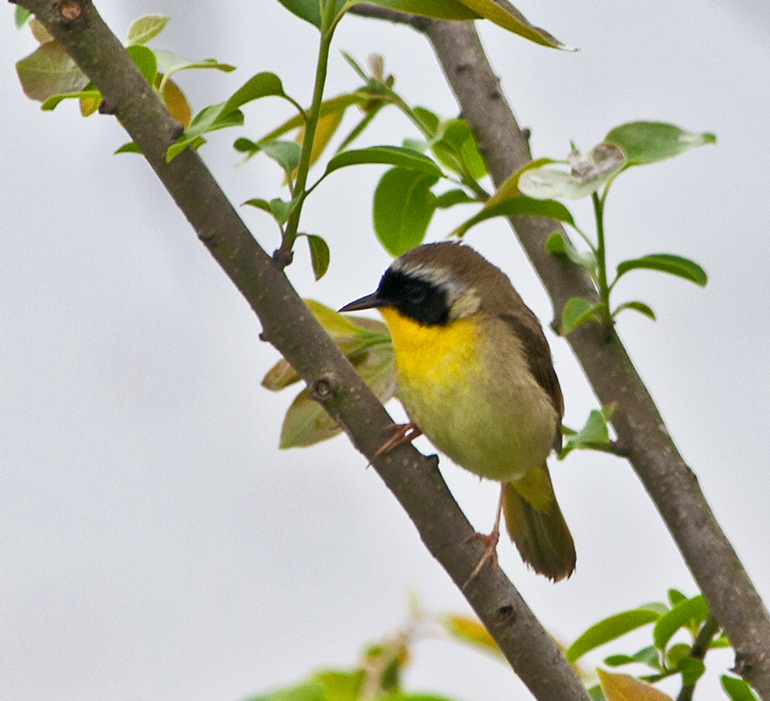
Spring has complicated my life when it comes to bird identification. I started photographing (and trying to identify) birds last fall, when many of the birds had already left the area. Over the winter, there was a limited set of birds that I gradually became accustomed to seeing and I learned to identify them. Even when we had lots of different kinds of ducks, I could look in the section of my identification guide and figure out what they were.

Spring has brought all kinds of new species that have left me baffled and confused. Some of the birders are all excited by the return of warblers, including the Yellow-rumped Warbler. I can’t even see the birds when they point them out to me, much less figure out what color the color of the bird’s rump.

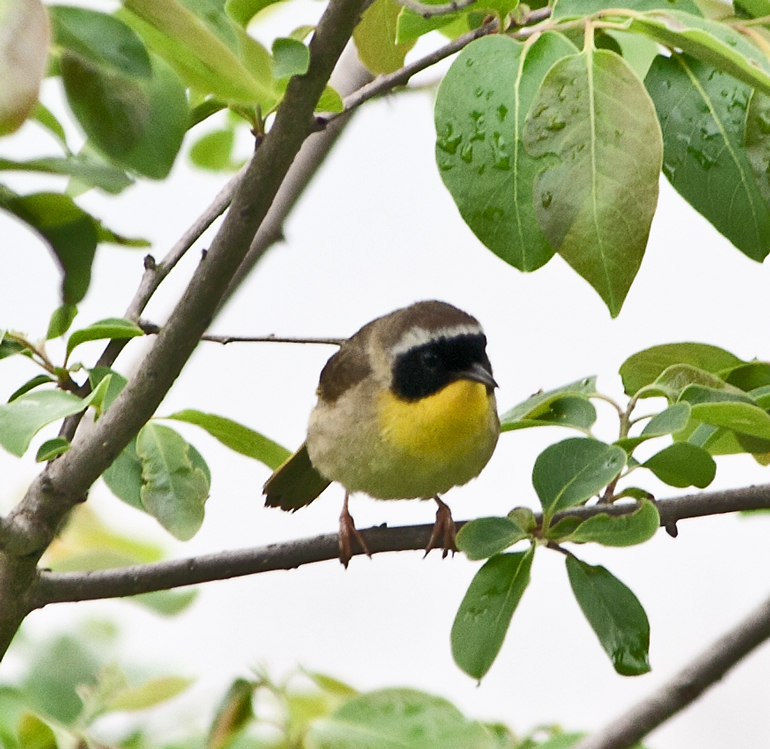
Here’s a recent photo I took of a pretty little bird that I have not yet been able to identify. I’d welcome any hints about what kind of a bird it is.

little_bird_blog

To add insult to injury, leaves are starting to appear on the trees, which will future challenge my ability to identify birds. I may have to go back to photographing insects.

Michael Q. Powell. All rights reserved

Read Full Post »

I am not sure if she was searching for food or was gathering nesting materials, but this female Red-winged Blackbird (Agelaius phoeniceus) was relentlessly attacking a cattail stalk. She paused for a minute and looked up, providing me with this photo op.

I like the way that her bill and her feet are covered with the cottony inner fibers of the cattail. The shadowy image of the male Red-winged Blackbird, with his distinctive shoulder patches, adds a interesting element to the background.

blackbirds_blog

Michael Q. Powell. All rights reserved

Read Full Post »

Yesterday was the first time that I managed to get a photograph of a male Blue-winged Teal (Anas discors), a small, very striking dabbling duck. I was quite fortunate that the lighting and location was quite favorable, since these small ducks usually hang out at the far reached of the pond.

Although the Cornell Lab of Ornithology states that the Blue-winged Teal is the second most abundant duck in North America, after the Mallard, I am not sure that I have seen one before, and certainly not closely enough to photograph one. The range maps suggest that I am in the migration region for these birds, so I doubt that these birds will hang around for too long.

I really like the look of the speckled body, blue bill, and bold white stripe across the face of this Blue-winged Teal. He was traveling with a small group of Blue-winged Teals and they were even more beautiful when they took to the air and displayed a beautiful patch of blue on their wings.

blue-winged_blogblue-winged2_blog

Michael Q. Powell. All rights reserved

Read Full Post »

Early yesterday morning when I arrived at my local marsh, two Great Egrets (Ardea alba), were already up and trying to find some breakfast. At this time of year, I suspect that they may be eating a lot of frogs at this location, though I didn’t actually see them catch anything. Eventually they wandered into the reeds and cattails, so I gradually lost sight of them.

In the past, I had a lot of trouble taking photos of these beautiful white birds and usually I ended up blowing out the highlights. Two things seemed to have helped me deal with these issues. I am paying a lot more attention to exposure compensation and I am underexposing by as much as two f-stops. Additionally, I am using a longer telephoto lens and filling more of the frame with the subject somehow helps me to get a better exposure.

egret1_blogegret2_blog

Michael Q. Powell. All rights reserved

Read Full Post »

A warm day this past weekend brought out the turtles in my local marsh, who lined up on logs to bask in the sun. On some logs as many as a dozen turtles of all sizes were crowded together, but somehow this big Red-eared Slider turtle (Trachemys scripta elegans) managed to get a log all to himself.

In the first photo, he seemed a little annoyed when the sun disappeared behind the clouds, but he quickly resumed his zen-like pose in the second shot, when the sun reappeared.

turtle2_blogturtle1_blog

Michael Q. Powell. All rights reserved

Read Full Post »

This past weekend I went back to locations where I have seen Belted Kingfishers (Megaceryle alcyon) in the past and encountered this male kingfisher (you may recall that the female has a chestnut stripe on her chest).

Initially he was on a wire above the stream, as shown in the second photo, but eventually he moved to a tree, where his pose looks more natural. He was pretty high in the tree and seemed to be surveying the entire area.

This was the first time that I was able to photograph the kingfisher with a longer lens and I had hoped to get some close-up shots. However, the kingfisher was not very cooperative this time and stayed close to the limit of the range of the lens. I was able to get pretty good detail in the first photo, however, despite a large amount of cropping, probably because I shot from a tripod.

As I said in a previous post, I enjoy stalking kingfishers—there is something about their look that I really like. I will continue to chase after them in search of better shots and hope they cooperate by staying in their current locations.

kingfisher1_blogkingfisher2_blog

Michael Q. Powell. All rights reserved

Read Full Post »

I am not sure what the other Canada Goose said or did, but this goose was clearly an angry bird yesterday. He seemed to put his whole body into the expression of his strong feelings, from the tip of this tongue to the tip of his tail.

Do they have a goose in the game Angry Birds?  If not, perhaps they should.

goose_tongue_blog

Michael Q. Powell. All rights reserved

Read Full Post »

One of my fellow photographers identified some newly arrived birds as Tree Swallows (Tachycineta bicolor) and yesterday I spotted them checking out the nesting boxes at my local marsh. I felt like they could have used a real estate agent to point out the advantages of the different styles of houses available. The first one has the charm of a log cabin and the second one has enhanced security features to discourage intruders. I don’t think that the swallows have made their decision yet—for now they seemed to be checking out the neighborhood.

swallow1_blogswallow2_blogswallow3_blogMichael Q. Powell. All rights reserved

Read Full Post »

Do you ever find yourself in such beautiful light that you are almost desperate to find a suitable subject? Saturday morning, for a brief period, the rays of the sun were producing wonderful light and incredible reflections in the water of my local marsh, reminding me of some of my favorite Monet paintings.

I looked all around and finally spied this male mallard duck and his mate and they became my models. They didn’t take instructions very well and wouldn’t stay still in one place for very long, but I was able to get some shots that I like.

mallard1_blogmallard2_blog

Michael Q. Powell. All rights reserved

Read Full Post »

« Newer Posts - Older Posts »