Feeds:
Posts
Comments

Archive for the ‘Summer’ Category

It violates one of the basic rules of photography to have your subject in the center of an image, but for both of these shots of a male Widow Skimmer dragonfly (Libellula luctuosa), that’s precisely what I did.

In the first image, the blade of grass that bisects the image helps to emphasize the symmetric patterns on the wings of the Widow Skimmer.

Widow Skimmer

In the second image, I was so fascinated by the geometric lines of the grass and their varying degrees of sharpness that I did not want to crop them at all, so I left the Widow Skimmer more or less in the center.

Widow Skimmer

When it comes to my photography, I tend to look at “rules” as general guidelines that apply in many—but not all—situations. That approach helps me to remain centered and flexible.

© Michael Q. Powell. All rights reserved.

Read Full Post »

Chasing after beautiful butterflies on a sunny summer day—it doesn’t get much better than that. I don’t know plants very well, but this appears to be some kind of thistle. I photographed this Eastern Tiger Swallowtail (Papilio glaucus) last Saturday at Huntley Meadows Park in Alexandria, Virginia.

Eastern Tiger Swallowtail

© Michael Q. Powell. All rights reserved.

Read Full Post »

On Monday I came across this really cool-looking moth while walking through the woods at Huntley Meadows Park in Alexandria, Virginia. The moth’s distinctive pattern reminds me of the shields used in the Middle Ages by the knights during the Crusades, which is why I want to call it the Crusader moth.

Officially, this is a Clymene Moth (Haploa clymene), a moth of the Tiger Moth family that is found in the eastern part of North America.

As I was doing research, I learned that 18-26 July is National Moth Week.

Go wild!

Clymene moth

Clymene moth

© Michael Q. Powell. All rights reserved

Read Full Post »

Sunrise yesterday was at 5:59 and I managed to get this shot of a beautiful little fawn in the cattails at 6:05, when there was just barely enough light for my camera to focus.

Summer weather in the Washington D.C. area is often miserable—hot and humid—and I decided to visit my local marshland park really early to avoid some of the oppressive heat. When I left my house in the pre-dawn darkness, however, it was already 80 degrees (27 degrees C) on a day that was forecast to reach 96 degrees (35 degrees C).

I could hear a lot of movement in the marsh as I made my way along the board walk and occasionally would catch a glimpse of some activity as it grew progressively lighter. I encountered another photographer and he was the one who spotted the fawn and pointed it out to me—I am pretty sure that I would not have seen it without his help.

We didn’t see any adult White-tailed deer (Odocoileus virginianus) with the fawn, but their presence could easily have been hidden by the thick stand of cattails. I had time to snap off only a few photos before the fawn slowly turned his back on us and slowly faded into the background.

What a wonderful way to start my day.

fawn

© Michael Q. Powell. All rights reserved

Read Full Post »

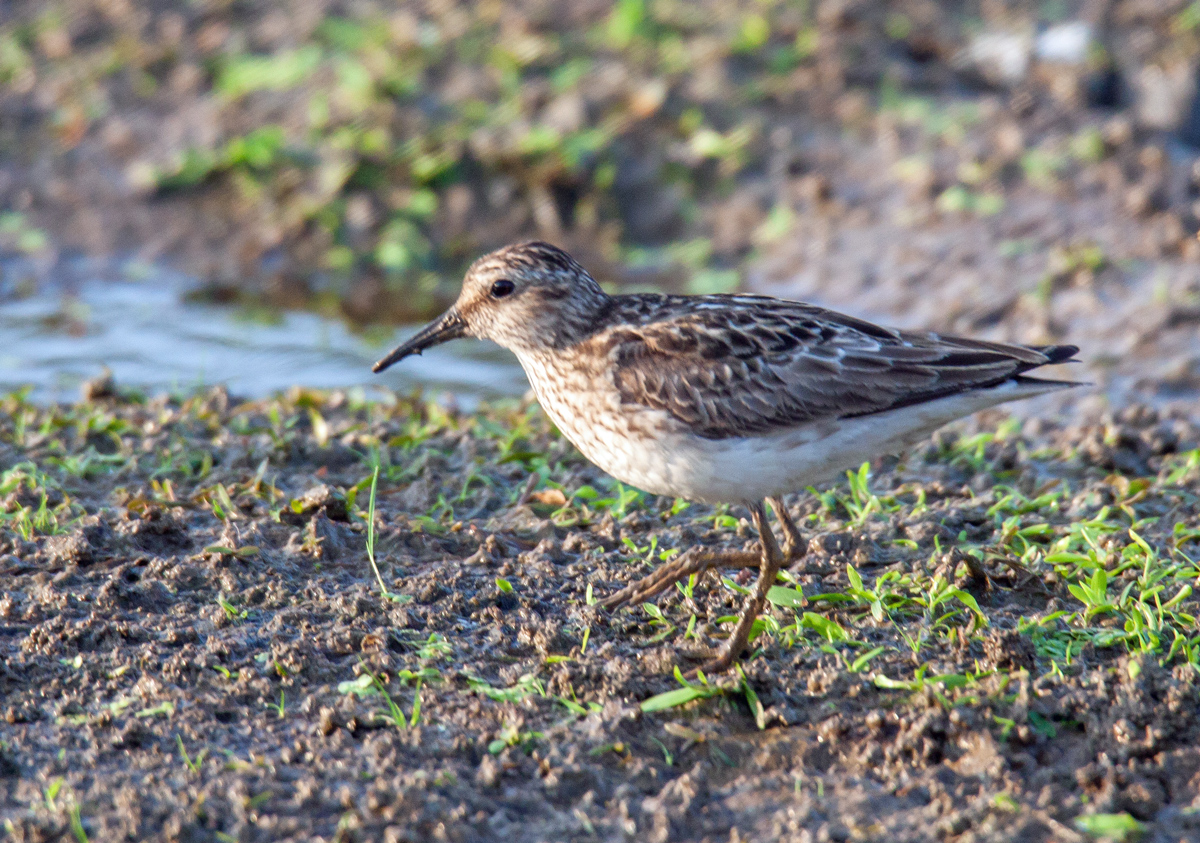
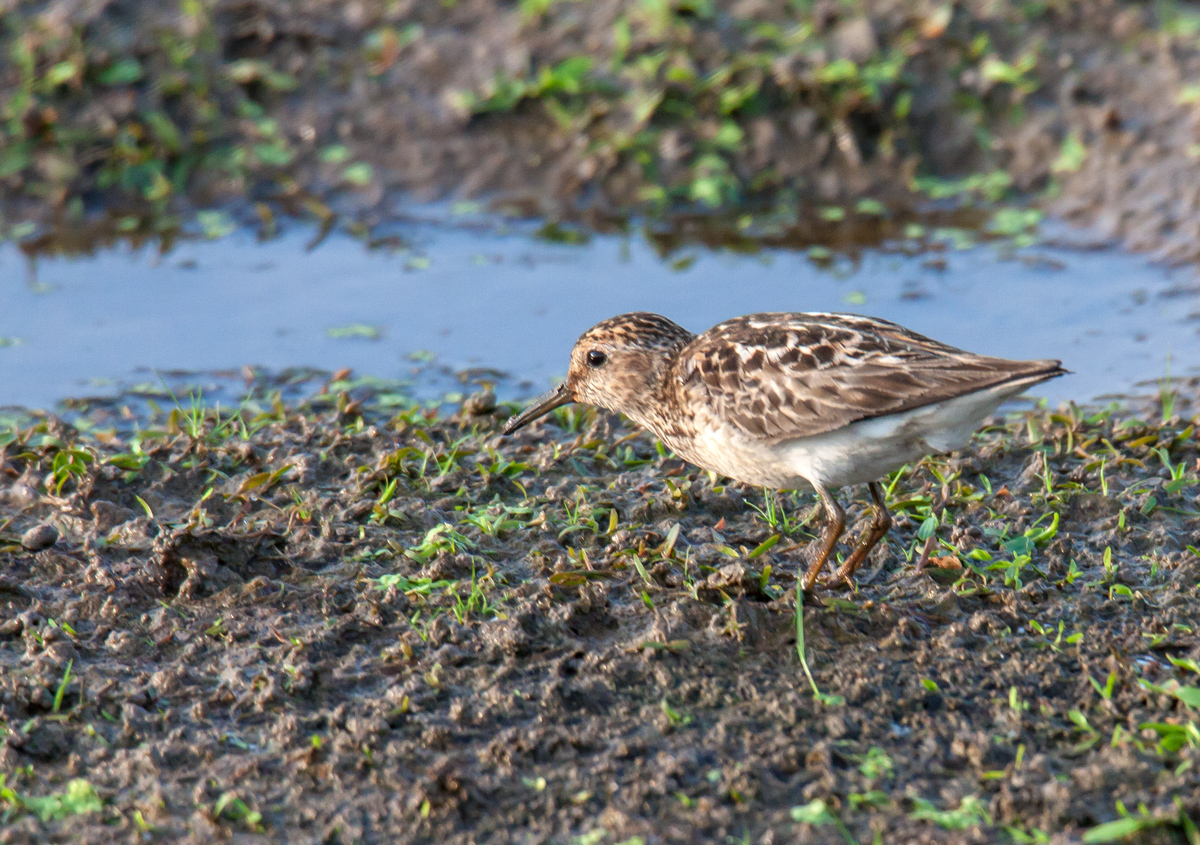
I can’t help but wonder if Least Sandpipers (Calidris minutilla) suffer from an inferiority complex, surrounded as they are by “Great” Blue Herons and “Great” Egrets.

Early Saturday morning, I spotted a small flock of these tiny birds at my local marsh in an area where the water levels were really low, revealing a muddy area with shallow pools of water that seemed perfect for these little wading birds. According to the Cornell Lab of Ornithology website, the Least Sandpiper is the smallest shorebird in the world, weighing in at about one ounce (28 grams) and measuring five to six inches long (13-15 cm).

I suspect that these Least Sandpipers are in the process of migration, probably eventually heading further south. At this time of the year we start to see all kinds of unusual birds that make brief stops at my local marshland on their way to more distant destinations.

Least Sandpiper

Least Sandpiper

Least Sandpiper

© Michael Q. Powell. All rights reserved

Read Full Post »

When damselflies are connected in the tandem mating position, they are large enough to be noticed, especially when they fly right by me, as was the case this past Friday. They were pretty skittish, but I managed to get a couple of relatively clear shots.

My identification task was greatly eased by the fact that these were not one of the multiple blue species that inhabit my local marshland park—there was only a little blue on the tip of the male’s abdomen. Imagine my shock when I learned that these damselflies are Blue-tipped Dancers (Argia tibialis). In my experience, names generally are not that helpful when it comes to identification, but this is an obvious exception.

Sharp-eyed readers may notice that these damselflies look a bit like the one currently featured in the banner of my blog. That damselfly is a Violet Dancer, a subspecies of the Variable Dancer species (Argia fumipennis). Apparently damselflies do a lot of dancing!

If you are interested in seeing some photos and descriptions of the bluet family of damselflies at our local park, check out this recent posting by fellow blogger and photographer Walter Sanford entitled Blue for Bluets.

Blue-tipped Dancer

Blue-tipped Dancer

© Michael Q. Powell. All rights reserved


Read Full Post »

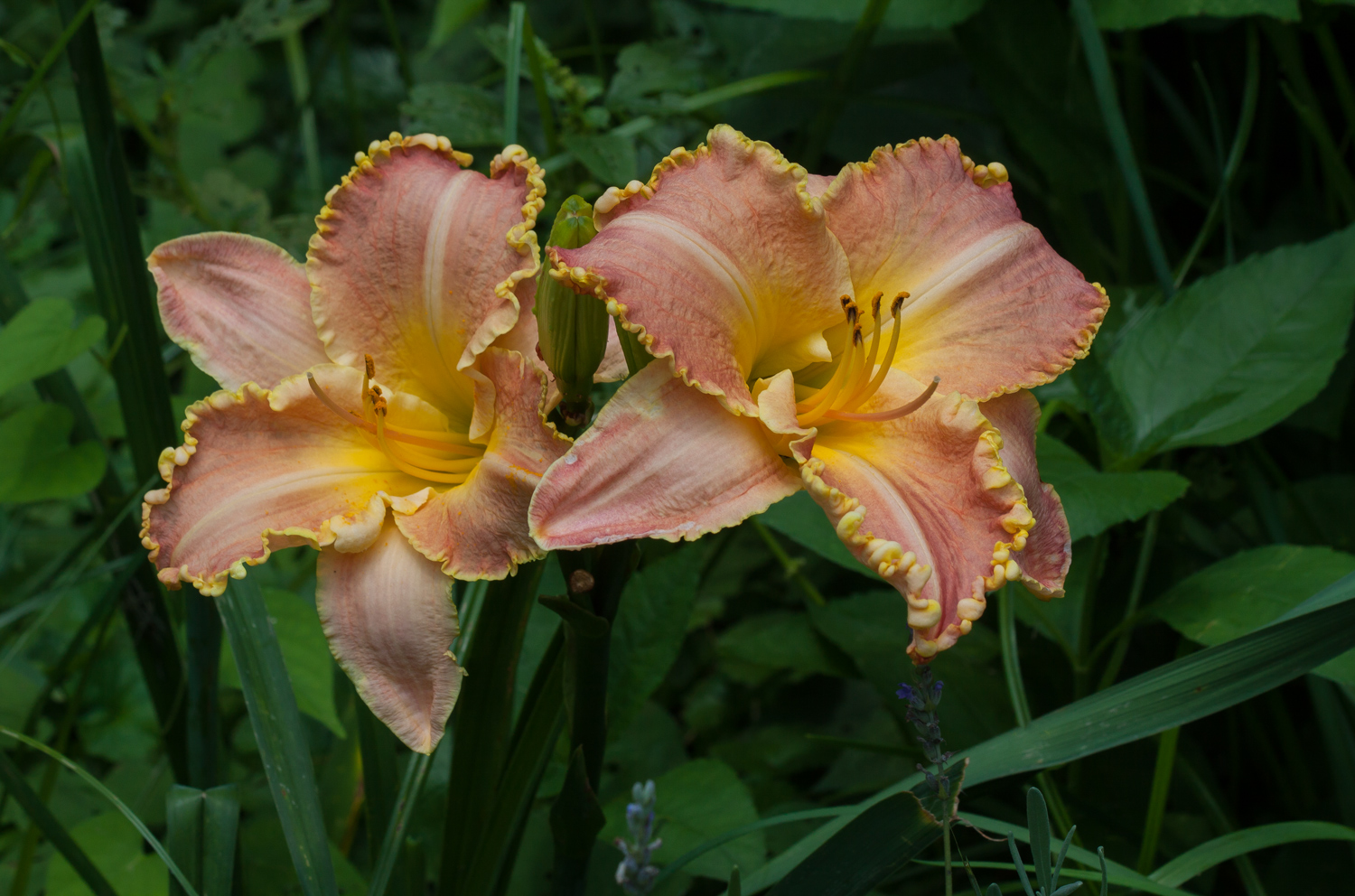
My neighbor, fellow photographer Cindy Dyer, always has such cool-looking flowers in her garden, like these frilly day lilies. Somehow they remind me of the ruffled tux shirts that were in style in the 70’s when I was growing up.

day lilies


© Michael Q. Powell. All rights reserved

Read Full Post »

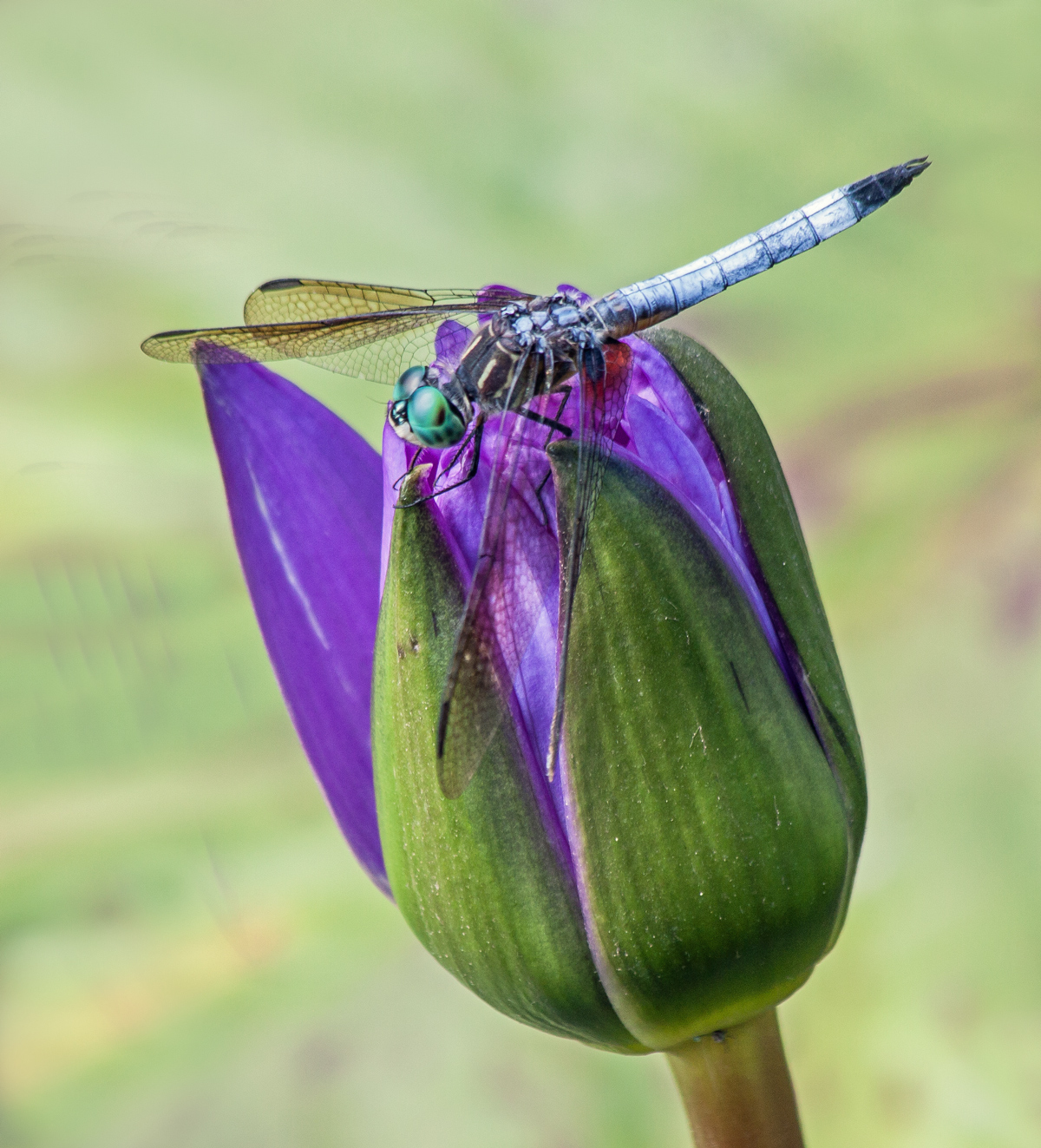
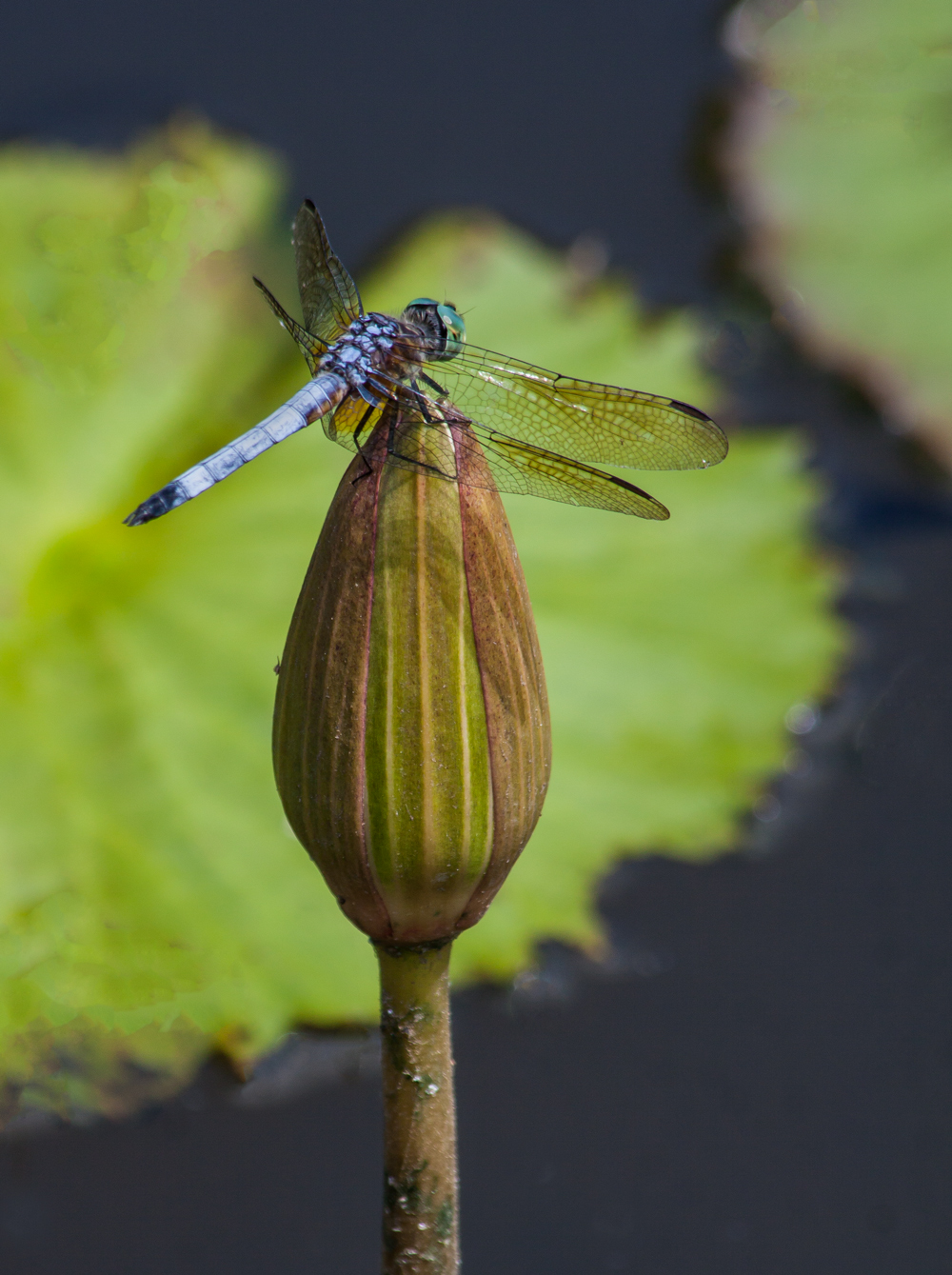
Yesterday I visited Kenilworth Park and Aquatic Gardens in Washington D.C. for the annual Lotus and Water Lily Festival and I was thrilled to be able to get some of my favorite kind of dragonfly images—dragonflies perched on the buds of colorful flowers. Generally I manage to get shots only of the Blue Dasher dragonfly (Pachydiplax longipennis), but this time I was also able to get a shot of a Slaty Skimmer (Libellula incesta) on a lotus flower bud.

Blue Dasher

Blue Dasher on purple water lily bud

Slaty Skimmer

Slaty Skimmer on lotus bud

Blue Dasher

Blue Dasher on water lily bud

© Michael Q. Powell. All rights reserved

Read Full Post »

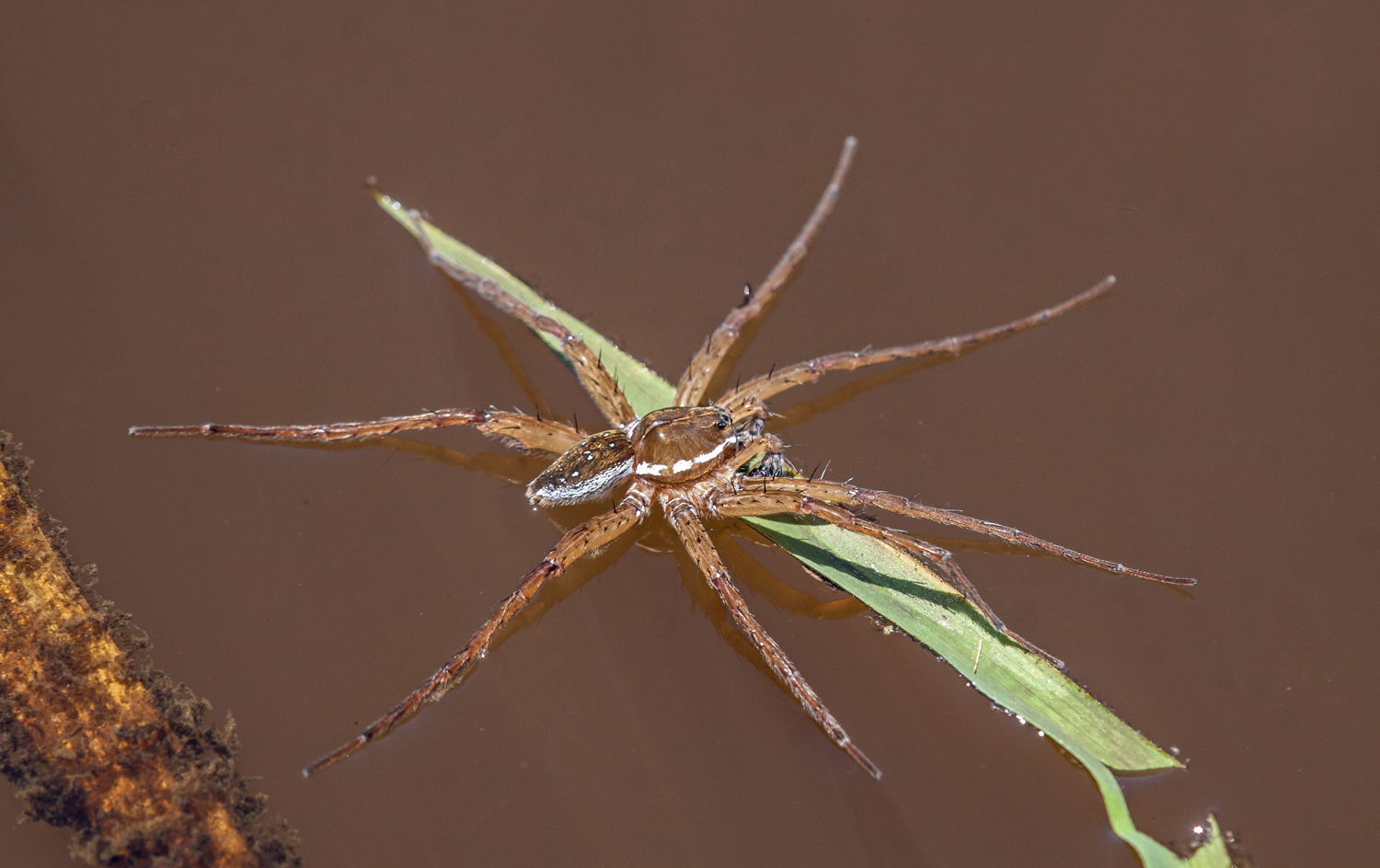
Some movement in the muddy water right below my feet caught my attention yesterday as I was standing at the edge of a small stream at Huntley Meadows Park observing a dragonfly. A Six-spotted Fishing spider (Dolomedes triton) was walking on the water with its legs fully extended.

The other times that I seen one of these fishing spiders, they always had a few legs hanging onto the shore, but this one was moving across the surface of the water pretty quickly, perhaps chasing a potential prey. Unfortunately, overhanging vegetation prevented me from tracking the spider’s movement, so I don’t know if the hunt was successful.

Six-spotted Fishing spider

© Michael Q. Powell. All rights reserved


Read Full Post »

Lotuses are gorgeous flowers when they are in bloom, but the lotus that really drew my attention was this bud that is just starting to open, full of hope and promise, clothed in a sense of mystery and expectation.

lotus bud

© Michael Q. Powell. All rights reserved

Read Full Post »

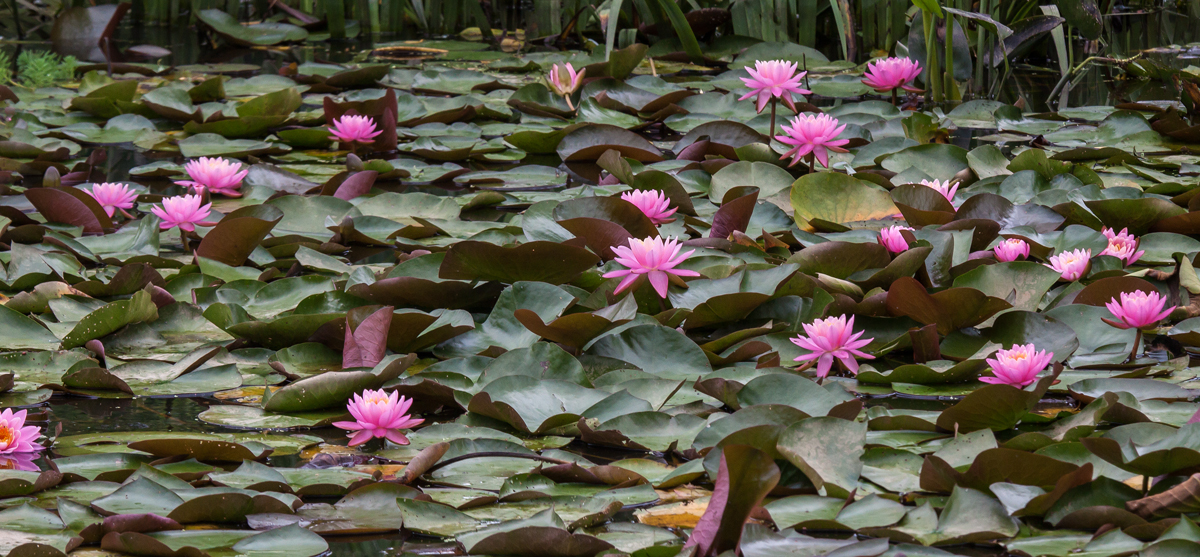
While I was at Kenilworth Park and Aquatic Gardens in Washington D.C. on Monday, it was easy to understand Monet’s endless fascination with water lilies. My opening image of a small wooden bridge brings to mind several of Monet’s paintings of the Japanese Bridge in his water garden at Giverny.

bridge at Kenilworth

Water lilies seem to draw me in and surround me with an overwhelming sense of beauty and tranquility. How can I possibly capture that feeling in a photo? Here are a few images to show you some of the different approaches that I used in attempting to show the irresistible attraction of water lilies.

water lily at Kenilworth

water lilies at Kenilworth

pink water lilies at Kenilworth

© Michael Q. Powell. All rights reserved

Read Full Post »

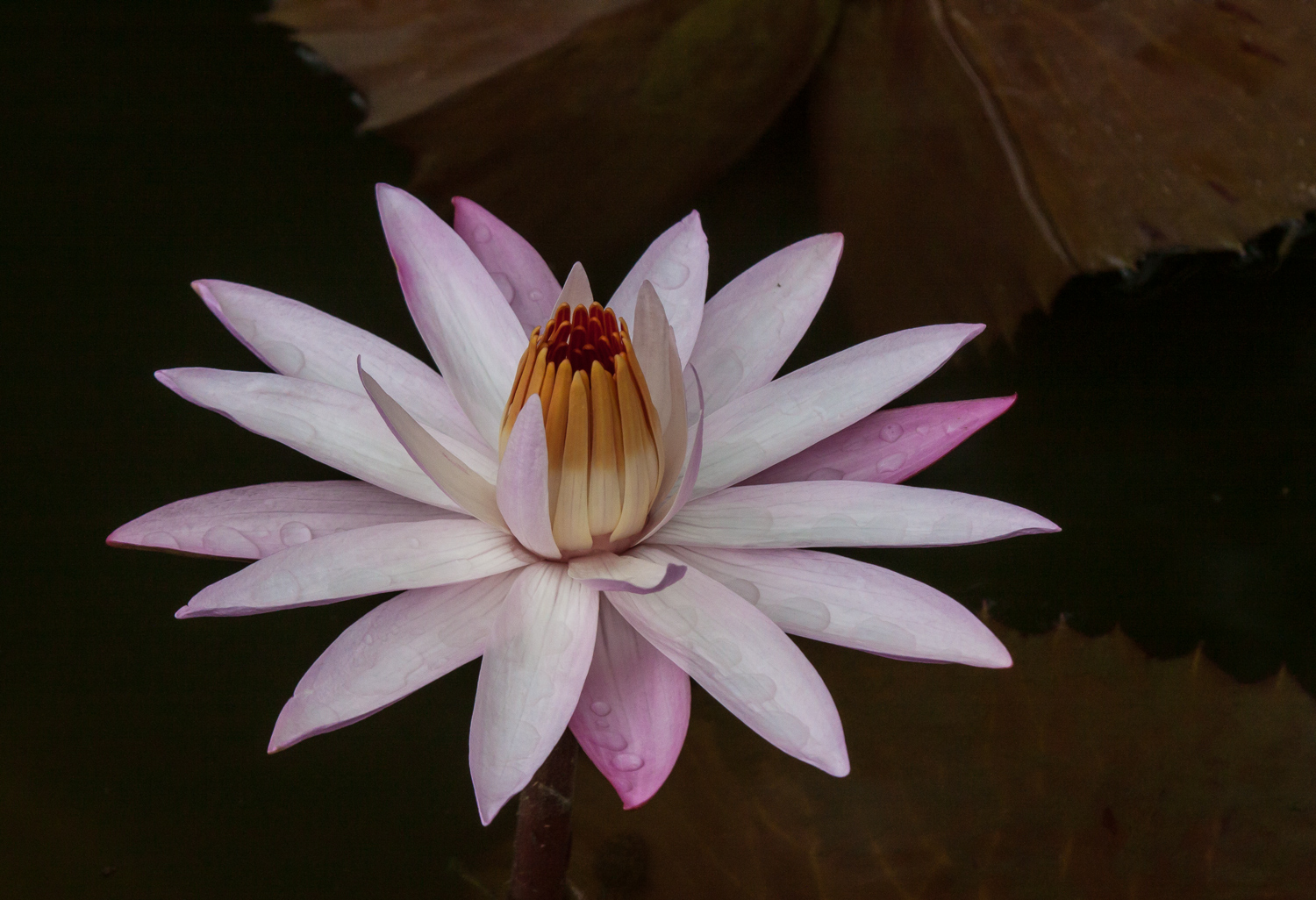
Yesterday morning I made a quick trip to Kenilworth Park and Aquatic Gardens in Washington D.C. with fellow photographer Cindy Dyer to check out the water lilies and lotuses. Many of the pathways in the park are flooded or muddy, thanks to a significant amount of recent rain. Wet feet, however, were a small price to pay to see so many beautiful flowers, including the two spectacular pink water lilies that I am featuring today.

Stay tuned for more water lily and lotus images later this week.

pink water lily

pink water lily


© Michael Q. Powell. All rights reserved

Read Full Post »

Photography seems so complicated when I worry too much about lighting, camera settings, and a myriad of other technical concerns. It’s nice sometimes to put those cares in the back of my mind and just shoot as I did yesterday—me, my camera, a bee, and a flower.

It can be that simple and that enjoyable.

bee

© Michael Q. Powell. All rights reserved.

Read Full Post »

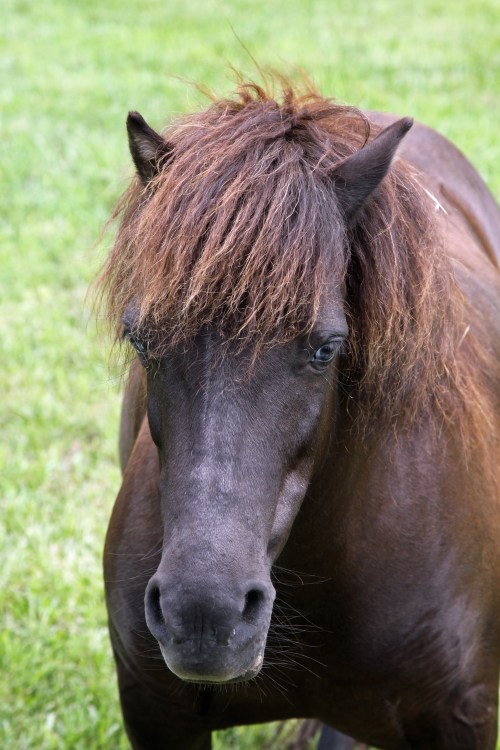
I’ve spent most of my life living in the suburbs, so domestic livestock is kind of a novelty for me. My eyes are particularly drawn to animals as striking as this horse with a “rock star” hair style that reminds me of the beautiful horses of Iceland that I have seen featured in numerous photo shoots.

This past weekend I traveled to a winery in rural Delaplane, Virginia for an engagement party. After a wonderful celebration, I stopped at an adjacent farm that had a petting zoo. I was immediately attracted to three horses in the field that had long flowing manes blowing in the breeze. The horses walked right towards me and initially I thought they anticipated that I might have food. When they got closer, I realized that I was standing right behind a pile of hay that had been placed in the field and they more or less ignored me and munched on the hay.

I had a 24-105mm lens on my camera and ended up taking most of my shots at close range using the wide end of the lens. This was the first time that I have ever taken photos of an animal with anything other than a telephoto lens and I was happy with the results. I remember seeing some close-up photos a year or two ago that a blogger had taken of a buffalo using a wide-angle lens and thinking it would be interesting to try something like that. Unlike the buffalo shooter, though, I did not have to shoot from inside of a vehicle.

I don’t know anything about horse breeds, but these small, stocky horses with the incredible flowing hair reminded me of images that I have seen of the horses of Iceland. My dear friend and photographic mentor Cindy Dyer made a trip to Iceland last year and came back with some amazing photos, including this posting with a similar horse, although it is quite literally a horse of a different color.

Cindy has talked with me and a few fellow photographers about possibly traveling to Iceland next year. I would love to have the chance to experience firsthand the wondrous natural beauty of Iceland and to see more beautiful horses with “rock star” hair.

star2_blog

star1_blog

Michael Q. Powell. All rights reserved.

Read Full Post »

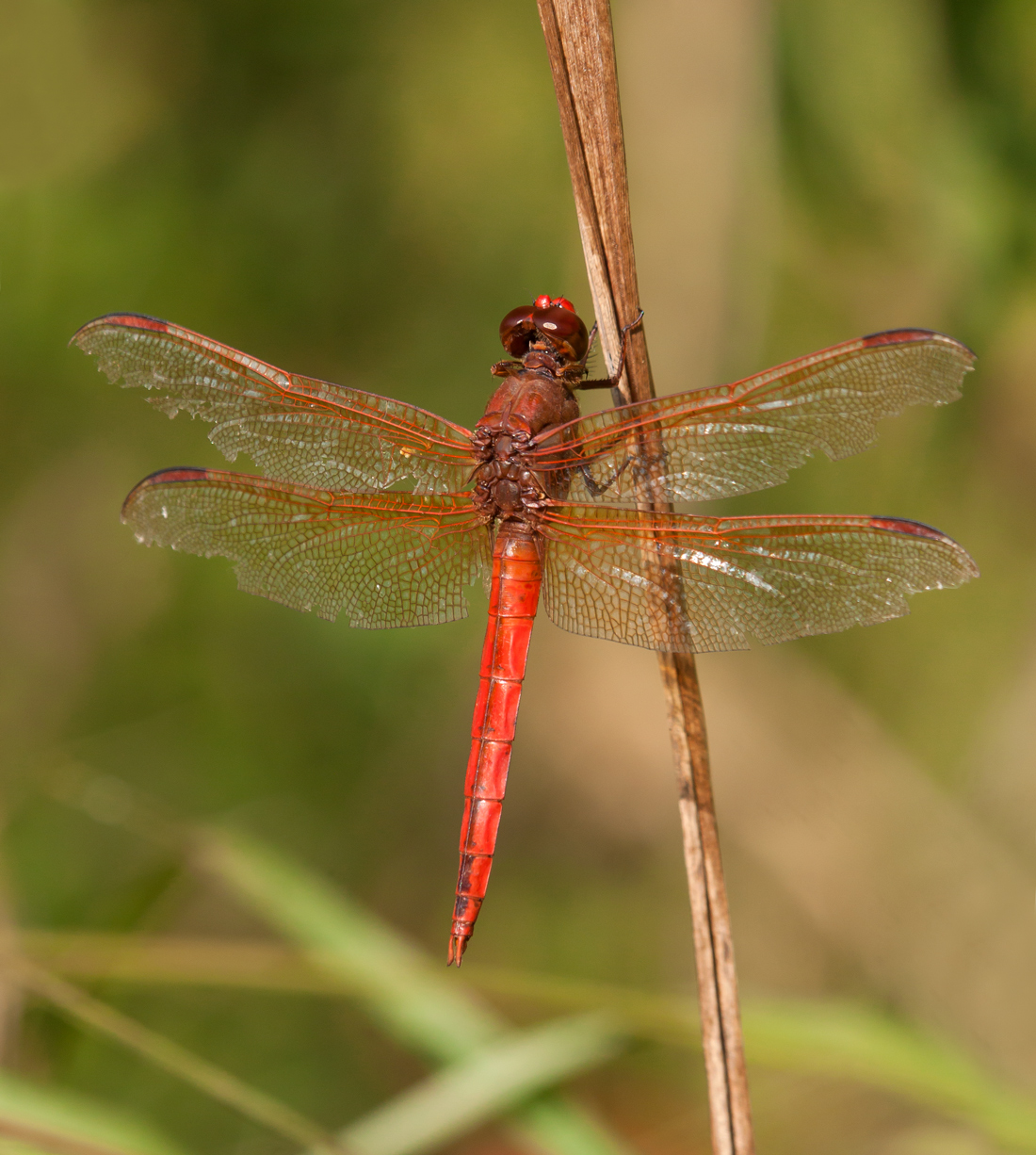
Two weeks ago, during the waning days of summer, I captured this image of a beautiful Needham’s Skimmer dragonfly (Libellula needhami) at Huntley Meadows Park, the local marshland where I do a lot of my shooting. The vivid red of its body made it really stand out—camouflage did not seem to be a viable option.

Although this dragonfly species is pretty common, I only saw a couple of them this season and this was the only one that I managed to photograph. The dragonfly was perched on a dried stalk in a field and it was tough to try to get any kind of clear background, particularly because I did not want to move too much and risk scaring away the dragonfly.

In these two images, you can see two slightly different approaches that I used. In the first one, I was not worried that there were some horizontal stalks in the background. In fact, I actually like the repetition of the horizontal line and don’t find them distracting, given how blurred they are. In the second image, I tried to get as uncluttered a background as I could, which isolates the dragonfly a little better. I tend to like the first image a little more, but I welcome any thoughts about which image you prefer.

Needham's SkimmerNeedham's Skimmer

© Michael Q. Powell. All rights reserved.


Read Full Post »

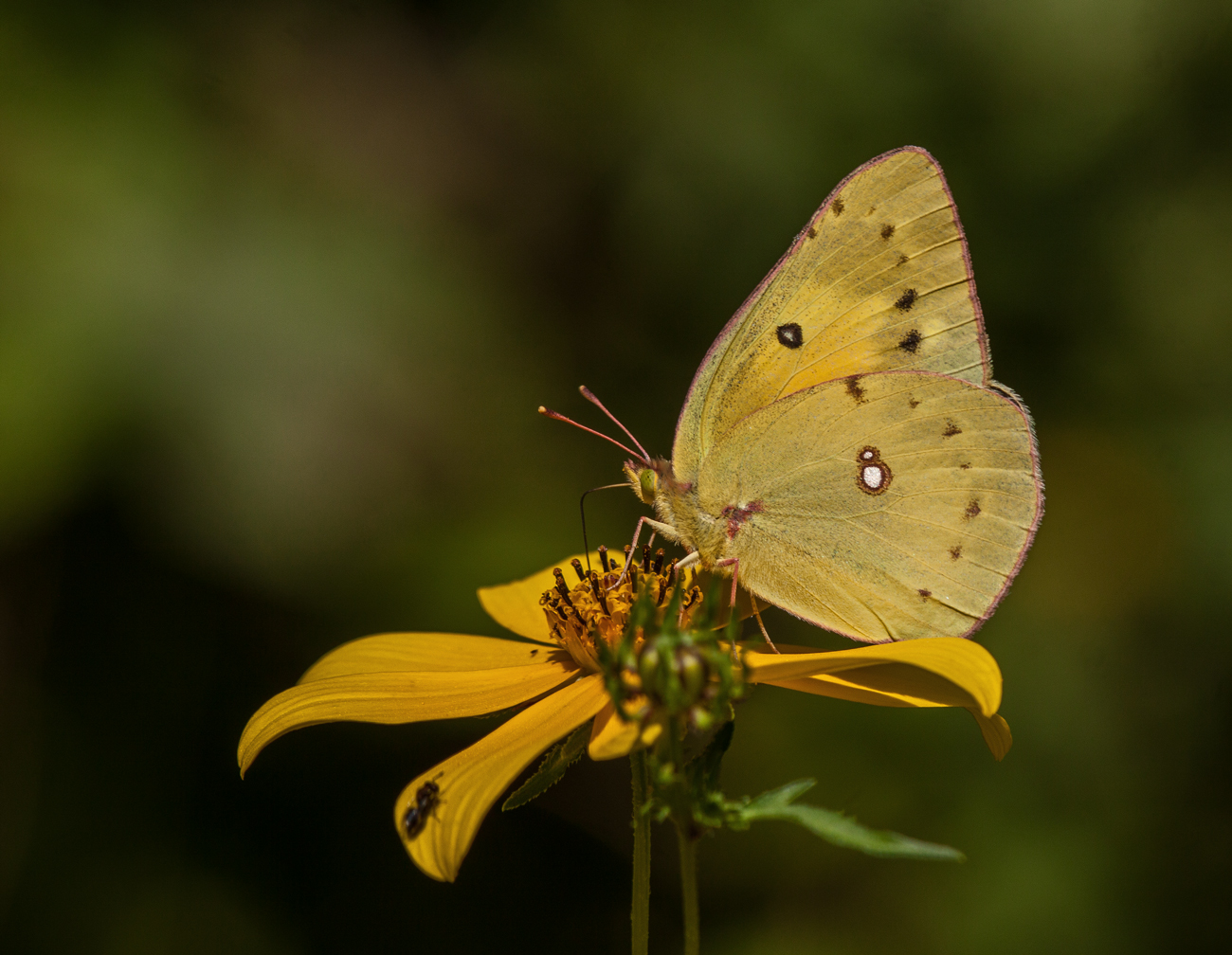
Strange as it seems, I have been seeing more butterflies in the waning days of summer than I did at its height. I think that this little beauty, which I spotted on Monday at my local marshland park, is a Clouded Sulphur butterfly (Colias philodice).

Clouded Sulphur

© Michael Q. Powell. All rights reserved.

Read Full Post »

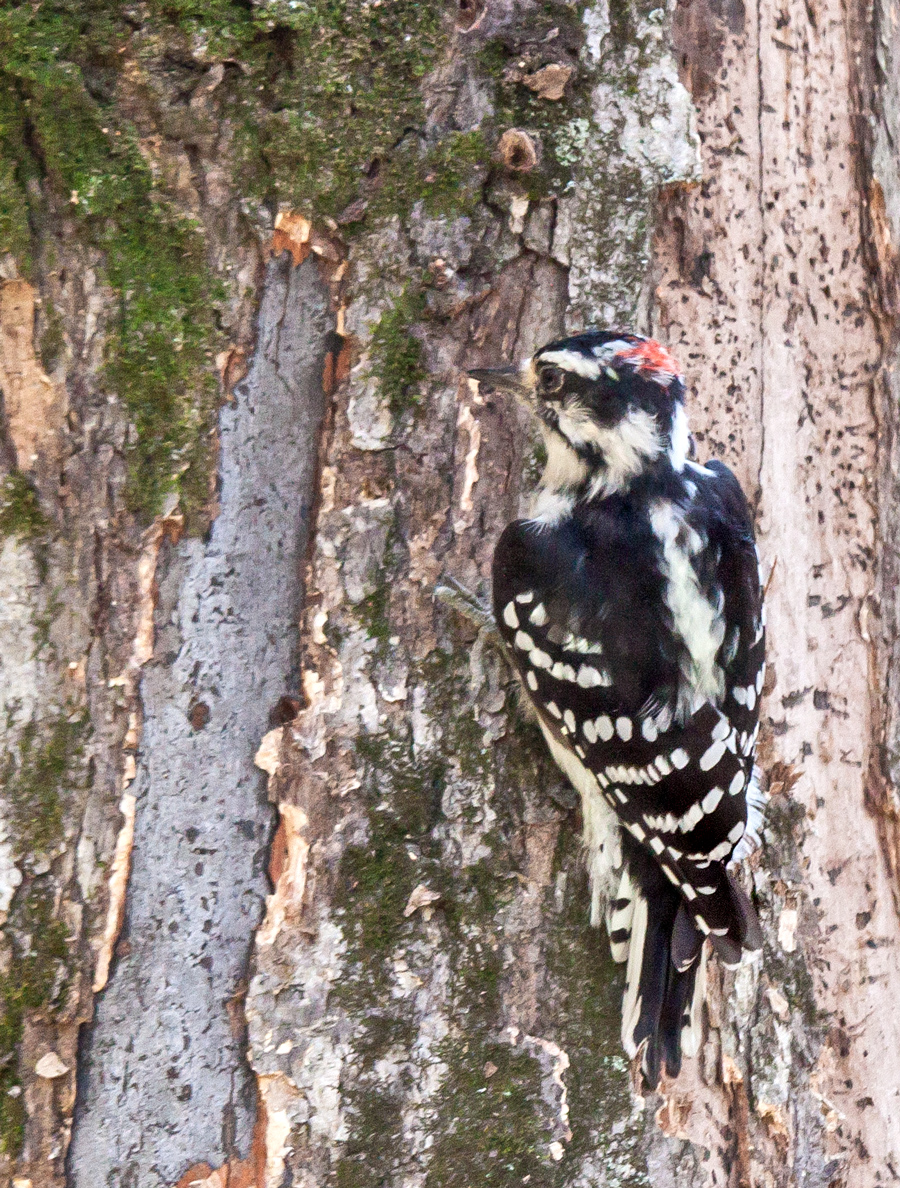
I don’t know where they have been hiding, but for several months this summer I hadn’t seen a single woodpecker at my local marsh. Consequently, I was really happy when I sighted this Downy Woodpecker (Picoides pubescens) right in front of me this past weekend. Downy Woodpeckers are small, but they make up for what they lack in size with an amazing amount of energy—they never seem to stand still.

downy_fall_blog

© Michael Q. Powell. All rights reserved.

Read Full Post »

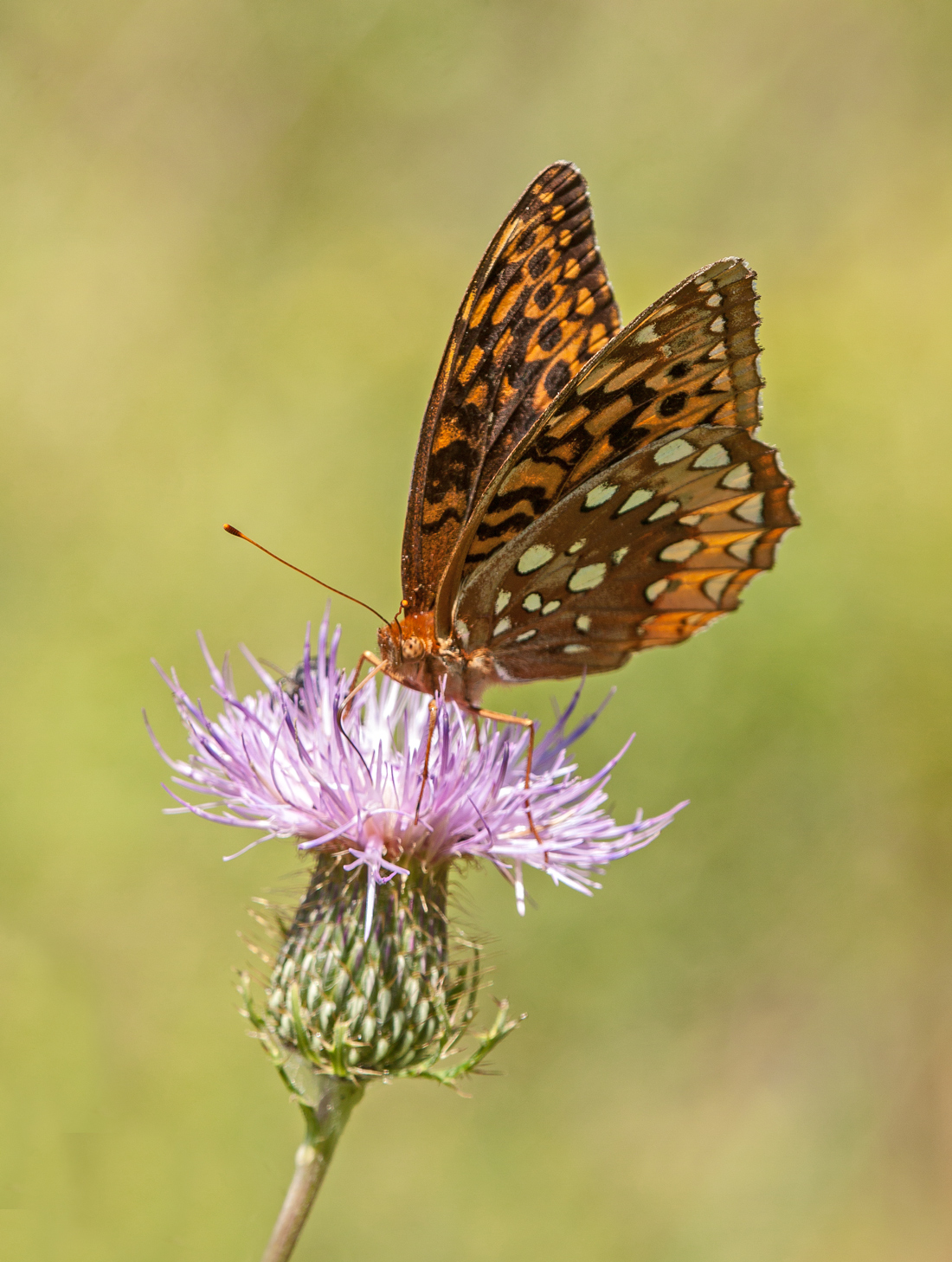
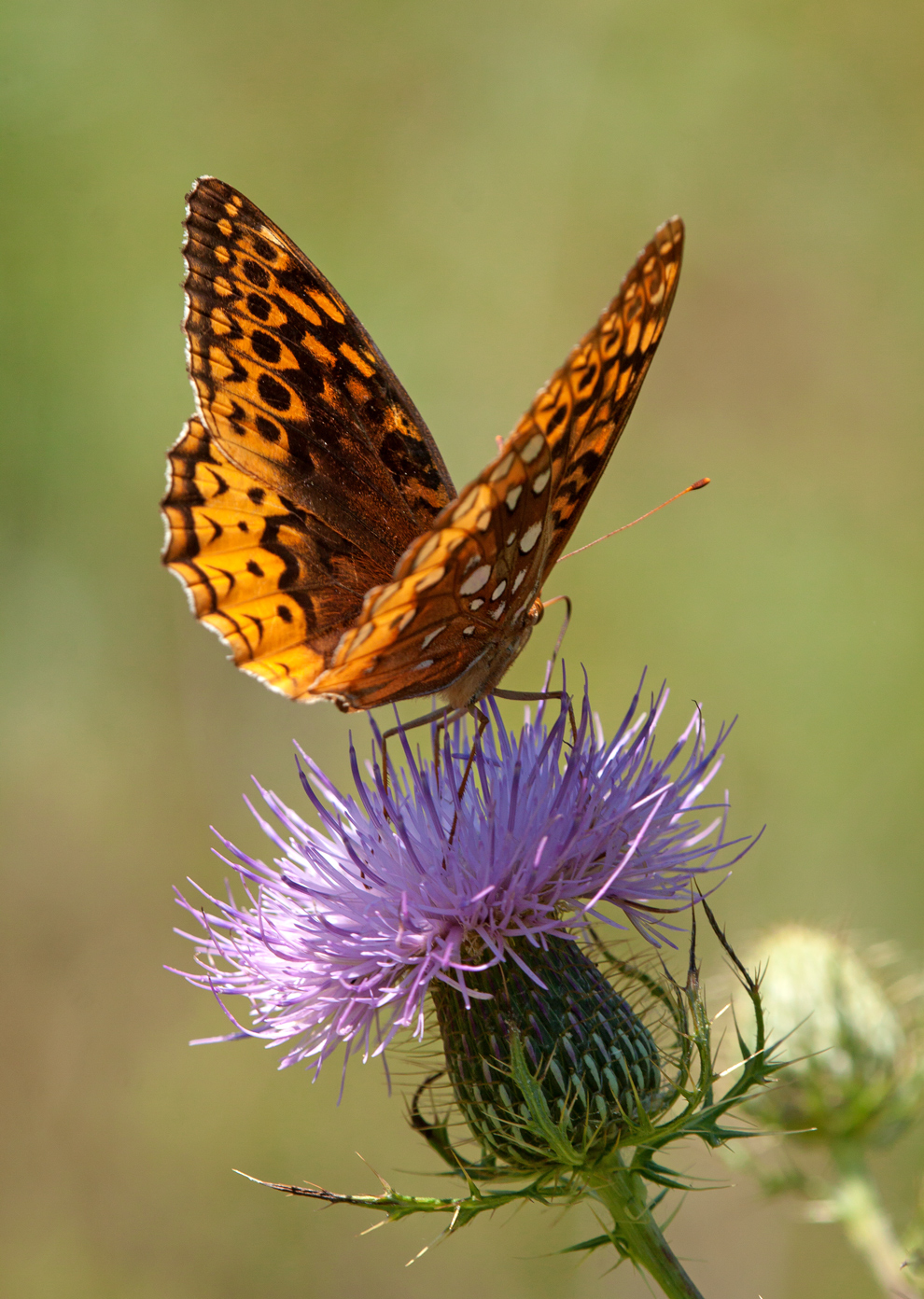
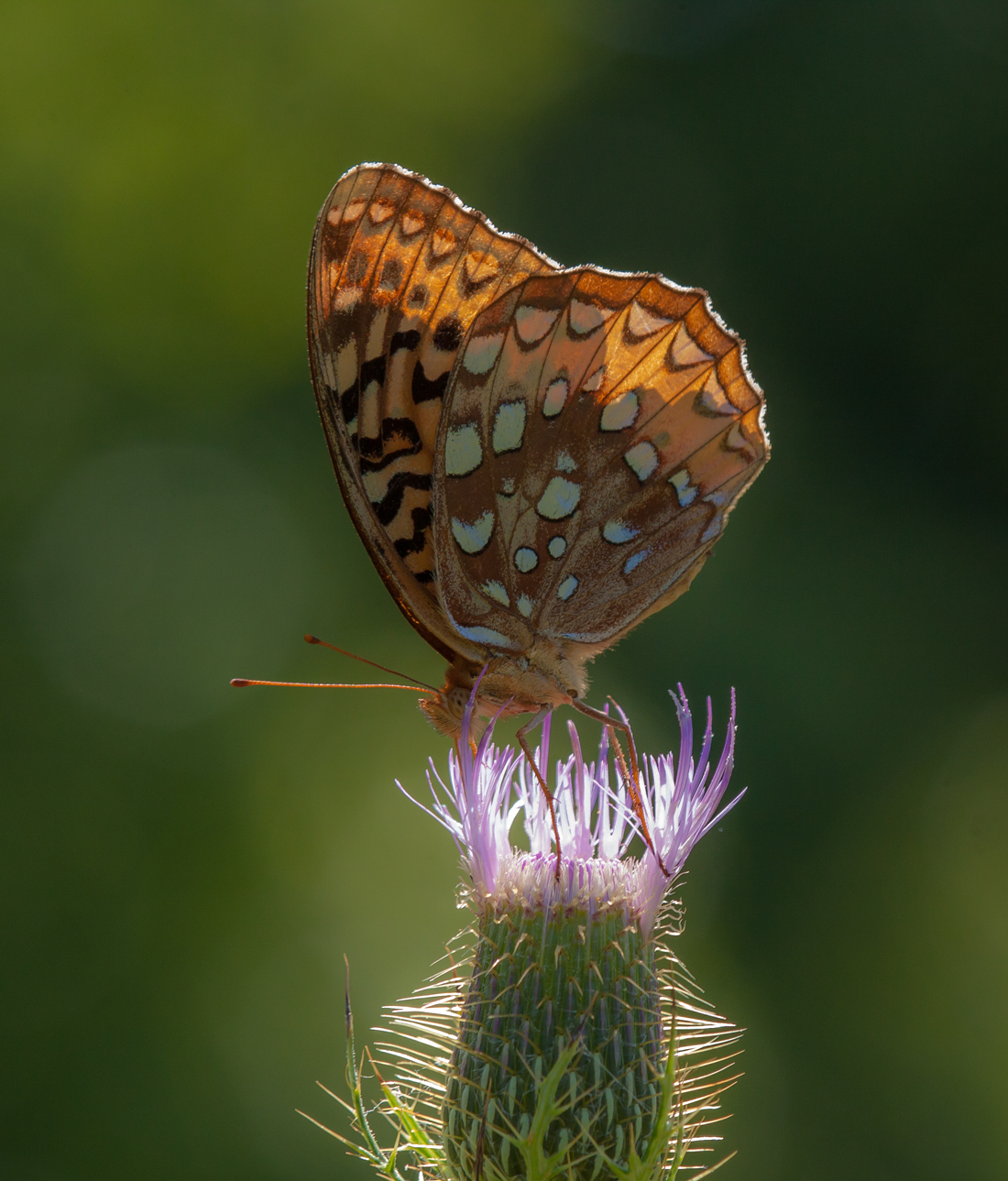
As I came out of the woods into a meadow at my local marshland park, I caught sight of some bright orange butterflies, which I could immediately identify as Great Spangled Fritillary butterflies (Speyeria cybele). The butterflies were concentrating their attention on a small cluster of plants which looked to be some kind of thistle.

I moved closer to get some shots, wading through the vegetation, which by this time of the summer is chest-high. I’ve already learned the hard way about the “joys” of chiggers and ticks, but I tossed my concerns to the side and boldly stepped forward. Fortunately for me, the butterflies were distracted with their feeding activity and did not fly away at my approach.

The sunlight was pretty strong and the look of the photo changed a lot as I circled around the butterflies, as you can see from the images below. I took a lot of shots, some of which I have not yet processed, but I was so happy with the images that I captured that I figured I better post some while it is still summer. Don’t be surprised if you see a few more images like this in the near future.

Great Spangled Fritillary

Great Spangled FritillaryGreat Spangled Fritillary

© Michael Q. Powell. All rights reserved.

Read Full Post »

Summer is not over yet. Sure, Labor Day has come and gone and school buses now clog my morning commute. In the elevator yesterday, I heard two ladies discussing whether they could still wear a white skirt to work. Leaves are starting to fall from the trees and are changing colors.

Despite these signs, I still defiantly proclaim that summer is not finished as long as I continue to see beautiful butterflies, like this Red-spotted Purple butterfly (Limenitis arthemis) that I spotted last Friday at my local marsh. The wooden board on which it is perched is not exactly photogenic, but I can’t complain too much, since these butterflies also have a fondness for rotting fruit and animal dung.

© Michael Q. Powell. All rights reserved.

Read Full Post »

You know that summer is coming to a close when the dragonflies that were in constant flight earlier in the season seem to be resting more often, like this Black Saddlebags dragonfly (Tramea lacerata) that one of my fellow photographers, Walter Sanford, pointed out this past weekend at my local marsh. This dragonfly kept flying back and forth between two perches that were tantalizingly just out of the range of the 180mm lens that I had on my camera. I didn’t dare to take the time to change my lens, knowing that the dragonfly would almost certainly fly away at the most inopportune moment, so I ended up cropping a lot, especially in the first image.

The only shots that I could get of Saddlebags dragonflies earlier in the summer were in-flight shots and I have already posted some shots of a Black Saddlebags in the air. I realized, though, that I had not posted an image of its more colorful counterpart, the Carolina Saddlebags (Tramea carolina) that I photographed during a visit to Lewis Ginter Botanical Gardens in Richmond, Virginia. I took that shot (the third one below) from a pretty long distance, but was able to achieve focus and capture some of the wonderful details of this beautiful red dragonfly.

Black Saddlebags dragonflyBlack Saddlebags dragonfly

Carolina Saddlebags dragonfly

© Michael Q. Powell. All rights reserved.

Read Full Post »

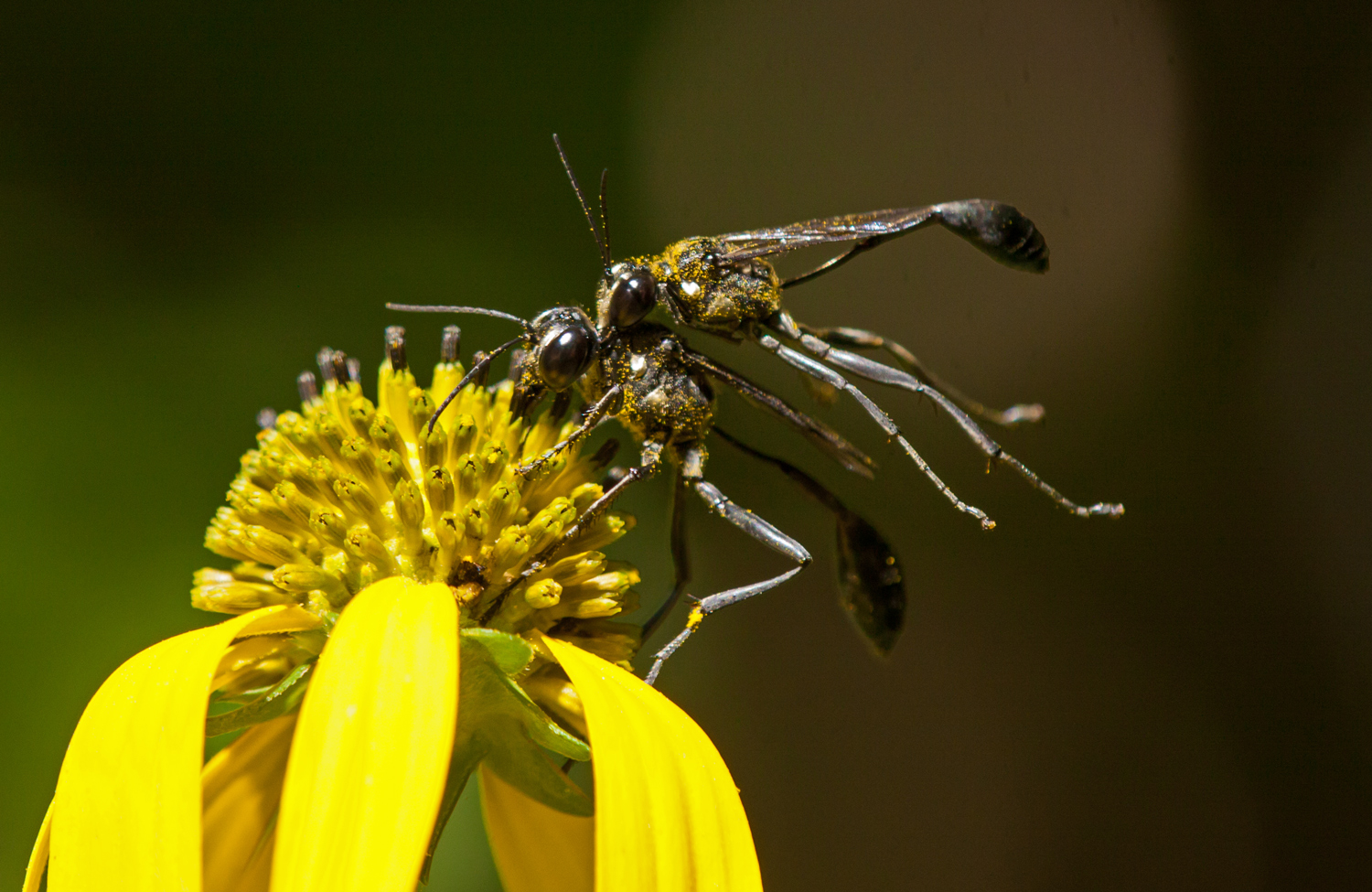
I don’t know much about the intimate life of wasps, but it sure looked to me like one of them is giving the other a loving nibble on the back of its neck. Both of them were covered in a lot of pollen, like they had just had a roll in the hay, figuratively speaking.

The two of them had flown to this flower in what appeared to be a mating position, though I can’t tell if the wasps are actually hooked up in this shot. My experience with dragonflies, however, has shown me that insects can mate in all kinds of unusual positions.

I am comfortable with moving in close for photos of bees, but I decided that in this case it was prudent to maintain a respectful distance from the wasps.

wasp kiss

© Michael Q. Powell. All rights reserved.

Read Full Post »
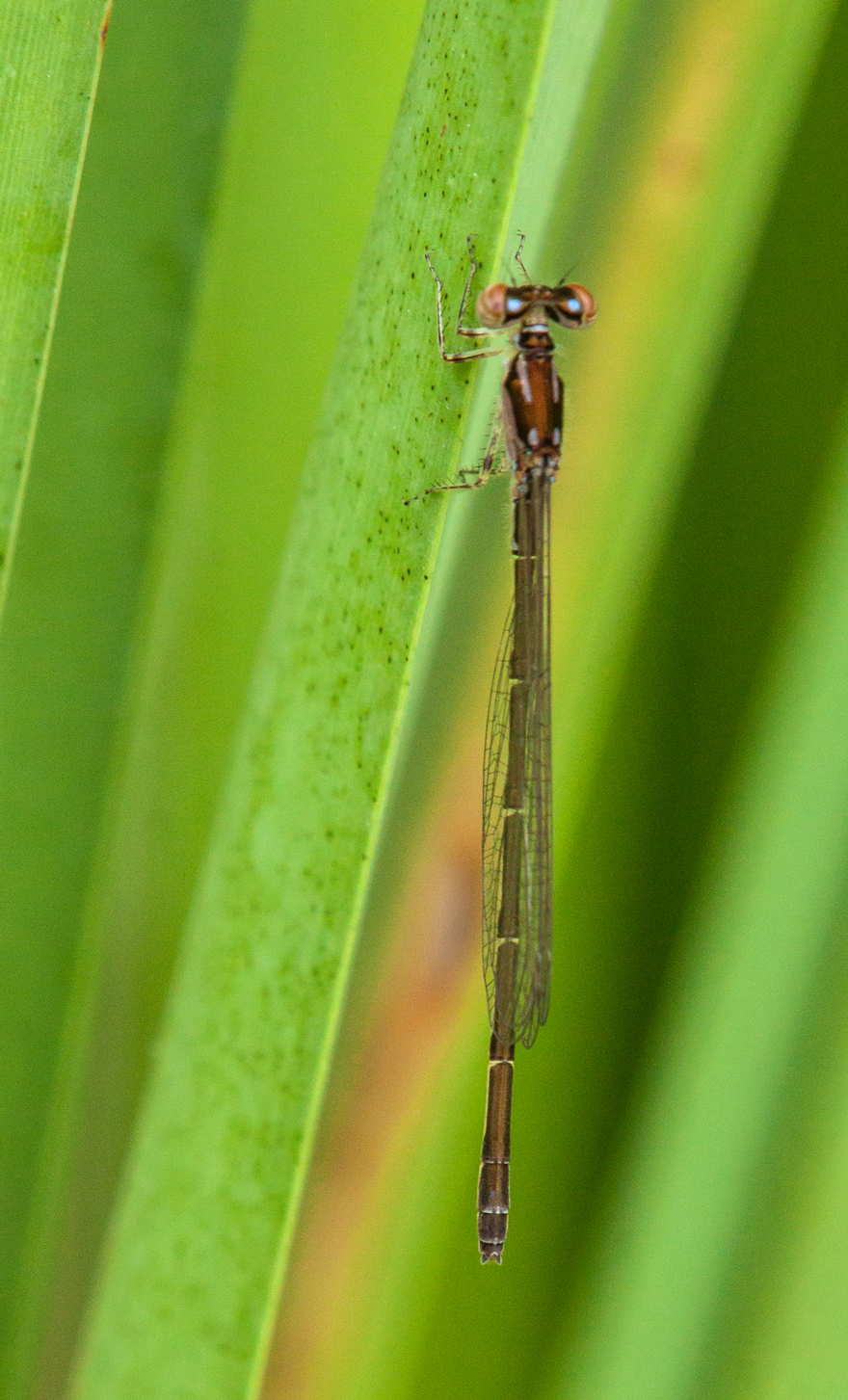
It’s hard to imagine a simpler composition—a tiny damselfly in the green growth of the marsh—but I find real beauty and power in this image.

Look closely at this damselfly, which I think is a female Fragile Forktail (Ischnura posita), and you will see some amazing colors and details, all packed into a body that is only about an inch long.

Click on the image to see a higher resolution view of the image.

Fragile Forktail

© Michael Q. Powell. All rights reserved.

Read Full Post »
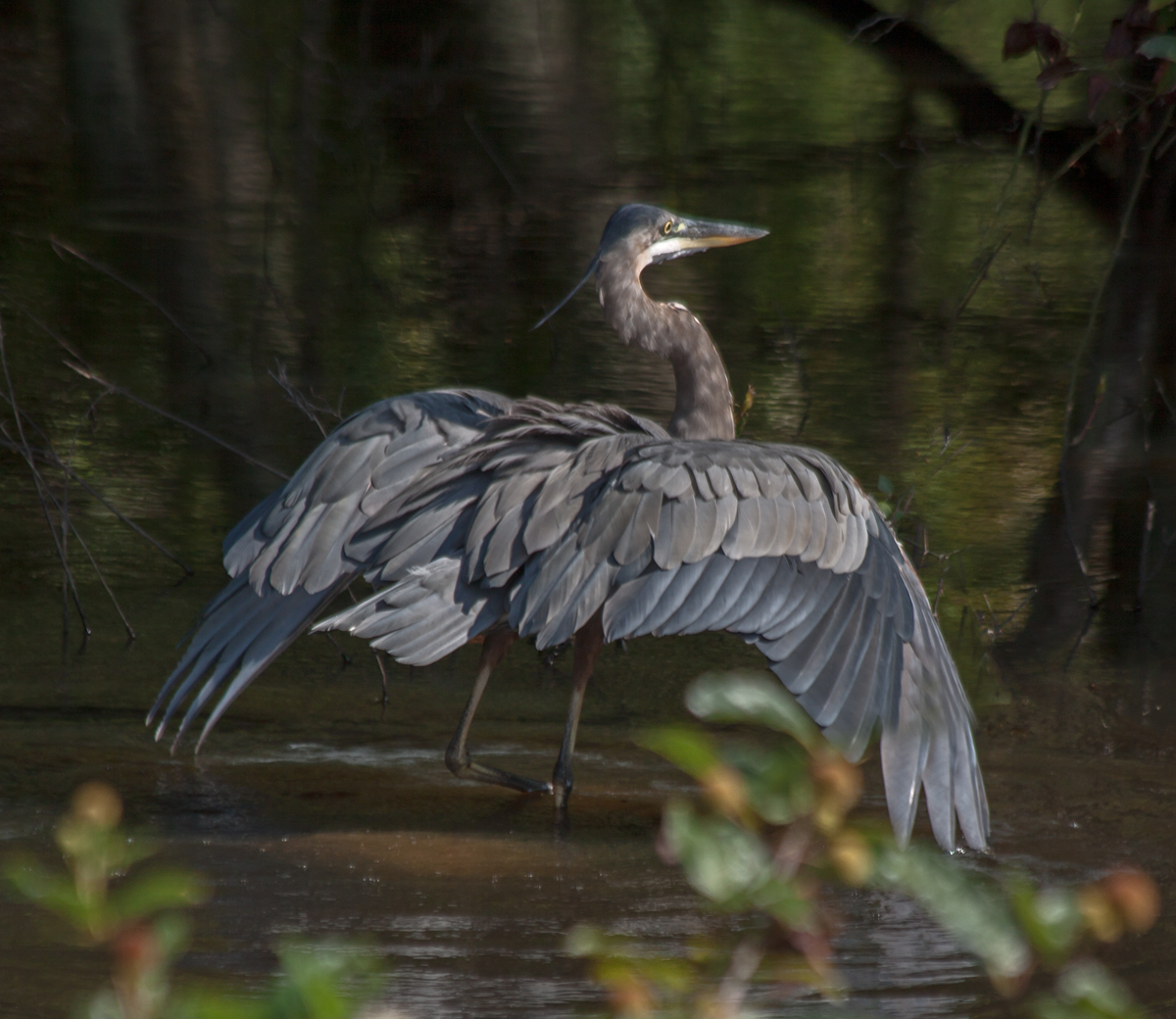
Several Great Blue Herons (Ardea herodias) were very active yesterday at my local marsh, chasing each other around and squawking loudly. One of them flew up into a tree near to where I was standing and perched for a little while. I got this shot shortly after the heron flew down from the tree into the water and extended its wings to arrest its momentum.

Great Blue Heron

© Michael Q. Powell. All rights reserved.

Read Full Post »

Generally I like to photograph wildlife subjects in a natural environment. When this female Common Whitetail dragonfly (Plathemis lydia) landed on a metal sprinkler cover, though, I couldn’t help but like the contrast between the natural subject and the industrial background.

Common Whitetail dragonfly

© Michael Q. Powell. All rights reserved.

Read Full Post »

I used to think that there were only one or two varieties of black-colored swallowtails, but as I learned there were more such species (some deliberating mimicking each other), I’d sometimes get confused and frustrated when trying to distinguish among them.

For example, I encountered this beautiful black swallowtail butterfly feeding on a Cardinal Flower (Lobelia cardinalis) this past weekend at my local marsh. It is definitely an unusual circumstance when I can identify a flower, but not the insect.

So, I asked myself, is this a female Eastern Tiger Swallowtail or a Pipevine Swallowtail or a Spicebush Swallowtail or a Black Swallowtail? How can you tell them apart, given they are all black and all have swallowtails?

While searching on the internet, I came across a wonderful blog posting on a site called Louisiana Naturalist that compared all four of these swallowtail species and pointed out clearly the distinguishing marks. Once I looked at the posting, it was pretty clear that “my” butterfly is a Spicebush Swallowtail (Papilio troilus). Why am I so confident? One of the identifying marks is the blue comet-like marking that interrupts the inner row of orange spots.

It’s interesting to see this butterfly feeding on the Cardinal Flower. The website of the Lady Bird Johnson Wildflower Center at the University of Texas states that the Cardinal Flower depends on hummingbirds for pollination, because most insects find its long tubular flowers difficult to navigate. I suspect that butterflies play a role in pollinating these plants, even if they are not as efficient as bees would be (or maybe even hummingbirds).

Spicebush Swallowtail

© Michael Q. Powell. All rights reserved.

Read Full Post »
Can you name the most recognized Skipper butterfly in North America?  According to Wikipedia, it’s the Silver-spotted Skipper butterfly (Epargyreus clarus), like this one that I photographed recently at Brookside Gardens in Wheaton, Maryland.

I have been seeing a lot of skippers this month and many of them look so much alike that it is difficult for me to identify them  The Silver-spotted Skipper’s colors may be a little drab, but I am happy that it is easy to identify it, which makes me happy, given that there are over 3500 different species of skippers worldwide, according to a separate article in Wikipedia.

silver_blogsilver3_blog

© Michael Q. Powell. All rights reserved.

Read Full Post »
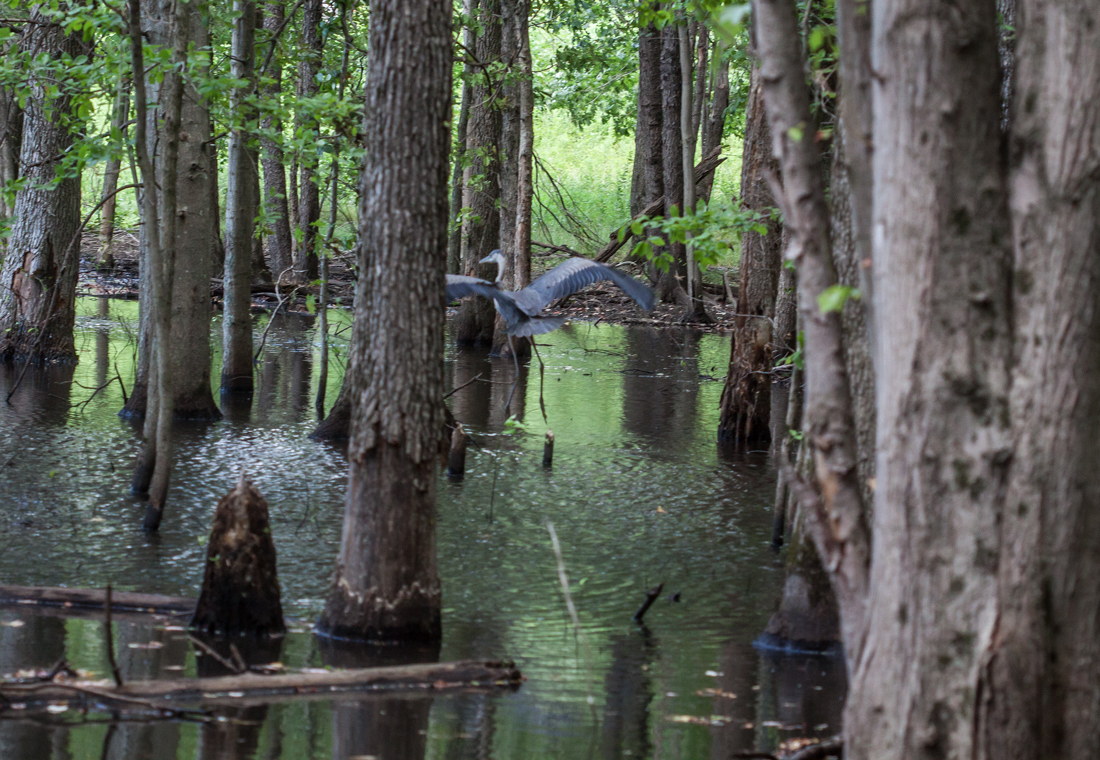
After a considerable amount of conservation construction at my local marsh, one wooded area is now flooded. It is cool and shaded and offered me respite from the hot sun on a recent summer afternoon.  Apparently a Great Blue Heron (Ardea herodias) had the same idea and I inadvertently flushed him from his calm repose.

In many ways, this is more of a landscape shot than a wildlife one, which is unusual for me. Normally I try to zoom in really close to the action, but at that moment I was simply enjoying the beautiful light that was coming into this scene. Besides, I had my 100mm macro lens on my camera, so zooming was not an option.

I really like the way the trees turned out in the image—it’s hard to explain why. In the foreground, you can see what I believe is some of the local beavers’ efforts. Last fall, the beavers felled a number of trees in this area and I wonder if they are the ones that stripped the bark off of part of one of the trees.

Click on the image if you want to see a higher resolution view of this shot.

takeoff_blog

© Michael Q. Powell. All rights reserved.


Read Full Post »

Last week I turned 60, but I am happy to confess that I still chase butterflies with much of the exuberance (if not quite the energy) of a child. There is something really special about the delicate beauty of butterflies that draws me in and the idea of their metamorphosis inspires me.

During a recent trip to Meadowlark Botanical Gardens in Vienna, Virginia, I was thrilled to spot this female Eastern Tiger Swallowtail butterfly (Papilio glaucus). She was feeding on an identified plant that must have been tasty, because she kept moving from spot to spot on the plant, offering me multiple opportunities to get some shots.

I especially like the fact that I was able to get the sky into some of the images, reinforcing for me the idea of butterflies flying freely and lightly through the open air. Now that’s the way to live a life.

swallowtail1_blogswallowtail2_blogswallowtail3_blogswallowtail4_blog

© Michael Q. Powell. All rights reserved.

Read Full Post »
The lighting was breathtakingly beautiful and the reflections were amazing when I caught sight of this Great Blue Heron (Ardea herodias) late last month at my local marsh. The heron was close enough that the 100mm macro lens that i had on my camera was the perfect lens for a portrait of this beautiful bird.

Great Blue Heron

© Michael Q. Powell. All rights reserved.

Read Full Post »
I used to think that all black-and-yellow insects circling around flowers were bees, but quickly learned that many of them are flower flies (also known as hoverflies). There are a lot of different varieties of flower flies, but I think that they all belong to the Syrphidae family.

Yesterday when I was visiting Brookside Gardens in Wheaton, Maryland, I managed to capture this image of a flower fly just as it had inserted its head into a small purple flower. It’s a pretty simple composition, but I really like the way that it turned out, with a good amount of detail on the fly’s body.

hover fly

© Michael Q. Powell. All rights reserved.

Read Full Post »

Chasing a nymph through the woods–it may sound like I was living out some fantasy as a character in Shakespeare’s A Midsummer Night’s Dream, but I was only running after a butterfly, a Common Wood Nymph (Cercyonis pegala).

As is usually the case, I had never seen this “Common” butterfly before, but the large, yellow-ringed eyespots on the forewings make it pretty distinctive and I had no trouble finding it in an on-line identification guide.

I chased after the butterfly for quite some time before it finally came to a stop and perched on a tree. I am not sure why, but the butterfly chose to perch upside down. When I processed my images, I couldn’t decided if I should flip the image 180 degrees or not. Ultimately I decided that the flipped image, which is the first one, looked more “normal.”

Which one do you think works better, the flipped image, i.e. the first one, or the one with the original perspective, i.e. the second one?

nymph1A_blognymph1_blog

© Michael Q. Powell. All rights reserved

Read Full Post »
« Newer Posts - Older Posts »