Feeds:
Posts
Comments

Archive for the ‘spring’ Category

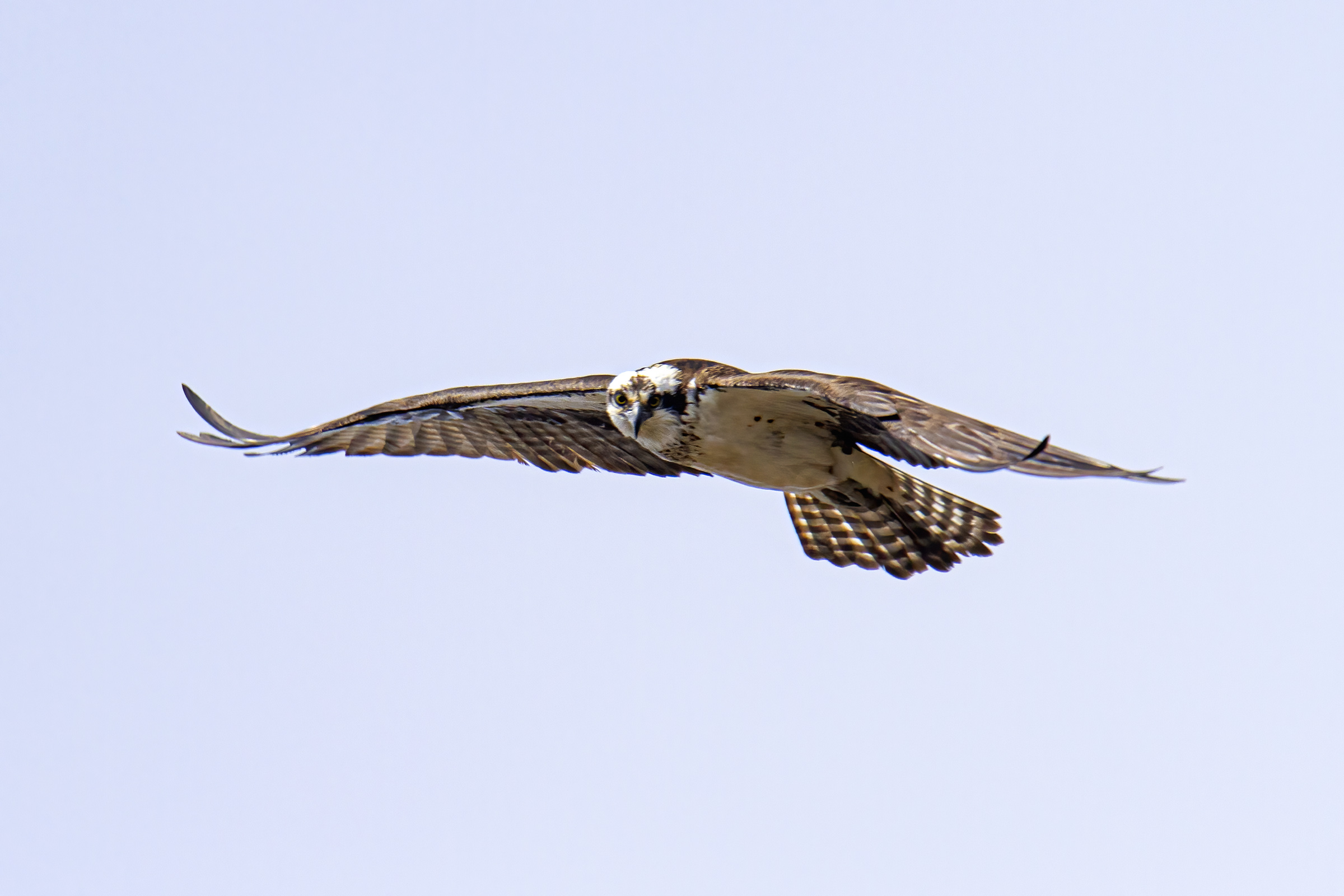
Like many other local photographers, I am thrilled that Ospreys (Pandion haliaetus) have returned to our area—they spend the colder months in warmer locations. On Tuesday, I captured several shots of one of the ospreys as it soared above me at Occoquan Bay National Wildlife Refuge.

Ospreys hover in the air a bit, so it is a bit easier to get shots of them flying than it is with eagles and hawks. However, it is still a challenge to get shots that have good wing and head positions. I was happy that the osprey was flying towards me in both of these images and its eyes are somewhat visible.

More osprey are sure to arrive soon and I am sure that I will get some better (and closer) shots in the upcoming months. I am content with these shots that that document the fact that the ospreys have returned, yet another sign of the arrival of spring.

Osprey

osprey

© Michael Q. Powell. All rights reserved.


Read Full Post »

I am not sure what was going on Tuesday in the waters off of Occoquan Bay National Wildlife Refuge, but two Bald Eagles (Haliaeetus leucocephalus) were perched on a structure and an aggressive Osprey(Pandion haliaetus) kept dive-bombing them repeatedly. The osprey would fly by right above them and each time the eagles would rear up with their talons extended as they screamed at the osprey. I took the shot below from a long way away, but it gives you a sense of the action.

Several of my friends on Facebook suggested that this might have been a territorial dispute. Others posited that the eagles had stolen a fish from the osprey and the osprey was angry about it. Another friend provided a link to a fascinating article at Natural Habitat Adventures entitled “Eagles and Ospreys: When Birds of Prey Clash.” According to the article, eagles will sometimes steal osprey chicks and ospreys may attack eagles while they are eating. It is too early for there to be chicks—ospreys have only recently returned to our area—but it is certainly possible that this was a food fight.

eagles and osprey

© Michael Q. Powell. All rights reserved.

Read Full Post »

Bright colors are starting to emerge in the landscape as we move deeper into spring, a welcome sight after the long gray days of winter. I was delighted to see some equally bright colors in the feathers of several small birds that I photographed last Saturday in the vegetation surrounding a small suburban pond in Northern Virginia.

The first bird appears to be a female Yellow-rumped Warbler (Setophaga coronata). Normally I am not a big fan of a head-on shot of a bird, but in this case I really like the way that the photo shows both of the bird’s yellow patches on its breast (there is also a yellow patch on the warbler’s rump).

The bird in the second photo is a male House Finch (Haemorhous mexicanus). I was struck by the intensity of the red on the finch’s upper body, which reminded me of the color of a male cardinal.

In the coming months, warblers will be migrating northward through my area. Each year it is a real challenge for me to get shots of these colorful little birds, because they appear just as the trees begin to cover themselves with leaves—I often can hear warblers behind the leafy foliage without being able to see them.

yellow-rumped warbler

house finch

© Michael Q. Powell. All rights reserved.
Read Full Post »

On Saturday I encountered several female House Sparrows (Passer domesticus) with clumps of vegetation in their mouths and suspect that they are beginning to construct nests. According to the Cornell Lab of Ornithology, “House Sparrow prefers to nest in manmade structures such as eaves or walls of buildings, street lights, and nest boxes instead of in natural nest sites such as holes in trees.”

I know that some people resent the invasive presence of House Sparrows, which were introduced in the United States from Europe in 1851, because they sometimes displace native species. Personally I find them to be as interesting to observe and photograph as any other birds.

Perspective makes a difference—as a photographer I focus my attention on different aspects of my subjects than others may do. For, example,  I know that farmers and gardeners will view some vegetation and insects as pests, while I may find them to be beautiful subjects. It is definitely a cliché, but there is also truth in the old saying that “beauty is in the eye of the beholder.”


House Sparrow

House Sparrow

© Michael Q. Powell. All rights reserved.
 

Read Full Post »

Does the proverbial early bird always get the worm? I’m not sure if that is necessarily the case. I photographed this American Robin (Turdus migratorius) just before noon on Saturday. Perhaps this robin likes to sleep in late during the weekend. Whatever the case, I was delighted to capture this image of the robin snagging a juicy worm for its meal, which might have been brunch for a late-rising bird.

American Robin

© Michael Q. Powell. All rights reserved.

Read Full Post »

When the light is coming from the right direction and a Double-crested Cormorant (Phalacrocorax auritus) is fairly close, you can catch a glimpse of the bird’s stunning turquoise eyes. Yesterday I was fortunate to spot a cormorant perched on a concrete bar that sticks out of a retention pond in a nearby neighborhood. The cormorant was fairly close to the shore, which meant that I was able to capture some detailed images of the striking bird.

The first image is a simply a crop of the second image that really highlights the cormorant’s eyes. The orange skin on its face really makes those eyes “pop.” The cormorant twisted its body from side to side, stretching its long neck, before finally slipping into the water, as you can see in the final photo. This is the view that I am most accustomed to during my wildlife adventures, though normally the cormorant is a lot farther away from me.

These photos are proof that it is not always necessary to travel to a wildlife refuge to see wildlife—this pond is only about a mile (1.6 km) or so from my suburban townhouse.

Double-crested Cormorant

Double-crested Cormorant

Double-crested Cormorant

Double-crested Cormorant

© Michael Q. Powell. All rights reserved.
Read Full Post »

When a Bald Eagle (Haliaeetus leucocephalus) looks directly at me, it feels really intense—there is a sense of ferocity and power in its glaring eyes. Normally I do not like eye-t0-eye photos of birds, because that direct angle causes their bills to look really strange. In this photo, though, I really like the way that the eagle’s beak looks and the way that the color of its beak matches the color of its feet.  The sharpness of the beak also mirrors the sharpness of the eagle’s prominent talons.

I try to get as many different kinds of photos of eagle as I can, and this image has a different “feel” than most of my other images. There is a minimalism and starkness that really appeal to me and a very, but effective composition.

I really feel blessed that I get to see bald eagles so often when I visit Occoquan Bay National Wildlife Refuge, where I take most of the eagle shots that are featured in my blog postings.


Bald Eagle

© Michael Q. Powell. All rights reserved.

Read Full Post »

Most of the time I am an opportunistic photographer—I wander about and react to the the things that I see. During the nesting season of Bald Eagles (Haliaeetus leucocephalus), however, I will hangout at spots where I can observe the eagle nests.

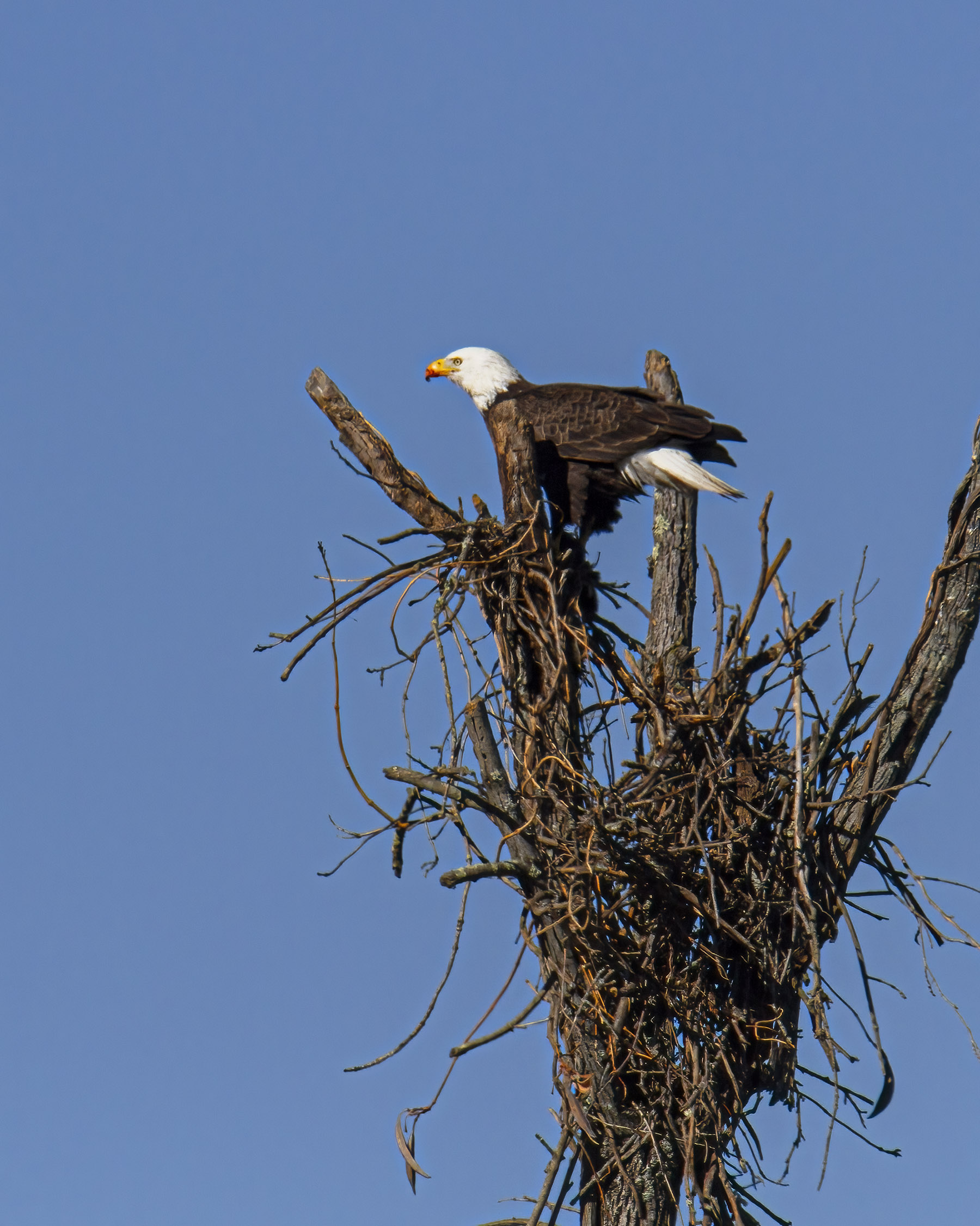
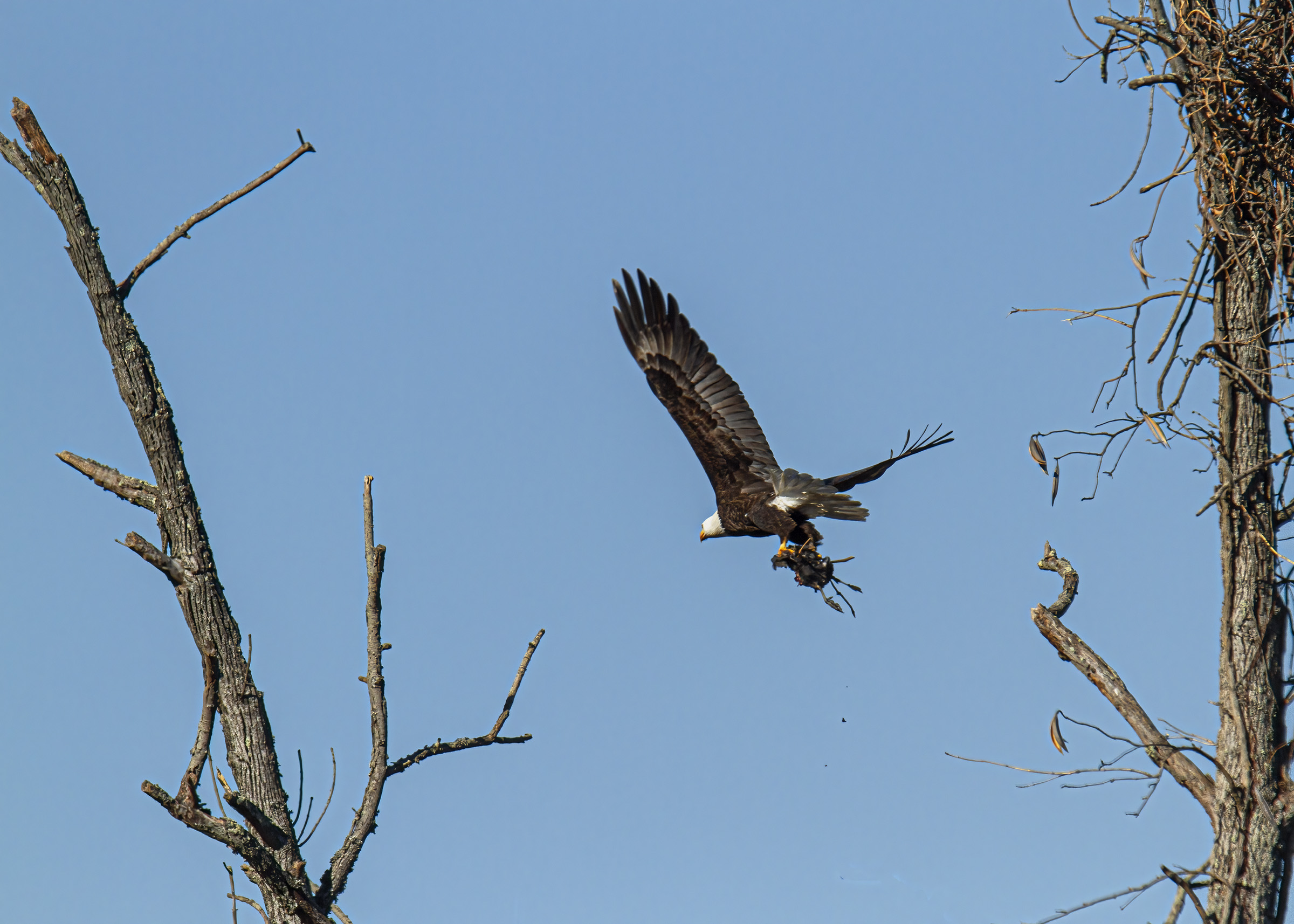
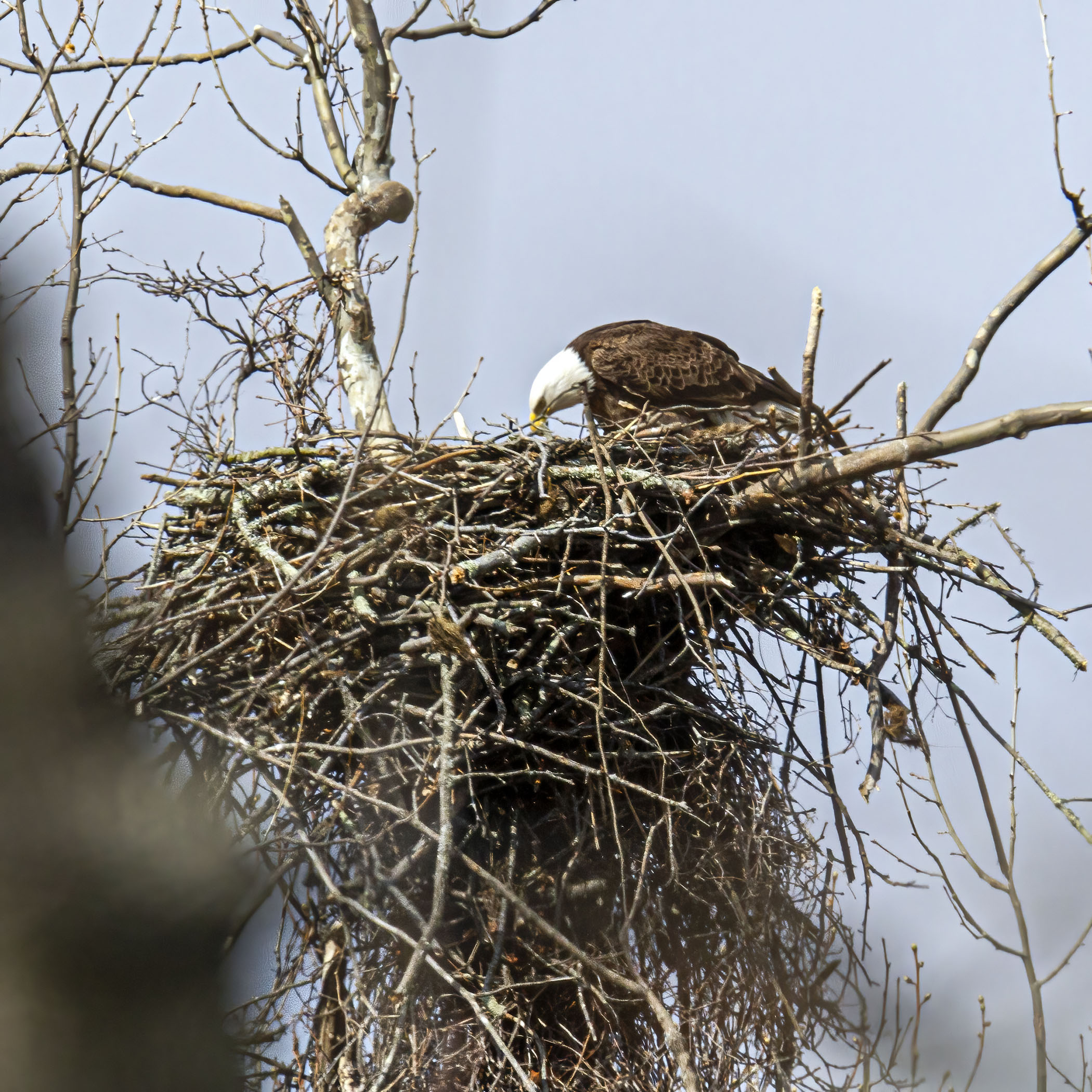
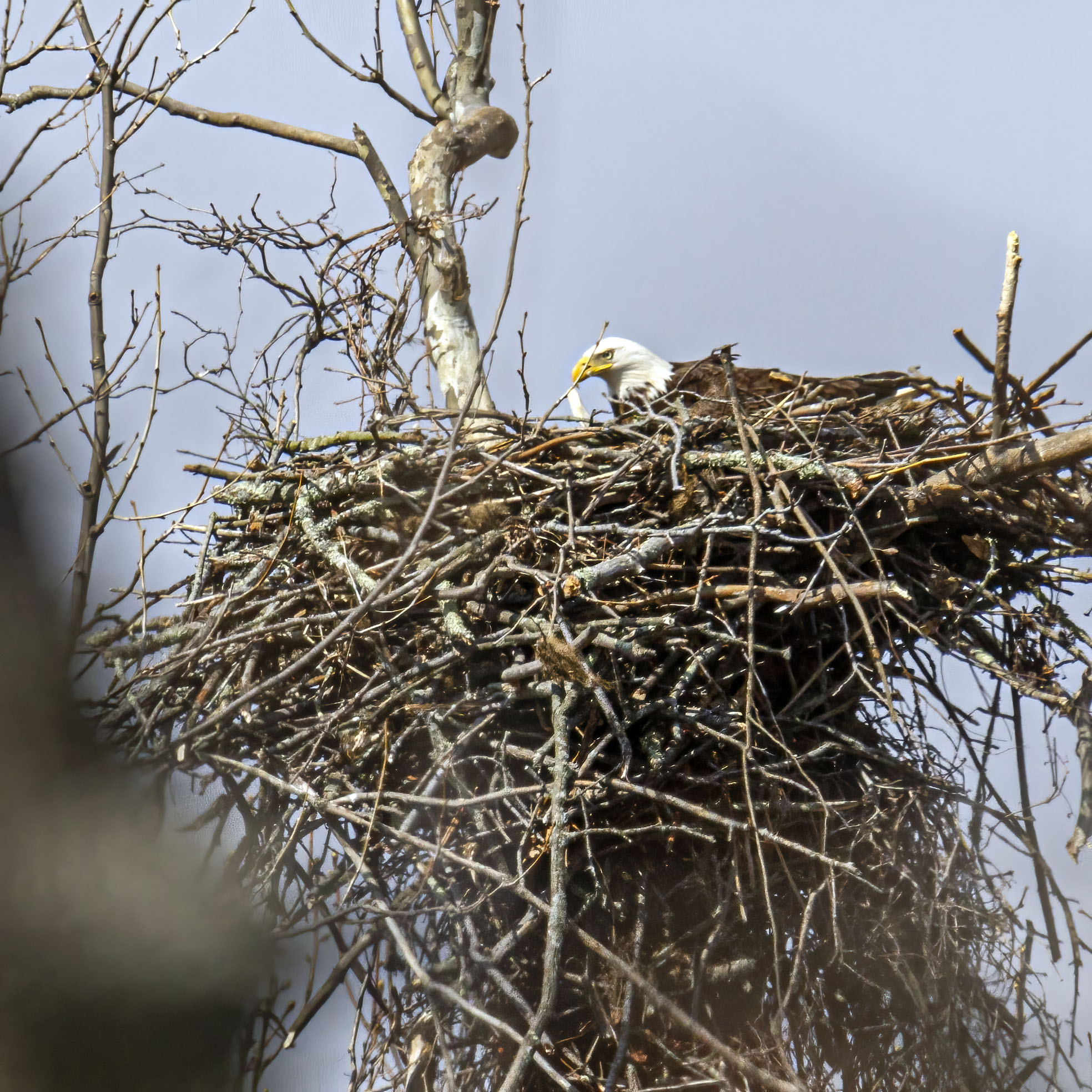
The members of an eagle couple take turns sitting on the eggs, and I love to try to capture the changing of the guard, i.e. when one eagle switches off with the other one. Earlier this month, I observed such an exchange at one of the nests that I watch at Occoquan Bay National Wildlife Refuge.

The first photo shows the departing eagle. If you look closely behind the eagle, you will see some small twigs in the air that were dislodge during the takeoff. I had to look through a lot of vegetation to get a clear view of the nest and the dark smudges in the photo are branches that were partially blocking my vision—fortunately those branches were on the periphery of my composition.

The second photo shows the arriving eagle. The nest is so small that I don’t think it could hold both eagles at the same times, particularly when there are fragile eggs present.

Bald Eagle

Bald Eagle

© Michael Q. Powell. All rights reserved.
Read Full Post »

Although the weather the past few days has been cold and windy, it is beginning to look a lot like spring. Some trees have already started to blossom and pops of color are appearing in the front yards of many of my neighbors. In Washington D.C., the cherry blossoms are forecast to reach their peak flowering phase next week.

Yesterday I took my camera with me during a short walk through my neighborhood. Rather than toting the long telephoto zoom lens that I use to photograph birds, I carried the much lighter 60mm macro lens. When I am photographing flowers, I usually try to get up close to them in order to capture the maximum amount of detail.

I spotted some small daffodils adjacent to the steps of my next-door neighbor and stopped to photograph them. Daffodils are probably the most prominent flowers at this moment and I have seen them in multiple sizes and shades of yellow, including some two-toned ones.

I next visited the front garden of fellow photographer Cindy Dyer. I was delighted to spot a few Spring Snowflakes (Leucojum vernum) in bloom. I used to have trouble distinguishing between snowdrop and snowflake flowers, but now I know that the ones with the green spots on each petal are snowflakes.

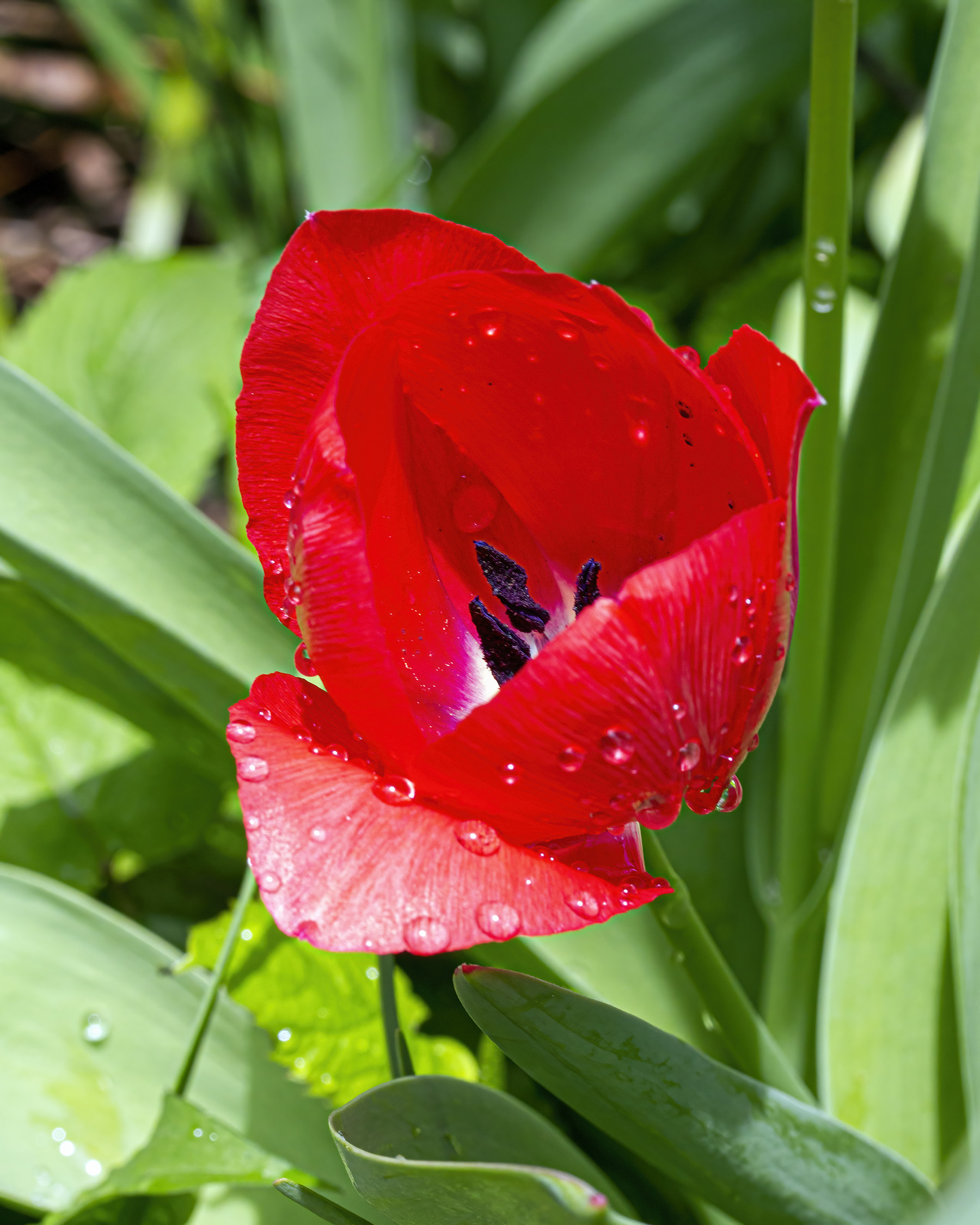
The last flower that I photographed in Cindy’s garden was a bright red tulip. This tulip was small and was not as showy as some of the other varieties that will appear in the coming weeks, but it seemed especially beautiful. It was the only tulip in bloom and did not have to share the stage with any of its siblings.

Those of you who see my photos regularly will definitely notice that these are not my “normal” shots. It is good, I think, to switch things up periodically and point my camera at some different subjects.

daffodils

snowflake


tulip

© Michael Q. Powell. All rights reserved.


Read Full Post »

It’s almost time for birds to be migrating northward through our area, some of which will remain with us throughout the warmer months. Many birders look forward to this time when warblers appear each year. For me, though, it is always a challenge, because leaves appear at about the same time, making it tough to spot the new birds.

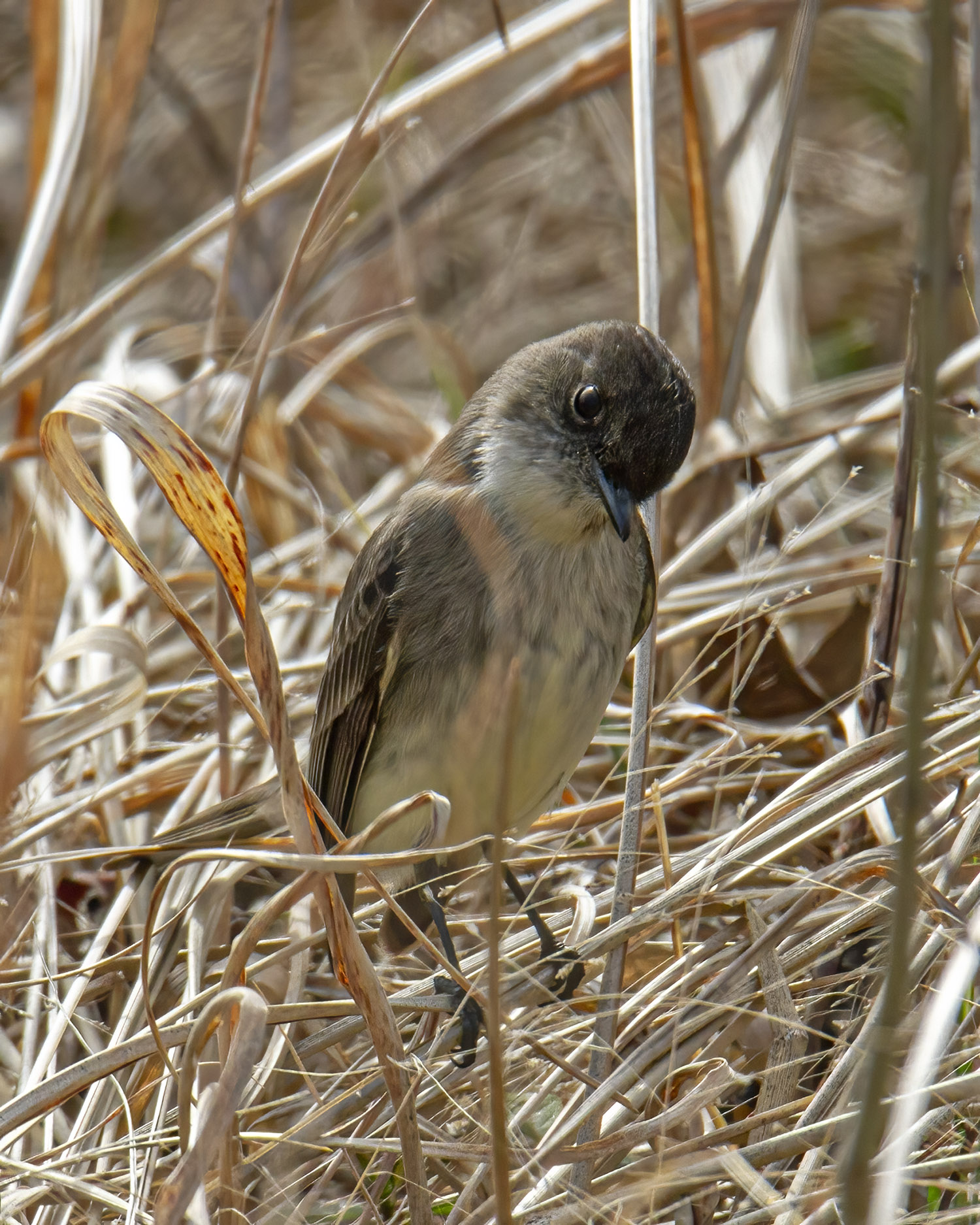
Earlier this month I was happy to get a few shots of an Eastern Phoebe (Sayornis phoebe), one of the earliest migrating species. The phoebe was initially foraging on the ground and then flew up into a tree. It is interesting to compare the two photos and see what a difference the background makes in the “feel” of the photos.

Eastern Phoebe

Eastern Phoebe

© Michael Q. Powell. All rights reserved.
Read Full Post »

A Turkey Vulture (Cathartes aura) turned its head to check me out as I walked by it during a recent visit to Occoquan Bay National Wildlife Refuge. However, the vulture did not move from its perch, suggesting to me that there was something dead nearby that had attracted the vulture’s attention.

I couldn’t help but think of a joke about a vulture that a friend told me last year—A vulture boards an airplane carrying two dead raccoons. The flight attendant looks at him and says, “I’m sorry, sir, only one carrion allowed per passenger.” Sorry—I have a somewhat warped sense of humor and love puns and wordplay.

Turkey Vulture

Turkey Vulture

© Michael Q. Powell. All rights reserved.
Read Full Post »

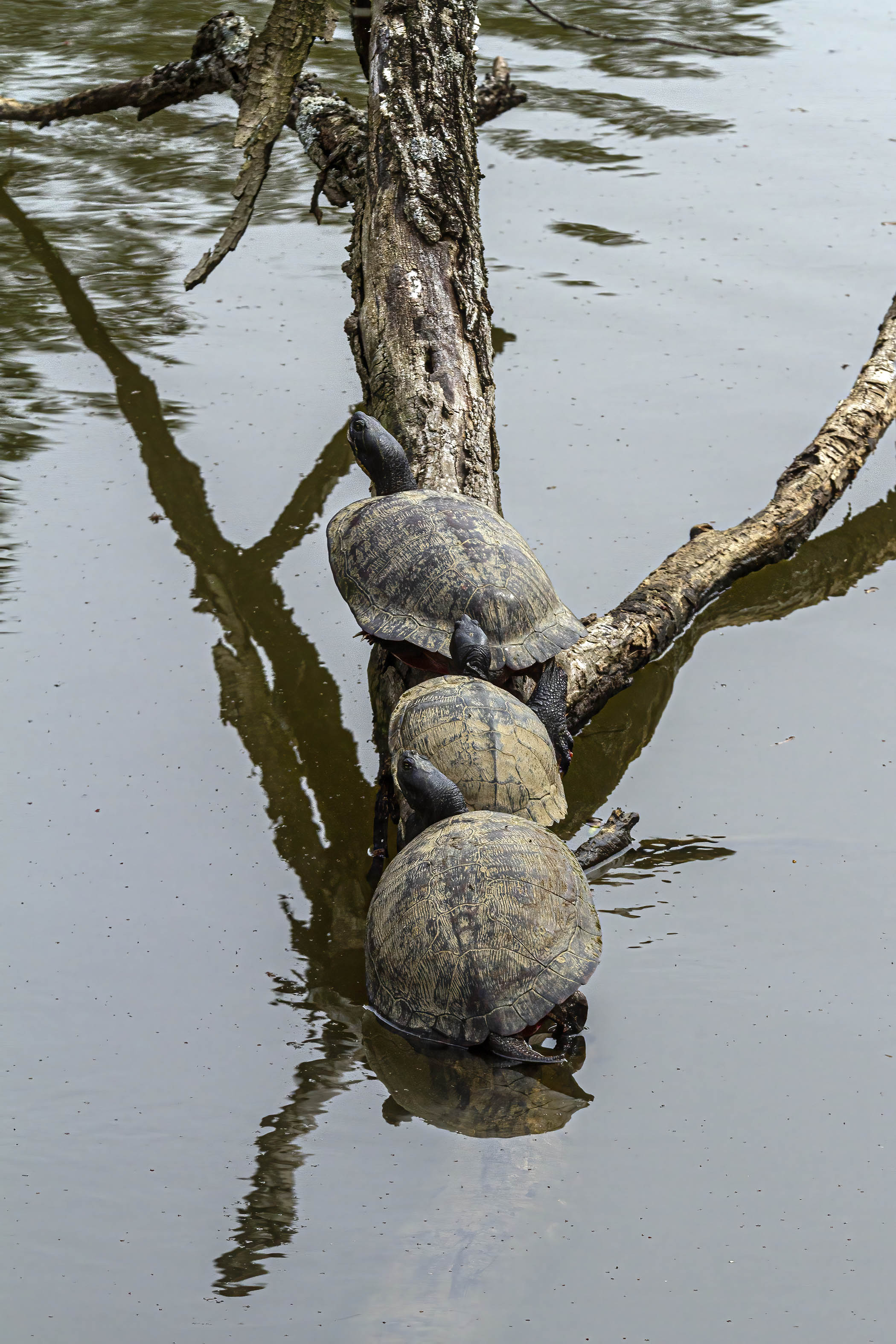
Bald Eagles (Haliaeetus leucocephalus) have impressive wing spans, approximately 80.3 inches (204 cm), according to the Cornell Lab of Ornithology. I was thrilled last week to capture some images of an eagle with its wings fully extended as it flew over me at Occoquan Bay National Wildlife Refuge.

The afternoon sunlight was pretty strong, which caused a shadow on the side of the eagle’s face, but I was happy that I was able to keep the visible eye in pretty sharp focus—you may want to click on the images to get a better look at the eagle’s eyes.

bald eagle

bald eagle

© Michael Q. Powell. All rights reserved.
Read Full Post »

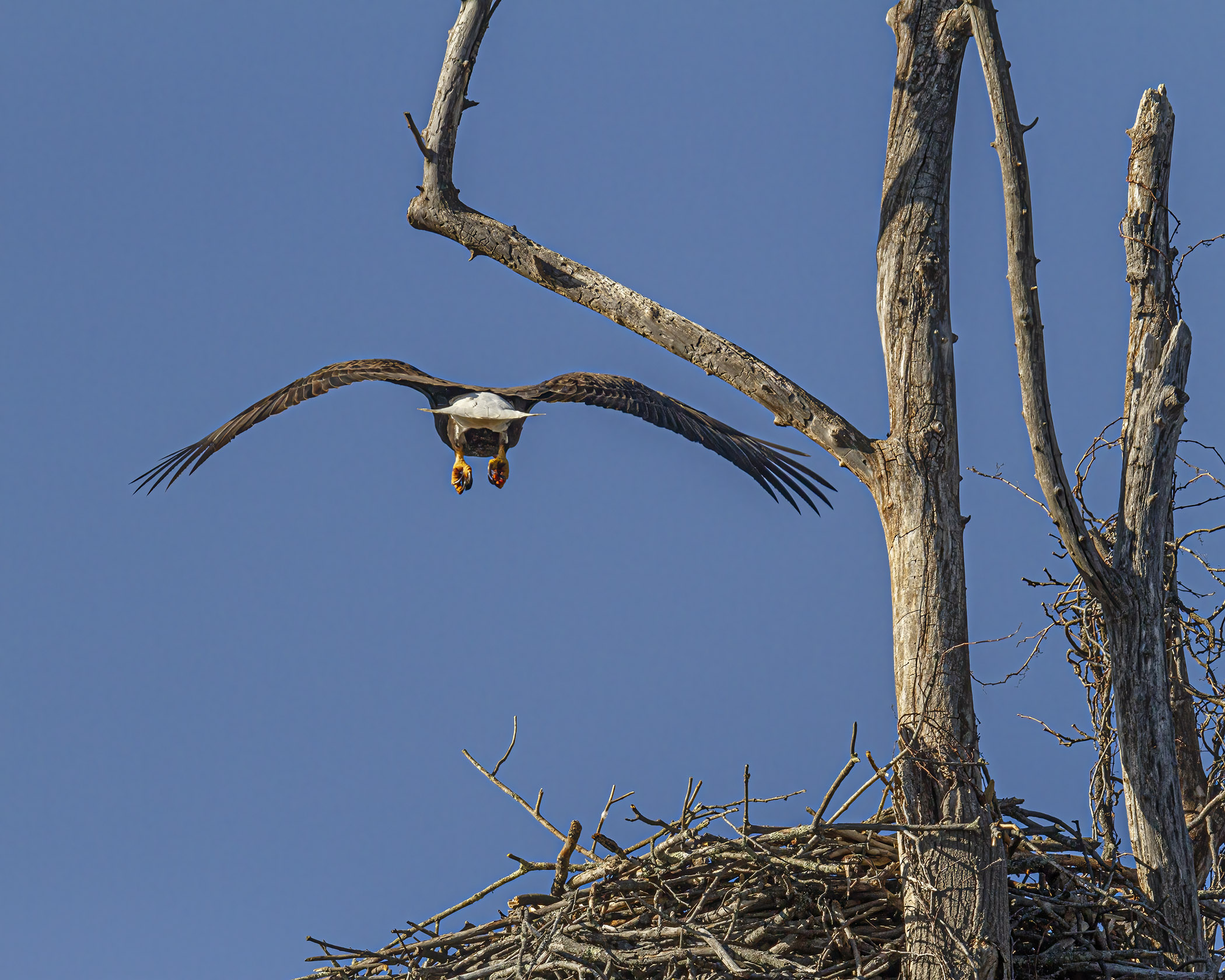
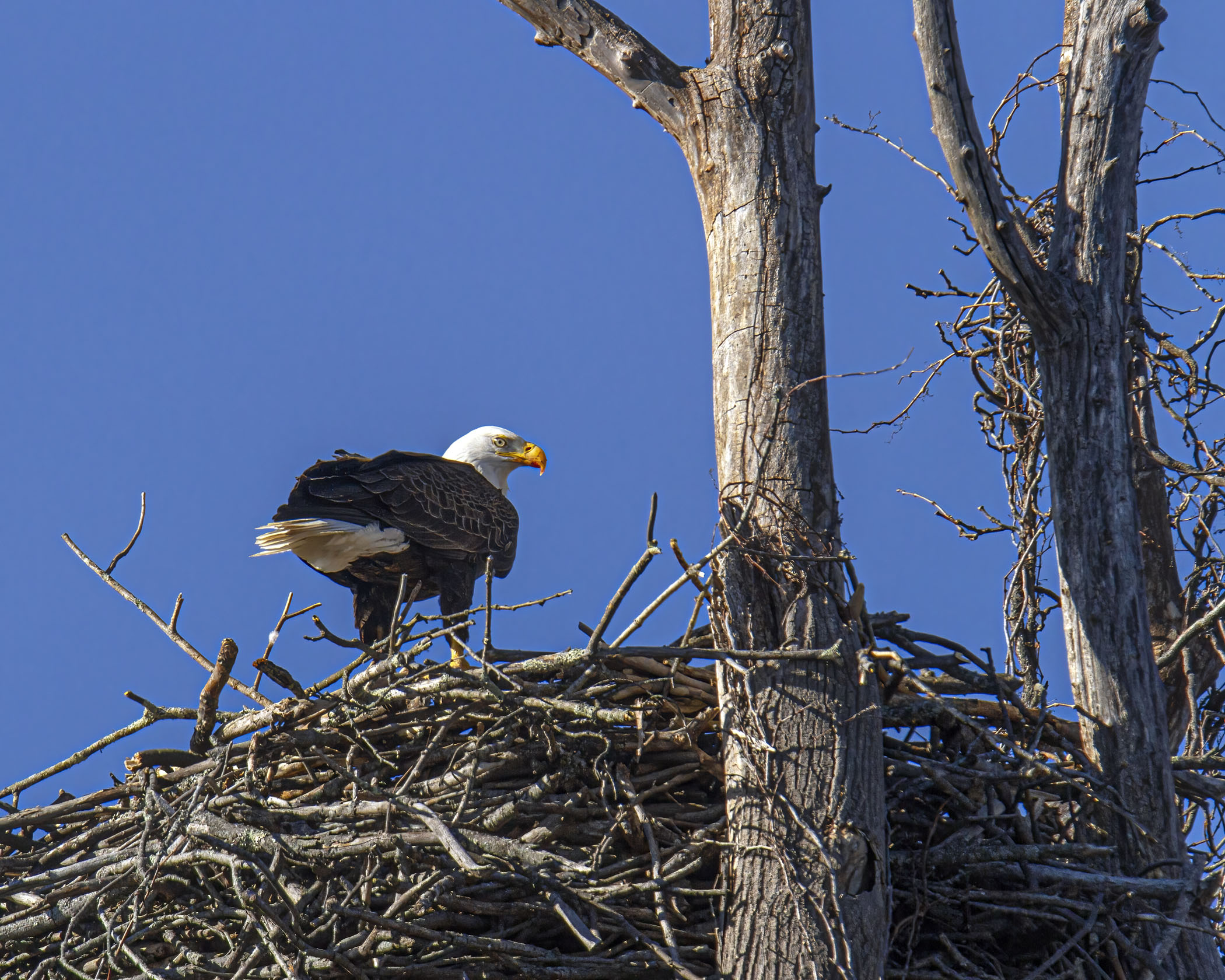
Last Wednesday I watched as this Bald Eagle (Haliaeetus leucocephalus) approached its nest to take the place of its mate, who had flown away a moment earlier. It would have been cooler if the eagle had been coming towards me when it landed, but I like the way that I was able to capture the wing, tail, and talon positions in the first two photos. In the final photo, the eagle had successfully landed at the large nest—the eagle’s head was initially in the shadows, so I was happy when it glanced over its shoulder in my direction and the sunlight hit its eye.

Bald Eagle

Bald Eagle

Bald Eagle

© Michael Q. Powell. All rights reserved.


Read Full Post »

Whenever I see a Bald Eagle (Haliaeetus leucocephalus) in the air, I will try to track it through the lens of my camera. This past Wednesday I was tracking an eagle that was a long way from me at Occoquan Bay National Wildlife Refuge. The eagle was flying quite low, so I figured he was fishing.

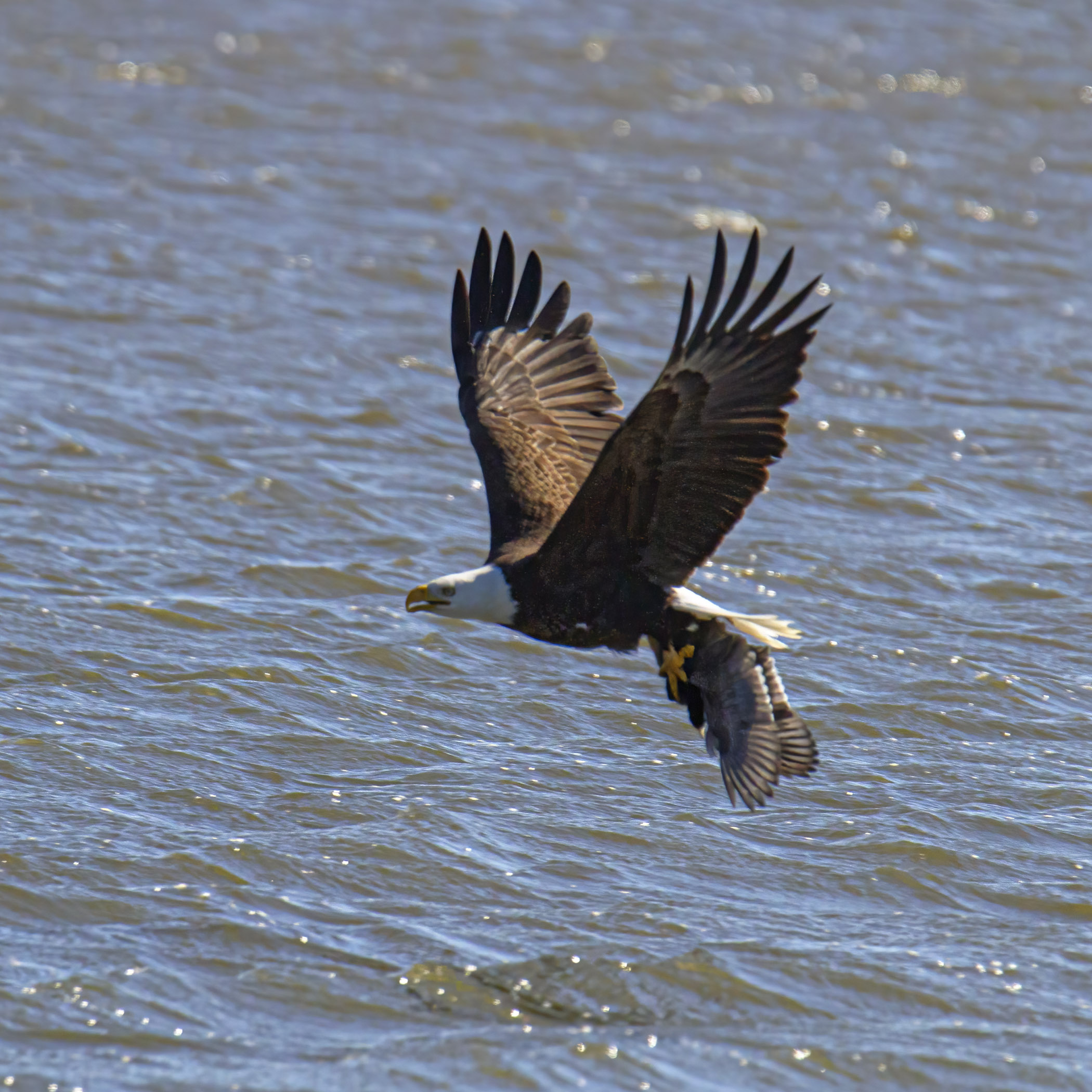
I snapped the first photo shortly after the eagle dropped down to the water and grabbed what I thought was a fish. As you can see in the photo, the birds in the immediate area were quite agitated with the eagle flying just above them. When I examined the image on my computer, I realized that the eagle’s prey was probably an American Coot (Fulica americana), not a fish.

The eagle flew low over the water, probably to avoiding alerting any other eagles of its catch. As the eagle flew by me, I was able to capture the second and third images that clearly show the wings of the bird in the eagle’s talons.

The eagle landed in a small tree not far from the shore and proceed to feast on its freshly-caught meal. The bird was wedged in a crook in the tree that helped to steady the prey as the eagle dug into it. If you look closely at the eagle’s beak in the fourth photo, you can see bright red blood from the bird.

When the eagle had partially consumed its meal, it flew to another tree. In the final photo you can see the dangling feet of the prey. Unlike ducks that have webbed feet, coots have lobed feet with long toes and you can see some of those toes in the last image. If you would like to get a closer look at a coot’s feet, check out my December 2014 blog post entitled “Coot feet.”

Bald Eagle and Coot

Bald Eagle and Coot

Bald Eagle and Coot

Bald Eagle and Coot

Bald Eagle and Coot

© Michael Q. Powell. All rights reserved.

Read Full Post »

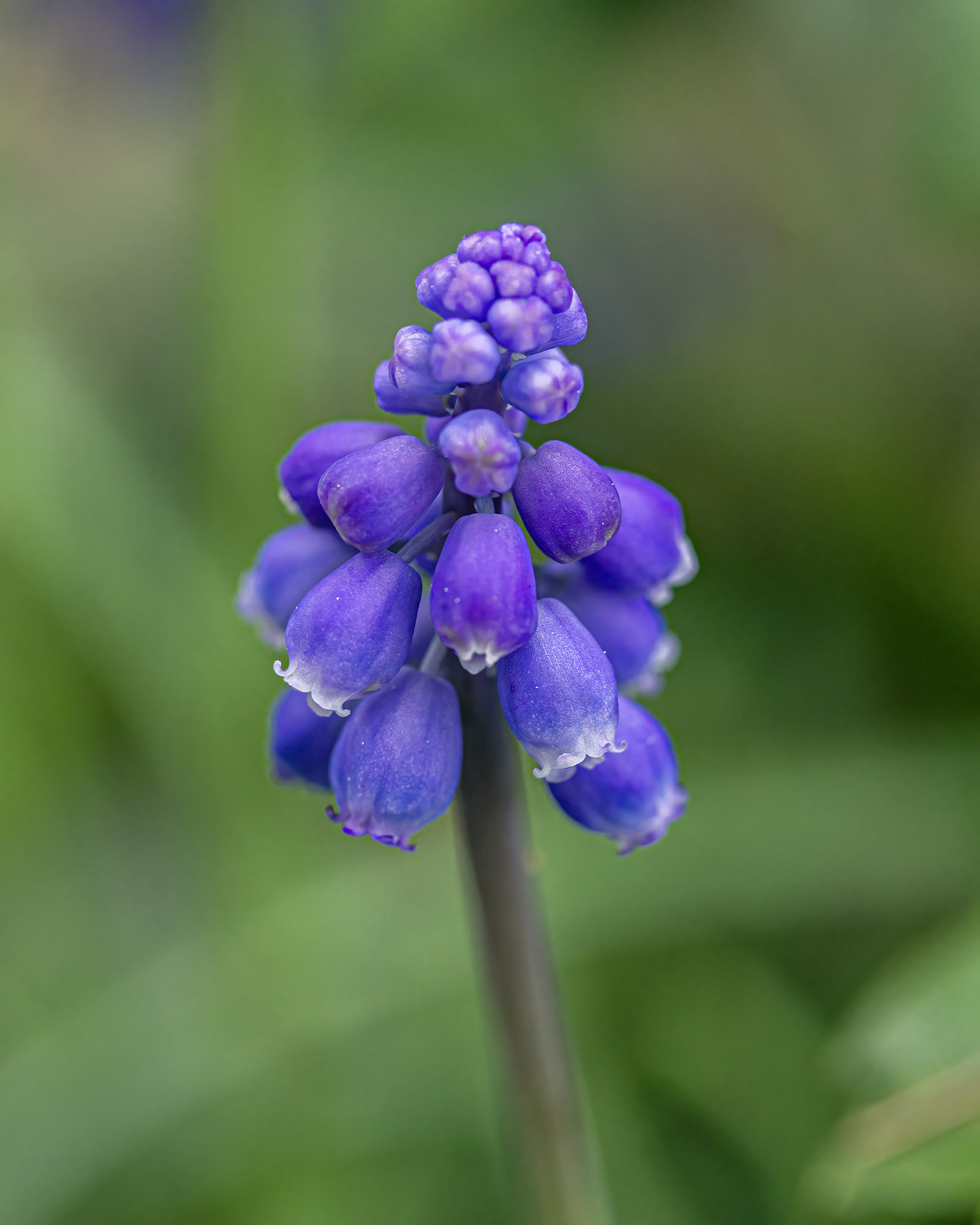
I was tracking a Carolina Chickadee (Poecile carolinensis) foraging high in a tree at Occoquan Bay National Wildlife Refuge on Wednesday and instinctively pressed the camera shutter when it took off, allowing me to capture this cool image of the tiny bird. I love the fully outstretched wings, which appear to be translucent, and the long skinny legs that were just being released from the branch when I took the shot.

Carolina Chickadee

© Michael Q. Powell. All rights reserved.
 

Read Full Post »

When Bald Eagles (Haliaeetus leucocephalus) are born, they have brown heads, brown eyes, and a black beak. It takes about five years for them to develop the characteristic white head, pale eyes, and yellow beak that we associate with adult bald eagles. Certain changes take place each year and it is possible to estimate the age of immature bald eagle on the basis of its appearance.

I believe that the eagle depicted in the two two photos is about 3 1/2 years old. There is still a good deal of mottling in the feathers on its chest and some brown patches on its mostly white head. If you would like more detailed information about the developmental stages of bald eagles, I highly recommend an article by Avian Report entitled “Juvenile & Immature Bald Eagles.”

I do not see eagles of this age very often at Occoquan Bay National Wildlife Refuge, where I took these photos last week. Most of the eagles that I see are adults or are a year or two younger than this one. From what I have read, eagles reach mating age at about the same time that they get their white heads and tails, so I doubt that this eagle has already found a mate—in human terms, I guess the eagle might be characterized as a teenager.

Bald Eagle

Bald Eagle

© Michael Q. Powell. All rights reserved.


Read Full Post »

Some birds blend in so well with their surroundings that it is hard to spot them. That is definitely not the case with the male Northern Cardinal (Cardinalis cardinalis), whose bright red feathers announce his presence in even the most cluttered environment.

Last week at Occoquan Bay National Wildlife Refuge, I spotted this cardinal as he flew across the trail on which I was walking. Normally cardinals bury themselves in dense vegetation at ground level and it is tough to get a clear view of them. On this occasion, the cardinal perched on a fallen branch and briefly posed for me.

The first two images show off the cardinal’s beautiful red feathers really well, but the final photo is probably my favorite of the three. I love the way that the cardinal cocked his head to the side as he looked right at me—my dog used to look at me sometimes in the same pose with a similar mixture of puzzlement, curiosity, and amusement.

Northern Cardinal

Northern Cardinal

Northern Cardinal

© Michael Q. Powell. All rights reserved.


Read Full Post »

It is hard to tell exactly when eggs are present in the nests of Bald Eagles (Haliaeetus leucocephalus). However, when I see an eagle hunkered down, it’s a pretty safe assumption that it is helping to incubate the eggs.

Last week, an eagle was sitting in one of the nests that I monitor at Occoquan Bay National Wildlife Refuge. As I watched, it took off, and I captured some shots of the eagle flying away that I featured in a blog posting  entitled “Eagles in flight.”

A short time later, another eagle flew to the nest and the photos below show the arrival of that eagle and its subsequent actions. The eagle carefully examined the nest, made a few adjustments, and eventually settled in for its shift of sitting on the eggs.

Bald Eagle

Bald Eagle

Bald Eagle

Bald Eagle

© Michael Q. Powell. All rights reserved.

Read Full Post »

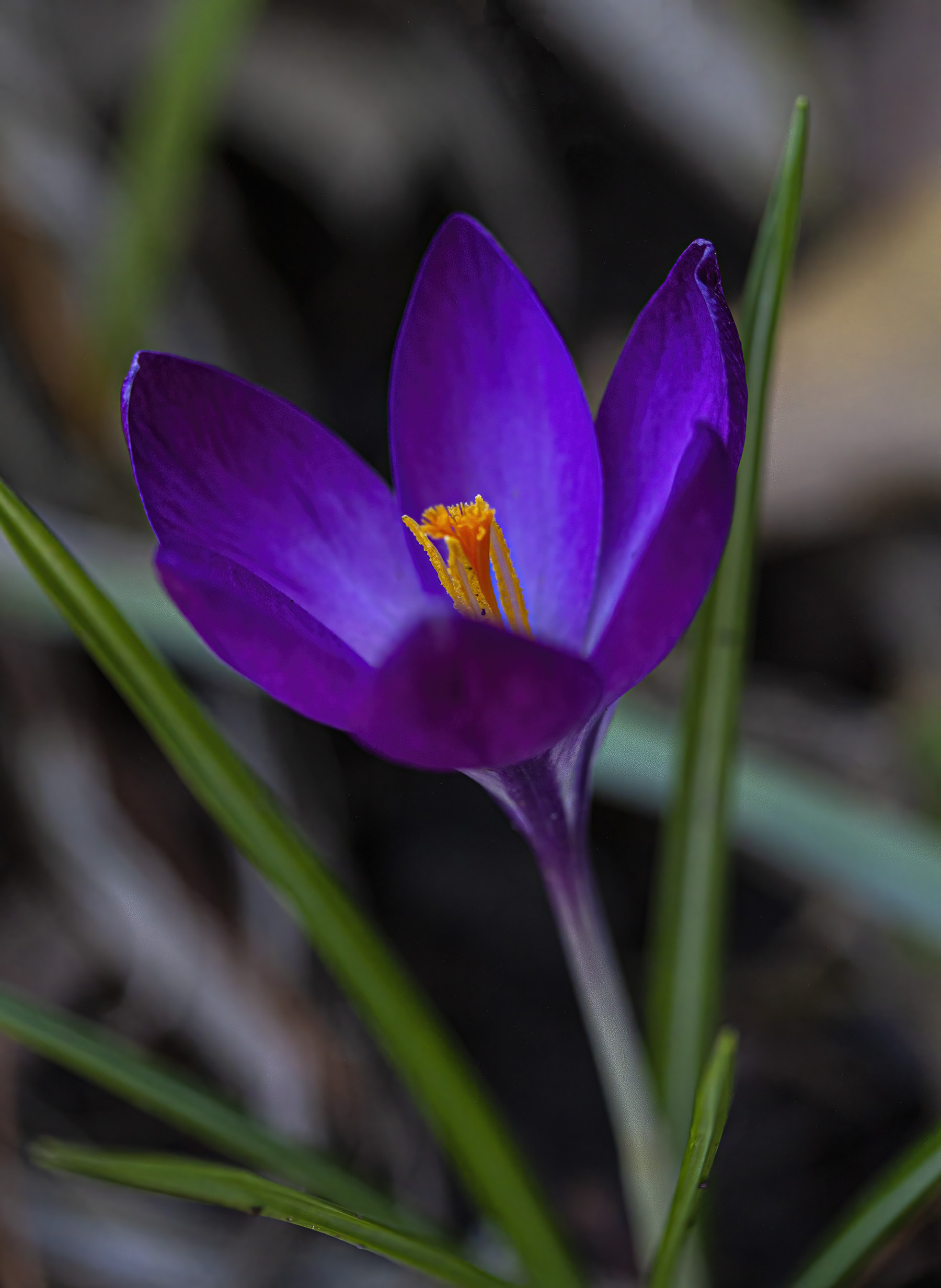
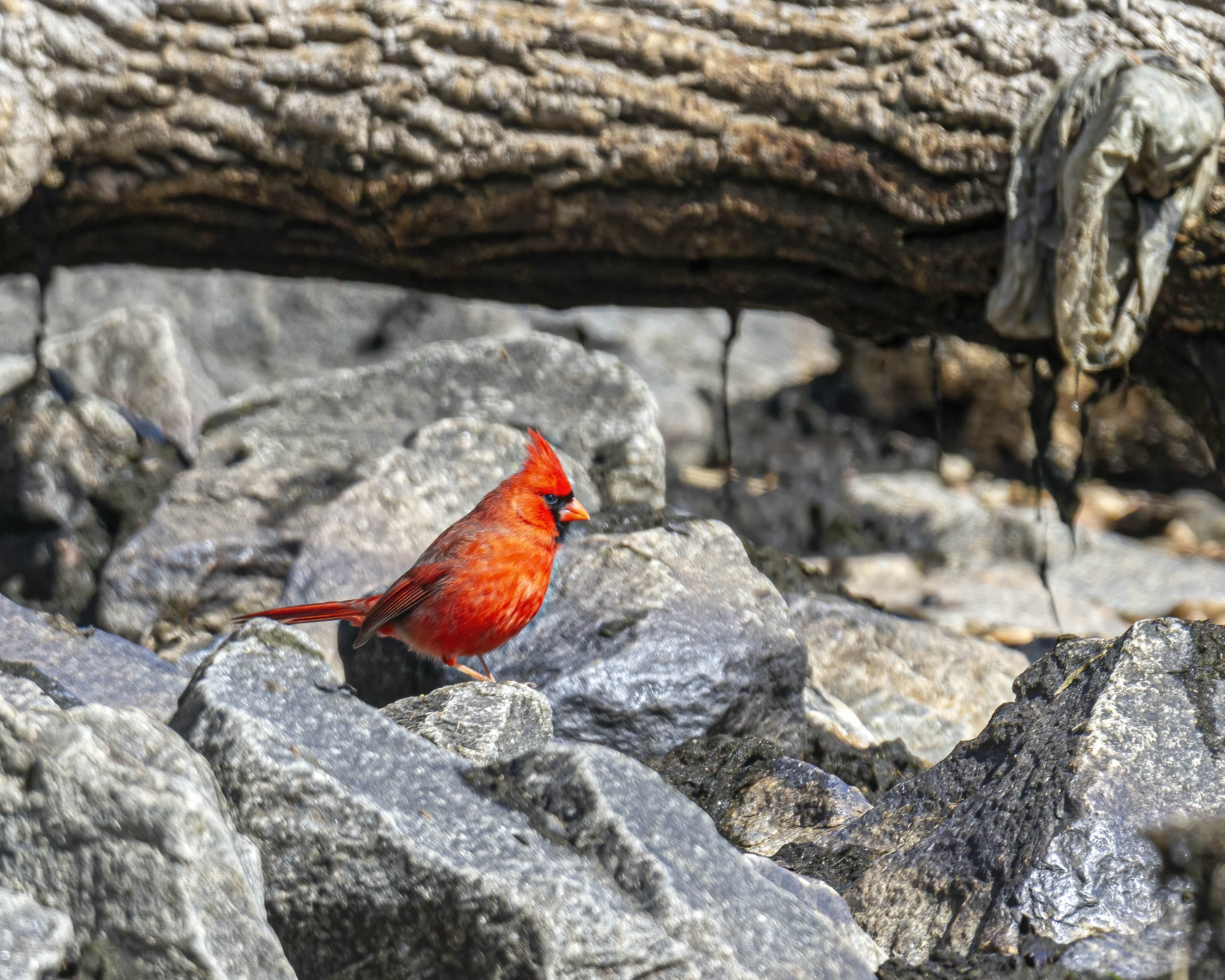
Spring is almost here. This past weekend I spotted the first spring flowers—blooming in the garden of my friend and fellow photographer Cindy Dyer. Longtime readers of this blog are well aware that I am not a gardener, but often visit the Cindy’s garden during the flower season—Cindy deliberately plants flowers that are fun to photograph.

The first crocuses that I spotted were some purplish ones that in Cindy’s front garden. These are the type of crocuses that I encounter most frequently and I associate them with the arrival of spring. When I posted a photo of one on Facebook, Cindy alerted me to the fact that several yellow ones were blooming in her backyard garden.

I don’t recall ever having seem yellow crocuses before, so I was delighted to see them. I was really awkward trying to get a shot of them, so I resorted to getting a relatively close-up shot with my 60mm macro lens.

I have also noticed clusters of cheery yellow daffodils in bloom throughout my neighborhood. Our weather is still variable, but spring is on the way. On a side note, next Sunday we begin Daylight Savings Time, yet another sign of the changing seasons. If I am not mistaken, Europeans do not change their clocks until the last Sunday in March, which is 26 March in 2023.

crocus

crocus

© Michael Q. Powell. All rights reserved.
Read Full Post »

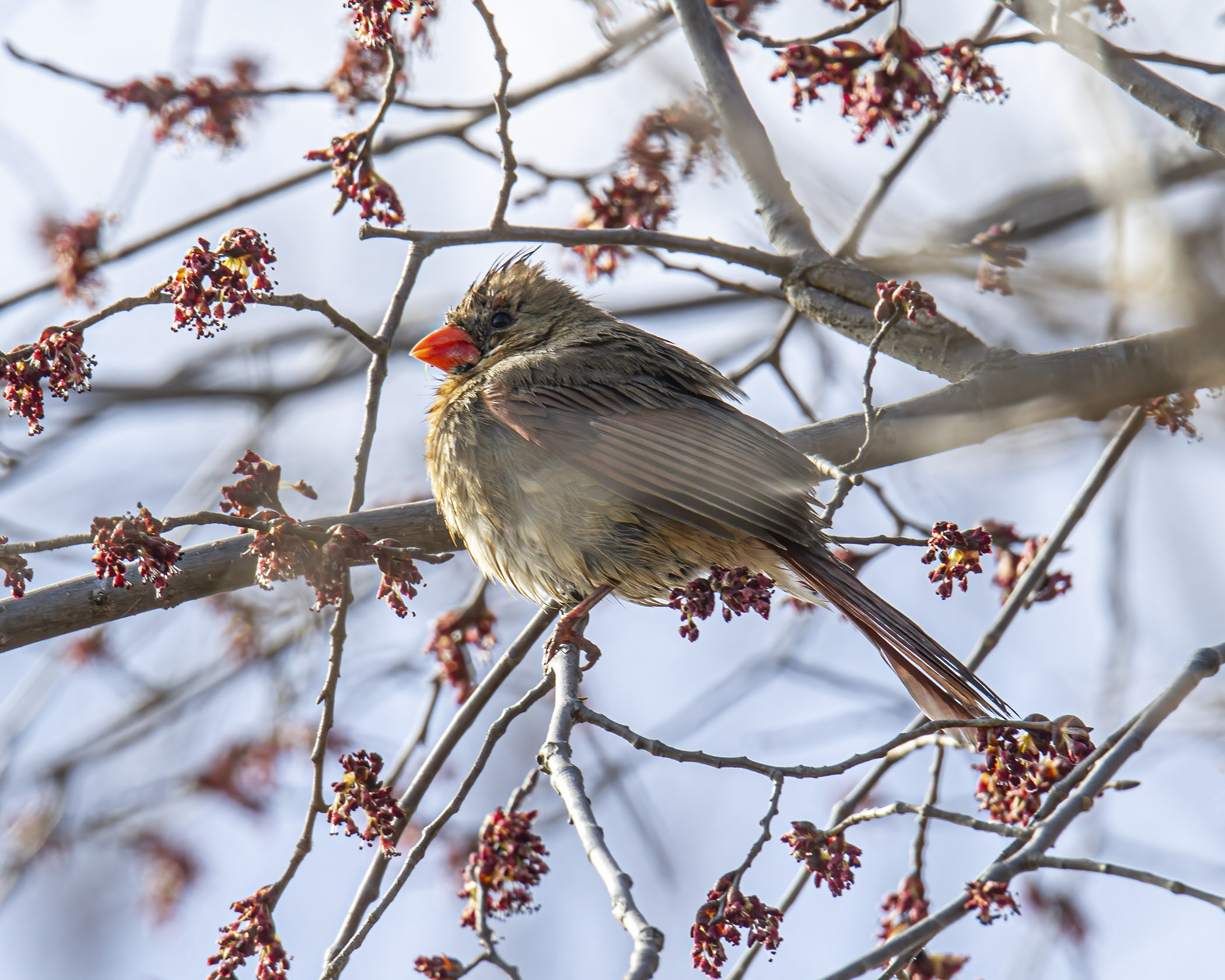
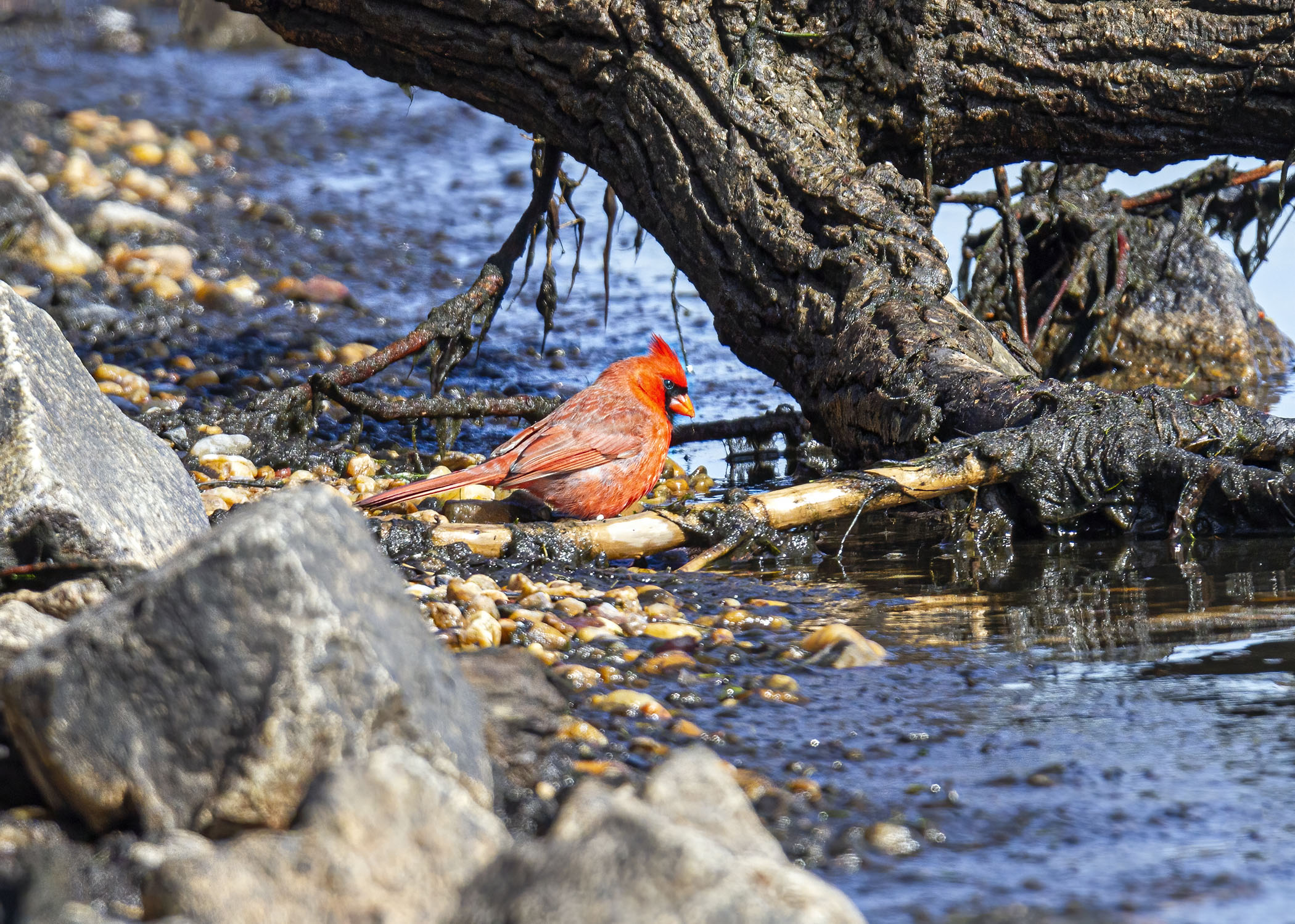
I was delighted to capture some images of a female Northern Cardinal (Cardinalis cardinalis) last Wednesday at Occoquan Bay National Wildlife Refuge. Although the cardinal was a bit scruffy in appearance, I found her to be quite attractive—I have always like the muted tones of the female cardinal, which does not stand out as much as her bright red male counterpart.

As you can see from the two photos, the cardinal was perched in a flowering tree, yet another sign that spring has almost arrived in Northern Virginia. I am not very good in identifying trees, but one of my Facebook friends suggested that it is a maple tree.

If you look closely at the final photo, you will see that the female cardinal was consuming some of the tiny seeds and/or flowers of the maple tree. I encourage you to click on that photo to get a closer look at the cardinal’s feeding activity.

UPDATE: One of my readers, Alan of New Hampshire Garden Solutions, noted that the flowers on this tree are male flowers of the American Elm Tree. Thanks for the help in correctly identifying the tree.


Northern Cardinal

Northern Cardinal

© Michael Q. Powell. All rights reserved.
Read Full Post »

It is a simple law of nature that all creatures have to eat and many of my subjects are carnivores. The question of whether a creature is predator or prey is often a relative one—today’s predator can easily become tomorrow’s prey.

I try not to get emotionally involved when I witness one creature feeding on another, but that is not always possible. For me it is somewhat jarring when I see one dragonfly eating another—it feels like cannibalism.

For some reason, most such encounters that I have witnessed have involved Eastern Pondhawk dragonflies (Erythemis simplicicollis). This species is not at that large or powerful, but seems particularly fierce. Some other dragonflies catch their prey and eat while they are flying, their version of “fast food,” so that may be why I don’t see dragonflies consuming other dragonflies very often.

In the first photo, a female Eastern Pondhawk was feasting on a male Calico Pennant dragonfly (Celithemis elisa) that it had just caught. As you can see, the dragonfly holds its prey in its long legs and begins by eating the head.

In the second photo, taken at a different location, another female Eastern Pondhawk was munching on an unidentifiable damselfly. Readers sometimes ask me about the differences between dragonflies and damselflies and this photo gives you a general idea of the relative size and shape of their bodies.

According to a fascinating posting called “What do Dragonflies Eat?” on The Infinite Spider website, “All adult dragonflies are insectivores, which means they eat insects they catch with their spiny hairy legs.  The insects are then held in a basket-like device while flying. They particularly delight in mosquitoes (30-100+ per day per dragonfly!) as well as other pesky flight bugs  such as flies, butterflies, bees, and even other dragonflies.”

Check out the posting that I referenced in the previous paragraph, if you dare, for details about how dragonflies actually eat. Here is a sneak preview, “The main thing to notice is that they have jaws that work side to side and that are shaped like wicked meat hooks, mandibles that go up and down and maxillae that act like a lower lip and hold food.” Yikes!

Eastern Pondhawk


Eastern Pondhawk

© Michael Q. Powell. All rights reserved.


Read Full Post »

Lilies are now blooming in the garden of my neighbor, Cindy Dyer, who is also my photography mentor and muse. There are all kind of lilies there, including daylilies, Asiatic lilies, and giant white ones. Cindy deliberately likes to plant flowers that she knows will be photogenic.

I always feel overwhelmed when trying to photograph groups of anything, so I naturally gravitate to close-ups of individual flowers, focusing in on details that grab my eyes. Sometimes it is shapes, while at other times it may be colors or textures. Here are a few photos from my visit on Tuesday to Cindy’s garden, my impressions of some of the beautiful lilies that I encountered.

lily

lily

lily

© Michael Q. Powell. All rights reserved.

Read Full Post »

Last week I was excited to capture this image of a beautiful Turquoise Bluet damselfly (Enallagma divagans) as I explored the edge of a small pond in Prince William County, Virginia. The damselfly was conducting short patrols over the water and then would perch on the vegetation sticking out of the water.

I got low to the ground and squatted as close to the water’s edge as I dared, doing my best to avoid falling into the water as I leaned forward. I managed to stay dry as I waited patiently. Eventually the Turquoise Bluet perched within range of my lens and I was able to capture a pretty detailed image of the little bluet, which was about 1.4 inches (35 mm) in length.

Turquoise Bluet

© Michael Q. Powell. All rights reserved.

Read Full Post »

I love dragonflies with patterned wings and one of the coolest ones in our area is the male Widow Skimmer (Libellula luctuosa), which has a distinctive combination of one dark and one white blotch per wing. Eventually the immature male in the first photo will turn bluish in color, but for now he has the brown and yellow colors that he shares with the females. The females have only a single large blotch on each wing, so usually I can tell the genders apart.

When the male first emerges, however, the white blotches may be hard to see, so I have to look more closely at other aspects of the dragonfly’s body. I am pretty confident that the dragonfly in the second photo is a very young male Widow Skimmer.

It was really easy to track a male Widow Skimmer dragonfly in the air, because its colorful wings made it look almost like a butterfly. However, the dragonfly in the first photo was remarkably skittish and would perch only momentarily in between its patrols over the waters of the small pond that I visited on Monday. Eventually my patience paid off and I was able to get a shot, albeit from a relatively long distance away.

Widow Skimmer

Widow Skimmer

© Michael Q. Powell. All rights reserved.
 

Read Full Post »

When damselflies mate, it is often a very conspicuous event, easily recognized by the heart-shaped “wheel” formation of the mating couple. The male clasps the female by the back of her head and she curls her abdomen to pick up sperm from secondary genitalia at the base of the male’s abdomen. That’s about as graphic as I dare go in describing the process.

Yesterday I spotted a pair of mating Ebony Jewelwing damselflies (Calopteryx maculata) as I was exploring a stream in Fairfax County, Virginia, the county in which I live. Ebony Jewelwings are immediately identifiable, because they are the only damselflies in our area with dark wings. They can be found at a wide variety of running waters, especially at shaded forest streams, like the one where I found this couple.

Male Ebony Jewelwings have wings that are all black, while females have dark brown wings with conspicuous white pseudostigmas—the male is on the right in this photos. The body of the males is a metallic green with copper highlights—in certain lights, their bodies may look distinctly blue. Females seem to have a bit more color variation, though it is hard to tell their true color because of the reflected light from their shiny bodies.

Ebony Jewelwing

© Michael Q. Powell. All rights reserved.

Read Full Post »

I was delighted to spot this female Lancet Clubtail dragonfly (Phanogomphus exilis) on Thursday in Prince William County, the first member of this species that I have seen this season. She seemed to be glancing upwards at me as she smiled and posed for me.

When I was doing some research on this species, I got a little confused, because sometimes the Latin name for the species was given as Phanogomphus exilis and sometimes as Gomphus exilis. As far as I can understand it, the Lancet Clubtail used to be included in Gomphus genus. However, according to Wikipedia, “As a result of phylogenetic studies, Gomphus subgenera Gomphurus, Hylogomphus, Phanogomphus, and Stenogomphus were elevated in rank to genus in 2017. With the removal of their member species, Gomphus ended up with 11 of its previous 54 species, none of which are found in the Western Hemisphere.” Yikes!

Lancet Clubtail

Lancet Clubtail

© Michael Q. Powell. All rights reserved.

Read Full Post »

The sun rose really early last weekend when I visited Northfield Mount Hermon School (NMH) in Gill, Massachusetts for my 50th Reunion—officially dawn was at 0439 hours and sunrise was at 0514 hours. The rising sun woke me up in the dormitory room in which I was sleeping and I went for a walk on the beautiful campus of this private boarding college preparatory school where I spent the final there years of high school.

The sunlight was soft and beautiful as I looked to the east, where thick fog was visible over the waters of the Connecticut River. I took the first photo below with my Canon SL2 DSLR and a 10-18mm wide-angle zoom lens and the other two photos using the panoramic features of my iPhone 11. The effects of the two cameras were a bit different, but I like the way that I was able to capture a sense of the beauty and tranquility of the early morning moments—it was a wonderful way to start the day.

Northfield Mt Hermon

Northfield Mt Hermon


Northfield Mt Hermon

© Michael Q. Powell. All rights reserved.

Read Full Post »

Although Eastern Pondhawks (Erythemis simplicicollis) are among the most common dragonflies in my area, I never fail to be startled by the brilliant emerald green color of the females and immature males. Their matching green faces and the striped pattern on their abdomen makes for a stylishly stunning look.

In many ways, however, I am even more drawn to the less flashy, two-toned look of the transitional males as shown in the second image. Males start out with the same look as the females, but eventually transition to become entirely blue, though they retain their green faces and eyes. I love the way the blue gradually fades into green during the intermediate phase of a male Eastern Pondhawk.

So what about you? Are you drawn more to the colors of the dragonfly in the first photo or the one in the second photo? If I am truthful in answering my own question, I’d have to say that my personal preference varies, depending on a number of factors including my mood and the weather.

Eastern Pondhawk

Eastern Pondhawk

© Michael Q. Powell. All rights reserved.


Read Full Post »

This Bald Eagle (Haliaeetus leucocephalus) looked a bit bedraggled when I spotted it on Tuesday at Occoquan Bay National Wildlife Refuge, where it was perched just above the large eagle nest in which a young eagle was visible. Harried parent? Check out yesterday’s posting “Looking out of the nest” if you missed the photos of the inquisitive juvenile eagle.

The sky was totally overcast on the day when I took these photos and the sky was almost pure white. The resulting effect makes these shots look almost like high key portraits taken in a studio setting, although personally I would have liked a little more directed light to make the photos look less flat. Still, any day is a good day when I get to see a bald eagle.

bald eagle

Bald Eagle

Bald Eagle

© Michael Q. Powell. All rights reserved.

Read Full Post »

It was really cool on Tuesday to be able to capture these images of a young Bald Eagle (Haliaeetus leucocephalus) looking out from the large eagle nest at Occoquan Bay National Wildlife Refuge. The growing eaglet appeared to be quite alert and was sitting up quite high near the edge of the nest. I love how you can see the mottled plumage, dark eyes, and multi-colored beak of this eaglet in these photos.

The nest is high in the trees and there is now a lot of vegetation growing, so it was quite a challenge to get a clear angle of view. I am pretty happy with the results that I was able to achieve. The eaglet looks to be big enough to be flying, but I am not sure if that is the case. One of its parents was perched on some branches just above the nest, so I am pretty sure that it is not yet ready to go out on its own—eagles normally take about 12 weeks to fledge and then may hang around with their parents for another month or two.

Bald Eagle

Bald Eagle

© Michael Q. Powell. All rights reserved.

Read Full Post »

One of the cool things about traveling is having the chance to see species that are not present in my home area. This past weekend I drove north about 600 miles (965 km) to Gill, Massachusetts, the home of Northfield Mt Hermon School, where I celebrated my 50th graduation from high school. There was plenty of wild life at the reunion, with loud music, firepits, and adult beverages, but I also managed to squeeze in a few quieter moments with wildlife.

While I was walking along the edge of Shadow Lake, a small marshy lake on campus, I spotted some unfamiliar dragonflies on the floating lily pads. As I examined the dragonflies through my 55-250mm telephoto lens, the longest lens that I had with me, I was struck by the bright white faces of the dragonflies and the prominent dots on the top of their abdomens. I was a little shocked to learn later that the dragonflies that I photographed are Dot-tailed Whiteface dragonflies (Leucorrhinia intacta)—rarely has the name of a species fit so well.

The range map for Dot-tailed Whitefaces shows that it is primarily a northern species that does not exist in Virginia. I get the impression that this is a fairly common species, so locals would probably not be very excited to spot one. For me, though, it was a rare and exotic species that I was seeing for the very first time and I was thrilled. It is amazing how our reactions in so many areas of our lives are influenced as much by our perspectives as by the “objective” facts of a situation.

Dot-tailed Whiteface

Dot-tailed Whiteface

Dot-tailed Whiteface

© Michael Q. Powell. All rights reserved.

Read Full Post »

« Newer Posts - Older Posts »