Feeds:
Posts
Comments

Archive for the ‘Portraits’ Category

I probably watched too many horror movies as a child, because I couldn’t help but think of Count Dracula when I first saw the posture of this male Red-winged Blackbird (Agelaius phoeniceus) at my local marshland park. The blackbird seemed to have assumed the traditional bat-like Dracula pose and appeared to be getting ready to swoop in and suck my blood. Involuntarily, my neck began to twitch a little.

Fortunately, the blackbird flew off in another direction and, at least for now, I have not been turned into a vampire.

Red-winged Blackbird

Michael Q. Powell. All rights reserved.

Read Full Post »

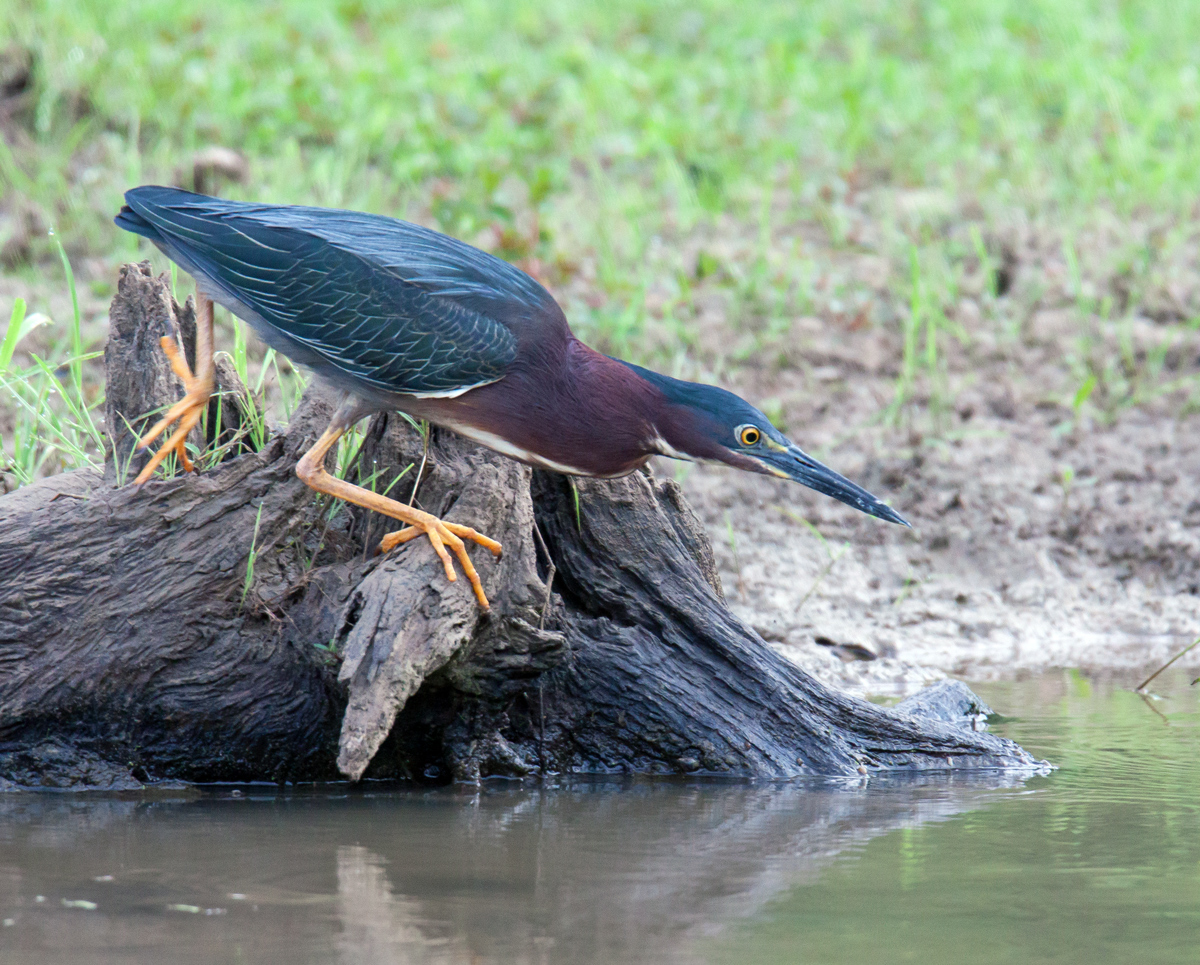
Like a ninja assassin, the Green Heron (Butorides virescens) moved slowly and stealthily forward, completely focused on an unseen prey. I watched and waited. After what seemed like an eternity, the heron relaxed. Whatever had attracted its attention was gone.

The heron was left empty-handed. Fortunately, I was more lucky and departed with this cool portrait of him in his natural environment.

Green Heron

Michael Q. Powell. All rights reserved.

Read Full Post »

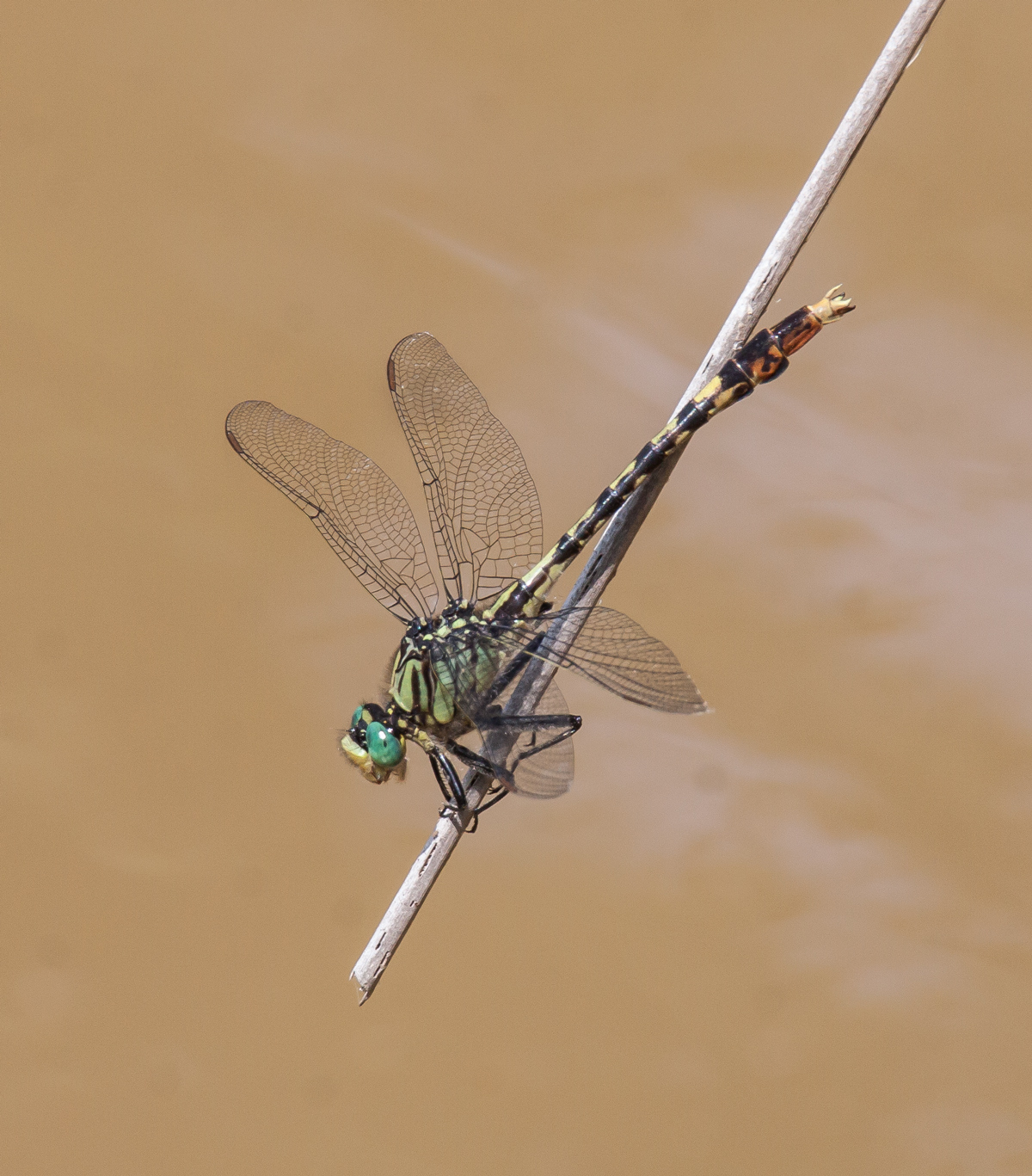
Do you believe in unicorns? I spent part of yesterday chasing a flying unicorn, although in this case it was the Unicorn Clubtail dragonfly (Arigomphus villosipes), not the one that looks like a horse.

Unicorn Clubtail

The Unicorn Clubtail is not a mythical creature, but I rarely see one—I am lucky if I manage to see a couple during an entire season of dragonfly watching. The u-shaped terminal appendage in the male Unicorn Clubtail is pretty distinctive and as soon as I saw this image on my computer screen, I knew that I had captured a unicorn.

When I first spotted this dragonfly, it was perched on a sandy area of the bank of a small stream. I mistakenly assumed that it was a Common Sanddragon, a somewhat similar species which is also part of the clubtail family (the members of this family have slim abdomens that end in an enlarged tip, i.e. the “clubtail”). When the dragonfly flew up into some vegetation that hung over the pond, I snapped off some photos as quickly as I could, because it is rare to get shots of these dragonflies with an unobstructed background.

One of my friends, Walter Sanford, a fellow photographer and blogger suggested to me earlier this spring that I use my Tamron 150-600mm lens, one that I use primarily for birds, to photograph dragonflies. I protested a bit, suggesting that I would not be able to capture the fine details of the dragonflies with the lens, which is reported to be a little soft at the long end.

There are some challenges, including the minimum focusing distance of 107.3 inches (2.7 m), which means I have to be a pretty good distance from my subject. However, shots like this one make me realize his advice was good—the extra reach helps me get shots that I might not be able to get otherwise, especially if I tried to move closer to take a shot with a shorter telephoto lens and risked spooking the dragonfly.

© Michael Q. Powell. All rights reserved.


Read Full Post »

I can’t get over the beauty of the dragonflies, especially this early in the season. On Monday, I spotted this beautiful male Painted Skimmer dragonfly (Libellula semifasciata) at a tiny pool (which was really more like a puddle) at my local marshland park.

The colors and pattern of the wings make this species quite distinctive and pretty easy to identify. The striking beauty of the Painted Skimmer has also attracted the attention of several other photographers in this area.

I personally love to see how others choose to photograph similar subjects. If you want to see more beautiful images of Painted Skimmers, check out recent postings by Walter Sanford and Joel Eagle. Each of us was presented with a similar dragonfly in different circumstances and made a series of creative choices to produce our individual portraits of this almost magical creature.

Painted Skimmer

© Michael Q. Powell. All rights reserved.

Read Full Post »

I don’t take photos of people very often but it seems like there are some informal rules including not photographing a subject who is eating and not photographing someone who is bending over. Fortunately those “rules” do not apply when photographing wildlife.

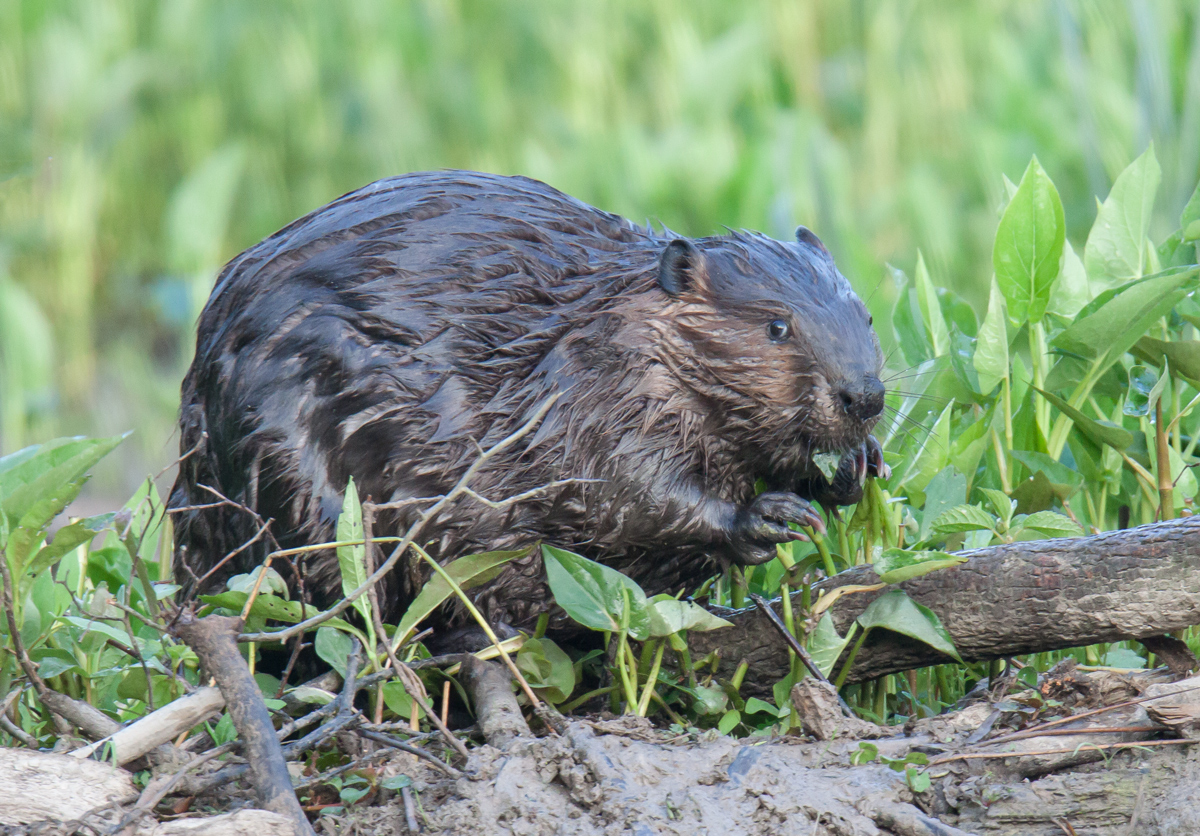
In the first shot, the North American Beaver (Castor canadensis) at my local marsh seemed to be glancing up at me mid-chew, having sensed my presence. I can’t tell if the beaver is shy or irritated, but I am happy that I was able to capture some of the details of the beaver’s “hands.” The beaver probably was aware that he had some leaves stuck between his teeth, but, as a friend, I probably would have mentioned it to him if he was going to go out in public.

In the second shot, the beaver’s posterior is facing the camera and I don’t want to be indelicate, but that part of the beaver’s anatomy looks huge. I can’t imagine what I would have said if the beaver had turned to me and asked, “Does this pose make my butt look big?” Perhaps I could have responded honestly to the question, but most guys know that is best not to respond at all if a female human poses that same question.

If you take wildlife photos, you too probably have a collection of “butt shots” of animals and birds that were running or flying away or simply sending an unsubtle message that they did not want to be bothered by a photographer. One of my favorite photographers and bloggers, Lyle Krahn, periodically does an entire humorous posting of wildlife shots devoted to this genre. Be sure to check out his The Inauguaral Butt Collection.

North American Beaver

North American Beaver

© Michael Q. Powell. All rights reserved.

Read Full Post »

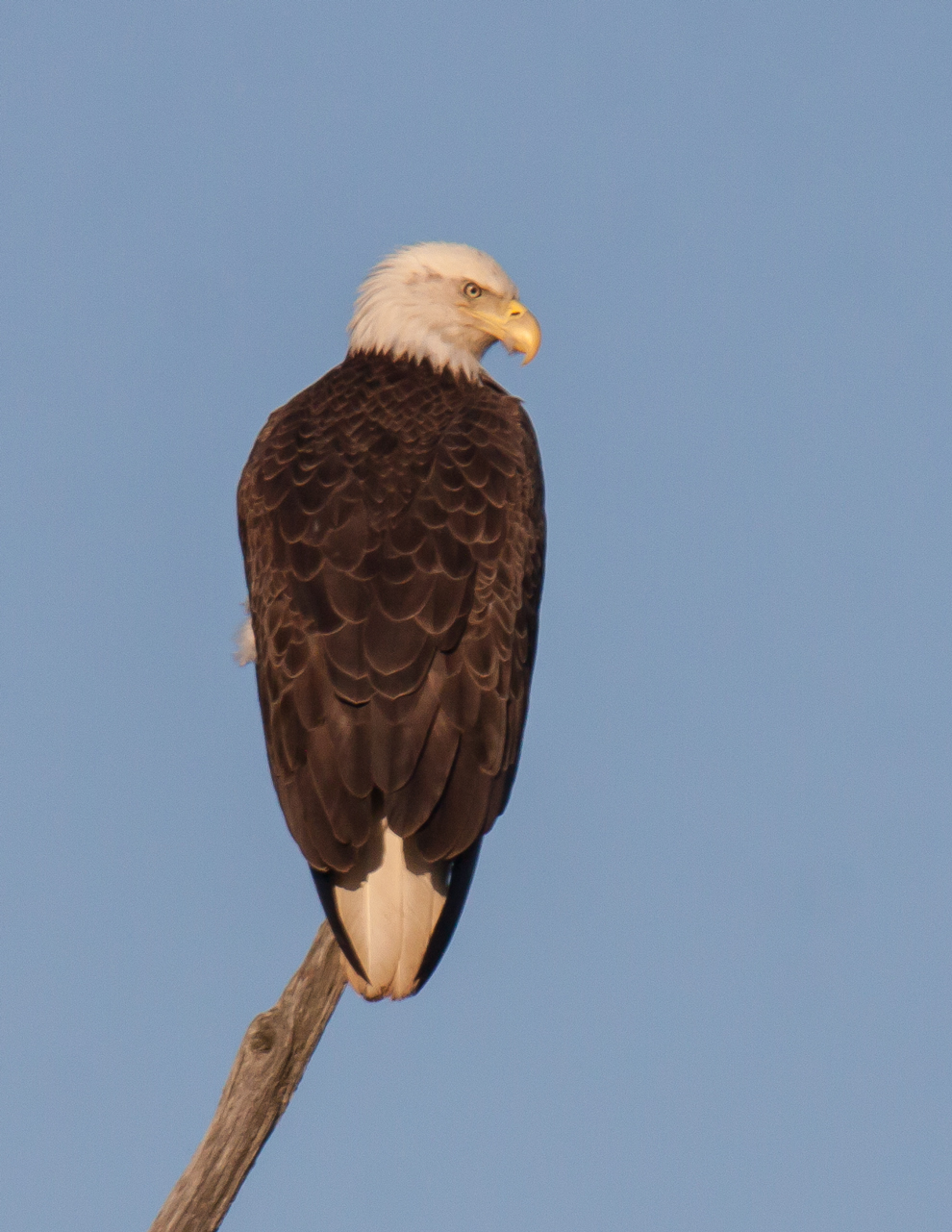
This past Monday was a wonderful day for eagles. In addition to the young eagle whose photos I posted earlier, I also managed to capture these images of a mature Bald Eagle (Haliaeetus leucocephalus) perched on a dead tree in the marsh.

Bald Eagle

Bald Eagle

© Michael Q. Powell. All rights reserved.


Read Full Post »

One early morning this past weekend I spent a few magical morning moments with this North American Beaver (Castor canadensis)  at Huntley Meadows Park during that short period of time when the light is golden and extraordinarily beautiful.

There is a beaver pond in a fairly remote area of the park that is my favorite spot in the park. In the past, I have observed an otter, a fox, a racoon, deer, and multiple bald eagles and hawks from that spot, but until a week ago, I had never observed the beavers that live there. A week ago, in the early morning hours I was pleased to see a beaver swimming away from the lodge and then back to it. I got some ok shots on that occasion, but decided I’d return to that spot again to see if I would get lucky again.

On Saturday, I returned and stood and waited as I drank in the beauty of the location. There is something really peaceful and special about those early morning moments. Suddenly a beaver’s head broke the surface of the water and a beaver began to swim slowly around in circles. The beaver seemed to be simply enjoying itself.

I crouched down and began to take photos. The light was beautiful, though not abundant, and my subject was moving, so I struggled a little to get the right settings. At one point, the beaver started swimming right at me and grew larger and larger in my viewfinder to the point that I actually stood up and startled the beaver. The beaver dove under the water, bur soon resurfaced and continued its swim.

Time seemed to stand still and I don’t really know how long my encounter with the beaver lasted, but eventually the beaver went under water and returned to its lodge.

I am still sorting through my photos, but wanted to share a couple of my initial favorites. Perhaps you will see some more of them in a future posting. (I am also including a shot of the beaver’s lodge to give you an idea of the surroundings.)

North American Beaver

North American Beaver

beaver lodge

© Michael Q. Powell. All rights reserved.

Read Full Post »

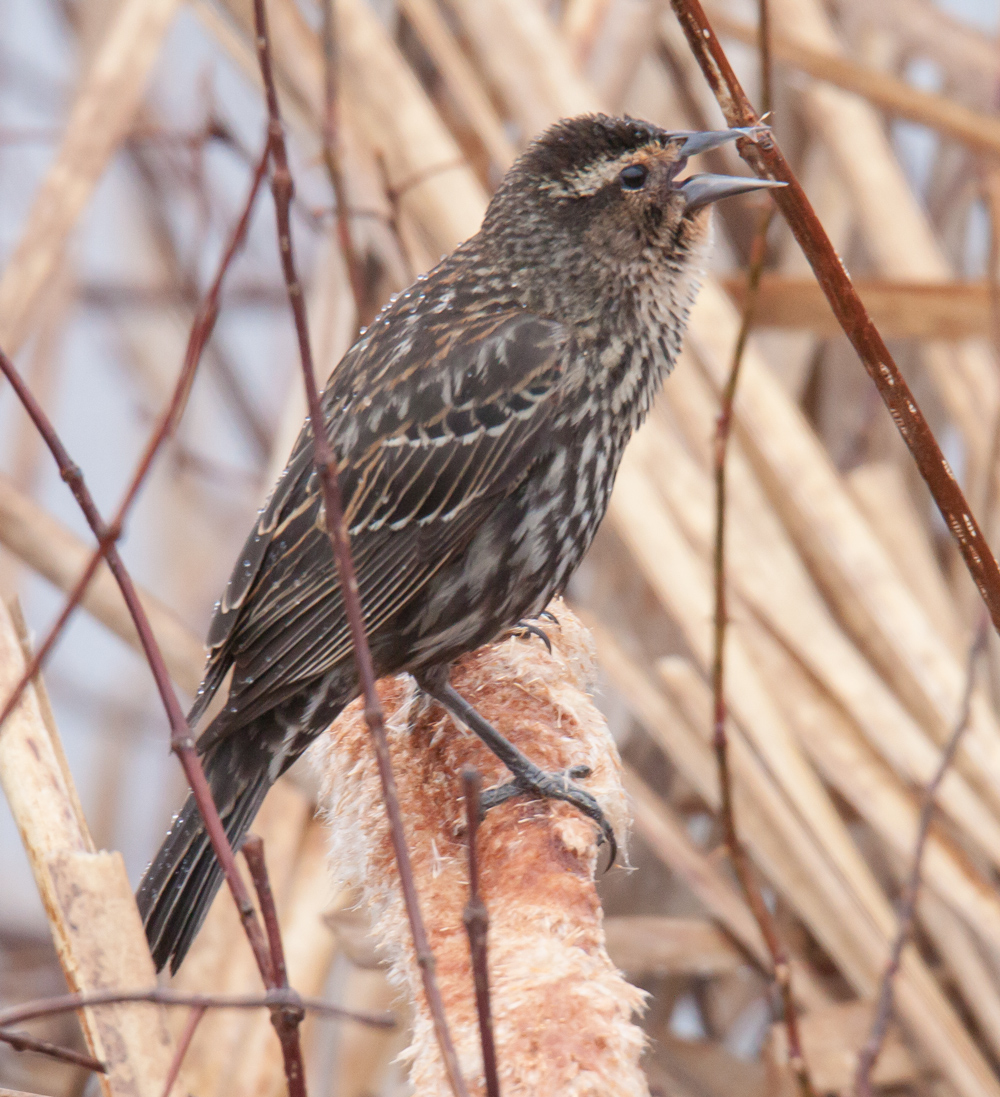
My life was much simpler before I started to photograph birds. I naively assumed that all Red-winged Blackbirds were black and had red wings. There is no way in the world that I would have even guessed that the bird in this photograph is a female Red-winged Blackbird, but I know now that’s what it is.

With experience comes wisdom, perhaps, but I generally feel more confused than wise when it comes to identifying birds. There are so many variables to consider, including the geographic location, the time of the year, the age of the bird, and, of course, its gender. Sure, there are lots of resources available over which to pore, but I’m often left with a certain degree of uncertainty about a bird’s identification. Apparently I am not alone, because I have overheard heated discussions among experience birds trying to identify a distant bird that they can barely see in their spotting scopes.

Female Red-winged Blackbirds (Agelaius phoeniceus) are amazingly beautiful and I would love to feature them more often in this blog, but I find them to be unusually difficult to photograph. Unlike their male counterparts, who are visible and vocal to the point of being a bit obnoxious, the females tend to spend their time pecking about industriously in the undergrowth, rarely coming out into the open.

I was pleased to be able to get this mostly unobstructed shot of this female blackbird recently as she was singing in the rain. If you look closely, you can see a series of raindrops beading up on her back. Other birds may have been seeking shelter from the rain, but she kept working.

As the foliage reappears on the trees and bushes, it’s going to get tougher and tougher for me to spot birds. I’ll still be trying to photograph them for a while longer until I switch to macro mode and focus more on insects and flowers, which have their own identification challenges.
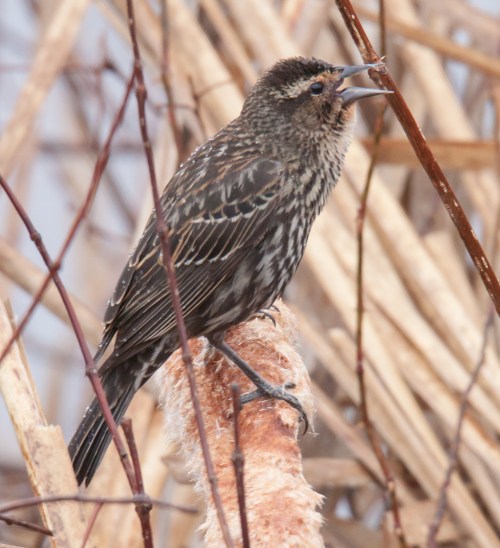
Red-winged Blackbird

© Michael Q. Powell. All rights reserved.

Read Full Post »

When this Common Five-lined Skink (Plestiodon fasciatus) is standing up, it looks pretty tall, but as the second image shows, it can get down so low that I don’t think that you could want to challenge it to a limbo contest.

How low can you go?

skinkCommon FIve-lined Skink

© Michael Q. Powell. All rights reserved.

Read Full Post »
Sometimes I’m out with my camera even when it’s raining, which lets me capture shots like this Red-winged Blackbird (Agelaius phoeniceus) that I spotted this past Friday at Huntley Meadows Park.

Red-winged Blackbird

© Michael Q. Powell. All rights reserved.

Read Full Post »
Conscious of his imminent departure for an overseas assignment, a Navy Dad cradles his infant son, ready to do whatever it takes to protect him. Fortunately Dad is not going to a war zone and in a few months his wife and young son will be joining him in that faraway country.

This past weekend I was privileged to attend a baby shower for the newest addition to my family. There was an official photographer for the event and he is the one who staged the first two photos. I shot around him and from different angles and generally tried to stay out of the way. The final shot was unstaged, though, and was one I grabbed while they were simply sitting on the sofa.

I am not used to taking photos of people and certainly not of babies, but I really like the way these turned out. Somehow I am fascinated by the baby’s hands and the different positions in the images—the clutching of the flag in first shot the semi-salute in the second, and the gentle grasp of his Dad’s hand in the final image.

Security? What can make you more secure than to be held in your Dad’s arms?

securitysecuritysecurity

© Michael Q. Powell. All rights reserved.

Read Full Post »

There were only a few Red-winged Blackbirds at my local marsh yesterday morning, but the loud volume of their calling made up for the smallness of their numbers. The morning light was quite beautiful, which makes these images look almost like they were shot in a studio. It sure helps when you have a cooperative subject, like this male Red-winged Blackbird (Agelaius phoeniceus), who enjoys being in the spotlight.

Red-winged Blackbird

Red-winged Blackbird

Red-winged Blackbird

© Michael Q. Powell. All rights reserved.


Read Full Post »
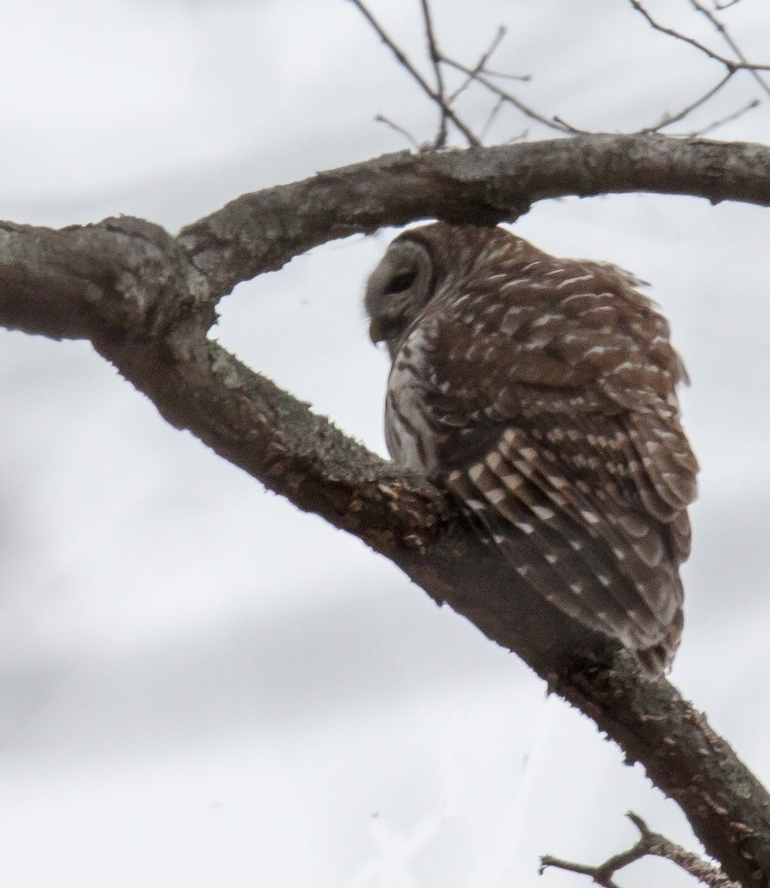
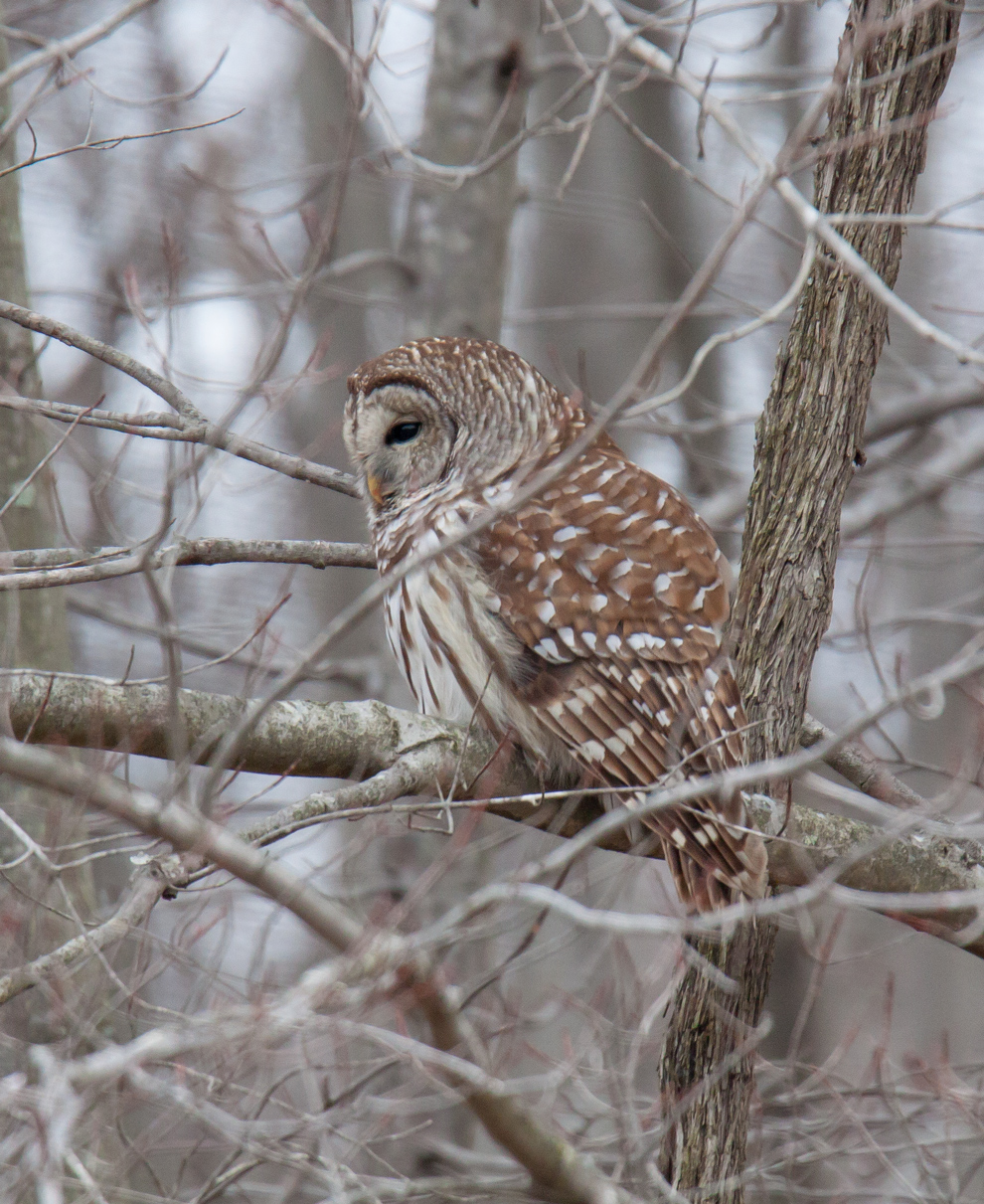
After a couple of years of searching unsuccessfully for owls, it’s hard for me to believe that I have had three separate encounters with Barred Owls in a little over a week, all during daylight hours. I realize that we are in nesting/mating season and these owls are more active in the day than at other times of the year, but I have been amazingly fortunate to have spotted these owls, especially this most recent one that was perched in a tree when I caught sight of it.

Yesterday I posted an image of this Barred Owl (Strix varia) flying away, which was an artsy kind of shot, but I decided to post some shots of the owl in the tree today, because this was one of the cleanest looks I have gotten to date of a Barred Owl (although I was a pretty good distance away and had to work to find a clear line of sight to the owl).

As you can see from these images, the owl’s head was in almost constant motion as it surveyed the entire area, possibly searching for prey. I am searching the trees as I hike about the back areas of my marshland park, hoping to spot an owl nesting site. The chances of finding one are really slim, of course, but I have been unusually lucky recently, so I’m not excluding that possibility.

Barred OwlBarred OwlBarred OwlBarred Owl

© Michael Q. Powell. All rights reserved.

Read Full Post »

Even in Northern Virginia, where temperature are relatively mild, winter must be difficult for Great Blue Herons, because many of their favorite ponds freeze over from time to time and fishing is not possible. After a recent period of temperatures above freezing, the ice melted and I was happy to see a heron return to a familiar location at my local marshland park.

I encountered this Great Blue Heron (Ardea herodias) early on a Saturday and had an extended period of time with this photogenic bird. The heron seemed to be willing to pose for me and gave me a number of different looks.

At times, as you can see in the final shot, the heron would look straight at me with apparent curiosity. After I had taken my shots, I moved along the boardwalk, leaving the heron to continue in his efforts to catch something to eat for breakfast.

Great Blue Heron

Great Blue Heron

Great Blue Heron

Great Blue Heron

© Michael Q. Powell. All rights reserved.

Read Full Post »

I can’t believe it, but I observed a Barred Owl (Strix varia) again, only a day after my first sighting and in the same general vicinity in my local marshland park. The circumstance were similar—it was during daylight hours (about 9 o’clock in the morning this time) and I first caught sight of the bird when it was flying.

The most recent encounter was a little more unusual, because the owl flew across my path from ground level and perched briefly on the branches of a fallen tree only about eight to ten feet (less than 3 meters) above the ground. The best shots that I managed to take on this occasion were mainly profile shots that give a good view of the almost human-shaped eyes as well as the small yellow bill. Many of my other shots showed the back of the owl’s head—it never looked directly at me.

I suspect that this is the same owl that I observed the previous day. One of my friends warned me that this is nesting/mating season for these owls and that they can get aggressive at this time of year. According to media sources, a Barred Owl attacked four joggers at a park in Salem, Oregon in separate incidents earlier this month and snatched the cap off the head of one of them. The park has posted warning signs that actually recommend hard hats. Check out this video from TV station KOIN for details about the owl attacks.

After watching that video, I am walking a bit more cautiously now when I am in the area where I spotted the owl, but have not yet taken to wearing a hard hat.

Barred Owl Barred Owl

© Michael Q. Powell. All rights reserved.

Read Full Post »
On Friday, as I was walking toward a group of ducks, I saw a flash of white, a white that was brighter than that of a mallard duck. In the midst of the mallards, there was a couple of Northern Pintail ducks (Anas acuta) and I managed to get this shot of the male.

Before he swam away, the duck extended his neck and looked all around. I was amazed to see how long his neck was—it appeared to be almost as long as a goose’s neck.

Once again, I was reminded of the value in closely examining a group of birds. Others might have passed by the group of common ducks without bothering to notice this beautiful Northern Pintail amidst the mallards.

Northern Pintail

Northern Pintail

© Michael Q. Powell. All rights reserved.

Read Full Post »

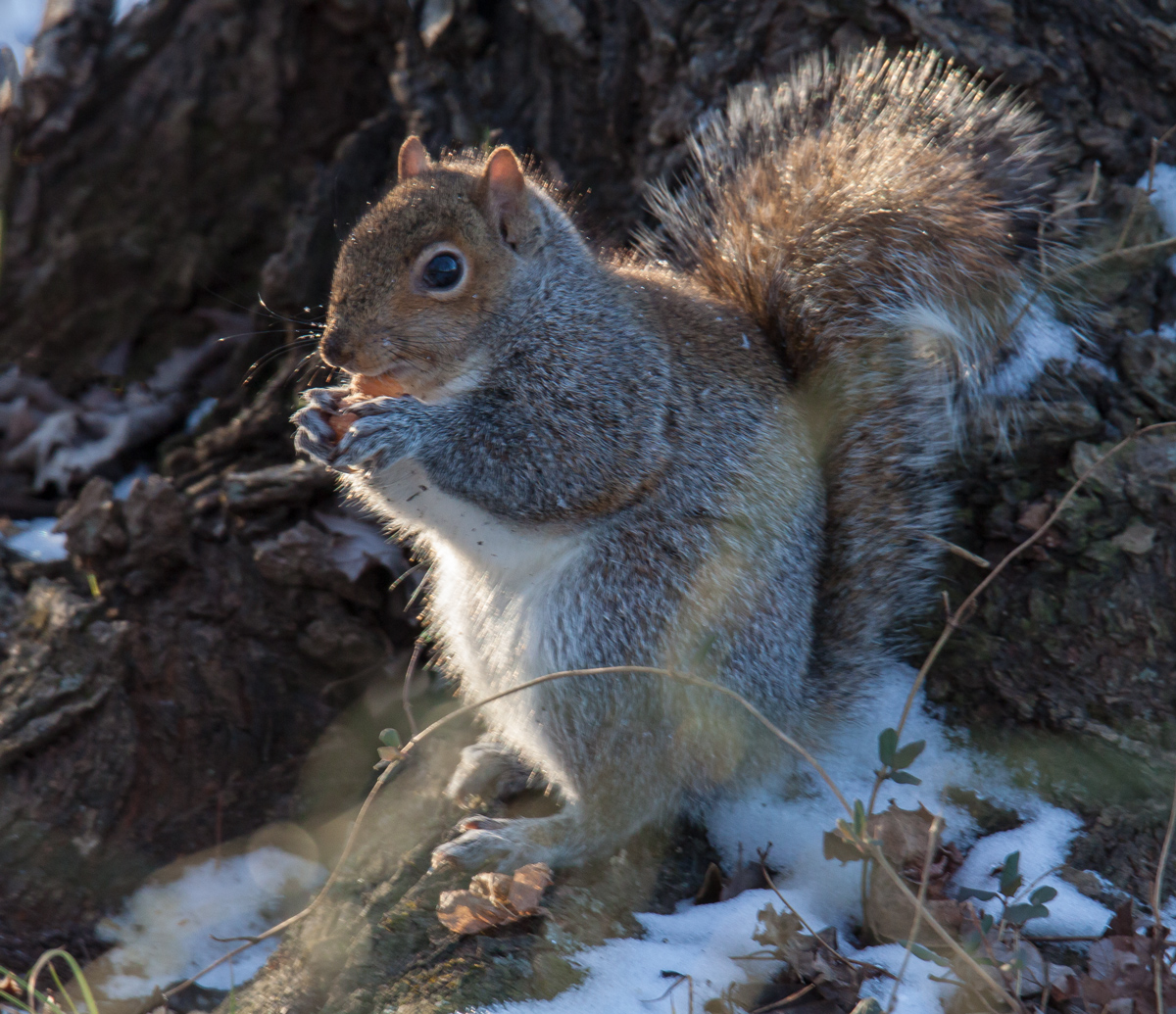
Squirrels scurry about so fast or hide in the shadows of the trees so often that it is frequently tough for me to get clear shots of them. This Eastern Gray Squirrel (Sciurus carolinensis) took a break from his work to bask in the sun and enjoy a snack (I think it was an acorn) and I was able to snap a few shots of him.

I particularly like the way the light fell on the squirrel and how it illuminated the fluffy tail. In addition, I can’t help but like the squirrel’s cute pose and facial expression. He seemed to be enjoying his little snack.

Eastern Gray Squirrel

© Michael Q. Powell. All rights reserved.

Read Full Post »

Many people in my area were off from work in honor of Martin Luther King Day and my marshland park was full of families enjoying the cool, sunny winter day. Not surprisingly, there was not a lot of wildlife to be found, but after a week overseas and a weekend away at a wedding, it was nice to return to familiar surroundings.

I was able to capture some interesting images of a White-throated Sparrow (Zonotrichia albicollis) perched on a branch. The little bird had puffed up its feathers and was amazingly round. and almost looks like he is dozing, with his eyes  half closed.

Can sparrows close their eyes?

White-throated Sparrow

© Michael Q. Powell. All rights reserved.

Read Full Post »

Some winter days, it’s really hard for me to find birds to photograph, but I can usually count on seeing some sparrows busily at work, pecking away in the underbrush for what look to be the tiniest of seeds.

This past Monday, before the arrival of the Arctic weather, I observed this beautiful little sparrow, which I think is a Swamp Sparrow (Melospiza georgiana). Sparrows are tough for me to identify, so I apologize in advance if this turns out to be another kind of sparrow.

The bird kept its head down most of the time and remained stayed primarily in the shadows. For just a moment, though, it lifted its head and turned toward the light and I was able to take this modest little portrait of one of my faithful winter companions at the marsh.

Swamp Sparrow

© Michael Q. Powell. All rights reserved.

Read Full Post »
Can you identify the bird in the first photo? There is an almost abstract quality to the image that I really like that focuses on the bird’s wide wingspan more than on the identity of the bird. The unusual viewing angle, looking forward from his extended feet, enhances that effect.

As you can see in the second photos (and as you probably easily guessed), this was a Great Blue Heron (Ardea herodias). Yesterday, a blustery but sunny day, I came across this heron at my local marshland park as he tried in vain to catch some lunch. Without much warning, he took off just after I snapped the second photo, perhaps to find a better fishing spot, and I was able to capture the more unusual view that I have shown as the first image.

Great Blue HeronGreat Blue Heron

© Michael Q. Powell. All rights reserved.


Read Full Post »

I will sometimes see other birds open their wings and stretch them out for a moment, but the Double-crested Cormorant (Phalacrocorax auritus) is the only bird that I have observed that leaves its wings open for an extended period of time.

Initially I was confused when I heard the cormorant had to dry out its wings because they got waterlogged. How does a waterbird survive if its wings are not waterproof?

The Cornell Lab of Ornithology, my favorite website for information about birds, provides the following explanation of this phenomenon:

“They have less preen oil than other birds, so their feathers can get soaked rather than shedding water like a duck’s. Though this seems like a problem for a bird that spends its life in water, wet feathers probably make it easier for cormorants to hunt underwater with agility and speed.”

Double-crested Cormorant

© Michael Q. Powell. All rights reserved.

Read Full Post »

Last week, when the weather was a bit warmer and the ponds had not yet frozen over at my local marshland park, I managed to get some shots of a pair of Northern Shovelers (Anas clypeata) in action.

I quickly realized that trying to photograph two birds, rather than a single one as I usually do, significantly magnified the difficulty in getting a good shot. The two North Shovelers rarely would stay together and would wander in and out of the frame. Even worse, one of them would move closer or farther away, challenging my ability to keep them both in focus.

Northern Shovelers forage by swimming along with their bills in the water, straining out food, and never seem to completely submerge their heads. I was happy that I was able to capture some shots in which the eyes are visible, even though the bills are in the water.

I really like the first image, because the positions of the male and the female are synchronized, yet I also really like the second image, because the positions are completely out of synch. I may be confused, or perhaps a lot of different things appeal to me, depending on how I consider them.

Northern Shoveler

Northern Shoveler

© Michael Q. Powell. All rights reserved.

Read Full Post »

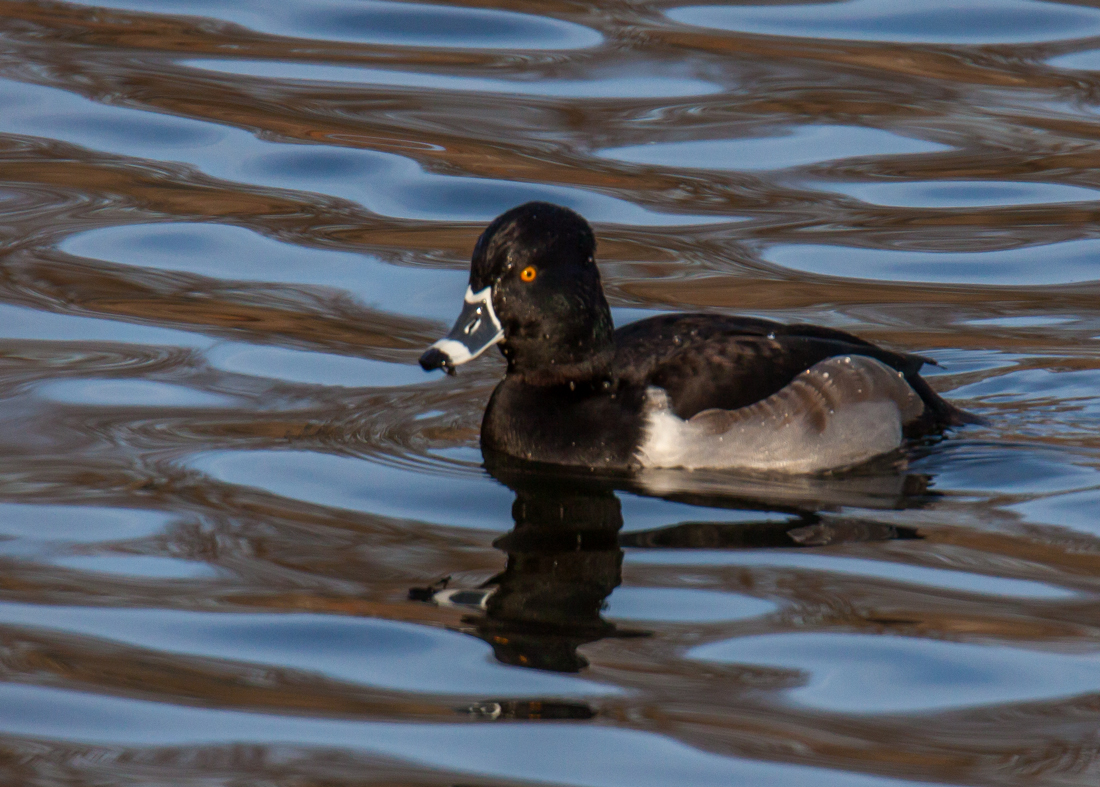
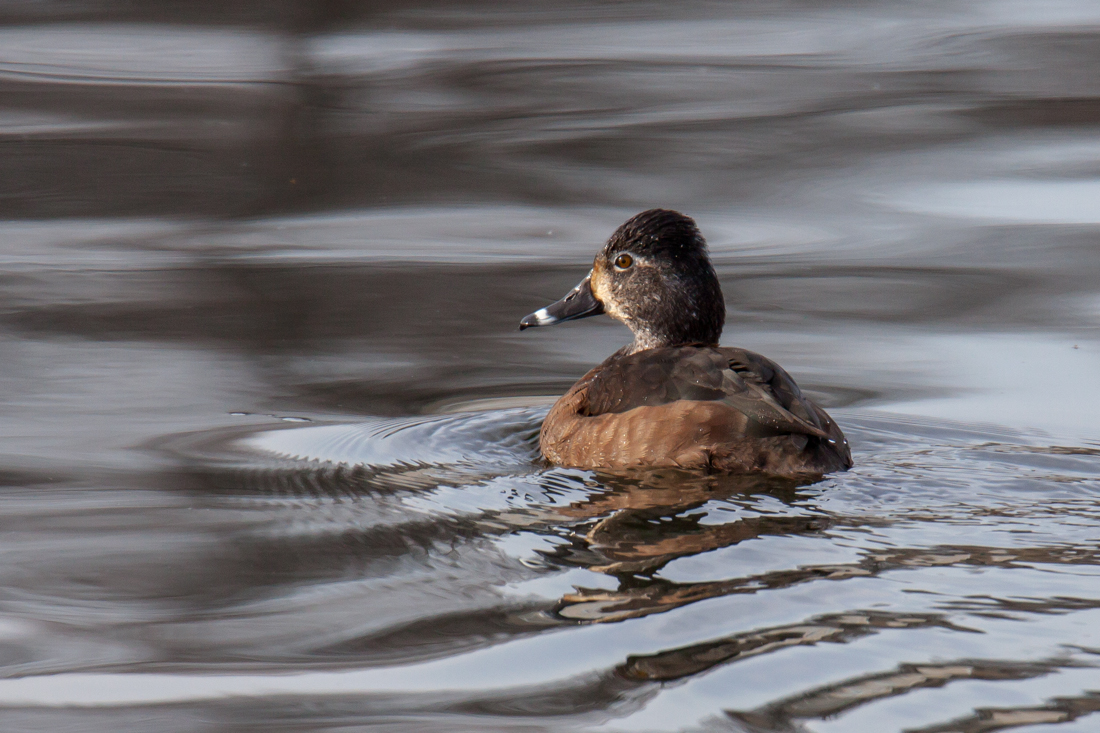
Although the rings on the bills of the Ring-necked Ducks (Aythya collaris) are very distinctive, it is their beautiful eyes that really draw me in, whether it be the startlingly yellow eyes of the male or the more subtle brown eyes of the female.

I never see these ducks in the ponds of my local marshland park, but each winter over the past few years, I have seen them in a small water retention pond in the middle of a suburban townhouse community near where I live.

Ring-necked DuckRing-necked DuckRing-necked Duck

© Michael Q. Powell. All rights reserved.


Read Full Post »

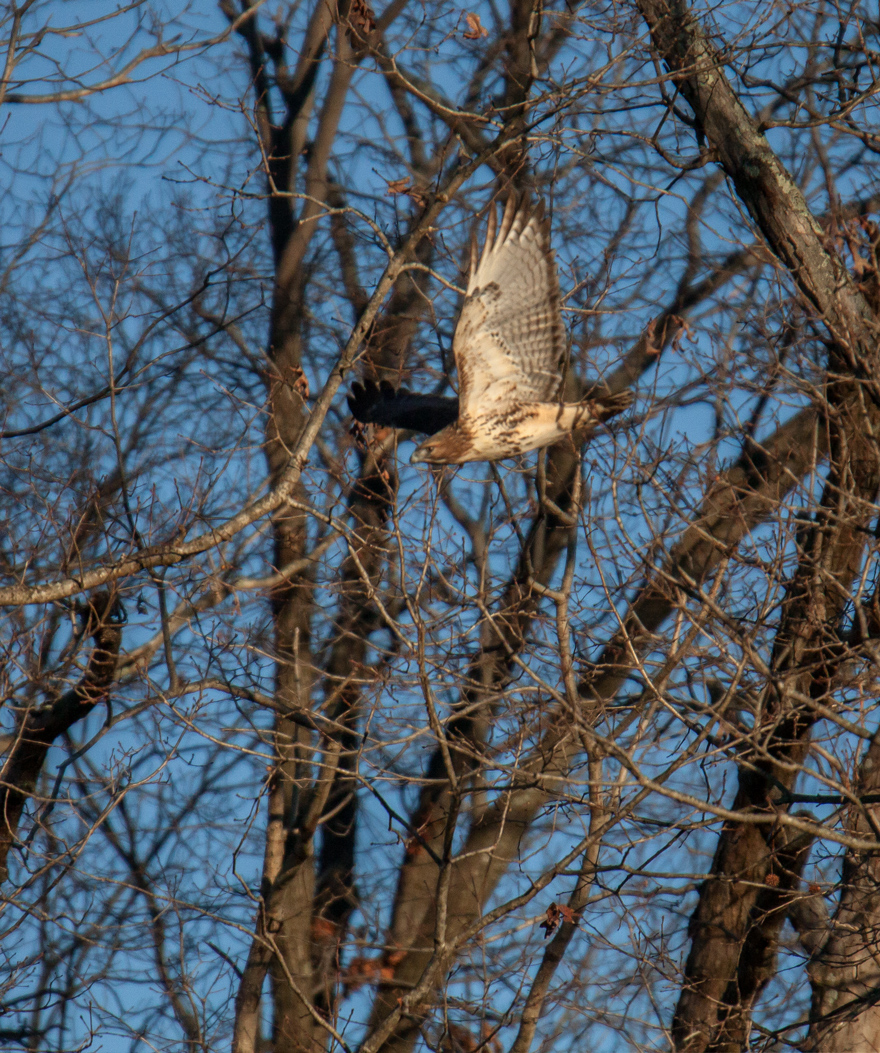
Where’s Waldo? As I was observing a Red-shouldered Hawk (Buteo lineatus) in the early morning, it took off and I captured this first image, in which you can just barely make out the hawk’s face and body amid all the branches.

In the second image, the sunlight hit one of the hawk’s wings just right and illuminated it against the backdrop of the tangled branches, making the hawk a bit easier to pick out.

UPDATE: Several readers have noted that this is almost certainly a Red-tailed Hawk (Buteo jamaicensis), not a Red-shouldered Hawk—I still have lots of work to do on improving my identification skills.

Red-tailed Hawk

Red-tailed Hawk

© Michael Q. Powell. All rights reserved.

Read Full Post »

As I gazed out into the center of a small, man-made pond, I spotted gulls and geese and a few ducks. Suddenly a small bird swam into view that I couldn’t identify. It looked a bit like a duck, but the bill seemed to be very different.

I’m stepping out into the unknown by speculating that this might be a Pied-billed Grebe (Podilymbus podiceps), although it doesn’t quite match any photos that in my identification guide or that I could find on-line. I wonder if it is a juvenile bird. I would welcome a clarification, correction, or confirmation from more experienced birders. Thanks in advance for your assistance.

As you can tell, it was a bright, sunny day when I took this shot this past weekend, a welcome respite from the gray days of winter. Alas, it is cloudy again today, with rain forecast for much of the day.

Grebe

© Michael Q. Powell. All rights reserved.

Read Full Post »

Double-crested Cormorants (Phalacrocorax auritus) are strange-looking waterbirds that sit really low in the water. I’ve seen them from time to time, but until yesterday, when I saw this one at a small suburban retention pond, I never knew that they have striking blue eyes.

One of the other unusual things about this bird is that they spend a good amount of time outside of the water drying out their wings. Despite being a diving bird, the cormorant’s feathers do not shed water as well as a duck’s, for example, and they can get soaked pretty quickly.

I took some photos of the cormorant drying its wings that I will post later, but I wanted to post the image of the cormorant resting on one leg, because it shows off the blue eyes (and I like the reflection).

Double-crested Cormorant

Double-crested Cormorant

© Michael Q. Powell. All rights reserved.

Read Full Post »

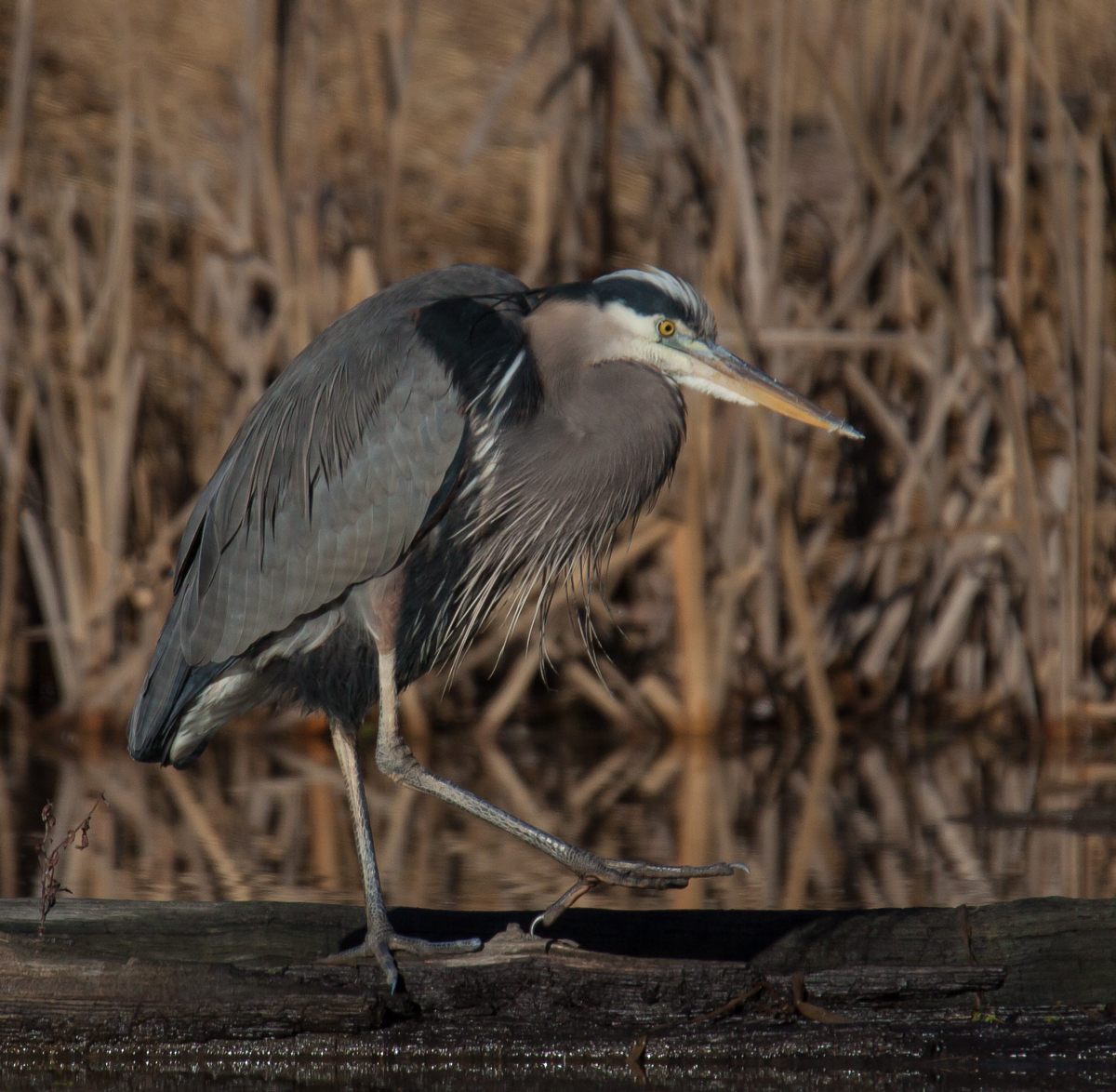
Yesterday at my local marshland park, this Great Blue Heron (Ardea herodias) seemed to be dancing—I think he was rocking to the sounds of “Walk This Way” by Aerosmith.

Great Blue Heron

Great Blue Heron

© Michael Q. Powell. All rights reserved.

Read Full Post »

I posted this image once already, but its bright Christmas colors cry out to be used again this morning.

Merry Christmas to friends and family and best wishes for a blessed New Year.

Thanks for all of your support and encouragement this past year as I have continued my journey through photography.

Northern Cardinal

© Michael Q. Powell. All rights reserved.

Read Full Post »

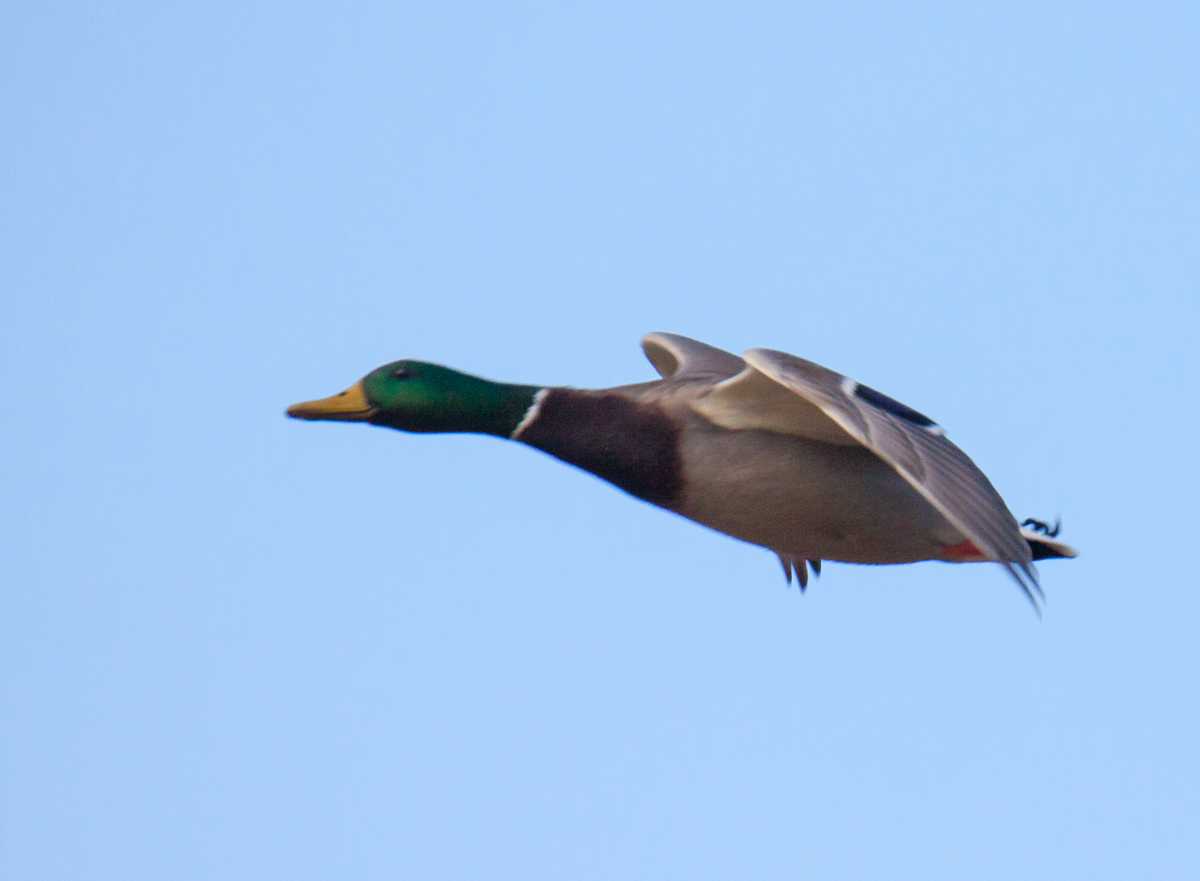
I’ve generally had a lot more difficulty capturing photos of ducks in flight than geese. Ducks are smaller, fly faster, and take off and land without the kind of advance warning that geese provide.

This past Monday, though, I managed to get some decent shots of a male Mallard (Anas platyrhynchos) as he flew past me. The background is uncluttered, a blue sky, which is ok, if not particularly interesting. As I reviewed my shots, I couldn’t help but notice how difficult it is to catch the wings in a good position, so I am happy that I took lots of shots in short bursts.

The last few days we’ve had almost constant rain, which is probably good for ducks like this one, though I would prefer to have some sunshine.

Mallard in flight Mallard in flight Mallard in flight

© Michael Q. Powell. All rights reserved.

Read Full Post »

What is the most beautiful bird that you can see in the wild in your area? We have lots of pretty birds here in Northern Virginia, but I could make a really strong case for the male Wood Duck (Aix sponsa) as the most stunning bird.

Alas, wood ducks are also amazingly elusive and it is rare that I get a glimpse of one of them. Toward the end of November, however, I was thrilled when I caught sight of one in Holmes Run, a tributary stream of the Potomac River. I was on a bridge pretty high above the stream and the duck did not seem to sense my presence, so I was able to get some decent shots as he swam in and out of the light.

The water in which the duck was swimming looks amazing, with swirls and colors that complement the Wood Duck’s bright colors and striking patterns.  I am not sure what caused the effect, but I really like it.

This was the only Wood Duck that I spotted all autumn, but it sure was worth waiting for. I’ll be keeping an eye out for these beauties as we move deeper into winter.

Merry Christmas and Happy Holidays to all of you.

Wood Duck

Wood Duck

© Michael Q. Powell. All rights reserved.

Read Full Post »

One of the Great Blue Herons (Ardea herodias) that has been hanging around the boardwalk at my local marshland park was amazingly cooperative yesterday morning and posed for this portrait. I think the white background was caused by the very cloudy sky—it makes the shot look almost like it was taken in a studio setting.

I really like the way that you can see the wispy feathers on the top of the heron’s head. I can’t help but notice, though, that this heron has the same kind of growth pattern on the top of his head as I do.

I wonder if he would consider shaving his head (and I really hope that he does not opt for a comb-over hairstyle a bit later in life).

Is there a Hair Club for herons?

Great Blue Heron

© Michael Q. Powell. All rights reserved.

Read Full Post »

« Newer Posts - Older Posts »