Feeds:
Posts
Comments

Archive for the ‘Nature’ Category

The moon was shining brightly in my neighborhood this morning at 6:00, just a few days after the full moon.

moon_april_blog

© Michael Q. Powell. All rights reserved

Read Full Post »

Like tiny bunches of grapes, growing out of the ground on a stalk, grape hyacinths are one of my favorite spring flowers. I moved in really close with my macro lens in the first shot to emphasize the beautiful details and the rich dominant bluish-purple color of the plant and moved back a bit for the other two shots to highlight the varied shapes and colors of the individual “grapes.”

GrapeHyacinth Closeup webHyacinth Umbels webGrape Hyacinth 1 web

© Michael Q. Powell. All rights reserved

Read Full Post »

This final image of my mini-series on unopened tulips is my favorite—I love the simple composition, the almost monochromatic palette (with the slightest touch of pink at the tip), and the  sensual curves of the leaves.

It was almost six o’clock in the evening when I took this shot and the light was still pretty strong, but was starting to fade. I knew that I wanted to shoot some close-up shots of flowers, so I was using my 180mm macro lens. I probably should have been using my tripod for increased steadiness, especially because the lens does not have image stabilization (VR for Nikon folks), but I hadn’t brought a tripod with me.

As is often the case with my macro lens, I ended up focusing manually, trying to get as much of the tulip in focus as I could as I carefully composed the shot. The settings for this shot, for those who might be interested in such technical details, were ISO 400, f/8, and 1/50 second. The shutter speed is a bit slow, I’ll admit, but I was able to brace myself pretty well and I was trying to avoid increasing the ISO and introducing more noise.

If you haven’t seen the other images in this mini-series, Anticipation I and Anticipation II, be sure to check them out. Is there one that you like more than the others?


IMG_0907 web

© Michael Q. Powell. All rights reserved

Read Full Post »

With the cold, gray days of winter receding in my memory and the world exploding with color, I’ve taken a brief break from focusing primarily on wildlife photography and have turned my attention to capturing the beauty of flowers and blossoms.

I’ve never quite figured out how to photograph broad expanses of color, so I tend to focus more on the details of a single flower and try to isolate it from the background.  (One of my favorite bloggers, Camilla, of Calee Photography did an amazing job in capturing the beauty of tulip fields by photographing them from a small airplane. Check out her posting.)

In this case, my eyes were drawn to the not-yet-open tulip, where the color of the flower was beginning to be revealed. The composition is simple and graphic and a little abstract.

I can already sense the beauty that is to come—the anticipation makes it even more sweet.

IMG_0790 web

© Michael Q. Powell. All rights reserved

Read Full Post »

Anticipation, waiting for the moment when a tulip will burst open. For now, all we can see is a little tongue of color, a foretaste of the beauty that is to come.

Anticipation web

© Michael Q. Powell. All rights reserved

Read Full Post »

The flowering trees in my neighborhood are spectacular right now. Here’s a couple of shots of the flowers of one of them, which I think is some kind of magnolia or tulip tree.

magnolia_blogmagnolia2_blog

© Michael Q. Powell. All rights reserved

Read Full Post »

I am always happy to visit the garden of one of my neighbors, Cindy Dyer, a fellow photographer and blogger, at this time of the year, because there is always something new in bloom. Yesterday’s treat was this simple little purple flower. I have no idea what it is, but I love its shape and colors.

flower_tiny_blog

© Michael Q. Powell. All rights reserved

Read Full Post »

Spring is here and I am once again chasing dragonflies, on a quest to capture images of these beautiful insects. Common Green Darners (Anax junius) rarely seem to perch, so I was forced to try to photograph them in flight.

This early in the spring, there aren’t yet a lot of dragonflies, so my patience was tested as I waited for one to fly by. I tried a lot of different approaches and the one that worked best on this day was to focus manually, which is a bit of a challenge at 300mm when the subject is moving pretty fast.

I hope I’ll get some better shots later this season—this is my best one so far.

dragonfly_flight_blog

© Michael Q. Powell. All rights reserved

Read Full Post »

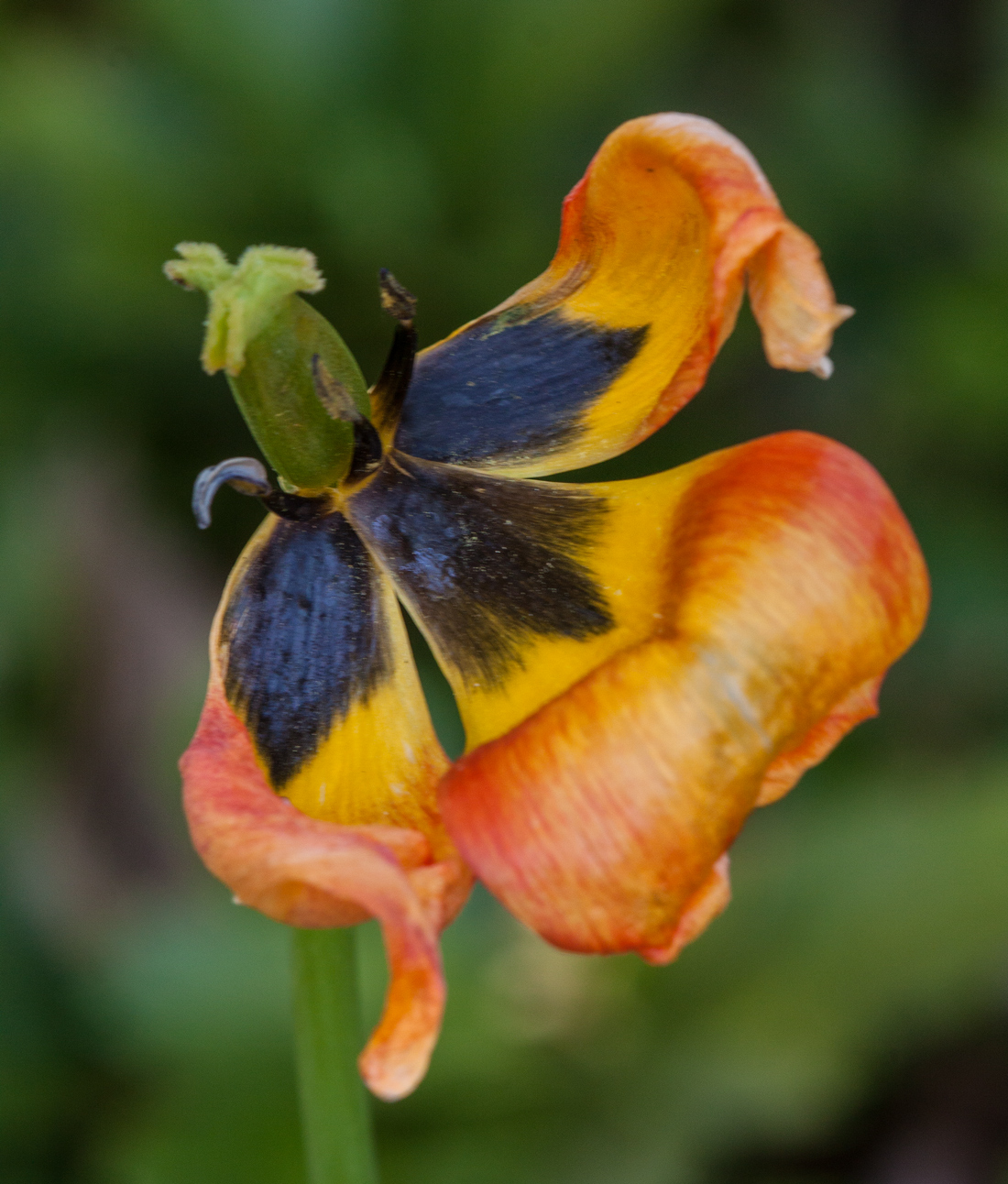
This red tulip may have been at its peak a few days ago when it was in full bloom, but it has retained its beauty in its current faded state.

tulip_faded_blog

© Michael Q. Powell. All rights reserved

Read Full Post »

Sometimes a coiled snake is prepared to strike, but this Northern Water Snake (Nerodia sipedon) was definitely not ready for action. The snake seemed total relaxed as it basked in the sun, curled up above the surface of the water on some dried up vegetation.

I really like the texture of the snake’s skin, but there was no way that I was going to reach out and touch it. Telephoto lenses are a good thing in situations like this.

snake_coil_blog

© Michael Q. Powell. All rights reserved

Read Full Post »

Unlike the Great Blue Herons that stay in Northern Virginia all winter, Great Egrets (Ardea alba) depart for warmer locations during the winter. I was happy to note this past weekend that the egrets are now back at my local marsh, where I took these shots of one coming in for a landing.

The wing span of this bird is impressive and I love the way that it points its toes as it comes in for the landing. As is often the case, I had challenges getting a proper exposure—I try to expose for the brilliant white body, but often blow out the highlights. I am pleased that I was able to capture some of the details of the wings in these images, though the shadows caused much of the plumage to look gray, rather than white.

egret2_april_blogegret1_april_blogegret3_april_blog

© Michael Q. Powell. All rights reserved


Read Full Post »

At first I thought that the black and orange birds rooting about in the fallen leaves were American Robins (Turdus migratorius), but a closer look through the undergrowth revealed that there was white on their breasts and that their eyes were red.

It turns out that they are Eastern Towhees (Pipilo erythrophthalmus), a strikingly marked oversized sparrow. It was quite a challenge to get somewhat unobstructed shots of these birds. They seemed to be in constant motion, hopping about and rummaging through the leaves—I had to chase them around for quite some time to get these modest shots.

towhee2_blogtowhee1_blog

© Michael Q. Powell. All rights reserved

Read Full Post »

What kind of birds do you have in your neighborhood? I live in the suburbs of Washington D.C. in a townhouse community in Northern Virginia. There are quite a few trees and some green spaces, so I am able to find birds to photograph when I walk through the neighborhood, though the birds tend to be small and elusive.

This past weekend, I encountered a reasonably cooperative Carolina Chickadee (Poecile carolinensis) that remained perched in a tree in a fenced backyard as I desperately sought to compose the shot. I was hoping to have the sky as the background, because I was shooting upward, but the branches of the tree made it impossible to get that shot. I quickly realized that my only hope for an uncluttered background was to use the white siding of the townhouse as the backdrop. As I moved from side to side, I noticed that the blue shutters of the townhouse kept creeping into the frame and decided to incorporate them as an element of the image.

I really like the final result, a pleasing portrait of a little chickadee with a simple, almost minimalist composition.

chickadee1_april_blog

© Michael Q. Powell. All rights reserved

Read Full Post »

Spring has definitely arrived, bringing with it an abundance of snakes in addition to the profusion of flowering plants.  Most of the snakes have been all curled up, basking in the sun.  This Northern Water Snake (Nerodia sipedon), however, was slithering through the water and stuck out its tongue and hissed at me before disappearing below the surface of the water.

I really like the way the colors of the snake’s skin match those of its surroundings and even the reddish color of the forked tongue is repeated in the fallen blossom.

snake1_water_tongue_blog

© Michael Q. Powell. All rights reserved


Read Full Post »

As I strolled through my suburban neighborhood on a sunny Sunday afternoon, I expected to see cardinals, chickadees, sparrows, and goldfinches in the trees—I had no idea that I would also encounter a brightly colored tropical bird.

I first saw the bird as a flash of brilliant blue, when it flew from a bird feeder on a back porch to a nearby tree. I love the blue colors of the Eastern Bluebirds, but this was an entirely different shade of blue. Initially the bird was in the shade and I tried to figure out what it was from its shadowy shape, but I was stumped, because it didn’t seem to have a bill.

When I circled around and got a better look, I could see that it was a blue parakeet. What was a parakeet doing outdoors in Northern Virginia? Had it recently escaped from one of the nearby townhouses? Can it survive for long outside?

I did a little research on the internet and learned that the birds we know as parakeets are more technically known as Budgerigars (Melopsittacus undulatus). In the wild, they live in parts of Australia and are naturally green and yellow. In captivity, they have been bred to have different colors, like the electric blue of this one. Judging from the brown color of the cere (the waxy structure that covers the base of the bill), this appears to be a female.

I’ll keep my eyes open to see if I can spot this beautiful bird again. Meanwhile, I will post the photos in the Facebook group of my homeowners’ association and see if I can learn from others how long this bird has been living in the wild.


parakeet1_blogparakeet2_blog

© Michael Q. Powell. All rights reserved

Read Full Post »

The weather has gotten warmer, but I was still a bit surprised when I saw my first dragonfly of the year yesterday at Huntley Meadows Park, my local marsh. I think that it is a female Common Green Darner dragonfly (Anax junius), one of the species that migrates north after spending the winter in warmer places. This is the only dragonfly that I saw yesterday and I was able to squeeze off a couple of shots before it disappeared. I’m hoping that it won’t be long before I see more dragonflies and butterflies, some of my favorite photographic subjects.

dragonfly_april_blog

© Michael Q. Powell. All rights reserved

Read Full Post »

Some folks complain a lot about Canada Geese, but I enjoy trying to photograph them, especially when they are taking off and landing. It seems like the number of them has dwindled somewhat at my local marsh recently–perhaps some of them have migrated north.

Yesterday, this goose began to sound the alarm as soon as it became aware of my presence and took off a short time later, still crying out with its tongue extended. I managed to track the bird as it was taking off and to shoot a series of shots. The sky was pretty heavily overcast yesterday, so I had raised my ISO to 320 and figured that I would have enough speed to capture the action. What I didn’t realize at the time, though, was that my aperture was still set at f/11, because I had been shooting some landscapes just prior to these shots. I was in aperture priority mode and my camera chose a shutter speed of 1/1oo of a second.

In the first shot, the goose is relatively sharp and there is little motion blur, except for the background, which is blurred, I think, because I was panning as I tracked the goose. In the second shot, though, which preceded the first in time, the wings and the feet have some motion blur, which accentuates the feeling of the goose scrambling to get into the air.

I keep going back and forth in trying to decide which of this two photos I like better. The technical side of my brain wants to vote for the first one, but the artistic side prefers the second image. What do you think?

goose_alarm goose_alarm2_blog

© Michael Q. Powell. All rights reserved


Read Full Post »

Another coot? Yes, as I was going over my recent shots of an American Coot (Fulica americana) at my local marsh one more time, I decided that I liked this image even more than the one I posted yesterday. The coot has a kind of determined look in its eye and the tilted head gives it a sense of tension, like it is exerting effort to pull that plant out of the water. Besides, I seem to be attracted to birds and animals with unusually colored eyes.

I find it tough at times to choose the best shot quickly when I have shot a series of images. Probably I need to take a little more time in reviewing the images, but I am often in too much of a hurry to find an image (or images) to post. A year ago, I felt compelled to attempt to post every single day, but I have backed off slightly and miss a day now from time to time.

Nonetheless, I still like to post images that appeal to me, which are often, but not always, my “best” shots. Sometimes the photos will merely document the experience that I want to share with readers and may not be technically great images. It’s a little selfish, perhaps, but I shoot mostly for me. Fortunately, I sense that my skills are improving and hope that the quality of the images I post tend to reflect that improvement.

coot_redeye_blog

© Michael Q. Powell. All rights reserved

Read Full Post »

Thanks to some recent rains and a major wetland restoration project at my local marsh, we seem to have a lot more American Coots (Fulica americana) than last year. Most of the time they seem to like to keep their distance. This past Monday, though, one of them drifted toward an area relatively close to where I was standing and I managed to get this shot of the coot feeding on some of the vegetation growing out of the water.coot_hungry_blog© Michael Q. Powell. All rights reserved

Read Full Post »

As I was tiptoeing my way along a tree that had fallen across a flooded area of my local marsh, I glanced down and caught sight of this turtle, submerged in the shallow water. I am no expert in identifying turtles, but it was pretty easy to identify this as a Spotted Turtle (Clemmys guttata), a species that I don’t see very often.

According to Wikipedia, the spotted turtle is federally endangered in Canada and in the United States it is considered to be vulnerable to extinction in the wild in the medium-term future, or threatened in most of its habituating states. Within Virginia, the state in which I live, the Herpetological Society is pretty grim in its prognosis, “Extinction or extirpation is possible. Populations of these species are in decline or have declined to low levels or are in a restricted range. Management action is needed to stabilize or increase populations.”

It was a bit of a challenge getting a shot of this turtle. I was standing on the trunk of a tree, so my footing was a bit precarious. The water was probably only a few inches deep, but it seemed to defeat my auto-focusing system, so I ended up focusing manually. Finally, there was a bit of glare coming off of the surface of the water, so I had to bend down to search for an angle that allowed me to minimize the glare.

I am hoping that I will see these turtles often and that Huntley Meadows Park, the place where I take a lot of my wildlife photographs, will continue to be a refuge for this species and for many other ones.


turtle_spotted_blog

© Michael Q. Powell. All rights reserved

Read Full Post »

Taking advantage of yesterday’s gorgeous springtime weather, this little Eastern Gray Squirrel (Sciurus carolinensis) took a break from his chores to enjoy a snack and to bask in the warmth of the sun for a few moments.

squirrel2_spring_blogsquirrel1_spring_blog

© Michael Q. Powell. All rights reserved


Read Full Post »

Hoping to capture a shot of an osprey  (Pandion haliaetus) snagging a fish earlier this month, I started firing my camera each time the osprey dove toward the surface of the water with talons extended, but, unlike the bird, I came up empty-handed. The osprey, it turns out, was not fishing for food—it was gathering building materials for its nest. It was impressive nonetheless to watch an osprey fly up into the sky with a pretty large branch in its grasp.

Click on the photos if you want to see a higher resolution view of the images. (I am always amazed by the osprey’s yellow eyes.)

osprey_fishing1_blogosprey_fishing2_blog

© Michael Q. Powell. All rights reserved

Read Full Post »

Despite the rain yesterday, the male Red-winged Blackbirds (Agelaius phoeniceus) were singing up a storm. It seemed like their entire bodieswould expand as they prepared to call out loudly. I didn’t see any female blackbirds respond to the calls—in fact, I didn’t see any at all.

blackbird_singing2_blogblackbird_singing1_blogblackbird_singing3_blog

© Michael Q. Powell. All rights reserved

Read Full Post »

It’s springtime and love is in the air. Two tree swallows (Tachycineta bicolor) seemed intent on getting to know each other better, but kept getting buzzed by a third swallow. A couple of times, one of the swallows, which I suspect was the male, took off and chased away the potential rival.

swalow_couple2_blogswallow_couple1_blogswallow_couple3_blog

© Michael Q. Powell. All rights reserved

Read Full Post »

Like the dried-up leaves on this branch, winter is tenaciously hanging on, refusing to give way to spring. March is almost over, yet I look out the window and see that the ground is still covered with snow.

Soon the monochromatic tones of winter will be replaced by the pastel colors of spring. Starved for bright colors, my senses rejoice when I am greeted by bright colors, like those of this male Northern Cardinal (Cardinal cardinalis) that I observed this past weekend.

cardinal_march_blog

© Michael Q. Powell. All rights reserved

Read Full Post »

Soaring high above the earth, this Osprey (Pandion haliaetus) seemed to be relaxing, enjoying a moment of peace before getting back to the pressing  job of rebuilding the nest.

osprey_soar_blog

© Michael Q. Powell. All rights reserved

Read Full Post »

Can snakes whistle? It sure looks like this Common Ribbonsnake (Thamnophis sauritus) is trying hard to whistle as he purses his lips and seems to be blowing air in this series of shots. Who knew that snakes had lips? This snake has lips that rival those of Mick Jagger and look a bit like they were enhanced with collagen.

When you shoot subjects, how close do you get to them? My general rule for wildlife subjects is to shoot them from a distance (so I can be sure of getting a shot) and then move slowly closer and closer. I was amazed at how close this snake let me approach—this first shot was not cropped very much at all.

I like the head-and-shoulders look of the first image (taking into account the fact that snakes don’t really have shoulders), which draws attention to the snake’s eye. At times, though, I prefer the shots that show more of the snake’s body and my favorite of this group is probably the third shot. I really like the curve of the snake’s body and the tilt of its head. It’s hard to see in this reduced-size image, but two little tips of the snake’s forked tongue are visible in its partially open mouth.

snake3_march_blogsnake2a_march_blogsnake4_march_blog

© Michael Q. Powell. All rights reserved

Read Full Post »

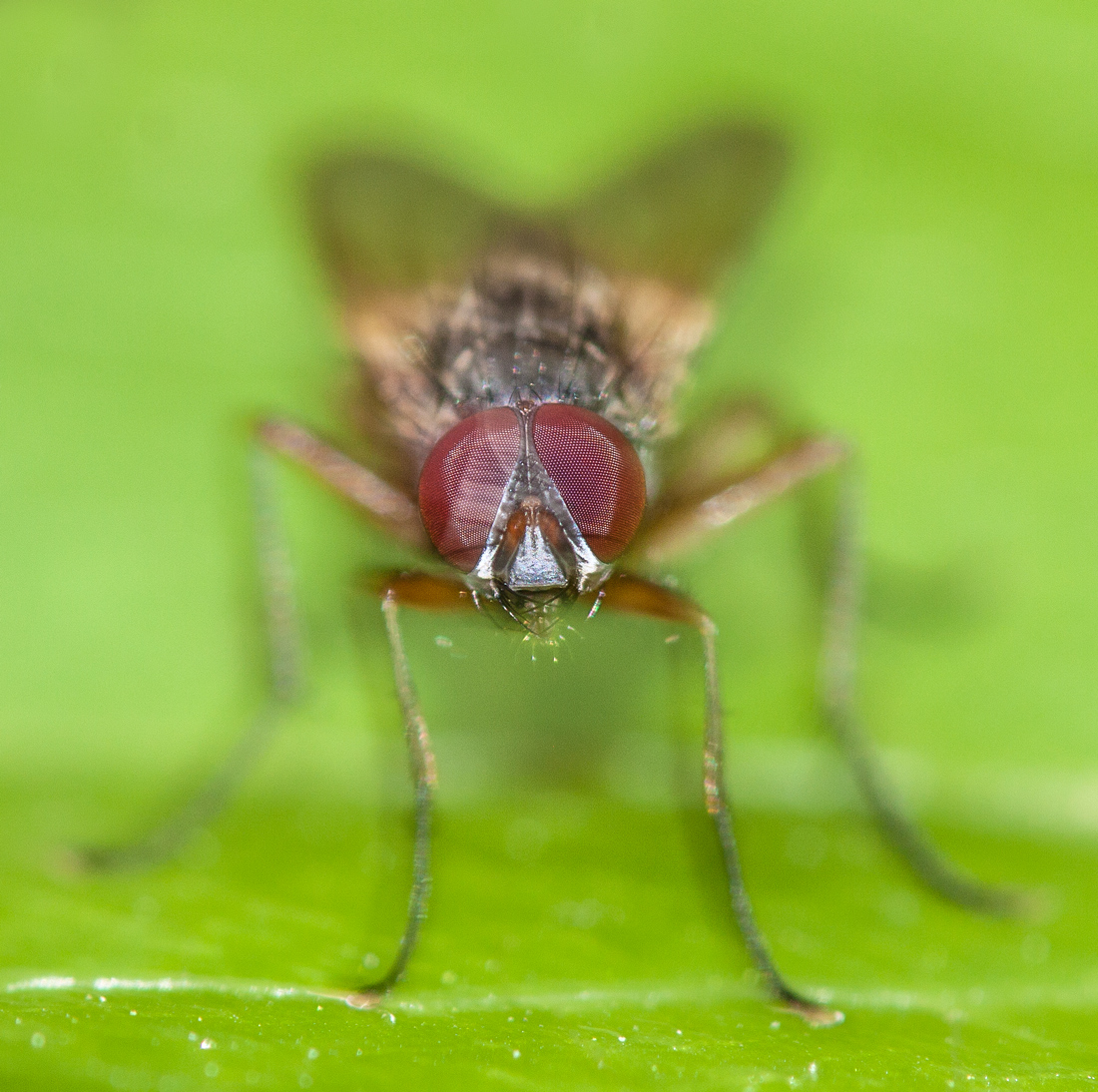
The world changed for me when I put my macro lens back on my camera, simultaneous becoming smaller and bigger. Instead of looking in the distance for birds, I switched my focus to the world immediately in from of me, searching for tiny objects that I can photograph.

In vain I long for colorful butterflies and dragonflies, but it is too early in the spring for them to appear. As soon as a fly buzzed by me, I was seized with an irresistible urge to capture its image. It’s only a fly (a Green Bottle Fly, I think), but it is symbolic of the joys to come, the time when I will spend endless hours chasing after insects, trying to capture the detailed beauty of their colors and patterns.

fly_march_blog

© Michael Q. Powell. All rights reserved

Read Full Post »

The late afternoon sunlight shining through this crocus from behind illuminated it like a natural stained glass window. I love the beauty of simple things.

crocus2_march_blog

© Michael Q. Powell. All rights reserved

Read Full Post »

Yesterday afternoon, my dear friend and fellow photographer Cindy Dyer called to alert me that there were some crocuses blooming in her garden. The lighting was wonderful and the dirt in the background provides a simple backdrop for the gorgeous colors of this little spring flower.

crocus1_march_blog

© Michael Q. Powell. All rights reserved

Read Full Post »

Sometimes you don’t have to travel far to get good nature photos. I noticed this colorful little jumping spider on my car yesterday when I was loading my camera gear, getting ready to go out shooting. spider4_car_blog

It was a fun challenge trying to get shots of the spider as it moved to various parts of the trim surrounding the windshield, many of which were reflective. I wasn’t sure how long the spider would hang around, so I didn’t set up my tripod and I think it would have been pretty awkward to do so.

spider1_car_blog

I am hoping that nobody snapped pictures of me as I sprawled my body across the hood of the car, trying to find a way to brace my body and get a decent shooting position. My Tamron 180mm macro lens lets me get in close, but it does not have image stabilization.

spider3_car_blogOne of the first things that I noticed when I reviewed my images was that my car is dirty. In this area, they use a lot of salt on the roads when it snows and I suspect that those little white spots are salt residue. I thought about removing them in post-processing, but decided that I like the more urban, gritty feel that they give the images (and besides, it would have been a lot of work to get rid of all of them).

spider2_car_blog

I am always thrilled when I find a jumping spider. There is something special about all of those eyes that simply fascinates me and I am particularly happy when I manage to get reflections in the eyes.

© Michael Q. Powell. All rights reserved

Read Full Post »

« Newer Posts - Older Posts »