Feeds:
Posts
Comments

Archive for the ‘Insects’ Category

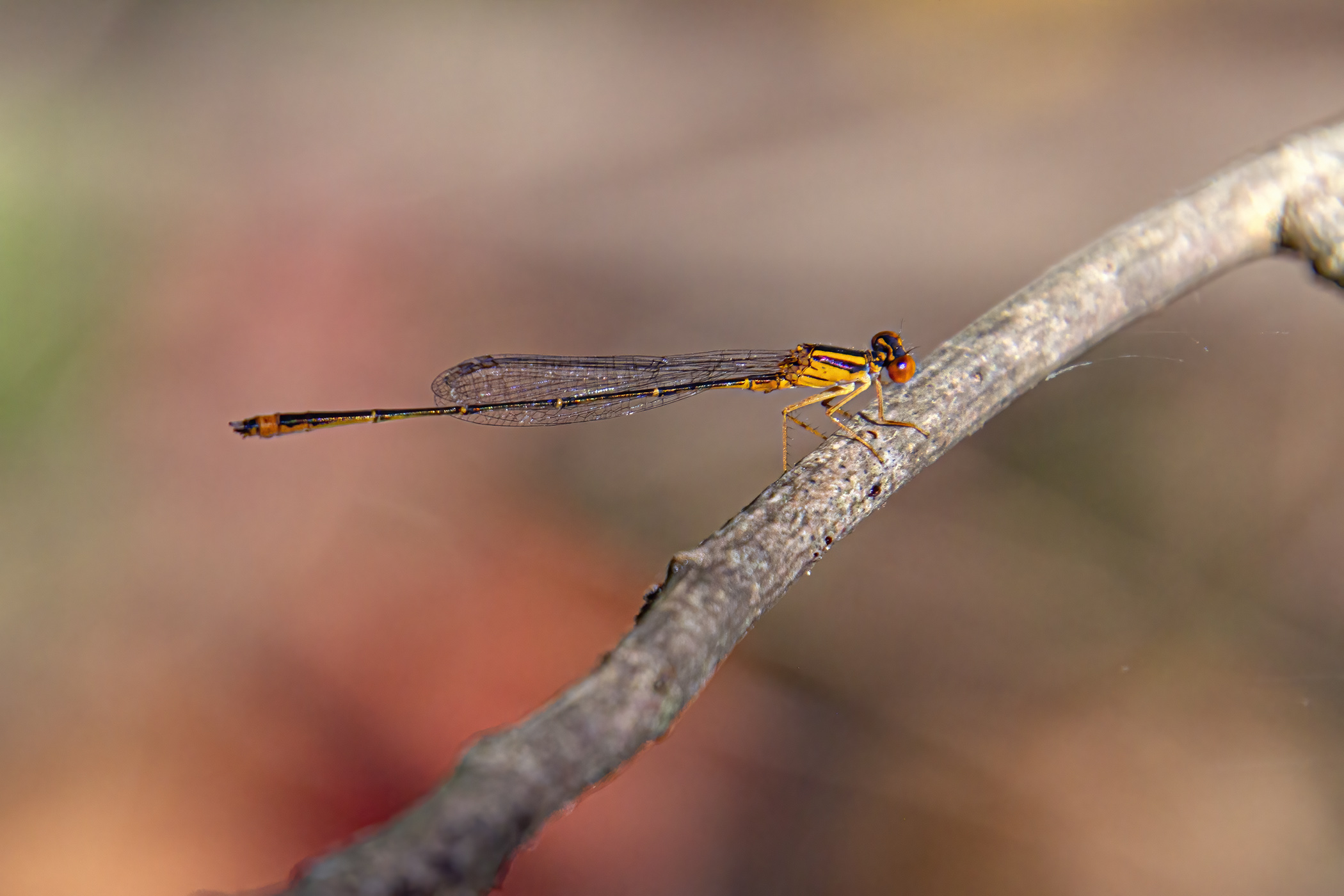
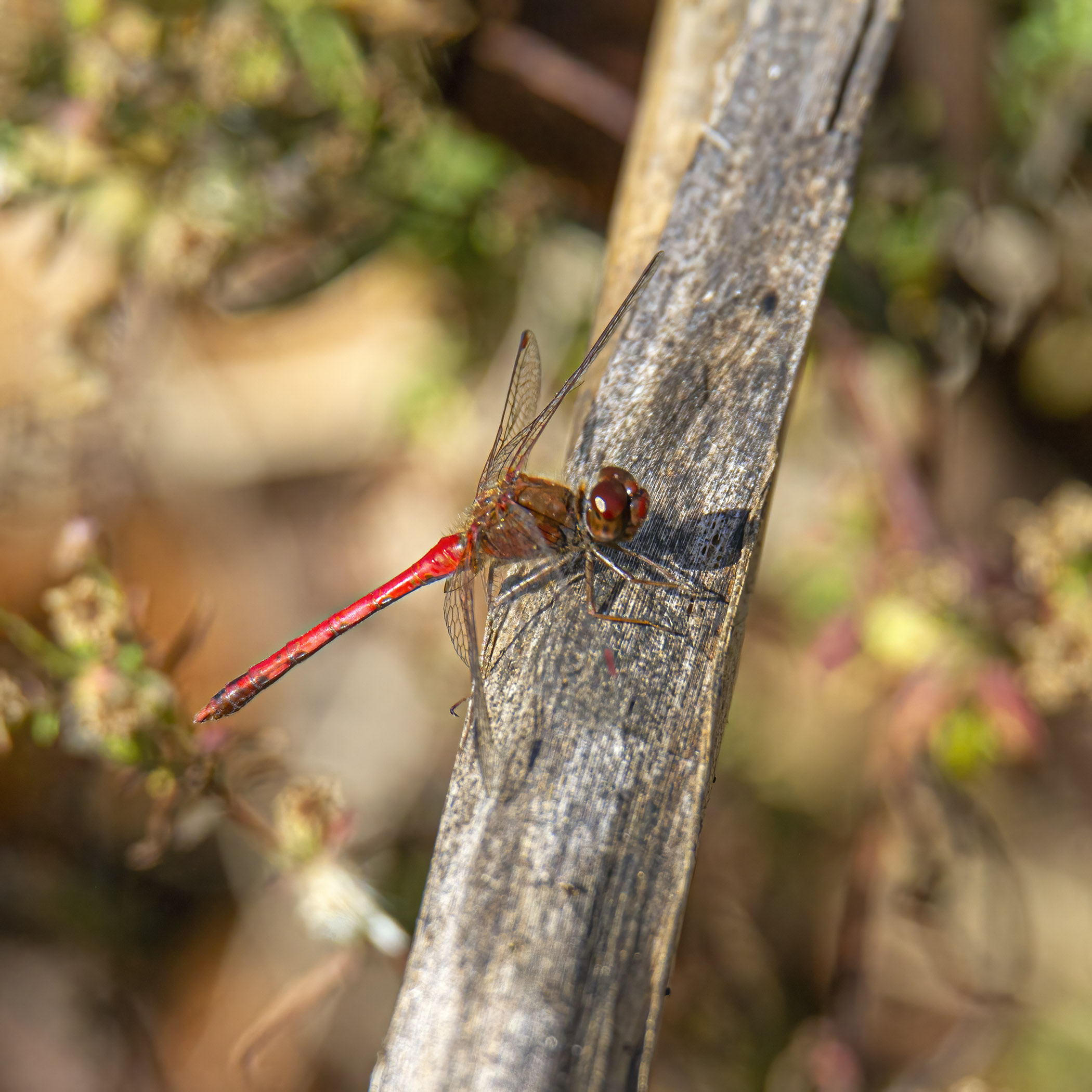
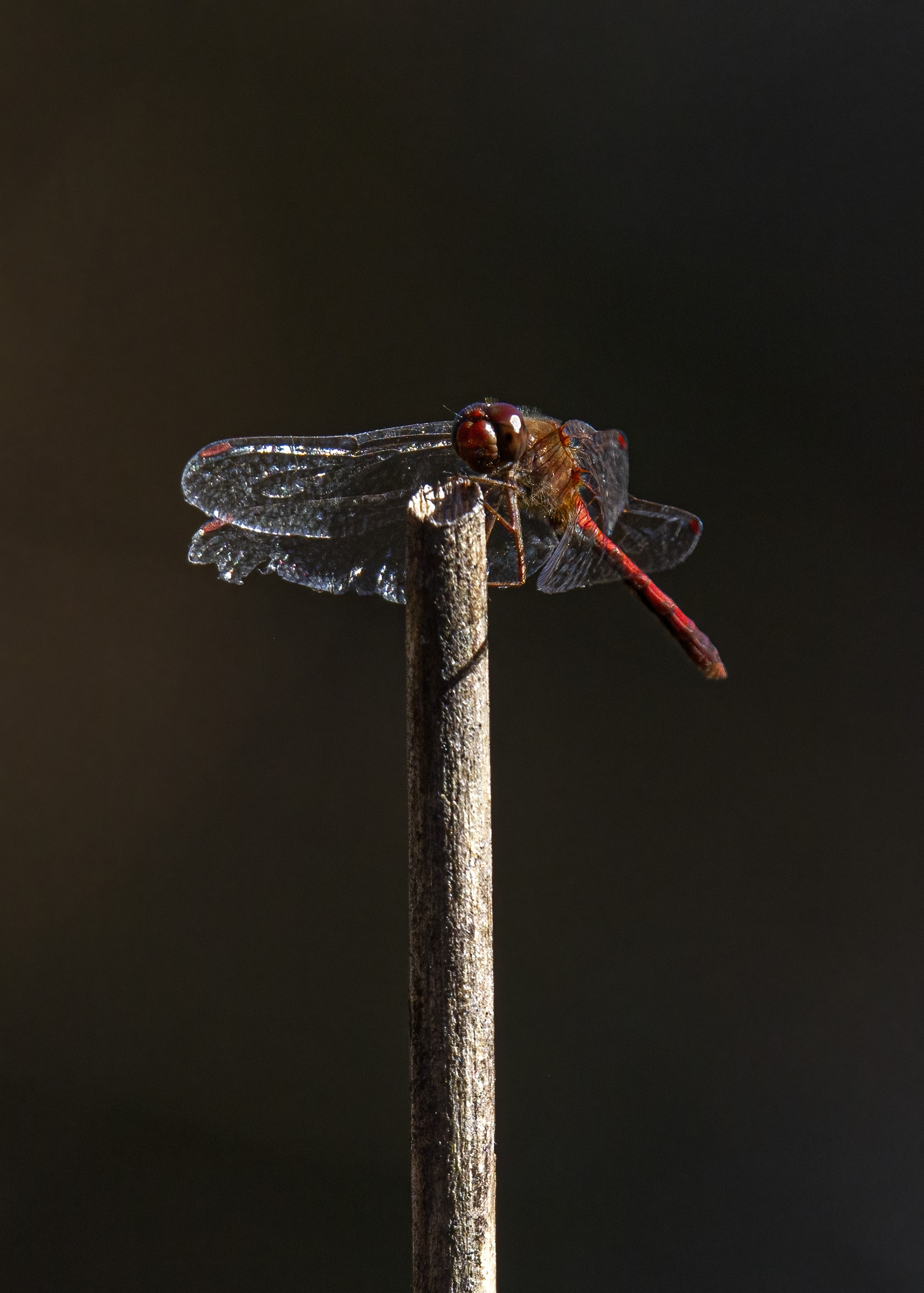
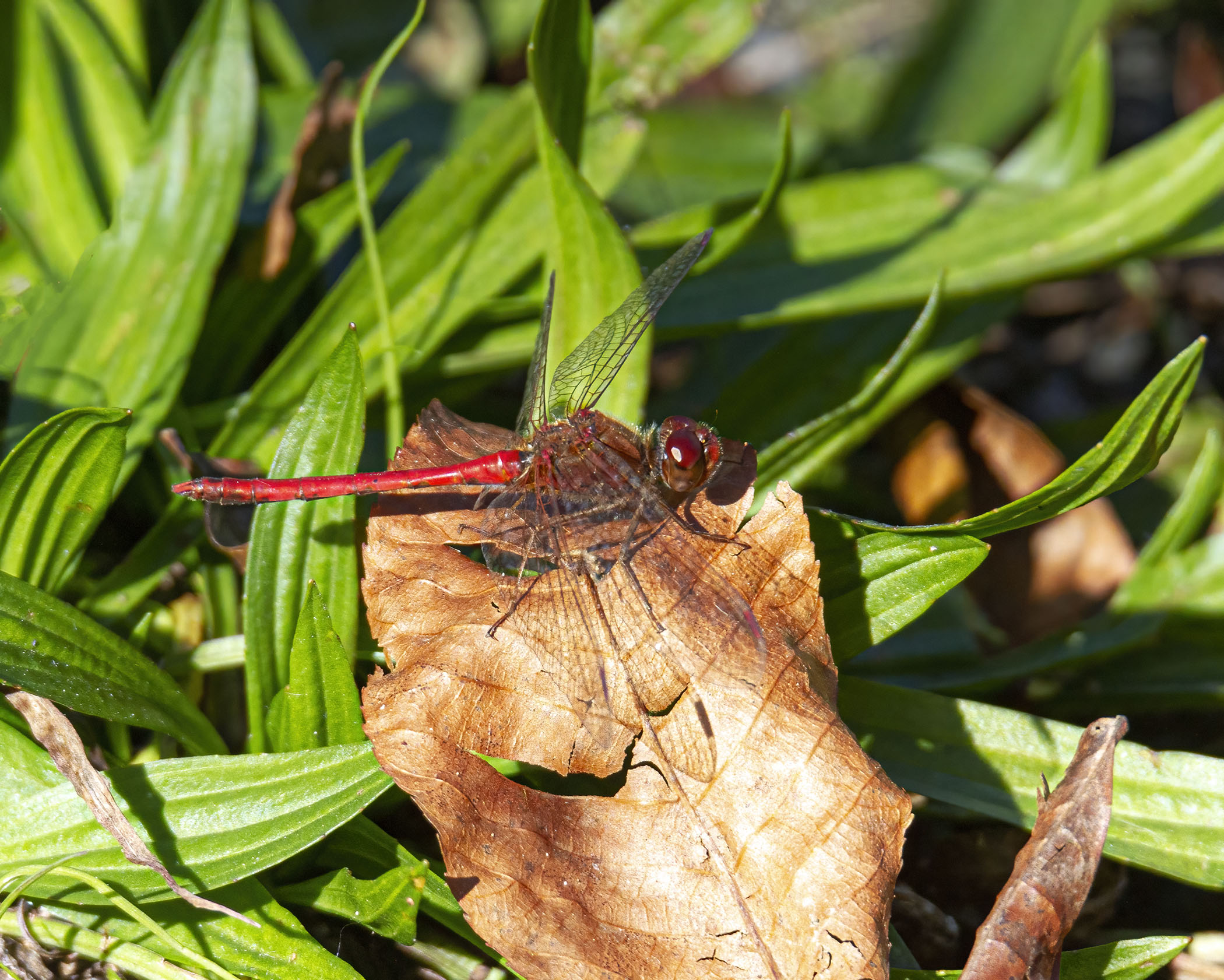
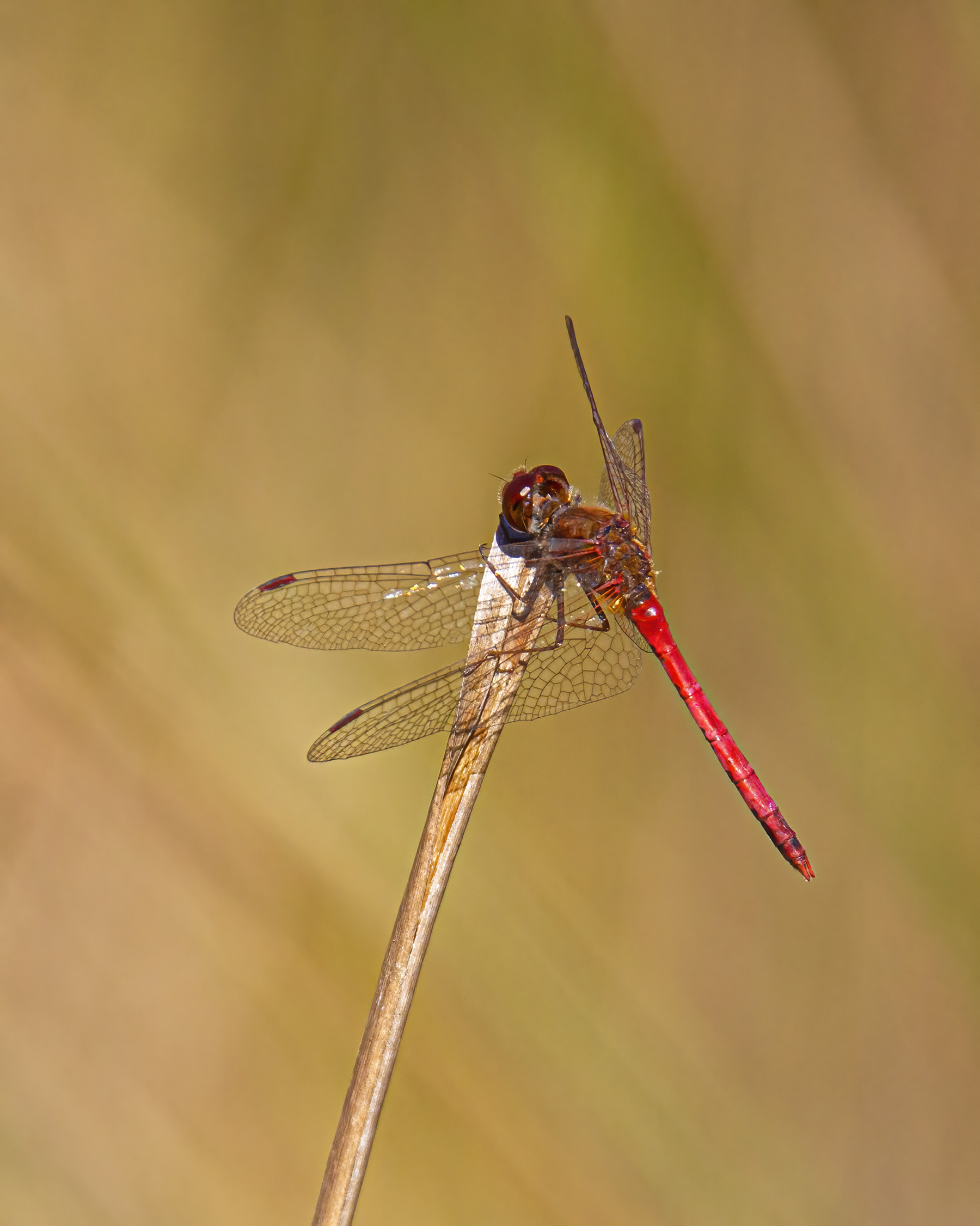
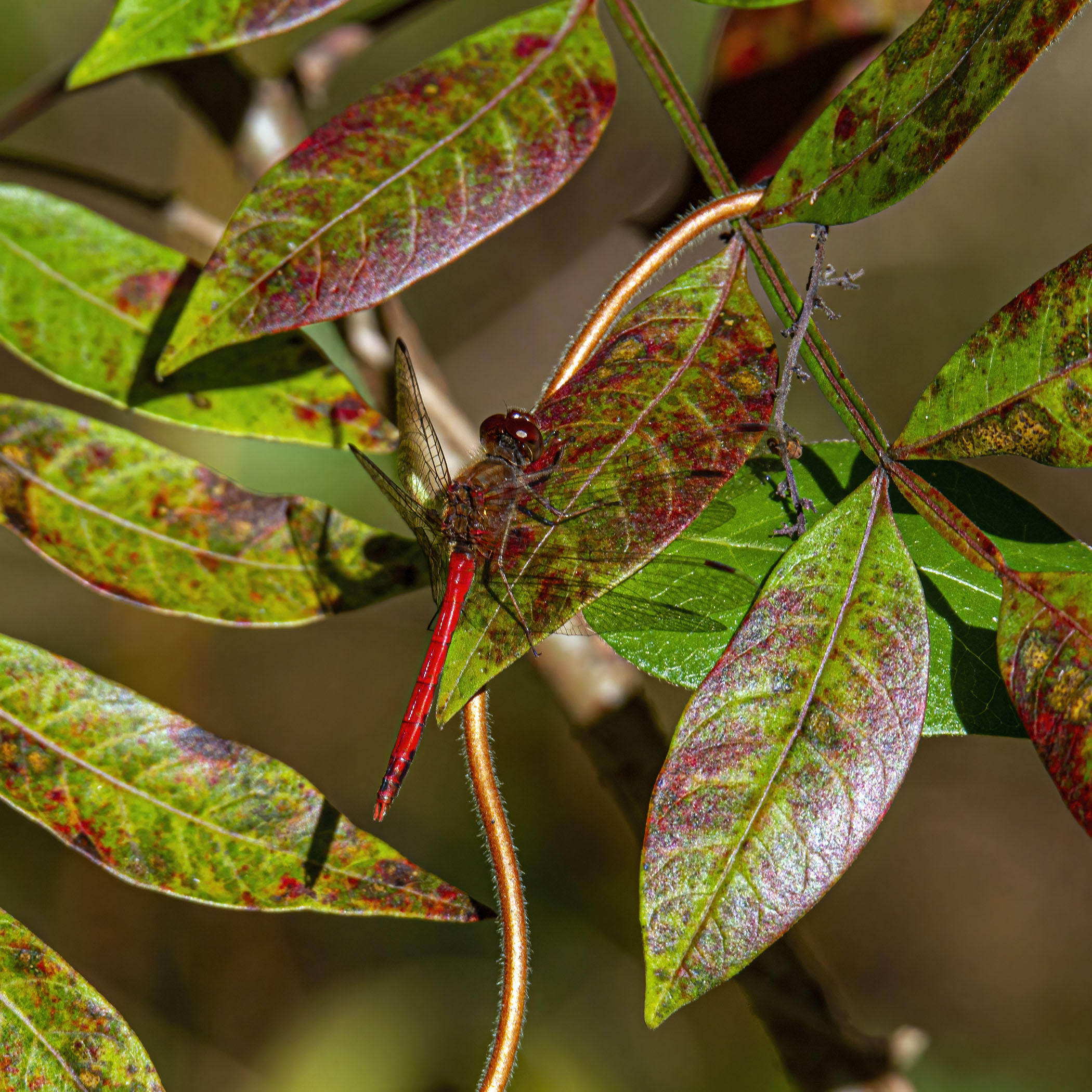
I was thrilled yesterday on Thursday at Huntley Meadows Park, a local marshland park, when I finally spotted some Blue-faced Meadowhawk dragonflies (Sympetrum ambiguum), a stunning species that is one of my favorites, after searching in vain for them at other locations for over a month. The Blue-faced Meadowhawk is a late-season dragonfly that is somewhat similar in appearance to the more common Autumn Meadowhawk—males of both species have bright red bodies, but the Autumn Meadowhawks have brown eyes.

The females of both species are more muted in their coloration than their male counterparts, as is often the case with many dragonflies and birds, so they have more natural camouflage and are frequently more difficult to find. The second image shows a female Blue-faced Meadowhawk that I managed to spot in the same general area as the male in the first photo. I love the way that the female dragonfly appeared to be singing a song as she basked in the sunlight on some dried-out vegetation.

Blue-faced Meadowhawk

Blue-faced Meadowhawk

© Michael Q. Powell. All rights reserved.


Read Full Post »

This late in the season, most of the large butterflies seem to be gone, but I continue to see some of the smaller ones, like this beautiful Variegated Fritillary butterfly (Euptoieta claudia) that I spotted on Thursday during a visit to Huntley Meadows Park, a county-run marshland park not far from where I live. Earlier in the year I encountered some Great Spangled Fritillaries, but I think this may well be my first sighting of a Variegated Fritillary in 2023.

The butterfly appeared to be basking in the sun as it perched with its wings wide open on some dried-out vegetation. I was using my Tamron 150-600mm telephoto zoom lens, which has a minimum focusing distance of almost nine feet (270 cm), so I was pretty far from the butterfly when I captured this image. I have read reviews that state that this lens is soft when fully extended to 600mm, but I have found that I can get acceptably sharp images if I pay a lot of attention to my focusing and shooting techniques, including remaining steady—in this case I was using a monopod.

Variegated Fritillary

© Michael Q. Powell. All rights reserved.


Read Full Post »

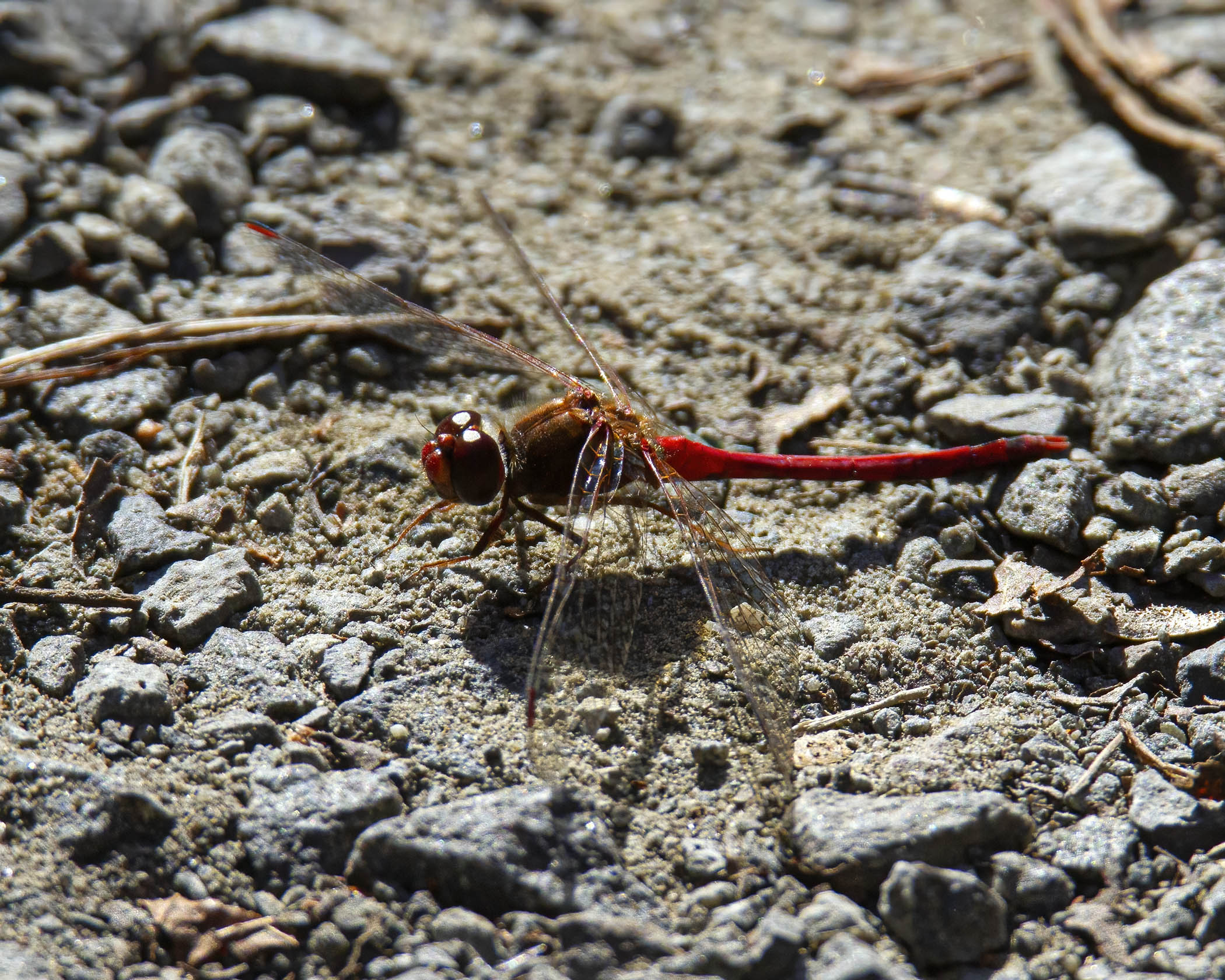
I walked about for a couple of hours on Wednesday at Occoquan Bay National Wildlife Refuge and visited some of my favorite dragonfly sites, but managed to spot only three dragonflies. Of those three, the only one that I managed to photograph was this pretty little Autumn Meadowhawk (Sympetrum vicinum).

Autumn Meadowhawks are quite small, about 1.3 inches (33 mm) in length, so they are not easy to spot, despite their bright red color. They tend to stay close to the ground, making short flights most of the time, so you have to be looking down to see them. At this time of the year, I focus a good amount attention on birds, so I end up alternating between looking up for birds and down for insects.

I really like the color and texture of the rocks on which the dragonfly chose to perch. Their cool muted tones contrast nicely with the red and brown colors of the dragonfly.

Autumn Meadowhawk

© Michael Q. Powell. All rights reserved.

Read Full Post »

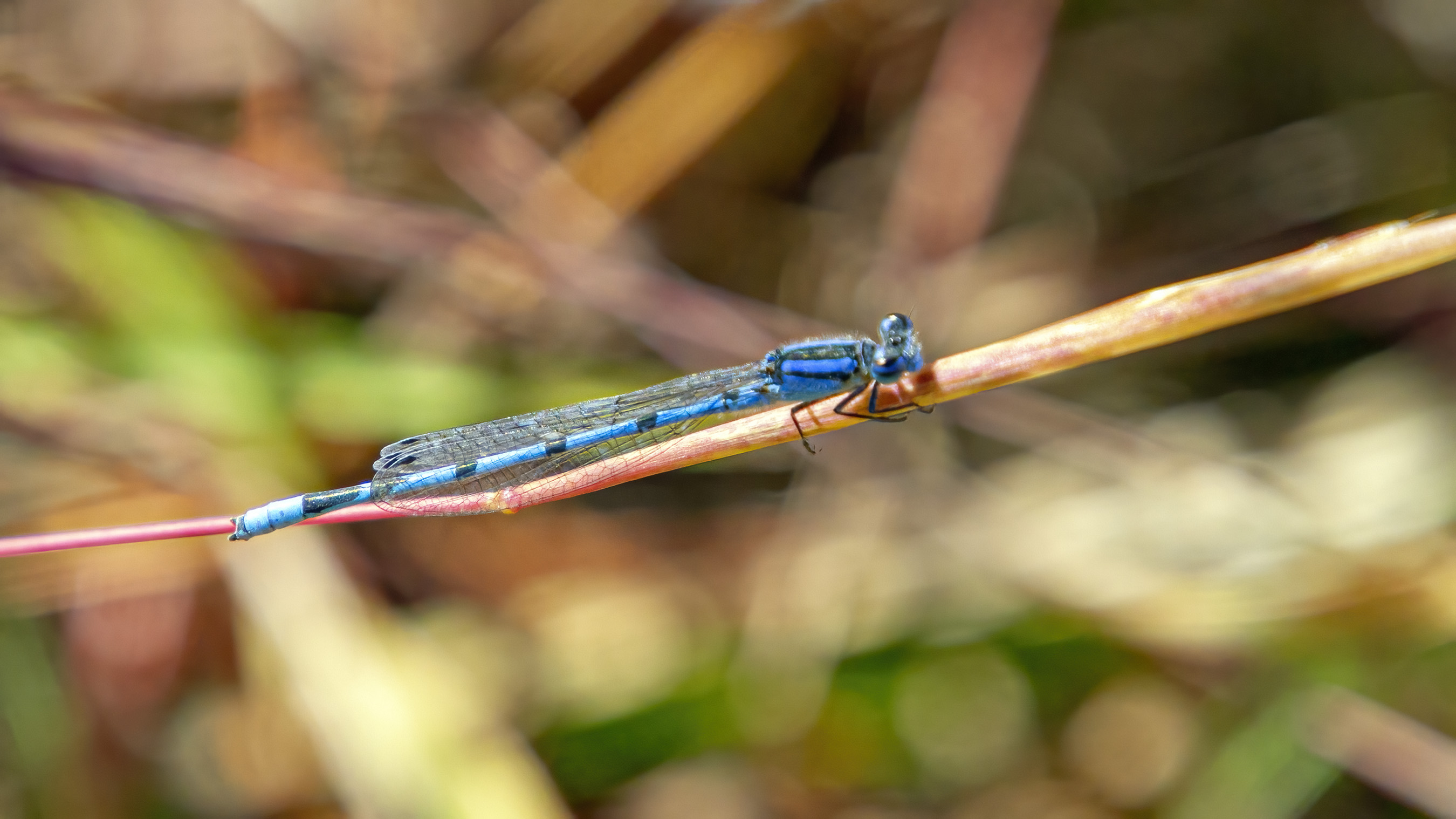
Like dragonflies, their larger “cousins,” damselflies have been rapidly decreasing in numbers this month. During recent visits to Occoquan Bay National Wildlife Refuge, I have seen only a few remaining damselflies. Therefore I was especially happy to spot this handsome male Familiar Bluet damselfly (Enallagma civile) last Tuesday.

The little damselfly seemed to be giving me a sideward glance as I carefully focused on him and I see a hint of what might be a smile. I really like the way that the background turned out in this image too—the colors and bokeh balls add additional visual interest without detracting from the primary subject.

Familiar Bluet

© Michael Q. Powell. All rights reserved.


Read Full Post »

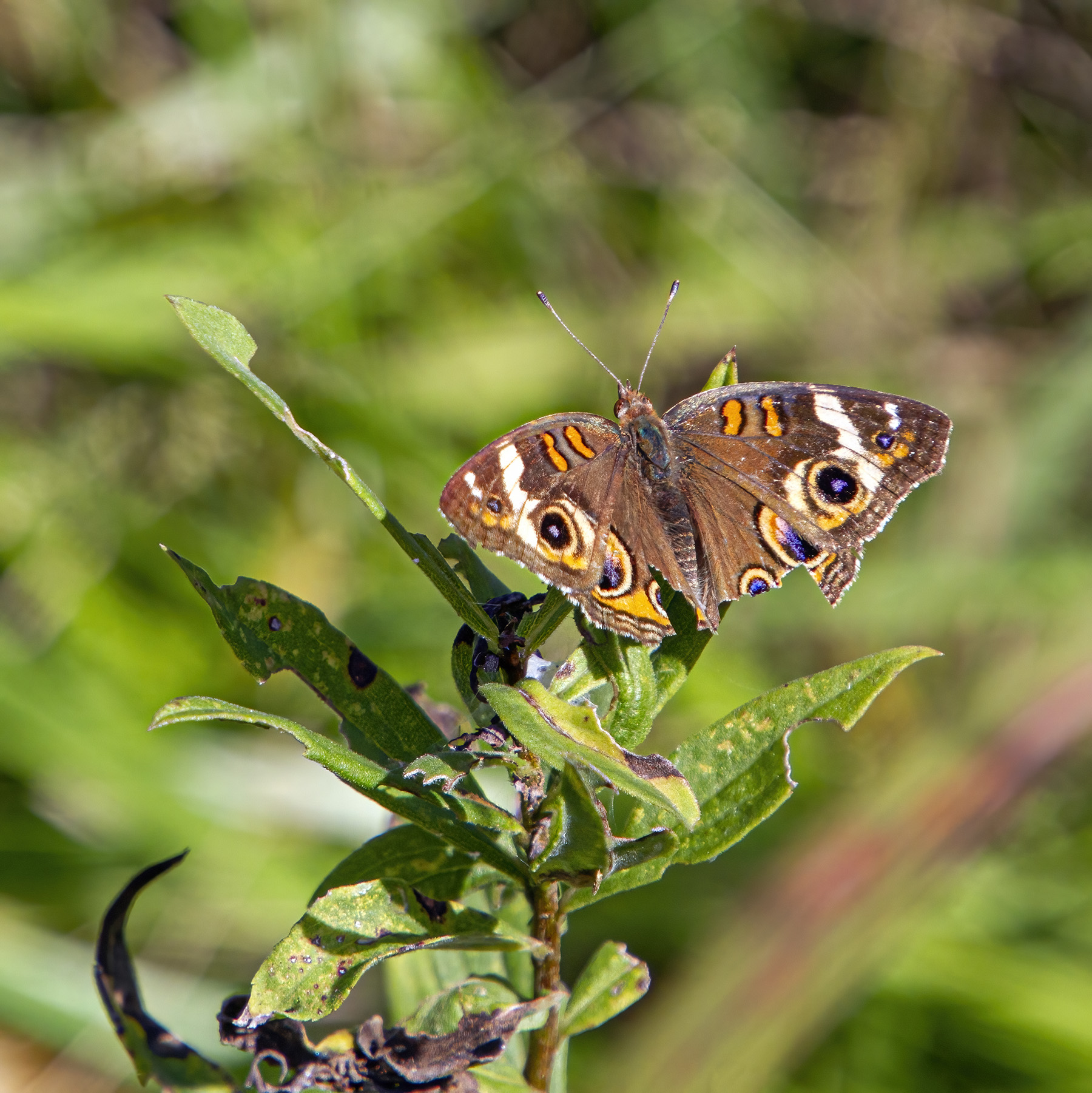
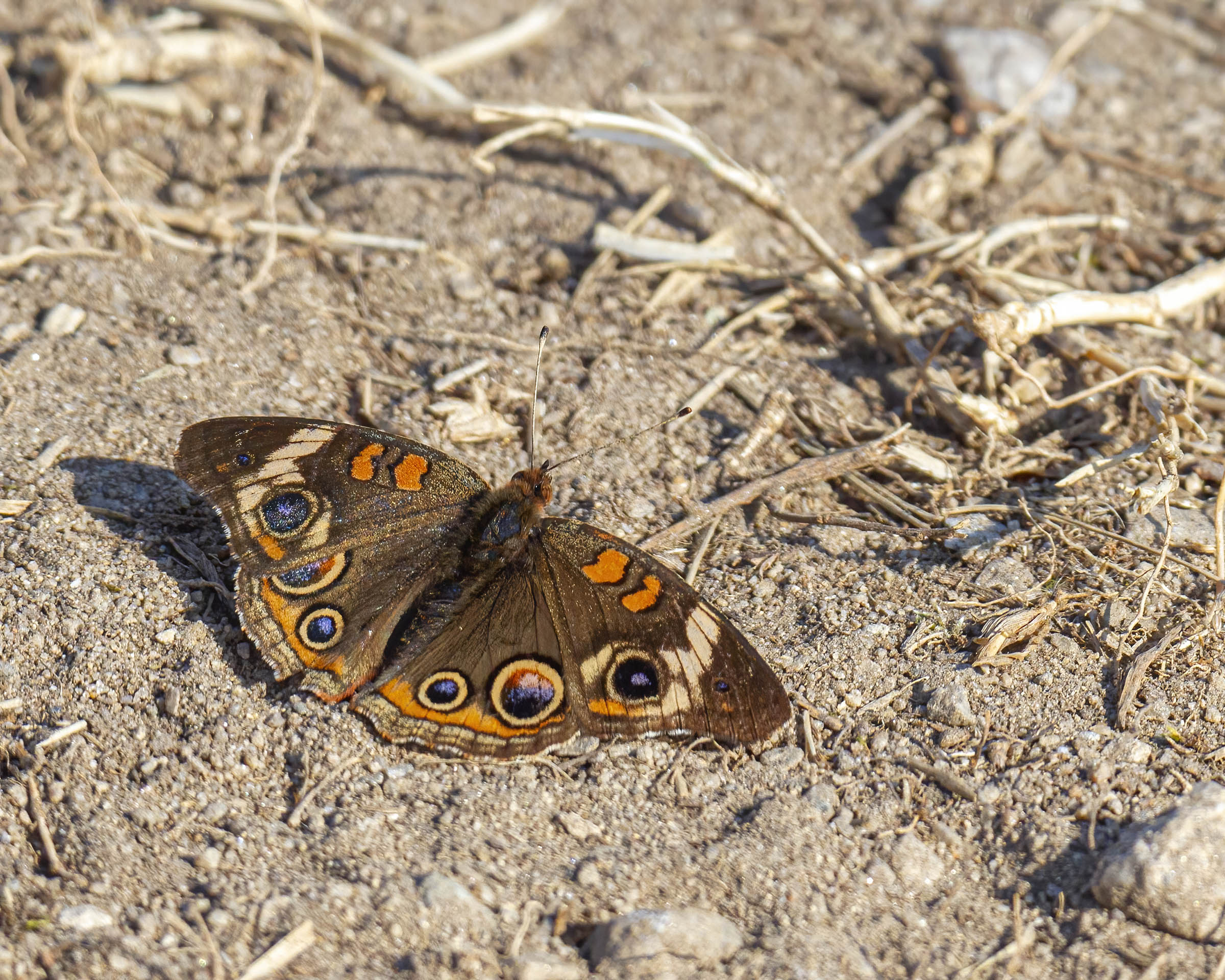
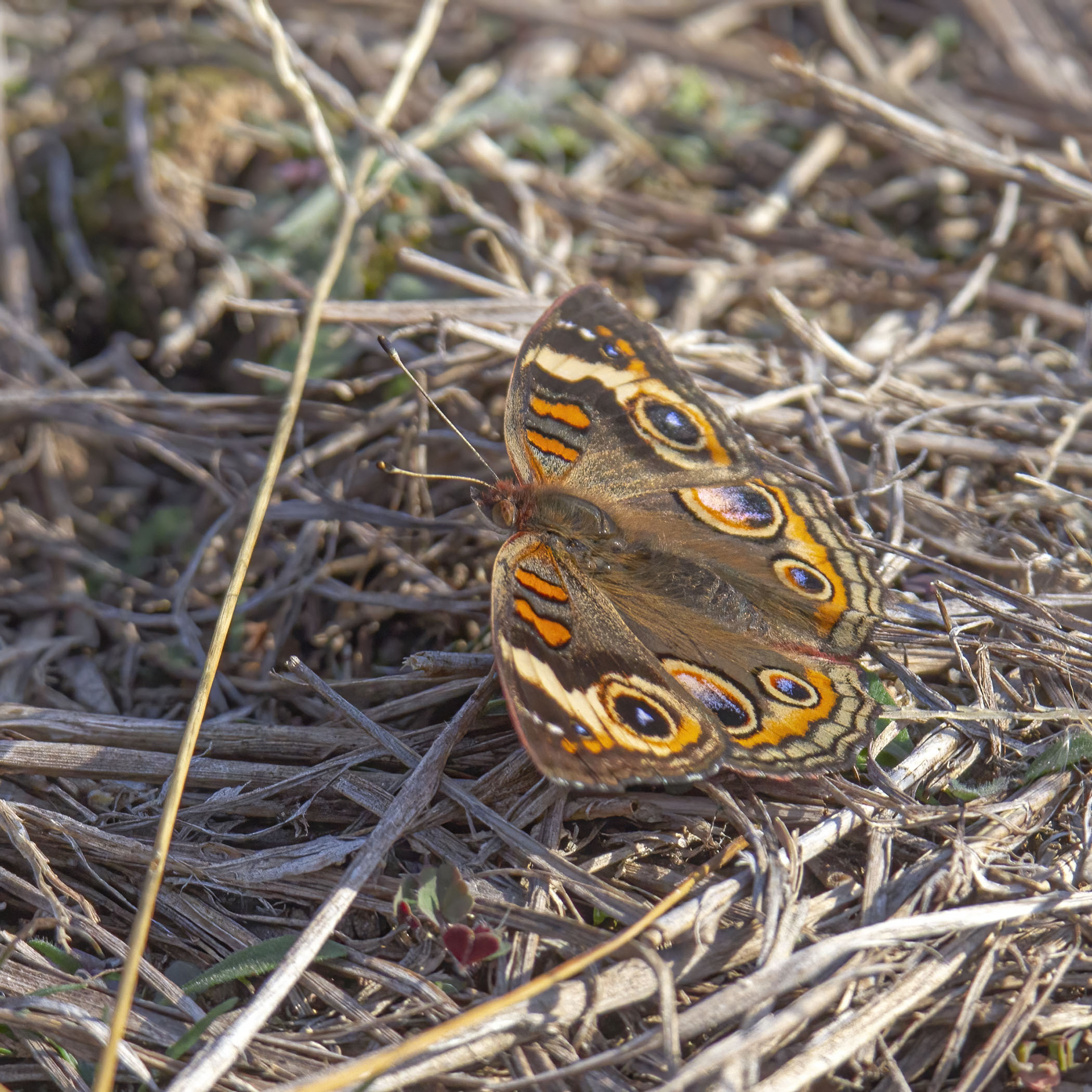
Many of the insects and plants that I now see show signs of the ravages of summer, like this damaged Common Buckeye butterfly (Junonia coenia) that I spotted atop an equally damaged plant during a recent visit to Occoquan Bay National Wildlife Refuge. Nonetheless the beauty of the butterfly shines through and it appears to be fully functional.

Autumn is a time for harvest celebrations as we rejoice in the bounty of the growth that has taken place, but there is also a tinge of melancholy as we experience a sense of loss and the feeling that our lives our changing. Change, of course, is a constant in our lives, but most of us—and I definitely fit into this group—become creatures of habit and have trouble dealing with changes at times. Yet we eventually adapt and may even learn to appreciate the results of the change, even if the process of change is a bit uncomfortable.

Common Buckeye

© Michael Q. Powell. All rights reserved.

Read Full Post »

I endlessly tried to track several Wandering Glider dragonflies (Pantala flavescens) as they flew back and forth over a field at Occoquan Bay National Wildlife Refuge last Thursday and was thrilled when one of them finally landed some nearby vegetation, allowing me to capture this image.

Wandering Gliders, also known as Globe Skimmers or Globe Wanderers, are considered to be the most widespread dragonfly species on the earth, with a good population on every continent except Antartica, although they rare in Europe. According to Wikipedia, Wandering Gliders “make an annual multigenerational journey of some 11,200 miles (18,000 km); to complete the migration, individual Wandering Gliders fly more than 3,730 miles (6,000 km)—one of the farthest known migrations of all insect species.”

This modest image was technically quite challenging to capture. The vegetation in this field was dense and the autofocus on my camera kept getting confused by the stalks of vegetation, so I had to resort to manual focusing. I was reluctant to move about very much for fear of rippling the vegetation and disturbing the dragonfly and therefore had to crouch in an awkward position close to the ground. It is certainly not an award-worthy photo, but I am thrilled whenever I manage to get a decent shot of a dragonfly species that rarely perches.

Wandering Glider

© Michael Q. Powell. All rights reserved.


Read Full Post »

Although the name of this Orange Bluet damselfly (Enallagma signatum) sounds like an oxymoron, its colors are a perfect match for this autumn season. As the name suggest, most damselflies in the bluet family are blue, but they do come in other colors.

I photographed this handsome male Orange Bluet on 10 October at Occoquan Bay National Wildlife Refuge and was thrilled to be able to capture a little autumn color in the background of the image.

Orange Bluet

© Michael Q. Powell. All rights reserved.
Read Full Post »

There were several Common Green Darner dragonflies (Anax junius) flying overhead on 10 October at Occoquan Bay National Wildlife Refuge. One of them landed and perched momentarily low in the vegetation and I was able to capture this image.

I have been seeing fewer and fewer dragonflies on the ground as we move deeper and deeper into October, but in the air I have been seeing quite a few Common Green Darners, Black Saddlebags, and Wandering Gliders, the dragonfly species that migrate through our area. Many of the members of the surviving summer species appear to be faded and tattered, but the migrants appear to be bright and pristine.

The tangled grasses and vegetation where the dragonfly was perched were dried out and mostly void of color, which helps the green of the dragonfly’s thorax to really stand out in the photo. I also like the way that I was able to capture the transparency and details of the dragonfly’s wings.

Common Green Darner

© Michael Q. Powell. All rights reserved.

Read Full Post »

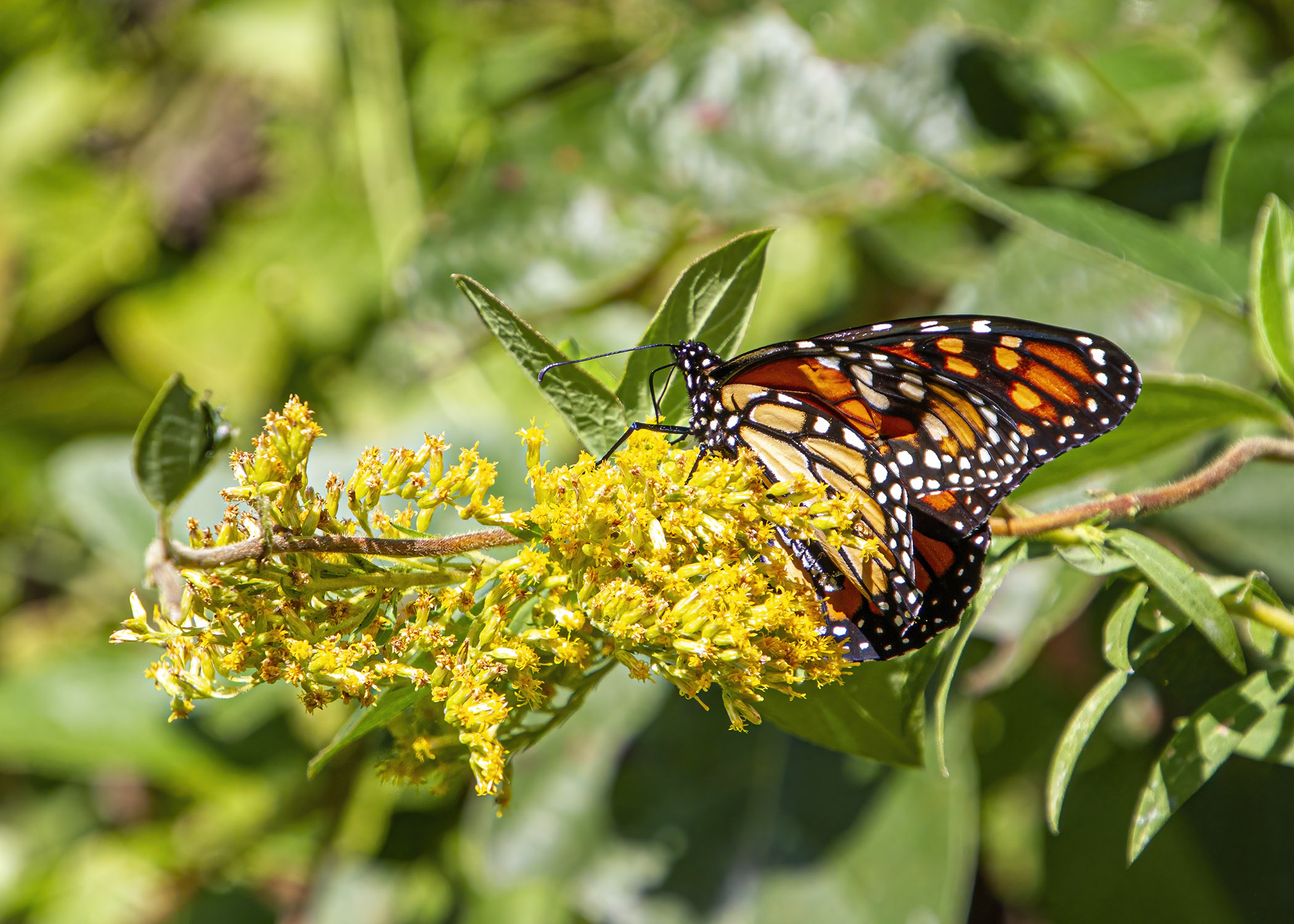
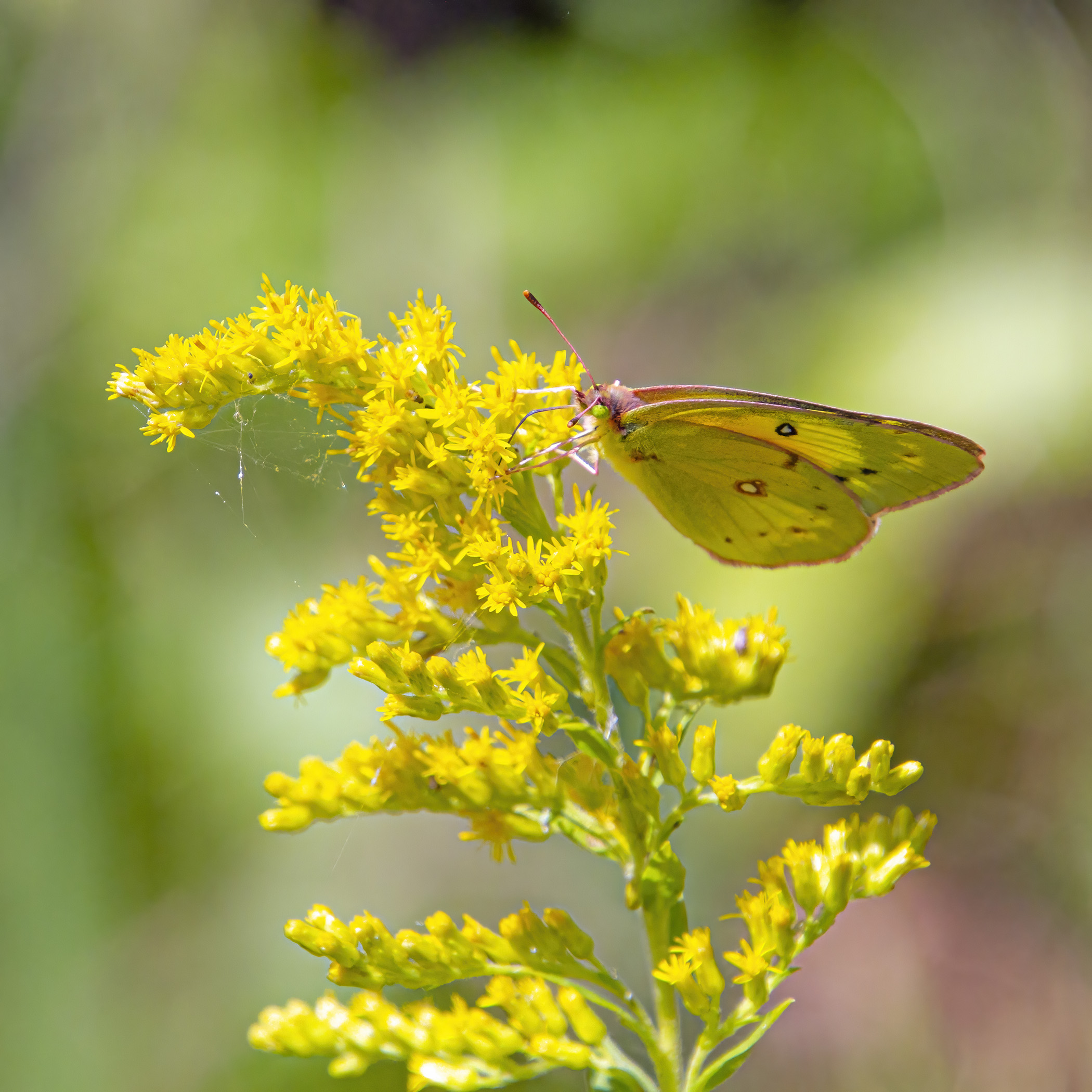
I love bright colors and instinctively smile when I see the large patches of goldenrod that are still in bloom at Occoquan Bay National Wildlife Refuge. The insects seem to love these flowers too and last Tuesday I spotted a large Monarch Butterfly (Danaus plexippus) and smaller Clouded Sulphur butterfly (Colias philodice) feeding on goldenrod.

Monarch

Clouded Sulphur

© Michael Q. Powell. All rights reserved.


Read Full Post »

When the calendar turns over to October, I never know which dragonflies I will encounter. Many of them have disappeared, but some hardy survivors are still around. The weather was warm last week, with several days in the 80’s (27 degrees C), but this week, high temperatures are predicted to be in the low to mid 60’s (17 degrees C) with nighttime temperatures dipping to the upper 40’s (9 degrees C)—this cool weather is less than optimal for most dragonflies.

I was thrilled last Tuesday to spot this Twelve-spotted Skimmer dragonfly (Libellula pulchella) at the edge of a small pond at Occoquan Bay National Wildlife Refuge. I was especially pleased to be able to capture the beautiful patterns on this dragonfly’s wings as it perched in the reeds.

Twelve-spotted Skimmer

© Michael Q. Powell. All rights reserved.

Read Full Post »

What is going on in this photo? It is really cool to photograph the interaction between two species, but it is often difficult to interpret the nature of their exchange. Is it mere curiosity or are there more deadly and sinister intentions on the part of one of the actors? If so, which one is the predator and which one is the potential prey?

I captured this image this past Monday at Occoquan Bay National Wildlife Refuge. I could not identify either of these insects, so I posted the photo and requested identification assistance on bugguide.net, a wonderful resource for insect identification.  It did not take long before I received a response that the insects were an Orange Assassin Bug (Pselliopus barberi) on the left and a Milkweed Leaf Beetle (Labidomera clivicollis) on the right.

I may be giving too much weight to the “assassin” part of the name of one of these insects, but, judging from their individual postures, it seems to me that the orange bug is preparing to attack the black-and-red beetle. Who know? It is such a cool and creepy photo that perhaps I should have waited until Halloween to post it.

Orange Assassin Bug Milkweed Leaf Beetle

© Michael Q. Powell. All rights reserved.

Read Full Post »

What signals the arrival of autumn for you? Perhaps it is the changes in the foliage, the cooling of the temperatures, or the shortening of the daylight hours. In recent years Autumn Meadowhawk dragonflies (Sympetrum vicinum) have become the harbingers of autumn, visible signs that the end of the dragonfly season is inexorably drawing near.

I spotted my first Autumn Meadowhawks this year on 2 October at Occoquan Bay National Wildlife Refuge. This species usually appears in late September and most years is the last dragonfly species to disappear—I have seen Autumn Meadowhawks as late as December some years and there have been some reports of them in early January.

A number of other dragonflies are still active, but by early November most of them will be gone. I will still be looking to photograph those hardy survivors in the upcoming months, but, as recent postings suggest, I will eventually be shifting a lot of my focus from insects to birds.

Autumn Meadowhawk

Autumn Meadowhawk

Autumn Meadowhawk

© Michael Q. Powell. All rights reserved.


Read Full Post »

I was thrilled to spot this handsome Russet-tipped Clubtail dragonfly (Stylurus plagiatus) last Wednesday at Jackson Miles Abbott Wetland Refuge. I love the way that the dragonfly was clinging to the leaf, looking almost like it was peeping over the edge.

Russet-tipped Clubtails are a late season species and are seen most often in August and September in my area. Unlike many of the dragonflies that I see regularly that prefer pole-like perches or perch flat on the ground, Russet-tipped Clubtails like to hang from the leaves of vegetation at an angle or almost vertically—members of the genus Stylurus are sometimes called “Hanging Clubtails.”

Russet-tipped Clubtail

© Michael Q. Powell. All rights reserved.
Read Full Post »

As I was exploring Occoquan Bay National Wildlife Refuge this past Friday, I spotted some colorful red and black bugs. I had no idea what they were, but I happened to be walking with a fellow dragonfly enthusiast and he told me that they were Florida Predatory Stink Bugs (Euthyrynchus floridanus).

Unlike most other stink bugs that feed on plants, Florida Predatory Stink Bugs feed on insects that attack plants and are therefore considered to be beneficial. According to the North Carolina Extension website, “Immature Euthyrhynchus have a strong tendency to aggregate, and they even attack larger prey in concert. Apparently, aggregation behavior allows them to successfully attack prey too large to be subdued by a single nymph. Sometimes adults aggregate with nymphs, although when times get hard, these bugs sometimes feed on smaller relatives! When the bugs jab their proboscis into a less fortunate insect, they inject a toxin that slowly immobilizes the prey. The predigested insides are then sucked out.”

When they are developing, these stink bugs go through five stages, known as instars. The two largest bugs in the photo below are adults, while the two in the middle are in some what earlier stages of development. I don’t know for sure what this group of bugs was doing, but wonder if there is some kind of prey beneath them that they are immobilizing together.

Florida Predatory Stink Bug

© Michael Q. Powell. All rights reserved.
Read Full Post »

On Wednesday at Jackson Miles Abbott Wetland Refuge I was thrilled to spot this rainbow-colored Handsome Meadow Katydid (Orchelimum pulchellum), which is probably my favorite insect. In addition to its multiple colors, I love its striking blue eyes and long antennae.

My title is a little misleading, because technically there are some differences between grasshoppers and katydids. One of the most visible differences is the length of the antennae—a katydid’s antennae are longer than the length of its body, while a grasshopper’s tend to be shorter. In the first photo, I cut off one of the antennae a bit when I cropped the photo, but if you look closely you can see that the antenna runs all the way to the left edge of the photo.

Shortly after I took the first photo, the katydid became aware of my presence and tried to hide from me. She stretched out her legs, which really elongated her body, and she was almost successful in concealing herself behind the stalk of grass.

How do I know that the katydid is a female? If you look closely at the tail end of the katydid in the first photo, you can see a red scimitar-shaped appendage. That is the ovipositor that the katydid uses to make a slit in vegetation in which to deposit her eggs.

Handsome Meadow Katydid

Handsome Meadow Katydid

© Michael Q. Powell. All rights reserved.
 

Read Full Post »

At this time of the year, many of the butterflies that I see are showing the ravages of a long summer season. That, however, was not the case with several Monarch butterflies (Danaus plexippus) that I spotted last week at Occoquan Bay National Wildlife Refuge that appeared to be in perfect condition.

Perhaps these are newly emerged Monarchs that are now preparing for a long migration flight to warmer locations.

Monarch

Monarch

© Michael Q. Powell. All rights reserved.
Read Full Post »

The weather this past week has been cool, cloudy, and rainy, with high temperatures struggling to reach 65 degrees (18 degrees C). I fear that many dragonflies will not survive and so I celebrate each sighting of a dragonfly species, conscious that it could be the last one that I see this season.

Last Thursday I spotted this Needham’s Skimmer dragonfly (Libellula needhami) while I was visiting Occoquan Bay National Wildlife Refuge. Its wings are tattered and its colors have faded, but it was still active.

Autumn often makes me pensive and I become more aware of the passage of time. Our lives are just as fragile and limited as those of the beautiful little insects that I am so fond of photographing. May we all find beauty, meaning, and love as we live our lives.

Needham's Skimmer

© Michael Q. Powell. All rights reserved.
Read Full Post »

Can you identify this insect? At first glance it looks a little bit like a dragonfly, but if you look more closely you may notice that the wings and eyes are different from those of a dragonfly and this insect’s body is a lot hairier. This is a robber fly and I am pretty sure that it is a variety known as a Red-footed Cannibalfly (Promachus rufipes). Yikes!

Red-footed Cannibalflies are one of the coolest and creepiest insects that you can encounter in the wild. As their macabre moniker suggests, Red-footed cannibalflies usually feed on other insects, but they reportedly are capable of taking down a hummingbird. Thankfully I have never seen that happen, since I really like hummingbirds, but several years ago I did photograph a Red-footed Cannibalfly with a large Hummingbird Moth that it had captured (see my 2017 posting Demise of a hummingbird moth).

A posting that I did in 2013 entitled “Red-footed Cannibalfly” amazingly has been one of my most popular postings ever, with almost 3300 views to date. Apparently more people search for information about Red-footed Cannibalflies that I would have anticipated.

I captured this image last Thursday as I was exploring some of the trails at Occoquan Bay National Wildlife Refuge in Northern Virginia.

Red-footed Cannibalfly

© Michael Q. Powell. All rights reserved.
Read Full Post »

I was happy last Thursday when a Black Saddlebags dragonfly (Tramea lacerata) that I had been tracking overhead at Occoquan Bay National Wildlife Refuge perched for a moment, allowing me to capture this first image.  While it was flying, I attempted multiple times to get a shot of it, with minimal success. The second photo is my best one.

Some dragonflies spend a lot of their time perched, but Black Saddlebags are one of the species that spends most of its time in the air, so it is rewarding to be able to see one land and to get a shot of it. Black Saddlebags are also one of the few dragonfly species that are migrate although, according to the Dragonflies of Northern Virginia website, scientists do not fully understand why they do so and have been studying their migratory patterns.

Black Saddlebags

Black Saddlebags

© Michael Q. Powell. All rights reserved.
Read Full Post »

On Monday I was thrilled to spot multiple Monarch butterflies (Danaus plexippus) during a visit to Occoquan Bay National Wildlife Refuge. The first shot is the typical kind of shot that I usually try to take, but I really like the third image that I captured of a distant Monarch butterfly in a field of flowers—so many flowers, so little time.

Monarch butterfly

Monarch butterfly

Monarch butterfly

© Michael Q. Powell. All rights reserved.

Read Full Post »

For the last few weeks I have been searching diligently for the late-season dragonfly species that appear on the scene in late August and early September. So far I have come up mostly empty-handed, but I was thrilled to spot this cool-looking Russet-tipped Clubtail dragonfly (Stylurus plagiatus) on 6 September at Jackson Miles Abbott Wetland Refuge. In my area, Russet-tipped Clubtails  are seen most often in August and September, but they are somewhat uncommon.

As some of you know, I dabble a bit with YouTube. At about this time last year I did a little video about Russet-tipped Clubtails that you might enjoy watching. It was one of my first videos and lasts about a minute and a half.  Click on this link to view the video in YouTube. I am also embedding a YouTube link at the end of this posting. Depending on how you are reading this blog, you may be able to watch the video from within the blog.

A year ago, I had aspirations of shooting more video footage during my photography outings. I have made only minor progress in that area, but it is still something that interests me a lot. I have learned the basics of making and editing videos, but am struggling to figure out what stories I want to tell and how a video can help me tell those stories.

Russet-tipped Clubtail

© Michael Q. Powell. All rights reserved.


Read Full Post »

As we move deeper into September I have been seeing more and more Black and Yellow Garden Orbweaver spiders (Argiope aurantia). These spiders are impressively large and have prominent webs with a distinctive zigzag pattern near the center.

During recent visits to Occoquan Bay National Wildlife Refuge, I have seen multiple Big Bluet damselflies (Enallagma durum) that have gotten caught up in the webs of the Argiope spiders. In the first photo the spider is moving in on two damselflies. After immobilizing the prey, the spider will often wrap it in web material, as you can see in the second image.

The final shot shows a hapless damselfly entangled at the edge of a web. I observed the damselfly for a few moments to see if I could detect any signs of movement, with thoughts that I might be able to free it. However, I did not see any movement and suspect that I had arrived too late to rescue this damsel in distress.

Some viewers may object to these kind of graphic images, but for me it is part of the “circle of life” in nature—all creatures have to eat to survive. As I have observed numerous times, today’s predator may well become tomorrow’s prey.

damselfly

damselfly

damselfly

© Michael Q. Powell. All rights reserved.


Read Full Post »

In many of my blog postings, I concentrate on a single species of dragonflies, but today I want to celebrate the diversity of species that I have been seeing during the month of September. Despite my warnings in some earlier postings about the decreasing numbers of dragonflies, I continue to see a variety of species—Northern Virginia, where I live, is blessed to have an abundance of different dragonflies and damselflies.

The first photo shows a female Eastern Amberwing (Perithemis tenera), the smallest dragonfly in our area.  Males of this species hang out at ponds, but the females, which do not have amber wings like the males, are usually found in vegetation some distance from the water.

The second image shows a male Calico Pennant (Celithemis elisa), a beautifully colored dragonfly with distinctive patterns on its wings. The third image shows a mature female Needham’s Skimmer (Libellula needhami). Her wings show some damage and her color has fades, but she is still beautiful and the golden strands on the front edges of her wings were sparkling in the sunlight when I captured this image.

The fourth image shows a female Eastern Pondhawk (Erythemis simplicicollis), one of the most common dragonfly species in my area. I love the brilliant emerald color of the females (and immature males) of this species and the black markings on the abdomen.

The dragonfly in the last photo was the toughest one for me to identify. It had flown up into a tree and I was looking into the sun when I captured the image. However, I am pretty sure that it is a female Great Blue Skimmer (Libellula vibrans).

All of these dragonflies belong to the Skimmer family, the largest dragonfly family that includes the species most likely to be seen by a casual dragonfly watcher. The other families, which are generally harder to find, include Clubtails, Cruisers, Darners, Emeralds, Petaltails, and Spiketails. If I remember correctly, I have managed this season to photograph at least one dragonfly in all seven of these dragonfly families.

Eastern Amberwing

Calico Pennant

Needham's Skimmer

Eastern Pondhawk

Great Blue Skimmer

© Michael Q. Powell. All rights reserved.


Read Full Post »

Dragonflies were flying overhead at several locations at Occoquan Bay National Wildlife Refuge on Thursday, including a Common Green Darner (Anax junius), multiple Black Saddlebags (Tramea lacerata), and at least one Wandering Glider (Pantala flavescens). The Wandering Glider, alas, was elusive and I could not get an in-flight shot of it, but I did manage to get a shot of a Common Green Darner (1st photo) and a Black Saddlebags (2nd photo).

All three of these dragonfly species are migratory species. Migrating dragonflies will often fly in mixed swarms that are large enough that they are sometimes picked up by weather radars. For more details about this phenomenon, check out this September 2019 article in the Washington Post entitled “Weather radar is picking up swarms of dragonflies from the Midwest to the Mid-Atlantic.”

Common Green Darner

Black Saddlebags

© Michael Q. Powell. All rights reserved.

Read Full Post »

For those of us in the northern hemisphere who use the astronomical calendar, tomorrow (23 September) marks the beginning of the autumn season. In so many of the photos that I have taken during the past few weeks, I have noted signs of the changing seasons.

The warm orange tones in this shot of a female Needham’s Skimmer dragonfly (Libellula needhami) remind me of pumpkins and autumn leaves. The fading flowers in the photo of a male Common Whitetail dragonfly (Plathemis lydia) remind us that the growing season is coming to an end. The dryness of the stalk on which the Slaty Skimmer (Libellula incesta) dragonfly perch brings to mind the droughts and extreme weather that many have experience during this summer.

Embrace the new season and the opportunities is provides, whether it be autumn in the northern hemisphere or spring for those in the southern hemisphere.

Needham's Skimmer

Common Whitetail

Slaty Skimmer

© Michael Q. Powell. All rights reserved.


Read Full Post »

Wings are tattered. Flowers have faded. Summer is ending. (Blue Dasher dragonfly (Pachydiplax longipennis) photographed on 6 September at Jackson Miles Abbott Wetland Refuge.)

Blue Dasher

© Michael Q. Powell. All rights reserved.
Read Full Post »

I don’t often see dragonflies perch on flowers, so I was delighted when this female Blue Dasher (Pachydiplax longipennis) decided to rest for a moment on an aster plant in bloom last week at Jackson Miles Abbott Wetland Refuge.

I decided not to crop this photo to show the dragonfly better, because I really like the sweep of bright color on the left side of the image and the more muted out-of-focus colors on the right side. I am growing to love this type of environmental portrait, which goes against my normal approach of trying to fill as much of the frame as possible with my primary subject.

Blue Dasher

© Michael Q. Powell. All rights reserved.

Read Full Post »

Certain creatures, like Bald Eagles (Haliaeetus leucocephalus) and Monarch butterflies (Danaus plexippus), never fail to thrill my heart when I encounter them. I remember dire warnings from my youth of their threatened extension and I consider it a real blessing that they are still around. The Bald Eagle population has really rebounded, but it is my understanding that the survival of Monarchs is still at risk as a result of the loss of Monarch breeding habitats.

I did not see any Bald Eagles during my visit to Occoquan Bay National Wildlife Refuge this past Thursday, but I was excited to spot this stunning Monarch butterfly. Its colors were bright and vibrant and it seemed to be in perfect condition. I suspect that this butterfly was preparing itself for its upcoming migration flight. According to an article by the National Wildlife Federation, “Beginning in late summer and continuing into early fall, monarchs that emerge from their chrysalides will be behaviorally and biologically different from generations that emerged earlier this year. Unlike their parents and grandparents, these late-season monarchs do not mate or lay eggs. Instead, the insects focus on feeding to fatten up for long migrations to their winter habitats: coastal California for monarchs west of the Rocky Mountains and central Mexico for those to the east.”

The Monarch butterfly was so focused on feeding that it did not fly away as I maneuvered into position to capture this image. I even had the luxury of attempting shots from several angles as the butterfly moved about from flower to flower.

Monarch butterfly

© Michael Q. Powell. All rights reserved.

Read Full Post »

Do you prefer to live your life widely or deeply? That is a curious question, but it is one that affects the way that many of us approach our photography and our lives in general. Let me reframe the question. Are you always seeking to visit new places to see new things, i.e. living “widely”, or would you rather spend your time in familiar locations with familiar subjects, going back to the same places repeatedly, i.e. living “deeply?”

As you may have guessed, I tend to put myself in the second category. I like to observe the seasonal changes at a few local areas, watching for new species to arrive and to depart (or disappear), observing the changes in the flora and the fauna, and discovering favorite spots for my photography. I am not really consumed by a need or desire to add to my “life list” of birds or insects that I have seen, though I do enjoy visiting other locations.

All of these thoughts were percolating in my brain on Wednesday when I visited Jackson Miles Abbott Wetland Refuge to see which dragonflies were still present. I was particularly delighted to spot several Swift Setwing dragonflies (Dythemis velox). In June 2016 at this same refuge, I first photographed a Swift Setwing—a primarily southern species that had never before have been spotted in Fairfax County, the county where I live—and each year since I have eagerly returned to learn more about the species. For more details on my initial sighting, check out my 2016  blog posting Swift Setwing dragonfly.

It is always tough to frame shots of Swift Setwings, because they like to perch on vegetation that overhangs the water and they face the water. The sun was shining brightly and I was happy to capture a couple of images in which the dragonfly appears to be perching among the clouds. I did try to get down low, but I think the background is a reflection of the sky in the water of the pond and not the sky itself.

For the second image, I was far away from the dragonfly. I couldn’t get a clear shot of the Swift Setwing, so I chose to use some vegetation blocking my view as a framing element in the foreground. I like the way that the image turned out.

Swift Setwing

Swift Setwing

© Michael Q. Powell. All rights reserved.

Read Full Post »

On Wednesday I spotted this beautiful Viceroy butterfly (Limenitis archippus) during a short visit to Jackson Miles Abbott Wetland Refuge. At one end of the refuge, there is a patch of wildflowers and I always make sure to check it out for birds, butterflies, and other insects. I am no expert on wildflowers, but I think the purple plant in the photo may be a variety of ironweed.

As you can probably tell, the Viceroy is considered to be a mimic of the somewhat larger Monarch butterfly. They are pretty easy to tell apart, however, because the Viceroy has a black line across the hind wings that is not found on the wings of Monarchs.

Viceroy

Viceroy

© Michael Q. Powell. All rights reserved.

Read Full Post »

From a distance, many dragonflies are hard to identify. However, the wing markings on a male Twelve-spotted Skimmer dragonfly (Libellula pulchella) are so distinctive that I could identify this dragonfly immediately when I spotted it yesterday in the marshland at Jackson Miles Abbott Wetland Refuge.

If you take the time to count all of the spots on the wings of the dragonfly, you come up with a number much higher than 12. Why then is it called a Twelve-spotted Skimmer? Someone decided that it was best to count only the dark spots, because only the males generally have the white spots. It is a rare case when gender equality seems to have factored into the name of a species—normally species’ names are based on the characteristics of the male.

Twelve-spotted Skimmer

© Michael Q. Powell. All rights reserved.

Read Full Post »

« Newer Posts - Older Posts »