Feeds:
Posts
Comments

Archive for the ‘Insects’ Category

On Monday I spotted this beautiful Red-spotted Purple butterfly (Limenitis arthemis astyanax) in a sea of ferns adjacent to a creek that I was exploring in Prince William County, Virgnia. I love the iridescent blue color on the wings and the little red spots that provide a nice accent color. Although I see a slight purplish tint to the wing on the right, I really don’t see very much purple on this butterfly’s body despite the fact that “purple” is a prominent part of the name of this species.

The color and texture of the ferns make for a beautiful backdrop for the butterfly and add a bit of visual interest without being distracting.

Red-spotted Purple

© Michael Q. Powell. All rights reserved.


Read Full Post »

Last week I photographed a female Swamp Darner dragonfly (Epiaeschna heros) depositing some eggs into a rotten log at the edge of a small pond at Occoquan Bay National Wildlife Refuge. Some dragonflies deposit a large number of eggs into the water or floating vegetation by tapping their abdomens rapidly and repeatedly at different locations, while others, like this Swamp Darner, deposit their larger eggs more slowly and deliberately by making a slit and inserting the eggs directly into wet wood and other debris with their blade-like ovipositors.

Swamp Darners are one of the largest dragonflies in our area, with a body length of about 3.4 inches (86 mm) in length. I love the description of this species on the Dragonflies of Northern Virginia website, “I often tell people on dragonfly walks that if they see a rhino with wings, it’s a swamp darner. Slight exaggeration, perhaps, but they are pretty impressive.” Some dragonflies are so nimble and acrobatic in their flight that they remind me of fighter aircraft, but the bulky size of the Swamp Darner makes me think more of bomber aircraft.

Swamp Darner

© Michael Q. Powell. All rights reserved.

Read Full Post »

Identification guides for birds, dragonflies, and damselflies often use illustrations rather than photos? Why? It is almost impossible for a photo to show all of the key identification features of a species.

Last week, for example, I captured some wonderful photos of a male Aurora Damsel damselfly (Chromagrion conditum) at a small pond in Prince William County, Virginia. In the first photo below, I was able to capture an image from almost directly overhead that shows the markings on the tiny damselfly’s thorax and abdomen. The image also shows how this damselfly species perches with its wings partially spread, unlike most damselflies that perch with their wings closed above their bodies. The second shot shows many of the same features.

However, it is fairly uncommon to be able to capture views like those in the first two shots and they do not show what is often the key identification feature for this species. Both genders of Aurora Damsels have distinctive bright yellow patches on the sides of their thoraxes, as you can see in the third photo. You might notice that in this photo, the markings on the tip of the abdomen are much less clear than in the first two shots, but that’s not a problem, because that yellow patch immediately signals that it is an Aurora Damsel.

Whenever I can, I try to capture shots of my subjects from multiple angles. The different angles of view may help in identifying a species or may create a more aesthetically pleasing image. One of the coolest things about photography is the way in which it combines science and art—I can be as scientifically geeky or as artistically creative as I want to be.

Aurora Damsel

Chromagrion conditum

Aurora Damsel

© Michael Q. Powell. All rights reserved.


Read Full Post »

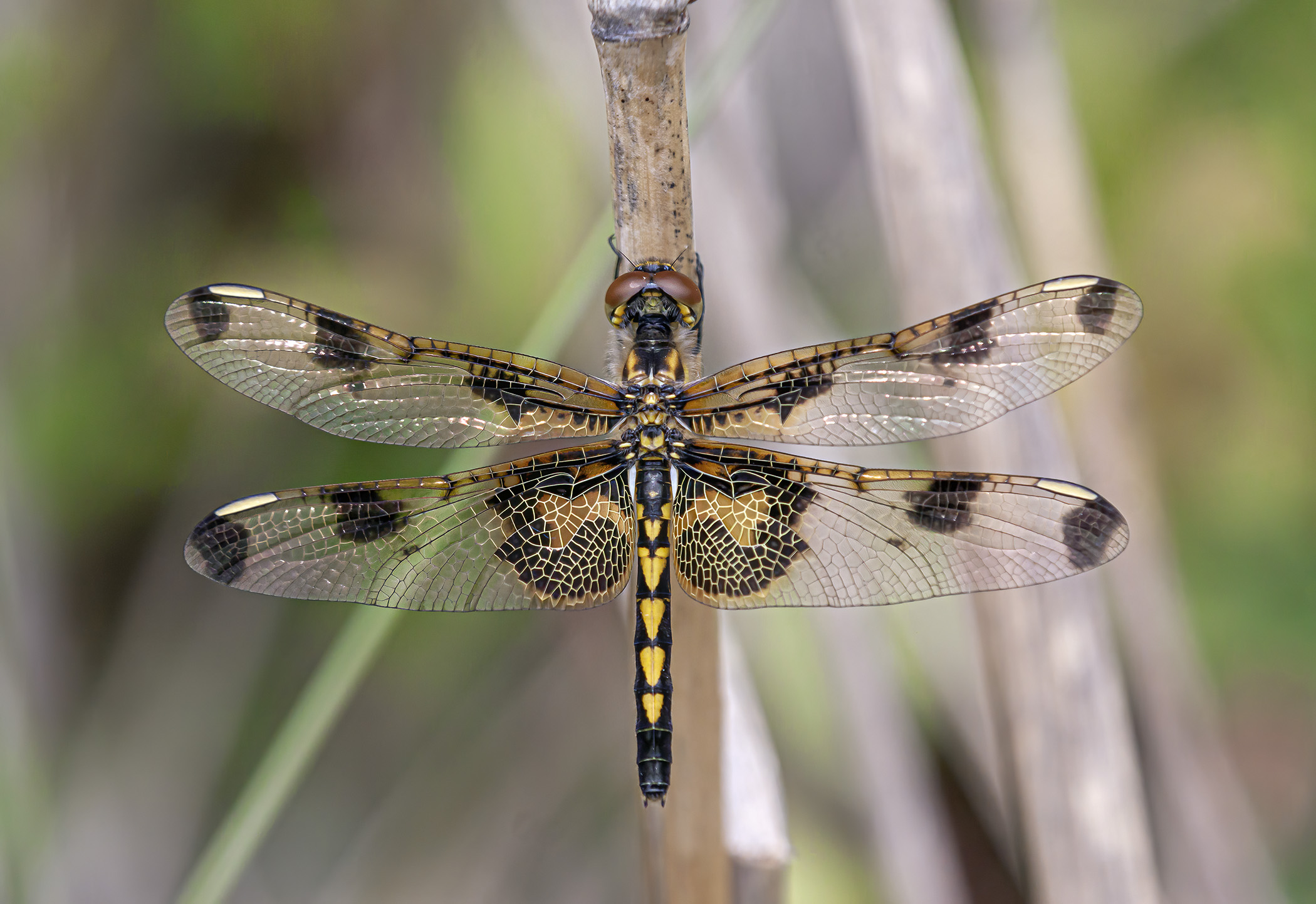
On Monday I finally spotted some mature male Calico Pennant dragonflies (Celithemis elisa) with red markings at Occoquan Bay National Wildlife Refuge. Heretofore all of the males that I had seen this year were immature and had yellow markings, like those of their female counterparts.

The first two photos show male Calico Pennants. I love the way that the red marking on the abdomen look like a series of tiny hearts. The dragonfly in the third photo is an immature male—you can tell that it is a male by looking at the shape of the tip of the abdomen (the “tail”).

For the sake of comparison, I have added a final photo of a female Calico Pennant from a posting I did in May 2020. You can readily see that the dragonflies in the last two photos are similar in coloration, but you have to look a bit closer at them to see that the wing patterns are slightly different and the shapes of the terminal appendages are quite different.

Most of us tend to rely on colors for identifying species of birds and insects, but I have learned over time that color is often not a reliable identification feature, especially for immature subjects, when the males and females are often similar in color and the color differentiation becomes apparent only when they mature.

Calico Pennant

Calico Pennant

Calico Pennant

Calico Pennant

© Michael Q. Powell. All rights reserved.

Read Full Post »

I spotted this dragonfly during a recent visit to Occoquan Regional Park. I got a glimpse of the markings on its body as it zoomed past me, so I knew that it was a spiketail, but I was not sure about the species. I watched it patrol up and down a small stream and managed to finally get a shot of the dragonfly when it perched momentarily.

It turned out to be a Brown Spiketail (Cordulegaster bilineata), one of several spiketail species that I have seen in the past at this park. During most of my previous encounters with spiketails, they have been perching on vegetation in sunlit areas along a trail.

In this case, the area where the dragonfly was patrolling was mostly in the shade, so it was a real challenge to track and photograph the dragonfly. In case you are curious, I took the photo with my Canon 7D DSLR and my Tamron 18-400mm lens extended to 400mm with settings of ISO 800, F/8.0, and 1/320 sec. The settings were not optimal for getting a shot, but they worked well enough.

Brown Spiketail

© Michael Q. Powell. All rights reserved.

Read Full Post »

This dragonfly was perched on the ground on Monday at Occoquan Bay National Wildlife Refuge when I spotted it. I knew immediately that it was either a Lancet Clubtail (Phanogomphus exilis) or an Ashy Clubtail (Phanogomphus lividus), but these two species are so similar in appearance that it is tough for me to tell them apart.

I checked my identification guides and realized that I had to look at the dragonfly more closely and get a bit more geeky. The abdomen (the “tail”) of dragonflies  consists of ten segments traditionally numbered S1 through S10, starting from the point at which the thorax (the “chest”) meets the abdomen (S1) and going downward to the tip of the abdomen (S10).

The Dragonflies of Northern Virginia website notes that for Lancet Clubtails there is a “noticeable bright yellow flange on sides of S8 & S9 (male and female), while Ashy has almost no flange, and less bright yellow.” I knew about these differences, but couldn’t see them clearly enough when I was in the field.

The dragonfly was relatively cooperative and I was able to get a shot of it from almost directly overhead. The image is really cluttered, because of the vegetation, and  artistically is not a great photo, but it does provide the kind of details that are helpful for identification.

In the image I saw what appear to be yellow flanges on the sides of S8 and S9  and I could clearly see the appendages at the tip of the abdomen, which helps me identify the gender of the dragonfly. These elements suggested to me that it was a female Lancet Clubtail. I posted a photo in a Facebook group devoted to dragonflies and damselflies in Virginia and was delighted when one of the most experience members there agreed with my identification of this dragonfly.

I don’t expect most of my readers to delve this deeply into dragonfly anatomy, but I figured it might be interesting to learn about what some of the myriad considerations that swirl about in my mind as I seek to photograph and identify these beautiful little creatures. Sometimes I am successful in connecting the dots and coming to a conclusion, but at times the identities of my subjects remains a mystery.

Lancet Clubtail

© Michael Q. Powell. All rights reserved.


Read Full Post »

A month ago it was easy to spot the early-emerging insects, because very few of them were flying. Now, though, the air is so full of bees, flies, and other aerial creatures that it is a little harder to detect the dragonflies and damselflies that are my primary targets.

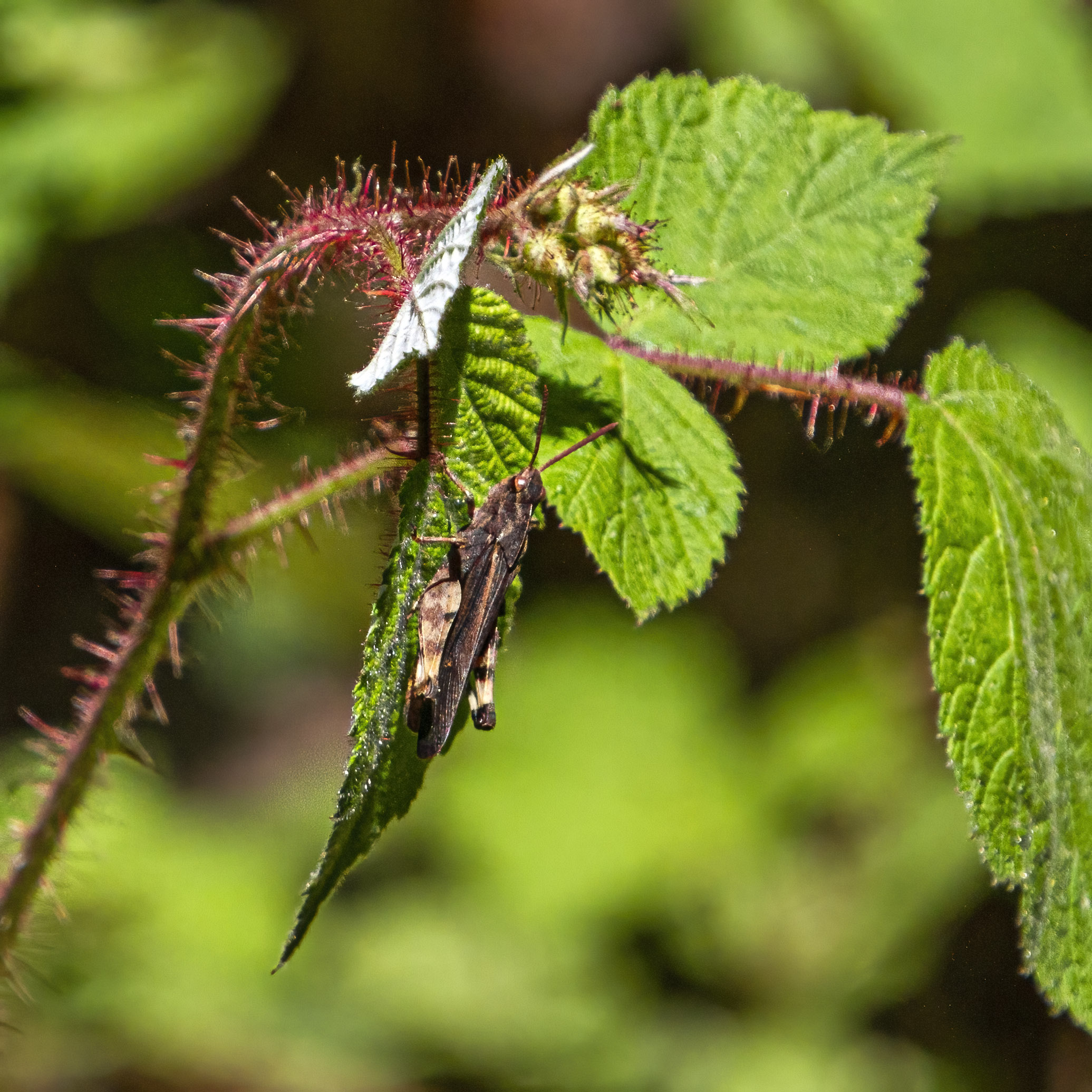
As I walk along grassy paths now, little clouds of grasshoppers burst into the air in front of me. Most of the grasshoppers jump out of sight, but occasionally one will perch on some nearby vegetation and remain immobile, hoping perhaps that I will not see him.  Last week at Occoquan Regional Park I captured a shot of one such grasshopper.

I am definitely not an expert on grasshoppers, so I had to pore over page after page of entries on the internet before I finally concluded that this might be a Green-striped Grasshopper (Chortophaga viridifasciata). Still unsure of the identification, I posted a request for help on the BugGuide website and an expert there confirmed my identification of this grasshopper.

From an aesthetic perspective, I loved the curve of the spiky stem of the plant and my initial instinct was to go for a looser crop of the image, as you can see below in the second photo. However, I realized that viewers could not see the details of the grasshopper, so I made the more zoomed-in version that you can see as the first photo below.

The two images, which are actually just different versions of the same shot, complement each other and serve different functions. The first one focuses more on the grasshopper as the primary subject, while the second one makes the environment a co-star. I like both versions.

Green-striped Grasshopper

Green-striped Grasshopper

© Michael Q. Powell. All rights reserved.

Read Full Post »

Odonata is an order of flying insects that includes dragonflies and damselflies. During the warmer months of the year I spend a lot of time hunting for dragonflies, the larger members of this group of magical creatures, but I also enjoy searching for damselflies, their smaller and more fragile “cousins.”

Damselflies, like dragonflies, come in a variety of colors and shapes. Here is a sampling of images of damselflies that I captured this past Thursday during visits to Jackson Miles Abbott Wetland Refuge and Occoquan Regional Park, both of which are located within 15 miles (24 km) of my house.

The first photo shows a Orange Bluet (Enallagma signatum). I am always amused by the name of this species, because it seems incongruous to have an orange-colored member of a genus called American Bluets. Most male bluets are, in fact, blue, but others are orange, scarlet, and burgundy and there is even a “Rainbow Bluet.”

The second image shows a male Azure Bluet (Enallagma aspersum), whose colors are closer to my mental image of a bluet. Most bluets are some combination of blue and black and it can be tricky trying to determine specific species by examining the color patterns on the body and in the eyes.

The third shot is of a male Fragile Forktail (Ischnura posita), one of the first damselflies to emerge each spring. Fragile Forktails are really tiny (about an inch (25 mm) in length, but are relatively easy to identify by their broken shoulder stripe that looks like an exclamation point.

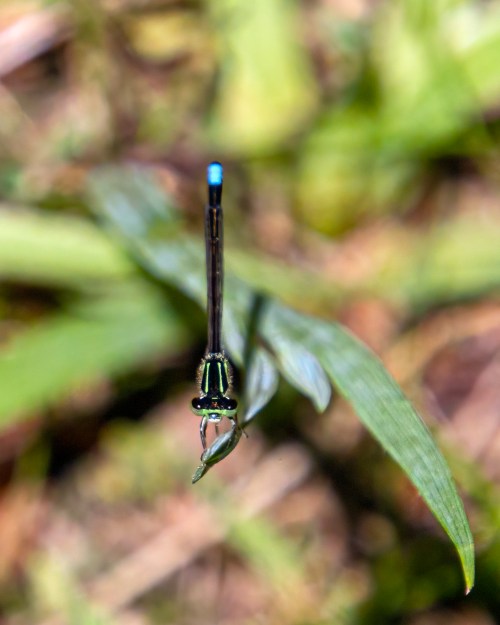
In the final photo I was eye-to-eye with the damselfly so his abdomen is almost completely out of focus. Nonetheless enough details are visible for me to say this is almost certainly a male Eastern Forktail damselfly (Ischnura verticalis).

I like to try to vary my approach to capturing images of most subjects, including damselflies, as you can see in this little collection of photos. Sometimes, as in the first shot, I will try to isolate the subject from its background in order to focus the viewer’s complete attention on the subject. Recently, though, I have developed a preference for including more of the habitat in my shots, as in the second image, in order to give the viewer a sense of the environment in which I took the shot. When possible, I like to attempt to capture some “artsy” shots, like the final image, by using selective focus and choosing carefully my angle of view.

No matter what approach I choose with damselflies, I have to be careful not to fall into the water, where most of these dragonflies were perching. I am not always successful in keeping my feet dry.

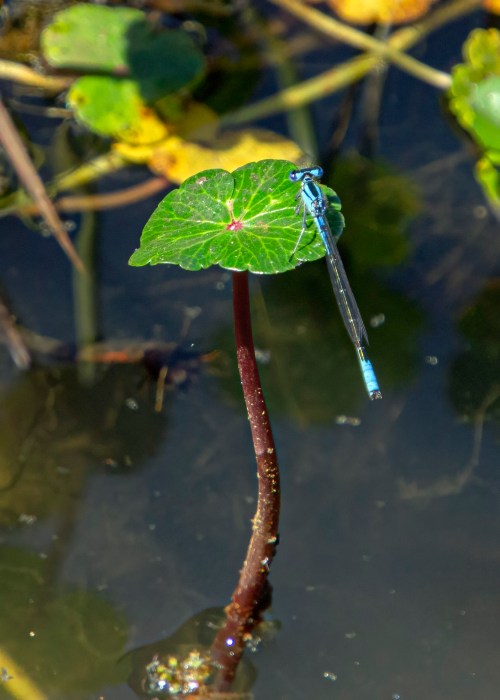
Orange Bluet

Azure Bluet

Fragile Forktail

Eastern Forktail

© Michael Q. Powell. All rights reserved.

Read Full Post »

This female Eastern Pondhawk dragonfly (Erythemis simplicicollis) blended in so well with the vegetation that I almost missed seeing her yesterday at Occoquan Bay National Wildlife Refuge. Eastern Pondhawks are one of the most commonly seen dragonflies in my area during the summer, but this is the first one that I have seen so far this year.

I love the beautiful emerald color of female Eastern Pondhawks (as well as immature males of the species). They are not particularly large as dragonflies go, but they are very fierce predators. Several times each season I stumble upon Eastern Pondhawks gnawing on damselflies or other dragonflies that they have caught. Yikes!

Eastern Pondhawk

© Michael Q. Powell. All rights reserved.


Read Full Post »

During the summer it seems like dragonflies are everywhere, perching prominently in plain sight in all kinds of environments, but this early in the season there are a whole lot fewer of them and the ones that are around are relatively hard to find. Last week, though, I was blessed to encounter quite a few Ashy Clubtail dragonflies (Phanogomphus lividus) while I was exploring a creek in Prince William County, Virginia.

The Dragonflies of Northern Virginia website, one of my favorite on-line dragonfly resources, described well the environment in which to find this species. “To find Ashies, look for clean, stable, rocky forest streams and then search out the closest sunny clearing, stream-side meadow or sunlit path. Like Common Whitetails and Blue Corporals, Ashy Clubtails prefer to perch flat on bare-soil, fallen logs, rocks or leaf litter.”

Most of the Ashy Clubtails that I spotted were in fact perched in the middle of the trails that I was following, like the one in the final photo. Although the dragonflies are sometimes skittish, it is relatively easy to get a photo of one, albeit with a fairly uninteresting background. The Ashy Clubtail in the first photo has a somewhat more interesting pose, with a nice shadow to add some visual interest.

My favorite photo of this little group, however, has to be the middle one. I really like the confrontational pose of the female Ashy Clubtail as she perched on a leaf and looked right at me. In case you are curious, the dragonflies in the first and second photos are females and the one in the final photo is the male. If you look carefully at the tips of their abdomens (their “tails”), you can see that only the males have terminal appendages that look like a sidewards-facing parenthesis and are quite distinctive.

Ashy Clubtail

Ashy Clubtail

Ashy Clubtail

© Michael Q. Powell. All rights reserved.


Read Full Post »
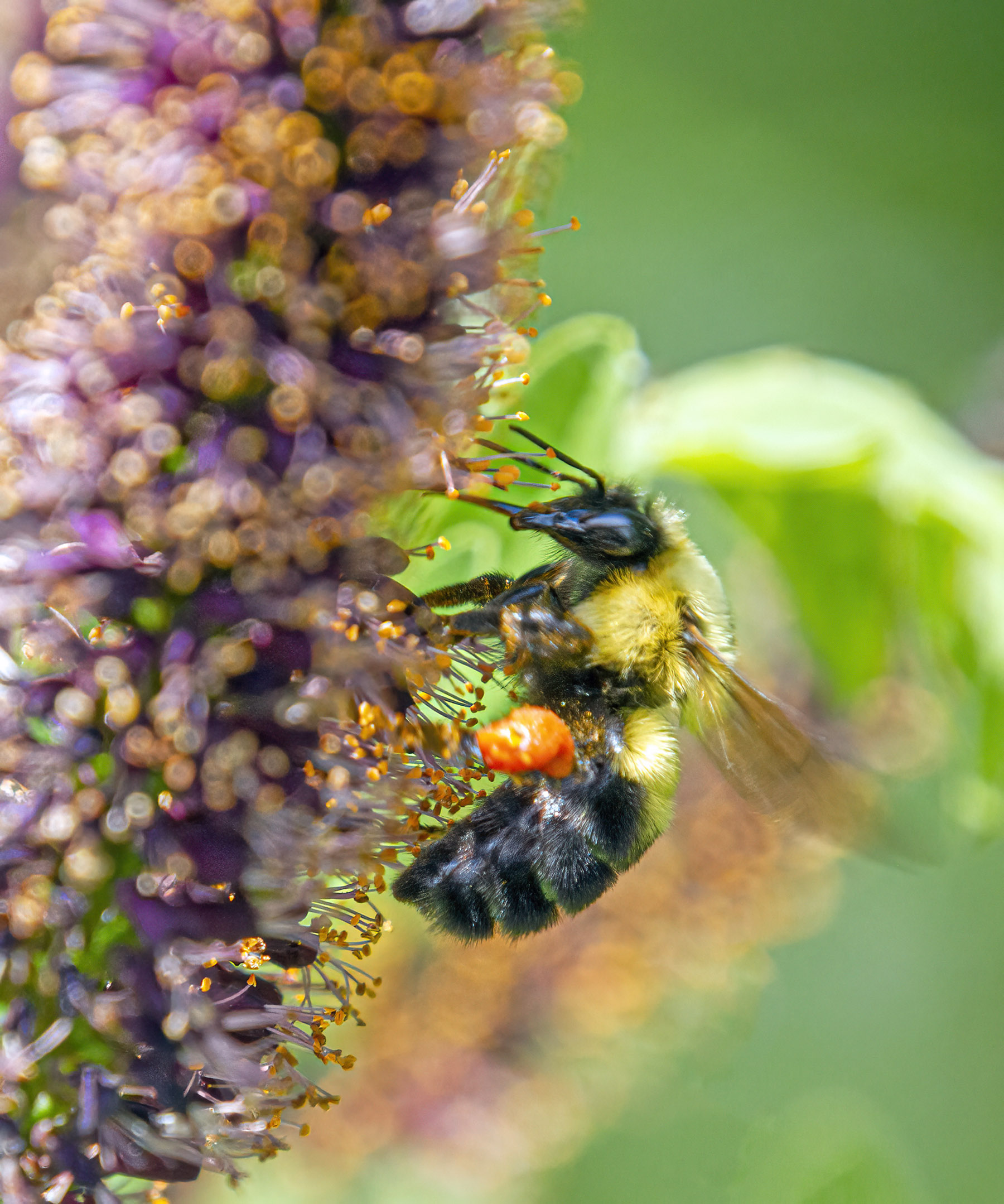
On Monday I spotted this cool little butterfly at Occoquan Regional Park in nearby Lorton, Virginia. I was a little surprised to learn that it is a Falcate Orangetip butterfly ( (Anthocharis midea), given that the butterfly has not a single visible spot of orange. Apparently only the males have the orange tips for which the species is named and this one is a female.

When I first spotted this tiny butterfly flying about, I assumed that it was a Cabbage White. However, I quickly noticed the colored pattern on the outside of the wings and realized that my initial impression were wrong—Cabbage Whites are all white except for some black spots. When I looked even closer I noticed the butterfly’s gray eyes and scallop-edged wings, unlike the Cabbage Whites that have green eyes and more even-edged wings.

Falcate Orangetip

© Michael Q. Powell. All rights reserved.

Read Full Post »

When this little butterfly flew by me last week at Prince William Forest Park, it looked a bit like a nondescript brown moth. However, when it landed on the ground and I was able to zoom in on it, I was amazed by its variety of colors, textures, and markings. I was pretty sure that I had never seen one like this. When I returned home, I did some searching on the internet and concluded that this is a Henry’s Elfin butterfly (Callophrys henrici).

Every time I use the butterfly’s name, I smile, because there is just something whimsical about the word “elfin.” I love the idea of magical woodland creatures that blend in so well with their surroundings that you have to look carefully to spot them.

I encourage you to click on the image to see all of this creature’s wonderful markings, including the little white stripes on its antennae and legs and the beautiful scalloped edges of its wings.

Keep your eyes open today and you too may spot some magically whimsical creatures.

Henry's Elfin

© Michael Q. Powell. All rights reserved.


Read Full Post »

A small group of Common Green Darner dragonflies (Anax junius) was active on Monday at Occoquan Regional Park, including a couple that, after mating, was depositing eggs in the floating vegetation. The male (the one with the blue abdomen) holds onto the female while she does the actual work and then they fly off together still attached in the “tandem” position to another patch of vegetation.

Common Green Darners are a migratory species and I suspect that these particular dragonflies were part of that migration. Most people are aware of the migratory pattern of Monarch butterflies, but are unaware of the fact that Common Green Darners follow a similar pattern. The Science News website provides a good overview of that migration.

“At least three generations make up the annual migration of common green darner dragonflies. The first generation emerges in the southern United States, Mexico and the Caribbean starting around February and flies north. There, those insects lay eggs and die, giving rise to a second generation that migrates south until late October. (Some in that second generation don’t fly south until the next year, after overwintering as nymphs.) A third generation, hatched in the south, overwinters there before laying eggs that will start the entire process over again.”

I was quite fortunate that the patches of vegetation where the dragonflies were depositing the eggs were relatively close to the edge of the pond, so I was able to capture the shots of the dragonflies in action. The second shot was one that I snapped as the couple zoomed by—long-time readers of my blog know that I love to try to capture images of dragonflies while they are flying.

The final image shows one a male Common Green Darner that was flying all around the small pond, searching for food or a mate (or maybe both). It is a fun challenge to try to track and photograph a dragonfly in flight and I felt a little rusty after spending the winter photographing birds. I was therefore quite thrilled when this shot turned out so well. Some newer mirrorless cameras have tracking systems that lock focus on moving subjects, but my trusty Canon 7D DSLR has 2009 technology, so it is a little trickier for me to get shots in—it is definitely a “hands-on” process.

Common Green Darner

Common Green Darner

Common Green Darner

Common Green Darner

© Michael Q. Powell. All rights reserved.

Read Full Post »

Most of the insects that I have observed feeding on Virginia Spring Beauty wildflowers (Claytonia virginica) have been equally small in size. I was a bit shocked, therefore, earlier this week to spot a large Eastern Carpenter Bee (Xylocopa virginica) gathering nectar and/or pollen from a small patch of Spring Beauties at Prince William Forest Park. The bee looked to be at least twice as large as each tiny flower. Wow!

The lighting was quite good and the bee was a bit distracted, so I was able to zoom in close and capture a lot of the details of the bee. I particularly like the speckled green eyes that look like they were carved out of a semiprecious stone. You can also see the bee’s tiny feet as it grasped the edges of the flower. I encourage you to click on the photos, especially the first one, to get a better look at the bee.

carpenter bee and spring beauty

carpenter bee and spring beauty

© Michael Q. Powell. All rights reserved.

Read Full Post »

I almost fell into the pond on Wednesday at Jackson Miles Abbott Wetland Refuge when I leaned over the edge of a steep bank after detecting some movement. Fortunately I did not lose my balance and managed to get a shot of this male Fragile Forktail (Ischnura posita), my first damselfly of this season.

Fragile Forktails are almost always the first damselflies in my area to emerge and are surprisingly easy to identify—they have broken shoulder stripes that look like exclamation points. Although they are easy to identify, you have to find them first and their diminutive size (0.83 to 1.14 inches (21 to 29mm) in length) makes them quite difficult to spot.

Damselflies and dragonflies belong to the Odonata order of flying insects. Damselflies generally are more slender, have eyes placed apart, and perch with their wings folded together along their bodies when at rest. Dragonflies tend to be bulkier, have large compound eyes that touch each other, and usually perch with their wings extended when at rest.

Fragile Forktail

© Michael Q. Powell. All rights reserved.


Read Full Post »
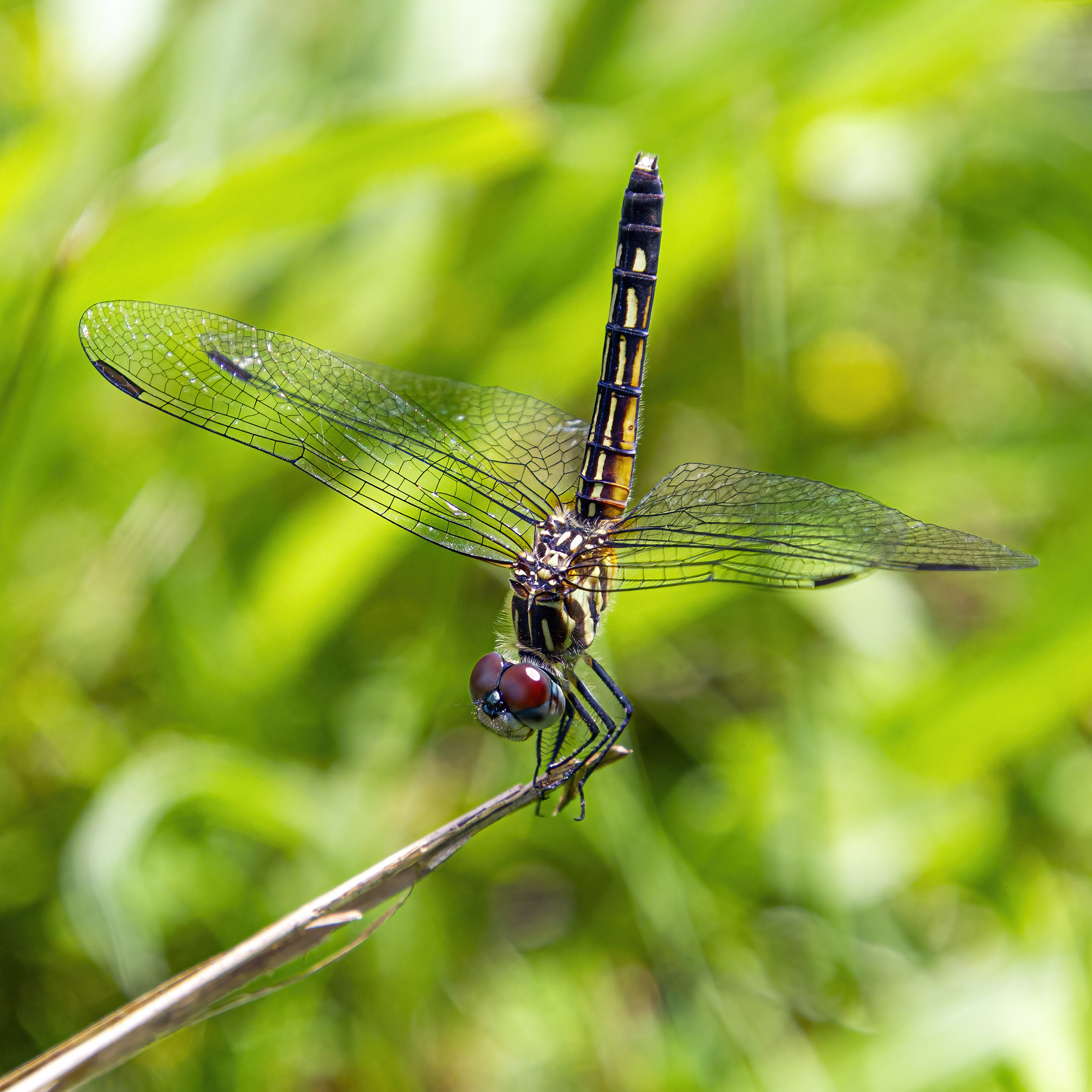
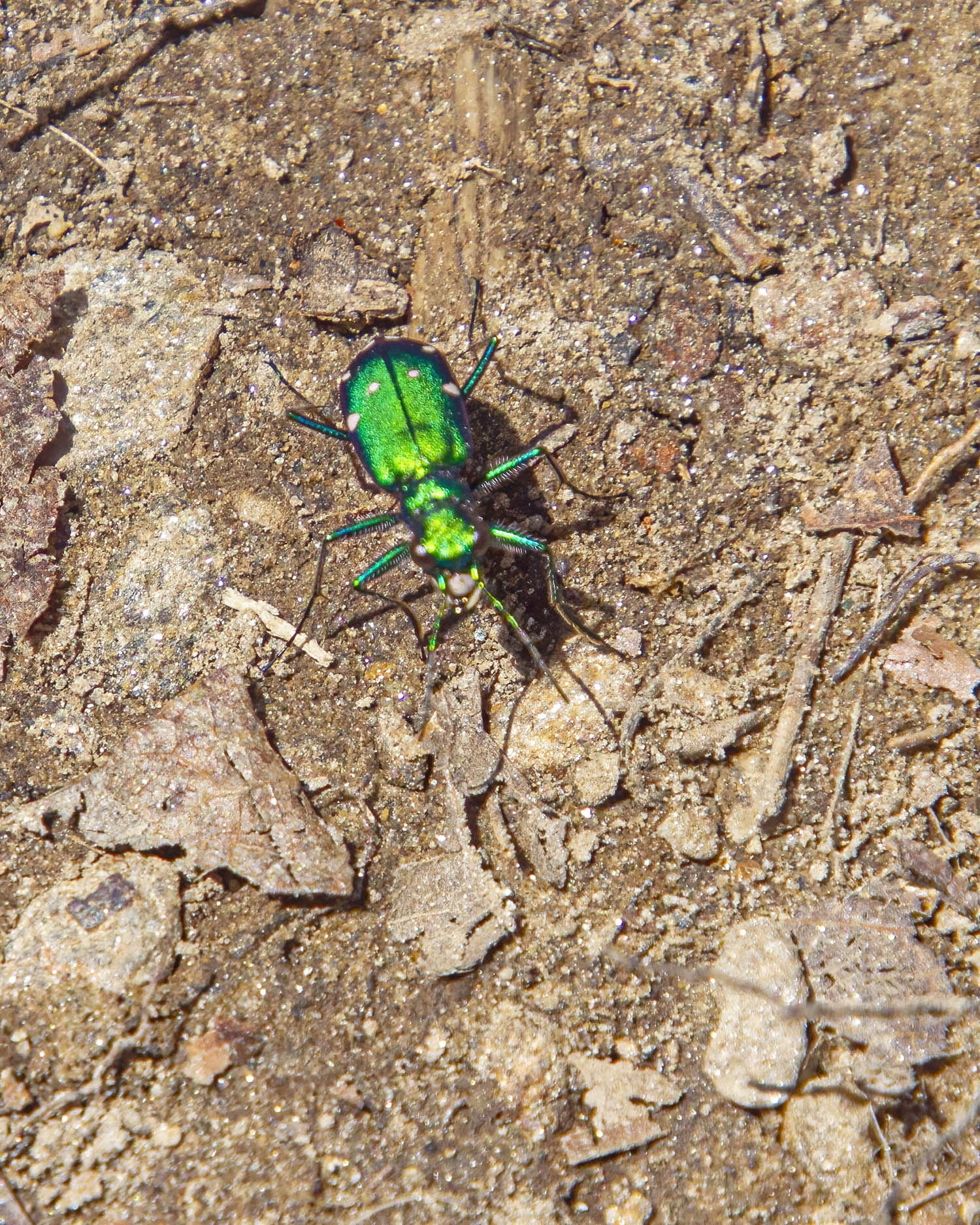
Many beetles are dark-colored and go about their business in the underbrush, unseen by human eyes. Six-spotted Tiger Beetles (Cicindela sexguttata), on the other hand, are hard to miss—their metallic-green bodies sparkle as they perch in the open, like this one that I spotted on Monday in the middle of a sun-lit forest trail in Prince William Forest Park.

The beetle’s common name refers to the six small white spots on the beetle’s metallic-green elytra (the beetle’s hardened wing cases), although the number of spots is somewhat variable. I think that I can see six spots on this beetle, but have sometimes seen as many as eight spots in the past.

As I was doing a bit of research a few years ago, I recall stumbling upon the fact that elytra is the plural form of elytron, following the the same pattern as “criterion” and its plural form “criteria.” For what it is worth, spell-check highlights elytron as an unknown word. English is a strange language.

Yesterday I came across this fun fact about tiger beetles at the University of Minnesota Department of Entomology website. “Tiger beetles’ long legs allow them to dart across the ground at high speeds. In fact, they can run so fast that their eyes can’t keep up, rendering them momentarily blind. This is why they only run short distances at a time.” Wow!

Six-spotted Tiger Beetle

© Michael Q. Powell. All rights reserved.

Read Full Post »

Many people in the United States were excited to view yesterday’s solar eclipse. I too paused for a few moments in the afternoon to view the eclipse through solar glasses that I had obtained last week during a visit to the Air and Space Museum in the Washington D.C. area.

However, I must confess that I was more excited earlier in the day when I had multiple encounters with Uhler’s Sundragons (Helocordulia uhleri), the first dragonflies that I have been able to photograph in 2024. (Some of you may recall that I searched for dragonflies last week and think that I saw one flying over a stream. However, I did not get a photo of the dragonfly, so for me that first sighting does not really “count.)

I spent several hours yesterday looking carefully at the vegetation along a creek in Prince William County, Virginia where I had spotted Uhler’s Sundragons in previous years. This species appears in limited locations in the early spring and is usually gone by early May. Unlike many of the dragonflies that I will see during the summer that are habitat generalists, Uhler’s Sundragons require a specific kind of habitat, usually a mountain stream. According to the Dragonflies of Northern Virginia website, “Uhler’s need clean, small to medium, rocky forest streams with gravelly and/or sandy substrate, and a decent flow.”

I was fortunate to be able to photograph both female and male Uhler’s Sundragons. I have alternated genders in the photos below, with the females in the odd-numbered images and the males in the even ones. One of the ways to tell the genders apart is to look at the tips of the abdomens (the “tails”) and you can see that the terminal appendages are different. The lower portion of the abdomens of the males is also somewhat enlarged, as you can see in some of the photos.

Dragonflies perch in many different ways. Some species perch horizontally and some hang vertically. Uhler’s Sundragons most often perch at an angle, as shown in the first and last photos, though sometimes they may hang vertically from the vegetation.

The dragonfly season has now opened and I look forward to many more encounters with these amazingly beautiful aerial acrobatic insects that have a magical appeal for me.

Uhler's Sundragon

Uhler's Sundragon


Uhler's Sundragon

Uhler's Sundragon

Uhler's Sundragon

Uhler's Sundragon

© Michael Q. Powell. All rights reserved.

Read Full Post »

Early spring wildflowers, like the Virginia Spring Beauty (Claytonia virginica), are an important source of food for a host of small bees and other insects. Many insects gather pollen from these flowers and in doing so help to pollinate the plants. One species, the Spring Beauty Miner Bee (Andrena erigeniae), is so specialized that it reportedly feeds only on this ephemeral flower.

According to the Bug of the Week website that featured this species in an article, “Using jaws and legs the female bees excavates a gallery in the soil, leaving a small pile of dirt near the entrance hole. This gallery can be as long as 15 centimeters and contain numerous lateral brood chambers. During the daytime she forages for pollen on flowers of spring beauties, which apparently are the sole source of food for her brood. Pollen from these blossoms is formed into balls and placed into brood chambers…As brood chambers are built and provisioned with pollen, the bee deposits a single egg on a pollen cake. During spring and early summer developing larvae consume the pollen, and later in summer they will form pupa. By late autumn development of the adult is complete and winter is spent in the adult stage within the brood chambers. Newly minted adults emerge each spring coincident with the appearance of spring beauty’s’ blossoms.” Wow!

On Monday I was fortunate to capture a shot of a Spring Beauty Miner Bee in action gathering pollen. If you look closely at the image, you will see how the tiny bee has collected pollen on its back legs.

Last year I posted an image of a Cuckoo Bee on the same kind of flower. That bee does not collect pollen. Instead it enters the nests of a host and lay eggs there, stealing resources that the host has already collected. From what I understand the cuckoo bee waits for the miner bee to leave its burrow and then lays its egg there. The offspring of the cuckoo bee eats the pollen in the burrow and then eats the larva of the miner bee. Yikes!

Spring Beauty Miner Bee

© Michael Q. Powell. All rights reserved.


Read Full Post »

I went on a pretty long hike yesterday in Prince William Forest Park—just over 18,000 steps (7.1 miles or 11 km) according to my iPhone—and was delighted to spot this beautiful Eastern Tiger Swallowtail butterfly (Papilio glaucus), my first of the season.

When I first spotted the butterfly, it appeared to be sucking moisture and minerals from the wet soil, as you can see in the first photo. The butterfly flew to a nearby location and resumed its efforts and I was able to maneuver around to get the second image that shows the markings of the butterfly a bit better.

Personally I prefer the first photo that is more dynamic and gives a better sense of the activity of the butterfly. From a purely scientific perspective, the second one might be preferable because it shows more of the butterfly’s identification features. I am more of an artist than a scientist, though, so capturing all of the details with clinical precision is not as important to me.


Eastern Tiger Swallowtail

Eastern Tiger Swallowtail

© Michael Q. Powell. All rights reserved.

Read Full Post »

Our recent warm weather has brought out a whole lot of little creatures. As I was hiking about in Prince William Forest Park last week, I notice a spot of bright red moving about on a rock at the edge of a small creek. When I looked at it more closely, it had a shape that made it look like a tiny red spider.

I did some initial searches when I returned home to see if I could identify the spider. I could not find an exact match, but I think this might be a spider mite (or some kind of mite) rather than an actual spider. If I understand it right, mites and spiders belong to the same family of arachnids, though I might have this wrong.

spider mite

© Michael Q. Powell. All rights reserved.

Read Full Post »
Yesterday I went on a hike at Prince William Forest Park, the largest protected natural area in the Washington D.C. area at over 13,000 acres (53 square kilometers), that is located about 27 miles (43 km) from my home. Unlike the wildlife refuge that I usually visit, which is on a coastal plain, Prince William Forest Park, as its name suggests, is heavily wooded and it is quite hilly. I love to walk along the many creeks and streams that crisscross the park—the sound of the flowing water always has a therapeutic effect on me.

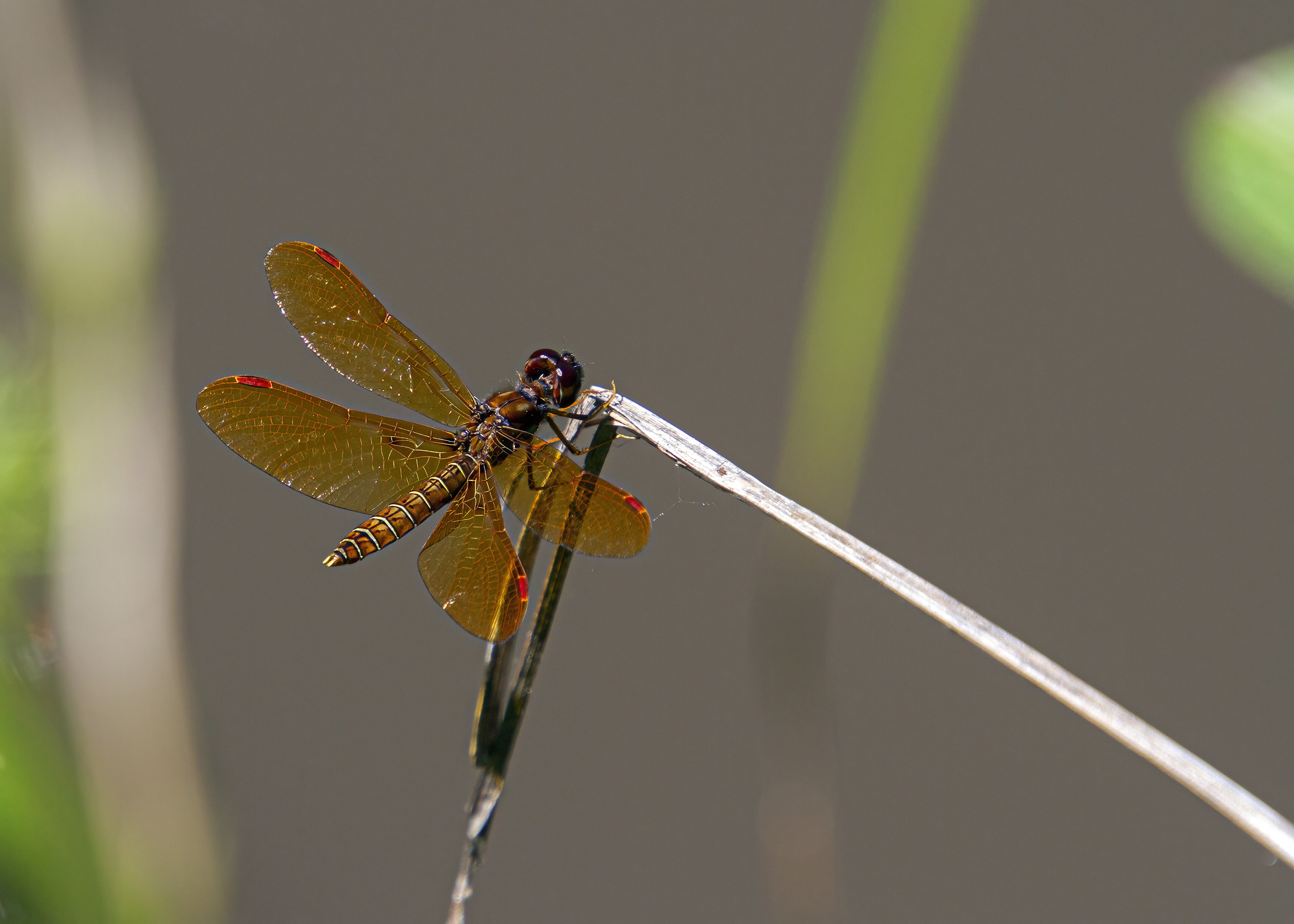
I was thrilled to spot this beautiful Question Mark butterfly (Polygonia interrogationis) as it perched on some leaves in a marshy area adjacent to one of the creeks. I could not tell for sure, but it looked like this butterfly was sipping water, possibly gathering nutrients from the soil. Question Mark butterflies and their punctuation “cousins,” the Eastern Commas, overwinter as adults, so they are among the earliest appearing butterflies in the spring.

Question Mark and Eastern Comma butterflies are quite similar in appearance. When the wings are fully open, as in the photo below, you can see a brown dash near the top of the upper wings that is not present on the wings of Eastern Comma butterflies.

Question Mark butterfly

© Michael Q. Powell. All rights reserved.

Read Full Post »

Yesterday I was thrilled to spot several Spring Azure butterflies (Celastrina ladon) at Occoquan Bay National Wildlife Refuge. This early-appearing butterfly is one of the tiniest butterflies in our area, with a wing span of about an inch (25 mm). Unlike Mourning Cloak butterflies—like the I featured last week in a blog posting—that overwinter as adults, Spring Azures overwinter in the pupal form, safe inside their chrysalis.

All of the Spring Azures that I saw yesterday were extremely skittish, spending most of their time in flight. Occasionally one would fly near the ground and come close to landing and then abruptly resume its flight. When they did land, the little butterflies almost disappeared into the abundant leaf litter and were tough to photograph.

Nature is coming alive as flowering trees begin to pop and new wildlife species reappear on the scene as we move deeper into March. It won’t be long before osprey, green herons, and great egrets return to our area and I hope to be seeing dragonflies within the next month. It is an exciting time of the year.

Spring Azure

© Michael Q. Powell. All rights reserved.


Read Full Post »

I was delighted yesterday (7 March) to spot this beautiful Mourning Cloak butterfly (Nymphalis antiopa) at Occoquan Bay National Wildlife Refuge, my first butterfly sighting of 2024. Mourning Cloaks, known as Camberwell Beauties in the Great Britain, overwinter as adults and are usually among the first butterflies to appear each spring.

Mourning Cloak butterflies, according to Wikipedia, have a lifespan of 11 to 12 months, one of the longest lifespans for any butterfly. As I noted, these butterflies spend spend the winters in us as adults, by “hiding away in cracks in rocks or holes in trees, and are able to shut down their bodies all winter long, effectively hibernating, in a manner known in insects as torpor,” according to the One Earth website.

Mourning Cloak butterflies have a distinctive look that some scientist thought looked like the traditional cloak worn in mourning. I was happy that I was able to capture the row of blue spots on the wings—another one of its identification features—in the photo of “my” butterfly.

The butterfly spent most of its time flying up and down, in and out of some trees. Eventually it perched for a moment on the ground and I was able to capture this image. It will be at least a few more weeks before I see my first dragonfly of the season, but I will soon begin to keep my eyes open for them. As many of you know, dragonflies are one of my favorite subjects to photograph and I look forward to the start of “dragonfly season” each year.

Mourning Cloak

© Michael Q. Powell. All rights reserved.


Read Full Post »
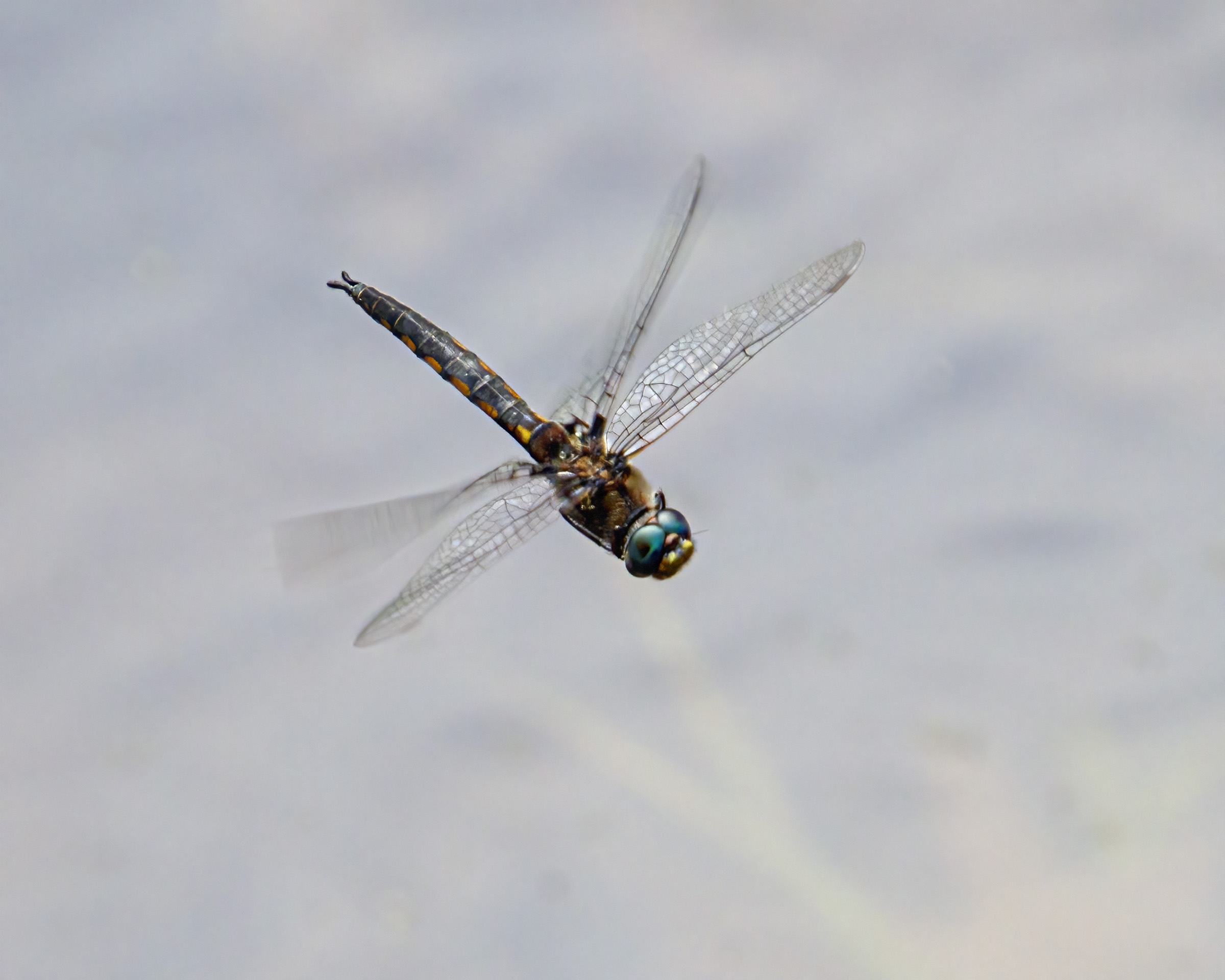
As we move into December, I am still managing to see a few Autumn Meadowhawks (Sympetrum vicinum), like this dragonfly on the rocks that I spotted on Monday at Occoquan Bay National Wildlife Refuge. Dragonfly on the rocks…sounds like a holiday adult beverage to me.

I suspect that the end is near for these little creatures. Although these dragonflies can tolerate brief periods of cold temperatures, it is difficult for them to survive during an extended cold snap. I will be keeping an eye out for these tiny red dragonflies in the upcoming weeks, but it is clear that the end of the dragonfly season is rapidly approaching.

Autumn Meadowhawk

© Michael Q. Powell. All rights reserved.

Read Full Post »

Autumn Meadowhawk dragonflies (Sympetrum vicinum) are still hanging in there as we approach the end of November. At other times of the year their bright red bodies would stand out, but there are lots of red and brown leaves on the ground now that help to camouflage them when they land. If the dragonflies remain still while on these perches, they are almost undetectable.

I photographed these little beauties on Wednesday at Occoquan Bay National Wildlife Refuge. Amazingly, I used the same telephoto zoom lens for these images that I used to capture shots of a Bald Eagle that same day—check out yesterday’s posting called What’s for dinner? that featured shots of an eagle with a duck that it had captured. The Tamron 150-600mm lens is a really versatile lens that, if I am careful, can capture a wide range of subjects ranging from an eagle in flight to a tiny perched dragonfly.

Autumn Meadowhawk

Autumn Meadowhawk

© Michael Q. Powell. All rights reserved.


Read Full Post »

We have reached the point of the season when the only dragonflies remaining are the hardy Autumn Meadowhawks (Sympetrum vicinum). I try to photograph every one that I see, knowing that it could be the last one that I spot for the year. In past years I have sometime seen Autumn Meadowhawks in December, but their continued presence is dependent on a number of factors, including the weather.

I photographed this Autumn Meadowhawk last Friday at Occoquan Bay National Wildlife Refuge in Northern Virginia—it was one of a half-dozen or so that I spotted that day. The little dragonfly appeared to be staring right at me with a mixture of curiosity and defiance. The dragonfly was perched on a log and I was happy to capture some of the texture of the wood along with a bit of autumn color in the background.

I will continue to keep an eye out for these little red dragonflies, knowing full well that their time is rapidly coming to an end.

Autumn Meadowhawk

© Michael Q. Powell. All rights reserved.

Read Full Post »

It has been quite a while since I have seen any dragonflies other than Autumn Meadowhawks, so I was thrilled yesterday (17 November) when I spotted this Wandering Glider (Pantala flavescens) patrolling over a field at Occoquan Bay National Wildlife Refuge. I watched and waited for a long time and the dragonfly finally landed for a moment.

I captured the image below with my Tamron 150-600mm telephoto zoom lens extended all the way to 600mm on my Canon 7D DSLR. The dragonfly was perched only a few inches above the ground, so I had to crouch down quite low to get this shot. Although I had my camera on a monopod, it was tough to get into a steady shooting position and I had to focus manually, because my camera’s autofocus kept locking onto the vegetation. I took lots of photos and happily a few of them were in focus and were relatively sharp.

Wandering Gliders are a migratory species and are considered to be the most widespread dragonfly on the planet, with good population on every continent except Antarctica. According to Wikipedia, Wandering Gliders, also known as Globe Skimmers, “make an annual multigenerational journey of some 18,000 km (about 11,200 miles); to complete the migration, individual globe skimmers fly more than 6,000 km (3,730 miles)—one of the farthest known migrations of all insect species.” Wow!

Wandering Glider

© Michael Q. Powell. All rights reserved.

Read Full Post »

There were few insects flying last Thursday at Occoquan Bay National Wildlife Refuge, so I was a bit surprised to encounter several Common Buckeye (Junonia coenia) butterflies. The body color of this butterfly is pretty drab, but its markings are stunning in their beauty—I especially love its multi-colored eyespots. Wow!

I do not think that Common Buckeye butterflies overwinter in my area as adults, so I wonder if the butterflies that I observed are in the process of migrating southward. If not, then they are appearing on the scene quite late in the season, when we have already had several frosty nights. Perhaps they will hang around for a little while longer—I will keep an eye out for them on my next trips to my favorite local wildlife refuge.

Common Buckeye


Common Buckeye

© Michael Q. Powell. All rights reserved.


Read Full Post »

I can’t totally exclude the possibility that I may see a hardy survivor of another species, but it is beginning to look like Autumn Meadowhawks (Sympetrum vicinum) are the sole remaining dragonfly species. Last week I spotted quite a few of them during a visit to Huntley Meadows Park, a county-owned marshland not far from where I live.

I tried to capture images of these bright red beauties in as many different environments as I could. Autumn Meadowhawks often perch on the ground, which does not provide a very interesting background, as you can see in the final photo. It is much more interesting if they perch on fallen leaves, or even better if they choose a more elevated perch.

The photos below give you an idea of how I try to “work” a subject. I try to shooting from different angles and distances.  When possible, I try to selectively include or exclude background elements by choosing the appropriate camera settings, as you can see in the fourth photo, where I caused the background to be totally out of focus. Paying attention to the direction of the light really helps too, as you can see particularly in the second image in which the light is so directional that it almost looks like a studio portrait.

Autumn Meadowhawks will probably be around for another few weeks or maybe a month or so, depending in part on the severity of the local weather. At that point, I will rekuctantly turn my focus to birds, landscapes, and other non-insect subjects. I also hope to devote a bit more attention to learning more about creating videos—I have a modest YouTube channel that I have allowed to languish this past year.

Autumn Meadowhawk

Autumn Meadowhawk

Autumn Meadowhawk

Autumn Meadowhawk

Autumn Meadowhawk

© Michael Q. Powell. All rights reserved.

Read Full Post »
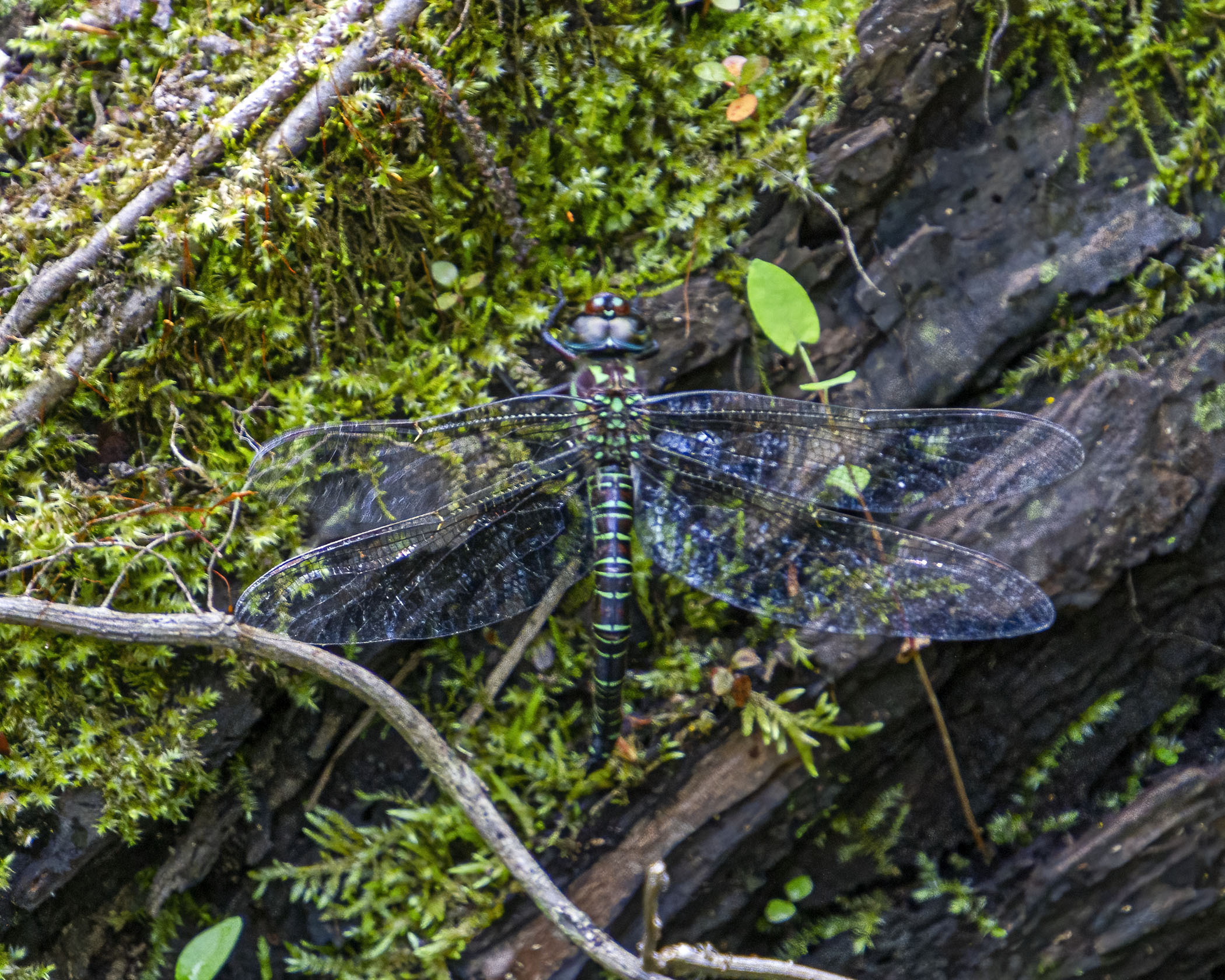
Most of the insects are gone by now, so I was a bit shocked to spot this Sleepy Orange butterfly (Eurema nicippe) last Thursday at Occoquan Bay National Wildlife Refuge. When I first saw it, I assumed that it was a Clouded Sulphur butterfly, a species that I photographed a few weeks ago. Upon examining my shot on my computer screen, I realized that it was an unfamiliar species, and a friend of mine who is more of an expert on butterflies helped to identify the butterfly for me.

I really like the way that the bright color of the inside of the butterfly contrasts with the brown tones of the dried leaves on which the butterfly was perched.

Sleepy Orange

© Michael Q. Powell. All rights reserved.

Read Full Post »
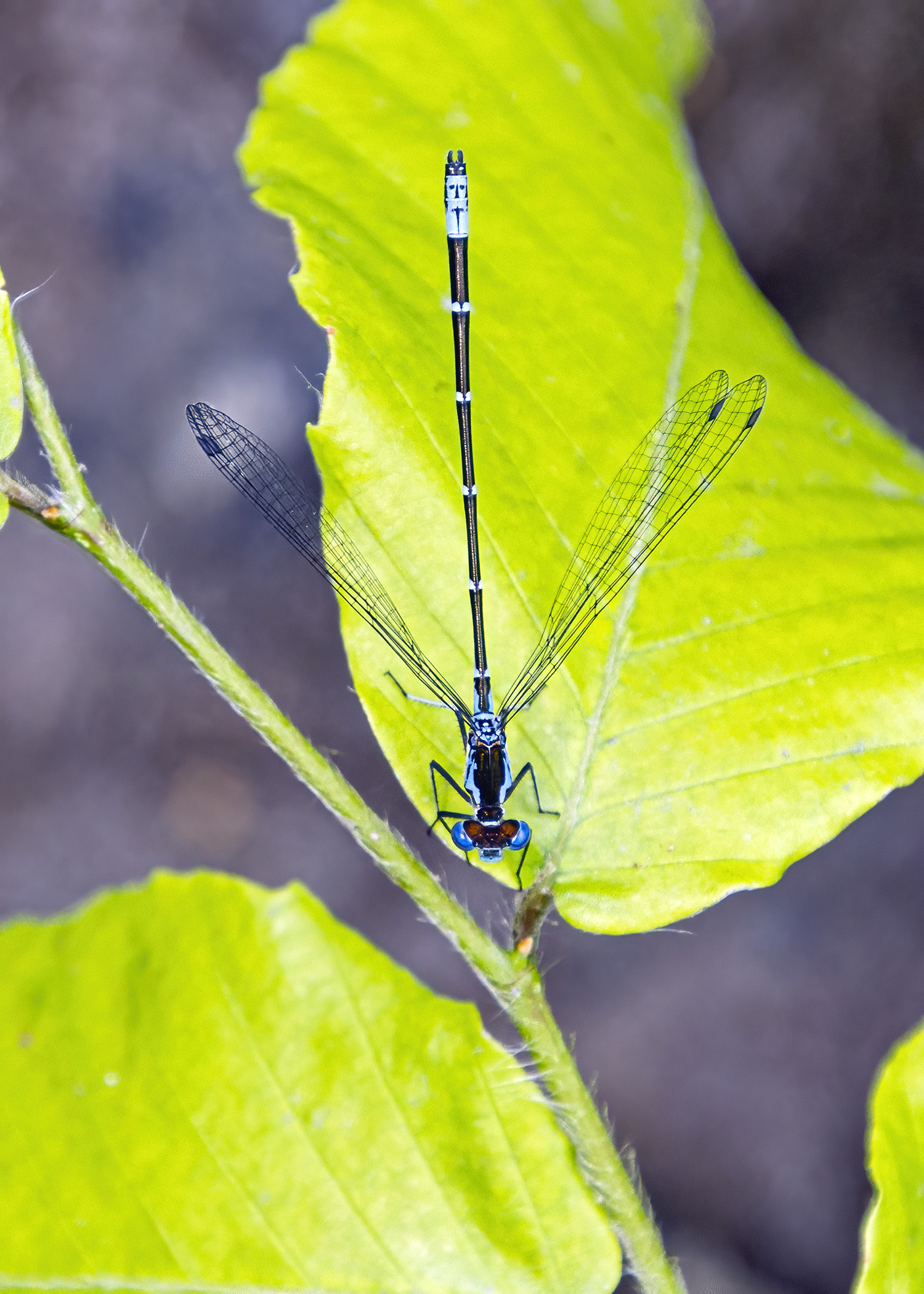
Woodpeckers are amazingly industrious. They repeatedly hammer their heads against trees, with seemingly a low success rate. Yesterday, though, this male Downy Woodpecker (Picoides pubescens) was successful in capturing an insect at Occoquan Bay National Wildlife Refuge and paused for a moment to show it to me.

Downy Woodpeckers are the smallest woodpeckers in my area and are the species that I see most often. In addition to pecking away at trees, I have also seen them search for insects in cattails and in other vegetation. It is easy to distinguish a male Downy Woodpecker from a female, because males have a bright red patch on the back of their heads, a feature that you can just see in this photo.

Downy Woodpeckers are usually very energetic. I spotted this woodpecker as he was spiraling his way up the tree. I prepared myself when he disappeared behind the trunk and was able to anticipate where he would reappear. I really like the angle of view of this shot that allows us to see the bird’s sharp claws and intense eyes. Downy Woodpeckers always seem to be intensely focused on what they are doing and it was wonderful to see this one’s efforts rewarded with a nice little treat.

Downy Woodpecker

© Michael Q. Powell. All rights reserved.

Read Full Post »

« Newer Posts - Older Posts »