Wings are tattered. Flowers have faded. Summer is ending. (Blue Dasher dragonfly (Pachydiplax longipennis) photographed on 6 September at Jackson Miles Abbott Wetland Refuge.)
© Michael Q. Powell. All rights reserved.
Posted in Autumn, Dragonflies, dragonfly, Flowers, Insects, Nature, Photography, Summer, wildlife, tagged black-eyed susan, Blue Dasher, Blue Dasher dragonfly, Canon 7D, changing seasons, end of summer, Fort Belvoir VA, Jackson Miles Abbott Wetland Refuge, Pachydiplax longipennis, Tamron 18-400mm on September 12, 2023| 4 Comments »
Wings are tattered. Flowers have faded. Summer is ending. (Blue Dasher dragonfly (Pachydiplax longipennis) photographed on 6 September at Jackson Miles Abbott Wetland Refuge.)
© Michael Q. Powell. All rights reserved.
Posted in Autumn, Dragonflies, dragonfly, Flowers, Insects, Nature, Photography, Summer, wildlife, tagged Blue Dasher, Blue Dasher dragonfly, Canon 7D, female Blue Dasher, Fort Belvoir VA, Jackson Miles Abbott Wetland Refuge, Pachydiplax longipennis, Tamron 18-400mm on September 12, 2023| 11 Comments »
I don’t often see dragonflies perch on flowers, so I was delighted when this female Blue Dasher (Pachydiplax longipennis) decided to rest for a moment on an aster plant in bloom last week at Jackson Miles Abbott Wetland Refuge.
I decided not to crop this photo to show the dragonfly better, because I really like the sweep of bright color on the left side of the image and the more muted out-of-focus colors on the right side. I am growing to love this type of environmental portrait, which goes against my normal approach of trying to fill as much of the frame as possible with my primary subject.
© Michael Q. Powell. All rights reserved.
Posted in Flowers, Insects, Nature, Photography, Summer, wildlife, tagged black-eyed susan, Canon 7D, Fort Belvoir VA, hover fly, hoverfly, Jackson Miles Abbott Wetland Refuge, rudbeckia, Rudbeckia hirta, Tamron 18-400mm on August 21, 2023| 2 Comments »
When I first started taking nature photos more than ten years ago, I probably would have assumed that this yellow and black insect was a bee. With the benefit of accumulate experience, I can identify it as some kind of Hover Fly. Hover flies, also called flower flies or syrphid flies, are quite common—according to Wikipedia there are about 6000 species of hover flies worldwide, so I don’t feel bad that I cannot identify the species of this one.
I spotted the hover fly during a recent visit to Jackson Miles Abbott Wetland Refuge as it was feeding on a Black-eyed Susan flower (Rudbeckia hirta). Both the insect and the flower are made up of varying shades of yellow and brown and they seem to complement each other pretty well. I also like the way that the lines on the petals of the flower mirror the marking on the insect’s body.
© Michael Q. Powell. All rights reserved.
Posted in Butterflies, Flowers, Nature, Photography, Summer, wildlife, tagged black-eyed susan, Canon 50D, Fort Belvoir VA, Jackson Miles Abbott Wetland Refuge, Pearl Crescent, pearl crescent butterfly, Phyciodes tharos, Rudbeckia hirta, Tamron 18-400mm on July 31, 2023| 4 Comments »
July is finally coming to an end, a month of endless hot, hazy, and humid days. It has been tough to get myself motivated to go out with my camera and I have been forced to keep my outings relatively short. Weather-wise autumn is my favorite time of the year, but we have a lot more summer weather to endure before the cooling temperatures of autumn arrive.
During a recent visit to Jackson Miles Abbott Wetland Refuge I was delighted to spot this Pearl Crescent butterfly (Phyciodes tharos). It was feeding in a patch of what looked to be Black-eyed Susan flowers (Rudbeckia hirta), although I must confess that I am not very good at identifying flowers, so my identification may not be accurate.
Initially the little butterfly perched with its wings only partially open, but I waited patiently and eventually it fully extended its wings and I was able to capture this image. It is a relatively simple composition, but I really like the way that it gives you a sense of the environment while also showing you the beautiful markings of the Pearl Crescent butterfly.
© Michael Q. Powell. All rights reserved.
Posted in Art, Flowers, Nature, Photography, Summer, Water Lilies, tagged Canon 7D, Claude Monet, Kenilworth Park and Aquatic Gardens, Nymphaea, Nymphéas, Tamron 18-400mm, Washington D.C., water lilies, water lily on July 30, 2023| 3 Comments »
Whenever I see Water Lilies in bloom, I immediately think of one of my favorite artists—Claude Monet. During the last thirty years of his life, water lilies (Nymphéas in French) were the main focus of his artistic production. One of the museums that I most love visiting is the Musée de l’Orangerie in Paris, because it houses eight massive water lily murals by Monet in two specially-built oval rooms. It is incredibly peaceful to just sit in one of those rooms, surrounded by those amazing paintings.
During a visit to Kenilworth Park and Aquatic Gardens in Washington D.C. in mid-July, I chose to focus my attention on capturing portraits of individual flowers (or a couple, in the case of the first photo), rather than trying to capture the expanse of water lilies in multiple ponds. There is something really peaceful and pure about water lilies that calms and soothes me and tends to put me into a contemplative mood.
I have returned from my short road trip to Massachusetts and Maine and am still feeling a bit of residual fatigue after spending almost twelve hours in my car yesterday. I hope to resume my normal posting schedule with some new photos soon. Thanks to all of you who have continued to read some of my older postings while I have been mostly absent from the internet this past week.
© Michael Q. Powell. All rights reserved.
Posted in Bees, Flowers, Insects, Nature, Photography, Summer, Water Lilies, tagged bumblebee, Canon 7D, Common Waterlily Planthopper, honey bee, honeybee, Kenilworth Park and Aquatic Gardens, pink water lily, Tamron 18-400mm, Washington D.C., water lily on July 20, 2023| 2 Comments »
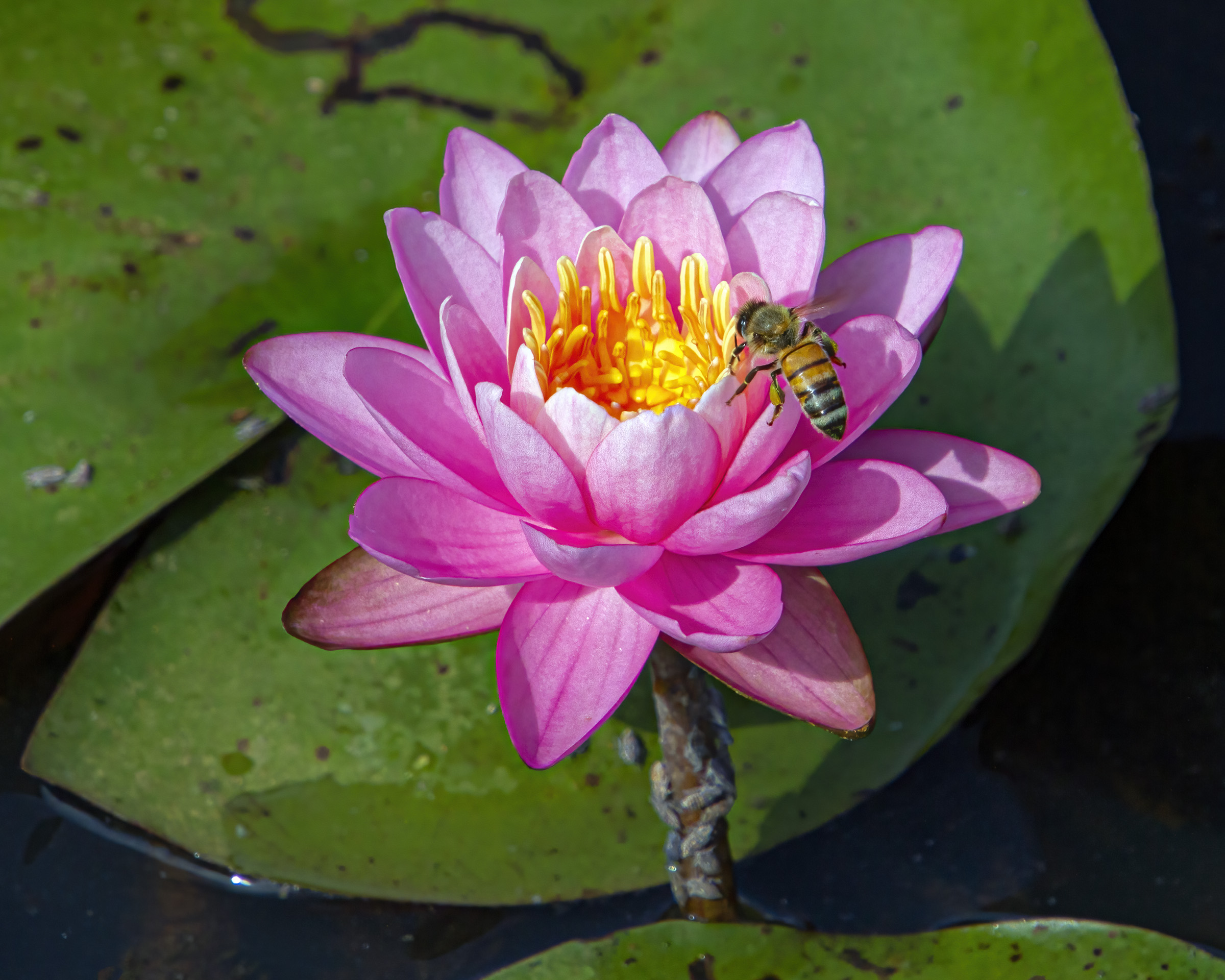
There must have been something really special about this pretty pink water lily at Kenilworth Aquatic Gardens. A honey bee was attracted to it and plunged headfirst into the center of the flower after perching momentarily on a petal. A bumble bee decided to join in the action and for a brief period worked side-by-side with its smaller cousin gathering pollen and nectar.
As I was looking at the photos on my computer, I couldn’t help but notice the cluster of tiny insects on the stem of the water lily. What were they? I posed the question in a Facebook forum and it turns out that they are probably Common Waterlily Planthoppers (Megamelus davisi). I took photos of several other nearby water lilies, but this was the only one in which I saw the planthoppers. There must have been something really special about this pink water lily that caused it to attract so many insects.
© Michael Q. Powell. All rights reserved.
Posted in Art, Flowers, Nature, Photography, Summer, Travel, tagged Canon 7D, Kenilworth Aquatic Gardens, Kenilworth Park and Aquatic Gardens, lotus, lotus bud, Nelumbo nucifera, Sacred lotus, Tamron 18-400mm, Washington D.C. on July 19, 2023| 2 Comments »
Beauty expresses itself in so many different ways. That was the thought that was running through my head as I reviewed my photos from my recent visit to Washington D.C. to photograph lotuses and water lilies at Kenilworth Park and Aquatic Gardens. Actually I had a similar thought when I was there with my camera—how could I possibly capture a sense of the moment, of the shapes and colors that were overwhelming my senses?
I have already shared some photos of Sacred Lotuses and American Lotuses in previous blog postings, but I have so many more images that I like that I feel compelled to share a few more images of Sacred Lotuses (Nelumbo nucifera). I hope you don’t mind.
Sometimes I describe what I like about the photos in a blog posting, but this time I will let you enjoy them without my commentary. My only recommendation is that you click on the images to see more of the details of these wonderful flowers. Enjoy the experience as seen through my eyes and the lens of my camera.
© Michael Q. Powell. All rights reserved.
Posted in Art, Flowers, Gardening, Nature, Photography, Summer, tagged American Lotus, Canon 7D, Kenilworth Park and Aquatic Gardens, Nelumbo lutea, Tamron 18-400mm, Washington D.C., yellow lotus on July 18, 2023| 4 Comments »
Most of the beautiful lotus flowers that I photographed last week at Kenilworth Park and Aquatic Gardens in Washington D.C. were Sacred Lotuses (Nelumbo nucifera), a plant that is native to Asia. In one small area of the gardens, I spotted some American Lotuses (Nelumbo lutea), a species that is native to North America. Unlike Sacred Lotuses, which tend to be pinkish in color, the flowers of American Lotuses are white or pale yellow in color and the American Lotus is sometimes called a Yellow Lotus.
It was mid-morning when I took these shots and the sun was shining brightly, so I had to deliberately underexpose the shots to keep the white highlights from getting blown out—that is why the backgrounds look so dark. I like the effect and find that it adds a bit of drama to the images, especially the first one.
© Michael Q. Powell. All rights reserved.
Posted in Art, Flowers, Nature, Photography, Summer, tagged Canon 7D, Georgia O'Keeffe, Kenilworth Park and Aquatic Gardens, lotus, lotus flower, Nelumbo nucifera, Sacred lotus, Tamron 18-400mm, Washington D.C. on July 16, 2023| 13 Comments »
Last Thursday I visited Kenilworth Park and Aquatic Gardens in Washington D.C. with my photography mentor Cindy Dyer to photograph the lotuses and waterlilies that we knew would be in bloom. This facility is the only national park site devoted to cultivated water-loving plants and features over 45 ponds filled with a variety of water lilies and lotuses, according to the Friends of Kenilworth Aquatic Gardens website. Sacred Lotus (Nelumbo nucifera)
The official website of the park describes it more poetically as a place “where water and wind dance.” “Deep within Kenilworth lies an oasis, hidden behind trees and cattails. It’s a place where beavers build their homes and turtles sleep on logs. Lotus blooms rise from the muck and lilies sit on the water. The wind dances with the dragonflies, rustling through the trees, carrying the song of the birds until it brushes across your face, fading to a whisper, saying “come join.” ”
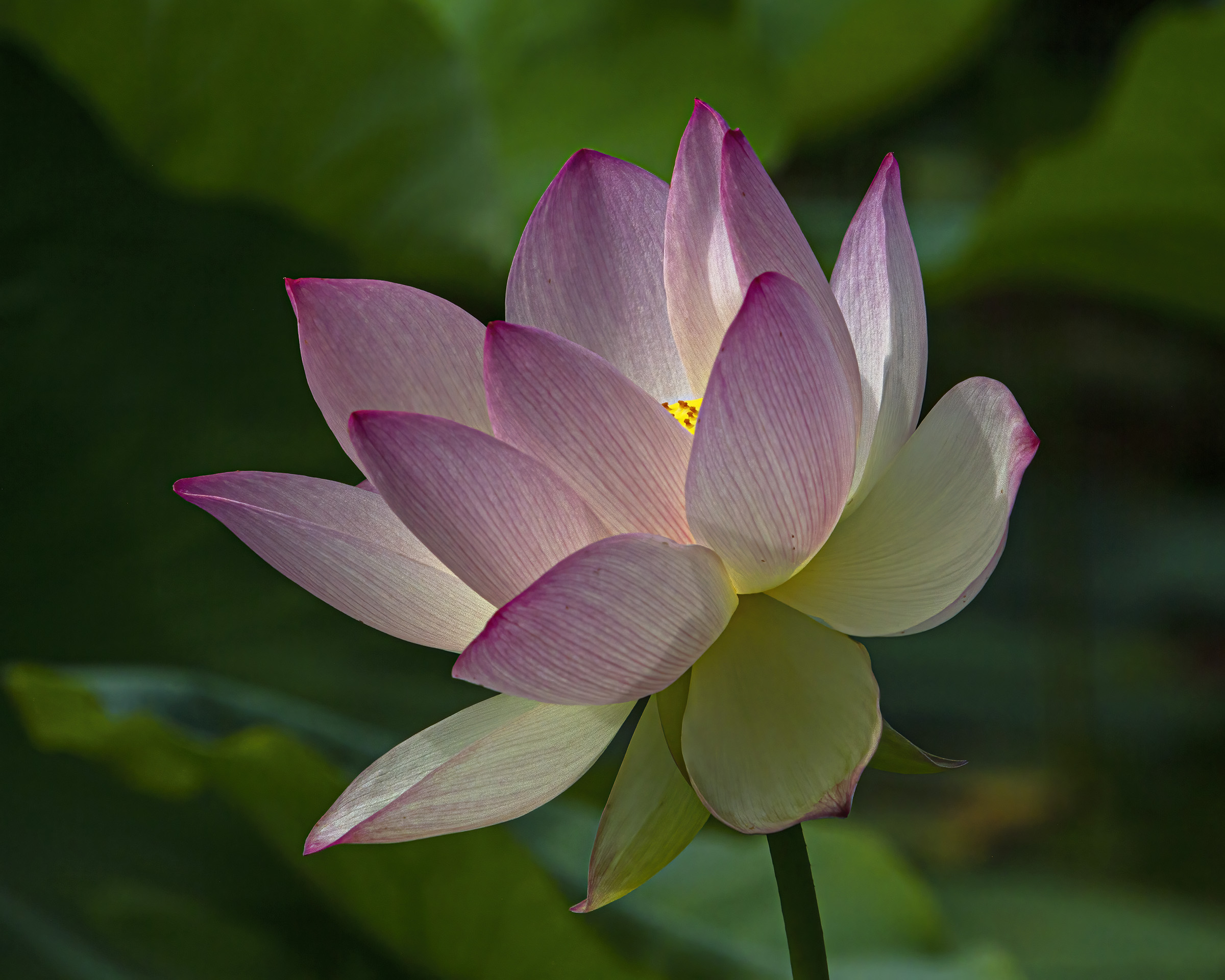
One of the “stars” of the aquatic gardens is the Sacred Lotus (Nelumbo nucifera) and I spent a good amount of time trying to capture images of these spectacular flowers. We arrived at the gardens relatively early, but it was still a challenge to photograph the flowers without getting harsh highlights. I particularly like the first photo in which I managed to capture both a flower and the showerhead-like seedpod that remains after the petals have fallen away.
In my final photo, I zoomed in to create a Georgia O’Keeffe-like vibe. My friend Cindy used a handheld diffuser to block some of the sunlight, which allowed me to capture the saturated color of this particular flower—most of the other flowers were a lighter pink, like the ones in the first and second photos.
© Michael Q. Powell. All rights reserved.
Posted in Butterflies, Flowers, Insects, Nature, Photography, Summer, Winter, tagged Alexandria VA, Asclepias tuberosa, Butterfly Weed, Canon 50D, Huntley Meadows Park, Pearl Crescent, pearl crescent butterfly, Phyciodes tharos, Tamron 180mm macro on July 7, 2023| 8 Comments »
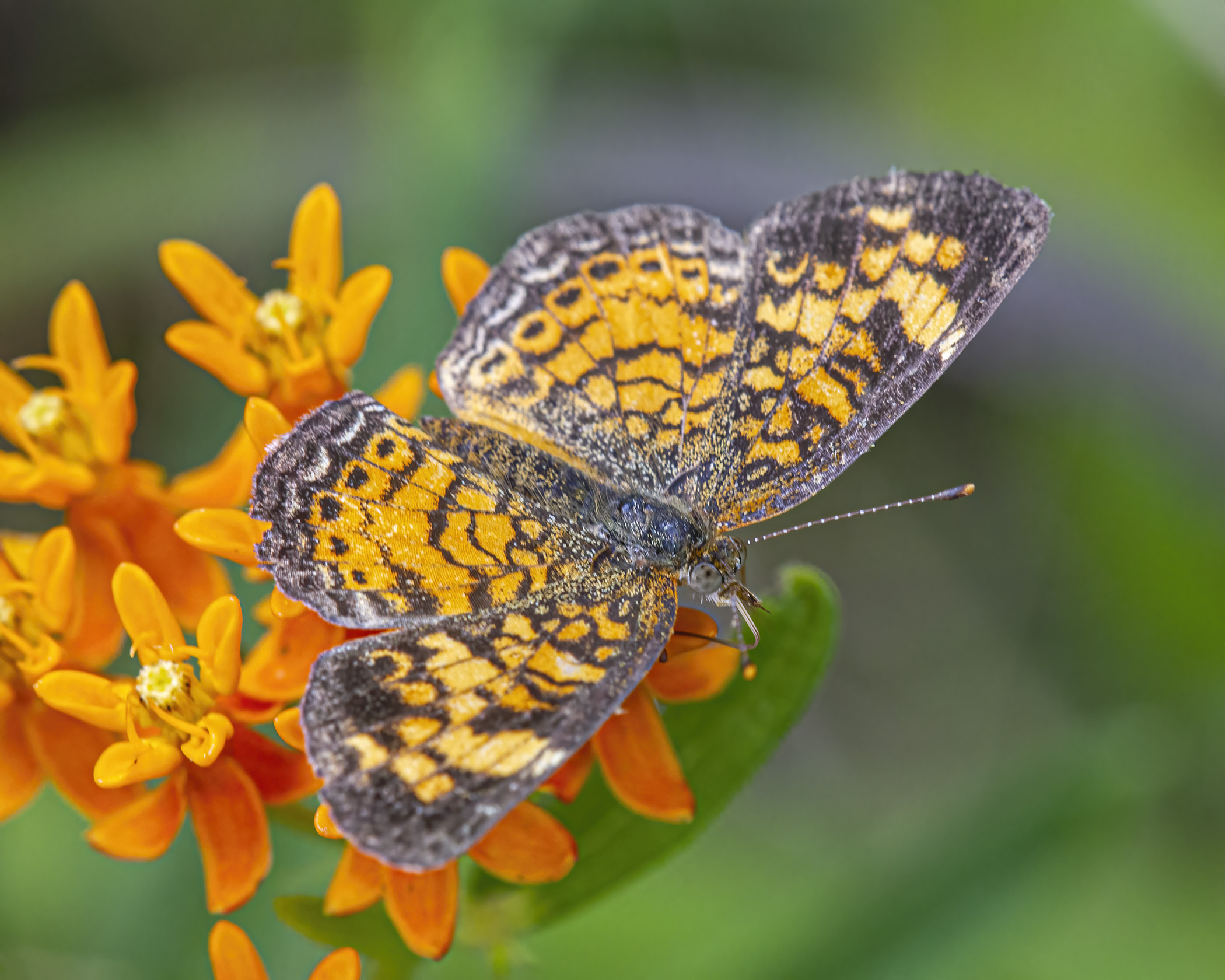
It is always a joy to see butterfly weed (Asclepias tuberosa), a bright orange species of milkweed that is full of nectar and attracts lots of butterflies. On Monday I spotted what I believe is a Pearl Crescent butterfly (Phyciodes tharos) feeding on some butterfly weed at Huntley Meadows Park in Alexandria, Virginia. I spotted some regular milkweed earlier in the day and was hoping to see my first Monarch butterfly of the season, but, alas, I came up empty-handed this time.
I love bright colors and some of you may recall that I drive an Ignition Orange KIA Soul. I was delighted to be able to capture some of the beautiful details and color of the butterfly weed and also some details of the butterfly, including its striking eyes and extended proboscis.
© Michael Q. Powell. All rights reserved.
Posted in Butterflies, Flowers, Insects, Macro Photography, Nature, Photography, Summer, tagged butterflies, butterfly garden, Canon 7D, conservatory, indoor butterflies, Lewis Ginter Botanical Garden, Richmond VA, Tamron 180mm on June 26, 2023| 5 Comments »
Most of the times I am outdoors when I am photographing butterflies, but occasionally I have the opportunity to visit indoor butterfly gardens. One of the cool thing about these facilities is that they often contain tropical species that are not present in my local area.
Early in June I visited Lewis Ginter Botanical Garden in Richmond, Virginia and spent some time in the butterfly garden in an enclosed area of the large glass conservatory. Shooting in this environment challenges my composition skills and photography techniques as I try to hold my camera steady, focus on these moving subjects, and avoid including people and man-made objects in the backgrounds of the images.
Here are a few of my favorites from my time with these butterflies, several of which perched on me while I was exploring their environment. There is a double-door system that is sort of like an air lock to try to prevent the butterflies from escaping when people enter and exit. The staff folks also carefully check you when you are leaving to ensure that no butterflies are hitching a ride on you.
© Michael Q. Powell. All rights reserved.
Posted in Art, Flowers, Gardening, Nature, Photography, tagged Canon 7D, conservatory, Lewis Ginter Botanical Garden, orchid, Richmond VA, Tamron 180mm on June 25, 2023| 4 Comments »
Each time that I visit Lewis Ginter Botanical Garden in Richmond, Virginia, I spend some time in the glassed-in conservatory. At certain times of the year there is an indoor butterfly garden and there are always exotic orchids to see. Getting photos of the orchids is a challenge, because the light is limited, the shooting angles are constrained, and the room is hot and humid.
Here are a few of my attempts to capture the beauty of some of the orchids during a visit earlier in June. As you can see, I tried to vary my approach, sometimes going in close to focus on a single flower and sometimes pulling back to capture a cluster of them. I mostly avoided cluttered backgrounds—a large pot is visible in the final photo, but it is not very distracting
© Michael Q. Powell. All rights reserved.
Posted in Flowers, Gardening, Nature, Photography, Summer, tagged Canon 7D, Iris ensata, Japanese water iris, Lewis Ginter Botanical Garden, Richmond VA, Tamron 180mm on June 24, 2023| 9 Comments »
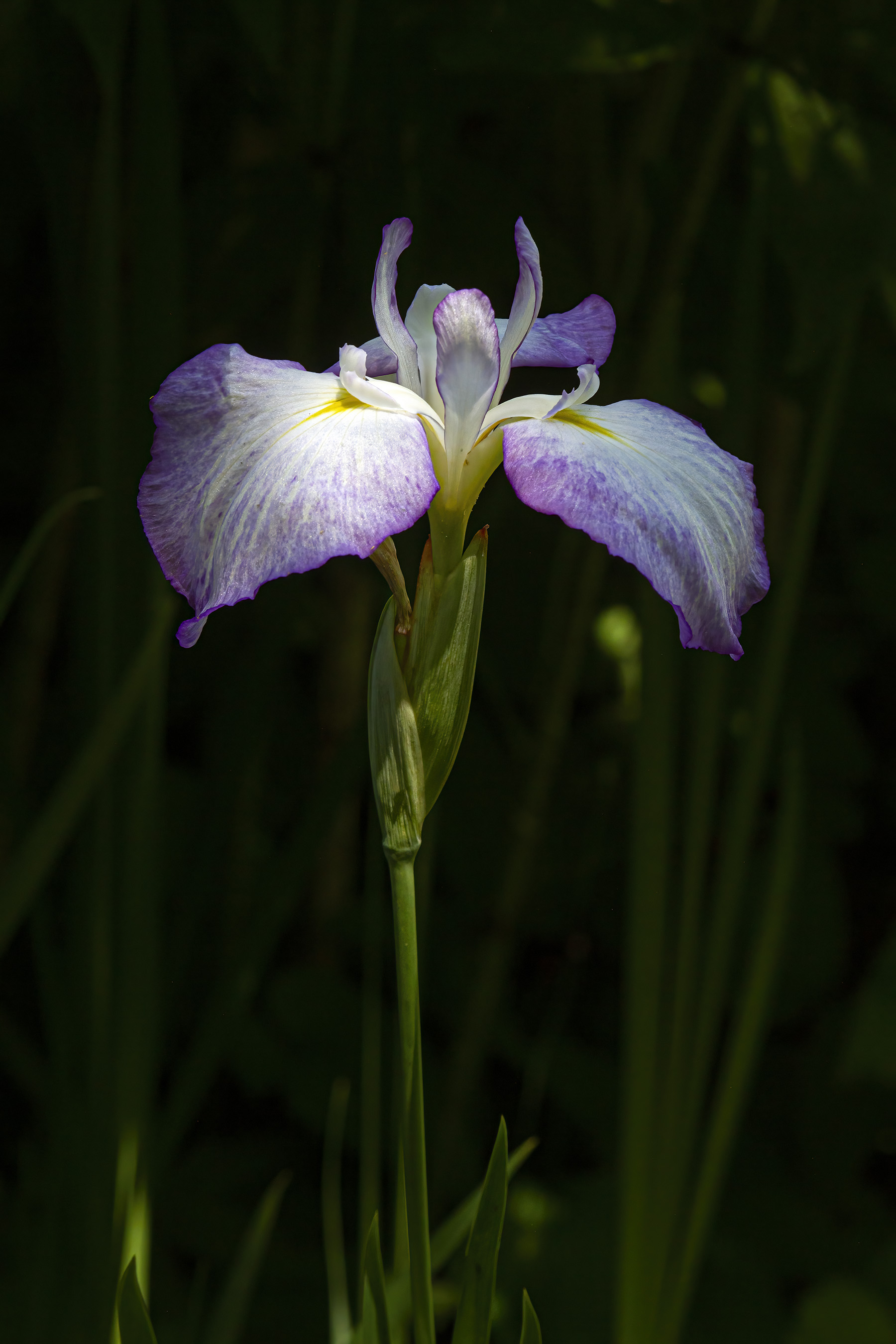
I was struck by the beauty of the Japanese Water Irises (Iris ensata) that I observed during a visit in early June to Lewis Ginter Botanical Garden with fellow photographer Cindy Dyer. Most of the irises, however, were either in the bright sunlight or in the deep shadows. I was delighted when I spotted one flower that was partially illuminated by the sun in a way that made it pop out of the shadows.
I tried to capture the effects of this beautiful lighting by moving in close and focusing on the petals (photo 1) and by moving back and including more of the stem of the flower (photo 2). I was using my 180mm macro lens, so when I talk about “moving,” I was moving my feet and not merely adjusting a zoom lens. Initially I was most taken by the first image, but the second image is growing on me more and more—I think I like them equally now. Do you have a favorite of the two shots?
© Michael Q. Powell. All rights reserved.
Posted in Art, Flowers, Gardening, Nature, Photography, Summer, tagged #poppylove, Alexandria VA, Canon 7D, green spring gardens, poppies, poppy, poppy center, poppy seed pod, Tamron 180mm on June 5, 2023| 8 Comments »
I have always been fascinated by the color and texture of the centers of poppies and was delighted to see poppies in several different colors during a recent visit to Green Spring Gardens in Alexandria, Virginia, just a few miles from where I live. The tissue-paper texture of the petals quite unusual, reminding me of my childhood craft projects with tissue paper and crepe paper—we may even have created our own poppies.
Even when their petals have faded and fallen away, poppies continue to fascinate me (and birds love their seeds) and I really like the look of their seed pods, like the one in the final photo.
© Michael Q. Powell. All rights reserved.
Posted in Flowers, Nature, Photography, spring, tagged Alexandria VA, Canon 7D, green spring gardens, pink water lily, water lilies on May 28, 2023| 5 Comments »
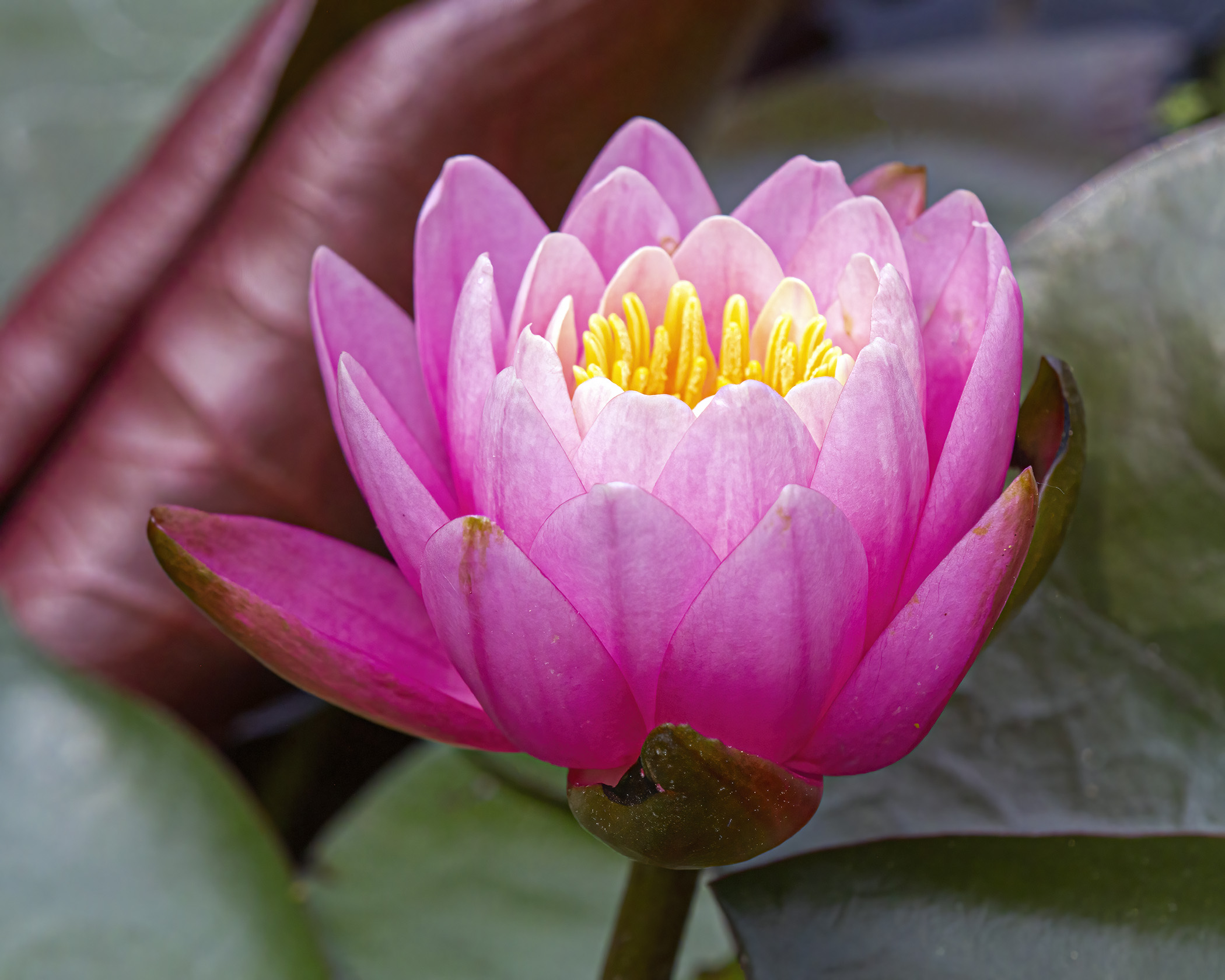
Water lilies are one of my favorite flowers and I was delighted this past Wednesday to see that several of them are already in bloom at a small man-made pond at Green Spring Gardens, including a couple of pink ones. Later in the season there will also be lotuses at this pond, but it appears to be too early for them right now. It is also a bit early for most of the dragonflies—I love to take photos of dragonflies perching on lotuses and water lilies.
Since there are so few water lilies blooming, I could not get the wider shots that remind me of the paintings of Claude Monet, one of my favorite artists, so I focused instead on capturing individual portraits of several of the flowers. It has always seemed to be that water lilies glow with an inner light and I was happy to capture a hint of that light in several of these photos.
© Michael Q. Powell. All rights reserved.
Posted in Butterflies, Flowers, Insects, Macro Photography, Nature, Photography, spring, tagged Alexandria VA, Cabbage White, Cabbage White butterfly, Canon 7D, green spring gardens, Pieris rapae, Tamron 180mm on May 26, 2023| 1 Comment »
This tiny Cabbage White butterfly (Pieris rapae) paused for only a moment on a pink flower, but I managed to get a shot of it on Wednesday at Green Spring Gardens. If you look closely, you can just make out the butterfly’s stunning green eyes.
The composition of this image is pretty simple, but I think it is effective. I would have liked to blur out the background a bit more, but even though it is cluttered, it is not distracting. I think that is because the pink and white are so bright and distinctive that they “pop” against the green background.
© Michael Q. Powell. All rights reserved.
Posted in Bees, Flowers, Gardening, Insects, Macro Photography, Nature, Photography, spring, wildlife, tagged Alexandria VA, bee, bee tongue, Canon 7D, green spring gardens, proboscis, Tamron 180mm on May 26, 2023| 3 Comments »
On Wednesday at Green Spring Gardens, a county-run historic garden just a few miles from my home, I got a really good look at this bee’s proboscis, the long, straw-like tongue that it uses to collect nectar. From my angle, it looked more like a deadly weapon. Yikes! As you can probably tell, I have switched to using my macro lens most of the time now that the warmer weather has caused more insects to reappear.
One of my friends on Facebook named this bee the “Gene Simmons” bee, because it reminded him of an iconic pose by the singer from the band KISS in which his extended tongue reached to the tip of his chin. It is hard to know if it is true, but according to urban legend, Simmons had his tongue insured for a million dollars during the 1970’s, when KISS was at its height of popularity. The popular rumor at the time that he had a cow’s tongue grafted onto his own, however, has been disproven.
© Michael Q. Powell. All rights reserved.
Posted in Flowers, Gardening, Nature, Photography, spring, Travel, tagged Canon 7D, Cypripedium acaule, iPhone 11, Lady's Slipper orchid, Orkney Springs VA, Pink Lady's Slipper, Shrine Mont, Tamron 150-600mm on May 25, 2023| 8 Comments »
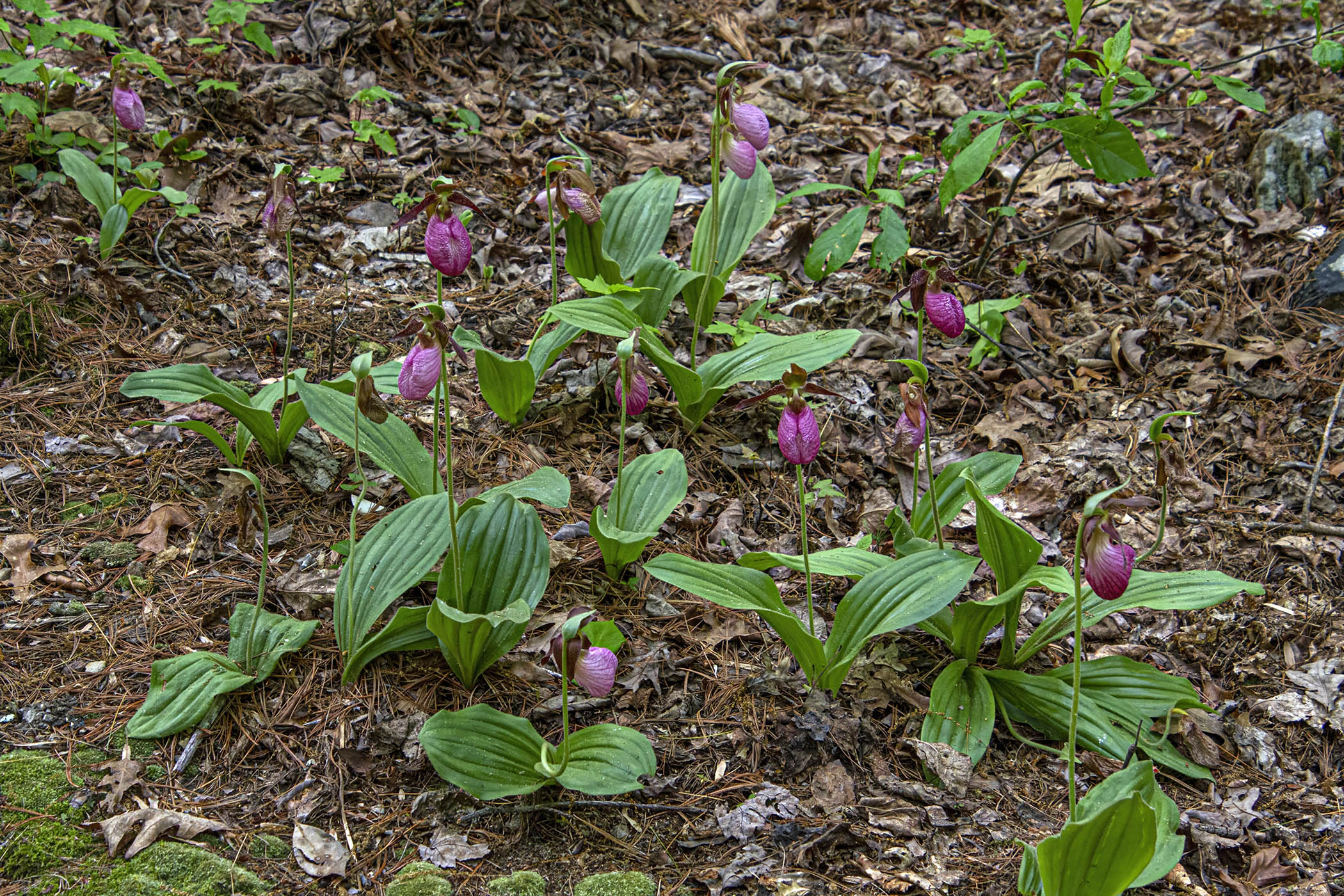
I was happy this past weekend to see that Pink Lady’s Slipper orchids (Cypripedium acaule) were still in bloom in Orkney Springs, Virginia during my recent church retreat at Shrine Mont. Last year at about the same time of the year I spotted a few of them and was successful in finding some when I searched that same general location. The retreat center is located in a mountainous and cooler area of the state, which means that the growing season for flowers is a little behind my area, where the lady’s slippers faded a few weeks ago.
At first I spotted only a few of these fragile little flowers, but eventually I came upon a large patch of almost a dozen of them, as you can see in the final photo. It was a bit of a challenge for me to compose photos of flowers, because I am so used to taking pictures of wildlife. I have to admit, though, that I enjoyed having the luxury of taking my time to compose my shots—with wildlife I often have to react quickly to capture a fleeting moment, so composition is not usually my top priority.
© Michael Q. Powell. All rights reserved.
Posted in Flowers, Nature, Photography, spring, tagged Canon 7D, Cypripedium acaule, Lady's Slipper, Lady's Slipper orchid, Pink Lady's Slipper, Prince William County VA, Tamron 180mm on May 12, 2023| 19 Comments »
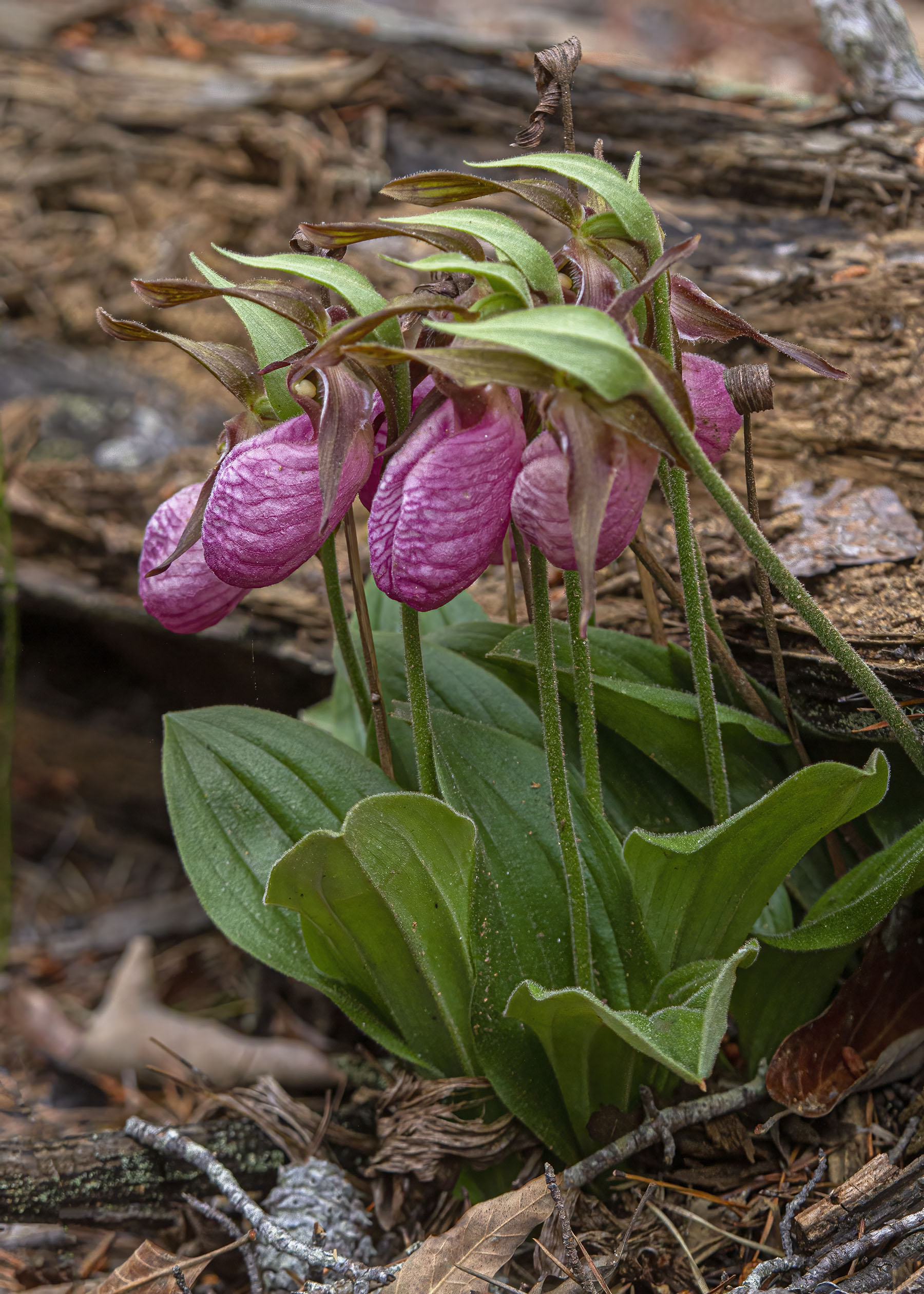
I was thrilled earlier this month to spot a dozen or so Pink Lady’s Slippers (Cypripedium acaule) as I exploring a creek in Prince William County, Virginia. Most of them were growing individually, but there were a few small clusters of these beautiful native orchids.
I have seen these flowers several times in previous years, so I had a general idea of where to look for them, but when I set out on the hike to search for them, I was not certain that my timing was right—it was a bit earlier than I had seen them in past years. I had to walk for several miles to get to this location and initially I could not find any lady’s slippers. Eventually I spotted a single one and was really happy. All of the sudden I started seeing them in multiple spots and was able to capture a variety of images.
I am fascinated by the shape of these flowers and my first instinct was to move in close and capture macro shots to highlight the details of the flower by isolating it from the background, as you can see in the first three images. When it came to groupings of flowers, though, the background could not be eliminated. That turned out to be a blessing in disguise, because I was “forced” to show the environment in which I found the flowers—I have a tendency to forget to take these kinds of shots in my zeal to zoom in. As it turns out, the last image is one of my favorites, though I must admit that the first image in my absolute favorite of these photos.
© Michael Q. Powell. All rights reserved.
Posted in Art, Flowers, Gardening, Macro Photography, Nature, Photography, spring, tagged Alexandria VA, bearded irises, Canon 60mm, Canon 7D, Cindy's garden, iris, irises, Runnymeade on April 30, 2023| 10 Comments »
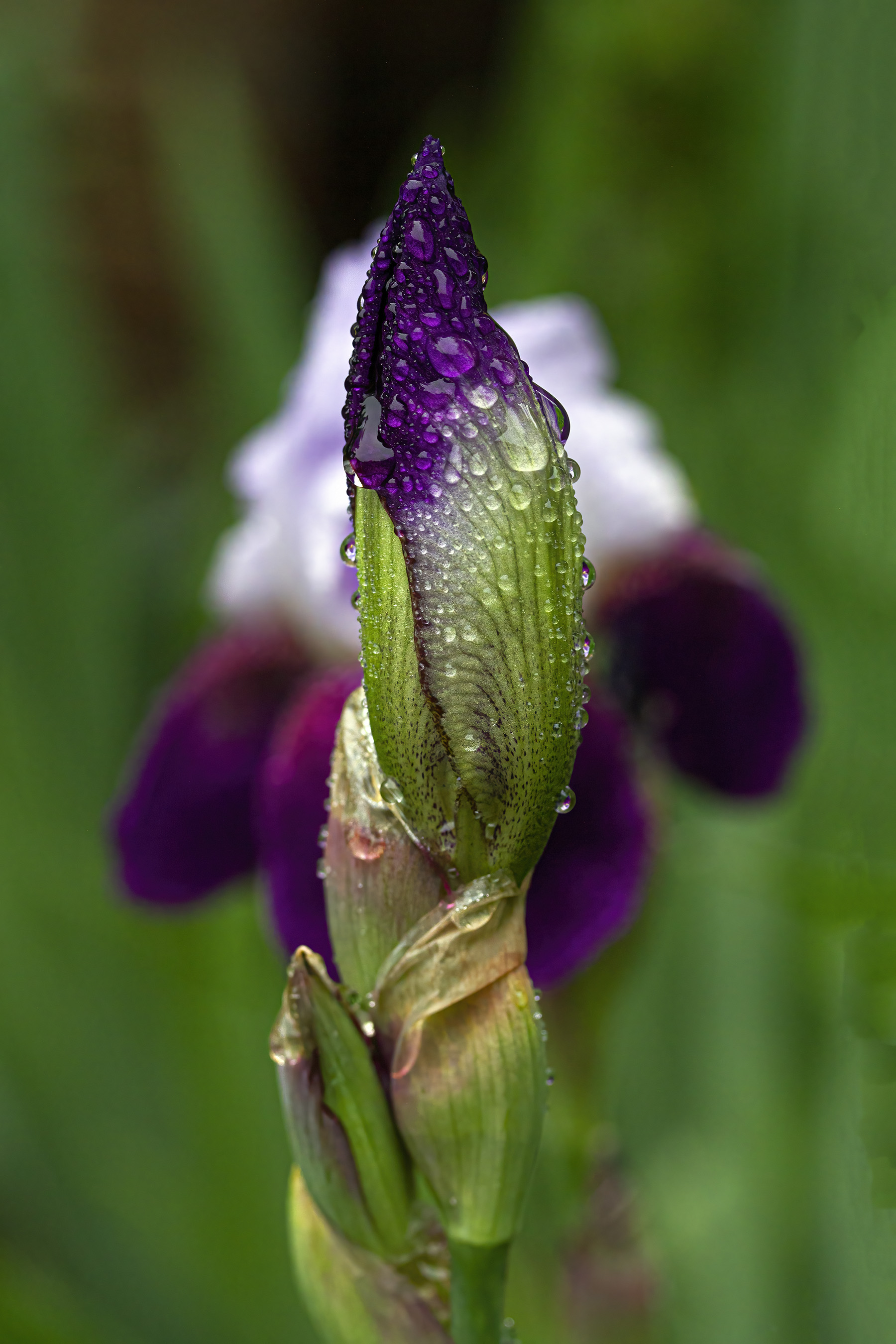
The rain has stopped for now, but some raindrops remain, sparkling like tiny jewels this morning on the bearded irises in the garden of my neighbor and fellow photographer Cindy Dyer. I tried to get creative with the framing of the first shot, with a blurred iris in the background of an unopened bud.
In the second shot, I was so close to the bearded iris that you almost can’t tell that the primary subject is a flower—I love my macro lenses. There third and fourth shows show a couple more varieties of irises that are currently in bloom in Cindy’s garden, with lots more still to come.
© Michael Q. Powell. All rights reserved.
Posted in Art, Flowers, Gardening, Photography, spring, tagged Arisaema sikokianum, Canon 7D, Jack-in-the-Pulpit, Japanese Jack-in-the-Pulpit, Meadowlark Botanical Gardens, Tamron 180mm, Vienna VA on April 22, 2023| 13 Comments »
What is the most unusual-looking flower that you have ever seen? For me, it would probably be the Japanese Jack-in-the-Pulpit (Arisaema sikokianum). There is something so alien and exotic about this plant that it stopped me in my tracks when I first spotted it last year in early May at Meadowlark Botanical Gardens in Vienna, Virginia. Check out my posting from last year if you would like more details of my first encounter with this plant species.
On Thursday I made a trip the botanical gardens with my friend and photography mentor Cindy Dyer. She was interested in photographing the tulips, peonies, and other flowers, but I made a beeline for the area where I had seen the Japanese Jack-in-the-Pulpit last year. Initially I could not find any, but I asked several of the folks working in the garden beds and one of the walked me to an area where there were two plants that were well past their prime.
As we were talking, another gardener overheard us and noted that she had spotted one further up the trail earlier in the week. I walked really slowly and looked carefully and eventually found the correct spot—there was one wilted Japanese Jack-in-the-Pulpit and one in bloom. The two photos below give you a sense of the beauty of this unusual plant. As you can probably tell, I varied the settings on my camera to give a different feel to each of the images. Although the first image provides a clearer view of the entire plant, I really like the moody feel of the second shot.
The Japanese Jack-in-the-Pulpit is closely related to the Jack-in-the-pulpit (Arisaema triphyllum), which is supposed to be common to the eastern United States, though I have never seen one. The American species looks fairly similar to the Japanese variant, but the spadix, the part that is the “Jack” in the name, is darker in color and the pitcher more closely matches the leaves. If you want to see a beautiful photo of a Jack-in-the-Pulpit growing wild in New England, check out this blog posting by fellow photographer Steve Gingold.
© Michael Q. Powell. All rights reserved.
Posted in Flowers, Gardening, Nature, Photography, spring, tagged Canon 7D, Mayapple, Podophyllum peltatum, Prince William County VA, Tamron 180mm, whimsical on April 13, 2023| 3 Comments »
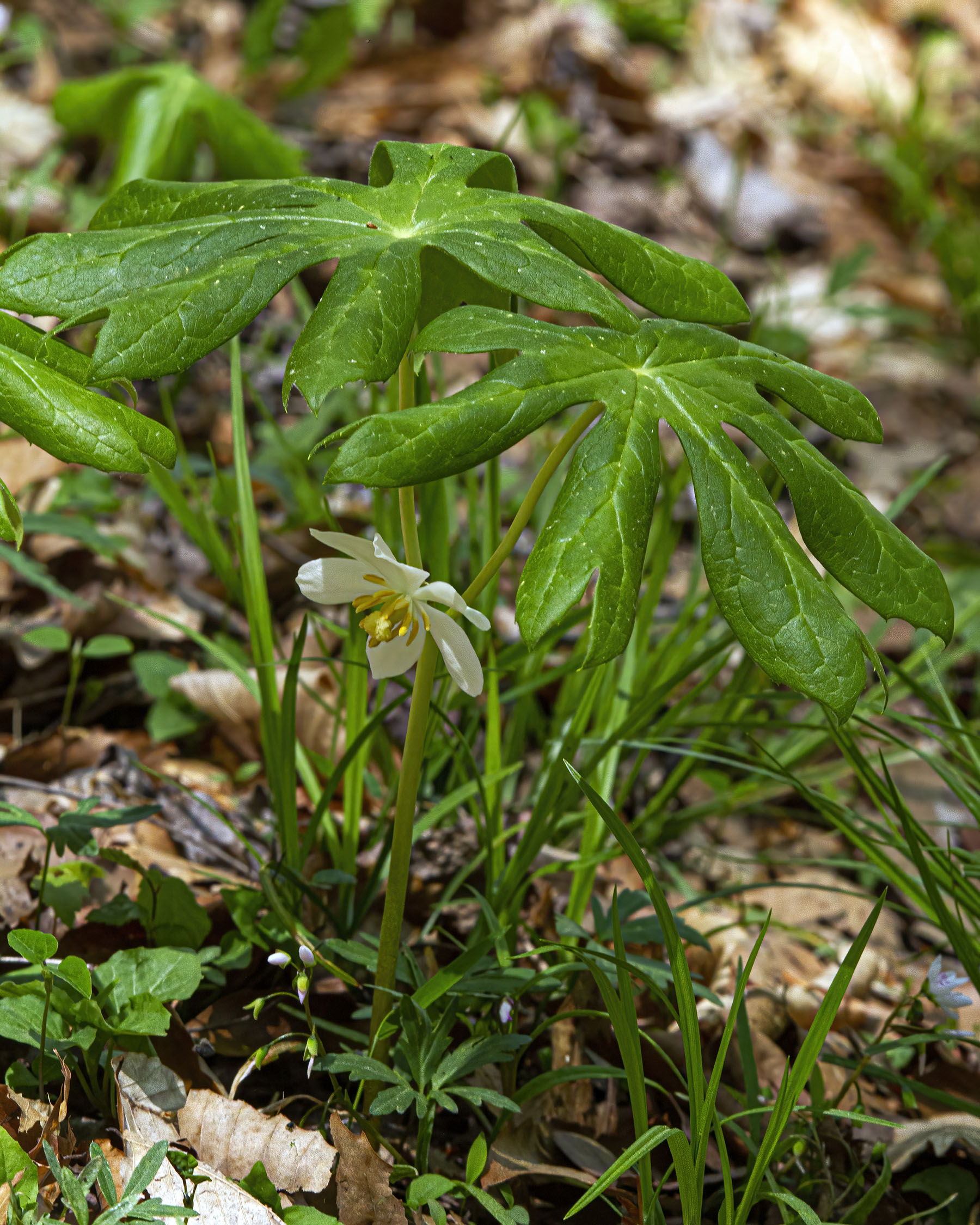
Mayapples (Podophyllum peltatum) are strange plants. Most of the time they grow in colonies and each plant has a stalk and a single umbrella-shaped leaf. Occasionally, though, the stem will branch off and there will be two leaves. In those cases, a single flower may emerge at the intersection of the two branches of the stem.
According to the Wisconsin Horticulture website, “The nodding, white to rose-colored flowers appear in April or May. Each flower is 2-3 inches wide, with 6 light green sepals, 6 to 9 waxy petals, and twice as many stamens with white filaments and yellow anthers. Although the flowers are quite showy, they are short-lived and usually hidden by the leaves. The flowers are fragrant, variously described as pleasant to putrid and are visited by bumblebees and other long-tongued bees.”
Yesterday I spotted a flowering Mayapple plant as I was exploring the area surrounding a creek in Prince William County, Virginia. I have been seeing Mayapple plants for the last couple of weeks as I have been searching for dragonflies, but this is the first one that I have seen in bloom this spring. You have to get pretty low to the ground to spot the flowers, and it was a bit of a challenge getting this shot.
There is something whimsical about a flower that has its own dual umbrella to provide it with shade—I can’t help but smile whenever I spot a Mayapple in bloom.
© Michael Q. Powell. All rights reserved.
Posted in Flowers, Insects, Macro Photography, Nature, Photography, spring, tagged Claytonia virginica, cuckoo bee, genus Nomada, Kleptoparasitic bees, nomad bee, Prince William County VA, Spring Beauty, Virginia Spring Beauty on April 10, 2023| 1 Comment »
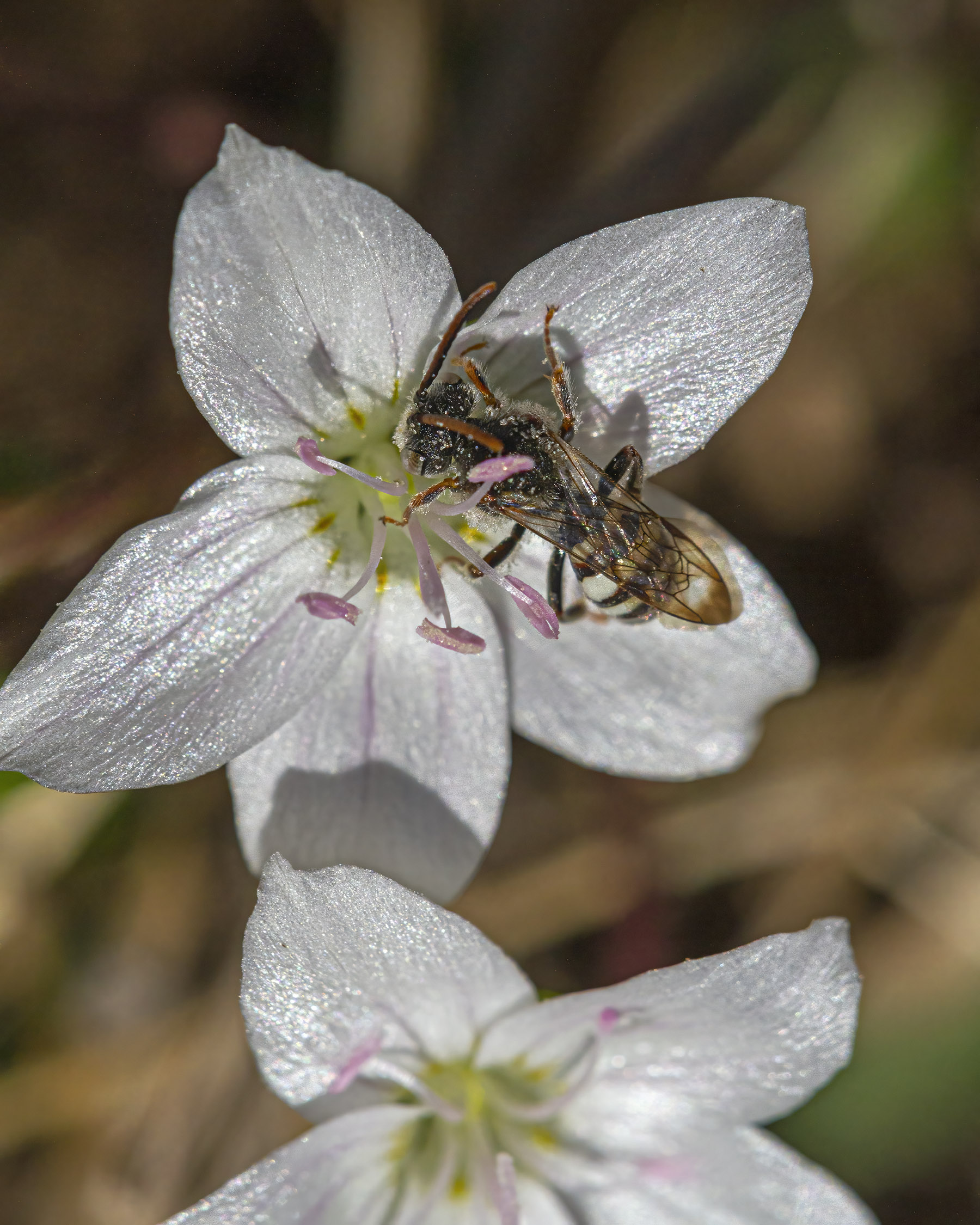
Early spring wildflowers, like the Virginia Spring Beauty (Claytonia virginica), are an important source of food for a host of small bees and other insects. Many insects gather pollen from these flowers and in doing so help to pollinate the plants.
Some species of bees, though, lack scopa (the pollen-collecting hairs) and do not collect pollen to feed their offspring. The genus Nomada, according to Wikipedia, is the largest genus of kleptoparasitic bees sometimes referred to as “cuckoo bees.” Kleptoparasitic bees are so named because they enter the nests of a host and lay eggs there, stealing resources that the host has already collected.
It is a little hard to see the body of the bee in the photo below, but if you look closely you can see its striped abdomen, which is wasp-like in appearance. I was not sure of the type of bee, so I posted it to BugGuide, a useful resource for insect identification, and one of the experts there identified the bee as belonging to the genus Nomada.
© Michael Q. Powell. All rights reserved.
Posted in Art, Flowers, Gardening, Nature, Photography, spring, tagged Alexandria VA, Canon 60mm, Canon 7D, Cindy's garden, Easter 2023, iris, Runnymeade, tulip on April 9, 2023| 6 Comments »
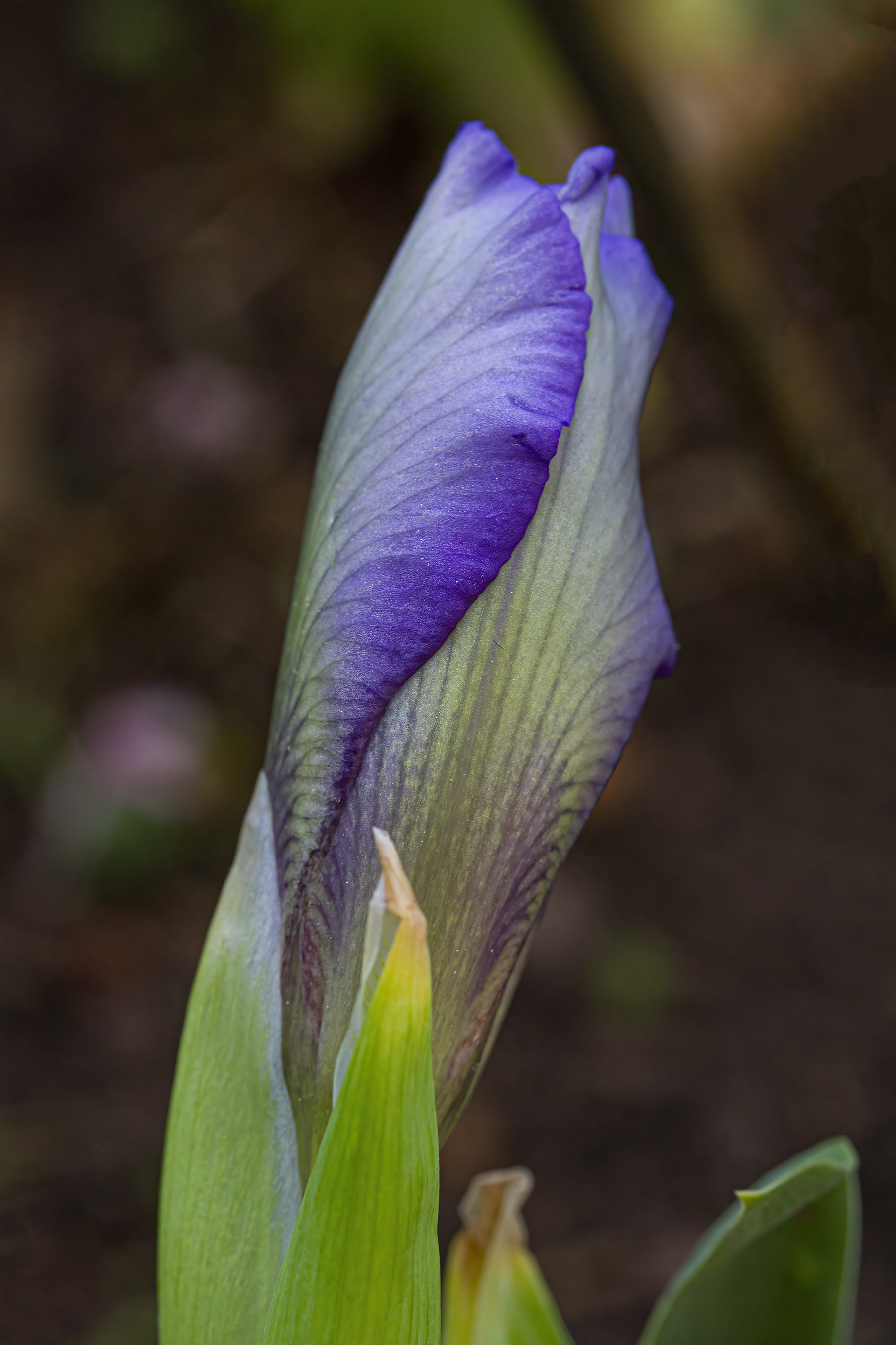
Yesterday I stopped by the garden of my neighbor and fellow photographer Cindy Dyer. Her early-season tulips were well beyond their prime, but more tulips are getting ready to bloom. I was a little surprised to see that some of her irises are already starting to bloom too. I love to photograph flowers when they are at this stage of growth—they are already beautiful and give hints of the additional beauty that is to come.
Happy Easter to all of you who are celebrating this holy day. Christ is risen!
© Michael Q. Powell. All rights reserved.
Posted in Art, Flowers, Gardening, Macro Photography, Nature, spring, tagged after the rain, Canon 60mm, Canon 7D, Cindy's garden, raindrops, raindrops on tulips, Sound of Music, tulips on April 3, 2023| 1 Comment »
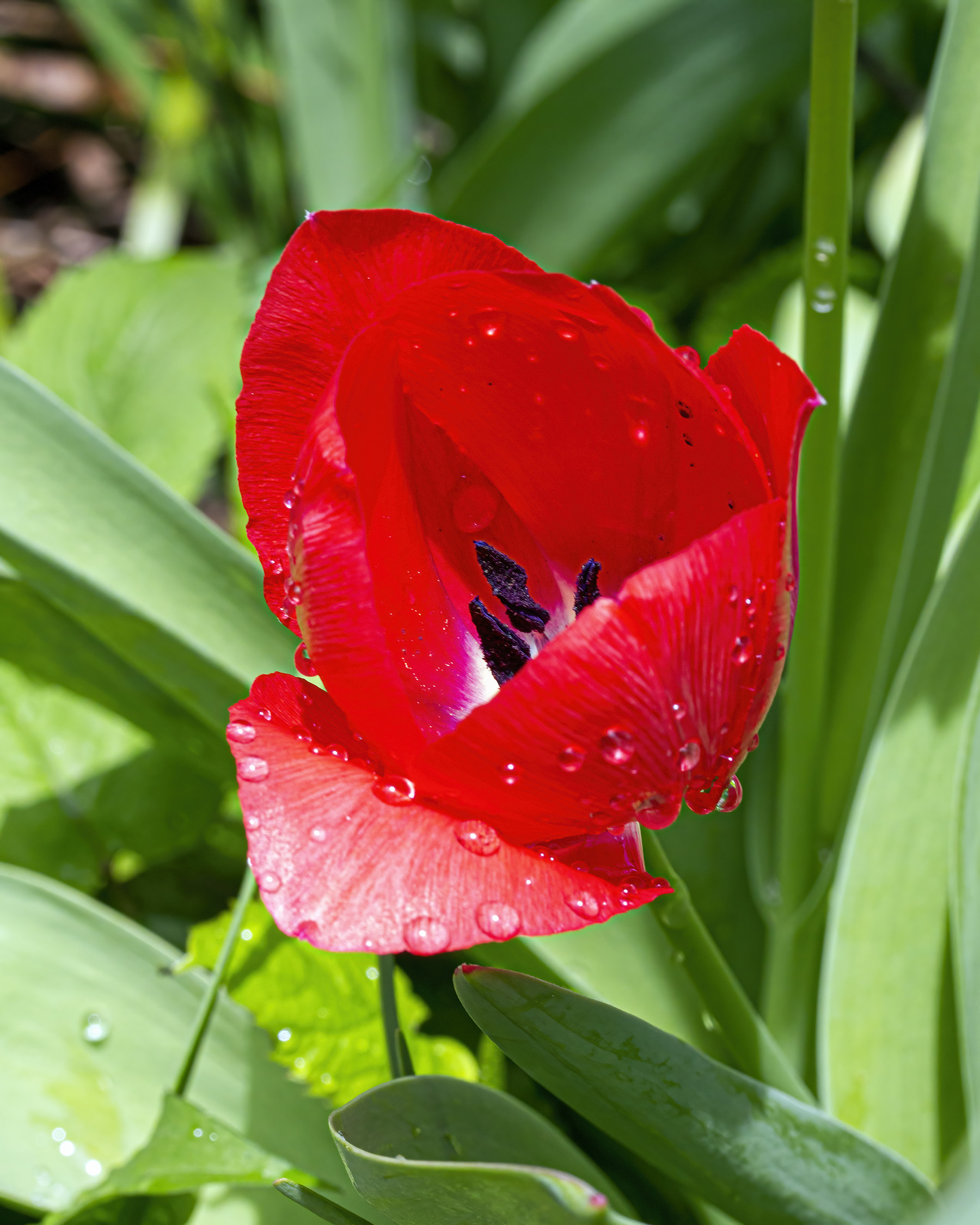
Raindrops were glistening in the sunlight after an April shower on Saturday, enhancing the beauty of these red tulips in the garden of my dear friend and photography mentor Cindy Dyer.
One of my favorite movies when I was growing up was “The Sound of Music” and I can still remember the words of many of the songs from the movie. In one delightful scene, Julie Andrews tells the children that when she is unhappy, she tries to think of nice things and begins a song with the words, “raindrops on roses and whiskers on kittens…these are a few of my favorite things.”
Raindrops seem almost magical, whether they are on roses, on tulips, or on any other vegetation. If you are not familiar with the song “My Favorite Things,” here is a link to a YouTube clip of that wonderful scene from “The Sound of Music.”
© Michael Q. Powell. All rights reserved.
Posted in Flowers, Gardening, Macro Photography, Photography, spring, tagged Alexandria VA, Cindy Dyer, Cindy's garden, Grape hyacinth, Lady Jane tulip, Muscari, Runnymeade, tulip, Tulipa clusiana var. 'Lady Jane' on March 28, 2023| 4 Comments »
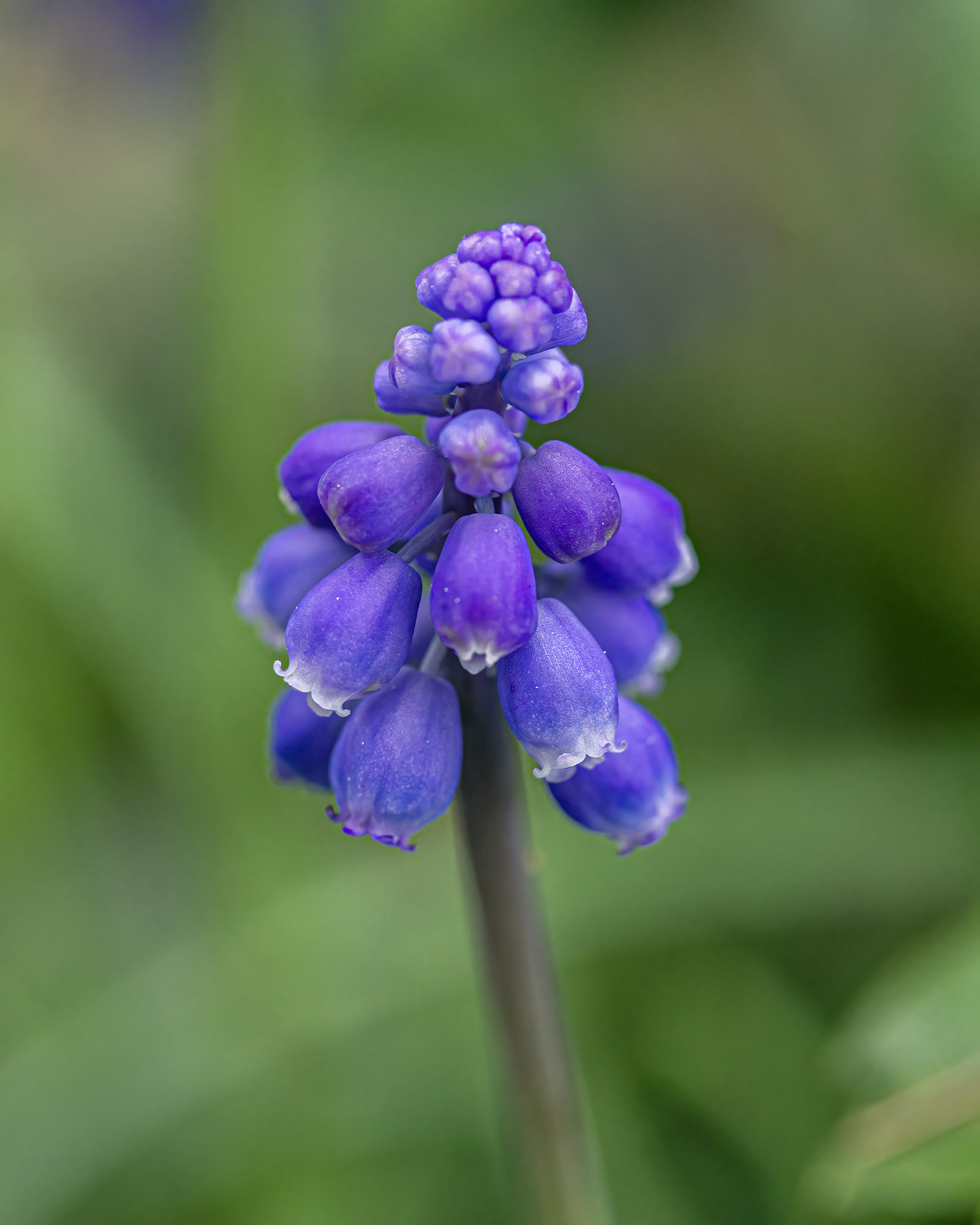
Flowers are starting to bloom in the garden of my dear friend and fellow photographer Cindy Dyer. Yesterday I photographed several varieties of tulips and some cute little grape hyacinths.
As many of you know, I do not have my own garden. However, my photography mentor Cindy Dyer lives nearby and she has amazing gardens in her front, side, and back yards. She generally plants flowers that she knows are photogenic and I know that during the growing season that there will almost always be something to photograph.
Earlier this spring, I was able to photograph a few crocuses and a tiny red tulip, but now a whole lot more flowers are starting to appear. The multi-colored tulip in the first photo, I believe, is a variety known as the Lady Jane tulip (Tulipa clusiana var. ‘Lady Jane’). In the past, this tulip stood much taller—this one was growing close to the ground.
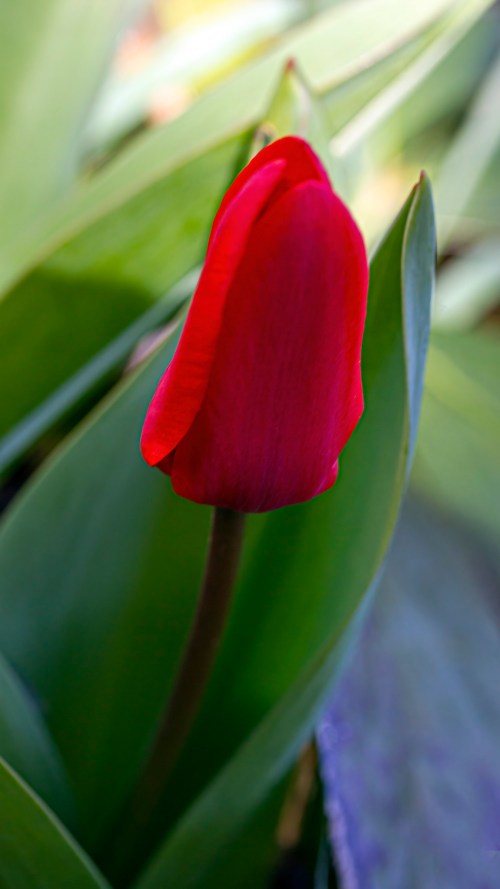
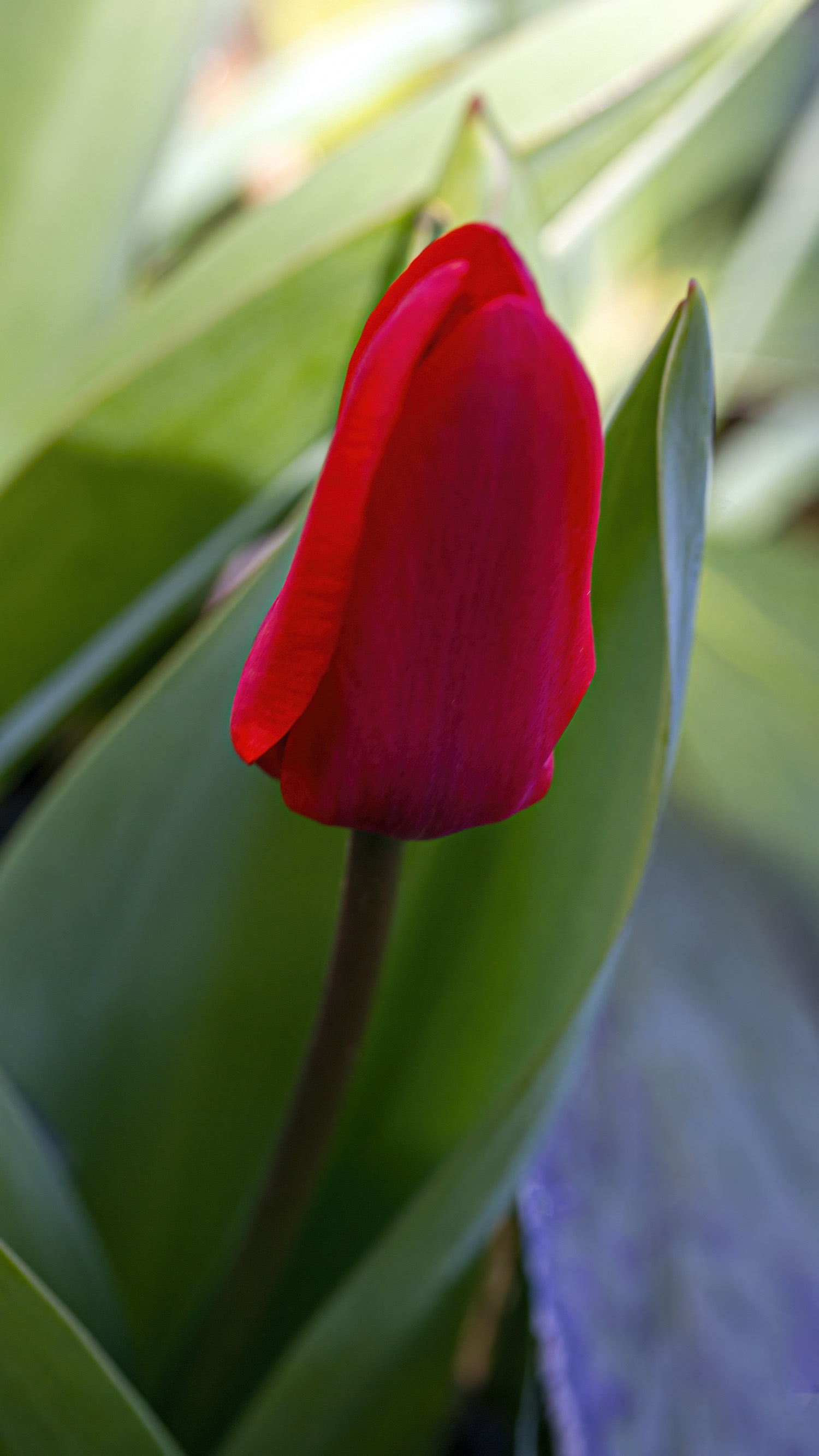
The red tulip in the second photo is a more traditional variety. I deliberately set my camera to have a shallow depth of field to blur out the background that at this time of the year is somewhat patchy and cluttered. As I processed the photos on my computer I noticed that I had inadvertently captured a shot of my first insect of the season, what Cindy likes to call a “bonus bug.” The weather yesterday was cloudy, so I did not have to worry about harsh shadows, which meant that the colors seemed especially vibrant and saturated.
The final photo shows a tiny grape hyacinth (g. Muscari), one of many that have popped up in Cindy’s garden. These colorful little flowers grow really close to the ground, so I was sprawled out a bit to get this low-angle shot that isolated the flower from the background.
© Michael Q. Powell. All rights reserved.
Posted in Flowers, Gardening, Nature, Photography, spring, tagged Alexandria VA, Canon 60mm, Canon 7D, Cindy's garden, daffodils, Leucojum vernum, Snowflake, Spring Snowflake, tulip on March 16, 2023| 4 Comments »
Although the weather the past few days has been cold and windy, it is beginning to look a lot like spring. Some trees have already started to blossom and pops of color are appearing in the front yards of many of my neighbors. In Washington D.C., the cherry blossoms are forecast to reach their peak flowering phase next week.
Yesterday I took my camera with me during a short walk through my neighborhood. Rather than toting the long telephoto zoom lens that I use to photograph birds, I carried the much lighter 60mm macro lens. When I am photographing flowers, I usually try to get up close to them in order to capture the maximum amount of detail.
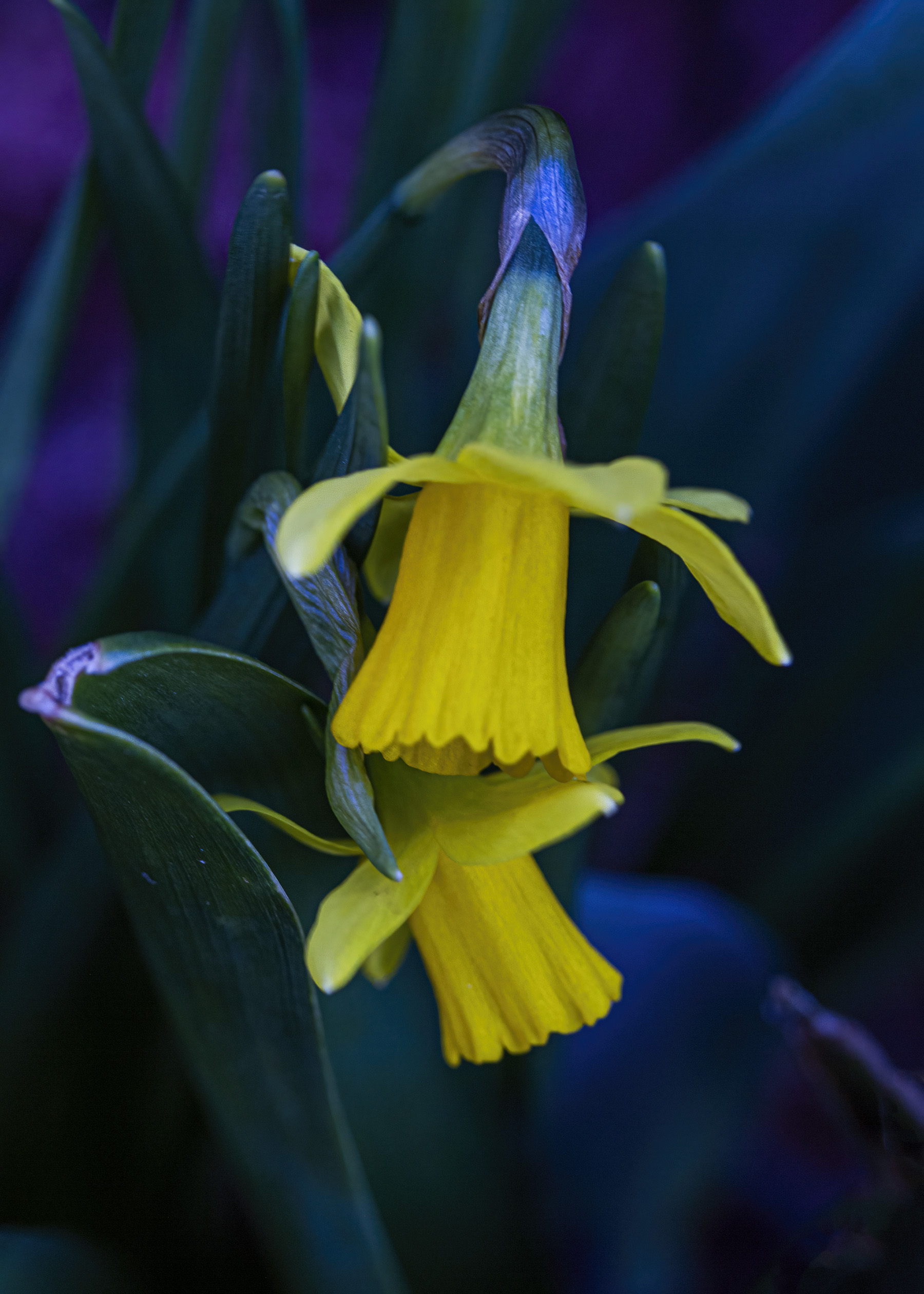
I spotted some small daffodils adjacent to the steps of my next-door neighbor and stopped to photograph them. Daffodils are probably the most prominent flowers at this moment and I have seen them in multiple sizes and shades of yellow, including some two-toned ones.
I next visited the front garden of fellow photographer Cindy Dyer. I was delighted to spot a few Spring Snowflakes (Leucojum vernum) in bloom. I used to have trouble distinguishing between snowdrop and snowflake flowers, but now I know that the ones with the green spots on each petal are snowflakes.
The last flower that I photographed in Cindy’s garden was a bright red tulip. This tulip was small and was not as showy as some of the other varieties that will appear in the coming weeks, but it seemed especially beautiful. It was the only tulip in bloom and did not have to share the stage with any of its siblings.
Those of you who see my photos regularly will definitely notice that these are not my “normal” shots. It is good, I think, to switch things up periodically and point my camera at some different subjects.
© Michael Q. Powell. All rights reserved.
Posted in Flowers, Gardening, Macro Photography, Nature, Photography, spring, tagged Alexandria VA, Canon 60mm macro, Canon 7D, Cindy's garden, crocus, crocuses in bloom, Runnymeade, signs of spring on March 6, 2023| 12 Comments »
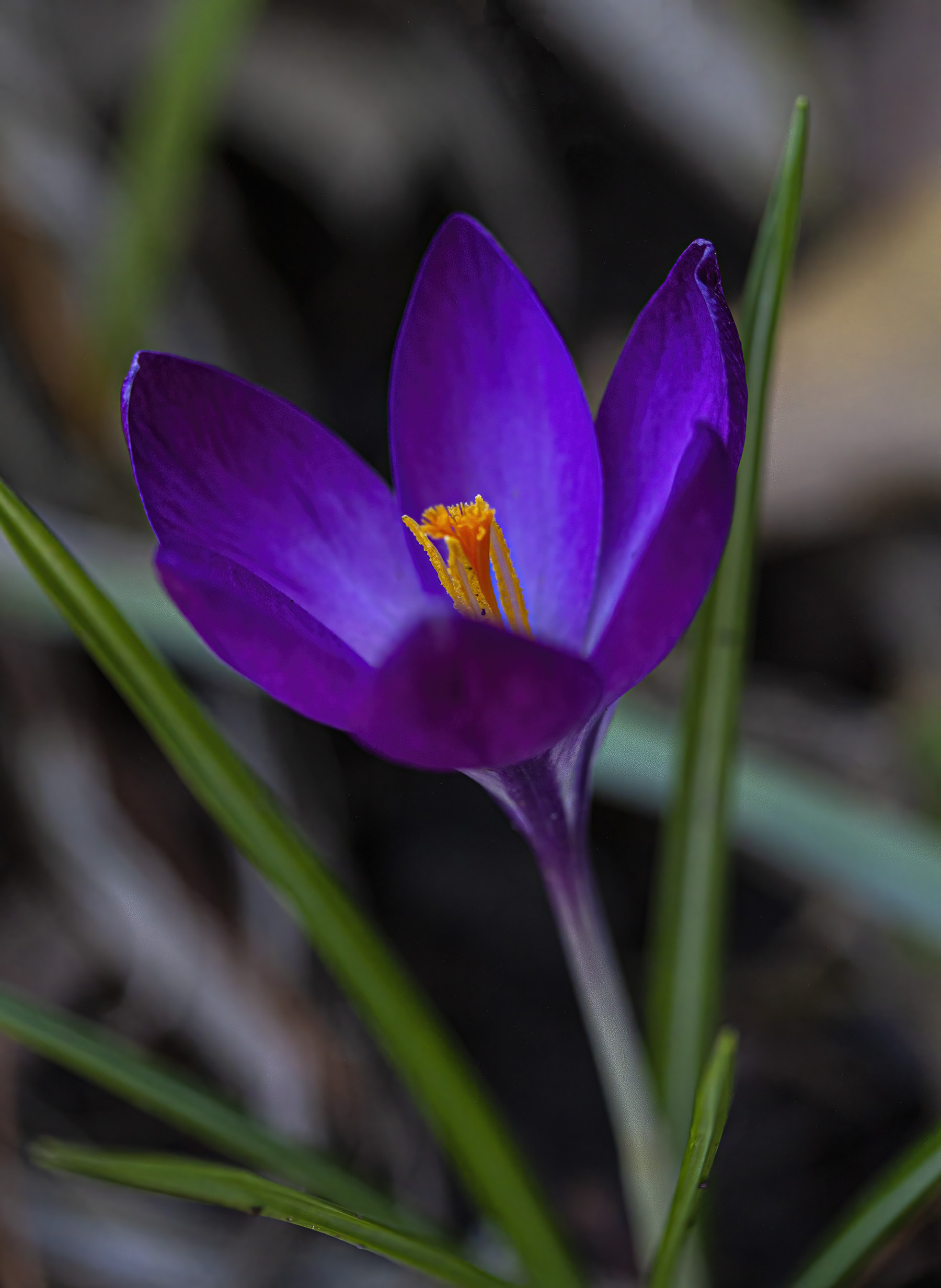
Spring is almost here. This past weekend I spotted the first spring flowers—blooming in the garden of my friend and fellow photographer Cindy Dyer. Longtime readers of this blog are well aware that I am not a gardener, but often visit the Cindy’s garden during the flower season—Cindy deliberately plants flowers that are fun to photograph.
The first crocuses that I spotted were some purplish ones that in Cindy’s front garden. These are the type of crocuses that I encounter most frequently and I associate them with the arrival of spring. When I posted a photo of one on Facebook, Cindy alerted me to the fact that several yellow ones were blooming in her backyard garden.
I don’t recall ever having seem yellow crocuses before, so I was delighted to see them. I was really awkward trying to get a shot of them, so I resorted to getting a relatively close-up shot with my 60mm macro lens.
I have also noticed clusters of cheery yellow daffodils in bloom throughout my neighborhood. Our weather is still variable, but spring is on the way. On a side note, next Sunday we begin Daylight Savings Time, yet another sign of the changing seasons. If I am not mistaken, Europeans do not change their clocks until the last Sunday in March, which is 26 March in 2023.
© Michael Q. Powell. All rights reserved.
Posted in Flowers, Gardening, Nature, Photography, Winter, tagged Alexandria VA, Canon 7D, g. Galanthus, green spring gardens, snowdrop, Tamron 18-400mm on January 26, 2023| 8 Comments »
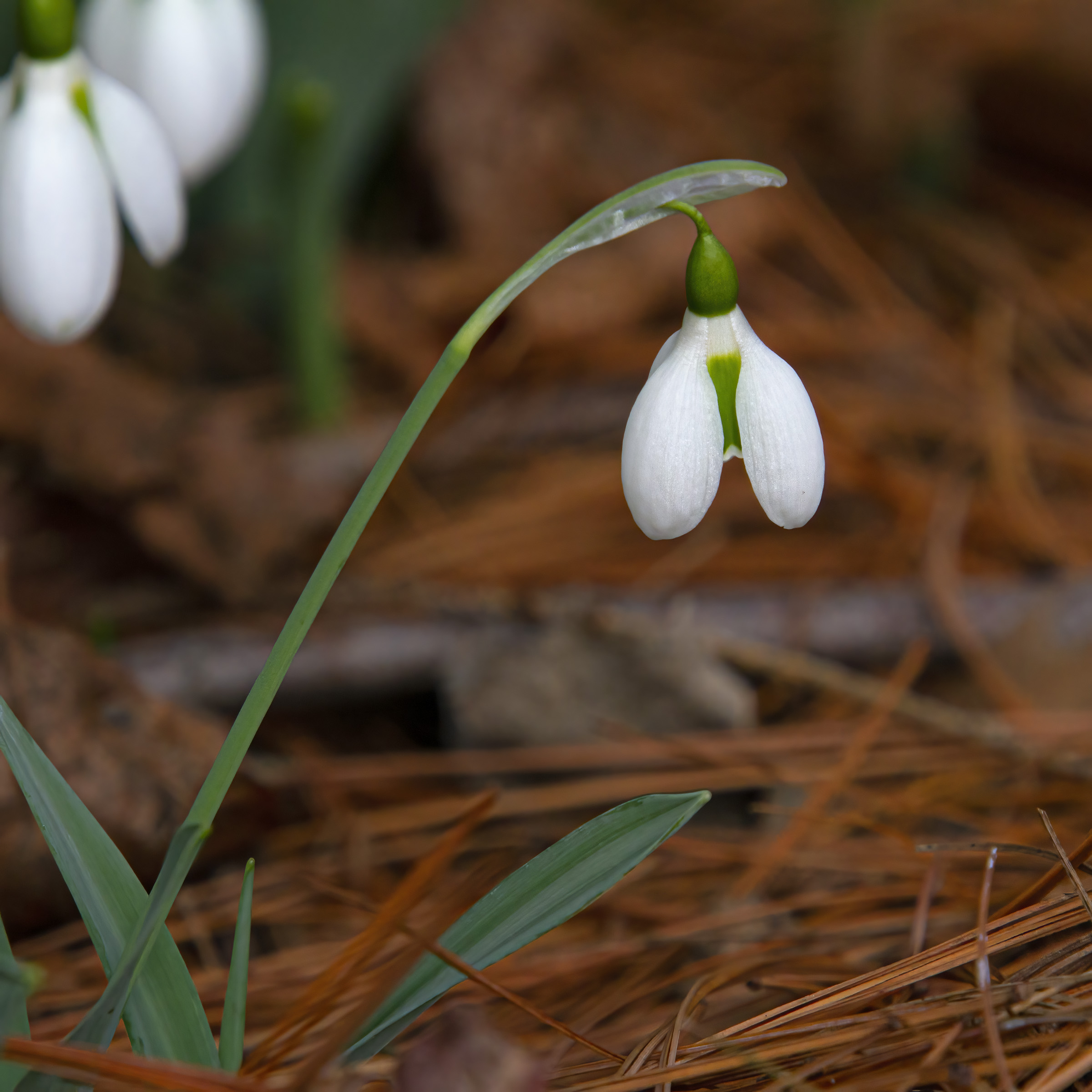
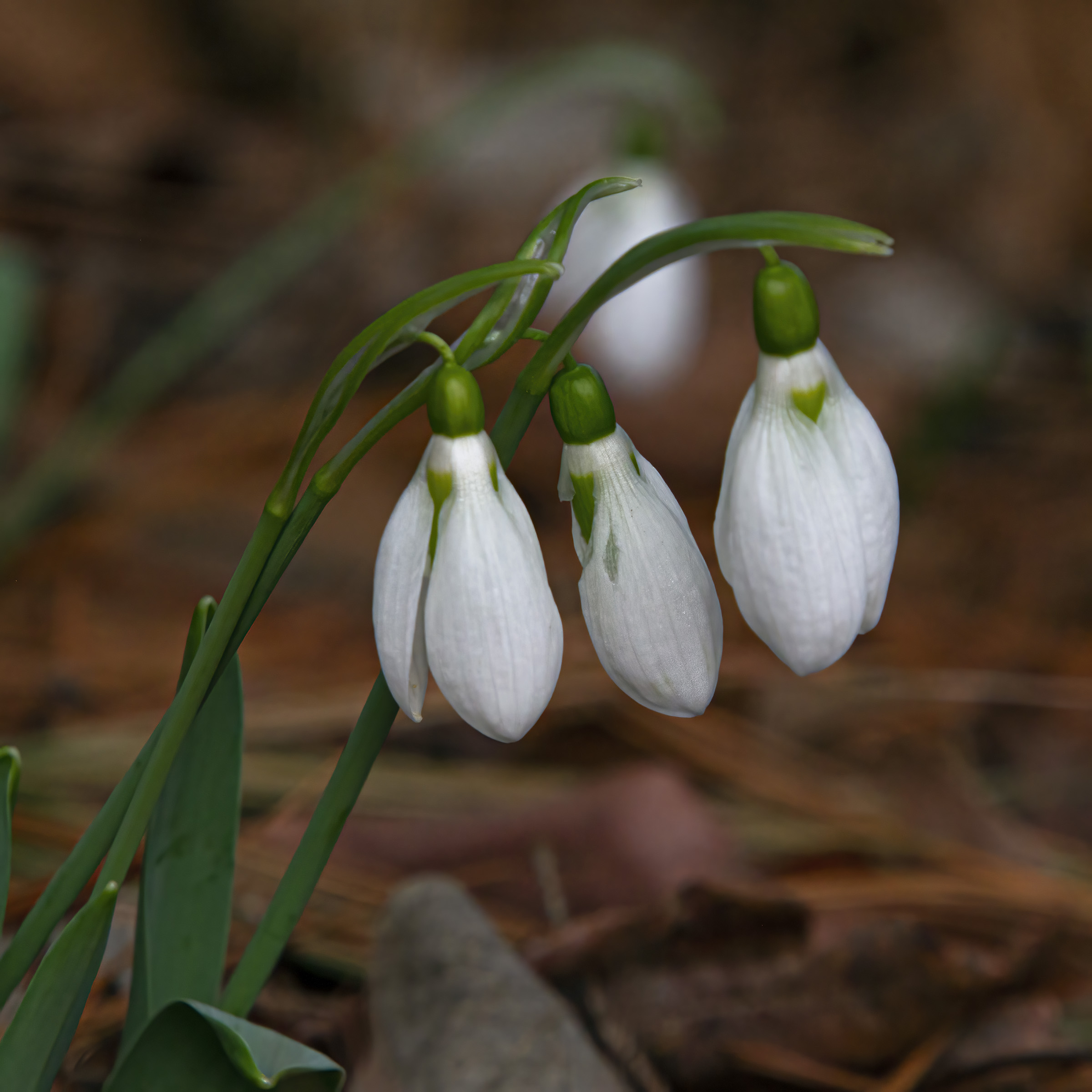
Although it may seem a little strange to make a trip to a garden to photograph flowers, I set off for Green Spring Gardens, a county-run historic garden last Friday. I suspected that snowdrops (g. Galanthus) would be in bloom and I was not disappointed. I spotted several large clusters of these small white flowers scattered throughout the garden beds.
Some years you can find snowdrops peeking out of a covering of snow, but we have not yet had any snow this winter. Instead I found the snowdrops poking out of the reddish-brown ground cover of fallen leaves and pine needles. I did not have my macro lens with me, but managed to get some decent close-up shots with my Tamron 18-400mm lens as well as an overview of one of the patches of snowdrops that I encountered.
When spring comes, I hope to see the somewhat similar-looking snowflake flower (g. Leucojum). The way that I usually tell them apart is to look at the individual petals. The snowdrop petals are pure white, but the petal of each of the snowflake flowers has a little green dot.
© Michael Q. Powell. All rights reserved.
Posted in Autumn, Birds, Flowers, Nature, Photography, wildlife, tagged American Goldfinch, Canon 7D, goldfinch, Occoquan Bay National Wildlife Refuge, Spinus tristis, Tamron 150-600mm, Woodbridge VA on October 26, 2022| 7 Comments »
I haven’t seen an American Goldfinch (Spinus tristis) for quite some time, so I was happy when I spotted this one last Friday at Occoquan Bay National Wildlife Refuge. The vegetation was mostly dried-out, but the goldfinch had no problem finding lots of little seeds. I love the way that the dull colors of the goldfinch were a match for those of the seed heads that surrounded the little bird.
© Michael Q. Powell. All rights reserved.
Posted in Art, Flowers, Insects, Macro Photography, Nature, Photography, Summer, tagged Canon 7D, Hemaris thysbe, Hummingbird Clearwing Moth, hummingbird moth, Occoquan Bay National Wildlife Refuge, Tamron 18-400mm, thistle, Woodbridge VA on September 1, 2022| 13 Comments »
As I approached a patch of thistle in bloom on Tuesday, I was looking carefully to see if there were any butterflies feeding on the flowers. Suddenly I noticed a flash of bright red and realized immediately that it was a Hummingbird Clearwing Moth (Hemaris thysbe).
Hummingbird Clearwing moths, which actually do resemble hummingbirds as they dart among the flowers, hovering periodically to such nectar, are not exactly rare where I live, but I tend to see them only a few times a year. Fortunately I reacted quickly enough to capture this image, because the moth flew out of sight after it had finished feeding on this flower.
For shots like this, the wing position is really important and I was thrilled that I was able to capture the wings fully extended, which highlights the transparent portions of the wing responsible the common name of this species. The details of the moth and the thistle are pretty sharp and the background is blurred enough that it is not a distraction—I like this shot a lot.
© Michael Q. Powell. All rights reserved.