Feeds:
Posts
Comments

Archive for the ‘Autumn’ Category


Read Full Post »

The heavy clouds and intermittent rain on Monday morning at Huntley Meadows Park limited the light and muted the colors, but in my eyes the beauty of this Eastern Bluebird (Sialia sialis) was in no way diminished.

The bluebird perched in a marshy area with lots of trees, so it was tough for me to get a clear shot. I was happy to find at last a gap between two lichen-covered trees that let me capture this image. A blue sky would have been nice, but I had to settle for the almost pure white sky that you see in the shot.

Eastern Bluebird

© Michael Q. Powell. All rights reserved.


Read Full Post »

It was dark and overcast yesterday morning at Huntley Meadows Park and became more eerie when a Turkey Vulture (Cathartes aura) started to circle lower and lower around me. Eventually it landed on the broken tip of a nearby tree.

After closing its wings initially, the vulture suddenly opened them wide and left them open for an extended period of time, perhaps to let them dry—it had been raining earlier in the morning. The wing position reminded me of the Double-crested Cormorants that I occasionally see with wings extended to dry them after an underwater dive.

Turkey Vulture

Turkey Vulture

Turkey Vulture

© Michael Q. Powell. All rights reserved.

Read Full Post »

A small flock of wild turkeys yesterday at Occoquan Bay National Wildlife Refuge moved off of the trail and into the woods as I approached. Peering through the vegetation a few seconds later, I was able to catch a glimpse of one of them that may have though it was well hidden.

It would be hard for me to say that Wild Turkeys (Meleagris gallopavo) are beautiful, but they sure do have a distinctive look.

wild turkey

© Michael Q. Powell. All rights reserved.

Read Full Post »

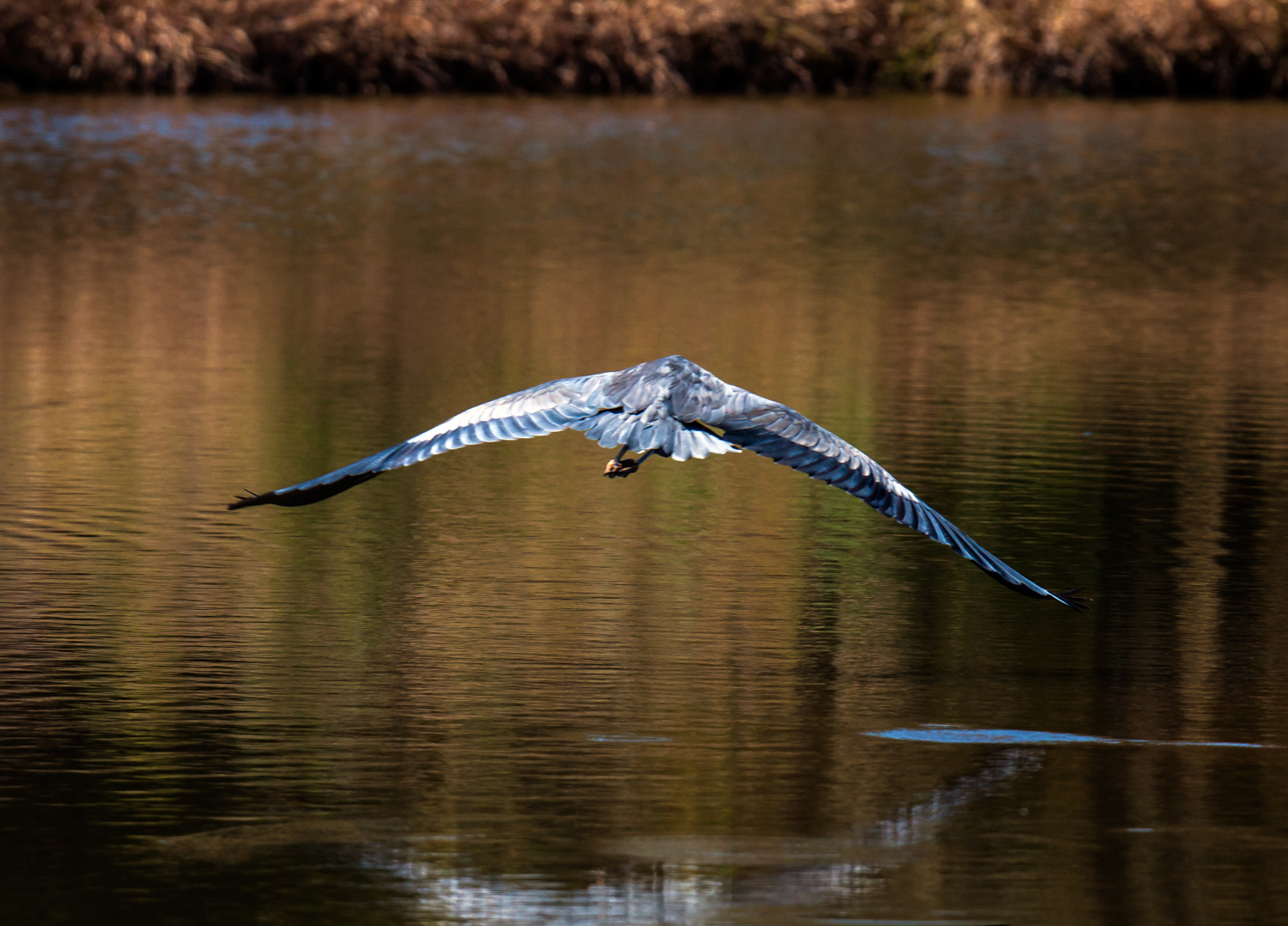
This Great Blue Heron (Ardea herodias) looked to me like a stealth aircraft as it flew low over the water from one side of a small pond to the other on Monday at Occoquan Bay National Wildlife Refuge.

 Great Blue Heron
© Michael Q. Powell. All rights reserved.

Read Full Post »

Autumn seems to be the season for migration—it’s hard to miss the flocks of honking geese that fill the skies and mysterious warblers taunt me with their songs from hidden haunts behind the foliage as they rest before continuing their journeys. Did you know that some species of dragonflies are also migratory?

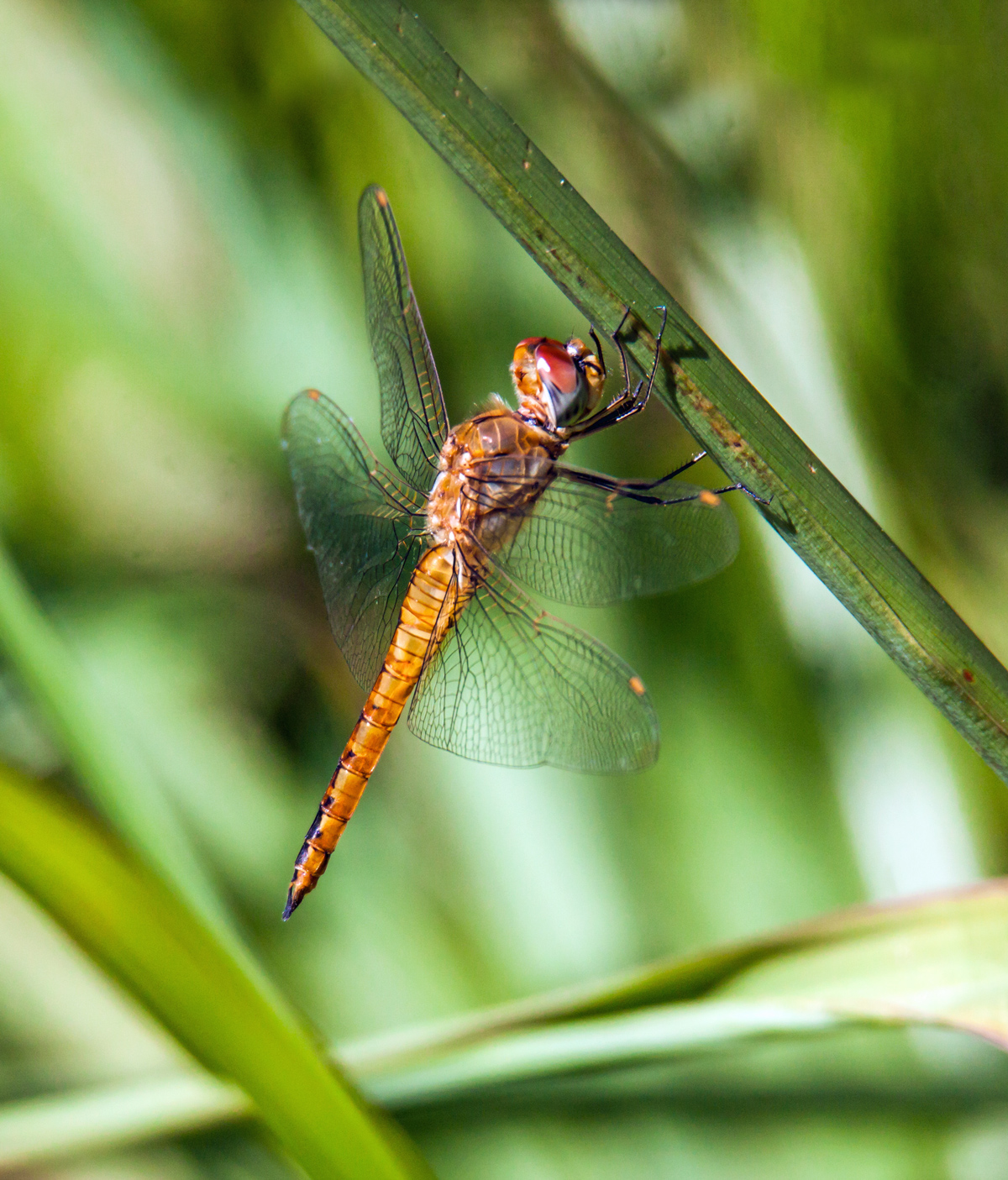
Most of the migratory species unsurprisingly spend a lot of time in the air. They are visible as they pass through our area, but are tough to photograph. This past weekend I manage to get shots of two of the migratory species at Occoquan Bay National Wildlife Refuge. The first one is a Wandering Glider (Pantala flavescens) and the second is a Black Saddlebags (Tramea lacerata). What really stands out to me is the perfect condition of their wings, in contrast to the wings of the remaining resident dragonflies that are often tattered and torn this late in the season.

Wandering Glider

Black Saddlebags

© Michael Q. Powell. All rights reserved.

Read Full Post »

As October begins, I renew my search for red dragonflies. Autumn is quite naturally the season when Autumn Meadowhawks (Sympetrum vicinum) appear along with their more gaudily-colored brethren, the Blue-faced Meadowhawks (Sympetrum ambiguum). Both of these species have bright red bodies that should be easy to spot, but they like to perch low to the ground and sometimes even on fallen leaves, so you really have to pay attention.

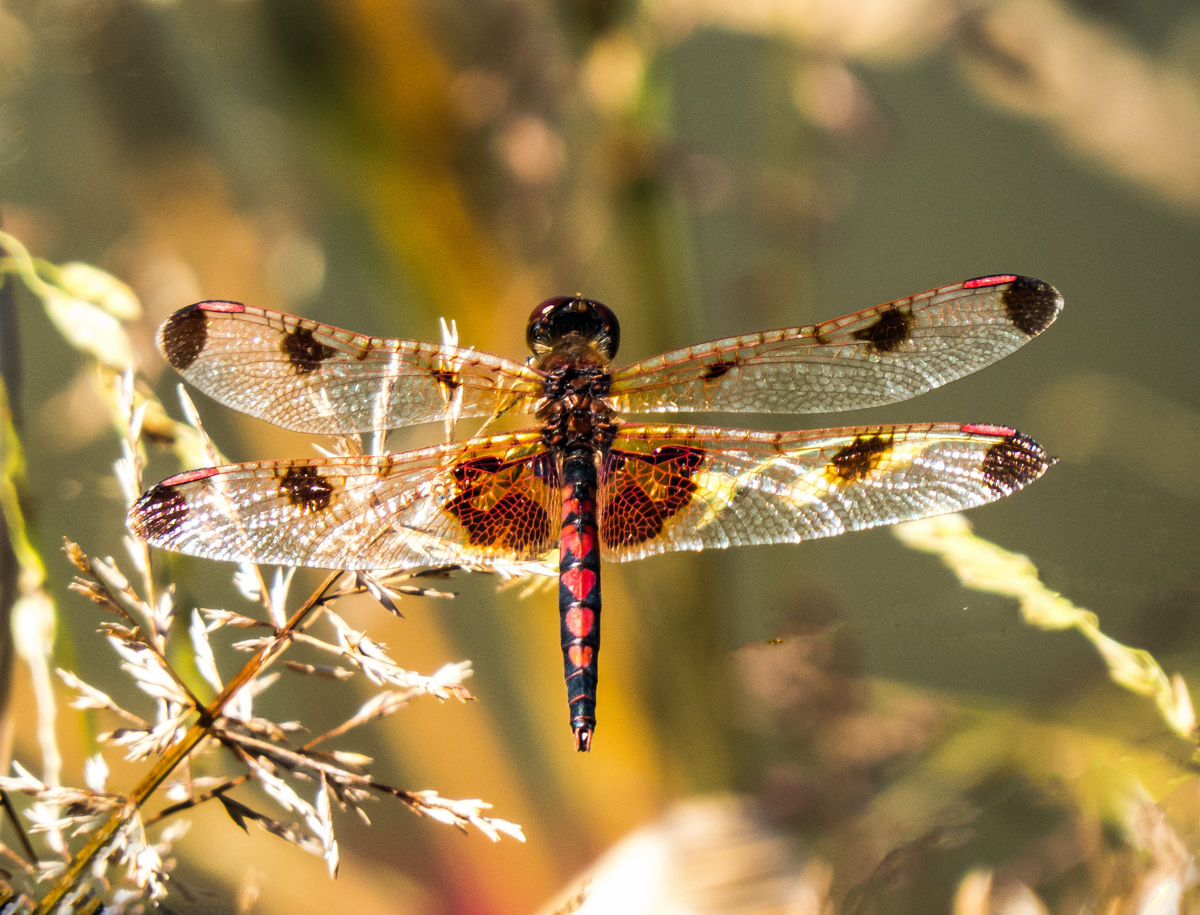
I was a bit shocked on Monday to see some other small red dragonflies—at least three male Calico Pennant dragonflies (Celithemis elisa) were active at a small pond at Occoquan Bay National Wildlife Refuge. Calico Pennants are generally a summer species and I have featured them a couple of times earlier this year in this blog. According to the Dragonflies of Northern Virginia website, their peak flight time is June to July and their late date is 23 September (I saw the one below on 2 October).

There are still other active dragonflies, but over time their numbers will continue to drop. Autumn Meadowhawks, though, usually stay with us into December and, if I remember correctly, occasionally even into January. I’ll be continuing my October hunt for red dragonflies into November and beyond.

Calico Pennant

Calico Pennant on 2 October at Occoquan Bay National Wildlife Refuge


Blue-faced Meadowhawk

Blue-faced Meadowhawk at Occoquan Bay National Wildlife Refuge


Autumn Meadowhawk

Autumn Meadowhawk at Occoquan Bay National Wildlife Refuge

© Michael Q. Powell. All rights reserved.

Read Full Post »

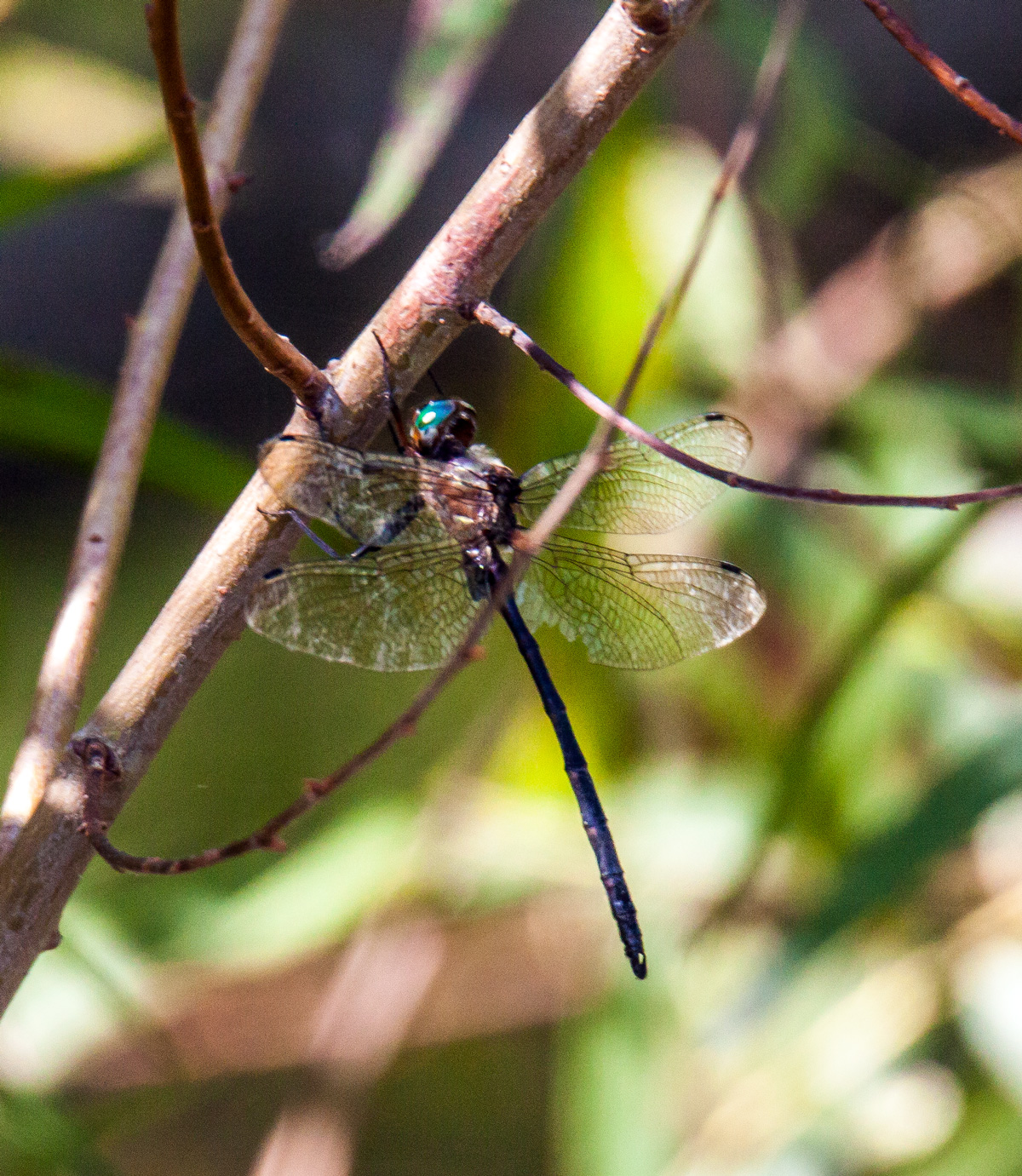
As we move inexorably deeper into autumn, more and more flowers and leaves are fading and falling. Many of the familiar dragonflies of the summer also are disappearing. I was heartened yesterday at Occoquan Bay National Wildlife Refuge to spot this Fine-lined Emerald dragonfly (Somatochlora filosa), a survivor that is tattered and torn, but is still flying in October.

I mentioned in a recent blog posting that I am experimenting with carrying two cameras with me when I go out shooting. The first photo was shot with my Canon SX50, a super-zoom camera and the second was taken with my Canon 50D DSLR. The depth of field is so shallow with the DSLR, normally shooting close to the 600mm end of my zoom lens, that it seems more ideal for shots like the second image where the subject is flatter. The SX50 gives me more depth of field and I love the way that it allowed me to capture the background as circles of color.

Fine-lined Emerald

Fine-lined Emerald

© Michael Q. Powell. All rights reserved.

Read Full Post »

The early morning light was soft and beautiful, allowing me to capture these images of a young Turkey Vulture (Cathartes aura) on Saturday at Occoquan Bay National Wildlife Refuge. I am not sure I have ever seen a vulture look so handsome (and maybe even a little cute in the second photo).

Turkey Vulture

Turkey Vulture

© Michael Q. Powell. All rights reserved.

Read Full Post »

This Black Saddlebags dragonfly (Tramea lacerata) chose a beautiful perch and posed briefly for a couple of autumn portraits on Friday at Occoquan Bay National Wildlife Refuge. Black Saddlebags usually spend a lot of time soaring high in the air, so it is a special joy for me when one lands and I am able to get some decent shots. I have never before managed to get a good look at their eyes and absolutely love the two-toned color combination.

black saddlebags

black saddlebags

© Michael Q. Powell. All rights reserved.

Read Full Post »

I am becoming convinced that dragonflies are rulebreakers. Yesterday I noted that dragonflies do not always follow the rules and can sometimes be found in habitats where they are not supposed to be. Apparently they also do not know how to follow a calendar and can sometimes be found earlier or later than the rules and records indicate they will be present.

This past Monday I was back at Occoquan Bay National Wildlife Refuge, searching again for the rare Fine-lined Emerald dragonflies that I had seen there previously. When I saw a dragonfly with bright green eyes perch in a distant tree, I naturally assumed that it was a Fine-lined Emerald. It is getting to be late in the dragonfly season, so many other species are no longer present. The dragonfly never got any closer, so I had to be content with my long-distance shots.

When I pulled up the images on my computer, something didn’t look quite right. The shape of the body seemed a little different from the Fine-lined Emeralds that I had seen previously and the tips of the abdomen (the “terminal appendages”) also looked different. I consulted with some dragonfly experts and they identified the dragonfly to me as a Mocha Emerald dragonfly (Somatochlora linearis). I have seen this species before, but in a totally different environment and much earlier in the year, so I had mentally removed it from consideration.

Now I don’t feel too bad about missing the identification, because the two species are part of the same genus Somatochlora, also known as Striped Emeralds. The website Dragonflies of Northern Virginia indicates that the flight records for the Mocha Emerald are from 16 June to 16 September—I guess that window can now be extended a little.

I am including two photos of the Mocha Emerald that may look almost identical, but were shot with two very different cameras. The settings for the cameras were almost the same with an aperture of f/7.1 and a shutter speed of around 1/400 of a second and both were handheld. The first shot was with my Canon 50D DSLR and Tamron 150-600mm lens. Taking into account the crop factor of the camera, the field of view was equivalent to 960mm. The second shot was with my Canon SX50 with a field of view that was equivalent to 1200mm.

The DSLR was a lot heavier and a lot more expensive, but produced a more out-of-focus background. The Canon SX50 was cheaper, lighter, and brought me in closer to the subject. It’s clear to me that equipment did not make a huge difference in this case and that there are advantages and disadvantages to each system. I am increasingly drawn to the idea of carrying both with me for the moment and continuing to experiment with them.

The other big lesson that I continue to learn is to expect the unexpected. As I am discovering, subjects may pop up in places and at times when you least expect them.

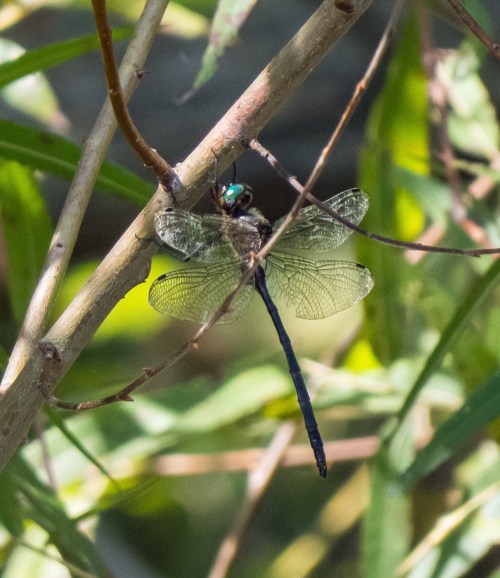
Mocha Emerald

Mocha Emerald

© Michael Q. Powell. All rights reserved.

Read Full Post »

It is often said that springtime is a time for love, but so apparently is autumn, especially if you are a Blue-faced Meadowhawk dragonfly (Sympetrum ambiguum). This species appears most often during the latter part of the summer and in early autumn, so springtime is not really an option for them.

I spotted this couple in flagrante delicto during a recent trip to Huntley Meadows Park. It is hard to get a real sense of scale from this photo, so you will have to trust me that these brightly-colored dragonflies are really small, about an inch and a half in length (38 mm).

Blue-faced Meadowhawk

© Michael Q. Powell. All rights reserved.

Read Full Post »

The red leaves surrounding this Common Yellowthroat (Geothlypis trichas) that I spotted in a distant tree recently at Jackson Miles Abbot Wetland Refuge serve as a reminder that the autumn has begun. Leaves are starting to fall from many of the trees and some of them are starting to change colors, though the colors never seen so bright and vibrant as the trees in my native New England.

Initially I was not going to post this photo, because I was not able to get a detailed shot of the bird, but the more I look at the image, the more I like the environmental surroundings of the beautiful little bird.

Common Yellowthroat

© Michael Q. Powell. All rights reserved.

Read Full Post »

As soon as I saw the flash of yellow, I knew that these little birds were almost certainly warblers and not sparrows. When it comes to most warbler species, that’s the full extent of my identification skills. Most years when the warblers come through our area in the spring and in the fall, I can hear the warblers in the trees, but I rarely see them.

I initially thought that the bird in the first shot was a Yellow-rumped Warbler, but it turns out that my knowledge of bird anatomy is lacking. The area that is yellow on this bird is the undertail area and not the rump, which is more on the top. So what are these birds? A helpful birder in a Facebook forum identified them to me as Palm Warblers. (Setophaga palmarum).

With a little luck, I’ll get some more shots of warblers in the coming weeks and will undoubtedly have to rely on others to assist me in identifying them, though I need no help in appreciating their beauty.

Palm Warbler

Palm Warbler

Palm Warbler

© Michael Q. Powell. All rights reserved.

Read Full Post »

Some photographers like to stay in one spot and let the action come to them, but most of the time I prefer to keep on the move, opportunistically scanning for subjects to shoot. There is one place, however, at Huntley Meadows Park that I will sometimes visit and simply sit for extended periods of time. It is a beaver pond in a secluded area of the park and I feel a sense of peace surround me whenever I am there.

This past Monday I was sitting on a log at that spot and was struck  by the beauty of the elements of the scene in front of me. I tried to capture some of those elements of the landscape with they 150-600mm zoom lens that was on my camera at that moment. I like the way that the telephoto lens provides an intimate landscape view, unlike the wide-angle view that I typically associate with landscapes.

telephoto landscape

telephoto landscape

telephoto landscape

© Michael Q. Powell. All rights reserved.

Read Full Post »

The subdued colors of the female Northern Cardinal (Cardinalis cardinalis) seem to be perfectly suited for the late autumn, when the muted shades of the fallen leaves seem to dominate the landscape.

female Northern Cardinal

© Michael Q. Powell. All rights reserved.

Read Full Post »

This energetic little Downy woodpecker (Picoides pubescens) seemed to be defying gravity on Monday as it leaned over backwards and pecked away at a small tree growing out of the water at Huntley Meadows Park.

Downy Woodpecker

© Michael Q. Powell. All rights reserved.

Read Full Post »
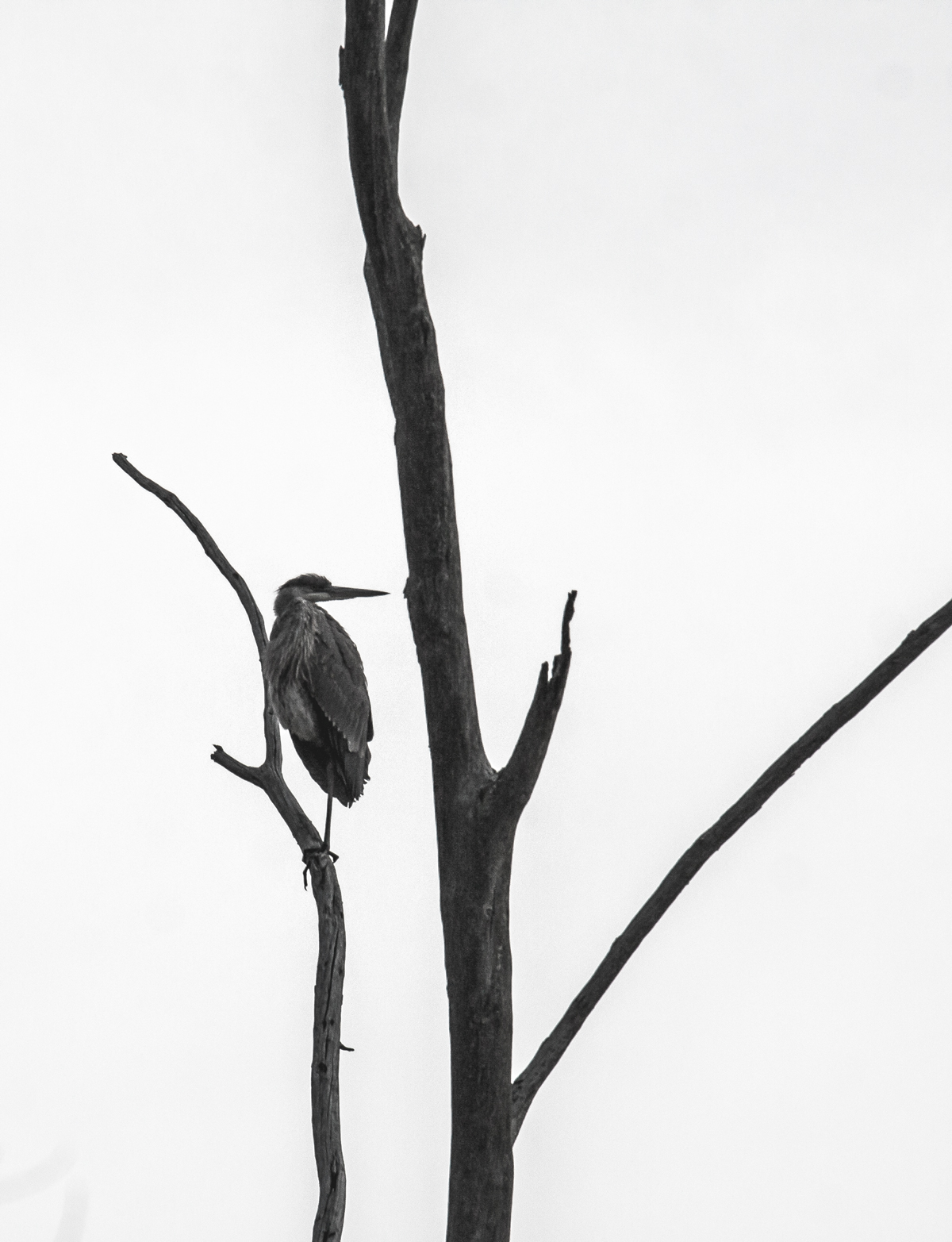
Generally when I see a Great Blue Heron (Ardea herodias) in a tree, it is roosting in a protected location and napping. Early one morning this past weekend at Huntley Meadows Park, however, I spotted this alert heron perched on an exposed dead tree, looking like it was playing the role of a sentinel.

I initially caught sight of the heron from a distance and followed a path in the treeline that let me get almost underneath the heron for some shots. The sky was overcast and there was not much light, causing the background to appear white and the images to be almost monochromatic.

Great Blue Heron


Great Blue Heron

Great Blue Heron

© Michael Q. Powell. All rights reserved.

Read Full Post »
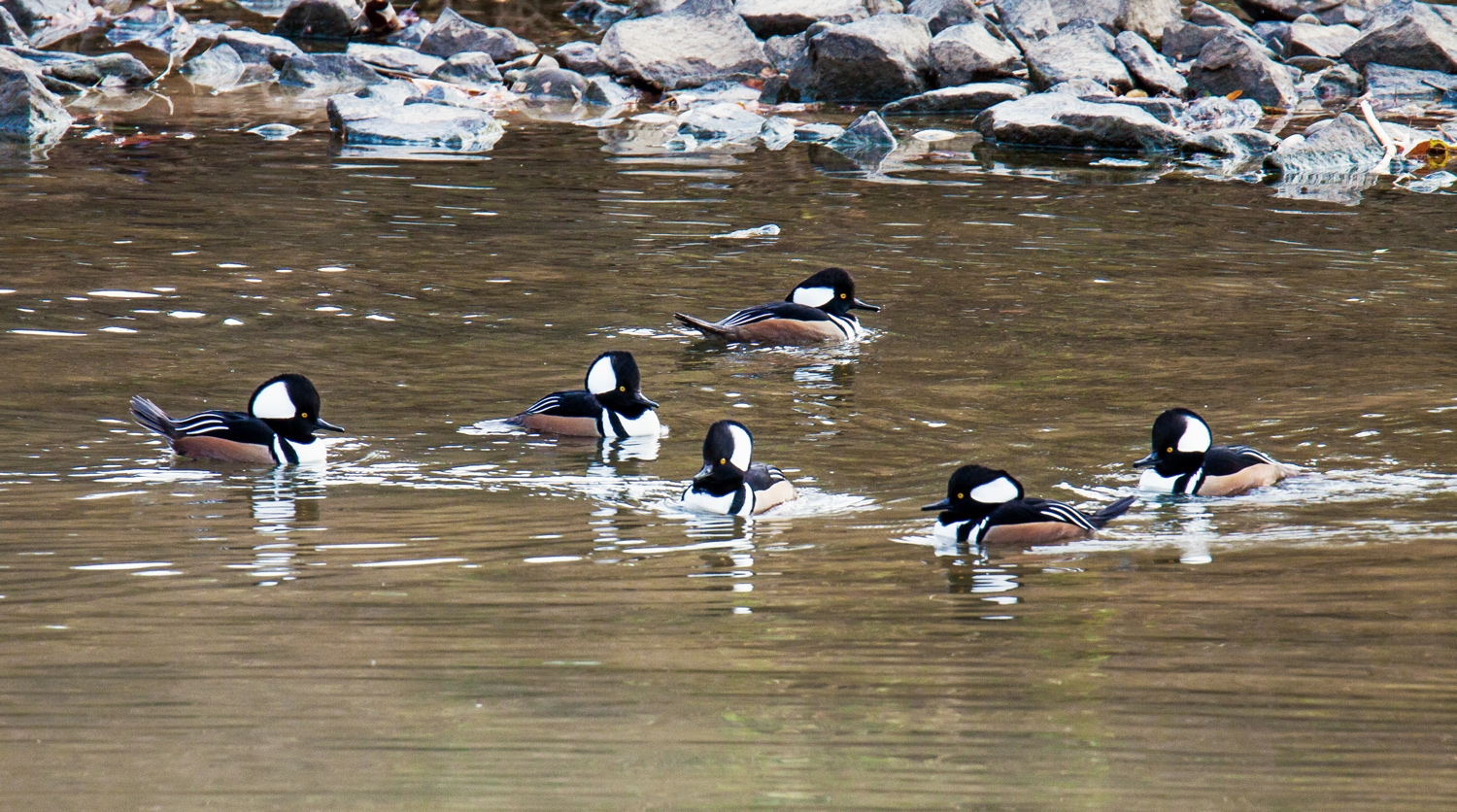
It’s Hoodie season—hooded sweatshirts for me and lots of Hooded Merganser ducks (Lophodytes cucullatus) at Cameron Run in Alexandria, Virginia.

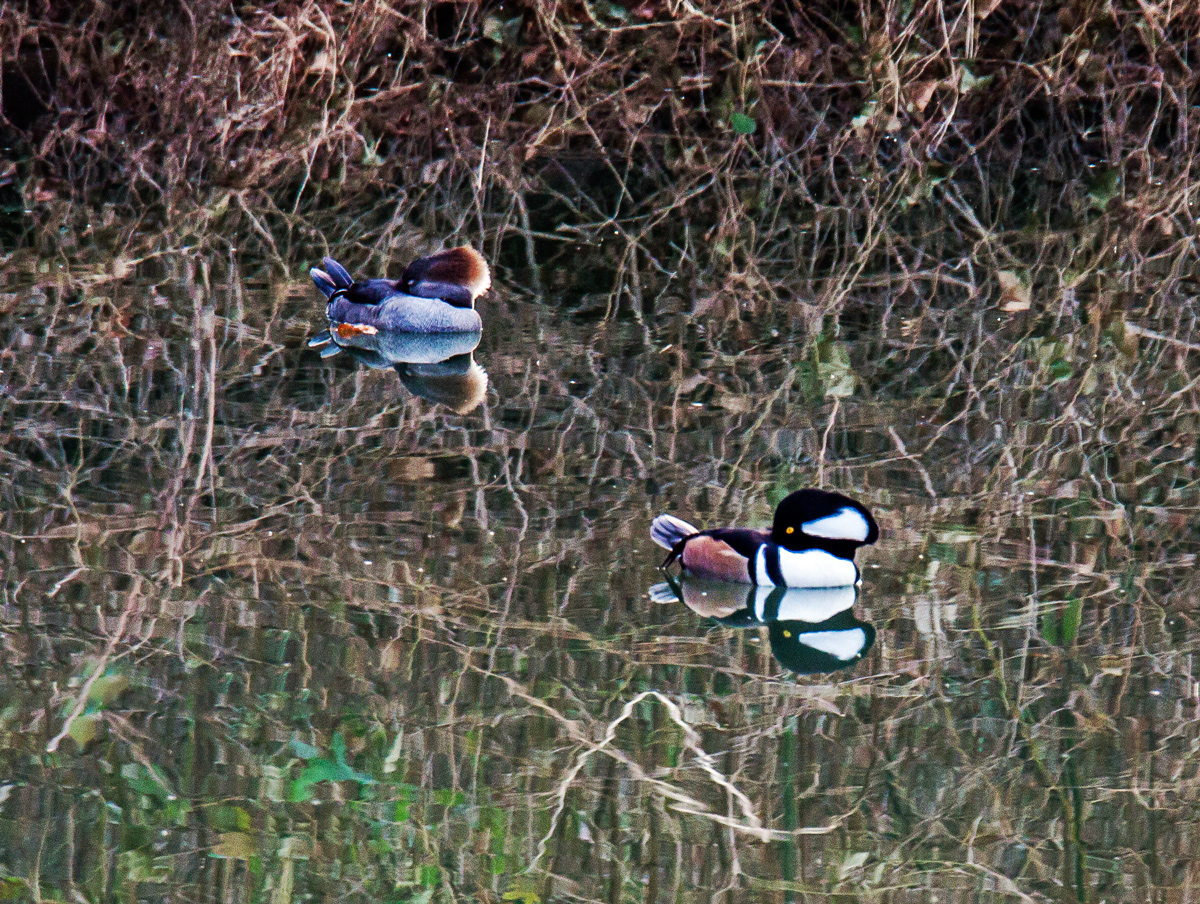
Yesterday I spotted this group of six males swimming around and hanging out together. Most of the time during the year when I see Hooded Mergansers, it is a couple or a mother with ducklings, so it was unusual for me to see such a large grouping. There were a few females too, but they seemed to ignore the males and for the most part kept to themselves.

Hooded Mergansers

While the single guys were burning off some energy, a couple found a quiet spot and decided to take a nap. I often see Canada Geese and Mallard ducks sleeping, but I am pretty sure that this is the first time that I have ever seen the little Hooded Mergansers doing so.

Hooded Mergansers

© Michael Q. Powell. All rights reserved.


Read Full Post »

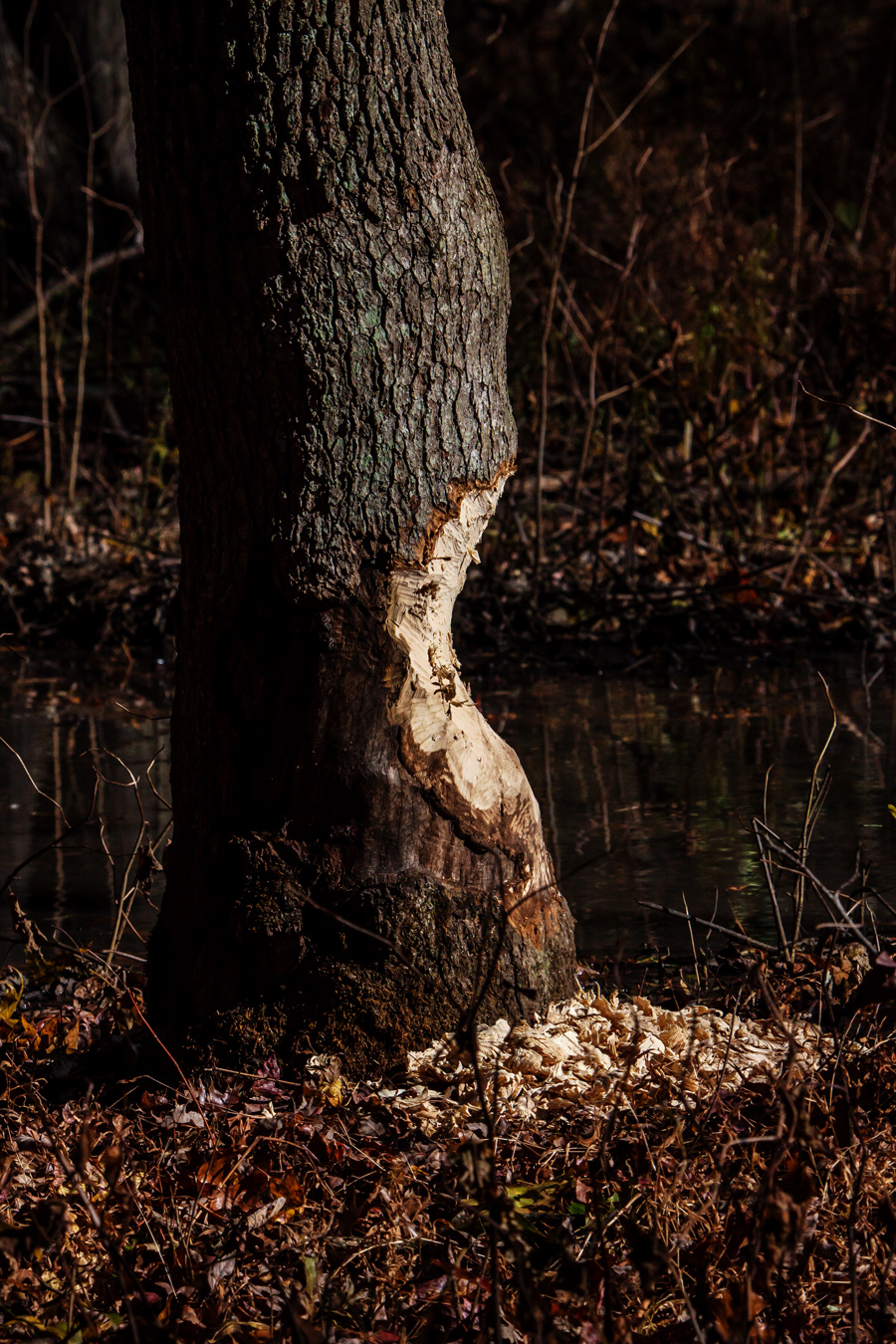
As I wander about in Huntley Meadows Park, I see lots of signs that winter is on its way, including this tree that I encountered in what seemed to be the middle of the woods. Clearly the beavers have been as busy as, well, beavers. I am hoping to be able to capture them in action in the upcoming months.

If you read this blog frequently, you probably noticed that this image is quite different from my “normal” wildlife close-ups. When I stumbled upon this tree on which a beaver had been gnawing, I was struck by the interplay of light and shadows. As I framed this shot, which is uncropped here, I was trying to capture the almost monochromatic look of the scene in a very simple composition. I’m pretty pleased by the different textures that I was also able to capture in the shot.

North American Beaver

© Michael Q. Powell. All rights reserved.

Read Full Post »
On a cool and blustery morning at Huntley Meadows Park, it seemed like most of the birds were in sheltered locations yesterday, protected from the biting wind. I did manage, though, to spot a Red-headed Woodpecker (Melanerpes erythrocephalus) busily at work high in the trees and was able to get shots from a number of different angles as the woodpecker moved about.

Red-headed Woodpecker

Red-headed Woodpecker

Red-headed Woodpecker

© Michael Q. Powell. All rights reserved.

Read Full Post »

It was a pleasant surprise to see this colorful Familiar Bluet damselfly (Enallagma civile) last Friday at Huntley Meadows Park. With the arrival of frigid weather, with temperatures at near-freezing levels at night, however, I fear that it will be my last damselfly sighting of the season.

When I first spotted this damselfly, I had my  Tamron 150-600mm zoom lens on my camera. I didn’t want to take my eyes off of the damselfly, for fear of losing sight of it in the underbrush, so I decided to make do with the long zoom lens. I quickly realized that I had a few obstacles to overcome. The minimum focusing distance of the lens is almost nine feet (2.7 meters), so I had to back up. At that distance the damselfly was so small that my autofocus did not want to lock onto it, so I was forced to focus manually, while handholding the lens at 600mm.

I ended up trying to do environmental portraits, rather then the close-ups that I generally prefer to take. I like the way that the seasonal coloration of the background helps the blue of the damselfly’s body really stand out, almost like it is an alien visitor in a foreign land.

Farewell, sweet damsels of the air, until we meet again in the spring.

Familiar Bluet

Familiar Bluet

© Michael Q. Powell. All rights reserved.

Read Full Post »

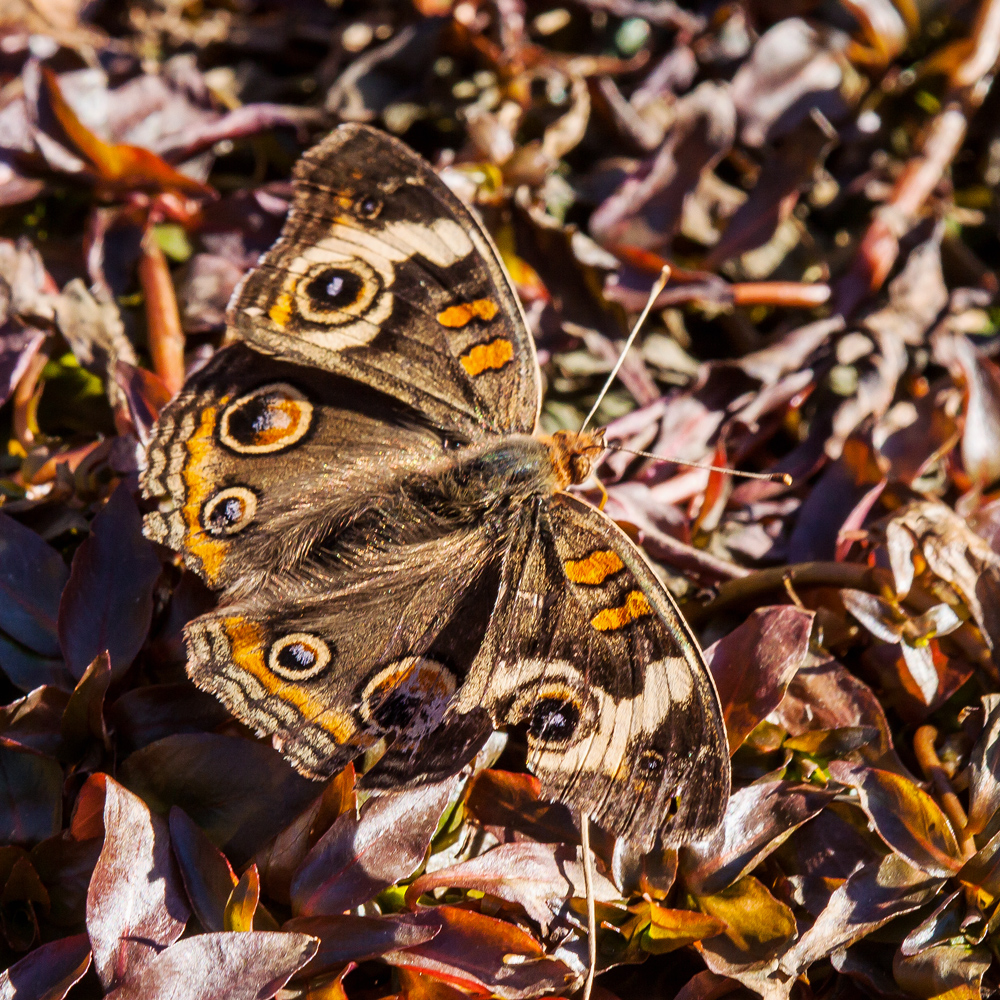
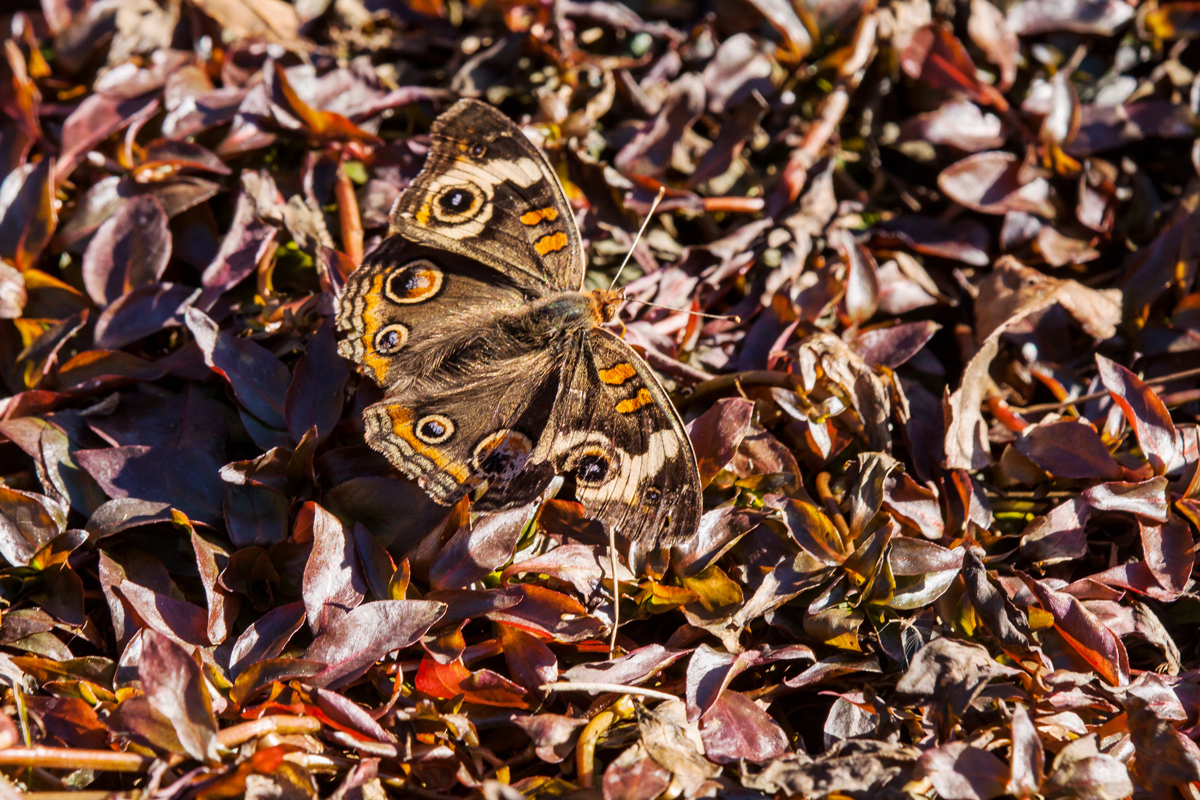
If it hadn’t been moving, I am pretty sure that I would not have spotted this Common Buckeye butterfly (Junonia coenia) on Friday at Huntley Meadows Park. The butterfly was perfectly camouflaged among all of the fallen leaves and even in this cropped image you have to look hard to see it.

Common Buckeye

I am also including a copy of the original image, in which the butterfly is even harder to find. The image reminds me of some of the complicated jigsaw puzzles that my Mom used to like to do when I was a child. I remember one puzzle that was a circular one depicting a plate of spaghetti. Needless to say, my Mom had a lot of patience and persistence.

Common Buckeye

© Michael Q. Powell. All rights reserved.

Read Full Post »

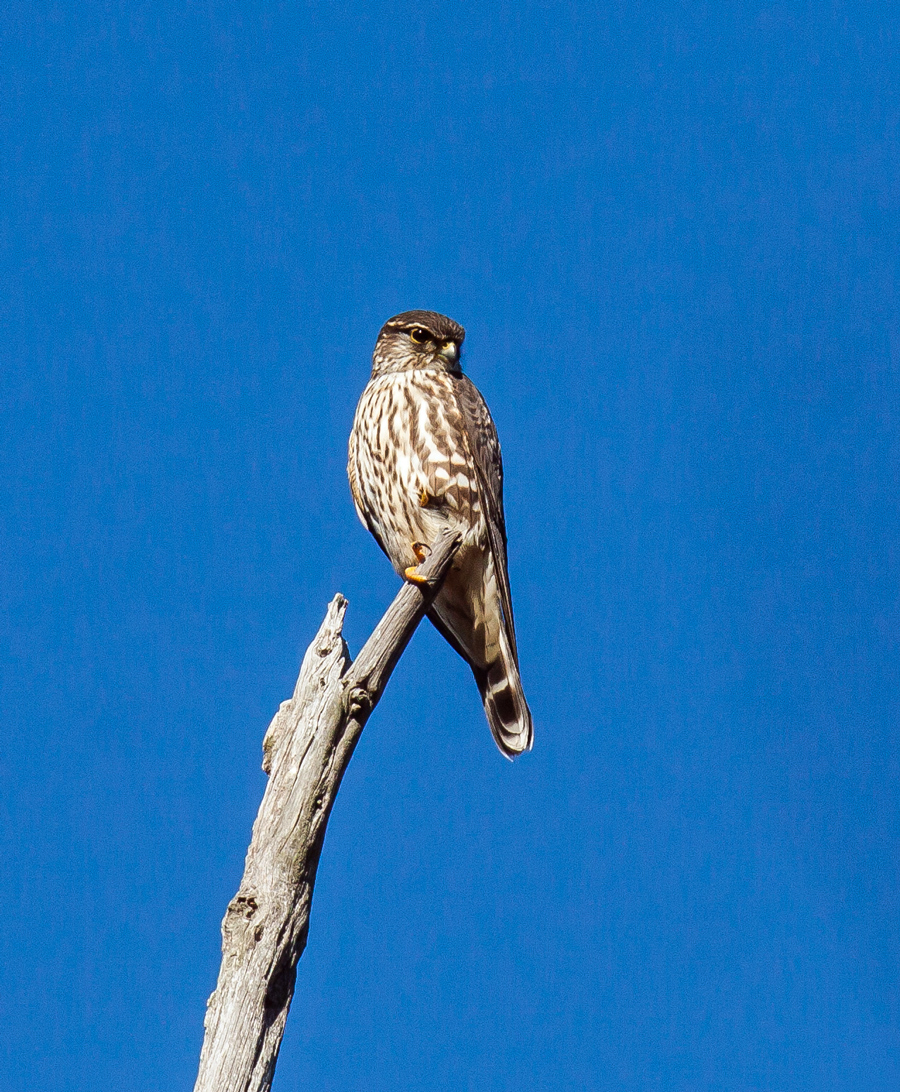
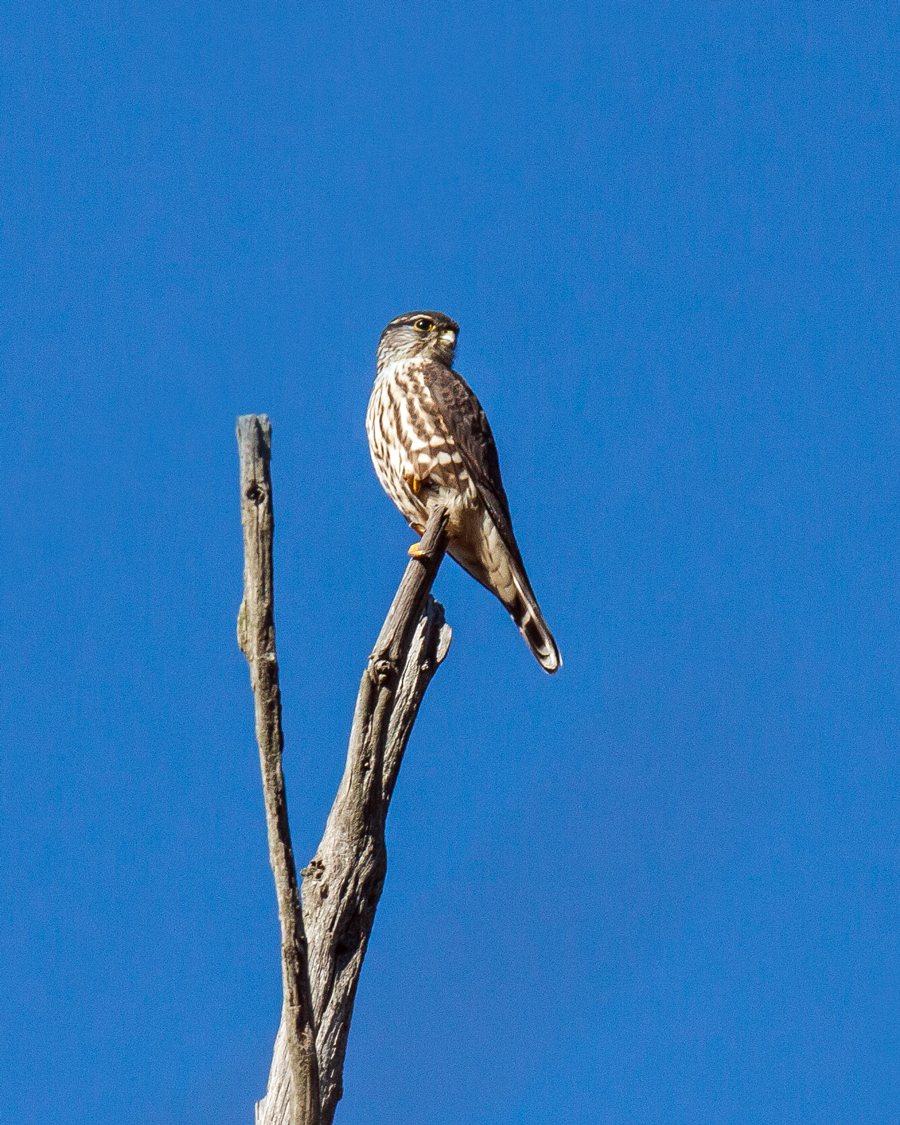
Yesterday I finally saw the merlin (Falco columbarius) that has been hanging out at Huntley Meadows Park the last month or so. Merlins are really cool-looking small falcons that generally are in our area only during periods of migration.

The merlin was perched at the very top of a slender dead tree. The Cornell Lab of Ornithology website notes that merlins spend long periods perched in open areas scanning for prey and I suspect that is what this bird was doing when I spotted it.

I was able to get relatively close to the tree, thanks to an adjacent path in the woods, but shooting upwards at such a steep angle handheld was a bit of a challenge. Fortunately the lighting was pretty good so I was able to get some decent shots, though they did requite quite a bit of cropping. You may also notice that I shot from several different angles as I tried to capture some images of this small, but powerful bird.

Merlin

Merlin

Merlin

Merlin

© Michael Q. Powell. All rights reserved.

Read Full Post »

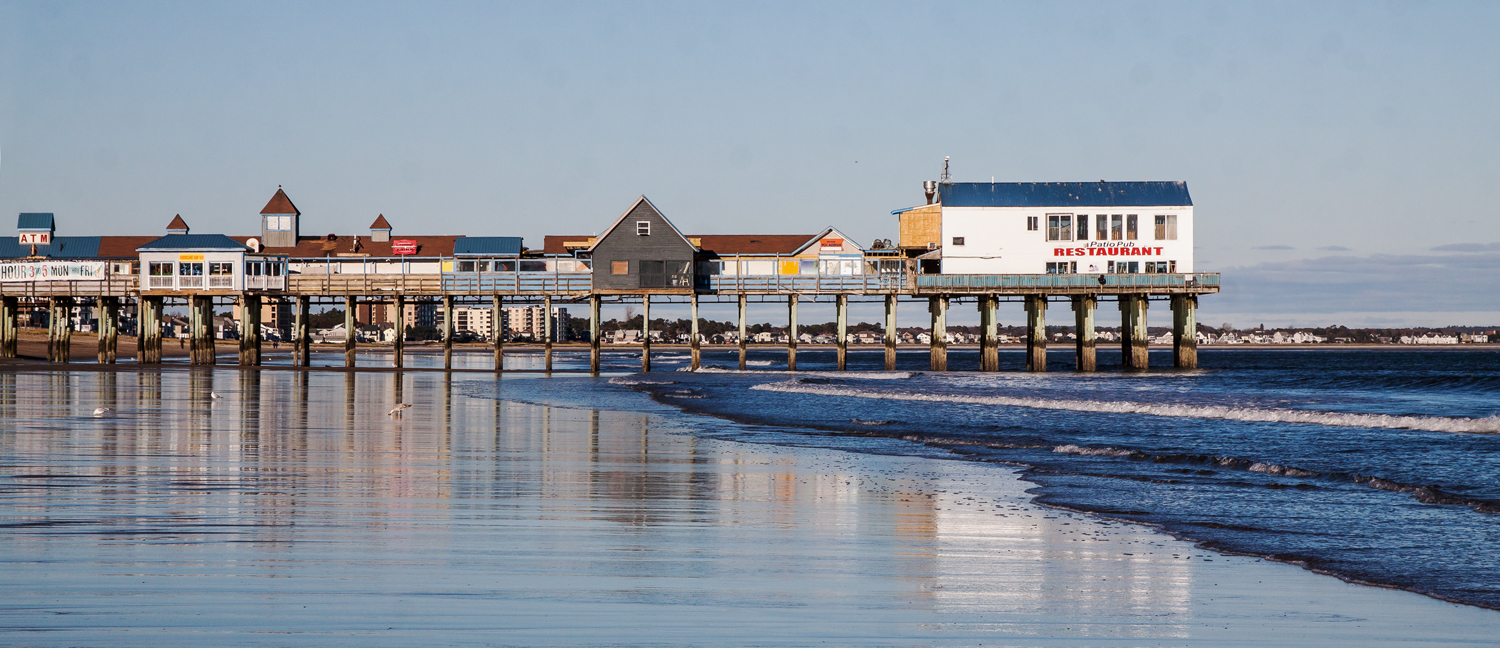
During my trip to Maine at the end of October, I visited the pier at Old Orchard Beach. The pier is crawling with tourists during the summer, but was pretty much deserted this late in the year.

According to information on the pier’s websitethe original pier first opened to the public on July 2, 1898, offering entertainment of all types, including concerts, dancing, lectures, and a casino located at the very end of the pier. Since that time it has been destroyed by fires and storms and rebuilt multiple times.

I remember visiting the pier as a child when my family vacationed in the area. At that time the pier had a carnival-style atmosphere with games to play and lots of junk food, like french fries and saltwater taffy.

Over the past decade or two. an increasing number of condominiums have been built. Many of the arcades and amusement park rides have disappeared.

Fortunately I still managed to find a stand open nearby so that I could indulge in some fried dough, one of the local specialties that consists of a huge ball of dough, flattened and deep-fried and then doused in melted butter and powdered  sugar and cinnamon.

pier at Old Orchard Beach

pier at Old Orchard Beach

pier at Old Orchard Beach

© Michael Q. Powell. All rights reserved.

Read Full Post »

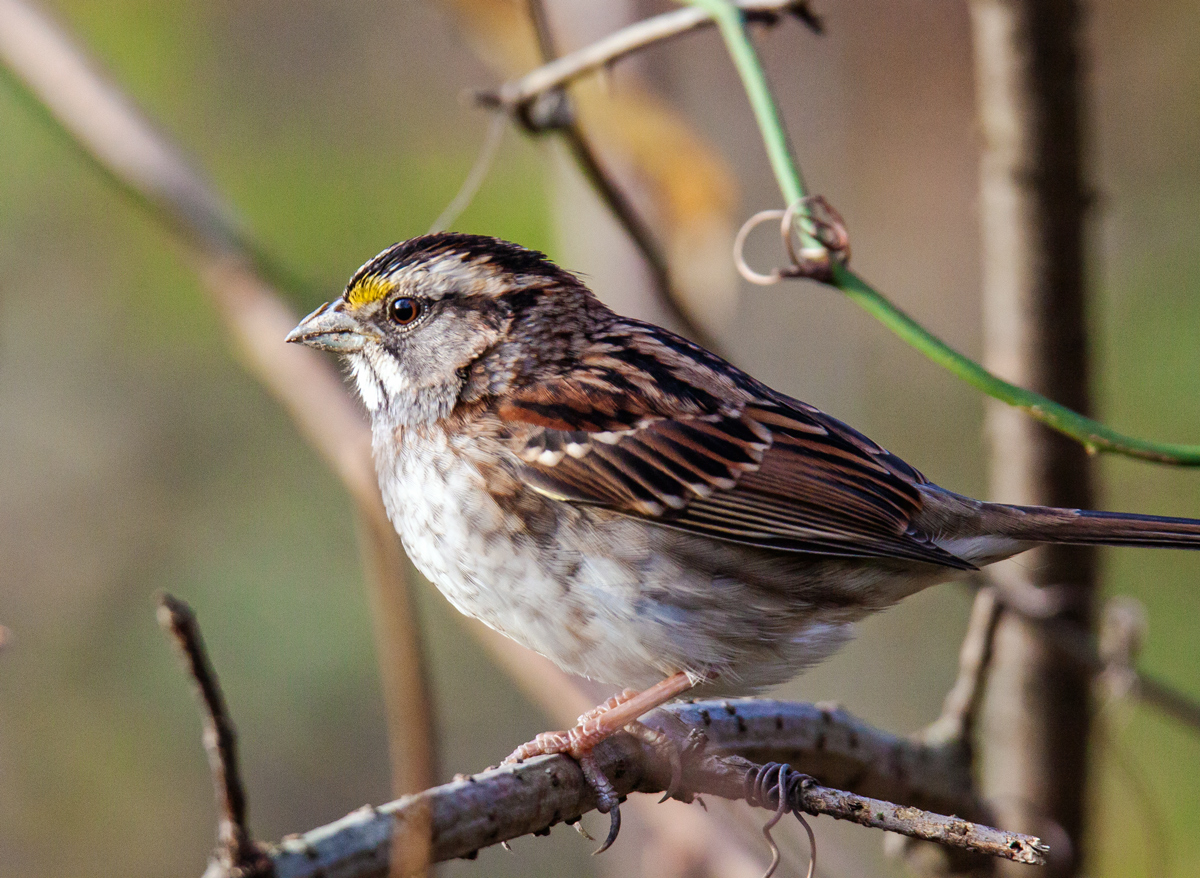
I used to think that all sparrows were simply nondescript little brown birds. Now I look more closely and can see how beautiful and distinctive they really are, like this White-throated Sparrow (Zonotrichia albicollis) that I spotted last week at Huntley Meadows Park.

I especially love the bright yellow stripe on its face (in an area technically called its “lore”) that really stands out amid the other, more subdued colors.

White-throated Sparrow

© Michael Q. Powell. All rights reserved.

Read Full Post »

With all of this cooler weather that we have had recently, including several frosty mornings, you might think that dragonfly season has ended, but it’s not over yet. Autumn Meadowhawk dragonflies (Sympetrum vicinum) are still with us in pretty significant numbers at Huntley Meadows Park in Alexandria, Virginia. In previous years I have continued to see these dragonflies into mid-December and one of my fellow photographers has seen them in early January.

Autumn Meadowhawks are small dragonflies, a little over one inch (25 mm) in length, so you have to look hard to spot them. At any other time of the year, their red bodies would make them really stand out, but they seem to like to perch on fallen leaves, including red ones, so they are often pretty well camouflaged until they move.

Here are a few favorite shots of these red beauties from this past weekend. Enjoy the dragonflies while you may and put off thoughts of the impending winter.

Autumn Meadowhawk

Autumn Meadowhawk

Autumn Meadowhawk

© Michael Q. Powell. All rights reserved.

Read Full Post »

The skies over Huntley Meadows Park were amazing around 3:00 (15:00 hrs) yesterday afternoon when a cold front was blowing in. When certain clouds were illuminated by the sun they were transformed into pastel shades of the rainbow. At times there were varying shades of orange, green, aqua, and purple.

I suspected that moisture in the clouds was responsible for the colors, but I had never seen anything like it and did not know what it was called. After searching about on the internet, I learned that this diffraction phenomenon, known as cloud iridescence, is caused by small water droplets or ice crystals individually scattering light. According to Wikipedia, ” If parts of clouds have small droplets or crystals of similar size, their cumulative effect is seen as colors. The cloud must be optically thin, so that most rays encounter only a single droplet. Iridescence is therefore mostly seen at cloud edges or in semi-transparent clouds, and newly forming clouds produce the brightest and most colorful iridescence.”

cloud iridescence

cloud iridescence

© Michael Q. Powell. All rights reserved.

Read Full Post »

I have been hearing the cries of Red-shouldered Hawks (Buteo lineatus) frequently at my local marshland park, but I have had a lot of trouble spotting them. At this time in the autumn there are still lots of leaves on the trees that obscure my view. Gradually some of the leaves are starting to change colors and fall from the trees, but that process takes place a bit later here in Northern Virginia than in more northern areas of the United States.

As I was walking along the boardwalk at Huntley Meadows Park on Saturday morning, I saw a brightly colored object at the top of a tree. Looking through my telephoto lens, I was thrilled to see that it was a juvenile Red-shouldered Hawk that was out on a limb, giving me an almost unobstructed line of sight for a shot. In most of my shots, the hawk was looking away, but I was thrilled to be able to get a few shots in which one of the hawk’s eyes is visible. The bright blue sky and the red leaves surrounding the hawk were a nice bonus.

Res-shouldered Hawk

© Michael Q. Powell. All rights reserved.

Read Full Post »
Some birds seem to explode out of the water when they are taking off, but Great Blue Herons (Ardea herodias) often seem to gently lift off with almost no splash at all. The Great Blue Heron at Huntley Meadows Park were really active early yesterday morning, frequently flying from one location to another. They seemed to be more intent on socializing with each other than with finding food. In a future post, I’ll look more closely at that behavior, which might be related to courting, but today I’m focusing on one heron’s gentle liftoff.

I’ve watched herons take off hundreds of times, but this is one of the first times that I have been able to capture the moment of liftoff from the water. In this little sequence of three images, you can see the heron rising up, leaving the water, and gradually gaining altitude. The stillness of the early morning helped create some wonderful reflections,  a nice bonus that adds some additional visual interest to the images.

heron liftoff

heron liftoff

heron liftoff

© Michael Q. Powell. All rights reserved.


Read Full Post »

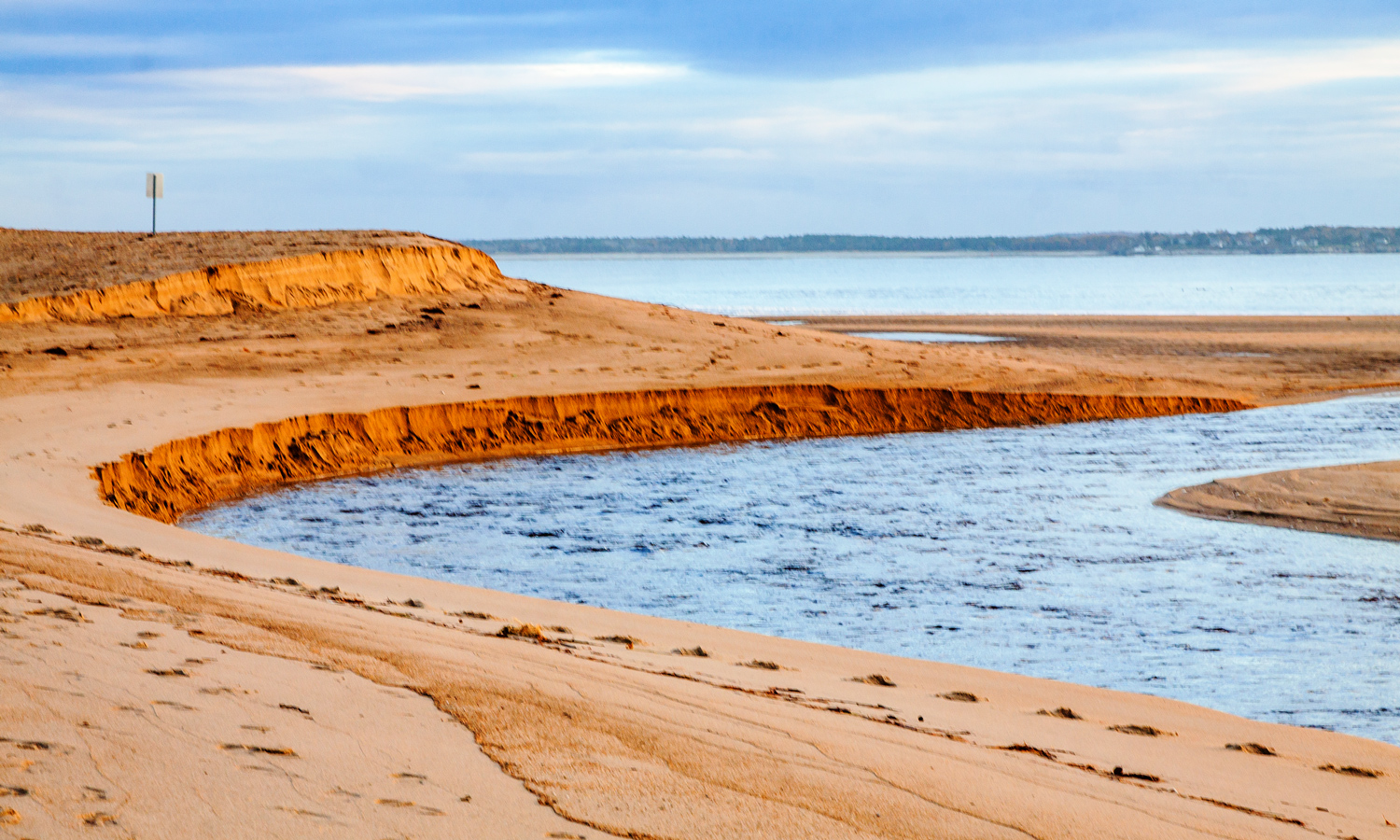
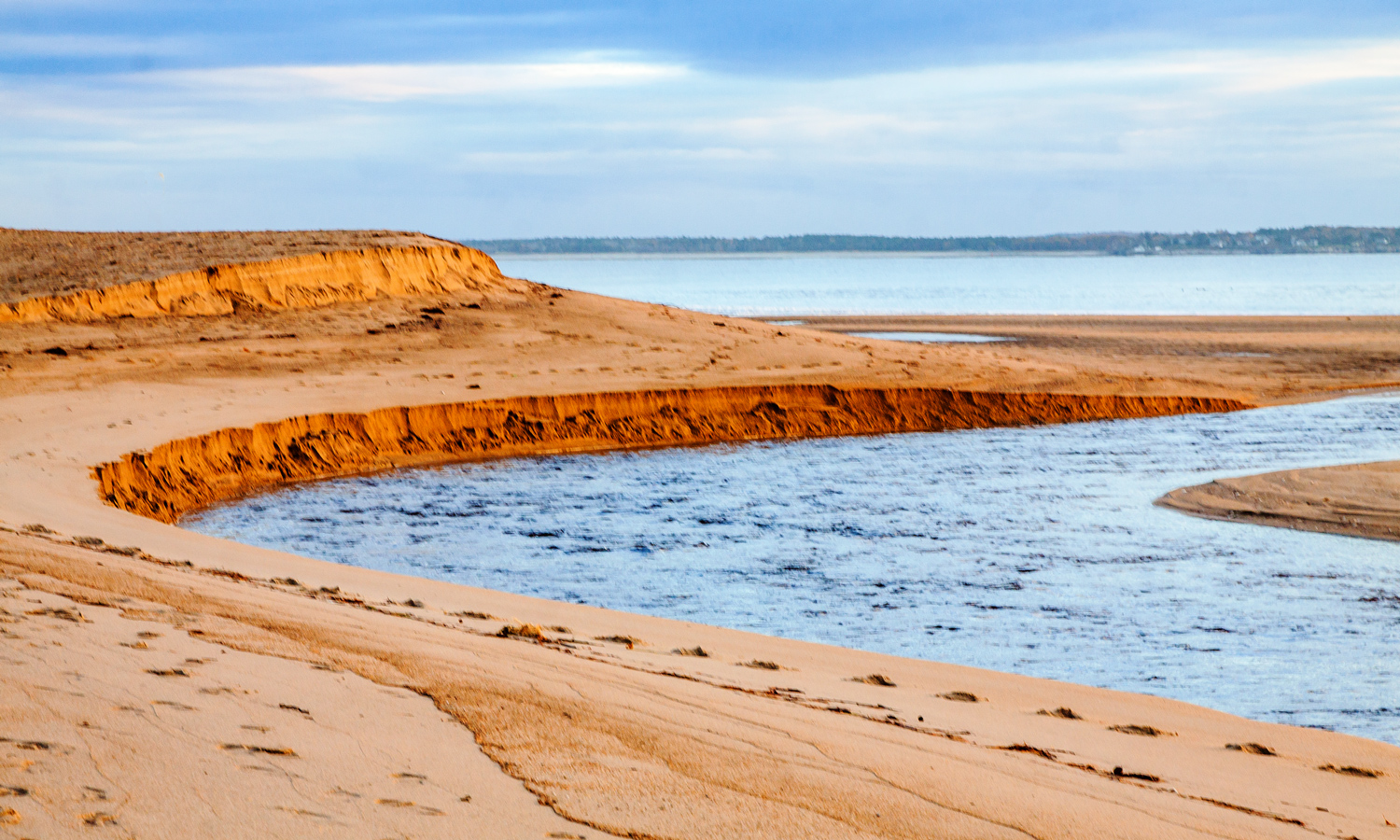
Is it distracting to have a man-made object in an otherwise natural landscape? The ocean really inspired me during my recent short trip to Maine. I am amazed at the number of beautiful images that I was able to capture. I particularly like the colors and simple composition of a shot I took of a small river that rises and falls with the tide.

As I was working on the image, I noticed that there was a solitary warning sign in the upper left-hand corner that alerts folks to the dangers of the tides. I actually like the juxtaposition of this hard vertical line with the gentle curves of the image and the hazy coastline in the background. I began to wonder, however, if others would see the sign as a discordant element in the image, so I created a second version of the image without the sign.

Which image do you prefer, the one with the sign or the one without it?

Old Orchard Beach

O;d Orchard Beach

© Michael Q. Powell. All rights reserved.

Read Full Post »

« Newer Posts - Older Posts »