Feeds:
Posts
Comments

Archive for the ‘Art’ Category

The sun had just risen when I arrived last Thursday morning at Occoquan Bay National Wildlife Refuge. How, I wondered could I possibly capture my impressions of those wonderful moments as the new day was dawning?

I hastened to capture an image while the sun was still low on the horizon and grabbed the first photo below while standing at the edge of the parking lot. There was a soft mist lingering over the fields and in my second shot, I worked to capture the stillness and serenity that I was feeling.

When I finally arrived at the shore, the sky and the water seemed to be almost the same color with a narrow, darker strip of land separating the too. I immediately thought of the moody, minimalist landscape shots that Michael Scandling regularly features in AMAGA Photography Blog. Michael likes to coax each pixel into submission and I confess that I did not work on my final image as much as he would have, but it is a kind of homage to his wonderful work.

So there you have it, three distinctive images that together give you a sense of what I was seeing and feeling in the early morning hours, a time of day that is perfect for introspection and reflection.

sunrise at Occoquan Bay

sunrise at Occoquan Bay

sunrise at Occoquan Bay

© Michael Q. Powell. All rights reserved.


Read Full Post »

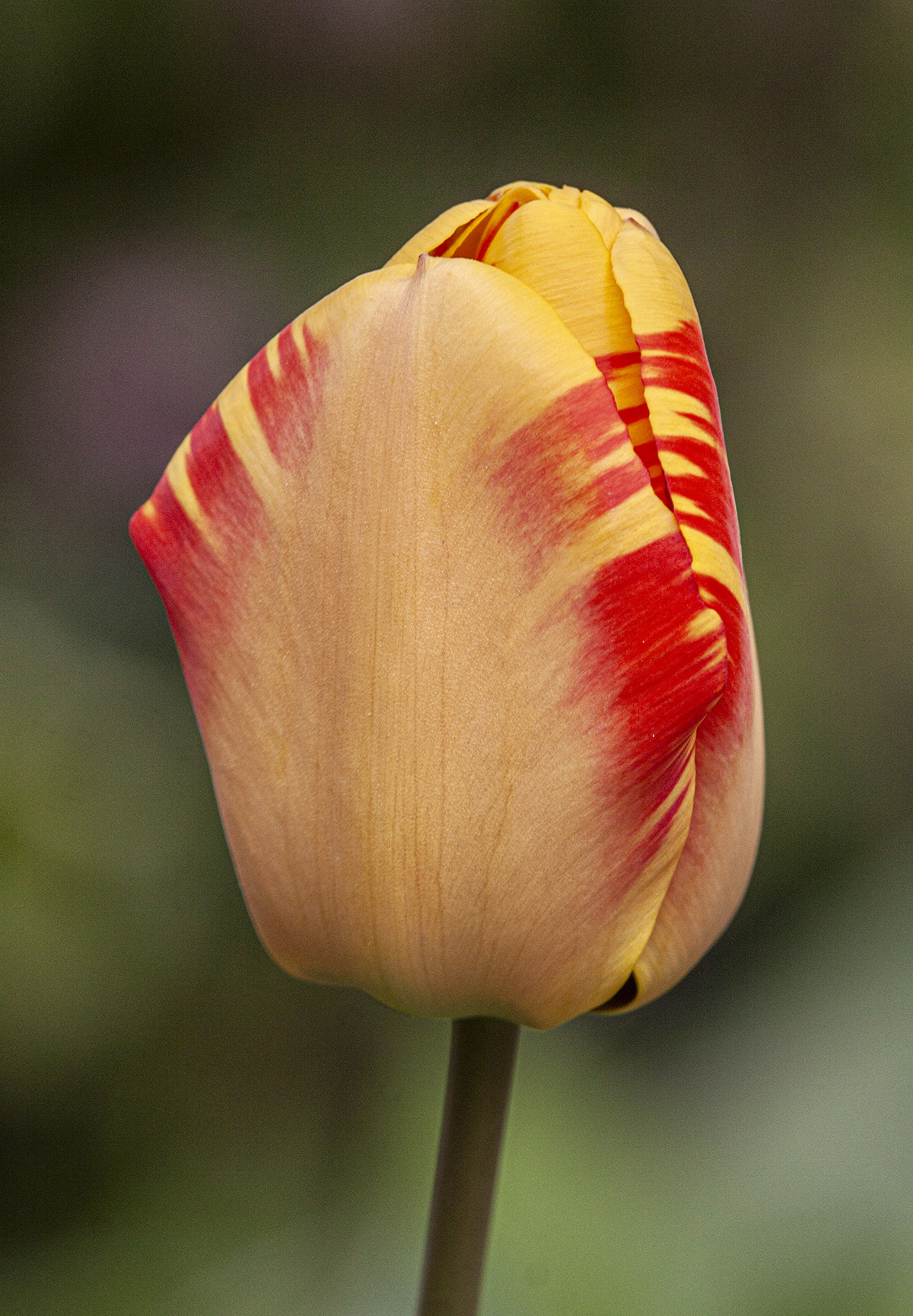
From a distance, I noticed yesterday that some yellow tulips were getting ready to bloom in the garden of my neighbor and photography mentor Cindy Dyer. Cindy deliberately chooses colorful, photogenic flowers for her garden, so I love visiting it frequently. As I got close, I noted the spectacular two-color patterns of these tulips. When I sent a photo to Cindy, she informed me that they are known as “broken tulips.”

Perhaps she told me some time in the past what “broken tulips” are, but I rushed to Google to find out why they are considered to be “broken.” This term refers to the dramatic color-breaking of these flowers, an effect highly sought after during the 17th-century Dutch “tulip mania,” according to Wikipedia. Historically, these changes are caused by a virus infects the tulip bulb and causes the cultivar to “break” its lock on a single color, resulting in intricate bars, stripes, streaks, featherings or flame-like effects of different colors on the petals.

Unfortunately, the virus weakens the bulbs and as a result some famous color-broken varieties no long exist. Today’s “broken tulips” are no longer caused by a viral infection, but are stable variants produced through breeding. Cindy noted to me that her tulips have been going strong for at least five years.

I was feeling creative yesterday when I took these photos and tried a lot of different angles and settings to get some unusual looks. I decided mainly to feature the areas with the different colors and deliberately shot with a shallow depth of field that causes the edges that are away from the center to be soft and out of focus. I think it worked out pretty well.

I decided to post these images today as a counterbalance to the photograph of a wolf spider that I posted earlier, a kind of “beauty and the beast” set of postings. I am guessing that almost everyone will like at least one of the two postings.

broken tulip

broken tulip

broken tulip

© Michael Q. Powell. All rights reserved.


Read Full Post »

The Lady Jane tulips (Tulipa clusianaLady Jane”) in the garden of my neighbor and photography mentor Cindy Dyer are now fully in bloom. In a recent post called Two tulips, I featured a side view of a mostly closed flower, highlighting the tulip’s unusual shape and reddish-pink color. This time, I shot almost straight down from above and was struck by the geometric shapes in the petals, the stamen, and even the stigma (the little three-lobed part in the very center of the flower). For the middle shot, I shot from a slight angle to give a somewhat more natural perspective.

I hope that all of you are staying safe and healthy. I am remaining close to home most of the time and it has been a blessing for me to be able to find such beautiful subjects to photograph almost literally across the street—Cindy and I live at opposite sides of a suburban semi-circle.


Lady Jane tulip

Lady Jane tulip

Lady Jane tulip

© Michael Q. Powell. All rights reserved.


Read Full Post »

I went searching through my archives yesterday for a photo from March 2016 that I wanted to have printed. I won’t dwell on my storage practices, but suffice it to say that I am not very well organized. The image in question, one of my all-time favorite shots, shows a Red-winged Blackbird (Agelaius phoeniceus) whose breath was visible in the cold morning air. I have posted the image a few times and have had some really positive response, but somehow I had never gotten around to having it printed.

I had forgotten that I had captured multiple shots that day and as I was going through them yesterday I came across the first shot below that I have never posted. I love the way that the image shows how the blackbird puts his whole body into producing his “visible song”—I remember my choir leaders instructing us on the importance of breathing from the diaphragm for better sound projection.

The second and third shots give you a better view of the bird’s breath as it was being expelled. I was playing around with image formats and decided to do a square crop that I think works pretty well with these images. One of the photo companies has a sale today on canvas prints and I may one or more of these shots printed to see how they look. A friend has also suggested that I consider having a metal print made of one of them.

The temperature, humidity, and lighting all have be perfect to be able to see this phenomenon shown here. I have not been lucky enough to see it again since that day almost four years ago, though others have taken similar shots at the same location in recent years.

If you are curious to read my blog posting about the initial encounter, check out my 8 March 2016 blog posting entitled “Visible Song.”

Red-winged Blackbird

Red-winged Blackbird

Red-winged Blackbird

© Michael Q. Powell. All rights reserved.


Read Full Post »

With the weather so warm recently in my area, it is hard to remember that the puddles were iced over last Thursday when I captured this early morning shot of one of them at Occoquan Bay National Wildlife Refuge.

Winter in my area has been exceptionally mild—we have had almost no snow and only occasional periods of below-freezing temperatures. I have always been fascinated by the abstract patterns that form as water freezes, but this was the first time this season that I was able to capture a shot like this.

I am even more in awe of the amazing photos that I occasionally come across of individual snowflakes—capturing a shot like that is on my list of aspirational goals in photography.

ice

© Michael Q. Powell. All rights reserved

Read Full Post »

At this time of the year pops of bright color are especially welcome, so I was thrilled on Thursday to see some Eastern Bluebirds (Sialia sialis) in a sumac patch at Occoquan Bay National Wildlife Refuge. Sometimes when I see bluebirds their colors seem muted, but the blue color of these birds was dazzling, especially for the males in the first two shots. I think the bluebird in the final shot is a female, judging from its coloration.

As always, you can see more detail if you click on the images, which I especially recommend for the first image, because you will see that the bluebird has a tiny sumac berry in its bill.


Eastern Bluebird

Eastern Bluebird

Eastern Bluebird

© Michael Q. Powell. All rights reserved

Read Full Post »

I generally do not like to take “traditional” selfies. When I do photograph myself, I prefer shots like these ones that I captured early in the morning last Thursday at Occoquan Bay National Wildlife Refuge. When the sun is low, the shadows are so elongated, as in the first photo, that they remind me of Alberto Giacometti’s famous statue “L’homme qui marche” (The Walking Man).

selfie

selfie

© Michael Q. Powell. All rights reserved.

Read Full Post »

How much gear do you carry with you when you go out to take photographs? Each time that I get ready, it is like planning for a trip. More gear means that I will be more ready for the full range of situations that I may encounter, but more gear means more weight. So what do I do? I compromise. During the winter, I tend to have my 150-600mm zoom lens on my DSLR and during the summer I use a 180mm macro lens as my primary lens. I will usually have a second lens in my camera bag, often a 24-105mm lens, but often it goes unused.

For greater flexibility I usually carry my trusty Canon SX50 super zoom camera. It is lightweight and versatile, with an equivalent field of view of 24-1200mm, a 50X zoom. Like me, it is a bit old and slow and has some limitations, but it lets me capture wide-angle shots in the winter and distance shots in the summer without having to change lenses on my primary camera in the field. It also lets me shoot in RAW,  my preferred format for capturing images.

On the 2nd of January, I was chasing the sunrise. I knew that sunrise was scheduled for around seven o’clock, which is the time when the electrically-controlled gates of my favorite wildlife refuge slide open. I was a little late leaving home and as I drove south on the interstate, I could see the sky turning a beautiful shade of red. As I entered the refuge, I could see that the colors were starting to fade. As soon as I got to the parking lot, I grabbed my SX50 and captured the second shot below with the engine still running and the car door open.

I turned off the engine, grabbed my gear, and headed for the water. Along the way I stopped to capture the third shot below, a view across a frosty field. When I finally got to the water, I could see that the sun had already risen. However, the clouds reflected some of the brightness of the sun and added drama to the scene and I was able to capture the wide view that you see in the first photo below with the SX50.

In case you wonder why I did not post these photos earlier, I simply forgot to upload them immediately from my “second” camera. It was a nice surprise for me when I looked at them on my computer screen for the first time yesterday. The images validated for me the value of carrying this camera with me for its multi-purpose capability, a kind of photographic Swiss Army knife.


sunrise

sunrise

sunrise

© Michael Q. Powell. All rights reserved.

Read Full Post »

The colors in the sky were soft and beautiful early last Thursday morning at Occoquan Bay National Wildlife Refuge. The reflections in the water were equally beautiful. What a wonderful way to start the day.

sunrise at Occoquan Bay

sunrise at Occoquan Bay

© Michael Q. Powell. All rights reserved.

Read Full Post »

Would you feel insecure and self-conscious if you sat down in a crowded public place and started to sketch? Most adults would feel that way. It would take a really good instructor to get them so excited about drawing that their inhibitions disappeared and they could lose themselves in a few blissful moments of creation—probably like a child feels when creating art. Romain, my instructor for two sketching tours in Paris, was that kind of instructor.

Romain Olivier Thieulot is an energetic and engaging 29 year old artist in Paris. He teaches art at the University of Paris and has his own art studio. As with most artists, though, money is tight, so he conducts sketching tours as a kind of “side hustle” to earn some additional money. Although he is quite young, he is devoted to a traditional style of art rather than digital art. That, he believes, is one of the reasons why he was chosen to teach at the University of Paris. He did not go into a lot of details about the curriculum at the university, but he described the style that is taught there as “academic,” and it sound like it is a regimented system with very specific rules.

Fortunately, that is not the approach that he used with us. He coached and encouraged us as we moved from place to place with our sketchbooks and collapsible stool, all the while providing us with instructions on the major principles of drawing like composition, perspective, and showing emphasis through detail and value (degree of lightness and darkness). Importantly, I think, he left a lot of room for individual expression. Before we started to draw our first building, I remember, he told us that we could choose to draw it any way that we wanted, sketching, for example, the entire building or only a part of it. What was important, he said was to have a clear idea of what we saw as the major area of interest, because the first lines we put on the paper would dictate important considerations like scale and composition.

Romain had carefully chosen the locations and routes of these tours, one in Montmartre and one in the Left Bank area beginning at Notre Dame, in order to provide us with fascinating bits of information along the way on the history of the city of Paris and in particular on its rich artistic and architectural history. (Architecture is one of Romain’s areas of expertise and he was able to explain many aspects of the architecture that makes Paris so distinctive.)

One of the places that Romain highlighted was Le Consulat, a historic coffee house that was frequented by many of the artists, writers and painters that flocked to the Montmartre area in the 19th century, including Picasso, Sisley, Van Gogh, Toulouse-Lautrec, and Monet. In the second photo below, Romain was showing us a postcard-sized copy of a drawing that he had done of the café. If you click on the photo you can get a real appreciation of the amount of detail in his drawing. I don’t recall long he spent on that particular drawing, but I remember him showing us similar ones on which he had spent forty or fifty hours of work.

One of the fun little bonuses of Romain’s sketching tours was the quick sketch he would do of the individuals in our little group as we were at work. The third photo shows the three members of our group in Montmartre—I think it is pretty obvious which one is me.

During one conversation that I had with Romain, he shared some insights into the world of a professional artist in Paris. As we we passing a series of galleries in the Left Bank area, he noted how difficult it was to get your work into a gallery. Even if you were fortunate enough to get your worked displayed, there were so many fees involved that the artist was often left with very little money when a piece of art was actually sold.

Romain seemed to be much more content to display his work at his own studio/workshop, Atelier Thieulot in the 15th arrondissement in Paris. You can check out his studio on his website and get a better idea of his workplace and of his work. The website is in French, but even if you can’t read the details, you can’t help but be impressed by the number of exhibitions in which he has participated and the awards he has received. If you click on the tab, “Mes Créations,” you can look at his work divided into categories such as architecture, oil painting, drawing, and design. One of my favorite ways to view his work, though, is to click on the “E-boutique” tab and if you do, you too will look with amazement at his detailed drawings.

I saw some wonderful art and architecture in Paris, but some of my favorite moments in the city were spent in creating my own art during the sketching tours with Romain as our guide, coach, and instructor. I was intrigued that the tour is titled “Être artiste à Montmartre,” which means “To be an artist in Montmartre.” We were not pretending to be artists as we toiled over our sketchbooks—Romain made us feel like we really were artists.

We have become friends on Facebook, have exchanged texts since concluding the course, and he is also now following this blog. Paris is wonderful, of course, but it really is the people you meet that make a trip memorable. Thanks, Romain.

Romain Thieulot

Romain Thieulot

Romain Thieulot

© Michael Q. Powell. All rights reserved.

Read Full Post »
I spent some of my favorite moments during my recent trip to Paris exploring again the Rodin Museum and its wonderful outdoor sculpture garden. There is something really special about seeing sculptures outdoors, where the time of day, the season, and the weather can make them come alive in new ways that are not possible in the controlled confines of an indoor museum.

When I travelled to Washington D.C. on Saturday, one of my goals was to see some of the Rodin sculptures that I recalled were in the Hirshhorn Sculpture Garden. The garden is sunken slightly below ground level and as I descended I immediately spotted the large sculpture known as The Burghers of Calais (Les Bourgeois de Calais). This multi-person sculpture is very well-known and I had seen another casting of it recently in Paris. (According to French law, there can be only 12 original castings of a Rodin sculpture, and both the one that I saw in Paris and this one are original castings.)

I couldn’t remember the story behind the sculpture, so I turned to Wikipedia. From a factual perspective, the sculpture commemorates an event during the Hundred Years’ War, when Calais, a French port on the English Channel, was under siege by the English for about eleven months. As you study the faces and the postures of the men in the sculpture, you realize that it is much more than a monument to a historical event.

According to Wikipedia, “Edward, the king of England, offered to spare the people of the city if six of its leaders would surrender themselves to him, presumably to be executed. Edward demanded that they walk out wearing nooses around their necks, and carrying the keys to the city and the castle. One of the wealthiest of the town leaders, Eustache de Saint Pierre, volunteered first and five other burghers joined with him. Saint Pierre led this envoy of volunteers to the city gates. It was this moment, and the poignant mix of defeat, heroic self-sacrifice, and willingness to face imminent death that Rodin captured in his sculpture.”

The sculpture in the second image is known simply as The Walking Man (L’homme qui marche). I am amazed at Rodin’s skill in capturing a sense of movement in such an incomplete figure. For me, it’s like a three-dimensional sketch that has come to life.

The final Rodin sculpture that I wanted to highlight is known as the Crouching Woman (also known as Lust). I find the pose of the woman to be intriguing and the Rodin Museum, which has a terracotta version of the sculpture, asserts that it “looks like a compact block with limbs gathered together and pressed tightly against the torso. This block-like sculpture reflects Rodin’s aesthetic analysis of Michelangelo’s sculpture: it is a work that, to quote the great Italian artist, could roll down a hill without breaking.”

These Rodin sculptures remind me of Paris, but in a greater sense, they highlight my heightened appreciation for the work of artists. Sometimes artists capture beauty and other times they create beauty (and often they do both at the same time). What is beauty? That will have to be the subject of a separate blog someday.


Burghers of Calais

The Walking Man

Crouching Woman

© Michael Q. Powell. All rights reserved.

Read Full Post »

Blogging helps to create communities. We are exposed to people from all around the world, some of whom may be like us, but many of whom are quite different. What is critical is that we interact with each other—we “like” and comment on the postings of others. All of this takes place in a virtual world and we develop relationships in that world. Wouldn’t it be cool if we could meet each other in person, in “real” life?

It may sound like the story line for a corny Hollywood movie, but an American photographer recently met an Irish poet in Paris, thanks to the efforts of a New Zealand blogger who had much earlier highlighted their respective blogs. As you might suspect, I am that photographer; Damien Donnelly of deuxiemepeaupoetry.com is that poet; and Liz Cowburn of exploringcolour.wordpress.com is that blogger.

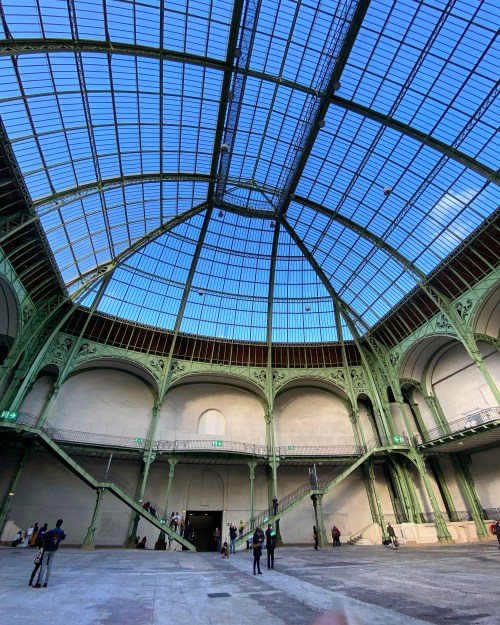
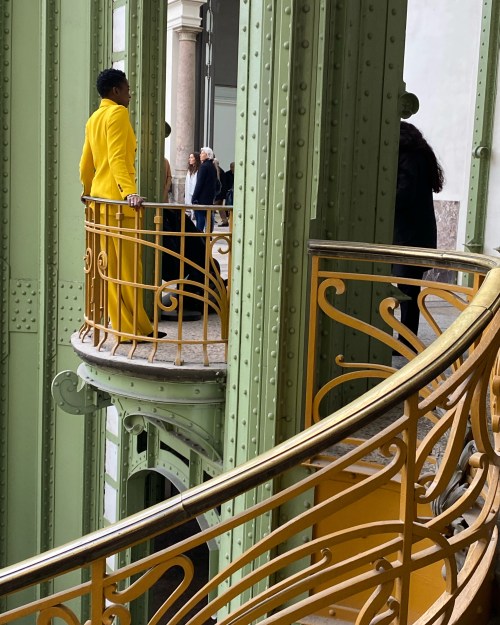
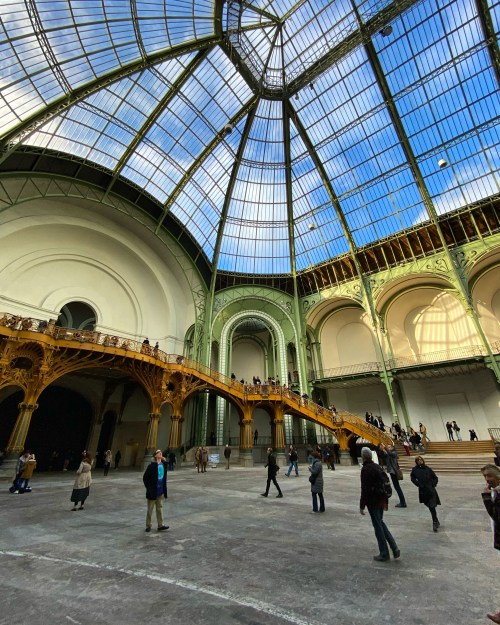
Several days ago I said a few words about Damien when I re-blogged one of his postings with photos from our time inside the Grand Palais in Paris, so his name may sound familiar. When I first made plans to visit Paris, I thought there might be a chance that I could meet Damien, but what I did not realize at that time was that he was preparing to leave Paris. As it turned out, I made it to Paris before he left.

We agreed to meet for lunch. Have you ever met someone in person that you met initially on-line? Did you worry that the on-line “persona” would not mesh with reality? I really encourage you to read Damien’s poetry, which I previously characterized as “personal and universal,” and I can reassure you that he is just as thoughtful, introspective, and engaging in person. During our lunch together, we shared deeply details about our personal lives and our connection with Paris.

One of the things I remember best was Damien’s description of how long it took to reach the point when he felt comfortable telling people that he was a “poet.” You see, like many creative people, Damien has a full-time job and crafts his verbal art in the remaining time. Gradually, though, writing appears to have taken on a greater role in his life. As of a few day ago, he no longer has that full-time job and in a few more days he is leaving Paris.

Is he calling it quits? As the French would say, “au contraire”—Damien is in fact returning to Ireland to pursue a dream. You can read more about it in the “About Me” section of his website, but the essence is that he plans to find and renovate a property in Ireland that will serve as a writers’ retreat and bed-and-breakfast. Damien is also working on a novel and I believe more of his poetry is about to be published.

Why am I writing all of this? First of all, I want to let you all know how wonderful it is when the virtual world and the real world overlap—meeting and spending time with Damien was one of the highlights of my three weeks in Paris. I hope to have the chance to meet more of my readers whom I consider friends. Maybe New Zealand?

Secondly, I am personally inspired by someone who decides at age 44 to go all in on his passion, who has the courage to radically change the course of his life in pursuit of his creative vision.

Let me end with the words of a short poem that Damien posted a few days ago, part of a series of poems as he prepares to leave Paris. This one was entitled “Bookends; Timing is Everything.” (In order to get the full impact of the poem, you should click on the name of the poem which is a link to the original posting with Damien’s accompanying photograph and brief words of explanation.)

“Coming in

is easy.

Learning when to leave

is an art

not easily understood.”

Damien Donnelly

Damien in the Grand Palais


Damien Donnelly

Damien in the Grand Palais


Damien and Me

Damien and me after lunch.

© Michael Q. Powell. All rights reserved.


Read Full Post »

So many creative people are multi-talented and Irish poet Damien Donnelly is no exception. His poetry, which can be found on his blog at deuxiemepeaupoetry.com is both personal and universal and often prompts me to look deeply inside myself. You definitely should check out his website.

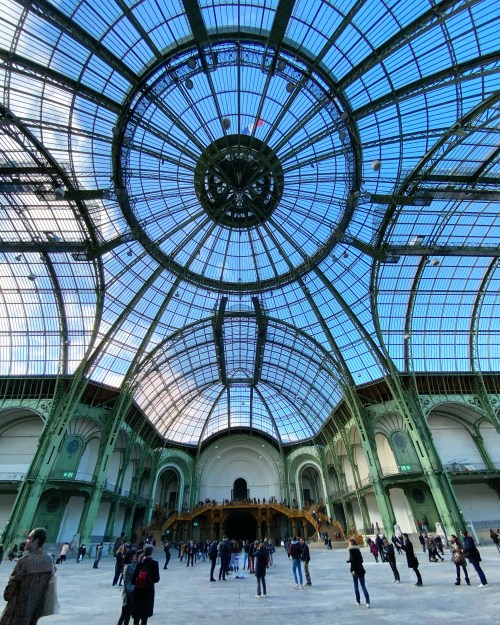
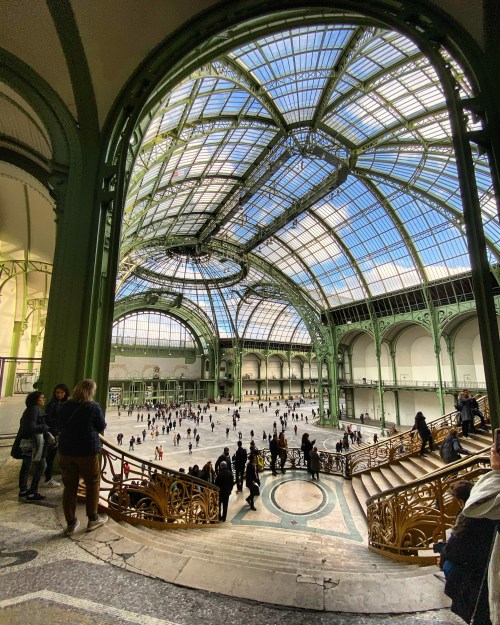
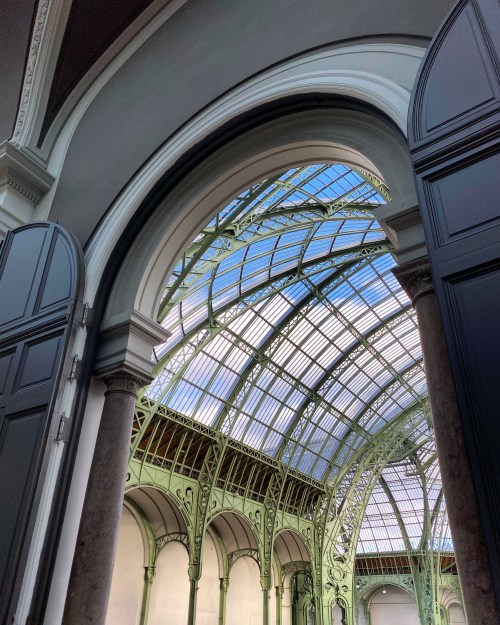
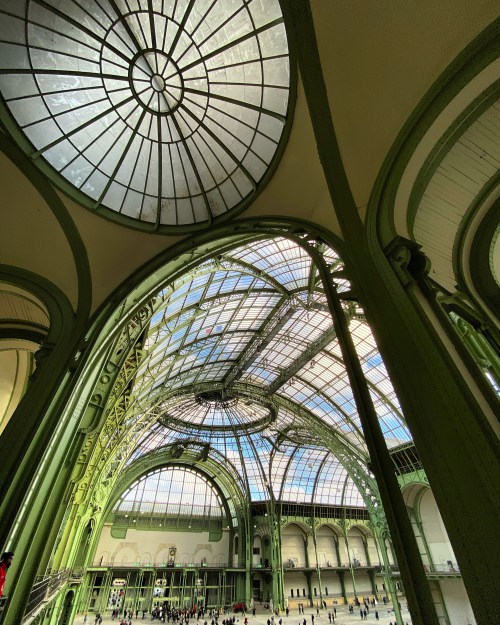
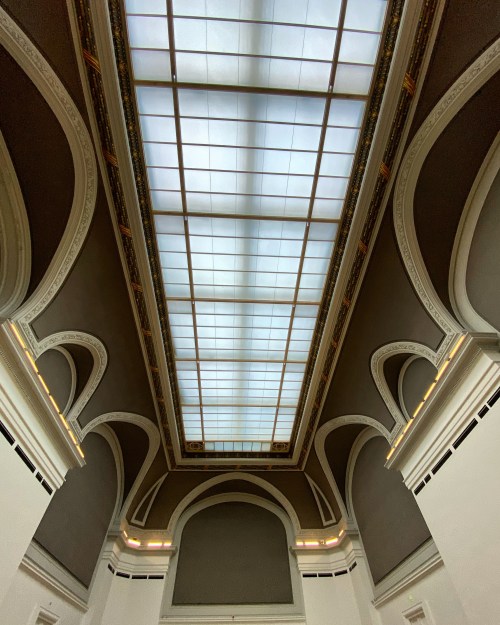
He is also a talented photographer. I was thrilled last Sunday to have the chance to spend some time with him as we photographed the inside of the Grand Palais in Paris. Here are some of his wonderful photos from that day.

deuxiemepeau's avatarDamien B. Donnelly

Last Sunday, this masterpiece of beaux-arts architecture, le Grand Palais was open to the public for a few hours and I rushed in along with fantastic photographer, and now street sketch artist, Mike Powell, on one of his last days in Paris, in order to snap a little of the light under the glass.

All photographs by Damien B Donnelly

View original post

Read Full Post »

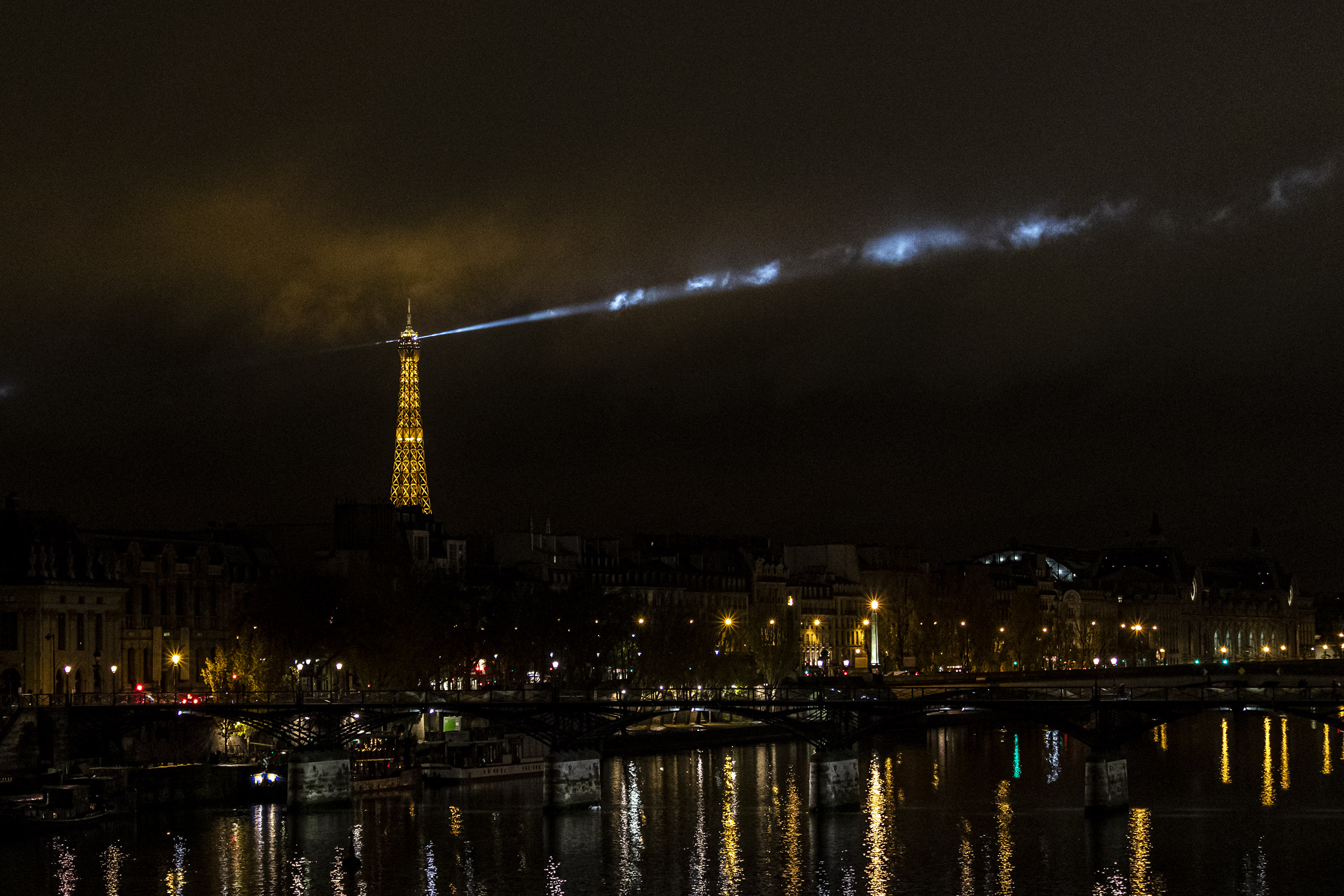
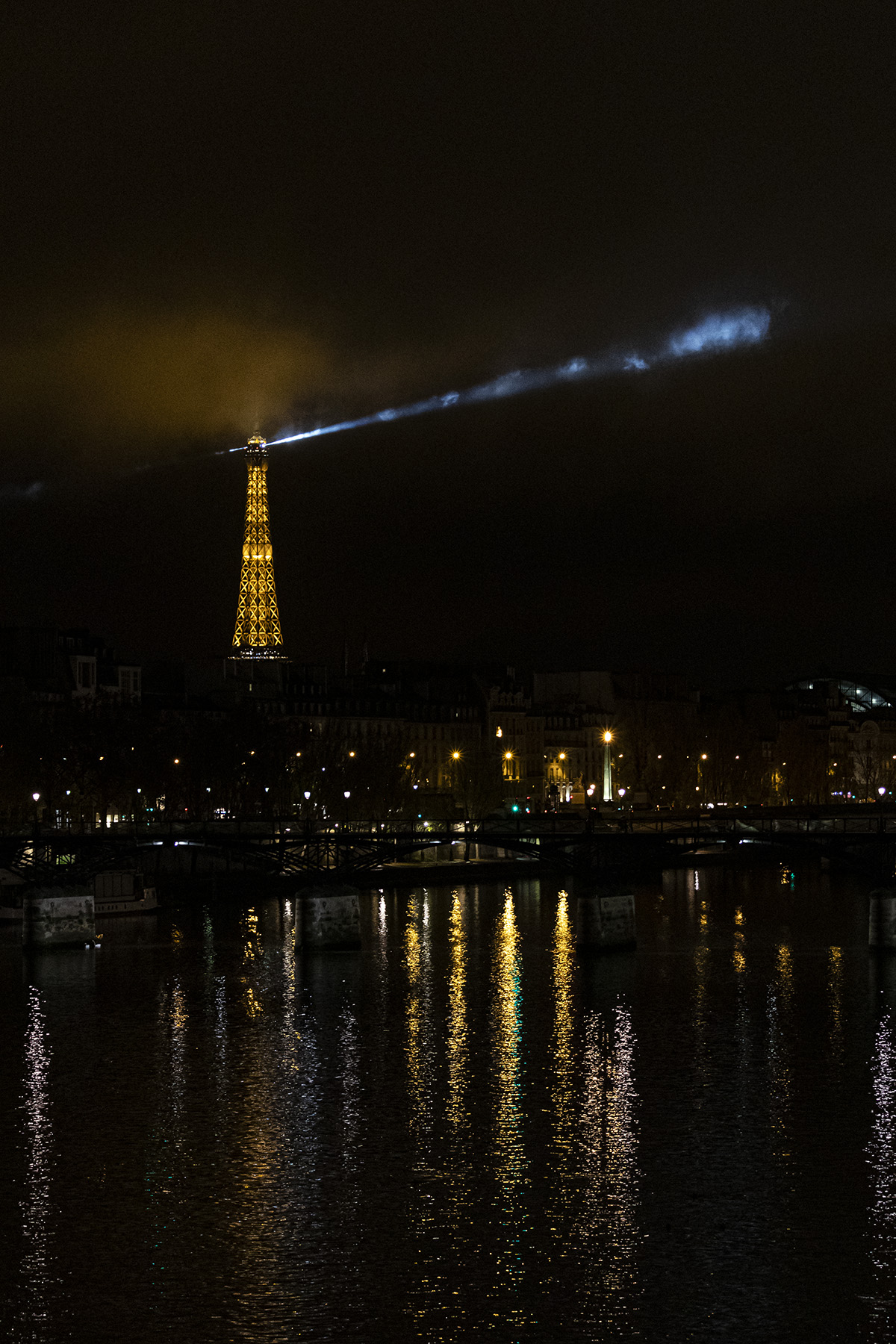
I am back from Paris now, but very much still under its influence. My final night in Paris, I walked down to the Seine River just before midnight. A light drizzle was falling, but I did not care. If anything, the rain made everything more beautiful, creating additional reflections on the cobblestone streets. As I crossed a bridge over the river,  I could see the Eiffel Tower all lit up, its searchlight piercing in and out of the clouds. It was magical!

I was having a great time trying to capture the scene when suddenly the lights on the tower went out. It was as if the Eiffel Tower had suddenly disappeared. I knew that the tower’s lights were not on all night, but I did not expected them to be extinguished right at midnight. Reality sometime has a way of crashing in on moments of fantasy.

One of my readers, Michael Scandling, challenged me to be out walking the streets at midnight to see if I might end up in the 1920’s having a drink with Hemingway. Obviously he too had seen the 2011 movie Midnight in Paris. The lead character played by Owen Wilson spends a lot of time wandering the streets of Paris and suddenly at midnight he repeatedly ends up in the 1920s, rubbing elbows with famous authors, actors, and artists of that era. Who wouldn’t want to have a chance to talk to icons like Cole Porter, Picasso, Gertrude Stein, and Salvador Dali? The movie additionally has wonderful footage of many places in Paris that are very familiar to me. It is one of the few DVDs that I have purchased in the past ten years.

Alas, real life does not generally play out as it does in the movies. Instead I quietly continued my walk, watching as waiters stacked up chairs in restaurants and lights began to dim as Paris prepared to sleep. For many in Paris, it was the end to just another day, but for me it was special, it was midnight on my final day in this special city, at least for this trip.

Eiffel Tower

Eiffel Tower

© Michael Q. Powell. All rights reserved.

Read Full Post »

Folks have responded so well to my little art projects that I thought I would show you a few pages from my sketchbook from the last few days, as I get ready to head towards the airport. The first one is a little more elaborate and was done at my desk on the basis of a photo that I included in a recent posting. It took a lot longer than the others and I had the benefit of having carefully composed the shot with my camera. Composition is a lot harder when you have a scene right in front of you and you try to decide what part of it you want to draw.

The other two sketches were done outdoors as I stood looking at the Pont Saint-Michel across the Seine and then a few minutes later when I was looking at Notre Dame from an overlook point. They were definitely quick sketches, ironically enough because I was on my way to a sketching tour.

It is challenging but fun to learn to feel secure enough to try to draw in public. I am not paranoid in stating that people are watching you—they are.

This will probably be my last posting from Paris, though I have a few more postings that I have conceptualized that I will probably do after my return. Three weeks ago, I remember warning readers that my postings would be different while I was in Paris and they definitely have been. In many ways, I am happy to be ending this trip with a posting with handmade images, images that are deeply personal and reflective of the way that I spent my time here.

Thanks to all of who have stuck with me on this trip and have encouraged me along the way. It has been a weird and wonderful time. As most of you know, the French word for “memories” is “souvenirs.” These little drawings will help to spark my memories in ways that no mass-produced “souvenirs” could ever do.

“Au revoir, Paris.” It doesn’t really mean “good-bye”—it’s more like “Farewell, until we meet again.” I am pretty sure I will be back again before too long.


Montmartre sketch

Pont St Michel Bridge sketch

Notre Dame de Paris sketch

© Michael Q. Powell. All rights reserved.

Read Full Post »

People do some crazy things when they travel to ensure good luck. Art in a museum is untouchable and there are guards and surveillance systems to make sure that you do not get too close to it. When art, particularly statues, is in a public place, however, people choose to rub various parts of the artwork, which is particularly noticeable with bronze statues.

Last week I came across two examples of this “touchable” art while wandering the back streets of Montmartre. The first one is a tribute to the work of French author Marcel Aymé, a short story called Le Passe-Muraille (The Man Who Could Walk Through Walls). I read a synopsis of the short story and essentially a man gained the ability to pass through wall, but eventually this ability began to fade and he got stuck forever in the wall. The statue is pretty high up from the ground, so it appears that people have chosen to rub his now shiny left hand.

The second piece of “touchable” art is a bust dedicated to French music icon Dalida. Dalida, whose real name was Yolanda Cristina Gigliotti, was a French singer and actress, born in Egypt to Italian parents, according to Wikipedia. She won the Miss Egypt beauty contest in 1954 and began a 31-year singing career in 1956, selling 170 million albums and singles worldwide, and died by suicide in 1987.

It is obvious from the shiny areas of the Dalida statue which parts of her anatomy people choose to touch.

touchable art

© Michael Q. Powell. All rights reserved.


Read Full Post »
It is finally beginning to hit me that my stay here in Paris will soon be coming to a close. Will this shot from yesterday evening be my final image of Notre Dame de Paris in the fading light of the day? Perhaps I will have a chance again tomorrow.

We’ll always have Paris.

Notre Dame de Paris

© Michael Q. Powell. All rights reserved.

Read Full Post »

It is Saturday night in the Paris, the City of Light. I took this photo a short while ago as I was crossing one of the many bridges over the Seine River.

I hope that your Saturday night is as colorful and filled with light.

city of light

© Michael Q. Powell. All rights reserved.

Read Full Post »

Before this trip, most readers could identity my “style” of photography. It is not that all my images looked the same, but many of them contained the same or similar subjects and were photographed in similar ways with the same gear. My photography here in Paris may have confused some people, because I have photographed lots of different things. There have been buildings and people, close-ups and extreme wide angle shots, and touristy and artsy images.

Today I would like to confuse things a little more with an abstract architectural shot that I took earlier this week. The image is a shot of a ramp that is part of the Passerelle Léopold Sédar Senghor, a footbridge over the Seine River that I photographed from close to the ground looking upwards using a mini tripod. If I were to ask you what the French word for “bridge” is, many of you could correctly answer “pont.” Maybe you grew up singing “Sur le pont d’Avignon” or know the word from some incidental contact with France.  So what exactly is a “passerelle?” It is the word that the French use for a footbridge, a gangplank, or a catwalk.

This bridge is pretty cool for several reasons. It crosses the Seine in a single span with no piers in the middle. Its deck is made of ipe, a kind of exotic wood from Brazil. Finally, this bridge is really new, especially by Parisian standards—it was built between 1997 and 1999.

So what is my style? “Eclectic” might be the right word now.

Passerelle Léopold Sédar Senghor

© Michael Q. Powell. All rights reserved.

Read Full Post »

When I was a college student majoring in French literature, which brought me to Paris for an academic year from 1974-1975, we spent quite some time studying the works of René Descartes, the French philosopher, mathematician, and scientist. Most of us are familiar with the quote “I think, therefore I am,” (“je pense, donc je suis” in French), but I was surprised to learn that a better English translation might well be “I am thinking, therefore I am.” Why? Those who deeply study Descartes’ work believe that Descartes was trying to express the idea that it is in the very act of thinking that he proved his own existence. I admit this is pretty esoteric and geeky, but it is part of my memories of Paris.

Yesterday I visited the Musée Rodin that is housed in a beautiful building, the Hôtel Biron, where noted French sculptor Auguste Rodin worked and lived. The French government bought the building in 1911 and was going to evict Rodin, but he made a deal with the government, pledging to donate his works to the state if it turned the building into a museum and let him remain their for the remaining years of this life. The museum and its surrounding gardens house and amazing collection of Rodin’s works, along with paintings by Monet, Van Gogh, and other artists.

I consider myself to be a thinking man and Rodin’s famous statue, Le Penseur (The Thinker) has always been my favorites. Yes, the statue has been overly commercialized and there are multiple castings of the statue throughout the world. It is difficult to say which one is “the” original, since a smaller version of the stature was designed to be part of Rodin’s large work Gates of Hell. Emplaced outdoors in Rodin’s world, surrounded by countless other works by Rodin, the version of statue at the Musée Rodin feels authentic—it is the one that was donated to the people of Paris in 1906.

One of the coolest thing for me about sculpture, especially when it is outdoors, is that you can examine it from multiple angles and the feel of the statue changes as the light and weather changes. I spent a lot of time with The Thinker yesterday and even spent some time seated on a bench with two others as the three of us silently worked on our sketches of the well-known sculpture. As the final photo shows, my skills have not yet improved, but my confidence has definitely increased. I did not feel ill at ease or self-conscious when sketching.

Two things really struck me about Rodin’s work as I was sketching. The first impression was a sense of wonder and amazement at Rodin’s ability to capture the human physiques. My rudimentary drawing skills kept rendering the body with straight lines— ended up with skinny arms and legs—while Rodin expressed so well the muscular curves of the men he sculpted. Secondly, I concluded that it is near impossible to sketch hands and feet, especially when they are twisted or contorted. There are just two many moving parts in hands and feet, which makes knees and elbows seem easy by comparison.

The Thinker in Paris

The Thinker in Paris

The Thinker in Paris

© Michael Q. Powell. All rights reserved.


Read Full Post »

Those of you who know me well are probably surprised that I have not yet posted an insect photo from Paris. I have chased after a few hornets and flies, but came up pretty much empty-handed. Yesterday, however, I came upon this cool little ladybug on top of a pole blocking off a pedestrian zone and finally captured an urban insect photo worth posting.

All things considered, the ladybug was quite cooperative. She—the ladybug might be a male, but the name causes me to assume it is a female—crawled around the spherical surface on the top of the pole, giving me a number of different views. I do not have a true macro lens with me, but I do have a 24mm lens that is sharp and lets me get pretty close.

I initially tried shooting downward at the ladybug, but the results were not very exciting. When I bent down so I was at eye-level or maybe slightly lower, I got a cool, out of focus street background that I really like.

I do not know enough about ladybugs in France to know if this is a domestic one or is a foreign visitor—there are certainly plenty of those in Paris, present company included.


ladybug in Paris

© Michael Q. Powell. All rights reserved.

Read Full Post »

Age is a relative thing. I chuckled a little yesterday when I read a sign next to this spectacular Gingko tree (Gingko biloba) that characterized it as a “young man,” despite the fact that it was planted in 1895. Putting aside the fact that there are male gingko trees and female gingko trees, a concept that blows my mind, gingko trees, which originated in China, can live to be 1200 years old and are “potentially immortal.”

I spotted this tree while visiting the Jardin des Serres d’Auteil. This botanical garden, located near the Bois de Boulogne on the edge of Paris, dates back to 1761 and has an immense complex of different greenhouses, some with groupings based on botanical species and some geographically based. I was particularly struck by the ones ones focused on the Sahara desert and one focused on tropical South America. In the latter case, I had to keep wiping off the lens of my camera, because it was fogging up in the steaming heat of the greenhouse. Unfortunately, some of the greenhouses with the most spectacular plants were only open when gardeners were physically present, so I was not able, for example, to see their collection of orchids.

The leaves of the gingko tree were mostly faded and fallen this late in the year, but I still  marveled at the size of the tree and the golden carpet that surrounded it. A sign noted that in 2011 this tree was 82 feet (25 meters) in height and its trunk had a circumference of 13 feet (395 cm).

I think that this gingko tree was the only one of its species at the garden. Somehow I felt like a personal ad, “Young male gingko tree in Paris seeks companion.” I wonder if there is a special category for its type on dating apps.Gingko tree in Paris

Gingko tree in Paris

Gingko tree in Paris

© Michael Q. Powell. All rights reserved.

Read Full Post »

It is beginning to look a lot like Christmas here in Paris. Earlier this week I awoke to the sounds of a large truck with its engine running loudly right outside of my window. Trucks come through early in the morning to collect trash, but this was different, because it was mid-morning—playing with art had kept me up past 2:00 in the morning and I had allowed myself to sleep a bit later than usual.

What were they doing? “My” apartment is located on a mostly pedestrian street called Rue Montorgueil in the center of Paris. Our neighborhood, like several others that I seen this week, was putting up street decorations for the holidays and it was those efforts that had roused me from my sleep. The first photo shows my view of one of entrances to my neighborhood yesterday evening as I walked back from another meandering journey through Paris.

Earlier in the evening I finally investigated the large Ferris wheel that was installed in a corner of the Tuileries Garden shortly after my arrival. I had initially assumed that it was part of some kind of fair, but as I approached—and took the second photo below—I discovered that it is part of a large Christmas market. The market has a number of different rides, stands for a wide array of products, and an incredible selection of food and drinks. I was tempted by sausages, and then by raclette, and almost gave in to a hot mixture of potatoes, cheese, and bacon called Tartiflette.

In the end, I settled on one of my old favorites, a Croque Monsieur. Essentially this is a fancy grilled ham and cheese sandwich, but it is so much more than that. The heavy layer of cheese on top was simultaneously crunchy and gooey when it came out of the oven elevated this sandwich high above its American counterpart and that is saying a lot, considering now much I love grilled cheese sandwiches.

Paris looks pretty with the Christmas lights, but a part of me resents the change in the vibe of the city. The meandering cobblestoned streets that I find so charming seem slightly besmirched by a sense of commercialization that threatens to draw us away from the true meaning of the holiday.


Rue Montorgueil

ferris wheel in Paris

© Michael Q. Powell. All rights reserved.

Read Full Post »

How fast is a minute? As I mentioned in an earlier posting, I went on a sketching tour in Montmartre yesterday and I thought we would be sketching static objects like buildings, which we did. Then we moved into figure sketching. Yikes. That seemed to move things to a whole new and unanticipated level. The instructor, Romain, gave us a quick lesson on human proportions and then he assumed several static poses. We had a minute to sketch each one, pausing momentarily in between poses for him to provide feedback on our work.

As a final exercise, Romain adopted five slowly moving poses and we had one minute to sketch him in pen from head to toe in some part of each motion. Wow! Without a pause he would move to another dynamic pose. Each of those minutes went by really quickly and I felt like I was out of breath after five minutes of constant focus.

We all had a little laugh when the most skilled of the three of us taking the class ran out of time with one of her figures, which consequently  had no head. It was a little ironic, because just minutes before we had seen a statue of Saint Denis holding his head in his hands. Saint Denis, a Bishop of Paris, was martyred for his faith in 250 AD by decapitation. A popular story claims that the decapitated bishop picked up his head and walked several miles while preaching a sermon on repentance.

For fun, here are a couple of pages from that final sketching exercise. I can understand better now why artists need so much practice and training.

Sketching in Montmartre

Sketching in Montmartre

© Michael Q. Powell. All rights reserved.

Read Full Post »

Yesterday I went on a three hour sketching tour, which turned out to be awesome once I got over some initial inhibitions over doing art in the public eye. Our instructor/guide, who is a young professor of art in the University of Paris, led us on a mini tour of Montmartre, sharing liberally fascinating tidbits of information on the history of this area of Paris and its role for the artistic movements in Paris. Along the way, he also shared his personal history as an artist and his own views on art.

Before we began, he issued us a collapsible stool, a sketchbook, and a little pouch of materials. At preselected points along the way, we stopped, opened the stools (sometimes literally in the middle of a sidewalk) and had a specific, timed assignment. There were only three of us in our little class, so we got plenty of attention as we sketched, though Romain’s comments were mostly in the nature of gentle questions.

Our first assignment began when we stopped in front of a beautiful pink house, known as La Maison Rose. This building, which was probably built in the 1850’s has a fascinating history and was immortalized by several painters. If you are interested in the history of the house, here is a link to a really engaging article on the blog at parisnicevacations.net that initially appeared in French in Montmartre-Addict. Of note, there is a very interesting connection with Picasso and one of his former models.

As the clocked ticked down inexorably, the blank page challenged me, defying me to create something with my hands, my mind, and my three graphite pencils of different hardnesses. Romain, our instructor, emphasize the importance of the first line, the line that would set the parameters for the entire sketch. I wish I could describe for you what was going on in my head as I worked on this first sketch, but it passed in a blur. I know that people passed and watched us, but I was so focused on my work that I paid them no attention.

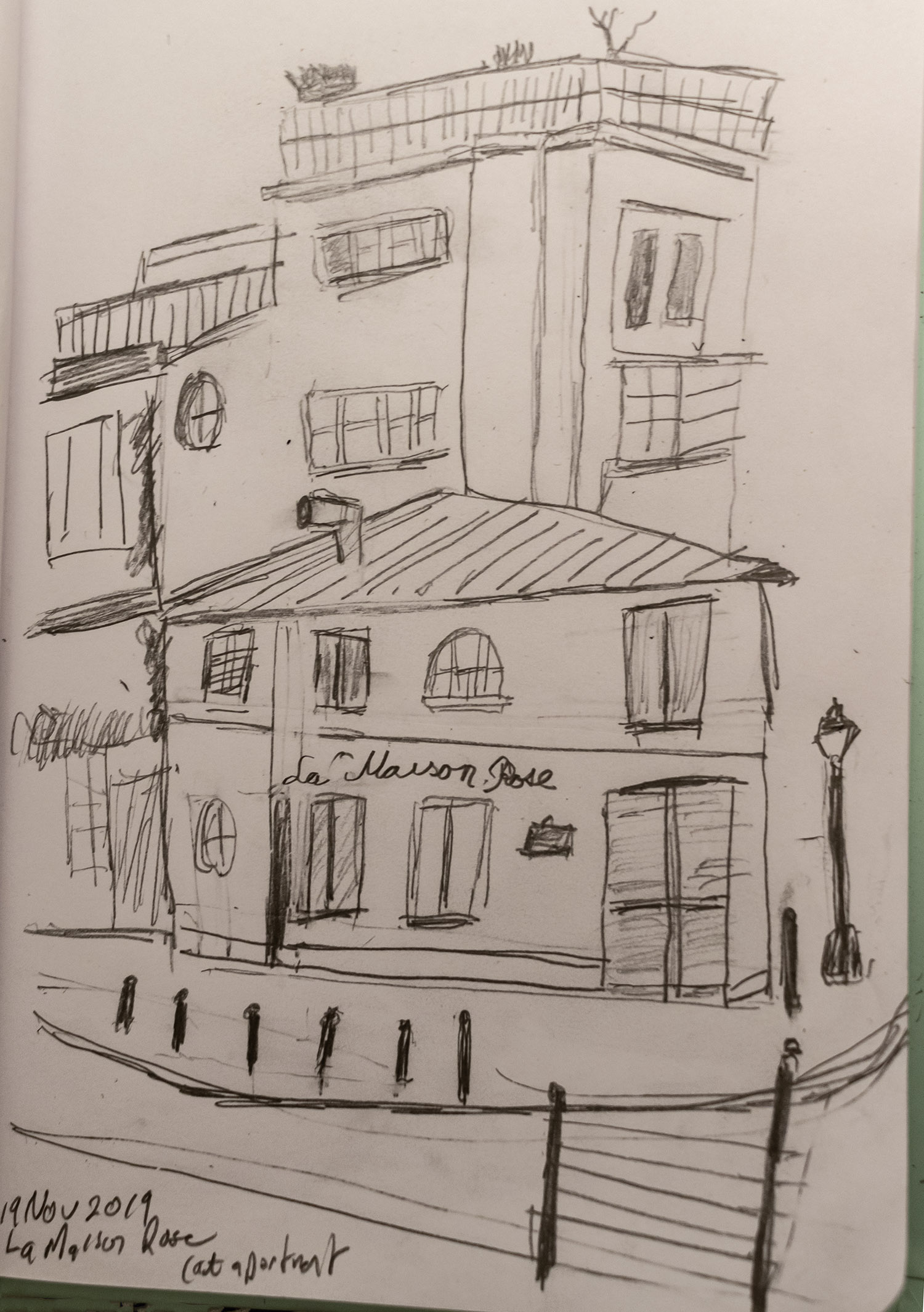
We had 20 minutes for the sketch, if I recall correctly, which sounds like a lot of time, but it was so easy to get distracted in the details of the building. The second photo below shows the results of our initial sketches. Can you guess which one is mine?  While we were sketching La Maison Rose, Romain watched us and even did his own little sketch of us sketching. It’s not hard to pick me out in that sketch, shown in the third photo below, considering that I was the only guy in the group of budding artists.

We did some other exercises, including sketching in pen, and I might do another posting about that. I was pretty energized by the experience and as the evening wore down, decided to try a more deliberate sketch of La Maison Rose, using my photo as reference material, and the result is shown in the final photo. The lines are a little wonky and I didn’t really leave enough white space on the page for the building to breathe, but I like it a bit better than my initial sketch en plein ail, though I must confess that I spent more time on it, used an eraser more, and was a little tired when I completed it at 2:00 in the morning.

In case you wondered, my initial sketch was in the sketchbook on the left. My German colleague, whose sketch book was in the middle, seemed to be the most experienced of the three of us and has a somewhat more refined style. My Australian colleague, who was originally from South Africa, tended to sketch more lightly and delicately, and it’s a little hard to see her work in the photo. We really were not in competition, so it was easy to share our results with each other. What amazed me the most, perhaps, is that throughout the entire class, our basic “styles” and approaches did not change much.

My sketches tended to be darker, bolder, and a bit chunky than the others—I think I am ok with that, though I obviously do need to a lot of work on actual drawing techniques. I have signed up for a shorter sketching tour with Romain on this coming Sunday that begins outside of Notre Dame and I hope to get in a little practice before then.

La Maison Rose in Monmartre

Sketching in Montmartre

Sketching in Montmartre

Sketching in Montmartre

© Michael Q. Powell. All rights reserved.


Read Full Post »

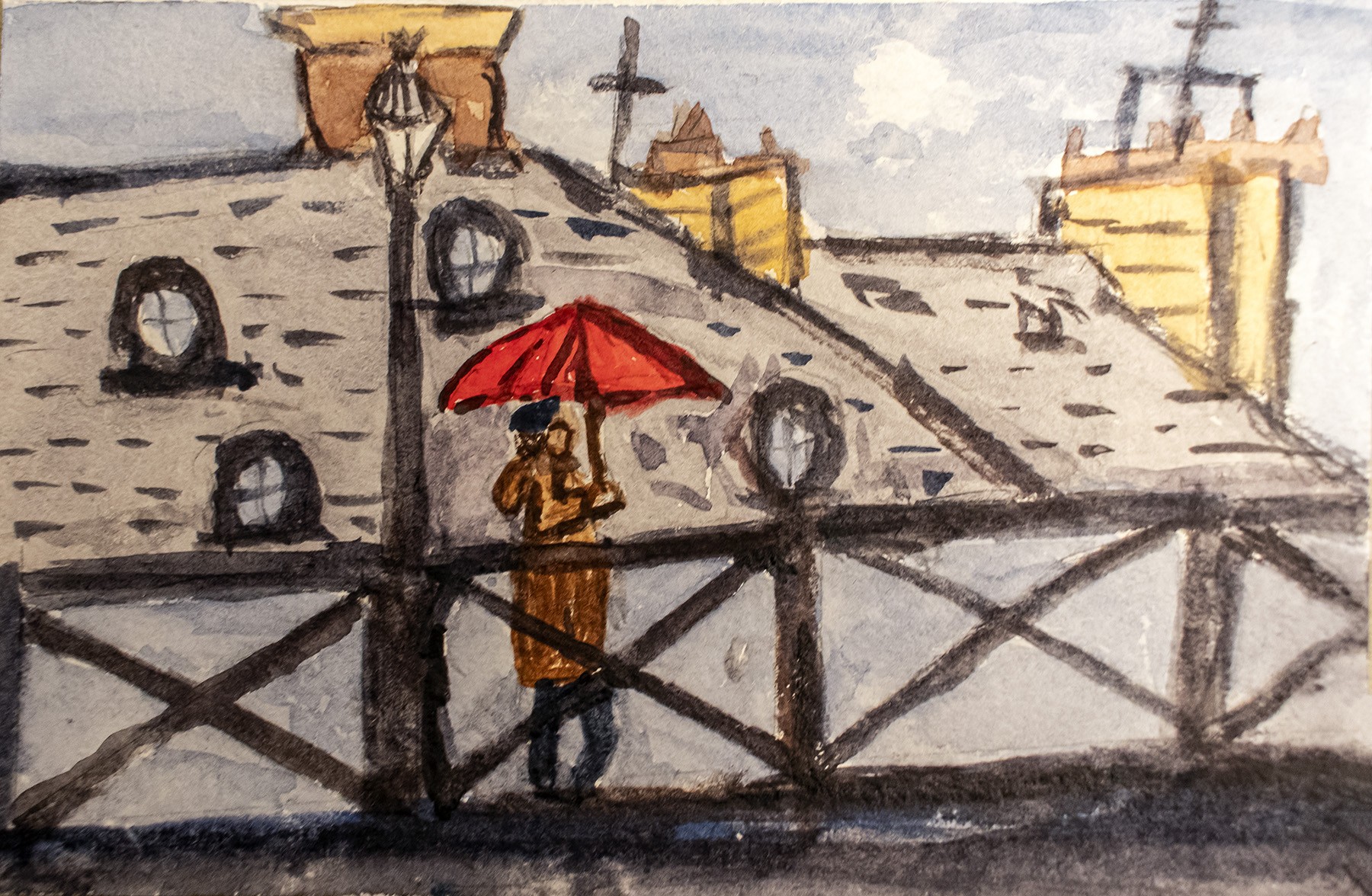
How comfortable are you in doing something that you know you are not good at and then publicly showing the results? I have tried watercolors a few time and brought some watercolor stuff with me to Paris. My trip is over half over, so I decided last night to play a bit, using some of my recent photos for reference. I definitely need lots of practice, but it was incredibly enjoyable.

I think “primitive” would a positive spin on my watercolor “style”.  I’m finding water control and brush control to be my biggest challenges at the moment. Those two issues make it hard for me to put in details, because the lines expand really quickly if there is too much water. Of course, it helps to be able to draw, which I don’t do well, so proportions can quickly get skewed.

Here are a few geeky details for those of you who paint with watercolors. I used a twelve color DaVinci full pan watercolor set in a metal tin. DaVinci is a small company in California that makes its own paints and they are a higher quality than the student grade paints I have used before. For paper, I used several brands, but they are all 140 lbs (300 gsm) in weight and are cold press. The first painting was done on a 4×6 inch (10×15 cm) Fluid 100 block that is 100% cotton; the second one on a 5×7 inch (12×18 cm) Fabriano Artistico extra white block that is also 100% cotton; and the final one on a 4×6 inch (10×15 cm) Strathmore postcard that is made of wood pulp.

As I worked and played with the watercolors, I thought of a Sidney Sheldon quotation that I came across recently, “A blank piece of paper is God’s way of telling us how hard it is to be God.” There is something really special about the creative process, making something with your own hands.

Later today I am going on a three hour sketching tour in Montmartre, as long as the weather holds. That will be the real test for me, seeing how well I can overcome insecurities and fears while literally in public view.

Watercolor Painting in Paris

Watercolor Painting in Paris

Watercolor Painting in Paris

© Michael Q. Powell. All rights reserved.

Read Full Post »

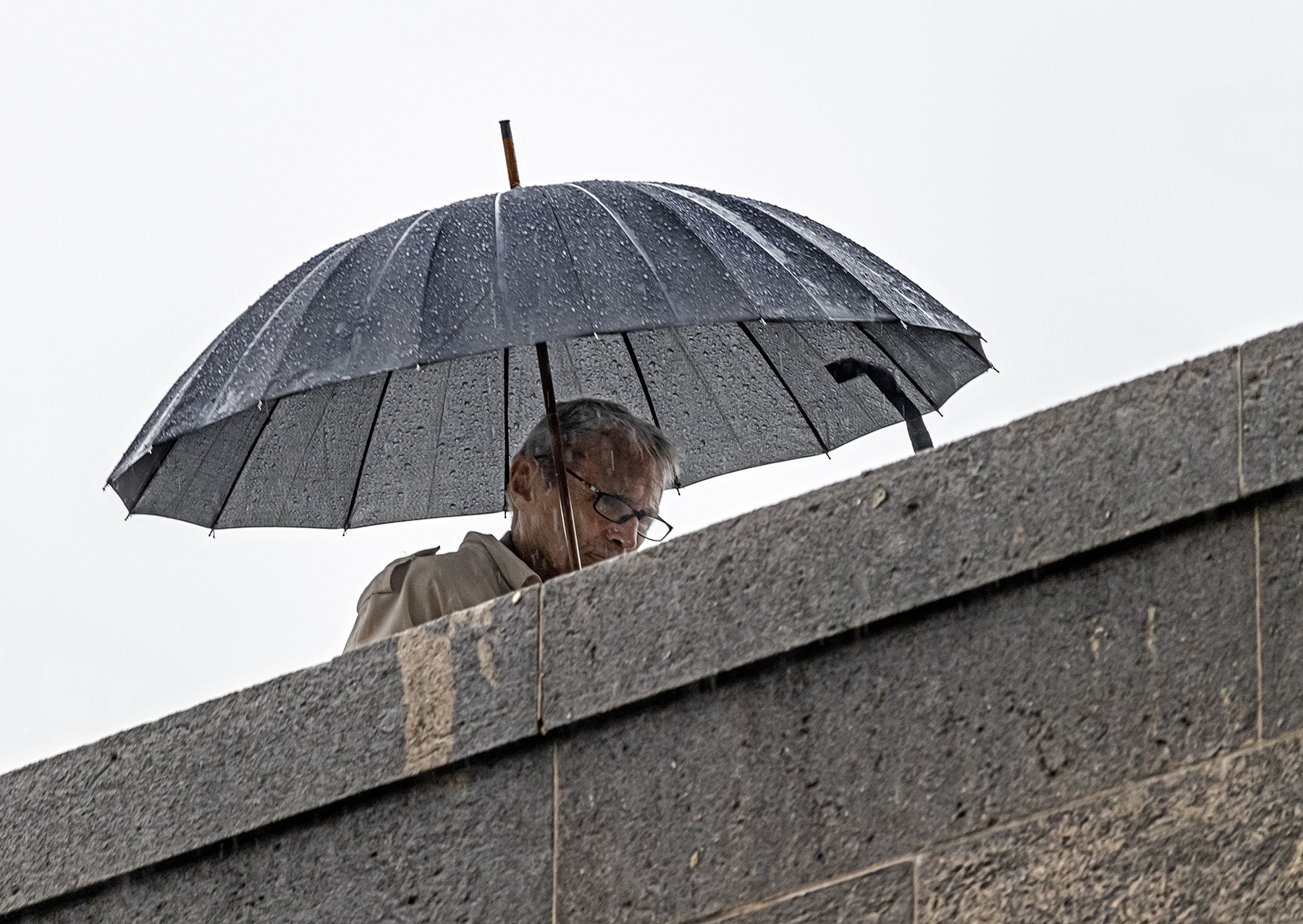
I don’t know why, but last week during a day in which it rained continuously, I went snap happy photographing umbrellas. The umbrella images that I posted already were pretty straightforward depictions, albeit somewhat artistic. Here are a few images in which I loosed my creative impulses to capture something a little different.

The red umbrella in the first image really stands out, but there are a few other details that caught my eye. The normally transparent panels on the Pont des Arts have become a bit translucent because of the rain drops, adding a nice effect. You may also notice the cluster of locks on the lamppost.

The two last facts that I mentioned are related. Years ago someone came up with the way that lovers should get locks with their engraved names and affix them to a Parisian bridge as they declare their eternal love. This has turned into a huge problem—there are now locks everywhere in Paris—and there has been a partial collapse of a bridge caused by the additional weight of the locks. According to an article by the group No Love Locks, Parisian authorities decided in 2014 to replace the mesh grates on the Pont des Arts, covered with locks estimated to weigh 60 metric tonnes, with the transparent panels. Obviously that has not deterred people from finding new locations for the locks—the organization I mentioned has a slogan that grabbed my attention, “Free your love. Save our bridges.”

When I took the second photo, just as was the case with the first one, I was standing on one of the paths along the Seine River and shooting at an upward angle. We often use our umbrellas as protection, from the rain as well as from others, and this shot up under the umbrella has an unusual, almost intimate feel to it.

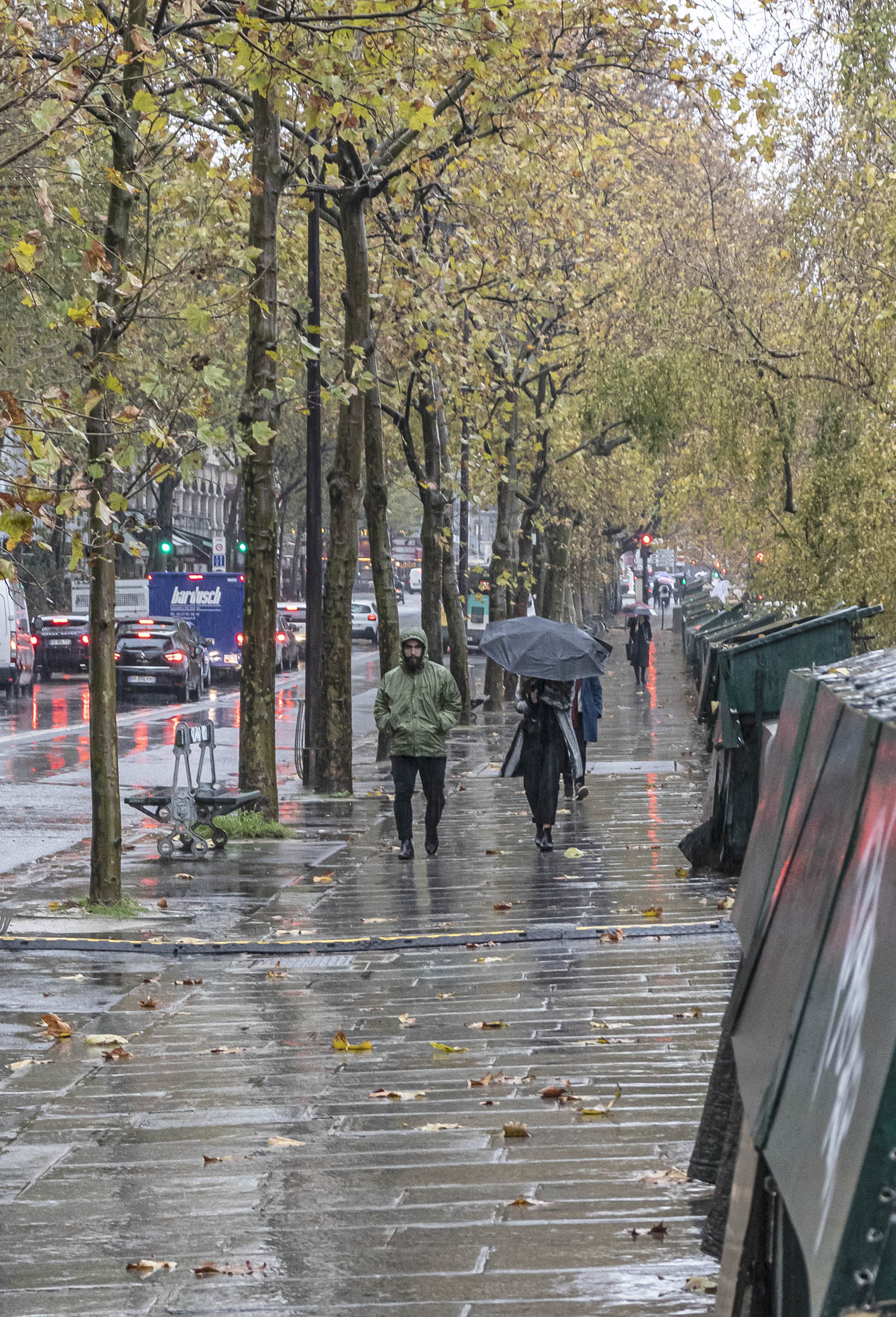
It is hard to explain why I like the final shot. Maybe it is because of the reflected lights on the wet pavement, or the fallen leaves, or the people walking, bounded on one side by the row of trees and on the other by the covered green stalls of the bouquinists (booksellers). It is the kind of image that I could imagine turning into a painting.

So there you have it, a curious mix of images. Before I set out on this trip to Paris, I remember warning readers my postings would be atypical, and possibly a bit strange during my time here. I think this posting is the result of consciously trying to express myself “outside of the box” in a way that is fun and yet a little scary.

Red umbrella in Paris

Under the umbrella

Alongside the Seine

© Michael Q. Powell. All rights reserved.


Read Full Post »

Montmartre is the small hill with the highest point in Paris where the stunningly white Sacré-Cœur basilica is located. Previously I have posted panoramic views of the city that I took from the stairs of Sacré-Cœur.

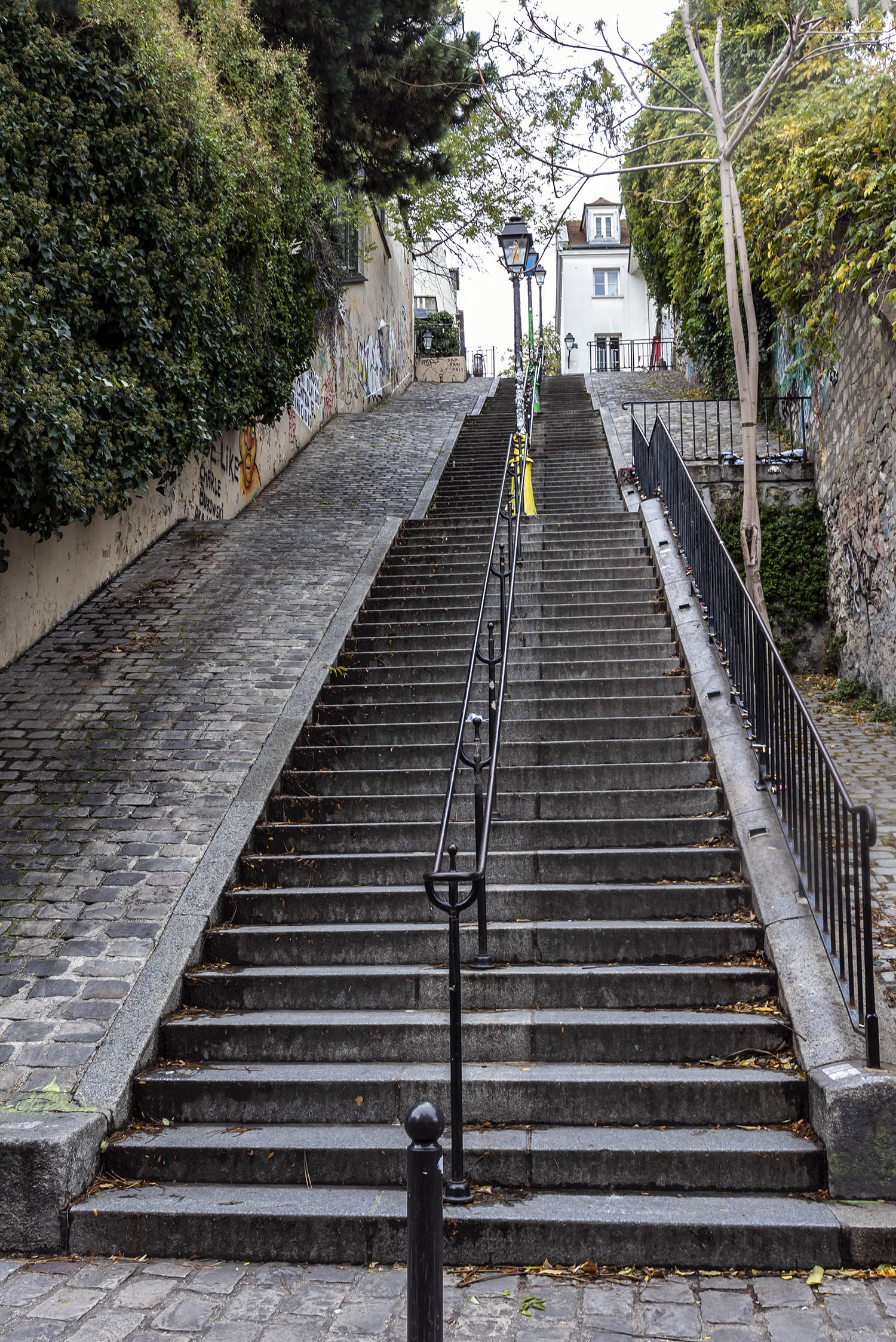
How do you get there? There is a little funicular train that will take you up the hill, but I have always elected to walk. Multiple sets of stairs approach the summit from different directions and I have climbed up a lot of different ones. Some of them are decorated with colorful patterns, but all are steep and long.

Montmartre has become one of my favorite locations to visit and I think I have walked there every other day on average. Here are images of a few of the sets of steps that I have successfully encounterd over that period of time.

stairs to Montmartre

Stairs to Montmartre

stairs to Montmartre

© Michael Q. Powell. All rights reserved.

Read Full Post »

I decided to go for a late night stroll on Saturday and ended up at Place Saint-Michel in the student district not far from Notre Dame. Where else could I have been able to order a crêpe with Nutella and bananas after midnight? For the record, the crêpe was amazing.

Along the way I captured this image of the Pont Saint-Michel (Saint-Michel Bridge), one of 37 bridges over the Seine River in Paris. Those bridges come in all shapes in sizes, with several of them pedestrian only. This particular bridge links the left bank of the Seine with  Île de la Cité, one of only two remaining natural islands in Paris. The island, on which the Notre Dame de Paris cathedral is located, is historically viewed as the center of Paris.

The Pont Saint-Michel, which was built in 1857, is quite distinctive in appearance. If you look closely you will see two large N’s, each surrounded by a laurel wreath. These are symbols of Napoleon III’s Second Empire that lasted from 1852 to 1870. In the right hand side of the photo you can see the lights of the embankment on the Seine and above them the lights at street level.


Pont Saint-Michel
© Michael Q. Powell. All rights reserved.

Read Full Post »

One of the coolest thing about digital photography is the way that software allows you to change the look and feel of an image. This evening I played around with some different presets in Luminar 3 and got a look to one of my recent umbrella shots that I really like—almost like an antique photograph.

I tend to be somewhat of a minimalist when processing my wildlife photographs. I shoot in RAW, so I normally will tweak things like contrast, exposure, clarity, highlights and shadows, but except for cropping that is pretty much it. Shortly before leaving for this trip I downloaded Luminar 3 as part of a special deal in a pre-sale of Luminar 4.

I haven’t really used it much, but I decided to experiment with it during this trip. I tried some different looks with a recent photo that I really like. There are dozens and dozens of presets and all are adjustable, but none of the color ones satisfied me with the images.

I really like black and white and there are a whole range of options in the Tonality group of presets, including one that covers Toning. I liked the Sepia preset a lot, but settled on one called Gold and Selenium. After I made a few adjustments I got this look.

What do you think? Do you miss the bright colors of the umbrellas and the foliage in the altered version? Although I published the original shot recently, I decided to reprise it here for ease of comparison.

I like both versions a lot, though I must admit that the “feel” and “vibe” of the separate images are quite different.

Umbrellas in Paris

Umbrellas along the Seine

© Michael Q. Powell. All rights reserved.


Read Full Post »

With the recent onset of cold and rainy weather here in Paris, it is hard to remember that we had a bit of sunshine earlier in the week. As I was walking along the banks of the Seine River during one such sunny period, I grew entranced by the shadows that trees were casting onto the embankment walls. People passing by me must have wondered what I was photographing, given that I was facing a seemingly blank wall and had my back to the river.

The images show mostly skeletal tree forms, but some show evidence of hardy leaves persistently clinging to the branches, not yet ready to fall. If you examine the photos carefully, you can see some of the details and textures of the materials used to build these embankments. Just a few yards above, there is busy world, full of cars and people hurrying about, but here, life moves at a slower pace.

I love too seeing the giant iron rings intermittently embedded in the embankment walls.  These, I believe, are a legacy of past commerce along this river, places where barges would tie up, perhaps for safety or sleep, or simply to silently surveil the scenic surroundings. There are times in our lives when we could all use spots like that.

shadow tree

Shadow Trees on Seine River

© Michael Q. Powell. All rights reserved.


Read Full Post »

« Newer Posts - Older Posts »