Feeds:
Posts
Comments

Archive for the ‘Art’ Category

When I am out in the wild with my camera, most of my senses are fully engaged. I am listening intently and scanning constantly, seeking audio or visual clues of the presence of potential subjects. During much of the year, sounds don’t help much, because the leaves on the trees hide the sources of the sounds. I marvel at the ability of some folks to identify birds by their calls, but I can do that with only a handful of species. So most of the time I rely on movement and to a lesser extent on color for me to acquire a target—if a bird (or insect) remains still, it often will remain invisible to me.

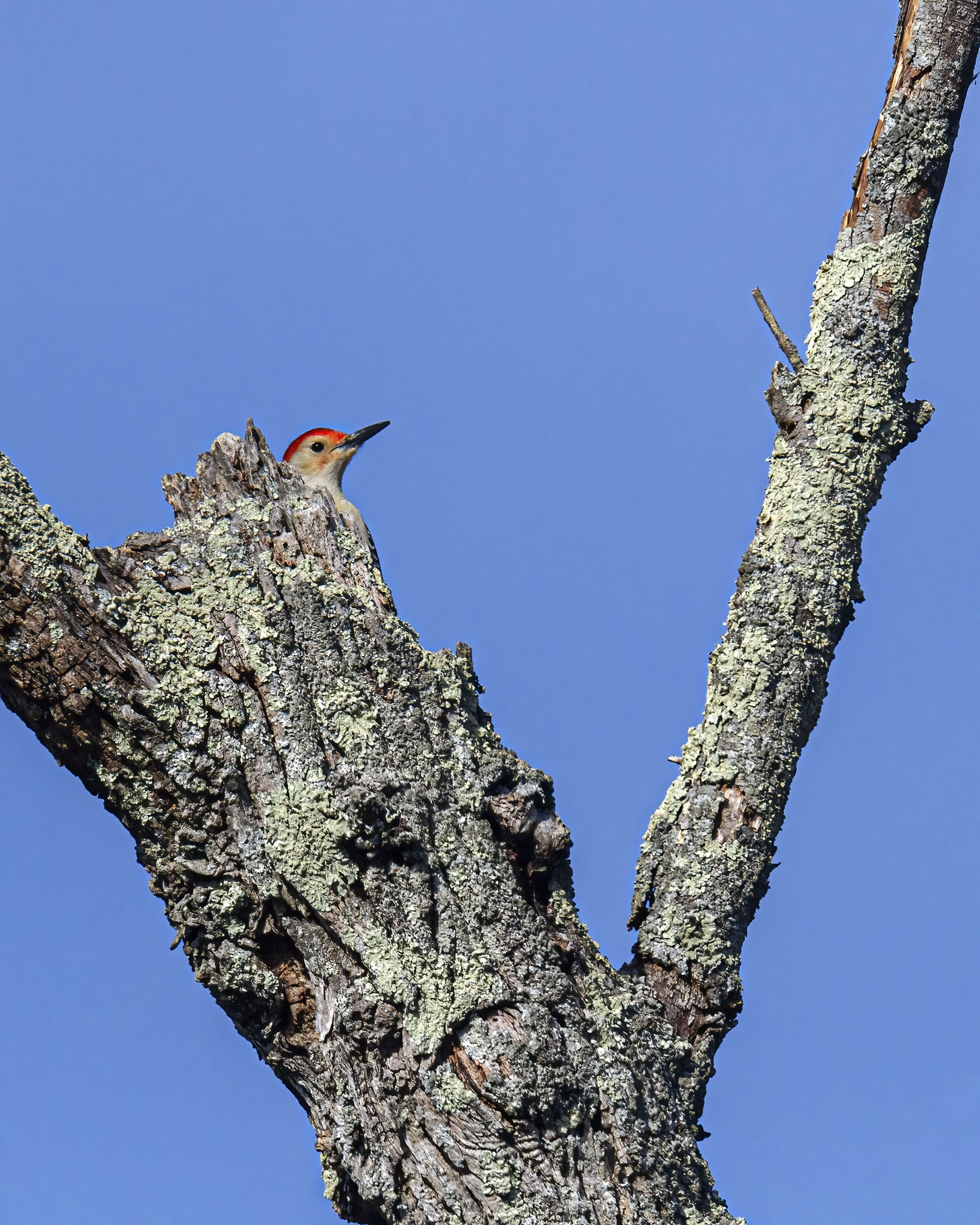
Last week when I was walking about at Occoquan Bay National Wildlife Refuge, I heard the gentle tapping sounds of a woodpecker. I looked in the general direction of the sounds and saw a distant snag, but did not see the woodpecker. Did I have the right tree identified? As I was focusing on the tree, a Red-bellied Woodpecker (Melanerpes carolinus) poked its head out from behind the tree and I quickly snapped off a couple of photos before the bird disappeared again from view.

The woodpecker was pretty far away, even for my telephoto zoom lens, so I knew that I did not get the kind of close-up detailed image that I usually like to capture. However, when I was reviewing the photos on my computer, I found myself drawn to this profile shot of the woodpecker, surrounded by the wonderful texture of the lichen-covered bark of the tree. The image has a bit of an artsy, minimalist feel that I really like.

Red-bellied Woodpecker

© Michael Q. Powell. All rights reserved.

Read Full Post »

I am still doing a lot of cross stitching and thought that I would mix things up a bit today by featuring two projects that I have recently completed that feature cardinals, one of my favorite birds. I have not figured out how/if I will frame the pieces, but figured it might be interesting to show you the variety of styles that attract me.

The first photo shows a piece called “Autumn Bird” that was designed by Jody Rice at Satsuma Street. Jody’s style is associated with modern cross stitching with its use of bold colors that are not necessarily related to the colors that you actually see in nature. You won’t, for example, see colorful autumn leaves that look like the ones that I stitched.

The second photo shows “Quirky Quaker Cardinal” by Darling and Whimsy Designs and is more reflective of traditional cross stitching, with its use of a limited palette of muted colors and traditional motifs. I love the simplicity of this approach and this project was a fun and easy stitch for me.

The world of counted cross stitch has changed a lot in recent decades, and many people now use digital patterns and software to display their patterns as they are stitching. I’m a bit of a traditionalist and like to use the paper patterns that I can purchase at my local cross stitch store. For the moment at least, these two approaches happily co-exist.

In many ways, the “modern vs. traditional” debate in cross stitch is similar to the range of approaches that exist for wildlife photography. I happily continue to use a digital single lens reflex camera with its mirror and optical viewfinder and am not quite ready to embrace the more modern mirrorless camera, with digital viewfinders and built-in image processors.

Autumn Bird

Quirky Quaker Cardinal


© Michael Q. Powell. All rights reserved.

Read Full Post »

When it comes to color theory, red and green are viewed as complementary colors, i.e. they are on the opposite sides of a color wheel. When used together, complementary colors provide a high contrast and high impact color combination—together, these colors will appear brighter and more prominent.

A week ago I was delighted to post a photo of a perched Carolina Saddlebags (Tramea carolina) dragonfly, a species that is almost always in flight when I am fortunate to spot one. A few days later, I managed to get some even better photos of a perched Carolina Saddlebags during a visit to Occoquan Bay Regional Park.

The lighting was good and the background was far enough away that it became blurry. The complementary colors of the dragonfly and the background really make these images “pop.” The interesting poses of the dragonfly draw in the viewer as well—a breeze was blowing and the dragonfly struggled a bit to maintain its hold on the tip of the vegetation on which it was perched.

It is really cool when the elements of a photograph come together like this and I am able to capture the scene in a way that is both technically and artistically pleasing. It was a good day.

Carolina Saddlebags

Carolina Saddlebags

© Michael Q. Powell. All rights reserved.

Read Full Post »

This year I have rediscovered the joy of cross stitching. In the 1980s and 1990s I completed a considerable amount of cross stitch projects and have many of them hanging on my walls. I was originally introduced to the craft in about 1983 by a young lady friend who was always working on some stitching. I expressed a slight interest in what she was doing and the next thing I know she gifted me with some fabric, floss, patterns, and material. I quickly became hooked.

Over time, though, my life became busy and for almost two decades I stopped stitching. Two ladies at my church work at a wonderful local needlework shop called In Stitches Needlework that I first visited during the pandemic at their invitation. I bought a few new patterns, but did not really start getting back to stitching until earlier this year when I began to attend a twice monthly stitching session at the store. Stitchers of all skill levels sit around and work on individual projects and talk about a wide variety of topics—it is a wonderful community of people who provide me with lots of inspiration and encouragement.

The first photo shows my progress on my current big project, a pattern by Ink Circles called Reflections of Paris. This monochromatic piece includes a number of familiar Paris landmarks. I am about a third of the way through it right now (and already gone through two entire skeins of DMC floss). As you can probably tell, the motifs are repeated four times from the center, which is the square shown near the bottom of the image. As you look down the right and left edges, for example, you can start to see emerging portions of the same shapes that are visible along the top edge. I will be working on this patterns, which calls for 6944 stitches, for quite a while, but I find it to be really relaxing, so I look forward to doing a little stitching each day, if possible.

The second image shows a piece called Country Welcome that I stitched this spring. It was a pattern from the August 1990 issue of Leisure Arts, The Magazine. I used to subscribe to a number of different cross stitch magazines and have held on to the old issues. I tend to like cross stitch patterns that have a minimal color palette.

The final image shows another project that I completed this spring called “Do Everything in Love.” It was a free, but copyrighted, pattern by Silver Creek Samplers that I picked up at my local cross stitch store while checking out one day.

I realize that this posting is quite a change from my normal wildlife photos, but I thought it would be fun to share this other side of me with you all. On some of the days this summer when the weather and humidity make it tough to venture out with my camera, I know I can curl and stitch away in the comfort of my air-conditioned house.

Reflections of Paris

Country Welcome

Do Everything in Love

© Michael Q. Powell. All rights reserved.

Read Full Post »

Whenever I visit Jackson Miles Abbott Wetland Refuge, I never fail to check a spot near a fishing platform where there is a piece of twisted rebar sticking out of the water. In the past, I have seen dragonflies of various species perching on the rebar and it provides a wonderful photographic opportunity, assuming that the dragonfly does not immediately fly away. I generally prefer to photograph dragonflies on natural perches, not on manmade ones, but this is a case when I am more than happy to break that “rule.”

On Tuesday I was delighted to spot a male Eastern Amberwing dragonfly (Perithemis tenera) perched on the aforementioned piece of rebar. I love the contrast between the colors, patterns, and textures of the natural object, the dragonfly, and those of the man-made subject, the rebar. The floating debris on the surface of the pond helps to break up the mostly uniform background without being visually distracting.

I have taken similar shots to this one multiple times, but I don’t mind repeating myself. Each encounter is unique and subtly different. As the Greek philosopher Heraclitus of Ephesus is reported to have said, “No man ever steps in the same river twice, for it is not the same river and he is not the same man.”

Eastern Amberwing

© Michael Q. Powell. All rights reserved.

Read Full Post »

I spent several hours yesterday morning helping to prepare palms and flowers for today’s Palm Sunday services at St. Martin de Porres Episcopal Church in Alexandria, Virginia, my home church. We made a lot of crosses from the palms (and I braided some too), but there are plenty left to wave this morning. We will begin our services outdoors with the Liturgy of the Palms and then the congregation will process into the church singing “All Glory, Laud, and Honor” as they wave their palm fronds.

I made this little arrangement when I returned home yesterday with a cross that I had folded, two braided lengths of palms, and a leftover camellia.

Happy Palm Sunday to all those who are celebrating today as we begin Holy Week.

Palm Sunday

© Michael Q. Powell. All rights reserved.

Read Full Post »

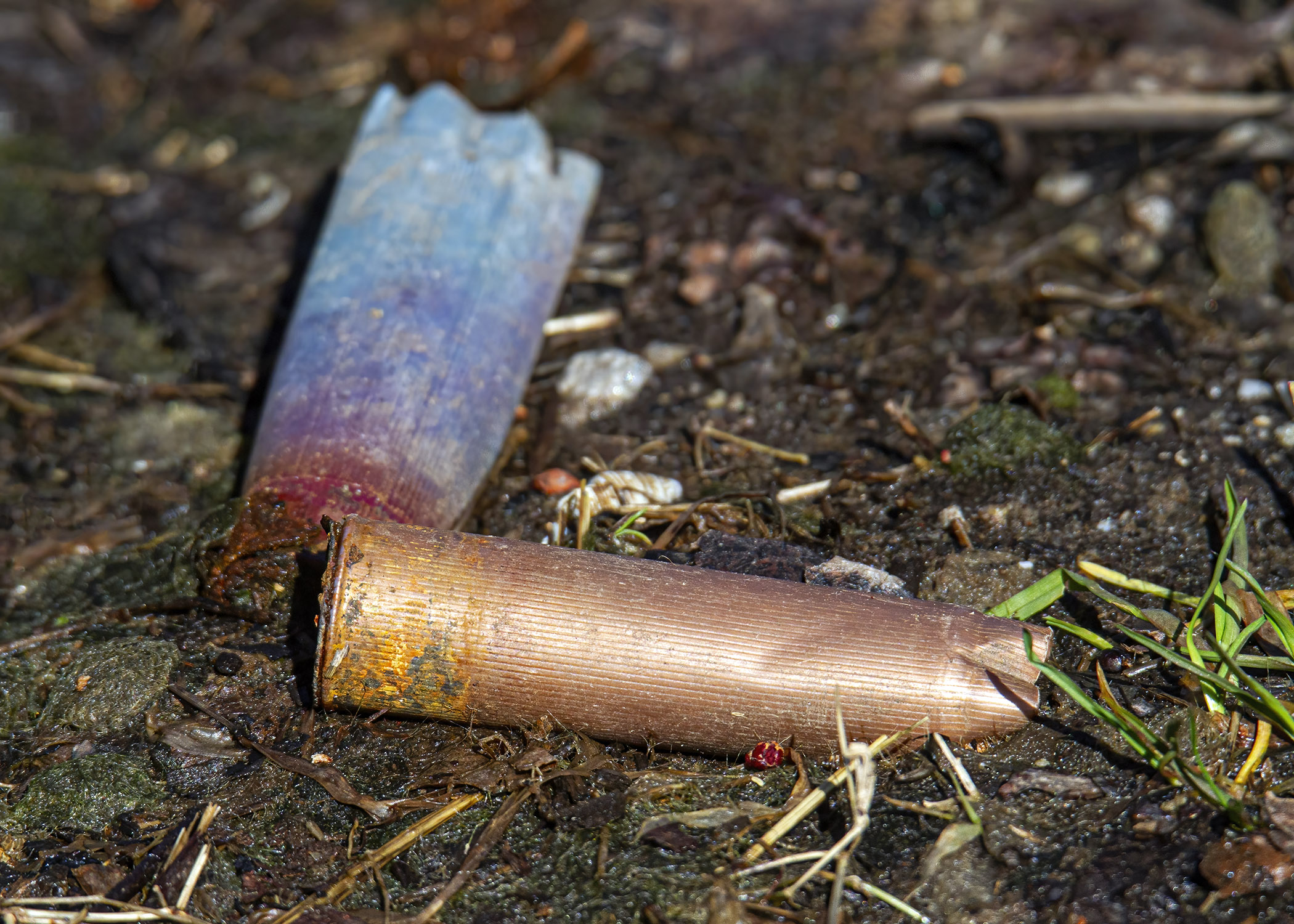
The waterside trails at Occoquan Bay National Wildlife Refuge are often flooded by tidal surges and littered with debris when the waters recede. Some of the debris, like driftwood, snail shells, and clumps of vegetation is natural, but much of it is manmade.

During a recent visit to the refuge, I was shocked to spot a different kind of shel than I am used to seeing—there were multiple used shotgun shells at one location. In some earlier postings I have noted that there are multiple duck blinds in the waters off of the wildlife refuge and during certain seasons I have seen and heard duck hunters using these blinds.

I assume that these shells floated in or were carried in by the tide from one of those duck blinds. (Do used shotgun shells float?) Hunting is definitely not permitted on the grounds of the refuge, with the exception of several days a year when the refuge is closed and deer hunting, which is part of the “deer management program,” is permitted. I am not a hunter, but recognize that there is an overabundance of white-tailed deer in our area that poses a threat to both humans on the roads and to the deer themselves, who may struggle to find food.

I tried to capture these images of the shell as artfully as possible, but the juxtaposition of the natural and manmade elements in the photos is nonetheless jarring for me, considering what the shells were designed to do.

shotgun shells

shotgun shells

© Michael Q. Powell. All rights reserved.


Read Full Post »

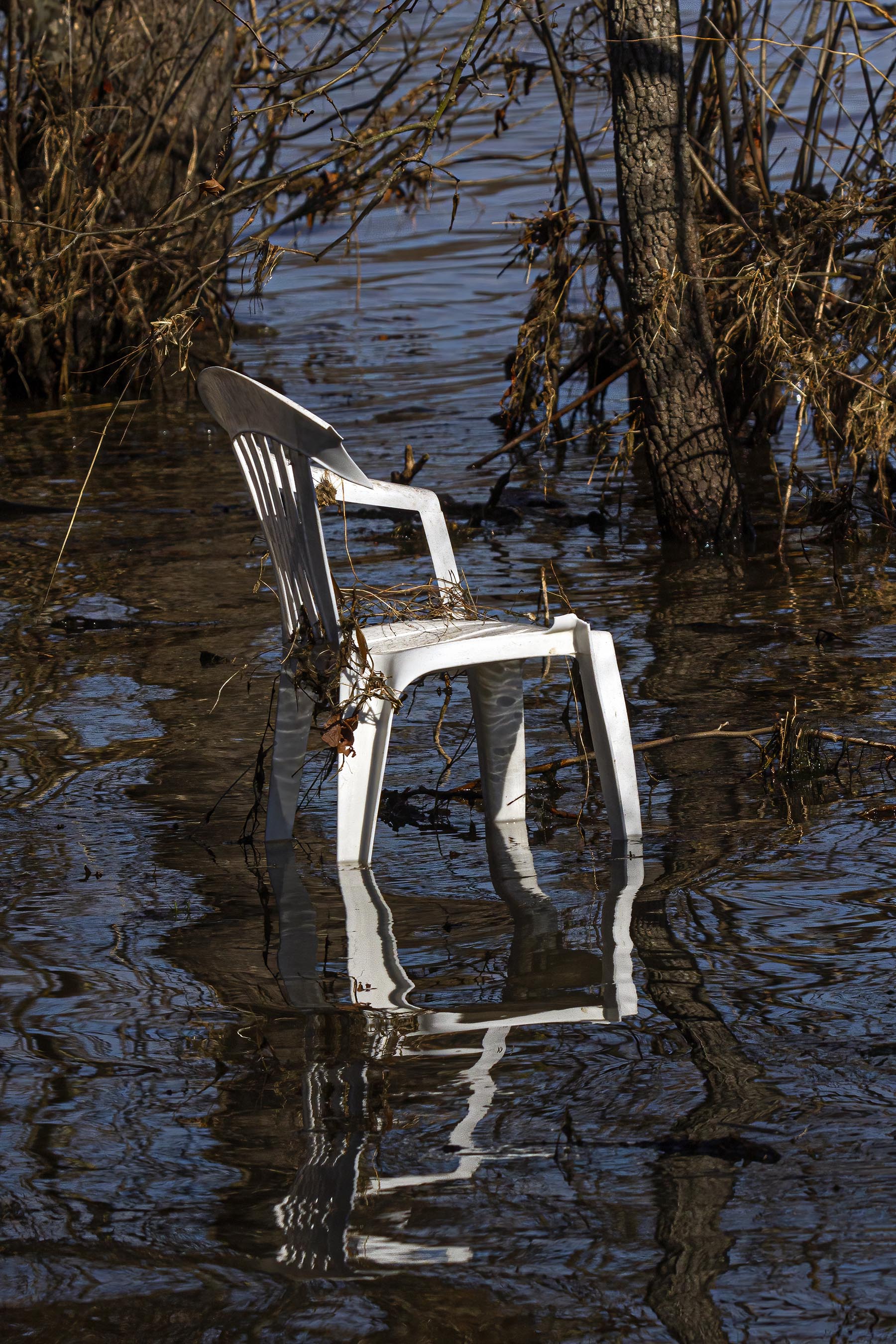
The waters off of Occoquan Bay National Wildlife Refuge are affected by the tidal surges of the Potomac River. As a result, trails that run parallel to the water are sometimes inundated with water, which leaves behind driftwood and other debris when the waters recede.

Last Thursday one of my favorite trails was still flooded and an abandoned chair caught my attention. The broken plastic lawn chair was sitting upright in the shallow water, partially covered in vines. What was it doing there? Where did it come from?

I focus on wildlife and nature subjects most of the time, but will photograph almost anything else that attracts my eye. In this case, the chair seemed to be telling a story of sorts, having an almost metaphorical significance. The image has an almost abstract feel to it and I love the ripples and reflections in the water and the contrast in the shapes and textures of the natural elements in the photo versus those of the manmade chair.

Yes, I know that this is kind of a quirky image, but I like it and decided it was worth sharing.

chair

© Michael Q. Powell. All rights reserved.

Read Full Post »

WordPress is great at keeping statistics. Although it provides lots of data about my blog, I don’t really pay much attention to the numbers. For me, this blog has been primarily a vehicle for expressing myself creatively through my words and my photos. That was my original goal in July 2012, when I wrote my first posting, and I have remained pretty faithful to that approach.

As we begin a new year, though, it is interesting to review some of the statistics for 2023. During the year I published 359 posts with a total of 69,520 words. The blog had 43,575 views that included many views of postings from previous years—out of the 20 most-viewed postings of 2023, only one was published that year.

To give you a sense of context, since 2012 my blog has had a total of 4,995 postings with 427,759 views. The totals may seem impressive, but they actually are quite modest. I have never really aspired to attract a huge audience and am quite pleased with the success that I have achieved. Thanks so much to so many of you who have supported and encouraged me over the years.

I will probably be continuing my “normal” approach during this new year, but hope to venture a bit more into recording videos. I have a small YouTube channel that has languished a bit that I hope to reinvigorate this year.

Many of you know that I love long shadows. I captured the image below early in the morning on 30 December 2023 at Occoquan Bay National Wildlife Refuge. The image is a symbolic representation of my view of this new year that is full of promise and possibilities. Happy New Year!

long shadow

© Michael Q. Powell. All rights reserved.


Read Full Post »

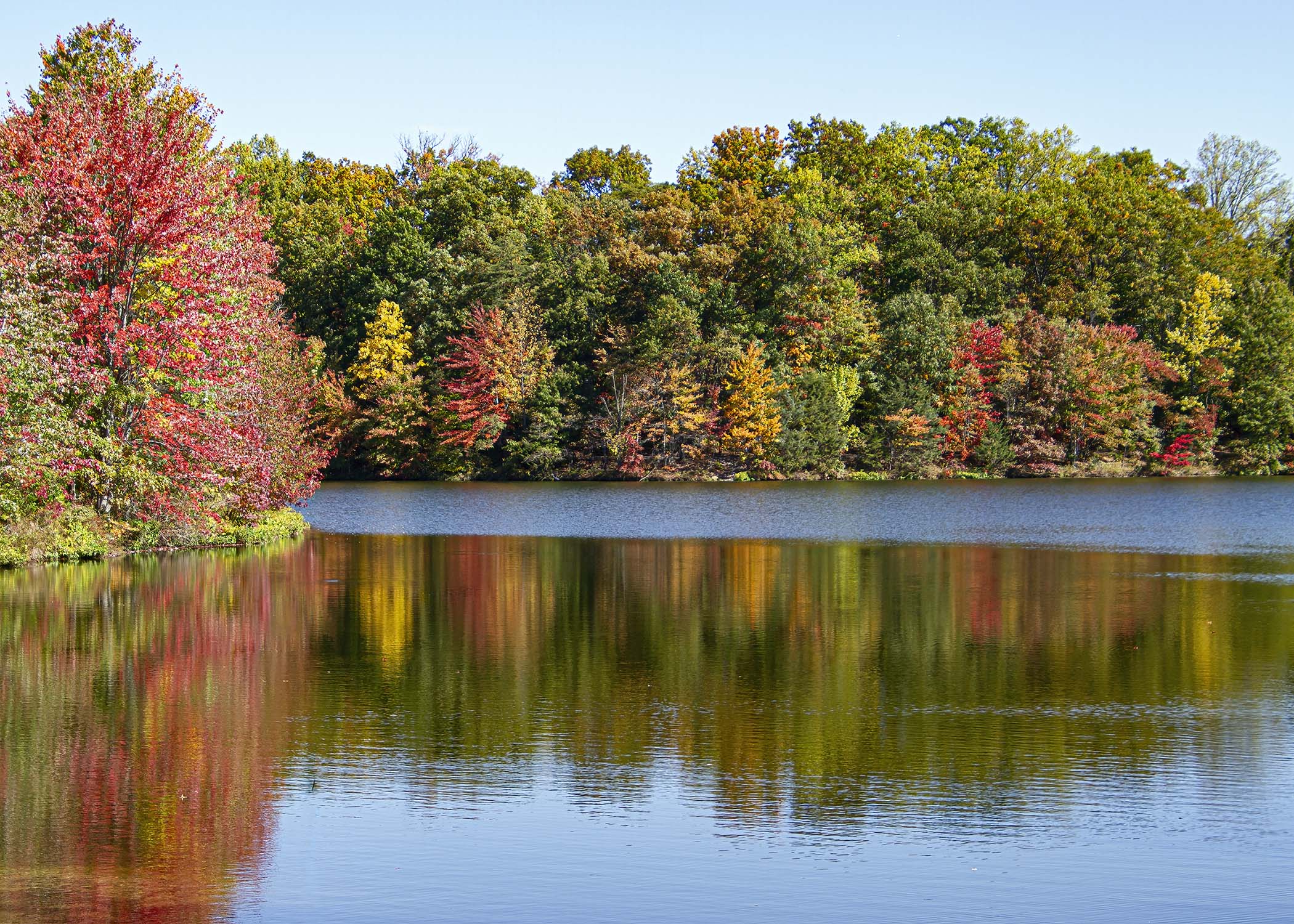
How do you capture the beauty of the fall foliage? I like to try a variety different approaches with my camera.  These three images of the water retention pond in Kingstowne, only a mile or so from my townhouse, convey some of my impressions of this colorful season.

The first image is perhaps my favorite of the three. By photography the reflections in the water I was able to remove the details of the foliage and focus on the colors and the light. It reminds me a little of some impressionist paintings by Monet and others.

For the second photo, I pointed my camera at a particularly colorful patch of leaves that were being backlit and zoomed in quite a bit. In addition to the brilliant colors, I really like the interplay of the light and the shadows.

The third image is the most “traditional” in its approach to the foliage—it is the kind of photo that you might see on a calendar. It provides the “big picture” that I sometimes forget to include in my normal photography, when I tend to concentrate on capturing the details of a subject with a macro or telephoto lens.

This season of autumn color will soon be coming to an end. When I left my house yesterday morning, I couldn’t help but notice that all of the streets and yards in my neighborhood were covered with fallen leaves. Life, it seems, is all about changes and celebrating each new moment.

autumn colors

autumn colors

autumn colors

© Michael Q. Powell. All rights reserved

Read Full Post »

Do you imagine a photo in your mind and then try to create it? Most of the time I am an opportunistic wildlife photographer—I react to the situations in which I find myself and try to make the best possible photo to capture the subject, the action, or the mood. Sometimes, though, I look at a spot and think, “Wouldn’t it be great if my subject moved into that light or onto that photogenic perch?”

On Wednesday I watched a lone Double-crested Cormorant (Phalacrocorax auritus) as it repeatedly dove into the water in a small suburban pond not far from my townhouse. Generally I encounter cormorants at larger bodies of water, but I know that this manmade pond is deep and is suited to birds that dive for food—some species of migratory diving ducks, for example, overwinter there.

The cormorant would spend quite a while underwater and I never knew where it would pop up next. I kept hoping it would surface in an area where the reflections of the fall foliage were especially colorful and eventually it did. The cormorant was quite far away, but I captured the kind of imagine that I had imagined, with colorful rippled patterns on the surface of the water as the cormorant swam into the frame. I encourage you to click on the imagine to see the details of the first image.

The second image was one of my earlier attempts. The cormorant surfaced closer to me than in the first shot, but the surface of the water was not as colorful as I wanted. However, the shot provides a really good look at the striking aquamarine eyes of this beautiful bird. Wow! Those eyes never fail to startle and delight me.

It is a fun challenge to try to incorporate the fall foliage into my photos and I have had an unusual amount of good luck in doing so this past week with a variety of subjects. I am starting to see more and more leaves on the ground, so I know that this period is transitory. Carpe diem!

Double-crested Cormorant

Double-crested Cormorant

© Michael Q. Powell. All rights reserved


Read Full Post »

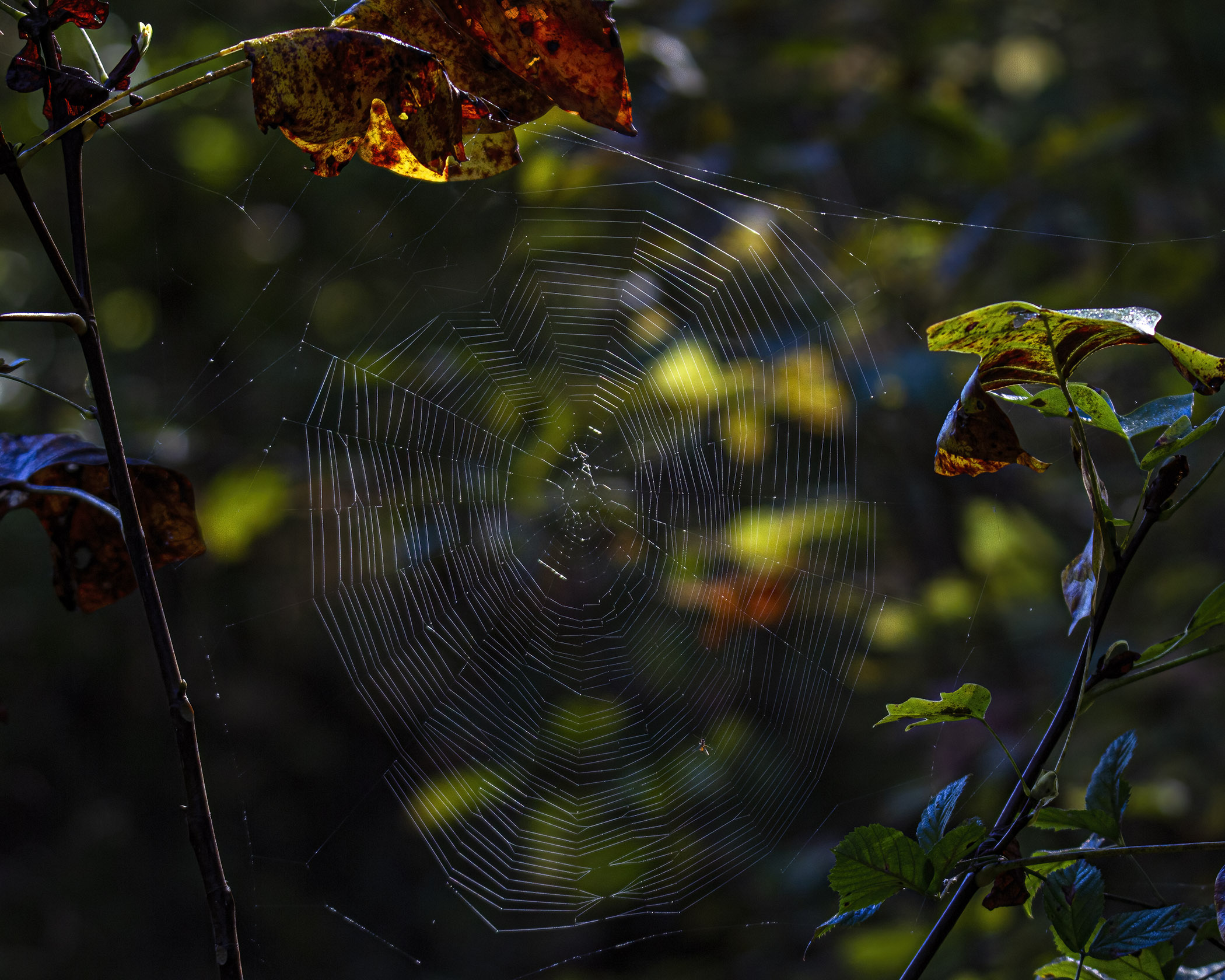
I have always admired the beauty and artistry of spider webs. It is so amazing to me that they can create such intricate patterns out of bodily secretions. I stumbled upon this beautiful little web on Thursday at Huntley Meadows Park and was thrilled that I was able to capture an image of it. I encourage you to click on the image for a closer view of the web design.

In order to make sure that the web did not disappear into the background completely, I deliberately underexposed the image, and focused manually on the web—there was no way that my camera’s autofocus would focus on the web.

spider web

© Michael Q. Powell. All rights reserved.

Read Full Post »

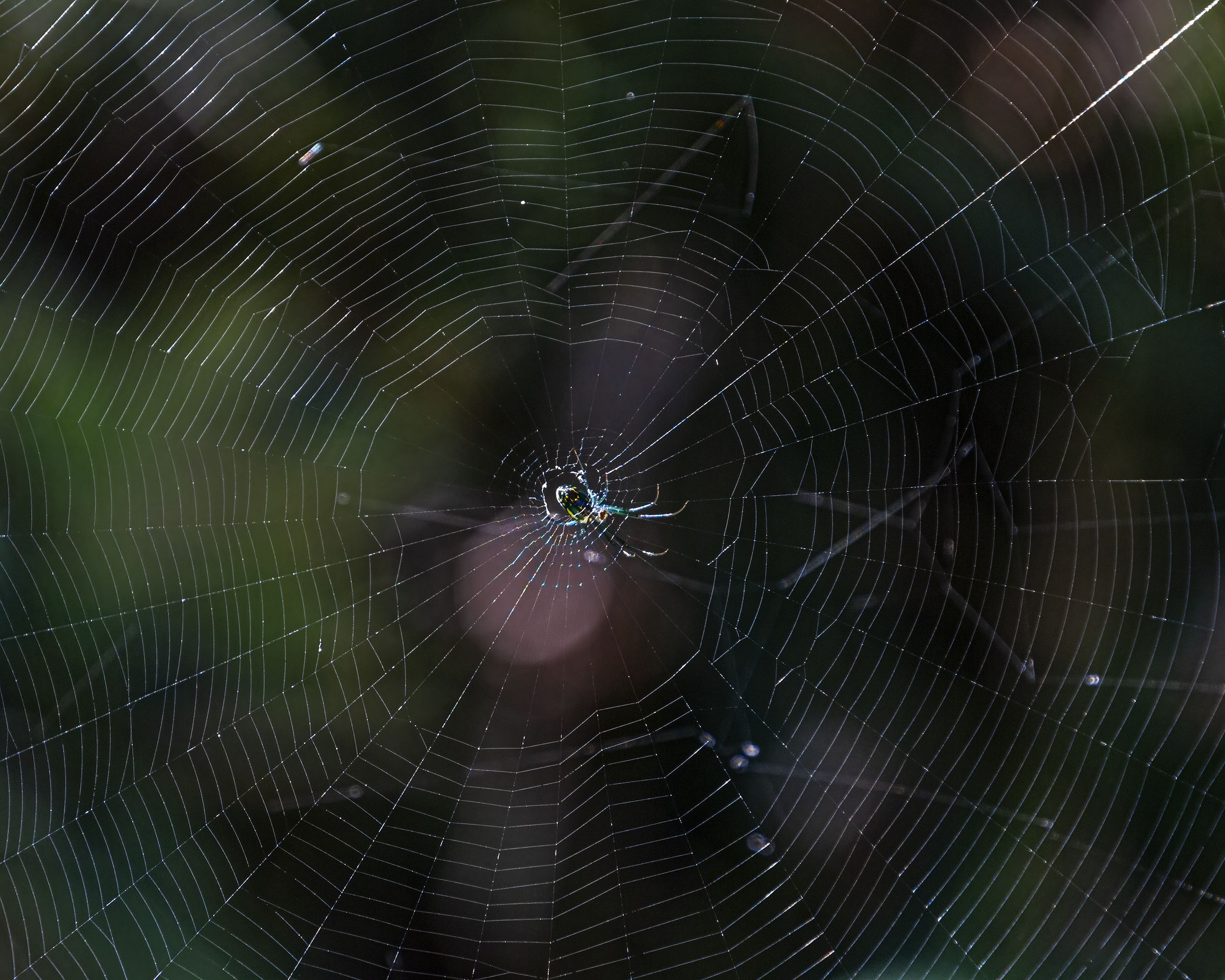
I am always amazed by the skill and artistry of spiders that construct elaborate webs, like this little Orchard Orbweaver spider (Leucauge venusta) that I photographed last Tuesday at Occoquan Bay National Wildlife Refuge. It is a bit of a challenge to capture an image of a web like this, especially in full daylight, but I managed to do so by focusing very carefully and deliberately underexposing the image so that the background appeared a bit darker than it was in real life.

Orchard Orbweaver

© Michael Q. Powell. All rights reserved.

Read Full Post »

When I am writing a blog posting with multiple photos, I will usually lead with the “best” photo. Most of the time I have a clear favorite image, but today I struggled a bit in trying to decide which image of a Calico Pennant (Celithemis elisa) was the “best” one. I was delighted on Monday at Occoquan Bay National Wildlife Refuge to have multiple opportunities to photograph male Calico Pennants, which are among the most striking dragonflies that I encounter, thanks to their bold coloration and wonderfully patterned wings.

From a technical perspective, the first image could be considered the “best.” The background is pleasantly blurred and virtually all of the dragonfly’s features are in sharp focus. Graphically this image stands out, even when viewed as a thumbnail on a cell phone.

The background in the second image is considerably more cluttered than in the first image. However, I think the color contrast between the bright red of the dragonfly and the pinkish-purple colors in the background makes it easy to see the primary subject. The vegetation helps to provide the viewer with a sense of the environment in which I photographed the dragonfly.

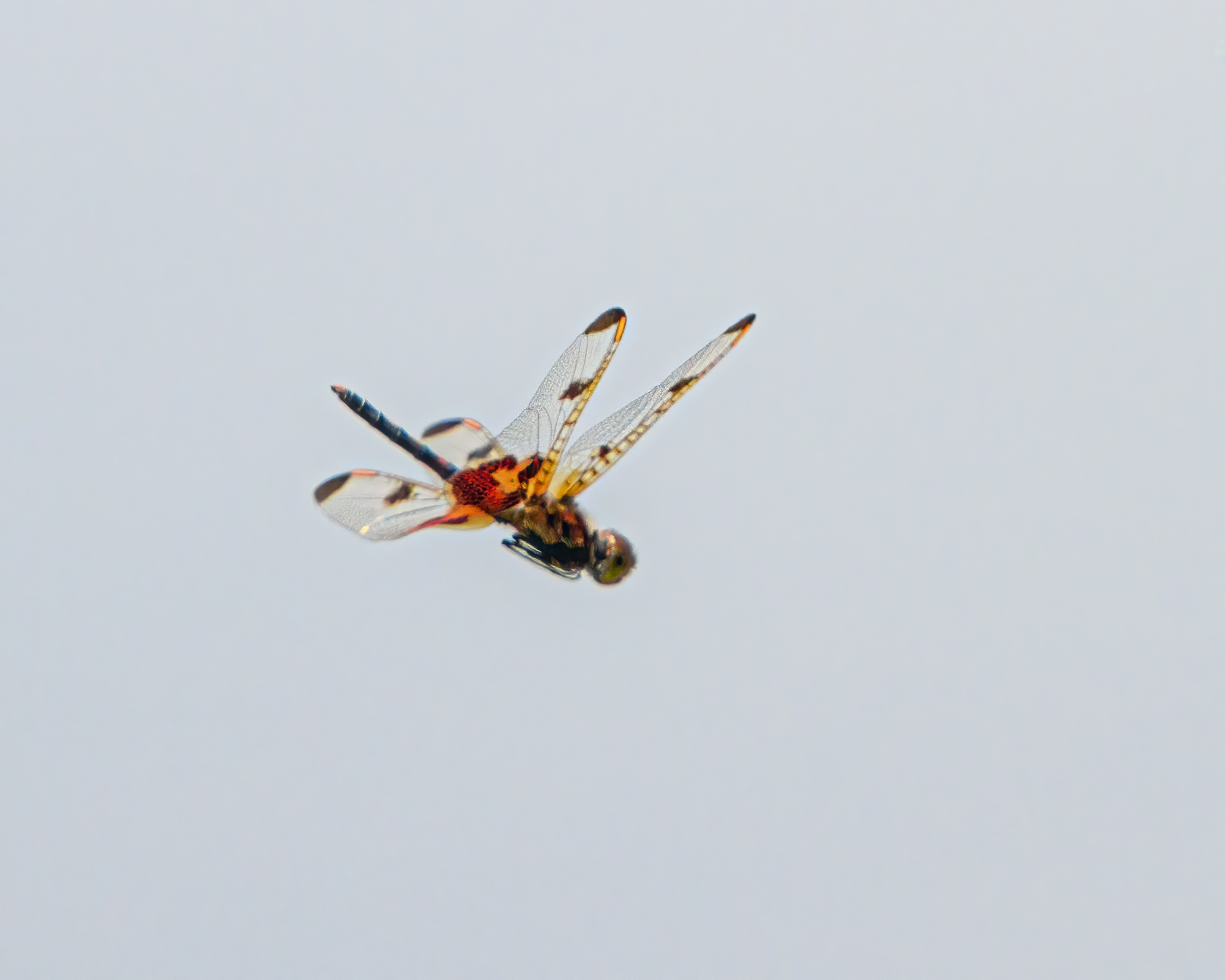
The third image was the most challenging to capture. Several Calico Pennants were flying around over the waters of a pond and I was thrilled to capture this in-flight shot, my first such photo of this species. Most of the other dragonflies that I have photographed as they were flying were considerably larger—a Calico Pennant is only about 1.3 inches (33 mm) in length—and it took a lot of persistence and concentration to get this shot.

The final shot was a lucky one. I was focused on the perched dragonfly and reacted quickly when it took off. From an artistic perspective, I really like this image. The mottled colors of the pond works well as a backdrop for the action and the contrast between the muddy brown and the bright red of the dragonfly makes the subject “pop.” I love the texture of the branch and the branch helps to lead the viewer’s eyes to the dragonfly. Finally, the dragonfly’s wing patterns are displayed beautifully as I managed to capture a moment when they were fully extended.

I don’t know if it is possible for me to state definitively which one of these images is the “best”—I like each of them for different reasons. Is there one that stands out to you more than the others? I’d welcome your views on this question.

Calico Pennant

Calico Pennant

Calico Pennant

Calico Pennant

© Michael Q. Powell. All rights reserved.

Read Full Post »

Whenever I see Water Lilies in bloom, I immediately think of one of my favorite artists—Claude Monet. During the last thirty years of his life, water lilies (Nymphéas in French) were the main focus of his artistic production. One of the museums that I most love visiting is the Musée de l’Orangerie in Paris, because it houses eight massive water lily murals by Monet in two specially-built oval rooms. It is incredibly peaceful to just sit in one of those rooms, surrounded by those amazing paintings.

During a visit to Kenilworth Park and Aquatic Gardens in Washington D.C. in mid-July, I chose to focus my attention on capturing portraits of individual flowers (or a couple, in the case of the first photo), rather than trying to capture the expanse of water lilies in multiple ponds. There is something really peaceful and pure about water lilies that calms and soothes me and tends to put me into a contemplative mood.

I have returned from my short road trip to Massachusetts and Maine and am still feeling a bit of residual fatigue after spending almost twelve hours in my car yesterday. I hope to resume my normal posting schedule with some new photos soon. Thanks to all of you who have continued to read some of my older postings while I have been mostly absent from the internet this past week.

water lily

water lily

water lily

© Michael Q. Powell. All rights reserved.


Read Full Post »

During the summer, most of my dragonfly photos tend to be variations of the stereotypical “dragonfly on a stick.” I am always on the lookout, though, for more interesting or photogenic perching places and behaviors.

The first shot shows a male Eastern Amberwing dragonfly (Perithemis tenera) perched on the end of a piece of rebar that sticks out of the water near a small fishing dock at Jackson Miles Abbott Wetland Refuge. Generally I try to avoid having manmade objects in my nature photos, but in this case I really like the juxtaposition of the natural and manmade elements in this shot. The warm tones of the amber wings contrast nicely with the cooler rust color of the rebar and the lines on the rebar are mirrored by those on the dragonfly’s body. Almost every year I return to this spot to capture a similar image, though each encounter is unique in its own way.

The second image shows another male Eastern Amberwing perched on a large rock jutting out from the water. I couldn’t get close to the dragonfly so I took the opposite approach and zoomed out to capture the dragonfly’s reflection (as well as the amber shadow it was casting on the rock). I really like the contrast between the diminutive size of the dragonfly and the large jagged rock—it seems almost like a visual metaphor for life’s challenges.

These two shots are examples of how I try, when possible, to visualize a shot before I take it. Frequently, though, I am forced to react instantaneously to a given situation, with a primary goal of keeping my subject within the frame and hopefully in focus. It’s a weird mental juggling act to simultaneously attempt to think creatively, instinctively, instinctively, and analytically—that’s wildlife photography in a nutshell.

Eastern Amberwing

Eastern Amberwing

© Michael Q. Powell. All rights reserved.


Read Full Post »

Beauty expresses itself in so many different ways. That was the thought that was running through my head as I reviewed my photos from my recent visit to Washington D.C. to photograph lotuses and water lilies at Kenilworth Park and Aquatic Gardens. Actually I had a similar thought when I was there with my camera—how could I possibly capture a sense of the moment, of the shapes and colors that were overwhelming my senses?

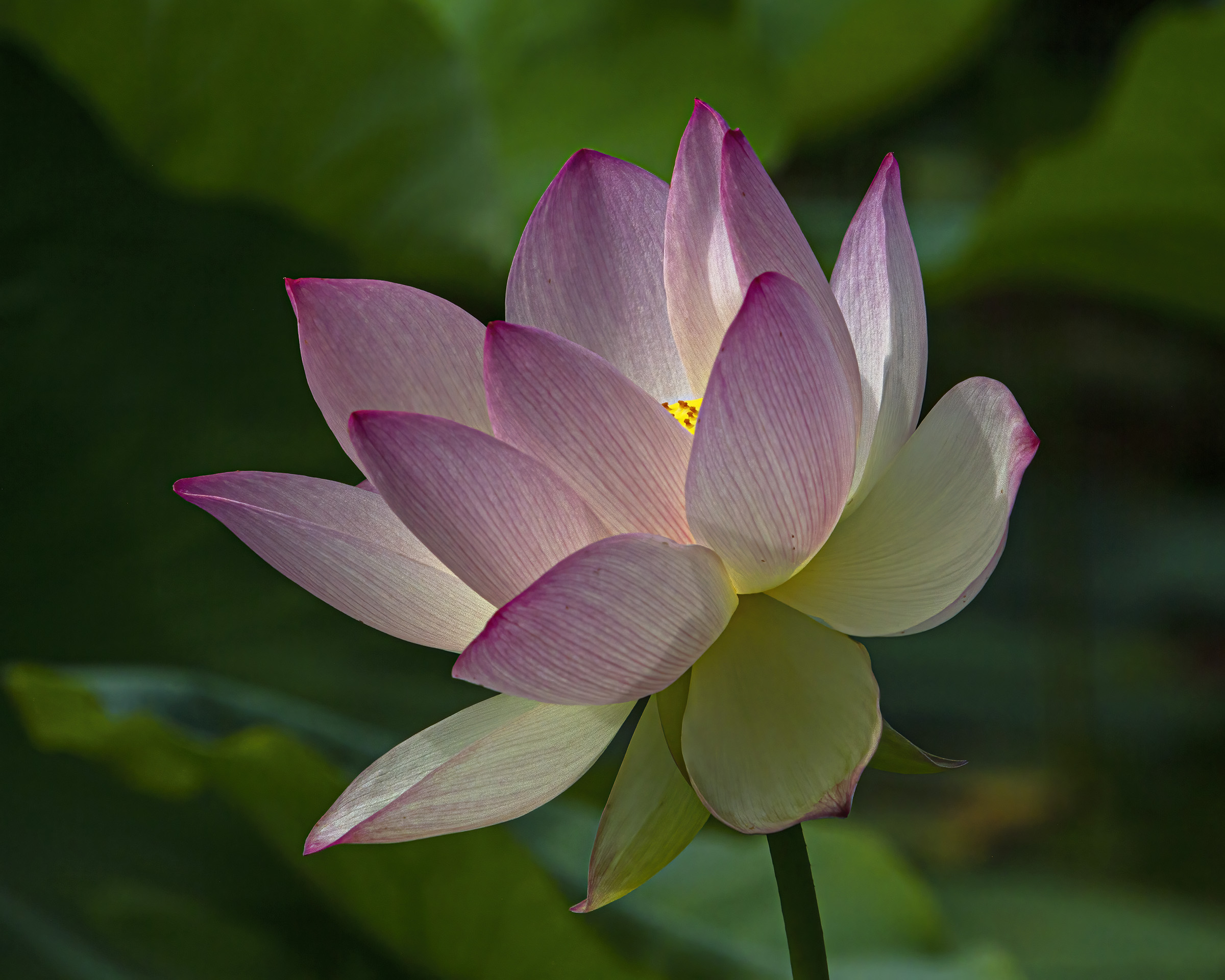
I have already shared some photos of Sacred Lotuses and American Lotuses in previous blog postings, but I have so many more images that I like that I feel compelled to share a few more images of Sacred Lotuses (Nelumbo nucifera). I hope you don’t mind.

Sometimes I describe what I like about the photos in a blog posting, but this time I will let you enjoy them without my commentary. My only recommendation is that you click on the images to see more of the details of these wonderful flowers. Enjoy the experience as seen through my eyes and the lens of my camera.

Sacred Lotus

Sacred Lotus

Sacred Lotus

Sacred Lotus

© Michael Q. Powell. All rights reserved.


Read Full Post »

Most of the beautiful lotus flowers that I photographed last week at Kenilworth Park and Aquatic Gardens in Washington D.C. were Sacred Lotuses (Nelumbo nucifera), a plant that is native to Asia. In one small area of the gardens, I spotted some American Lotuses (Nelumbo lutea), a species that is native to North America. Unlike Sacred Lotuses, which tend to be pinkish in color, the flowers of American Lotuses are white or pale yellow in color and the American Lotus is sometimes called a Yellow Lotus.

It was mid-morning when I took these shots and the sun was shining brightly, so I had to deliberately underexpose the shots to keep the white highlights from getting blown out—that is why the backgrounds look so dark. I like the effect and find that it adds a bit of drama to the images, especially the first one.

American Lotus

American Lotus

American Lotus

© Michael Q. Powell. All rights reserved.


Read Full Post »

Last Thursday I visited Kenilworth Park and Aquatic Gardens in Washington D.C. with my photography mentor Cindy Dyer to photograph the lotuses and waterlilies that we knew would be in bloom. This facility is the only national park site devoted to cultivated water-loving plants and features over 45 ponds filled with a variety of water lilies and lotuses, according to the Friends of Kenilworth Aquatic Gardens website. Sacred Lotus (Nelumbo nucifera)

The official website of the park describes it more poetically as a place “where water and wind dance.” “Deep within Kenilworth lies an oasis, hidden behind trees and cattails. It’s a place where beavers build their homes and turtles sleep on logs. Lotus blooms rise from the muck and lilies sit on the water. The wind dances with the dragonflies, rustling through the trees, carrying the song of the birds until it brushes across your face, fading to a whisper, saying “come join.” ”

One of the “stars” of the aquatic gardens is the Sacred Lotus (Nelumbo nucifera) and I spent a good amount of time trying to capture images of these spectacular flowers. We arrived at the gardens relatively early, but it was still a challenge to photograph the flowers without getting harsh highlights. I particularly like the first photo in which I managed to capture both a flower and the showerhead-like seedpod that remains after the petals have fallen away.

In my final photo, I zoomed in to create a Georgia O’Keeffe-like vibe. My friend Cindy used a handheld diffuser to block some of the sunlight, which allowed me to capture the saturated color of this particular flower—most of the other flowers were a lighter pink, like the ones in the first and second photos.

Sacred Lotus

Sacred Lotus

Sacred Lotus

© Michael Q. Powell. All rights reserved.

Read Full Post »

Each time that I visit Lewis Ginter Botanical Garden in Richmond, Virginia, I spend some time in the glassed-in conservatory. At certain times of the year there is an indoor butterfly garden and there are always exotic orchids to see. Getting photos of the orchids is a challenge, because the light is limited, the shooting angles are constrained, and the room is hot and humid.

Here are a few of my attempts to capture the beauty of some of the orchids during a visit earlier in June. As you can see, I tried to vary my approach, sometimes going in close to focus on a single flower and sometimes pulling back to capture a cluster of them. I mostly avoided cluttered backgrounds—a large pot is visible in the final photo, but it is not very distracting

orchid

Orchid

Orchid

© Michael Q. Powell. All rights reserved.

Read Full Post »

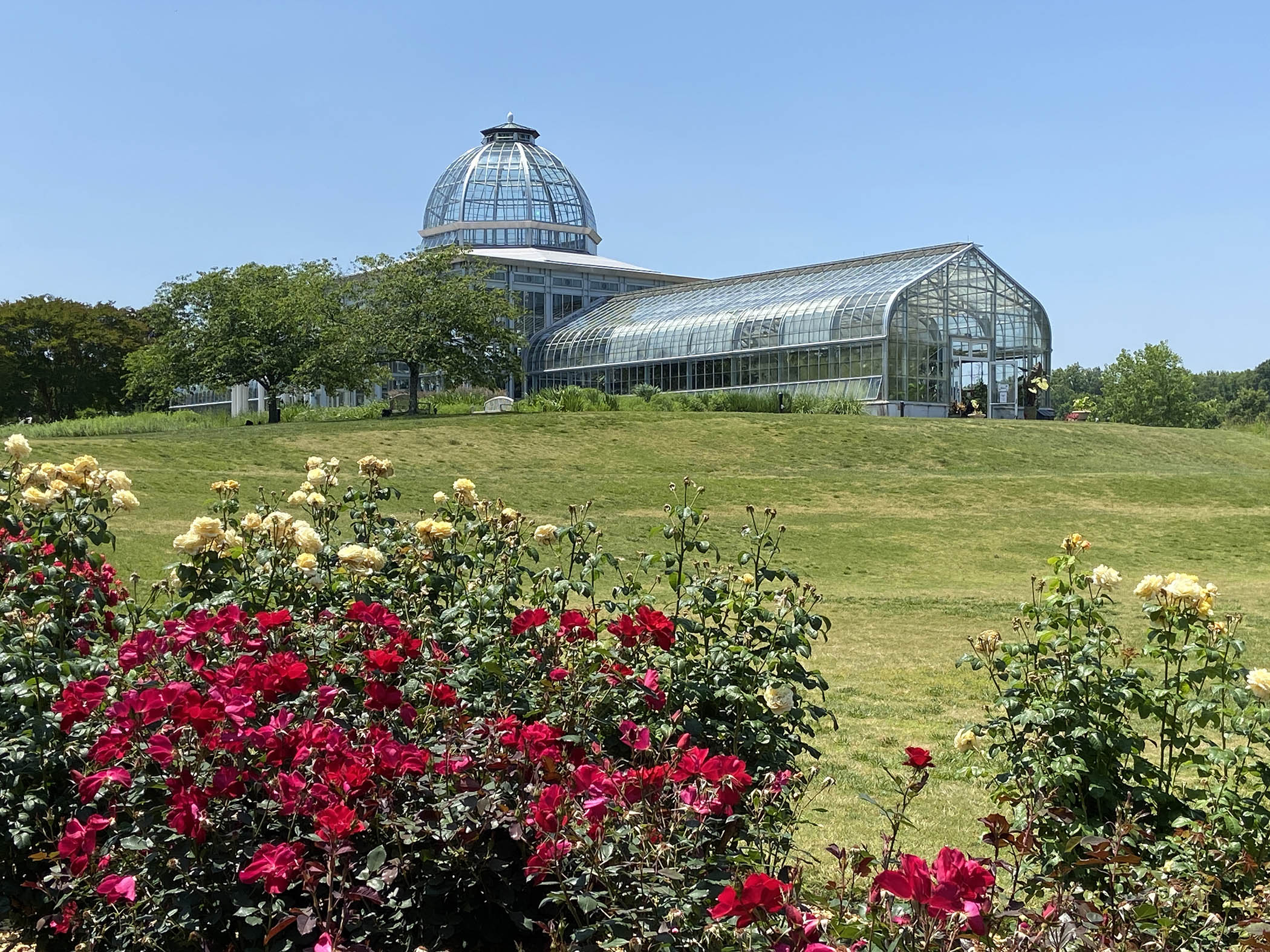
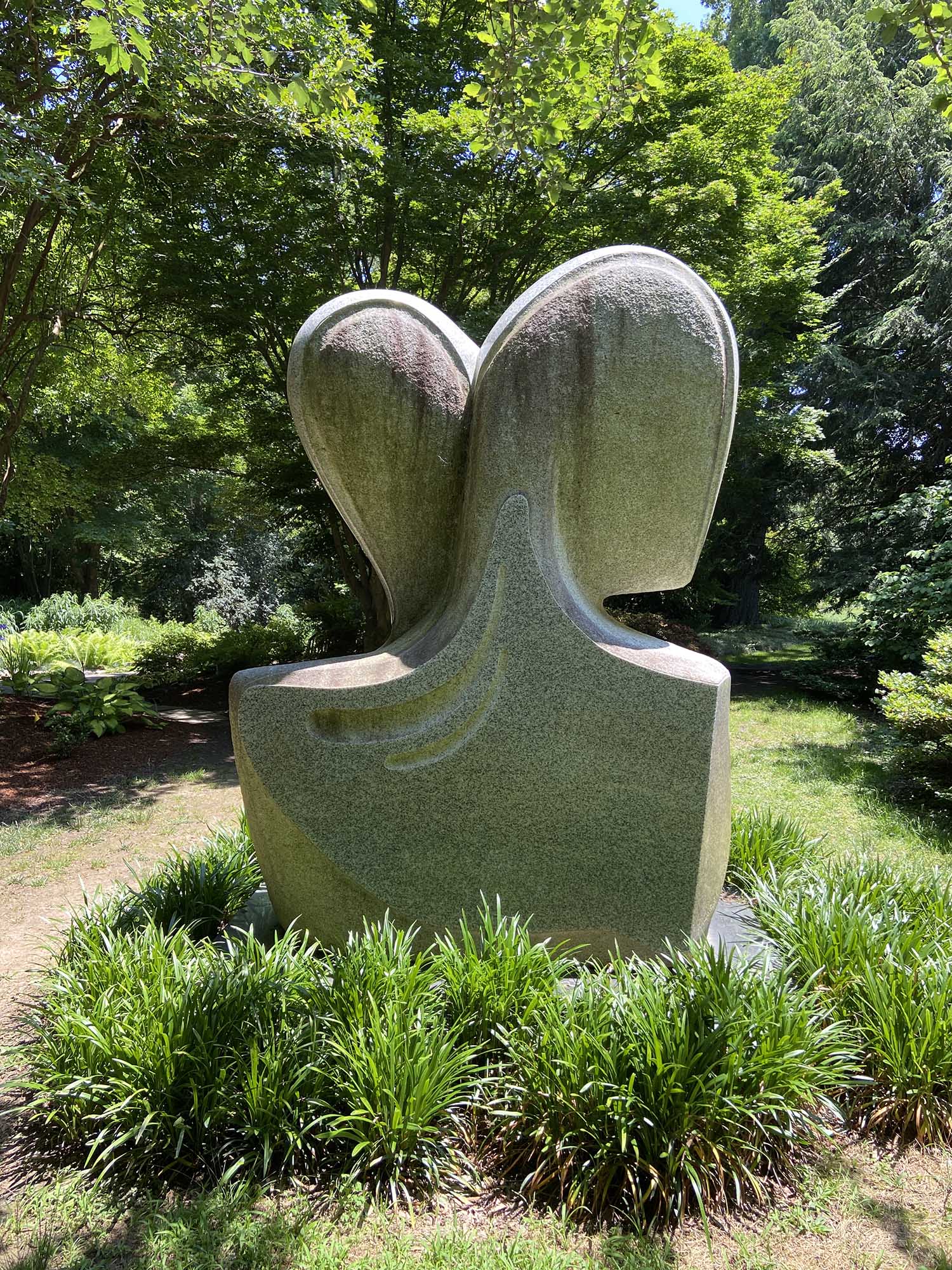
Earlier this month I made a trip to Lewis Ginter Botanical Garden, an amazing garden located outside of Richmond, Virginia, with my dear friend and photography mentor Cindy Dyer. Although I spent a lot of time enjoying the beauty of the flowers, I periodically paused to capture images with my iPhone of some of the structures and art through the garden that captured my attention.

Normally I try to get close to my subjects using either a telephoto or macro lens. In this case, however, I was focused on capturing more of the “big picture” and the wide angle of the iPhone was perfect for doing so.

The sculptures in the second, fourth, and sixth images are part of a special exhibition called “Incanto: An Oasis of Lyrical Sculpture” by sculptor Kate Raudenbush and poetry by Sha Michele. Please check out this link for an explanation of the significance and meaning of these sculptures and the two others that make up the exhibition. “Five intricately designed, allegorical sculptures accompanied by poetry invite a journey of self-discovery and connection with others and the natural world.”

Lewis Ginter Botanical Garden

Lewis Ginter Botanical Garden

Lewis Ginter Botanical Garden

Lewis Ginter Botanical Garden

Lewis Ginter Botanical Garden

Lewis Ginter Botanical Garden

© Michael Q. Powell. All rights reserved.


Read Full Post »

I have always been fascinated by the color and texture of the centers of poppies and was delighted to see poppies in several different colors during a recent visit to Green Spring Gardens in Alexandria, Virginia, just a few miles from where I live. The tissue-paper texture of the petals quite unusual, reminding me of my childhood craft projects with tissue paper and crepe paper—we may even have created our own poppies.

Even when their petals have faded and fallen away, poppies continue to fascinate me (and birds love their seeds) and I really like the look of their seed pods, like the one in the final photo.

poppy

poppy

poppy

poppy

© Michael Q. Powell. All rights reserved.

Read Full Post »

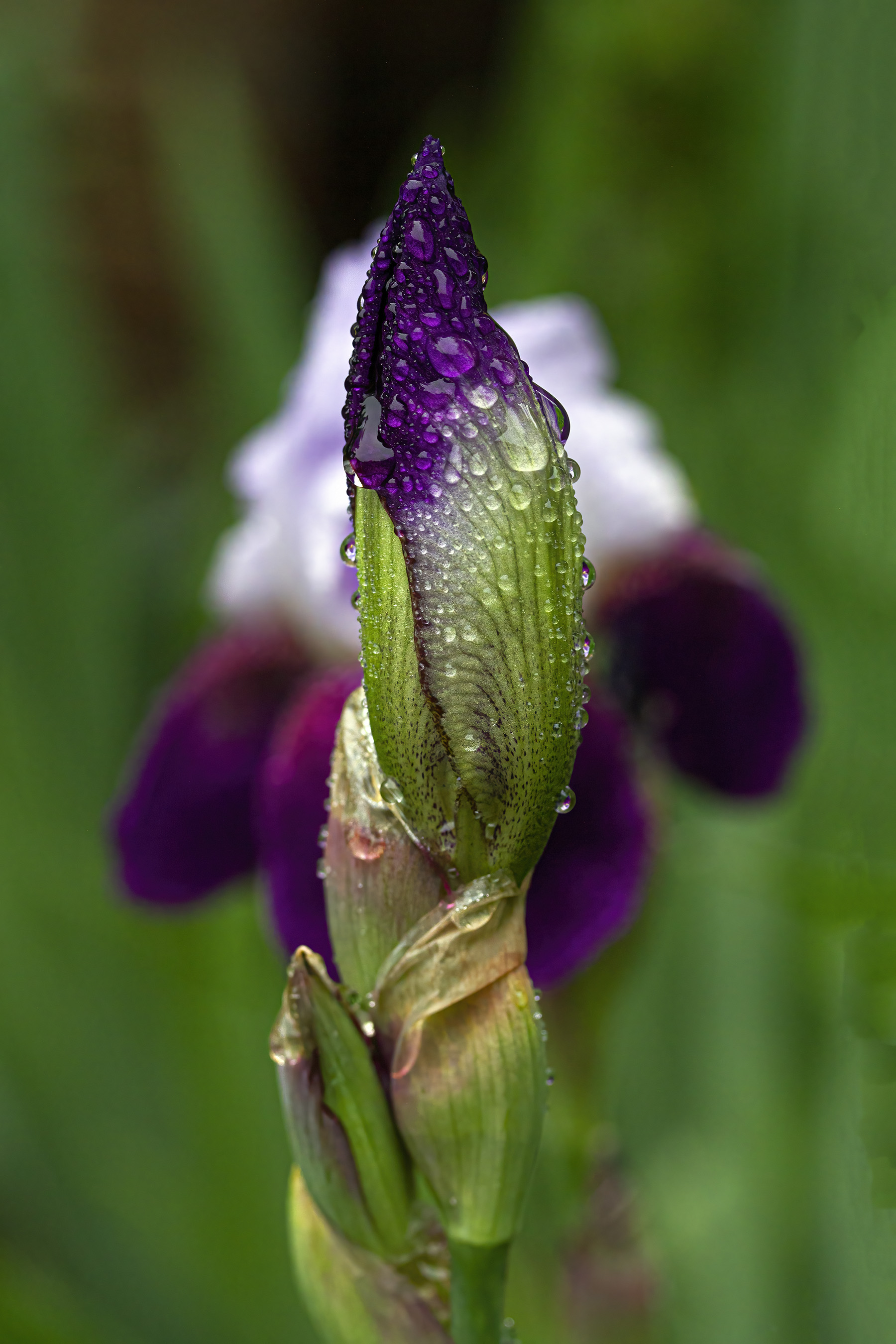
The rain has stopped for now, but some raindrops remain, sparkling like tiny jewels this morning on the bearded irises in the garden of my neighbor and fellow photographer Cindy Dyer. I tried to get creative with the framing of the first shot, with a blurred iris in the background of an unopened bud.

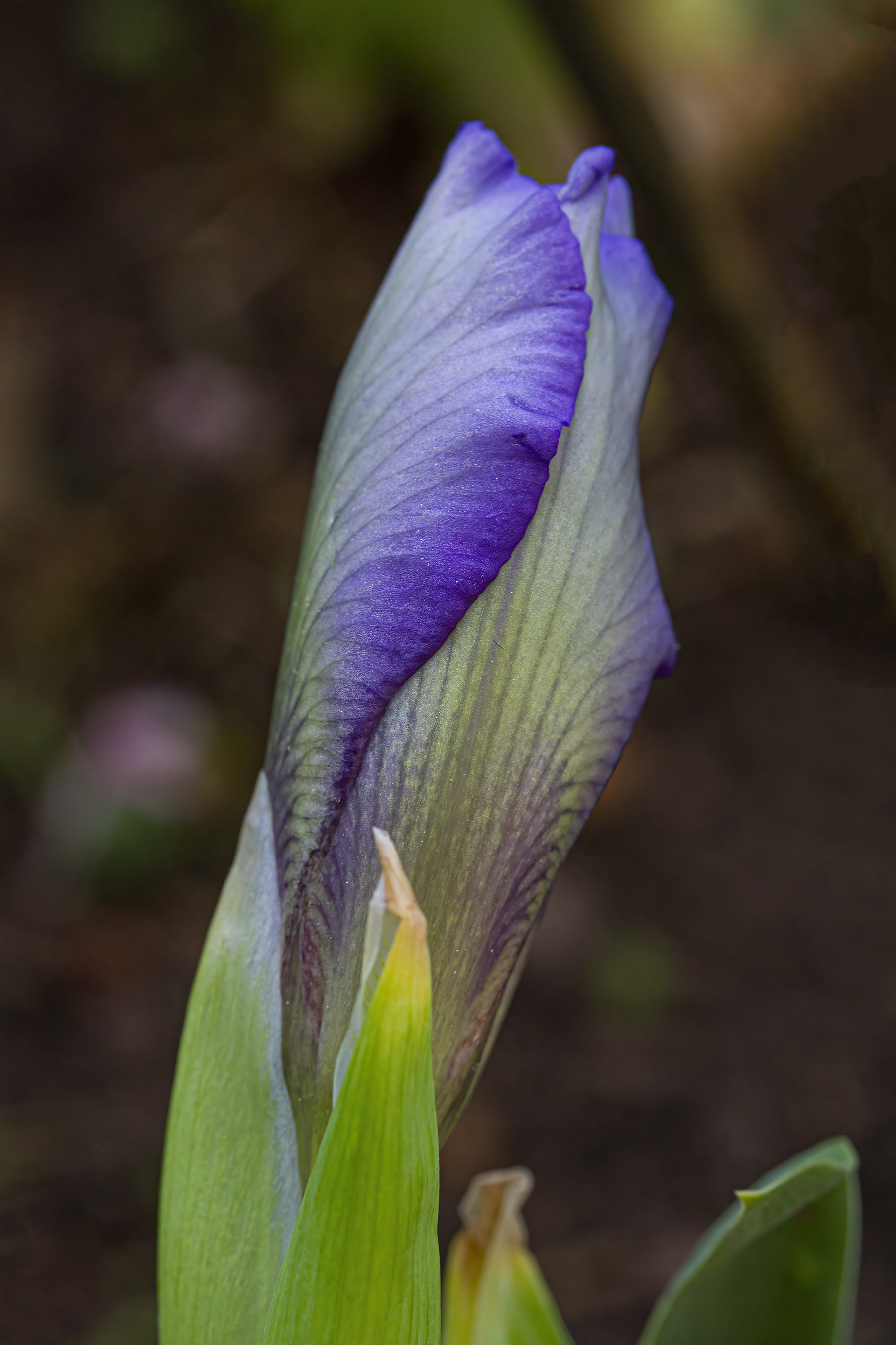
In the second shot, I was so close to the bearded iris that you almost can’t tell that the primary subject is a flower—I love my macro lenses. There third and fourth shows show a couple more varieties of irises that are currently in bloom in Cindy’s garden, with lots more still to come.

Iris

Iris

Iris

Iris

© Michael Q. Powell. All rights reserved.

Read Full Post »

What is the most unusual-looking flower that you have ever seen? For me, it would probably be the Japanese Jack-in-the-Pulpit (Arisaema sikokianum). There is something so alien and exotic about this plant that it stopped me in my tracks when I first spotted it last year in early May at Meadowlark Botanical Gardens in Vienna, Virginia. Check out my posting from last year if you would like more details of my first encounter with this plant species.

On Thursday I made a trip the botanical gardens with my friend and photography mentor Cindy Dyer. She was interested in photographing the tulips, peonies, and other flowers, but I made a beeline for the area where I had seen the Japanese Jack-in-the-Pulpit last year. Initially I could not find any, but I asked several of the folks working in the garden beds and one of the walked me to an area where there were two plants that were well past their prime.

As we were talking, another gardener overheard us and noted that she had spotted one further up the trail earlier in the week. I walked really slowly and looked carefully and eventually found the correct spot—there was one wilted Japanese Jack-in-the-Pulpit and one in bloom. The two photos below give you a sense of the beauty of this unusual plant. As you can probably tell, I varied the settings on my camera to give a different feel to each of the images. Although the first image provides a clearer view of the entire plant, I really like the moody feel of the second shot.

The Japanese Jack-in-the-Pulpit is closely related to the Jack-in-the-pulpit (Arisaema triphyllum), which is supposed to be common to the eastern United States, though I have never seen one. The American species looks fairly similar to the Japanese variant, but the spadix, the part that is the “Jack” in the name, is darker in color and the pitcher more closely matches the leaves. If you want to see a beautiful photo of a Jack-in-the-Pulpit growing wild in New England, check out this blog posting by fellow photographer Steve Gingold.

Japanese Jack-in-the-Pulpit

Japanese Jack-in-the-Pulpit

© Michael Q. Powell. All rights reserved.


Read Full Post »

Yesterday I stopped by the garden of my neighbor and fellow photographer Cindy Dyer. Her early-season tulips were well beyond their prime, but more tulips are getting ready to bloom. I was a little surprised to see that some of her irises are already starting to bloom too. I love to photograph flowers when they are at this stage of growth—they are already beautiful and give hints of the additional beauty that is to come.

Happy Easter to all of you who are celebrating this holy day. Christ is risen!

tulip

tulip

iris

© Michael Q. Powell. All rights reserved.


Read Full Post »

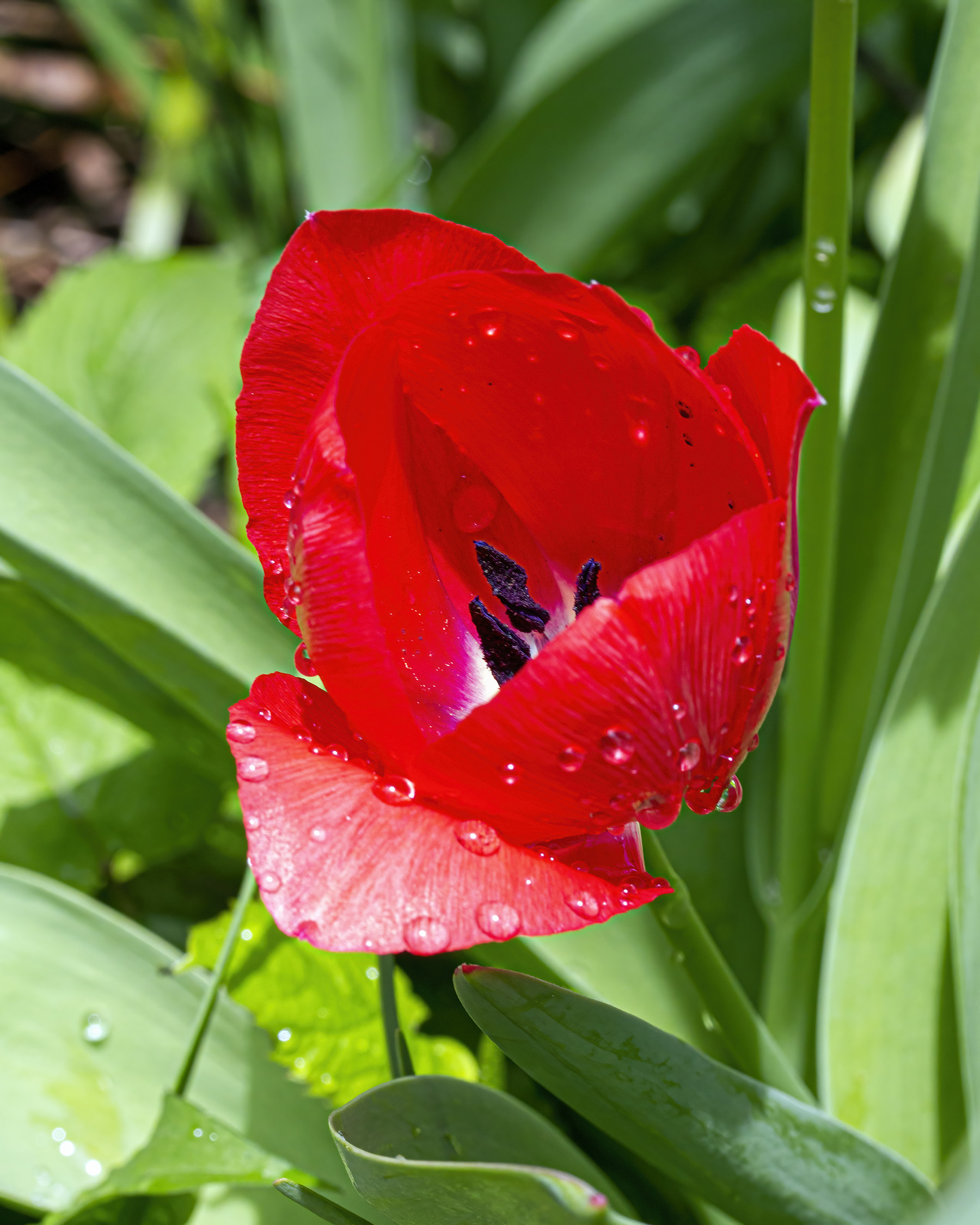
Raindrops were glistening in the sunlight after an April shower on Saturday, enhancing the beauty of these red tulips in the garden of my dear friend and photography mentor Cindy Dyer.

One of my favorite movies when I was growing up was “The Sound of Music” and I can still remember the words of many of the songs from the movie. In one delightful scene, Julie Andrews tells the children that when she is unhappy, she tries to think of nice things and begins a song with the words, “raindrops on roses and whiskers on kittens…these are a few of my favorite things.”

Raindrops seem almost magical, whether they are on roses, on tulips, or on any other vegetation. If you are not familiar with the song “My Favorite Things,” here is a link to a YouTube clip of that wonderful scene from “The Sound of Music.”

tulip

tulip

tulip

© Michael Q. Powell. All rights reserved.


Read Full Post »

I love the way that the coloration of this Great Blue Heron (Ardea herodias) is an almost perfect match for the environment where I spotted it last week at Occoquan Bay National Wildlife Refuge.

Great Blue Herons are one of my most frequently photographed  subjects, especially during the winter months, and I am always looking for unique ways to capture images of them. From a technical perspective, this image is far from perfect, but its aesthetic appeal really pleases my eye—in addition to the colors, I really like the variety of textures in the photo..

Have a wonderful weekend.

Great Blue Heron

© Michael Q. Powell. All rights reserved.


Read Full Post »

The Belted Kingfisher (Megaceryle alcyon) is probably the most skittish bird that I try to photograph. No matter how hard I try to sneak up on one, it always seems to fly away before I can get close. Quite often I hear the kingfisher’s distinctive rattling call and never even see the bird.

The first image is a long-distance shot of one from last week at Occoquan Bay National Wildlife Refuge. The kingfisher is relatively small in the frame, but I love the pattern of the branches in the shot.

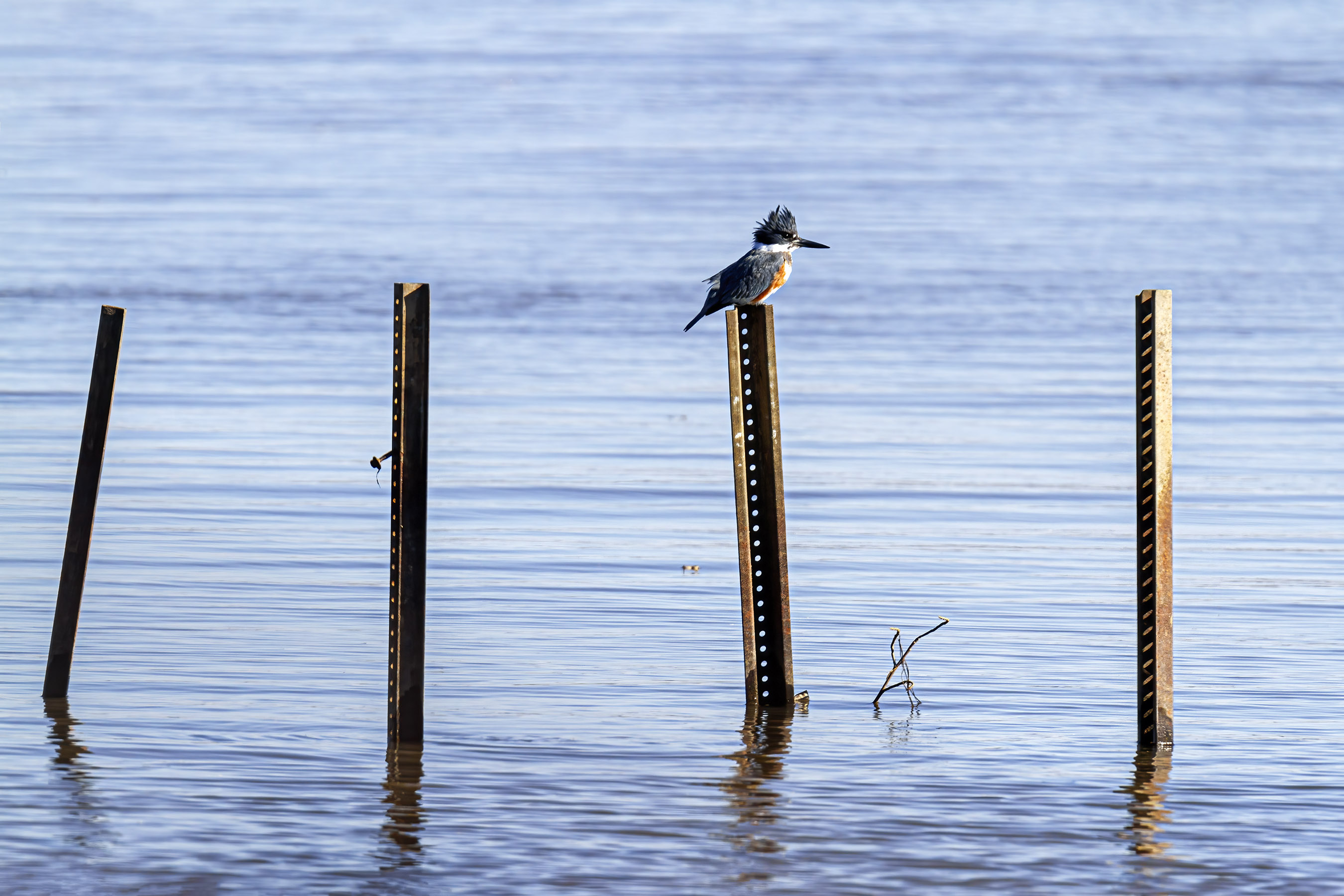
The second image shows a female Belted Kingfisher perched on a metal post sticking out of the water on Monday at the same wildlife refuge. Generally I prefer natural vice man-made perches, but in this case I like the little “forest” of metal posts and their beautiful reflections in the water. How do I know that it is a female? Only female Belted Kingfishers have the chestnut-colored stripe on their breasts, one of the few cases in bird world in which the female is more colorful than the male.

Belted Kingfisher

Belted Kingfisher

© Michael Q. Powell. All rights reserved.

Read Full Post »

As I approached a patch of thistle in bloom on Tuesday, I was looking carefully to see if there were any butterflies feeding on the flowers. Suddenly I noticed a flash of bright red and realized immediately that it was a Hummingbird Clearwing Moth (Hemaris thysbe).

Hummingbird Clearwing moths, which actually do resemble hummingbirds as they dart among the flowers, hovering periodically to such nectar, are not exactly rare where I live, but I tend to see them only a few times a year. Fortunately I reacted quickly enough to capture this image, because the moth flew out of sight after it had finished feeding on this flower.

For shots like this, the wing position is really important and I was thrilled that I was able to capture the wings fully extended, which highlights the transparent portions of the wing responsible the common name of this species. The details of the moth and the thistle are pretty sharp and the background is blurred enough that it is not a distraction—I like this shot a lot.

Hummingbird Clearwing Moth

© Michael Q. Powell. All rights reserved.


Read Full Post »

The Storms have crossed the Atlantic. I was delighted today when the post office delivered my copy of the inaugural issue of The Storms, a journal of poetry, prose, and visual art that includes two of my photographs. The Storms is a printed journal, which is increasing rare these days, that was made in Ireland with international contributors, with support from The Arts Council Ireland and the Fingal Arts/Fingal County Council. Check out this link for more information on The Storms.

How in the world did I get involved in this effort? Believe it or not, WordPress played a role. Several years ago I became friends with Liz Cowburn, the New Zealand-based author of the blog Exploring Colour. Through her blog, I became acquainted with the work of Irish poet Damien B. Donnelly and his blog DeuxiemePeauPoetry. At that time Damien was living and working in Paris as a pattern maker and writing poetry part-time.

During a trip to Paris in November 2019, I was thrilled to meet Damien in person. We had a wonderful time together sharing some of our personal experiences. Check out my December 2019 posting Paris Portraits: Damien for more of the back story and details of our encounter. At that time, Damien was preparing to return to Ireland to pursue his dream of becoming a poet full-time, with a goal of finding and renovating a property in Ireland that will serve as a writers’ retreat and bed-and-breakfast.

Then the pandemic happened. Damien quickly pivoted and found new avenues for his creativity. He started a poetry podcast Eat the Storms—the name is drawn from the title of his first poetry pamphlet—that is already in its fifth season and has featured hundreds of poets from all around the world. I have seen him read his poetry numerous times during Zoom and it has been a delight each and every time. He has also managed to find time to create TikTok and YouTube videos of some of his poems—be sure to check out his YouTube channel for some delightful content. In just a few days, he will launch his first full collection called Enough, that features poems and photography from his time in Paris.

One of his projects became The Storms, which he edited and designed, with the able assistance of his wonderful sub-editor Gaynor Kane. I have been a spectator cheering from the sidelines for numerous poetry readings, but when the submission window was opened for this journal I noticed that it included “visual art.” Did I dare submit some of my photos for consideration? The rules said that I could submit only three images and that the file names could not include any personal identification—all submissions would be read blind.

I think that I am a pretty good photographer, but I guess I am a little insecure about entering contests or submitting my work for consideration. Am I good enough? Some of my poet friends tell me that you get used to having your work rejected, but I wasn’t so sure I was thick-skinned enough. I decided to be bold, though I set my expectations low, and selected three images to submit. Amazingly two of them were selected.

The only guidance we were given was that the theme of the issue was going to be storms and that we could interpret it any way that we wanted. The two images that were selected for use both were taken during my November 2019 trip to Paris. The first one shows a bicycle on the wet cobblestones of a Parisian street, with the light from a streetlight causing a distorted shadow. The image appeared for the first time in one of my blog posting entitled Bicycle in Paris. In The Storm, the image was used on the title page of a section entitled “Showers of Survival”—the journal was thematically divided into nine sections,

The second image that was used showed a rainbow in between two buildings in Paris. It first appeared in a November 2019 blog posting entitled Rainbow in Paris. In the journal, the rainbow photo appears on the title page of a section entitled “Beyond the Rainbow,” the final section of the the journal.

It is hard to describe how cool it feels to see my photos in print and I just wanted to share some of that joy with you all. So many of you have encouraged and supported me on my journey in photography during the last ten years. Thanks.
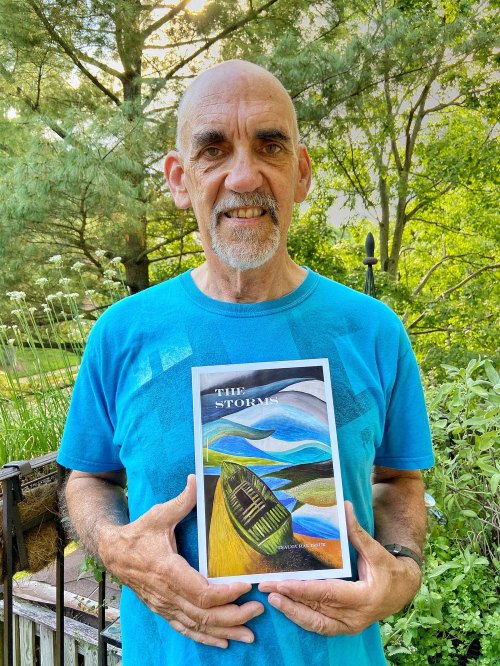
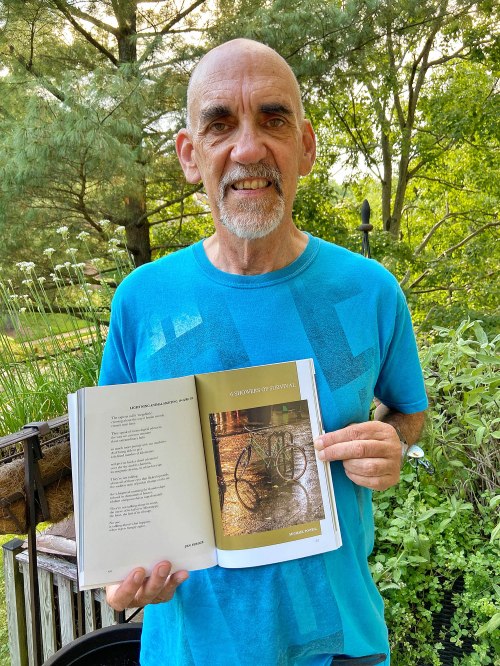
The Storms

The Storms

The Storms

© Michael Q. Powell. All rights reserved.


Read Full Post »
Do you shoot selfies? Generally I am not a fan of selfies, at least not in the way that some people use (and overuse) them on social media—I am not that much in love with my own face. Still, I am not totally against them. I remember times in the past, when I was shooting with a film camera, when I would ask someone to take a picture of me in front of some well-known site or monument.

When I do want to insert myself into the frame, I try to do so in a creative way. When I was recently in the badlands of North Dakota, for example, I decided I wanted to try to create a selfie that conveyed a “bad boy” vibe. I really am a nice guy, so I wasn’t sure that I could pull off the look and was pleasantly surprised with the result. Some of my friends say the shot makes me look like I had just stepped off of a Harley.

I love to take photos just after sunrise and just before sunset when the sun is so low that it creates elongated shadows of me that are perhaps my favorite type of selfie, a selfie without a face. They always remind me of the famous sculptures of Alberto Giacometti, like Walking Man. I took the second photo with my iPhone in the early morning of 28 July as I stared out at the vast expanse of North Dakota badlands at Theodore Roosevelt National Park.

The final photo is an unusual kind of selfie, a selfie without a face or a body. My orange KIA Soul is a representation of me, a kind of symbolic representation of who I am. I sometimes describe my car as practical, economical, and a little quirky, descriptors that apply equally well to me.

bad boy in badlands

elongated shadow

KIA Soul

© Michael Q. Powell. All rights reserved.

Read Full Post »
Older Posts »