Feeds:
Posts
Comments

Posts Tagged ‘Woodbridge VA’

Yesterday morning I was excited to spot this handsome Red-shouldered Hawk (Buteo lineatus) perched rather low in a tree at Occoquan Bay National Wildlife Refuge. Rather than flying away immediately, as is usually the case, the hawk remained in place long enough for me to maneuver around to a good position to capture its portrait.

Red-shouldered Hawk

Red-shouldered Hawk

© Michael Q. Powell. All rights reserved.

Read Full Post »

Today I was thrilled to spot another species of butterfly, the aptly named Spring Azure butterfly (Celastrina ladon), while exploring Occoquan Bay National Wildlife Refuge. This tiny butterfly is only about an inch (25 mm) in size and I was therefore a little surprised to be able to capture some of its details with my 150-600mm lens cranked all the way out to 600mm.

It shouldn’t be long before I see my first damselfly or dragonfly, given the spring-like weather and temperatures today forecast to reach over 70 degrees (21 degrees C).


Spring Azure butterfly

© Michael Q. Powell. All rights reserved.

Read Full Post »

The wind was blowing strongly on Monday morning, kicking up lots of waves in the waters off of Occoquan Bay National Wildlife Refuge. In the deeper water I could see a small group of scaups bobbing up and down among the waves. Were they Greater Scaups (Aythya marila) or Lesser Scaups (Aythya affinis)?

I confess that I can’t tell the difference between the two species. I was content to get shots of both genders, especially the female with the distinctive white markings at the base of her bill.

scaup


scaup

© Michael Q. Powell. All rights reserved.


Read Full Post »

Yesterday morning I was delighted to spot this immature Bald Eagle (Haliaeetus leucocephalus) at Occoquan Bay National Wildlife Refuge. It takes approximately five years for a Bald Eagle to gets its classic white head and I estimate this one to be about three years old, judging from its coloration.

Initially I spotted the eagle when it flew into the midst of a group of trees. I moved around only a little, fearful of spooking the bird, and captured the second shot below when the eagle leaned forward a little and exposed its head. Moving as stealthily as I could, I maneuvered to a position from which I had a somewhat clearer shot and captured the third shot below. I noted that the eagle was crouching, which is often a prelude to taking off, but the eagle remained in place.

Eventually I reached a little opening and was able to capture the first image, which I think is the best of the group. The tree in which the eagle is perched is, I believe, a sycamore. Unlike the sweet gum trees with spiky seed balls that have appeared in many of my perched eagle shots, the seed balls of this tree appear to be much smoother.

If you are interested in the developmental stages of a Bald Eagle and how its appearance changes over time, I recommend that you check out a posting from onthewingphotography.com entitled “Bald Eagles – Age Progression from one to five years old” that features wonderful photographs of each stage.

Bald Eagle

Bald Eagle

Bald Eagle

© Michael Q. Powell. All rights reserved.


Read Full Post »

There are at least two Bald Eagle nests (Haliaeetus leucocephalus) at Occoquan Bay National Wildlife Refuge, the location where I take many of my wildlife photos. One of them is located adjacent to a popular trail and most years the authorities close nearby trails during eagle nesting season. There has been a lot of construction at the refuge over the past few months and, although I saw an eagle couple at that nesting site on several occasions, it looks like they may not have occupied that nest this year (and the trails have not been closed).

The second nest, pictured below, is in a more remote location—it is visible through the trees from one of the trails, but is surrounded by dense vegetation, so the eagles are more insulated from human activity. On a recent visit to the refuge, I was pleased to spot both members of an eagle couple in the nest. I am pretty sure that the eagle on the left is the male, because male eagles tend to be considerably smaller than their female counterparts.

With a bit of luck I hope to be able to spot some eaglets here in the upcoming months, although I noted last year that it is a real challenge to do so, because the wall of this large nest appear to be quite high and effectively hide the eagles from view.

Bald Eagle

© Michael Q. Powell. All rights reserved.


Read Full Post »

Although the old proverb asserts that “birds of a feather flock together,” I have learned the value of examining groups of floating birds, because they often include multiple species. I was examining one such group last week in the waters off of Occoquan Bay National Wildlife Refuge when I spotted an obvious outlier, a duck that was larger and more brightly colored than the rest. I am pretty sure that this is a male Canvasback duck (Aythya valisineria), a species that I do not see very often and still have not seen at close range.

Canvasback duck

© Michael Q. Powell. All rights reserved.

Read Full Post »

A strong wind was blowing last Thursday as I was exploring Occoquan Bay National Wildlife Refuge. Most of the birds that I usually observe were absent from view, probably using common sense to take shelter from the blustery wind. As I was returning almost empty-handed to my car, I spotted several Eastern Bluebirds (Sialia sialis) perched low on the roof of a covered picnic area.

Generally I try to avoid including manmade structures in my wildlife photos, but sometimes you just have to take what you can get. I really like the way that I was able to capture some of the feather details of this male Eastern Bluebird. If you look closely, you can see the bird’s windblown feathers, a look that is cultivated by some stylish humans, who often rely on “product” to achieve the effect rather than on the actual wind.

Eastern Bluebird

© Michael Q. Powell. All rights reserved.

Read Full Post »

I do not know much about fashion, but I am pretty sure that I could not pull off wearing an outfit that combined stripes and dots. Somehow, though, the combination works well for this male Northern Flicker (Colaptes auratus) that I spotted yesterday morning at Occoquan Bay National Wildlife Refuge.  This Northern Flicker goes even further by adding a bright red crescent across the back of his head.

Unlike most other woodpeckers that are content to wear black and white and maybe a little bit of red, this Northern Flicker comes across as a bold, colorful, and stylish. I wonder why we don’t have similarly-colored penguins.


Northern Flicker

© Michael Q. Powell. All rights reserved.

Read Full Post »

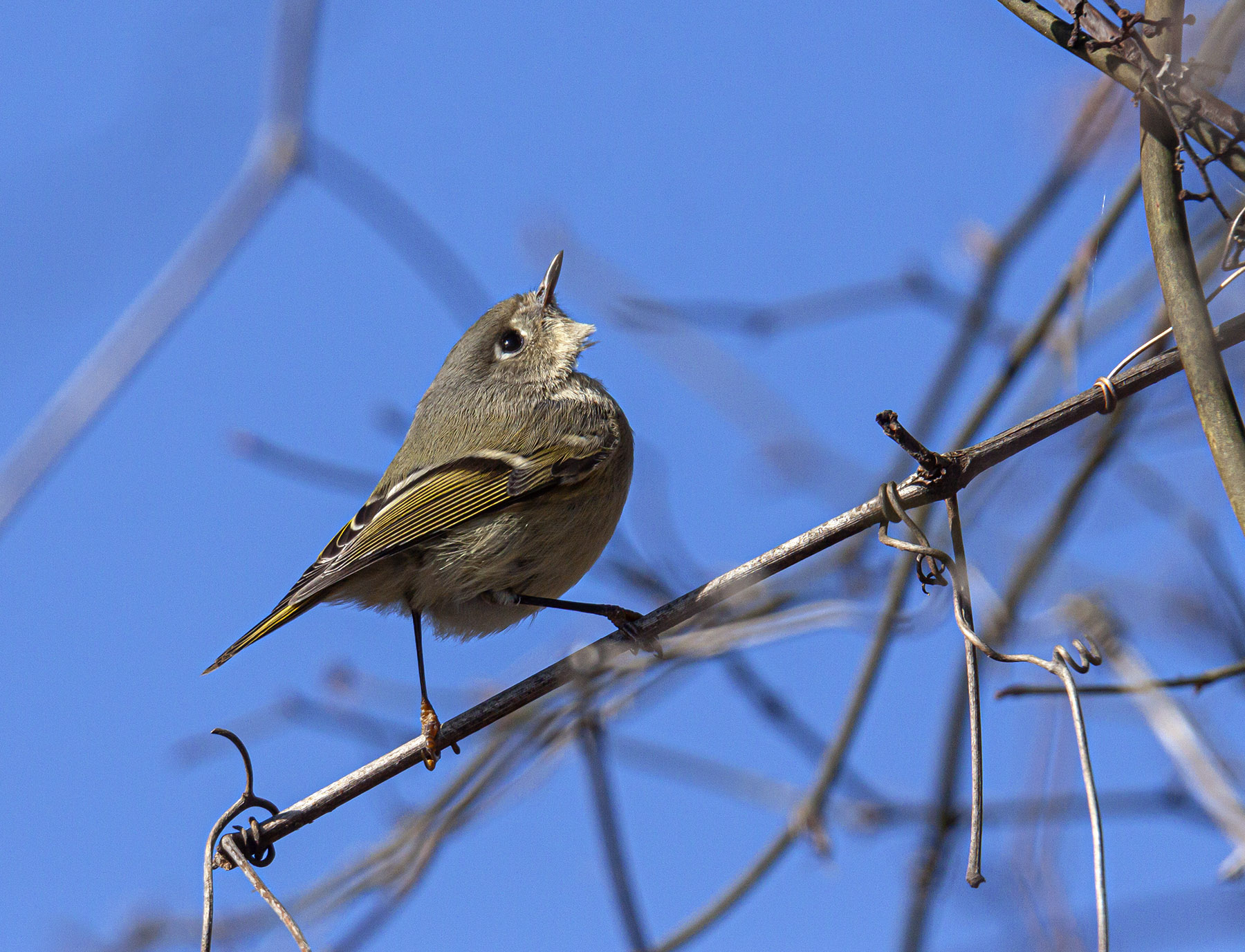
I feel lucky when I am able to capture an unobstructed shot of a Ruby-crowned Kinglet (Regulus calendula). I feel doubly fortunate when I manage to get a shot of the tiny red “crown” that is responsible for the bird’s name. Last week I spotted this Ruby-crowned Kinglet at Occoquan Bay National Wildlife Refuge.

According to the Cornell Lab of Ornithology, “the male’s brilliant ruby crown patch usually stays hidden—your best chance to see it is to find an excited male singing in spring or summer.” I have seen some photos of Ruby-crowned Kinglets with their red feathers standing on end like a Mohawk hairstyle, but I have not yet seen that phenomenon in person. Spring is almost here, though, and I will keep my eyes open to see if I can spot an excited male singing kinglet. (I recommend that you repeat the words “singing kinglet” several times and you will almost certainly end up with a smile on your face.)

Ruby-crowned Kinglet

© Michael Q. Powell. All rights reserved.

Read Full Post »

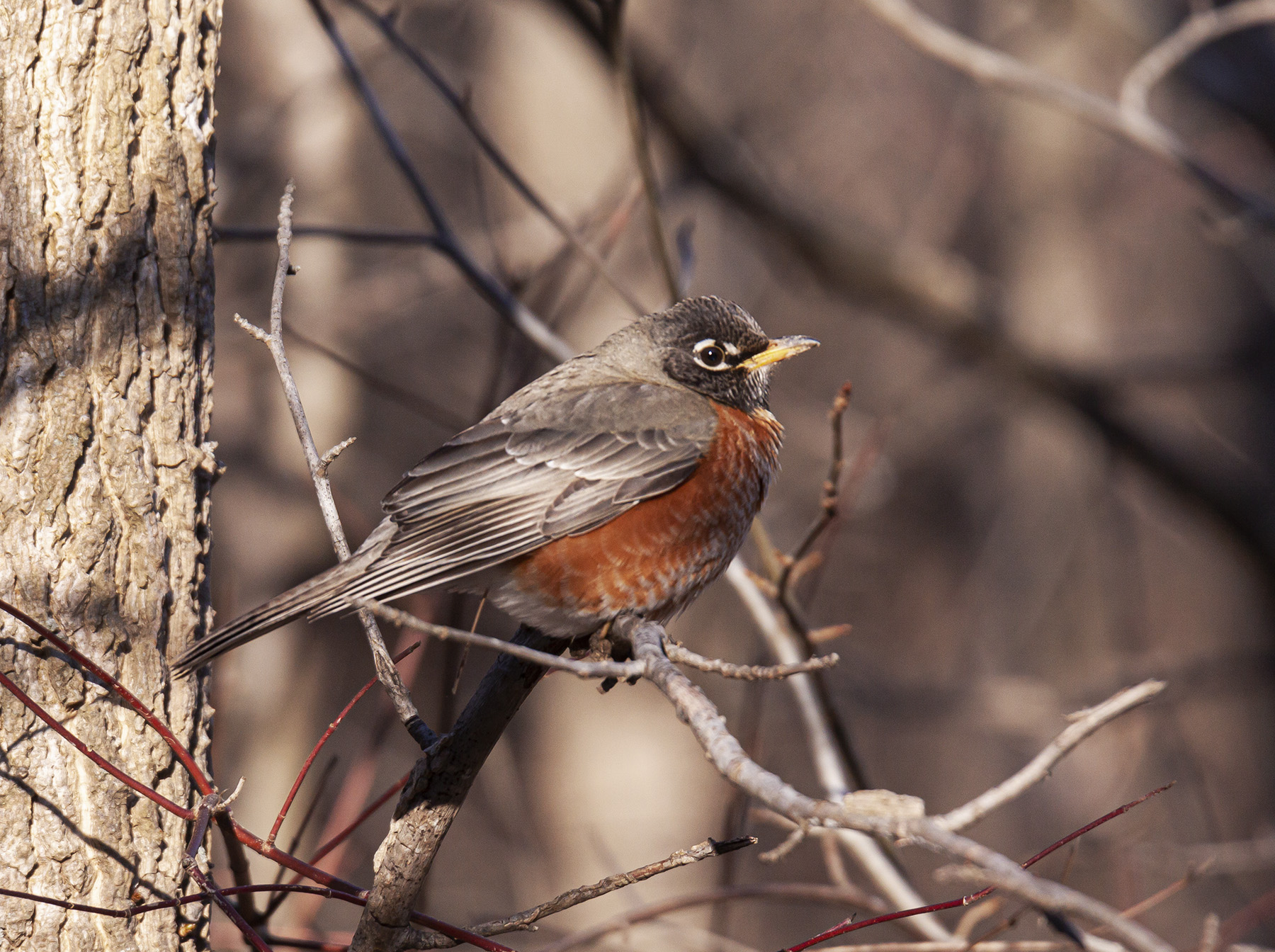
Where I live in Northern Virginia, American Robins (Turdus migratorius) stay with us throughout most of the year, but I am always happy to see them because they evoke memories of my childhood, when robins were viewed as a harbinger of spring. This robin was part of a small flock that I spotted last week at Occoquan Bay National Wildlife Refuge.

Robins also bring a smile to my face, because they invariably bring to mind the song “When the Red, Red Robin (Comes Bob, Bob, Bobbin’ Along)” that includes these catchy lyrics (as found on lyrics.com):

“When the Red, Red Robin Comes Bob-Bob Bobbin’ Along
When the red, red robin comes bob, bob, bobbin’ along, along
There’ll be no more sobbin’ when he starts throbbin’ his old sweet song
Wake up, wake up you sleepy head
Get up, get out of your bed
Cheer up, cheer up the sun is red
Live, love, laugh and be happy
What if I were blue,
Now I’m walking through
Fields of flowers
Rain may glisten but still I listen for hours and hours
I’m just a kid again doing what I did again, singing a song
When the red, red robin comes bob, bob, bobbin’ along.”
If you are unfamiliar with this song, check out this link to Youtube to hear a wonderful version by Bing Crosby.

Readers from the United States may have noted that I initially called this bird an American Robin, rather than simply a Robin. Thanks to my occasional trips to Europe, I have been introduced to the European Robin (Erithacus rubecula), an equally beautiful but completely different bird. Here’s a link to a posting about a European Robin that I spotted in Paris last November.
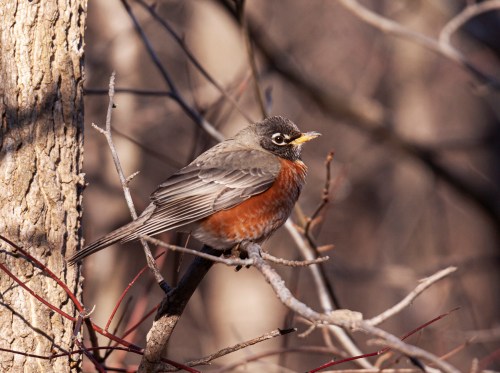
 

American Robin

© Michael Q. Powell. All rights reserved.


Read Full Post »

Getting an unobstructed shot of small birds is frequently impossible, so I often have to twist, turn, and bend in order to get a clear shot of at least the bird’s head. That certainly was the case with this focused male Downy Woodpecker (Picoides pubescens) last week at Occoquan Bay National Wildlife Refuge.

If you look closely at the web of branches that surround and frame this woodpecker, you may notice that they are at varying degrees of sharpness, with some of them closer to the bird and some closer to me. My task was to find a visual tunnel through the branches that would somehow make them as undistracting as possible, even when they run right across the body of the main subject. Of course, the challenge is even greater with a subject like a Down Woodpecker that is hyperactive and in almost constant motion.

Downy Woodpecker

© Michael Q. Powell. All rights reserved.


Read Full Post »

The wind was blowing strongly last Friday morning at Occoquan Bay National Wildlife Refuge, giving this Bald Eagle (Haliaeetus leucocephalus) a bad case of “bed head.” I think that the wind may also have distracted the eagle a little, which allowed me to move closer to the eagle that I might otherwise have been able to do.

bald eagle

© Michael Q. Powell. All rights reserved.

Read Full Post »
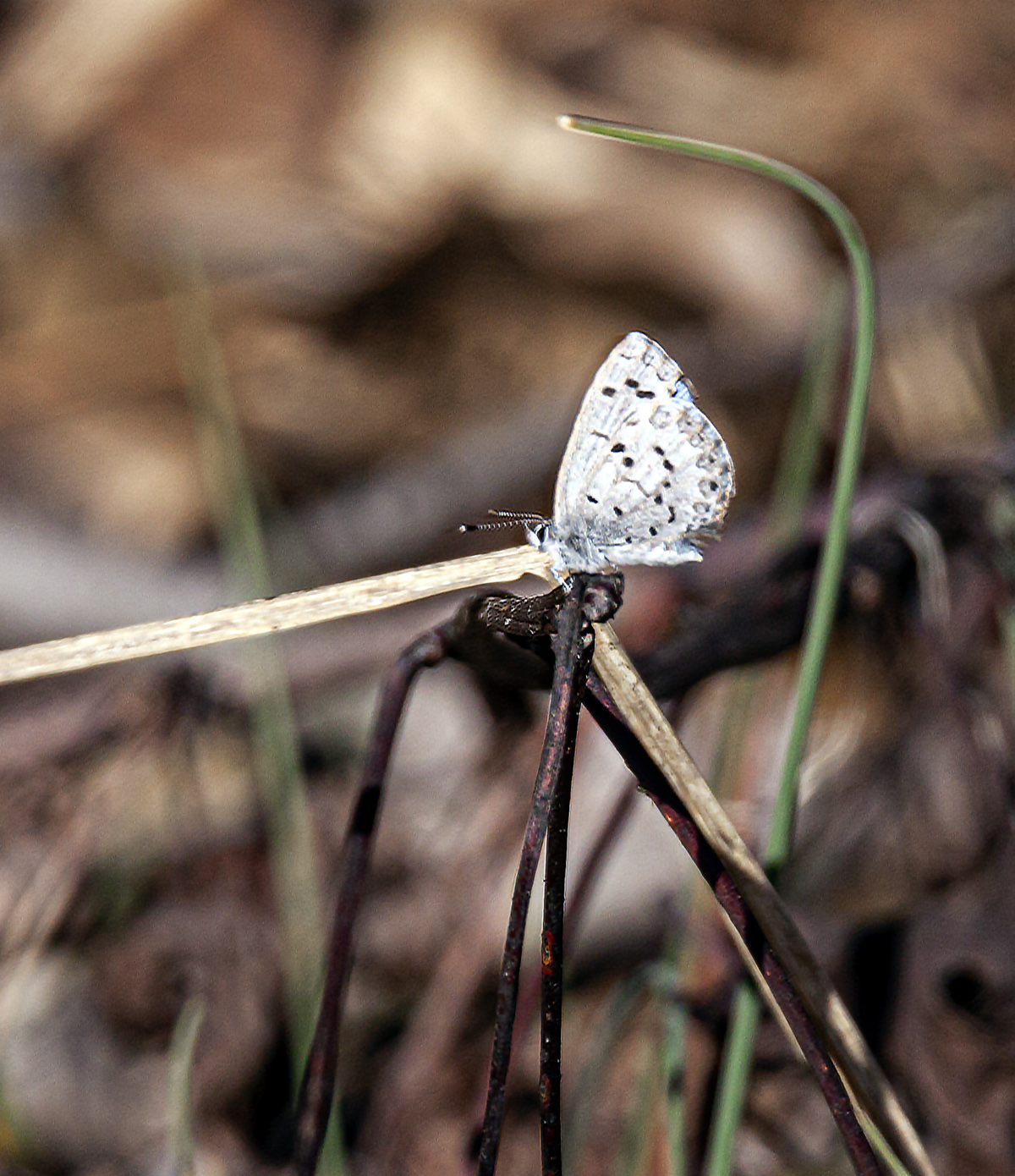
During a frosty early morning February foray into Occoquan Bay National Wildlife Refuge, I spotted this handsome male Red-bellied Woodpecker (Melanerpes carolinus) with fluffed-up feathers. Undeterred by the wind and the cold, he was feverishly moving up and around this tree trunk, pecking along the way in search of a tasty tidbit for breakfast.

Red-bellied Woodpecker

© Michael Q. Powell. All rights reserved.

Read Full Post »

This Ruby-crowned Kinglet (Regulus calendula) had its eye on the prize, with the prize being a cluster of wizened poison ivy berries, yesterday morning at Occoquan Bay National Wildlife Refuge. These tiny songbirds rely on seeds and fruits to make it through the winter.  I won’t be long, though, before they revert to a diet of primarily insects—I like to think of them as seasonal vegetarians.

Ruby-crowned Kinglet

Ruby-crowned Kinglet

© Michael Q. Powell. All rights reserved.

Read Full Post »
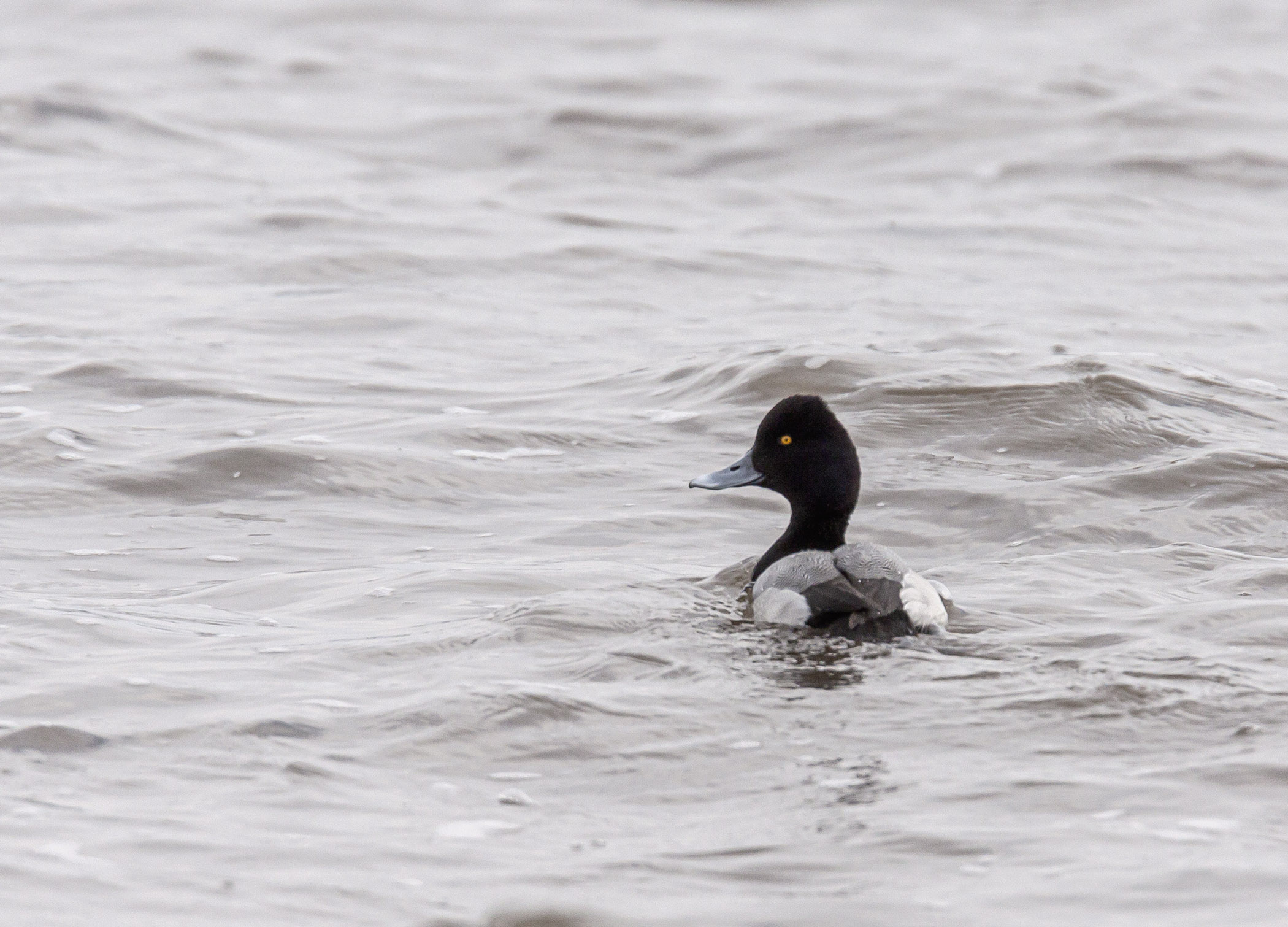
It was sunny this morning, as forecast, but it was also windy and cold when I set out at 7 o’clock, about 25 degrees (minus 4 degrees C), according to the thermometer in my car. Most of the birds at Occoquan Bay National Wildlife Refuge seemed to have decided to sleep late, but eventually I started to see some of them, including this Great Blue Heron (Ardea herodias) that was wading out into the shallow waters of a low tide.

Great Blue Heron

© Michael Q. Powell. All rights reserved.

Read Full Post »

On some winter days it is tough to find birds to photograph—all of the birds that I do manage to see are either far away or hidden. On one of those kind of days last week, I was thrilled to spot this cute little Carolina Wren (Thryothorus ludovicianus) that was only half-hidden in a distant tree. My efforts were aided by the fact that Carolina Wrens are loud singers, especially considering their diminutive size, which allowed me to hear this bird well before I actually saw it.

Carolina Wren

© Michael Q. Powell. All rights reserved.

Read Full Post »

Last Wednesday I spotted this little sparrow at Occoquan Bay National Wildlife Refuge. I thought it was a Song Sparrow (Melospiza melodia), but decided to check with some birding experts on Facebook who were able to confirm my initial suspicions. It did take me a little while longer to get a response than usual, however, because my proposed identification was correct. I tend to get quicker responses when I am wrong—folks will often jump in really quickly to correct me.

Although Song Sparrows are one of the most common sparrow species where I live, I love trying to get shots of them whenever I can.  In this case, I was happy with the simple composition and minimalist color palette that I was able to capture in this image—all of the different shades of brown give the image a harmonious feel that I find pleasing.

Song Sparrow

© Michael Q. Powell. All rights reserved.

Read Full Post »

Most of the time I try to take detailed shots of the birds that I photograph, but somethings that simply is not possible. This past week at Occoquan Bay National Wildlife Refuge, the ducks all stayed in the deep water, far from the shore on which I was standing. As I gazed to my right and to my left searching for closer ducks, I became increasingly fascinated by the bare branches of the trees overhanging the water.

Even though I was shooting with a long telephoto lens, I decided to try to capture the landscape that was drawing me in. If you look closely at the two images below, you will see that I have included some distant ducks, but clearly they were not the focus of the photos. A wider lens might have capture the environment better, but would have risked drawing the viewers’ eyes away from the tree shapes. I don’t take landscape-style photos very often, but sometimes that is what the situation seems to call for and/or permits.

distant ducks

distant ducks

© Michael Q. Powell. All rights reserved.

Read Full Post »

How do Bald Eagles (Haliaeetus leucocephalus) show affection? I am not sure exactly what these two eagles were doing when I spotted them on Tuesday at Occoquan Bay National Wildlife Refuge. Were they singing to each other? Maybe they doing some version of eagle French kissing? Whatever the case, the eagles definitely seemed to be enjoying spending the time close together, beak-to-beak, showing love in their own ways.

Happy Valentine’s Day as you show love in your own way. Although this holiday traditionally is focused on couples, I think that singles like me should also celebrate love today—I love flowers and am planning to get some later today. It is more than ok to love yourself, so go ahead and treat yourself today—you are worth it.

Bald Eagle

© Michael Q. Powell. All rights reserved.

Read Full Post »

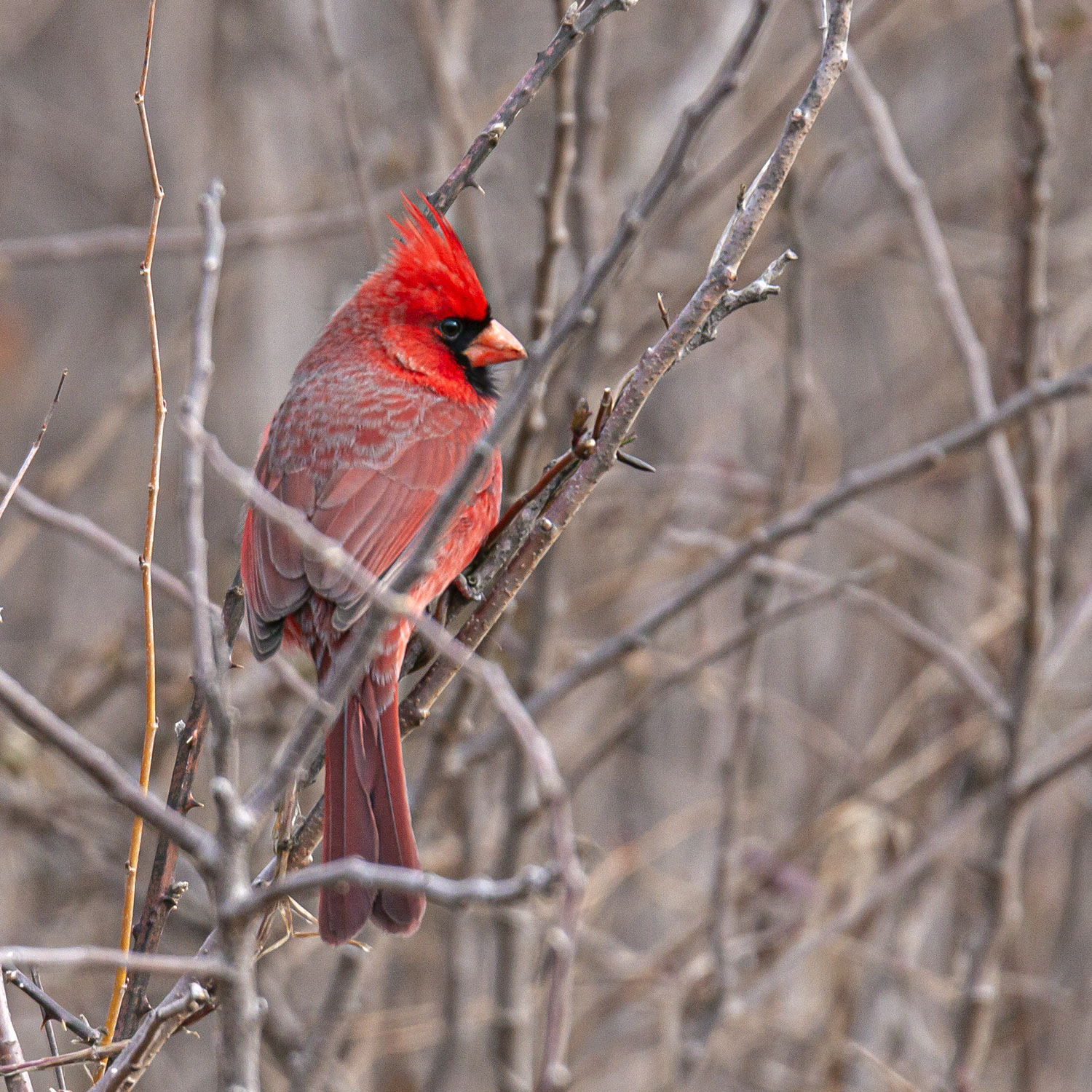
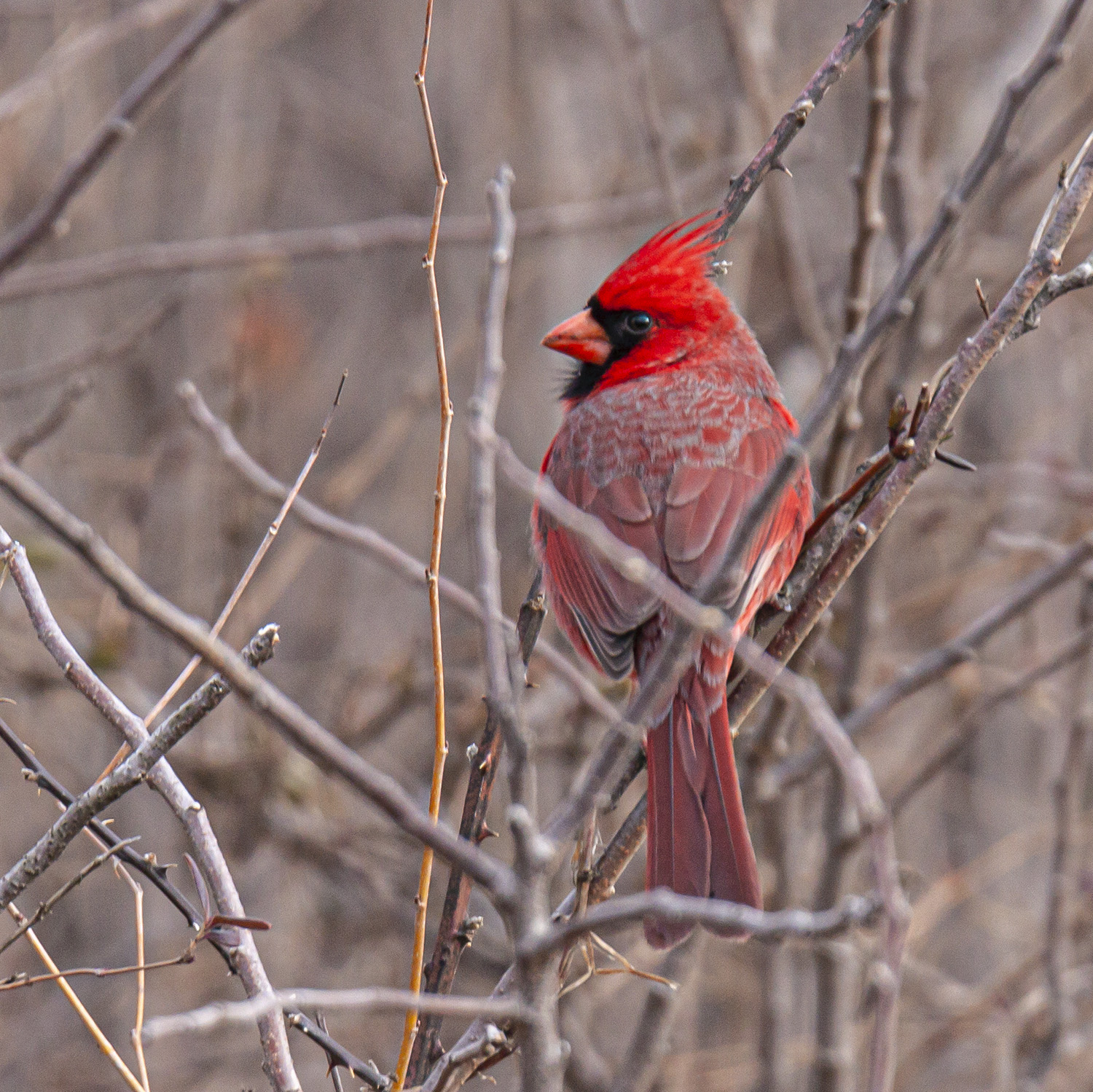
Do male Northern Cardinals (Cardinalis cardinalis) know that they are bright red in color? When I spooked one of them yesterday morning at Occoquan Bay National Wildlife Refuge, he flew to a nearby field and perched in the midst of a mass of vegetation.

Did he think that he was hidden from me? Obviously he was not—his red coloration makes it almost impossible for him to blend in. I couldn’t help but think of a quotation that is attributed to Dr. Seuss, “Why fit in when you were born to stand out?” That’s probably a good question for all of us—as you can probably guess, I am somewhat of a non-conformist.


Northern Cardinal

Northern Cardinal

© Michael Q. Powell. All rights reserved.

Read Full Post »
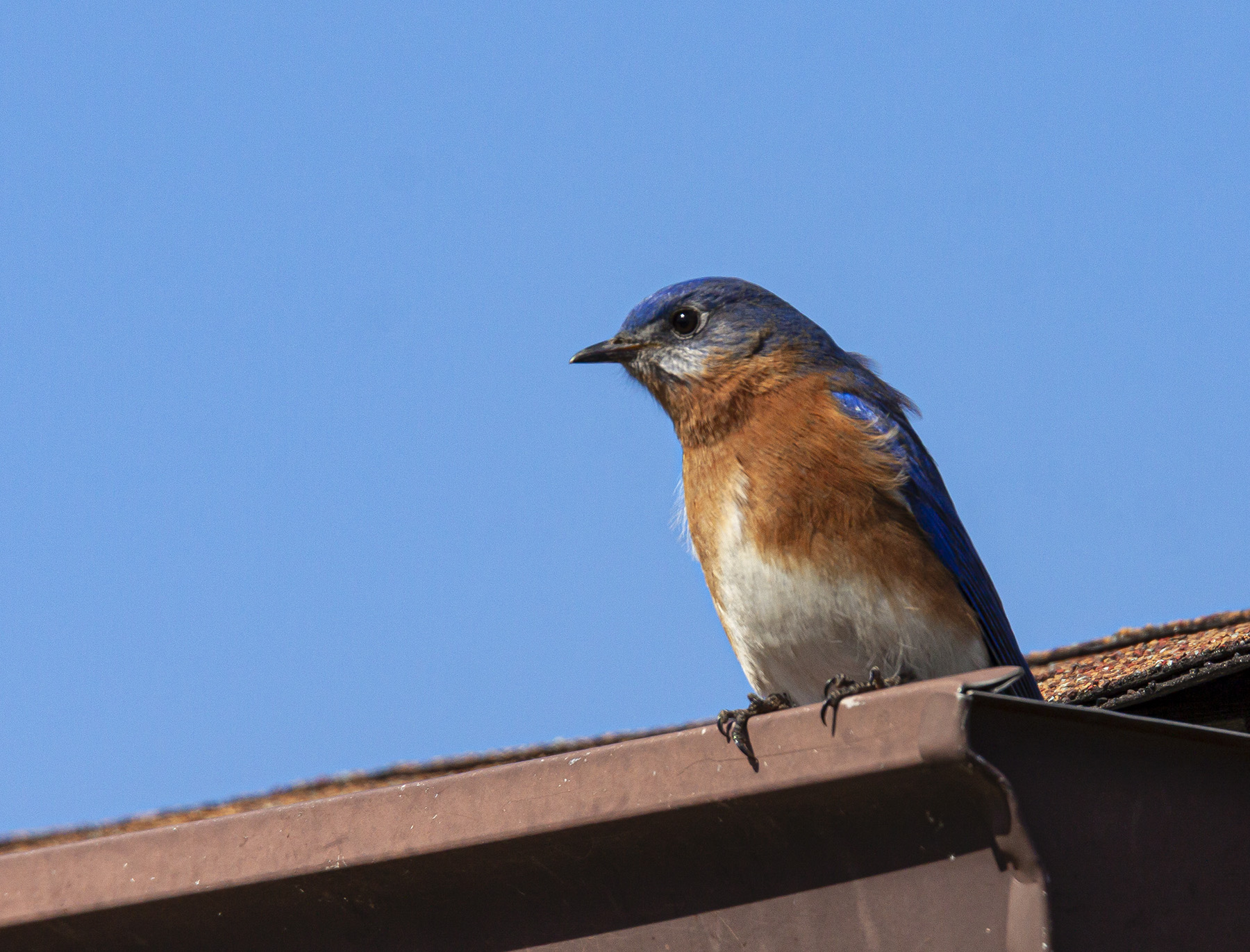
White-throated Sparrows (Zonotrichia albicollis) are with us throughout the winter and I will usually attempt to photograph them during my winter forays into the wild. I tend to think of White-throated Sparrows as the “dandies” of the sparrow world—they have the same general coloration as other sparrows, but have a distinctive appearance with their white chin beards and bright yellow eyestripes. It is a real bonus when the lighting is good and the perch is photogenic, as was the case last week at Occoquan Bay National Wildlife Refuge.

White-throated Sparrow

© Michael Q. Powell. All rights reserved.


Read Full Post »

Kinglets are tiny birds, about 4 inches (10 cm) in length, and always seem to be in constant motion in heavily vegetated areas. As a result, they tend to be really hard to photograph. Last week at Occoquan Bay National Refuge I was thrilled to be able to capture images of both kinglet species in our area—the Golden-crowned Kinglet (Regulus satrapa) and the Ruby-crowned Kinglet (Regulus calendula).

It is not hard to guess that the bird in the first shot is a Golden-crowned Kinglet. I was never able to get close to the kinglet, but it did give me a clear view of its beauty when it perched momentarily on a small branch. The Ruby-crowned Kinglet in the second image has a more typical pose, surrounded by vines and branches. I shot over a dozen images of this little bird and this is the only one in which its head is up and visible.

Golden-crowned Kinglet

Ruby-crowned Kinglet

© Michael Q. Powell. All rights reserved.

Read Full Post »

With the weather so warm recently in my area, it is hard to remember that the puddles were iced over last Thursday when I captured this early morning shot of one of them at Occoquan Bay National Wildlife Refuge.

Winter in my area has been exceptionally mild—we have had almost no snow and only occasional periods of below-freezing temperatures. I have always been fascinated by the abstract patterns that form as water freezes, but this was the first time this season that I was able to capture a shot like this.

I am even more in awe of the amazing photos that I occasionally come across of individual snowflakes—capturing a shot like that is on my list of aspirational goals in photography.

ice

© Michael Q. Powell. All rights reserved

Read Full Post »

I didn’t realize that this Bald Eagle (Haliaeetus leucocephalus) was eating its breakfast when I inadvertently spooked it last Thursday morning at Occoquan Bay National Wildlife Refuge. There was no way the eagle was going to leave the fish behind, however, so it decided to take its fish “to go” when it took to the air.

When I first looked at this image, I was not sure if I liked it—it is pretty obvious that I was shooting through some branches and parts of the eagle are blurred out by them. When I examined the shot more closely, though, the positioning of the fish in the eagle’s mouth and the awesome details of the talons and tail made me decide that it was worth posting.

bald eagle

© Michael Q. Powell. All rights reserved


Read Full Post »

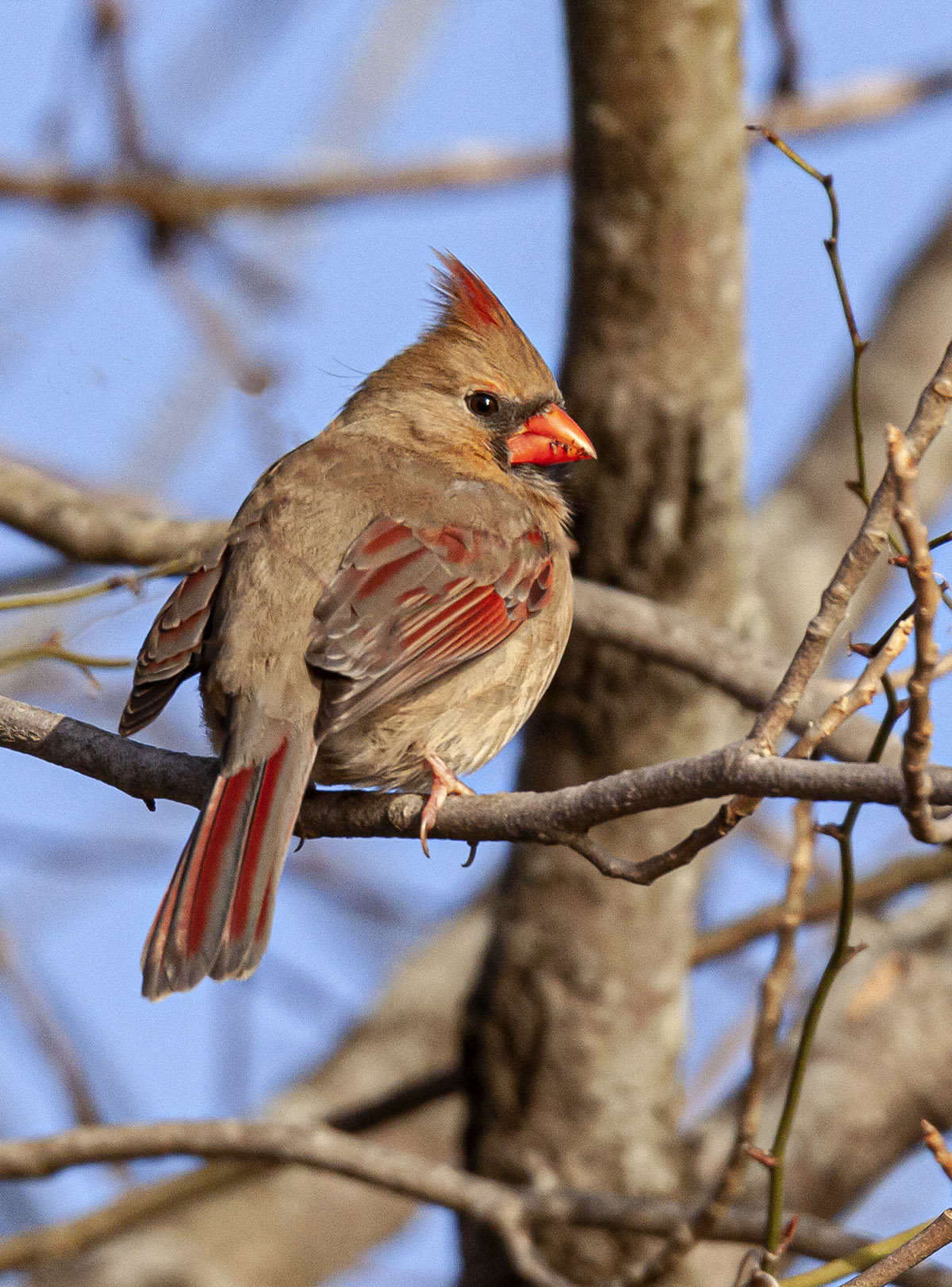
All female Northern Cardinals (Cardinalis cardinalis) have traces of red feathers, but this one that I spotted last week at Occoquan Bay National Wildlife Refuge seemed to have bolder markings than most. Before I took her portrait, I could help noticing that she had seed remnants on her bill. I also can be a bit of a messy eater at times, so I am reluctant to allow anyone to photograph me while I am eating.

Northern Cardinal

© Michael Q. Powell. All rights reserved

Read Full Post »

Even though I arrived at Occoquan Bay National Wildlife Refuge last Thursday morning as the electric gate was opening at 7 o’clock, I was a little too late to photograph the the sun rising over the water. However, I did manage to capture some shots of the early morning color through the trees.

It is always tough for me to take landscape-type shots, especially when there is not an obvious subject. In this case, I was content to capture the colors and the patterns in images that feel almost abstract to me.

winter sunrise

winter sunrise

winter sunrise

© Michael Q. Powell. All rights reserved

Read Full Post »

At this time of the year pops of bright color are especially welcome, so I was thrilled on Thursday to see some Eastern Bluebirds (Sialia sialis) in a sumac patch at Occoquan Bay National Wildlife Refuge. Sometimes when I see bluebirds their colors seem muted, but the blue color of these birds was dazzling, especially for the males in the first two shots. I think the bluebird in the final shot is a female, judging from its coloration.

As always, you can see more detail if you click on the images, which I especially recommend for the first image, because you will see that the bluebird has a tiny sumac berry in its bill.


Eastern Bluebird

Eastern Bluebird

Eastern Bluebird

© Michael Q. Powell. All rights reserved

Read Full Post »

Why do eagles scream? Most of the times when I hear a Bald Eagle (Haliaeetus leucocephalus) screaming, the eagle is by itself and appears to be signaling its location to its mate. This past Monday, though, I spotted a Bald Eagle couple perched together on an osprey nesting site not far from their nesting location. The eagles seem to enjoy hanging out at this location that gives them a clear view of the tree in which the nest is located.

I am posting this little sequence of photos out of order, because the first image best tells a story, although it is not completely clear what that story is. The female eagle, the larger of the two, is on the lower level and seems to be screaming at her mate who is perched higher on the pole. A moment earlier they were both on the lower level and both eagles appeared to be calm, as you can see in the second image. Then the male hopped to the higher level and the female began to scream.

In the final shot, the female has turned away and the male is now screaming. Was he responding to his mate or was he screaming at something else? I guess you can connect the dots of this story in any way that you like.

As I was doing a little research on screaming eagles I came across a fascinating National Public Radio (NPR) article entitled “Bald Eagle: A Mighty Symbol, With A Not-So-Mighty Voice.” The article posits that most people have an incorrect idea of what an eagle scream sounds like and blames Hollywood. According to bird expert Connie Stanger, “Unfortunately for the bald eagle, it has like a little cackling type of a laugh that’s not really very impressive for the bird” and in most movies the sound of the eagle is actually dubbed by a Red-tailed Hawk. (I imagine a hawk in a sound booth with headphones dubbing over the eagle’s calls.)

If you click on the link above and then click the button on the website called “57 Second Listen,” you can hear a short clip of the NPR broadcast that includes both the call of the eagle and that of the Red-tailed Hawk. As for the question in the posting’s title, I personally like to think that it was a conversation, but acknowledge the distinct possibility that they were individually responding to a commonly-perceived threat. I think that my interpretation allows for more creative possibilities as I try to imagine the domestic conversations of a Bald Eagle couple. 🙂

bald eagles

bald eagles

bald eagles

© Michael Q. Powell. All rights reserved

Read Full Post »

From a distance, I could see that a Bald Eagle (Haliaeetus leucocephalus) was in the nest on Monday morning at Occoquan Bay National Wildlife Refuge. As I have noted in the past, the tree with the nest is right beside one of the trails at the refuge. Normally I approach the nest from the same direction and an eagle can see me from a pretty good distance away because the trail runs through an open field.

This time, however, I was walking from the opposite direction and the tree trunk blocked my view of the eagle as I got closer, which meant that it probably kept the eagle from spotting me. The first shot shows my initial look at the eagle once it came into view as I approached from the right. At this point, I think the eagle was unaware of my presence and I tried to remain as stealthy as I could.

I moved forward a bit more and continued to observe the eagle, completely in awe its beauty and majesty. My peaceful reverie was broken when I head the sounds of people approaching. Perhaps they were speaking at a normal conversational level, but it sure sounded loud to me. In the second shot, the eagle was looking in the direction of the noise. Had it heard the others? In the final shot, the eagle seemed to be looking right at me, having finally become aware of the fact that I was there.

The eagle did not take off immediately, but a short while later it flew off to a nearby osprey nesting platform. Later in the day I observed two eagles on the platform, which seems to be a favorite perching spot for the eagle couple.

It won’t be long before the refuge closes the trail from which I was taking the photos. I am wishing the best for the eagle couple as they move into nesting season. Last year there was one eaglet in this nest, I believe, and the year before there were two.

Bald Eagle

bald eagle

bald eagle

© Michael Q. Powell. All rights reserved

Read Full Post »

Yesterday at Occoquan Bay National Wildlife Refuge I captured some images of a Turkey Vulture (Cathartes aura), providing a pretext for me to repeat a joke I recently came across—A vulture boards a plane carrying two dead raccoons. The flight attendant says, “I am sorry, sir, but we only allow each passenger one carrion.” I confess that I am addicted to bad jokes, especially puns and word plays, and I have been dying to photograph a vulture ever since I read that joke.

I initially spotted the vulture while it was flying and captured several shots, shown below, as it was landing in a tree. Generally I prefer action shots like those ones and I do like the dynamic quality of those poses. In this case, however, I really like the formal, portrait-like pose the vulture assumed as I was taking the first shot below. Somehow, at least in my mind, it lends a kind of dignity and beauty to this bird that most people do not see because they cannot get past the fact that vultures feed on carrion.

Turkey Vulture


Turkey Vulture

Turkey Vulture

© Michael Q. Powell. All rights reserved.

Read Full Post »
I spotted this Bald Eagle last week at Occoquan Bay National Wildlife Refuge. The eagle was initially mostly hidden by branches, but I managed to get a clear shot of its head when it leaned forward and started to take off.

This month I have been particularly fortunate in finding eagles and in getting some pretty good shots of them. It is almost time for them to be nesting and before long portions of the refuge will be closed to keep the eagles from being disturbed. In the mean time I continue to walk the trails, trying to stay alert as I scan the trees and the skies for the possible presence of one of these majestic birds.

bald eagle

© Michael Q. Powell. All rights reserved.

Read Full Post »

« Newer Posts - Older Posts »