Feeds:
Posts
Comments

Posts Tagged ‘Tamron 180mm macro lens’

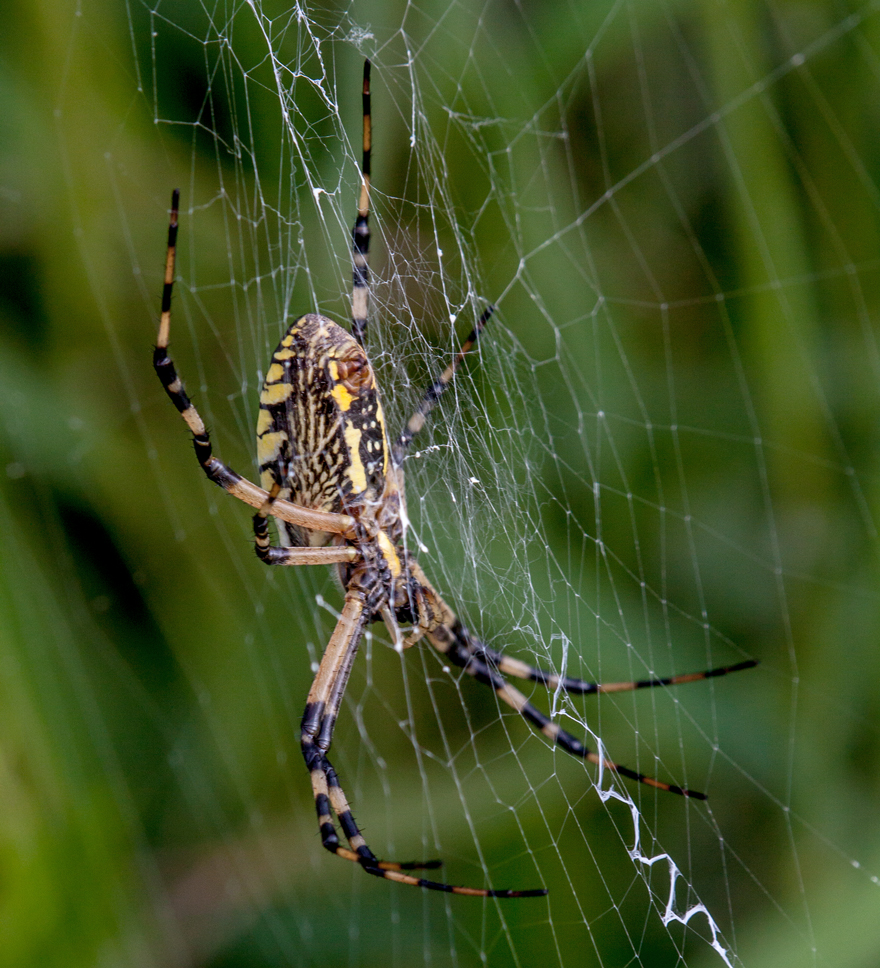
Finally I am starting to see some of the Yellow Garden Orbweaver spiders (Argiope aurantia) that fascinated me so much last summer. These spiders are big and colorful and have awesome webs with a distinctive zigzag section. I will be keeping an eye on the spiders to see if I can observe them catching prey and wrapping it up in silk.

Stay tuned for more spiders., most likely coming pretty soon to the blog—this spider is just the first fall installment.

argiope_web1_blog

© Michael Q. Powell. All rights reserved

Read Full Post »

This past weekend I came across a type of caterpillar that I first encountered last fall.  Its black, yellow, and white markings once again made me think of the Pittsburgh Steelers National Footbal League team that wears those same colors.

The sports pages of the newspaper currently are saturated with articles on football, so it’s only natural that I think in those terms (and I apologize to the rest of the world for any confusion caused by the fact that we Americans use the word “football” to refer to a game that doesn’t use feet much at all and use “soccer” to refer to the other “football” game).

I enjoy referring to this caterpillar as the Steelers caterpillar, though, of course, it has a “real” name, which I think is a Smartweed caterpillar (Acronicta oblinita). Some US states have state insects, so I wonder if the Steelers would welcome a fuzzy new mascot. This could be the start of a trend and a marketing opportunity—there are more than enough caterpillar types around for each team to adopt its own.

black_and_yellow_blog© Michael Q. Powell. All rights reserved

Read Full Post »

Although it is already September and signs of autumn are starting to appear, bees continue to be as busy as ever. The blooming morning glory flowers in my neighbors’ garden attracted a bee’s attention early yesterday morning and I got these shots as it tried to figure out the optimal strategy for gathering pollen.

glory2_blogglory3_blog

© Michael Q. Powell. All rights reserved

Read Full Post »

Small butterflies have a special, delicate beauty all their own, like this Gray Hairstreak butterfly (Strymon melinus) that I photographed in mid-August at Lewis Ginter Botanical Gardens in Richmond, Virginia.

BugGuide states that this is the most common hairstreak in North American, but this is only the second time that I have seen one. Based on my limited observation of American women, I would assert that the blond hairstreak is the most common one, though, as a bald guy, I realize that hair is not my area of expertise.

hairstreak2_bloghairstreak1_blog

© Michael Q. Powell. All rights reserved

Read Full Post »

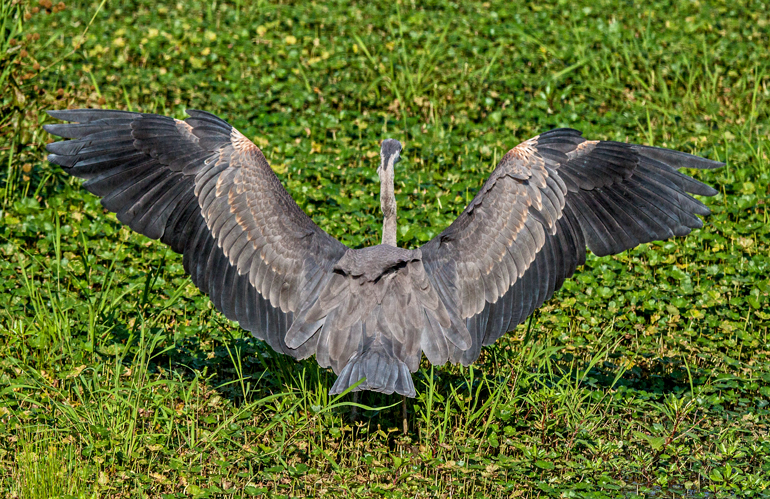
Coming in for a landing, this Great Blue Heron (Ardea herodias) stretched out his wings to their full extent and the sight was mighty impressive. The wings stretched out so wide, in fact, that I couldn’t fit them entirely into the frame. As he reached the ground, the heron gradually pulled in his wings and I was able to get a couple of additional shots of the impressive wingspan.

wingspan1_blog

wingspan2_blog wingspan3_blog

© Michael Q. Powell. All rights reserved

Read Full Post »

This small Green Treefrog (Hyla cinerea) was swaying in the breeze, mostly obscured by the heavy growth in the marsh, when I first spotted it. I searched for an opening to get an unobstructed shot and finally found one, looking through a circularly bent dried leaf.

The different elements of the scene, however, were all in motion at different speeds.  I felt like I was playing a carnival game as I tried to aim and shoot at a target that would appear and disappear from view. Eventually I got a shot that was pretty close to the mental image that was my target and the frog was framed.

circle_frog_blog© Michael Q. Powell. All rights reserved

Read Full Post »

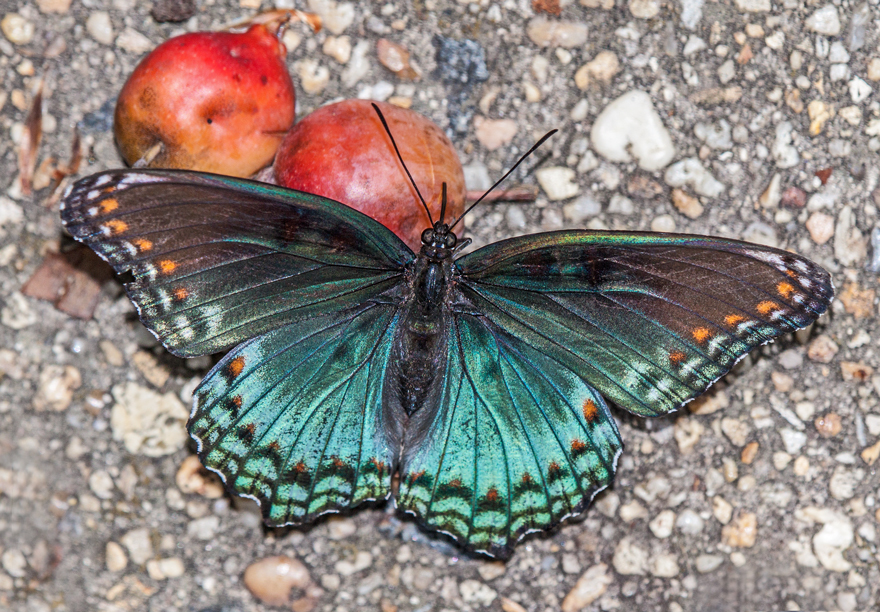
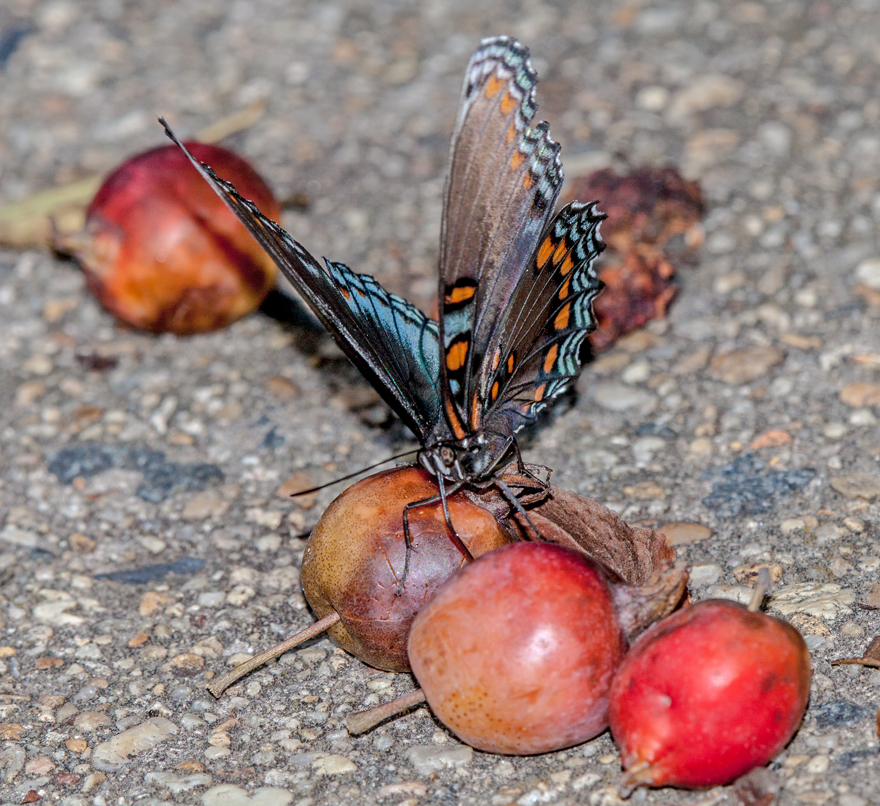
In the townhouse community in which I live in Northern Virginia, many of us have crabapple trees in our front yards, and the fallen crabapples are a nuisance at this time of the year. However, they do provide food for certain butterflies that prefer rotten fruit to flower nectar, like this Red-spotted Purple butterfly (Limenitis arthemis astyanax) that I photographed this morning.

crabapple2_blogcrabapple_blog© Michael Q. Powell. All rights reserved

Read Full Post »

If you were an insect or even a hummingbird, you would definitely not want to encounter this large insect with the macabre moniker of Red-footed Cannibalfly (Promachus rufipes), also known as the Bee Panther.

This insect is considered to be a giant robber fly. Robber flies in general are predators that wait for their prey to fly by and then attack it. Wikipedia describes the attack in this way, “The fly attacks its prey by stabbing it with its short, strong proboscis  injecting the victim with saliva containing neurotoxic and proteolytic enzymes which very rapidly paralyze the victim and soon digest the insides; the fly then sucks the liquefied material through the proboscis.”

It’s hard to believe that a fly could actually take down a hummingbird, but bugguide, which I have found to be a good reference for insects, notes that there have been reports of a Red-footed Cannibalfly attacking a Ruby-throated Hummingbird.

When I first saw this insect fly by, I thought it was some strange kind of hairy dragonfly, but the more that I looked at it, the more I realized that it was not a dragonfly—the eyes and wings were all wrong. I have spotted several of these flies already, but so far have not seen any with captured prey.

I came across a wonderful commentary on these insects in a blog called Ohio Birds and Biodiversity that sums up my feelings about them—”Be thankful these insects aren’t the size of Sandhill Cranes.”

big_insect_blogcannibal_blog

© Michael Q. Powell. All rights reserved

Read Full Post »

My goal for this photo was pretty simple—move slowly toward this grasshopper and get a good close-up shot. I think that I achieved my goal. I love shooting with my macro lens.

grasshopper_closeup_blog

© Michael Q. Powell. All rights reserved

Read Full Post »

Without fill-in light, a backlit subject is often in the shadows and becomes a silhouette, which is what happened in these shots of a Great Blue Heron taking off from a watery area of my local marshland park. The same sunlight in front of me also created beautiful reflections of the heron in the water, and I really like the combination of the silhouettes and reflections in these images.

This heron was getting ready to give chase to another blue heron and was squawking loudly as it took off. I watched the two herons for quite a while and this one went out of his ways several times to harass the other one and force it to search for prey in the vegetation away from the pool of water. As you can see in the second and third photos, a Great Egret was a spectator to the action, lifting up its head to observe what was going on. When things calmed down, the egret returned to its fishing until the next round of activity from the herons.

heron_silhouette1_blog heron_silhouette2_blogheron_silhouette3_blog

© Michael Q. Powell. All rights reserved

Read Full Post »

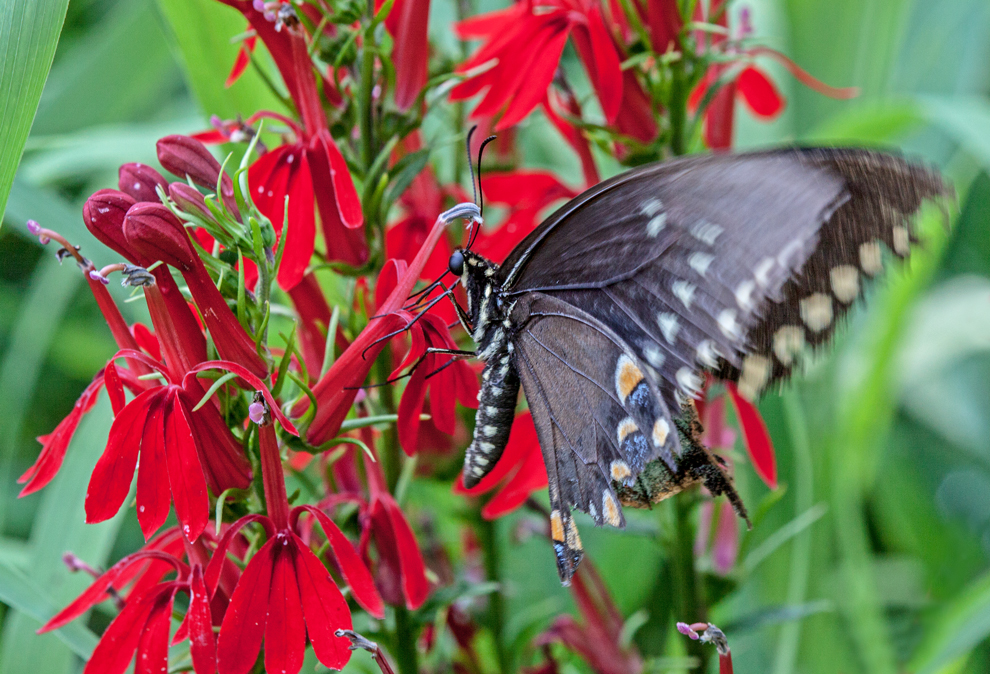
I love the look of this black-colored swallowtail butterfly feeding on a cardinal flower (Lobelia cardinalis) in the marsh—I just wish that I could identify the butterfly with greater certainty.

I used to think that there were only a few varieties of black-colored swallowtails, but as I learn about more species, I get more confused when trying to identify them. Most of the time I think that this is a Pipevine Swallowtail, but at other moments I convince myself that this is a Spicebush Swallowtail or even a Black Swallowtail. Whatever species it is, this butterfly kept its wings flapping pretty quickly as it was feeding, which accounts for the motion blur in the wings.

I really like the color and shape of the cardinal flower and wanted to show some of the buds and petals, so I decided not to crop the shot any tighter. I was a little surprised to find this butterfly on the cardinal flower, because I read in one document on the internet that these flowers are pollinated almost exclusively by hummingbirds.

swallowtail_cardinal_blog

© Michael Q. Powell. All rights reserved

Read Full Post »

Looking into a Swamp Rose Mallow (Hibiscus moscheutos), I immediately noticed the distinctive colors of a Handsome Meadow Katydid (Orchelimum pulchellum), feeding on the center stalk of the flower.

The katydid did not move from its position and merely cocked its head a little to the side and glanced up at me with its striking blue eyes. It seemed to be a little irritated to be disturbed, though I must confess that it’s really hard to gauge the emotions of an insect from its expressions.

The Handsome Meadow Katydid is one of my favorite insects and, in my humble opinion, truly deserves its name. In addition to its rainbow coloration and distinctive eyes, it has the cutest little feet and toes.

katy_mallow1_blog

© Michael Q. Powell. All rights reserved

Read Full Post »

I love backlit subjects, especially when the light shines through from behind and provides a stained glass effect, as was the case with this Viceroy butterfly (Limenitis archippus).

backlit_viceroy_blog

© Michael Q. Powell. All rights reserved

Read Full Post »

It’s hard to imagine an odder couple than this dragonfly and this turtle, sunbathing together on a log in the beaver pond. What do they see in each other? How do they communicate? Love seems to find a way to overcome obstacles like these.

One thing is clear—they are happy together, sharing this special moment in the warmth of the sun. If you don’t believe me, check out the smile on the turtle’s face.

fun_blog

© Michael Q. Powell. All rights reserved

Read Full Post »

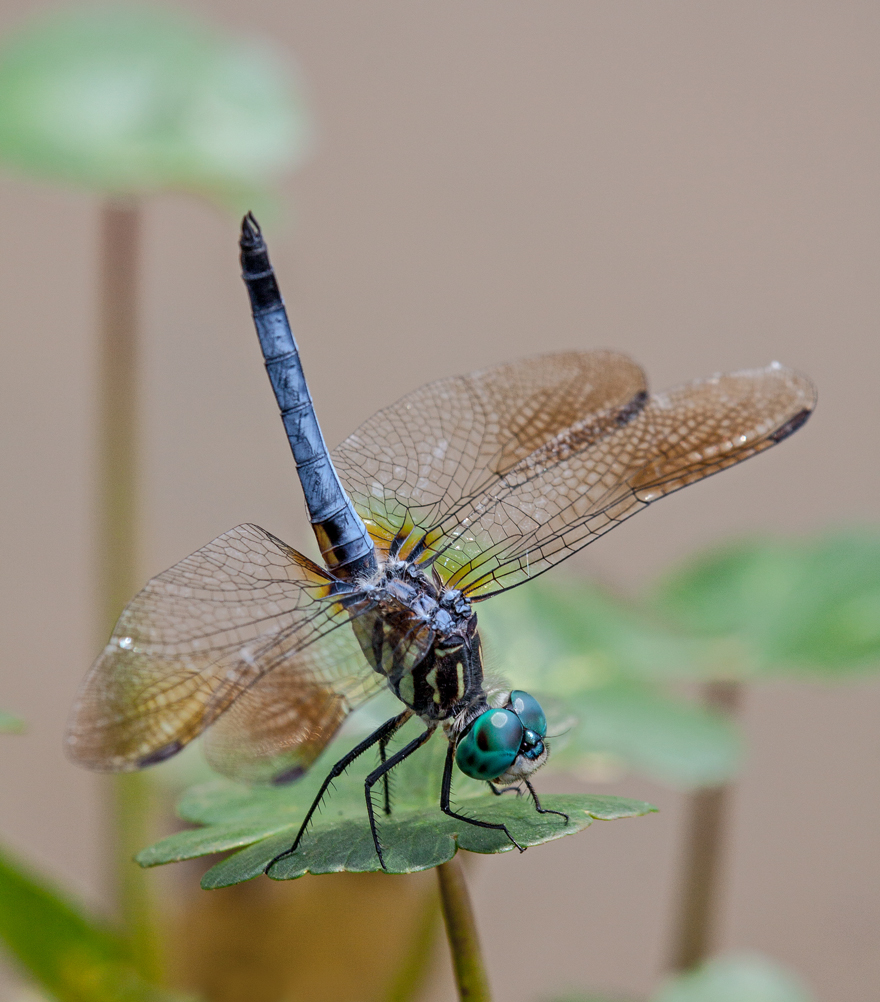
Most dragonflies choose perches high in the air, but this male Blue Dasher (Pachydiplax longipennis) decided to land on a little plant just inches above the surface of the water at my local marsh, creating a photographic challenge for me.

Hanging over the edge of the boardwalk, I tried to get at eye level with the dragonfly and simultaneously sought an uncluttered background.  In the first image, I was successful in shapes of the leafs, achieving a kind of three-dimensional effect. The water turned into an almost even gray, totally lacking in details. The second image gives you a better sense of the context, with the ghostly plants in the background.

The Blue Dasher dragonfly is the most common one that I see and it’s always a challenge to come up with creative new ways to show off its beauty. For this one day, I feel like I successfully met that challenge.

dasher_leaf_blogdasher_leaf_2_blog

© Michael Q. Powell. All rights reserved

Read Full Post »

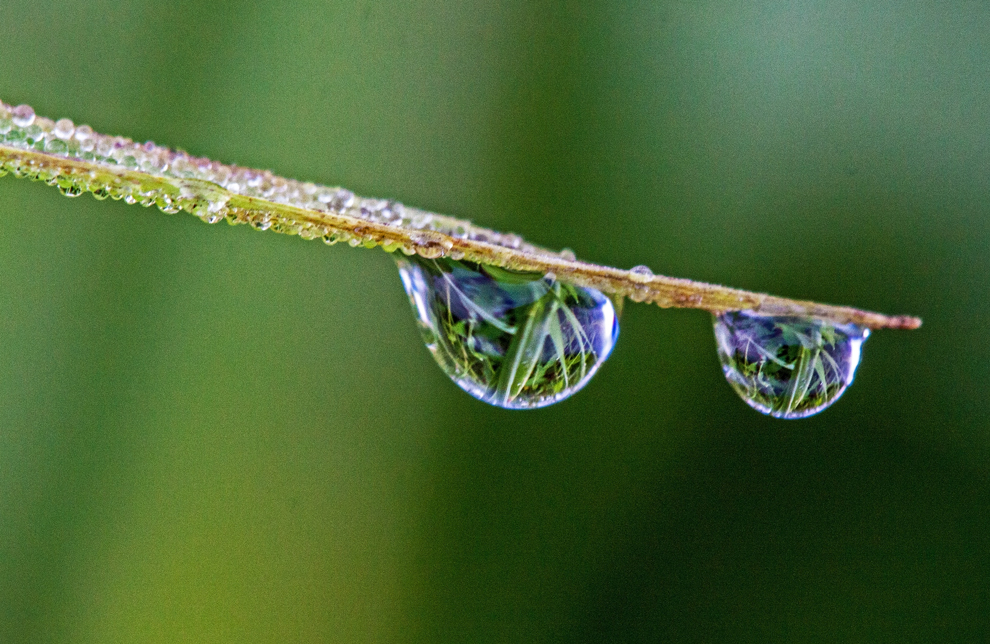
When drops of rain bead up on the surface of a leaf, the effect is magical—a world of crystal orbs is created. Most of the time the drops appear almost solid, reflecting back the light.

From certain angles, though, the raindrops serve as lenses, offering us a miniature view of the world. Within the drops, the inner world and the world beyond come together and create a beautiful effect.

drops_blog

© Michael Q. Powell. All rights reserved

Read Full Post »

I seem to be seeing spiders everywhere recently, so I thought I’d feature photos of three of them to represent the wide diversity of the population that I have observed.

The first one was very small and appeared to be hiding at the bottom of this leaf, waiting for its prey to come along. It did not appear to have made a web.

The second one had a web suspended over the water and is, I believe, a kind of long-jawed orb weaver of the Tetragnathidae family. It has awfully long legs compared to most other spiders. I usually see them making webs late in the day as the sun is beginning to go down.

The final one is a kind of spider that I see pretty regularly, though I don’t know what kind it is. It appears to have captured some prey, perhaps a grasshopper.

spider_leaf_blogjaw_blogspot2_blog

© Michael Q. Powell. All rights reserved

Read Full Post »

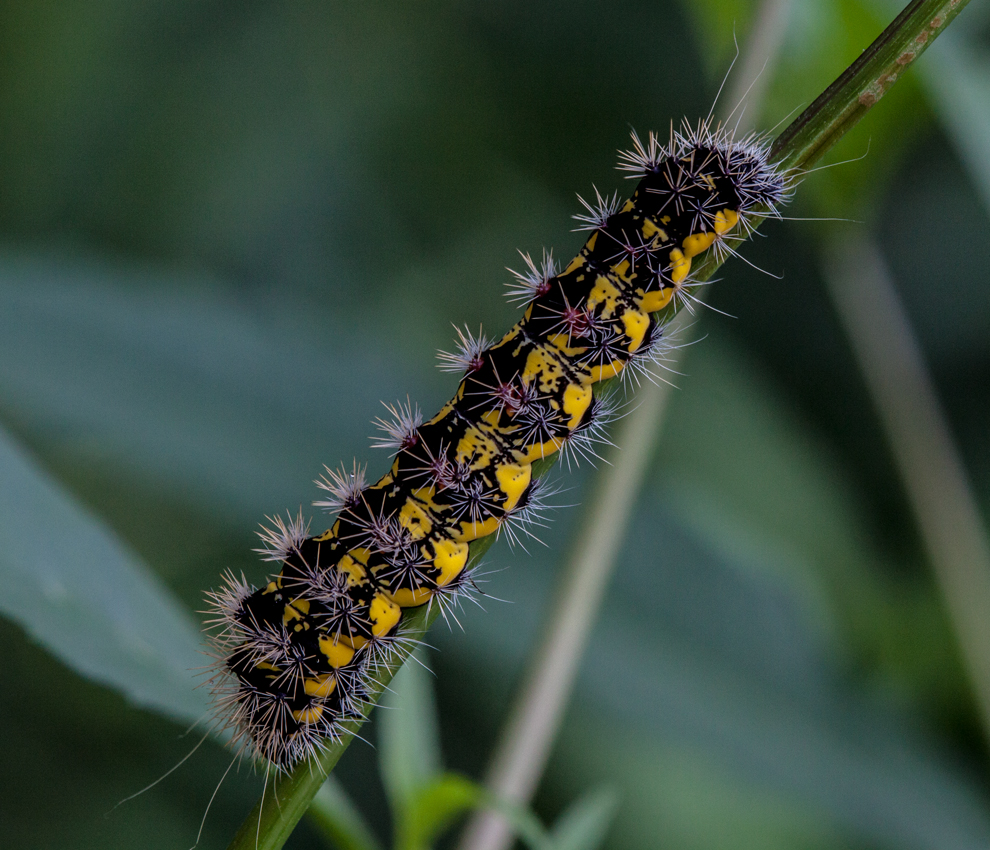
Who makes up these crazy names? Freddy Krueger? Jason? Believe it or not, this colorful little caterpillar is called a Smeared Dagger Moth caterpillar (Acronicta oblinita). Someone obviously had been been watching too many slasher or horror films.

Fortunately, it has another name—it is also called a smartweed caterpillar.

colorful_blog

© Michael Q. Powell. All rights reserved

Read Full Post »

I probably should have come up with a more creative title for this posting than the name of the featured insect. I mean, really, how many readers will be enticed to read a posting about a Dusky Stink Bug (Euschistus tristigmus)?  I word “stink” is enough to turn off some people.

Stink bugs are pretty much all shaped the same, but they come in different colors and patterns, many of which are similar, so identification is not always easy. In this case, for example, I had to determine if the shoulders were rounded or pointed to distinguish between two brown stink bugs—they look pointed to me.

The stink bug was hanging upside down, feeding on a plant that I can’t identify, when I encountered him. He seemed to be feeding, although I never did get a look at his face in order to verify my assumption. The upside down perspective is a little odd and I thought about rotating the image, but ultimately decided to leave it with its original orientation.

shield_blog

© Michael Q. Powell. All rights reserved

Read Full Post »

Have you ever seen a Great Blue Heron (Ardea herodias) attempt to do a vertical takeoff from the water? Most of the time, blue herons gain altitude with a few thrusts of their powerful wings as they move forward into the air.

This heron, however, looked like he was initially trying to levitate straight up into the air, like a Harrier jet, a jet that is capable of taking off vertically. It looked like the heron could not perform a normal takeoff because his feet were tangled in the weeds at the bottom of the little pond.  Before he could take off, he had to untangle his feet and his initial upward wing movements were intended to accomplish that task. Only then was he cleared for takeoff.

You’ll probably noted that I posted the images in reverse chronological order, so if you want to follow the takeoff process, you should start at the bottom. The first two images are more impressive as photographs, because I was able to capture the heron in the air, with the wings in interesting positions, despite the fact that I was using “only” a 180mm lens. (Some of the bird photographers that I encounter have 500mm or longer lenses.) The last two images are interesting and a little whimsical, because of the heron’s actions and the angle at which we are viewing the heron. Did you notice how skinny his face and neck look when shot from a head-on position?

flying2_blog

Click on the image for a higher-resolution view.

flying1_blog

flying4_blog

Before you can take off, you have to untangle your feet.

Before you can take off, you have to untangle your feet.

© Michael Q. Powell. All rights reserved

Read Full Post »

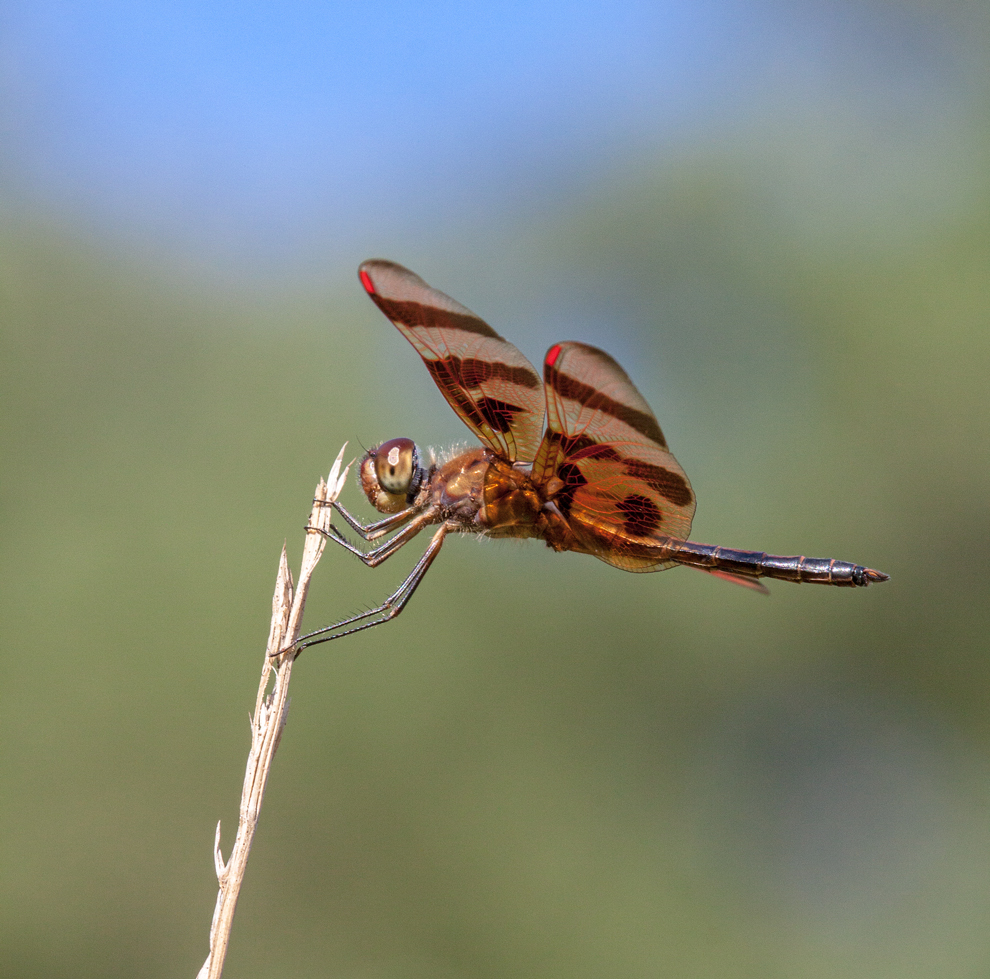
It’s not hard to see where this dragonfly gets its name—the Halloween Pennant (Celithemis eponina)—when it is perched on the very tip of a stalk of grass and is blown about by even the slightest wind.

I took this shot from a very low angle to try to show the sky and I am pretty happy with the way in which I was able to separate the dragonfly from the background.

blowing_blog

© Michael Q. Powell. All rights reserved

Read Full Post »

Growing up in the suburbs of Boston, I was never exposed to muskrats and my first impression of them may well have come from the Captain and Tennille version of the song “Muskrat Love.” So every time I see one now, that song comes into my head and I think of Muskrat Susie and Muskrat Sam doing the jitterbug out in muskrat land.

This past Monday I came upon this little muskrat (Ondatra zibethicus) at my local marsh as I was trying to get some shots of a Green Heron. I was on the boardwalk, maybe 18 inches (about 45 cm) or so above the level of the land and the muskrat was close enough that I was able to get this shot with my 180mm macro lens. Once it became aware of our presence, the muskrat slipped into the water and swam away, perhaps returning to Muskrat Susie.

One interesting note about “Muskrat Love” is that the Captain and Tennille chose to sing that song at the White House in 1976 at a bicentennial dinner that included Queen Elizabeth as a guest, according to Wikipedia. If you have never heard the song (or if you want to relive memories of your childhood), here’s a link to a YouTube version. In the introduction to the song, Toni Tennille describes an impassive Henry Kissinger during the performance at the White House (http://www.youtube.com/watch?v=xBYV_7a0FQs).

muskrat_sam_blog

© Michael Q. Powell. All rights reserved

Read Full Post »

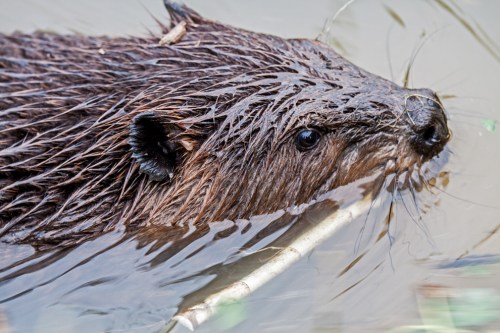
As the light was starting to fade this past Monday, I made one final trip along the boardwalk at my local marshland park and suddenly heard some loud chewing sounds coming from the cattails. Although I couldn’t immediately locate the source of the noise, I suspected that one or more of the beavers was out and about.

Slowly I crept forward until finally I caught sight of a North American Beaver (Castor canadensis), vigorously chewing on cattail stalks. My camera was already attached to my tripod, which was a good thing, because the shutter speed was pretty slow, even when I cranked up the ISO. I didn’t have a really clear line of sight to the beaver and the best that I could manage was the second shot below.

After a short while, some other folks came walking by on the boardwalk and spooked the beaver. The beaver stopped what it was doing, grabbed a piece of a stalk in its mouth, and began to swim in my direction. I did not have much time to react, because there was not much distance between the beaver and me.

The third image shows the beaver as it was headed toward me. I decided not to crop the photo to give you an idea of how close I actually was to the beaver. I was shooting with my Tamron 180mm macro lens for these shots, so I had a moderate amount of telephoto capability.

The first image, which is also uncropped, shows my final view of the beaver before it dove and swam away under the boardwalk. Those of us of a certain generation can’t help but think of the Drifters’ song when we hear those words “under the boardwalk,” sparking memories of the days of summers past.
beaver1a_blogbeaver3_blogbeaver2_blog© Michael Q. Powell. All rights reserved

Read Full Post »
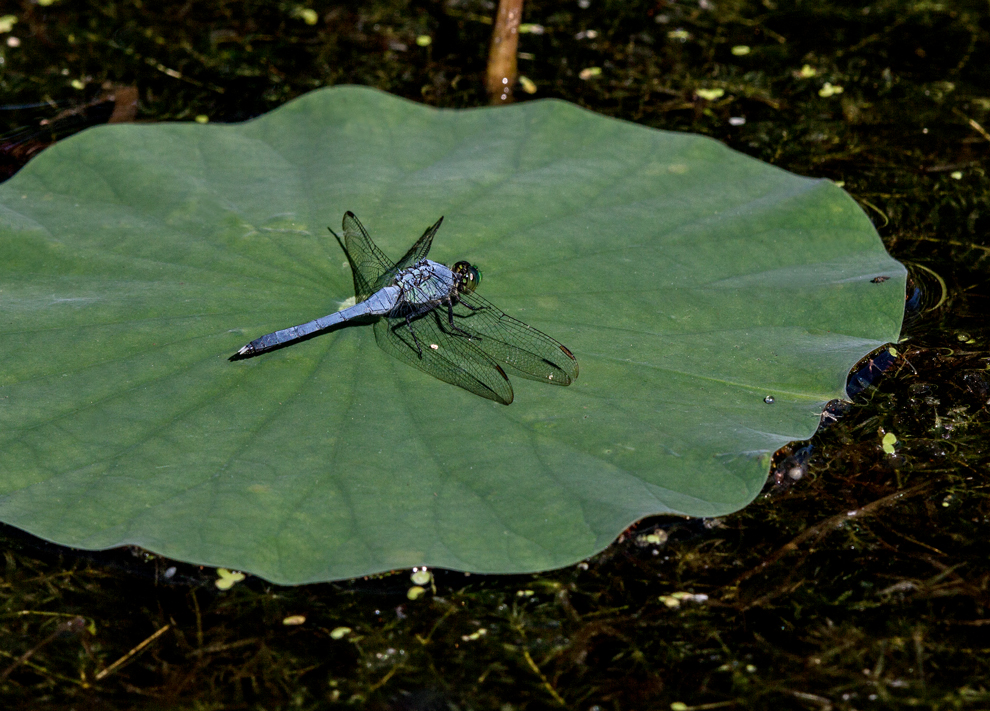
In most of my dragonfly shots the dragonfly is perched on an upright object, so, for variety, I decided to post this shot of a male Eastern Pondhawk dragonfly (Erythemis simplicicollis) in a different position—posing on a lily pad.

The dragonfly made multiple touch-and-go landings on this lily pad, sometimes landing near the edge, as in the first image, and sometimes in the middle, as in the second image. I couldn’t tell if he was using the lily pad as a platform for hunting insects or was merely resting. (It seems to me that it would be more advantageous for hunting to be higher up, unless you are hunting aquatic insects, which didn’t seem to be the case here.)

pad2_blogpad1_blog

© Michael Q. Powell. All rights reserved

Read Full Post »
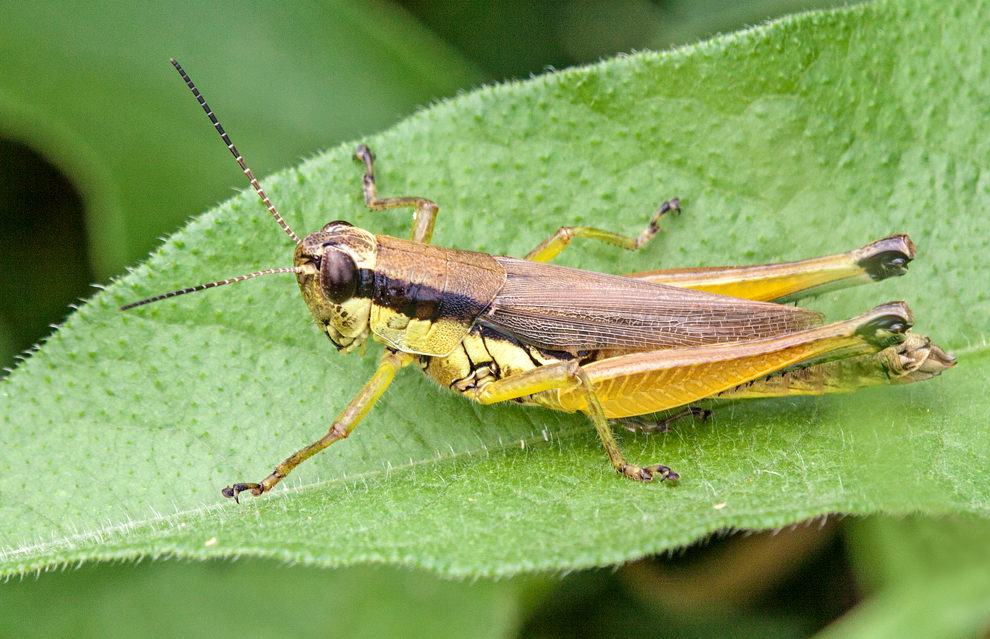
Until I got a really close-up shot, I never realized that the body of a grasshopper had so many amazing textures. Previously, I had naively assumed that the body parts were relatively smooth. Click on the image to see a higher-resolution view of the details of the “shoulders,” legs, wings, and antennae.

I hope that no one opened this posting thinking that it was a culinary one. I’ve never tasted a grasshopper, but assume that it would have a crunchy texture. Who knows, maybe it tastes like chicken, which seems to be the default flavor for exotic animal protein sources.

grasshopper_texture_blog© Michael Q. Powell. All rights reserved

Read Full Post »

« Newer Posts